Home / Hayati Mini Ultra Pods
Hayati Mini Ultra Pods
Thirty pods, one price, one fill. Every listing on this shelf holds 4ml of 20mg nicotine salt and every one of them costs £3.49. Divide the money by the liquid and the answer is a shade over 87p per millilitre, which is the dearest millilitre of any replacement pod Hayati sell. A Rubik pod holds three times as much for 50p more, landing near 33p. A Pro Ultra Plus pod comes out near 36p. On value this shelf loses, and it loses by a margin no amount of writing about compact hardware can close.
The reason to buy anyway has nothing to do with value and everything to do with size. Four millilitres is the smallest sealed fill in the Hayati catalogue. On every other prefilled line the smallest purchase available is 7ml, 12ml or 22ml, and the question most buyers actually have is not how cheap liquid can be. It is whether they like a flavour. A 22ml pod answers that question roughly a fortnight after the answer stopped being useful.
Read this shelf as an instrument rather than a supply, then. What follows prices the instrument honestly: what one answer costs, how often the answer has to be no before the spend pays for itself, and which of the thirty flavours can be bought again somewhere else once you have decided. That last count splits the shelf four ways, and two of the thirty lead nowhere at all.
New ProductsHayati PodsHayati Prefilled Pods & RefillsHayati Pod KitsHayati Prefilled Pod KitsHayati E-LiquidsHayati Pro Ultra Plus Prefilled Pod Kits & PodsHayati Pro Max Plus PodsHayati Pro Max Plus Prefilled Pod KitHayati Pro Max Nic SaltsHayati Pro Ultra Plus PodsHayati Pro Ultra Plus Prefilled Pod KitHayati Mini UltraHayati RubikHayati Mini Ultra PodsHayati Mini Ultra Prefilled Pod KitHayati Pro Max 50-50 E-LiquidHayati Pro Max 70-30 E-LiquidHayati Rubik Prefilled Pod KitHayati Rubik PodsHayati Nicotine PouchesHayati QuokkaBerry VapesRaspberry VapesIce VapesBlueberry VapesStrawberry VapesCherry VapesSweet VapesExotic VapesLemon VapesBlueberry Raspberry VapesPeach VapesWatermelon VapesApple VapesLemon Lime VapesMango VapesPineapple VapesGrape VapesLemonade VapesMint VapesCola VapesStrawberry Raspberry Ice VapesBlackcurrant VapesJuicy Peach VapesMr Blue VapesSummer Dream VapesBanana VapesKiwi VapesMenthol VapesOrange VapesFresh Mint Vapes
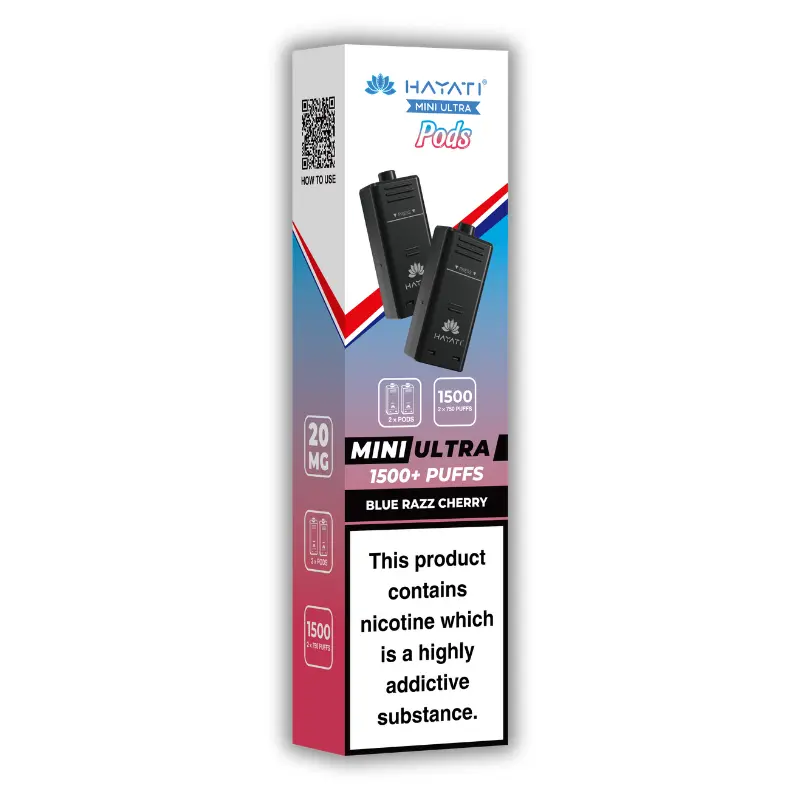
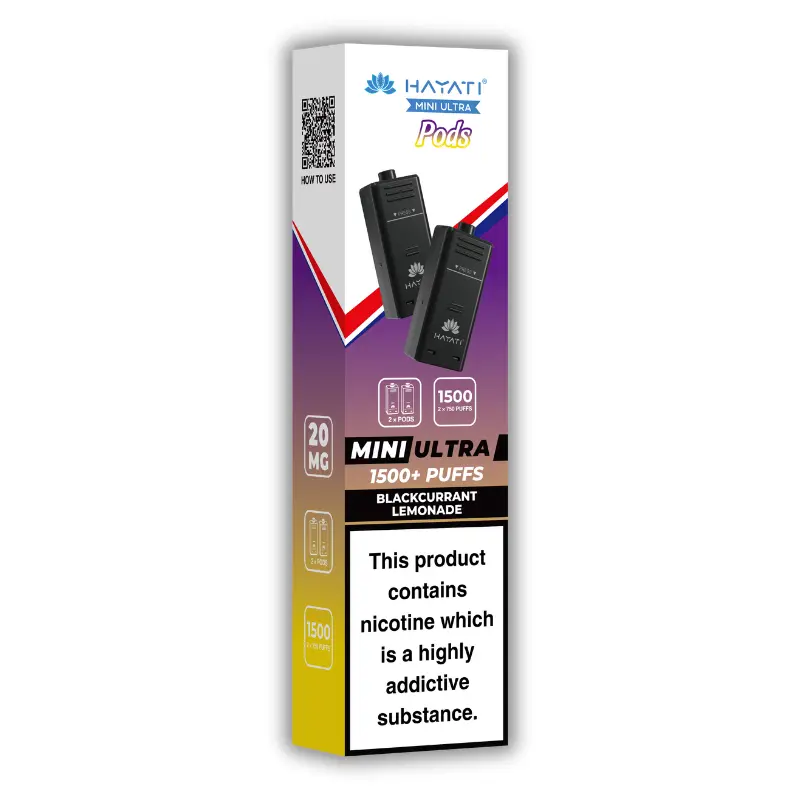
One price, one fill, and the rate that falls out of them
Uniformity is the first thing to register. Across all thirty listings the specification never moves: 4ml, nicotine at 20mg in every millilitre, sealed and prefilled, no device in the box. There is no larger option, no weaker option and no discount for buying the less popular flavours. The only variable on the whole shelf is which liquid is inside, which is unusual and, for a page like this, convenient. When hardware and strength are constant, the argument can be entirely about liquid and money.
The money is where the shelf embarrasses itself. Four millilitres at £3.49 works out at 87.25p per millilitre. Set that beside the other bare pods Hayati make and the gap is not marginal.
| Pod | Fill | Price | Per millilitre |
| Mini Ultra | 4ml | £3.49 | 87.3p |
| Rubik | 12ml | £3.99 | 33.3p |
| Pro Max Plus | 12ml | £5.49 | 45.8p |
| Pro Ultra Plus | 22ml | £7.99 | 36.3p |
That is 2.6 times the Rubik rate, 2.4 times the Pro Ultra Plus rate and 1.9 times the Pro Max Plus rate, for liquid at the same strength from the same brand. The second dearest refill Hayati make is a 7ml pod at a shade over 78p, so this shelf is not merely at the top of the list, it is clear of the field. Anyone whose purchase is governed by cost per millilitre should stop reading here and go to Hayati Rubik Pods, where the same nicotine strength costs about a third as much per millilitre. That is not a dig at the Mini Ultra. It is arithmetic, and pretending otherwise would be the sort of thing that makes buying guides useless.
Why small fills cost more is not mysterious. A pod is a shell, a coil, a wick, a mouthpiece, a seal and a carton, and none of those get three times cheaper because the fill shrank to a third. Fixed cost per unit spread over fewer millilitres produces exactly this curve, and it produces it in every category that sells the same thing in different sizes. The interesting question is never why the small one costs more. It is what the small one does that the large one cannot, and whether that is worth 54p of every millilitre.
Hayati publish a 1,500 puff figure against each of these pods. That is a laboratory rating produced under controlled conditions, not a measurement of anybody's actual use, and draw length, draw frequency and how hard you pull all move it. The number is still useful in one specific way: it tells you the pod was designed around a short cycle. Four millilitres and a rating of that size describe a unit meant to be finished and replaced, not one meant to sit in a drawer being slowly worked through.
What is not on this shelf is worth a line. There is no hardware here, so if a device is what you need, the twenty kit listings are on Hayati Mini Ultra Prefilled Pod Kit and both tiers sit together on Hayati Mini Ultra. There is no bottled liquid, which lives under Hayati E-Liquids. There is no strength choice at all: nicotine is addictive and every pod here carries it at 20mg in each millilitre, the ceiling UK law permits, with no lower figure offered. These thirty also appear inside the broader Hayati Pods and Hayati Prefilled Pods & Refills groupings, where they form the cheapest tier by ticket price and the dearest by volume at the same time.
What eighty-seven pence a millilitre is actually buying
Here is the reframe the rest of this page runs on. You are not buying vapour at 87p a millilitre. You are buying an answer, and 87p a millilitre is what the answer costs when it is delivered in the smallest packet available.
Work out the premium properly rather than gesturing at it. If you were going to vape 4ml of something regardless, the liquid itself is not the cost of the experiment. The cost is the difference between what you paid and what those same four millilitres would have cost at the rate of the platform you intend to settle on. Against the Pro Ultra Plus rate that difference is £2.04. Against Pro Max Plus it is £1.66. Against the Rubik it is £2.16. Call it two pounds a question, give or take, and the whole shelf becomes legible.
Two pounds a question is either cheap or absurd depending on what a wrong answer costs you. Put it as a break-even. Testing first pays for itself when the money you avoid wasting on a flavour you reject exceeds the premium you paid to find out.
- Settling on Pro Ultra Plus, where a pod is £7.99: the test pays if you reject roughly one flavour in four.
- Settling on Pro Max Plus, where a pod is £5.49: the test pays if you reject about three in ten.
- Settling on the Rubik, where a pod is £3.99: the test pays only if you reject more than half of everything you try.
Those three lines are the practical content of this page. Someone buying 22ml pods should be testing on this shelf as a matter of routine, because a one-in-four miss rate on unfamiliar fruit blends is entirely ordinary and the avoided waste is large. Someone buying Rubik pods almost never should, because the thing being protected costs £3.99 and the protection costs £2.16. You would be insuring a cheap object with an expensive policy.
There is a second currency, and it is the one people underrate. A 22ml pod is not just eight pounds, it is a span of days during which you are committed. Five Mini Ultra pods hold 20ml between them, which is less liquid than a single Pro Ultra Plus pod, and they cost £17.45. So for £9.46 more than one large pod you get five verdicts inside the same quantity of liquid rather than one. Throughput is what the small fill sells, and throughput is invisible on a price-per-millilitre table. Whether £9.46 is a reasonable price for four extra opinions depends entirely on how much you care about the answer, but at least state it that way rather than pretending the small pod is a bargain.
A practical note on ordering, since the arithmetic changes slightly at the margins. Free delivery starts at £20 on this site, which six pods clears at £20.94 and five pods does not at £17.45. If you are already planning a run of five, the sixth is close to free once postage is accounted for, and a six-flavour comparison is a genuinely useful sample of a thirty-flavour range rather than a token one.
Now the honest part. For a settled drinker this shelf never makes sense. If you know your flavour, if you have known it for months, and if you are buying liquid rather than information, then you are paying two and a half times the going rate for a service you are not using. The instrument is only worth its premium while you are still asking questions. The day you stop asking, move to whichever larger format carries your flavour and do not look back. A page that told you to stay here out of loyalty to a shelf would be lying to you.
Thirty flavours sorted by where the answer travels
Everything above assumes something that turns out not to be uniformly true: that once you have your verdict, you can go and buy the flavour in a bigger format. Testing a liquid you cannot rebuy is not sampling, it is just an expensive 4ml. So each of the thirty names here was checked against the pod lists for the Rubik, the Pro Max Plus and the Pro Ultra Plus, and the shelf splits four ways. The groups below are not flavour families. They are answers to the question of what your £3.49 verdict is worth afterwards.
Nine flavours that can be rebought anywhere
These nine exist as pods on all three of the other prefilled platforms, which makes them the only flavours on the shelf where a verdict is fully portable. Test one here, decide you like it, and whatever body you eventually settle on, the liquid is waiting.
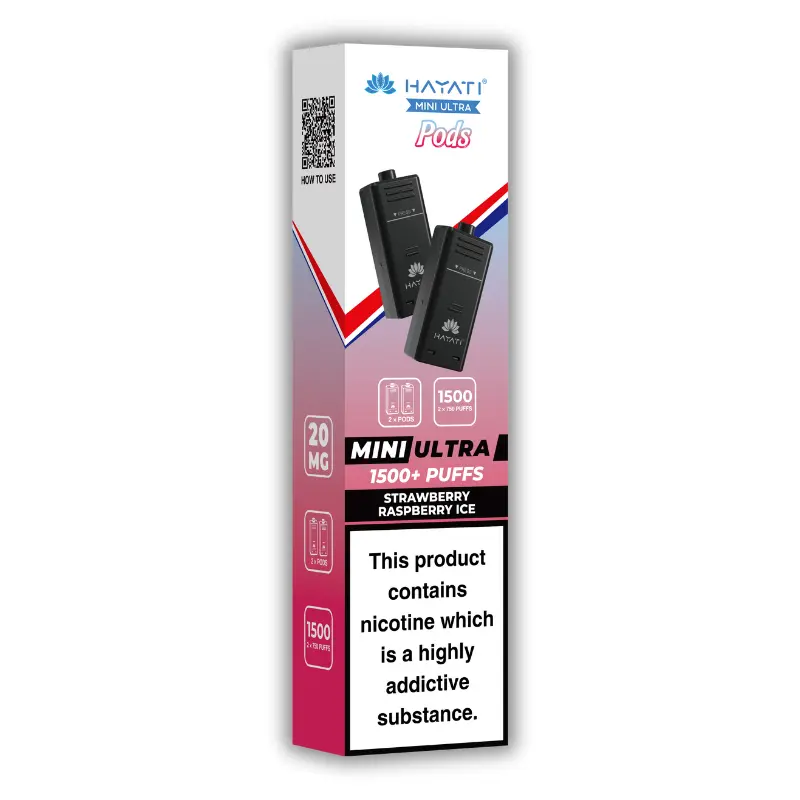
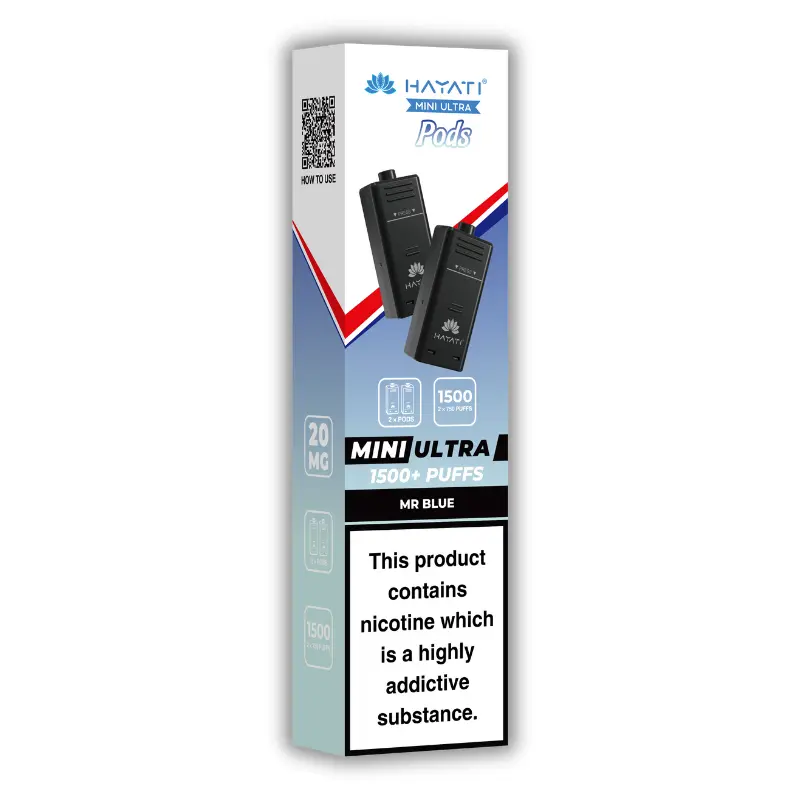
Summer Dream is the least specified thing in the range, a name that sets a mood and lists no fruit, so the 4ml test is doing more work here than anywhere else on the shelf. Read it as a bright mixed-fruit blend with nothing taking the lead, and treat the pod as the only honest way to find out what Hayati meant by it. Mr Blue is the same problem in a different colour, naming no fruit at all and leaning, as blue-labelled liquids generally do, towards bold and sugary berry.
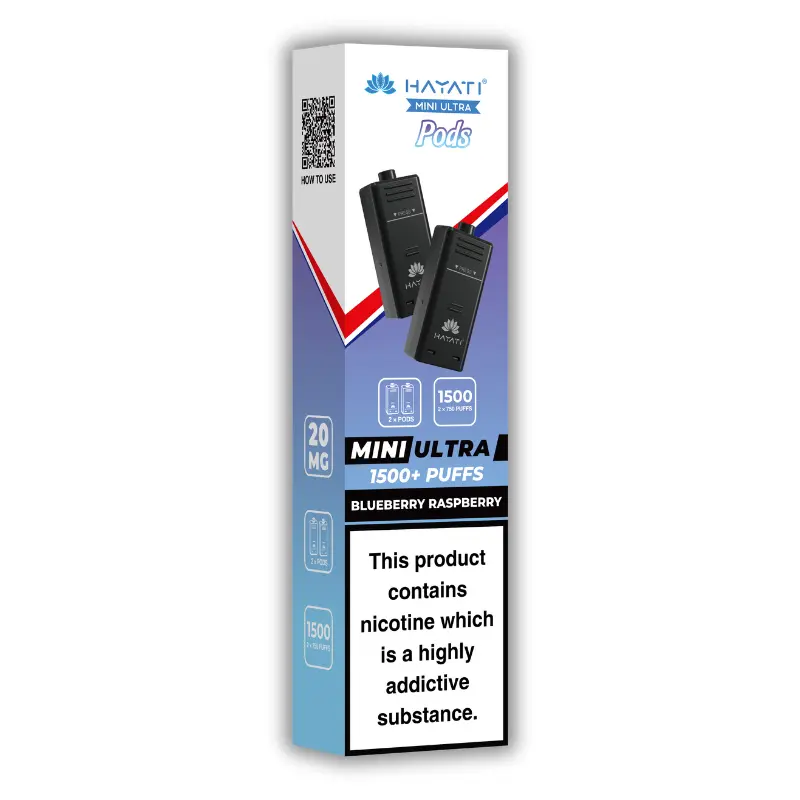
The berry entries in this group are more predictable. Blueberry Raspberry is the plain, uncooled pairing: jammy dark fruit with a tart lift over the top and neither berry winning. Strawberry Raspberry Ice takes red fruit and puts cold behind it, with the raspberry supplying the sharp edge. Blue Sour Raspberry sits sweet and sour in equal parts, with a mouth-watering quality that keeps resetting the palate across a session. Blue Razz Cherry lays a bright, sugary tang over a dark cherry body, so each draw has a top and a bottom. Blue Razz GB takes the same blue profile and rounds its edges off with a soft confectionery finish, which makes it the sweetest of the four and the one with the least bite.
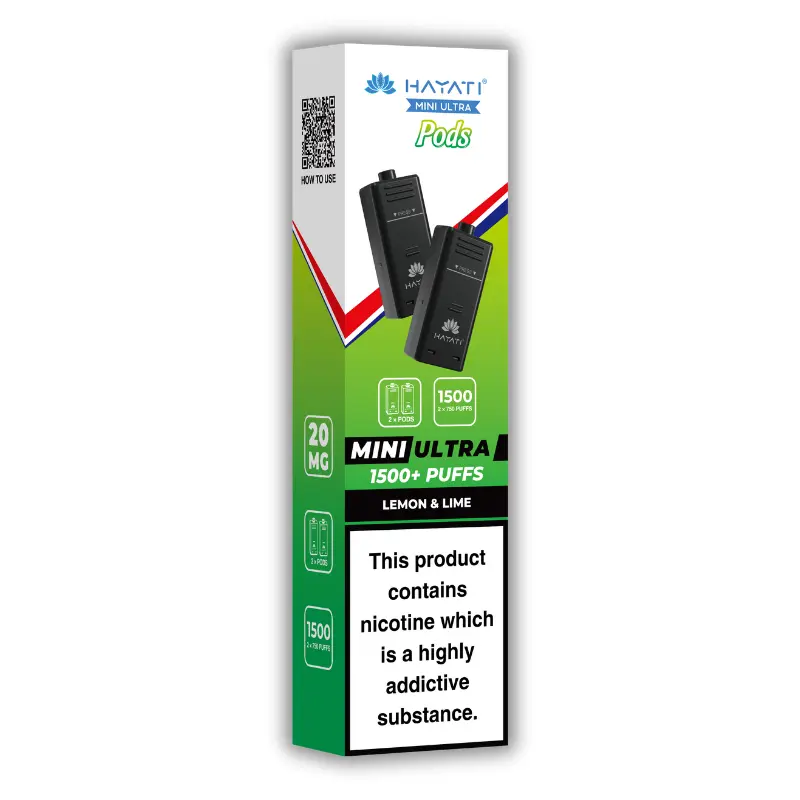
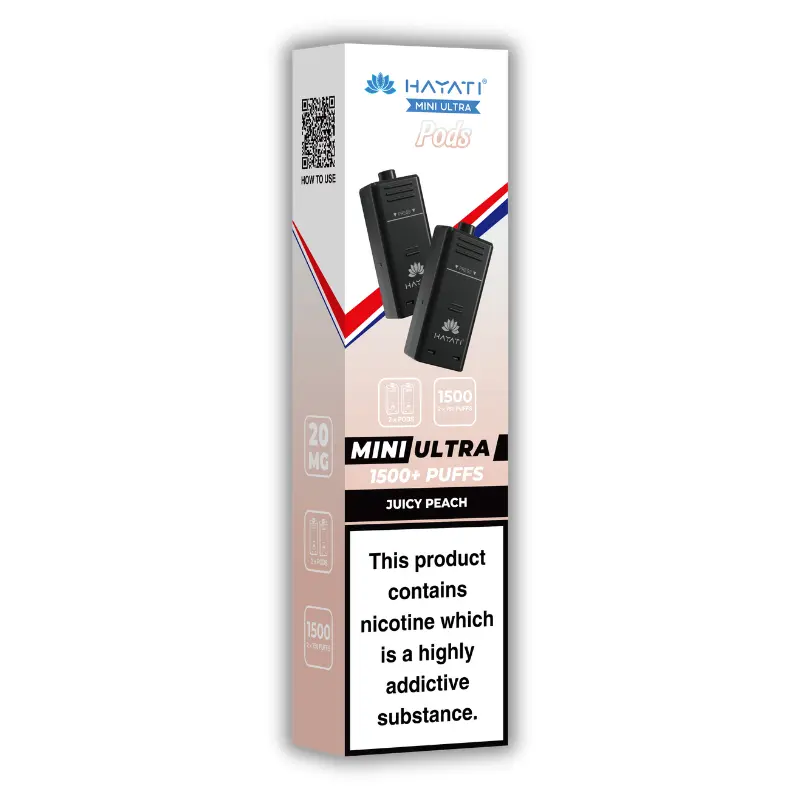
Two non-berry entries complete the group. Juicy Peach is a single stone fruit with no cooling and no sour layer, mellow enough to be genuinely uneventful, which is the point of it. Lemon Lime is the driest thing on the shelf: sour lemon, grassy lime, no sugar propping either of them up, and it functions as a palate reset when the rest of a rotation has gone sweet.
Eight of these nine also exist as 10ml bottles under Hayati Pro Max Nic Salts, the exception being Blue Razz GB. That matters if your eventual destination is refillable hardware rather than a prefilled body, and it is covered properly further down, because the bottled route carries a strength catch that is easy to miss.
Eight that reach the two large prefilled lines but not the Rubik
This group exists as Pro Max Plus and Pro Ultra Plus pods but has no Rubik equivalent. If your hardware is a Rubik, a verdict on any of these eight is a dead letter unless you are also willing to change device.
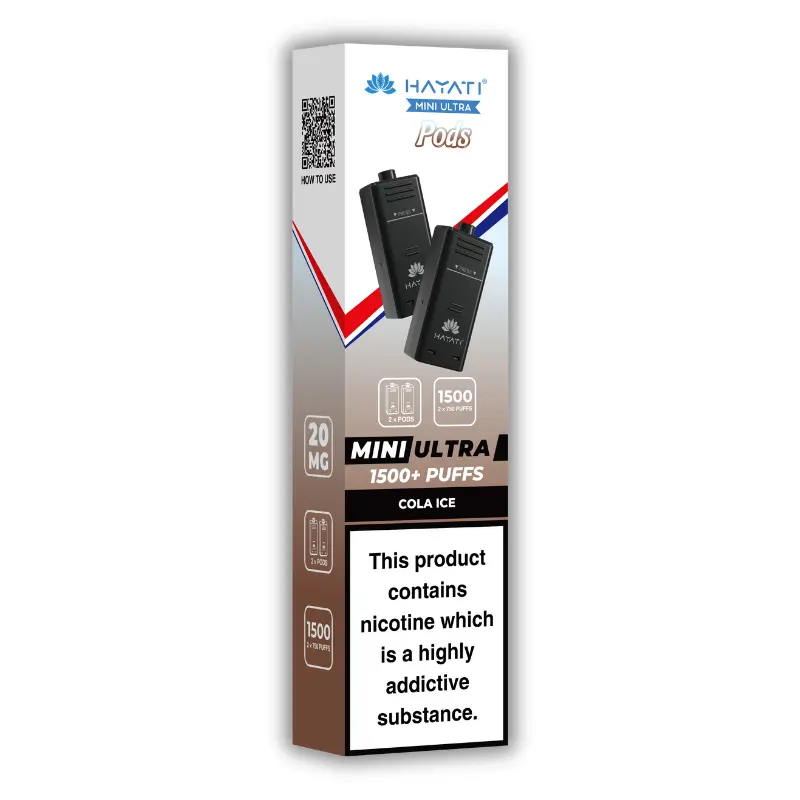
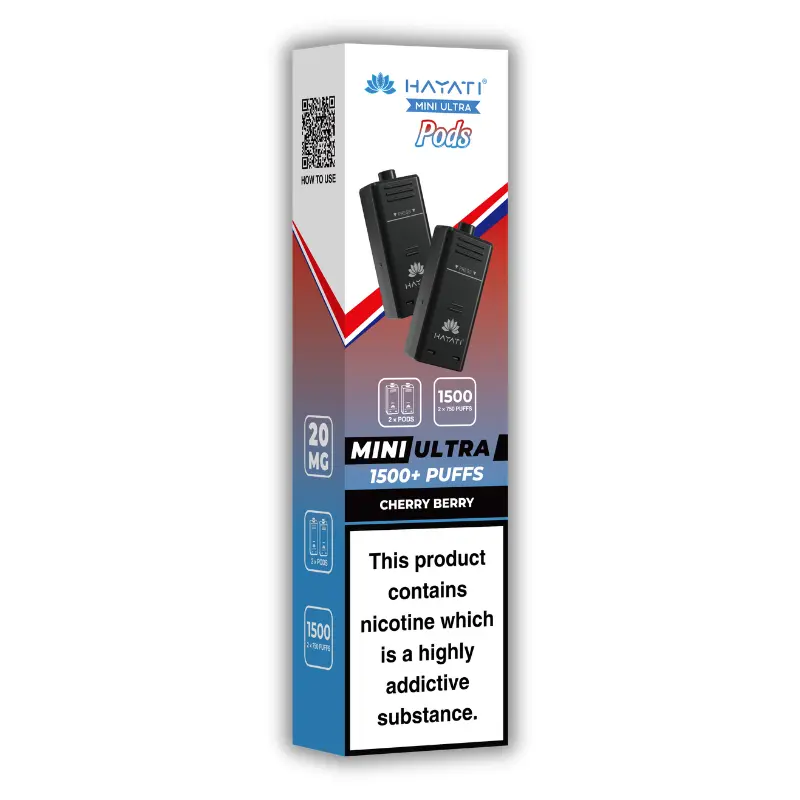
Cherry Berry puts a rich, faintly tart cherry in front of a mixed-berry background, sitting at the darker and fuller end of fruit rather than the zingy end. Cola Ice is the only soft-drink profile in the range, faintly spiced and caramel-edged with a chill that stops the sweetness settling, and it is the obvious break if everything else in your rotation is berry. Blackcurrant Lemonade pairs a deep, tart dark berry with a zesty lift, which is a familiar British drink combination and behaves like one.
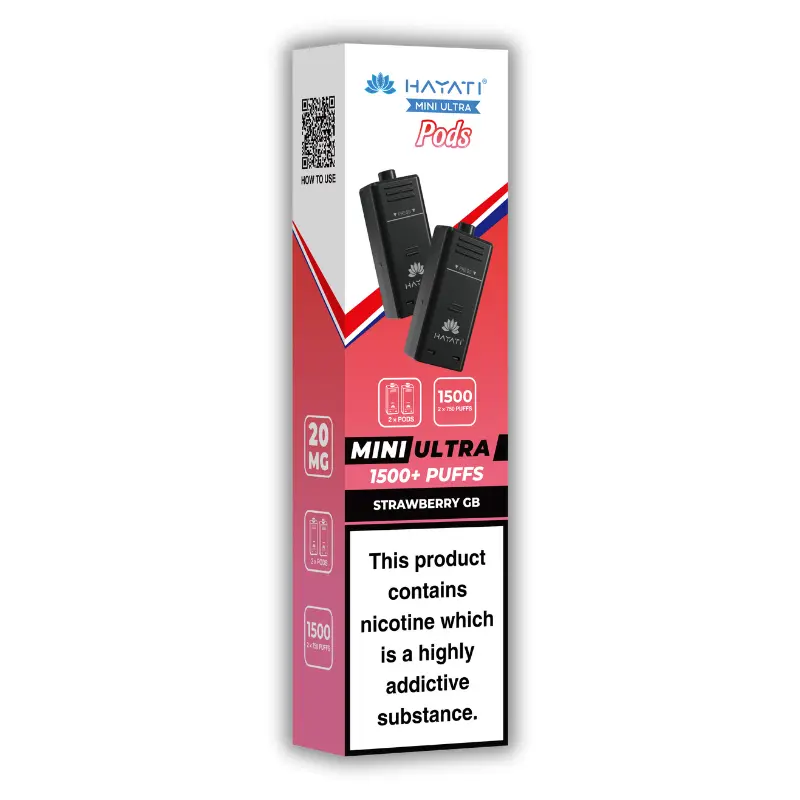
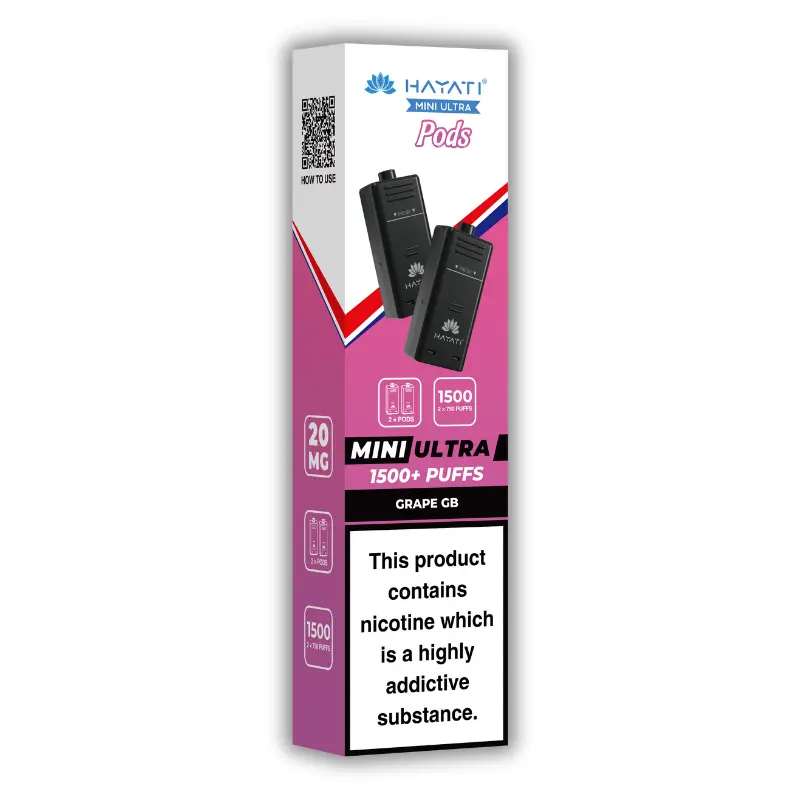
Sweetness runs high in the rest of the group. Grape GB is the heaviest flavour on the shelf: dark, concentrated purple fruit with a plump sugary body and almost no tartness working against it. Strawberry GB is the lighter version of the same idea, strawberry in sweet-shop form rather than off the plant. Both use the GB suffix, which marks a rounded confectionery finish laid over a fruit rather than a fruit in its own right, and both push several steps towards sugar as a result.
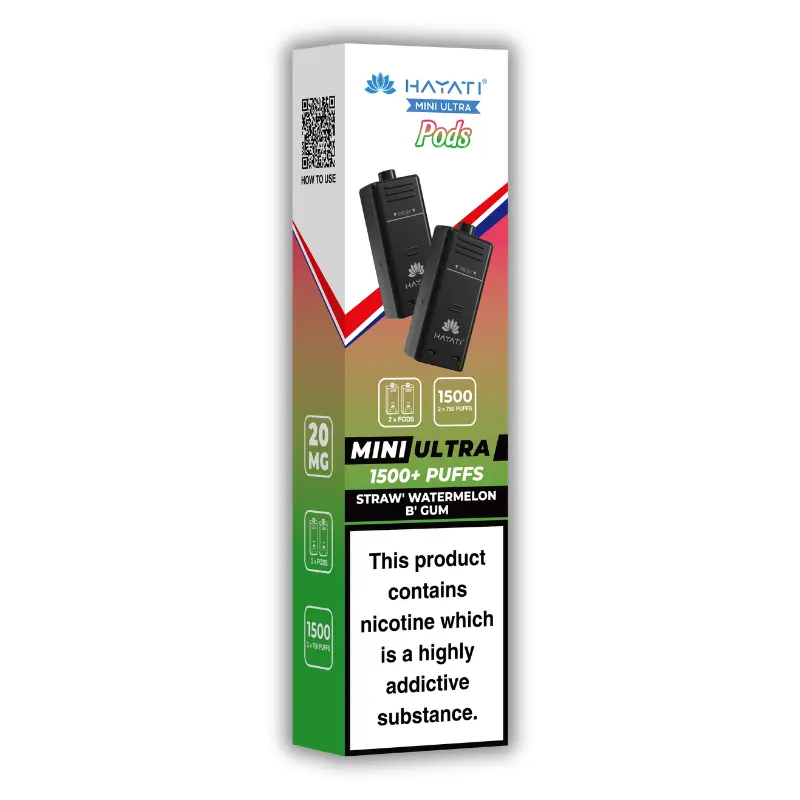
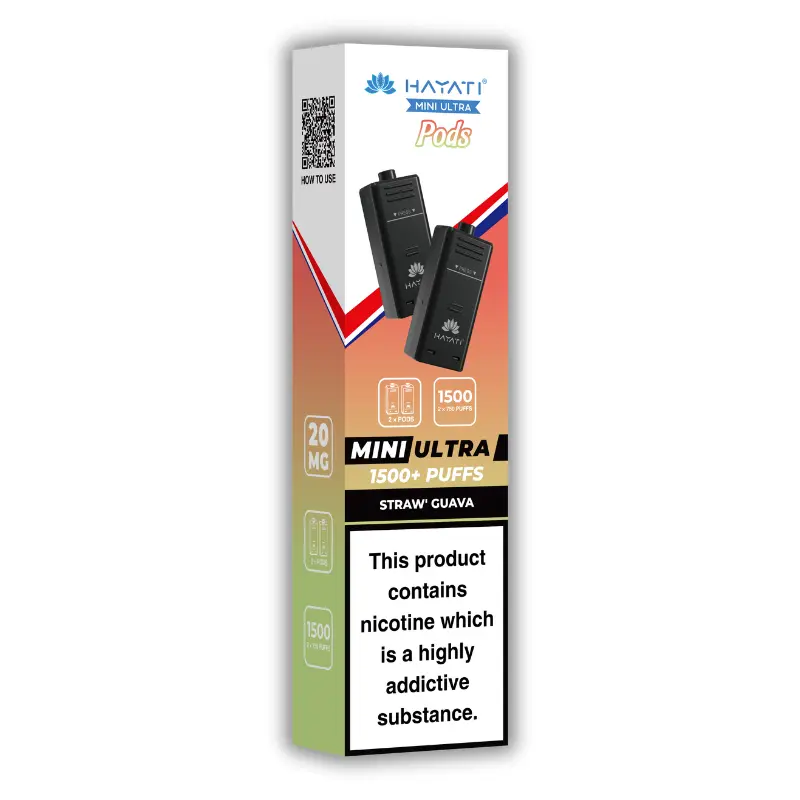
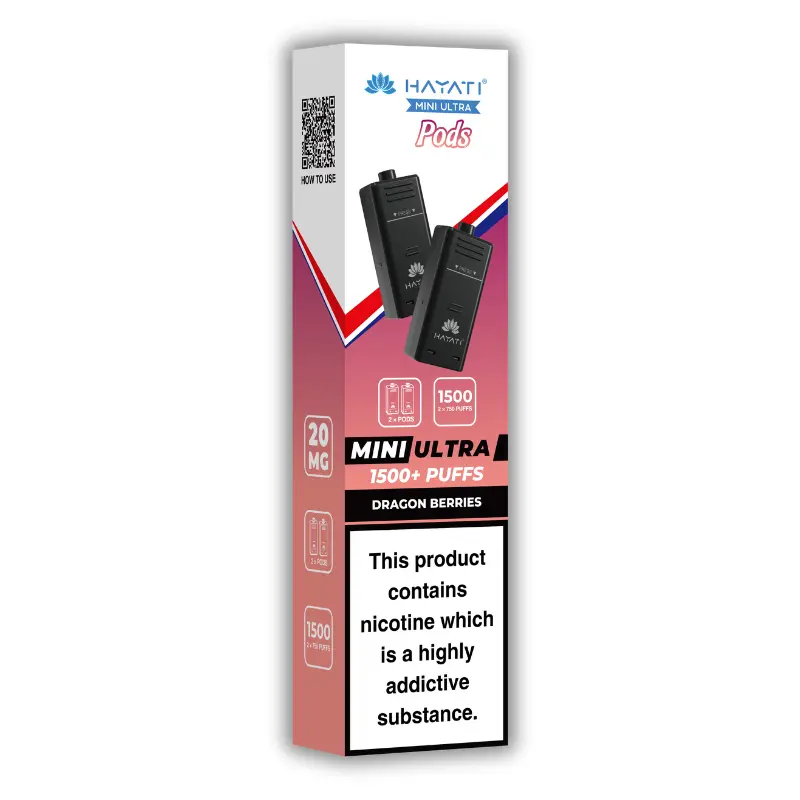
The remaining three are the range's tropical and mixed entries. Straw’ Guava uses guava's fragrant, slightly floral character to lift a familiar strawberry base without abandoning it. Dragon Berries softens a mixed-berry blend with a mild, faintly tropical note that takes the edges off. Blue Razz Pineapple is the liveliest of the three, since blue raspberry tang and pineapple sharpness reinforce each other instead of cancelling out.
Eleven that reach Pro Ultra Plus and nowhere else
Eleven flavours on this shelf have exactly one larger home. If you own or intend to own a Pro Ultra Plus body, these are testable in the ordinary way. If you do not, a verdict on any of them is worth nothing beyond this shelf, and you should know that before you spend the £3.49 rather than afterwards.
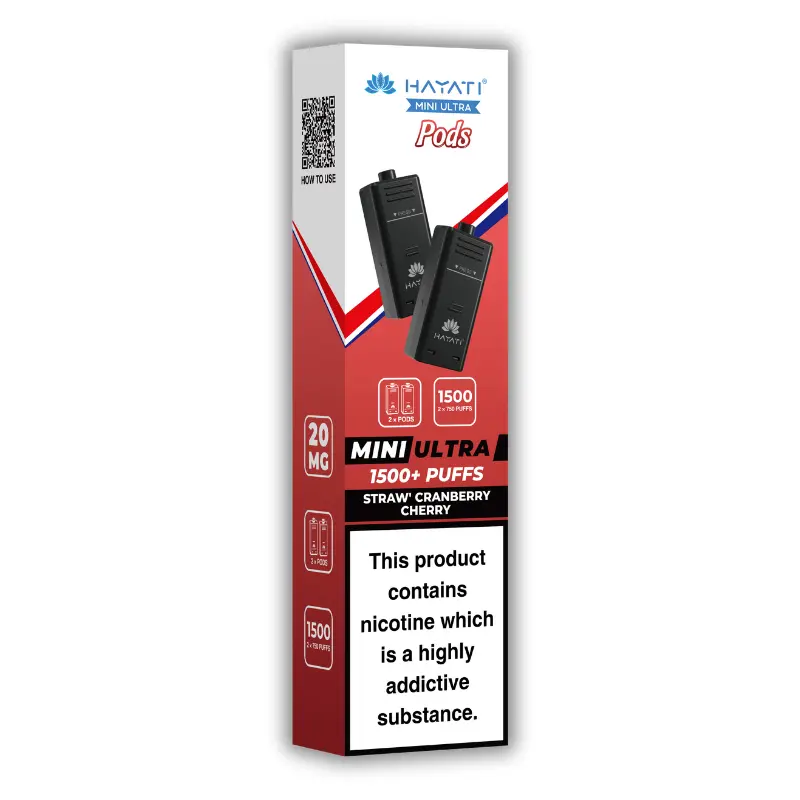
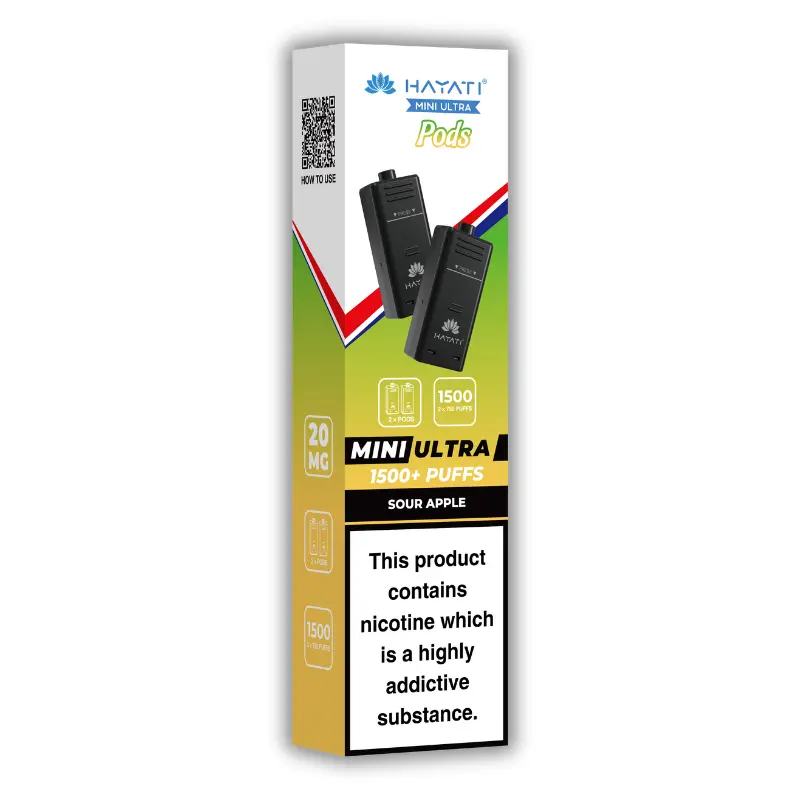
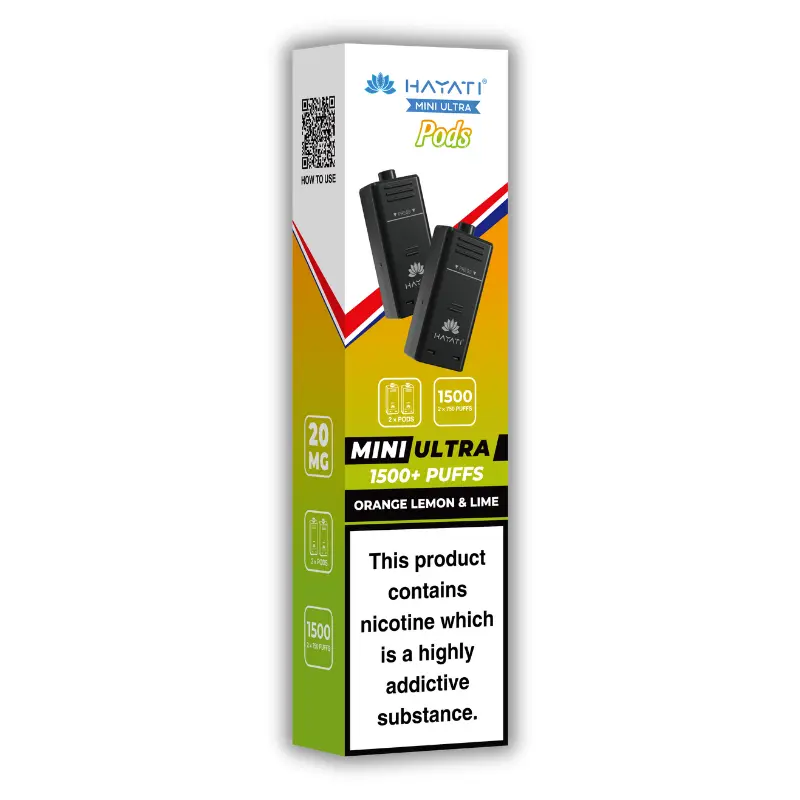
Three sit at the sharp end. Sour Apple leads with a sour dusting over crisp green apple and keeps just enough sweetness behind it to stop the tang being the only event. Straw’ Cranberry Cherry is the most layered liquid in the range, using a dry cranberry snap to stop a three-fruit red blend turning syrupy. Orange Lemon Lime puts a juicy orange base underneath the citrus pair, which softens the sharpness into something that survives a whole pod rather than a few draws.
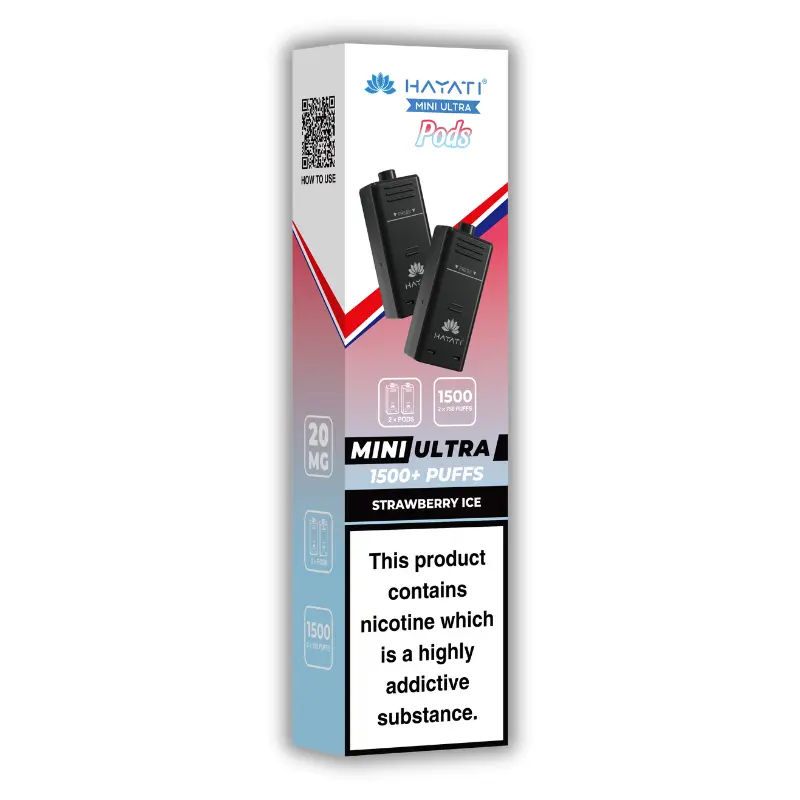
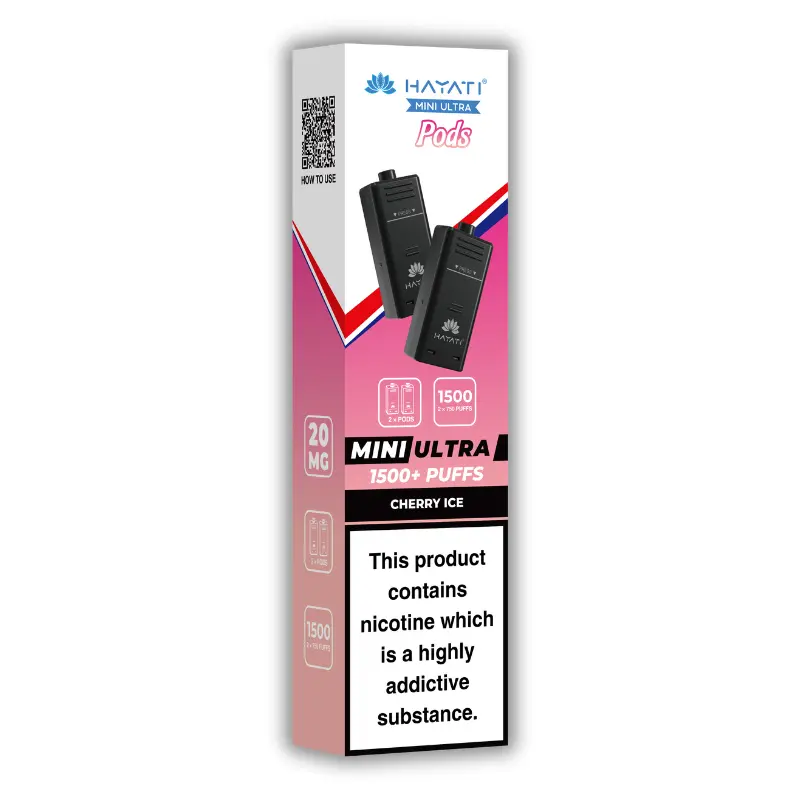
Two are cold and single-minded. Strawberry Ice is one ripe berry and one cold finish with nothing else competing, which makes it the simplest thing on the shelf and a useful control if you are trying to calibrate the rest. Cherry Ice runs darker and richer, the ice sharpening a deep, faintly tart cherry rather than chilling a light one.
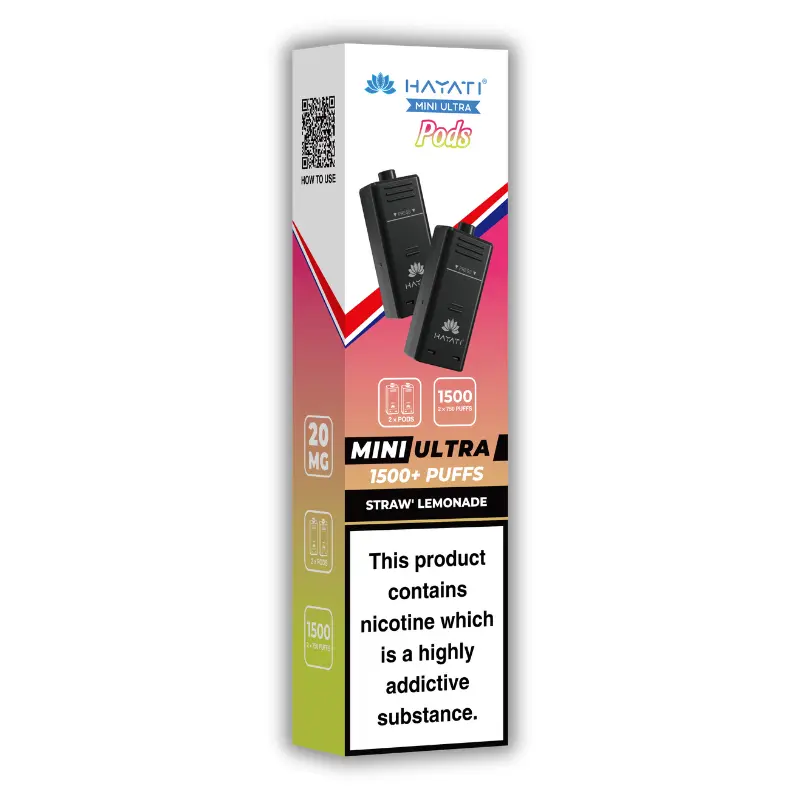
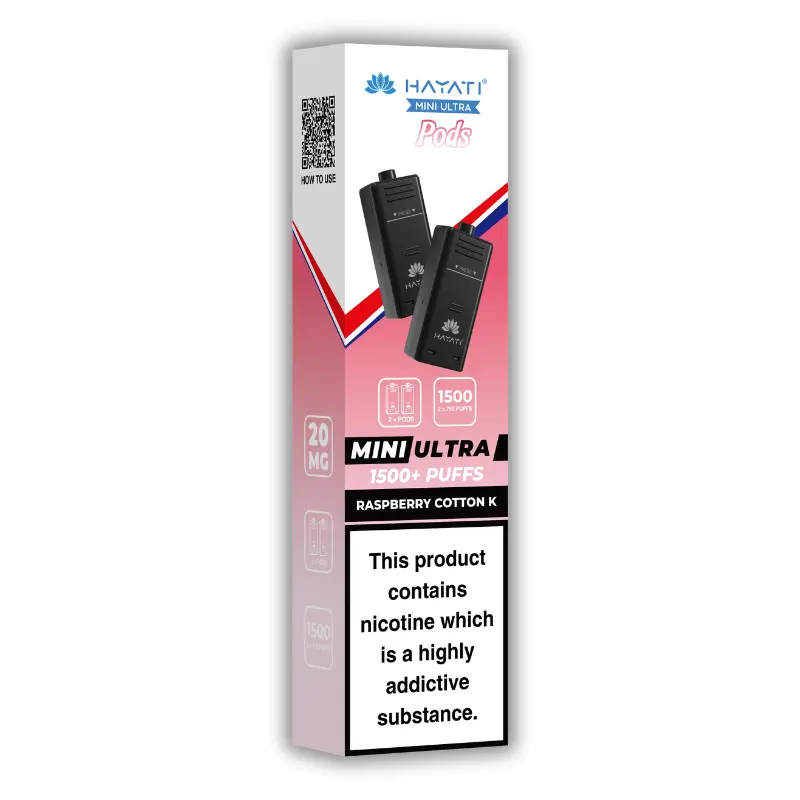
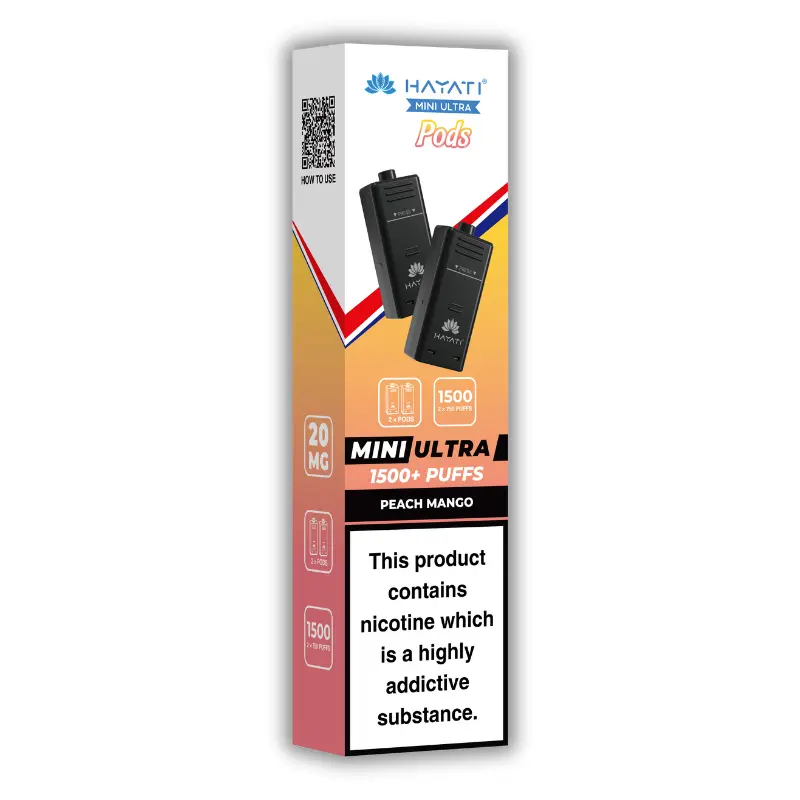
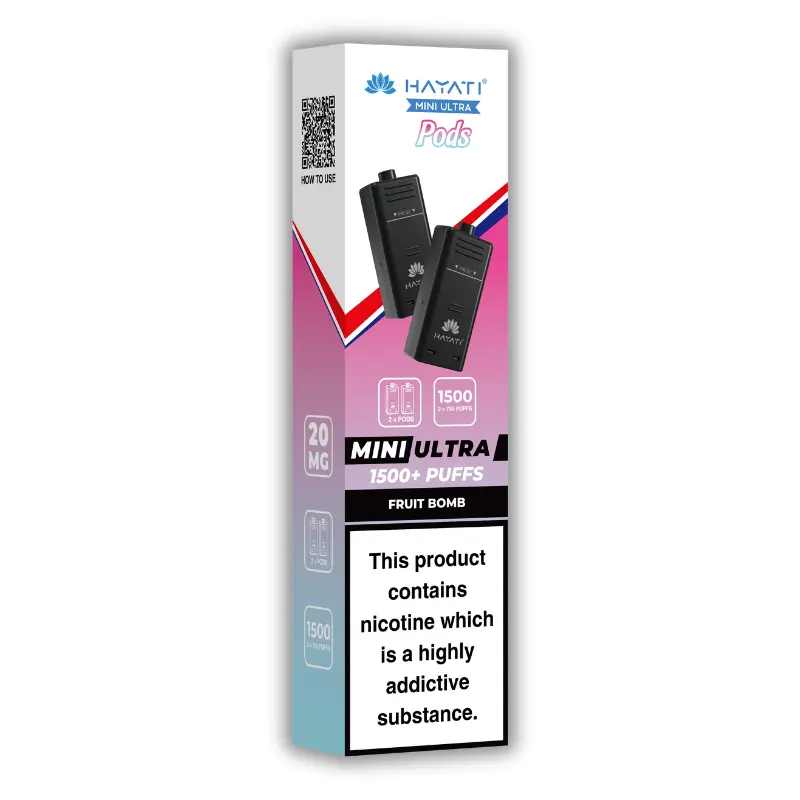
Sweet and soft describes the rest. Raspberry Cotton K keeps a bright berry tang at the front so the spun-sugar finish never turns sickly, while Blueberry Cotton K drops most of the tang and becomes smoother and cosier for it. The two are the clearest matched pair on the shelf and, at £6.98 for both, the single most instructive purchase here if what you want to learn is how much a base fruit changes a shared sweetener. Strawberry Watermelon Bubblegum leads on fruit and finishes on gum, and the gum lingers longer than any other finish in the range. Fruit Bomb stacks several fruits with none in charge, built for size rather than definition. Peach Mango thickens a delicate stone fruit with tropical body and has no sharp edges anywhere in it. Straw’ Lemonade is the gentler of the two lemonades, with ripe strawberry taking the edge off the citrus lift.
Two that reach nothing at all
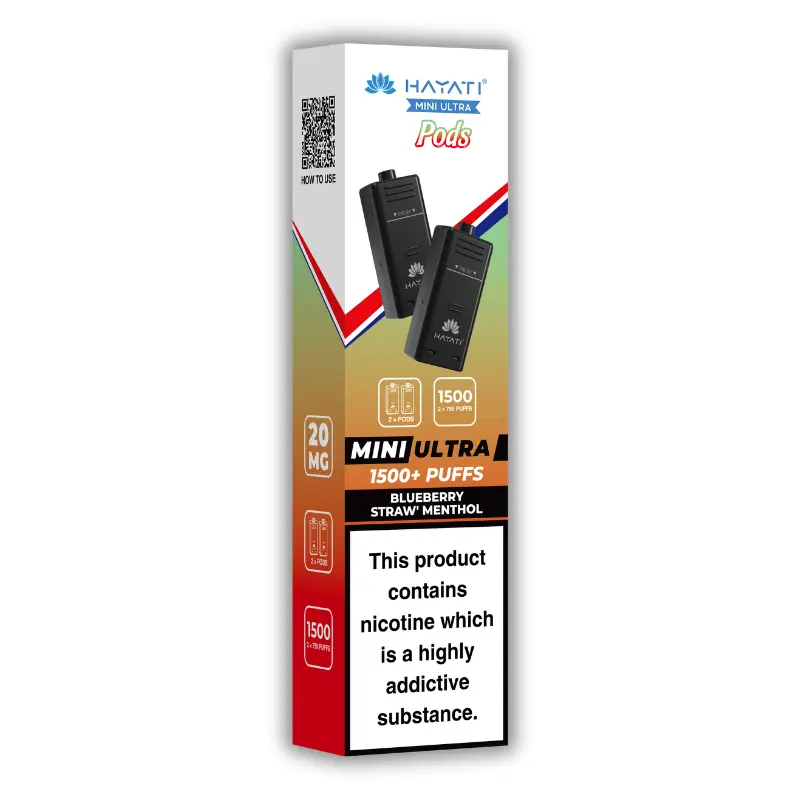
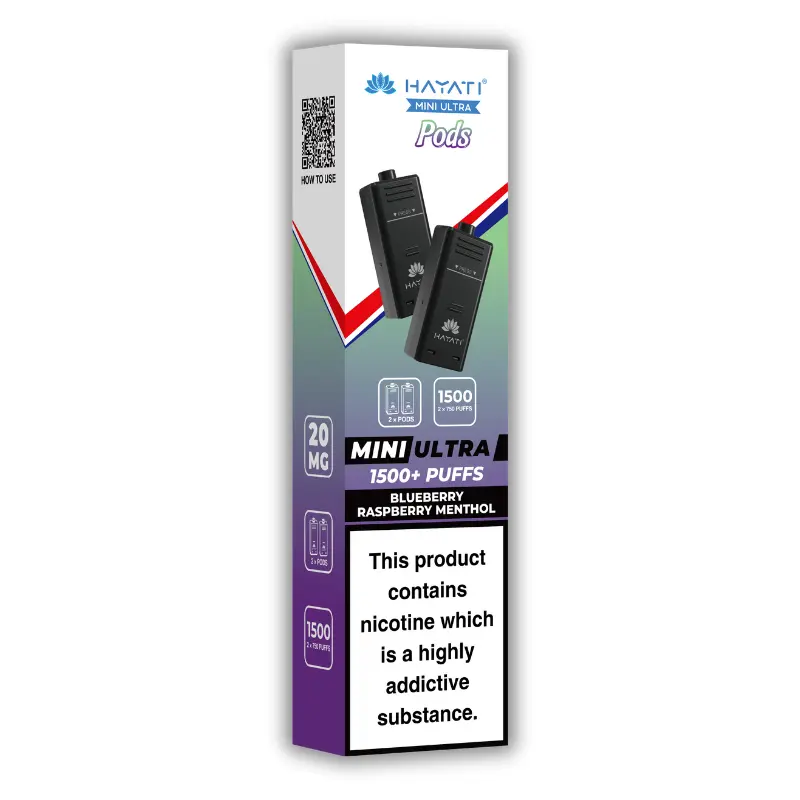
Now the finding that surprised me. Blueberry Straw’ Menthol and Blueberry Raspberry Menthol are the only two fruit-and-menthol blends in the entire 492-line Hayati catalogue. Everything else carrying the word menthol is menthol on its own or menthol with a drink profile, and the mint-family entries scattered across the other ranges are mint rather than menthol laid over berries. Whether Hayati grade their cooling words at all has been counted elsewhere in this catalogue and the answer was no, so do not read the choice of menthol over ice as a strength indicator. Read it as a different effect: menthol tends to sit as clarity through a flavour where ice arrives as cold on the exhale.
The consequence is blunt. These two cannot be sampled, because sampling implies a larger purchase waiting at the end of it, and there is no larger purchase. They are the only way to buy these liquids, in this range, in this format, at this capacity. If you like one, you are on this shelf permanently, paying 87p a millilitre indefinitely, and the sampling argument that justifies the rest of the page does not apply to you. That is worth knowing before you fall for one rather than after.
The pair are also the most direct comparison available here, because they differ by one fruit and nothing else. The strawberry version is the mellower of the two, with soft red and dark fruit under the chill. Swapping strawberry for raspberry makes it noticeably livelier, since the tartness and the cooling amplify each other. Two pods, £6.98, and you learn precisely what a single fruit substitution does under a fixed cooling load. That is a better use of seven pounds than most things on this shelf.
The thirteen where the follow-up purchase is not a single flavour
One more layer, and it cuts across all four groups above. Of the twenty-eight flavours here that exist on the Pro Ultra Plus, only fifteen exist as a pod carrying that flavour alone. The other thirteen appear only inside a listing that names two flavours with an oblique between them, and a dual-named Pro Ultra Plus listing is a single 22ml pod split between two liquids with a collar that selects which one feeds the coil. It is not two pods and it is not separable.
So for those thirteen, the follow-up purchase you are testing towards does not exist in the form you want. You can validate Grape GB for £3.49 and then discover that buying it at 22ml means sharing the pod with Strawberry GB whether you wanted that or not. The same applies to Straw’ Guava, Dragon Berries, Blue Razz Pineapple, Strawberry GB, and to eight of the eleven in the Pro Ultra Plus only group, including Sour Apple, Peach Mango, Fruit Bomb, Strawberry Ice, Straw’ Cranberry Cherry and both Cotton K flavours.
Nine flavours survive every filter: available on all three other platforms, and available as a single-flavour pod on the largest of them. Those nine are the ones where the sampling argument is airtight, and it is no accident that they are the range's most conventional profiles. Novelty is exactly where the instrument works least well, which is an irritating result, because novelty is what most people want to test.
The decisions this shelf actually forces
Which flavour to spend the first £3.49 on
Start with the unlabelled ones if you are curious, and with the portable ones if you are practical. Summer Dream and Mr Blue publish no ingredient list at all, so nothing written about them anywhere, this page included, is worth as much as four millilitres of actually vaping them. Both are in the group of nine, so a positive verdict travels. That combination, high uncertainty and full portability, is the ideal case for a small pod and there are only two of them on the shelf.
If you are testing towards a specific device, invert the process. Work out which flavours your device can take, then pick from that subset only. Owning a Pro Ultra Plus body opens twenty-eight of the thirty to you. Owning a Pro Max Plus body opens seventeen. Owning a Rubik opens nine, all of them conventional. Testing outside your subset is a £3.49 lesson in liquids you cannot buy.
How many to buy at once, and how to run them
Buying one pod at a time is the natural instinct and it is the wrong one, for a reason that has nothing to do with postage. A verdict formed in isolation is unreliable. You will know that you liked something, but not whether you liked it more than the alternative you did not have in front of you, and the whole point of testing is comparison. Buy in pairs at minimum, and buy pairs that differ in one variable: the two Cotton K flavours, the two menthols, Blueberry Raspberry against its menthol version, Straw’ Lemonade against Blackcurrant Lemonade. A pair that differs in one thing teaches you something. Two random pods teach you two facts and no principle.
Run them consecutively rather than alternately if you can manage it. Switching back and forth between pods within a session gives you carryover rather than a clean read, and a pod is small enough that finishing one before starting the next is not much of an imposition. If you must run them together, at least give the palate a gap, and treat the first few draws after a switch as unreliable.
How much of a pod you need before the verdict counts
Less than you think, and more than one draw. The first two or three pulls on a fresh pod are not representative, because the wick has only just taken up liquid and the coil has not settled. After that, most people know within a few minutes whether a flavour is wrong. What takes longer is finding out whether a flavour is tiring, and that is a genuinely different question, because sustained sweetness dulls your own perception of it. A sugar-forward liquid that delights on day one can feel flat by the last millilitre, and that is your palate rather than the liquid degrading.
Four millilitres happens to be about the right size for both questions. It is long enough to expose fatigue, which a shop-counter draw cannot do, and short enough that discovering fatigue does not cost you a fortnight. If you have previously written off sweet profiles because they exhausted you on a large-capacity device, that is precisely the thing worth retesting at this capacity before you decide the flavour was at fault.
The bottled alternative, and the catch in it
An obvious objection: a 10ml bottle of Hayati nicotine salt is £2.49, which is less money than a 4ml pod and works out near 25p a millilitre. Why sample here at all? Three reasons, and the third is the one that decides it.
First, the bottle requires refillable hardware, so it is not an option unless you already own some. Second, the bottled range and this shelf do not carry the same flavours: fifteen of these thirty exist as bottles and fifteen do not. Third, and decisively, every bottle in the Pro Max Nic Salts line is 10mg while every pod on this shelf is 20mg. A flavour at half the nicotine strength in different hardware is not the same experience, and a verdict formed on one does not reliably transfer to the other.
There is a curiosity in the arithmetic worth noting anyway. The premium you pay for four millilitres here, measured against the bottled rate, is £2.49, which is exactly the price of the bottle. Testing a flavour at pod strength costs the same as simply buying the bottled version of it outright. That is a coincidence rather than a conspiracy, but it does sharpen the point: if a 10mg bottle would answer your question, buy the bottle and skip this shelf entirely.
When the answer is simply no
Four situations where this shelf is the wrong purchase, stated plainly. You know your flavour and are restocking: buy the format that carries it and save yourself 54p a millilitre. You own a Rubik and nothing else: nine of thirty are relevant and the break-even sits above a fifty per cent rejection rate, so the maths does not work. You get through liquid quickly and hate handling hardware: a 4ml fill will put you back on this page constantly. You do not own a Mini Ultra body: a pod is not a device, and the twenty pod kits that include one are the correct starting point instead.
Thirty listings, twenty kits, and why the counts differ
An asymmetry worth explaining, because it looks like a gap in the range and is not. This shelf carries thirty listings. The kit shelf carries twenty. The obvious inference, that the kit tier offers fewer flavours, is wrong: both tiers cover the same thirty flavours. Eleven of the twenty kit listings name two flavours with an oblique between them, and expanding those brings the kit count back to thirty exactly, with nothing available on one tier and missing from the other.
What differs is not coverage but determinism, and for a shelf used as a sampling instrument determinism is the whole game. Every listing here names exactly one flavour, so you know precisely what arrives. Eleven kit listings name two, and the listing does not state which of the pair is in a given box or whether both are. For ordinary restocking that ambiguity is a minor annoyance. For testing it is fatal, because a test whose subject you cannot specify is not a test. If your purpose is to answer a flavour question, buy the pod, not the kit, and accept that the 50p you save by not buying a body is beside the point.
The pairings themselves are informative even though you cannot rely on them. Look at which flavours Hayati put together and the logic of the range shows through: the two Cotton K flavours share a listing, the two GB flavours share a listing, the two menthols share a listing, and the two lemonades share a listing. Each pair is two near neighbours, which means the kit tier has quietly grouped the flavours you are most likely to struggle to distinguish. That is a useful map of where the range doubles up, and it is the reason the matched-pair testing method above works as well as it does.
On fitment, a caution rather than a claim. These are sold as Mini Ultra pods, Hayati publish no cross-range fitment table that I can point you at, and you should not take a compatibility decision from a retail page, ours included. Check the range name printed on your device and match it. Nothing on this page is a hardware specification.
The routine that goes with a small fill is short and worth getting right, because you will be performing it often. Seat the pod, then leave it a minute or two before the first draw so the wick can take up liquid, and open with two or three gentle pulls rather than a hard one. The most common cause of a thin or harsh first draw is impatience, and it costs nothing to avoid. Keep spares upright, sealed and out of direct sun. A pod at this capacity does not announce its ending, it thins out, and the temptation to squeeze another day out of one that has stopped tasting right is worth resisting. Used pods are not household waste, and neither are the bodies, which hold a lithium cell and belong at a designated collection point.
Why every pod costs the same, and what that hides
Price spread on this shelf is zero. Thirty listings, one figure, £3.49 from the first to the last. That is unusual enough to be worth a paragraph, because on most shelves price does useful work: it separates the bottled from the prefilled, the small from the large, the plain from the elaborate. Here it separates nothing.
The practical effect is that the grid above cannot be sorted into anything meaningful by price, and any instinct that the dearer ones must be better has nowhere to attach. Everything costs the same because everything is the same object with different liquid in it. A three-fruit blend with a cranberry snap in it costs what a single-fruit peach costs, and Hayati are making no statement about relative complexity by charging identically. If you were hoping price would narrow thirty options down to five, it will not, and the transferability groups above are the closest thing to a filter this shelf offers.
Pack size is equally flat. These are sold as single pods with no multipack listing anywhere, so a five-flavour comparison is five separate line items at £3.49 each rather than a bundle, and there is no volume break to chase. The only quantity discount available on the whole shelf is the delivery threshold at £20, which six pods clears and five do not.
Set against the kit tier, the gap is 50p: £3.49 for the pod, £3.99 for a pod with a body under it. That is the smallest hardware premium of any Hayati prefilled range, which produces an odd situation where there is very little financial pressure to reuse a device. The reason to buy the pod is not the 50p. It is that a battery bought for four millilitres of liquid and then discarded is a poor outcome for something capable of running through dozens of pods, and that a device you already know is one you do not have to learn.
Where to go from this shelf
If the transferability groups above sent you somewhere, follow them. Hayati Pro Ultra Plus Pods is the destination for twenty-eight of these thirty and the platform against which the sampling case is strongest, since a £7.99 mistake at 22ml is the most expensive flavour error in the catalogue. Hayati Pro Max Plus Pods takes seventeen of them at 12ml, where the break-even is looser but still favourable. Hayati Rubik Pods takes nine, and is also where anyone who has finished asking questions should be buying, because a third of the per-millilitre cost is a third of the per-millilitre cost.
For hardware rather than liquid, Hayati Mini Ultra Prefilled Pod Kit holds the twenty kit listings and Hayati Mini Ultra holds both tiers together with the device-side arguments worked through in more depth than there is room for here. For bottled liquid at 10mg, Hayati Pro Max Nic Salts and the wider Hayati E-Liquids shelf are the refillable route, with the strength difference noted above.
By flavour family, seventeen of these thirty carry a berry of some kind and sit alongside the rest of the catalogue's berry entries on Berry Vapes, while the four with ice in the name appear on Ice Vapes. The full picture across every platform and format is on Hayati Pods and Hayati Prefilled Pods & Refills, and everything Hayati make is on the full Hayati range.
Before you order
The verdict on this shelf is two-sided and both sides are true at once. As a way of buying liquid it is the worst deal Hayati offer, by a margin of two and a half times against the Rubik, and nobody restocking a known flavour should be here. As a way of buying answers it is the only instrument in the catalogue, because 4ml is the smallest sealed fill anybody makes in this range and every alternative asks you to commit three to five times as much liquid to a question you have not answered yet.
Use it deliberately, then. Know which body you are testing towards before you spend, because that decides whether twenty-eight, seventeen or nine of these thirty are even relevant to you. Buy in matched pairs rather than singly, so the comparison teaches you a principle instead of a fact. Accept that the two menthols are a destination rather than a test, since nothing larger exists to move on to. And when the questions run out, leave. The shelf is a good instrument and a bad habit, and knowing the difference is most of what this page had to say.
Strictly for adults aged 18 and over. Nicotine is an addictive substance.
Frequently asked questions
Why does a 4ml Mini Ultra pod cost more per millilitre than a 22ml pod?
Because the parts that are not liquid do not shrink with the fill. A shell, coil, wick, mouthpiece, seal and carton cost roughly the same whether they wrap 4ml or 22ml, so spreading them over fewer millilitres raises the rate. At £3.49 for 4ml this shelf works out at 87.25p a millilitre against 36.3p for a £7.99 Pro Ultra Plus pod and 33.25p for a £3.99 Rubik pod. The curve is ordinary economics rather than anything specific to Hayati, and it is why the honest case for a small pod has to rest on something other than value.
Is 87p a millilitre ever worth paying?
Only while you are still deciding. Measured against the rate of the platform you intend to settle on, the premium on a 4ml test comes to about £2.04 if that platform is Pro Ultra Plus, £1.66 if it is Pro Max Plus and £2.16 if it is the Rubik. The test pays for itself when it stops you wasting a larger pod, so it pays at roughly a one in four rejection rate against an £7.99 pod, three in ten against a £5.49 pod, and better than one in two against a £3.99 pod. If you already know what you like, none of those apply and the premium is pure cost.
Which of these thirty flavours can I buy again on another Hayati device?
Twenty-eight of the thirty exist as Pro Ultra Plus pods, seventeen as Pro Max Plus pods and nine as Rubik pods. The nine that appear on all three are Summer Dream, Mr Blue, Blueberry Raspberry, Strawberry Raspberry Ice, Blue Sour Raspberry, Blue Razz Cherry, Blue Razz GB, Juicy Peach and Lemon Lime, and those are the only flavours here where a verdict is fully portable whatever hardware you end up with. Check your own device against that list before spending, because testing a flavour you cannot rebuy is just an expensive four millilitres.
Are any Mini Ultra flavours exclusive to this range?
Two are. Blueberry Straw’ Menthol and Blueberry Raspberry Menthol are the only fruit-and-menthol blends in the whole 492-line Hayati catalogue, and they exist on the Mini Ultra pod and kit tiers and nowhere else. Everything else in the catalogue carrying the word menthol is menthol alone or menthol with a drink profile. If you like either of them, there is no larger format to graduate to, so the sampling logic that justifies the rest of this shelf does not apply and you are buying at 87p a millilitre for as long as you keep buying them.
I own a Rubik. Should I use this shelf to choose flavours?
Generally no, on two counts. Only nine of the thirty have a Rubik equivalent, so two thirds of what you could test here is unbuyable on your device. And a Rubik pod costs £3.99, so the £2.16 premium on a 4ml test only pays off if you reject more than half of everything you try, which is a high failure rate for conventional fruit blends. Buying the Rubik pod directly and accepting the occasional miss is usually the cheaper strategy. The exception is if you are considering moving to a larger platform anyway, in which case the test is protecting a bigger purchase.
Why are there thirty pods here but only twenty pod kits?
The flavour coverage is identical. Eleven of the twenty kit listings name two flavours with an oblique between them, and expanding those gives exactly the same thirty flavours as this shelf, with nothing exclusive to either tier. What differs is precision: every listing here names one flavour, so you know what arrives, while a two-name kit listing does not state which of the pair is in the box. For restocking that hardly matters. For testing a specific flavour it matters completely, which is why the pod tier is the right one for that purpose.
Would a 10ml bottle be a cheaper way to test a flavour?
On price alone yes, at £2.49 for 10ml, which is near 25p a millilitre. Three things complicate it. The bottle needs refillable hardware you may not own. Only fifteen of these thirty flavours exist as bottles. And every bottle in the Hayati nic salt line is 10mg while every pod here is 20mg, so you would be forming a verdict at half the strength in different hardware. There is also a neat arithmetic accident worth knowing: the premium on a 4ml pod test, measured against the bottled rate, comes to £2.49, which is the price of the bottle itself.
What does the 1,500 puff figure mean in practice?
It is a laboratory rating Hayati publish for these pods, produced under controlled test conditions rather than measured from anybody's real use, and draw length, draw frequency and how hard you pull all move the real figure in either direction. Treat it as a statement about design intent instead of a promise: 4ml with a rating of that size describes a unit built around a short replacement cycle. How often you are actually changing pods depends entirely on your own habits, and the only reliable way to find out is to time your first one.
How much of a pod do I need to vape before I can judge the flavour?
Skip the first two or three draws, because the wick has only just taken up liquid and nothing tastes representative yet. After that, most people know within a few minutes whether a flavour is wrong for them. The slower question is whether it is tiring, which is different and takes most of the pod to answer, since sustained sweetness dulls your own perception of it rather than the liquid changing. Four millilitres is a reasonable size for both questions: long enough to expose fatigue, short enough that finding it does not cost you a fortnight.
Can I buy these in multipacks or mixed bundles?
No. Every listing on this shelf is a single pod at £3.49 with no multipack or mixed-flavour option shown, so a five-flavour comparison is five separate items rather than a bundle and there is no volume break to chase. The only threshold that changes anything is delivery, which is free from £20, so six pods at £20.94 clears it and five at £17.45 does not. If you are planning a run of five, the sixth is close to free once postage is counted.
Is there a choice of nicotine strength on this shelf?
None at all. All thirty pods are 20mg nicotine salt in every millilitre, which is the ceiling UK law permits, and nicotine is an addictive substance. There is no reduced-strength or nicotine-free option anywhere in the Mini Ultra range, on either the pod tier or the kit tier. If a different figure matters to you, the Pro Max Plus pod range carries several strengths and the bottled nic salt line is 10mg throughout, but neither of those will seat in a Mini Ultra body.
Why do some flavours only exist as half of a two-name Pro Ultra Plus listing?
Hayati sell many Pro Ultra Plus liquids inside a dual listing, which is one 22ml pod split between two flavours with a collar selecting which side feeds the coil. Of the twenty-eight Mini Ultra flavours that reach that platform, only fifteen are available as a pod carrying that flavour alone. The other thirteen, including Grape GB, Sour Apple, Fruit Bomb, Peach Mango, Strawberry Ice and both Cotton K flavours, come bundled with a second liquid you did not test. Worth checking before you spend £3.49 validating something whose larger version you cannot buy on its own.