Home / Hayati Rubik
Hayati Rubik
Thirty-nine entries sit on this shelf and they split cleanly in two. Twenty are complete Hayati Rubik prefilled pod kits at £5.99, each a body with a filled pod already seated in it. The remaining nineteen are replacement pods at £3.99 with no body included. Both tiers carry 12ml of salt nicotine at 20mg, and an 850mAh cell sits in every kit. That uniformity is the single most useful thing to know before you scroll the grid: nothing here varies except the flavour and whether you need the hardware.
What marks the Rubik out from Hayati's other shelves is not capacity, strength or battery size. It is the body. The range takes its name from a puzzle cube, and the form is why it exists as its own line rather than another flavour list attached to an existing device. Most of what follows is therefore about what a non-standard shape actually does once it leaves the box, in the hand, in a pocket and on a desk.
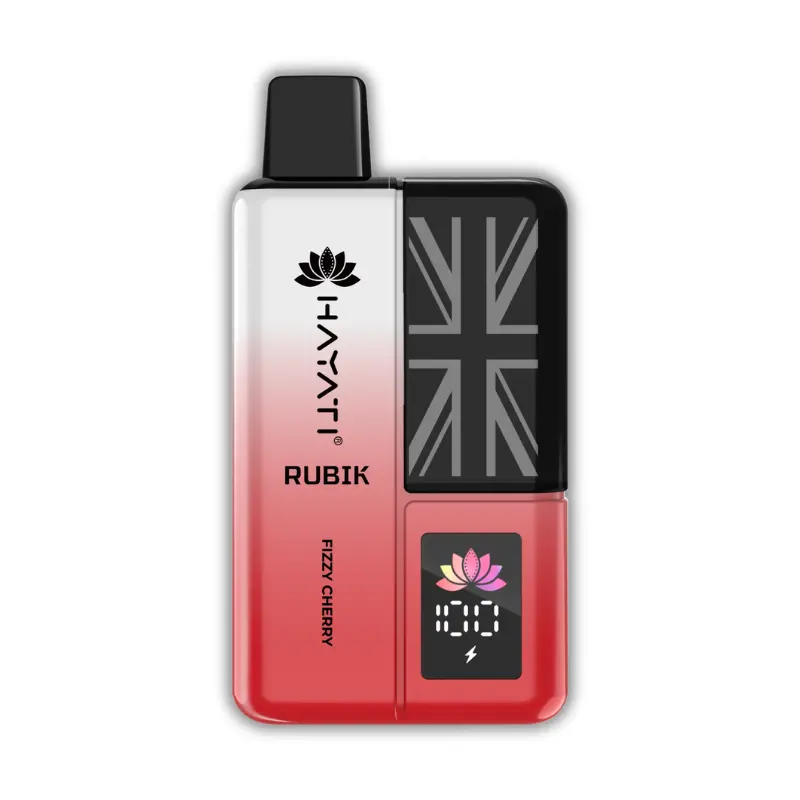
One asymmetry to flag first. The kits run to twenty flavours and the pods to nineteen. Fizzy Cherry Hayati Rubik Prefilled Pod Kit has no matching standalone pod on this shelf, so if that is the flavour you intend to stay with, plan around it rather than assume a refill is waiting.
New ProductsHayati PodsHayati Prefilled Pods & RefillsHayati Pod KitsHayati Prefilled Pod KitsHayati E-LiquidsHayati Pro Ultra Plus Prefilled Pod Kits & PodsHayati Pro Max Plus PodsHayati Pro Max Plus Prefilled Pod KitHayati Pro Max Nic SaltsHayati Pro Ultra Plus PodsHayati Pro Ultra Plus Prefilled Pod KitHayati Mini UltraHayati RubikHayati Mini Ultra PodsHayati Mini Ultra Prefilled Pod KitHayati Pro Max 50-50 E-LiquidHayati Pro Max 70-30 E-LiquidHayati Rubik Prefilled Pod KitHayati Rubik PodsHayati Nicotine PouchesHayati QuokkaBerry VapesRaspberry VapesIce VapesBlueberry VapesStrawberry VapesCherry VapesSweet VapesExotic VapesLemon VapesBlueberry Raspberry VapesPeach VapesWatermelon VapesApple VapesLemon Lime VapesMango VapesPineapple VapesGrape VapesLemonade VapesMint VapesCola VapesStrawberry Raspberry Ice VapesBlackcurrant VapesJuicy Peach VapesMr Blue VapesSummer Dream VapesBanana VapesKiwi VapesMenthol VapesOrange VapesFresh Mint Vapes
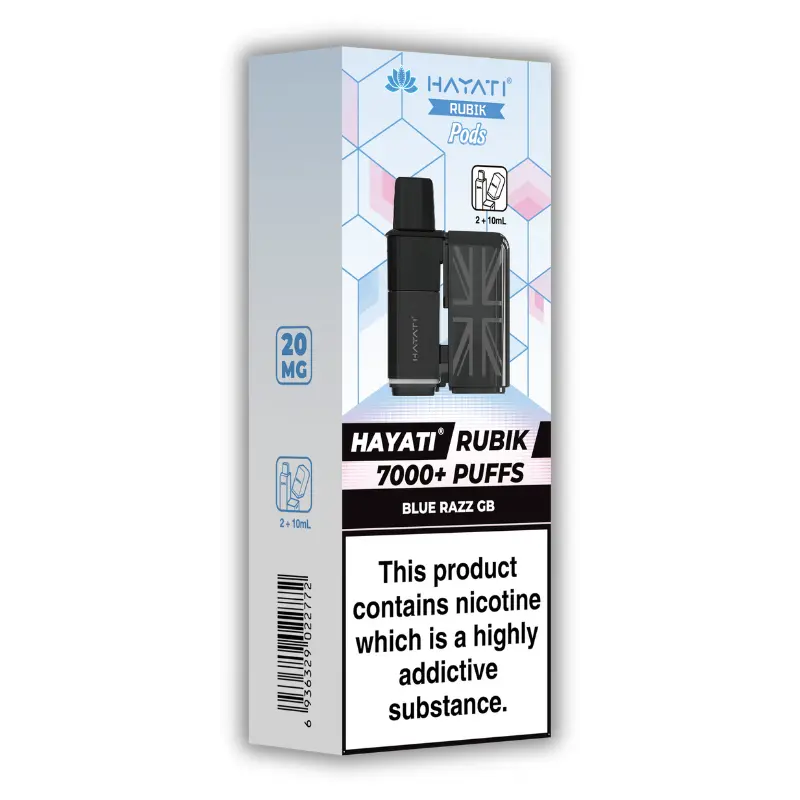
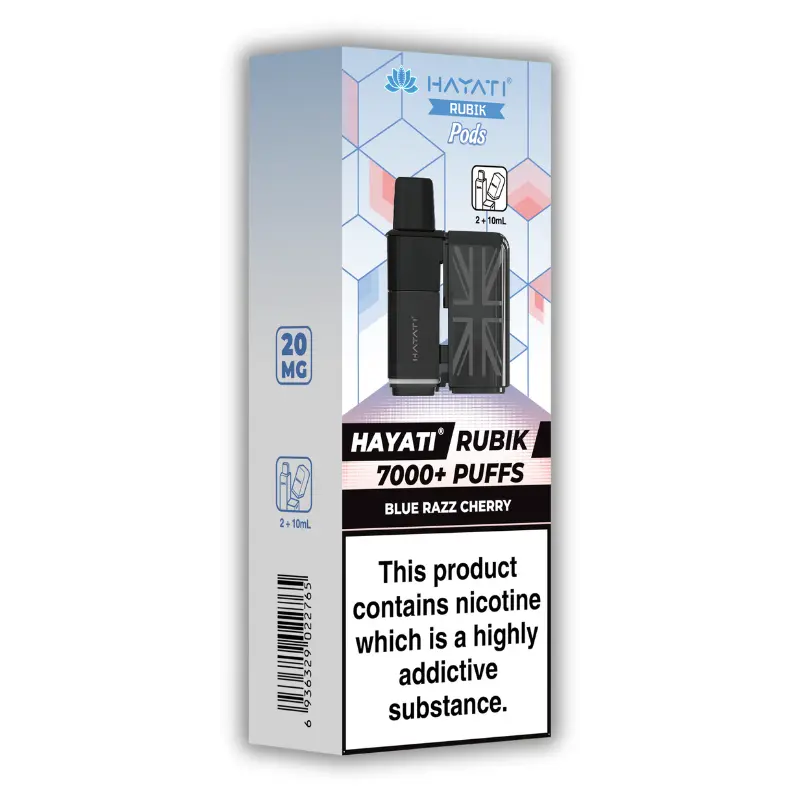
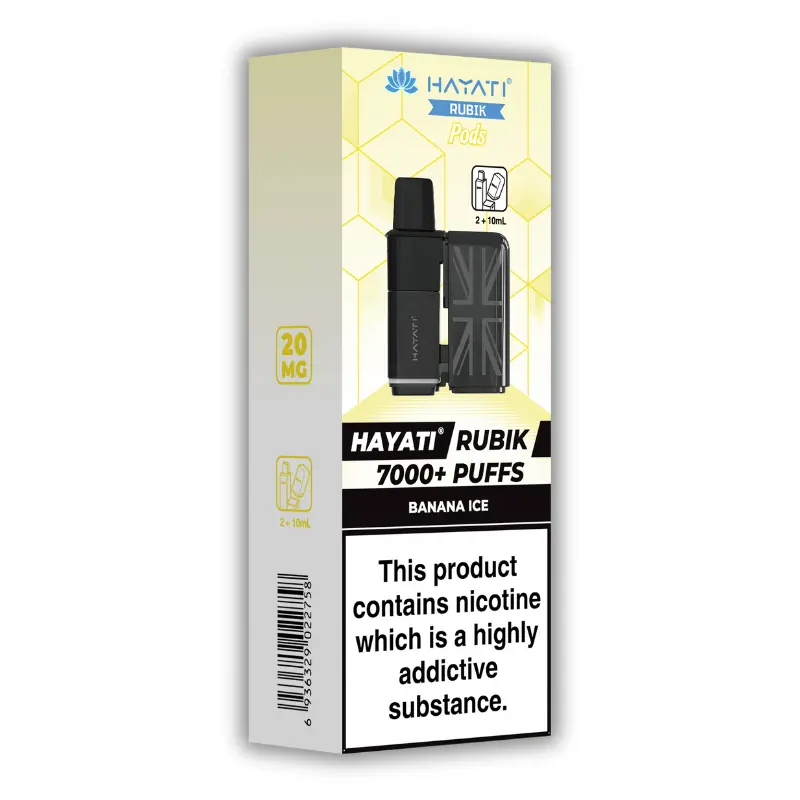
A shelf where the body is the only thing that changes
Range shelves usually earn their separation by spec. One device holds more liquid, another takes a different coil resistance, a third runs a larger cell. The Rubik shelf does not work that way internally. Line up all thirty-nine products and the spec column is one repeated row: 12ml, 20mg, 850mAh on every kit. No 10mg option, no 0mg, no second capacity, no large and small version of the same device. This is one piece of hardware sold twenty times over with a different liquid inside it, plus nineteen refills for that same hardware.
That makes the shelf unusually easy to reason about, and unusually easy to get wrong. Easy to reason about, because only two questions exist: which flavour, and which tier. Easy to get wrong, because the £3.99 pods look like the cheaper way in and are inert on their own. A pod is sealed liquid in a shell that seats into a Rubik body and nothing else. Without the body already in your possession, the £3.99 line is not a saving, it is a purchase you cannot use.
The boundaries of the shelf are worth stating plainly, because a range sold on its casing draws people looking for hardware who then discover they are also buying liquid. Bottles are not part of it. Anything measured by the 10ml, or sold as a shortfill, lives on Hayati E-Liquids with the salt and freebase shelves underneath. Nor is there anything here you can open. The pod is a closed unit, sealed before it leaves the factory, and taking one apart to put your own liquid inside falls outside what the format supports; the Quokka line exists for people who want to do exactly that. Strength does not vary either. Twenty milligrams of salt is the one figure the range is sold at, across all thirty-nine entries, with no second option sitting behind it. Nicotine is an addictive substance. Anyone who needs a particular milligram number will find no choice of them here, whatever the body looks like.
None of this is exclusive to the Rubik shelf, and it helps to know where the same thirty-nine listings surface elsewhere. The twenty kits are repeated on Hayati Pod Kits and, more narrowly, on Hayati Prefilled Pod Kits, sitting there beside bodies of every other outline the brand makes. The nineteen refills turn up again under Hayati Pods and under Hayati Prefilled Pods & Refills. Those are format shelves: they collect by how a thing is bought rather than by which device it belongs to, which is a genuinely different question and a common source of mis-ordering. To see this range split by tier instead, Hayati Rubik Prefilled Pod Kit lists the twenty complete kits alone and Hayati Rubik Pods lists the nineteen refills alone. This page holds both together on purpose, since picking a tier is the first thing anyone standing in front of a shaped body has to settle.
One more boundary. The whole range is duplicated on New Products, all thirty-nine of it, and that repetition says something about how the line was assembled. It did not accumulate. It shipped whole, twenty kits and nineteen refills at once, with no older generation being quietly retired beneath it and no late addition bolted on at the end. That is why the flavour list reads so flat, with no obvious veterans and no obvious newcomers. Ranges that land in one piece usually have a thesis, and the flavour spread is where you read it. Here the thesis is cold fruit, heavily so, which the grouping section sets out below.
Handling: what a shaped body does that a flat one does not
Prefilled pod devices mostly converge on one outline. A rounded rectangle about the footprint of a card wallet, mouthpiece at the top, charging port at the bottom, no correct way round beyond which face carries the branding. The Rubik declines that outline, and that single decision changes a handful of small things that only surface after a day or two of carrying one.
Before any of this: we are not given a dimension sheet for the Rubik. Nothing below is a measurement, and you should not read it as one. What follows is what a non-standard body does in general and what is worth paying attention to when yours arrives, so that you can judge the thing rather than be surprised by it.
Orientation, and why it matters more than it sounds
A slab has two orientations and both of them work. A body with defined faces has fewer. Draw it out of a pocket and there is a right way up, which costs a fraction of a second of re-seating in the palm before the mouthpiece is where your mouth expects it. Written down that sounds like nothing, and once the muscle memory settles it is nothing, but it is real for the first week. The same property pays you back: you can identify the device by touch, which a card-shaped vape lying next to a card-shaped phone case does not allow.
Orientation earns its keep most when you carry two. Vapers who keep one flavour for the morning and a different one for the evening normally have to look at both to tell them apart when the outlines match. A shape that is not shared with anything else in your pocket settles that by feel alone. Pair a mint kit with a fruit kit and you will know which one you have picked up before you have looked at it.
Where the fingers land
Grip on a shaped device is a function of its faces, not its edges. A rounded body is held; a faceted one is braced. In practice that means fewer accidental rotations in the hand and a firmer purchase when your fingers are cold or wet, both of which are ordinary British conditions. It also means the device is less inclined to slide off a sloped surface, which anyone who has watched a smooth vape travel down a sofa cushion will recognise as a real benefit.
The cost is that a shaped body is harder to stow flat. A slab lies down in a jacket pocket and disappears. A form with depth in more than one axis pushes back against fabric, and you notice it against the leg when seated. Whether that registers as reassuring or annoying is genuinely personal, and it is the main reason to think about the shape before you buy rather than after.
Pocket lint, the mouthpiece and the thing nobody mentions
Every pocketed vape collects debris at the mouthpiece. On a slab the mouthpiece usually sits proud of a flat top, so a thumb wipes it clean in one pass. On a shaped body the mouthpiece may sit in a recess or against a raised edge, and a recess holds lint rather than shedding it. This is not a fault, it is geometry, and the fix is a five second habit: wipe before the first draw of the day rather than after you have tasted something that is not the flavour on the label.
The same logic applies to the charging port. Ports tucked against a corner are better protected from pocket grit than ports sitting in the middle of a flat base, which is an unadvertised benefit of a body with corners. Check where yours sits on the first evening, because knowing whether the port faces down when the device is upright tells you how to stand it while it charges, and that in turn tells you whether it will topple off a bedside table at two in the morning.
On a desk, in a car, in a bag
Where a device rests is a bigger part of ownership than most product copy admits, because a vape spends far more of its day stationary than in your hand. A body with flat faces stands and stays standing. A rounded one has to be laid down, and a laid-down device rolls when the surface tilts, which is why so many vapes end their lives under a car seat. If the Rubik stands upright unaided, that is a genuine daily convenience: it keeps the mouthpiece off the surface, it keeps the device visible rather than buried, and it means the charging cable can be plugged in without the whole thing being dragged sideways.
In a bag the calculation reverses. Bags are full of other objects and a shaped body has more corners to catch on them, so it finds its way into a lining seam more readily than a smooth one. A small zip pocket solves that, and it solves the lint problem in the same move. In a car door bin, the flat-faced body is the clear winner, because bins are sloped and anything cylindrical migrates to the bottom of them.
None of these are large effects. Collectively they are the reason people become attached to one device outline and irritated by another, and they are far more predictive of whether you will still be using a device in three months than any figure on the specification.
Twelve millilitres in a shell this size
The number that makes the Rubik unusual is 12ml. Prefilled pods cluster at the small end because the pod has to fit a body that fits a hand, and liquid takes up space that a battery would otherwise use. Putting 12ml into a device with an 850mAh cell is a deliberate imbalance, and it is worth understanding what it does to the rhythm of owning one.
Up to 7,000 puffs is the figure the manufacturer publishes for these kits, arrived at in a laboratory rather than in a pocket. How far a pod actually goes shifts with the length of each pull, how frequently the pulls come and how warm the device is, so the number works as a relative signal and nothing more. What it does convey is design intent. This is hardware meant to be refilled rarely, and that is the whole reason for the 12ml fill.
Pairing an 850mAh cell with 12ml guarantees the battery gives out well ahead of the liquid. That is not a fault, it is the bargain every large-fill prefilled device strikes, and the consequence is that a Rubik goes back on the cable many times over while one pod is still going. Coming from hardware where the charge and the fill emptied together, the mental model has to change. On this shelf, charging is ordinary upkeep and the pod change is the rare event.
What follows from that is a habit rather than a plan. Put the cable wherever you already stop moving for twenty minutes, the desk, the car, the kitchen counter, and the device stays topped up with no thought going into it. The failure mode runs the other way: leaving it until the thing dies in your hand, at which point you are standing about waiting on a flat cell with 9ml of perfectly good liquid sealed inside.
Twelve millilitres also changes how a flavour decision feels. On a small-capacity device an experiment costs very little and ends quickly. On a 12ml pod you are committing to that flavour for a long stretch, so a profile that is merely tolerable becomes tiresome. That argues for picking something you already know you like rather than something you are curious about. Buy the familiar profile for your first body and save the unknowns for the refill tier, where a mistake costs £3.99 and not £5.99.
There is a second consequence of the large fill that catches people out. Because a pod lasts a long time, the moment of changeover arrives rarely, and rare events are the ones you are least prepared for. Running dry on a 2ml pod is a minor nuisance because a spare is always in the bag. Running dry on a 12ml pod tends to happen weeks after you last thought about refills, usually somewhere inconvenient. The habit that fixes it is buying the next pod when you open the current one rather than when you finish it, which costs nothing and removes the failure entirely.
Part-used pods are the other side of the same coin. Swap out a pod with liquid still in it and you have an open component to store, and an opened pod kept loose in a drawer picks up dust at the contacts and loses aromatic top notes over a few weeks. Stand it upright, keep it out of direct sun and expect a slightly flatter taste when it goes back in.
The twenty flavours, sorted by how much cold is in them
Sorting this range by fruit family produces a useless list, because most of these are berry blends and berry blends are where every vape range is crowded. Sorting by how much cold is in them produces a list you can use, because cooling is the variable that decides whether a profile carries through a long day or turns into hard work by mid-afternoon. Seven of the twenty have ice written into the name. Four are blue-label sweets-shop profiles. Six are warm fruit with nothing cooling them. Three sit outside all of that.
The seven with ice in the name
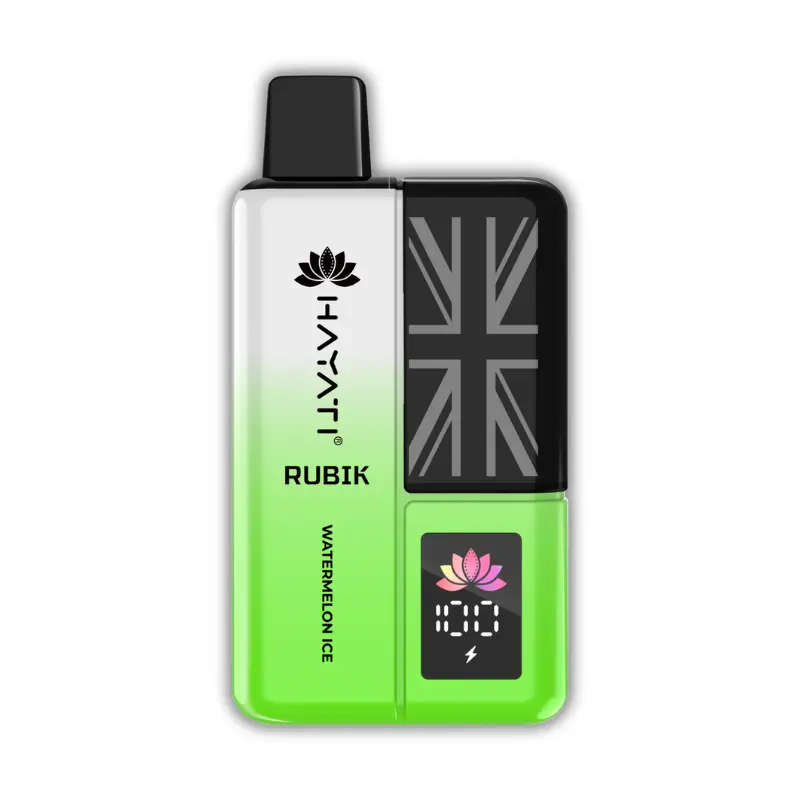
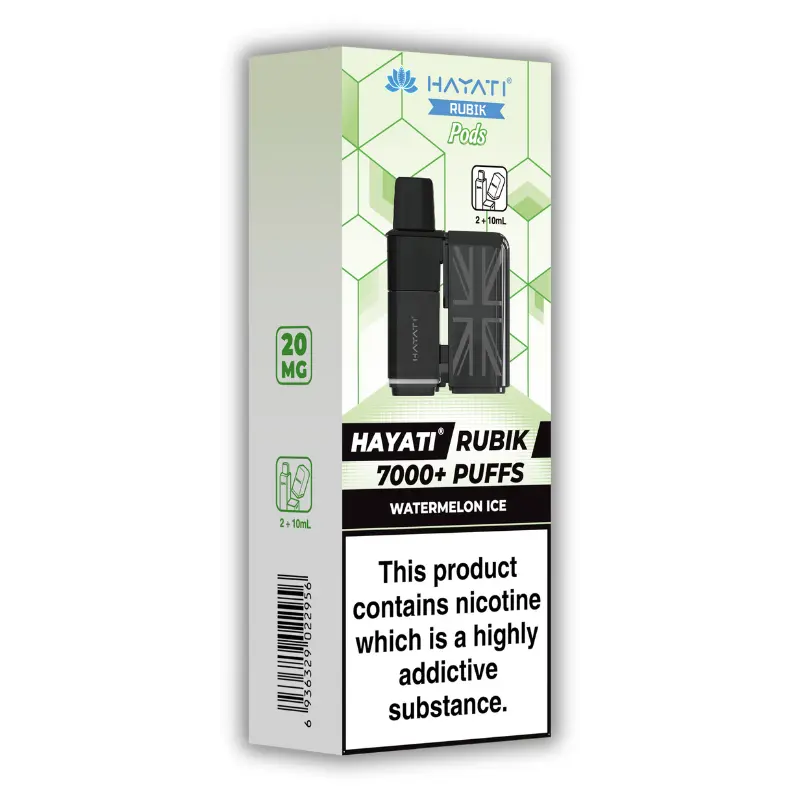
Seven entries makes this the biggest cluster on the shelf and the range's centre of gravity. Watermelon Ice Hayati Rubik Prefilled Pod Kit is the lightest of them, watery-sweet rather than dense, with the cold arriving on the exhale and the melon staying in front throughout. It is uncomplicated, and over a 12ml pod that simplicity is a virtue rather than a shortcoming.
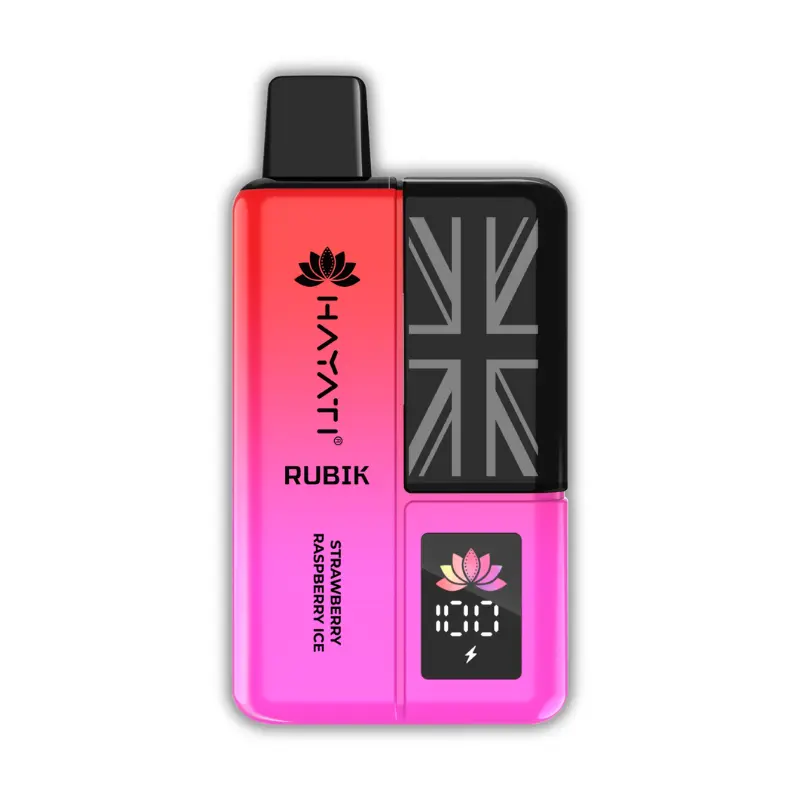
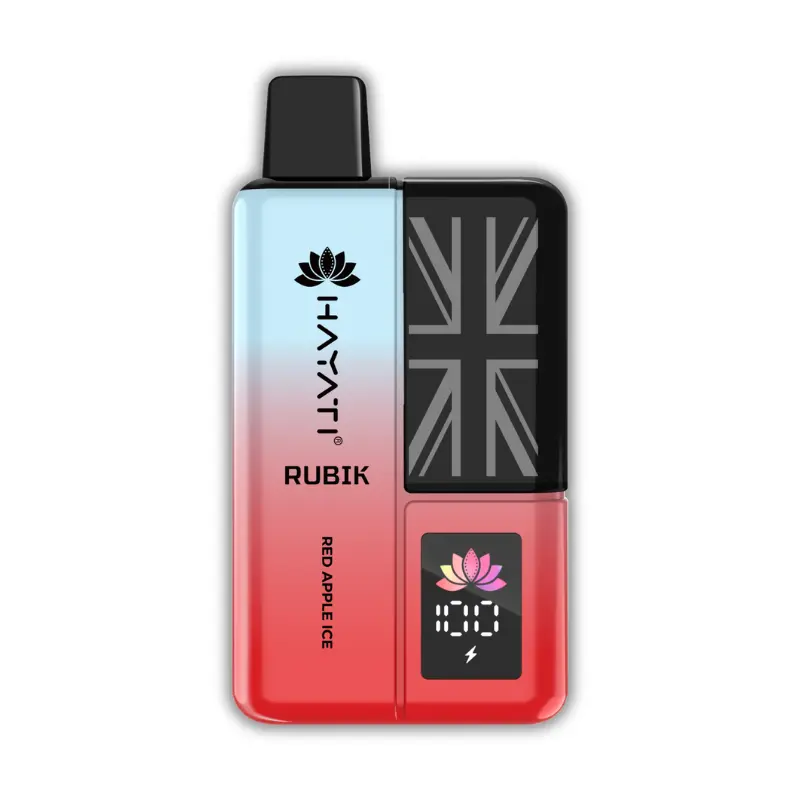
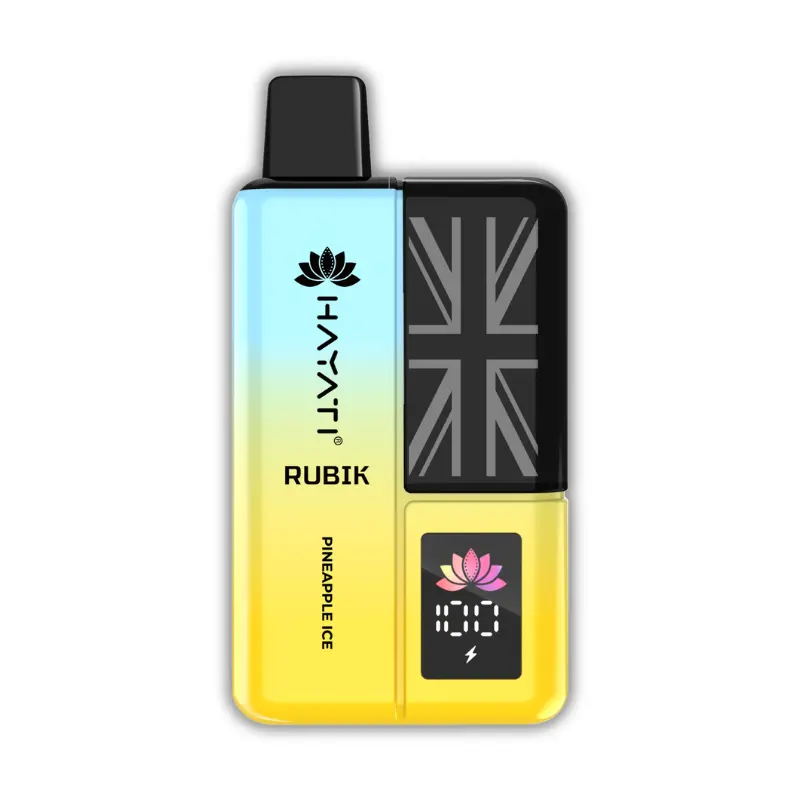
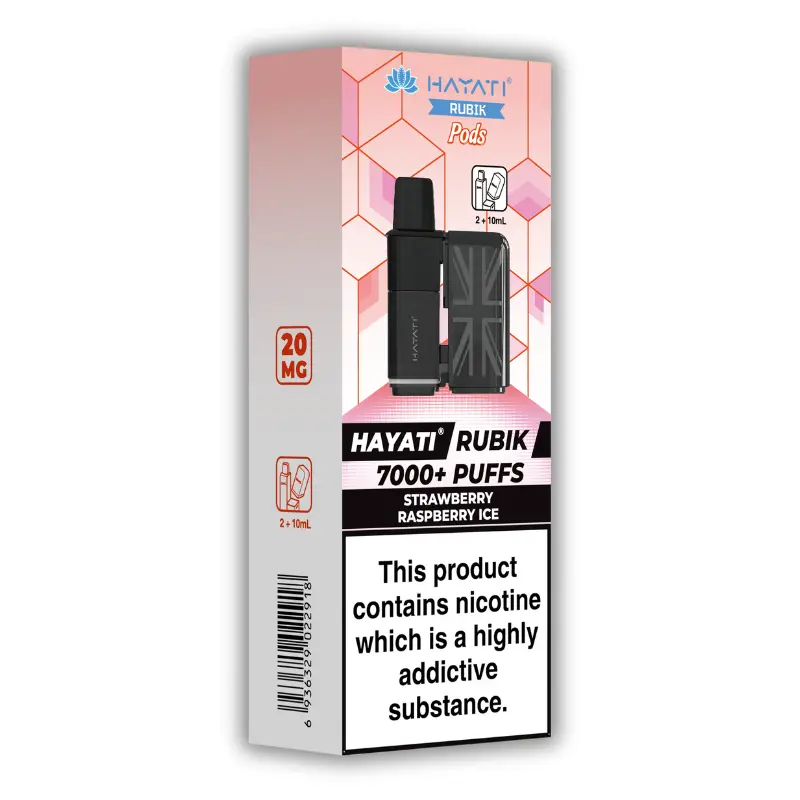
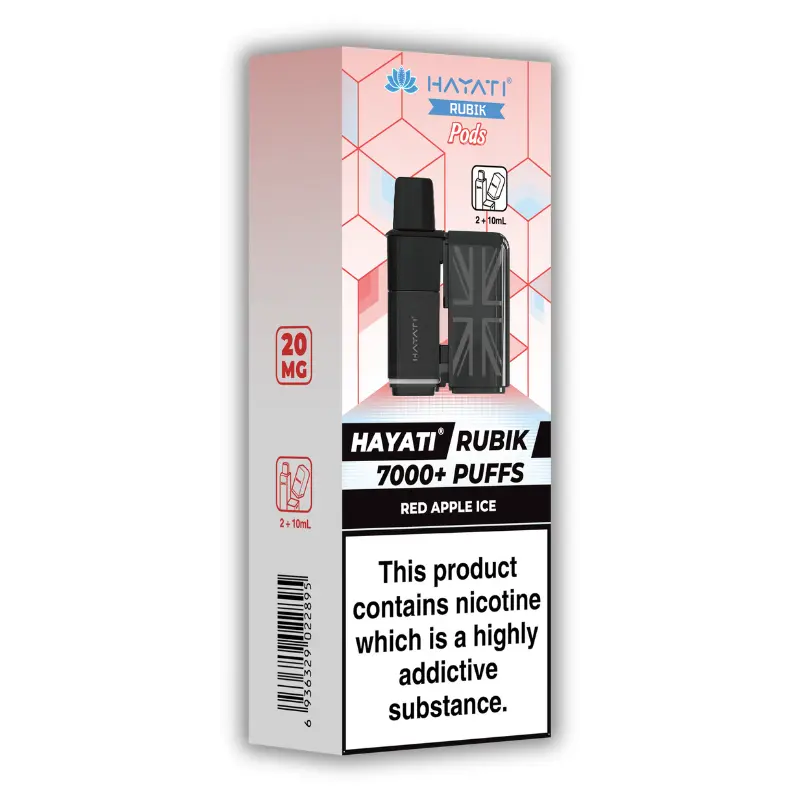
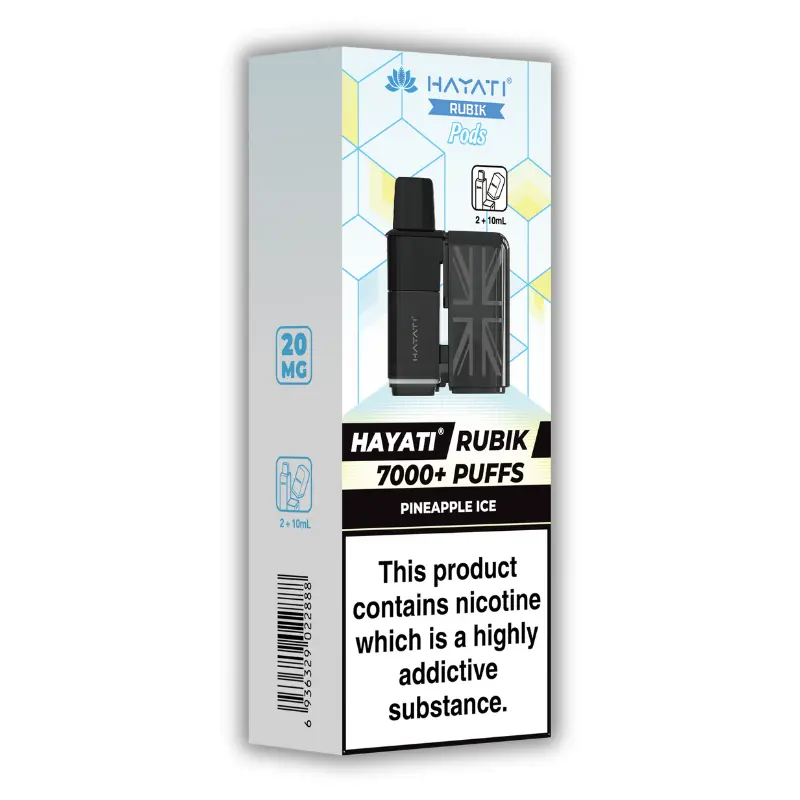
Strawberry Raspberry Ice Hayati Rubik Prefilled Pod Kit is the one most people end up with. Ripe strawberry underneath, raspberry sharpness through the middle, cold across the finish. The tartness is doing structural work: it stops the sweetness stacking up over a long session, which matters more on this range than on a small pod. Red Apple Ice Hayati Rubik Prefilled Pod Kit occupies the middle ground between sour fruit and heavy sugar, mellow rather than sharp, with a cold snap on the way out. Pineapple Ice Hayati Rubik Prefilled Pod Kit is livelier, with genuine tang on the inhale that the ice then rounds off.
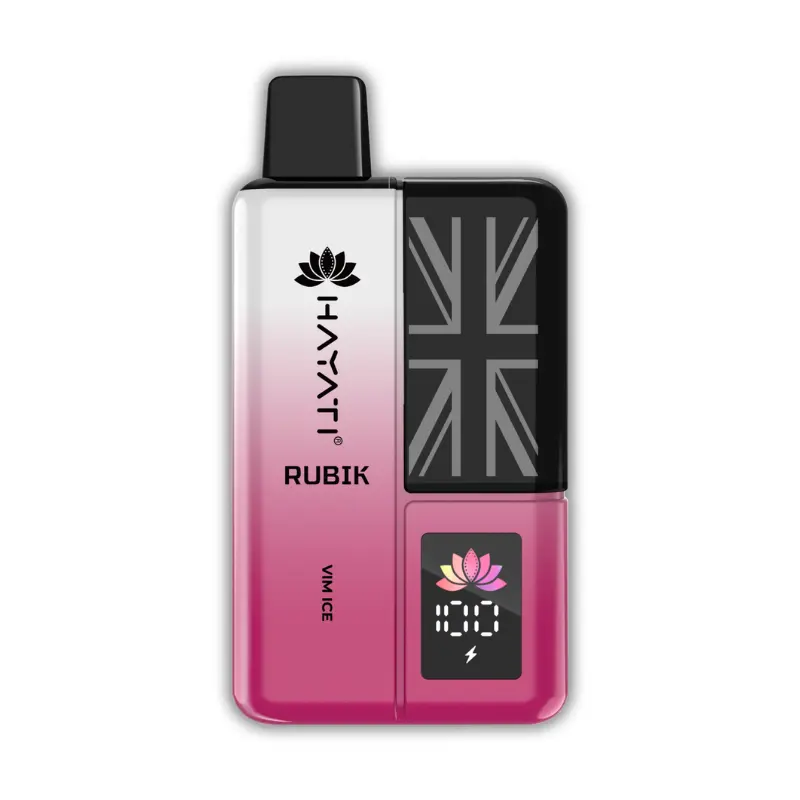
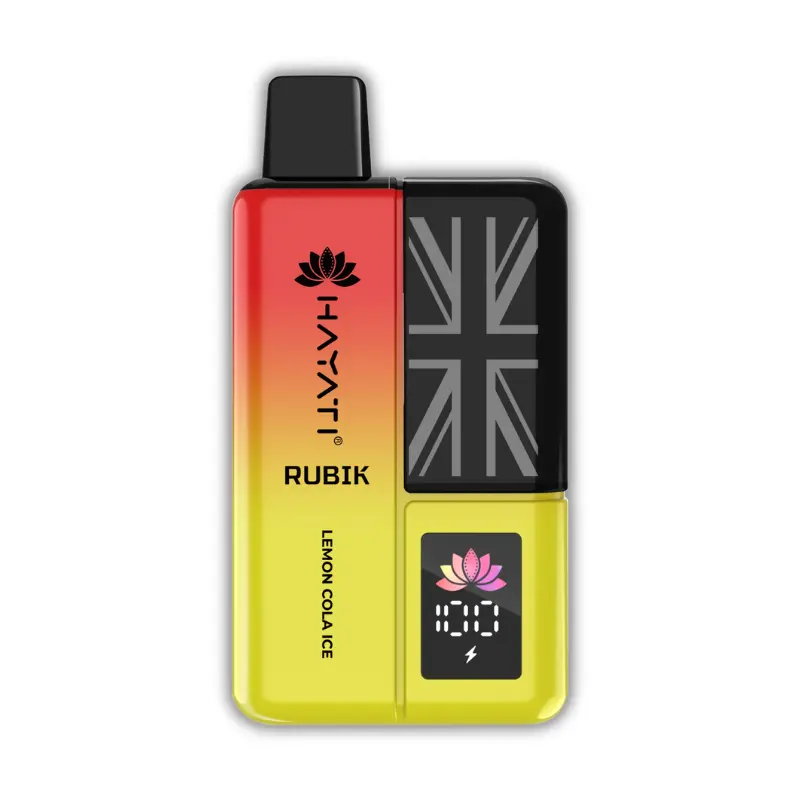
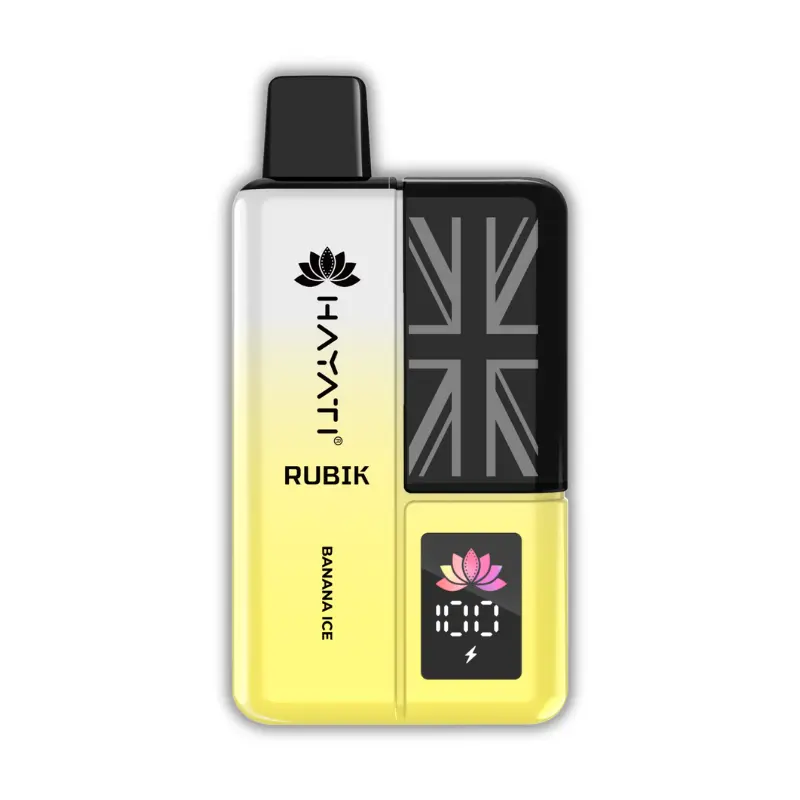
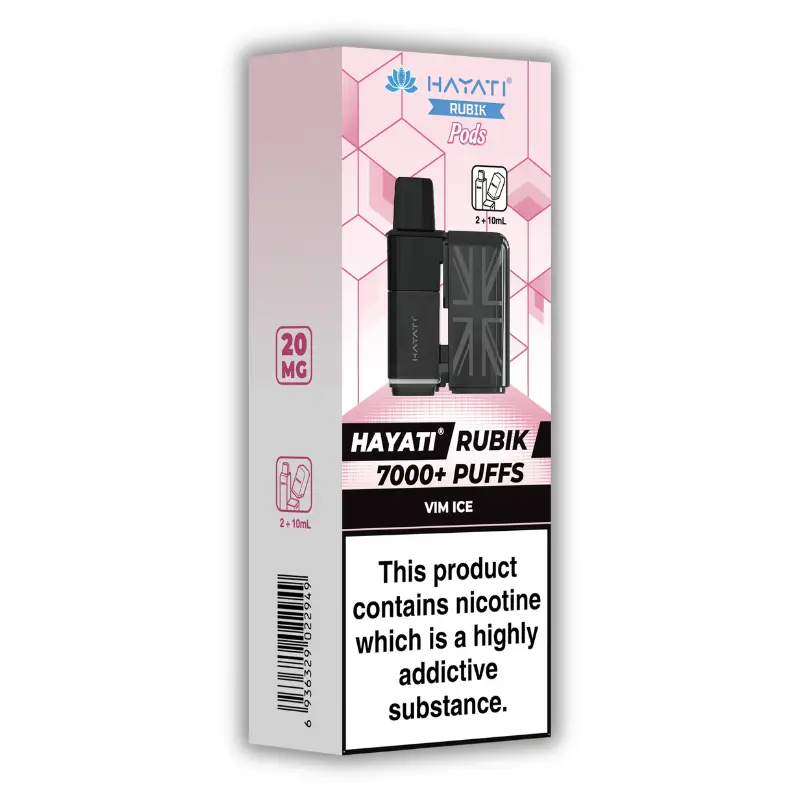
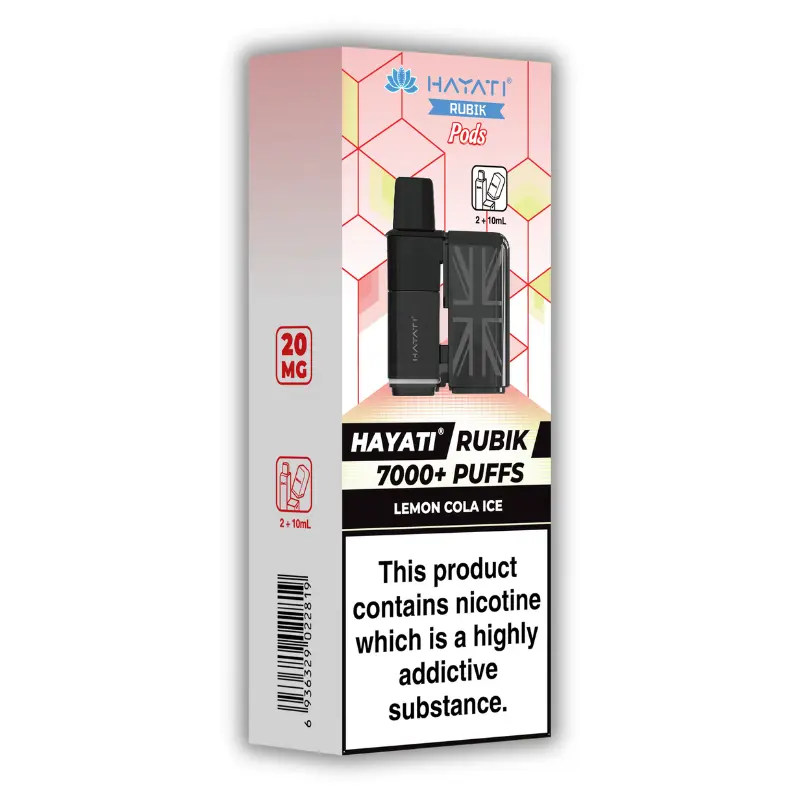
Two of the seven are unusual enough to call out. Banana Ice Hayati Rubik Prefilled Pod Kit is mellow and rounded where the rest are bright, and the chill is what stops the banana feeling heavy over a long stretch. Lemon Cola Ice Hayati Rubik Prefilled Pod Kit is the one cola-and-citrus entry here, and it stands so far apart from the fruit-heavy remainder that people tend to either settle on it permanently or reject it after two draws. Vim Ice Hayati Rubik Prefilled Pod Kit sits in the same drink-flavoured territory, reading as a dark purple berry and grape cordial poured over ice.
The four blue-label profiles
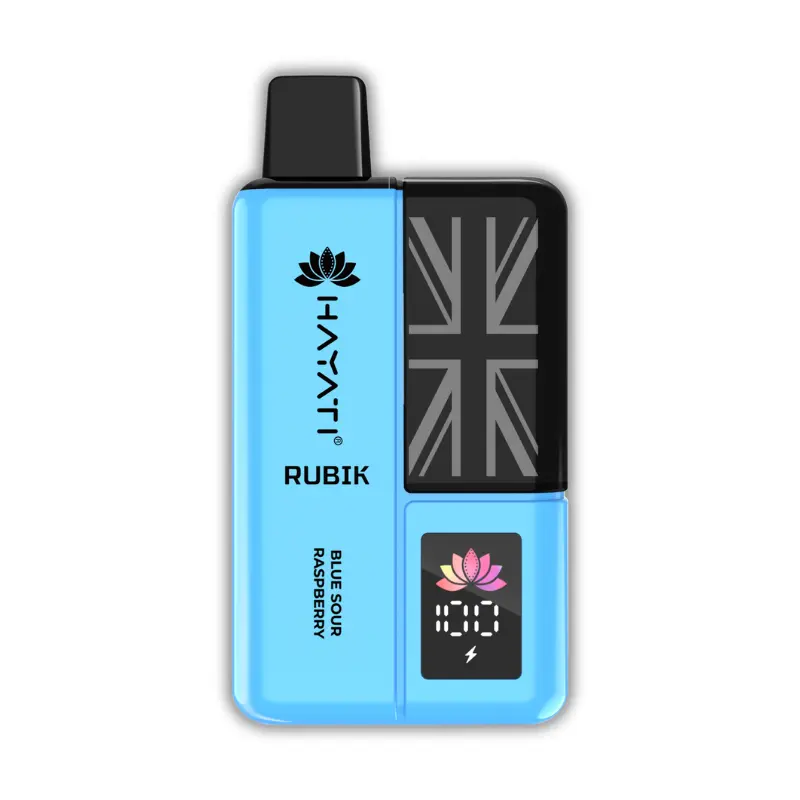
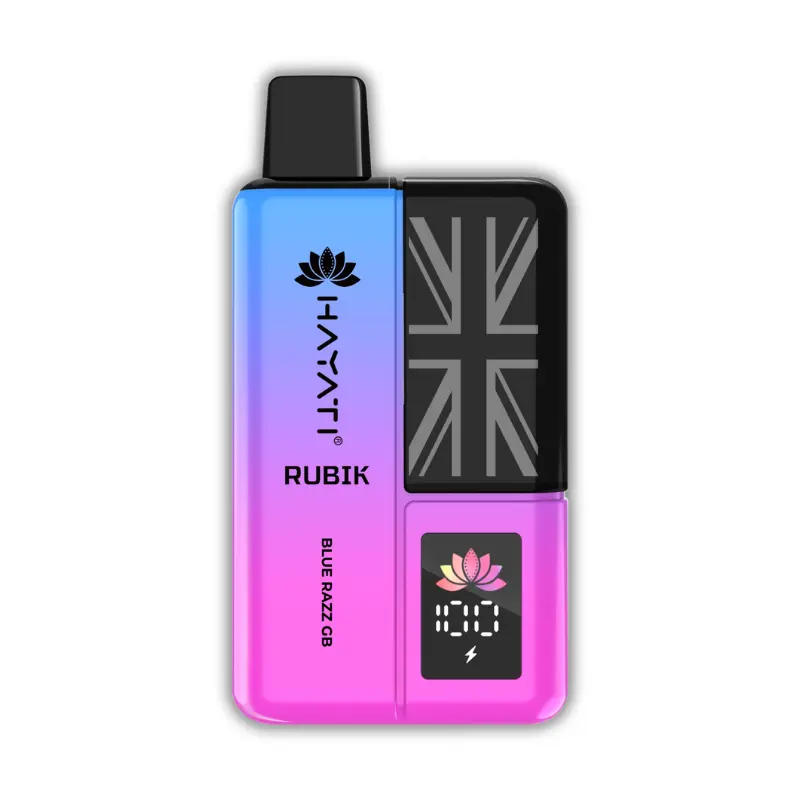
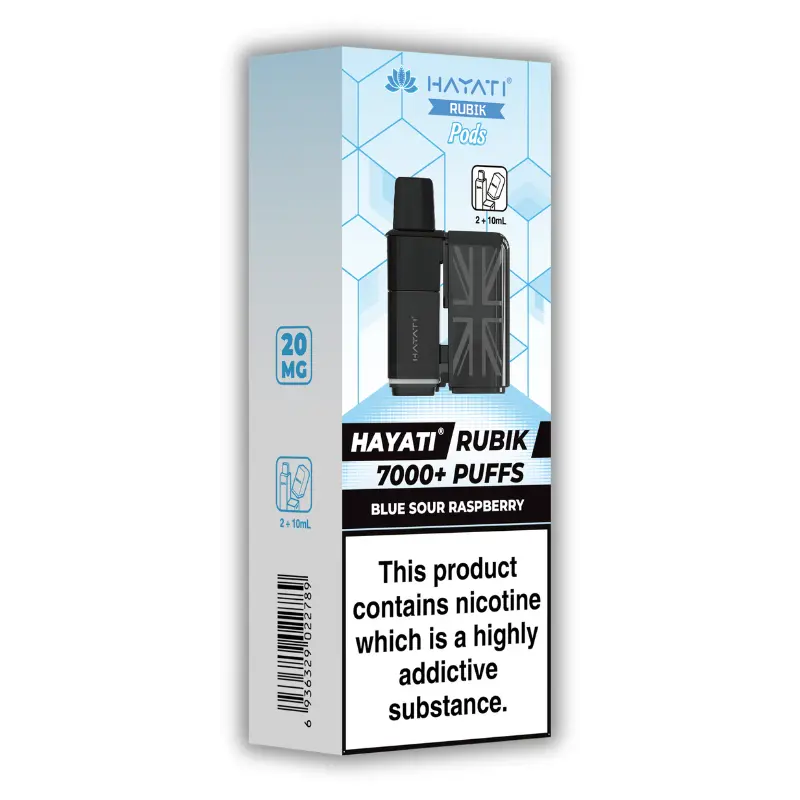
Blue-labelled flavours are their own category in vaping and they behave differently from fruit. Sweetness leads, the fruit reference is loose, and the appeal is intensity rather than accuracy. Blue Sour Raspberry Hayati Rubik Prefilled Pod Kit is the one that holds up longest over 12ml, because the sour layer keeps resetting the palate and prevents the sugar building. Blue Razz GB Hayati Rubik Prefilled Pod Kit goes the other way, packing the tang inside a sugared sweet-shop coating that thickens the exhale instead of sharpening it. Nothing else on the shelf is this sweet, and the label makes no attempt to disguise it.
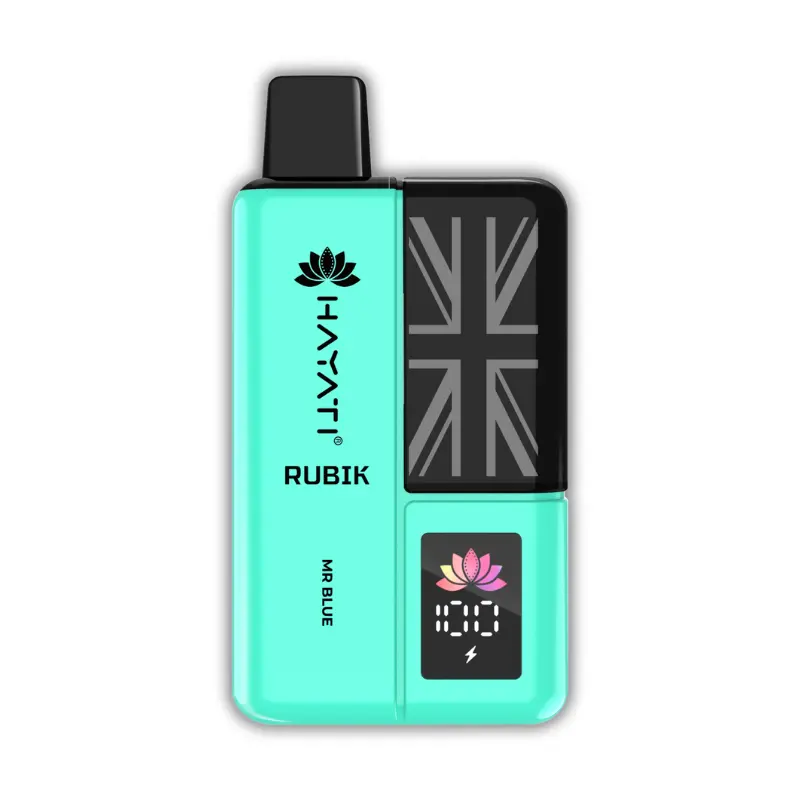
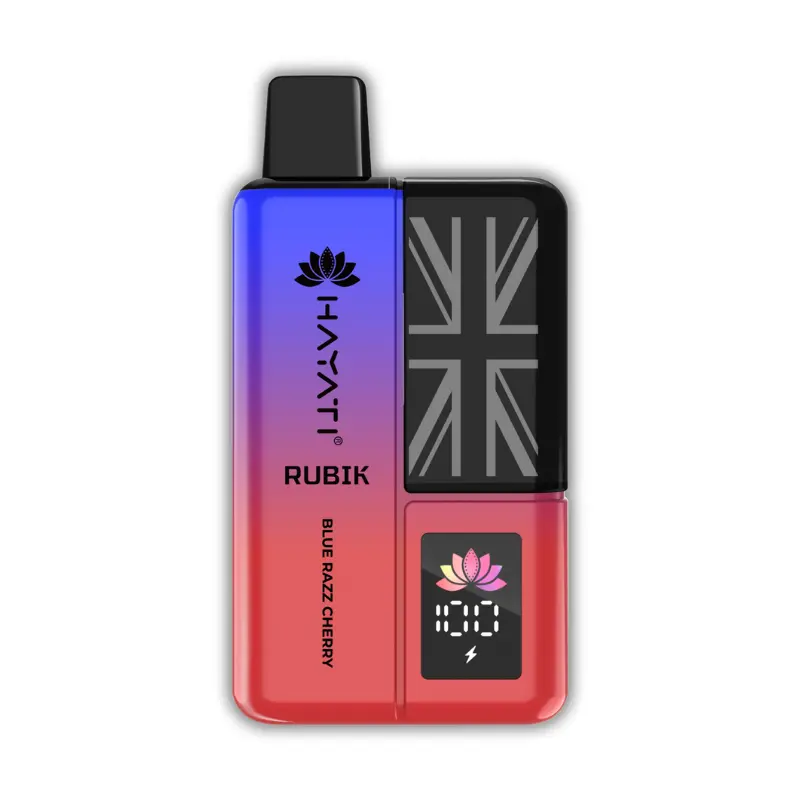
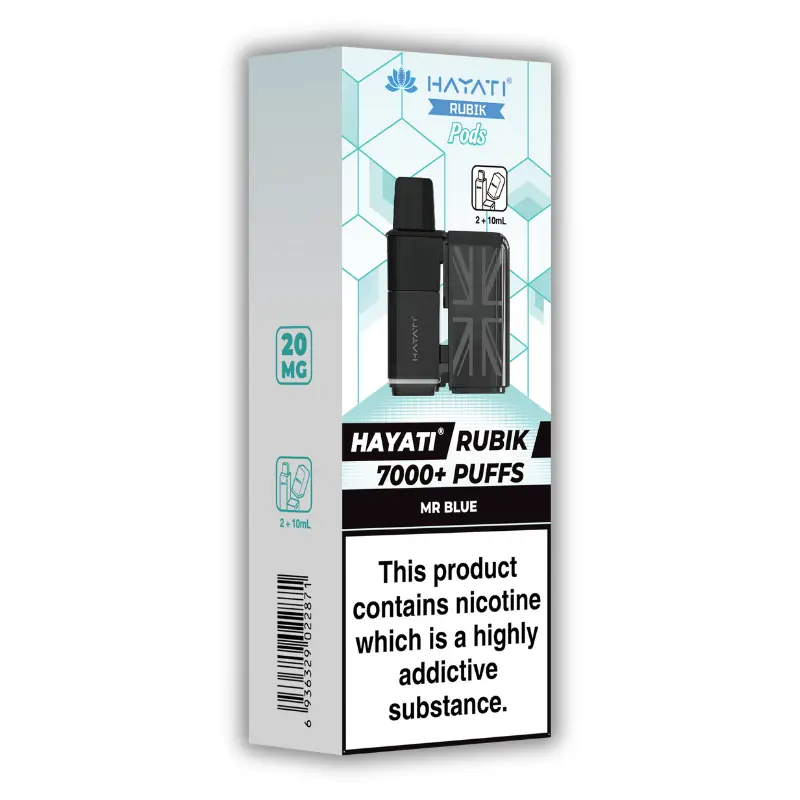
Blue Razz Cherry Hayati Rubik Prefilled Pod Kit is the most balanced of the four: tang up top, a darker cherry body sitting under it, and both fruits still separable by the end of a pod. Mr Blue Hayati Rubik Prefilled Pod Kit names no fruit at all. The label offers a colour and an attitude, and what turns up is loud and sugared rather than subtle. Some read that as honest and some as evasive, with no way to settle the argument short of buying one.
Six warm fruit, nothing cooling them
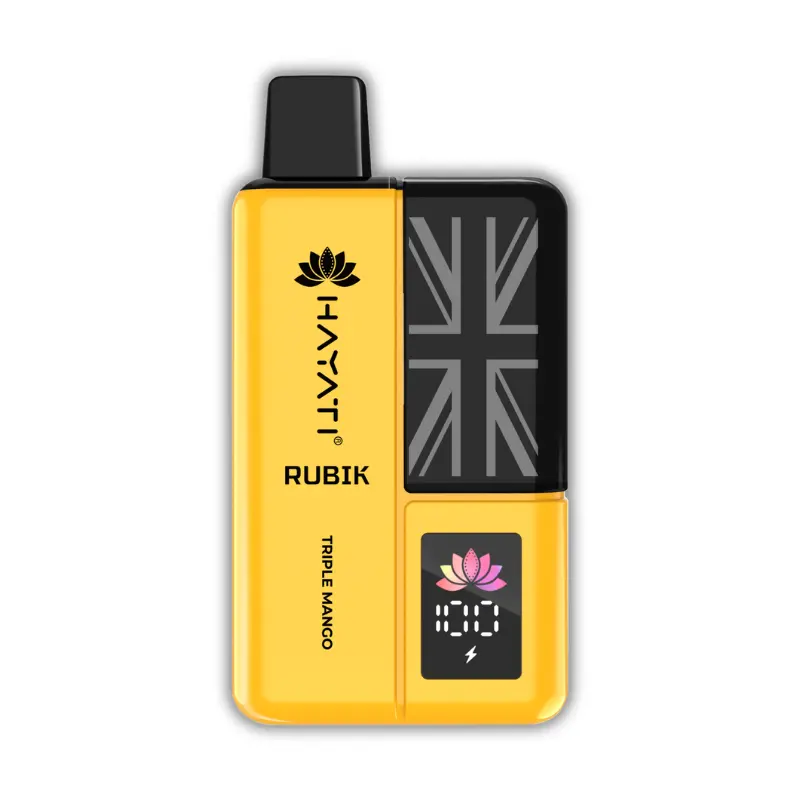
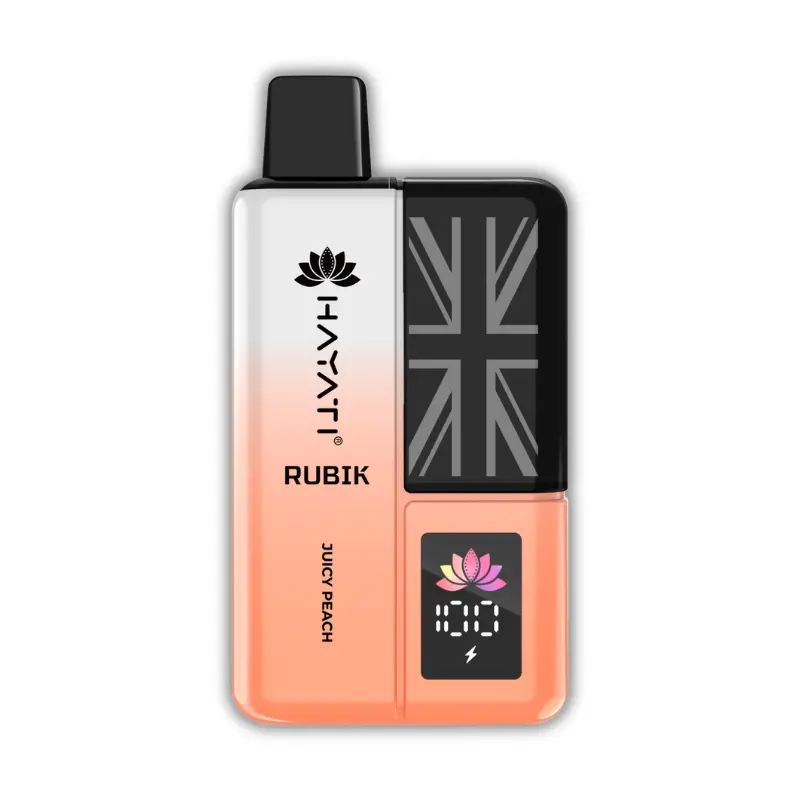
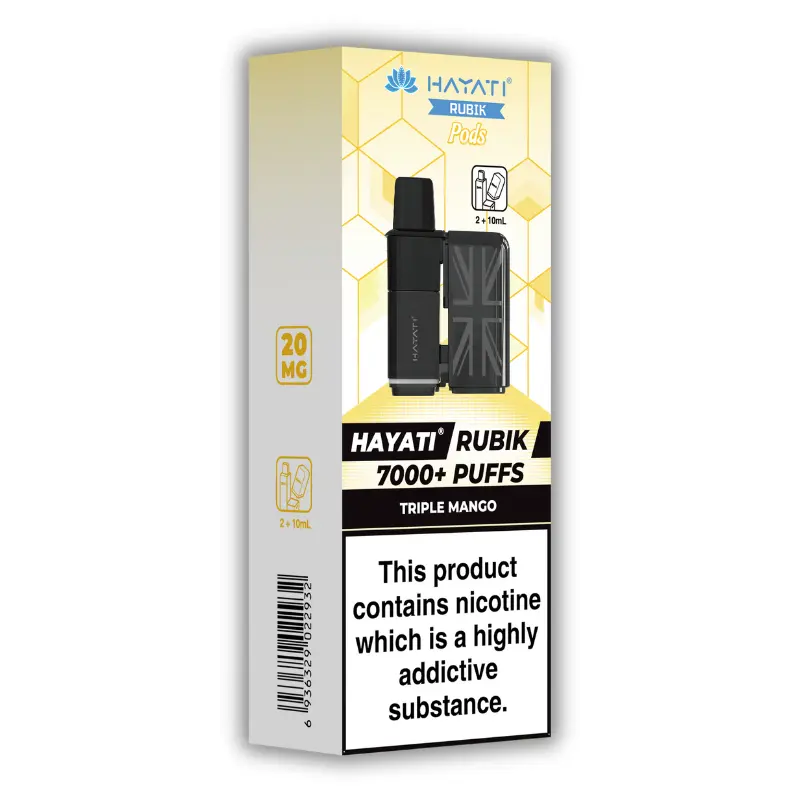
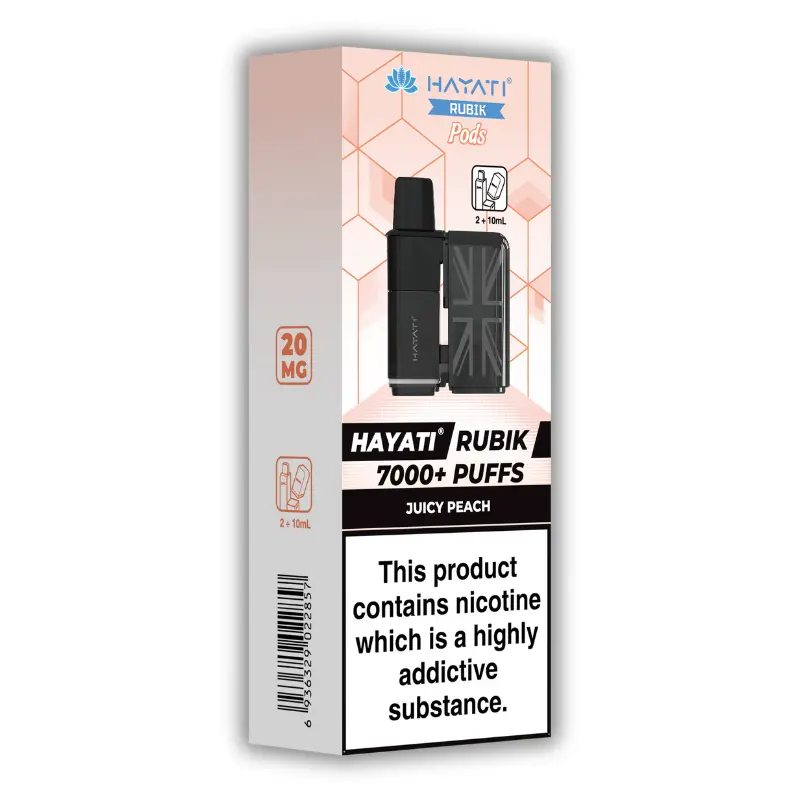
Remove the ice and a flavour has to stand on the fruit alone, which is a harder test. Triple Mango Hayati Rubik Prefilled Pod Kit passes it by going thick rather than bright: ripe, layered tropical sweetness with no citrus or menthol pulling focus. Juicy Peach Hayati Rubik Prefilled Pod Kit is softer and faintly floral, consistent from first draw to last because there is only one fruit in it.
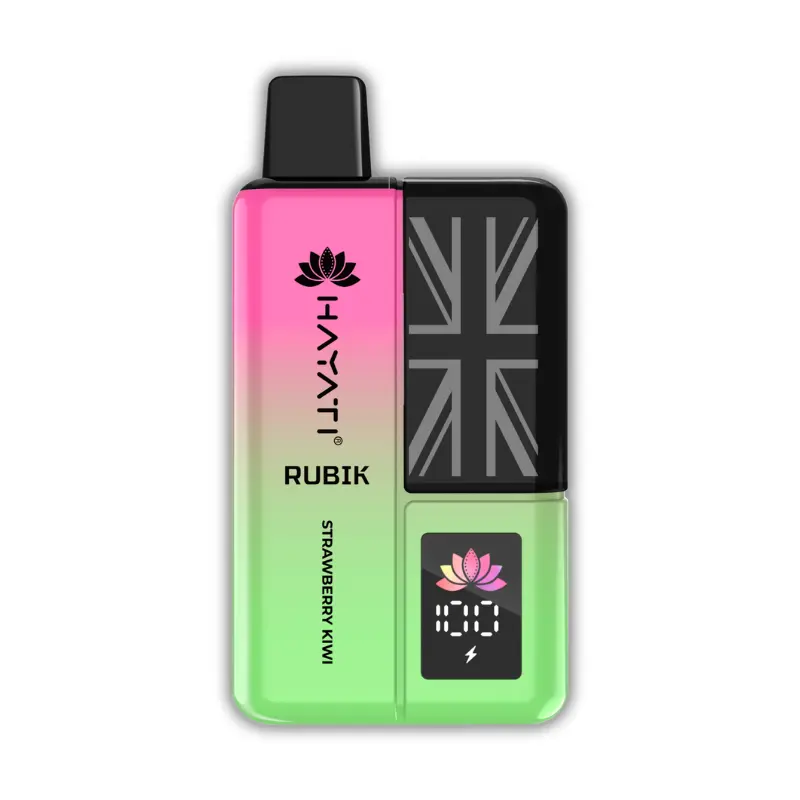
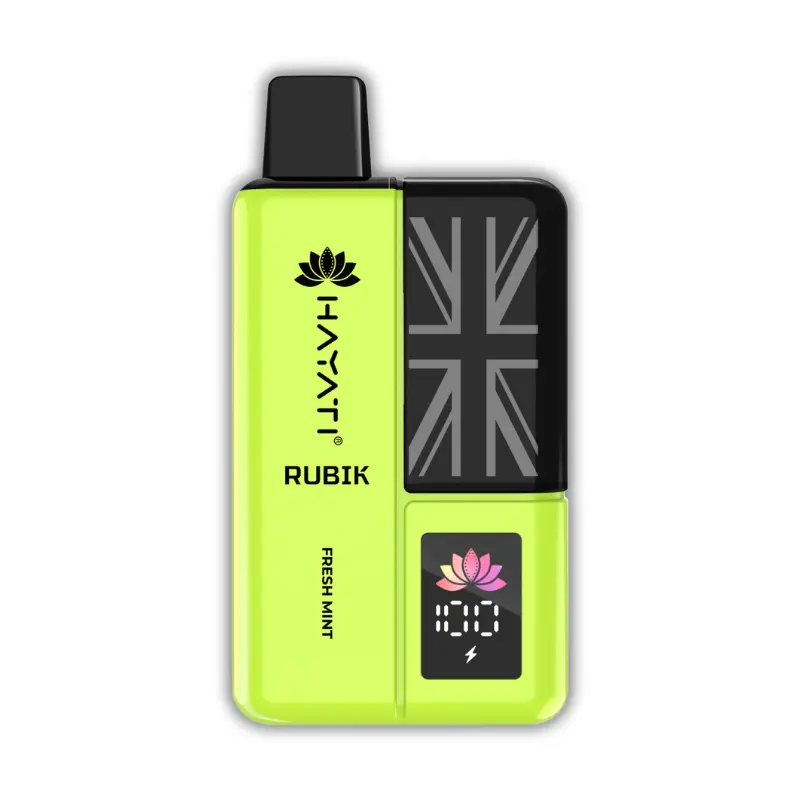
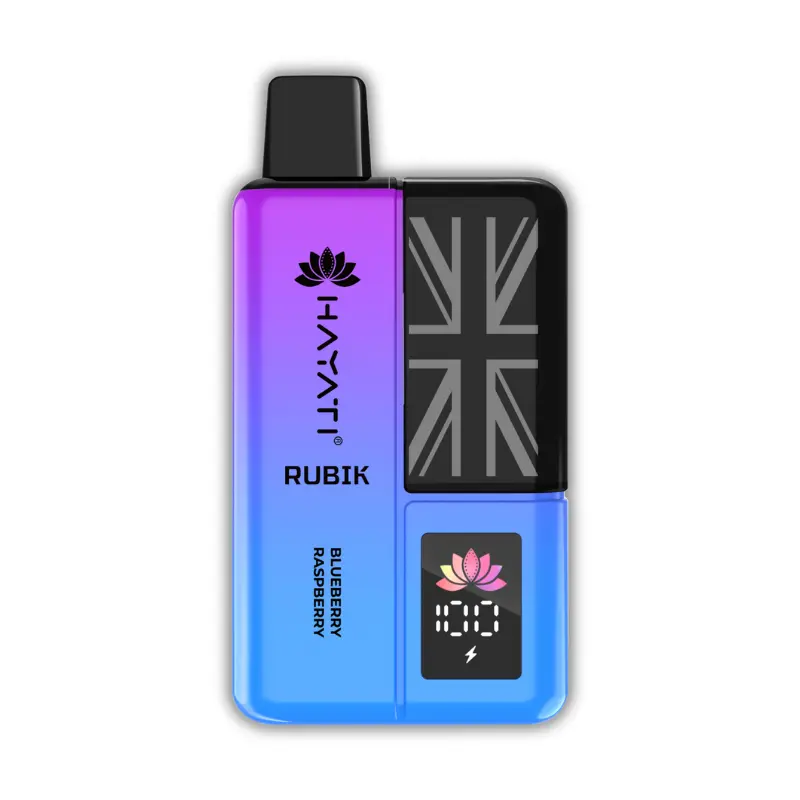
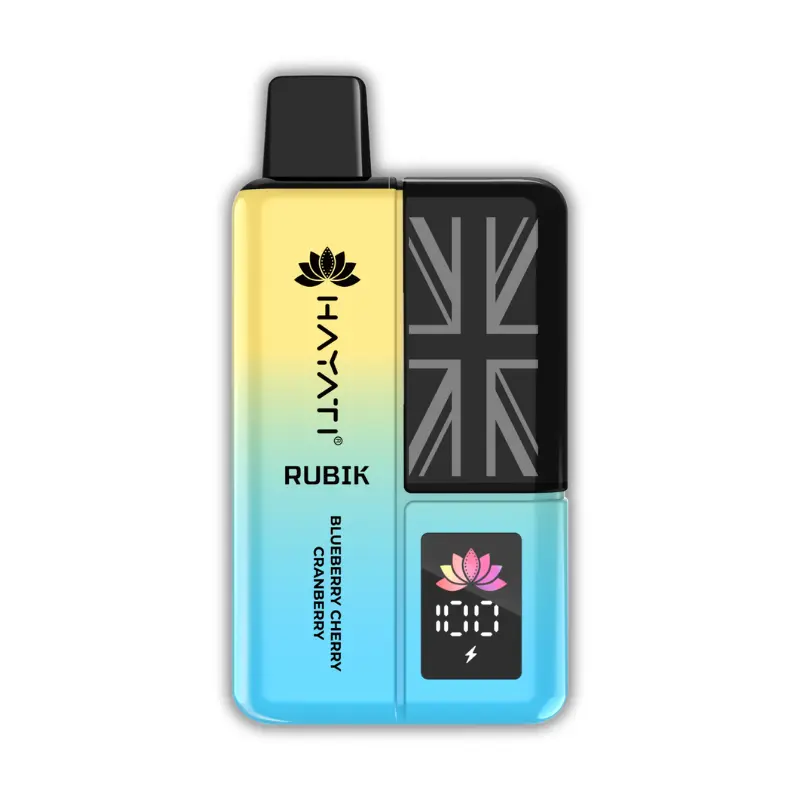
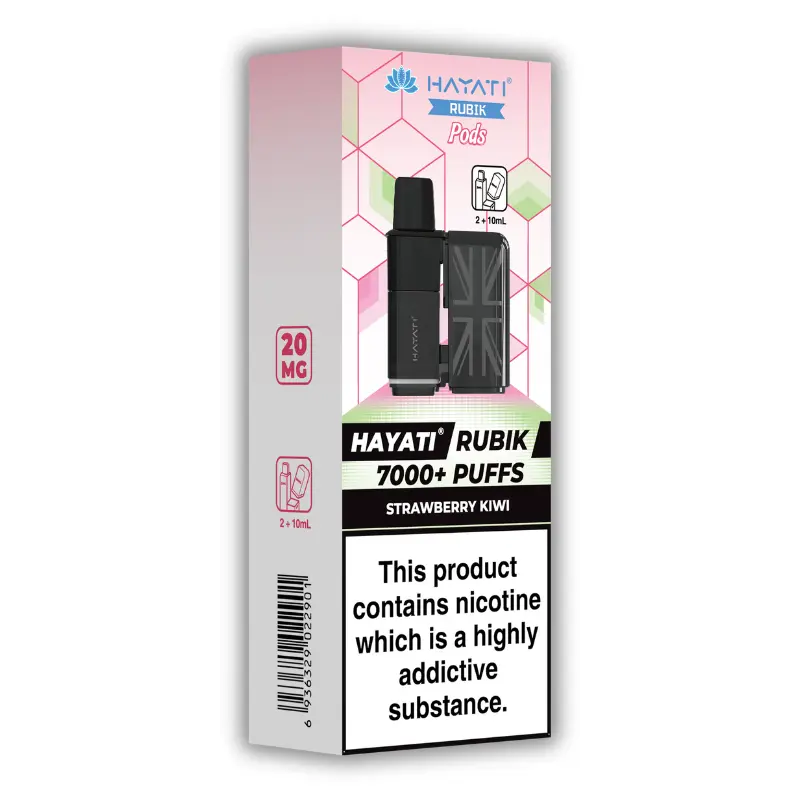
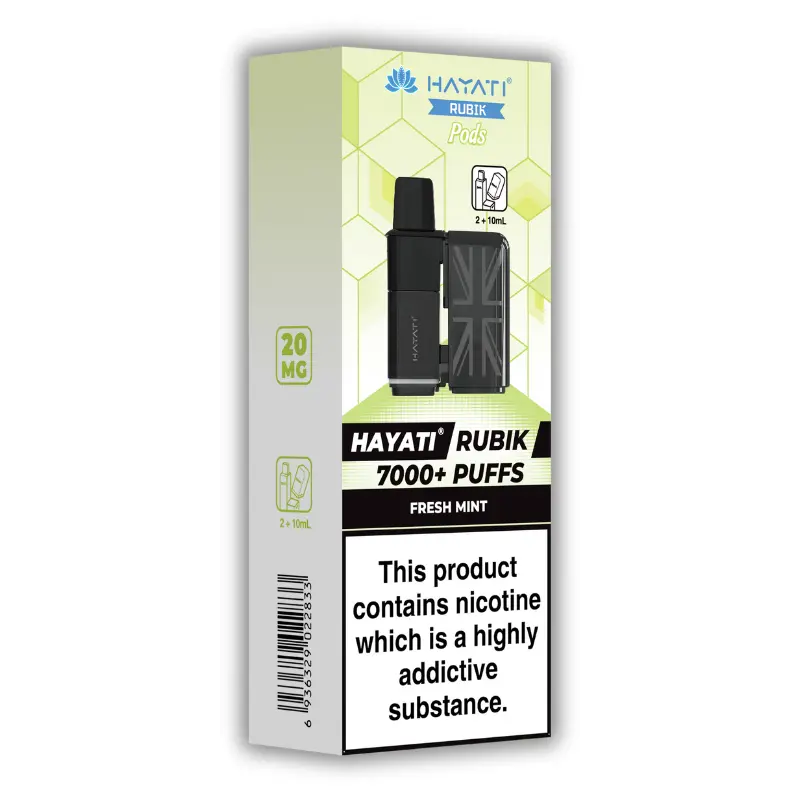
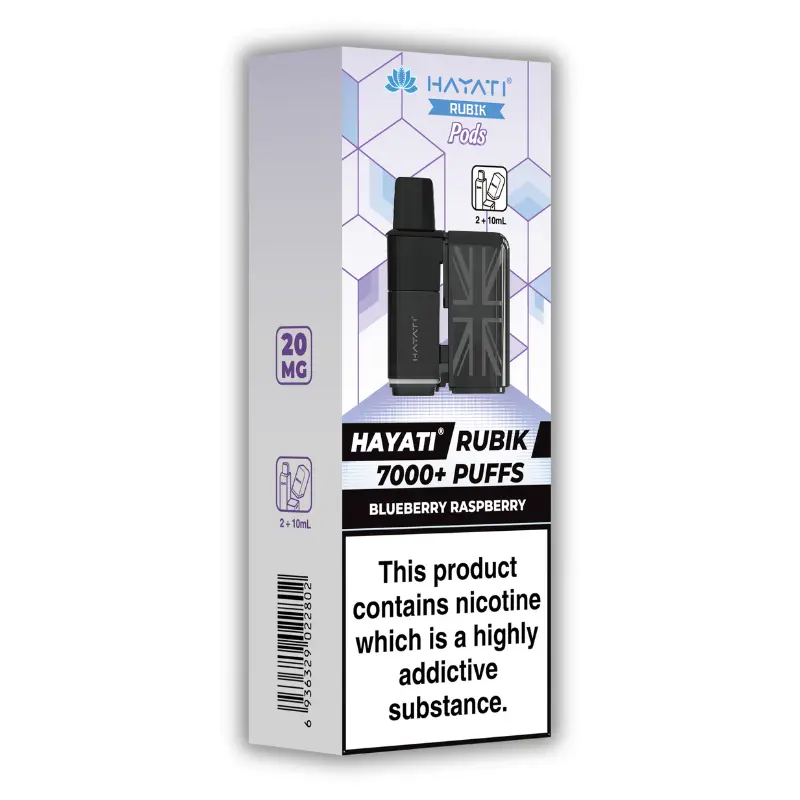
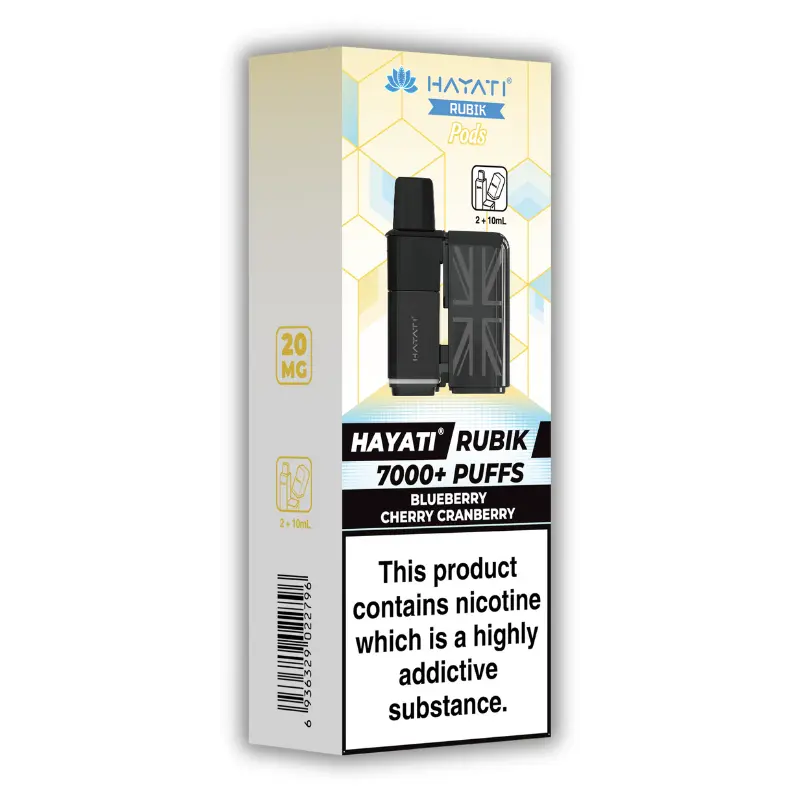
Strawberry Kiwi Hayati Rubik Prefilled Pod Kit builds its own contrast instead of borrowing it from ice, with kiwi supplying a green, slightly sour edge against the rounded strawberry. Blueberry Cherry Cranberry Hayati Rubik Prefilled Pod Kit is the most layered thing here: soft blueberry, rich cherry, and a cranberry edge, dry and faintly astringent, that binds the three together and stops the whole thing going jammy. Blueberry Raspberry Hayati Rubik Prefilled Pod Kit is the plain, dependable one, warm and juicy with an even balance, and it is the flavour this range would nominate as its all-day option. Fizzy Cherry adds an effervescent prickle to a tart cherry base, and, as noted at the top, it is the only kit flavour with no matching refill.
The three that sit outside the pattern
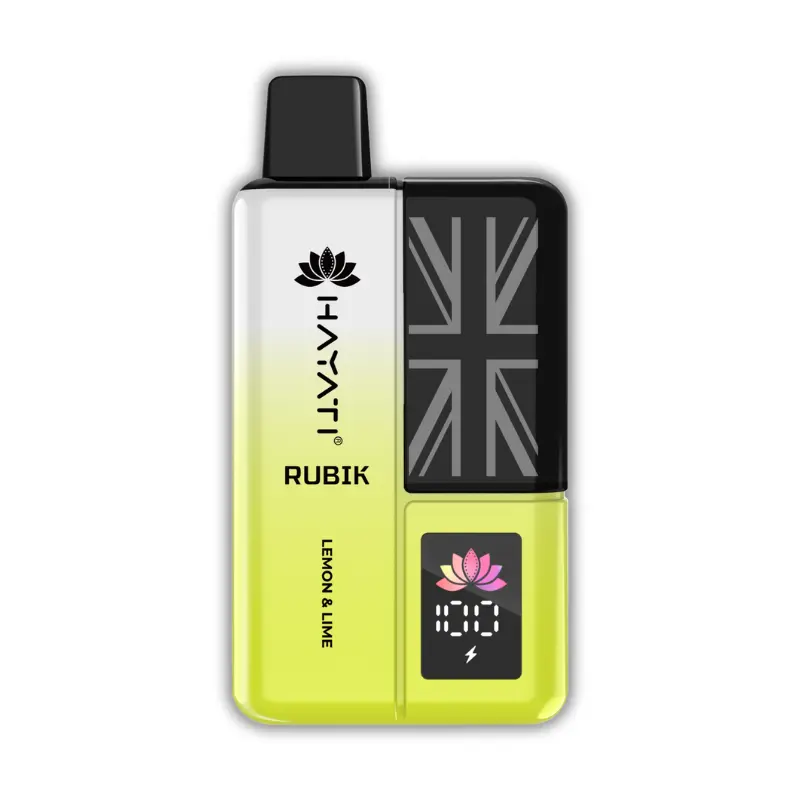
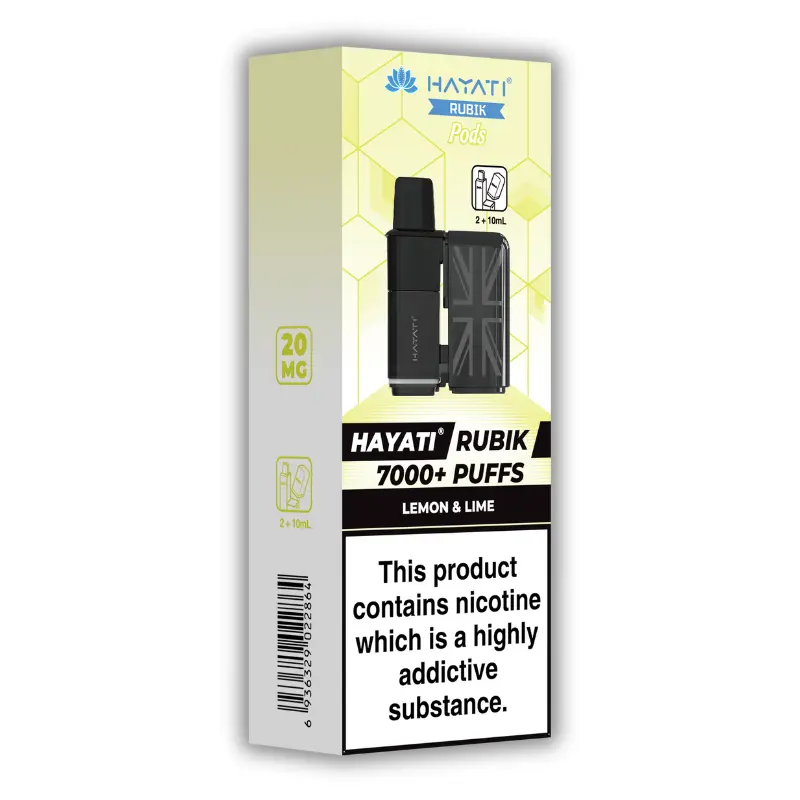
Fresh Mint Hayati Rubik Prefilled Pod Kit is the only entry with no fruit in it at all. Clear herbal mint, cool on the inhale, crisp on the exhale, and it functions as a palate reset for anyone whose other pod is heavy. Lemon Lime Hayati Rubik Prefilled Pod Kit is straight citrus with no sugar behind it, sour from the lemon and faintly bitter from the lime zest, and the two sit close enough together to read as one sharp note.
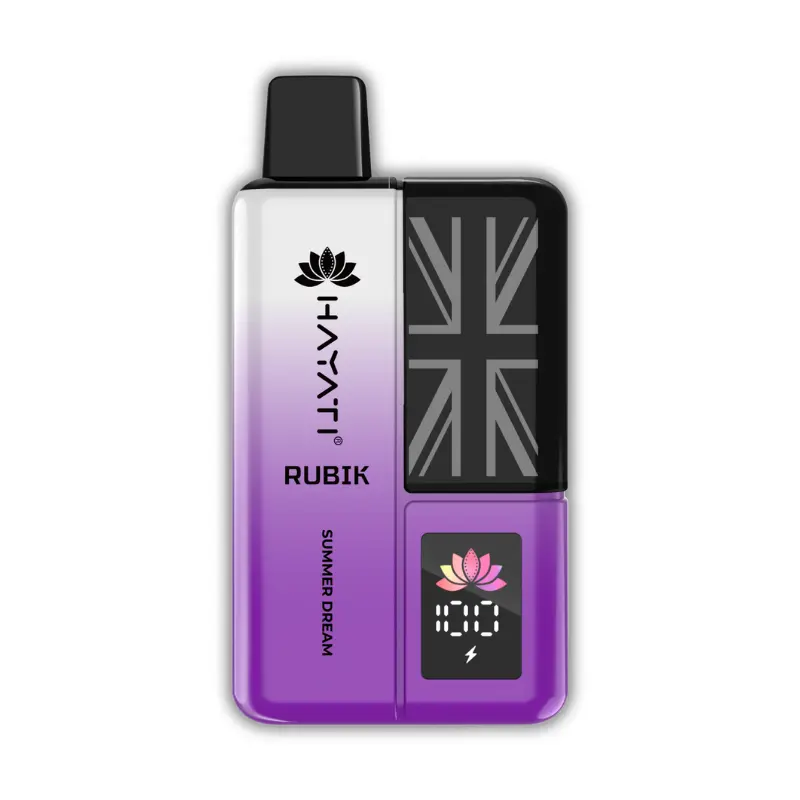
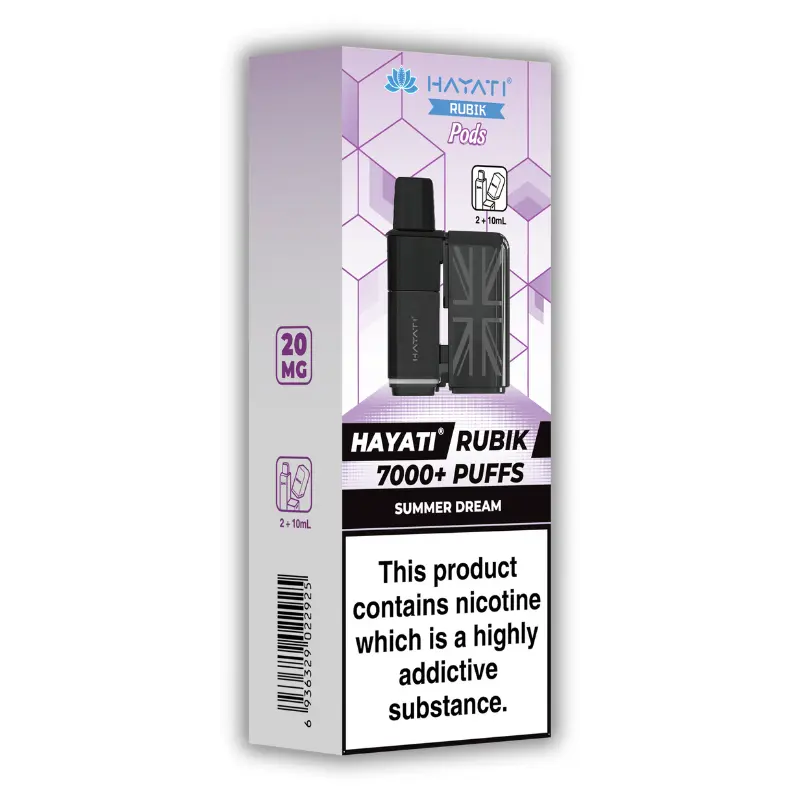
Summer Dream Hayati Rubik Prefilled Pod Kit names a mood and not a recipe, and no fruits are listed. Treat it as a lively fruit mixture with no single element in charge. Being bothered by that vagueness is a question about temperament, not about taste, though on a 12ml pod the gamble is bigger than it would be on a smaller fill, so weigh it accordingly.
The nineteen refills, and where they differ from the kits
The pod list mirrors the kit list exactly, minus Fizzy Cherry. Same nineteen flavour names, same 12ml, same 20mg. Once you own a body, the entire shelf collapses into a £3.99 flavour menu, and the practical upshot is that the pods are where the range becomes interesting rather than where it becomes cheap. Rotating Fresh Mint Hayati Rubik Pods against Triple Mango Hayati Rubik Pods costs the same as buying two of the same thing, which is the argument for owning one body and several pods rather than several bodies.
Pods worth holding in reserve: Lemon Lime Hayati Rubik Pods as a sharp counterweight when everything else in the drawer is sweet, Watermelon Ice Hayati Rubik Pods as the least demanding option for a long day, and Blue Sour Raspberry Hayati Rubik Pods when you want something that keeps announcing itself. Mr Blue Hayati Rubik Pods and the Summer Dream refill are the two to buy last, not because they are weak but because you cannot predict either of them from the label.
Two pounds between a kit and a pod
£5.99 against £3.99 is a £2 gap and it buys exactly one thing: the body. Both tiers carry 12ml of the same liquid at the same strength, so the liquid is not where the difference goes.
The arithmetic makes the decision obvious. Across 12ml, a £3.99 pod lands a fraction over 33p per millilitre. A £5.99 kit lands a shade under 50p for its first fill, and each refill bought afterwards returns to the 33p figure. One kit followed by three refills comes to £17.96 for 48ml, an average below 38p per millilitre. Four kits come to £23.96 for identical liquid, with three surplus bodies attached to it. The gap widens every time you reorder.
Two pounds is therefore recovered quickly, and paying it again should be a decision rather than a reflex. Three reasons hold up. Running two profiles at once without shuffling pods between them, which needs a duplicate body. Keeping a charged standby, so a dead cell costs an inconvenience instead of an evening. Or replacing a device that has met a hard floor, as pocket-carried hardware eventually does. None of those are wasteful. What is wasteful is reordering the kit by habit and accumulating bodies nobody chose.
Decisions this shelf forces on you
One body or two
Owning two Rubik bodies is the cleanest way to run two flavours at once, and given the £5.99 price it is not an extravagant position. The argument for it is the 12ml pod: swapping pods to change flavour on a device with this much capacity means either finishing something you have already tired of or storing a part-used one, and part-used pods are awkward to keep tidily. Two bodies removes the problem entirely. The argument against is that you now have two batteries to keep charged, and an uncharged spare is worse than no spare, because it creates a false sense of having a fallback.
How many pods to hold
Pods do not expire on any timescale that matters to a normal buying pattern, but flavour does drift in storage, and a sealed pod kept in a warm place will taste duller than a fresh one. Two or three in reserve is a sensible ceiling for most people. Buying six of one flavour is a bet on your own taste holding steady across a lot of liquid, and on this range that is a bigger bet than it looks, because 12ml is a long time with one profile.
When the shape argues against a flavour
This sounds like an odd claim and it is a real one. A device carried in a trouser pocket, which a body with depth tends to be, gets drawn on in public and in passing. Loud, sweet, confectionery profiles are more noticeable to the people around you than restrained ones. If your Rubik is going to live in a pocket and come out on a busy pavement, the citrus and mint entries are the more restrained options. If it is going to live on a desk at home, the sugar-heavy entries cost you nothing socially.
Coming here from a bigger device
Anyone arriving from a larger Hayati device is trading capacity in one direction and gaining it in another. Hayati Pro Ultra Plus Pods run at a higher rating in a bigger body; Hayati Pro Max Plus Pods sits in similar territory. The Rubik does not out-spec either of them. What it offers instead is a body you can tell apart by touch at a price where owning two is reasonable, and 12ml of liquid in a package that is not trying to be the largest thing in the range.
Fit: what a Rubik pod will and will not go into
Inside the range
Every pod on this shelf seats into every Rubik body on this shelf. Flavour does not affect fit, the pods are physically identical, and a body bought with a peach pod in it will take a Blueberry Raspberry Hayati Rubik Pods refill without complaint. Within the range, that is the entire compatibility story, and it is refreshingly short.
Outside the range
Between ranges, nothing interchanges. A pod lifted out of a Rubik will not go into a Mini Ultra body, a Pro Max Plus pod will not go into a Rubik, and fit is not a matter of force. Closed systems are built to reject each other's consumables, and here the geometry differs as much as the capacity does. The working rule is that each prefilled line stocked here is sealed off from the rest until a product page says plainly otherwise. Because format shelves sort by type of purchase instead of by fit, the range name printed on the pod itself is the thing to trust, not the shelf you happened to find it on.
What the spec sheet says, and what it leaves out
Four figures are published for this device and no more: a 12ml fill, an 850mAh cell, 20mg of salt nicotine, and a manufacturer's rating of up to 7,000 puffs measured in laboratory conditions. Resistance is not published. Airflow is not published. Whether a display sits anywhere on the casing is not published, and neither is height, width or weight. Those silences matter more on a shaped device than they would on a slab, because the outline is precisely what decides where the intake sits, how the mouthpiece is profiled, and whether a screen has anywhere sensible to live at all. Filling the blanks in from a product photograph would be invention. Open the packaging and look at the thing.
One property the format settles without needing a spec line. Salt nicotine at this concentration, sealed into a closed pod, belongs at the tight end of the draw spectrum: a narrow, restricted mouth-to-lung pull rather than an open direct-lung one. That follows from what the product is and not from any guess about the casing. Anyone wanting a loose, airy draw will find the entire closed-pod category here tighter than they like, and the way out of it is refillable hardware under Hayati Quokka, or bottled liquid such as Hayati Pro Max Nic Salts run in a device picked for its airflow.
Does the form cost anything in function?
This is the question the whole shelf turns on, and the fair answer is a qualified no, with two caveats.
Nothing in the specification suggests the shape has been paid for out of the device's capability. The 12ml fill is generous for a prefilled pod, the 850mAh cell is ordinary for the category, and the 20mg salt is the standard formulation. A shaped body that had cost function would usually show it as reduced capacity or a smaller cell, and neither has happened here. On the numbers, the form is free.
The first caveat is ergonomic and personal. A body with depth sits differently in a pocket, and some people will find that it announces itself against the leg in a way a slab does not. There is no way to know which camp you are in from a product photograph. If your device lives in a bag rather than a pocket, the question does not arise at all.
The second caveat is about the things the spec does not tell us. Airflow position, mouthpiece profile and port placement are all determined by the shape, and none of them are documented. A distinctive body is more likely than a generic one to put those elements somewhere you are not used to. That is not a defect, but it is an adjustment, and it is why a new Rubik deserves a few minutes of attention rather than the assumption that it behaves like the last device you owned.
Set against those, the gains are concrete. Identification by touch. A firmer brace in the hand. Less tendency to slide off a sloped surface. A device that does not look like every other device, which for some buyers is the entire reason they are on this page. Weigh those against a pocket that feels slightly fuller and you have the honest trade.
Shelves that overlap this one
Berries account for sixteen of the thirty-nine entries, so Berry Vapes is the shelf that repays a visit first. Reading it sets these berry blends beside their counterparts elsewhere in the catalogue, and that comparison is how you separate a preference for the liquid from a preference for the casing holding it. Cold is the other large axis, fourteen products deep, and Ice Vapes performs the same service for anything finishing cool.
Narrower flavour shelves are more use when you already know the fruit. Raspberry Vapes covers ten products from this range, Blueberry Vapes and Cherry Vapes five each, and Lemon Vapes four. The mango and pineapple end is gathered under Exotic Vapes, while Watermelon Vapes holds the two melon entries.
If the comparison you want is between bodies rather than between fruits, Hayati Mini Ultra is the obvious counterweight, since it takes the opposite view of how much device a person ought to be carrying about. All Hayati products opens the catalogue in full for anyone who would rather browse than filter, and Hayati Pro Max Plus Prefilled Pod Kit shows where the conventional large-bodied kits land on price.
Before you pick one
The Rubik shelf is easy to buy from once you accept that the shape is the product. Everything else has been held constant on purpose. Twelve millilitres, twenty milligrams, one battery size, two prices, and a flavour list that leans hard towards cold fruit and blue-label sweetness.
Start with the kit, not the pod, unless you already own a body. Choose a profile you already know you get on with rather than one you are merely curious about, because 12ml is a long commitment to a guess. Leave a cable somewhere you naturally come to rest, because the cell will run down repeatedly while a single pod is still half full. Then, once the body is yours, the £3.99 refill line is where the range actually pays off.
Strictly for adults aged 18 and over. Nicotine is an addictive substance.
Frequently asked questions
What is the difference between a Hayati Rubik kit and a Hayati Rubik pod?
£5.99 buys the Rubik body itself with a pod fitted and filled. £3.99 buys the pod on its own, which does nothing at all until it is seated in a body you already have. The liquid is identical either way, 12ml at 20mg, so the two pounds between them is purely the price of hardware.
How many flavours are on the Hayati Rubik shelf?
Twenty as complete kits and nineteen as standalone pods, across thirty-nine listings in total. The pod list matches the kit list exactly except for Fizzy Cherry, which is currently available as a kit only.
Will a Hayati Rubik pod fit any other Hayati device?
No. Rubik pods are cut for the Rubik body and will not seat in Mini Ultra, Pro Max Plus or Pro Ultra Plus hardware. Every closed range sold here keeps its own pod design, and none of them cross over.
How much liquid does a Rubik pod hold?
Twelve millilitres, without exception, whether you buy a complete kit or a bare refill. The range offers no second capacity above or below that figure.
What nicotine strengths does the Rubik range come in?
Twenty milligrams of salt, and that is the only figure available anywhere across the thirty-nine listings. Nicotine is an addictive substance.
What does the 7,000 puff figure mean?
It is the manufacturer's own rating, generated in laboratory conditions rather than in ordinary use. Pull length, pull frequency and ambient warmth all shift the real number, so read the figure as a rough indication of scale and not as something to measure your own pod against.
How long does the battery last on a charge?
The cell is 850mAh, and paired with a 12ml pod it will need charging several times before the liquid runs out. Plan on charging as a routine habit rather than something that coincides with finishing a pod.
Which Rubik flavours have a cooling finish?
Seven carry ice in the name: Watermelon Ice, Vim Ice, Red Apple Ice, Pineapple Ice, Lemon Cola Ice, Banana Ice and Strawberry Raspberry Ice. Fresh Mint is cool without being iced. The remaining twelve have no cooling.
Which is the sweetest flavour on this shelf?
Blue Razz GB is the most sugar-forward, with a sugared sweet-shop coating wrapped around the tang. Blue Razz Cherry and Mr Blue sit close behind it. At the other end, Lemon Lime and Fresh Mint have the least sweetness of anything in the range.
Can a Rubik pod be refilled once it is empty?
No. They are closed units, sealed before they leave the factory, with no intended way of opening one or topping it up. Refilling your own hardware is what the Quokka line is for, with bottled liquid bought separately.
Is it cheaper to buy kits or pods over time?
Pods, clearly. A pod works out a little over 33p per millilitre against just under 50p for a kit's first fill. One kit plus three pods costs £17.96 for 48ml; four kits cost £23.96 for the same liquid plus three bodies you probably do not need.
Should I buy a second Rubik body?
Only if you want two flavours running at once or a charged spare on hand. At £5.99 it is a reasonable position, but a second body means a second battery to keep topped up, and an uncharged spare is worse than none because you will rely on it.