Home / Blackcurrant Vapes
Blackcurrant Vapes
Sixteen Hayati listings carry blackcurrant in the title, and they collapse to five actual liquids once you stop counting boxes and start counting recipes. Four hardware platforms are represented, from a 4ml Mini Ultra pod up to a 22ml Pro Ultra Plus, with two 10ml bottles at the bottom for anybody filling their own device. Six price points cover all of it, from £2.49 to £11.99.
Now the part the grid cannot show you. Not one of the sixteen is cooled. Not one of the sixteen is sour-labelled. Both counts were run rather than assumed, and both hold. Widen the search to the whole 492-product catalogue and the words blackcurrant and sour never appear in the same listing at all, in a title or in a description. Two things an adult buyer might reasonably expect from a dark fruit are not purchasable under this name, at any price, on any device Hayati make.
A grid is a list of what exists. It has no mechanism for telling you what was left out, which is why an absence this consistent can sit in front of somebody for ten minutes without registering. This page maps the negative space first, works out what it implies about how the range is reading the fruit, and then says plainly where to go if cold or sharp dark fruit is what you actually came for.
New ProductsHayati PodsHayati Prefilled Pods & RefillsHayati Pod KitsHayati Prefilled Pod KitsHayati E-LiquidsHayati Pro Ultra Plus Prefilled Pod Kits & PodsHayati Pro Max Plus PodsHayati Pro Max Plus Prefilled Pod KitHayati Pro Max Nic SaltsHayati Pro Ultra Plus PodsHayati Pro Ultra Plus Prefilled Pod KitHayati Mini UltraHayati RubikHayati Mini Ultra PodsHayati Mini Ultra Prefilled Pod KitHayati Pro Max 50-50 E-LiquidHayati Pro Max 70-30 E-LiquidHayati Rubik Prefilled Pod KitHayati Rubik PodsHayati Nicotine PouchesHayati QuokkaBerry VapesRaspberry VapesIce VapesBlueberry VapesStrawberry VapesCherry VapesSweet VapesExotic VapesLemon VapesBlueberry Raspberry VapesPeach VapesWatermelon VapesApple VapesLemon Lime VapesMango VapesPineapple VapesGrape VapesLemonade VapesMint VapesCola VapesStrawberry Raspberry Ice VapesBlackcurrant VapesJuicy Peach VapesMr Blue VapesSummer Dream VapesBanana VapesKiwi VapesMenthol VapesOrange VapesFresh Mint Vapes
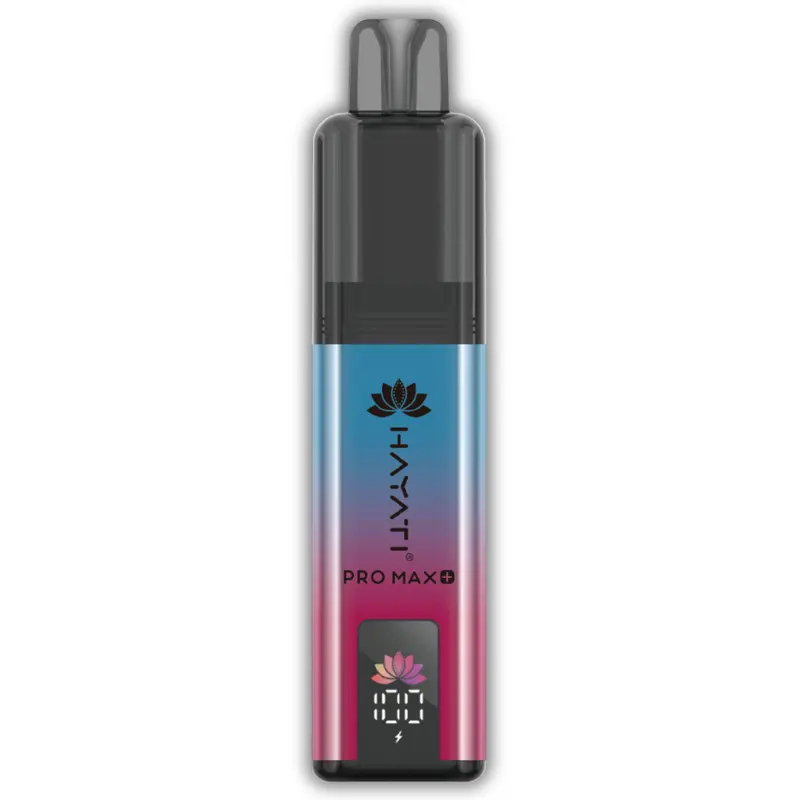
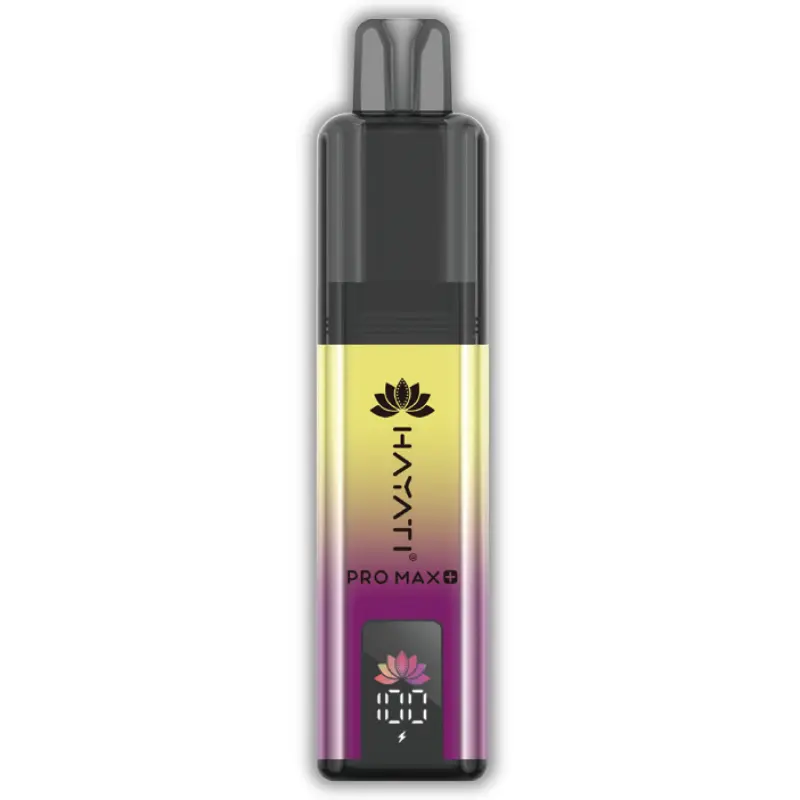
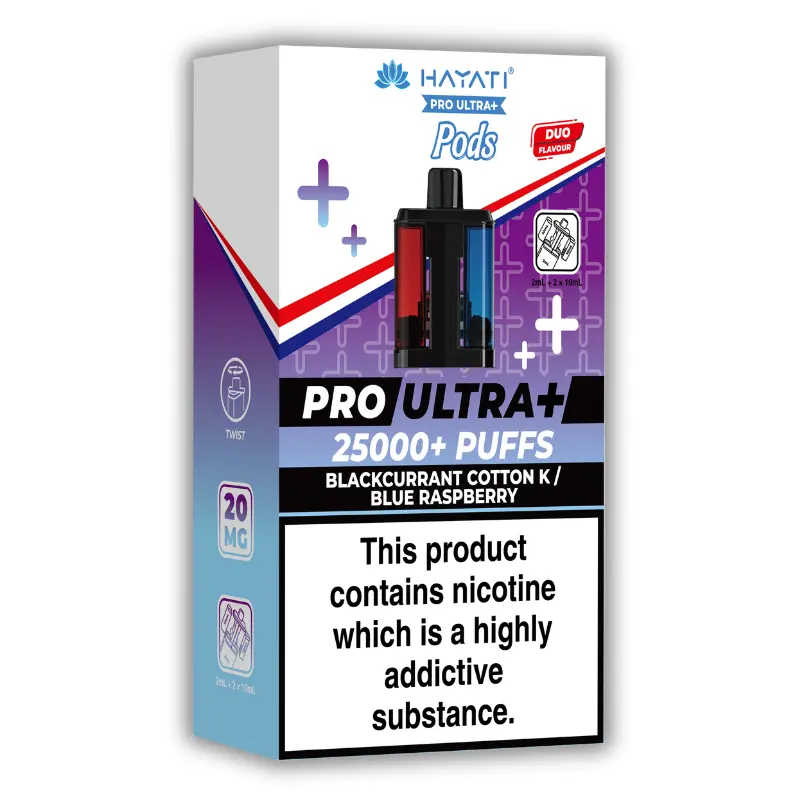
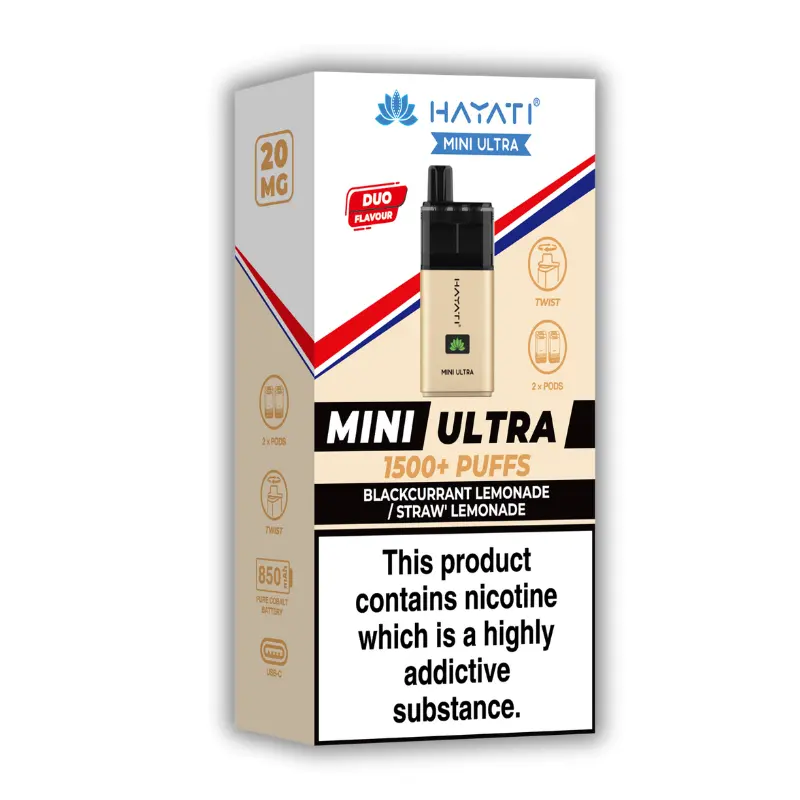
Five liquids, sixteen boxes, and two words nobody printed
Start with the shape of the shelf, because the absences only mean something once the positive contents are clear. The full map of every blackcurrant Hayati sell was drawn on the Blackcurrant Juice Pro Max Plus pods page, which counted the listings, sorted them into recipes and classified the words sitting next to the fruit. That work is cited here rather than repeated. The short version is that sixteen listings carry five liquids: Blackcurrant Juice, Blackcurrant Lemonade, Blackcurrant Mango, Blue Razz Blackcurrant and Blackcurrant Cotton K. Most of the duplication is format. A kit and a bare pod of the same flavour are one liquid sold twice, and a bottle is the same flavour again in a form you pour.
That page also sorted the modifiers into four classes: a drink word naming a state, a second fruit naming a handover, a confectionery word changing the register of the sugar, and a temperature word adding a coolant. Three of those classes are occupied here. The fourth is empty, and it is empty across all sixteen listings without exception.
The first count: nothing cold
Across the whole catalogue, 118 of 492 listings carry a cooling word in the title. Split by family, 95 use an ice-family word and 23 use a mint-family word, and not a single listing uses one of each. Roughly a quarter of everything Hayati sell announces a chill on the label. Nought out of sixteen blackcurrants do.
Two of the sixteen descriptions do contain a word from that vocabulary, and both turn out to reinforce the count rather than dent it. The Blackcurrant Juice 10ml bottle opens its own description with the phrase pure blackcurrant, no ice, and returns to the point twice more, stating that no cooling has been added and that the recipe contains fruit and nothing else. That is a manufacturer denying a coolant in writing, which is stronger evidence than silence. The other instance is on the Blackcurrant Lemonade and Straw’ Lemonade Mini Ultra kit, where the strawberry side is likened to a summer cooler. That is a drinks metaphor about a glass, not a claim about a coolant, and reading it as one would be careless.
The second count: nothing sour
Twenty-one of the 492 listings carry the word sour in the title, spread over six distinct names. They are Blue Sour Raspberry, Red Sour Raspberry, Cherry Sour Raspberry, Sour Apple, the Sour Apple pairing with Juicy Peach, and Tropical Sour Juice. Three fruits, then, plus one tropical blend. Blackcurrant is not among them.
The stronger version of this count is the one that surprised me. Search the catalogue for any listing where blackcurrant and the word sour co-occur anywhere, title or body text, and the answer is nought out of 492. Every other dark fruit on the site has been described as sour somewhere, if only in a comparison. Blackcurrant never has, despite being, in the fruit bowl, considerably the sharpest of them.
Several of the sixteen descriptions do reach for tart or sharp as tasting notes, which is a different thing from a sour build. Tart is a hedge word that appears in copy for almost every fruit in the range. Sour, in this catalogue, is a label attached to a specific kind of construction, and it appears in the name when it is present.
Absent is not the same as unpublished, and the difference matters
Before any of this gets pushed too far, the obvious objection deserves a proper answer. A title with no cooling word in it is not proof of an uncooled liquid. Hayati publish no ingredient list, no flavour brief and no target profile against any listing on this site, so what a title tells you is what the company chose to print, not what went into the mixing vessel.
The cooling-vocabulary census on the Blue Frozen pods page established exactly how far a title can be trusted on this question. It found that the cooling words are not a graded scale, that a buyer cannot read intensity off which one appears, and that there is precisely one listing in the entire catalogue where a cooling word in a title is decoded into an ingredient anywhere in the accompanying text. Everywhere else the word is a signal and nothing more.
Run that caveat in reverse and it cuts both ways. If a cooling word is only a signal, its absence is only the absence of a signal. What can be said with confidence is that Hayati have never once marketed a blackcurrant as cold, and that a buyer scanning this shelf for a chill will find nothing indicating one. What cannot be said is that a trace coolant is definitively absent from all sixteen. The single case where the evidence goes further is the 10ml Juice bottle, which denies it outright in its own copy.
The sour count is on firmer ground, because sourness in vapour is not a thing that happens quietly. More on that below, but the short reason is that it has to be dosed deliberately and it has costs attached, which is why it gets announced.
Testing the expectation: is dark fruit usually the chilled one?
The intuitive reading of a zero here is that blackcurrant has been singled out. Dark fruit and ice are a familiar pairing, the argument runs, so a dark fruit family with no cold entries at all must be an anomaly demanding an explanation. That reading was worth checking before building anything on it, so I checked it, and it does not survive contact with the catalogue.
What the numbers actually say
Counting listings whose title contains both a given fruit and a cooling word gives the following, restricted to fruits appearing on ten listings or more.
| Fruit in the title | Listings | Carrying a cooling word |
| Banana | 12 | 8 |
| Apple | 35 | 16 |
| Pineapple | 21 | 9 |
| Strawberry | 60 | 21 |
| Watermelon | 27 | 9 |
| Cranberry | 16 | 5 |
| Raspberry | 74 | 17 |
| Cherry | 62 | 12 |
| Mango | 21 | 4 |
| Kiwi | 12 | 2 |
| Lemon | 57 | 6 |
| Blue Razz | 48 | 5 |
| Peach | 32 | 3 |
| Blueberry | 46 | 3 |
| Grape | 17 | 1 |
| Blackcurrant | 16 | 0 |
The table is sorted by proportion and it sorts itself almost perfectly by colour. Everything above a third is pale, crisp or tropical: banana, apple, pineapple, strawberry, watermelon. Everything in the bottom half is dark, soft or citrus: blueberry, grape, blue razz, peach, lemon. Dark fruit in this catalogue is the family least likely to arrive with a chill on it, by a wide margin, and blackcurrant at nought of sixteen is not standing outside that pattern. It is the last point on the line.
One fruit contradicts the trend and honesty requires naming it. Blackberry carries a cooling word on three of six listings, the highest proportion of any dark fruit here. Six listings is not enough to overturn anything, and the three in question are the Blackberry Ice liquid sold across three formats, so the sample is really one recipe rather than three. It is a footnote rather than a counterargument, but a page that only reports the confirming numbers is not doing arithmetic, it is doing decoration.
What that changes
Correcting the premise makes the finding more useful, not less. If blackcurrant were a lone uncooled outpost in a family that otherwise arrives frozen, the natural conclusion would be that Hayati have not got round to it and probably will. That is a wait-and-see answer. What the numbers actually show is a settled, catalogue-wide disposition: the darker and softer the fruit, the less likely it is to be chilled, and blackcurrant simply sits at the far end of it.
Which reframes the absence. It is not a gap in a product line. It is a consistent position about what cold does to a heavy fruit, applied hardest to the heaviest fruit on the site. That position is arguable either way, but it is a position, and a buyer is better served knowing it is deliberate than assuming a shipment is late.
The missing acid, and why it would have to be announced
Sourness is the more interesting of the two absences, because the fruit itself is so obviously suited to it. Blackcurrant is one of the sharpest soft fruits grown in Britain. That acidity is not a garnish on the flavour, it is the structural element holding the rest of it up, which is why every traditional preparation of the fruit involves a great deal of sugar and why almost nobody eats it straight off the bush.
So a sour blackcurrant ought to be the easy one. You would think the fruit was already halfway there. It is not, and the reason is mechanical rather than commercial. The Blackcurrant Juice Pro Max Plus kit page works through this at length and its conclusion is worth carrying across intact: the common food acids are crystalline solids at room temperature with essentially no aroma, so they do not travel as vapour in any useful quantity. Sourness in a pod is an additive dosed on purpose, never a property inherited from the fruit whose name is on the label. If a liquid tastes acidic, somebody put the acid in.
That has a consequence for reading a catalogue, and it is the consequence that makes the sour count trustworthy. An ingredient which must be added deliberately, at a level high enough to survive the transfer, at a cost in throat character on a 20mg salt and a cost in demand on a coil that cannot be replaced, is not an ingredient a mixer slips in quietly. It is a decision, decisions get labelled, and the catalogue bears that out: every sour build in the range says so in the title.
Given which, nought of sixteen is close to dispositive. The absence of a cooling word leaves room for a trace coolant nobody bothered to mention. The absence of a sour label leaves very little room for a genuine acid spike, because a genuine acid spike is the sort of thing a product name exists to advertise.
One further absence, which explains why you cannot have both
Here is a count that reframes the whole question. Of the 492 titles in this catalogue, not one carries both a sour word and a cooling word. The sour listings are never chilled. The chilled listings are never soured. Twenty-one and 118 respectively, and the intersection is empty.
Which means the buyer who arrived here wanting a cold, sharp dark fruit was never going to find it on this shelf or on any other. The two effects are not offered together anywhere in the range, from any fruit, on any platform. Blackcurrant is not refusing you something the next shelf along would have provided. It is refusing both halves of a combination that the catalogue as a whole has never assembled.
Speculating about why would be guessing, and the honest position is that Hayati publish no reasoning. The plausible explanations are not hard to imagine, since cold and acid both compete for the same attention in the mouth and a coolant tends to flatten a flavour rather than sharpen it. The count is the fact. The explanation is not published, and this page is not going to invent one.
The five liquids, grouped by what each one adds instead
Everything above is about what is missing. What follows is the shelf as it actually exists, grouped so that the groups line up with the argument. Every one of these five liquids is built by adding sweetness, a second flavour or a different sugar register, and none is built by adding cold or acid. Reading them in that order makes the shelf legible in a way that reading them alphabetically does not.
The undiluted one, and the only listing that gets close to a bare fruit
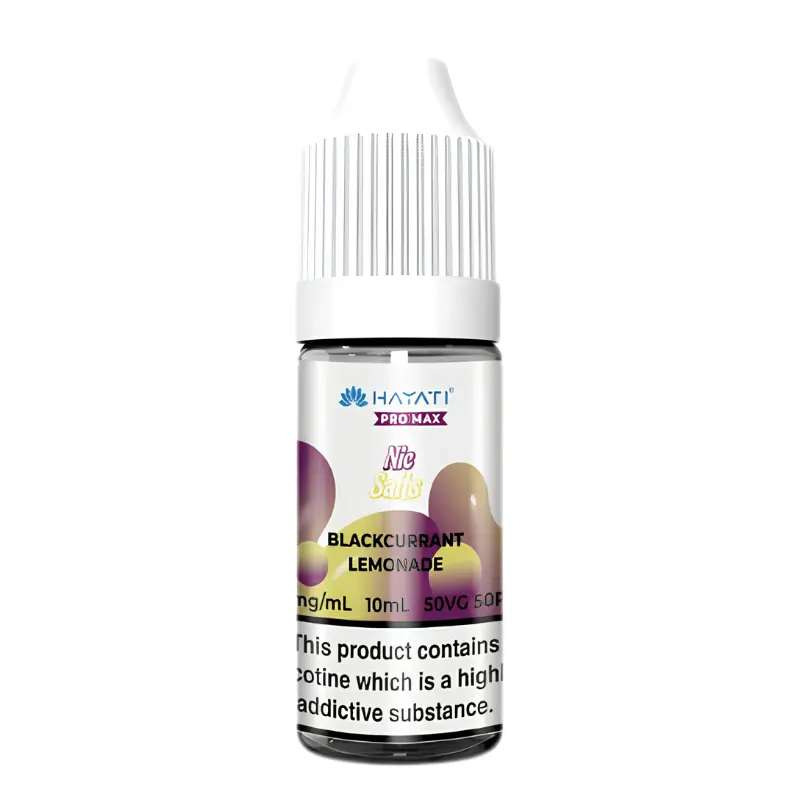
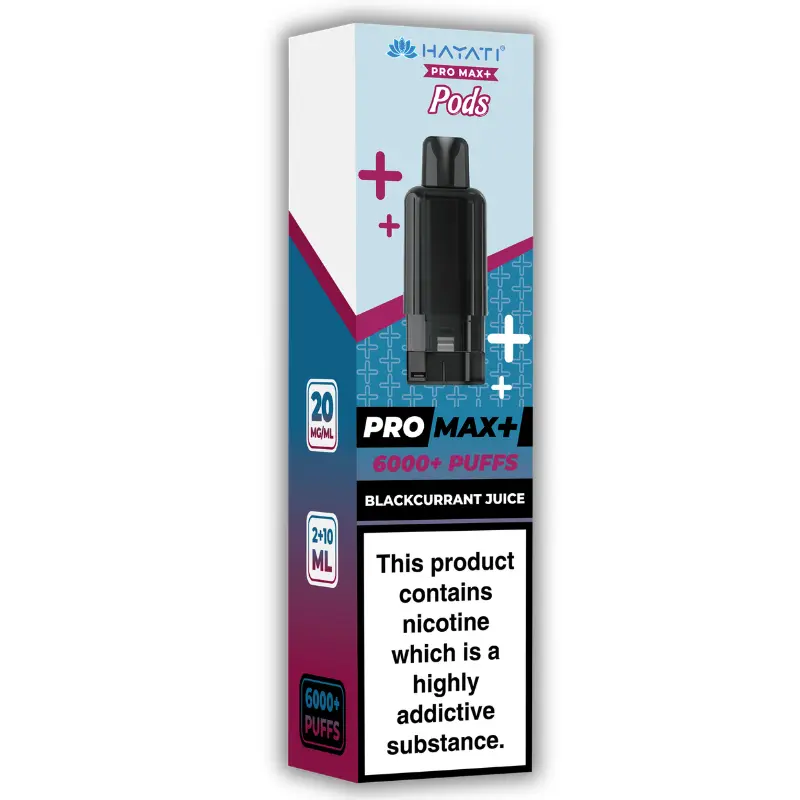
Blackcurrant Juice is the fruit on its own: no partner, no citrus lift, no coolant. Three listings carry it. The 10ml nic salt bottle at £2.49 is the cheapest route into the flavour and the only one where you control the hardware, at 10mg in a 50/50 base. The Pro Max Plus pod at £5.49 puts 12ml at 20mg into a sealed unit for anybody who already owns the body, and the Pro Max Plus kit at £7.99 adds the device.
Take this one if a single note held at full volume is what you want and you are content for it to be sweet. The bottle page is candid about where the weight stops being an asset, which is somewhere between forty and sixty minutes of steady use, and it identifies the reason precisely: with neither acid nor chill available to reset the palate between draws, each draw lands on the palate exactly as the last one left it. That is the absence this whole page is about, described from the inside of one product.
Note also that there is no listing called simply Blackcurrant. All sixteen carry a modifier, which is not inevitable, since the catalogue does allow bare names elsewhere. Juice is the closest Hayati come to an unmodified blackcurrant, and it arrives at that position by using a word whose meaning is the absence of everything else.
The lengthened one, which is most of the shelf
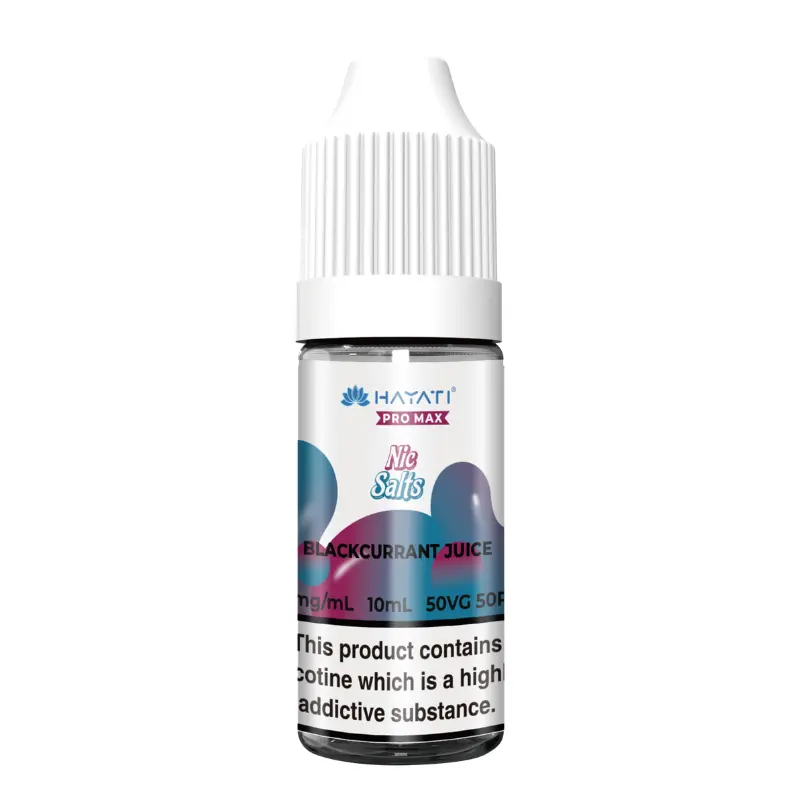
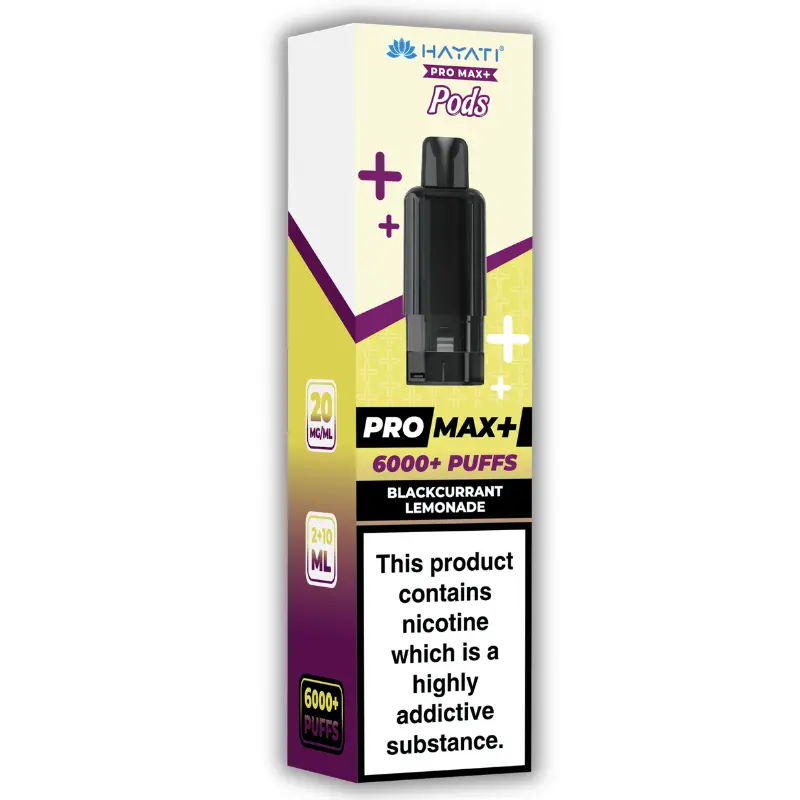
Blackcurrant Lemonade accounts for seven of the sixteen listings and reaches all four platforms, making it the only blackcurrant here with full range coverage. In ascending order: the 10ml bottle at £2.49, the Mini Ultra pod at £3.49, the Mini Ultra dual kit sharing a pod with Straw’ Lemonade at £3.99, the Pro Max Plus pod at £5.49, the Pro Max Plus kit and the 22ml Pro Ultra Plus pod at £7.99 each, and the Pro Ultra Plus kit at £11.99.
What the second word claims is not a preparation, and that argument belongs to the Pro Max Plus pod listing, which established that Lemonade names a coordinate rather than a recipe: the fruit held lower on its own intensity scale, with a separate citrus sharpness added above it. A sealed pod has no dilution step available, so the operation the word names cannot be performed by the owner. The concentration was set at the fill.
For the purposes of this page the important thing is what that citrus is and is not. It is the nearest thing on the shelf to the sharpness a sour build would supply, and it is not the same thing. A lemonade accord arrives with its sugar and its acid already balanced against one another, which is what makes it a drink rather than a fruit. A sour build deliberately unbalances them. If you have been telling yourself that the lemonade will do instead of a sour, expect a lift rather than a bite.
The two fruit pairings, which go in opposite directions
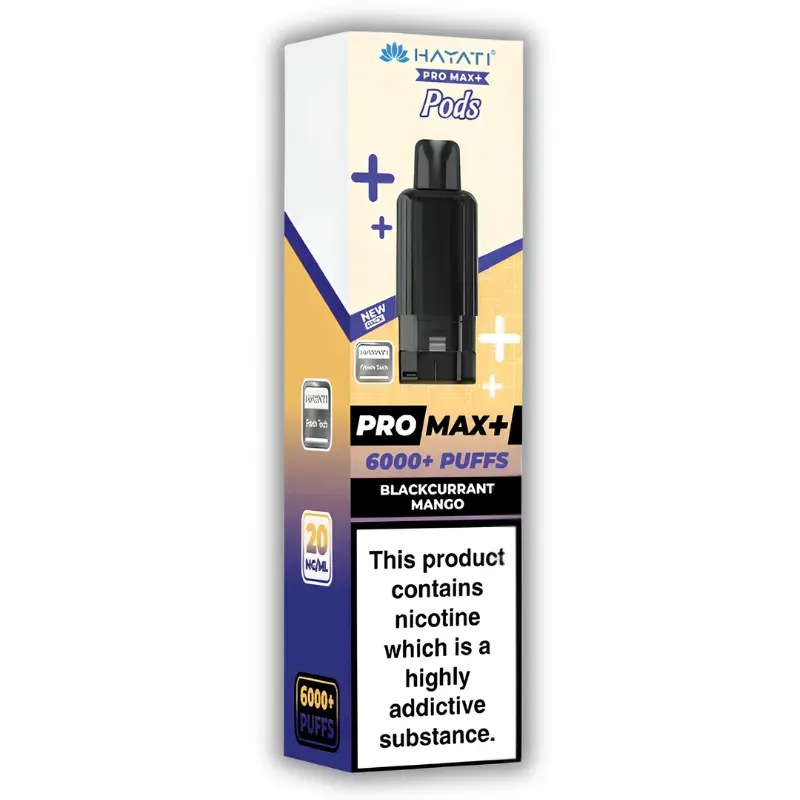
Two liquids give the blackcurrant a partner, and both keep it to a single partner. Blackcurrant Mango at £5.49, or as a kit at £7.99, is the structurally odd one, because mango is dense, low in acid and almost entirely body while blackcurrant is mostly edge. The kit page works through whether those two ever actually meet and concludes that they stack rather than fuse. Take it if you want the dark fruit carried on something broad underneath it.
Blue Razz Blackcurrant at £5.49, or as a kit at £7.99, inverts the billing. Blue razz is a confectionery accord with no original anywhere in nature, and here it is the subject with the blackcurrant supplying depth beneath it. Word order in this catalogue does appear to track the described order, on a sample of two, which is a weak prior rather than a rule.
Worth registering what neither pairing does. Blackcurrant is never blended with another named real berry anywhere in the range. Its partners are a citrus drink, a tropical stone fruit, a sweet-shop accord and candy floss. Nobody has built a mixed dark berry around it, which is the direction most catalogues take a fruit like this, and the shelves where you would look for that instead are Berry Vapes and Blueberry Raspberry Vapes.
The sweet-counter one
Blackcurrant Cotton K puts the fruit against candy floss, which Hayati spell out in their own description, so the reading is theirs and not an inference. It exists on the Pro Ultra Plus only, as a 22ml pod at £7.99 and a kit at £11.99, and in both cases it shares the pod with a Blue Raspberry side.
Both of those listings are dual-flavour, which means one pod divided into two separate portions with a collar under the mouthpiece selecting which one is in play. It is not two pods in a packet. Switching is instant and available mid-session, both sides run through one coil and one airflow path so there is carryover at every switch, and the two halves share a single 22ml budget, so anything left in the side you like less goes in the bin with the pod. Hayati publish what the collar does. They publish nothing about how the two portions are divided or held apart, so this page will not describe a mechanism it cannot see.
This is the furthest point from the raw fruit on the shelf, and the one a buyer is most likely to misjudge. A confectionery modifier is not a flavour note sitting alongside the fruit. It changes what the sugar is doing, from carrying the fruit to being the thing you taste, with the fruit pointing at a direction. If the sweet end of the range is where you generally land, Sweet Vapes collects the rest of it.
The same five, sorted by money instead
Cutting the shelf the other way gives three tiers and they are easy to hold in mind. Under £4 buys either a 10ml bottle you fill yourself or a Mini Ultra pod holding 4ml, which is the cheapest way to find out whether a flavour suits you before committing a larger fill to it. Between £5.49 and £7.99 sits the bulk of the shelf: 12ml Pro Max Plus pods and kits, plus the 22ml Pro Ultra Plus pod for anybody who already has that body. At £11.99 you are buying a Pro Ultra Plus kit, which is a platform decision dressed as a flavour decision.
Does the reading hold across all five?
Here is the hypothesis the absences suggest. If nothing on this shelf is cooled and nothing is soured, the range is consistently reading blackcurrant through the sweetened British drink rather than through the berry, and the two missing properties are missing because neither belongs to that reference.
The reference-point argument itself belongs to the Blackcurrant Lemonade Pro Ultra Plus pod page, which establishes at length that what a British buyer carries in their head under this word is the sweetened, dilutable cordial and not the fruit, because the fruit is grown here commercially and eaten fresh by almost nobody. That argument is taken as read. The question this page can add is narrower and testable: does the cordial reading actually account for all five liquids, or only the convenient ones?
Where it holds
Cleanly, for ten of the sixteen listings. Juice and Lemonade are both drink words rather than flavour words, both name something poured rather than picked, and both make sense only against a drink standard. Lemonade in particular is a partner you would add to squash in a kitchen and would never add to a punnet of raw currants. The dual Mini Ultra kit pairs it with another lemonade, which is a drinks pairing twice over.
The two missing properties fall out of that reading without further explanation. Nobody puts ice cubes into cordial and calls the result a different product, so a temperature modifier would be redundant against the reference. And a cordial has already had its acid corrected by sugar, which is the entire purpose of the preparation, so restoring the acid would be moving away from the reference rather than towards it.
Where it strains
Less cleanly for the other six listings, and the page would be worth less if it pretended otherwise. Mango is not a cordial partner in any British kitchen. Blue razz is a confectionery accord borrowed from the sweet counter. Cotton K is candy floss, which is not a drink at all. Two of the five liquids point at a glass. Three point somewhere else entirely, and between them they account for six listings, well over a third of the shelf.
So the strong form of the hypothesis fails. The range is not reading blackcurrant exclusively through the cordial, because three of its five recipes are not drinks in any sense.
The narrower claim that survives
Test the weaker version and it stands up completely. Every one of the five liquids modifies the fruit by adding sweetness or a second sweet element. Not one modifies it by adding cold, and not one by adding acid. Whether the sugar arrives as a cordial, as a tropical fruit, as a candied blue accord or as candy floss, the direction of travel is identical in all five cases, and it is the direction that treats the fruit's natural sharpness as a problem already solved rather than a feature to restore.
That is the coherent editorial position, and it is a real one. The cordial is the clearest expression of it, which is presumably why it accounts for the majority of the shelf, but the position is broader than the cordial: on this site, blackcurrant is a fruit that gets sweetened, in whichever register the format calls for. A buyer who wants the fruit sharpened instead is not being poorly served by one listing. They are asking the range for something it has consistently declined to make.
Where to go for dark fruit with a cold finish
The practical half. If a chill is the requirement and blackcurrant was only the route to it, the fruit is the thing to give up rather than the cold.
The general answer
Ice Vapes is the right starting shelf: 98 listings, nearly all of them announcing a coolant on the label. Read that shelf's own page before you order from it, because it makes a point worth carrying, which is that the word tells you a cooling compound went in and nothing about the load, the compound or where in the mouth it lands.
Within the dark end specifically, the nearest neighbours to what this shelf does are spread across several families. Cherry Vapes carries twelve chilled listings out of 72, mostly Cherry Ice and the dual pods built around it, and cherry is the dark fruit closest to blackcurrant in weight. Berry Vapes holds 34 chilled listings out of 225, including Blackberry Ice, Blue Frozen and Red Berry Ice. Raspberry Vapes has 22, and Blueberry Vapes only seven out of 90, which tells you how cold-averse that corner is. If you want the densest concentration of chilled berry in one place, Strawberry Raspberry Ice Vapes runs to eighteen listings of which sixteen are cooled, though that is a red-berry profile rather than a dark one. Grape Vapes has exactly one chilled entry in nineteen.
If the cold matters more than the fruit, the mint and menthol families are the other direction entirely. Mint Vapes, Fresh Mint Vapes and Menthol Vapes between them hold most of the 23 mint-family listings, and since no listing in the catalogue combines a mint word with an ice word, those are a separate choice rather than a stronger version of the same one.
The nearest thing to a cold blackcurrant that Hayati actually sell
There is one, and finding it requires abandoning the fruit name and searching by the drink instead. The Blackcurrant Juice pod page already flagged the Vim Ice and Vimbull Ice listings as unnamed dark blends reading as chilled purple cordial. Following that lead through the descriptions turns up something more specific and more useful.
Vim Ice is described in Hayati's own copy as taking its cue from a well-known British mixed-fruit cordial with a chill added, a dark berry-and-grape drink style rather than a single fresh fruit. It exists as a Pro Max Plus pod at £5.49 and a kit at £7.99, which is the same hardware and the same money as most of the blackcurrant shelf, and again on the Rubik platform at £3.99 and £5.99. For somebody who liked the cordial framing here and wanted it cold, that is the closest available swap, and it costs nothing in hardware if a Pro Max Plus is already in your pocket. It sits on the Pro Max Plus pods shelf alongside the blackcurrants.
Vimbull Ice goes further and is the single place in 492 listings where blackcurrant and a chill are described together as a positive proposition. Its copy calls it a blackcurrant-and-grape style fruit cordial crossed with an energy drink, finished with ice. That is the liquid this shelf does not contain, written down by the same company. The catch is the format: it is a 120ml shortfill at 0mg, sold in both a 50/50 and a 70/30 blend, which means a different device, a different way of buying nicotine and a different draw. It is on the Hayati E-Liquids shelf rather than anywhere near here.
Two other description-level mentions turn up in the same search and neither is what it looks like. Red Berry Ice names blackcurrant only to exclude it, saying the blend sits at the red end of the spectrum rather than in the deeper tones of blackcurrant or blackberry. Berry Lemonade mentions Blackcurrant Lemonade as a comparison, to explain that it is the less specific option. A keyword match is not a product.
Where to go for dark fruit that bites
The sour answer is narrower, because there are only six sour-labelled names in the whole catalogue and three of them are raspberry.
Raspberry Vapes is the shelf to work: fifteen of its 119 listings carry the word, covering Blue Sour Raspberry, Red Sour Raspberry and Cherry Sour Raspberry. Blue Sour Raspberry is the most direct substitution available to somebody arriving from here, because Blue Razz Blackcurrant already puts a blue accord and a dark berry in the same pod. The sour version takes the same pairing and unbalances the sugar against the acid instead of balancing it.
The same listings surface on the wider Berry Vapes shelf, which holds thirteen sour entries. Cherry Vapes has two, Blueberry Vapes two, and Blueberry Raspberry Vapes two. Outside the dark fruit, Apple Vapes carries four across the Sour Apple builds, and Exotic Vapes two for Tropical Sour Juice, which is the other listing in the range using the word Juice.
The constraint to carry with you is the one established earlier. None of those sour listings is chilled, and none of the chilled listings is sour. Pick the effect you want more, because the catalogue has never offered both in one product.
Formats present, and the ones this fruit never reaches
Four Hayati platforms carry a blackcurrant and the practical differences between them are volume, strength and whether you supply the device.
- Pro Max 10ml bottles. Two listings at £2.49, both 10mg nicotine salt in a 50/50 base, both on the Pro Max Nic Salts shelf. The only format here where you choose the hardware, and the only one at a strength other than 20mg.
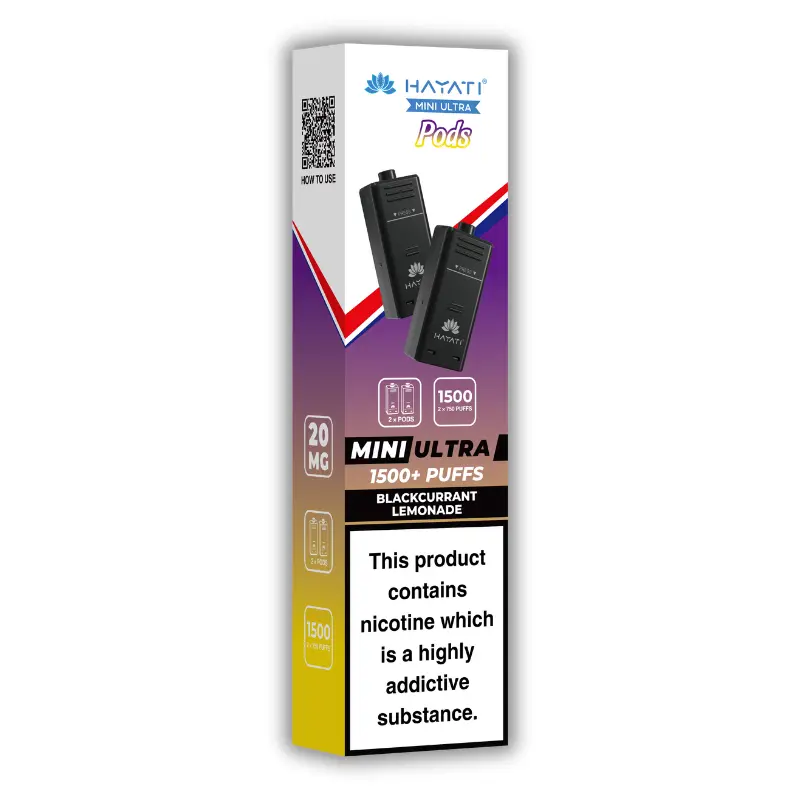
- Mini Ultra. A 4ml prefilled pod at £3.49 and a 4ml dual kit at £3.99, both 20mg, on the Mini Ultra shelf. The small fill is the point: the least money at risk if the flavour turns out not to suit you.
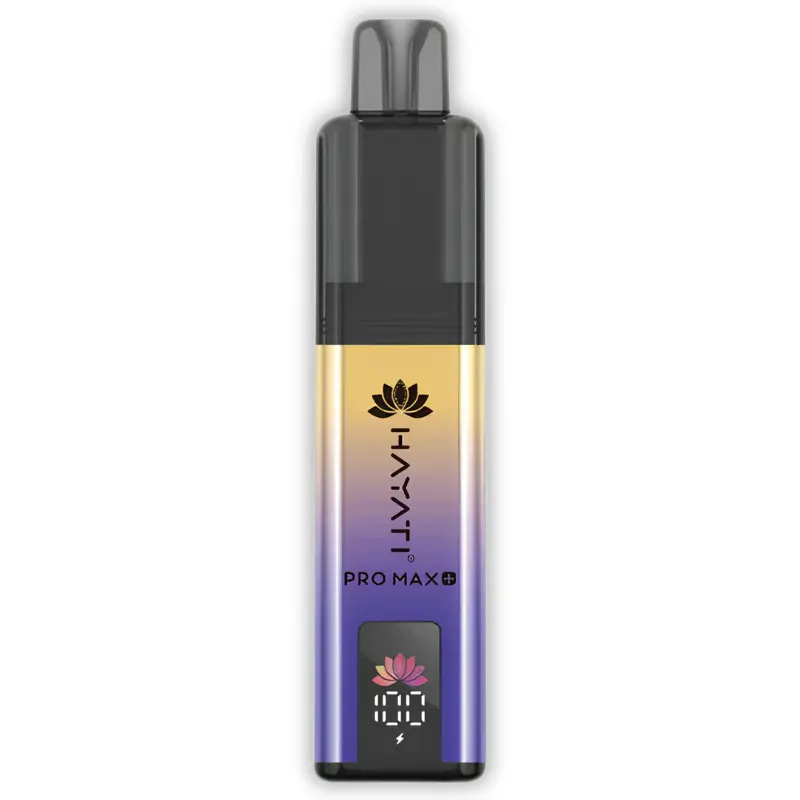
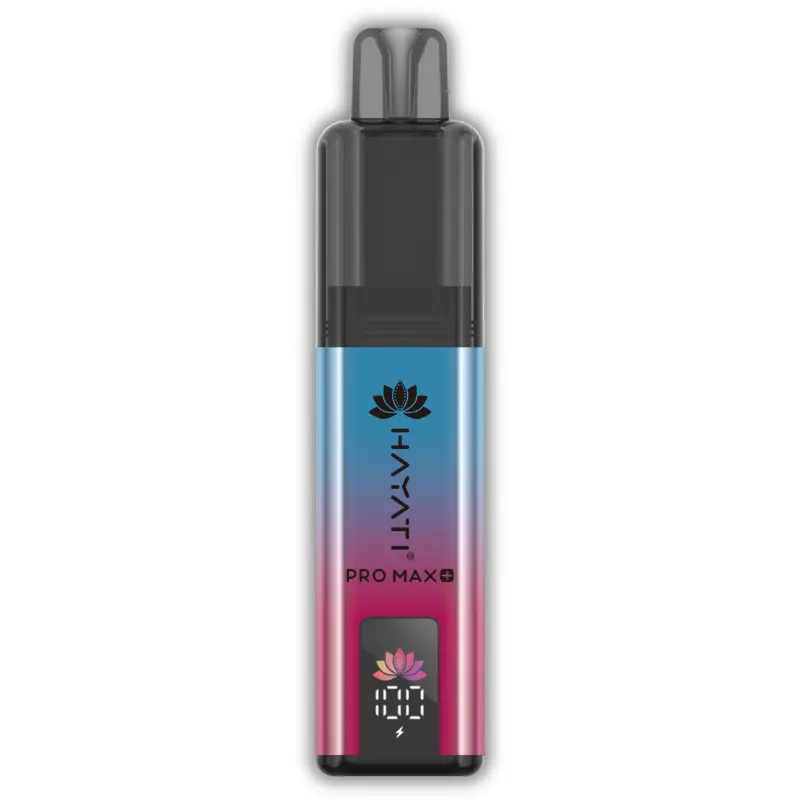
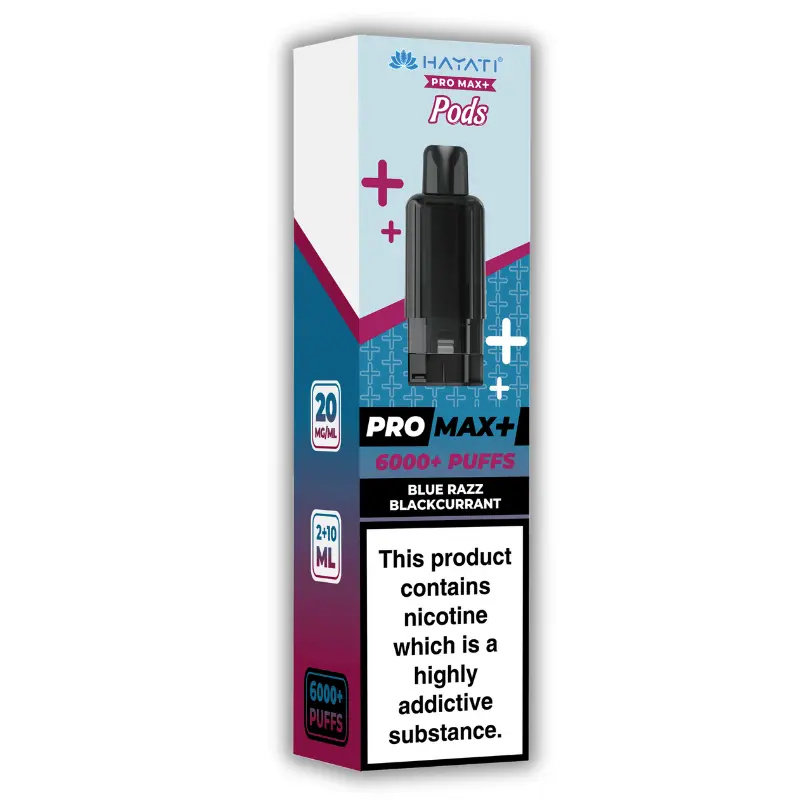
- Pro Max Plus. Eight of the sixteen. A 12ml pod at £5.49 from the pods shelf, or the same pod with a body at £7.99 from the kits shelf. Hayati rate a filled pod at up to 6,000 puffs on their own laboratory equipment, which is a bench figure for ranking formats and not a forecast of your fortnight.
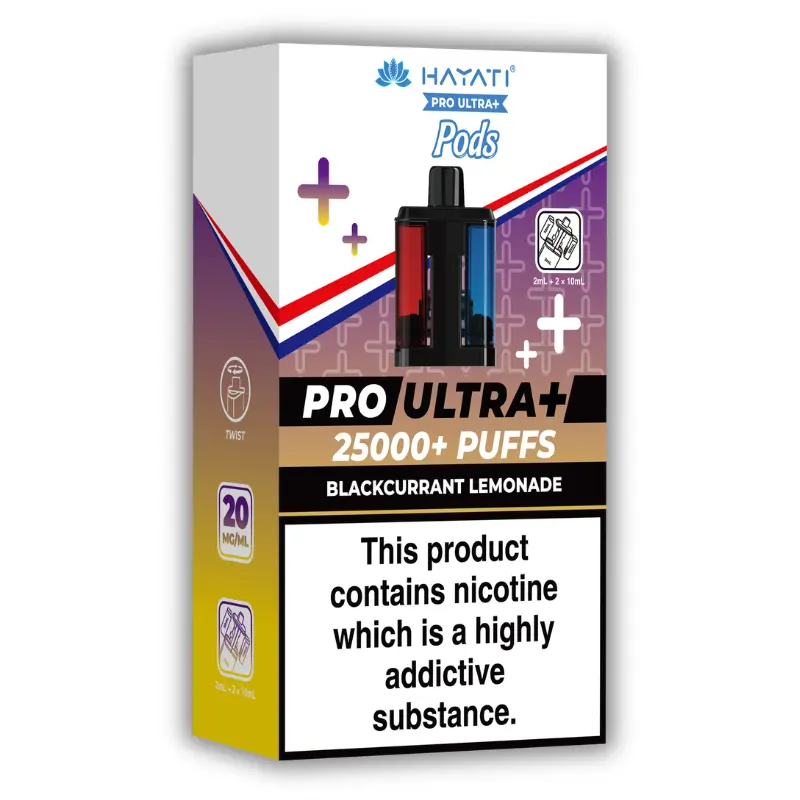
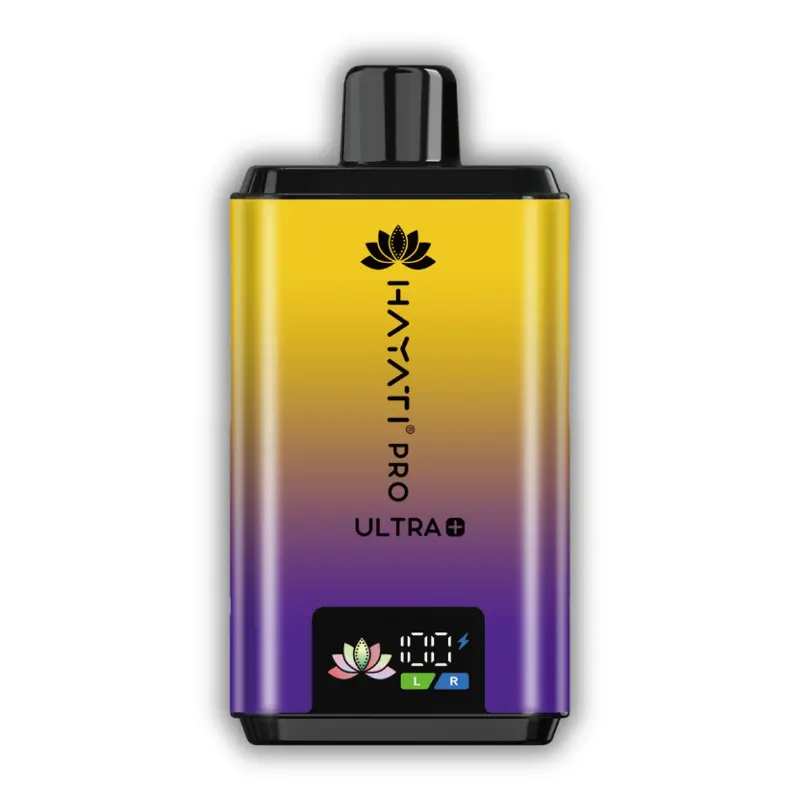
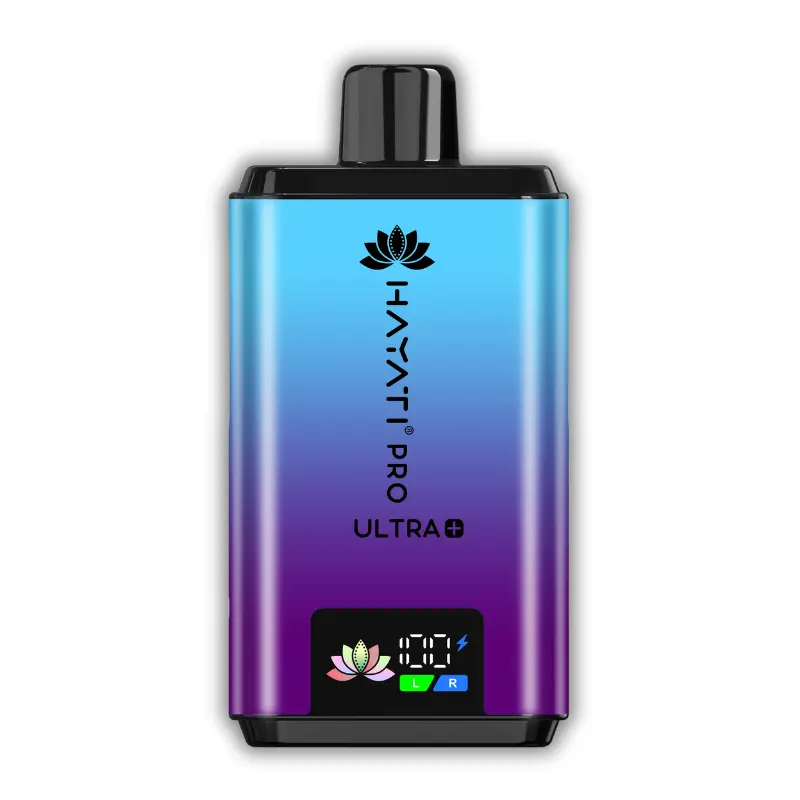
- Pro Ultra Plus. Four listings. A 22ml pod at £7.99 from the pods shelf, a kit at £11.99, and the whole range collected on the Pro Ultra Plus shelf. The bench rating here is up to 25,000 puffs, produced under laboratory conditions, and it came off different hardware from the 6,000 figure so the two do not calibrate against each other.
Check the range name printed on your device against the range name in the product title before ordering a bare pod, and settle nothing beyond that from a retail page.
The third absence: platforms this fruit never reaches
Worth recording alongside the other two, because it shapes what is available to whom. Hayati make more than four platforms, and blackcurrant appears on none of the others. There is no Rubik blackcurrant, despite Rubik being the cheaper 12ml route into the range. There is no Quokka one. There is no blackcurrant nicotine pouch. And neither of the two 120ml shortfill lines carries a blackcurrant, which is why the cold cordial discussed above had to be found under another name.
The practical effect is that a Rubik owner cannot buy this fruit at all without changing device, and neither can anybody running a sub-ohm tank. Both would have to move to a Pro Max Plus or fill a 10ml bottle themselves. The wider picture across every platform is on the Hayati Pods shelf for bare pods, the prefilled pods and refills shelf for the refill economics, and the pod kits shelf if the device is what you are shopping for.
What the price spread is actually measuring
Six prices cover sixteen listings: £2.49, £3.49, £3.99, £5.49, £7.99 and £11.99. Almost all of the gap is millilitres and whether a body is in the box, not flavour quality. One liquid demonstrates that on its own: Blackcurrant Lemonade appears at every single one of the six prices, which means the whole spread can be observed without changing flavour once.
Divide money by volume and the ranking turns over. The 22ml Pro Ultra Plus pod at £7.99 is the cheapest prefilled liquid per millilitre on the shelf by a clear margin. The 4ml Mini Ultra pod at £3.49 is the dearest by the same measure, and it is still the sensible first purchase if you are not certain about the flavour, because the question a small fill answers is whether you want a large one. The two 10ml bottles undercut everything per millilitre, but they are 10mg rather than 20mg and they arrive with no coil, no wick and no device, so they are not comparable objects.
The £2.50 step between a bare Pro Max Plus pod and the kit containing the same pod is the whole price of the body, paid once. On the Pro Ultra Plus the equivalent step is £4. Neither is a flavour decision, and both are worth separating from one in your head before you reach the basket. Nicotine is an addictive substance, and every prefilled listing on this shelf is fixed at 20mg with no alternative strength offered, so the only strength choice available under this fruit is between the bottles at 10mg and everything else at 20mg.
Across the site more broadly, the prefilled pod kits shelf is where the cross-platform arithmetic is set out properly, and the full Hayati catalogue holds all 492 listings if you would rather browse than filter.
Where to go next
Three routes out of here make sense, depending on which part of the shelf brought you.
If the drink framing is what appeals, Lemonade Vapes is the obvious next shelf and it shares seven listings with this one. It is also the only other multi-recipe flavour shelf in the catalogue with no cooled entries at all: nineteen listings, five separate lemonades, nought chilled, and twelve of those nineteen are not blackcurrants. Three further shelves show a zero, but Juicy Peach, Mr Blue and Summer Dream are each built around a single liquid and its dual-pod variants, so a zero there is one recipe rather than a pattern. Lemonade is the only other family where several different mixers, or several different briefs, have independently arrived at the same refusal, which is a small piece of evidence that it tracks the drink style rather than the one fruit.
If the fruit is what appeals and you want it in company, Berry Vapes is the parent shelf at 225 listings and Raspberry Vapes the largest sibling. Mango Vapes picks up the other half of Blackcurrant Mango, Exotic Vapes covers the tropical end, and Lemon Vapes holds the citrus that the lemonade listings borrow from, including the distinction between a lemon build and a lemonade one.
If a device is the actual purchase, start from the platform rather than the fruit. The Pro Ultra Plus kits shelf is where the largest format lives, and New Products lists everything by arrival date if you want to see what has landed recently rather than what tastes of what.
Closing
Sixteen listings, five liquids, four platforms and six prices, and the most useful fact about the set is a pair of zeroes. Nothing here is cooled. Nothing here is sour-labelled. Both counts were run against the catalogue rather than taken on trust, and the second one extends further than expected: blackcurrant and the word sour do not co-occur in a single one of the 492 listings on this site.
The reason is not that one fruit has been overlooked. Dark fruit across this whole catalogue is the family least likely to be chilled, blackcurrant merely sits at the end of that line, and sourness anywhere in the range is an added component that gets announced in a product name when it is present. What the five recipes have in common is the direction they modify in: every one of them sweetens, in one register or another, and none of them sharpens or chills.
Treat that as a position rather than a gap. If it suits you, this is a coherent shelf and the choice comes down to how diluted you want the fruit and which device is already in your pocket. If it does not, the range has cold dark fruit under other names and sour dark fruit on the raspberry shelves, and the one thing it has never offered anywhere is both at once.
Strictly for adults aged 18 and over. Nicotine is an addictive substance.
Frequently asked questions
Is there an iced or menthol blackcurrant in the Hayati range?
No. Nought of the sixteen blackcurrant listings carries a cooling word in the title, which is unusual against a catalogue where 118 of 492 listings do. The closest available option is Vim Ice, a chilled dark cordial-style liquid on the Pro Max Plus and Rubik platforms, or Vimbull Ice, whose own description names blackcurrant and ice together but which is sold as a 120ml shortfill at 0mg rather than as a pod.
Could a blackcurrant here contain a coolant without saying so?
In principle yes, because Hayati publish no ingredient list for any listing and a product title is a marketing signal rather than a specification. The cooling-vocabulary census on the Blue Frozen pods page found only one listing in the entire catalogue where a cooling word is decoded into an ingredient anywhere in the text. The exception is the 10ml Blackcurrant Juice bottle, which states in its own description that no cooling has been added, and that is a denial rather than a silence.
Is any blackcurrant on this shelf sour?
None is sour-labelled, and the count goes further than the shelf: the words blackcurrant and sour never appear together in any of the 492 listings on this site, in a title or in a description. Several descriptions use tart or sharp as tasting notes, which is ordinary copy for almost any fruit. A genuine sour build requires an acid dosed on purpose, and in this catalogue those are always named in the title.
Why would a fruit that acidic never be sold as a sour flavour?
Acidity does not travel in vapour the way aroma does. The common food acids are crystalline solids with no appreciable smell, so a sour effect has to be added deliberately at a level high enough to survive the journey, with costs in throat character and in demand on a coil that cannot be replaced. That reasoning is set out on the Blackcurrant Juice Pro Max Plus kit page. The short version is that sourness is a decision rather than something inherited from the fruit on the label.
How many genuinely different blackcurrant liquids are there?
Five, spread across sixteen listings. They are Blackcurrant Juice, Blackcurrant Lemonade, Blackcurrant Mango, Blue Razz Blackcurrant and Blackcurrant Cotton K. Most of the duplication is format rather than flavour, since a kit and a bare pod of the same liquid are the same recipe sold twice. Blackcurrant Lemonade alone accounts for seven listings across all four platforms.
Which one is closest to the plain fruit?
Blackcurrant Juice, and it gets there by using a word that names an absence rather than by dropping the modifier. There is no listing called simply Blackcurrant anywhere in the range. Juice claims the fruit undiluted, unpartnered and with nothing over the top, though the bottle page is clear that the reference being built to is the sweetened purple drink rather than neat pressed fruit.
What is the cheapest way to try a blackcurrant before committing?
Either of the two 10ml bottles at £2.49 if you already own a refillable pod device, or the Mini Ultra pod at £3.49 if you want something prefilled. The bottles are 10mg rather than 20mg, so they are not a like-for-like preview of the pods. The Mini Ultra holds 4ml, which is the smallest fill on the shelf and therefore the least money at risk on a flavour you may not keep.
Which listing gives the most liquid for the money?
The 22ml Pro Ultra Plus pod at £7.99, by a clear margin among the prefilled options. The 4ml Mini Ultra pod at £3.49 is the dearest per millilitre. The 10ml bottles undercut everything on that measure but arrive with no coil, no wick and no device, and at a different nicotine strength, so they are not directly comparable objects.
Are the dual-flavour listings two pods in one packet?
No. A title with two flavour names divided by an oblique is a single pod holding both, with a collar under the mouthpiece that selects which one is in play. Switching is instant and can be done mid-session, both sides run through one coil and one airflow path so there is carryover after every switch, and the two share a single liquid budget. Two listings here work that way: the Blackcurrant Cotton K pairing with Blue Raspberry, and the Mini Ultra kit pairing Blackcurrant Lemonade with Straw’ Lemonade.
Does the lemonade give the same sharpness a sour version would?
Not really, and the difference is worth knowing before you order. A lemonade accord arrives with its sugar and its acid already balanced against one another, which is what makes it read as a drink. A sour build deliberately unbalances them to produce a pucker. What the lemonade listings add is a lift and a lighter finish rather than a bite, so if a bite is the requirement you would be better served on the raspberry shelves.
Why can I not find a blackcurrant for my Rubik or my sub-ohm tank?
Because the fruit only appears on four Hayati platforms and neither of those is among them. There is no Rubik blackcurrant, no Quokka one, no blackcurrant nicotine pouch, and neither 120ml shortfill line carries one. A Rubik owner wanting this fruit would have to move to a Pro Max Plus pod or fill a 10ml bottle in a device of their own.
Is blackcurrant unusual in having no cooled listings, or is that normal for dark fruit?
It is the extreme of a pattern rather than an exception to one. Counting cooling words by fruit across the catalogue, the highest proportions belong to banana, apple, pineapple, strawberry and watermelon, while blueberry, grape, blue razz and peach sit near the bottom. Dark and soft fruits here are the least likely to be chilled, and blackcurrant at nought of sixteen is the last point on that line. Blackberry is the one dark fruit that goes the other way, on a sample of six listings carrying a single recipe.
Can I get a dark fruit that is both cold and sour?
Not from this catalogue. None of the 492 titles carries both a sour word and a cooling word, so the twenty-one sour listings are all uncooled and the 118 cooled listings are all unsoured. The two effects are never offered together from any fruit on any platform, which means the choice is between them rather than a matter of finding the right listing.