Home / Exotic Vapes
Exotic Vapes
Fifty-five listings carry the Exotic tag, covering 22 distinct flavours and priced from £2.49 for a 10ml bottle up to £11.99 for a complete Pro Ultra Plus kit. Every other flavour shelf on this site is named for something you can check against the liquid in front of you: a fruit, a drink, a temperature. This one is named for how far a fruit has travelled to reach a British shopper, which is a fact about the shopper rather than a property of the bottle.
Counting the membership makes the working boundary reasonably clear. Six fruits carry the shelf. Mango appears in 21 of the 55 listings, kiwi in 10, guava in eight, dragon fruit in six, passion fruit in three and lychee in two. Seven of the 22 flavours name no fruit at all, being titled for a mood, a place or a pudding instead. That rule holds until you go looking for pineapple, and then it stops holding.
Below the grid the 55 are sorted into six groups rather than described one by one, with the price each group starts at and the formats it is stocked in. One caveat belongs up here: six of the 55 tiles sit on this shelf because the site pools flavour shelves between listings of one liquid, so they inherited the tag rather than being given it. The section after that tests the rule against the full catalogue and reports where it fails.
New ProductsHayati PodsHayati Prefilled Pods & RefillsHayati Pod KitsHayati Prefilled Pod KitsHayati E-LiquidsHayati Pro Ultra Plus Prefilled Pod Kits & PodsHayati Pro Max Plus PodsHayati Pro Max Plus Prefilled Pod KitHayati Pro Max Nic SaltsHayati Pro Ultra Plus PodsHayati Pro Ultra Plus Prefilled Pod KitHayati Mini UltraHayati RubikHayati Mini Ultra PodsHayati Mini Ultra Prefilled Pod KitHayati Pro Max 50-50 E-LiquidHayati Pro Max 70-30 E-LiquidHayati Rubik Prefilled Pod KitHayati Rubik PodsHayati Nicotine PouchesHayati QuokkaBerry VapesRaspberry VapesIce VapesBlueberry VapesStrawberry VapesCherry VapesSweet VapesExotic VapesLemon VapesBlueberry Raspberry VapesPeach VapesWatermelon VapesApple VapesLemon Lime VapesMango VapesPineapple VapesGrape VapesLemonade VapesMint VapesCola VapesStrawberry Raspberry Ice VapesBlackcurrant VapesJuicy Peach VapesMr Blue VapesSummer Dream VapesBanana VapesKiwi VapesMenthol VapesOrange VapesFresh Mint Vapes
What the Exotic tag is sorting
The boundary is easier to describe by listing the qualifying fruits than by defining the word. Across the 55 listings, six fruits account for almost everything: mango, kiwi, guava, dragon fruit, passion fruit and lychee. Mango alone is in 21 of them, which makes this shelf an exact superset of Mango Vapes: every one of the 21 listings whose title names mango is also on this page. Kiwi follows with 10 of the 12 kiwi listings. Guava and passion fruit are total: all eight guava listings and all three passion fruit listings are on this page and nowhere else in the flavour taxonomy, because neither fruit has a shelf of its own.
That last point is the most practical thing on this page. Guava, passion fruit, lychee and dragon fruit have no dedicated shelf anywhere in the catalogue. If you want guava, this is the only flavour route to it. The same applies to the three passion fruit listings, the two lychee listings filed here and the six dragon fruit listings. For those four fruits the Exotic shelf is not a convenience, it is the only way the site will show them to you short of scrolling the whole Hayati range.
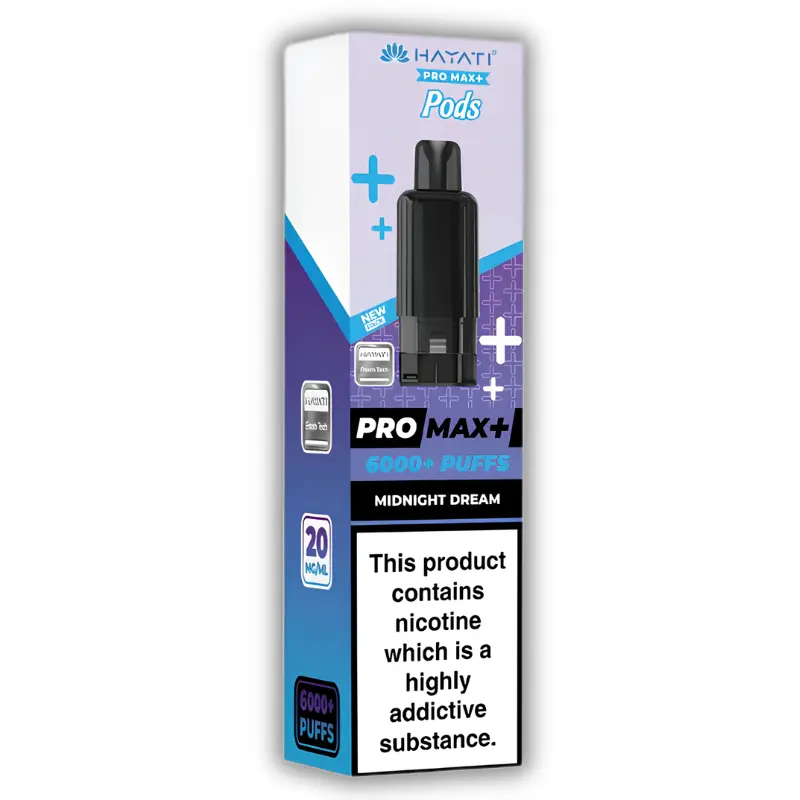
Alongside the fruit-named entries sit seven flavours whose titles declare nothing checkable at all. Midnight Dream, Galaxy Aura, Sunset Aura, Caribb Crush, Tropical Sour Juice, Dragon Berries and T-Misu between them account for 15 of the 55 listings. A mood, a place, a sour note and an Italian pudding. None of those names tells you what fruit is in the pod, which is why they need a shelf that groups by something other than a named ingredient.
Several things are deliberately absent. There is no coconut anywhere in the Hayati catalogue, no papaya, no tamarind, no soursop and no mangosteen, so nothing here tastes of the harder end of the tropical repertoire. There is no spice: no chilli, no ginger, no cardamom, nothing that would make a fruit blend savoury or warm. And there is almost no cooling. Only six of the 55 carry a cooling agent, which makes this one of the least iced flavour shelves on the site and a genuinely different proposition from Ice Vapes, which shares just those six products with this page.
What is also absent is any indication, anywhere in the product data, of why a given liquid was filed here. Hayati publish no criteria for their own shelving, so everything in the section below is inference from counting, not something the brand has stated. Where the count is clear I say so. Where it is not, I say that too.
Testing the rule against the catalogue
The obvious reading of Exotic is that it collects fruits not grown in Britain and not found in an ordinary weekly shop. That is a coherent idea even if the word for it has aged badly, and it is worth checking rather than assuming. It survives in part and fails in three specific, reportable ways.
The six qualifying fruits, and the two that never qualify alone
Where the shelf is consistent, it is very consistent. Every guava listing in the catalogue is here. Every passion fruit listing is here. So is every mango listing, all 21 of them. Kiwi misses two of 12 and lychee misses one of three. Those hit rates are high enough that the fruit list is doing real work rather than describing a coincidence.
Two fruits break the pattern in a way that is easy to miss. Pineapple and banana are both non-native, both tropical, and neither one ever earns a place here on its own. Five pineapple listings are on the shelf and all five are Mango Peach Pineapple under one pack size or another. Four banana listings are here: both Mango Banana entries and the two Kiwi Banana / Straw’ Banana ones. In every case the fruit arrives as a passenger on a mango or a kiwi. Remove the qualifying fruit from the title and the listing leaves the shelf.
Where it breaks first: pineapple
Pineapple is the largest hole and it is not a small one. The catalogue holds 21 listings that name pineapple in the title. Five are here. The other 16 are filed on Pineapple Vapes instead, and Hayati's own product copy describes every one of those 16 in tropical terms. Pineapple Ice accounts for six of them on its own, and its listings open by calling it juicy tropical fruit. By any reading of the word that would admit mango, pineapple belongs here, and three quarters of it is filed elsewhere.
Be careful about the fifth of those five, because it is the difference between a count and a judgement. The Mango Peach Pineapple replacement pod at £5.49 carried no Exotic tag in the source data and picked one up only when this site began pooling flavour shelves across the pod and kit of a single liquid. Nobody looked at pineapple and changed their mind. Counted by judgement rather than by tile, the pineapple entry on this shelf is still four listings of one mango blend, and no pineapple-led liquid has ever been filed here at all.
One explanation fits the evidence without needing to invent intent. Pineapple has been a fixture of British grocery shelves, tinned and fresh, for far longer than mango or guava have. If the tag was built around what felt unfamiliar to a British shopper at some point in the past, pineapple had already stopped being unfamiliar by the time the question was asked. That is a reading, not a fact, and Hayati publish nothing that would confirm it. What is a fact is the count: 16 of 21 pineapple listings are outside this shelf.
Dragon fruit provides a smaller version of the same problem. Six of its eight listings are here, and the sixth is one of the inherited tiles set out below rather than a decision anybody made about dragon fruit. The two Straw’ Grapefruit / Straw’ Dragonfruit pods for the Pro Ultra Plus are not, despite naming dragonfruit outright in the title. Lychee provides a third: two of three listings are here and the Strawberry Lychee nicotine pouch is not, even though the one pouch that is on this shelf, Mango Ice, sits in exactly the same 11-product pouch range.
Where it breaks second: the rule is historical, not current
Ten of the 55 listings here are kiwi and four are banana. Both fruits are in every supermarket in the country and have been for decades. Neither is unusual, neither is hard to buy, and no British shopper under fifty would think of either as a novelty. Whatever Exotic meant when the shelf was assembled, it is not tracking present-day unfamiliarity, because 14 of 55 listings fail that test on their own.
Mango is the same argument at larger scale. Twenty-one of the 55 are mango, and mango is now an entirely ordinary British fruit, sold fresh, frozen, tinned and juiced in every major chain. A shelf can be useful without its name being accurate, and this is the clearest case of it on the site. The tag is a reasonable guide to a family of flavours. It is not a reliable guide to whether anything on the shelf will be new to you.
Where it breaks third: six flavours were filed two ways
The most concrete failure is not conceptual, it is clerical, and it is the one place where this grid no longer shows you what the source data said. Six of the 22 flavours on this shelf were filed inconsistently across their own listings, meaning the same liquid appeared in more than one pack size and not every one of them carried the tag.
- Mango Peach Pineapple: four of its five listings carried the tag. The Pro Max Plus replacement pod did not.
- T-Misu: the 6000 kit carried it. The replacement pod carried no flavour tag whatsoever.
- Blackcurrant Mango: the 6000 kit carried it. The replacement pod did not.
- Mango Banana: the replacement pod carried it. The 6000 kit did not.
- Dragon Berries: both Pro Max Plus listings carried it. The Mini Ultra pod carried no flavour tag whatsoever.
- Caribb Crush: the replacement pod carried it. The kit carried no flavour tag whatsoever.
Notice that the split ran both directions. Two flavours had the kit on the shelf and the pod off it, two had the pod on and the kit off. That rules out any tidy explanation such as kits being tagged more thoroughly than refills. It reads as filing done listing by listing rather than flavour by flavour, with no pass afterwards to reconcile them.
This site now runs that pass, in two stages. Flavour shelves are pooled across same-liquid siblings first, so the bare pod and the kit of one liquid land on the same flavour shelves, and five of the six splits above closed. Those five closures account for five of the six tiles this grid gained: the Mango Peach Pineapple pod, the T-Misu pod, the Blackcurrant Mango pod, the Mango Banana 6000 kit and the Caribb Crush kit. Two of them, the T-Misu pod and the Caribb Crush kit, sat on no flavour shelf at all before that and were unreachable by anyone browsing the taxonomy. Dragon Berries needed the second stage, because its Mini Ultra pod is a different pack in a different range and is not treated as a sibling of the Pro Max Plus pair. That stage takes any listing left on no flavour shelf at all and gives it the shelves of a listing of the same flavour on another device, which is how the Dragon Berries Mini Ultra pod arrived here as the sixth tile. All six of the splits are now closed.
Read the consequence honestly. Membership here is no longer a clean record of what the tagger decided, because 49 of the 55 tiles were tagged and six were inherited. Every count on this page is a count of tiles; wherever the argument turns on somebody's judgement, it is the 49 doing the work and the figure is said as such.
The same looseness showed up in the other tags. Four flavours carried different flavour shelves on different listings of the identical liquid. Galaxy Aura was the clearest case: the source filed the replacement pod under Berry Vapes and Exotic, and the kit of the same liquid under Sweet Vapes and Exotic. One listing called it a berry, the other called it sweet, and both called it exotic. Exotic was the only tag the pair agreed on, which is a small point in this shelf's favour and part of why pooling the rest was safe. Both Galaxy Aura listings now carry all three.
The counterexample that cannot be explained away
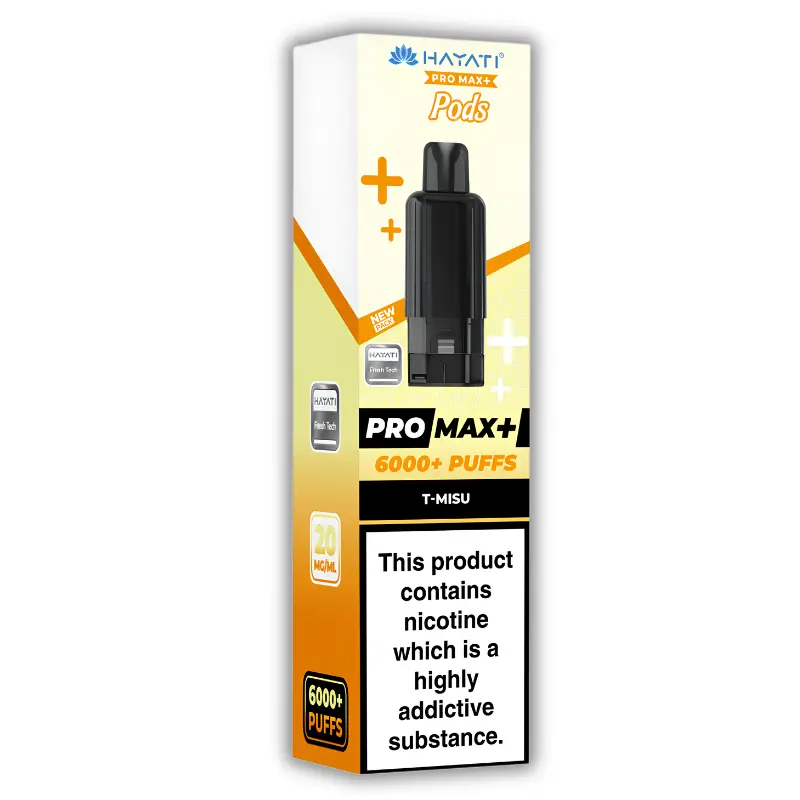
T-Misu is Hayati's tiramisu. Coffee, a creamy dairy note and a cocoa finish. There is no fruit in it, tropical or otherwise, and it occupies two tiles on this shelf. That defeats any version of the rule framed around fruit provenance. Be exact about which tile is the evidence, though. Somebody looked at a tiramisu and filed the 6000 kit under Exotic, and that is the decision the shelf has to answer for. The pod beside it inherited the same shelves from that kit and records nobody's opinion about tiramisu at all.
Midnight Dream and Galaxy Aura raise a softer version of the same objection. Both read as dark berry blends, both are filed under Berry Vapes, and neither name suggests anything tropical. The Galaxy Aura product page already flags the Exotic filing as the puzzling one of its flavour tags and declines to force it to fit, which is the right call. A dark berry profile is not conventionally exotic by anyone's definition. Either the blends contain something the names do not disclose, or the tag was applied loosely. The data does not settle it and this page will not pretend otherwise.
One thing this shelf is not doing wrong
Filing errors on this site cluster on a known artefact. Listings titled with a range and a nicotine strength rather than a flavour, such as the bare Pro Max Plus pods sold at a set strength, carry a family default flavour and turn up on shelves for fruits they do not contain. The Apple Vapes shelf carries most of those cases and the pattern was measured there rather than here.
None of it applies to this page. All 55 listings on this shelf name a flavour in the title, and not one of the 19 range-and-strength listings in the catalogue has been tagged Exotic. Nothing odd here is a side effect of a listing with no flavour in its name. The oddities are choices, and choices are at least occasionally informative, subject to the qualification set out above: 49 of the 55 tiles record a choice, and six record another listing's choice copied across by those rules. None of the six is odd in itself, since each one duplicates a liquid already on the shelf, so the strange members of this shelf are all in the 49.
The six groups on this shelf
The mango spine, 21 listings, from £2.49
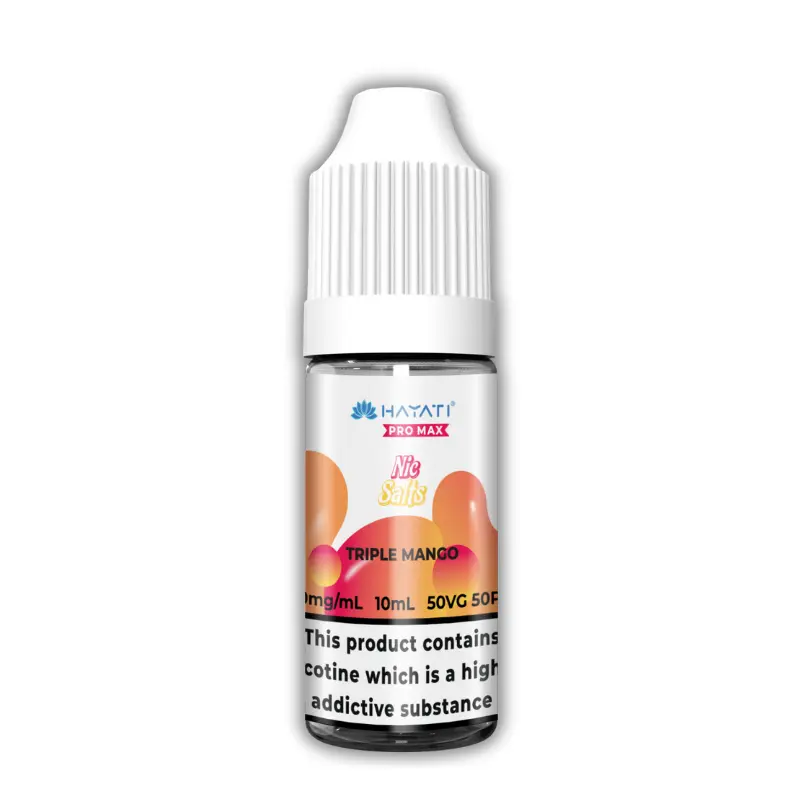
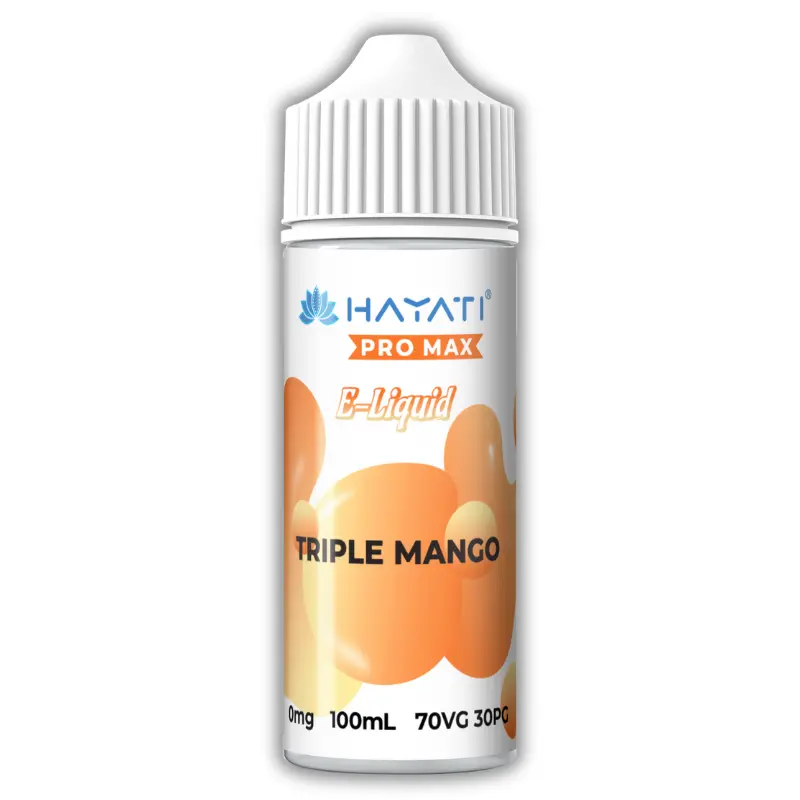
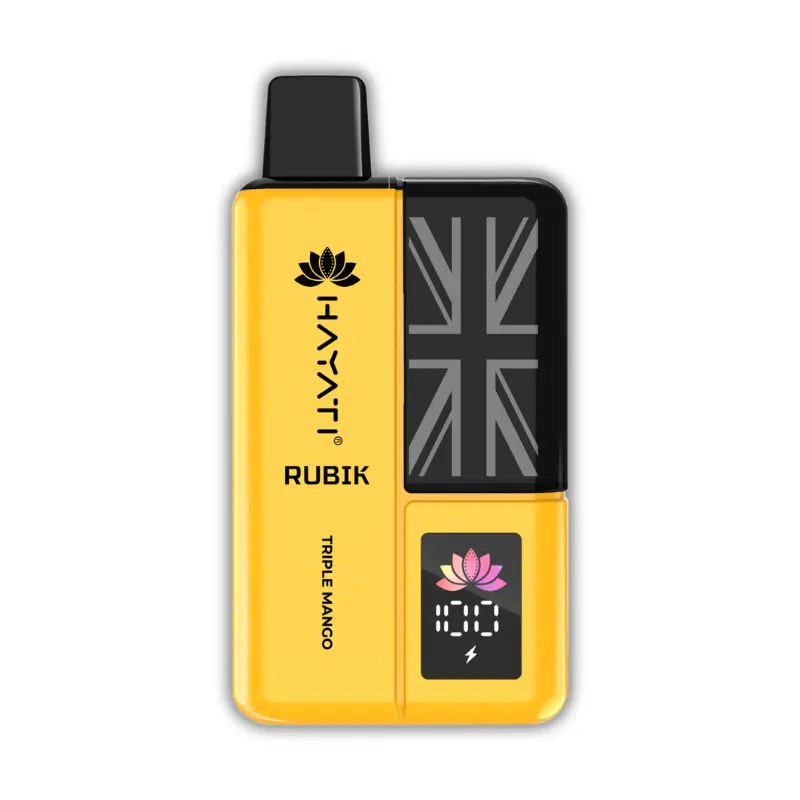
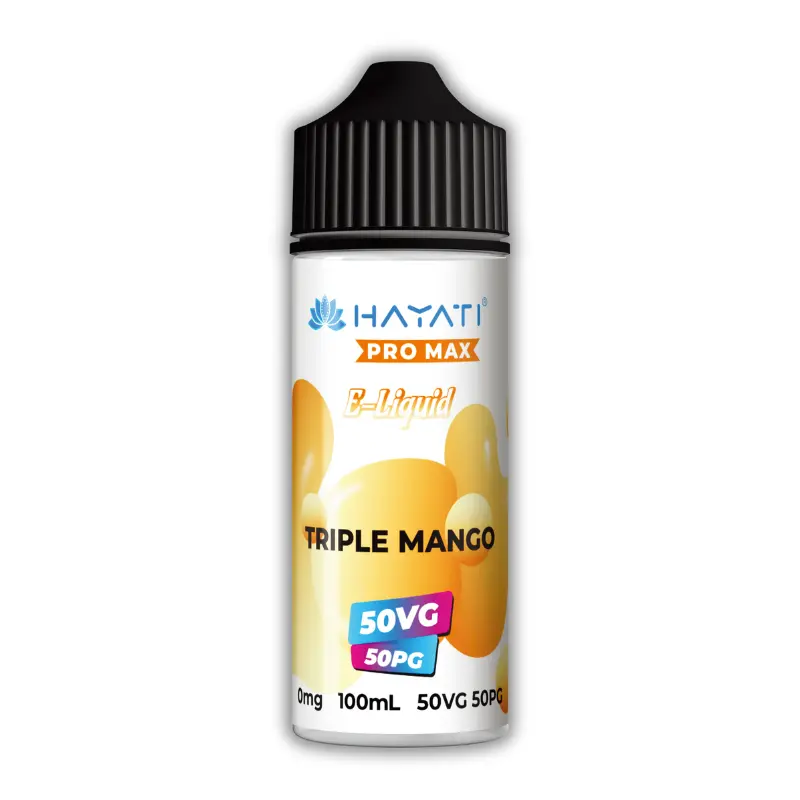
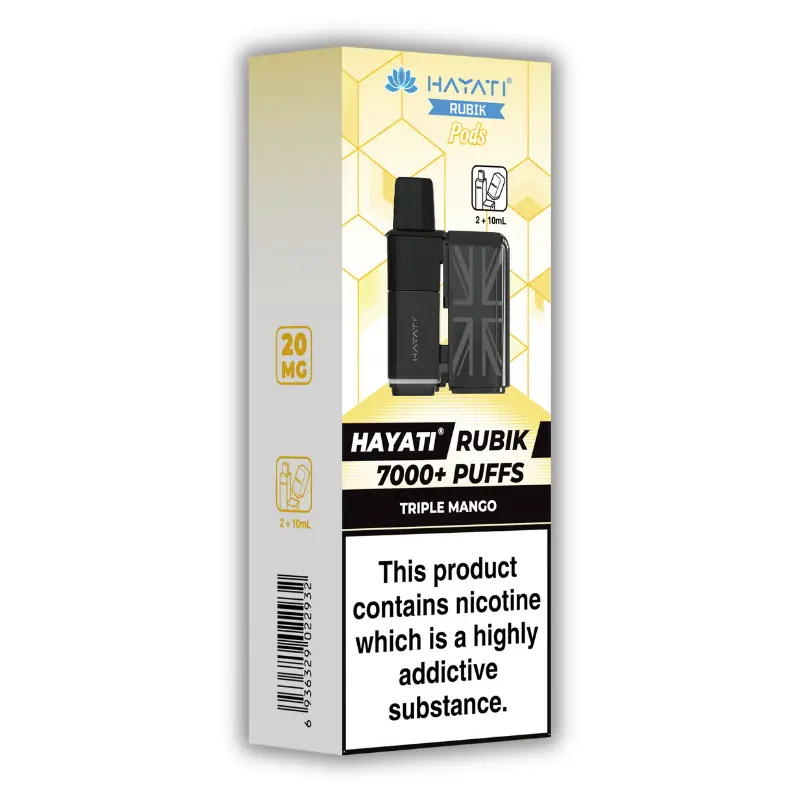
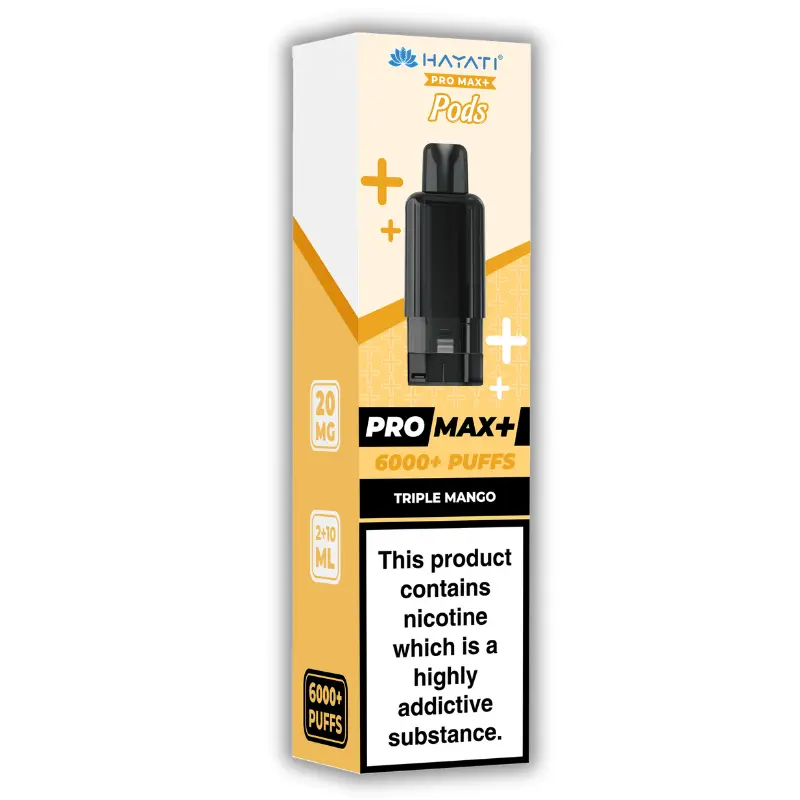
Mango is the organising fruit and it is stocked in more formats than anything else here. Triple Mango is the widest single flavour on the shelf with seven listings, running from the £2.49 10ml salt bottle up through the Triple Mango Rubik kit at £5.99, the Pro Max Plus replacement pod at £5.49, the Pro Max Plus kit at £7.99 and a 120ml 70/30 shortfill at £6.99. The name signals mango layered on mango and the profile follows: thick, ripe and sweet, with no acid to cut it. It is the sweetest sustained thing on this page and it does not let up across a session.
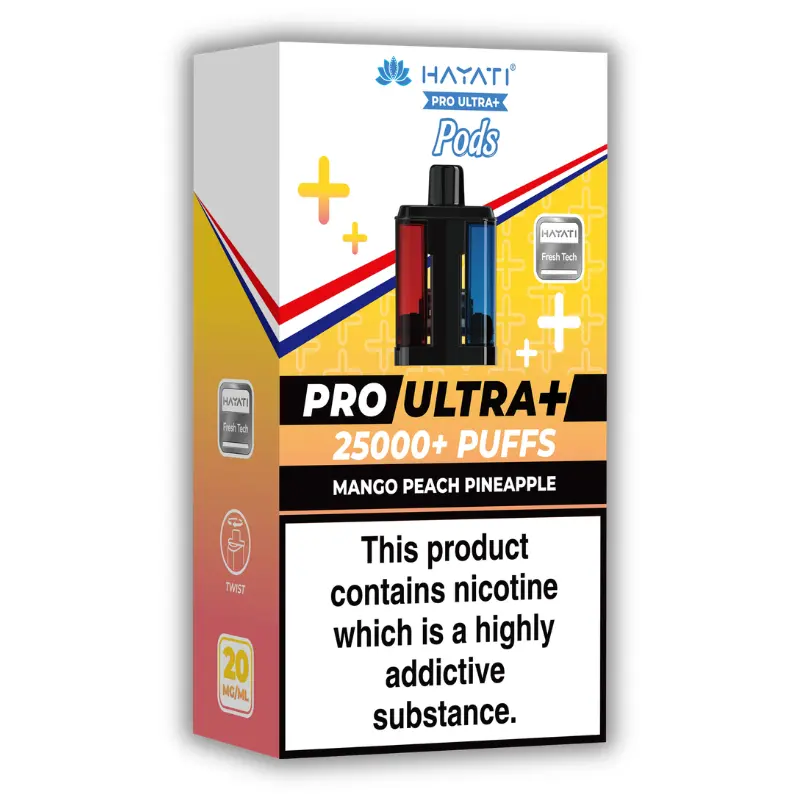
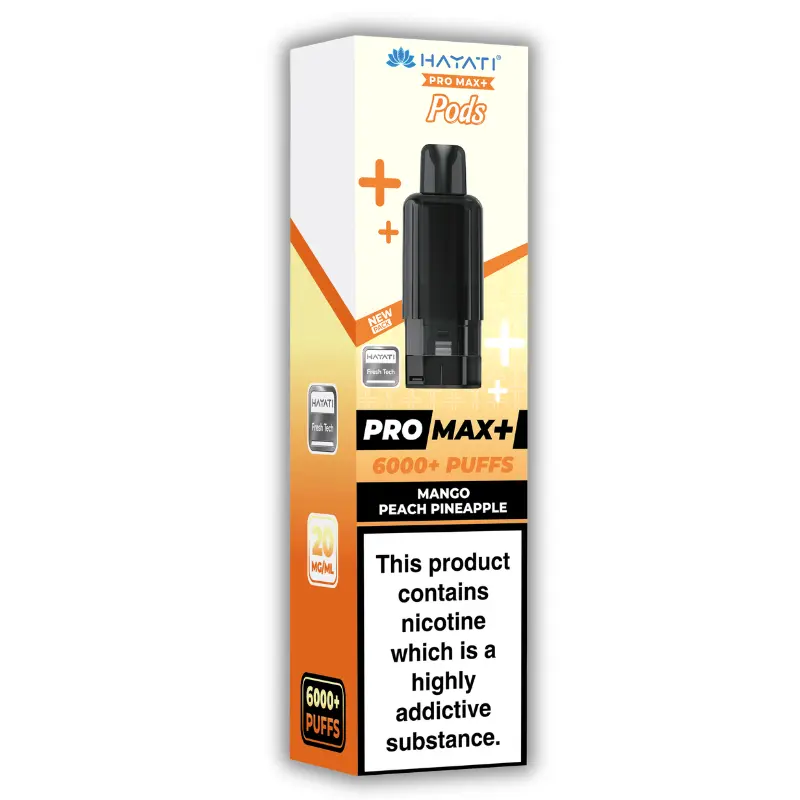
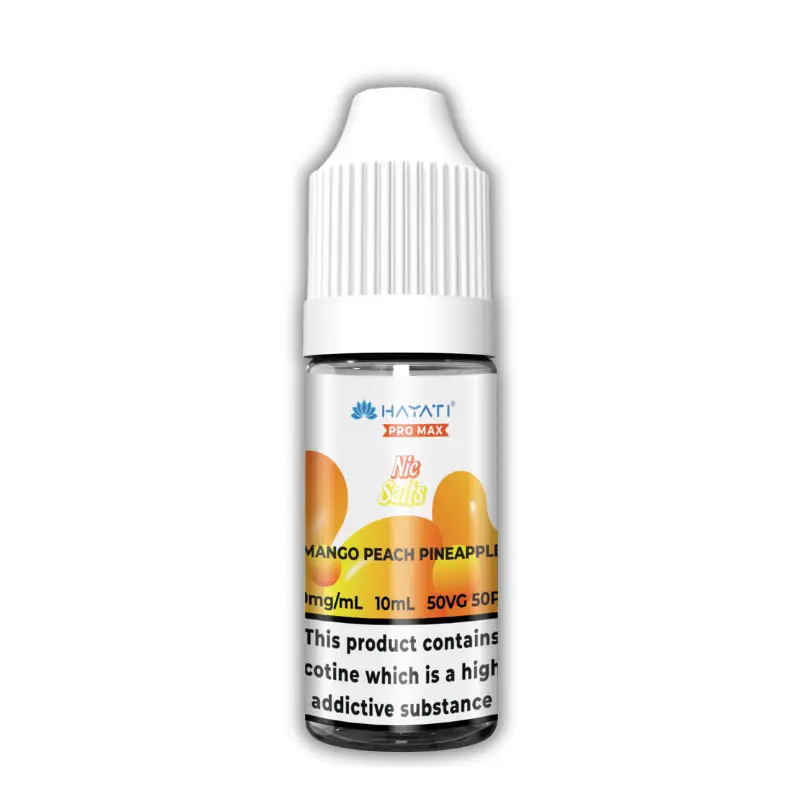
Where Triple Mango is a single note held down, Mango Peach Pineapple is a three-part build with a job for each fruit. Mango supplies the honeyed weight, peach fills the middle with something softer and more fragrant, and pineapple contributes the tang that keeps the whole thing from going flat. It is the more drinkable of the two by a distance and the better choice for all-day use. It runs to five listings: a 10ml nic salt, a Pro Max Plus kit, the Pro Max Plus replacement pod at £5.49, a 25K pod and the Pro Ultra Plus 25000 kit at £11.99.
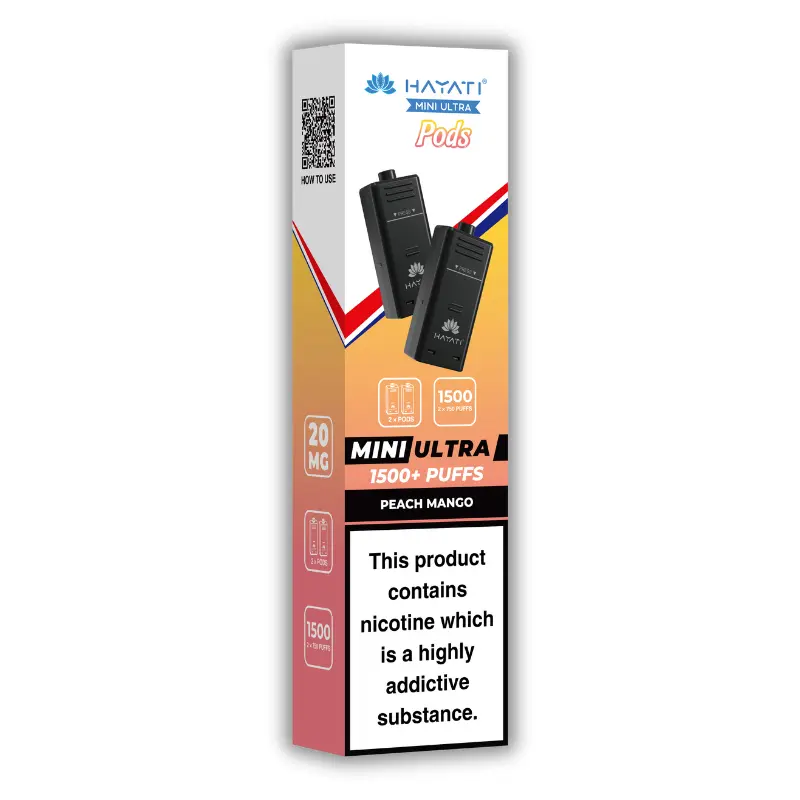
Peach Mango for the Mini Ultra is the same pairing with the order reversed and the pineapple removed, and the reversal is honest: peach leads, mango thickens behind it, and the result is gentler than anything else in this group. At £3.49 for a 4ml pod it is also the least committing way to find out whether you want mango at all.
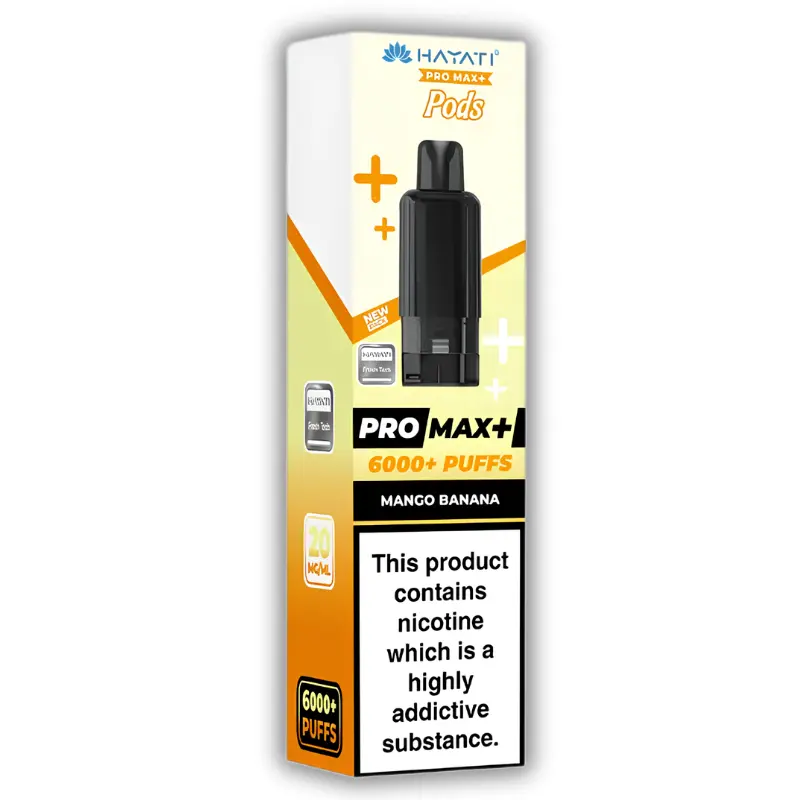
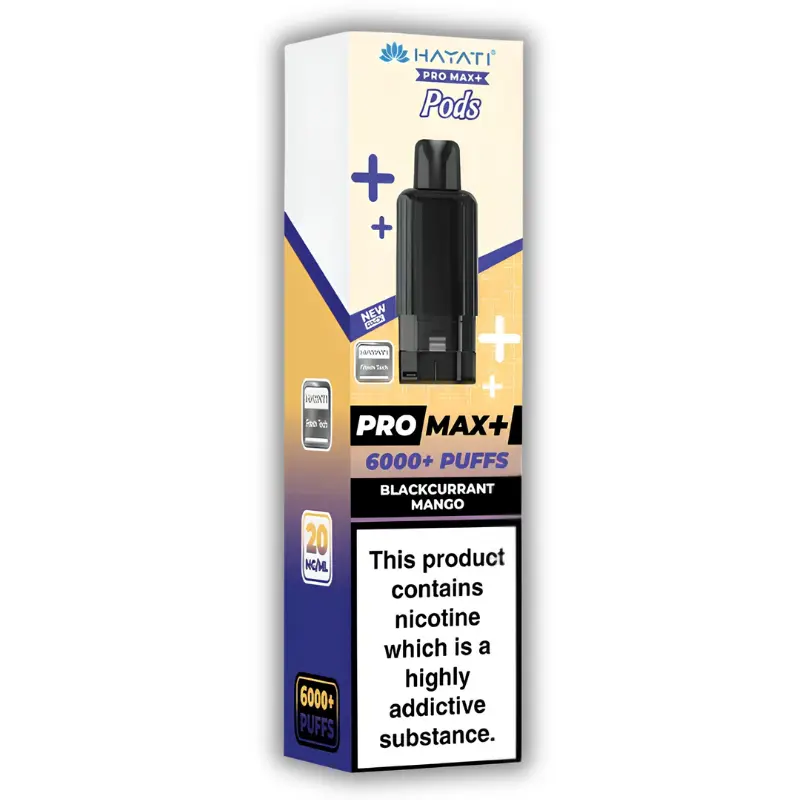
Two mango blends bring in a fruit from outside the family. Blackcurrant Mango sets a deep, tart, faintly musky blackcurrant against the soft golden sweetness of mango, and the two genuinely do balance rather than one burying the other. Its kit and its £5.49 replacement pod are the only two entries here that also appear on the blackcurrant shelf. Mango Banana goes the other way and removes all the sharpness: banana turns the mango creamy and rounded, closer to a thick smoothie than a juice. It comes as that £5.49 pod or as the 6000 kit at £7.99. If you find sweet fruit blends thin, that is the one to try; if you find them cloying, avoid it.
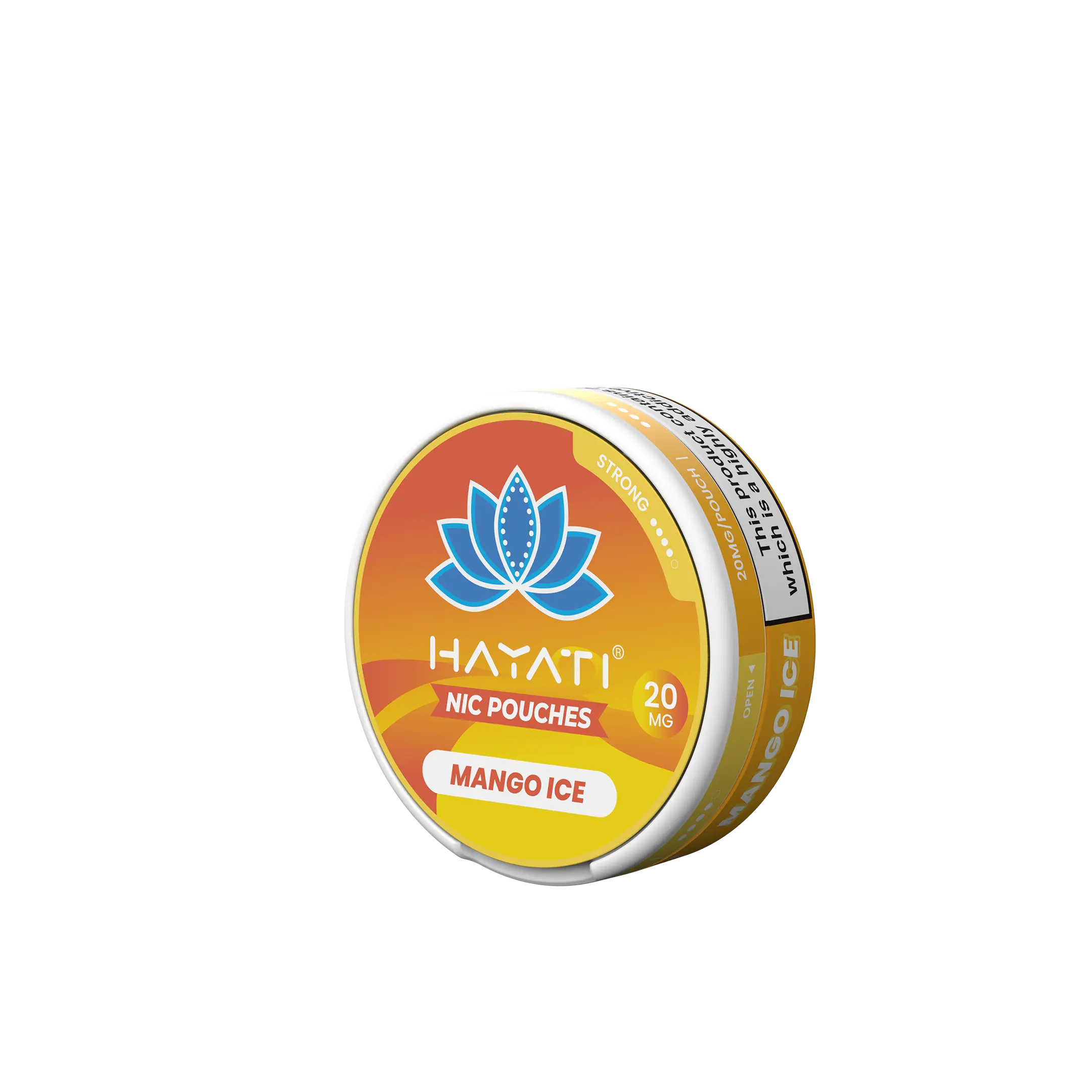
The outlier in this group is not a vape at all. Mango Ice is a can of tobacco-free oral nicotine pouches at 12mg, the single pouch product on the shelf, and it works quite differently from everything else on this page. It is listed here because the flavour qualifies, not because it belongs with the pods.
The perfumed group: guava, lychee and passion fruit, 11 listings, from £2.49
This is the part of the shelf that justifies its existence, because these three fruits share a quality that nothing on a berry or citrus shelf has. All three are floral. They carry an aromatic, slightly perfumed top note that reads almost as scent rather than taste, and it is the single most distinctive thing about vaping any of them.
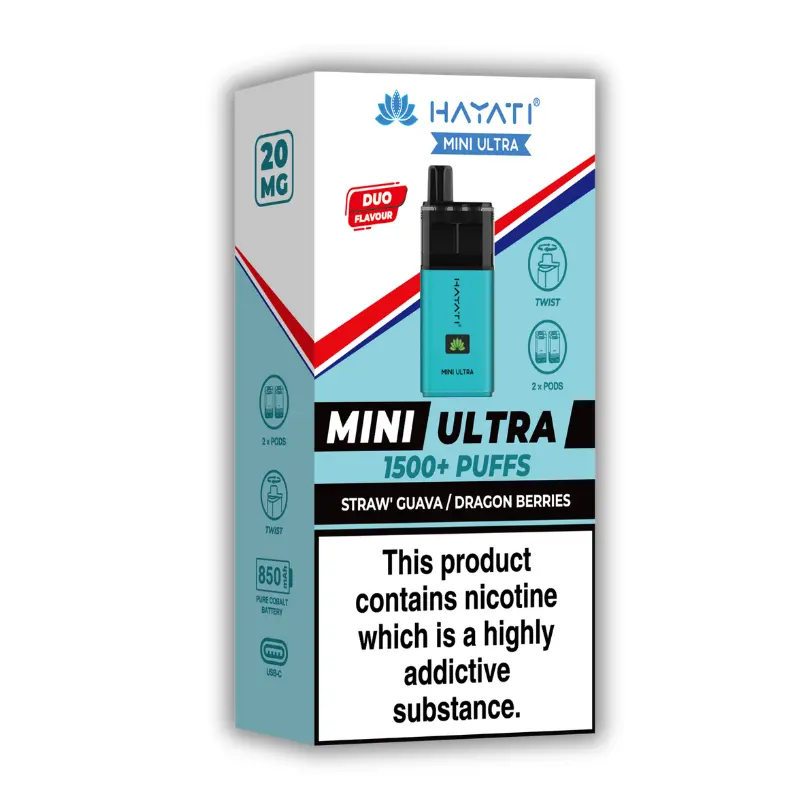
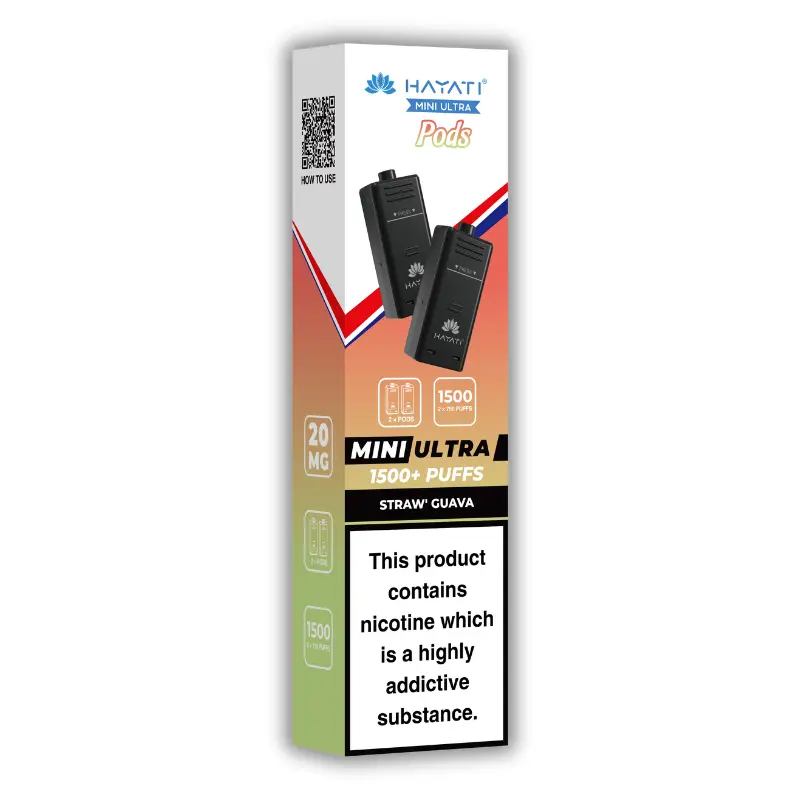
Strawberry Guava is the easiest entry point and the most stocked of the three, appearing as the 6000 kit, as a Pro Max Plus replacement pod and as Straw’ Guava Mini Ultra pods at £3.49. Strawberry gives an immediately recognisable jammy sweetness and guava lays a floral, pink-fleshed perfume over the top. The two share a soft pink-fruit character, so they blend rather than compete, and the result is sweet without being sugary in the way Triple Mango is.
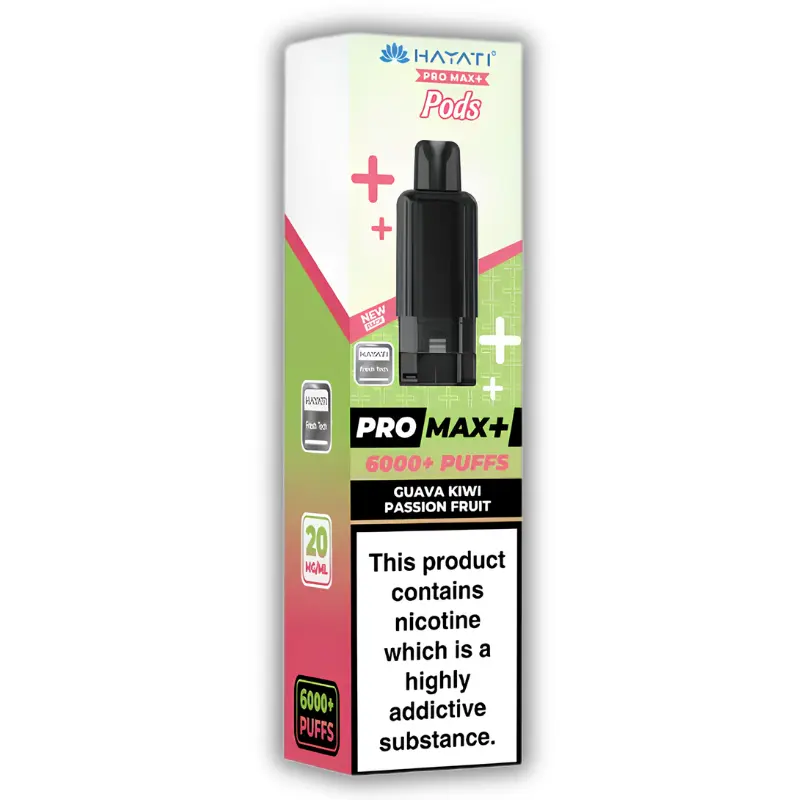
Guava Kiwi Passion Fruit is the more demanding build and the most interesting liquid on the shelf. Guava leads with that perfume, kiwi adds a green tang underneath, and passion fruit brings a genuinely sharp tartness that most blends here never approach. Three distinct fruits, three distinct jobs, and none of them buried. It is stocked as the 6000 kit at £7.99 and as a £5.49 replacement pod.
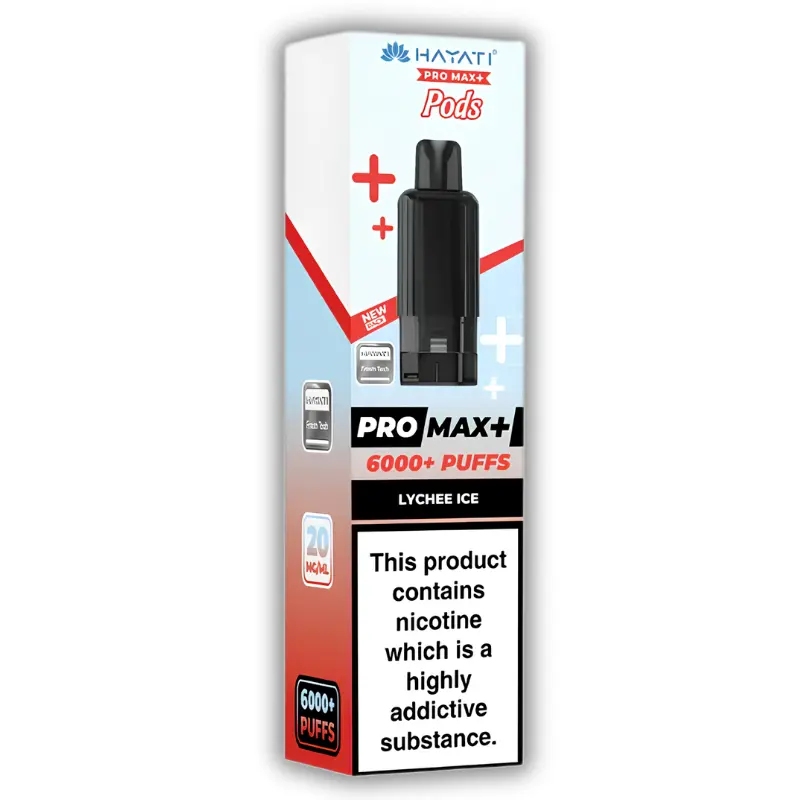
Lychee is the most singular flavour on the page. Lychee Ice keeps the fruit's rose-like, almost soapy fragrance at the front and then closes with a cooling finish, which is an unusual combination because the cold tends to flatten floral notes rather than support them. Here it works, mostly because the fragrance is strong enough to survive it. The replacement pod at £5.49 is the cheaper way in if you already own the device. People either recognise lychee immediately and want more of it, or find the rose note off-putting on the second draw. There is not much middle ground.
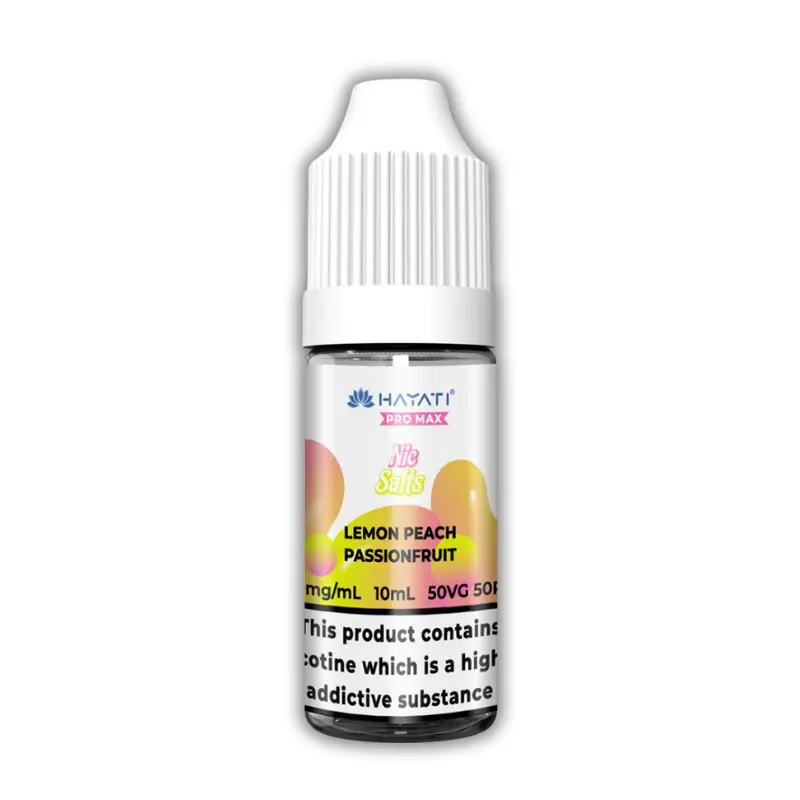
The last of the group is a bottle. Lemon Peach Passionfruit puts sharp citrus on the inhale, soft peach through the middle and passion fruit at the back as the most distinctive of the three. At £2.49 for 10ml it is the cheapest route to passion fruit anywhere in the catalogue.
Green and sharp: the kiwi group, 10 listings, from £2.49
Kiwi does one job in every blend it appears in here, and it does it consistently: it supplies a green, slightly sour lift that stops a sweet fruit collapsing into syrup. It is a corrective rather than a lead, and reading the shelf that way explains why it is paired with strawberry five times.
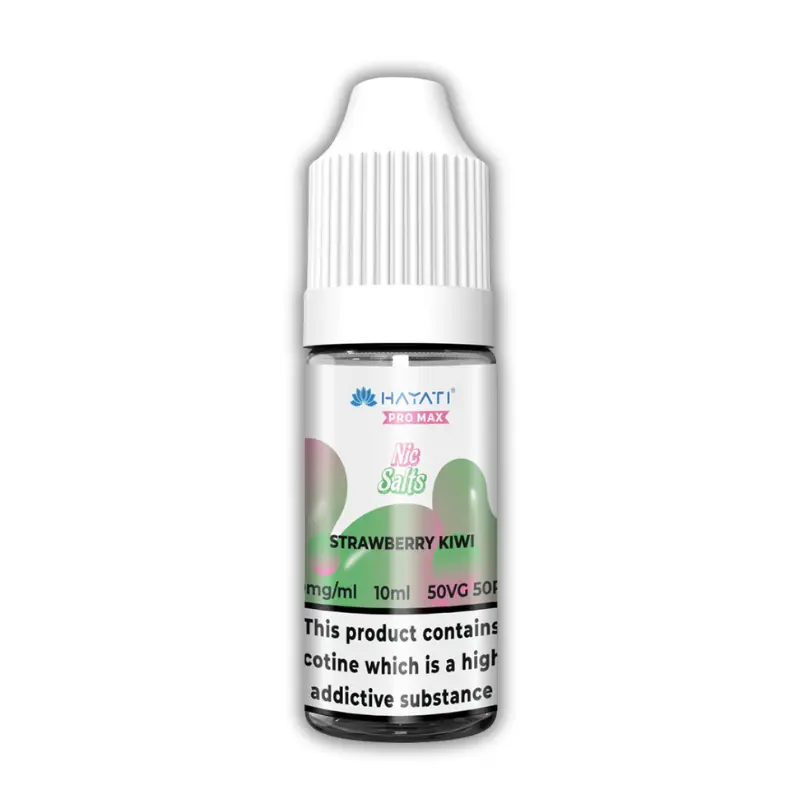
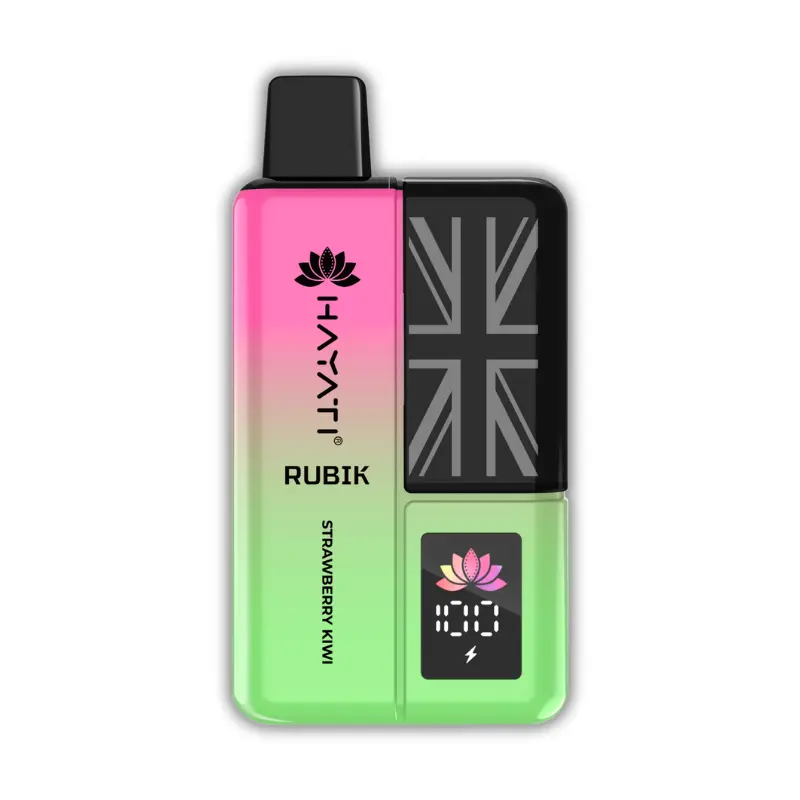
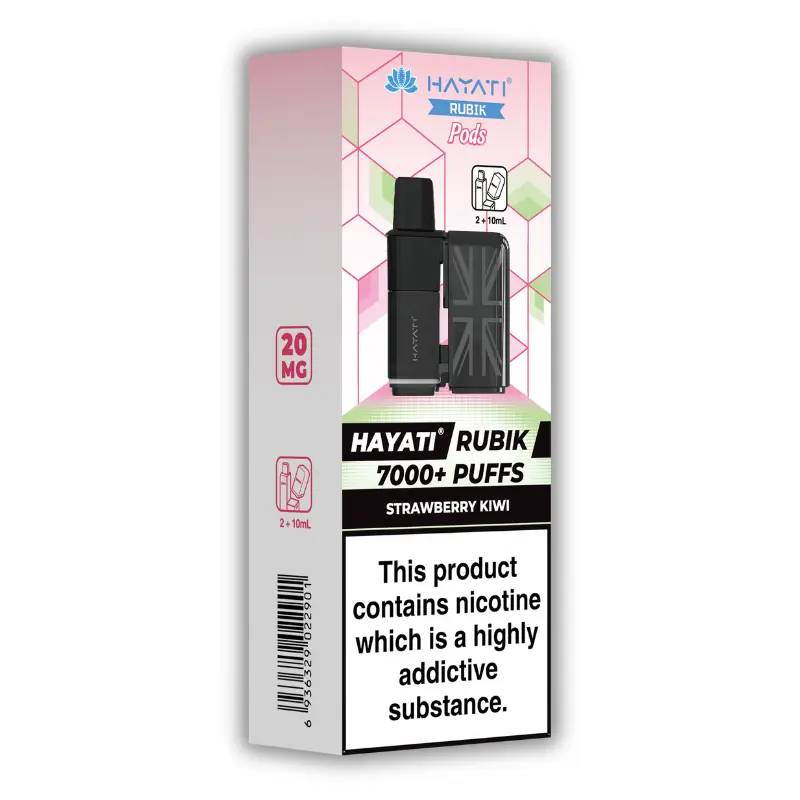
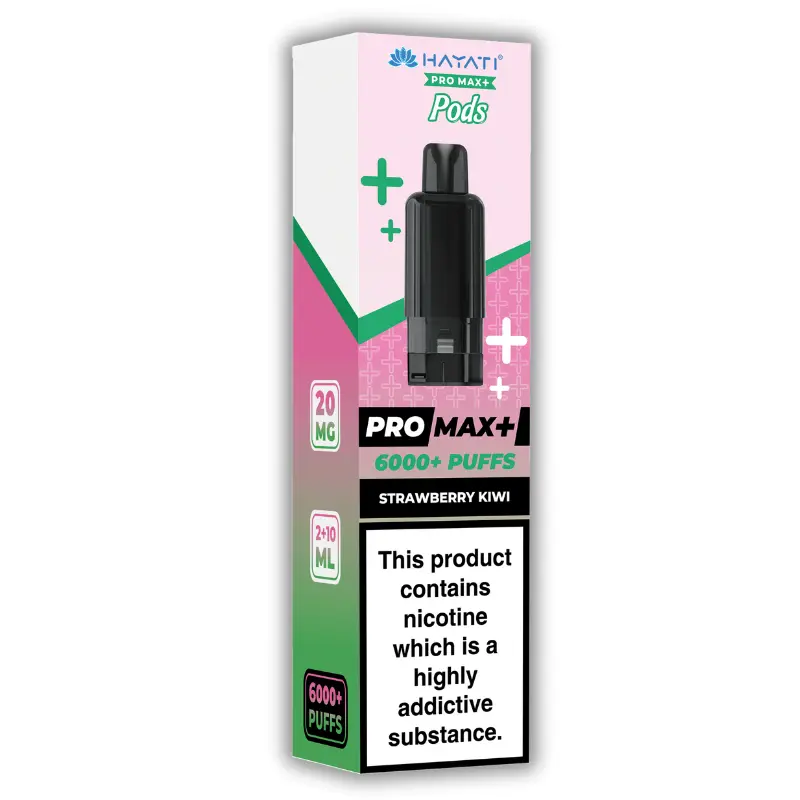
Strawberry Kiwi is the most widely stocked flavour here after Triple Mango, with five listings across four ranges: the 10ml salt bottle at £2.49, the Rubik pod at £3.99, a Rubik kit at £5.99, the Pro Max Plus pod at £5.49 and the Pro Max Plus kit at £7.99. The strawberry brings round ripe sweetness, the kiwi cuts across it with something sharper and greener, and neither dominates. It is the most balanced sweet-and-tart liquid on the shelf and the safest pick if you do not know what you want.
Kiwi Grape Raspberry is a three-colour build: kiwi opens tangy and bright, grape fills the middle with a round juicy sweetness, and raspberry ties the two together with berry tartness. It is the only listing on the shelf that also appears on the grape and raspberry shelves, which tells you how far it sits from the tropical centre of gravity here.
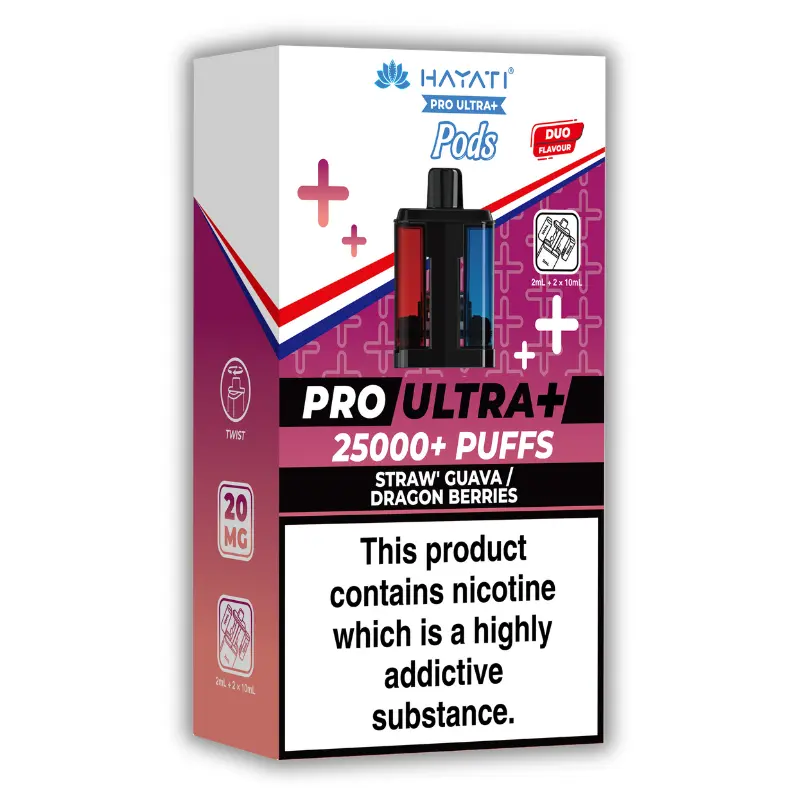
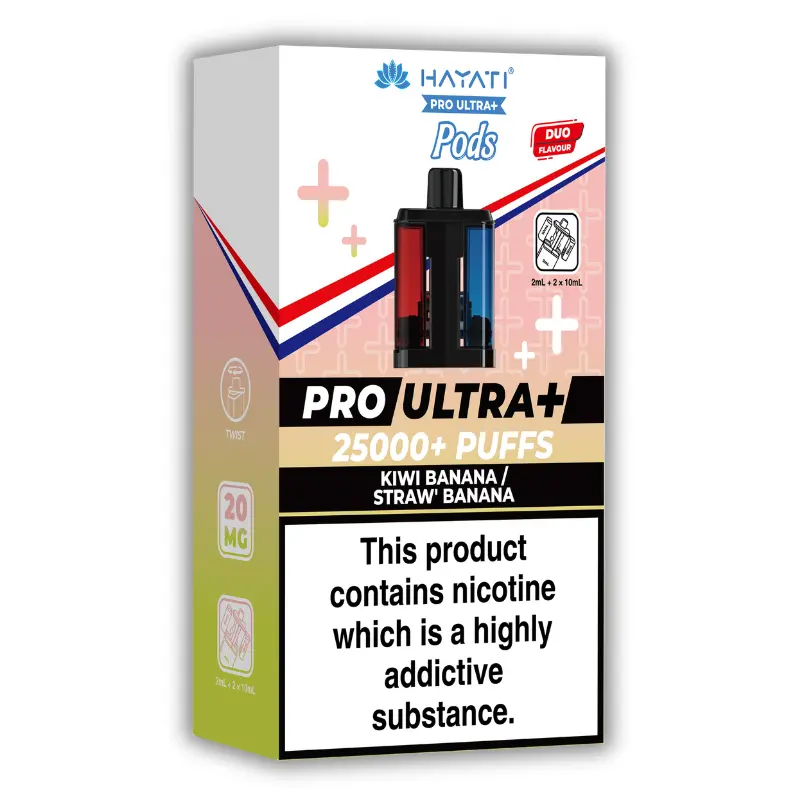
Kiwi Banana / Straw’ Banana is a dual-flavour Pro Ultra Plus pod built around a shared banana base. Kiwi Banana is the livelier half, with the green tang cutting the creaminess; Straw’ Banana is the softer one. Both sides run through one coil, so the contrast is less sharp in practice than it reads on the listing. More on how that pod works in the formats section below.
The undeclared names, 15 listings, from £3.49
Seven flavours on this shelf will not tell you what is in them. That is not a criticism, it is a purchasing fact, and it changes how you should approach them.
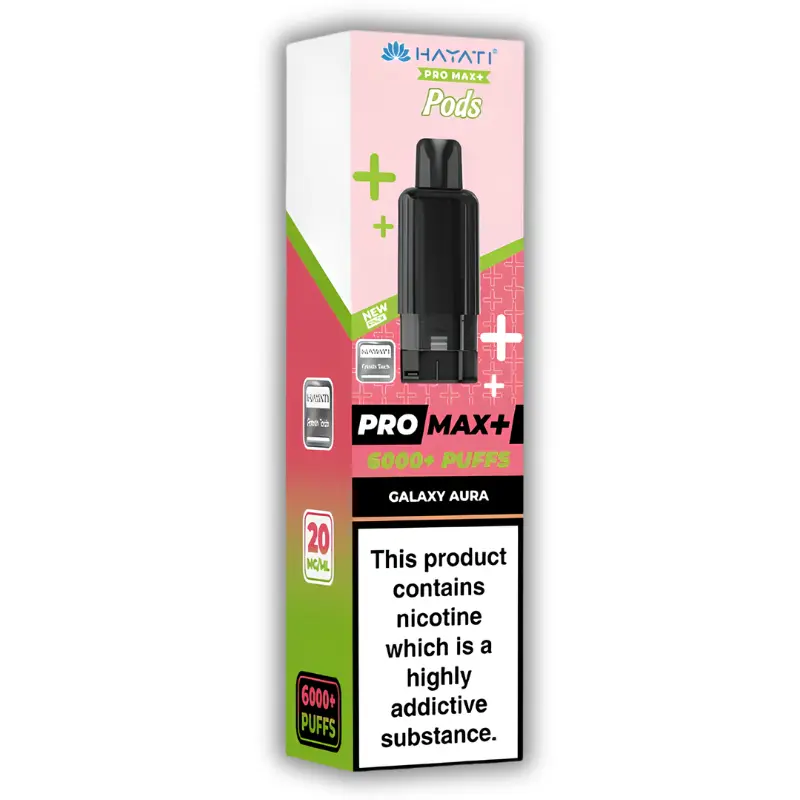
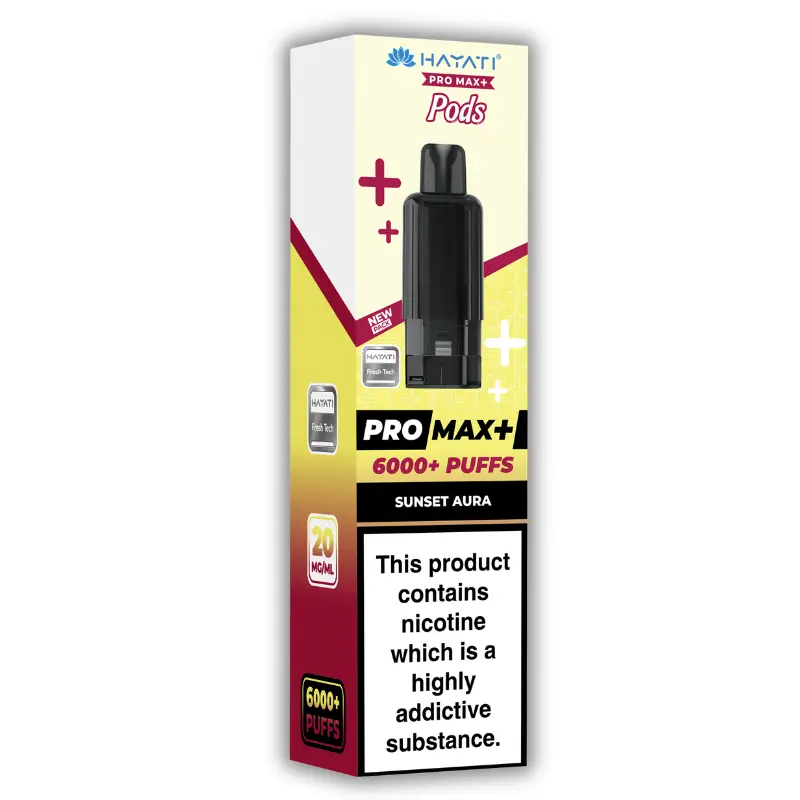
Three belong to the Aura family, where Hayati name for atmosphere rather than ingredients. Galaxy Aura reads dark and deep, and both of its listings now carry a berry tag as well as a sweet one. Sunset Aura is the warm-toned one: soft, sweet, golden-hour fruit, with no sharpness to speak of. Both are sold as the 6000 kit at £7.99 and as a £5.49 replacement pod, and in both cases the product copy sets expectations rather than declaring a recipe, which is worth knowing before you spend £7.99 on a blind guess.
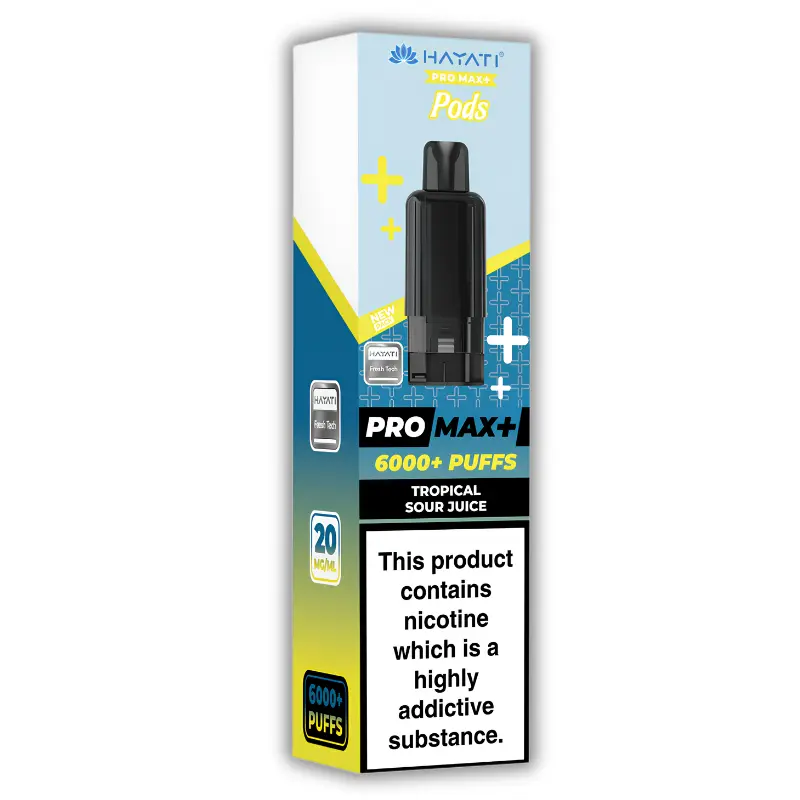
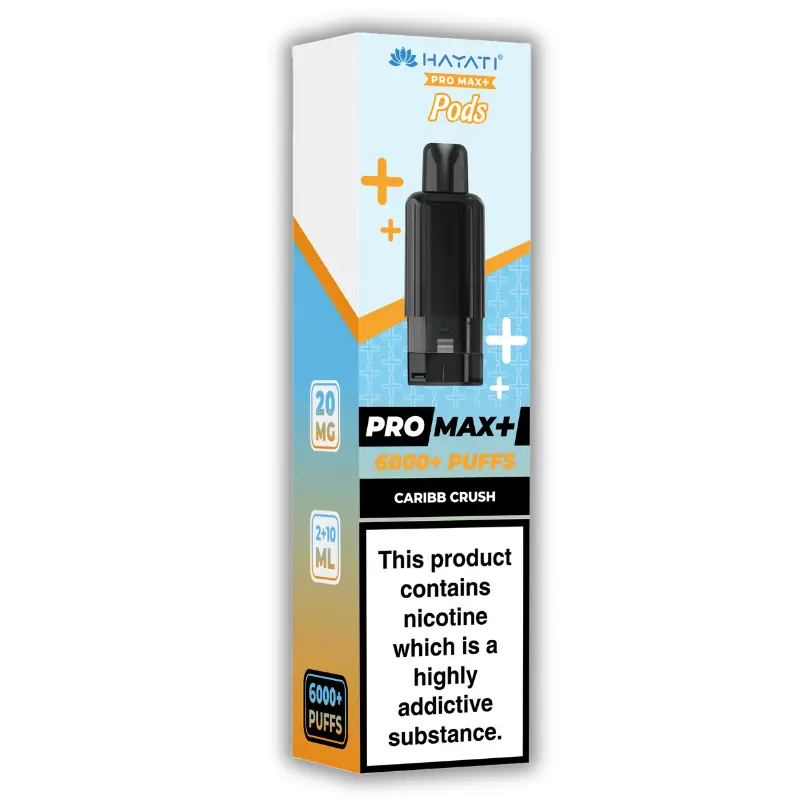
Midnight Dream is the least declared of all: no fruit in the name, no fruit in the description, a night-time theme and a berry tag. Caribb Crush at least points at a region, and the copy describes a mixed tropical crush with a tangy edge, but it never names a fruit either. It is stocked as a £5.49 replacement pod and as the Caribb Crush Pro Max Plus kit at £7.99. Tropical Sour Juice is the one undeclared name that tells you something useful: the sour is the defining feature, and it arrives fast enough that sweetness and sharpness alternate rather than blend. It is the sharpest liquid on the shelf.
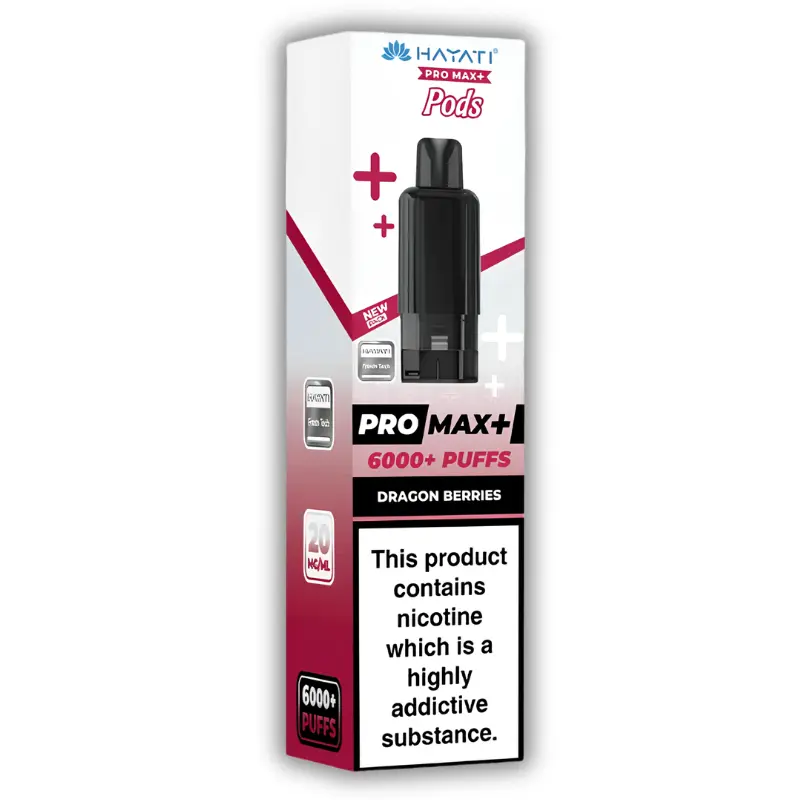
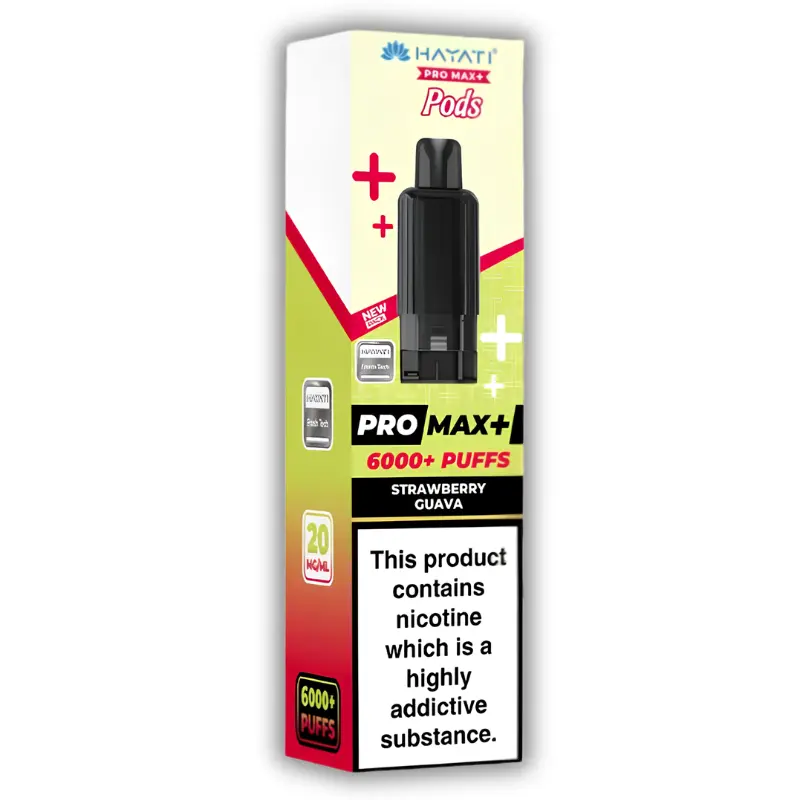
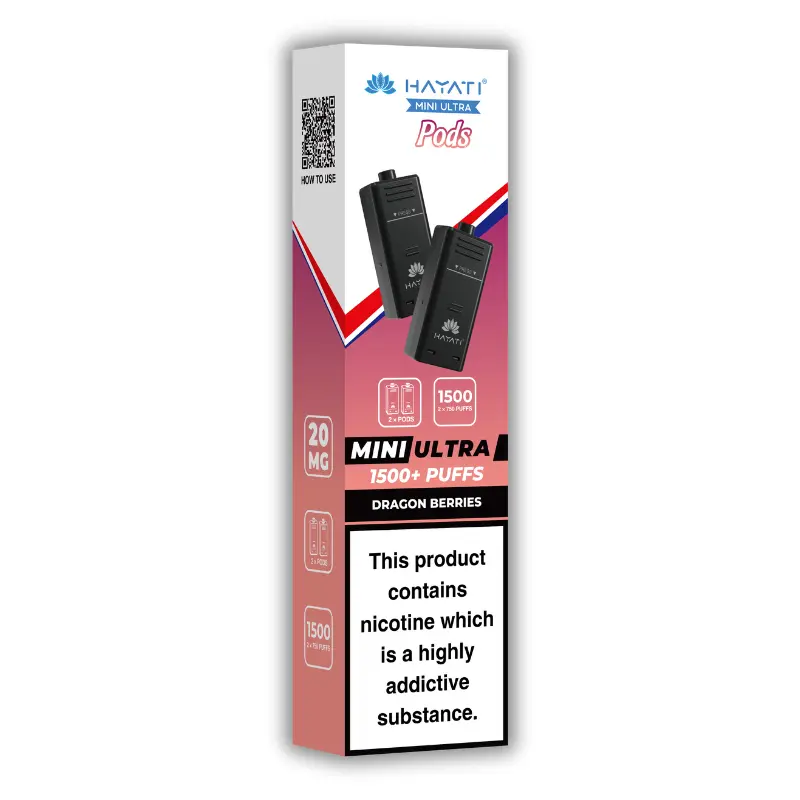
Dragon Berries is half-declared. Berries do the work, dragon fruit threads a light, mild, faintly tropical note through the middle, and because dragon fruit is genuinely subtle on its own you should expect a berry blend with a twist rather than a tropical one. It is stocked three ways: the £5.49 Pro Max Plus pod, the £7.99 kit, and a 4ml Dragon Berries Mini Ultra pod at £3.49, which is the least you can spend to settle whether the dragon fruit registers for you at all. And T-Misu is the tiramisu, which belongs in this group only because the name is the least literal thing on the page; it is here as the £7.99 kit and as a £5.49 replacement pod.
Four of these listings have Exotic as their only flavour tag: both Tropical Sour Juice entries and both Caribb Crush entries. Without this shelf there is no flavour-based route to any of them.
The cooled six, from £3.99
Six listings out of 55 carry a cooling agent, and knowing which six saves a lot of guesswork. They are the two Lychee Ice listings, the three Cherry Ice / Peach Mango entries and the Mango Ice pouches. Everything else on this shelf is uncooled fruit, which is unusual: cooling is close to standard across the rest of the catalogue and it is the exception here.
The practical consequence is that this shelf runs warm and sweet by default. If you have come from a menthol or ice habit, the majority of these liquids will read as heavier and less refreshing than what you are used to, and the first session is where you will notice it. Start with Lychee Ice or the Cherry Ice pairing if you want the cold, or accept that the fruit here is doing all the work on its own.
The dual-flavour pods, eight listings, from £3.99
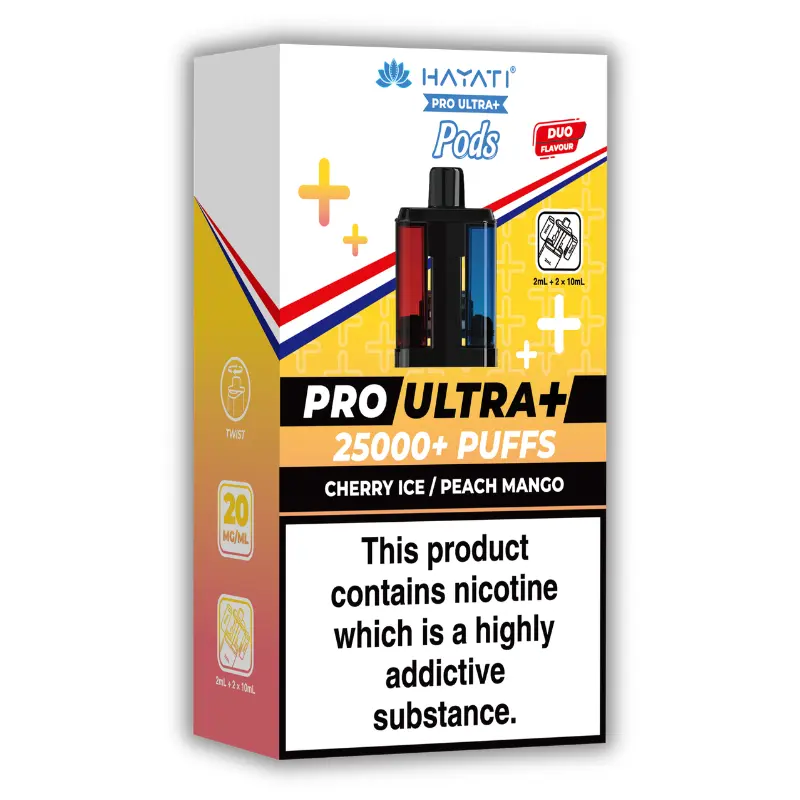
Eight listings carry two flavour names split by an oblique, and they do not all mean the same thing. On the Pro Ultra Plus, a title like Straw’ Guava / Dragon Berries is a single 22ml pod divided into two sides, with a rotating mouthpiece that selects which side feeds the coil. It is one pod, not two, and the same is true of the Cherry Ice / Peach Mango 25000 kit.
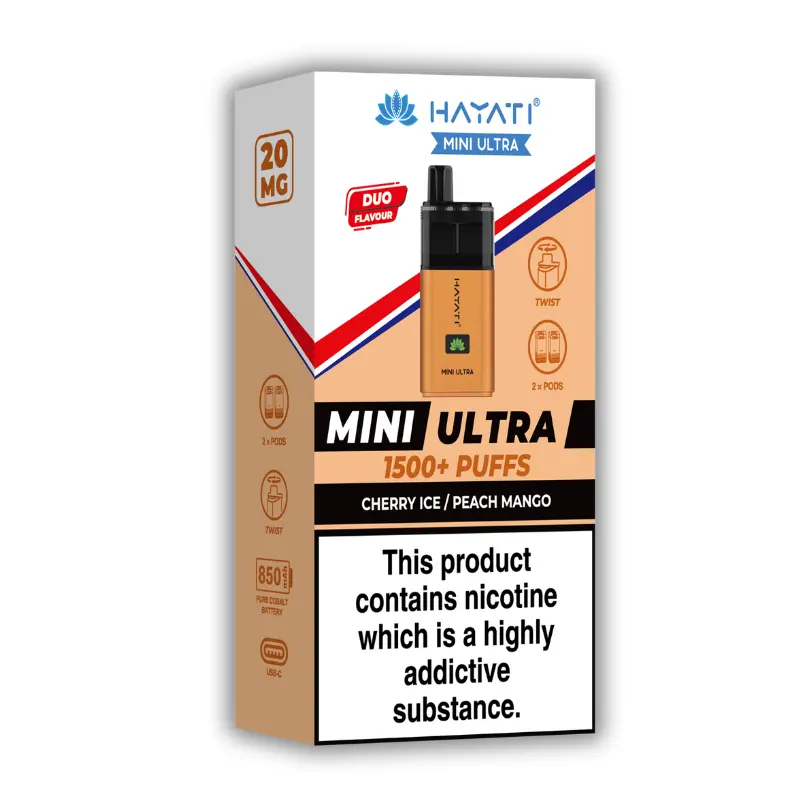
On the Mini Ultra the notation is less settled. The Cherry Ice / Peach Mango Mini Ultra kit at £3.99 names two flavours in one entry, and the listing does not state whether a given box holds one of the two or both. Treat the oblique there as the set of options that entry covers and confirm which variant you are getting at the point of ordering rather than assuming.
What this shelf gives you that a fruit shelf cannot
A fruit shelf answers a question you already know how to ask. You want mango, you go to the mango page, you pick a format. That is a useful thing for a site to do and it is most of what the flavour taxonomy here is for. It also has a hard limit: it can only ever show you things you already have a word for.
This shelf does the other job, and the numbers behind that claim are specific. Fifteen of the 55 listings are flavours whose names declare no fruit. Four of the 55 have Exotic as their only flavour tag, so no other flavour page in the catalogue will ever surface them. And four fruits stocked here, guava with eight listings, dragon fruit with six, passion fruit with three and lychee with two, have no shelf of their own at all. Add those together and roughly half of this page is products that a shopper browsing by fruit name would never arrive at.
That is the case for the shelf, and it is worth being precise about what kind of case it is. It is not that the products here are better. Strawberry Kiwi is not a more interesting liquid than the strawberry blends on Strawberry Vapes, and Triple Mango is one of the plainest things in the range. It is that this is the only grouping on the site whose logic is not already in your head before you arrive. Everything else sorts by an answer. This one sorts by a family resemblance, and family resemblances are what you browse when you do not yet know what you are after.
There is a concrete version of that for anyone who has been buying the same pod for a year. If you already know you like guava, the shelf saves you nothing: search for it. If you like a fruit blend and cannot say why, the useful move is to work out which of the six qualifying fruits is doing it for you. The floral ones behave as a group. Guava, lychee and passion fruit all carry that perfumed top note, and liking one is a decent predictor of liking the others. The heavy ones behave as a group too: mango and banana both give weight and sweetness with no acid. Kiwi sits on its own as the only fruit here that reliably sharpens rather than sweetens.
The honest limit of the shelf is that its name will not help you do any of this. Exotic tells you something about where a fruit is grown and nothing about what it tastes like, how sweet it is, whether it is cooled or which device it fits. It is a provenance label doing duty as a flavour label, which is why the clusters above are organised by taste rather than by the tag. Use the shelf as a route in and the groups as the actual guide.
Choosing between them
If you want the sweetest thing here. Triple Mango, without much competition. Mango stacked on mango with no acid anywhere in it. The Mango Banana pod is the next sweetest and adds a creamy weight that Triple Mango does not have. Both will tire your palate faster than anything else on the shelf, and both are worth buying in the smallest format first.
If you want something tart. Tropical Sour Juice is the sharpest, and the sour is the point rather than an accent. Guava Kiwi Passion Fruit is the next sharpest and better balanced, because the passion fruit tartness has guava perfume and kiwi tang around it instead of standing alone. Kiwi Grape Raspberry is tart in a redder, less tropical way.
If you want cold. Your options number six and that is the whole list. Lychee Ice in two formats, the Cherry Ice / Peach Mango pairing in three, and the Mango Ice pouches. If cooling matters to you more than the fruit does, Ice Vapes is the better starting page and this shelf will frustrate you.
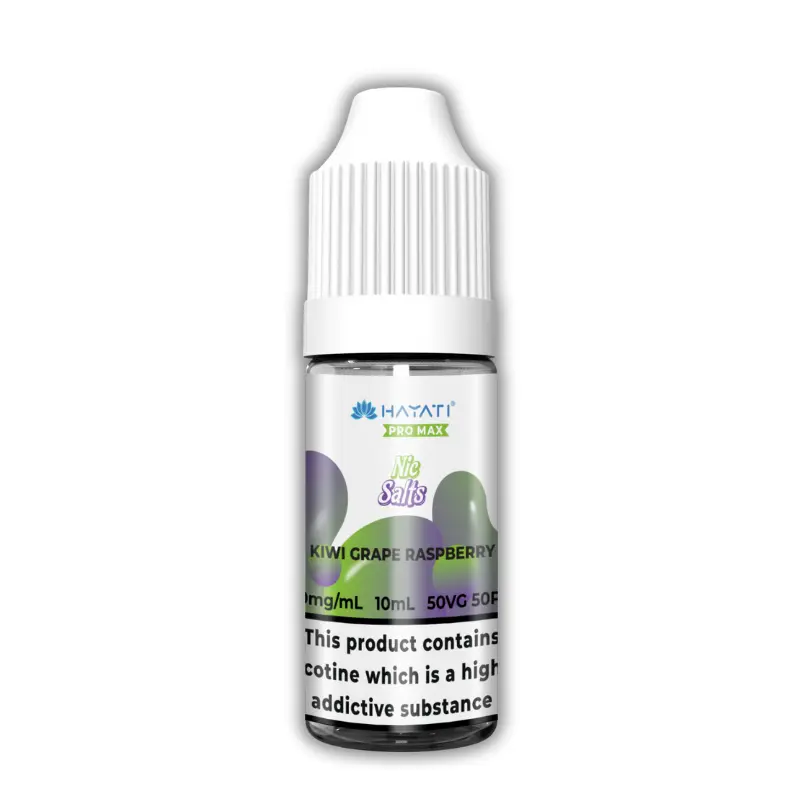
If you want to spend as little as possible. The five 10ml Pro Max Nic Salts bottles at £2.49 are the cheapest entry to this flavour family by a wide margin, provided you already own a refillable pod device. Triple Mango, Strawberry Kiwi, Mango Peach Pineapple, Lemon Peach Passionfruit and Kiwi Grape Raspberry. Those five bottles cover four of the six qualifying fruits between them.
If you do not own a device yet. The Mini Ultra kits at £3.99 are the lowest-cost complete option on the shelf, and the two of them cover Cherry Ice / Peach Mango and Straw’ Guava / Dragon Berries. The Rubik kits at £5.99 sit in the middle with a larger 12ml pod. The Pro Max Plus kits at £7.99 are the volume choice at 12ml, and the Pro Ultra Plus kits at £11.99 hold 22ml.
If you already own a device. Buy the pod, not the kit. The gap is consistent: £5.49 against £7.99 on Pro Max Plus, £3.99 against £5.99 on Rubik, £3.49 against £3.99 on Mini Ultra. On Pro Max Plus that is £2.50 saved per refill for the same 12ml of liquid, which is the single largest avoidable cost on this shelf.
If you are undecided between two flavours. The Pro Ultra Plus dual pods exist for exactly that and are the only listings here that let you hold two profiles at once. Be clear about the trade: both sides share one coil and one 22ml allowance, so whichever half you use less of is thrown away with the pod. That is worth it if you genuinely alternate and poor value if you settle on one side after a day.
If you want the shelf's most unusual liquid. Lychee Ice. Nothing else in the Hayati catalogue tastes like it, and its rose-like fragrance is the one flavour here that people either love or cannot finish. Guava Kiwi Passion Fruit is the runner-up and the less divisive of the two.
Formats, strengths and what fits what
Five device ranges and three liquid formats are represented among the 55. The pods are not interchangeable between ranges, so check the range name printed on your device before ordering a refill, and match it exactly rather than assuming that a similar capacity means a similar fitting.
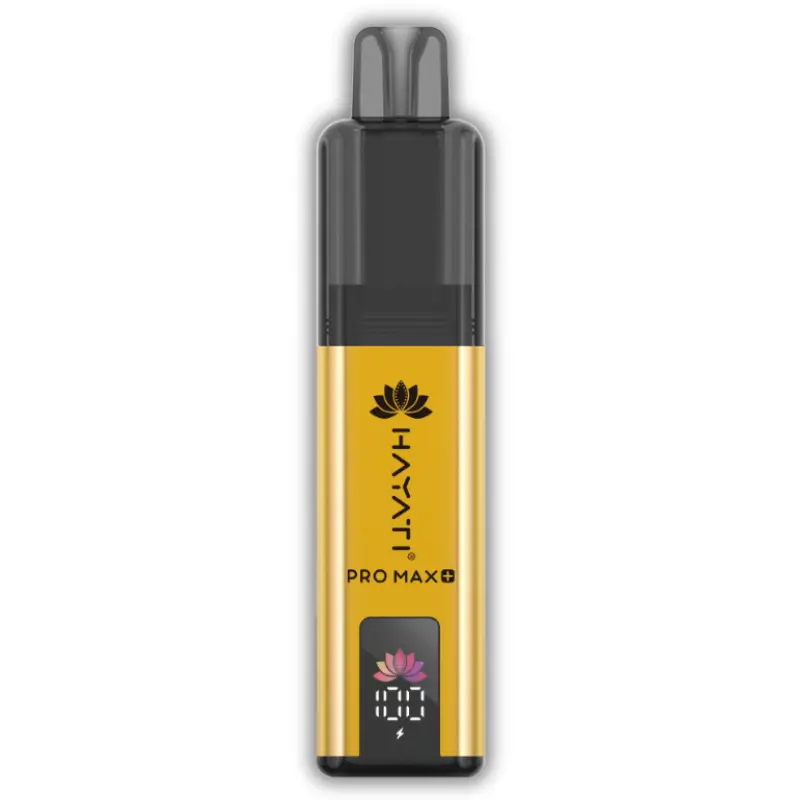
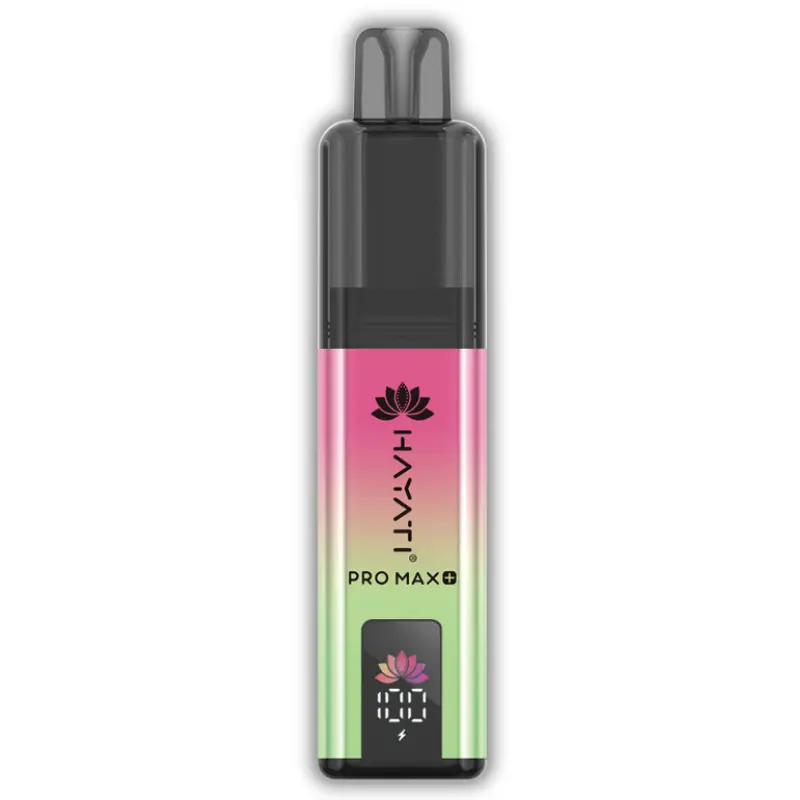
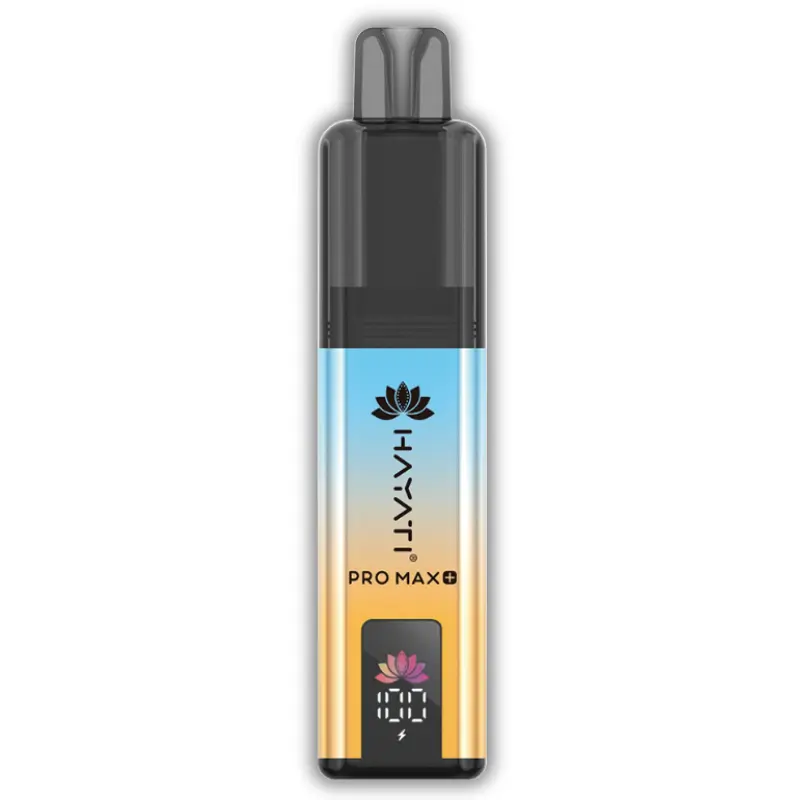
- Pro Max Plus, 30 listings, the largest presence here. Prefilled 12ml pods at 20mg nicotine salt with a 6,000-puff rating on the listing. Kits £7.99, replacement pods £5.49.
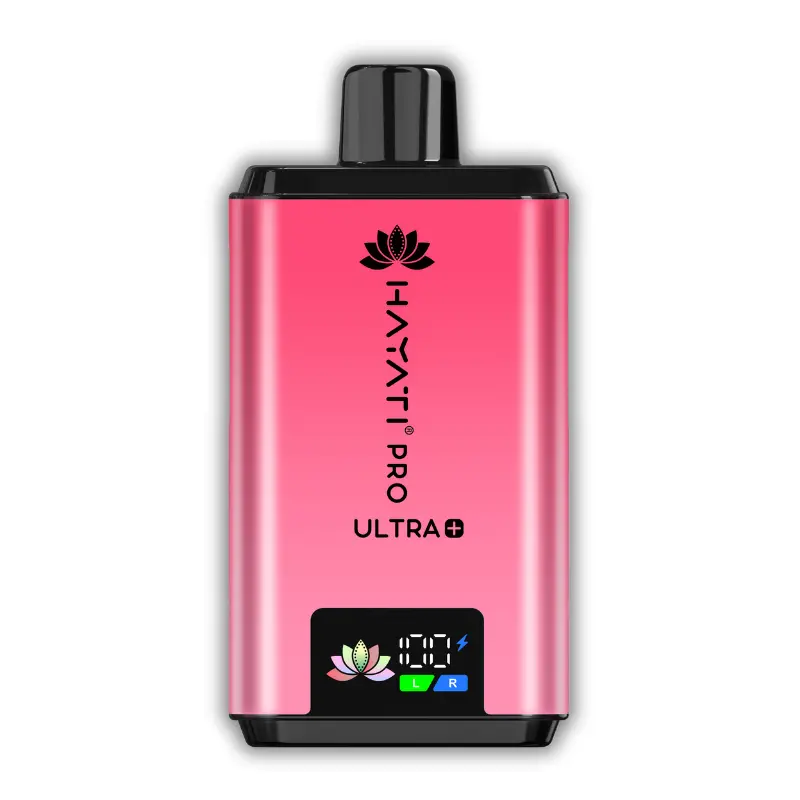
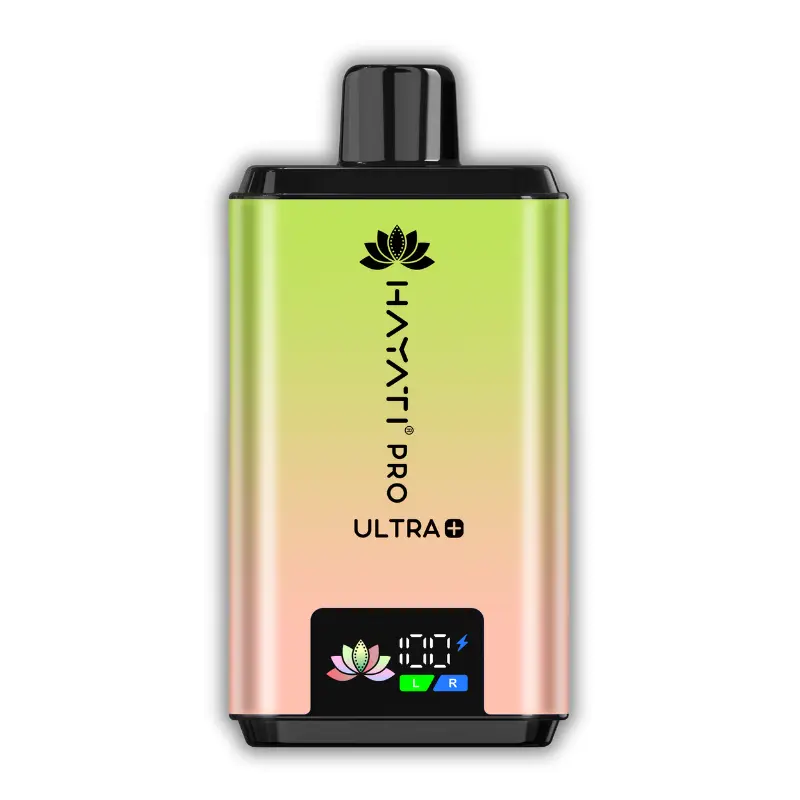
- Pro Ultra Plus, eight listings. Prefilled 22ml pods at 20mg with a 25,000-puff rating and an 850mAh battery in the kit. Kits £11.99, pods £7.99. Six of the eight are dual-flavour listings with a rotating mouthpiece, covering three pairings.
- Rubik, four listings. 12ml prefilled pods at 20mg, 7,000-puff rating, 850mAh battery. Kits £5.99, pods £3.99.
- Mini Ultra, five listings. 4ml prefilled pods at 20mg, 1,500-puff rating. Kits £3.99, pods £3.49. The smallest and cheapest format on the shelf.
- Pro Max Nic Salts, five listings. 10ml bottles of 10mg nicotine salt at 50/50 VG/PG, for refillable pod kits and other low-power mouth-to-lung devices. Not for sub-ohm tanks.
- Pro Max shortfills, two listings, both Triple Mango. 120ml at 0mg, one 70/30 for sub-ohm tanks and one 50/50. £6.99 each.
- Nicotine pouches, one listing. Mango Ice at 12mg, tobacco-free, no device and no vapour involved.
Every puff figure above is a manufacturer rating taken from the listing under test conditions. It is not a promise about your own use, and draw length, draw frequency and how hard you pull will all move it.
Two strength facts are worth separating because they are easy to conflate. The prefilled pods across all four device ranges are 20mg nicotine salt, which is the UK legal maximum for nicotine strength in e-liquid. The bottles are different: the five 10ml Pro Max Nic Salts here are 10mg, half that, and the two 120ml shortfills are 0mg. A shortfill contains no nicotine as supplied. Nicotine is addictive, and the strength you buy should match what you already use rather than being chosen from a shelf listing.
On capacity, the practical spread is wide. A 4ml Mini Ultra pod at £3.49 works out at roughly 87p per millilitre. A 12ml Pro Max Plus pod at £5.49 is about 46p. A 22ml Pro Ultra Plus pod at £7.99 is about 36p. The larger the pod, the cheaper the liquid, and the more you lose if the flavour turns out not to suit you. That is the real argument for buying a Mini Ultra pod first when you are trying an unfamiliar fruit, and this is a shelf full of unfamiliar fruit by design.
Price and pack sizes
The £9.50 spread on this shelf is almost entirely a hardware and volume story rather than a flavour one. Nothing here is priced for being rare or hard to source, and the same liquid costs what its container costs.
The price points cluster hard. Nineteen listings sit at £7.99, which is every Pro Max Plus kit plus every Pro Ultra Plus replacement pod. Fifteen sit at £5.49, which is the Pro Max Plus refill price. Five sit at £2.49, the 10ml bottles. Four at £11.99, the Pro Ultra Plus kits. The rest are scattered across £3.49, £3.99, £4.49, £5.99 and £6.99. Thirty-nine of the 55 are therefore at one of three prices, and the choice between them is a choice about format, not about quality.
Triple Mango is the clearest illustration because it exists at six different prices. The same mango liquid is £2.49 as a 10ml bottle, £3.99 as a Rubik pod, £5.49 as a Pro Max Plus pod, £5.99 as a Rubik kit, £6.99 as a 120ml shortfill and £7.99 as a Pro Max Plus kit. Nothing about the mango changes across those six. What changes is how much liquid arrives, whether a device comes with it, and whether you have to fill anything yourself.
The 120ml shortfills are the outlier worth flagging. At £6.99 for 120ml they hold ten times the liquid of a 10ml bottle for under three times the price, which makes them by far the cheapest liquid per millilitre on the shelf. They arrive at 0mg, so they suit someone who manages nicotine separately, and the 70/30 version is built for sub-ohm tanks rather than pod systems.
Where to go next
Mango Vapes is the closest neighbour by a distance, and the overlap is now total: all 21 of its listings sit on this page as well. Go there if mango on its own is what you want, because it drops the guava, lychee and kiwi blends this grid mixes in around it. Kiwi Vapes works the same way with 10 shared listings and adds the two Kiwi Cooler entries that are filed as iced kiwi rather than as exotic.
Pineapple Vapes is the one to know about if the analysis above interested you. Sixteen of its 21 listings are absent from this shelf, and every one of those 16 is described in tropical terms in its own copy. If your idea of exotic includes pineapple, that page holds most of what you came for.
Berry Vapes shares 18 listings, mostly the Dragon Berries and Aura entries that read as berry blends with something unusual threaded through. Strawberry Vapes shares 13, which is the strawberry half of Strawberry Guava, Strawberry Kiwi and Straw’ Banana. Sweet Vapes shares 17 and is the better page if sweetness rather than provenance is the axis you care about.
Peach Vapes shares 10 and holds far more peach than this shelf shows. Banana Vapes shares four and is where the rest of the banana range lives, including the Banana Ice blends that never appear here. And the full Hayati catalogue runs to 492 listings if none of the shelves fits what you are after.
Closing
The name on this shelf is doing less work than the shelf itself. Exotic sorts 492 listings down to 55, and all 22 of its flavours are now filed consistently across their own pack sizes, though six of those tiles are this site's reconciliation rather than the tagger's care. It also files a tiramisu, excludes 16 of 21 pineapples, and puts kiwi and banana in a category of the unfamiliar, which tells you the word is describing a frame of reference rather than a property of the liquid.
Read it as a route rather than a description and it earns its place. For guava, passion fruit, lychee and dragon fruit it is the only flavour page in the catalogue that will show you anything at all, and for the seven flavours named after moods and places it is the only page that groups them with something. Use the clusters above rather than the tag to decide what to buy, check the pod format against the device you own before you order a refill, and buy the smallest available size of anything you have not tried.
Strictly for adults aged 18 and over. Nicotine is an addictive substance.
Frequently asked questions
What does Exotic actually mean on this shelf?
Counting the membership, it collects six fruits: mango in 21 of the 55 listings, kiwi in 10, guava in eight, dragon fruit in six, passion fruit in three and lychee in two. Seven further flavours are named for a mood, a place or a pudding rather than a fruit. The working idea appears to be fruit that is not grown in Britain and was not an everyday item here, but Hayati publish no criteria and the tag has clear exceptions, the largest being pineapple.
Why is pineapple not on this shelf?
Sixteen of the 21 listings that name pineapple in the title are absent from this shelf, all 16 filed on Pineapple Vapes instead, and Hayati's own copy calls every one of those 16 tropical. The five that are here are all Mango Peach Pineapple, where mango is the fruit earning the place, and the fifth of those arrived only when this site started pooling flavour shelves across the pod and kit of one liquid, so it reflects no decision about pineapple. One possible reason is that pineapple has been an ordinary British grocery item for far longer than mango or guava, so it stopped reading as unusual earlier. That is a reading of the pattern rather than a stated reason.
Why are kiwi and banana filed as exotic when both are supermarket staples?
They are, and that is the clearest sign the tag is historical rather than current. Ten of the 55 listings are kiwi and four are banana, and neither fruit is remotely unusual in Britain now. Banana also never qualifies on its own here: all four banana listings arrive paired with mango or kiwi. The tag is a reasonable guide to a flavour family and an unreliable guide to whether anything will be new to you.
Why is T-Misu, a tiramisu flavour, on a shelf of tropical fruit?
No explanation in the product data accounts for it. T-Misu is coffee, a creamy dairy note and a cocoa finish, with no fruit at all, and the 6000 kit is the listing somebody actually tagged, the replacement pod beside it having inherited the same shelves when this site pooled the two SKUs. It is the single clearest break in whatever rule the shelf is following, and it is worth knowing about before you assume everything here is fruit.
Does the same flavour ever appear on this shelf in one pack size and not another?
It used to, on six of the 22 flavours here. Mango Peach Pineapple, T-Misu, Blackcurrant Mango, Mango Banana, Dragon Berries and Caribb Crush each had at least one listing carrying the tag and at least one without, and the split ran in both directions, which reads as filing done listing by listing with no reconciliation pass afterwards. This site now pools flavour shelves across the pod and the kit of one liquid, which closed five of those six splits, and a second rule fills in any listing left on no flavour shelf at all from a listing of the same flavour on another device, which closed the sixth. Six tiles here were therefore not here before, the last of them the Dragon Berries Mini Ultra pod. If a flavour you want is missing from this grid, check its other pack sizes before concluding it is not stocked.
Which products here have a cooling agent?
Six of the 55. The two Lychee Ice listings, the three Cherry Ice / Peach Mango entries and the Mango Ice nicotine pouches. Everything else is uncooled fruit, which makes this an unusually warm shelf compared with most of the catalogue. Anyone used to menthol or iced blends will find the majority of these heavier than expected on the first session.
Which is the sweetest and which is the sharpest?
Triple Mango is the sweetest by a clear margin: layered mango with no acid to break it up, and it will tire your palate faster than anything else here. Mango Banana is close behind and adds a creamy weight. Tropical Sour Juice is the sharpest, with the sour edge as the defining feature rather than an accent. Guava Kiwi Passion Fruit is the best balanced of the tart options.
What is the cheapest way to try these flavours?
If you own a refillable pod device, the five 10ml Pro Max Nic Salts bottles at £2.49 are the lowest cost by a wide margin, and between them they cover mango, kiwi, passion fruit and peach. If you do not own a device, the two Mini Ultra kits at £3.99 are the lowest-cost complete option. A 4ml Mini Ultra pod works out around 87p per millilitre against about 36p for a 22ml Pro Ultra Plus pod, so the small format costs more per millilitre and risks less if the flavour does not suit you.
What does a title with two flavour names separated by an oblique mean?
It depends on the range. On the Pro Ultra Plus it is a single 22ml pod divided into two sides, with a rotating mouthpiece selecting which side feeds one shared coil. Both sides draw on the same 22ml and the same coil, so anything left in the half you use less of goes in the bin with the pod. On the Mini Ultra the listings name two flavours without stating whether a box holds one or both, so treat the oblique there as the options that entry covers and confirm the variant when ordering.
Are the guava and passion fruit products available anywhere else on the site?
Not by flavour. There is no guava shelf, no passion fruit shelf, no lychee shelf and no dragon fruit shelf in the catalogue, so all eight guava listings, all three passion fruit listings, the two lychee listings filed here and the six dragon fruit listings are reachable through this page or through the full range. That is the strongest practical argument for the shelf existing at all.
Are there any flavours here where the name tells you nothing?
Seven of the 22, covering 15 listings: Midnight Dream, Galaxy Aura, Sunset Aura, Caribb Crush, Tropical Sour Juice, Dragon Berries and T-Misu. The Aura blends are named for atmosphere and the product copy sets a mood rather than a recipe. Four listings, both Tropical Sour Juice entries and both Caribb Crush entries, have Exotic as their only flavour tag, so no other flavour page in the catalogue will show them to you.
What nicotine strengths are on this shelf?
The prefilled pods across Pro Max Plus, Pro Ultra Plus, Rubik and Mini Ultra are all 20mg nicotine salt, the UK legal maximum for e-liquid. The five 10ml Pro Max Nic Salts bottles are 10mg. The two 120ml shortfills are 0mg and contain no nicotine as supplied. The Mango Ice pouches are 12mg and are an oral product with no device and no vapour. Nicotine is addictive, and the strength should match what you already use.
Is this shelf filed wrongly in the way some other shelves are?
No, and it is worth separating the two problems. Some shelves on this site pick up listings titled with a range and a nicotine strength instead of a flavour, which carry a family default flavour and turn up under fruits they do not contain. None of that happens here: all 55 listings name a flavour in the title and not one of the 19 range-and-strength listings in the catalogue is tagged Exotic. The oddities on this page are judgements someone made rather than a side effect of a missing flavour name, with one qualification. Six of the 55 tiles are on the shelf because the site pools flavour shelves between listings of a single liquid, so those six copy another listing's tag instead of recording a separate decision, and every judgement argument on this page rests on the other 49.