Home / Summer Dream Vapes
Summer Dream Vapes
Thirteen tiles sit on this shelf and every one of them carries the same named flavour. Five are complete kits with a device in the box, five are bare replacement pods for hardware you already own, and three are bottles. Prices run from £2.49 to £11.99 across eight distinct price points, and the gap between the two ends is almost entirely a question of how much liquid arrives and whether a body arrives with it.
That makes this shelf a different kind of object from most of the flavour shelves on the site, and the difference is worth stating before you scroll. Of the thirty flavour shelves in the navigation, four collect one named flavour in all the formats it is made in. The other twenty-six collect a family of related flavours. A family shelf answers the question which of these do I want. This one answers a question you have already narrowed: I know the flavour, now which format.
Everything below is built around that second question. Because the liquid is held constant across the grid, price, volume, nicotine strength, the hardware it needs and how long one unit runs are the only variables left, and you can reach a decision here without reading a word about taste. Which is just as well, because the name specifies no fruit and this page is not going to invent one.
New ProductsHayati PodsHayati Prefilled Pods & RefillsHayati Pod KitsHayati Prefilled Pod KitsHayati E-LiquidsHayati Pro Ultra Plus Prefilled Pod Kits & PodsHayati Pro Max Plus PodsHayati Pro Max Plus Prefilled Pod KitHayati Pro Max Nic SaltsHayati Pro Ultra Plus PodsHayati Pro Ultra Plus Prefilled Pod KitHayati Mini UltraHayati RubikHayati Mini Ultra PodsHayati Mini Ultra Prefilled Pod KitHayati Pro Max 50-50 E-LiquidHayati Pro Max 70-30 E-LiquidHayati Rubik Prefilled Pod KitHayati Rubik PodsHayati Nicotine PouchesHayati QuokkaBerry VapesRaspberry VapesIce VapesBlueberry VapesStrawberry VapesCherry VapesSweet VapesExotic VapesLemon VapesBlueberry Raspberry VapesPeach VapesWatermelon VapesApple VapesLemon Lime VapesMango VapesPineapple VapesGrape VapesLemonade VapesMint VapesCola VapesStrawberry Raspberry Ice VapesBlackcurrant VapesJuicy Peach VapesMr Blue VapesSummer Dream VapesBanana VapesKiwi VapesMenthol VapesOrange VapesFresh Mint Vapes
A shelf for one flavour and a shelf for a family are two different things
The site runs fifty-two shelves. Twenty-two of them are range shelves, organised by device or by liquid format, and thirty are flavour shelves. Nobody labels the two kinds of flavour shelf differently in the navigation, and they look identical from the outside: a name, a grid, a price range. Counting them apart takes about a minute and changes what a page like this one should be for.
Here is the test. Take a shelf, look at every tile on it, and ask whether the flavour name in the title is the shelf name, allowing a two-flavour pod to count if one of its two halves is the shelf name. Where every tile passes, the shelf is collecting one recipe in all its formats. Where tiles fail, the shelf is collecting a group.
Four of the thirty pass cleanly. This one, with thirteen tiles. Mr Blue Vapes, thirteen tiles. Juicy Peach Vapes, thirteen tiles. Fresh Mint Vapes, eleven tiles. On each of the four, every single tile is either the named flavour on its own or a dual pod with that flavour on one side. Nothing else has been filed there.
The other twenty-six are families, and most of them are not close. Berry Vapes runs to 225 tiles gathering eighty-six differently named flavours. Ice Vapes holds 98 tiles and Strawberry Vapes 82, both of them grouping by a shared property rather than a shared recipe. Even the small ones behave that way: Lemonade Vapes has 19 tiles covering six separate drink-framed flavours, and Cola Vapes has 18 tiles spread over seven.
The three near misses, because they are the interesting part
Three shelves look like they should qualify and do not, and what breaks them is instructive if you are trying to read the taxonomy rather than just use it.
- Strawberry Raspberry Ice Vapes carries 18 tiles. Fifteen of them are that exact flavour or a pairing containing it. The three that are not are two listings of Strawberry Raspberry Mojito, which is a different recipe with two of the same words in it, and a Mini Ultra dual pod whose second half is plain Strawberry Ice.
- Lemon Lime Vapes carries 21 tiles, seventeen of them lemon and lime proper, including both of the dual listings that sit on this shelf too. The four that break it are all Orange Lemon Lime, a three-fruit blend that contains the pair but is not the pair.
- Blueberry Raspberry Vapes is the furthest away. It has 46 tiles and only fifteen of them are that named blend. The rest are the whole blue-and-red corner of the catalogue, Blue Razz GB, Blue Fusion, Mixed Berries, Blue Sour Raspberry and a dozen others, which makes it a family shelf wearing a recipe name.
So the boundary is real but it is not a clean line drawn by whoever tagged the catalogue. Three shelves named after one specific recipe have drifted into being families. Four have not.
Two counts that are easy to confuse, said plainly
Numbers on shelf pages get copied between pages and quietly change meaning, so both figures used above are labelled here. Thirteen is a tile count: thirteen listings are filed on this shelf as the catalogue stands. Eleven is a title count: eleven listings have this flavour name on its own in the title, and two more carry it as half of a two-flavour pod, which is how thirteen tiles are made from eleven solo listings. The two figures measure different things and neither is wrong. If you see one of them quoted elsewhere without a noun attached to it, that is the ambiguity to check.
One more piece of housekeeping. The Apple Vapes page uses the phrase single-flavour shelf to mean a shelf named after one fruit, as against a shelf named after a character like sweet or iced, and counts seventeen of them. That is a different measurement from the one on this page, which is about whether the tiles are all one recipe. A shelf can be named after one fruit and still gather recipes that share nothing else, and Peach Vapes with 32 tiles over twelve named flavours is exactly that. The Blackcurrant Vapes page noticed three of the four one-recipe shelves in passing while counting something else. It missed the fourth, which is Fresh Mint.
What that distinction changes about the job of this page
A family shelf has to sort. Somebody landing on Mango Vapes or Watermelon Vapes is holding a fruit and wants to know which of the eight or ten recipes built around it suits them, so the page has to describe differences in taste and it has no way out of that. The grid is the menu.
A one-recipe shelf has nothing to sort. Every tile tastes the same, by construction, because it is the same liquid. What differs is the packaging, and packaging decisions have right answers in a way that flavour decisions do not. You either own a Pro Ultra Plus body or you do not. You either get through four millilitres in a couple of days or you do not. Those are checkable facts about your situation rather than preferences, which is why this page can be more decisive than a flavour page is entitled to be.
Four pieces of work on the product listings already cover ground this page would otherwise have to walk over, and none of it is repeated below. The Summer Dream Hayati Rubik Prefilled Pod Kit page counted where this flavour appears across the range and found it on all seven of the product lines Hayati operate, which only eight flavours in the catalogue manage and only two of the coined, non-descriptive names. That same page lined up all eleven descriptions of the liquid against one another and reported what they agree on, where they split, and the single shelf tag that is the only fruit anywhere in the record. The Summer Dream Hayati Pro Ultra Plus Pods page worked out why a sealed pod is a different kind of purchase from a bottle, on the grounds that a pod cannot be split, decanted or passed on, and it published a table pricing every listing of this flavour by the millilitre. From that table comes the finding this page leans on hardest: the £2.49 bottle is the cheapest route into the flavour that exists.
Read those if the liquid itself is what you are trying to settle. What follows is the part they leave open, which is the format decision, taken at shelf level with all thirteen tiles in view at once.
The shelf is a controlled comparison, and almost nothing else on the site is
Hold one variable constant and the others become measurable. Because the same named liquid sits on four prefilled platforms and three bottle formats here, this shelf is the rare place where the platforms can be set against each other without a flavour difference confusing the reading. Two things fall straight out of that.
The puff ratings cannot be compared across formats, and the shelf proves it
Each prefilled platform carries a manufacturer rating, produced on laboratory test equipment under fixed conditions rather than derived from anybody's week. Taken alone each is just a number. Divided by the volume of liquid in the same pod, they stop agreeing with each other.
| Format | Liquid | Manufacturer rating | Implied puffs per millilitre |
| Mini Ultra pod | 4ml | Up to 1,500 | 375 |
| Pro Max Plus pod | 12ml | Up to 6,000 | 500 |
| Rubik pod | 12ml | Up to 7,000 | about 583 |
| Pro Ultra Plus pod | 22ml | Up to 25,000 | about 1,136 |
Three times the spread, on one liquid, from the top of that column to the bottom. Two pods holding identical twelve-millilitre fills are rated a thousand puffs apart. Nothing in the published data explains it, and the honest reading is not that one platform extracts three times the flavour from a millilitre. It is that the four ratings were not produced by the same procedure, or not to the same draw length, and that they are therefore a ranking within a platform rather than a currency you can spend across platforms.
The practical instruction is short. When you are choosing between formats on this shelf, compare millilitres and ignore the puff figures. Millilitres are a quantity of liquid measured the same way every time. The ratings are laboratory estimates measured in ways that visibly disagree.
The battery is not a variable, and that is a catalogue fact rather than a shelf fact
All five kits on this shelf publish an 850mAh cell. It would be easy to write that up as something the shelf tells you, and the base rate kills it: of the 174 listings in the whole catalogue that publish a battery figure at all, 170 give the same 850mAh. The cell is a constant across nearly the entire brand, so it is not a reason to prefer one kit here over another. What the extra money buys as you move up the kits is liquid, not power.
Five of the seven liquid volumes Hayati publish turn up on this one shelf
The Pro Ultra Plus pod page counted the volumes across all 492 listings and found seven distinct figures in use. Five of the seven are here: 4ml, 10ml, 12ml, 22ml and 120ml. The two missing ones are the 2ml figure, which belongs to refillable hardware you fill yourself, and the 7ml figure, which the same census found on only two listings in the entire catalogue and neither of them this flavour. For a shelf of thirteen tiles that is an unusual spread, and it is the direct consequence of a single recipe having been tooled into every format the company runs.
The thirteen tiles, in four brackets by what you are committing to
Grouping by price would put objects of completely different kinds next to each other, so the grouping below is by the size of the unit, which is what actually decides whether a purchase suits you.
Bracket one: bottles, for hardware that is already yours
Three tiles are liquid in a bottle with no hardware attached, and between them they hold the two cheapest routes into this flavour and the two largest volumes on the shelf.
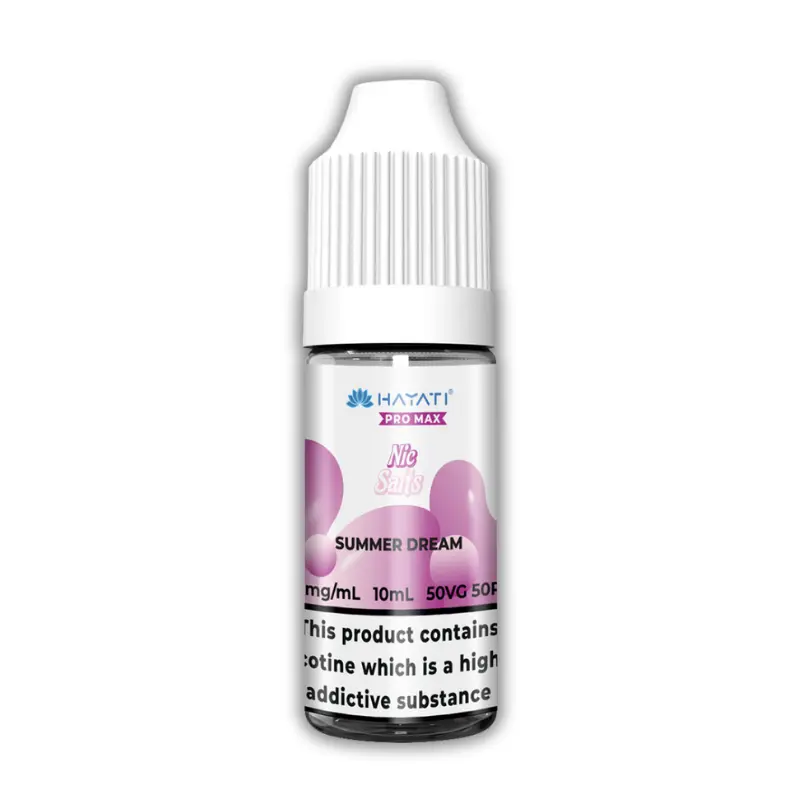
The Summer Dream Hayati Pro Max Nic Salt is £2.49 for 10ml at 10mg in a 50/50 base. It is the lowest ticket price on the grid by a full pound and the lowest cost per millilitre of anything nicotine-bearing here. It needs a refillable pod device of your own, and it is the only tile on the shelf at 10mg.
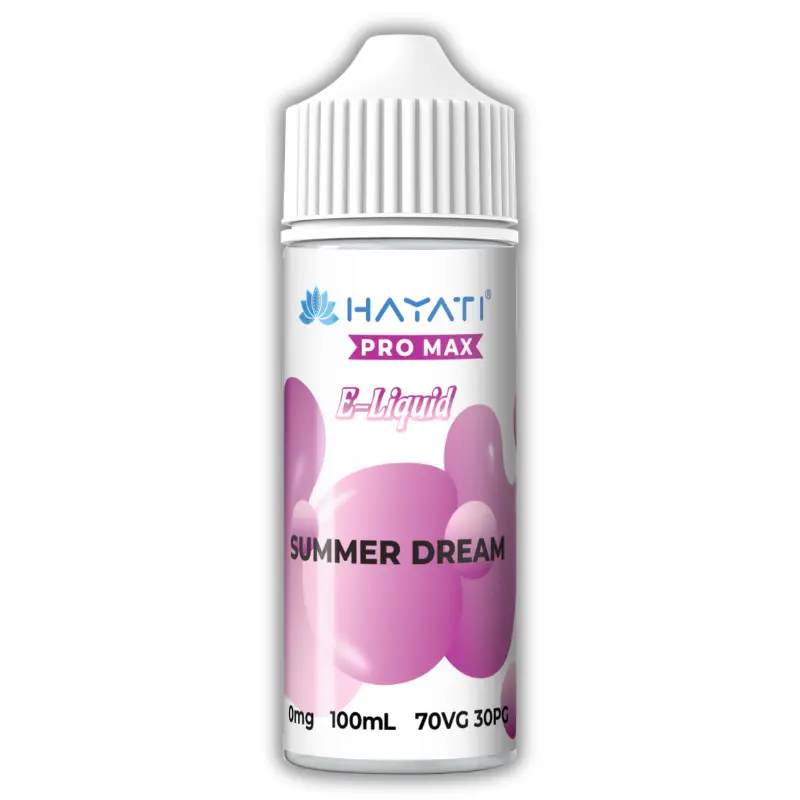
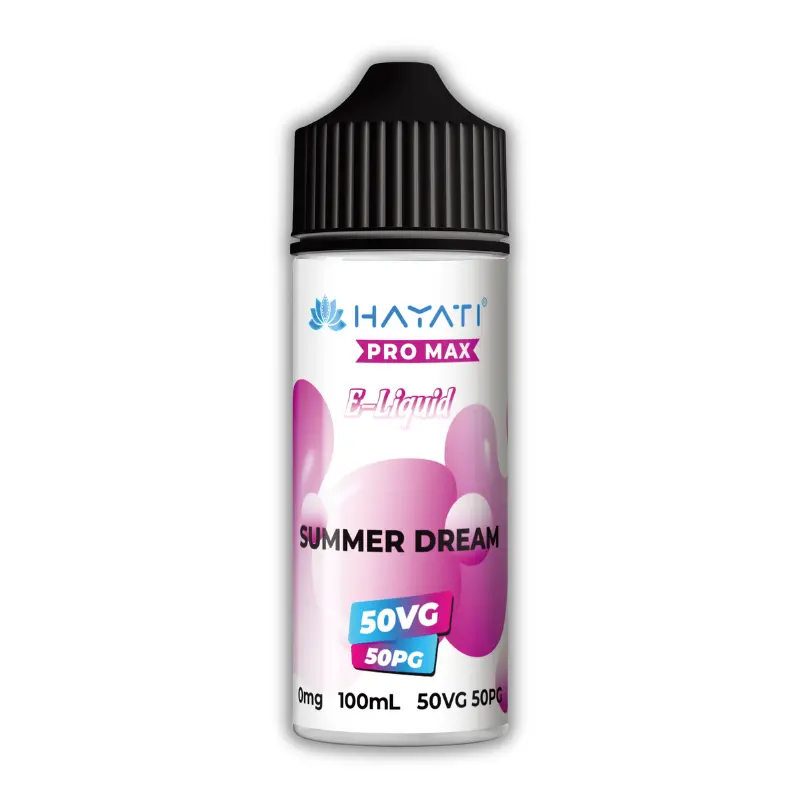
The Summer Dream Hayati Pro Max 50/50 Shortfill E-Liquid and the Summer Dream Hayati Pro Max 70/30 E-Liquid are both £6.99 for 120ml at 0mg. They are the same price, the same volume and the same name, and the only published difference between them is the carrier ratio. The 50/50 is the thinner of the two, the ratio Hayati pair with refillable pod kits and low-power devices on the 10ml listing beside it. The 70/30 is the thicker one and its listing addresses sub-ohm hardware directly. Both are supplied without nicotine and no strength option is listed against either, so if you want a bottle with nicotine in it on this shelf, the 10ml is the only one.
One oddity worth knowing before you use the 70/30 as evidence about anything: it is the single tile on this shelf that carries a fruit tag, and it is filed under Strawberry Vapes. The Rubik kit page weighs that tag properly and concludes it is the only fruit datum attached to this name anywhere in 492 listings, and nowhere near enough to build a description on. Everything on Hayati E-Liquids sits together if you want to see the bottled formats side by side.
Bracket two: four millilitres, the smallest sealed unit
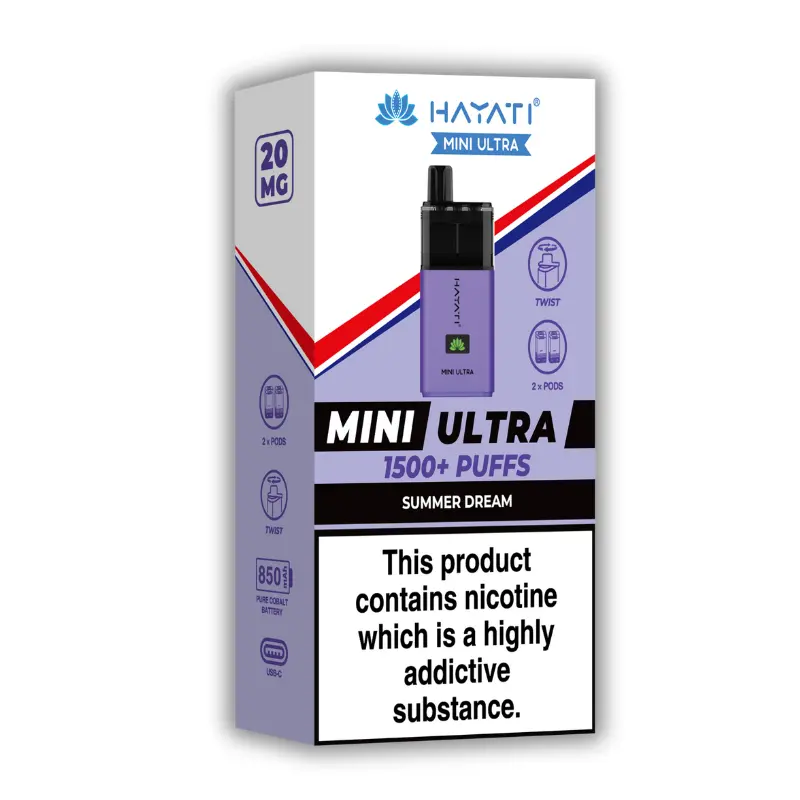
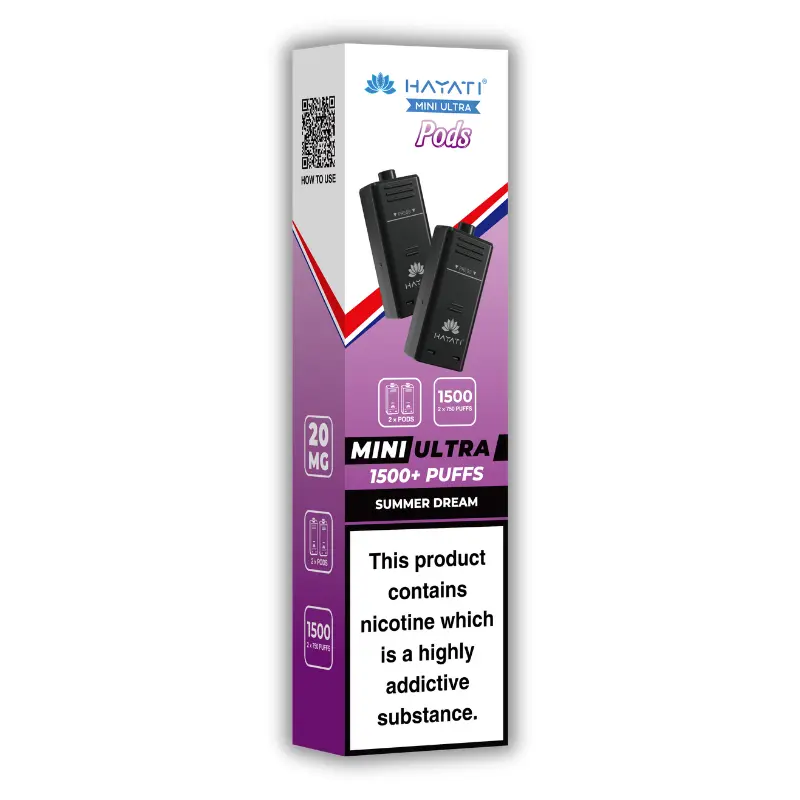
Two tiles hold 4ml. The Summer Dream Hayati Mini Ultra Pods at £3.49 is a bare pod for a Mini Ultra body, and the Summer Dream Hayati Mini Ultra Pod Kit at £3.99 is the same pod with the device. Fifty pence separates them, which is the smallest kit premium anywhere on this shelf and much the smallest in proportion to the ticket.
What this bracket is for is obvious once the volumes are lined up: it is the least liquid you can buy in a sealed unit, and by some distance. Four millilitres is a third of the next rung and under a fifth of the top one. The trade is that small units are expensive liquid, and the per-millilitre table on the Pro Ultra Plus pod page puts the Mini Ultra at the costly end of all four prefilled platforms whichever way you buy it. That is the correct trade to make when you are still deciding, and the wrong one once you have decided. The Hayati Mini Ultra shelf holds the rest of the line.
Bracket three: twelve millilitres, where most of the range lives
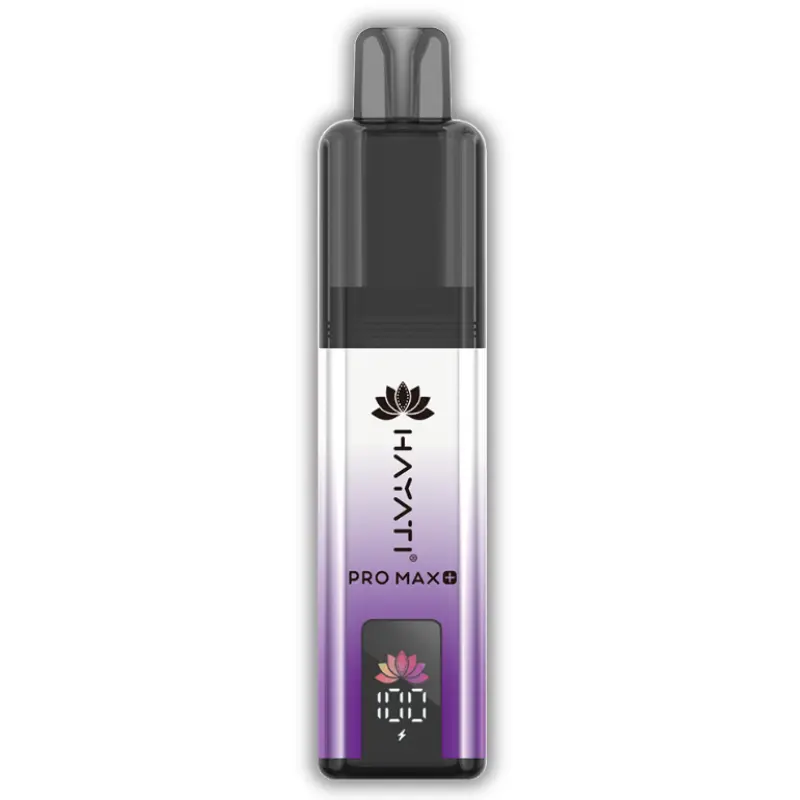
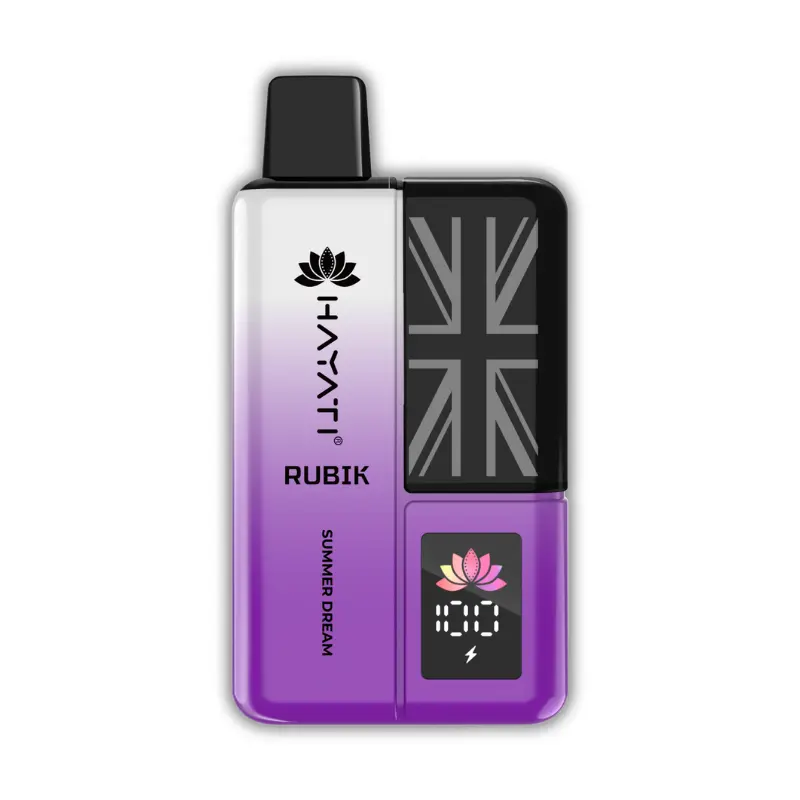
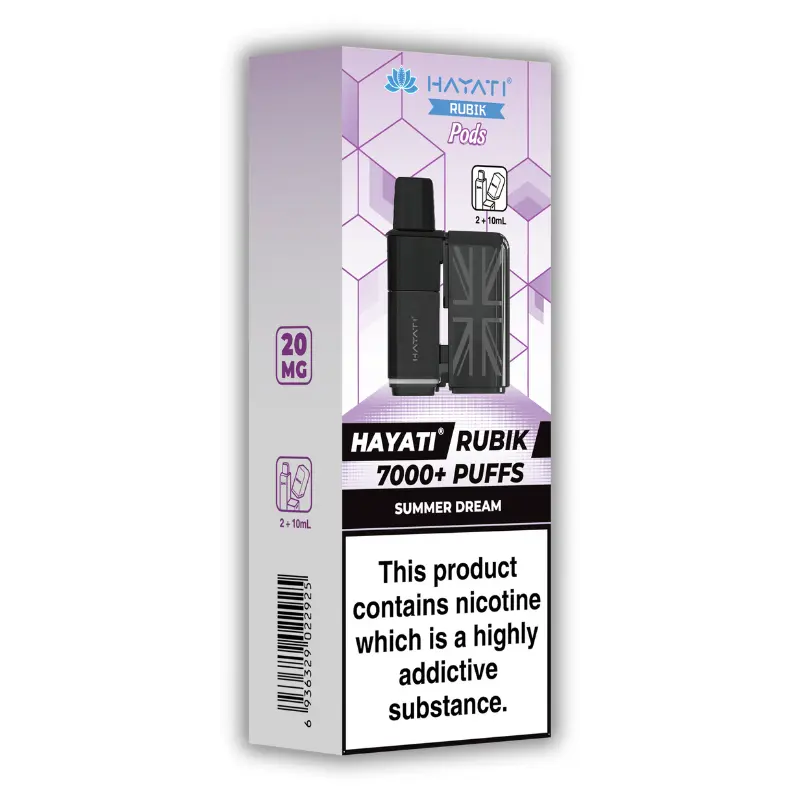
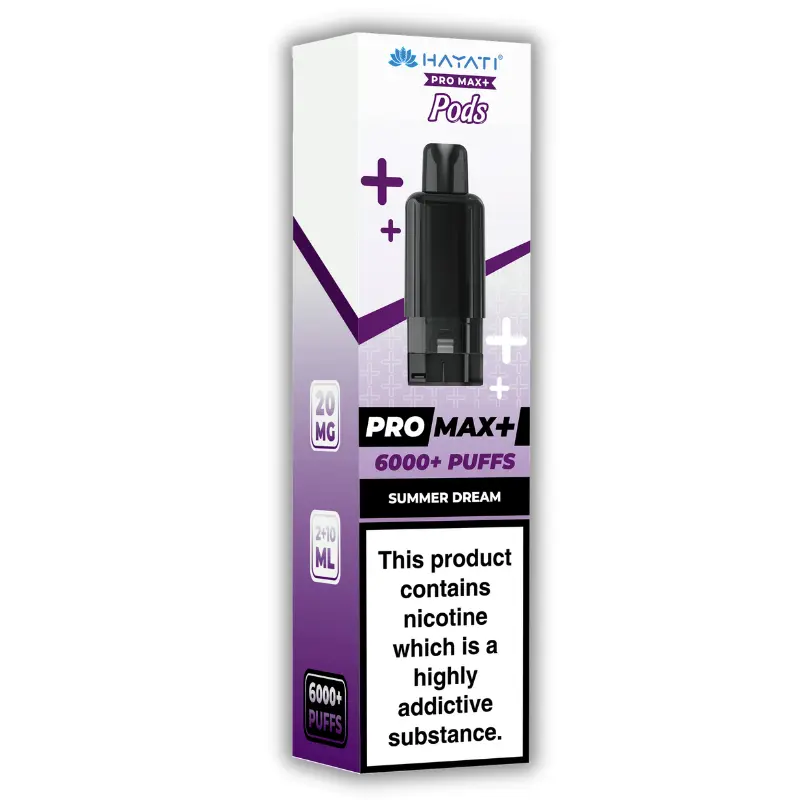
Four tiles hold 12ml, in two pairs on two different bodies. The Summer Dream Hayati Rubik Pods at £3.99 and the Summer Dream Hayati Rubik Prefilled Pod Kit at £5.99 are one pair. The Summer Dream Hayati Pro Max Plus Pods at £5.49 and the Summer Dream Hayati Pro Max Plus Pod Kit at £7.99 are the other.
Same volume, same 20mg, same published cell in both kits, with £1.50 between the two bare pods and £2 between the two kits. The Rubik is cheaper as a pod, cheaper as a kit, and cheaper per millilitre either way, which the Rubik kit page sets out with the arithmetic shown. The reason to pay the difference is not the liquid, since the liquid is identical. It is the size of the platform behind it: Hayati Rubik runs to 39 listings and the Pro Max Plus side of the catalogue is several times that, so a Pro Max Plus body opens onto far more flavours when you eventually want something else.
Twelve millilitres is also the volume the catalogue is mostly built around, which matters if you expect to rotate. A body on this bracket will accept a very large number of other pods, and that is the real purchase you are making when you buy a kit here rather than a pod.
Bracket four: twenty-two millilitres, and the two tiles where half of it is something else
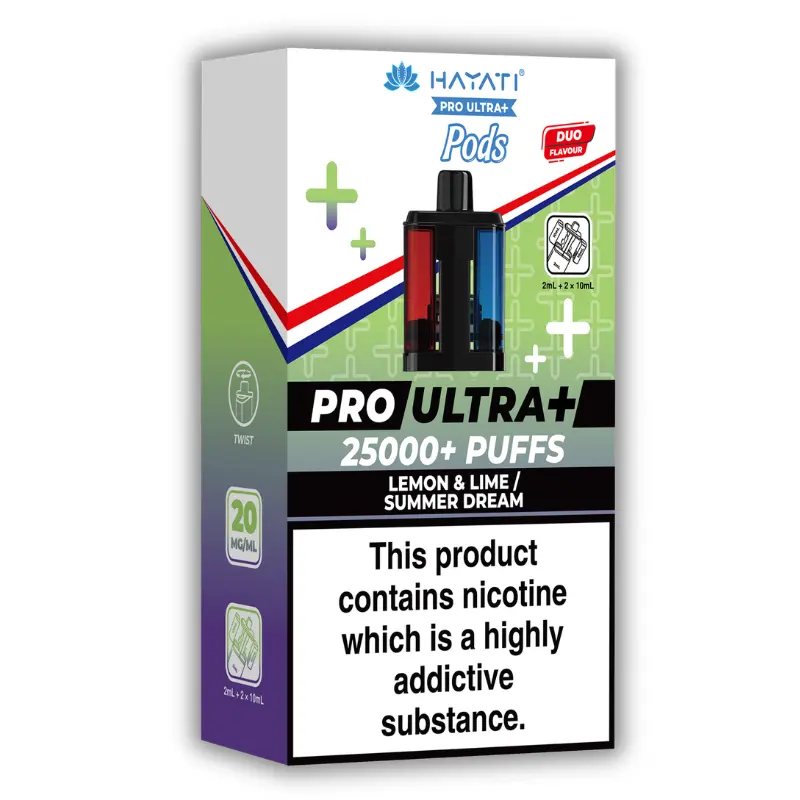
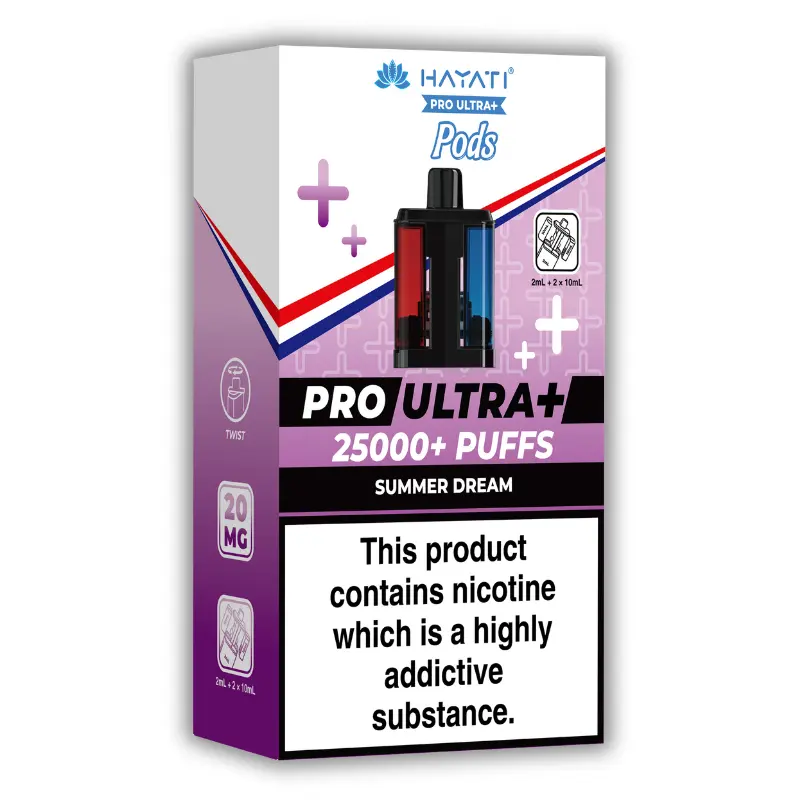
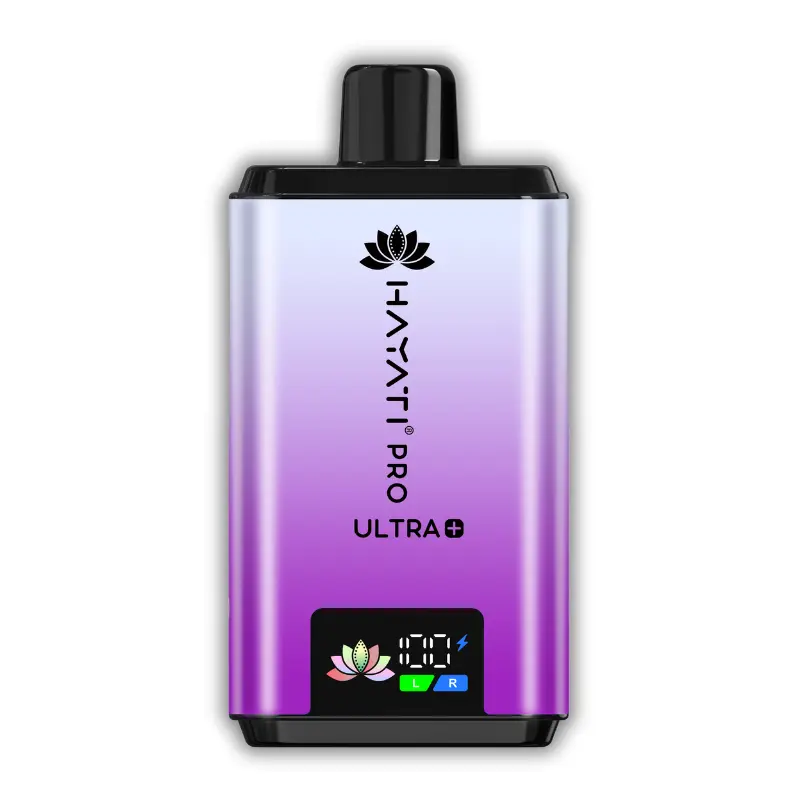
Four tiles hold 22ml. Two of them are this flavour throughout: the Summer Dream Hayati Pro Ultra Plus Pods at £7.99 and the Summer Dream Hayati Pro Ultra Plus 25000 Prefilled Pod Kit at £11.99. Two of them are shared with a citrus: the Lemon & Lime/Summer Dream Hayati Pro Ultra Plus 25K Pods at £7.99 and the Lemon Lime / Summer Dream Hayati Pro Ultra Plus 25000 Prefilled Pod Kit at £11.99, each holding both liquids behind a rotating mouthpiece.
The dual pair is the one place on this shelf where a tile is not simply a different size of the same thing. Hayati publish a total of 22ml and no split, so roughly eleven millilitres of this flavour is a working assumption rather than a specification, and the effective rate you pay for the half you came for is about double the solo pod's. Both dual listings have their own pages, and between them they cover the hedge argument, the carry-over between the two liquids through a shared wick, and which reserve empties first. None of that is repeated here, because at shelf level the dual pods are a straightforward case: they are the right tile if you want a second flavour in the same purchase and the wrong tile if you want this one.
For the two solo listings, the argument is settled and it is worth restating in one line because it is the single most consequential thing on the shelf. The Pro Ultra Plus pod page concludes that 22ml is the largest indivisible, sealed, nicotine-bearing unit Hayati sell, that it cannot be split or decanted, and that almost nobody should meet an undescribed flavour at that size when five cheaper tiles of the same name are sitting beside it. Its verdict is that this is the wrong first purchase and the right second one. The rest of the platform is on Hayati Pro Ultra Plus Pods and Hayati Pro Ultra Plus Prefilled Pod Kit, with both shown together on Hayati Pro Ultra Plus Prefilled Pod Kits & Pods.
Three questions, in the order that settles them fastest
What is already in the drawer
This eliminates more tiles than anything else and most people can answer it in five seconds. A Hayati pod is made for one body and the ranges do not interchange, so owning a device removes every tile that does not fit it. Check the range name printed on your device against the range name in the title before ordering any replacement pod, because cross-range fitment is not something a retail page can settle for you.
- A Pro Ultra Plus body: the £7.99 solo pod, or the £7.99 dual pod if you want the citrus as well.
- A Pro Max Plus body: the £5.49 pod.
- A Rubik: the £3.99 pod.
- A Mini Ultra: the £3.49 pod.
- A refillable low-power pod device of your own: the £2.49 bottle at 10mg, or the 50/50 shortfill at 0mg.
- A sub-ohm setup: the 70/30 bottle at 0mg.
- Nothing suitable: one of the five kits, and then the kit question is purely the volume question below.
There is a corollary people miss. Buying a kit when a working body of that range is already in the house means paying for hardware twice to obtain one pod of liquid, and on this shelf that premium ranges from fifty pence on the Mini Ultra to four pounds on the Pro Ultra Plus. The bare-pod tiles exist for exactly that reason. Hayati Pods and Hayati Prefilled Pods & Refills collect the refills across every range, and Hayati Pod Kits and Hayati Prefilled Pod Kits collect the versions with a device.
How much you actually drink, counted in millilitres
No honest page can convert a volume into a number of days for you, because consumption varies enormously with draw length, how often you reach for the device and how long you leave between sessions. What this shelf can do, because the liquid is constant, is give you exact ratios between the units.
- One 22ml pod holds the liquid of five and a half 4ml pods.
- One 22ml pod holds the liquid of one and five sixths of a 12ml pod, so roughly two.
- One 12ml pod holds the liquid of three 4ml pods.
- One 120ml bottle holds the liquid of thirty 4ml pods, ten 12ml pods or about five and a half 22ml pods.
Use those against your own history rather than against a puff figure. If you know roughly how long a 12ml pod has lasted you before, everything else on the shelf is a multiplication. If you have no such history, that is itself an argument for starting small, because the smallest unit gives you the measurement cheaply and the largest one gives you the same measurement expensively.
Reorder frequency is the other half of this. Twenty-two millilitres is about half as many reorders as twelve, and under a fifth as many as four, which is a real convenience once you have settled and a real liability while you have not.
How much you want to commit before you are sure
This is where a one-recipe shelf differs most sharply from a family shelf, because the ladder exists. Five tiles sit below the price of the top one and every one of them contains the identical name.
The commitment ladder, cheapest first: the 10ml bottle at £2.49, the Mini Ultra pod at £3.49, the Mini Ultra kit and the Rubik pod at £3.99, the Pro Max Plus pod at £5.49, the Rubik kit at £5.99, the two 120ml bottles at £6.99, then the £7.99 tiles and the £11.99 tiles. The Pro Ultra Plus pod page makes the case bluntly and it is correct: starting at the top of that ladder means paying between four and five pounds extra to find out slowly, and holding twenty-odd millilitres that cannot be rescued if the answer is no.
Two caveats on the cheapest rung, both from the same source. The £2.49 bottle is 10mg in a 50/50 base going into a device of your own, not a 20mg prefilled pod, so it tests the flavour name rather than reproducing any particular pod. And any difference you notice between the bottle and a pod later could be the base, the strength, your coil or a genuine reformulation, since Hayati publish nothing about whether the concentrate is identical across the seven formats.
Same money, different object: the price collisions on this grid
Eight prices cover thirteen tiles, which means several tiles cost the same as each other while being nothing like each other. Those collisions are where buyers go wrong, so they are worth naming.
£3.99 buys two very different things. The Mini Ultra kit is 4ml with a device included. The Rubik pod is 12ml with no device. Three times the liquid or a body in the box, for the same money, and which one is right depends entirely on the drawer question above.
£6.99 buys two nearly identical things. The two 120ml bottles differ only in carrier ratio and in the kind of device they suit. Everything else about them, including the 0mg, is the same.
£7.99 buys three different things. The Pro Ultra Plus solo pod is 22ml of this flavour. The Pro Max Plus kit is 12ml plus a device. The dual pod is 22ml of which roughly half is this flavour and half is a citrus. Three objects, one price, and no sensible way to rank them without knowing what hardware you hold and whether you want a second liquid.
£11.99 buys two things that differ only in the second flavour. Both are 22ml Pro Ultra Plus kits with the device. One is this liquid throughout, the other is split with Lemon & Lime. If the citrus is of no interest, the split kit costs the same and gives you eleven fewer millilitres of what you came for.
Why this shelf exists, and why its existence is not a recommendation
A one-recipe shelf can only exist if the recipe was made in enough formats to fill one. That is a fact about production scheduling, not about the liquid. The Rubik kit page establishes the distribution evidence properly and is careful about its limits, and those limits travel with the number: putting one recipe into seven formats is expensive enough that a manufacturer only repeats it for something that keeps selling, but in a range built for breadth the flavour that gets tooled everywhere tends to be the one with the lowest refusal rate rather than the highest enthusiasm. Selling widely and being good are different properties, and a name that offends almost nobody scores well on the first without any claim on the second.
The shelf-level version of that argument has one extra turn in it, and it is the turn a search engine is most likely to hide from you. When you land on a family shelf, its size is telling you something about a fruit: 119 tiles on Raspberry Vapes means many different recipes use raspberry. When you land on a one-recipe shelf, its size is telling you about a single product's manufacturing history and nothing else. Thirteen tiles here does not mean thirteen people liked it. It means one liquid was packaged thirteen ways.
Worse, the shelf itself is not even a clean function of that. Eight flavours reach all seven product lines, and only three of the eight have a one-recipe shelf of their own: this one, Mr Blue and Juicy Peach. Blue Sour Raspberry and Blue Razz Cherry reach just as far and have no shelf named after them at all. Meanwhile Fresh Mint, which reaches six lines rather than seven, does have one. So the existence of a shelf reflects merchandising decisions layered on top of production decisions, and neither layer is a quality judgement. If you arrived here from a search and read the shelf as an endorsement, that reading is not supported by anything.
What the shelf genuinely is good for is the thing it is built around. It is the complete list of ways to buy one liquid, in one view, with the prices attached. That is useful, and it is a smaller claim than it looks like from the outside.
Formats and fitment, and what is not interchangeable
Four prefilled platforms appear on this shelf and none of their pods fits any of the others. A Rubik pod does not go into a Pro Ultra Plus, a Mini Ultra pod does not go into a Pro Max Plus, and no combination of the four is compatible in either direction. That is why the drawer question sits first: on this shelf, the hardware you own does not narrow your flavour choice at all, since every tile is the same flavour, but it narrows your tile choice to one.
The bottles are the exception and they are the only tiles on this shelf with any published detail about the liquid itself. Both 120ml listings state a carrier ratio and the 10ml states 50/50, while none of the prefilled pods publish a ratio or a coil resistance. That absence is normal for sealed pods and it means nobody can tell you in advance how a pod here will draw against whatever you are currently using. Figures for both circulate in the trade and they are inferences rather than manufacturer statements.
Nicotine strength on this shelf is not a choice you make separately from format; it is a consequence of the tile you pick. Ten of the thirteen tiles are 20mg, which is the UK legal ceiling for a nicotine-containing liquid rather than a decision made for this flavour, and they are all the prefilled pods and kits. One tile is 10mg, the 10ml bottle. Two are 0mg, the 120ml pair. There is no 20mg bottle and no 10mg pod, so anybody with a strength requirement has that requirement deciding their format for them. Nicotine is addictive, and those figures are statements of content.
None of the prefilled pods on this shelf is described as refillable and none has a replaceable coil described against it, so treat each one as a single unit from first draw to last. A spent pod still holds mesh and a residue of liquid, which keeps it out of ordinary household rubbish and puts it with a retailer collection arrangement or a local authority electrical scheme. The kits contain a rechargeable cell and belong in the same place at the end of their life. Store anything you are not currently using at room temperature, out of direct light, and somewhere children and pets cannot reach it.
What the spread from £2.49 to £11.99 is measuring
Almost none of it is flavour, which is the whole point of a shelf like this. The range is a product of three things stacked on top of each other: how much liquid is in the unit, whether a device is included, and which platform the unit belongs to. The Rubik and Pro Max Plus pair demonstrates the third cleanly, since 12ml at 20mg costs £3.99 on one and £5.49 on the other with nothing published to distinguish the liquid.
A detail worth noticing, because it says something about the range rather than about this flavour. All four one-recipe shelves span exactly the same prices, £2.49 at the bottom and £11.99 at the top, and they do so because the price of a format is fixed by the format and not by what is in it. Every Rubik kit is the same price as every other Rubik kit. Every Mini Ultra pod matches every other Mini Ultra pod. So a price spread on a one-recipe shelf is really a list of which formats the recipe reached, converted into money.
The consequence for a buyer is that you cannot pay more here for a better version of the flavour, because there is no better version. You can only pay more for more of it, or for a device, or for a platform with a larger catalogue behind it. The per-millilitre arithmetic that ranks the four prefilled platforms against each other is on the Pro Ultra Plus pod page and the Rubik kit page and is not rebuilt here.
The one thing this shelf cannot tell you
It cannot tell you what the liquid tastes like, and the reason is not an oversight that better writing would fix. The name is a season followed by a coined word and between them they identify no fruit, no fruit family and no confection. Eleven separate listings have had the opportunity to describe it and all eleven declined, which the Rubik kit page treats as a policy rather than an accident after lining the descriptions up side by side.
What that page does establish, for free and before you spend anything, is a set of boundaries: every prefilled listing calls the liquid sweet, none of the eleven attaches a sour or tart word to it, none mentions ice or menthol anywhere, and four describe it as a blend in which nothing is meant to lead. The Pro Ultra Plus pod page converts those findings into a pre-purchase checklist and shows which axes close for nothing and which one does not. The one that does not is fruit identity, and it stays open at any price short of buying some.
The cheapest some is £2.49, which is the 10ml bottle, with the caveats already given. If you own no refillable device, the smallest sealed unit of it is the 4ml Mini Ultra pod at £3.49. Either of those answers the question for less than half the cost of the largest tile and puts a fraction of the liquid at risk.
If an unnamed blend is not something you want to spend anything on, that is a completely reasonable position and the catalogue is full of listings that print their contents on the front. Pineapple Vapes, Blueberry Vapes and Lemon Vapes all name the fruit in the shelf title and again in every product title. Ice Vapes, Menthol Vapes and Mint Vapes do the same for cooling, which is the property this flavour is silent about.
Where to go next
The structural neighbours are the other three one-recipe shelves, and they are the only pages on the site doing the same job as this one. Mr Blue Vapes is the closest match of all, another coined name on all seven product lines with thirteen tiles and the same price spread. Juicy Peach Vapes is the same shape with a fully declared fruit, which makes it the useful control if you want to see what this shelf would look like if the name worked. Fresh Mint Vapes is the fourth, eleven tiles across six lines.
For the two shelves that genuinely share tiles with this one, Lemon Lime Vapes holds both dual listings and everything else the citrus half appears in, and Strawberry Vapes holds the single 70/30 bottle that carries the shelf's only fruit tag. Every other flavour shelf on the site shares nothing with this one, which is itself a consequence of a recipe that names no ingredient.
If the appeal is a blend with no single note leading rather than this particular one, Sweet Vapes and Exotic Vapes group by character across the ranges, and Berry Vapes is the largest shelf on the site if you want the widest possible field. Recent additions across every format sit on New Products, and the complete Hayati catalogue is there if none of the above is close.
The position, in plain terms
Thirteen tiles, one named liquid, eight prices, five kits, five bare pods and three bottles. This is one of only four shelves on the site that collects a single recipe rather than a family, and the difference is not cosmetic: it removes the flavour decision entirely and leaves a format decision, which is a smaller and more answerable problem.
Answer it in this order. Work out what hardware you already hold, because that usually reduces thirteen tiles to one or two. Work out how much liquid you get through, using millilitre ratios rather than the puff ratings, which disagree with each other by a factor of three once you divide them by volume. Then decide how sure you are, and if the answer is not very, buy from the bottom of the ladder rather than the top, because the £2.49 bottle and the £3.49 pod answer exactly the same question as the £11.99 kit for a fraction of the exposure.
What the shelf cannot do is tell you whether you will like it. Its existence means one recipe was manufactured in every format the company runs, which is real information about the catalogue and no information at all about the liquid. Take the flavour work from the listing pages that did it, take the format decision from here, and spend as little as possible finding out the one thing neither can settle.
Strictly for adults aged 18 and over. Nicotine is an addictive substance.
Frequently asked questions
Why is every product on this shelf the same flavour?
Because this is one of four flavour shelves on the site that collects a single recipe in all the formats it is made in, rather than a family of related flavours. Twenty-six of the thirty flavour shelves work the other way and group several different named blends under one heading. The practical effect is that you cannot choose a taste here, only a format.
How many products are on this shelf, and how many listings carry the name?
Thirteen tiles, which is the count of listings filed here as the catalogue stands. Eleven listings carry the flavour name on its own in the title, and two more carry it as one half of a two-flavour pod, which is how eleven becomes thirteen. Those are different measurements and it is worth keeping them apart, because shelf counts and title counts get quoted interchangeably and they do not always agree.
Which format should I buy if I already own a Hayati device?
The bare pod that matches your body, because a kit would mean paying for hardware twice. Pro Ultra Plus owners want the 22ml pod at £7.99, Pro Max Plus owners the 12ml pod at £5.49, Rubik owners the 12ml pod at £3.99 and Mini Ultra owners the 4ml pod at £3.49. None of the four pod types fits any of the other three bodies.
What is the cheapest way into this flavour?
The 10ml nicotine salt bottle at £2.49, which is the lowest ticket price on the shelf and the lowest cost per millilitre of anything here that contains nicotine. It is 10mg in a 50/50 base and it needs a refillable pod device of your own, so it checks the flavour name rather than reproducing any particular pod. Without a refillable device, the 4ml Mini Ultra pod at £3.49 is the smallest sealed unit.
Can I use the puff ratings to compare the formats?
No, and this shelf is the clearest demonstration of why. Divide each manufacturer rating by the liquid in the same pod and the implied puffs per millilitre run from 375 on the 4ml pod to about 1,136 on the 22ml one, a threefold spread on one identical liquid. All of those are laboratory estimates produced on test equipment, and figures that disagree by that much were plainly not produced the same way. Compare millilitres instead.
How long does one unit last?
Nobody can honestly convert a volume into days for you, because it depends on draw length, how often you reach for the device and how long you leave between sessions. What the shelf gives you is exact ratios: one 22ml pod holds as much liquid as five and a half 4ml pods or roughly two 12ml pods, and a 120ml bottle holds as much as ten 12ml pods. Measure one format against your own history and multiply.
What nicotine strengths are available?
Strength follows format on this shelf rather than being chosen separately. Ten of the thirteen tiles are 20mg, which is the UK legal ceiling and covers every prefilled pod and kit. One tile, the 10ml bottle, is 10mg. Two tiles, the 120ml bottles, are 0mg. There is no 20mg bottle and no 10mg pod, so a strength requirement decides your format for you. Nicotine is addictive.
What is the difference between the two 120ml bottles?
The carrier ratio and the hardware they suit, and nothing else that is published. Both are £6.99, both are 120ml and both are supplied at 0mg. The 50/50 is the thinner of the two and suits low-power refillable pod devices, and the 70/30 is the thicker one intended for sub-ohm setups. If you need nicotine in a bottle, neither of these is it and the 10ml is.
Why do three products cost £7.99 when they are clearly not the same thing?
Because Hayati price by format rather than by content, and three different formats land on that figure. One is a 22ml Pro Ultra Plus pod of this flavour, one is a 12ml Pro Max Plus kit with a device in the box, and one is a 22ml dual pod of which roughly half is a lemon and lime blend. There is no way to rank them without knowing what hardware you own and whether the second flavour interests you.
Should I buy the two-flavour pod to try this blend?
It is a reasonable hedge and a poor supply purchase, and the two dual listings work that trade out in detail on their own pages. The short version: you get a fully described citrus one turn of the mouthpiece away at all times, which removes your worst outcome, but only about half the 22ml is this flavour and nothing is published about where the split falls. If you already know you want this liquid, the solo pod is the same price for twice as much of it.
Does the size of this shelf mean the flavour is good?
No. A one-recipe shelf exists because the recipe was manufactured in enough formats to fill one, which is a fact about production rather than quality. The listing pages establish that this flavour reaches every product line Hayati operate and are careful about the limits of that finding: in a range built for breadth, the blend that gets tooled everywhere is usually the one hardest to dislike rather than the one people like most. Wide distribution is not an endorsement.
Is there any ice or menthol in it?
None is declared on any listing of this flavour, and the range puts a cooling word in the title when a liquid has one. On that basis an uncooled blend is the reasonable expectation, and it is one of the few things about the liquid that the published record settles without you spending anything. If cooling is what you want, the shelves that group by it say so in their titles.
What does it actually taste like?
The shelf cannot tell you and neither can this page. The name gives a season and a coined word, and eleven separate listings of the liquid name no fruit at all. What the record does support is a sweet, uncooled blend in which nothing leads, with no sour or tart note attached to it anywhere, and one shelf tag on one bottle pointing at strawberry. The listing pages weigh all of that properly. The only way past it is to buy the cheapest unit and find out.