Home / Grape Vapes
Grape Vapes
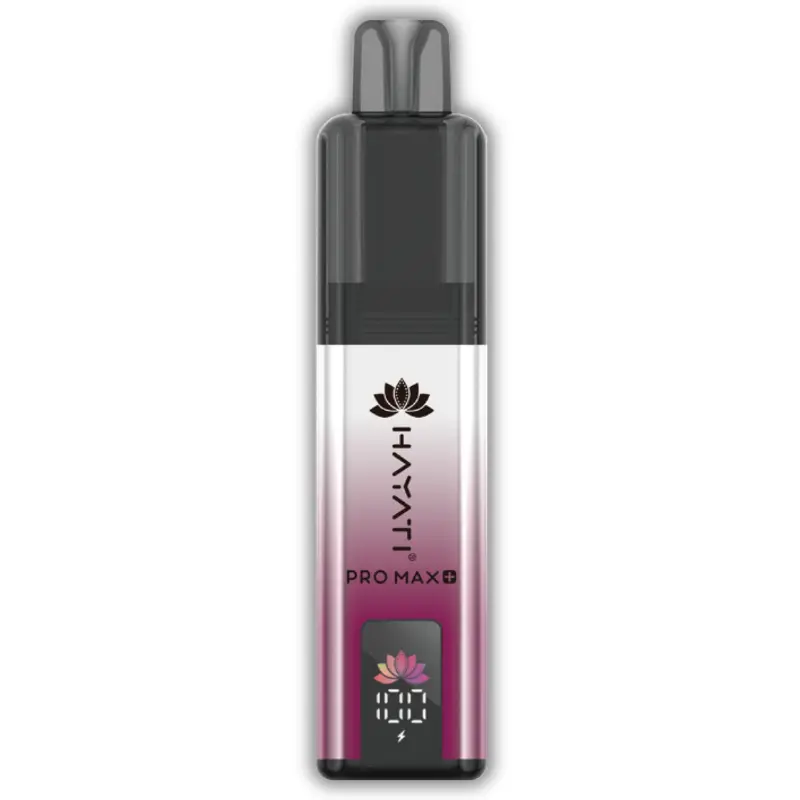
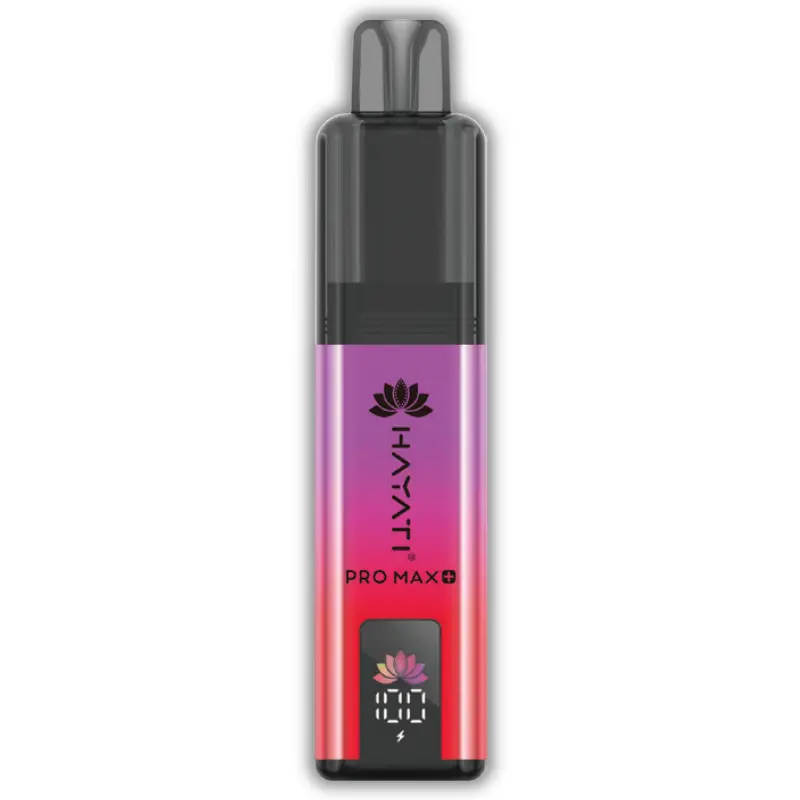
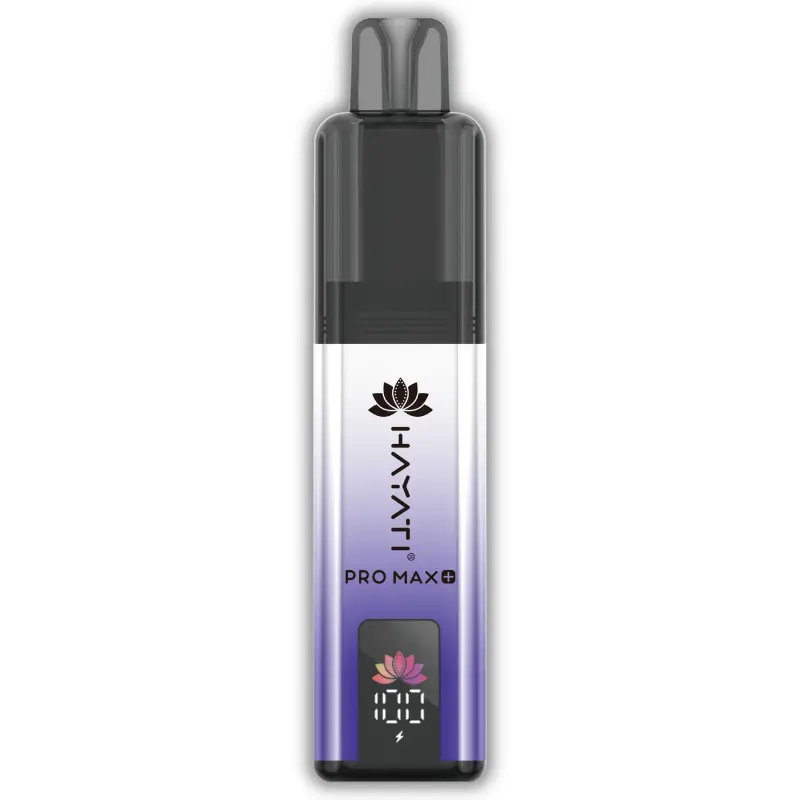
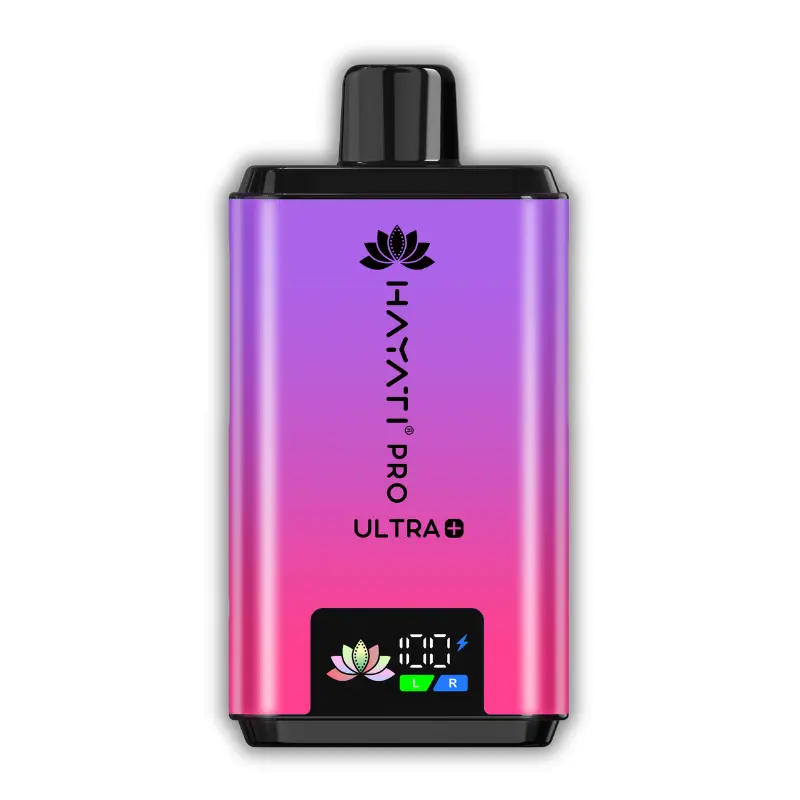
Nineteen listings are filed on this shelf, with tickets running from £2.49 to £11.99. They resolve to nine flavour recipes, because most of the nineteen are the same liquid boxed again for a different device. Fifteen of the nineteen titles carry the word grape. Two carry grapefruit, which is a citrus and not a grape at all. The last two are Vim Ice Hayati Pro Max Plus 6000 Pod Kit and Vim Ice Hayati Pro Max Plus Pods, which name a British cordial and arrive here on the strength of what the kit's description says rather than what either name does.
Here is the single most useful thing to have before you scroll the grid. All fifteen grapes are the same grape. Every one of them is the dark, sugared, purple confectionery reading of the fruit. There is no green grape and no white grape on this shelf, and there is none anywhere else in the 492 listings either. That is unusual enough to be worth a page, because grape is one of the few fruits a British shopper meets in two genuinely different forms, and a greengrocer stocks both. This shelf stocks one.
The practical consequence runs through everything below. If the grape itself does not vary, then the grape is not the thing you are choosing between. What varies is what has been put next to it, how much liquid you are committing to, and which body the liquid arrives in. Sorted that way, nineteen near-identical boxes become five groups that genuinely behave differently.
New ProductsHayati PodsHayati Prefilled Pods & RefillsHayati Pod KitsHayati Prefilled Pod KitsHayati E-LiquidsHayati Pro Ultra Plus Prefilled Pod Kits & PodsHayati Pro Max Plus PodsHayati Pro Max Plus Prefilled Pod KitHayati Pro Max Nic SaltsHayati Pro Ultra Plus PodsHayati Pro Ultra Plus Prefilled Pod KitHayati Mini UltraHayati RubikHayati Mini Ultra PodsHayati Mini Ultra Prefilled Pod KitHayati Pro Max 50-50 E-LiquidHayati Pro Max 70-30 E-LiquidHayati Rubik Prefilled Pod KitHayati Rubik PodsHayati Nicotine PouchesHayati QuokkaBerry VapesRaspberry VapesIce VapesBlueberry VapesStrawberry VapesCherry VapesSweet VapesExotic VapesLemon VapesBlueberry Raspberry VapesPeach VapesWatermelon VapesApple VapesLemon Lime VapesMango VapesPineapple VapesGrape VapesLemonade VapesMint VapesCola VapesStrawberry Raspberry Ice VapesBlackcurrant VapesJuicy Peach VapesMr Blue VapesSummer Dream VapesBanana VapesKiwi VapesMenthol VapesOrange VapesFresh Mint Vapes
Nineteen boxes, nine recipes, and four that are not grape
Take the filing first, because four of the nineteen need flagging before anything else is worth saying. One note on how the counting works below, since two different measurements run through this page. A count of tiles is a count of what is filed on this shelf, and it can change when the filing changes. A count of titles is a count of what the catalogue calls things, and it does not. Both appear here and each one is labelled.
Fifteen titles here carry the word grape, and those fifteen resolve to seven flavour ideas: Grape GB alone, Grape GB beside Blue Razz GB, Grape GB beside Strawberry GB, Grape Berry, Sakura Grape, Kiwi Grape Raspberry, and Grape Ice in a pouch. The distance between fifteen and seven is ordinary catalogue business. Hayati sell the same liquid as a 4ml pod, a 12ml pod, a 22ml pod and a 10ml bottle, and each of those is a separate listing with its own photograph and its own price.
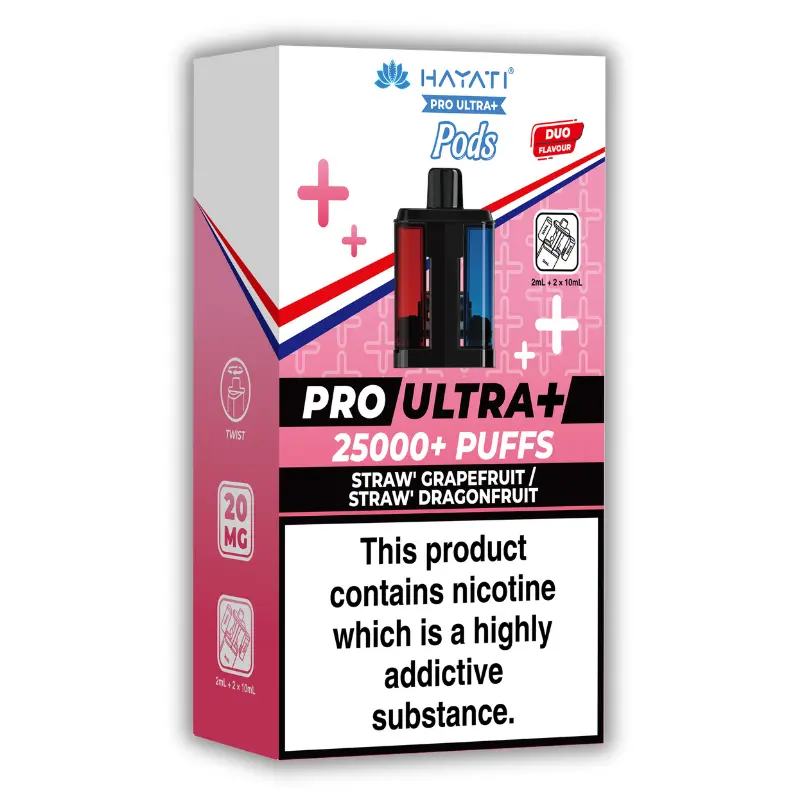
Then there is the grapefruit pair. Straw’ Grapefruit / Straw’ Dragonfruit Hayati Pro Ultra Plus Pods and Straw’ Grapefruit / Straw’ Dragonfruit Hayati Pro Ultra Plus 25000 Prefilled Pod Kit are both here, and grapefruit is a citrus with no botanical relationship to a grape whatsoever. How a listing lands on a flavour shelf was measured properly on the Apple Vapes page, and the finding there was that filing is not a naive word match: pineapple, the obvious suspect, shares no listing at all with the apple shelf and carries its own tag throughout. That makes this pair worth explaining rather than shrugging at. The likeliest reading is mundane. There are thirty flavour shelves on this site and not one of them is a grapefruit shelf, so two listings whose defining second fruit is a grapefruit had nowhere else obvious to land. Treat them as a signpost rather than a stocking error, and read them as what they are: strawberry listings with a bittersweet citrus on one side and a soft tropical fruit on the other. If that is what you want, Strawberry Vapes is where the rest of that family lives.
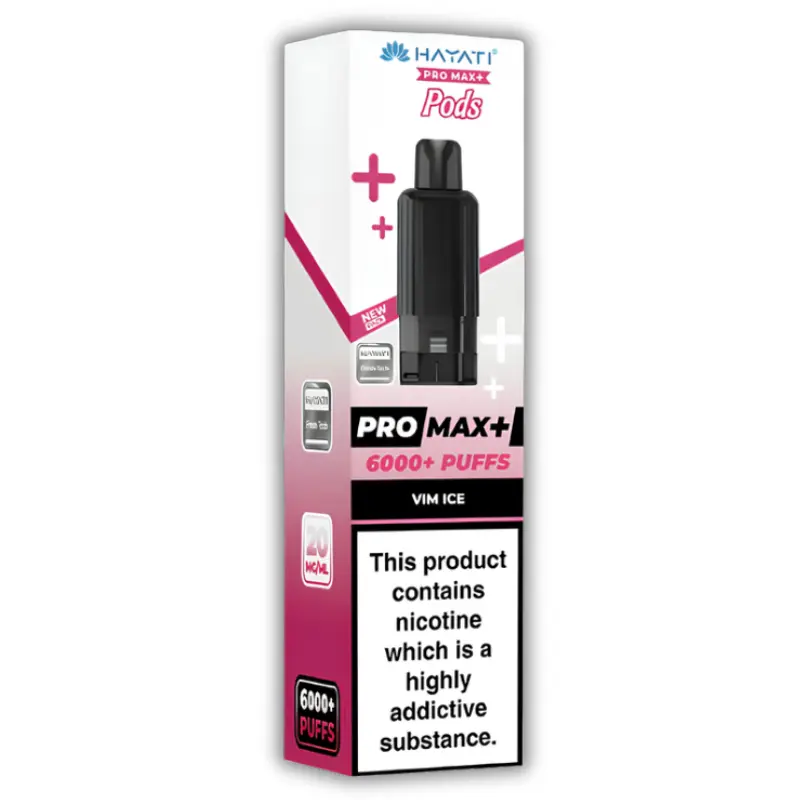
The last two tiles are both Vim Ice on the Pro Max Plus, and they are the interesting case. Vim Ice Hayati Pro Max Plus 6000 Pod Kit names a British cordial rather than a fruit, and its copy describes a dark mixed-fruit drink in the fizzy-cordial style without itemising anything. Vim Ice Hayati Pro Max Plus Pods is the bare refill of that same liquid, and its copy does not use the word grape at all. It talks about a bold dark mixed fruit with a fizzy-drink character and a cold finish, and stops there.
So why is the pod on a grape shelf? Because this site now pools flavour shelves across same-liquid siblings. A bare pod and the kit that contains it are one liquid under two SKUs, the source feed tagged the two independently, and it disagreed with itself constantly. The pod inherited the grape shelf from its kit, which is the right outcome: nobody browsing for this liquid should find the kit and not the refill.
The remaining inconsistency is sharper than it looks, and it runs in the opposite direction to what you would expect. The two Rubik versions of Vim Ice are the listings whose copy states a berry-and-grape blend outright, in plain words, and neither of them is on this shelf. Pooling groups siblings within a platform, so a Rubik pod can inherit from a Rubik kit and from nothing else, and since neither Rubik listing carried a grape tag there was nothing for either to inherit. The net effect is that a listing which never says grape sits on this shelf while two that say it explicitly do not. The tag travels by sibling, not by text.
Counting the gap: four listings in the catalogue describe a grape component in their copy and are not filed here, being the two Rubik versions of Vim Ice and the two 120ml Vimbull Ice shortfills in Hayati E-Liquids. Three more Shisha listings are built on Apple Mint Grape, with grape sitting inside the flavour name itself, and none of the three is here either. That last group is the known failure mode for range-titled listings, settled on Apple Vapes and not worth re-deriving.
Scored honestly, then: every listing in the catalogue whose title names a grape is on this shelf, fifteen titles out of fifteen, and seven listings that carry grape in the recipe but not on the front of the box are missing. For a flavour shelf that is a good result, and the misses are all in one direction, which makes them easy to route around.
One grape, counted properly
The claim that every grape here is the same grape is the kind of statement that sounds sharp and usually turns out to be a vague impression with a number bolted on. The original observation is not mine. Grape Berry Hayati Pro Max Plus 6000 Pod Kit put it on the record while working out which grape its own liquid is built from, and concluded that nothing anywhere in the catalogue offers a green or white grape. That page also decoded the naming convention, and Grape GB Hayati Pro Max Plus 6000 Pod Kit did the same job on the letters themselves, finding that GB marks a sugared confectionery treatment and that no solo Grape GB listing ever spells it out. Both findings are taken as read here rather than rebuilt. What follows is the check, and then the parts of it that go further than a single product page had reason to.
Start with the vocabulary. Nine of the fifteen grape-titled listings use the word purple about the flavour. Nine use dark. Seven use deep. All fifteen use sweet. Eight reach for a sugar word, five for a confectionery word, four for gummy, two for candy or candied, two for jammy and one for bubblegum. Across the whole 492, purple appears in sixteen listings and nine of those sixteen are these grapes, with the remaining seven going to blackcurrant, a blue razz blackcurrant blend, the Vim Ice and Vimbull Ice cordials, and two listings named for a mood. Purple is, in this catalogue, very close to being grape's private adjective.
Now the words that are absent, which are the more interesting half, and where the check adds something. White grape appears nowhere in 492 listings. Neither does muscat, sultana, table grape, or the name of any grape variety. Green grape appears exactly once, and it is not on a grape product at all: the Kiwi Cooler description reaches for it to explain what a kiwi tastes like, placing the fruit somewhere between a green grape and a gooseberry. So the finding holds, and it holds in a sharper form than the flat version suggests. The only time this catalogue names a green grape, it does so as a measuring stick for a different fruit. The idea is available to the copywriters. It has simply never been sold.
Vine appears twice in 492. One of the two is a lychee listing. The other is Grape GB Hayati Mini Ultra Pods, and there the vine is named specifically in order to be ruled out, with the copy saying this is grape in its confectionery form rather than fresh off the vine. Follow the word fresh through the grape listings and the same thing happens again. The stem turns up in five of the fifteen, seven times in total, and four of those seven are denials governed by the same two words. The Pro Max Plus kit sets its flavour against the tart skin and crisp bite of fresh grapes, and then says it appeals to people who want their fruit full-on rather than subtle or refreshing. The Mini Ultra pairing says both halves are confectionery-style takes rather than fresh-picked profiles. The Mini Ultra pod rules out the vine. Every one of the four is phrased as a rather than. Of the remaining three, one calls a three-fruit blend a refreshing alternative to other pairings, which is a comment on the shelf rather than on the fruit, and two describe the mouthfeel of a cooled pouch. Not one listing on this shelf describes its grape as fresh.
One more absence, and it is almost funny. Winey or wine-like turns up in four listings as a flavour descriptor. It is applied to blackberry, to pomegranate, to blackcurrant and to a candy blend. The one fruit in the catalogue that actually makes wine never receives the comparison, because the accord these liquids are built on has nothing in it that a wine would recognise.
The acid census, and the one listing that disagrees
Sweetness is the axis everybody notices. Acid is the one that decides whether a fruit reads as fresh, so it is the better test of whether a second register exists anywhere on this shelf.
Ten of the fifteen grape listings use a tart, sharp or sour word somewhere in the flavour paragraph. Sorting those ten by what the word is actually attached to produces the finding. In five, the acid belongs to a partner fruit and not to the grape: the blue raspberry carries the sharpness in both Blue Razz pairings, the berries carry it in both Grape Berry listings, and in Kiwi Grape Raspberry Hayati Pro Max Nic Salt the kiwi opens sharp and the raspberry closes tart while the grape is given a round, juicy sweetness in the middle. In four, the word appears only so the grape can be denied it. The bottle says firmly sweet with no real tartness to speak of and sends anyone wanting sharp fruit elsewhere in the range. The Pro Max Plus kit explicitly sets itself against the tart skin of a fresh grape. The Mini Ultra pod says the rounded finish makes the grape feel plump rather than sharp. The Strawberry pairing says both halves lean sweet rather than sharp. That leaves exactly one listing in fifteen that attaches an acid word to the grape itself, and it is Grape GB Hayati Pro Max Plus Pods, which reports a slightly tart, skin-like edge holding the flavour back from syrup.
That single disagreement has already been chased down and settled on the pod page itself, which lined up all nine Grape GB descriptions and found eight of them putting the flavour on the sweet side with no meaningful acidity against one reporting a tart edge. Its conclusion, which there is no reason to relitigate here, is that the phrase is most likely a writer reaching for a standard grape formula rather than evidence of a different recipe. The wider census across all fifteen grape-titled listings, including Sakura Grape and Grape Berry and the three-fruit bottle, points the same way and makes the pattern harder to argue with. Nine listings assign acid to something that is not the grape or deny it altogether. One assigns it to the grape. Five never raise the subject.
The verdict is that this shelf sells one grape. Not one liquid, since seven recipes is a real spread, but one grape: a dark, sugared, purple confectionery accord that turns up in every box under a different set of companions.
Why one register, when the fruit has two
A shelf named after a fruit that exists in two very distinct styles, offering only one of them, is worth an explanation rather than a note. Three candidate reasons are available, and they are taken below in ascending order of how well they hold up. The one most people would reach for first turns out to be the weakest of the three. A control follows them, because none of this means anything unless the range demonstrably can split a fruit when it wants to.
What the word summons
Ask an adult in Britain to picture grape flavour and most will picture something purple. Grape sweets are purple, grape soda is purple, and the accord behind all of them is the same one. Why that is so, and why the note divides people as sharply as it does, has been worked through properly on Grape GB Hayati Pro Max Nic Salts and on Grape GB Hayati Pro Max Plus 6000 Pod Kit, and it is not going to be rebuilt here. The short version, taken from those pages: confectionery grape rests on methyl anthranilate, a compound potent at very low concentrations, cheap to produce and instantly recognisable, and one that perfumery treats as a floral material rather than a fruit one. Repetition has naturalised a flower into meaning fruit.
That is the marketing reason for a single register, and taken on its own it is not a strong one. A catalogue with 492 listings in it is plainly not short of shelf space for a minority taste. It sells a shisha accord, a green tea accord, three tobacco flavours and a pomegranate. Running out of room is not the constraint.
What a green grape has, and whether any of it travels
The better reason is mechanical, and it follows directly from the same chemistry those pages set out. A table grape of the sort sold in British supermarkets produces very little volatile aroma. Almost everything that makes eating one pleasant is texture and acid: the snap of the skin, the cold water inside, a thin tartness concentrated near the surface. Take a green grape and ask which of its properties could survive being dissolved into a carrier, heated on a coil and inhaled as a vapour, and the honest answer is: the acid, some residual sweetness, and very little else. The snap cannot travel. The coldness cannot travel, other than by adding a coolant that would have nothing to do with the fruit. The watery thinness, which is most of what distinguishes a green grape from a purple one in the mouth, is a texture and textures do not vaporise.
What is left after that subtraction is a faint, slightly floral, mildly acidic sweetness with no strong identity. That is a hard product to sell on a shelf where the neighbouring boxes announce themselves in the first draw, and it is a very hard product to put into a dual pod, where a flavour has ninety seconds to make its case before somebody turns the collar again.
The floral problem, which is the part that fits
The reading handed to this page was that a green grape's character is delicate, and that a light floral note is exactly the thing the trade avoids naming. Both halves check out, and the second is measurable.
Across 492 listings, floral appears in eighteen. Perfumed or perfume appears in eleven. Blossom appears in exactly two, and both of those two are the Sakura Grape pair. Rose appears once. Elderflower, lavender and jasmine appear zero times each. Flower words are rationed in this catalogue, and where they do appear they cluster on the same handful of listings: lychee, guava, white peach, and the sakura pair. A note that a copywriter cannot make sound appetising in five words is a note that does not get named.
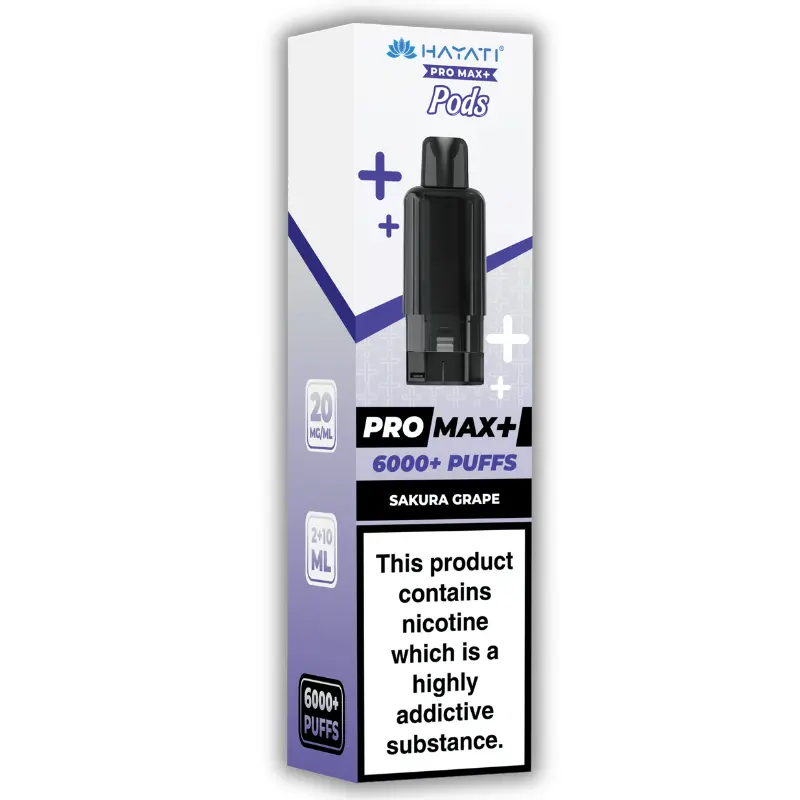
Here is where the argument turns, and it is the sharpest thing on this page. The purple grape is already floral. Methyl anthranilate is a perfumery material, as the Sakura Grape and Grape Berry pages establish. Every box on this shelf contains a floral note, and fifteen of them call it purple. The word blossom is used exactly twice in the whole catalogue, and both uses sit on the same flavour, once on its pod and once on its kit, which is the only place where the flower can be attributed to an actual flower. Sakura Grape Hayati Pro Max Plus Pods and Sakura Grape Hayati Pro Max Plus 6000 Pod Kit name a cherry blossom, borrowed from a different plant and laid deliberately on top, and the copy is comfortable calling that delicate, perfumed and elegant because the reader knows where to file it. The same aromatic character, when it belongs to the grape itself, is never described in those terms once.
So the trade is not avoiding floral notes. It is avoiding unattributed ones. A flower with a name on it sells. A fruit that happens to smell faintly of flowers gets called purple and sweet and moved along, and a green grape, whose entire case rests on delicacy with nothing to attribute it to, never gets built at all.
The control, because the range does split other fruits
None of this would mean much if Hayati simply never split a fruit into two styles. They do, repeatedly.
Apple is the cleanest comparison, because apple also exists in two registers a shopper would recognise. Fourteen apple-titled listings resolve to three flavour ideas, and those three cover the ground properly: Sour Apple takes the sharp green end, once on its own as a 4ml pod and three times as half of a dual pod with Juicy Peach, Red Apple Ice takes the sweet red end with a coolant on it across seven listings, and Double Apple takes the shisha register separately again. Strawberry goes further still, with eighty listings resolving to thirty-six distinct flavour names that run from a plain iced strawberry through a gummy-sweet Strawberry GB to a lemonade treatment and a bubblegum one. The machinery for selling one fruit several ways is in place and gets used.
It is not used on grape. Seven recipes, one register, no exceptions, and the only variation between them is what has been added alongside.
Setting the confidence out plainly
- Counted, not inferred. Fifteen grape-titled listings, seven flavour concepts, all in the purple confectionery register. Zero green or white grapes in 492 listings. One mention of a green grape anywhere, describing a kiwi. Four of the seven uses of the word fresh across those fifteen titles are denials. All of these are counts over titles in the catalogue, not over tiles on this shelf.
- Well supported. The chemistry behind the purple accord and its floral character, taken from the pages cited above rather than rebuilt here.
- Probable. That the reason for one register is mechanical before it is commercial, because the properties distinguishing a green grape are mostly texture and cold, and neither survives a coil.
- Unknown. Whether a green grape liquid would find buyers. A catalogue that has never attempted one cannot tell you, and nothing on this page should be read as saying it would fail.
So sort the shelf by the company, not by the grape
If the grape does not vary, then choosing between these nineteen is a question about three other things: what has been put beside the grape, whether you can switch away from it mid-session, and how much liquid you are committing to. Five groups fall out of that, and they cover all nineteen tiles with nothing left over.
Group one: the grape on its own, in four bodies
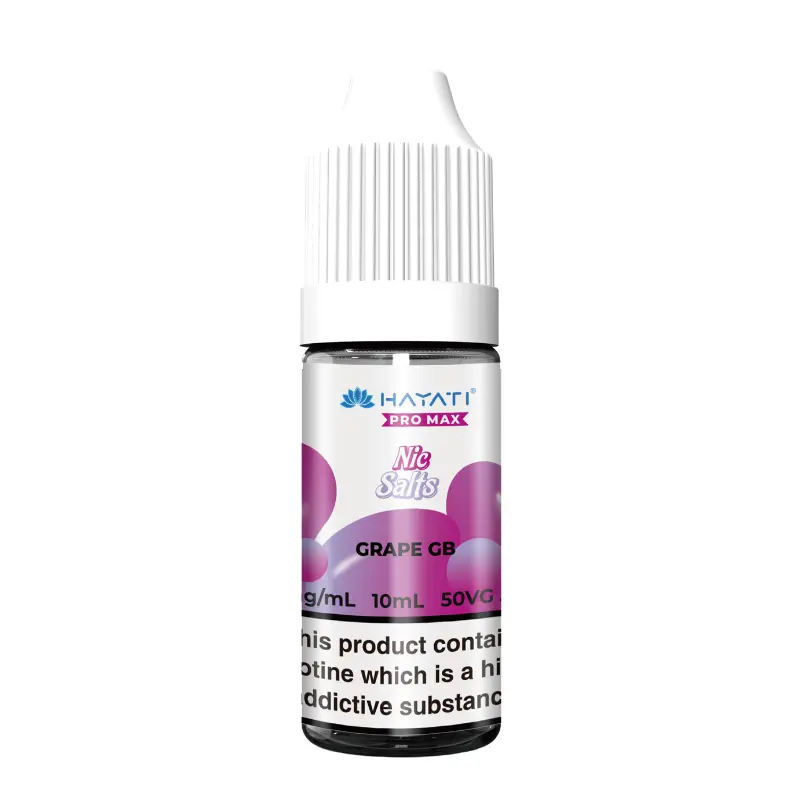
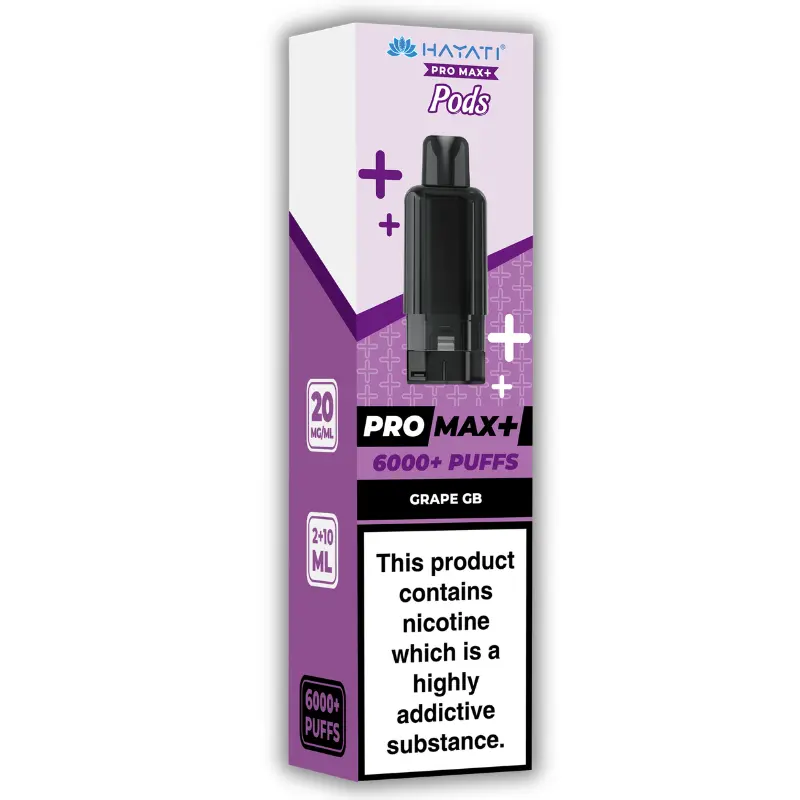
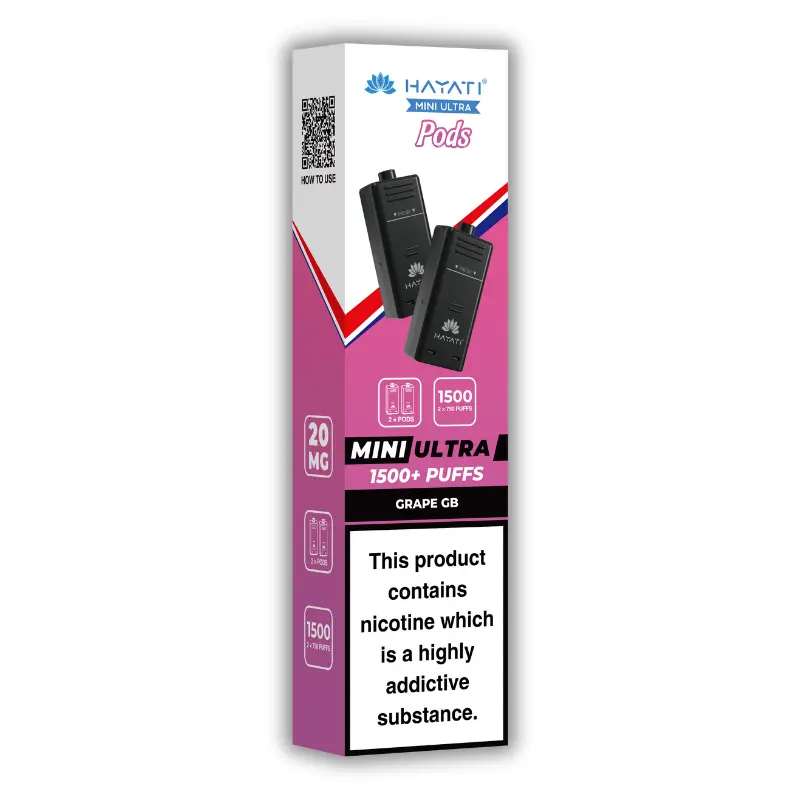
Four listings give you Grape GB and nothing else. Grape GB Hayati Pro Max Plus Pods is the 12ml refill at £5.49. Grape GB Hayati Pro Max Plus 6000 Pod Kit is the same liquid with a rechargeable device included, two pounds and fifty pence more. Grape GB Hayati Mini Ultra Pods is the 4ml version at £3.49 for a much smaller body. Grape GB Hayati Pro Max Nic Salts is the odd one out and the most flexible: a 10ml bottle at 10mg that goes into whatever refillable pod device you already own.
This group is for somebody who has met the purple accord and likes it. There is no second fruit here to hide behind and no collar to turn, so twelve millilitres of it is twelve millilitres of it. The bottle is the low-risk way in at £2.49, and it is the only entry on this shelf where you can stop after a couple of millilitres without throwing anything away.
Group two: grape blended with something, permanently
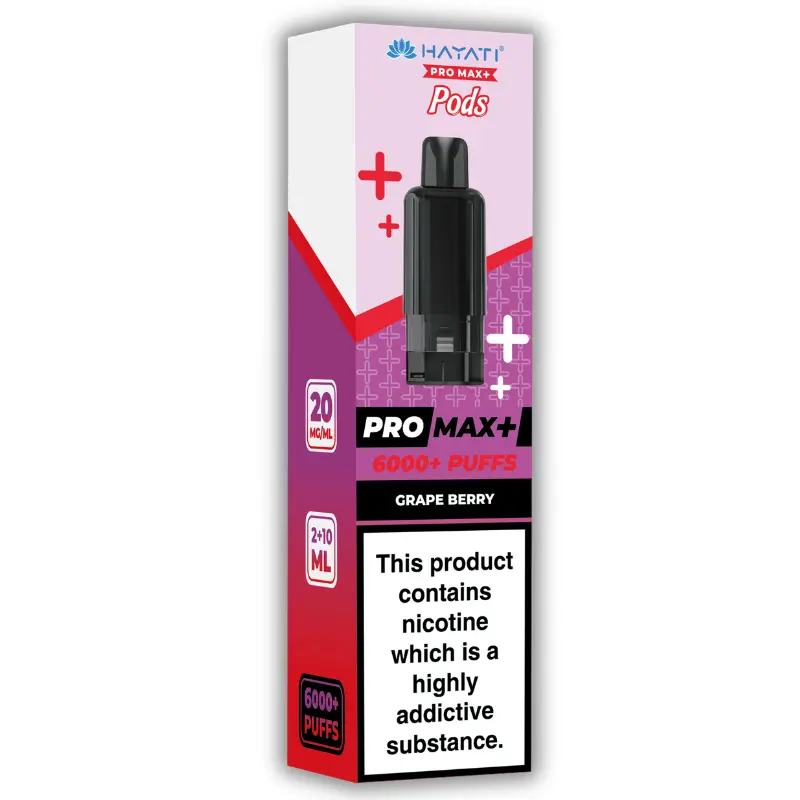
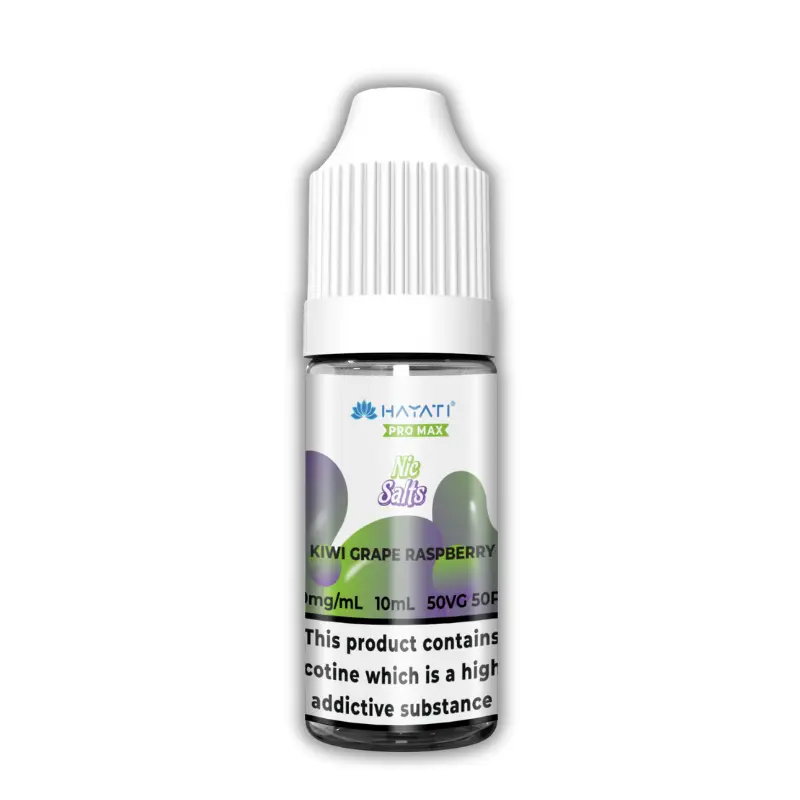
Five listings mix a second character into the same liquid, so there is no switching and no separating. Grape Berry Hayati Pro Max Plus Pods and Grape Berry Hayati Pro Max Plus 6000 Pod Kit put mixed berries around the grape, with the berries carrying the tartness and the grape carrying the body. Sakura Grape Hayati Pro Max Plus Pods and Sakura Grape Hayati Pro Max Plus 6000 Pod Kit lay a cherry blossom note over the top, which is the one place on this shelf where a light, fragrant quality is named as such. Kiwi Grape Raspberry Hayati Pro Max Nic Salt is a 10ml bottle running three fruits in sequence, kiwi sharp at the front, grape round in the middle, raspberry tart at the close.
Pick from here if the purple accord on its own has ever felt like one thing repeating. The berries add movement, the blossom adds lift, and the three-fruit bottle adds the most structure of anything on the shelf. The trade-off is that a blended liquid is a single decision: if the partner is not to your taste, the grape underneath it cannot be rescued.
Group three: grape as one half of a switchable pair
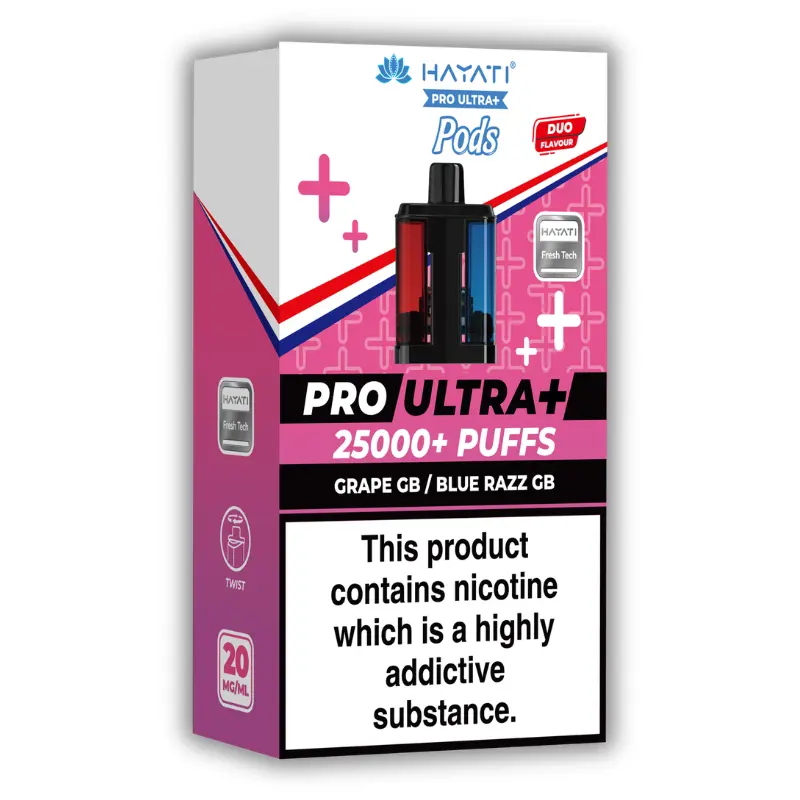
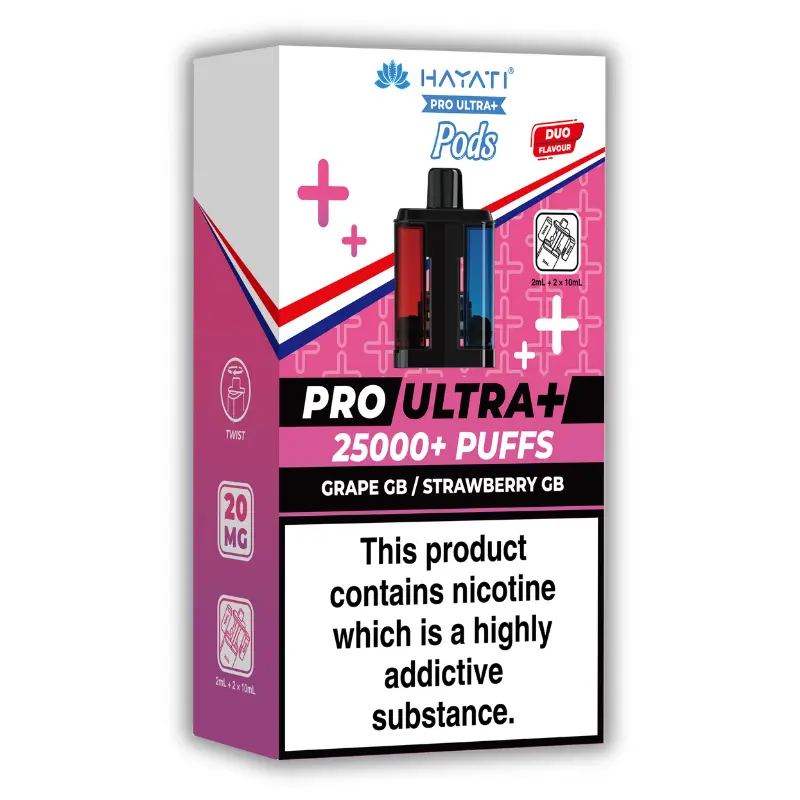
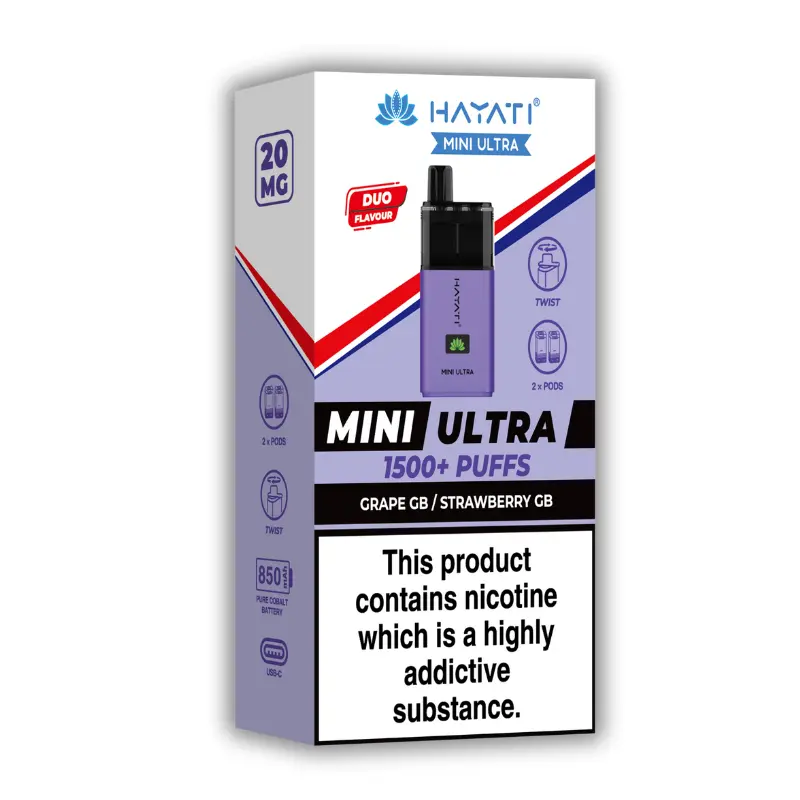
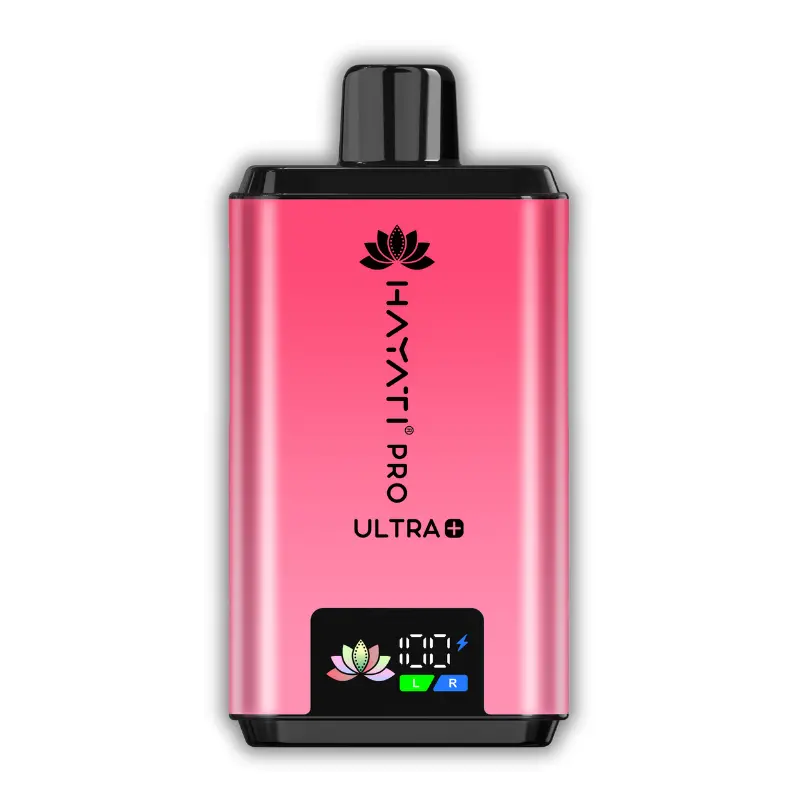
Five listings put Grape GB into a dual-flavour pod. A title with an oblique in it is one pod divided into two internal reserves with a rotating mouthpiece selecting which side reaches a single shared coil, not a pack containing two pods. Grape GB / Blue Razz GB Hayati Pro Ultra Plus 25K Pods and Grape GB / Blue Razz GB Hayati Pro Ultra Plus 25000 Prefilled Pod Kit pair the grape with Blue Razz GB, which is the sharper partner and the one that provides the contrast. Grape GB / Strawberry GB Hayati Pro Ultra Plus Pods and Grape GB / Strawberry GB Hayati Pro Ultra Plus 25000 Prefilled Pod Kit pair it with Strawberry GB, a lighter and more fragrant red in the same sugared style. Grape GB / Strawberry GB Hayati Mini Ultra Pod Kit squeezes that same pairing into a 4ml Mini Ultra body at £3.99, device included.
There is a real finding attached to this group. The bare pod page counted all nine Grape GB listings, then did the harder work of stripping out the platforms where a dual listing has never been physically possible, and found that wherever Hayati actually had the choice they used Grape GB as a component five times out of six, and on their largest pod platform four times out of four. Its reading of that, which is more generous than it first sounds, is that a flavour repeatedly chosen to sit next to another is a flavour the manufacturer trusts to be recognisable. Take that as the reason this group exists at all.
The practical point for you is narrower. Of the two partners, Blue Razz GB gives you the larger gap to cross, because its tang is the only real acid available anywhere on this shelf. Strawberry GB gives you a smaller one, since both halves sit in the same sugared register and the difference is closer to shade than contrast. Both share one coil and one airflow path, so the first draws after turning the collar carry the other side with them and are not a clean read of what you have switched to.
Group four: the cold ones, neither of which is a grape vape
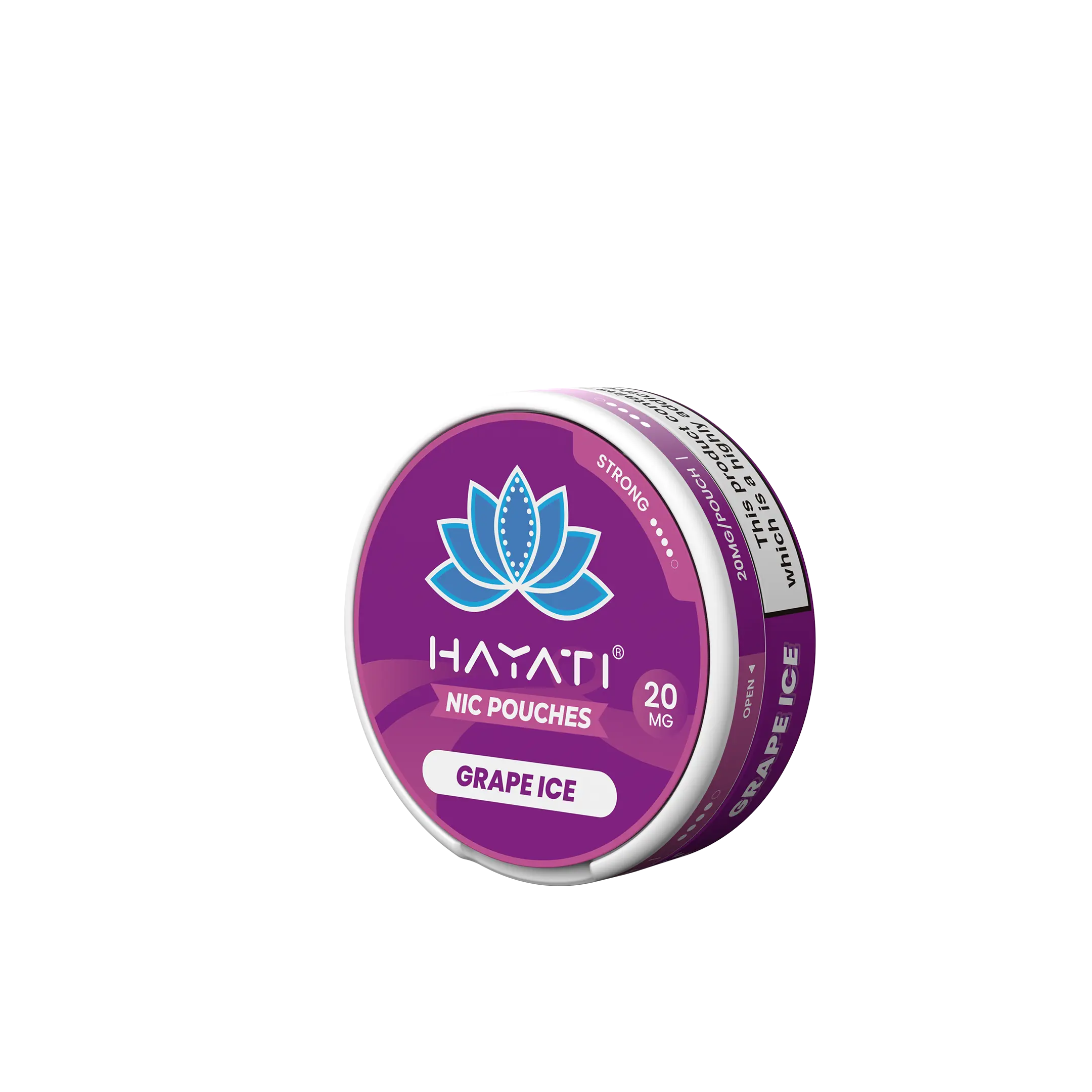
Three listings here run cold, and this is the group that trips people up. Grape Ice Hayati Nicotine Pouches is an oral product at 12mg placed under the lip, with no device, no liquid and no vapour, and it is the only place in the entire catalogue where a cooled grape is sold as a grape. Vim Ice Hayati Pro Max Plus 6000 Pod Kit is a Pro Max Plus kit whose cordial name does not promise a grape at all, though its description points at a dark purple fruit blend with a chilled finish. Vim Ice Hayati Pro Max Plus Pods is the 12ml refill of that same liquid at £5.49, for anybody who tried the kit and wants it again without a second device.
Say it plainly, because it is the single most actionable fact on the page: there is no iced grape vape in the Hayati range. Not one of the fifteen grape-titled listings adds a coolant, and that is a count over titles in the catalogue rather than over tiles here, so no amount of refiling will change it. If a cold purple fruit is what you are after, either you accept a pouch instead of a vape, or you accept a cordial accord whose grape content is implied rather than declared, or you go to a different fruit entirely. Blackcurrant Vapes is the nearest honest substitute, being the other deep purple fruit in the range, and Ice Vapes holds the whole cooled catalogue.
Group five: the grapefruit pair
Straw’ Grapefruit / Straw’ Dragonfruit Hayati Pro Ultra Plus Pods at £7.99 and Straw’ Grapefruit / Straw’ Dragonfruit Hayati Pro Ultra Plus 25000 Prefilled Pod Kit at £11.99 are strawberry pods with a bittersweet citrus on one side and a soft tropical fruit on the other. They are filed here because of a word, not because of a flavour, and nothing above applies to them. If they caught your eye, Strawberry Vapes and Exotic Vapes are the right shelves, and Lemon Vapes is where the range keeps its actual citrus.
The decisions this shelf actually forces
Do you want it cold?
Settle this first, because it removes every grape vape on the shelf at a stroke, all fifteen of them. They are warm and sweet without exception. Your options are a pouch, one of the two Vim Ice listings, or a different fruit. Nothing else on the page changes that.
Solo, blended, or switchable?
Three genuinely different purchases. A solo pod is a commitment to one accord for the life of the fill. A blended liquid gives you more happening inside one draw but no way to step off it. A dual pod gives you an escape route mid-session at the cost of sharing one coil between two sugar loads. Between the two pairings, the Blue Razz side is the one that will still feel like a change on day four.
How much are you committing to?
The volumes on this shelf run from 4ml to 22ml, which is a factor of five and a half. That matters more here than on a shelf with internal variety, because the risk of a large fill is not that the liquid is bad but that a single sweet register gets tiring before the pod does. A 4ml Mini Ultra pod is the cheapest way to find out whether you can live with the accord in a sealed format. A 22ml dual pod is the largest commitment available and the one where being wrong costs the most.
Is the tart edge real?
Probably not, and the question is settled above. One listing in fifteen reports it, nine either deny it or hand the acid to a partner fruit. If a skin-tart grape is specifically what you came for, this shelf does not have one, and no amount of reading the descriptions will change that.
Bottle or sealed pod?
The two bottles here are the only entries you can taste without buying a whole fill. Both are 10mg rather than 20mg and both need a refillable device you already own. Everything else arrives sealed, which means the coil comes with the liquid and neither can be inspected before you commit.
Formats, strengths and what carries across
Five of Hayati's product families are represented on this shelf and the rest are not. There is no Rubik grape, and neither 120ml shortfill range carries one, so if either of those is the format you buy, this fruit is not currently available in it at all.
- Pro Max Plus, 12ml. Four bare pods and four kits, with Vim Ice now present as both. The pods live on Hayati Pro Max Plus Pods and the kits on Hayati Pro Max Plus Prefilled Pod Kit.
- Pro Ultra Plus, 22ml. Three bare pods and three kits, all of them dual-flavour. Hayati Pro Ultra Plus Pods and Hayati Pro Ultra Plus Prefilled Pod Kit hold the rest, and Hayati Pro Ultra Plus Prefilled Pod Kits & Pods covers both at once.
- Mini Ultra, 4ml. One bare pod and one kit. The compact bodies are gathered on Hayati Mini Ultra.
- Pro Max nic salts, 10ml. Two bottles at 10mg, both on Hayati Pro Max Nic Salts.
- Nicotine pouches. One can at 12mg, an oral product containing no tobacco and no vapour.
Every sealed pod on this shelf is filled at 20mg, which is the ceiling UK law permits in a consumer nicotine liquid. That is why a 4ml Mini Ultra pod and a 22ml Pro Ultra Plus pod arrive at exactly the same strength despite being five and a half times apart in volume: the number is set by regulation, not by the size of the pod. The two bottles sit at 10mg because a bottle is refilled into a device you control, and the pouch sits at 12mg because a pouch is measured per unit rather than per millilitre and the two figures are not comparable.
On fitment, the sensible habit is to match the range name on the box to the range name on the body you own, since Hayati use several pod shapes across these families and a retail page is not the right place to settle a hardware question. Within a family the pods are interchangeable, which is the reason the bare-pod shelves at Hayati Pods and Hayati Prefilled Pods & Refills exist at all: a device bought with one flavour will take any other pod from the same range later.
The puff ratings printed on these boxes are laboratory figures published by the manufacturer, not measurements of use. Hayati put 6,000 on the Pro Max Plus listings, 25,000 on the Pro Ultra Plus ones and 1,500 on the Mini Ultra pods. Treat them as a rough indication of relative capacity and nothing more, because a long draw and a short draw are not the same event and the test conditions behind those numbers are not published.
One note specific to the dual pods. Both halves sit either side of one coil and one wick, so they age together and they share a single 22ml budget. Liquid left in the side you stopped using goes in the bin with the pod, which makes the two halves a single purchase rather than two.
What the spread from £2.49 to £11.99 is measuring
Seven price points appear on this shelf and they are measuring three different things at once, which is why comparing the tickets directly is misleading.
- £2.49 buys 10ml in a bottle at 10mg, working out around twenty-five pence a millilitre. That is the lowest rate here by a wide margin, and it is the only one that excludes the coil, because you supply the hardware and replace the coil yourself.
- £3.49 buys a 4ml Mini Ultra pod, which is a little over eighty-seven pence a millilitre and the highest rate on the shelf. What the premium pays for is a sealed coil and a small body.
- £3.99 buys a 4ml dual pod with a Mini Ultra device in the box, fifty pence more than the bare solo pod on that same platform, which makes it the cheapest route to a device anywhere on this page.
- £4.49 buys a can of pouches, priced per unit rather than per millilitre and not comparable to anything else here.
- £5.49 buys 12ml in a sealed Pro Max Plus pod, near forty-six pence a millilitre.
- £7.99 buys either a 12ml Pro Max Plus pod with a device attached, or a 22ml Pro Ultra Plus pod on its own at roughly thirty-six pence a millilitre. The same ticket, two very different purchases.
- £11.99 buys a 22ml Pro Ultra Plus pod with the device included, a premium of four pounds over the bare pod.
Two observations fall out of that. The device premium is four pounds on Pro Ultra Plus, two pounds fifty on Pro Max Plus and fifty pence on Mini Ultra, which tells you roughly what each body is worth to the manufacturer. And the cost per millilitre falls as the pod gets larger, which is the ordinary direction, but it falls into a single flavour register, and on this particular shelf that is the thing worth weighing. Paying less per millilitre for more of the same accord is only a saving if you still want it on the last millilitre.
Where to go when this shelf is not quite right
Twelve of these nineteen tiles also sit on Berry Vapes, which is the broadest neighbour and the obvious next stop if the dark, sweet end of the fruit range is what you are after. Blackcurrant Vapes is the closest single-fruit relative, being the other deep purple fruit, and it is worth reading if you want the same colour with genuine acid behind it. Raspberry Vapes covers both the red raspberry and the blue razz that partners the grape in two pods here, and Blueberry Raspberry Vapes narrows that to the blended pairing.
For the confectionery register rather than the fruit, Sweet Vapes gathers the gummy, candy and bubblegum treatments across the whole catalogue, and it is the right shelf if what you actually like about Grape GB is the sugared construction rather than the grape. Strawberry Vapes and Cherry Vapes both share listings with this one. Blueberry Vapes holds the blue fruit, Kiwi Vapes the one green fruit that turns up in the three-fruit bottle here, and Exotic Vapes the tropical end.
If the missing coolant is the problem, Ice Vapes is the whole cooled catalogue, Mint Vapes covers mint as a plant and Menthol Vapes covers it as a sensation. Cola Vapes deserves a mention of its own here, because a cola accord is also a manufactured flavour with no single fruit standing behind it, which makes it the closest structural relative this page has. The argument above about a register with no fresh version to compare it against transfers there almost unchanged. For a change of direction rather than a change of register, Lemon Vapes runs sharp where this shelf runs sweet, and Peach Vapes is the softest of the single-fruit shelves. Lemon Lime Vapes, Orange Vapes, Mango Vapes, Pineapple Vapes, Banana Vapes, Watermelon Vapes, Juicy Peach Vapes, Lemonade Vapes and Strawberry Raspberry Ice Vapes all sit in the same navigation if none of those is close enough, and Mr Blue Vapes and Summer Dream Vapes are the mood-named corner of the range where the label tells you least about what is inside.
By format rather than flavour, Hayati Pod Kits and Hayati Prefilled Pod Kits hold everything with a device in the box, Hayati Pods and Hayati Prefilled Pods & Refills everything without one, and Hayati E-Liquids the bottles. New Products is the newest-first view of the whole range, and All Hayati products is everything at once.
Before you order
Nineteen boxes, nine recipes, one grape. The shelf is honest about what it is, even if no single listing steps back far enough to say so: this is the purple sweet-counter accord, sold warm, sold sweet, and sold with a different companion in each box. Nothing here is a fresh grape and nothing here is cold.
Choose on that basis and the decision gets simple. Take the bottle at £2.49 if you want to find out cheaply whether the accord works for you. Take the 12ml solo pod if you already know it does. Take Grape Berry or the three-fruit bottle if the accord alone has ever felt like one note held too long. Take a dual pod if you want a way out mid-session, and take the Blue Razz side of that choice rather than the Strawberry side if you want the switch to register as a real change. Take the pouch or one of the two Vim Ice listings if cold is non-negotiable, knowing what each of those costs you in accuracy.
What no page can settle is whether a single sweet register holds your attention across twelve or twenty-two millilitres, because that is a property of the liquid against your own palate. The smaller formats exist partly to answer that question at a lower price, and there is no shame in using them for exactly that.
Strictly for adults aged 18 and over. Nicotine is an addictive substance.
Frequently asked questions
Is there a green grape or white grape vape in this range?
No, and not anywhere in the 492 listings on this site. Every grape-titled product is the dark purple confectionery reading of the fruit. The phrase green grape appears exactly once in the whole catalogue, and it is used on a kiwi listing to describe what a kiwi tastes like rather than to sell a grape. If a light, crisp, low-sweetness fruit is what you want, Apple Vapes carries a sour apple and Kiwi Vapes carries the green fruit that comes closest.
Is any grape vape here iced or cooled?
None of them. Not one of the fifteen listings whose title names a grape adds a coolant. The only cooled grape in the range is Grape Ice Hayati Nicotine Pouches, which is an oral product with no vapour. The cooled listings on this shelf you can actually inhale are Vim Ice Hayati Pro Max Plus 6000 Pod Kit and its refill Vim Ice Hayati Pro Max Plus Pods, and both of those name a cordial rather than a grape. For a cold dark fruit in a pod, Blackcurrant Vapes and Ice Vapes are the better starting points.
What does GB mean on these listings?
It is Hayati's shorthand for a gummy-sweet treatment of the named fruit, so a confectionery construction rather than a fresh one. That has been decoded in detail on Grape GB Hayati Pro Max Plus 6000 Pod Kit, which also found that no solo Grape GB listing actually spells the letters out. You are expected to already know. Worth noting that the bottle's own copy describes the sweet half as bubblegum rather than as a gelatine sweet, so the two are not perfectly interchangeable.
Why are two grapefruit products on a grape shelf?
Because grapefruit contains the word grape and there is no grapefruit shelf among the thirty flavour shelves on this site. Straw’ Grapefruit / Straw’ Dragonfruit Hayati Pro Ultra Plus Pods and Straw’ Grapefruit / Straw’ Dragonfruit Hayati Pro Ultra Plus 25000 Prefilled Pod Kit are strawberry pods, with a bittersweet citrus on one side and a soft tropical fruit on the other, and they have no grape in them. They are better browsed from Strawberry Vapes.
Does the Grape GB pod really have a tart edge?
Probably not. One listing in fifteen says so, and nine others either hand the acid to a partner fruit or actively deny it of the grape. The disagreement was chased down on Grape GB Hayati Pro Max Plus Pods itself, which compared all nine Grape GB descriptions and concluded the phrase is most likely a writer reaching for a standard grape formula. If sharp fruit is the point for you, this shelf is the wrong one.
What is the difference between the Grape GB pod and the Grape GB kit?
The device. Grape GB Hayati Pro Max Plus Pods is 12ml of liquid and nothing else, for somebody who already owns a Pro Max Plus body. Grape GB Hayati Pro Max Plus 6000 Pod Kit is the same fill with a rechargeable device included, two pounds and fifty pence more. Buy the kit once and every subsequent purchase is the pod, which is why Hayati Pro Max Plus Pods exists as a separate shelf.
Are the dual-flavour listings two pods in one box?
No. A title with an oblique in it is one pod holding two liquids in separate internal reserves, with a rotating mouthpiece selecting which side reaches a single shared coil. You switch as often as you like, but both halves draw on the same 22ml and the same coil, and liquid left in the side you stopped using is discarded with the pod. Hayati Pro Ultra Plus Pods collects the rest of them.
Which pairing gives the bigger contrast, Blue Razz GB or Strawberry GB?
Blue Razz. Its copy is the only place on this shelf where a noticeable sharpness is attributed to a flavour rather than denied, so Grape GB / Blue Razz GB Hayati Pro Ultra Plus 25K Pods gives you a genuine change of direction when you turn the collar. Grape GB / Strawberry GB Hayati Pro Ultra Plus Pods puts two flavours from the same sugared family side by side, which reads more as a shade than a switch. Both are £7.99 as bare pods.
What is the cheapest way to find out whether I like this grape?
Grape GB Hayati Pro Max Nic Salts at £2.49, if you own a refillable pod device. It is 10ml at 10mg and you can stop after a few millilitres without throwing away a sealed coil. In a prefilled format the cheapest entry is Grape GB Hayati Mini Ultra Pods at £3.49, though four millilitres works out as the highest per-millilitre rate on the shelf.
Is Sakura Grape a different kind of grape?
No, the grape underneath is the same purple accord. What changes is what has been laid on top of it. Sakura Grape Hayati Pro Max Plus Pods and Sakura Grape Hayati Pro Max Plus 6000 Pod Kit add a cherry blossom note, and they are the only two listings in the entire catalogue that use the word blossom. The grape is the body and the flower is the lift, which makes it the lightest-reading option here without actually being a different fruit.
Why do some grape flavours in the catalogue not appear on this shelf?
Seven describe a grape component without naming one in the title: the two Rubik versions of Vim Ice, the two Vimbull Ice shortfills in Hayati E-Liquids, and three Shisha listings built on Apple Mint Grape. Filing follows the title first, and then pools flavour shelves between a bare pod and the kit holding the same liquid, which is how Vim Ice Hayati Pro Max Plus Pods reached this shelf without its own copy ever using the word. Pooling works within a platform, so the Rubik pair had no grape-tagged sibling to inherit from and stayed off. Every listing whose title does name a grape, all fifteen, is here.
How much liquid am I actually committing to?
It ranges from 4ml in a Mini Ultra pod to 22ml in a Pro Ultra Plus pod, plus 10ml in either bottle. On a shelf where every option sits in one flavour register, that range matters more than usual, because the risk of a large fill is not that you dislike it on day one but that a single sweet accord wears on you before the pod empties. Hayati Mini Ultra is the shelf to browse if you would rather test small.