Home / Pineapple Vapes
Pineapple Vapes
Twenty-one tiles sit on this shelf, six distinct flavours between them, priced from £2.49 to £11.99. Every one of the twenty-one names pineapple in its own title, and every listing in the catalogue whose title names pineapple is here, so the two ways of counting this shelf give the same answer. That is rarer than it sounds.
The split worth knowing before you scroll is not device and it is not price. It is whether pineapple is running the blend or propping one up. Eight listings put it in front: the six Pineapple Ice entries and the two Pineapple Lemon Burst ones. The other thirteen give it a supporting job behind mango, behind lemon or behind blue raspberry. Hayati's own copy draws the same line without ever naming it: in the support listings pineapple adds, contributes or provides something, and in the lead listings it simply is what the liquid tastes of.
Below the grid the twenty-one are sorted on that axis rather than described one by one. Before that there is the question of why this shelf exists separately from Exotic Vapes at all, given that Hayati's copy calls all twenty-one of these tropical and the Exotic tag sits on only five of them. That section cites the Exotic page's count rather than re-running it, then adds the evidence that page did not have.
New ProductsHayati PodsHayati Prefilled Pods & RefillsHayati Pod KitsHayati Prefilled Pod KitsHayati E-LiquidsHayati Pro Ultra Plus Prefilled Pod Kits & PodsHayati Pro Max Plus PodsHayati Pro Max Plus Prefilled Pod KitHayati Pro Max Nic SaltsHayati Pro Ultra Plus PodsHayati Pro Ultra Plus Prefilled Pod KitHayati Mini UltraHayati RubikHayati Mini Ultra PodsHayati Mini Ultra Prefilled Pod KitHayati Pro Max 50-50 E-LiquidHayati Pro Max 70-30 E-LiquidHayati Rubik Prefilled Pod KitHayati Rubik PodsHayati Nicotine PouchesHayati QuokkaBerry VapesRaspberry VapesIce VapesBlueberry VapesStrawberry VapesCherry VapesSweet VapesExotic VapesLemon VapesBlueberry Raspberry VapesPeach VapesWatermelon VapesApple VapesLemon Lime VapesMango VapesPineapple VapesGrape VapesLemonade VapesMint VapesCola VapesStrawberry Raspberry Ice VapesBlackcurrant VapesJuicy Peach VapesMr Blue VapesSummer Dream VapesBanana VapesKiwi VapesMenthol VapesOrange VapesFresh Mint Vapes
A shelf with nothing on it that needs defending
Start with the membership, because it is unusually clean, and because two different counts are involved. The catalogue holds 492 listings. Twenty-one of them name pineapple in the title, and all twenty-one are tiles on this shelf. Title count and tile count are the same number here, 21, which is worth saying explicitly because on several shelves they are not. There is no listing on this grid whose title gives a range and a nicotine strength instead of a flavour, which matters because the site-wide measurement of how filing works, done properly on the Apple Vapes shelf, found that unsupported memberships cluster almost entirely on that one kind of listing. Those carry a family default flavour and surface on shelves for fruits they do not contain. None is here. The word pineapple is also long and unmistakable, so it does not get caught up in the near-miss problems that affect shorter flavour words.
So the grid is right. What is odd about pineapple in this catalogue is not on this page at all. It is on the shelf next door.
The fruit the Exotic shelf left out
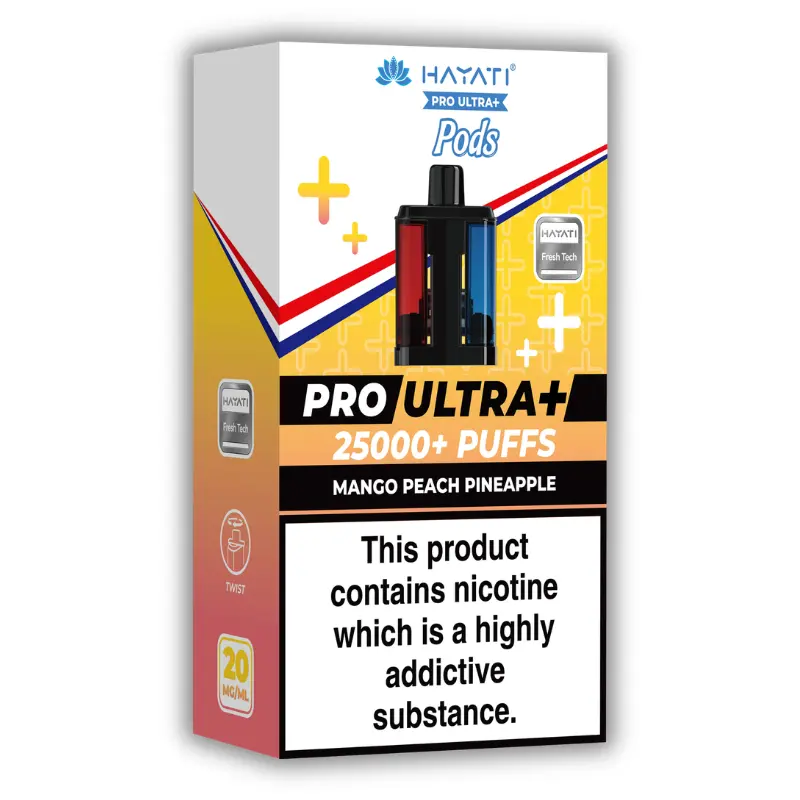
The Exotic Vapes page did the work of establishing what that tag actually sorts, and the rule it found should be cited rather than re-derived: the tag keys off six qualifying fruits, mango, kiwi, guava, dragon fruit, passion fruit and lychee. Its membership figures have since moved, so these are recounted rather than quoted. That shelf now holds 54 tiles, of which 21 name mango, 10 kiwi, eight guava, five dragon fruit, three passion fruit and two lychee. Pineapple is not one of the six. It appears on that shelf five times and all five are Mango Peach Pineapple in one pack size or another, where the mango is what earns the place. Take the mango out of the title and the listing leaves.
I checked the arithmetic on this side of the fence and it holds. Twenty-one pineapple-titled listings exist. Five carry the Exotic tag and all five are Mango Peach Pineapple, which is every listing of that flavour. All five are also tiles here, which is why the two grids share exactly five products and not one more. Sixteen of the twenty-one tiles here carry no Exotic tag whatsoever, and Hayati describe every single one of the twenty-one as tropical in their own product copy.
That last figure is worth pausing on, because it is the sort of number that looks impressive and usually is not. The word tropical appears in 49 of the 471 listings that are not tiles here, so its base rate across the catalogue is about ten per cent. On this shelf it is one hundred per cent, twenty-one tiles out of twenty-one. A word running at roughly ten times its base rate and never once absent is doing real work. Hayati's copywriters reach for tropical whenever pineapple is in the bottle, without exception, and then the tagging declines to call it exotic in sixteen cases out of twenty-one.
Testing the obvious explanation
The reading that suggests itself is historical. Pineapple crossed from unfamiliar to ordinary in British shopping habits a very long time ago, tinned first and then fresh, decades before mango or guava did the same. If the Exotic tag was built around what felt unfamiliar to a British shopper, pineapple had already stopped qualifying by the time anybody asked the question. The Exotic page offers that reading and is careful to mark it as a reading. Hayati publish no criteria for their own shelving, so nothing in the product data confirms or refutes it.
Tested against this shelf, the explanation survives, but not in the form it is usually given, and the correction is the interesting part.
The version that fails is the one about unfamiliarity in general, because the Exotic shelf itself does not respect it. Twenty-one of its 54 tiles are mango, and mango is sold fresh, frozen, tinned and juiced in every major British chain. Ten are kiwi, which has been ordinary here for a generation. If familiarity disqualified a fruit, mango and kiwi would both be gone and the shelf would collapse to well under half its size. So familiarity alone cannot be what excluded pineapple, or those 31 tiles would have gone with it.
What the Exotic shelf's own copy says about pineapple
The evidence that does hold up comes from an angle the Exotic page did not use, which is what its own members say about pineapple when they are describing themselves.
Three listings in the catalogue mention pineapple without naming it in the title, and all three sit on the Exotic shelf. Two are Caribb Crush, whose copy recommends it to anyone who enjoys mango or pineapple and wants something with more layers than a single one of them. The third is a Guava Kiwi Passion Fruit kit, whose copy positions it as more aromatic than a standard mango or pineapple mix. In every case pineapple is the baseline. It is the thing the exotic blend is being measured against and found to exceed.
That is a much more specific claim than a vague appeal to grocery history, and it comes from Hayati's own writing rather than from mine. Within this catalogue's vocabulary, pineapple functions as the reference tropical fruit: the plain, known quantity you already understand, against which a guava or a passion fruit can be described as a step further out. A shelf named for distance from the ordinary cannot easily include the fruit it uses to define the ordinary.
Note the honest complication, because it matters. Mango appears in both of those benchmark sentences too, standing alongside pineapple as the other known quantity, and mango carries the Exotic tag on all 21 of its own listings anyway. So the benchmark role does not by itself guarantee exclusion. What can be said, and said plainly, is that pineapple and mango are the two fruits this catalogue treats as the reference points of tropical flavour, and of the two only pineapple was kept off the shelf. Why the line fell between them is not in the data, and a retail page should not pretend to know.
The verdict, stated as a verdict
Pineapple in this range is an everyday fruit wearing tropical language. It is filed with the ordinary fruits because it is ordinary here, and its neighbours on the site are Lemon Vapes, Strawberry Vapes and Raspberry Vapes rather than the perfumed end of the catalogue. Nothing on this grid is trying to be unusual. Every listing here uses the word tropical and none of them means anything adventurous by it, which is precisely why the flavour writing below is worth reading: the interest in pineapple is not novelty, it is structure.
The tile that was missing, and the theory that did not survive
This shelf held twenty tiles until very recently, not twenty-one, and the twenty-first is worth explaining because working out why it was absent is what got it added.
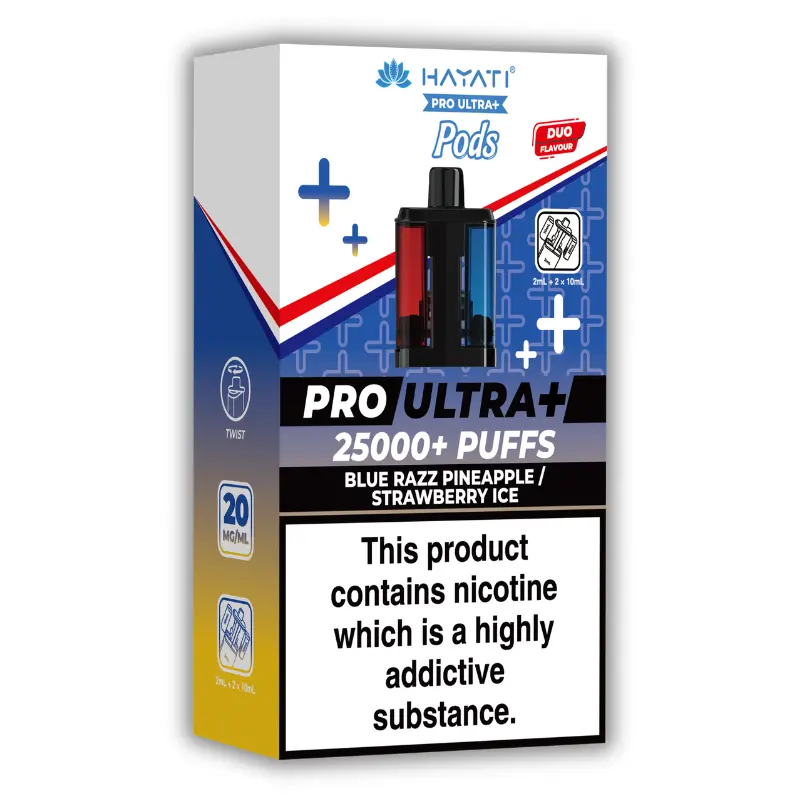
The listing is the Pro Ultra Plus 25K pod of Blue Razz Pineapple / Strawberry Ice, £7.99 for 22ml. It names pineapple in its title and it used to carry neither the pineapple tag nor the ice tag, despite the word Ice also being in its name. Its own kit twin, the Blue Razz Pineapple / Strawberry Ice 25000 kit, held both and was on the grid. Same liquid, two SKUs, two different sets of shelves.
There was a tempting explanation and it was wrong, so it is worth recording that it was checked rather than assumed. That pod writes its two flavour names with no spaces around the oblique, Pineapple/Strawberry, while its kit twin spaces them out. A tagger splitting a title into words would see Pineapple/Strawberry as one token and miss the fruit inside it. Ten listings in the catalogue use the unspaced form and all ten are Pro Ultra Plus 25K pods, which made the hypothesis easy to test against their spaced kit twins. It failed. Six of the ten were tagged identically to their kit anyway, and of the ones that were not, Sour Apple/Juicy Peach keeps its apple shelf with the word apple sitting immediately before the oblique, while Cherry Ice/Peach Mango keeps its ice shelf in the same position. Punctuation was not doing it.
What was doing it turned out to be duller, larger and fixable. Lining up the Pro Ultra Plus flavours that exist as both a kit and a matching pod, a run of pairs disagreed, and every single disagreement ran the same way: the pod carried fewer flavour shelves than the kit, never more. Two listings on that platform had ended up on no flavour shelf at all, reachable only by someone who already knew the product name. None of that was a real difference between the two SKUs, because they are the same liquid.
The catalogue now pools flavour shelves across same-liquid siblings, so a flavour tagged on either the kit or the pod appears on both. Run the same comparison today and all 29 Pro Ultra Plus kit-and-pod pairs agree, with no exceptions left to report. Range shelves are deliberately untouched by the pooling, which is correct: a bare pod does not belong on a kit shelf even when its twin does. The practical result on this page is the twenty-first tile, and the fact noted at the top that tile count and title count now agree exactly here at 21.
One smaller filing note while we are here, because this one the pooling does not reach. Of the three single-flavour Blue Razz Pineapple listings, two are also filed under Blueberry Vapes and the Mini Ultra pod is not. Filing blue raspberry under blueberry is a deliberate family judgement rather than an error, but it is applied to only ten of the 42 Blue Razz listings in the catalogue, and the Mini Ultra pod has no kit twin on the same platform to pool with. So its absence from that shelf tells you nothing about the liquid. Worth knowing if you browse by berry shelf and wonder why the same flavour appears and disappears.
Lead or support: the sort that actually matters
Here is the argument this page exists to make. Pineapple can carry a blend on its own, and among the sweet fruits in this catalogue that is close to unique. The reason is that it arrives with two separate things at once: a real acidity, the kind that registers as a faint prickle rather than as sweetness withdrawn, and a bright volatile top note that reads as sunshine and gets to the nose before anything else in the glass. Most sweet fruits give you one or the other. Strawberry has the perfume and almost no acid. Blackcurrant has the acid and a much darker, heavier top. Pineapple has both, which is why it can either be the whole flavour or be dropped into someone else's flavour as a corrective.
That is not a claim I am asking you to take on trust, because Hayati's own copy carries it in two measurable ways.
The acidity is pineapple's, almost exclusively
Across all 492 product descriptions in this catalogue, the words acid, acidic and acidity appear in exactly eleven. Seven of the eleven are tiles on this twenty-one-listing shelf. That is a third of the shelf against 0.8 per cent of everything else, a rate roughly 39 times the baseline, and it is the single most lopsided piece of vocabulary I have found in the range. Note which kind of count that is: eleven is a catalogue-wide figure and unaffected by how the shelves are assembled, while the seven is a tile count on this grid.
The four outside are worth naming rather than waving at. One is a Lemon Lime pod, and citrus having acidity surprises nobody. One is a White Peach Raspberry kit, where the raspberry is described as acting like a squeeze of acidity rather than as a second headline fruit. The remaining two are the Guava Kiwi Passion Fruit pair, and one of those two is the listing that measures itself against a pineapple mix in the same breath. So of eleven acidity mentions in the whole catalogue, eight are either about pineapple or written with pineapple in view.
Turn that round and the finding is stark. Not one strawberry listing in 60 uses an acid word. Not one cherry listing in 62. Not one watermelon, not one blackcurrant, not one grape. Whatever sharpness those blends have, Hayati reach for a different vocabulary to describe it, and they reach for this one when pineapple is in the bottle.
The direction of the usage matters as much as the count, since a word can be frequent because the copy keeps denying it. Here it is credited, not denied. Four of the seven attach the acidity directly to pineapple as the thing that prevents the blend going heavy: enough acidity from the pineapple to stop it becoming sticky, a hint of acidity against a candied berry, a natural tang that gives the ice something to play against, the faint acidic tingle of properly ripe fruit. The other three describe pineapple as acidic in itself. None of the seven is a denial.
Acidic is not sour, and this shelf proves the copy knows the difference
The catalogue has a sour vocabulary and it is large. Seventy-three listings use the word sour, most of them in the sour raspberry and sour apple families. This shelf uses it zero times out of twenty-one. The word tart, which is the catalogue's most common sharpness word at about 40 per cent of listings, runs below its base rate here at seven tiles out of twenty-one.
That is a deliberate-looking distinction and it is a real one in the mouth. A sour blend puts the sharpness on top, as a coating that hits the sides of the tongue first and then recedes to let the fruit through. Pineapple's acidity is inside the fruit note rather than laid over it, so it arrives at the same moment as the sweetness and stays for the length of the draw. You do not get a sour hit followed by a fruit. You get one thing that is sweet and sharp simultaneously. If you have tried the sour side of the catalogue and found the sharpness felt bolted on, that is the difference you were noticing, and it is why nothing on this grid behaves like those do.
The grammar of the copy sorts the shelf for you
The second measurable signal is verbs. Reading every sentence on this shelf in which pineapple is the actor, the pattern is close to clean.
In the thirteen listings where pineapple is not named first in the title, it usually adds, contributes, provides, gives or fills out. Ten of the thirteen use one of those. It is doing something to a flavour that already exists without it. Two more give pineapple no verb at all, because their copy treats Blue Razz Pineapple as a single compound name rather than as two fruits, and both of those are Pro Ultra Plus listings, which reads as a copy-desk habit on that platform rather than a difference in the liquid. That leaves one.
In the eight listings where pineapple is named first, it is, has, opens, leads or brings. Seven of the eight put it in the initiating position. It is not modifying anything. It is the subject of the sentence and of the liquid.
The two odd ones out, the support listing that leads and the lead listing that does not, are a matched pair, which is the most entertaining thing on this shelf. I will come to them below, because they deserve their own heading.
Where pineapple leads: eight listings, two flavours, from £3.99
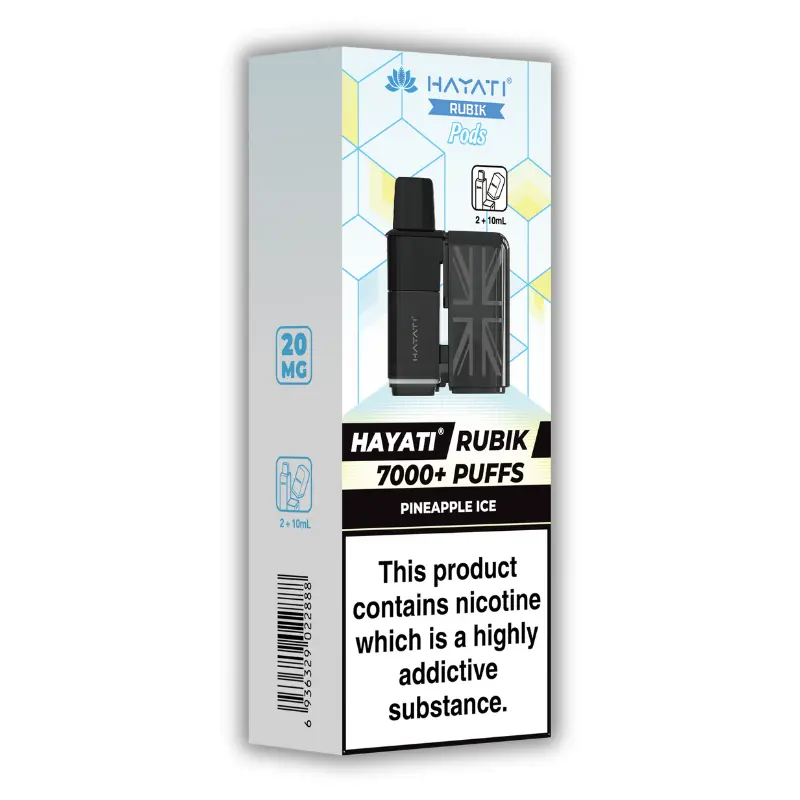
Six of the eight are Pineapple Ice. This is the only configuration in the range where pineapple is alone in the bottle with nothing but a cooling agent, and the copy treats it accordingly: bright, sweet-sharp, juicy, with the sharpness cooled rather than removed. The Rubik kit copy is the most precise about the mechanism, describing the ice as taking the edge off the acidity and leaving a crisp aftertaste, while the Rubik pod copy inverts the same observation and says the acidity gives the ice something to play against. Both are describing one interaction from two ends, and between them they explain why iced pineapple works better than iced versions of softer fruits. The cooling needs something with structure to sit against.
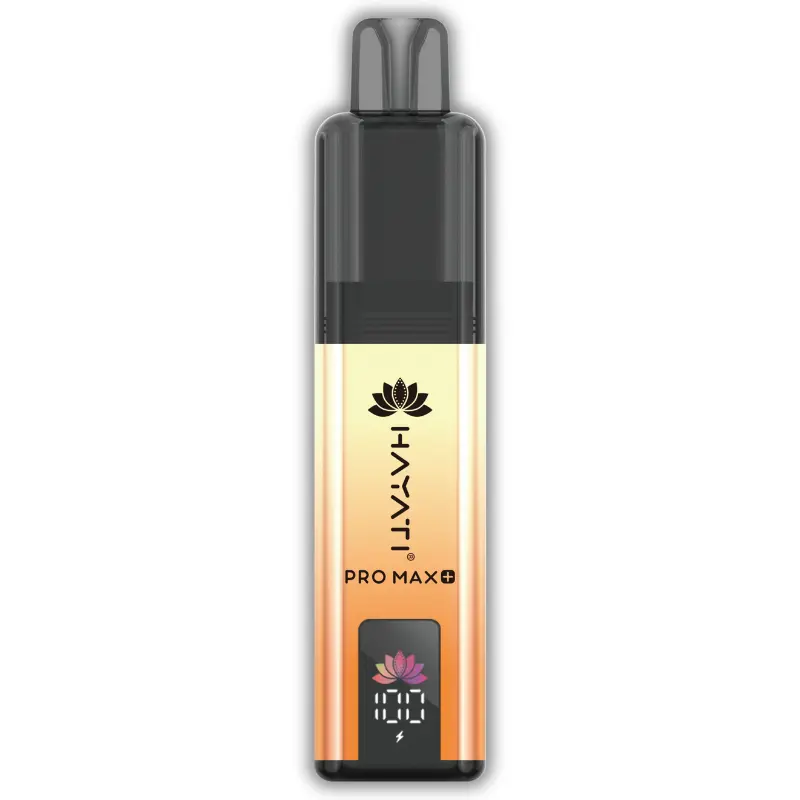
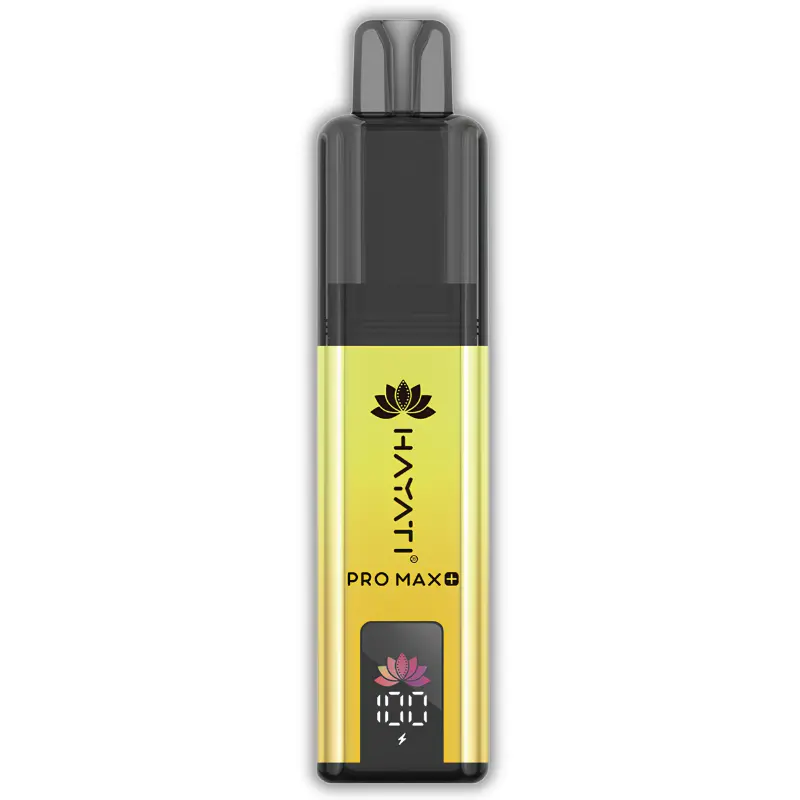
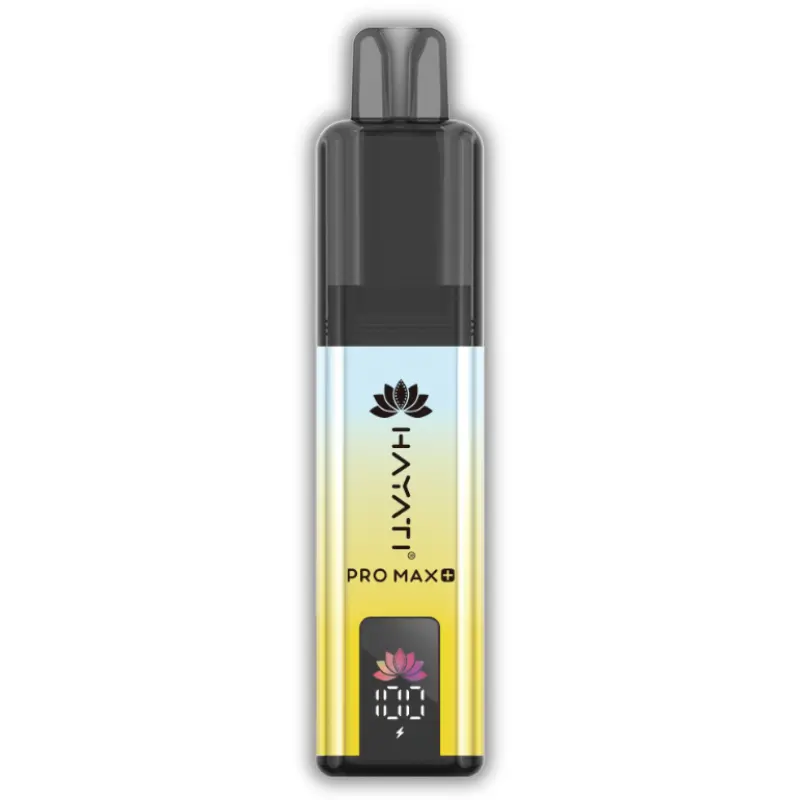
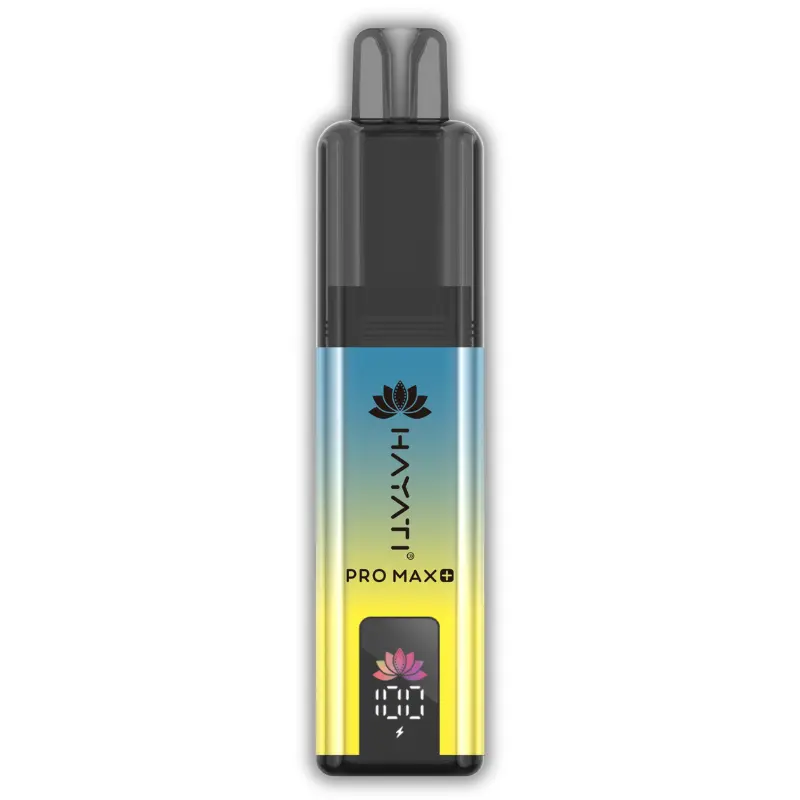
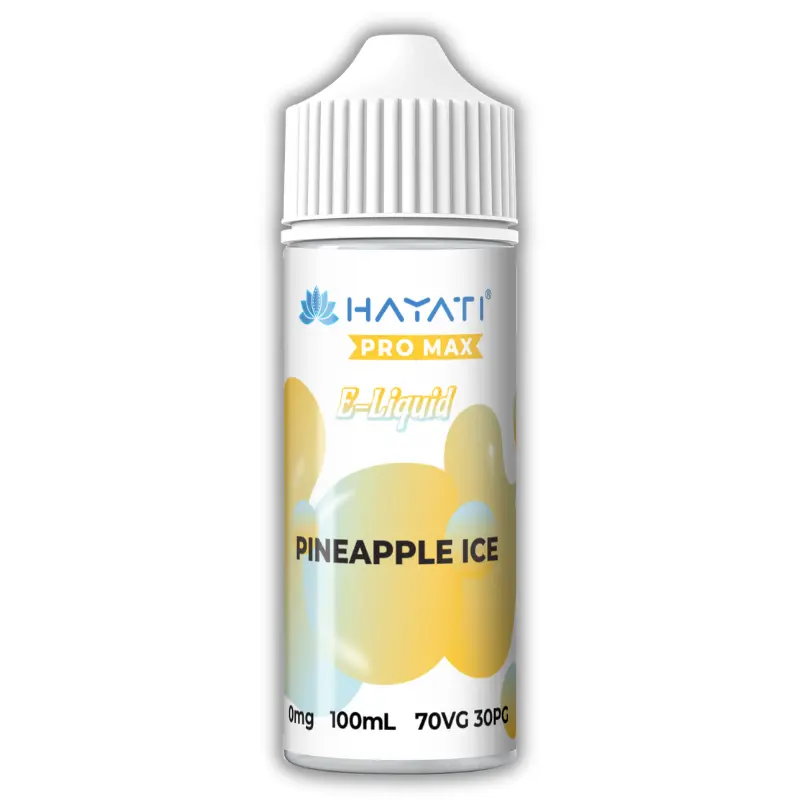
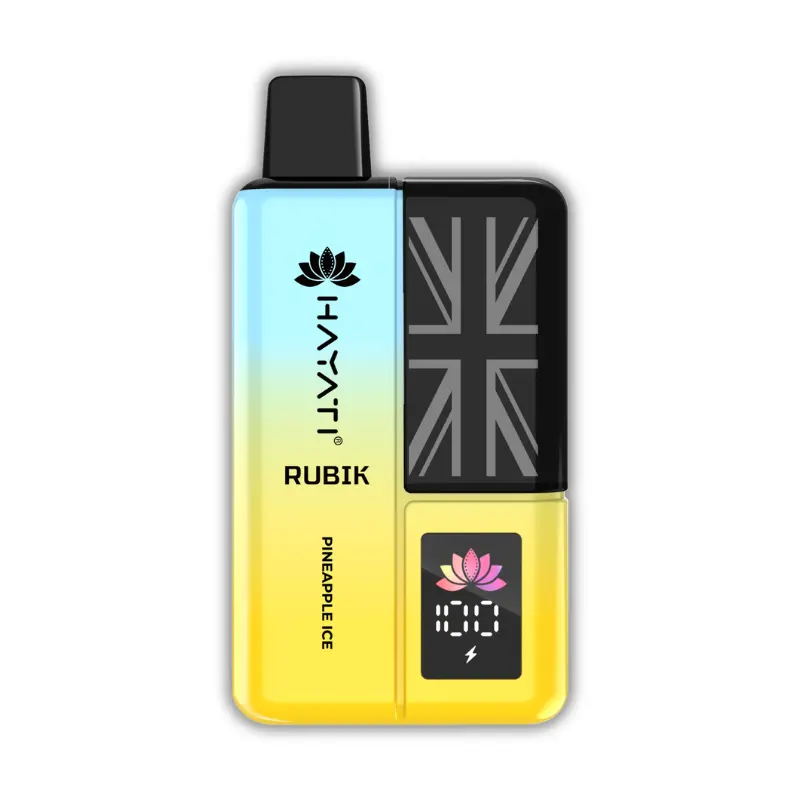
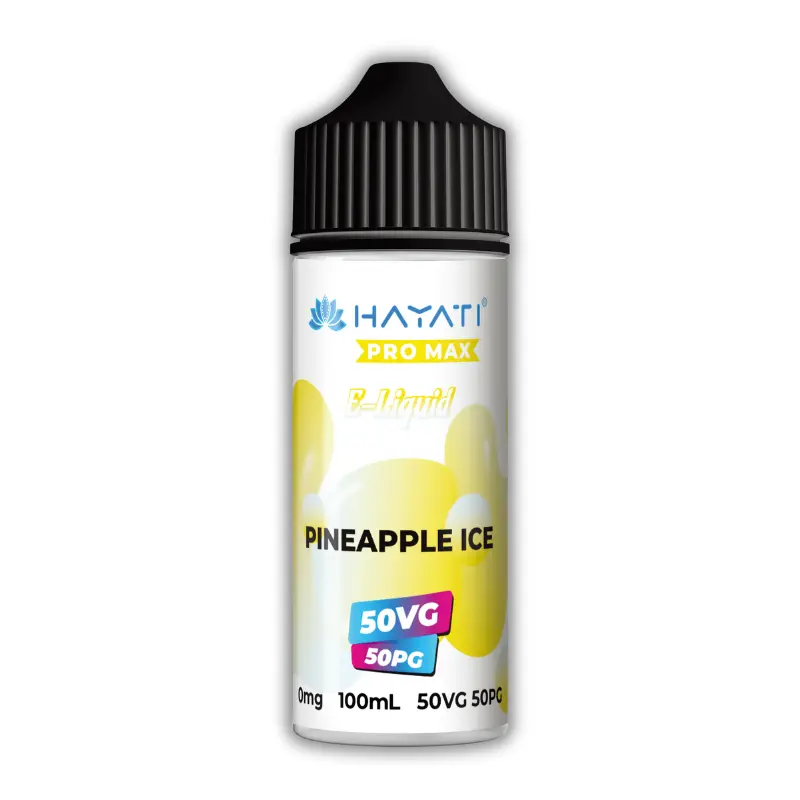
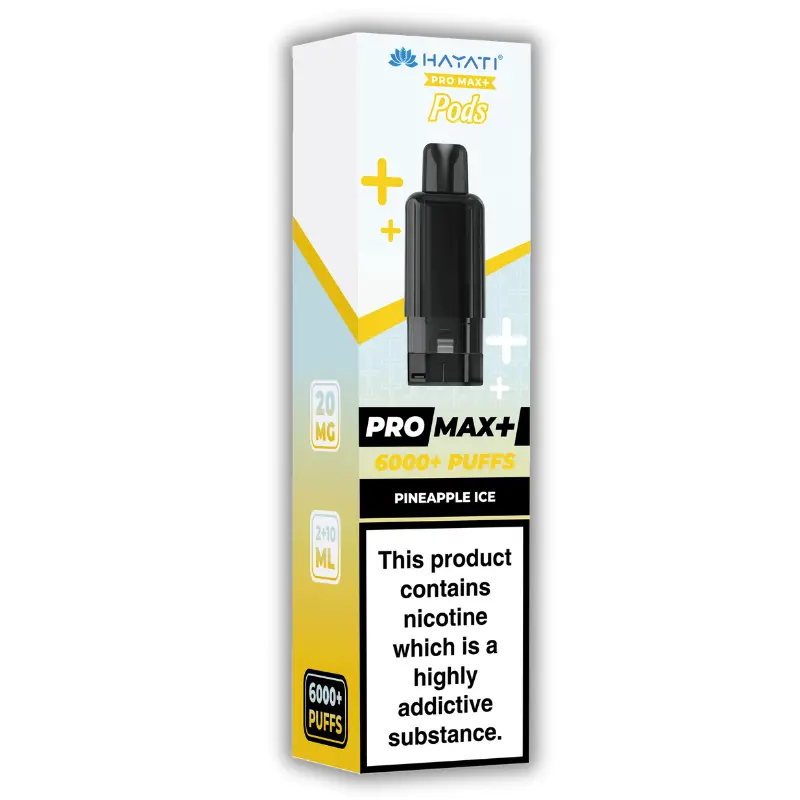
The six are spread across four formats and two of them carry no nicotine at all. Pineapple Ice Rubik Pods at £3.99 is the cheapest prefilled route in, with the matching Rubik kit at £5.99 adding the device. Pineapple Ice Pro Max Plus Pods at £5.49 and the Pro Max Plus kit at £7.99 are the same liquid on the larger platform. Then the two bottles, both 120ml at 0mg: the 50/50 shortfill for pod kits and lower-power setups, and the 70/30 for sub-ohm tanks. The 70/30 copy is the only place on this shelf where Hayati tie the taste to the hardware, arguing that thicker vapour at higher power gives the pineapple more body without blunting its bite. Whether you agree is a matter of setup, but it is at least a claim about the liquid in a device rather than a restatement of the flavour.
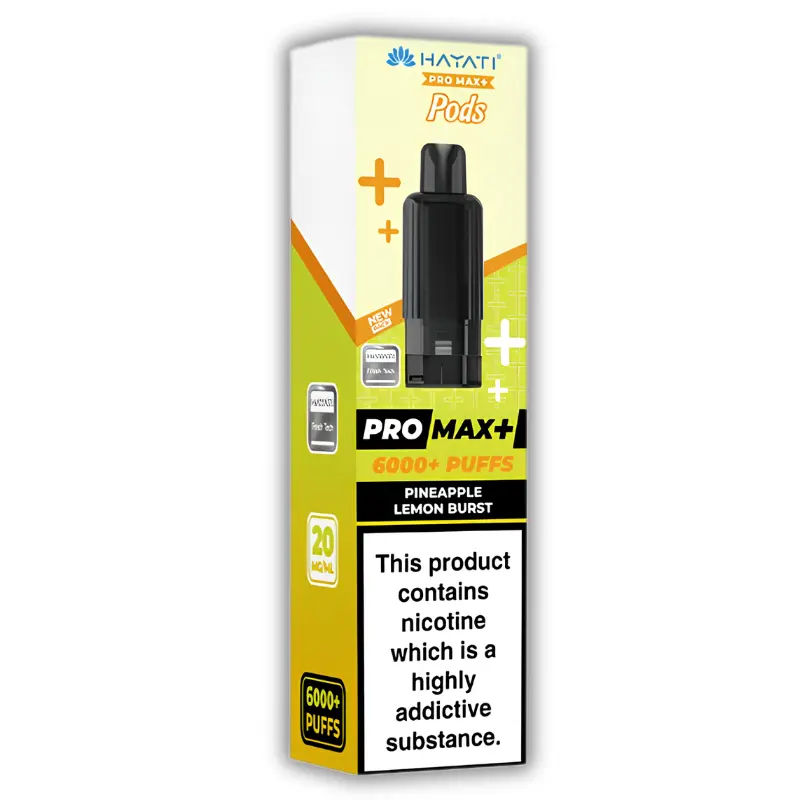
The other two lead listings are Pineapple Lemon Burst, at £5.49 for the Pro Max Plus pod and £7.99 for the kit. Uncooled, and built so that the sharpness lands first and the pineapple sweetness arrives behind it. The kit copy calls the word Burst a fair description of the shape: a quick hit of sharp fruit on the inhale easing into a sweeter finish.
What leading buys you. A flavour with a spine. Pineapple in front means the draw has a beginning, a middle and an end rather than one sustained sweetness, and it means the liquid stays legible when a coil starts to tire, because the acid and the top note fade at different rates and you notice the change rather than the whole thing going flat at once. It also means all-day viability for people who cannot get through a session on a dessert-weight sweetness. The cost is that there is nowhere to hide. If you do not like pineapple, six of these eight will not give you anything else to hold on to.
Where pineapple supports: thirteen listings, four flavours, from £2.49
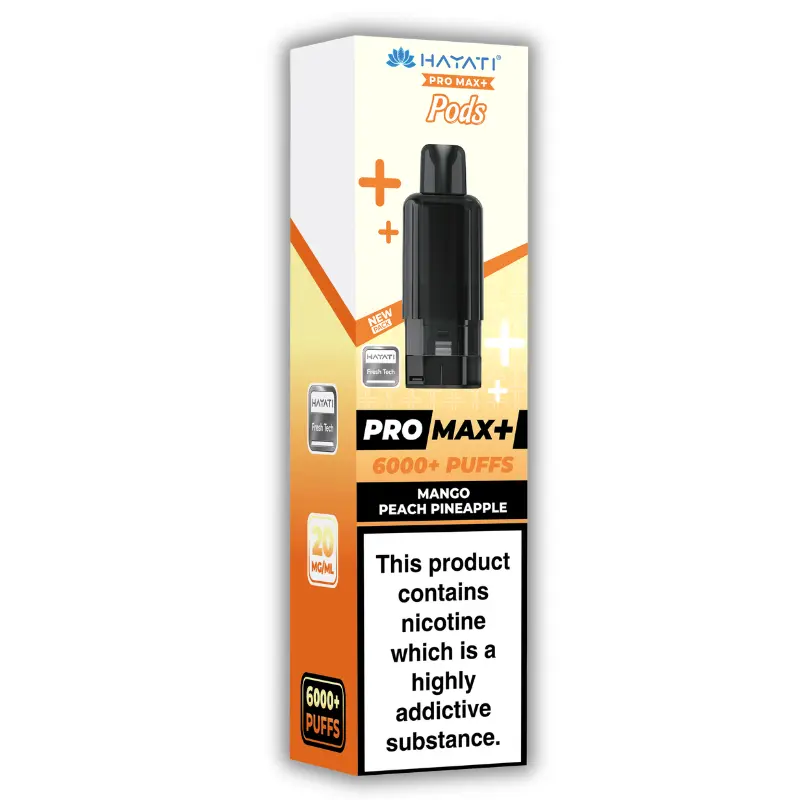
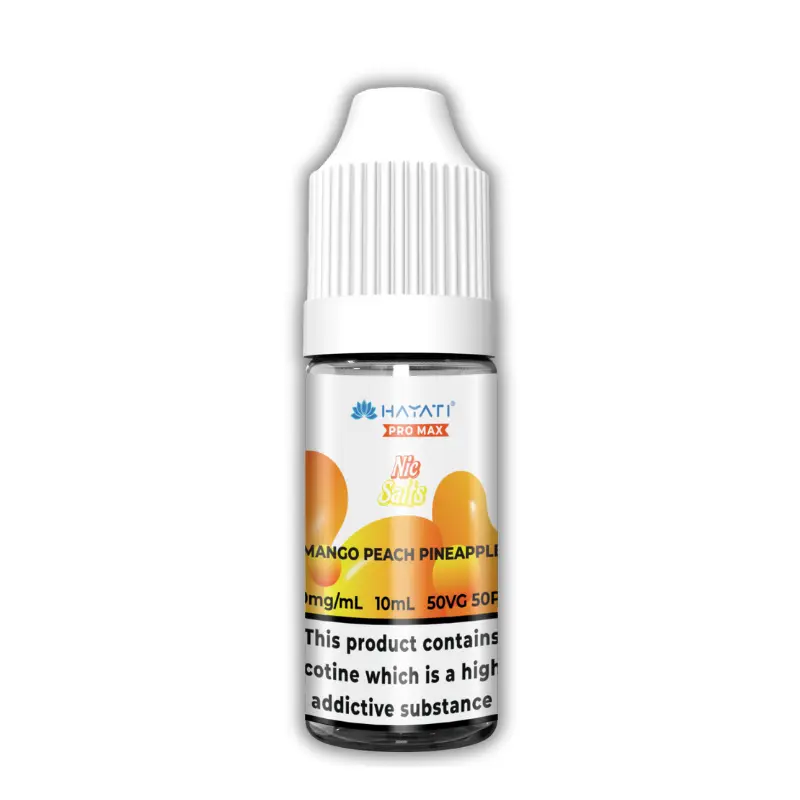
Five are Mango Peach Pineapple, the sweetest configuration on the shelf and the one with the widest format spread. Every one of the five gives pineapple the same job in almost the same words: a tangy sparkle, a sharp tangy lift, a light sharpness that stops the mix from feeling heavy, a brighter and slightly sharper lift so the whole thing never turns heavy. Mango supplies the body, peach fills the middle, and pineapple is there to stop two thick fruits becoming one thick fruit. Four of the five put mango first in the description. The fifth, the Pro Max Plus pod, opens with pineapple giving the blend its sparkle and puts mango and peach underneath. Same liquid, different desk. All five now carry the Exotic tag, though for a while that same pod was the only one of the five without it.
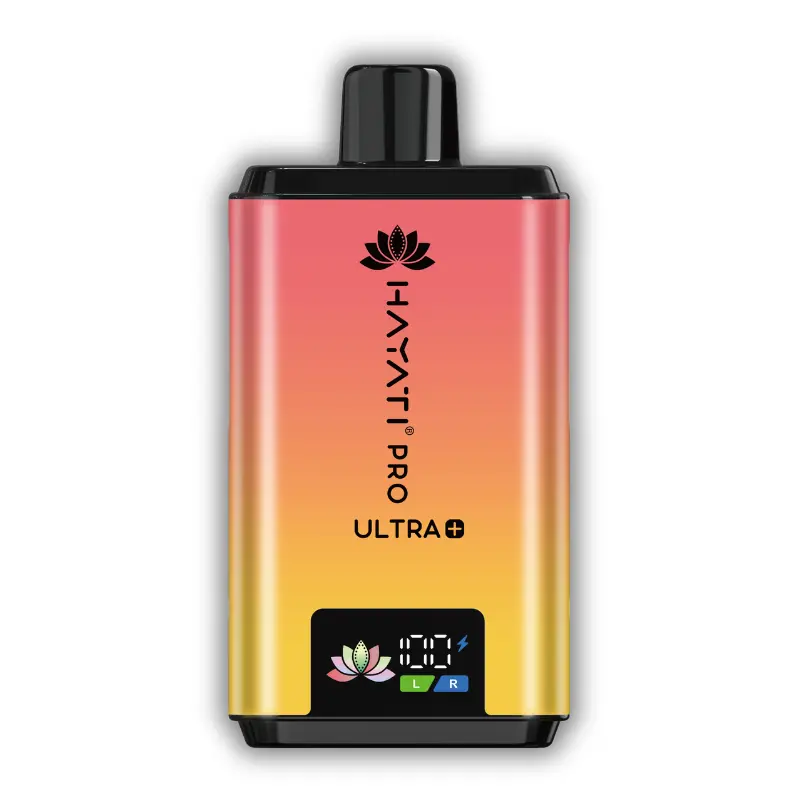
The five run from the 10ml nic salt bottle at £2.49, which is the cheapest thing on the shelf and the only 10mg product on it, through the £5.49 pod and the £7.99 Pro Max Plus kit, up to the 22ml Pro Ultra Plus pod at £7.99 and the matching 25000 kit at £11.99. If you want to find out whether you like the flavour before committing to a device, the bottle is the honest way to do it, with the caveat that it is 10mg and the prefilled versions are all 20mg.
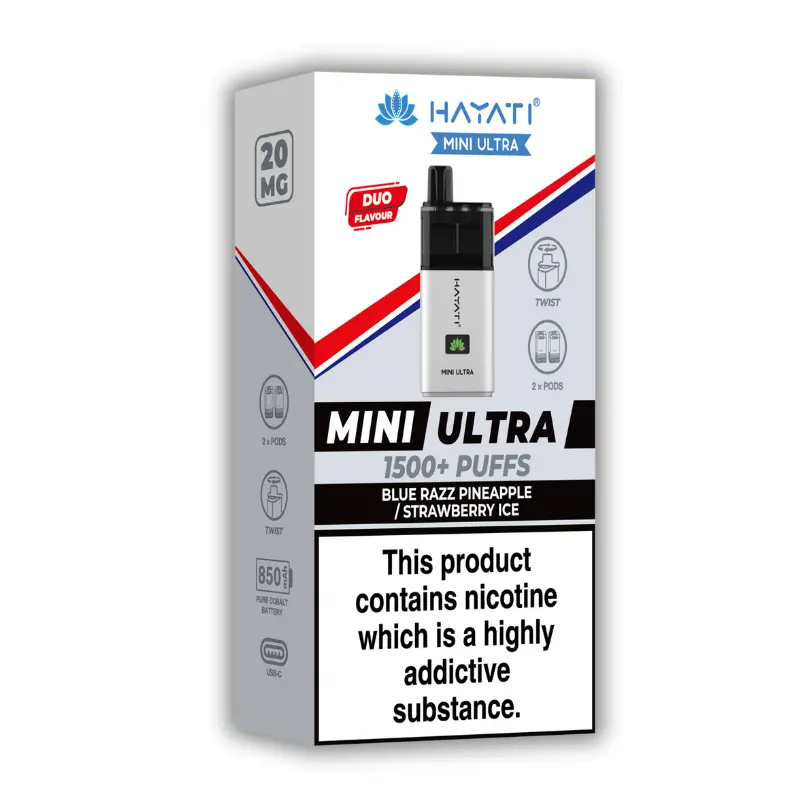
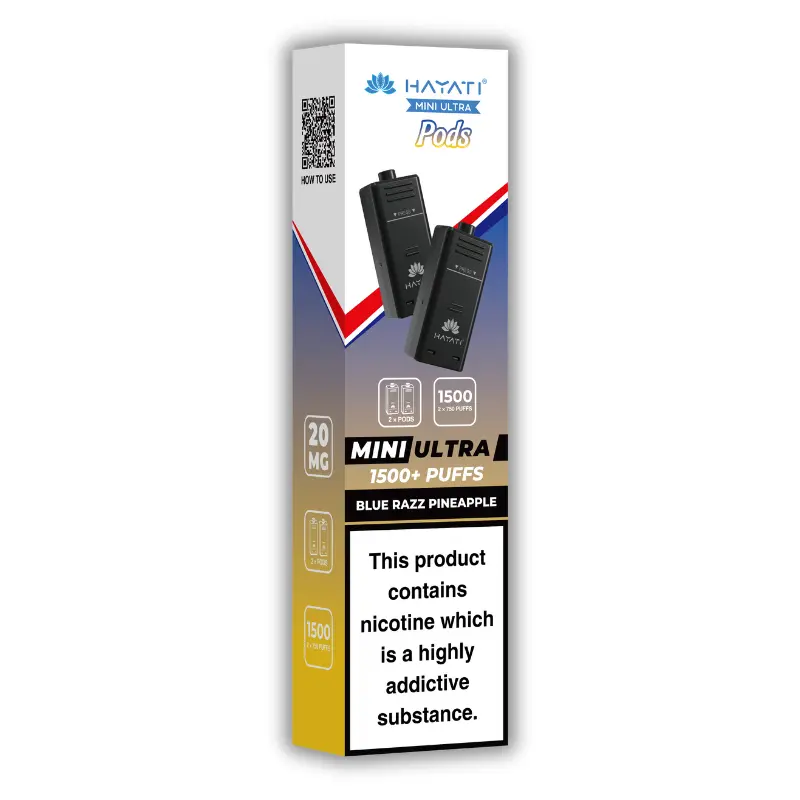
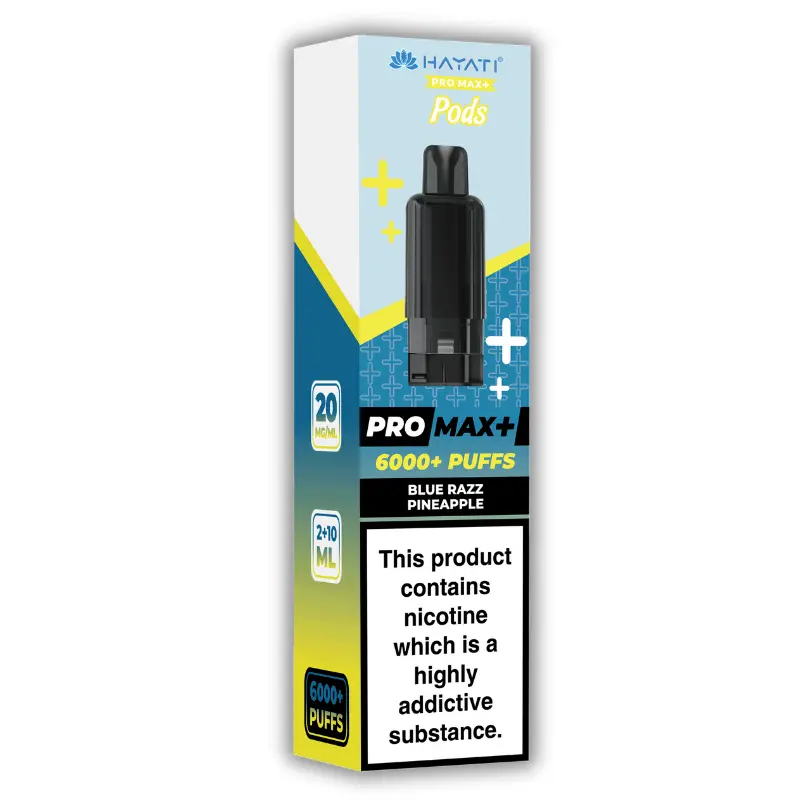
Three are Blue Razz Pineapple, and this is the most interesting support arrangement because the partner is not sweet-and-soft, it is sweet-and-tangy already. All three descriptions say the same thing in different words: both components carry a tang, and that shared sharpness is why the blend coheres instead of arguing with itself. The Mini Ultra pod copy says the two tangy elements amplify each other. The Pro Max Plus kit copy says they feel cohesive rather than clashing. The Pro Max Plus pod copy adds the useful detail that the pineapple is what keeps the blue razz from tasting too candied, which is the corrective role again, just applied to confectionery sweetness rather than to fruit weight. Prices run £3.49 for the Mini Ultra pod, £5.49 for the Pro Max Plus pod and £7.99 for the Pro Max Plus kit.
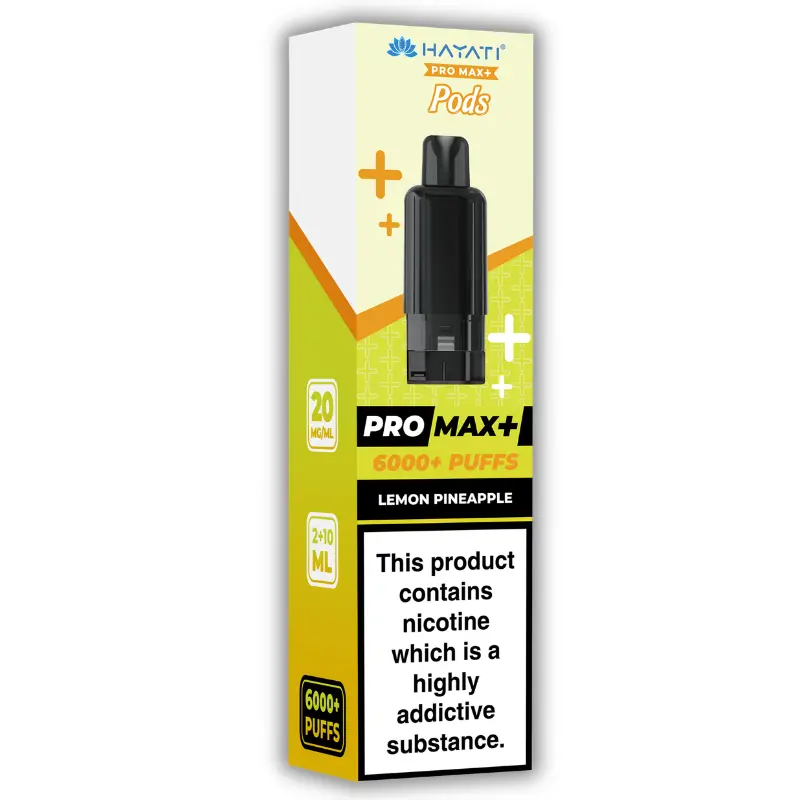
Three are the dual-flavour listings, which are structurally different from everything else here and get their own treatment in the formats section. The Mini Ultra version is £3.99, the Pro Ultra Plus kit is £11.99, and the Pro Ultra Plus pod that matches that kit is £7.99 and is the newest tile on this grid. In all three, the pineapple sits on the Blue Razz side and the cooling sits on the Strawberry Ice side, so the pineapple half of these is uncooled. The two Pro Ultra Plus entries are also the pair described above whose copy never lets pineapple act on its own.
The last two are Lemon Pineapple, which belong here by title and refuse to stay.
What supporting buys you. Sweetness you can actually sit with. Every one of these thirteen is sweeter than anything in the lead group, and the reason they remain drinkable at that sweetness is the same in all four flavours: pineapple's acid is doing the work of a squeeze of something sharp in a glass of juice. Nine of the twenty-one tiles carry a sentence crediting something with stopping the blend going heavy, sticky or over-candied, against 87 of the 492 listings in the catalogue, about 18 per cent. That is a modest multiple rather than a dramatic one and I would not lean on it alone, but the identity of the agent is consistent: of those nine sentences, five name pineapple as the thing doing it, one credits the lemon, and three say the liquid avoids heaviness without naming anything. The cost of the support arrangement is that pineapple is not what you will taste most. If you came for pineapple specifically, thirteen of these twenty-one are not it.
The pair that will not stay sorted
Lemon Pineapple and Pineapple Lemon Burst are the same two fruits with the billing reversed, and Hayati say so themselves: the Lemon Pineapple pod copy points across to Pineapple Lemon Burst as the natural alternative if you want the lemon billed differently. Four listings, two flavours, one pair of fruits. You would expect the titles to be a reliable guide to which fruit arrives first.
They are not, and the failure is symmetrical. Lemon Pineapple is titled lemon first, and the pod copy dutifully follows the title, opening with the observation that with lemon named first the emphasis falls on sharp clean citrus. That sentence is reasoning from the name rather than from the liquid, which is worth flagging as such. Its own kit sibling then ignores the billing completely and opens with pineapple bringing a juicy golden sweetness, with lemon sitting over the top of it.
Pineapple Lemon Burst runs the same trick in the opposite direction. The kit copy opens with pineapple, as the title promises. The pod copy opens with lemon hitting first and pineapple taking over afterwards.
So each flavour has one listing that honours its own title and one that inverts it, and the two inversions point at each other. Four listings, two of which describe a lemon-led liquid and two of which describe a pineapple-led liquid, and the split does not follow the names. This is evidence about how the copy was written rather than evidence of two recipes, and it should be read that way. It does mean the titles cannot settle the question for you.
Something more useful can. The two flavours make genuinely different claims about texture, and those claims are consistent across all four listings even where the billing is not. Lemon Pineapple is described as lemonade-like and as having its body filled out by the pineapple so it never tastes thin. Weight is the concern, and pineapple is the solution. Pineapple Lemon Burst is described as a burst: sharp on the inhale, sweeter on the finish, a flavour that snaps rather than soothes. Shape is the concern, not weight. So if you want the rounder, fuller, more lemonade-shaped one, take Lemon Pineapple. If you want the one with a sharp front edge, take Pineapple Lemon Burst. Both are £5.49 as a pod and £7.99 as a kit, both are Pro Max Plus only, and neither has any cooling in it.
Choosing between them
Cooled or not. Nine of the twenty-one tiles contain a cooling agent and twelve do not, but the useful number is six, because only the six Pineapple Ice listings put the cooling on the pineapple itself. In the three dual-flavour products the ice is on the strawberry side and the pineapple side is uncooled. So if you specifically want cold pineapple, there are six ways to buy it and they are all the same liquid. Eight of the twenty-one are on Ice Vapes; the ninth cooled product, the Mini Ultra dual kit, has the word Ice in its title and no ice tag, and unlike the Pro Ultra Plus case above it has no kit-and-pod twin to pool with, so that gap is still open.
Pineapple forward or pineapple present. Covered at length above, and it is the first question to answer because it eliminates more than half the grid either way. If the answer is forward, you are choosing between Pineapple Ice and Pineapple Lemon Burst, which is really a choice between a cooled single fruit and an uncooled sharp-fronted pair. If the answer is present, you are choosing what it is present in: a thick tropical trio, a candied blue raspberry, or a citrus.
Sweetest to driest. Mango Peach Pineapple is the sweetest, and two of its five listings put it in the medium-to-sweet band explicitly. Blue Razz Pineapple is next, sweet in a confectionery direction rather than a fruit-juice one, with the pineapple pulling against it. Pineapple Ice sits in the middle and its copy repeatedly stresses that it avoids heavy sweetness. Lemon Pineapple and Pineapple Lemon Burst are the driest things here, both described as tipping towards tang rather than sugar. Nothing on this shelf is bracing in the way the sour families are; the floor is moderately sweet, not dry.
Kit or pod. A kit includes the device, a pod does not. Every flavour here that exists as a pod also exists as a kit on the same platform, with two exceptions: the Mini Ultra single-flavour pod has no matching single-flavour kit on this grid, and the Mini Ultra dual kit has no pod version anywhere. The three bottles are not a pod format at all, so they sit outside the question. If you already own the right device, the pod always costs less. If you do not, the kit premium is £2.00 on Rubik, £2.50 on Pro Max Plus and £4.00 on Pro Ultra Plus.
Prefilled or bottled. Three of the twenty-one are bottles and they are not interchangeable with each other. The Mango Peach Pineapple nic salt is a 10ml 50/50 at 10mg, meant for refillable pod kits and compact mouth-to-lung devices. The two Pineapple Ice shortfills are 120ml at 0mg with headroom for a nicotine shot, one in 50/50 for low-power setups and one in 70/30 for sub-ohm tanks and direct-to-lung coils. Bottles are the cheapest liquid on the shelf by a wide margin and the only route to a strength other than 20mg, at the cost of needing your own refillable hardware and doing the filling yourself. The rest of the bottled range works the same way.
One flavour or two. Three listings give you two flavours in one pod. That is genuinely useful if you tire of a single profile across a long session, and it is the only way on this shelf to have a cooled option and an uncooled one in the same device. The trade is covered below.
Strength. Eighteen of the twenty-one are 20mg, which is the UK maximum for nicotine-containing e-liquid. One is 10mg and two are 0mg. There is no 20mg bottled option on this shelf, so if you want pineapple at full strength it has to be a prefilled pod or kit.
Formats, and what fits what
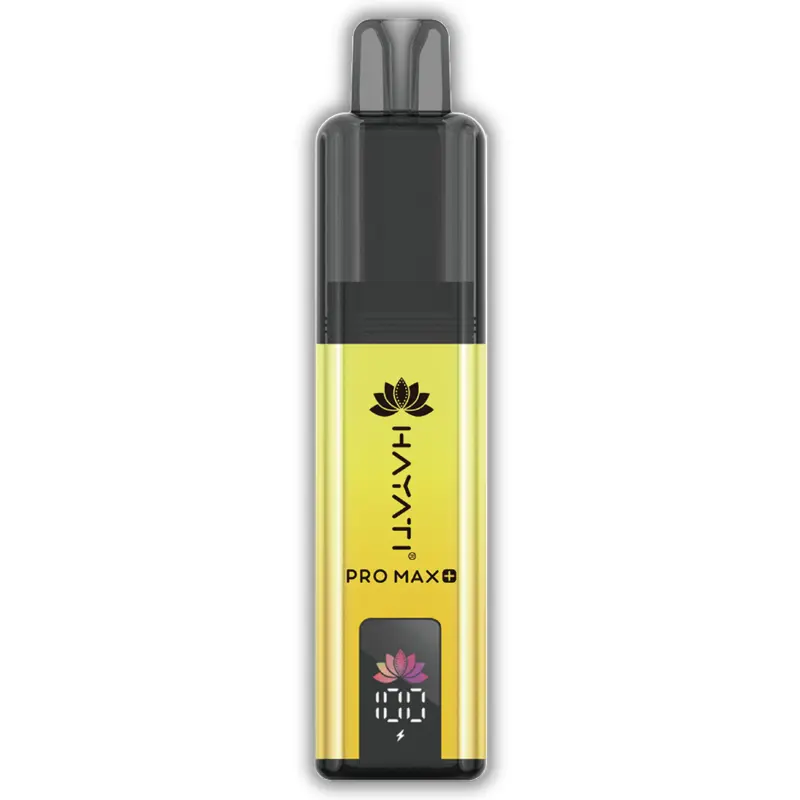
Five hardware contexts are represented. Mini Ultra pods hold 4ml and Hayati rate the format at 1,500 puffs, a laboratory figure rather than a promise about your session. Rubik pods hold 12ml, rated by Hayati at 7,000. Pro Max Plus pods also hold 12ml, and Hayati's figure for them is 6,000. Pro Ultra Plus pods hold 22ml, with a published figure of 25,000. Every kit listing on this shelf that states a battery states the same one, 850mAh, so the capacity of the pod is the only thing that changes between ranges.
Set the Rubik and the Pro Max Plus side by side and the ratings stop being comparable. Identical capacity, the same stated battery in both kits, and a published difference of a thousand puffs. Whatever accounts for that is a difference in how the figures were produced rather than a difference in how much liquid you are buying, so treat the numbers as range labels and compare millilitres instead. One of the twenty-one tiles, the Pineapple Ice Rubik pod, says this out loud in Hayati's own words, noting that real-world puff counts vary with how long and how often you draw. That caveat appears on two listings in the entire catalogue and it applies to all four ranges equally.
Pods are not interchangeable across ranges. Check the range name printed on your device before ordering a refill, because a Rubik pod and a Pro Max Plus pod are different parts despite holding the same 12ml. The refill shelf and the kit shelf are both organised by range for that reason.
The three dual-flavour listings need explaining because the format is easy to misread. A title with two flavour names separated by an oblique is one pod divided internally into two sides, with a rotating collar on the mouthpiece that selects which side feeds the single shared coil. It is not two pods in a box. Three things follow. You can switch as often as you like, mid-session, so there is no question of which flavour to open first. The coil and airflow path are shared, so the first draws after turning the collar carry some of what you were just vaping and are not a clean read of the new side. And the two sides share one liquid budget, so whichever half you use less of is thrown away with the pod. On the Mini Ultra that budget is 4ml total across both sides, which is the smallest on the shelf; on the two Pro Ultra Plus listings it is 22ml. Hayati publish what the collar selects and nothing about how the two sides are divided internally, so nobody should describe the internal arrangement in more detail than that.
The two shortfills need their own note. Both are 120ml bottles supplied at 0mg with headroom for a nicotine shot, which is Hayati's own wording and is as specific as the listings get about the fill level. Shake thoroughly after adding a shot and let it settle before filling a pod. The 50/50 is thin enough to wick into small mouth-to-lung coils; the 70/30 is built for low-resistance coils and will wick poorly in a small one. Same flavour, two different pieces of hardware, and getting it the wrong way round is the most common avoidable mistake on this part of the shelf.
What the price spread reflects
Eight price points, £2.49 to £11.99, and the spread is almost entirely about how much liquid is in the package and whether a device comes with it.
On a per-millilitre basis the prefilled products sort like this. The Pro Ultra Plus pod is about 36p per ml at £7.99 for 22ml. The Rubik pod is about 33p at £3.99 for 12ml. The Pro Max Plus pod is about 46p at £5.49 for 12ml. The Mini Ultra pod is about 87p at £3.49 for 4ml, which is more than double any of the others and is what you pay for the smallest device format in the range. Kits add the device: the Rubik kit works out around 50p per ml, the Pro Max Plus kit around 67p, the Pro Ultra Plus kit around 54p, and the Mini Ultra dual kit a round £1.00.
Against all of that, the bottles are on a different scale entirely. The Mango Peach Pineapple nic salt is about 25p per ml at 10mg, and the two Pineapple Ice shortfills work out under 6p per ml before you add anything to them. That gap is the real story of the price spread on this shelf: prefilled convenience costs roughly six to fifteen times what the same volume of liquid costs in a bottle, and the cheapest listing here and the cheapest liquid here are not the same product.
The device premium is worth calculating once. A Rubik kit is £2.00 more than a Rubik pod, a Pro Max Plus kit is £2.50 more than its pod, and a Pro Ultra Plus kit is £4.00 more than its pod. Those are the one-off costs of entering each platform, and every refill after that is bought at the pod price. Nothing on this shelf is sold at a multipack price, and there are no bundles among the twenty-one.
Where to go next
All the share counts below are tile counts and were recomputed for this revision, because the sibling pooling moved several of them. The nearest neighbour by product count is New Products, which shares all twenty-one, though that shelf carries all 492 listings in the catalogue and so tells you nothing at all about pineapple. After that the overlaps are informative. Ice Vapes shares eight and is where to go if the cooling matters more than the fruit. Mango Vapes and Peach Vapes each share five, which are the five Mango Peach Pineapple listings in both cases, and Exotic Vapes now agrees with both of them on all five, having previously carried only four.
Berry Vapes and Raspberry Vapes share six, the Blue Razz Pineapple family plus all three dual listings. Lemon Vapes shares four, being the two citrus flavours in both pack sizes, and is the obvious next stop if the acidity is what you came for rather than the tropical part. Strawberry Vapes, Blueberry Raspberry Vapes and Blueberry Vapes share three each, Sweet Vapes shares two, and Strawberry Raspberry Ice Vapes shares one.
Seventeen of the flavour shelves listed as neighbours share nothing at all with this one, and some of those absences are informative. No pineapple and cherry blend exists in the range, so Cherry Vapes has no crossover. There is none with watermelon, none with grape and none with apple, which is worth stating plainly because the two words look similar and the shelves are entirely separate. Lemon Lime Vapes and Lemonade Vapes also share nothing, despite the citrus overlap in profile, so if the lemonade shape of Lemon Pineapple is what appeals, that shelf is a different set of liquids rather than a continuation. Banana Vapes is the other fruit the Exotic shelf admits only as a passenger, and it is the closest structural parallel to the situation described at the top of this page.
On the hardware side, Hayati Pods and Hayati Prefilled Pods & Refills each share ten, Hayati Pod Kits eight, the Pro Max Plus kit shelf five and the Pro Ultra Plus kit shelf two. The full catalogue is there if you would rather browse by device than by fruit.
Closing
Twenty-one tiles, six flavours, and one structural fact that explains most of the grid. Pineapple carries both a real acidity and a bright top note, and that combination is why it turns up in two completely different roles in the same range. Eight listings let it lead, and those are the ones with shape: a beginning, a middle and a finish rather than a single sustained sweetness. Thirteen use it as a corrective behind a heavier or sweeter fruit, and in those the acidity is doing the work that stops mango, peach or candied blue raspberry from becoming one thick note. Hayati's own copy makes the division visible in its verbs, and it gives pineapple the catalogue's acidity vocabulary almost to itself: seven of the eleven listings in 492 that use an acid word are on this shelf.
The filing oddity is worth carrying away too. Every listing here calls itself tropical and only five of the twenty-one are tagged exotic, because in this catalogue's own language pineapple is the reference point that exotic blends are measured against rather than an example of one. That is a fact about British shopping habits rather than about the liquid, and it changes nothing in the bottle.
Strictly for adults aged 18 and over. Nicotine is an addictive substance.
Frequently asked questions
Why is pineapple filed separately from Exotic Vapes when the copy calls it tropical?
The Exotic Vapes page established that the tag keys off six qualifying fruits, mango, kiwi, guava, dragon fruit, passion fruit and lychee, and pineapple is not among them. Five pineapple listings do carry the tag and all five are Mango Peach Pineapple, where the mango earns the place. Meanwhile Hayati describe all twenty-one tiles on this shelf as tropical, against a base rate of about ten per cent elsewhere in the catalogue. The most likely reason is that pineapple functions as this range's reference tropical fruit rather than an unusual one, and Hayati publish no criteria that would confirm it.
Is there evidence for that beyond guesswork about grocery history?
Yes, and it comes from the Exotic shelf itself. Three listings in the catalogue mention pineapple without naming it in the title, and all three are on that shelf. Two Caribb Crush listings recommend themselves to anyone who likes mango or pineapple and wants more layers, and a Guava Kiwi Passion Fruit kit calls itself more aromatic than a standard mango or pineapple mix. Pineapple is the baseline in all three. Note that mango appears in those same sentences and is tagged exotic anyway, so the benchmark role explains part of it and not all of it.
Which products here are actually pineapple-led?
Eight of the twenty-one tiles. The six Pineapple Ice listings, which are the only place in the range where pineapple is alone with a cooling agent, and the two Pineapple Lemon Burst listings. The other thirteen put pineapple behind mango, lemon or blue raspberry. Hayati's own copy tracks the split: in the support listings pineapple adds, contributes or provides something, and in the lead listings it is, has, opens or leads.
What does pineapple actually do in the blends where it is not the headline?
It stops them going heavy. Four of the five Mango Peach Pineapple listings credit it with a lift or a sparkle that keeps two thick fruits from merging into one, the Blue Razz Pineapple pod says it keeps the blue razz from tasting too candied, and the Lemon Pineapple pod says it fills out the body so the citrus never tastes thin. Nine of the twenty-one tiles carry a sentence of that kind against 87 of the 492 listings in the catalogue, about 18 per cent, and five of those nine name pineapple as the thing doing it.
Is pineapple sour?
Not in Hayati's vocabulary, and the distinction is deliberate. The word sour appears in 73 listings across the catalogue and in none of the twenty-one here. Acid, acidic and acidity appear in only eleven listings in 492, and seven of those eleven are tiles on this shelf. The practical difference is that a sour blend lays the sharpness on top of the fruit, where pineapple's acidity sits inside the fruit note and arrives at the same moment as the sweetness.
Which is sweeter, Lemon Pineapple or Pineapple Lemon Burst, and does the name order tell me anything?
They are close, and the name order is not reliable. Each flavour has one listing that follows its own title and one that inverts it, and Hayati's own copy points across from one to the other as the same fruits billed differently. What is consistent across all four listings is texture: Lemon Pineapple is described as lemonade-like with the pineapple filling out its body, and Pineapple Lemon Burst is described as sharp on the inhale easing into a sweeter finish. Pick on shape rather than on billing.
Which products have a cooling agent?
Nine of the twenty-one, but only six put the cooling on the pineapple, and those six are all Pineapple Ice. In the three dual-flavour products the ice is on the Strawberry Ice side and the pineapple side is uncooled. Eight of the twenty-one carry the ice tag; the Mini Ultra dual kit has Ice in its title and does not, which is a tagging gap rather than a difference in the liquid.
Why does this shelf have twenty-one products when other pages say twenty?
Because the Blue Razz Pineapple / Strawberry Ice Pro Ultra Plus 25K pod was added to it. That pod names pineapple in its title but used to carry neither the pineapple nor the ice tag, although its own kit twin carried both. Flavour shelves are now pooled across same-liquid siblings, so a tag on either the kit or the pod applies to both, and all 29 Pro Ultra Plus kit-and-pod pairs now agree. Any page quoting twenty for this shelf was counted before that change.
What is the cheapest way to try pineapple in this range?
The 10ml Mango Peach Pineapple nic salt at £2.49 is the lowest price on the shelf, but it is 10mg and it is a support blend rather than a pineapple-led one, and you need your own refillable device. For pineapple in front, the Pineapple Ice Rubik pod at £3.99 is the cheapest prefilled route, and it needs a Rubik device. For the cheapest liquid by volume, the two 120ml Pineapple Ice shortfills work out under 6p per ml, though they arrive at 0mg.
Do the puff figures let me compare the ranges?
No. Rubik and Pro Max Plus pods both hold 12ml on an 850mAh battery, and Hayati publish 7,000 for one and 6,000 for the other, so the two figures are not produced on the same basis. Treat them as range labels and compare millilitres instead. One listing here, the Pineapple Ice Rubik pod, carries Hayati's own note that real-world counts vary with how long and how often you draw, and that caveat applies to all four ranges.
What does a title with two flavour names separated by an oblique mean?
One pod holding two flavours side by side, with a rotating collar on the mouthpiece selecting which side feeds the single shared coil. It is not two pods. Switching is instant and can happen many times in a session, the first draws after a switch carry traces of the previous side because the coil is shared, and both sides draw on one liquid budget, so anything left in the half you use less of goes in the bin with the pod. That budget is 4ml on the Mini Ultra version and 22ml on the Pro Ultra Plus one.
Can I use a pineapple pod from one range in a device from another?
No. Rubik, Mini Ultra, Pro Max Plus and Pro Ultra Plus pods are separate parts even where two of them hold the same 12ml, so the pod has to match the device. The two shortfills are a separate matter again: the 50/50 suits small mouth-to-lung coils and the 70/30 is built for low-resistance sub-ohm coils, and swapping those around wicks badly.