Home / Hayati Quokka
Hayati Quokka
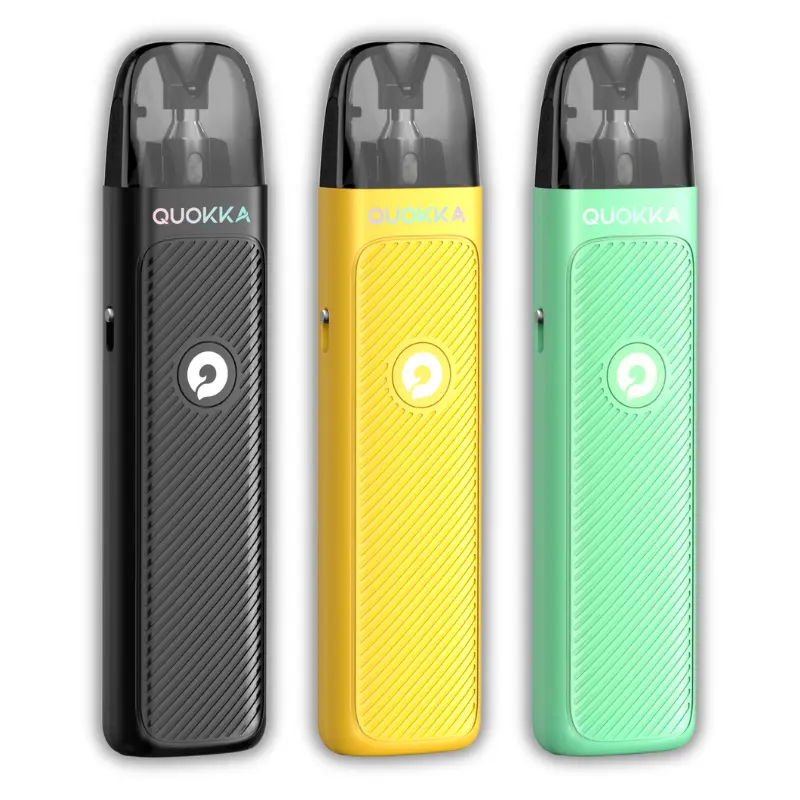
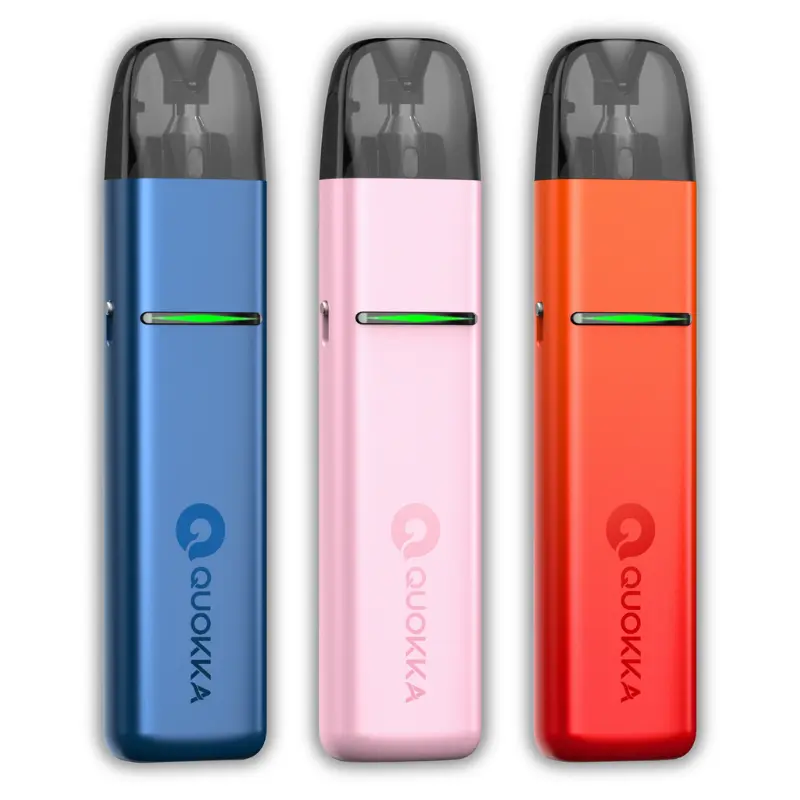
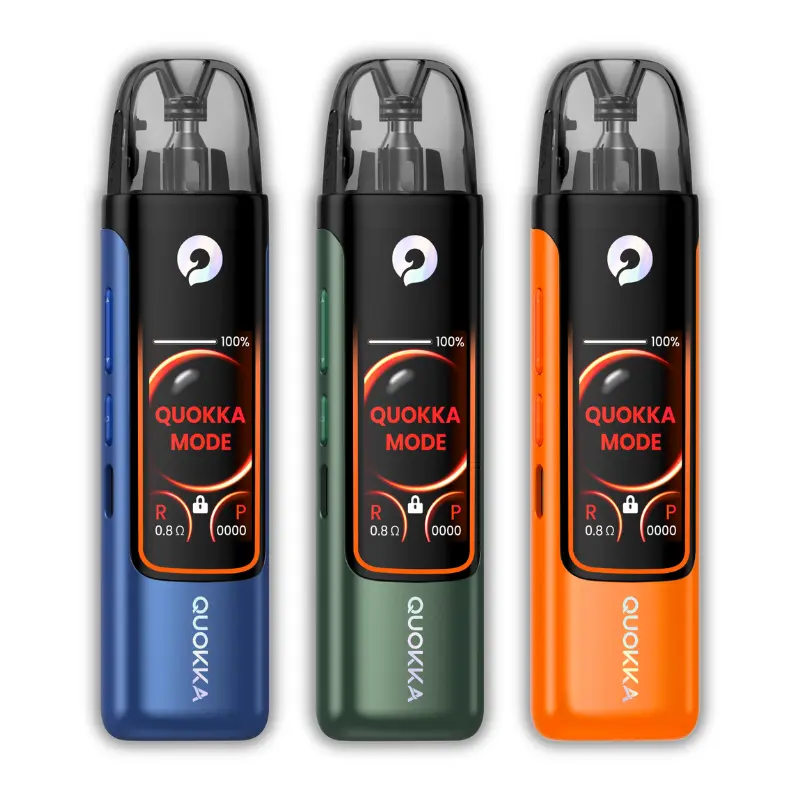
Four listings sit on this shelf, priced from £6.99 to £20.99, and not one of them holds any e-liquid. That is the whole of the Hayati Quokka range: three refillable bodies and a pack of replacement pods, all sold empty, none of them able to do anything at all until liquid has been bought from a different part of the site.
The position is worth establishing by counting rather than by adjective. Of the 492 listings in this catalogue, exactly four publish no flavour and no nicotine strength, for the simple reason that there is nothing inside them to have either. All four are here. Thirty of the 52 shelves on this site are flavour shelves, and not one tile from this range appears on any of them, which is true of no other range in the catalogue.
So the single most useful thing to know before scrolling the grid is that the grid is doing a different job here than it does anywhere else. On every other shelf a tile is a flavour, and the hardware, if there is any, arrives attached to it. On this one a tile is an object, and the flavour is a separate purchase made on a shelf that shares no product with this one. Three of these four tiles publish an identical specification and are separated only by price, which would be absurd on a flavour shelf and is entirely ordinary on a hardware one.
New ProductsHayati PodsHayati Prefilled Pods & RefillsHayati Pod KitsHayati Prefilled Pod KitsHayati E-LiquidsHayati Pro Ultra Plus Prefilled Pod Kits & PodsHayati Pro Max Plus PodsHayati Pro Max Plus Prefilled Pod KitHayati Pro Max Nic SaltsHayati Pro Ultra Plus PodsHayati Pro Ultra Plus Prefilled Pod KitHayati Mini UltraHayati RubikHayati Mini Ultra PodsHayati Mini Ultra Prefilled Pod KitHayati Pro Max 50-50 E-LiquidHayati Pro Max 70-30 E-LiquidHayati Rubik Prefilled Pod KitHayati Rubik PodsHayati Nicotine PouchesHayati QuokkaBerry VapesRaspberry VapesIce VapesBlueberry VapesStrawberry VapesCherry VapesSweet VapesExotic VapesLemon VapesBlueberry Raspberry VapesPeach VapesWatermelon VapesApple VapesLemon Lime VapesMango VapesPineapple VapesGrape VapesLemonade VapesMint VapesCola VapesStrawberry Raspberry Ice VapesBlackcurrant VapesJuicy Peach VapesMr Blue VapesSummer Dream VapesBanana VapesKiwi VapesMenthol VapesOrange VapesFresh Mint Vapes
What is on this shelf, counted rather than asserted
The claim that this is the catalogue's only hardware-only shelf is the sort of thing a retailer says lightly, so here it is set against the data instead.
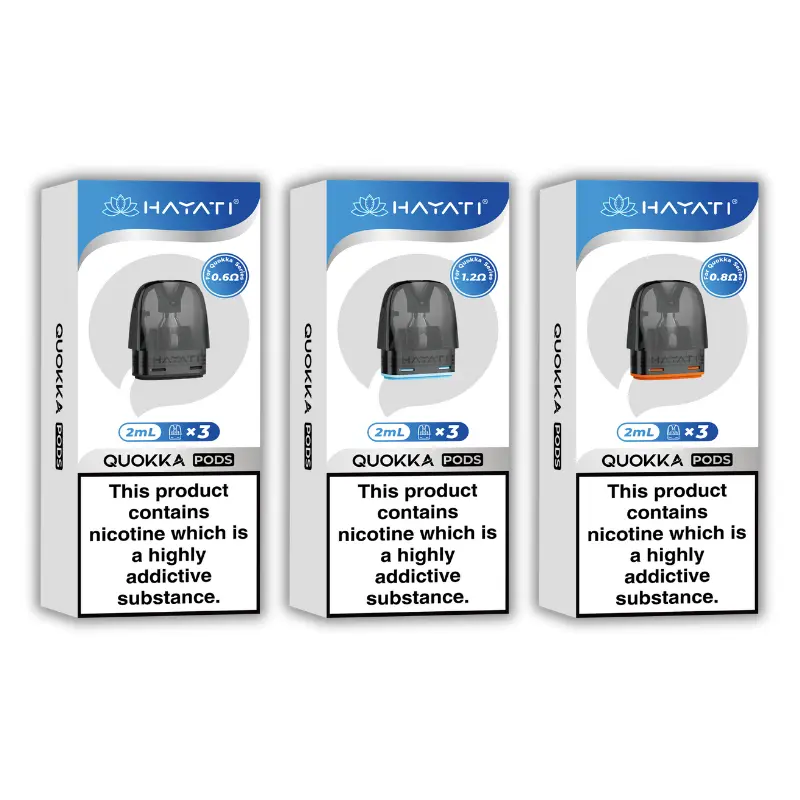
Start with the flavour field. Every listing on this site carries one, except four. The Hayati Quokka Lite Pod Vape Kit at £8.99, the Hayati Quokka Elite Pod Vape Kit at £14.99, the Hayati Quokka Pro Pod Vape Kit at £20.99 and the Hayati Quokka Pods at £6.99 leave it blank, and they leave the nicotine strength blank alongside it. Those two blanks are not omissions by a lazy copy desk. They are the correct entry for an object that has not yet met any liquid.
Now the shelf tagging, which is the sharper test. Thirty of the 52 shelves on this site file products by what they taste of. A bottle of blue raspberry salt turns up on four or five of them; a prefilled pod of the same flavour turns up on the same ones. Twenty-two listings in the whole catalogue sit on none of those thirty shelves, and four of the twenty-two are the entire contents of this range. Every other range here, including the oral format on Hayati Nicotine Pouches, puts most of its members onto at least one flavour shelf, because most of its members taste of something. This range puts none of its members on any of them, because none of them tastes of anything.
Two counts, then, and both say the same thing from different directions. Four tiles out of 492 arrive with nothing in them. Four tiles out of 492 are unreachable by anybody browsing for a taste. They are the same four tiles and they are all on this page.
One honest qualification before moving on, because a count that ignores its awkward cases is not worth much. The eleven listings on Hayati Nicotine Pouches hold no e-liquid either. They are not hardware, though: each one publishes a flavour and a 12mg strength, each one is consumed and thrown away, and each one is something you buy repeatedly rather than an object you keep. The line this shelf sits on the far side of is not "contains liquid" but "is a thing rather than a substance", and on that line the pouches are on the same side as the pods and the bottles.
What is deliberately not here
Liquid. That is the boundary, and it is unusually clean.
There is no prefilled Quokka. There is no Quokka flavour list. There is no bundle on this shelf that pairs a body with a starter bottle, and Hayati do not publish one. If you buy the cheapest tile here you will own a working device and nothing to put in it, which is a state no other purchase on this site can leave you in. Every prefilled kit across Hayati Prefilled Pod Kits works the moment the box is open; none of these does.
Also not here: any of the wider brand's platform vocabulary. No puff rating appears on any of the four, and that absence is correct rather than a gap, since a puff figure is an estimate attached to a sealed volume of liquid and there is no sealed volume to estimate from. No ice level, no sweetness, no dual-flavour arrangement, no strength choice. The specification is short because the product is short: a body, a pod, and a note asking you to let a fresh fill stand for a few minutes before drawing on it.
How to read a grid of objects when you are used to reading a grid of flavours
A product grid is a comparison instrument, and the instrument was built for consumables. It sorts by price, it shows a capacity, and it puts a photograph on every tile. That is entirely sufficient when the only variable is which fruit is sealed inside, which is the situation on the other fifty-one shelves. Point it at four objects and it starts returning answers to questions nobody asked.
The first symptom is the one you can see without clicking anything. Three of these tiles publish the same two numbers, a 2ml pod and an 1100mAh battery, and are separated by twelve pounds end to end. Put three tiles on a flavour shelf that differ only in price and a buyer would assume a pricing error. Put three bodies on a hardware shelf that differ only in price and the arrangement is so common nobody blinks. Materials, finish, size, the tightness of the joint, how a pod seats, how a cell behaves in month fourteen: those are the things that separate one body from another, and not one of them is the kind of fact that fits in a cell on a grid. The Quokka Pro page takes that argument the whole way, setting out why a specification sheet structurally cannot carry the top price in a hardware range and why a durable object cannot be bought on numbers the way a consumable can. It is the right page for it and it is not being rebuilt here.
The second symptom is the fourth tile. Hayati Quokka Pods is not a smaller version of the other three, and it is not a flavour variant, which is what a fourth tile usually is. It is the consumable: the part that depletes, that you buy again, and that quietly sets the running cost of the whole arrangement. On a prefilled shelf the consumable and the liquid are one object with one price, so the running cost is printed on the tile. Here the consumable has its own tile and its own price and no published lifespan, which is why the Quokka Pods page is arithmetic rather than description: it works out what the pod contributes per millilitre once a pack price is spread across an unpublished number of fills, and finds that the answer is a wide range rather than a figure.
Third, and least obvious: the photographs are doing less work than usual. On a flavour shelf the picture is a label, and the label carries the name of the thing you are buying. Here the picture is a picture of an object whose material, weight and finish are the entire basis of the price difference, taken under lighting the manufacturer chose. It is the least informative image on the site about the most image-dependent purchase on the site.
The four decisions, in the order they actually arise
Buying from this shelf is a sequence, and it is a different sequence from anywhere else on the site. Elsewhere there is one decision, which fruit, and it is made once at the tile. Here there are four, they are strictly ordered, and getting them out of order is how people end up with an expensive body and no liquid that suits it. Each one below is routed to the page that already owns it, because three of the four have been worked through properly on the product pages and repeating them badly here would help nobody.
One: does refilling suit you at all, before any tile is chosen
This is the prior question and it is the only one that can rule out the entire shelf. It is not about which Quokka. It is about whether you want to be the person who supplies the liquid.
The inversion is the whole of it. A prefilled listing sells you a body and a measured volume of one liquid in a single payment, and the two cannot be separated afterwards. A tile on this shelf sells you the body alone and hands the liquid decision back to you, to be made again every ten millilitres, forever. That trade has a price in money and a price in handling, and the Quokka Lite page prices both. It runs the break-even against every prefilled format Hayati sell and gives the volume of liquid at which each comparison flips, which is the honest form of the answer: about fourteen millilitres against the Mini Ultra route, about thirty-one against Pro Max Plus, about forty-four against Pro Ultra Plus, and about eighty-four against Rubik. It also counts the handling, since a 2ml pod means filling roughly five times per bottle rather than swapping a sealed pod once per twelve or twenty-two millilitres.
Read that page before this one if you have not already decided. If the answer comes back no, this shelf is finished with you, and the places to go instead are Hayati Pro Ultra Plus Prefilled Pod Kit for the least handling, Hayati Rubik Prefilled Pod Kit for the cheapest sealed liquid, and Hayati Pro Max Plus Prefilled Pod Kit for the widest flavour list.
Two: which body, given that the specification will not tell you
Only once the format is settled does the tile choice arise, and it arises in an unusually bare form. All three bodies publish a 2ml pod. All three publish an 1100mAh battery. Hayati themselves state the sameness in their own copy on two of the three listings. Every other attribute a buyer might reason from is absent from all three equally, so there is nothing to trade off.
Two pages carry the two halves of this. The Quokka Elite page owns the behavioural half: why a middle tier takes a disproportionate share of a three-step range precisely when the attributes are thin and the options are hard to separate, why that is the compromise effect and not the decoy effect, and what the six pound step actually costs once you denominate it in the length of time you expect to keep the thing. Its step arithmetic runs from about 6p a week if the body lasts two years to about 46p a week if you abandon the format after three months, which is the useful way round to look at it, because the answer depends on your habits rather than on the device. The Quokka Pro page owns the other half, arguing from the top of the ladder that no specification sheet could justify the price and that the honest description of the purchase is trust rather than evidence.
What this shelf can add is one figure neither page needed, because it only makes sense when all four tiles are in view at once. Put the body price on the same unit as the other two cost lines, pence per millilitre of liquid passed through it, and the twelve pound spread across the range shrinks to something small. Spread across 520ml, which is one 10ml bottle a week for a year, £8.99 is 1.7p per millilitre, £14.99 is 2.9p and £20.99 is 4.0p. The entire distance from the bottom of the shelf to the top is 2.3p per millilitre. Halve the volume and the figures roughly double, to 3.5p, 5.8p and 8.1p, and the spread is still under 5p. That is worth holding in mind while looking at a grid where the price difference between tiles is the most visually prominent thing on the page.
Three: what goes in it, which is a purchase on another shelf entirely
Nothing on this shelf answers this and nothing on this shelf can. The liquid comes from Hayati E-Liquids, which holds 105 bottles and shares no product with this page at all.
Those 105 split three ways, and only one of the three is a realistic partner for a 2ml pod. Hayati Pro Max 70-30 E-Liquid holds 20 listings, and Hayati's own copy on them points that ratio at sub-ohm tanks and low-resistance coils and says plainly that a small pod may not keep up with something thicker. Take the manufacturer at their word and that shelf is out, so Fresh Mint Hayati Pro Max 70/30 E-Liquid is a bottle to walk past rather than one to buy. Hayati Pro Max 50-50 E-Liquid holds 20 listings at the right ratio, but every one of them is supplied at 0mg and no nicotine shot appears anywhere in these 492 listings, so Fresh Mint Hayati Pro Max 50/50 Shortfill E-Liquid is 120ml of nicotine-free liquid and nothing else.
Which leaves Hayati Pro Max Nic Salts, 65 bottles, 10ml each, 10mg, a 50:50 ratio, and 64 of the 65 at £2.49. That is the shelf a Quokka owner actually shops on, and it is the only one. Everything downstream of buying a body on this page happens there.
Two facts about that shelf change the purchase and are worth having before you order rather than after. The first is arithmetic: £2.49 for 10ml is 24.9p per millilitre, and a 2ml pod means a bottle is five fills. The second is a plain difference of fact between the two supply routes, stated as a fact and nothing more. Every bottle in the salt line is listed at 10mg. Every prefilled pod format on this site is listed at 20mg. Refilling from Hayati's own bottles does not reproduce the figure printed on Hayati's own pods, and a buyer who assumed it did would be surprised on the first fill.
The flavour argument for being on this shelf at all is countable, and the Quokka Lite page counted it: sixteen bottled flavour names exist in no prefilled pod anywhere in the range, so a refillable body is the only route to them within the brand. The mint and menthol end is where that bites hardest, because plain unfruited cold is well represented in the bottles and thin on the sealed shelves. Menthol Hayati Pro Max Nic Salt is the unadorned version, Black Mint Hayati Pro Max Nic Salt puts a darker, more liquorice-leaning edge under it, and Fresh Menthol Mojito Hayati Pro Max Nic Salt adds lime and sugar to the cold without turning it into a fruit. Spearmint Hayati Pro Max Nic Salts is the softer, sweeter mint of the group, Fresh Mint Hayati Pro Max Nic Salt the plainer one, and Lemon Mint Hayati Pro Max Nic Salt hangs a citrus over it.
The confectionery end of the bottled range is broad too, and it is the part with a consequence attached. Gummy Bear Hayati Pro Max Nic Salt and Blue Razz Gummy Bear Hayati Pro Max Nic Salt are the sweet-counter pair, Strawberry Jelly Beans Hayati Pro Max Nic Salt runs the same idea through red fruit, Bubblegum Ice Hayati Pro Max Nic Salt chills it, and Rainbow Hayati Pro Max Nic Salt is the mixed-sweets blend whose name resolves into no particular fruit. Mr Pink Hayati Pro Max Nic Salt is named for an impression rather than an ingredient, which on a 10ml bottle is a much smaller risk than it is on a sealed pod you cannot abandon. Elsewhere in the 65 there is Bru Ice Hayati Pro Max Nic Salt for the chilled soft-drink profile, Red Berry Ice Hayati Pro Max Nic Salt for cold mixed red fruit, Kiwi Grape Raspberry Hayati Pro Max Nic Salt and Lemon Peach Passionfruit Hayati Pro Max Nic Salt for the three-fruit blends, Strawberry Mojito Hayati Pro Max Nic Salt for mint and lime under a red fruit, and at the far end Tobacco Hayati Pro Max Nic Salt and Hayati Pro Max Shisha Nic Salts, which anchor the unsweetened end of the range.
One listing on that shelf is worth flagging because it will confuse anybody shopping by name. Hayati Pro Max Nic Salts E-Liquid is titled with the range and no flavour, and it is the single bottle priced at £2.79 rather than £2.49. A title that names a range instead of a taste is exactly the kind of listing that files oddly across the site, so read what is on it rather than inferring from the name.
Four: what the consumables will cost, which nobody has published
Last, and the one most often skipped, because by this point the buyer has already worked out the liquid cost and feels finished. The pod is a separate, recurring purchase, and the Quokka Pods page does the work on it properly.
The short form of its finding, cited rather than rebuilt: the pack price is published at £6.99 and the two numbers you would need to turn that into a cost per millilitre, how many pods are in a pack and how many fills each one survives, are not published at all. Running the formula across a plausible spread of both gives a consumable line anywhere from about 2.9p to about 69.9p per millilitre. Add the liquid and the all-in figure sits between roughly 28p and roughly 95p, with the middle of that range landing within half a penny of a sealed Pro Ultra Plus pod. That page also identifies the two things that move you along the range, how heavily sweetened your liquid is and how often you change flavour, and both are under your control and neither is on any label. If you intend to buy from this shelf and you have not read that page, the running cost you have in your head is almost certainly the liquid line alone.
The total cost sits on three shelves and no tile shows it
Here is the thing this shelf is actually for, and it is not a comparison of four tiles. It is that owning one of these has three cost lines, they are listed in three different places, and no single product page in the catalogue puts all three in one view. They are put together below. The numbers are each other pages' work, cited so that a buyer can see the shape of the whole before committing to any part of it.
| Cost line | Where it is listed | What it comes to per ml | Which page does the arithmetic |
| The body, bought once | This shelf | 1.7p, 2.9p or 4.0p, spreading £8.99, £14.99 or £20.99 across 520ml | The Elite page on the step, the Pro page on whether a top price can be justified |
| The pod, bought repeatedly on an unknown schedule | This shelf, and also Hayati Pods | Somewhere between 2.9p and 69.9p, depending on two unpublished figures | The Quokka Pods page |
| The liquid, bought every 10ml | Hayati Pro Max Nic Salts, under Hayati E-Liquids | 24.9p, from £2.49 for a 10ml bottle | The Quokka Lite page, which runs it against every sealed format |
Add the three and the total runs from about 29.5p per millilitre at the favourable end to about 98.8p at the unfavourable one. That spread is more than three to one, and almost all of it comes from the middle row, the one line of the three that nobody can pin down.
Two observations follow that are hard to see from any individual tile.
The first is about proportion. The body is the most prominent thing on this grid, it is the tile people spend the longest looking at, and it is the smallest of the three cost lines by a wide margin. At the favourable end it is under 6 per cent of the total. Even at the dearest body and the thriftiest liquid habit it stays in single-figure percentages. The tile that the shelf makes look like the decision is the one that matters least to what the arrangement costs you.
The second is about where the argument for being here actually lives. It is the liquid line. At 24.9p a millilitre, Hayati's own bottles undercut every sealed format they sell, and that gap is the whole case for a refillable within this brand. The pod line can give the gap back, which is the uncomfortable part, and the body line is a rounding error either way. If the arithmetic does not appeal, there is no other reason to be on this shelf, because there is no flavour here to want.
Being straight about that: the running cost is the reason to buy from this page, the sibling listings have already done the sums in detail and in public, and this section is a routing table rather than a fourth attempt at them. Follow the links in the right-hand column before you order.
The £6.99 coincidence, which is worth a second look
Forty-one listings in this catalogue are priced at £6.99. Forty of them are 120ml bottles. The forty-first is a pack of empty pods.
That is not an accusation of anything, since the two products do entirely different jobs and one of them is nicotine-free. It is a useful calibration, though, for anybody about to treat the pod pack as a minor accessory purchase. The same money buys either the consumable part of the device or a very large quantity of liquid, and the pod is the one with no published lifespan attached to it. The Quokka Pods page pushes the comparison a step further and sets the pack against the £8.99 Quokka Lite, which is the sharper version of the same point.
Why most of this site's advice does not apply to you here
Almost everything written across these fifty-two shelves is in service of one decision: pick a flavour, and commit to a volume of it. That is the right decision to help with, because on 488 of the 492 listings it is the only decision there is. It is also, on this shelf, entirely beside the point.
Spelling out what does not transfer is more useful than a general warning, so here is the list.
- Every sweetness, cooling and tartness comparison. Those are properties of a liquid. The tiles here have no liquid, so they have no position on any of those scales, and a page that tried to give them one would be inventing.
- Puff ratings and the arithmetic built on them. A great deal of comparison across the sealed shelves runs off manufacturer puff figures, always laboratory estimates and always attributed as such. None of the four listings here carries one, and none could.
- Capacity as a measure of value. On Hayati Pro Ultra Plus Prefilled Pod Kits & Pods a bigger number means more liquid for your money. The 2ml on these tiles means the opposite of that: it is the smallest liquid figure published anywhere on the site and it describes how often you will be interrupted, not how much you are getting.
- Naming conventions and the mood-name problem. Several pages here are about listings named for an impression rather than an ingredient, and how to buy sensibly when the name settles nothing. Lite, Elite and Pro are also uninformative names, but they are uninformative about a different thing, and the remedy is different too.
- Dual-flavour collars, twin pods, and rotation strategy across sealed pods. All of that is about running two liquids without buying two devices. On a refillable the equivalent problem is solved with a second pod, and the constraint is carryover rather than cost.
- Strength selection. On the sealed shelves the figure is fixed at the tile. Here it is fixed at a different tile, on a different shelf, at a different checkout.
What does still apply, and it is a short list: the bottled shelf, and nothing else. Hayati Pro Max Nic Salts is the one place on this site whose writing is directly useful to somebody who has bought a body here, because it is about the only thing you will keep buying. Everything on that shelf about how a salt behaves in a small coil, about where the cooling sits, about reading the flavour names and about the single strength across all 65 bottles is written for exactly your situation. Read it as the second half of this page.
The two large-bottle shelves are worth a visit only to understand why they are not for you. Hayati Pro Max 50-50 E-Liquid is the right ratio at the wrong strength for anybody who wants nicotine, and Hayati Pro Max 70-30 E-Liquid is ruled out for a pod this size by the manufacturer's own wording. Knowing why costs a minute and saves a wasted order.
The sealed shelves, meanwhile, stay useful for one purpose and one only: pricing the alternative. If you want to know whether the arithmetic above is worth the handling, the numbers you are comparing against are on Hayati Pro Max Plus Pods, Hayati Pro Ultra Plus Pods, Hayati Rubik Pods and Hayati Mini Ultra Pods. Their flavour writing is not for you. Their prices and volumes are.
Formats, fitment, and the things the data does not settle
Three of the four tiles are bodies and one is a pod pack, so the format section here is mostly about how those two relate, and a fair amount of it ends in a shrug.
What is published. Each of the three bodies states a 2ml pod and an 1100mAh battery, and those are the only two quantities on any of the three. They are worth a sentence each because they behave differently from how they look. The 2ml figure is the one that shapes ownership: it is the smallest liquid capacity attached to any device on this site, it makes a 10ml bottle into five fills, and it means the device is only as useful as your proximity to a bottle. The 1100mAh figure is the largest battery capacity published anywhere in the catalogue, carried by these three listings and nothing else, and it is probably the least consequential number on the shelf, because on a device with a reservoir this small the thing that interrupts you is the refill rather than the charge. Neither figure separates the three bodies, because all three publish both.
The pods listing publishes neither. It states no capacity and no battery, for the obvious reason on the second and a less obvious one on the first: the 2ml figure that everybody quotes for a Quokka pod comes from the three kit listings, not from the pod listing itself. That is a reading across the range rather than a printed fact about the product, and it is worth knowing which it is.
What is not published, across all four listings equally: coil resistance, how the device takes a charge, box contents beyond the device and its pod, dimensions, weight, materials, finish, whether airflow can be adjusted, whether there is any control or display, how long a pod lasts in fills or millilitres or weeks, and whether the pods pack fits one body or all three. Hayati ask buyers to confirm that a pack suits the model they own, they publish no compatibility table and no pod code, and a shared range name on a box is not a guarantee that a part seats. Settle that question once with somebody who has the packaging in front of them, and do not take the answer from a retail page, this one included. Hayati also do not publish how a pod is held in the bay, so do not assume magnets or any particular contact geometry from a photograph.
The coil blank is the one with a practical consequence, and it is a consequence the sealed shelves do not have. On a prefilled pod a missing resistance figure only means you cannot predict the draw. Here it means you cannot predict which liquids the pod will wick, which is a question you have to answer at a second checkout. With no number to reason from, a thin 50:50 is the conservative choice, and all 65 bottles on Hayati Pro Max Nic Salts happen to be exactly that.
Cross-range fitment does not arise here in the usual way, because nothing else in the catalogue is refillable. The pods on Hayati Prefilled Pods & Refills arrive sealed and full, so there is no scenario in which one of them goes into a Quokka body or a Quokka pod goes into anything else. That removes a whole category of confusion that costs buyers money elsewhere on the site, and replaces it with a narrower one: whether a Quokka pod fits your Quokka.
Price, and what the spread is and is not made of
£6.99 to £20.99 is the shelf's range, and placing it against the rest of the catalogue is more informative than reading it on its own.
Thirteen distinct prices cover all 492 listings, and most of them are crowded: 141 listings share one price, 90 share another, 64 share a third. The three bodies here do not share their prices with anything. Each of £8.99, £14.99 and £20.99 belongs to exactly one product in the whole catalogue, and the two dearest listings on the site are both on this shelf. Nothing else here costs more than £11.99.
What the spread is not made of is capacity, battery or liquid, since all three bodies publish the same two figures and none of them publishes a third. What it is made of is not documented anywhere, which is the honest answer and the one the Quokka Pro page works through at length. The plausible candidates are all real differences between well made and poorly made objects and all invisible on a grid.
The fourth price is a different kind of number. £6.99 for the pod pack is a recurring cost dressed as a one-off, and how often it recurs is the largest single unknown in the whole arrangement. Treat it as stock rather than as hardware.
One comparison for scale, because prices on this shelf are easy to misread next to each other and harder to misread next to the rest of the catalogue. The dearest sealed kit Hayati sell, on Hayati Pro Ultra Plus Prefilled Pod Kit, is £11.99 and comes with 22ml of a named liquid in it. The cheapest tile on this shelf is £6.99 and comes with nothing. The dearest is £20.99 and also comes with nothing. That is not an argument against the shelf, since the running cost is where the case is made, but it is the comparison a buyer should have consciously made rather than drifted past.
Where to go next
If you have decided against refilling, the sealed side of the catalogue is organised by how much liquid arrives in one purchase. Hayati Mini Ultra is the smallest commitment, with kits and pods split across Hayati Mini Ultra Prefilled Pod Kit and Hayati Mini Ultra Pods. Hayati Rubik is the value platform per millilitre once the body is paid for. Hayati Pro Max Plus Prefilled Pod Kit carries the deepest flavour list in the range and Hayati Pro Max Plus Pods the matching bare pods. Hayati Pro Ultra Plus Prefilled Pod Kits & Pods is where the handling burden is lightest.
If you have decided in favour, your next stop is Hayati Pro Max Nic Salts and you will keep going back to it. Hayati E-Liquids is the level above, if you want to see the three bottled shelves side by side and understand why two of them are not for a pod this size.
If you are comparing the whole hardware picture rather than just this corner, Hayati Pod Kits holds 174 devices and 171 of them also appear on Hayati Prefilled Pod Kits, which is the cleanest way to see how small the refillable corner of this catalogue is. The same split runs through Hayati Pods, which holds 202 listings of which only one is refillable, and Hayati Prefilled Pods & Refills, which holds the other 201.
And if none of the format questions on this page are the thing you are weighing, Hayati Nicotine Pouches is the one part of the catalogue that involves no device at all, while New Products and the full Hayati catalogue are the places to price everything against everything before deciding.
Closing
This is the catalogue's only hardware-only shelf, and a buyer who does not notice that will misread every tile on it. Four listings, all empty, out of 492. Three bodies publishing an identical 2ml pod and 1100mAh battery across a twelve pound spread, and one pack of pods that is stock rather than equipment. No flavour, no strength, no puff rating, and no position on any of the thirty flavour shelves that organise the rest of the site.
The order of the decisions is the practical takeaway. Settle whether refilling suits you before looking at a single tile, using the Quokka Lite page's break-even figures. Then choose a body knowing that the published specification will not help and that the price spread is under 5p a millilitre in use. Then go to the bottled salts, where the liquid costs 24.9p a millilitre at 10mg, and accept that this is a different figure from the 20mg on the sealed pods. Then read the pods page before you assume the pod is free, because it is the one line of the three that can undo the saving on its own.
Buy from here if the arithmetic appeals and the handling does not put you off. Buy from a sealed shelf if you would rather the liquid decision were already made. Keep bottles capped and upright, away from heat, and somewhere children and pets cannot get at them, and take spent hardware to a shop take-back point or a council electrical collection rather than putting it in the bin.
Strictly for adults aged 18 and over. Nicotine is an addictive substance.
Frequently asked questions
Does anything on this shelf come with e-liquid in it?
No, and that is the defining feature of the range rather than an oversight. All four listings are sold empty. Three are bodies you fill yourself and the fourth is a pack of replacement pods with no device in it. None of them will do anything until you have bought a bottle from Hayati Pro Max Nic Salts or another bottled shelf.
How many listings in the whole catalogue arrive empty?
Four, out of 492, and all four are on this shelf. They are the only listings that publish no flavour and no nicotine strength, because there is nothing in them to have either. They are also the only four that appear on none of the thirty flavour shelves this site uses to file products by taste.
What actually separates the Lite, the Elite and the Pro?
On published data, the price and the name. All three state a 2ml pod and an 1100mAh battery, and Hayati's own copy says the figures match on two of the three listings. No coil resistance, dimension, weight, material, charging arrangement or warranty term appears on any of them. The Quokka Elite page works through what that does to the choice and the Quokka Pro page argues the same gap from the top of the ladder.
Which bottled liquid suits a 2ml pod like this?
A thin 50:50, which is what all 65 bottles on Hayati Pro Max Nic Salts are. No coil resistance is published for any Quokka listing, so there is no number to reason from and caution is the only basis left. Hayati's own wording on their 70/30 bottles points that ratio at sub-ohm tanks and low-resistance coils and warns that a small pod may not keep up, so a bottle such as Fresh Mint Hayati Pro Max 70/30 E-Liquid is the wrong purchase for this hardware.
What nicotine strength do these come in?
None. Strength is a property of the bottle, not of the device, which is why these four listings leave the field blank. As a plain statement of what the catalogue holds: every bottle in Hayati's salt line is listed at 10mg, and every sealed pod format on this site is listed at 20mg. Refilling from Hayati's own bottles therefore does not reproduce the figure on Hayati's own pods.
What does it cost per millilitre to run one of these?
It has three lines and only one of them is fixed. The liquid is 24.9p a millilitre, from £2.49 for a 10ml bottle. The body works out at 1.7p, 2.9p or 4.0p spread across 520ml, depending which tile you bought. The pod is the problem: with the pack quantity and the fills per pod both unpublished, it lands anywhere between about 2.9p and about 69.9p. Added together the total runs from roughly 29.5p to roughly 98.8p, and the Quokka Pods page sets out why the middle row is so wide.
Why does a pack of empty pods cost as much as a 120ml bottle?
Forty-one listings here are priced at £6.99, and forty of them are 120ml bottles. The forty-first is the pod pack. The two do completely different jobs, and the bottles at that price are supplied at 0mg, so it is not a like-for-like comparison. It is a useful calibration though, because it shows that the consumable is not a trivial accessory, and the pod is the one with no published lifespan attached.
Do the replacement pods fit all three bodies?
Not established. Hayati sell the pods for the range and ask buyers to confirm that a pack suits the model they own before ordering. They publish no compatibility table, no pod code and no statement that one pod serves all three. Read that instruction literally, settle it once with someone who has the packaging, and do not infer an answer from a shared range name or a photograph.
Why is there no puff rating on any of these?
A puff figure is a laboratory estimate attached to a sealed volume of liquid, and there is no sealed volume here to estimate from. The blank is correct rather than missing. Where such ratings appear on the sealed shelves they are manufacturer estimates produced under laboratory conditions and not a record of anybody's real week.
How is a Quokka charged?
Hayati name no charging arrangement on any of the four listings, so this page has nothing to report on the subject. Pages across this site once stated a connector type for hardware whose specification never mentioned one, and those claims were removed rather than copied onward. If the answer would decide your purchase, read the packaging or ask before ordering.
Are the flavour shelves on this site any use to me if I buy one of these?
Only for finding bottles, and you have to filter. The flavour shelves mix sealed pods with bottles, and most of what is on them is a sealed pod that cannot go anywhere near a Quokka. The shelf written for your situation is Hayati Pro Max Nic Salts, which is the only supply route that is both the right ratio and carries nicotine.
Should I buy a body from here or a sealed kit instead?
Decide the format before the tile. The Quokka Lite page runs the break-even against every sealed format Hayati sell and gives the volume at which each comparison flips, which is the honest form of the answer. If you would rather not handle liquid roughly five times per bottle, Hayati Pro Ultra Plus Prefilled Pod Kit removes the chore entirely for £11.99 with 22ml in the pod.
Can I put the 120ml shortfills in a Quokka?
The 50/50 ones are the right ratio for a small pod, so nothing rules them out mechanically, but every listing on Hayati Pro Max 50-50 E-Liquid is supplied at 0mg and no nicotine shot appears anywhere in these 492 listings. A bottle such as Fresh Mint Hayati Pro Max 50/50 Shortfill E-Liquid is therefore 120ml of nicotine-free liquid at 5.8p a millilitre, which is a real option only if 0mg is what you want.