Home / Kiwi Vapes
Kiwi Vapes
Twelve tiles sit on this shelf as the catalogue stands today, and they resolve into five liquids. Strawberry Kiwi accounts for five of the twelve on its own, across three different platforms. Kiwi Cooler, Guava Kiwi Passion Fruit and Kiwi Banana take two apiece, and Kiwi Grape Raspberry is a single 10ml bottle. Prices run from £2.49 to £11.99, a spread that reflects format rather than fruit: the twelve include two bottles, five bare pods and five complete kits with hardware in the box.
The useful thing to know before you scroll the grid is that kiwi is not the headline on most of it. Kiwi comes first in the title on five of the twelve tiles and second on the other seven. It is never third. More to the point, only one of the five liquids, Kiwi Cooler, contains no other fruit at all, and that one arrives with a declared coolant attached to it.
So this is not twelve kiwi flavours. It is a small set of blends that needed something kiwi happens to supply, plus one recipe where the fruit is the subject. The rest of this page works out what that something is, groups the twelve by which job kiwi is doing in each, and says plainly what a buyer who simply wants to taste a kiwi can and cannot get here.
New ProductsHayati PodsHayati Prefilled Pods & RefillsHayati Pod KitsHayati Prefilled Pod KitsHayati E-LiquidsHayati Pro Ultra Plus Prefilled Pod Kits & PodsHayati Pro Max Plus PodsHayati Pro Max Plus Prefilled Pod KitHayati Pro Max Nic SaltsHayati Pro Ultra Plus PodsHayati Pro Ultra Plus Prefilled Pod KitHayati Mini UltraHayati RubikHayati Mini Ultra PodsHayati Mini Ultra Prefilled Pod KitHayati Pro Max 50-50 E-LiquidHayati Pro Max 70-30 E-LiquidHayati Rubik Prefilled Pod KitHayati Rubik PodsHayati Nicotine PouchesHayati QuokkaBerry VapesRaspberry VapesIce VapesBlueberry VapesStrawberry VapesCherry VapesSweet VapesExotic VapesLemon VapesBlueberry Raspberry VapesPeach VapesWatermelon VapesApple VapesLemon Lime VapesMango VapesPineapple VapesGrape VapesLemonade VapesMint VapesCola VapesStrawberry Raspberry Ice VapesBlackcurrant VapesJuicy Peach VapesMr Blue VapesSummer Dream VapesBanana VapesKiwi VapesMenthol VapesOrange VapesFresh Mint Vapes
Twelve tiles, five liquids, and what is not on the shelf
Two counts are worth separating before anything else is built on them. This shelf carries twelve tiles. Separately, twelve listings in the 492-row catalogue have the word kiwi in their own title. On this shelf the two figures happen to coincide, which is worth saying out loud rather than assuming, because tile counts and title counts have drifted apart elsewhere in this catalogue since same-liquid siblings started pooling their flavour tags. Here nothing was pooled in and nothing leaked out: every tile filed under kiwi names the fruit on its own label, and no listing that names the fruit is filed anywhere else. That makes this one of the tidier shelves in the range and means a count taken either way gives the same answer.
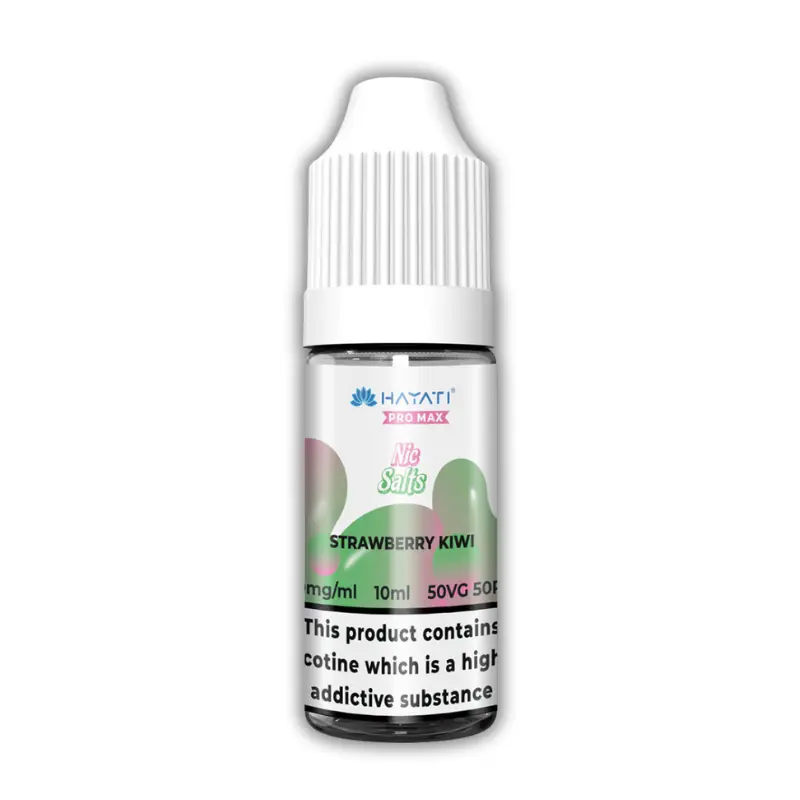
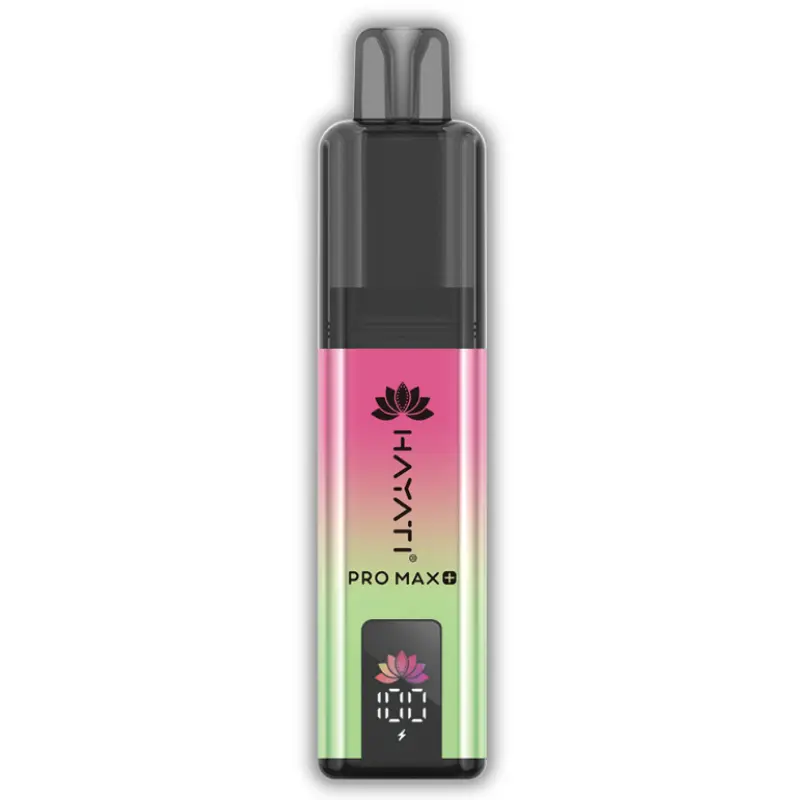
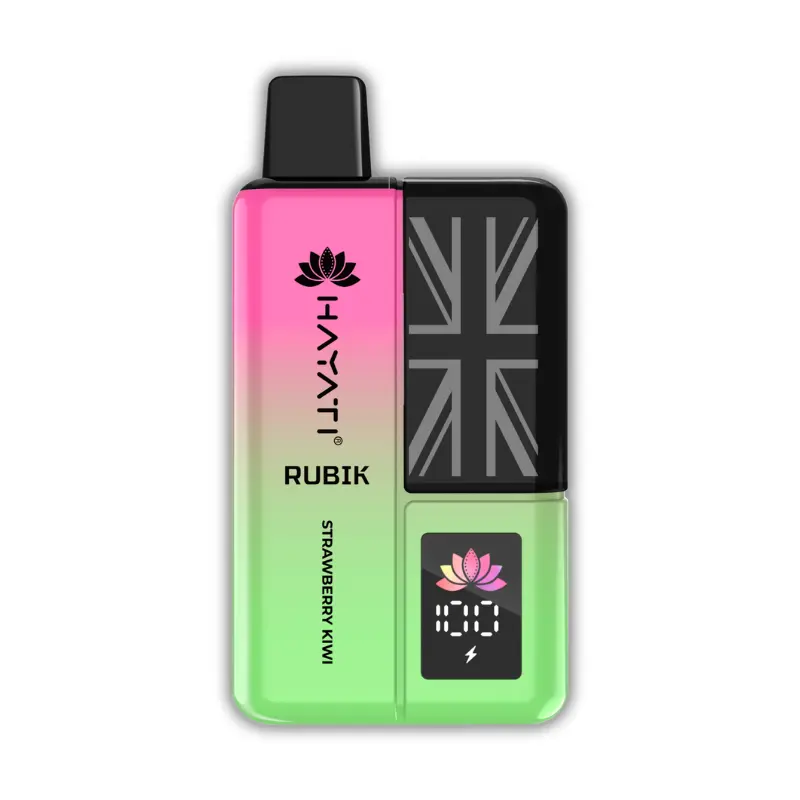
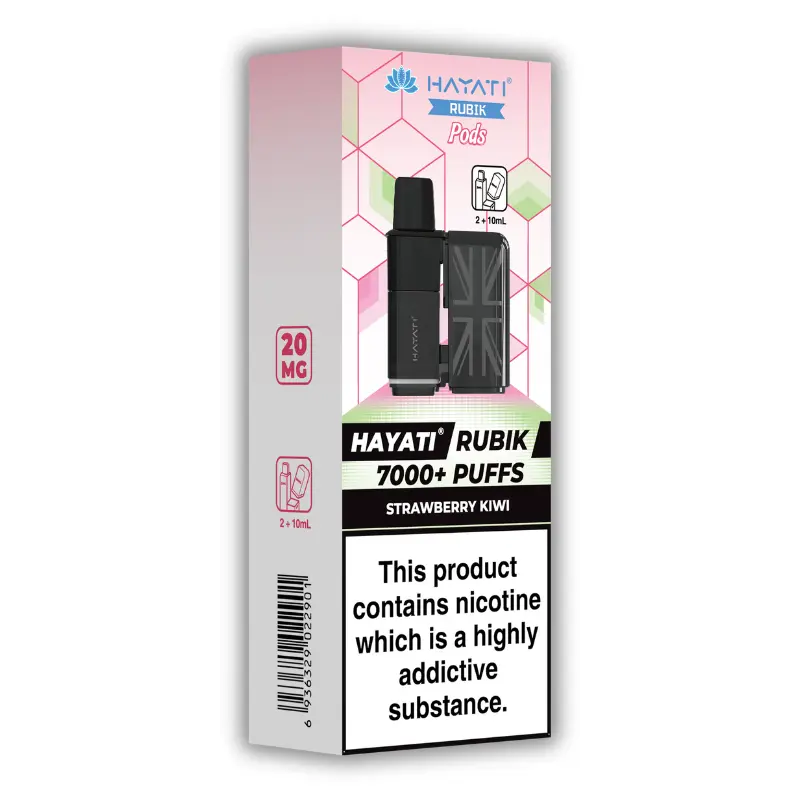
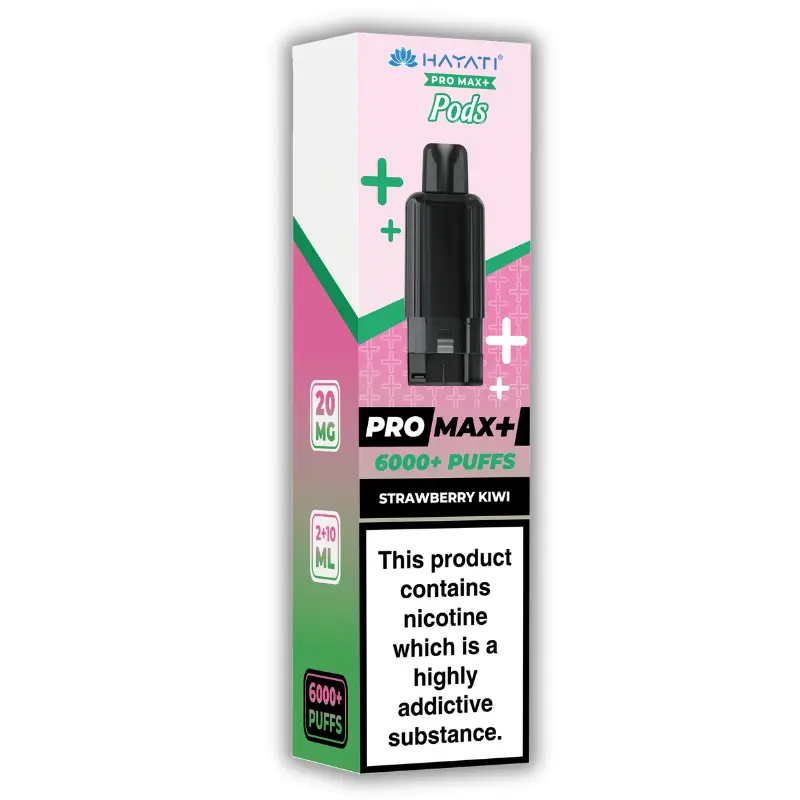
The five liquids divide unevenly. Strawberry Kiwi is far the most replicated, appearing as the Strawberry Kiwi Hayati Pro Max Nic Salt bottle, as the Strawberry Kiwi Hayati Pro Max Plus Pod Kit and its matching Strawberry Kiwi Hayati Pro Max Plus Pods, and again as the Strawberry Kiwi Hayati Rubik Prefilled Pod Kit with its own Strawberry Kiwi Hayati Rubik Pods refill. Five tiles, one recipe, three platforms. No other kiwi blend reaches three tiles. Kiwi Cooler exists twice, as the Kiwi Cooler Hayati Pro Max Plus 6000 Pod Kit and the Kiwi Cooler Hayati Pro Max Plus Pods. Guava Kiwi Passion Fruit exists twice on the same platform. Kiwi Banana exists twice on a different one. Kiwi Grape Raspberry exists once, in a bottle.
By format the split is neat: five complete kits, five bare pods, two bottles of nicotine salt. By platform it is lopsided. Six of the twelve are Pro Max Plus 6000 entries, three flavours each sold as a kit and as a bare pod. Two are Hayati Rubik entries, both the same liquid. Two are Pro Ultra Plus entries, both the same liquid. Two are 10ml bottles. If you already own hardware, that distribution matters more than the flavour descriptions do, because it decides how many of the twelve are even available to you.
What is deliberately absent is as informative as what is present. There is no uncooled kiwi on its own anywhere in the range. There is no kiwi against a citrus, which is the pairing you would expect a flavour house to reach for given that both bring acid. There is no sour-confectionery treatment of the fruit, the kind that makes the jaw tighten on the first draw, although the catalogue has several of those built on raspberry and cherry. There is no kiwi on the Mini Ultra platform, none among the pouches, and none in the shortfill or 70/30 bottles.
Cooling is the other absence worth flagging, because it runs against expectation. Only the two Kiwi Cooler entries carry any at all, and they are also the only pair here that appear on Ice Vapes and on Menthol Vapes. Everything else is a warm draw. For a fruit this sharp that is unusual, since the range's habit is to put a coolant behind almost anything bright. The rest get their freshness from acid instead, which is a different sensation and one that behaves differently over a long pod.
Nicotine is uniform enough to dismiss quickly. Ten tiles are prefilled at 20mg in salt form. The two bottles are 10mg in a 50/50 base. Nicotine is addictive, and those are the only two figures on the shelf. There is no variant of any kiwi blend here at a strength other than the one printed on its own listing.
Hired, not featured: three counts that say the same thing
The organising claim of this page is that kiwi on this shelf is a component rather than a flavour, and that a formulator reaching for it is reaching for a tool. That is easy to assert and worth counting first, so here are three independent measurements that all point the same way.
Title position. Kiwi comes first in the name on five tiles: both Kiwi Cooler entries, both Kiwi Banana entries, and the Kiwi Grape Raspberry Hayati Pro Max Nic Salt. It comes second on the other seven: both Guava Kiwi Passion Fruit entries and all five Strawberry Kiwi entries. It never appears third in a name, which on a range that routinely lists three fruits is itself a small piece of evidence. Naming order is not a specification and Hayati do not promise it tracks proportion, but across the wider catalogue the order in a title has proved a reasonable guide to what arrives first in a draw, and the pattern here is that kiwi is usually not the thing being sold.
The grammar of the descriptions. Read the twelve product descriptions and ask a single question of each: when kiwi is the subject of a sentence, is that sentence about how kiwi tastes, or about what kiwi does to another fruit? Three of the twelve take the first form. Both Kiwi Cooler entries describe the fruit for itself, which they can, because there is nothing else in the liquid. The Kiwi Grape Raspberry bottle gives kiwi the opening of the running order and describes its own brightness before handing over. The other nine take the second form, and they are blunt about it: kiwi lifts, kiwi cuts through, kiwi keeps the blend lively, kiwi stops the strawberry turning jammy, kiwi adds a green tangy lift. Nine descriptions out of twelve define the fruit by its effect on something else.
The base rate behind that. A raw count of restraint language would mislead, because the whole catalogue talks like that. So it is worth checking against the rest of the range. Ten of the twelve descriptions here contain a construction whose only job is restraint or cutting through, phrases along the lines of less sugary, not overly sweet, does not coat the palate, keeps it lively, rather than sticky. Across the other 480 listings the same family of constructions appears in seventy-nine, a fraction under seventeen per cent. Five times the base rate on a shelf this small is not a measurement of the liquid and should not be dressed up as one. It is a record of what several writers, working at different times on different platforms, kept reaching for when they had to explain why this fruit was in the bottle. That is weaker evidence than a tasting, and it is remarkably consistent.
The fourth test is the one that settles it. Take the kiwi out of each of the five liquids and see what is left. Guava Passion Fruit remains a two-fruit tropical blend, and Grape Raspberry remains a two-fruit blend, so those two recipes would still be recipes. Strawberry Kiwi becomes strawberry. Kiwi Banana becomes banana. Both of those are single fruits the range already sells with something else bolted on, so the blend does not survive the subtraction, the fruit does. And Kiwi Cooler becomes a coolant with nothing to cool. Counted by tiles rather than by recipe, three of the twelve would survive as blends, seven would collapse to a single fruit, and two would have nothing left at all.
Why kiwi and not one of the commoner acid sources is a question the Strawberry Kiwi Hayati Rubik Prefilled Pod Kit page works through properly, including the ranking of every acid-bearing fruit in the range by how many recipes use it, and the evidence from the word green appearing in every kiwi description without exception. That argument is not rebuilt here. What this page adds is the reason the answer holds across all five recipes rather than one.
Three separate properties of the fruit have been established elsewhere in this catalogue, and nobody has put them next to each other. The first is that kiwi's acid is a taste and not an aroma. It registers on the tongue rather than in the nose, which means, as the Kiwi Banana / Straw' Banana Hayati Pro Ultra Plus Pods page puts it, that no aroma compound can mask it however dominant that compound is. The second is that kiwi's green character comes from short-chain aldehydes of the hexanal family, a register almost nothing else in this range works in, so it does not compete for ground any fruity ester occupies. The third is that kiwi is mild: the Guava Kiwi Passion Fruit Hayati Pro Max Plus 6000 Pod Kit page found it the mildest of its three fruits by aroma while still bringing the most genuine acid of the three.
Put those together and you have described a component, not a flavour. Something that survives next to fruits which would drown anything aromatic, occupies ground nothing else in the range touches, and is too quiet to take the lead away from whatever it is placed beside. A heavy tropical needs exactly that and cannot supply it. A soft berry needs exactly that and cannot supply it either. Kiwi supplies acid and a green edge without claiming the identity of the blend, and that is why it turns up in five recipes that otherwise have nothing in common.
The clusters: grouping by the job kiwi is doing
Sorting this shelf by sweetness or by ice would produce two groups and tell you very little, since only two tiles are cooled and ten are sweet-partnered. Sorting by what kiwi is fixing produces five groups that map exactly onto the five liquids, and each group answers a different buying question.
One: the brake on a soft red fruit. Strawberry Kiwi, five tiles, £2.49 to £7.99
Strawberry is the range's most-used fruit and one of its least acidic. The Rubik kit page counted the strawberry listings and found that not one of them presents the berry as the sharp element in a blend: it is always the floor. That is a real problem over twelve millilitres, because a sweet low-acid fruit with nothing cutting it builds up on the palate, and by the end of a long session you are tasting the accumulation as much as the draw. Kiwi is hired here as the brake.
The five tiles are the same recipe at five prices. Cheapest is the £2.49 bottle, 10ml of 10mg salt in a 50/50 base for refillable low-power hardware you already own. Then the Rubik pod at £3.99, the Pro Max Plus pod at £5.49, the Rubik kit at £5.99 with the device included, and the Pro Max Plus kit at £7.99. All five prefilled entries hold 12ml at 20mg. Nothing about the liquid changes across them.
Who picks this cluster: anyone who wants a sweet-led fruit that keeps its shape to the end of a pod. Three of the five descriptions commit to a running order and all three put the sweetness first and the sharpness behind it, so expect strawberry to be what you taste and kiwi to be what stops it settling. If you want to hear more kiwi than that, this is the wrong cluster and the last section of this page says where to go. If you own a Rubik body, note that the Strawberry Kiwi Hayati Rubik Pods listing is the only kiwi of any kind on that platform, so liking this fruit is a narrow preference to hold there.
Two: the referee between two loud fruits. Guava Kiwi Passion Fruit, two tiles, £5.49 and £7.99
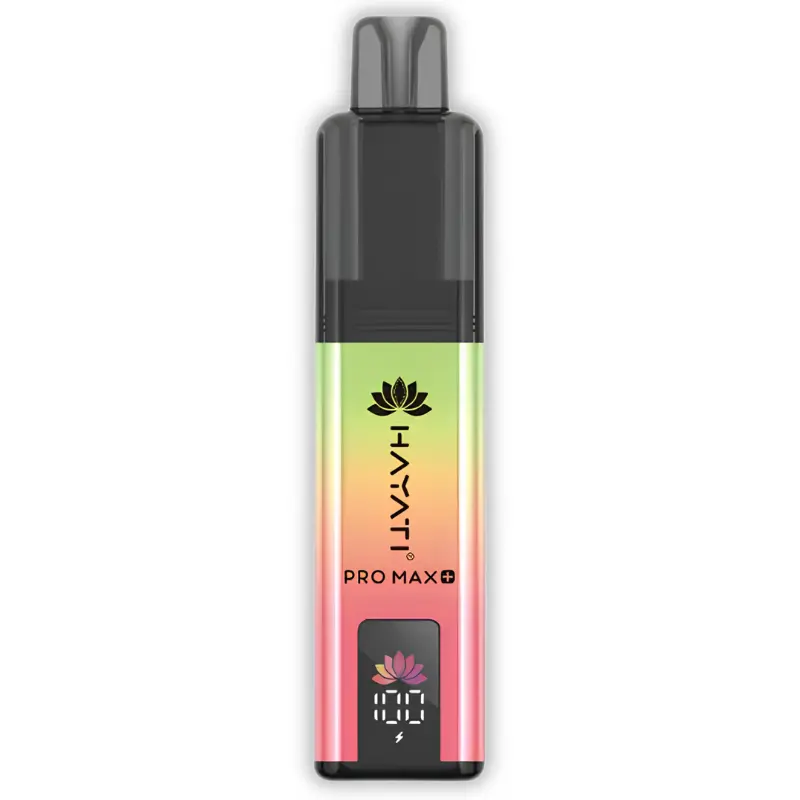
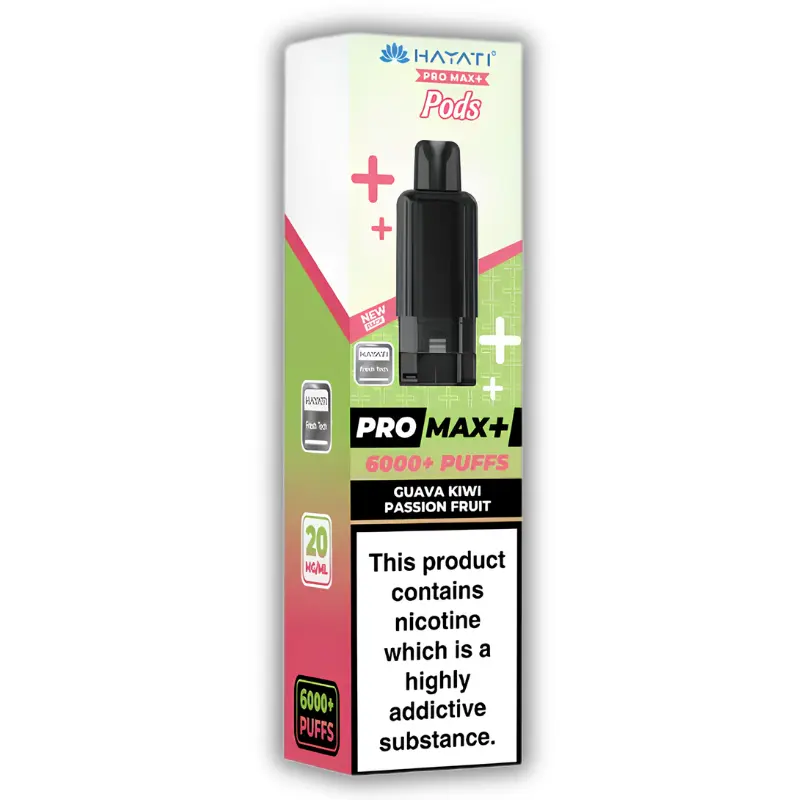
Guava is perfumed and pushes hard at the top of a profile. Passion fruit is one of the most assertive things in commercial flavouring and can take over a recipe at a fraction of a per cent. Both carry some of the same sulphur-bearing chemistry, which means they add rather than balance, and a blend of the two alone risks reading as one indistinct scented thing. The Guava Kiwi Passion Fruit Hayati Pro Max Plus Pods and kit pages between them work out what kiwi is doing about that: green and sour sit a long way from pink, musky and floral, so the kiwi partitions the other two rather than blurring into them. It is the referee.
That is a job you would never guess from the name, and it has a consequence for the draw. Kiwi owns the opening, because acid lands on the tongue faster than aroma travels, then hands over by the middle and the guava carries the rest. So this is the cluster where kiwi is most clearly hired and least clearly present: if the green sourness at the front is the part you want, you are buying a scented tropical blend to get it.
Who picks this cluster: someone who wants aromatic complexity and is happy for the kiwi to do structural work in the background. £7.99 buys the complete kit with the device, £5.49 buys the pod alone. Both are 12ml at 20mg on the Pro Max Plus, and both sit on Exotic Vapes along with most of this shelf.
Three: a second channel against a dominant aroma. Kiwi Banana, two tiles, £7.99 and £11.99
Banana is the clearest case on the shelf and the most instructive. Its aroma is carried by a single loud ester that names the fruit instantly and needs no supporting cast, and its failure mode over a long session is accumulation: sweet, low in acid, coating, with nothing to interrupt it. Put another aromatic fruit beside it and the two compete for the same slot and the banana wins. Put kiwi beside it and nothing competes at all, because the green aldehydes are a different kind of smell and the acid is not a smell.
The Kiwi Banana / Straw' Banana Hayati Pro Ultra Plus Pods page runs that argument at length, including the observation that a green banana is itself dominated by the same family of aldehydes, so the kiwi is effectively putting back the green top a ripe banana has already lost. It also flags the part that matters over twenty-two millilitres: because acid is a taste rather than an aroma, it cannot be masked by the ester, so the kiwi side has a brake on it that the other side does not.
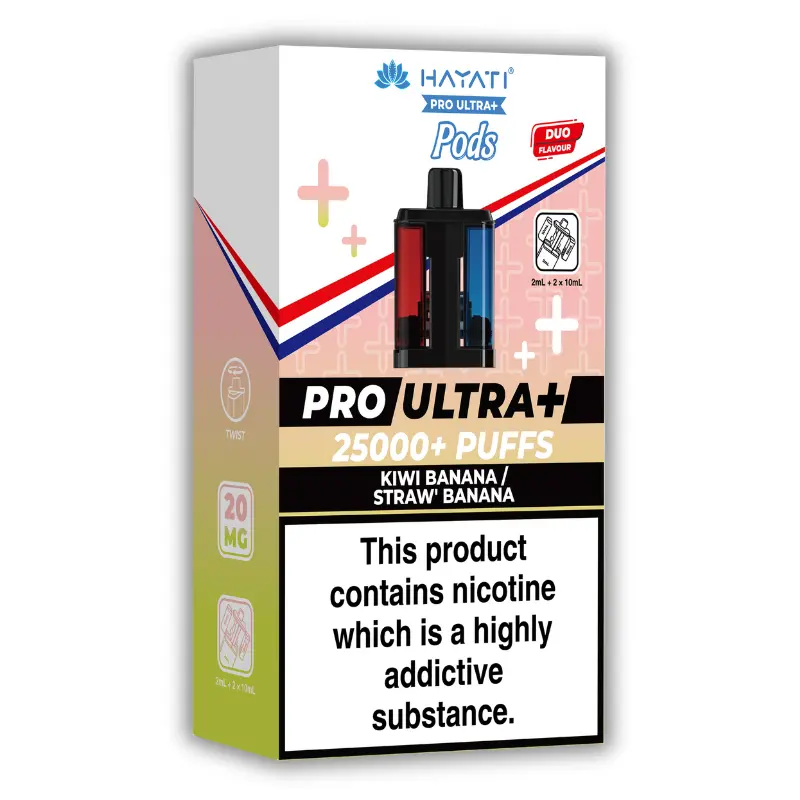
And the other side is the point. Both of these tiles are dual-flavour listings. One setting is Kiwi Banana. The other is a banana and strawberry combination with no kiwi in it whatsoever, selected by a rotating mouthpiece which the listings do describe. That is the cleanest demonstration of this whole page available anywhere in the range: the same maker, the same device, the same dominant banana, one setting with the tool fitted and one without, sold as a single purchase. The Kiwi Banana / Strawberry Banana Hayati Pro Ultra Plus 25000 Prefilled Pod Kit is the complete version at £11.99 with the device, and £7.99 buys the pod on its own.
Who picks this cluster: banana drinkers who find the fruit heavy on its own, and anyone curious about what kiwi does against a partner with real density rather than against two light ones. Both entries are Pro Ultra Plus and sit on the Hayati Pro Ultra Plus Prefilled Pod Kits & Pods shelf. Note also that these two are the only tiles here that also appear on Banana Vapes.
Four: the opening act in a three-fruit rota. Kiwi Grape Raspberry, one tile, £2.49
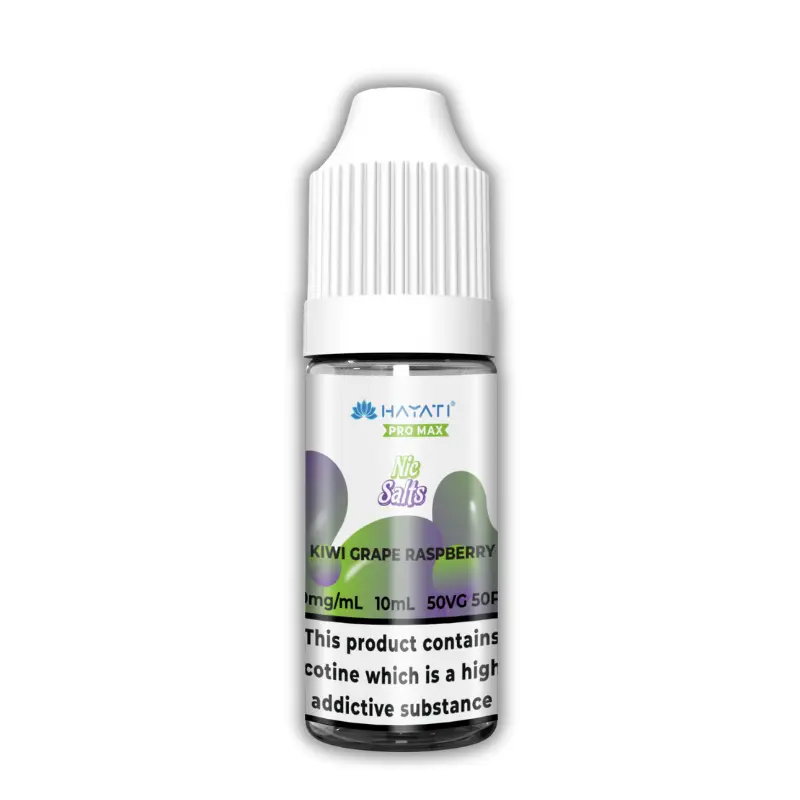
The odd one out, and the cheapest thing on the shelf. A 10ml bottle of 10mg salt in a 50/50 base, built as a rotation rather than a hierarchy: kiwi opens with the sharp brightness, grape fills the middle with a round juicy sweetness, raspberry adds a berry tartness that ties the two together. Each fruit gets a turn, which is a different construction from the other four liquids, where one fruit is the body and kiwi is the correction applied to it.
That makes it the most interesting bottle here for anyone who wants to hear what kiwi sounds like at the front of a draw without buying a coolant to go with it. It is also the only tile on this shelf that appears on Grape Vapes, and one of only two that appear on Raspberry Vapes. The catch is hardware: a bottle needs a refillable pod kit or another low-power device of your own, and it is not for high-wattage sub-ohm tanks.
Who picks this cluster: someone with their own refillable kit who wants the least expensive way to find out whether this fruit is worth pursuing. £2.49 is a small enough commitment that being wrong costs very little, which is not true of an £11.99 kit.
Five: kiwi as the subject. Kiwi Cooler, two tiles, £5.49 and £7.99
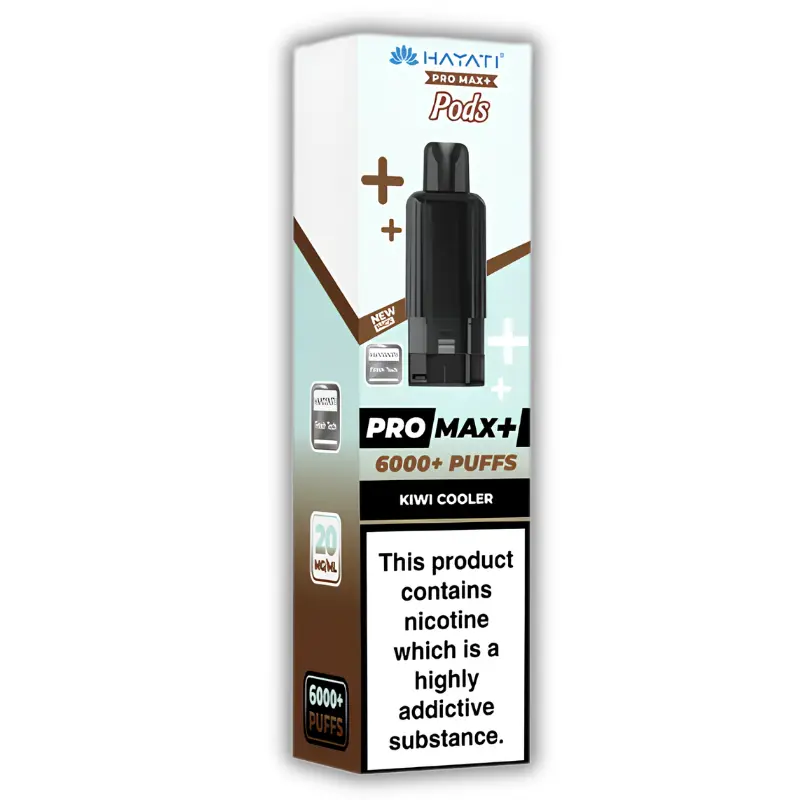
The only recipe on the shelf where kiwi is not working for another fruit, because there is no other fruit. The Kiwi Cooler Hayati Pro Max Plus 6000 Pod Kit page takes the flavour apart in detail and establishes the finding this whole shelf rests on: kiwi's tartness is structural rather than applied, present even when the fruit is soft and ripe, which is why sweetening a kiwi does not mellow it, it erases it. The same page records the faint dry bitterness that comes from the seeds in the real fruit and survives into the liquid as a dry tail on the second half of the exhale, and warns that a scorched wick produces a similar bitterness, so the two are easy to confuse on this particular liquid and not on most others.
Because the fruit brings its own sharpness, the declared cooling here stacks on top of something already bright rather than cutting across something soft, and the pod reads sharper and finishes shorter than its coolant loading alone would predict. There is real sugar in it, doing a structural job rather than a headline one, which is consistent with the shelf's general habit of keeping sweetness in check.
Who picks this cluster: the buyer who actually came for kiwi. The condition attached is that the cold is not optional. £7.99 buys the complete kit, £5.49 buys the Kiwi Cooler Hayati Pro Max Plus Pods refill for a Pro Max Plus body you already own. Both are on Ice Vapes as well as here.
If you actually want to taste a kiwi
This is the honest counterweight to everything above, and it deserves a direct answer rather than a hedge. A buyer who wants the fruit itself, front and centre, is poorly served by a shelf where it is a supporting part on nine tiles out of twelve. So: can you taste a kiwi here?
Qualified yes, in exactly one place, with a condition. One recipe out of five has no other fruit in it, and it occupies two of the twelve tiles. There is no version of it without the coolant, and since all twelve kiwi listings in the catalogue are on this shelf, there is no uncooled solo kiwi anywhere in the range. If the cold is a dealbreaker, the answer is no and you should not spend money finding that out the hard way.
Below that, the tiles rank fairly predictably by how much kiwi you can expect to detect. The Kiwi Cooler Hayati Pro Max Plus Pods first, because nothing else is in the liquid. Then the Kiwi Grape Raspberry Hayati Pro Max Nic Salt, where kiwi opens the draw and is the first thing you meet. Then the kiwi setting on the Kiwi Banana / Straw' Banana Hayati Pro Ultra Plus Pods, where the fruit works in two channels the banana does not occupy and therefore reads as a stacked second thing rather than a blur. Then the Strawberry Kiwi Hayati Pro Max Plus Pods and their siblings, where it is an edge on a sweet base. Last, the Guava Kiwi Passion Fruit Hayati Pro Max Plus Pods, where it owns the front of the draw and then hands over to a perfumed middle that lasts longer.
Three pieces of method are worth carrying into the test, all of them established on the product pages and none of them obvious. Judge early in a session, because acidity stops registering on a tired palate a long time before aromatic material does, so an hour of continuous use leaves you tasting a lopsided version of whatever you bought. Judge in the first third of a pod, because the green aldehydes are present in small quantity and are the earliest material a tiring coil takes. And on the Kiwi Cooler Hayati Pro Max Plus 6000 Pod Kit specifically, prime the pod properly and take the first draws unhurried, because the recipe's own dry seed tail and a cooked wick produce similar bitterness, and confusing the two is how somebody writes off a liquid that was working correctly.
The least expensive test is the £2.49 bottle if you own refillable hardware, and the Strawberry Kiwi Hayati Rubik Pods refill at £3.99 if you own a Rubik. Neither is the strongest expression of the fruit, but both cost little enough to be worth spending before committing to a kit.
How sweet the blends are, and what that predicts
The corpus finding that sweetening erases kiwi rather than softening it is the most actionable thing on this shelf, provided it holds, so it is worth checking against what is actually here rather than repeating it.
Start with the pairing. Ten of the twelve tiles put kiwi next to a fruit whose stated job in its own description is sweetness: strawberry on five, guava on two, banana on two, grape on one. The remaining two are Kiwi Cooler, which has no partner fruit. On the face of it that predicts a shelf where the kiwi is largely erased and you are mostly tasting the partner.
Now check whether these blends are actually sweet, rather than assuming it from the pairing. The word sweet appears in eleven of the twelve descriptions, which sounds damning until you count the rest of the catalogue, where it appears in 453 of 480. It carries no information at all. The words that do carry information run the other way. Sugary appears on three of the twelve against roughly twenty-two per cent of the rest. Cloying appears on none of the twelve and in nineteen listings elsewhere. Syrup appears on none of the twelve and in twenty-six elsewhere. By its own vocabulary this shelf sits marginally below the catalogue's sweetness baseline, not above it.
That gives a two-sided and more useful prediction than either half alone. The partner fruits are sweet and they are the thing you will taste first on most of these tiles. But the copy consistently presents that sweetness as held in check rather than let loose, and the restraint count earlier on this page says the same thing five times over. So the realistic expectation is not that the kiwi is erased. It is that the kiwi will register as an edge and a green top rather than as a fruit you could name blind, and that it will do more to change how the sweet fruit behaves than to add a flavour of its own. On the Strawberry Kiwi cluster in particular, expect to notice it most in the gap between draws, where the strawberry stops coating, rather than during them.
Two things would show this reading wrong, and both are checkable on your own first pod. If the green note is the first thing you meet and the sweetness arrives behind it, then the order three of the five Strawberry Kiwi descriptions commit to is wrong and your own palate should be trusted over the copy. And if the liquid turns syrupy the moment you slow down, the restraint is not really there. Worth saying plainly: everything in this section is a reading of Hayati's own descriptions, which is evidence about a copy desk rather than a measurement of a liquid. It is the best available evidence before you open something, and it is not the same as having tasted it.
There is a related consequence for how these age. Green aldehydes are delicate and present in small quantity, so a coil working through a sweetened liquid loses them early, while acid is a taste and a film on a coil has less purchase on it. The expectation is therefore that the green fades before the sharpness does, leaving a blend that is still sharp but no longer green. The Pro Ultra Plus pods page flags that as genuinely unsettled and tells you what to watch: whether the green disappears before the sourness. If both fade together, the reasoning is wrong.
Formats, platforms, and what will not fit
Four platforms carry the twelve tiles, and nothing crosses between them.
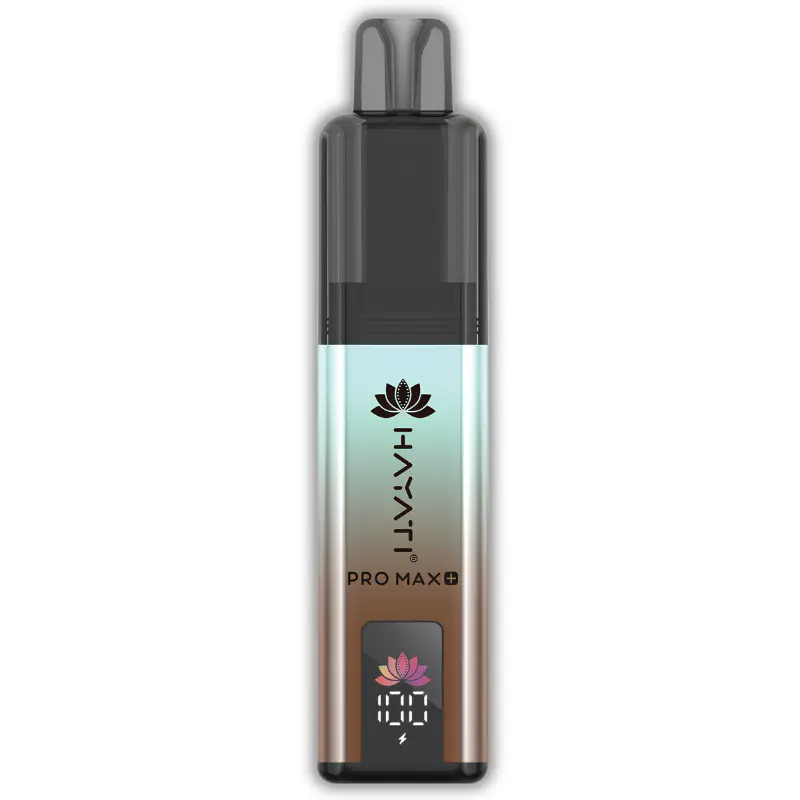
The Pro Max Plus 6000 holds six tiles, three liquids each sold twice. A kit is a rechargeable 850mAh body plus a prefilled pod system in one box at £7.99, and the bare pod for the same liquid is £5.49. The pods hold 12ml at 20mg, and Hayati put a figure of up to 6,000 puffs on a full pod, measured by the manufacturer on test equipment drawing at fixed intervals rather than by anybody using one. Treat it as a way of lining listings up against each other. The whole platform is on Hayati Pro Max Plus Pods and Hayati Pro Max Plus Prefilled Pod Kit, and the kiwi entries there are Kiwi Cooler, Guava Kiwi Passion Fruit and Strawberry Kiwi.
The Hayati Rubik platform holds two tiles, both Strawberry Kiwi. Same 12ml, same 20mg, same 850mAh cell, and a manufacturer's figure of up to 7,000 puffs on a full pod rather than 6,000. Rubik is one of the compact, lower-priced ranges and it prices every kit alike and every pod alike regardless of what is inside, so choosing an unusual fruit there costs nothing extra. It also means a Rubik owner has exactly one route to this fruit.
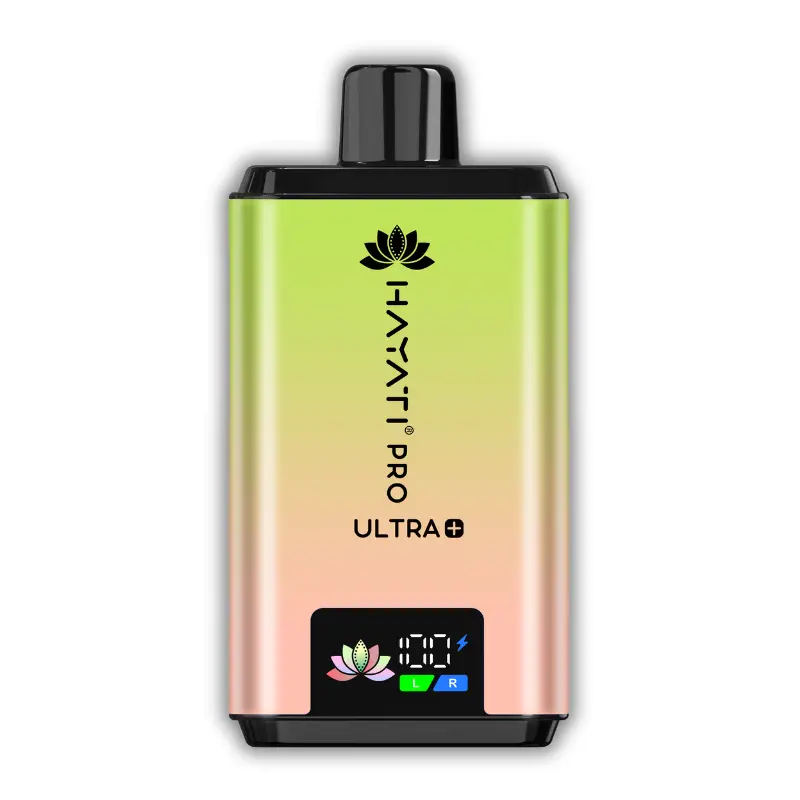
The Pro Ultra Plus holds two tiles, both Kiwi Banana. These are the large-format entries: 22ml of prefilled liquid at 20mg, a manufacturer's figure of up to 25,000 puffs, an 850mAh cell on the kit, and two flavour settings selected by a rotating mouthpiece. The oblique in the name tells you two flavours are involved, and these particular listings do describe the switching, which is why this page states it. What they do not publish is how the 22ml divides between the two settings, so do not assume it is half and half.
The two bottles are the outliers. 10ml of 10mg salt in a 50/50 base, thin enough to wick in small mouth-to-lung coils, intended for refillable pod kits and similar low-power hardware rather than sub-ohm tanks. They are the only route to either of these fruits at 10mg, and the Kiwi Grape Raspberry blend exists in no other form at all. Both are on Hayati Pro Max Nic Salts and Hayati E-Liquids.
On fitment, the rule is short and worth following exactly. Hayati publish no cross-fitment chart, and the brand name on a pod tells you nothing about which body it seats in. Read the word that follows Hayati on the device in your hand, then buy only pods whose own title carries that same word. A Rubik pod and a Pro Max Plus pod are both 12ml at 20mg and are listed against different bodies, so the specification will not save you. Within a platform, any pod of that platform is interchangeable, which is the whole reason the bare pod listings exist. Across platforms, assume nothing. The general shelves for each format are Hayati Pods, Hayati Pod Kits, Hayati Prefilled Pod Kits and Hayati Prefilled Pods & Refills.
Price, per millilitre, and where the same fruit costs less
The £2.49 to £11.99 spread is entirely a format story. Nothing here is priced for its fruit.
| Route | Price | Volume | Per ml |
| 10ml bottle, 10mg | £2.49 | 10ml | about 25p |
| Rubik pod | £3.99 | 12ml | about 33p |
| Pro Ultra Plus pod | £7.99 | 22ml | about 36p |
| Pro Max Plus pod | £5.49 | 12ml | about 46p |
| Rubik kit | £5.99 | 12ml | about 50p |
| Pro Ultra Plus kit | £11.99 | 22ml | about 55p |
| Pro Max Plus kit | £7.99 | 12ml | about 67p |
The device premium, meaning what you pay for hardware the first time, is £2.00 on Rubik, £2.50 on Pro Max Plus and £4.00 on Pro Ultra Plus. Pay it once and every subsequent purchase drops to the pod row.
The cross-platform comparison is where the money actually is, and Strawberry Kiwi is the only liquid here sold on enough platforms to show it. As a complete purchase with hardware it costs £5.99 for the Strawberry Kiwi Hayati Rubik Prefilled Pod Kit and £7.99 for the Strawberry Kiwi Hayati Pro Max Plus Pod Kit. Both hold 12ml at 20mg, both run an 850mAh cell, and the Rubik carries the higher manufacturer's puff figure of the two. Two pounds separates them and nothing in the published specification explains the gap. As a bare refill the same pairing is £3.99 on Rubik and £5.49 on Pro Max Plus, again for the same stated volume and strength, a difference of £1.50 every time you rebuy.
The awkward comparison follows from that. A complete Rubik kit at £5.99, device included, costs fifty pence more than a bare Pro Max Plus pod at £5.49 with no device in the box. If you do not already own Pro Max Plus hardware and Strawberry Kiwi is what you want, the Rubik route costs less at entry and less on every refill afterwards.
On raw millilitres the bottles win easily, but they are 10mg rather than 20mg and you supply the hardware, so they are not comparable to a prefilled pod. The cheapest prefilled figure belongs to the Pro Ultra Plus pod, which is the large format doing what large formats do. Worth remembering that one setting on that pod contains no kiwi at all, and since the split between settings is unpublished, there is no way to work out what the kiwi half costs per millilitre. The dearest rows are the three Pro Max Plus kits, which is the device being bought rather than the liquid.
Where to go next
Most of this shelf is filed elsewhere too, which tells you what it is really made of. Exotic Vapes shares ten of these twelve tiles, Berry Vapes shares eight and Strawberry Vapes shares seven. All twelve appear on New Products. The smaller crossings are more diagnostic: two into Banana Vapes, two into Ice Vapes, one into Grape Vapes.
If what you liked was the green edge rather than the fruit, Apple Vapes is the nearest thing in the catalogue, since a green apple brings both acid and a green register of its own. If it was the acid without the green, Lemon Vapes and Lemon Lime Vapes give you far more choice, and Pineapple Vapes offers structural sharpness carrying more sugar. If the sweet partner was the point, Sweet Vapes, Cherry Vapes and Blueberry Vapes are where that leads. Mango Vapes is the opposite construction, a dense low-acid base needing no brake, Watermelon Vapes gives a watery top instead of a green one, and Peach Vapes a stone-fruit body. For cold with no fruit under it, Mint Vapes and Fresh Mint Vapes. The full range is on All Hayati products.
Where to start
Three recommendations, each for a different reader. If you came for the fruit itself, start with the Kiwi Cooler Hayati Pro Max Plus 6000 Pod Kit or its bare pod and accept the coolant as part of the deal, because nothing else here puts kiwi in front. If you came for a fruit blend that holds its shape over a full pod and own no hardware yet, the Strawberry Kiwi Hayati Rubik Prefilled Pod Kit at £5.99 is the least expensive complete route to that pairing and carries the higher puff figure of the two platforms selling it. And if you are unsure whether this fruit is worth pursuing at all, £2.49 on the Kiwi Grape Raspberry Hayati Pro Max Nic Salt puts kiwi at the front of the draw for very little money.
What all three have in common is the thing this page has been counting. Kiwi on this shelf is mostly hired rather than featured, and reading the grid that way makes the twelve tiles far easier to tell apart than reading them as twelve variations on one fruit. Five of them lead with it, seven carry it second, and only two are actually about it.
Strictly for adults aged 18 and over. Nicotine is an addictive substance.
Frequently asked questions
How many products are on the Kiwi Vapes shelf?
Twelve tiles as the catalogue stands. Separately, twelve listings in the whole 492-row range name kiwi in their own title, and on this shelf those two counts happen to be the same set. The twelve resolve into five distinct liquids: Strawberry Kiwi with five tiles, Kiwi Cooler, Guava Kiwi Passion Fruit and Kiwi Banana with two apiece, and Kiwi Grape Raspberry with one.
Is there a kiwi flavour here with no other fruit in it?
One recipe, Kiwi Cooler, sold as a kit and as a bare pod. It is the only liquid on the shelf with no partner fruit, and it comes with a declared coolant that cannot be removed. Nine of the twelve tiles use kiwi as a supporting part rather than a headline, so if the fruit itself is what you want, those two are the tiles to look at.
Which of these is the cheapest way to try the fruit?
The Kiwi Grape Raspberry bottle at £2.49, which gives kiwi the opening of the draw, provided you own a refillable pod kit or another low-power device to put it in. If you own a Rubik body instead, the Strawberry Kiwi Rubik pod at £3.99 is the next cheapest, although there kiwi is the supporting part rather than the lead.
Why does kiwi keep turning up as a second fruit rather than a first?
Because of what it supplies. Its acid is a taste rather than an aroma, so it survives next to fruits that would drown anything aromatic. Its green character comes from a compound family almost nothing else in this range uses, so it does not compete for the same ground. And it is mild enough by aroma not to take the lead away. Those three properties describe a useful component rather than a flavour anyone would sell on its own.
Are any of these cooled or mentholated?
Only the two Kiwi Cooler entries, which are also the two that appear on the ice and menthol shelves. Everything else on the grid is a warm draw and gets its freshness from acid instead, which is a different sensation and one that behaves differently as a pod ages. Hayati name a coolant in the title when one is present, so a title with no temperature word in it has none.
How sweet are these blends?
Ten of the twelve pair kiwi with a fruit whose stated job is sweetness, so the sweet fruit is usually what you taste first. By vocabulary, though, the shelf sits slightly below the catalogue's sweetness baseline: none of the twelve descriptions uses the words cloying or syrup, and only three describe anything as sugary. Expect sweetness that is held in check rather than let loose.
Will I actually notice the kiwi in a Strawberry Kiwi pod?
Probably as an edge rather than as a nameable fruit. Strawberry is one of the least acidic things in the range and supplies the floor in all five of these listings, while kiwi supplies the sharpness. The place you are most likely to register it is in the gap between draws, where the strawberry stops coating the palate, rather than during the draw itself.
Do Rubik pods fit a Pro Max Plus device?
Do not assume so. Hayati publish no cross-fitment chart, and a Rubik pod and a Pro Max Plus pod both hold 12ml at 20mg, so the specification will not tell them apart. Read the word that follows Hayati on the body you already own and buy only pods whose title carries that same word. Within one platform the pods are interchangeable, which is why the bare pod listings exist.
What is the price difference between a kit and a bare pod?
It varies by platform. A Rubik kit is £2.00 above its pod, a Pro Max Plus kit £2.50 above its pod, and a Pro Ultra Plus kit £4.00 above its pod. That gap is the hardware, paid once. After the first purchase every refill drops to the pod price, which is why the per-millilitre figures for pods are well below those for kits.
Is the same flavour cheaper on one platform than another?
Yes, and Strawberry Kiwi is the one liquid here sold widely enough to show it. The complete Rubik purchase is £5.99 against £7.99 for the Pro Max Plus, and the refill is £3.99 against £5.49, for the same stated 12ml at 20mg. The Rubik also carries the higher manufacturer puff figure of the two. Nothing in the published specification explains the gap.
What do the two sides of the Kiwi Banana listings mean?
Those two tiles hold two flavour settings selected by a rotating mouthpiece, which the listings describe. One setting is Kiwi Banana, the other is a banana and strawberry combination with no kiwi in it. Hayati do not publish how the 22ml divides between the two settings, so treat an even split as an assumption rather than a fact.
How long will one of these pods last?
Nobody can tell you, and the published figures are not an answer to that question. Hayati rate a full Pro Max Plus pod at up to 6,000 puffs, a Rubik pod at up to 7,000 and a Pro Ultra Plus pod at up to 25,000, all measured by the manufacturer on test equipment taking identical draws on a timer. They are useful for comparing one listing with another and close to useless for forecasting your own fortnight.