
Home / Mint Vapes
Mint Vapes
Nineteen listings carry a mint-family name on this shelf, running from £2.49 for a 10ml bottle to £11.99 for a complete kit, and the grid below makes them look like nineteen versions of one idea at nineteen price points. They are not. Three genuinely different kinds of product are filed here under a single word, and the difference between them is larger than the difference between any two fruit flavours in the catalogue.
Mint on a vape shelf can mean a plant, which is a culinary herb with a green, faintly sweet, slightly peppery aroma. It can mean a molecule, which is menthol, a compound that persuades a cold-sensing channel in your mouth to report a temperature drop that has not happened, and which is barely a flavour at all. Or it can mean a coolant used as a modifier, a fraction of a percent of something with almost no smell of its own, dosed into a fruit so the fruit reads as sharp and lifted. A botanical, a sensation and a modifier. Those are three categories of thing, not three points on one scale, and a buyer who treats them as a scale will order the wrong one.
Nineteen is both of the counts that matter here: nineteen tiles in the grid below, and nineteen titles in the 492-listing catalogue carrying a mint-family word. Those two numbers have not always agreed, and the page comes back to why. The most useful thing it can do first is hand you the sorting rule, apply it to all nineteen, and then be straight about the listings that sit awkwardly. Start with the rule, because it takes one sentence and it works on names you have never seen.
New ProductsHayati PodsHayati Prefilled Pods & RefillsHayati Pod KitsHayati Prefilled Pod KitsHayati E-LiquidsHayati Pro Ultra Plus Prefilled Pod Kits & PodsHayati Pro Max Plus PodsHayati Pro Max Plus Prefilled Pod KitHayati Pro Max Nic SaltsHayati Pro Ultra Plus PodsHayati Pro Ultra Plus Prefilled Pod KitHayati Mini UltraHayati RubikHayati Mini Ultra PodsHayati Mini Ultra Prefilled Pod KitHayati Pro Max 50-50 E-LiquidHayati Pro Max 70-30 E-LiquidHayati Rubik Prefilled Pod KitHayati Rubik PodsHayati Nicotine PouchesHayati QuokkaBerry VapesRaspberry VapesIce VapesBlueberry VapesStrawberry VapesCherry VapesSweet VapesExotic VapesLemon VapesBlueberry Raspberry VapesPeach VapesWatermelon VapesApple VapesLemon Lime VapesMango VapesPineapple VapesGrape VapesLemonade VapesMint VapesCola VapesStrawberry Raspberry Ice VapesBlackcurrant VapesJuicy Peach VapesMr Blue VapesSummer Dream VapesBanana VapesKiwi VapesMenthol VapesOrange VapesFresh Mint Vapes
Three things are filed under one word
Take the word mint off a label for a moment and ask what it could be pointing at. In a kitchen it points at a leaf. Spearmint and peppermint are separate species of the same genus, both grown and eaten, both with a green vegetal smell that you detect the way you detect basil or fennel. In a chemistry supply catalogue the same word points at menthol, a crystalline compound that happens to be the dominant aromatic of peppermint oil and happens also to activate the receptor your body uses to sense cold. In a flavour house the word points at neither: it points at a job, the job of making something taste lifted and sharp, and the cheapest way to do that job is a purpose-built cooling compound that has no botanical origin at all.
All three of those meanings are live on this shelf. The listings do not tell you which one they are using, and the pricing does not either. Spearmint Hayati Pro Max Nic Salts at £2.49 and Lemon Mint Hayati Pro Max Nic Salt at £2.49 are the same format, the same volume, the same strength and the same money, and they are answering completely different questions. One is a herb you taste. The other is a lemon with something cold behind it.
This distinction has been worked through in depth on individual product pages and this page is not going to rebuild the chemistry. The Spearmint bottle page establishes that spearmint leads on carvone and peppermint leads on menthol, that carvone produces aroma and taste with very little cold-receptor activity, and that spearmint is therefore not a weaker peppermint but a different thing entirely. The Lemon & Mint Hayati Pro Ultra Plus 25K Pods page takes the general version of the same problem apart: a sensation is a switch and an aroma is a description, they travel by different routes, and a formulator can put convincing cold into a liquid with no plant material involved. If you want the underlying argument in full, those are the two pages to read. What follows uses their conclusions as tools rather than restating them.
What nobody has done is apply the distinction to the shelf itself. That is a different job from explaining the chemistry, and it is the job a collection page is actually for. Nineteen listings, three categories, and a rule for telling which is which before you spend anything.
Why this matters more here than on a fruit shelf
On a berry shelf, getting it wrong costs you a flavour you do not much like. You wanted raspberry and you got blackcurrant. Both are fruit, both behave like fruit, and the disappointment is a matter of preference.
Getting it wrong here costs you a product that does not do the thing you bought it for. Somebody who wants the taste of a herb and receives a coolant gets a sensation with almost nothing to taste, reports that the flavour is thin, and concludes that mint liquids are thin. Somebody who wants cold and receives a carvone-led spearmint gets a green, sweetish, mild liquid, reports that it is weak, and concludes that mint liquids are weak. Both complaints are common, both are wrong about the category, and both are produced by the same filing decision: one word covering three products.
The sorting rule, and why the cooling words cannot do this job
Here is the rule. Look at where the mint word sits in the name and what is attached to it. Position predicts category, and it does so reliably across all nineteen listings on this shelf.
- The mint word stands alone, or carries only an adjective. Spearmint. Fresh Mint. Mint is the subject of the sentence, and what you are buying is an aroma. This is the plant group.
- The mint word is preceded by a word about temperature or weight. Frosted Mint. Black Mint. The modifier is doing the selling and the herb is the carrier. This is the sensation group.
- The mint word follows a fruit. Lemon Mint. Blue Razz Mint. Mint is not the subject, the fruit is, and the mint is there to change how the fruit arrives. This is the modifier group.
Three tests, no chemistry required, applied to a name you can read from the grid. Before applying it, it is worth knowing why the obvious alternative rule does not work, because most buyers are using the obvious alternative without examining it.
The cooling vocabulary carries no information about intensity
The intuitive move is to rank the cold words. Frozen sounds colder than Ice, Ice sounds colder than Cool, Mint sounds milder than Menthol, and a careful shopper ought to be able to climb that ladder. This has been tested by counting, on the Pro Max Plus pods platform, in a census of every cooling word across all 492 Hayati listings. The answer is no. Ice appears in ninety titles and is the house default. Frozen appears in three, all of them one flavour. Cooler appears in two, both of them one flavour. Chill and Freeze appear in none at all, despite being standard trade vocabulary that a writer working from memory will supply without checking. The words never combine with each other in a title, which is how alternatives behave and not how graduated measurements behave.
That census found one exception, and the exception is the reason this page exists. The vocabulary is graded inside the mint and menthol family, because those words name substances rather than sensations. Menthol is a specific compound. Spearmint is a specific plant. Words with referents can be ranked against each other because there is something real underneath the ranking. Ice and Frozen have no referents, so nobody can say how cold Ice is.
Read that finding forwards and it delivers exactly what the sorting rule needs. The cooling words tell you nothing. The substance words tell you something. And the whole of this shelf is built out of substance words, which is why position in the name is readable here in a way it would not be on Ice Vapes.
One consequence worth stating before the groups
If the cold words are not a scale, then a buyer standing in front of nineteen mint listings has no published way to rank them by coldness, and any page that hands you such a ranking has made it up. Nothing below ranks these nineteen by temperature. What follows sorts them by kind, which is a question the names can actually answer, and then says where the sorting breaks down.
Group one: mint as a plant, twelve listings
This is the bulk of the shelf, and it splits into two unequal halves.
Spearmint, the only listing that names a species
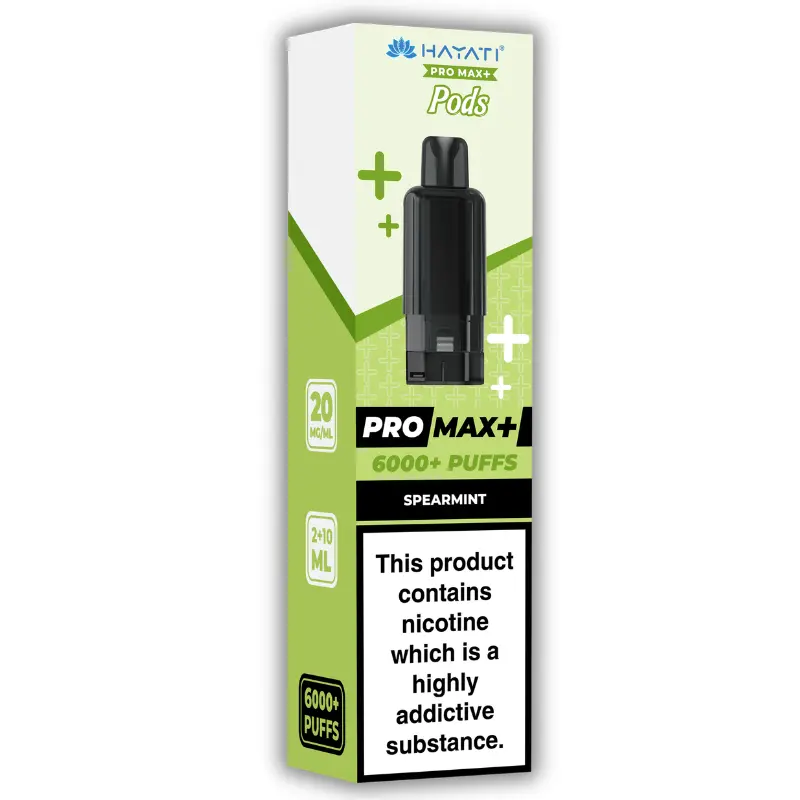
Three listings carry it: the 10ml nic salt bottle at £2.49, the Spearmint Hayati Pro Max Plus Pods refill at £5.49, and the Spearmint Hayati Pro Max Plus 6000 Pod Kit at £7.99. One liquid, three ways to buy it, and the only name on the entire shelf that identifies a plant precisely enough to predict the chemistry.
Hayati's own copy places it, and places it consistently across all three listings: softer and sweeter than peppermint, cooling without the bite of peppermint or menthol, sitting at the relaxed end of the scale. That is a substance-word ranking of the kind the census identified, stated by the manufacturer in their own words, and it is the only ranking on this shelf you can take at face value.
The bottle page explains the mechanism and the kit page explains the timing, and the timing half is the part that changes how you use it. An aroma has to reach the olfactory tissue from behind the mouth as vapour leaves on the exhale, which makes it slower than a receptor event, easily disrupted, and heavily dependent on how you send the vapour out. A cold signal arrives at the tissue surface immediately and arrives whatever you do. Two consequences fall out of that, both set out on the Spearmint kit page and both worth knowing before you buy anything in this group: run an aroma-led liquid steadily for an hour and it will seem to fade while nothing has actually changed, and an aroma leaves the mouth in two or three ordinary exhalations rather than accumulating across a session the way cold does.
The practical upshot for a shelf decision is that everything in the plant group rewards a slow draw and punishes a fast one, and everything in the sensation group does not care.
Fresh Mint, nine solo listings, and a name that identifies nothing
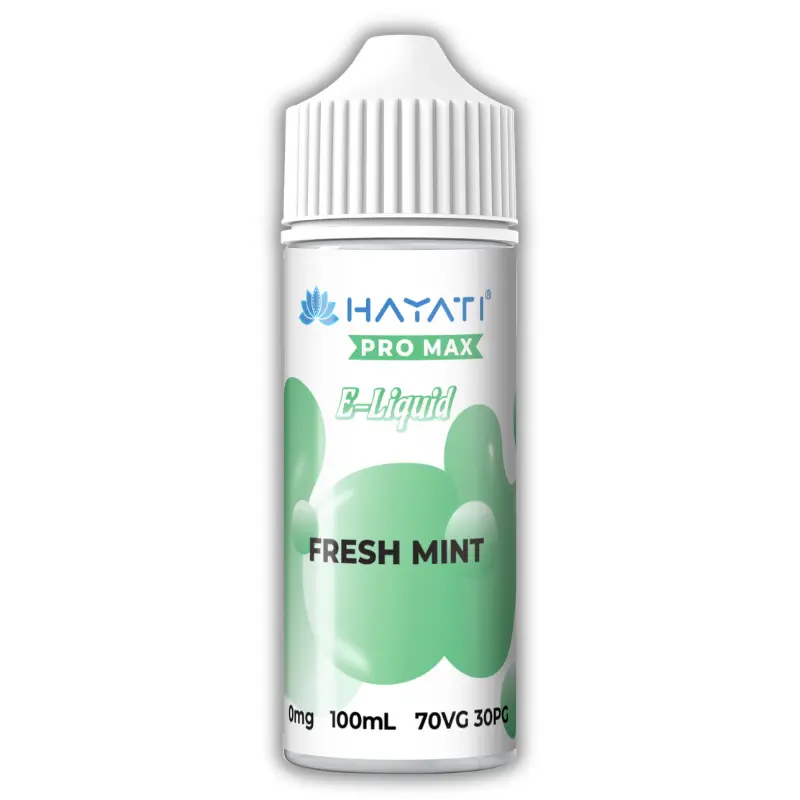
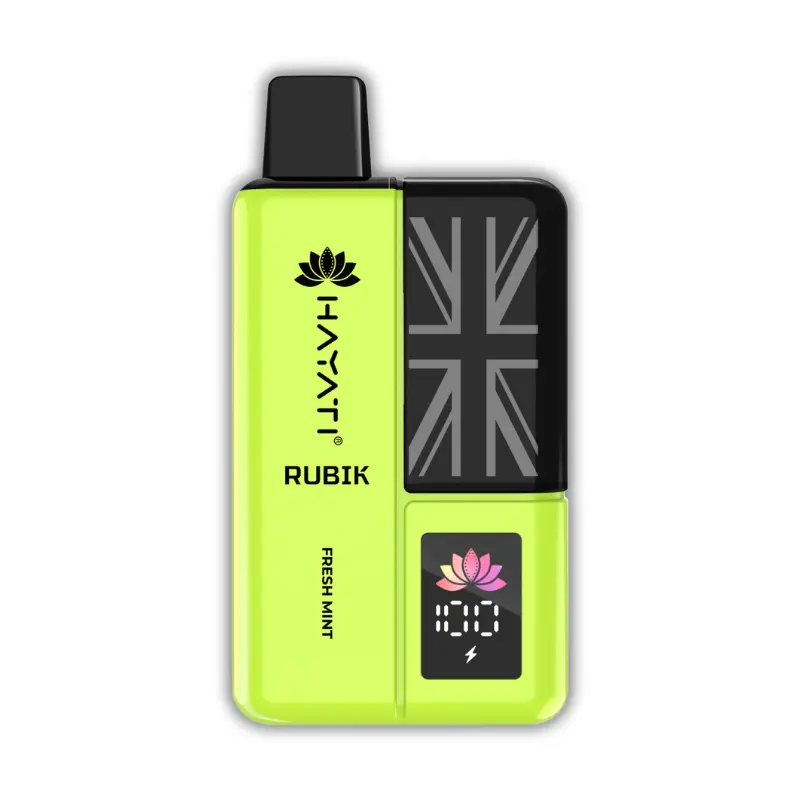
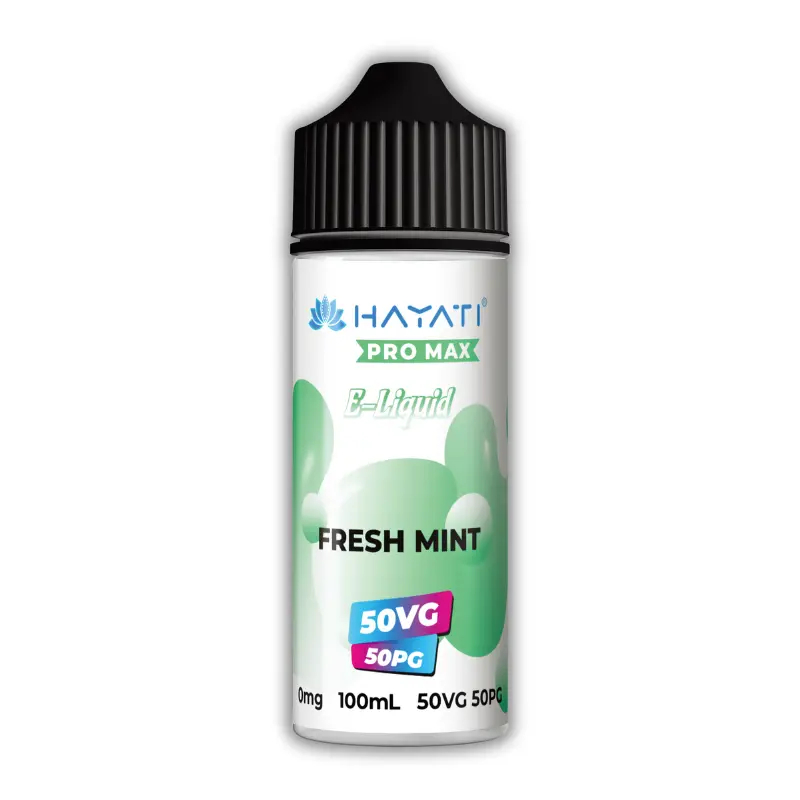
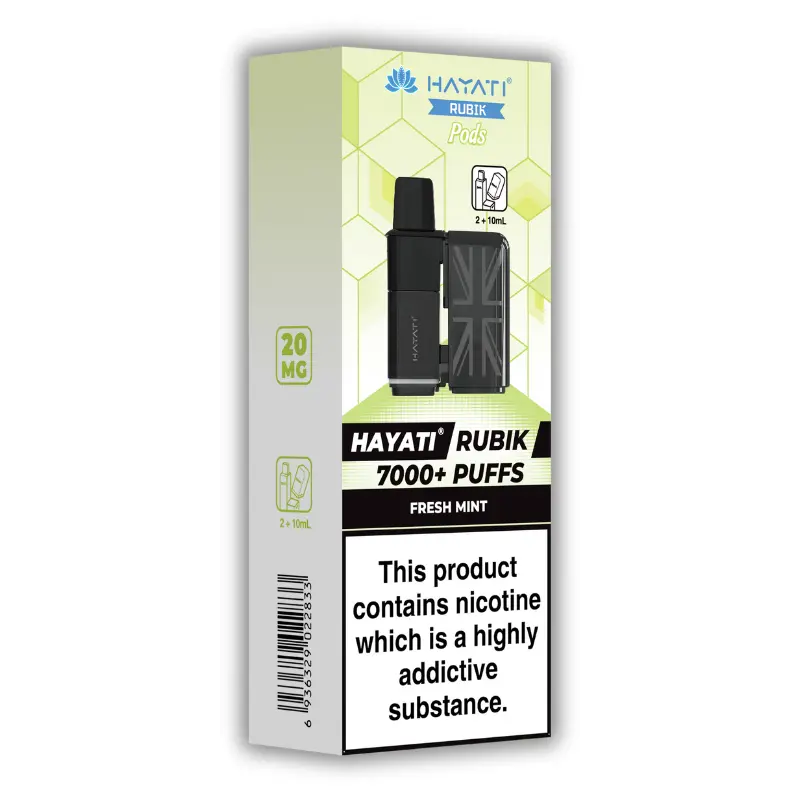
Fresh Mint is the largest single flavour name here by a wide margin. Nine listings carry it on its own, across five different formats and four price points, and two more carry it as one half of a dual pod, that liquid being sold both as a bare pod and as a kit. Set them out and the spread is the widest of any flavour on the shelf:
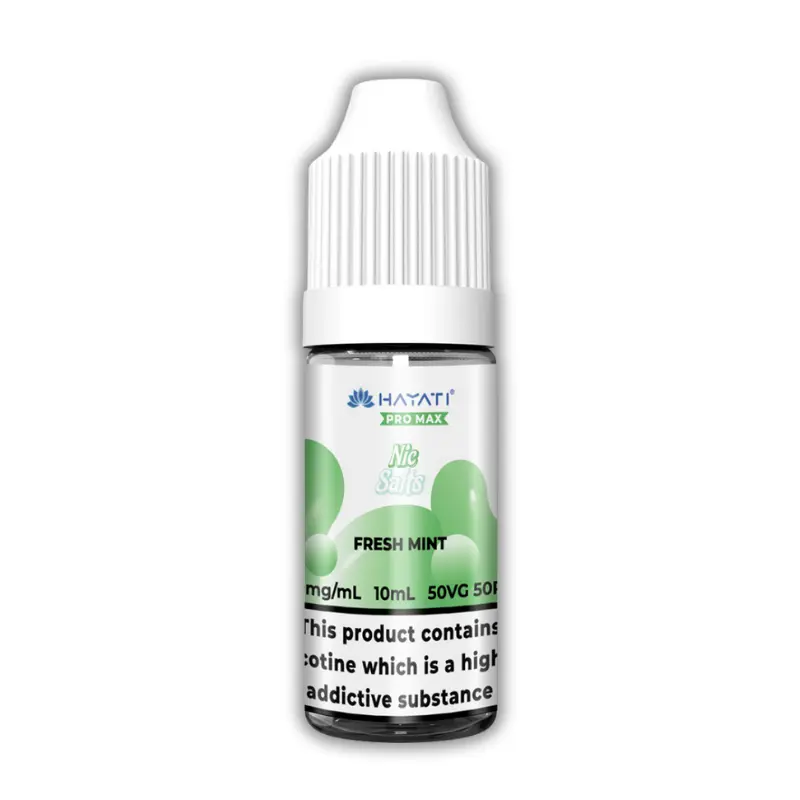
- Fresh Mint Hayati Pro Max Nic Salt, 10ml at 10mg, £2.49
- Fresh Mint Hayati Rubik Pods, 12ml at 20mg, £3.99
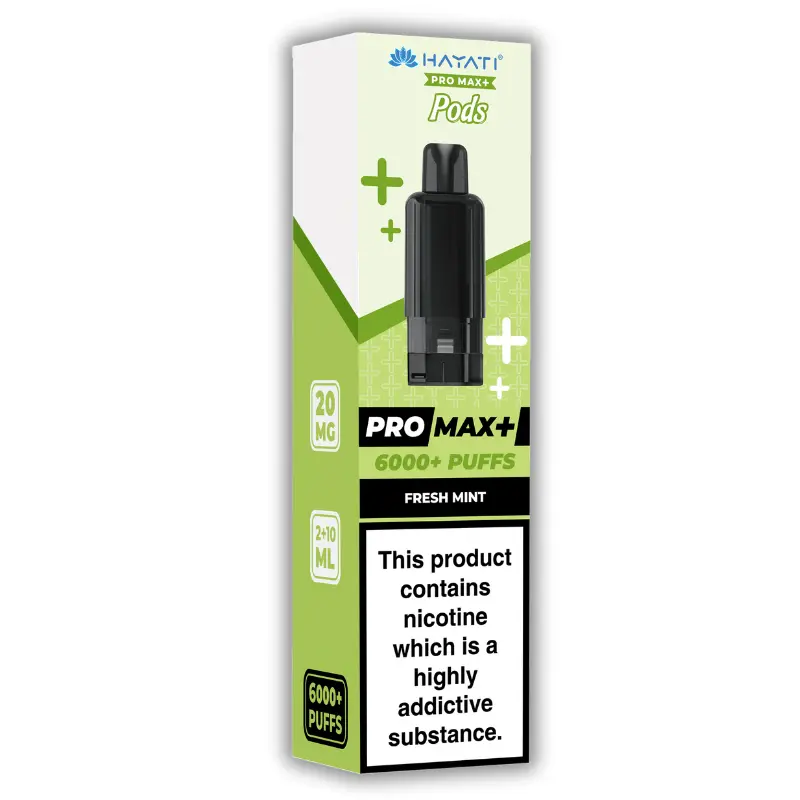
- Fresh Mint Hayati Pro Max Plus Pods, 12ml at 20mg, £5.49
- Fresh Mint Hayati Rubik Prefilled Pod Kit, device included, £5.99
- Fresh Mint Hayati Pro Max 70/30 E-Liquid, 120ml at 0mg, £6.99
- Fresh Mint Hayati Pro Max 50/50 Shortfill E-Liquid, 120ml at 0mg, £6.99
- Fresh Mint Hayati Pro Max Plus Pod Kit, device included, £7.99
- Fresh Mint Hayati Pro Ultra Plus Pods, 22ml at 20mg, £7.99
- Fresh Mint Hayati Pro Ultra Plus 25000 Prefilled Pod Kit, device included, £11.99
Now the problem. Spearmint names a species. Fresh Mint names a genus and an adjective, which is roughly as specific as calling something Fresh Citrus. The census noted that Fresh functions as an adjective attached to the herb rather than as a cooling signal of its own, which is correct and which leaves the actual identity of the mint unstated. Peppermint, spearmint, a blend of the two, or a generic confectionery mint impression are four different profiles, and nothing published distinguishes them.
What the copy does say is consistent and does point in one direction. The listings for the plain Fresh Mint bottle and pods lead on the herbal taste rather than on cold, describe it as green and leafy, and say directly that it carries more flavour than a pure menthol. Hayati also position it explicitly between the other two named mints, telling a reader who finds Spearmint too soft and Menthol too icy that this is the one in between. That is the substance-word ranking again, and it is the strongest evidence available that Fresh Mint belongs in the plant group rather than the sensation group.
Strongest available is not the same as settled. It is an inference from flavour copy, not a specification, and the inference covers half the shelf. Anyone who tells you Fresh Mint is peppermint, or that it is not, is reading a name rather than a data sheet.
What the plant group asks of you, in practice
A herb profile is fragile in ways a coolant is not, and this holds whether the liquid is a £2.49 bottle or an £11.99 kit. The green top of the profile is the lightest fraction and it is the first thing lost to heat, to a coil that has been working for weeks, and to warm storage. Cooling compounds are heavier, less reactive, and survive all three. So a plant-led mint changes character over the life of a pod in a direction a coolant-led one does not, and the change runs one way: the aroma thins and whatever cold is present stays where it was.
The second thing this group asks is a retrohale. Aroma arrives from behind the mouth, so a vaper who exhales entirely through the mouth withholds most of it from themselves and will systematically underrate every listing in this group. One draw per pod sent partly out through the nose is worth trying even if it is not your habit.
The third is patience with the draw itself. Short sharp pulls deliver whatever cold is present and very little else, because cold arrives instantly and aroma does not. If a mint from this group reads as thin on the first few draws, slow down before concluding anything about the liquid.
Group two: mint as a sensation, two listings, and mostly not here
This is the group a lot of buyers arrive looking for, and it is the group this shelf serves worst. Two of the nineteen listings belong to it, and one of them is not a vape.
Where the molecule actually lives
Seven of the 492 titles in the Hayati range contain the word menthol. None of them is on this shelf. They are filed on Menthol Vapes, which holds twelve tiles and shares not a single product with this one. Two shelves, no overlap, and the split runs exactly along the plant-word and molecule-word line: the leaf is here, the compound is there.
That is a filing decision rather than a fact about chemistry, and it has a consequence worth naming plainly. If cold is what you came for, the shelf you are reading is the wrong one, and the fix is a single click rather than a compromise purchase. Nothing on this page will serve you as well as the menthol shelf will.
It is also worth knowing what you are buying over there, because the dose-response is unusual. The Double Menthol pods page works through it properly and the summary is this: menthol binds to a cold-sensing channel called TRPM8, that channel exists in finite numbers, and once a large share of them are already firing, extra menthol has progressively fewer left to recruit. The perceived cold flattens. What keeps rising past that point is a different quality of sensation entirely, a sharp prickling at the back of the throat produced by a second receptor recruited later. So a stronger menthol is not straightforwardly a colder one, and a buyer who reads a magnitude word and pictures twice the chill is picturing something the receptor cannot supply. That argument belongs to that page, it is worked out there in full, and it is the single most useful thing to have read before shopping the cold end of this catalogue.
The two candidates that are here
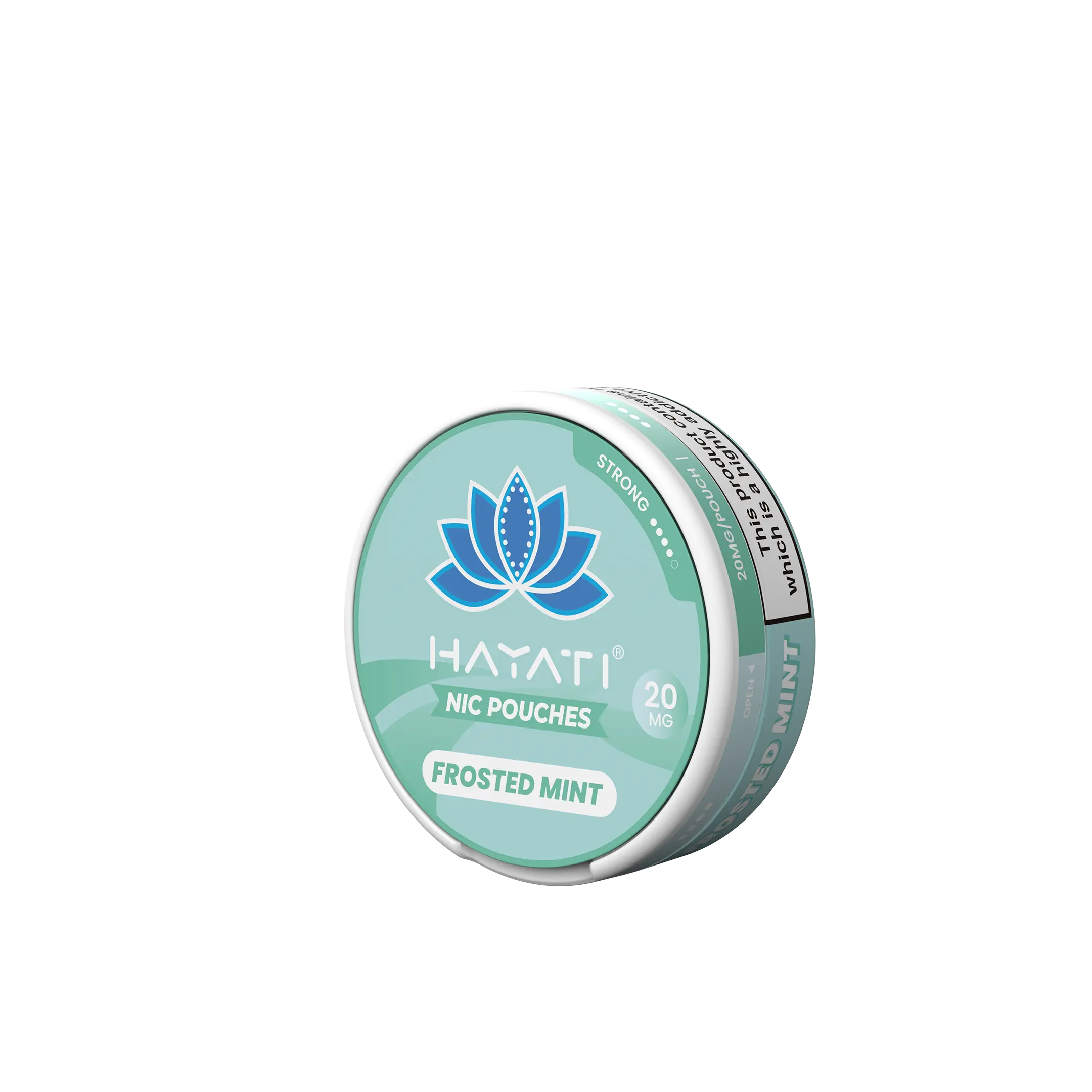
Frosted Mint Hayati Nicotine Pouches at £4.49 is the only listing on the shelf whose name puts a temperature word in front of the mint, and by the sorting rule it lands squarely in this group. Hayati describe a herbal mint core with a frosty coolness sitting on top of it, and they compare it to a colder sibling in the same format, which places it as the more flavour-led of the two pouches rather than the colder one.
The complication is that it is not a vape. These are oral nicotine pouches at 12mg, placed under the upper lip, with no device, no vapour and nothing to charge. They sit on a flavour shelf alongside eighteen inhaled products because the flavour word matches, which is a reasonable way to file them and a poor way to shop. Anyone browsing this grid for a pod and adding these to a basket on the strength of the name is buying a different category of product.
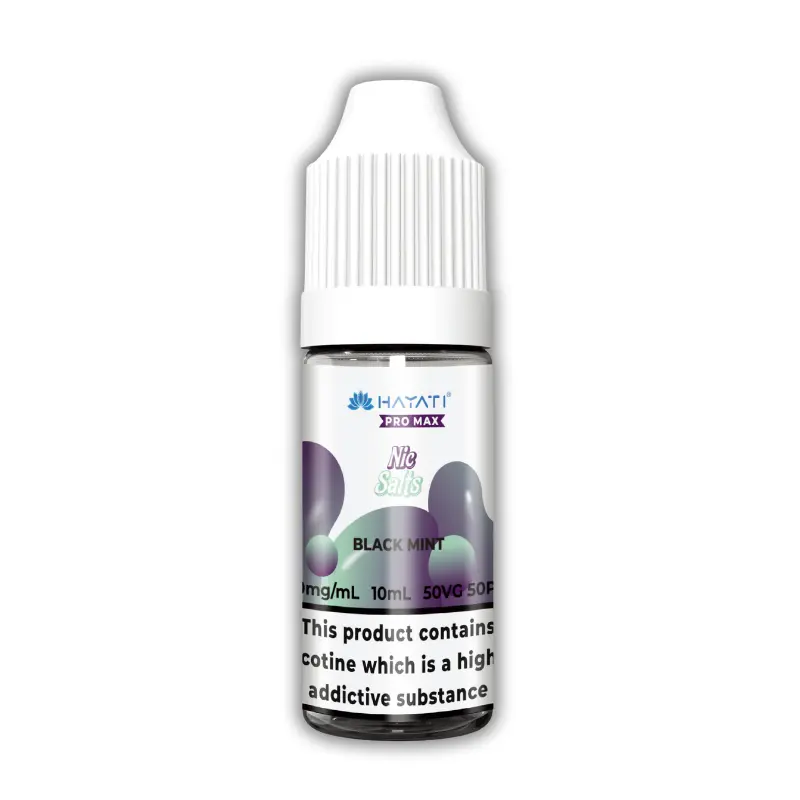
Black Mint Hayati Pro Max Nic Salt at £2.49 is the genuinely awkward one. Black is not a temperature word, a fruit word or a species word. It is a mood word, and the range has a small population of those: names that gesture at intensity without disclosing an ingredient. Hayati's own copy hedges accordingly, saying the black in the name suggests a deeper note alongside the mint rather than stating what the note is.
The sorting rule puts it in group two because the modifier sits in front of the mint and because the copy leads on cooling holding steady and on more body than a plain fresh mint. That placement is a judgement, not a reading, and it is the weakest call on this page. If you want it in group one instead, the argument is available and I would not fight it hard.
Group three: mint as a modifier on a fruit, five listings
Here the mint is not what you are buying. The fruit is, and the mint is there to change how the fruit lands.
Word order is the tell, and it is consistent
Every listing in this group puts the fruit first: Lemon Mint, Lemon & Mint, Blue Razz Mint. Not one of them is called Mint Lemon. The convention holds across the catalogue and it is doing the same work that Ice does on the fruit shelves, where Banana Ice and Cherry Ice put the fruit first and the cooling second because the cooling is a treatment applied to the fruit rather than a flavour in its own right.
What the treatment achieves is worth being precise about. A cooling compound dosed into a citrus does not add a mint taste. It adds a sensation that your brain describes with the same vocabulary it uses for acidity, because sharp is the word available for both, and stacking a taste and a temperature signal that both read as sharp produces one hard bright edge rather than two separate events. The Lemon & Mint pod page sets this out at length, including the less obvious half of it: cold does not merely sit beside an aroma, it masks one, because a cold-sensing receptor firing across the mouth raises the threshold at which fine detail registers. Two liquids with identical herb content taste like different products if one carries twice the coolant.
The three lemons
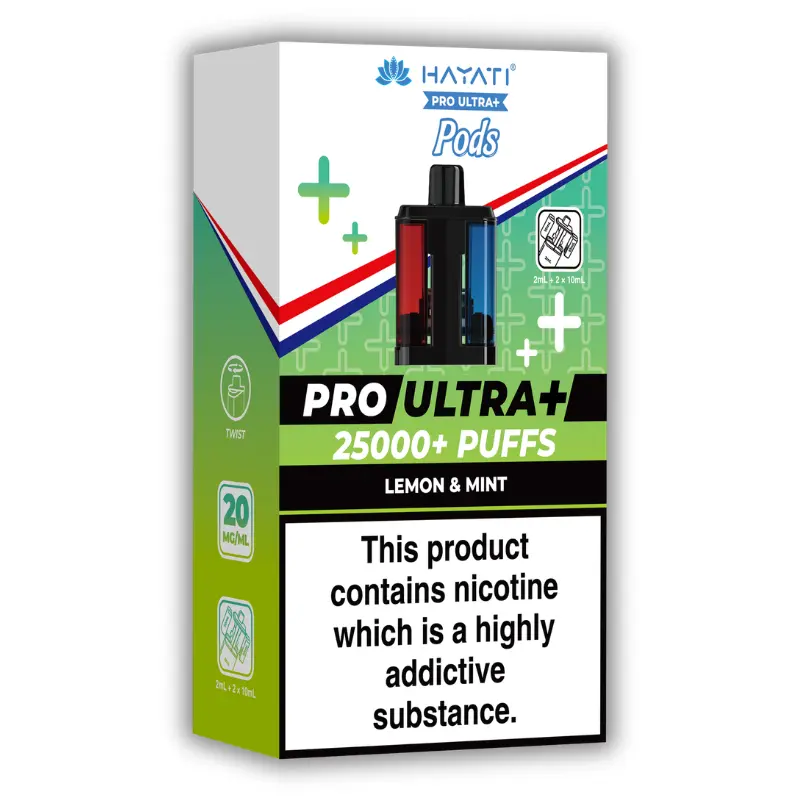
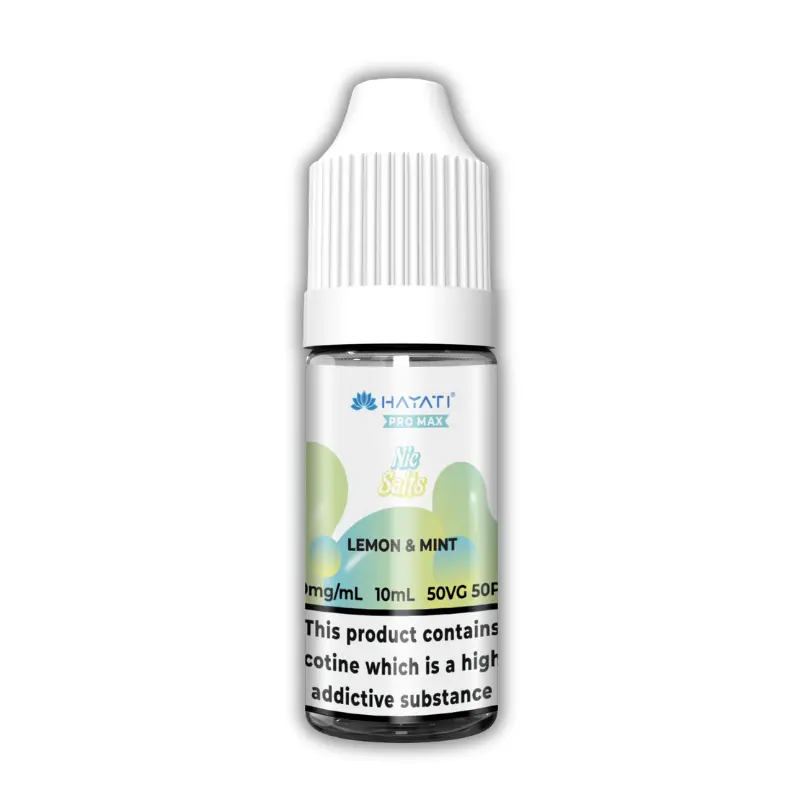
All three lemon listings are one flavour concept at three price points across two formats. Lemon Mint Hayati Pro Max Nic Salt is the 10ml, 10mg, 50/50 version at £2.49. Lemon & Mint Hayati Pro Ultra Plus 25K Pods is the sealed 22ml refill at £7.99, filled at 20mg, for a device you already own. Lemon Mint Hayati Pro Ultra Plus 25000 Prefilled Pod Kit at £11.99 is that same liquid with an 850mAh device in the box.
Hayati describe all three the same way: bright zesty lemon leading, mint following with a cool finish, the mint taking an edge off the citrus and the citrus stopping the mint sitting flat. Crisp rather than sugary is their phrase, aimed at buyers who find the confectionery end of the range too much. Read that as a lemon product and you will be right more often than not. The pod page is blunt about the residual uncertainty, which is that the listing never says whether the cold comes from a mint element or from a separate coolant, and it gives you a nose-block test that settles the question on a single draw. That test is the most useful thing anyone has published about this liquid and it lives there.
The bottle at £2.49 deserves separate mention as a diagnostic rather than as a purchase. It is the cheapest thing on the shelf in this group by a factor of three, and it is the same flavour idea. Anyone weighing the £11.99 kit who is not sure whether they want a cooled lemon at all can find out for £2.49, assuming a refillable pod is already in the house.
The liquid that is in two groups at once
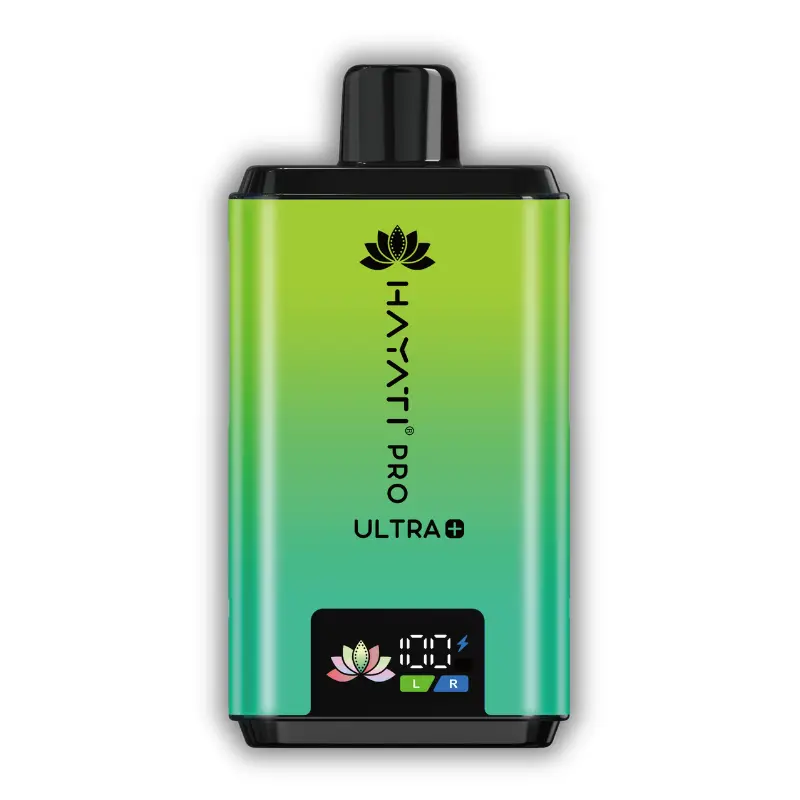
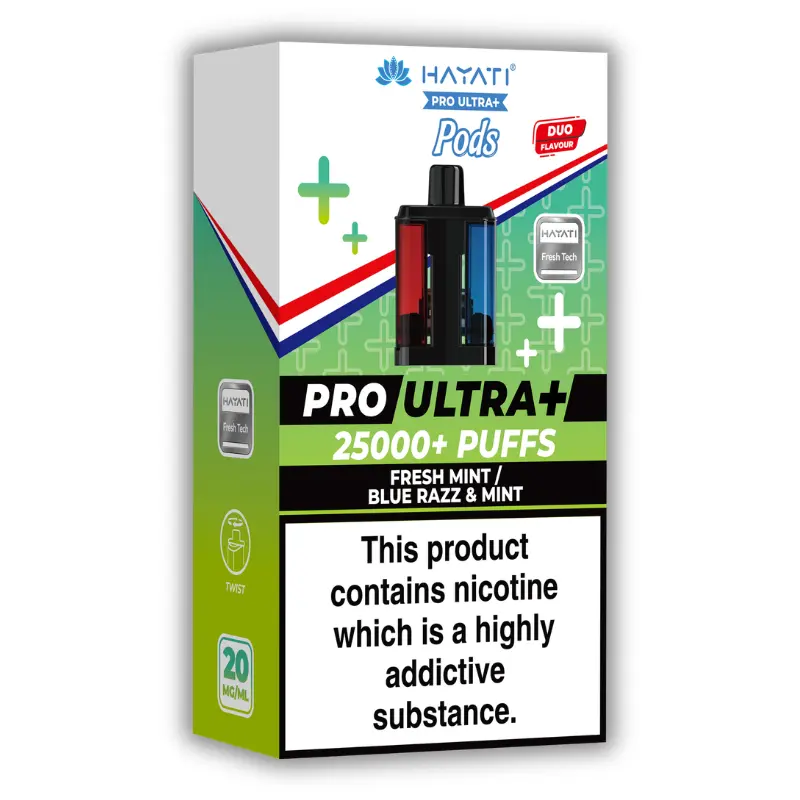
Fresh Mint / Blue Razz Mint Hayati Pro Ultra Plus 25000 Prefilled Pod Kit at £11.99 is the neatest illustration on the shelf of why the three-way split is real, because it contains two of the three groups in one pod and lets you switch between them with the mouthpiece collar. The same 22ml of 20mg liquid is sold without the device as Fresh Mint / Blue Razz Mint Hayati Pro Ultra Plus 25K Pods at £7.99, which is the route to take if a Pro Ultra Plus body is already in the house, and the two listings differ in nothing but that body.
One side is Fresh Mint with no fruit, which is group one: the herb as the subject. The other side is Blue Razz Mint, a tangy blue raspberry with mint underneath so the fruit finishes cool rather than sweet, which is group three: the mint as a modifier on a fruit. Same pod, same coil, same 22ml, and the collar moves you between a botanical and a treated fruit. Hayati's description of it is accurate and unusually clear about the axis: the cooling family stays fixed and what changes is the sweetness above it.
If you want to feel the difference the whole of this page is about, that is the cheapest way to feel it inside one product. The kit page covers the flavour analysis and the sweetener imbalance between the two halves properly, including which side to work down first, and there is no point repeating it here.
Where the boundary blurs, stated honestly
A three-way sort is a useful tool and it is not a law of nature. Five things complicate it and none of them should be hidden.
Menthol occurs naturally in mint plants
This is the big one and it is unavoidable. Menthol is not a synthetic invented to imitate mint. It is the dominant aromatic of peppermint oil, which means a peppermint-led liquid delivers aroma and sensation from the same molecule and cannot be sorted into one column or the other. The plant category and the molecule category overlap at exactly one point, and that point is peppermint.
The boundary survives this, and it survives for a specific reason. Spearmint sits on the plant side cleanly because carvone is not a cold-receptor agonist, so a spearmint carries aroma and almost no sensation. A purpose-built coolant sits on the sensation side cleanly because it has essentially no smell, so it carries sensation and almost no aroma. Peppermint sits in the middle carrying both. The categories are real at the edges and blurred in one particular place, which is a more honest description than either a clean three-box model or a shrug.
Fresh Mint names no species, and it is half the shelf
Eleven of nineteen listings carry the name. Not one of them says which mint. If Fresh Mint turns out to be peppermint-led, then the largest group on this shelf is sitting on the exact point where the plant and molecule categories overlap, and the sort becomes considerably less clean than it looks. If it is spearmint-led or a blend, the sort holds.
The flavour copy leans towards a herb reading, as set out above, and the copy is evidence rather than a specification. That is the honest position and it is uncomfortable for a page whose whole argument is a sorting rule. The rule still works on the names. It just cannot resolve the one name that matters most here.
Black Mint is a mood word, not a category
Covered above and worth restating as a limitation rather than a finding. The sorting rule needs the modifier in front of the mint to mean something, and black means nothing measurable. Placing that bottle in the sensation group is the best available reading of the copy and it is a reading.
Frosted Mint is filed with vapes and is not one
The flavour word matches and nothing else does. No device, no vapour, no coil, a different nicotine strength and a completely different way of using it. It is the clearest case on the shelf of a flavour shelf collecting by word rather than by product.
The filing is applied per listing, and it used to lose one
Nineteen listings across the 492-product range carry a mint-family word in the title, according to the census, and nineteen tiles sit in the grid above. Title count and tile count agree, which is worth stating as a measurement rather than leaving as an impression, because until recently they did not. The nineteenth title was the bare Fresh Mint / Blue Razz Mint refill pod for the Pro Ultra Plus, filed on Fresh Mint Vapes and on the berry shelves but not on this one, while the matching kit at £11.99 sat in the grid. Same flavour name, same manufacturer, two formats, and only one of them had made it onto the mint shelf. Pooling the flavour shelves of a pod against the kit of the same liquid closed that gap, and the pod now sits above at £7.99.
Do not read the fix as more than it is, because the limitation the gap illustrated has not gone anywhere. Shelf membership is applied per listing rather than per flavour, and the pooling reaches only a pod and its own kit on one platform. A bottle and a pod of the same flavour are still tagged independently, which is exactly how the cooling census found one flavour sold three ways with the bottle filed under a cooling tag and the pod and kit not filed under it at all. This grid is complete today. That is a fact about this shelf rather than a guarantee about flavour shelves generally, and if you are hunting a specific format of a specific flavour, the format shelves are the more reliable route.
Choosing between them
The three groups want three different conversations, so here are three.
If you want the herb
Your real decision is Spearmint against Fresh Mint, and it is a decision about how much green you want against how much lift. Hayati place Spearmint as the softer and rounder of the two and Fresh Mint as the one sitting between Spearmint and the menthol listings. Both readings come from the manufacturer's own copy and both are consistent across every format.
Settle it for £2.49. Two bottles, Spearmint and Fresh Mint, same format, same strength, same base, five pounds for the pair, and you will know inside two days which one you actually want in a twelve or twenty-two millilitre pod. That is a better use of five pounds than any amount of reading, including this page. Both bottles live on Hayati Pro Max Nic Salts alongside the rest of the 10ml line.
If a refillable pod is not in the house, the cheapest sealed route into the herb group is Fresh Mint Hayati Rubik Pods at £3.99, and the cheapest complete one is the Fresh Mint Hayati Rubik Prefilled Pod Kit at £5.99, which is the lowest price at which anything on this shelf arrives with a device.
If you want cold
Go to Menthol Vapes. That is the whole answer and dressing it up would be a disservice. Twelve tiles, none of them shared with this shelf, and the molecule you are after is named on the label rather than inferred from it.
If what you want is cold attached to a fruit rather than cold on its own, Ice Vapes is the ninety-eight-tile shelf built for exactly that, with the caveat the census established: the word Ice tells you the product is cooled and tells you nothing whatever about how much.
The one listing here that will partly satisfy a cold buyer is Black Mint, on the strength of copy that foregrounds cooling holding steady through the bottle, at £2.49 for a cheap test of a guess.
If you want a fruit that reads sharp
You are shopping for a lemon, so shop for it as a lemon. The three lemon listings differ only in format and price, and the question is which device you are feeding rather than which flavour you prefer. Lemon Vapes is the wider shelf and it holds the citrus listings that have no herb in them at all, which is where to go if the mint turns out to be the part you did not want.
For the same idea with a berry instead of a citrus, the Blue Razz Mint half of the Fresh Mint / Blue Razz Mint kit is the only example on this shelf, available as that kit or as the bare 25K pod at £7.99, and its berry half also puts both listings on Blueberry Raspberry Vapes, Raspberry Vapes, Blueberry Vapes and Berry Vapes.
If you are buying a second flavour rather than a first
A large share of mint purchases are not somebody's main liquid. They are the thing kept beside one, used in short bursts when a sweet fruit has stopped registering. The group you want for that job is not obvious, and it is worth thinking about rather than defaulting.
A plant-led mint interrupts a sweet flavour by replacing it with a different taste, and it leaves quickly, so you can put it down and pick the other pod back up within a minute. A coolant-led one interrupts by overwriting the palate with a sensation, which is more decisive and takes longer to wear off, and it accumulates across a session in a way an aroma does not. Neither is better. They break a rotation differently, and if your main pod is already cooled then adding a second cooled product gives the palate very little to move between.
Formats, and what each one commits you to
Six delivery formats are represented here, which is more than most flavour shelves carry, and the format decides more about your experience than the flavour name does.
10ml nicotine salt bottles, 10mg, 50/50 base, £2.49. Four of them: Spearmint, Fresh Mint, Lemon Mint and Black Mint. These need a refillable pod or a low-powered device with a higher-resistance coil, and they are the only listings on the shelf where you can put the same liquid through hardware you have already chosen. They also carry the lowest nicotine strength here. The whole 10ml line sits on Hayati E-Liquids.
120ml bottles at 0mg, £6.99. Two of them, both Fresh Mint, and they are the odd pair on the shelf. The 70/30 version is a thicker liquid for sub-ohm tanks and direct-to-lung kits with low-resistance coils. The 50/50 shortfill is thinner and suits mouth-to-lung pods, and being a shortfill it arrives with room left for a nicotine shot. Both contain no nicotine as supplied, which is worth noticing if you have scrolled past them assuming everything on a vape shelf is the same kind of purchase.
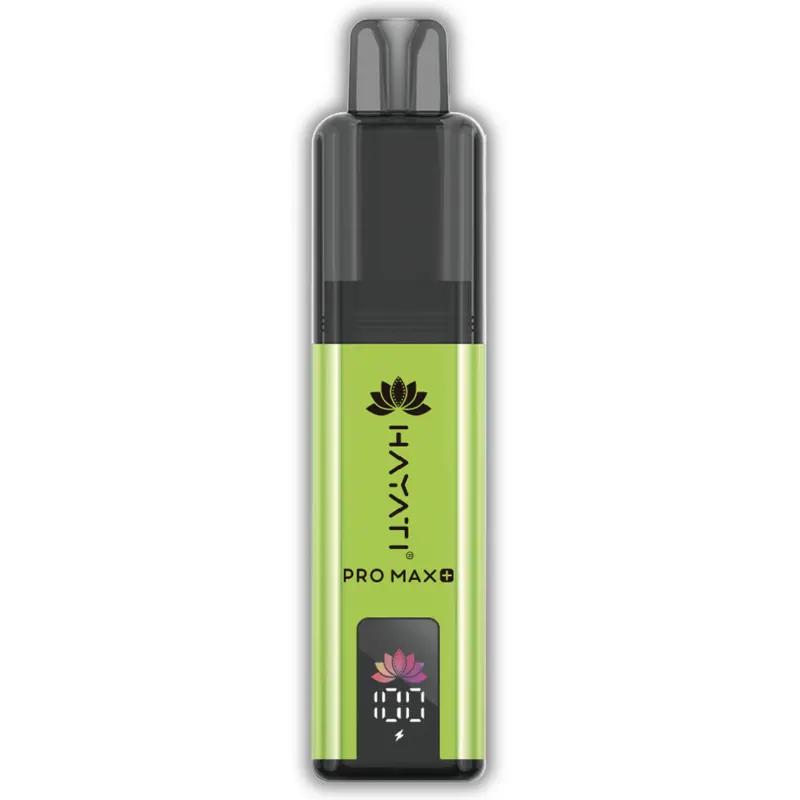
Pro Max Plus prefilled pods and kits, 12ml at 20mg. Four listings: Spearmint and Fresh Mint, each as a bare pod at £5.49 and as a complete kit at £7.99 with an 850mAh device. Hayati's published figure for these pods is 6,000 puffs, produced on bench equipment repeating an identical draw, so it is a way of ranking one pod against another rather than a forecast of your week.
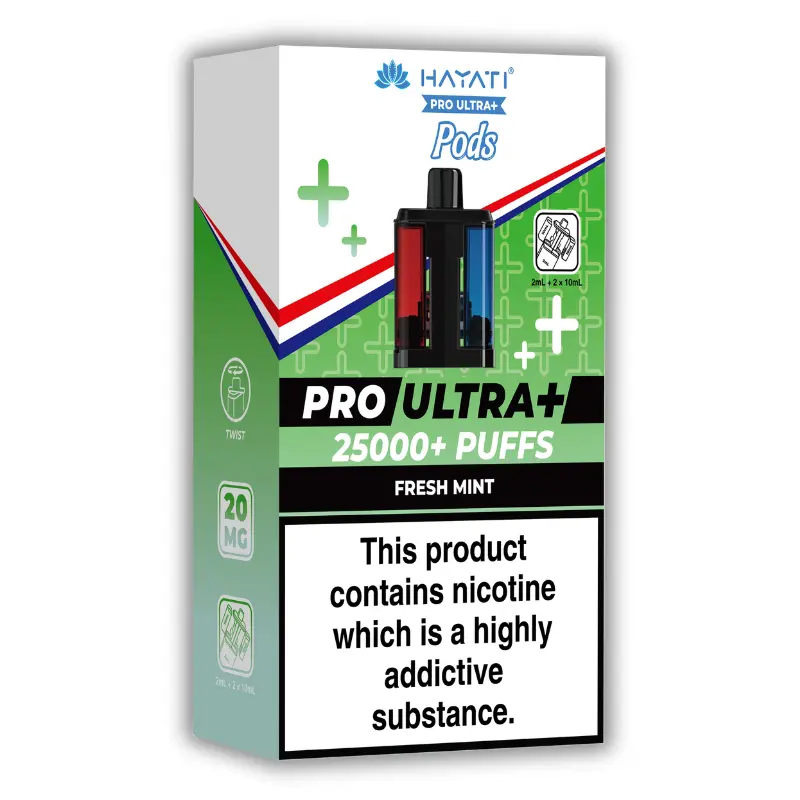
Pro Ultra Plus prefilled pods and kits, 22ml at 20mg. Six listings and the largest volume on the shelf. Three bare pods at £7.99, Fresh Mint, Lemon & Mint and the Fresh Mint / Blue Razz Mint refill, and three kits at £11.99, one of which carries two flavours behind a rotating collar. Hayati's figure here is 25,000 puffs on the same kind of bench test. Everything on the platform, pods and kits together, is on Hayati Pro Ultra Plus Prefilled Pod Kits & Pods.
Rubik prefilled pods and kits, 12ml at 20mg. Two Fresh Mint listings, the pod at £3.99 and the kit at £5.99, on Hayati's compact lower-priced platform with an 850mAh device and a published figure of 7,000 puffs. The rest of the platform is on Hayati Rubik.
Nicotine pouches, 12mg. One listing, and not a vape at all, as covered above.
What is interchangeable and what is not
Within a platform, any pod fits any body of that platform, so a Pro Max Plus device will take either mint pod and a Pro Ultra Plus device will take any of the three. Across platforms nothing transfers, and the safest habit is to check the range name printed on your device against the range name on the pod before ordering a refill rather than after.
The bottled liquids are the exception to all of this, because they go into hardware you own rather than hardware Hayati specify, and the only thing that has to match is the base ratio against the coil. A 50/50 fluid suits narrow wicking channels and higher-resistance coils. A 70/30 fluid suits wide-bore tanks and low-resistance coils. Putting either in the other's home produces a poor result for reasons that have nothing to do with the flavour. Bare refills across every platform are collected on Hayati Pods and on Hayati Prefilled Pods & Refills, and the complete packages are on Hayati Pod Kits and Hayati Prefilled Pod Kits.
One thing worth knowing about every sealed pod here: the coil is inside it and retires with it. There is nothing to change, rewick or service, which means that if the green top of a herb profile goes quiet in week three you have no way to establish whether the aroma degraded or the coil stopped reproducing it. On a refillable setup you could isolate that by putting fresh liquid on the old coil. On these you cannot, and for a group of products whose identity rests on a fragile component that is a real limitation rather than a quibble.
Price, pack size and what the spread is measuring
The range runs from £2.49 to £11.99, which is a factor of nearly five, and almost none of that gap is about the liquid. It is about volume and about whether a device is in the box.
Sort the nineteen by price and the pattern is plain. Four bottles at £2.49. One Rubik pod at £3.99. One pouch tin at £4.49. Two Pro Max Plus pods at £5.49. One Rubik kit at £5.99. Two 120ml bottles at £6.99. Five listings at £7.99, being two Pro Max Plus kits and three Pro Ultra Plus pods. Three Pro Ultra Plus kits at £11.99.
Two things fall out of that. The first is that £7.99 is doing two completely different jobs on this shelf: it buys a complete Pro Max Plus package with a device, or it buys a bare Pro Ultra Plus pod with no device at all. Same money, and one of them is useless on its own. That is the most common source of disappointment on this platform and it is worth reading the format before the price.
The second is that per-millilitre arithmetic ranks these in an order that has very little to do with which one you should buy. A 120ml bottle at £6.99 is the cheapest liquid here by a very wide margin and it is also 0mg and aimed at hardware most pod users do not own. A 22ml pod at £7.99 is cheaper per millilitre than a 12ml pod at £5.49 and commits you to a great deal more of one flavour before you can change your mind. For a group of products where a meaningful minority of buyers dislike the herb outright, committing to 22ml of an untested profile is the expensive choice even when the unit price says otherwise.
The sensible sequence, if the flavour is genuinely unknown to you, runs small to large: a £2.49 bottle if you have a refillable pod, a £3.99 or £5.49 sealed pod if you have the matching body, and the 22ml format only once you know.
Where to go from here
Three shelves neighbour this one closely enough to be worth a look before you decide.
Fresh Mint Vapes is the narrower version of this shelf, eleven tiles deep and every one of them also here, collecting the single largest flavour name on the shelf in both its solo and its dual form. If Fresh Mint is what you had already settled on, that is the tidier place to compare formats.
Menthol Vapes is the other half of the story and the shelf this page keeps pointing at. Twelve tiles, zero shared with this one, and the place where the molecule is named rather than implied.
Ice Vapes is where mint-as-modifier logic is applied to fruit at scale, ninety-eight tiles of it. Everything there is a fruit with a treatment, which is group three thinking applied across the whole catalogue.
Further out, Lemon Vapes holds the citrus listings including the three that overlap with this shelf, and Lemon Lime Vapes narrows that to the two-citrus blends with no herb in them. At the opposite end, Sweet Vapes and Lemonade Vapes collect the confectionery profiles that a mint is most often bought to sit beside, and Strawberry Vapes and Exotic Vapes are the warm, uncooled shelves that make the best rotation partners for anything in group one. Everything added to the range recently is on New Products, and the complete catalogue is on the full Hayati range.
The short version
Nineteen listings, one word, three products. Mint here means a plant on twelve of them, a sensation on two, and a treatment applied to a fruit on five. The names tell you which, if you read position rather than temperature: a mint word standing alone is a herb, a mint word behind a modifier is a sensation, and a mint word behind a fruit is a treatment.
The rule has honest limits. Menthol is a real constituent of peppermint, so the plant and the molecule genuinely overlap at one point. Fresh Mint, which is eleven of the nineteen listings, never says which mint it is, so the largest block on the shelf is sorted on flavour copy rather than on a specification. Black Mint is placed on a judgement. One listing holds two of the three groups inside a single pod, and one is not a vape.
What the rule does buy you is the right question. Somebody who wants to taste a leaf and somebody who wants the back of the throat to go cold are not shopping the same shelf, they are shopping two shelves that happen to share a word, and five pounds spent on two 10ml bottles settles which of them you are faster than any amount of comparison. Nicotine strengths here run from 0mg to 20mg depending on format, and every strength is a plain fact about the product rather than a recommendation.
Strictly for adults aged 18 and over. Nicotine is an addictive substance.
Frequently asked questions
What is the actual difference between mint and menthol on this shelf?
Mint is a plant and menthol is a molecule, and on this shelf they are filed on separate shelves entirely. The nineteen listings here all carry a plant word in the title. The seven Hayati titles that contain the word menthol are on Menthol Vapes, which shares no products with this one. The complication is that menthol occurs naturally in peppermint, so a peppermint-led liquid carries both at once. Spearmint does not, because its dominant aromatic is carvone rather than menthol, which is why the Spearmint bottle is the cleanest example of a plant-led mint on the shelf.
Which of these nineteen is the coldest?
Nothing published allows that question to be answered, and any page that ranks them by temperature has invented the ranking. A census of every cooling word across all 492 Hayati listings established that Ice, Frozen and Cooler are not rungs on a ladder: Ice appears in ninety titles as the house default, Frozen in three and Cooler in two, both attached to one flavour each, and Chill and Freeze appear in none at all. The words never combine, which is how alternatives behave. The one exception is inside the mint and menthol family, where the words name substances and Hayati do rank them in their own copy, placing Spearmint at the relaxed end and Fresh Mint between Spearmint and the menthol listings.
Is Fresh Mint peppermint or spearmint?
Hayati do not say, and this is the largest gap on the shelf because eleven of the nineteen listings carry the name. The flavour copy leans towards a herb reading: it leads on the herbal taste rather than on cold, describes the profile as green and leafy, and says directly that it carries more flavour than a pure menthol. That is evidence, not a specification. If it turns out to be peppermint-led it sits on the exact point where the plant and molecule categories overlap. The cheapest way to find out what it is on your own palate is the 10ml bottle at £2.49.
Why is Spearmint less cold than the others?
Because it is a different molecule doing a different job. Spearmint oil is dominated by carvone, which produces aroma and taste with very little cold-receptor activity, while peppermint is dominated by menthol, which binds to a cold-sensing channel and produces a physical chill. The Spearmint pods page works this through properly. The short version is that spearmint is not peppermint with the volume turned down, it is a separate thing, and turning menthol down gives you weak peppermint rather than spearmint.
I want cold. Is anything on this shelf going to do it?
Probably not as well as the shelf next door will. The molecule you are after is named on Menthol Vapes, which holds twelve tiles and shares nothing with this grid. The closest thing here is Black Mint Hayati Pro Max Nic Salt, whose copy foregrounds cooling holding steady through the bottle, and at £2.49 it is a cheap test of a guess rather than a sure thing. For cold attached to a fruit, Ice Vapes is the ninety-eight-tile shelf built for it.
Are the nicotine pouches a vape?
No. Frosted Mint Hayati Nicotine Pouches are an oral nicotine format at 12mg, placed under the upper lip, with no device, no vapour and nothing to charge. They appear in this grid because the flavour word matches the shelf, not because they are the same kind of product as the other eighteen listings. Worth knowing before adding them to a basket alongside a pod.
Why do two of the bottles say 0mg?
Both 120ml listings are supplied without nicotine. The 50/50 shortfill is bottled short to leave room for a nicotine shot, and the 70/30 bottle is a high-VG liquid for sub-ohm tanks and direct-to-lung kits. The other seventeen listings carry nicotine as supplied: 10mg on the four 10ml salts, 20mg on every sealed pod and kit, 12mg on the pouches. Nicotine is addictive and those numbers are plain facts about the products rather than suggestions.
What is the difference between Lemon Mint and Lemon & Mint?
Format and price, as far as anything published goes. Lemon Mint Hayati Pro Max Nic Salt is a 10ml bottle at £2.49, Lemon & Mint Hayati Pro Ultra Plus 25K Pods is a sealed 22ml refill at £7.99, and Lemon Mint Hayati Pro Ultra Plus 25000 Prefilled Pod Kit is that pod plus an 850mAh device at £11.99. Hayati describe all three the same way: bright zesty lemon leading with mint following cool behind it. The ampersand is a typographical difference in the titles rather than a stated difference in the liquid.
Can I use the same pod for a mint and a fruit?
You can, and the fruit will read faintly of mint for a while afterwards. Mint aromatics are small volatile molecules that absorb into plastic, and rinsing does not remove them. Anyone rotating between a mint from this shelf and something from Strawberry Vapes or Berry Vapes gets a better result from two pods than from one washed repeatedly. On the sealed prefilled formats the question does not arise, because each flavour arrives in its own pod.
Why does my mint taste soapy?
Usually heat. Several of the compounds that make a mint leaf smell green also turn up in fragrance and detergent, and a palate meeting them too hot files them under the wrong category. Chaining draws raises the coil temperature and pushes a green note in that direction, so slowing the pace and leaving longer gaps fixes an intermittent case. A constant case from the first draw is different: it means the formulation is herb-led and your palate reads those particular compounds that way, which a meaningful minority of people do and which will not change with use. If that is you, the modifier group is the better fit, because a cooled fruit has no vegetal component to object to.
Does a mint pod last longer than a sweet one?
Often, and for a reason that has nothing to do with the flavour being weaker. Sweeteners caramelise on a hot coil and build residue that progressively dulls what the coil can reproduce, and the plant-led mints here carry very little sweetener. The catch is that the first thing a tired coil stops reproducing faithfully is the lightest fraction of the profile, which on a herb-led liquid is the green top. So the flavour does not go out with a scorched note, it goes quiet, and the pod can sit there tasting flat for a long time before anyone notices.
Which mint works best as a second flavour alongside a fruit?
It depends which kind of interruption you want. A plant-led mint such as Spearmint replaces one taste with another and leaves the mouth again within a few seconds, so you can go back to the other pod almost immediately. A coolant-led profile overwrites the palate with a sensation instead, which is more decisive and takes longer to fade, and it accumulates over a session in a way an aroma does not. The thing to check first is whether your main pod is already cooled, because two cold products in a rotation give the palate very little to move between. A warm fruit from Exotic Vapes pairs better on that basis.
Is every mint listing in the catalogue on this shelf?
Yes, as things stand. Nineteen listings across the range carry a mint-family word in the title and all nineteen are tiles in the grid above, so title count and tile count agree at nineteen. That is recent. The bare Pro Ultra Plus refill of the dual Fresh Mint / Blue Razz Mint was filed on Fresh Mint Vapes and the berry shelves but not here, while the matching £11.99 kit sat in the grid, until the two SKUs of one liquid had their flavour shelves pooled. Membership is still applied per listing, and the pooling reaches only a pod and its own kit, so a bottle and a pod of one flavour can still part company. If you are hunting a specific format, the platform shelves remain the more reliable route.
Is the 22ml pod better value than the 12ml one?
Cheaper per millilitre, yes. Better value depends entirely on whether you already know you like the flavour. A 22ml Pro Ultra Plus pod at £7.99 works out well below a 12ml Pro Max Plus pod at £5.49 on unit price, and it also commits you to nearly twice as much of one profile before you can change your mind. On a shelf where a real minority of buyers dislike a herb-led mint outright, that is the expensive option when the flavour is untested. Small first, large once you know.