
Home / Hayati Pro Ultra Plus Prefilled Pod Kit / Lemon Lime / Summer Dream Hayati Pro Ultra Plus 25000 Prefilled Pod Kit
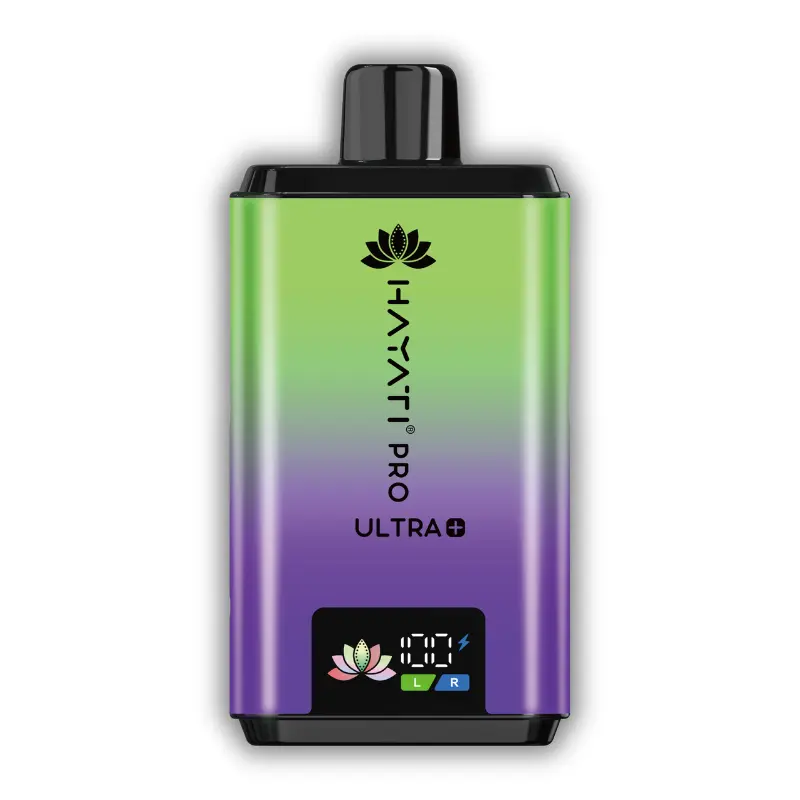
Hayati · Pro Ultra Plus
Lemon Lime / Summer Dream Hayati Pro Ultra Plus 25000 Prefilled Pod Kit
£11.99
✔ In stock — ready to ship
Genuine Hayati
Free over £20
Same-day dispatch
Secure checkout
£11.99 buys a complete Pro Ultra Plus outfit: the 850mAh body, and one prefilled pod holding 22ml of liquid at 20mg nicotine salt. Hayati rate the pod in the laboratory at up to 25,000 puffs. The pod carries two flavours rather than one, and the listing says so directly: the flavours are held apart and a rotating mouthpiece decides which of them reaches the coil. That is worth confirming rather than assuming, because an oblique in a title tells you two names are involved and nothing about how they are arranged. Here the listing states the arrangement in its own words, so the collar is a published fact and not an inference from punctuation.
Turn the collar one way and you have a lemon and lime blend. Turn it the other and you have Summer Dream. Those two names are not the same kind of object. One of them is an ingredient list short enough to fit in three words, describing fruits you could pick out of a bowl. The other is a season attached to a coined word, and between them they identify no fruit, no fruit family, no confection and no drink. This pod tells you exactly what is on one side of it and refuses to tell you anything about the other.
The Lemon & Lime/Summer Dream Hayati Pro Ultra Plus 25K Pods listing at £7.99, which is this pod without the body, set that asymmetry out as its subject and worked through what a named half does to the buyability of an unnamed one. It reached a position and it reached it fairly. This page does not rebuild that argument. It picks up two things the pod page left on the table, both of which change the answer.
The first is a count. Both halves of this pod turn out to be flagship liquids with identical commercial footprints, which removes one of the two readings the pod page left open. The second is use. A sharp citrus and a soft sweet blend are not two interchangeable options that happen to share a housing. They do different jobs, they get used at different rates, and on a pod with one shared budget that decides which half you run out of. Nobody has looked at what happens to the hedge when the two sides are not consumed equally, and the answer is that it runs backwards by the end.
Both halves are flagships, and one of them counted that way before this page started
The pod listing put two readings of this pairing side by side and declined to choose. Either a labelled half is genuine protection sold honestly, or a labelled half is what you attach to a liquid that would not move on its own. It was right not to choose on the evidence it had. There is evidence it did not use, and it settles one of the two.
The footprints are identical, line for line
The Summer Dream Rubik kit page counted how far each flavour in this catalogue travels across Hayati's product lines. The headline figures are its work, not mine, and they are worth restating because everything below rests on them: 192 distinct flavour names, an average reach of 1.78 product lines each, roughly two flavours in three confined to a single line, and exactly eight flavours that appear on all seven. Summer Dream is one of the eight. Mr Blue is another, and those two are the only members of the group whose names give nothing away.
What that page had no reason to check is the other half of this pod. Lemon Lime is also one of the eight. Pull both flavours out of the catalogue and the two lists do not merely resemble each other, they match at every position:
- 10ml nicotine salt bottle, £2.49, both.
- 4ml Mini Ultra pods, £3.49, both.
- 4ml Mini Ultra kit, £3.99, both.
- 12ml Rubik pods, £3.99, both.
- 12ml Pro Max Plus pods, £5.49, both.
- 12ml Rubik kit, £5.99, both.
- 120ml 50/50 shortfill at 0mg, £6.99, both.
- 120ml 70/30 at 0mg, £6.99, both.
- 12ml Pro Max Plus kit, £7.99, both.
- 22ml Pro Ultra Plus pods, £7.99, both.
- 22ml Pro Ultra Plus kit, £11.99, both.
Eleven listings each, seven product lines each, the same eleven price points in the same order. Two liquids that share nothing in taste have the same distribution to the penny. Hayati have tooled the undescribed half exactly as many times, in exactly as many formats, as the half whose name you can read.
That kills the unflattering reading outright. A manufacturer does not run a liquid through seven production formats because it will not sell. Whatever else this pairing is, it is not a dependable flavour dragging a failure along behind it, and anybody reasoning from the blankness of the name to the unpopularity of the liquid has the causation backwards. The name is uninformative. The product behind it is one of the eight most heavily produced recipes in a 492-listing catalogue.
Two flagships in one pod, which happens twice
Run the same test across the whole dual shelf and the pairing turns out to be rarer than its price suggests. There are 50 Pro Ultra Plus listings with an oblique in the title, which is 25 distinct pairings each sold twice, once as a bare pod and once as a kit like this one. Of the 25, exactly two put two of the eight top-reach flavours together. This is one. The other is Blueberry Raspberry / Mr Blue, and the coincidence is not a coincidence, because Mr Blue is the other uninformatively named flavour in the group of eight. The only two pods in the range that pair two flagship liquids are the only two that pair a described flagship with an undescribed one.
Twenty-three other pairings exist and every one of them puts at least one lower-reach flavour in the pod. Blue Razz Cherry / Blue Razz GB has one of the eight and one specialist. Blue Razz GB / Lemon Lime has this same citrus against a gummy berry that reaches nothing like as far. Fruit Bomb / Straw' Watermelon B'Gum has neither.
Read that as a merchandising decision and it stops looking like a hedge at all. A hedge is what you build when one component is weak. Putting your two widest-selling liquids in one housing is the opposite move, and the most economical explanation is that the buyers of each already overlap, so a pod that carries both is one product where two would otherwise be needed. If that is right, the labelled half is not there to carry the unlabelled one. It is there because both of them sell.
The count the pod page ran, extended to the full shelf
One more figure, because a rarity claim deserves testing even when a sibling has already tested a version of it. The pod listing counted the thirteen dual pods shown alongside it and found eleven naming a fruit on both sides. Run the same classification over all 25 pairings and the result holds with room to spare. Twenty-one of the 25 name a substance on both sides, counting the abbreviations that resolve reliably: GB for a gummy sweet, Cotton K for candy floss, B'Gum and H'Bubba for bubblegum, Straw' for strawberry. Four do not. Mr Blue hands you a colour, and Hayati's own copy reads that colour as blue fruit. Fruit Bomb hands you a structure, and its copy confirms a busy mixed-fruit build with nothing leading. H'Berg / P'Man hands you nothing on either side, which means it has no specified anchor to be asymmetric against.
So one pairing out of 25 sets a fully specified flavour against a side that resolves to nothing at all. The Summer Dream Pro Ultra Plus pods page established the single-flavour version of the same point by counting the 52 bare 22ml pods and finding this the only one whose title, description and shelf tags together name no fruit, no family and no confection. The dual shelf gives the same answer at the same strength. It is one listing either way.
The asymmetry reaches the shelf tags too
A smaller observation, and a useful one because it shows the imbalance is structural rather than a copywriting mood. Look at where this kit is filed. The citrus half puts it on two flavour shelves, Lemon Lime Vapes and the broader Lemon Vapes, both of which are organised around a fruit. The other half puts it on Summer Dream Vapes, which is organised around the name itself. One side of this pod generates entries in Hayati's fruit taxonomy. The other generates a shelf that exists only to collect the thirteen listings carrying the same two words. The merchandising data reproduces the gap in the title exactly, which is what you would expect if the information genuinely is not held anywhere rather than simply omitted from the description.
What the protection is worth, and what it costs to hold
The pod listing did the per-millilitre arithmetic for the £7.99 version and there is no point running it again. Its figures: about 36 pence a millilitre across the whole pod, and about 73 pence a millilitre for the liquid you actually wanted if you finish wanting only one side. The Summer Dream pods page carried the same calculation up to this listing and put Summer Dream inside this kit at roughly 109 pence a millilitre. Both figures rest on an assumption both pages flag, which is that the 22ml divides evenly. Hayati publish a total and no split.
Take those numbers as given and ask the question they raise rather than the one they answer. What is the protection actually insuring against, and what is the premium?
The premium is close to the size of the loss
The risk being covered is that you spend money on a liquid you dislike. On the solo Summer Dream pod that risk is £7.99, capped, with no further exposure. Buying this pairing instead of the solo Summer Dream Hayati Pro Ultra Plus 25000 Prefilled Pod Kit costs nothing extra in cash, since both kits are £11.99, but it costs you roughly half the liquid: you receive about eleven millilitres of the flavour you were investigating instead of twenty-two. Priced per millilitre of the thing under test, the cover doubles the unit cost of the experiment.
Insurance that costs about as much as the loss it prevents is not insurance in any normal sense. It is a swap of one certain cost for one uncertain one, with the house taking the difference. On the pure financial reading the pairing is a poor instrument and the sensible way to investigate a flavour you cannot read is to buy the smallest unit of it, which for this liquid is 4ml at £3.49 or a 10ml bottle at £2.49 if you own something refillable. The Summer Dream pods page sets that ladder out in full and reaches the same conclusion about its own listing.
What the money reading misses
Two things, and the second is the one that matters.
The first is that a 4ml pod answers a different question from a 22ml one. Four millilitres tells you whether you can tolerate a liquid. It tells you very little about whether you can live with it, because the failure mode of a sweet uncooled medley is not that it tastes bad on day one. It is that it flattens out by week two. Nothing under about ten millilitres tests for that, so the cheap route closes the tolerance question and leaves the endurance question open.
The second is that the cover here is not a refund, it is a substitution, and it is available inside the session. Every other way of limiting exposure to an unknown liquid works by buying less of it. This one works by making the disappointment survivable in real time: the moment the unnamed half stops being what you want, the citrus is there, and you have not lost the evening or had to fetch a second device. No bottle, no small pod and no return policy does that. Whether it is worth roughly doubling the cost per millilitre is a question about how much you mind an unpleasant hour, and reasonable people answer it differently.
The verdict, with the reasons attached
On the evidence above, the hedge is real, it is honestly constructed, and it is mispriced for most of the people it attracts.
Honestly constructed, because the count settles it. Neither half is being carried. Both are among the eight most widely produced liquids in the range and they have matching eleven-listing footprints, so nothing here resembles attaching a slow seller to a fast one. The pod page was right to raise the cynical reading and right to say nothing published settled it; the distribution data does settle it, and the answer is the generous one.
Mispriced, because the protection is most valuable to a buyer who knows neither half and least valuable to the buyer this listing is merchandised at. The kit sits on two lemon shelves and puts Lemon Lime first in its title. The person who arrives here mostly arrives wanting citrus, and for that person the cover is a straight loss: they pay eleven millilitres of citrus to insure against a flavour they were not buying. The solo Lemon Lime Hayati Pro Ultra Plus 25000 Prefilled Pod Kit is the same £11.99 with twice the citrus and one flavour behind the whole coil.
And genuinely good value for exactly one buyer: somebody with no Pro Ultra Plus body, no strong view between sharp and sweet, and a preference for finding out by living with something rather than by reading about it. That person is buying a device, a fortnight of liquid and a decision, all for £11.99, and the decision is the part they could not otherwise get. It is a narrow recommendation and the narrowness is the point. Most listings suit most of the people who look at them. This one suits a particular kind of undecided.
There is a further reason the cover is worth less than it looks, and it has nothing to do with money. It has to do with the fact that you will not use the two halves equally.
A main and a reset, which are not two versions of the same thing
The collar invites you to think of the pod as offering a choice between two flavours. Choice implies alternatives of the same kind, and these are not. One of them has the properties of a liquid you run all day. The other has the properties of a liquid you reach for when the first one has worn a groove.
What each half is built like
Start with what is published and what has already been established, because both halves have a paper trail.
The citrus is a two-fruit blend with nothing underneath it. The Lemon Lime Vapes shelf page worked out why that matters and its findings are cited here rather than rebuilt: lemon opens the draw, lime arrives at the finish carrying a green, faintly resinous edge, and the middle of the draw is close to empty because neither fruit brings body. It also established, by counting all 24 lime titles in the catalogue, that lime never leads a name in this range and is always positioned at the end. That page traces the position back to the aromatics and to a naming convention that prints fruits in the order you meet them, so a component that always arrives last cannot head a title without the title misdescribing the draw.
The consequence for use is straightforward once the shape is clear. A draw that starts sharp, has nothing in the middle and finishes dry and green is a strong signal and a short one. It cuts through whatever was in your mouth before it. It is also, for most people, tiring across a fortnight, and the shelf page says so plainly when it notes that a two-citrus pod is a narrow thing to live with and that plenty of buyers want precisely that narrowness for a while.
The other half is the mirror image on every axis the record touches. The Summer Dream Rubik kit page compared all eleven descriptions of the liquid and found no listing anywhere attaching a sour, tart, tangy or acidic word to it, no cooling on any of the eleven, a sweetness word on every prefilled listing, a pacing word (easy-going, relaxed, mellow) on eight, and a structure in which nothing is meant to lead. Those are the properties of a flavour that does not fatigue quickly, because there is no single element sharp enough to become the thing you get sick of.
Which is the main and which is the reset
Put those two descriptions next to each other and the functional roles almost assign themselves. A dry high-acid citrus with a hollow middle is a palate-clearing flavour: it works in short bursts, it works best against a background of something else, and it stops working when it becomes the background. A low-acid, uncooled, non-resolving sweet medley is the opposite: unremarkable in a single draw and durable over a hundred of them. On the published evidence the sweet half is the one you would run as a main and the citrus is the one you would use to break it up.
The shelf page reads it the other way round, and says of this pairing that the softer half is the counterweight and the pod is the one to choose if you want somewhere to retreat to. That is not a mistake and I am not correcting it. It is a reading from the buyer's side rather than from the liquid's: somebody who came to a lemon shelf for a lemon pod has already decided what their main is, and for them the sweet side genuinely is the retreat. Both readings describe real people. What neither of them is, is a pod with two equal halves.
Hayati's own copy on this listing quietly agrees, and this is the one place the record gives direct evidence rather than inference. The pairing exists as exactly two listings, this kit and the bare pod, so the description comparison that works so well on an eleven-listing flavour is a very small sample here. It still yields one thing. The pod listing frames the switch in a single direction, as going from sharp to mellow. This kit listing frames it in both, and in doing so names a separate way each half wears out: the citrus starts to feel too sharp, the sweet one starts to feel too soft. Two different fatigue modes on one product sheet is the copy conceding that neither side is an all-day flavour by itself. It is a small finding and it is the only one two listings can support, but it points the same way as everything above.
One caution on that comparison before anybody leans on it too hard. The two sheets also disagree about where the division lives, with the pod copy saying the flavours stay separate in the pod and this kit copy saying they are separated in the device. That is loose writing rather than two different products, and neither phrasing should be read as a statement about the mechanism. Hayati publish that the collar selects a side. They publish nothing about how the reserves are kept apart, and this page will not fill that in.
What follows for running order
A reset earns its place by being different from what it interrupts. That gives you a rule that is easy to state and easy to break: whichever half you have chosen as your main, using the other one as a second main destroys it. Alternate the two in long blocks and the citrus stops registering as a break, because a break is defined by contrast with what surrounds it and there is no longer a stable surround. The pod is most useful when the split in time is lopsided, not balanced, which is close to the opposite of how a two-flavour product is normally sold.
The practical version is a ratio rather than a schedule. Pick your main in the first day or two, run it, and turn the collar when the main has gone flat rather than at fixed intervals. Most people who report that a dual pod became two blurred versions of one flavour have been switching on a timer.
The question of what a permanent running order does over successive pods is a real one and it belongs to Lemon Lime / Lemon Blueberry Hayati Pro Ultra Plus 25K Pods, which works out how a fixed order hands fresh mesh to one half and worn mesh to the other, pod after pod, and why that lands unevenly when one of the halves is a citrus. Its conclusions transfer to this pairing and are not repeated. What does not transfer is the assumption underneath them, which is that you are choosing the order. On a pairing of two equals you are. Here the order chooses itself, because a reset and a main are not used at comparable rates, and that is what the next section is about.
Which reserve empties first, and why it is the half you like less
Two reserves share one 22ml budget. Hayati publish the total and do not divide it, so eleven millilitres a side is a working assumption rather than a specification, and both sibling pages that use the figure say so. Everything below is about what happens when the two sides are drawn down at different speeds, which is a consequence of use rather than of the hardware, and it holds whatever the split turns out to be.
The mechanism, stated without inventing any
Draw on one position and liquid leaves that reserve. Draw on the other and liquid leaves the other. Nothing else is needed for the argument, and nothing else about the internals is published, so nothing else will be claimed. There is no gauge, no window, no indicator of which position is live and no reading of how much is left behind either. The first time you learn that a reserve is low is when it starts to taste thin, and by then there is not much of it left.
Put that together with the previous section. If one half is a main and the other is a reset, consumption is lopsided by design rather than by accident, and the main empties first. When it does, the pod does not stop. The other reserve still has liquid in it and the coil still has life, so the device carries on working and simply stops offering a choice. For the last stretch of its life a two-flavour pod becomes a one-flavour pod, and the flavour it becomes is the one you were using less.
You finish every pod on your second choice
That is the whole of it, and it is worth saying in the plainest form available. Whichever half you prefer runs out first. The tail of the pod is the other one.
The effect exists on every dual pod in the range, but it is mild when the two halves are close together and pronounced here. On a pairing of near neighbours the two positions get used at roughly similar rates and both reserves run down together, so the pod finishes as it started. On a main and a reset the ratio might be four to one or worse, which means the reset reserve is barely touched while the main reserve is consumed, and the point at which the pod becomes single-flavour arrives well before the liquid does.
Follow it through for each kind of buyer, because the outcomes are not symmetrical.
If the unnamed half turns out to suit you and becomes your main, it runs dry first and you finish the pod on citrus. That is the better of the two endings, since the survivor is a flavour you can predict, but it comes with a bill: the only way to get more of the half you now want is to buy the pairing again at roughly double the effective rate, or to move to the solo Summer Dream kit and leave this pairing behind. In the outcome where the hedge has worked, the hedge has also stopped being useful.
If the citrus is your main, as it will be for most people who found this listing through a lemon shelf, the citrus runs dry first and you finish the pod on a flavour you bought as insurance and did not want. The device still works. There is no way to skip the remainder, no way to decant it, and no way to buy a replacement reserve for one side. You either run the rest of it or retire a pod with liquid and coil life left in it.
And if you genuinely use both, which is the outcome that makes a dual pod worth its price, the two sides run down at similar rates, the collar stays useful to the end and none of the above applies. That outcome is real. It is simply not the one a main-and-reset pairing tends to produce.
The coil is running the total, so the survivor gets the tired mesh
One shared coil processes all 22ml regardless of which reserve supplied it, and it is not described as a serviceable part anywhere in this product's data. So the half that survives is not only the one you like less. It is the one you meet on mesh that has already done most of its work.
That would be a minor point if the two halves aged the same way. They do not, and the direction is established rather than guessed. The Lemon Lime Vapes shelf page found that lime's distinguishing compounds are the lightest material in the liquid and the first thing a residue-laden coil stops carrying, so a tired two-citrus pod drifts back towards a plain lemon. The lemon-blueberry pods page reaches the same finding from the other end, describing a citrus on worn mesh as going rounder and reading slightly sweeter rather than going faint.
Put those together with the ending above and the unpleasant case is specific. A buyer who uses the sweet half as their main finishes the pod on a citrus that has lost the green finish which distinguishes it, at the point where the coil is furthest from new. The half whose specification was the reason to buy the pairing is delivered last and delivered degraded. The guarantee arrives in its worst condition.
The opposite ending has its own version. A buyer who uses the citrus as their main finishes on an unfamiliar sweet blend read through a worn coil, which is the single worst circumstance in which to form a view of a liquid you have never tasted, because you cannot separate the liquid from the hardware. Anything you conclude about Summer Dream from the last four millilitres of this pod is unsafe.
What to do about it, given that the split is not published
Not much can be planned, and pretending otherwise would be dishonest. Three things are worth doing anyway.
Take your reading of the unnamed half early, in the first session, before the collar has been turned and before the coil has aged. The pod listing argues that case in detail and it is right for its own reasons; it is right for this one too, and for an additional reason, which is that the first session is also the only time you are guaranteed both reserves are full.
Notice the moment a side goes thin and treat the pod as single-flavour from that point. Trying to eke out a nearly empty reserve produces the poorest draws the pod is capable of and teaches you nothing about the flavour.
And decide, before the pod is finished, which half you would buy on its own, because that is the decision the pairing exists to help you make and it expires with the pod. Both solo versions are on the same shelf at the same £11.99 as kits, or at £7.99 as bare pods once a body is in the house. A buyer who reaches the end of this pod without having answered that question has paid the premium and thrown away the information.
The kit, kept short
Little of the hardware is specific to this listing, and 104 Pro Ultra Plus listings share what there is, so this section is deliberately brief and the shelf carries the rest.
What arrives is the 850mAh device and one prefilled pod, ready to use with nothing to assemble and nothing to add. The pod is the two-flavour type described above, supplied full at 22ml and 20mg. The £4 gap between this listing and the matching bare pod is the body, paid once, which is why a second kit makes sense only if you want a second device rather than a second pod.
The specification that decides how this particular pairing behaves is not the battery. It is the single coil against the 22ml, because that is what makes the two halves share an ageing component and what makes the argument above about survivors and tired mesh apply at all. Hayati's 25,000-puff figure is a laboratory estimate produced on bench equipment drawing to a fixed pattern, and the useful way to read it here is as a statement about how much liquid one non-replaceable coil is expected to process, not as a forecast of anybody's month.
On fitment, once and briefly: the Hayati ranges do not interchange, so check the range name on your device against the range name in this title before ordering, and do not take a hardware compatibility decision from a retail page. Coil resistance, airflow, running power and the carrier ratio of either liquid are absent from this product's data and are therefore absent here. Figures for all of them circulate and they are inferences rather than manufacturer statements. The rest of the platform sits on Hayati Pro Ultra Plus Prefilled Pod Kit, with bare pods shown alongside kits on Hayati Pro Ultra Plus Prefilled Pod Kits & Pods.
The sheet, ordered by how much is known about each half
The table below leads with the information asymmetry rather than with the numbers, because the numbers are identical to every other kit on this shelf and the asymmetry is not. Where a row is blank it is blank on purpose: printing the gap stops a reader assuming the figure exists somewhere they have not looked.
| Row | Entry |
|---|---|
| Side A, as published | Lemon and lime. Two fruits, named, in tasting order |
| Side A, what else the record gives | Eleven listings of this liquid; a dedicated fruit shelf; a documented draw shape |
| Side B, as published | Summer Dream. A season and a coined word |
| Side B, what else the record gives | Eleven listings of this liquid; no fruit named on any of them |
| Reach across product lines | Seven of seven, for both halves |
| Selecting a side | Rotate the mouthpiece. Stated on the listing |
| How the sides are divided | Not published |
| Liquid, total | 22ml, supplied full |
| Liquid, per side | Not published. About half each is the working figure |
| Cooling | None declared against either half |
| Nicotine | 20mg nicotine salt, the only strength listed |
| Coil | One, shared, built in, no replacement part described |
| Coil resistance | Not published |
| Carrier ratio | Not published |
| Device | Included. 850mAh |
| Manufacturer rating | Up to 25,000 puffs, a laboratory estimate |
| Price | £11.99 |
| Pod on its own | £7.99, same two flavours, no device |
| Reference | lemon-lime-summer-dream-hayati-pro-ultra-plus-25000-prefilled-pod-kit |
| Brand | Hayati |
Four rows are doing real work. The two pairs describing each side are the page in miniature: one of them can be answered in a sentence and the other cannot be answered at all, and the rows immediately below show that the difference is not a difference in how much Hayati have invested in the two liquids, since the reach figure is the same for both.
The per-side row is the one with the most riding on it, and it is empty. Every cost calculation on this page and on both siblings assumes an even division, and an uneven one would move all of them. It would also change which half runs out first and when, which is the practical argument here, so the missing figure is not a specification nicety. It is the number a buyer would most like to have.
The remaining blanks behave as they do across the platform. Hayati publish no coil resistance and no carrier ratio for any prefilled pod in the range, which means nobody can tell you how this one will draw against whatever is in your drawer until you fit it. The 20mg figure is the UK legal ceiling for a nicotine-containing liquid rather than a decision taken for these flavours, it is the same on every prefilled Hayati pod, and nicotine is addictive. The listing itself does not name the nicotine preparation; 20mg in a prefilled pod of this format is a salt in practice and the rest of this catalogue states it plainly, so this page does too.
What else £11.99 buys, sorted by which problem you are solving
If the citrus is what you came for
The solo Lemon Lime Hayati Pro Ultra Plus 25000 Prefilled Pod Kit is the listing most people reading this page should end up on. Same price, same body, twice the citrus, no collar to manage and no reserve of anything else to finish. Everything in the section above about running out on your second choice simply does not arise, because there is no second choice.
For a third citrus filling the hollow middle that any two-fruit citrus has, Orange Lemon Lime Hayati Pro Ultra Plus 25000 Prefilled Pod Kit adds the sweetest and least acidic of the three, and the Orange Lemon & Lime Hayati Pro Ultra Plus 25K Pods listing is where the chemistry of why the three citrus fruits are harder to separate than their names suggest has been worked out properly. To keep the sharpness but swap the second element from a fruit to a temperature, Lemon Mint Hayati Pro Ultra Plus 25000 Prefilled Pod Kit does that, and it is the one case on this shelf where the reset function is built into a single liquid rather than split across a collar.
For lemon in a supporting role rather than a leading one, Blueberry Raspberry Lemon Hayati Pro Ultra Plus 25000 Prefilled Pod Kit inverts the hierarchy and uses the citrus as a cut at the end of two berries. The wider Lemon Vapes shelf gathers every lemon-led liquid across the Hayati formats, and Lemon Lime Vapes is the narrower shelf with the full count of what the pairing does and does not include.
If the unnamed half is what you are curious about
Summer Dream Vapes is the place to start, and for a specific reason rather than as a browse. Thirteen listings carry the name, at four price points and five liquid sizes, which means the question can be opened at 4ml or 10ml instead of at 22ml. The Summer Dream Pro Ultra Plus pods page ranks those routes by cost and reaches a rule worth carrying across: the largest unit in the range is the wrong place to meet this flavour and the right place to buy it once the question is closed.
The solo Summer Dream Hayati Pro Ultra Plus 25000 Prefilled Pod Kit is where somebody who already knows they like it should be, at the same £11.99 with the whole pod behind one liquid.
If the structure is what appeals rather than these two flavours
Blueberry Raspberry / Mr Blue Hayati Pro Ultra Plus 25000 Prefilled Pod Kit is the structural twin identified earlier: the other pairing of two top-reach flavours, the other described-against-undescribed pod, and the one where the unknown is cut down to a colour rather than left blank. If the idea of a labelled half guaranteeing a floor appeals but a total blank does not, that listing is the same trade with more information in it.
Blue Razz GB / Lemon Lime Hayati Pro Ultra Plus 25000 Prefilled Pod Kit keeps this exact citrus and replaces the unknown with a chewy sugared blue raspberry, which is the closest substitution on the shelf and the widest gap between two sides anywhere on it. Lemon Lime / Lemon Blueberry Hayati Pro Ultra Plus 25000 Prefilled Pod Kit goes the other way and makes the two halves as close as they get, both opening on the same lemon, which is the pairing for somebody who wants variation rather than contrast.
Away from citrus entirely, Cherry Ice / Peach Mango Hayati Pro Ultra Plus 25000 Prefilled Pod Kit sets a cooled side against a warm one, which is the clearest main-and-reset construction on the shelf because temperature is the most obvious reset there is. Blue Razz Pineapple / Strawberry Ice Hayati Pro Ultra Plus 25000 Prefilled Pod Kit does something similar inside a sweeter frame, and Blackcurrant Cotton K / Blue Raspberry Hayati Pro Ultra Plus 25000 Prefilled Pod Kit moves the whole thing into confectionery. All three name both sides, which is the point of listing them here.
If a sweet blend is what you want and you would rather it had a label
Watermelon Fruit Twist Hayati Pro Ultra Plus 25000 Prefilled Pod Kit is the openly declared version of a medley, a mixed-fruit build with a named fruit in front of it, which is the same structural idea as the unnamed half with the blank filled in. Blueberry Cotton K / Raspberry Cotton K is the candy-floss corner if it turns out that sweetness rather than fruit is what you were after, and Blackcurrant Lemonade Hayati Pro Ultra Plus 25000 Prefilled Pod Kit or Straw' Lemonade Hayati Pro Ultra Plus 25000 Prefilled Pod Kit put sweetness and citrus into one liquid through a soft-drink frame, which is a third way of solving the problem this pod solves with a collar.
Smaller and cheaper ways into the same two liquids
Lemon Lime Hayati Mini Ultra Pod Kit at £3.99 is the least expensive complete device carrying this citrus, at 4ml. Lemon Lime Hayati Rubik Prefilled Pod Kit at £5.99 sits in between at 12ml. Both are different hardware rather than refills for a Pro Ultra Plus, so they are routes into the flavour rather than into this platform. Cola Ice / Orange Lemon Lime Hayati Mini Ultra Pod Kit at £3.99 is the cheapest way to find out whether a collar suits you at all, on 4ml rather than 22ml, which is a sensible thing to establish before spending £11.99 on the format. If none of that fits, the full Hayati catalogue is there to scan.
What you can settle about the unnamed half without buying anything
More than most people assume, and the reason is a technique rather than any generosity in this listing. The Blackcurrant Lemonade kit page established it: a flavour sold several times has been described several times, by different hands at different moments, and those descriptions can be lined up against each other. Properties every listing asserts are the closest thing to a fact available. Properties only one asserts are either the most interesting thing on the page or a copywriting variant. Disagreements are evidence about how the copy was produced, not about two recipes.
Applied to this pairing the method has almost nothing to work with, because the pairing exists as two listings, and the one difference it yields is the fatigue-mode observation reported earlier. Applied to the unnamed half it has eleven, and the Summer Dream Rubik kit page has already run it at that scale. That page is where to go, and the point of naming it here is to hand you the method rather than the conclusions, because the method is what lets you check the conclusions rather than take them.
What to do with it, in the order that costs least:
- Read the eleven, not the one. Every Summer Dream listing across all seven product lines is collected on the Summer Dream Vapes shelf. The descriptions were written separately and the places where they agree carry weight that no single listing can.
- Treat unanimity as near-fact and silence as evidence. A property asserted on all eleven is about as settled as an undescribed liquid gets. A property absent from all eleven is weaker evidence but not no evidence, particularly where the range has a habit of declaring that property when it is present.
- Check the shelf tags separately from the copy. Tags are assigned by whoever merchandises the catalogue rather than by whoever writes the descriptions, which makes them a partly independent source. The Rubik page found exactly one fruit tag in the whole record and weighed it carefully rather than building on it, which is the correct handling of a single data point.
- Notice which axis you actually decide on. If fruit identity is the thing that settles purchases for you, the record closes several axes and leaves that one wide open, and no amount of reading will close it. Buy something that prints its contents.
- Then price the remaining question. Whatever the diff leaves unresolved is worth exactly what the smallest unit of the liquid costs, and for this flavour that is a good deal less than £11.99.
One thing the diff cannot tell you, and it is the thing this page has been about: it says nothing about how the two halves behave together. Eleven descriptions of one liquid establish what that liquid is. They do not establish whether it will be your main or your reset, how fast you will get through it relative to the other side, or which reserve you will be left holding. Those only emerge from use, and they are the axis on which a two-flavour pod succeeds or fails.
Running this pod without wasting half of it
General pod handling applies here as everywhere. What follows is the part that is specific to one described liquid and one undescribed one sharing a coil.
Carryover is asymmetric, and not in the direction you would guess. One wick means a trace of the previous liquid rides along for a while after every switch, and the two directions are not equally noticeable. A citrus trace inside the sweet half is conspicuous, because the record says no listing anywhere attaches an acidic word to that liquid, so acid arriving in it has nowhere to hide. A sweet trace inside the citrus is far harder to spot, because it reads as the citrus being slightly rounder and slightly sweeter, which is also exactly what a tiring coil does to a lemon. The contamination in that direction is confusable with wear. The shelf page reaches the opposite ordering for the Blue Razz GB pairing, where a confectionery sugar sits over bare acid and is very audible, and that is consistent rather than contradictory: a heavy candy residue and a light fruit sweetness are not the same intruder. This is reasoning from two descriptions, not a measurement, and it is offered as such.
Mark the collar before you first fit the pod. Nothing indicates which position is live, and the usual trick of identifying the flavour by taste only half works here, since you can confirm the citrus instantly and have no reference at all for the other side. A pen mark aligned with one position solves it in both directions.
Do the switching early and then settle. The first day or two is when comparison is worth the carryover it costs. After that, frequent switching produces two blurred liquids rather than two flavours, and on a main-and-reset pairing it also stops the reset working, for the reason set out further up.
Slow down late rather than early. Mesh that has worked through most of 22ml takes longer to re-wet, and drawing quickly in succession at that stage outruns it and produces heat. On the citrus side that shows up as a scorched top note, which is the commonest reason a perfectly reasonable citrus pod gets written off near the end of its life.
Storage matters more here because of what is sitting idle. On a lopsided running pattern a substantial volume of one liquid waits weeks before you reach it, and warmth works on it the whole time. Lime's contribution is the lightest material in the pod and the first thing heat takes, so a pod that has lived on a sunny sill will have lost the green finish before you ever switch to it. Keep the pod and the device at room temperature, shaded, and out of reach of children and pets.
Nothing here is topped up, and a spent pod is not household rubbish. No filling arrangement is described in this product's data and the coil is part of the sealed unit. Mesh and a residue of liquid remain at the end, so a finished pod belongs with whatever electrical waste arrangement your retailer or your council operates rather than in the bin. The device outlives the pod, so hold on to it: the £4 premium in this listing is paid once and every pod after it is £7.99.
Questions this pairing raises
Is this one pod or two?
One. A single pod holds both liquids and the listing states that you choose between them by rotating the mouthpiece. There is no second pod, no way to separate the two and no arrangement for buying one side. Hayati do not describe how the reserves are kept apart, so neither does this page.
What flavour is Summer Dream?
No fruit is named for it anywhere: not in this title, not in the description, not in the shelf tags, and not on any of the other ten listings that carry the name. Hayati state that it is sweet, that it is a blend rather than a single fruit, and that it has a light warm-weather character. Anything more specific than that is somebody's guess presented as information.
Is the unnamed half unpopular? Is that why it is paired with a citrus?
No, and the catalogue settles it. Summer Dream is one of only eight flavours Hayati put on all seven of their product lines, and Lemon Lime is another. The two have identical eleven-listing footprints at identical price points. A liquid tooled across seven production formats is not a liquid that fails to sell, so the pairing is two widely produced flavours rather than one carrying the other.
How much liquid is on each side?
Not published. Hayati give 22ml as a total and do not divide it, so about eleven millilitres a side is a working assumption and every cost figure on this page and its siblings depends on it. It also decides when the pod becomes single-flavour, which makes it the most useful missing number on the sheet.
Which side should I try first?
The unnamed one, in the first session, before the collar has been turned. That is the only reading of it uncontaminated by the other liquid, and it is also the only time you can be sure both reserves are full. Taking a citrus baseline first sounds orderly and spends your one clean sample on a flavour that is already documented in eleven other listings.
Will one side run out before the other?
Almost certainly, because you will not use them equally. A sharp citrus and a soft sweet blend do different jobs, one gets used as a main and the other in shorter bursts, and the reserve behind the main empties first. When it does, the device keeps working and simply stops offering a choice, so the last stretch of the pod is whichever half you were using less.
Is there any ice, mint or menthol in it?
Neither side declares any, and no Summer Dream listing anywhere mentions cooling. The citrus gets its lift from fruit acid rather than from a coolant, which matters over a long pod because acid softens as a coil accumulates residue where a cooling agent tends to hold its level.
I only want the lemon and lime. Should I buy this?
Probably not. The solo Lemon Lime kit is the same £11.99 with the same body and the whole 22ml behind one flavour, so you would be paying roughly eleven millilitres of citrus for insurance against a liquid you were not buying. Buy this one only if the unnamed half is a question you actually want answered.
Should I buy the kit or just the pod?
The pod, at £7.99, if a working Pro Ultra Plus is already in the house, since the £4 difference is a body you would then own twice. The kit is the listing if you have no device, or want a second one so two pods can run at once. The premium is paid once and spread over every pod that follows.
Is a lower nicotine strength available?
Not on this listing. 20mg nicotine salt is the only concentration offered, and it is the UK legal maximum for a nicotine-containing liquid rather than a choice made for these two flavours. Nicotine is addictive, and the figure is a statement of content rather than a recommendation.
How many puffs will it actually do?
Hayati rate the pod at up to 25,000, measured on bench equipment drawing to a fixed pattern. It describes a machine's output under controlled conditions rather than anybody's fortnight, and it is best read as an indication of how much liquid one non-replaceable coil is expected to process.
The position, plainly
£11.99 buys the 850mAh Pro Ultra Plus body and one pod holding 22ml of 20mg nicotine salt, divided between a dry, peel-forward lemon and lime and a second liquid described only as a sweet, light, easy-going blend, with a rotating mouthpiece selecting which of them reaches the single coil. Hayati rate it in the laboratory at up to 25,000 puffs.
The interesting thing about it is not either flavour. It is that one side is fully specified and the other names nothing at all, and that this is one of 25 dual pairings on the shelf where that is true. The bare pod listing made the case that a labelled half makes an unlabelled one buyable, and that case stands. Two things modify it. The count says neither half is being carried, since both are among the eight most widely produced liquids in the catalogue with matching eleven-listing footprints, so the honest reading of the pairing is the generous one. And use says the protection does not last, because a citrus and a sweet blend do different jobs, get consumed at different rates, and leave you finishing every pod on the half you chose less often, through a coil that has already done most of its work.
So the recommendation is narrow. Buy this if you have no Pro Ultra Plus body, no firm preference between sharp and sweet, and a genuine willingness to let a fortnight decide. Use the first session on the unnamed side while the pod is clean, settle on a main by the second day, and work out before the pod is done which of the two you would buy on its own, because both are sold alone at this price and the pairing is not a listing anyone should be buying twice. If you already know you want the citrus, the solo kit is the same money and twice as much of it. If you know you want the other half, its solo kit is the same again. The pairing is a way of answering a question, and it is worth what an answer is worth, not more.
Strictly for adults aged 18 and over. Nicotine is an addictive substance.
You might also like


