
Home / Hayati Pro Max Plus Prefilled Pod Kit / Blackberry Ice Hayati Pro Max Plus 6000 Pod Kit
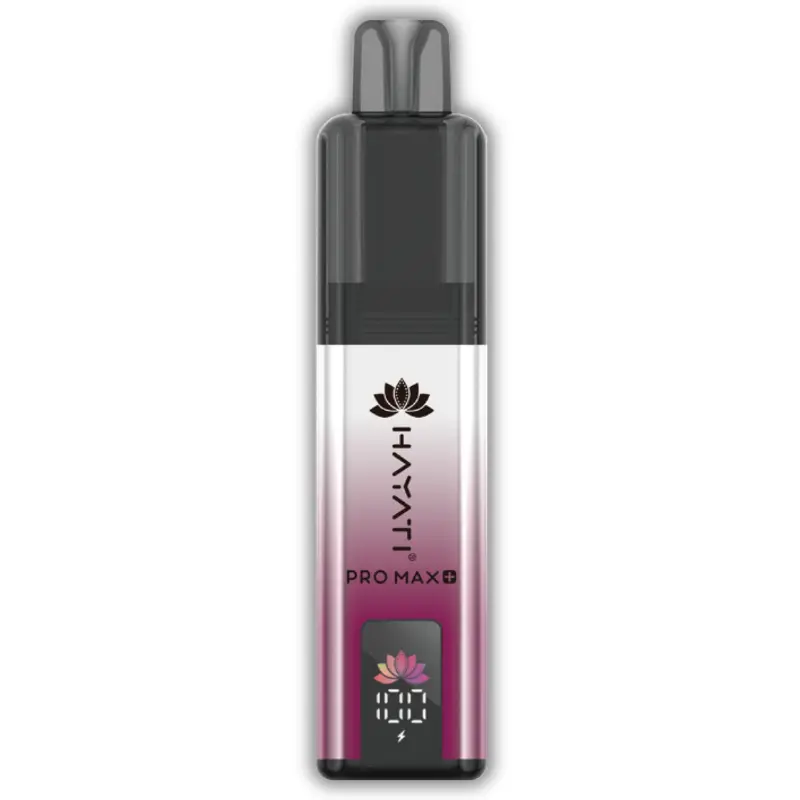
Hayati · Pro Max Plus
Blackberry Ice Hayati Pro Max Plus 6000 Pod Kit
£7.99
✔ In stock — ready to ship
Genuine Hayati
Free over £20
Same-day dispatch
Secure checkout
Blackberry Ice comes as a complete kit for £7.99: a Hayati Pro Max Plus body with a rechargeable 850mAh cell in it, and one prefilled pod carrying twelve millilitres of liquid at 20mg nicotine salt. Open the box and you have a working device and a full pod, with nothing else to buy before you use it. The same liquid in the same pod, without the body, is listed on its own as Blackberry Ice Hayati Pro Max Plus Pods at £5.49 for anyone who already has the hardware.
That bare-pod listing has its own page here, and it did a specific and fairly unusual job. It picked up the words Hayati put at the top of the listing, hedgerow fruit, and asked what happens to a flavour when the thing it imitates is something a large share of British adults have picked and eaten themselves, wild, on a footpath, without paying for it. It counted the catalogue to check the claim, narrowed it until it held, and then worked through which of a real blackberry's properties can physically survive being turned into vapour and which cannot at any recipe strength. Its conclusion was two-sided and it is worth stating plainly because this page treats it as settled: measured against a chilled punnet the liquid lands close, and measured against a warm berry off a September bramble it lands like a competent portrait with two features missing, because warmth is half of what a hedgerow berry is and cooling removes it.
None of that argument is repeated below. It is done, it is on the site, and re-deriving it would waste the space this page has.
What that page deliberately left alone is the question most buyers are actually holding at the moment they decide. Not whether the liquid is faithful to anything, but what it delivers: which parts of a blackberry reach you, in what order they turn up, what the cold adds on its own account rather than what it takes away, how the whole thing shifts as twelve millilitres go through one coil, and whether any of that describes something you want in your pocket for the next fortnight. Those are different questions from the accuracy one and they have different answers.
They also have a different audience, and it is the bigger one. The hedge reference is real, but for most adults in this country it is a memory of a handful of Septembers rather than a standard they could hold up to something this afternoon. The blackberries that actually get eaten in Britain now come out of a fridge in a plastic box, and they are larger, wetter, milder and colder than anything off a bramble. If that is your reference, the sibling page already told you the pod reads close, and the interesting conversation starts after that point rather than before it. If you have no particular reference and simply want a dark berry with a cold finish, the accuracy question never arises for you at all.
One listing on this shelf does both of the things this one does
Before the flavour, a piece of counting that changes how the purchase looks, because it is the kind of thing a product page usually asserts vaguely and almost never checks.
The Pro Max Plus kit shelf holds 88 listings. Twenty-five of them name a dark fruit in the title: blackberry, blackcurrant, blueberry, cherry, grape, pomegranate, or berries as an unspecified category. Fifteen of the 88 carry a cold word of some kind. The overlap between those two groups is exactly one listing, and it is this one.
Look at what the other fourteen cold listings are and the point sharpens. Smooth Strawberry Ice, Lychee Ice, Watermelon Ice, Red Apple Ice, Pineapple Ice Hayati Pro Max Plus Pod Kit, Banana Ice Hayati Pro Max Plus Pod Kit, Kiwi Cooler, an ice lolly and a cola. Every one of those is a pale or bright fruit, or a drink, and cooling is a natural fit for all of them. Blue Frozen Hayati Pro Max Plus 6000 Pod Kit reads dark on the label but its fruit is a confection rather than a plant. Vim Ice Hayati Pro Max Plus 6000 Pod Kit reads as chilled dark purple and names no fruit anywhere in its record, so you are buying a colour and a temperature. Two mint listings are mint rather than fruit.
Now run it the other way. Of the 24 remaining dark-fruit kits, not one puts a cold word on the label. Mixed Berries Hayati Pro Max Plus 6000 Pod Kit, Blueberry Raspberry Hayati Pro Max Plus Pod Kit, Blueberry Pomegranate Hayati Pro Max Plus Pod Kit, Blackcurrant Juice Hayati Pro Max Plus 6000 Pod Kit and the rest are all presented uncooled. Whether that reflects a flavour-house habit or a commercial belief that dark fruit and cold do not sell together, the practical consequence is the same. If what you want is a named dark berry with the cold declared on the label, in a kit, on this platform, there is one of them.
Two qualifications, because the count is only worth having if it is stated accurately. A title is a signal and not a specification. The Blue Frozen pods page on this site already ran the cooling vocabulary across the whole catalogue and found that Hayati announce cold in a name but never grade it: Ice appears in ninety titles, Frozen in three, Cooler in two, and Chill and Freeze in none at all, with no listing anywhere mixing an ice-family word into a mint-family one. So the absence of a cold word is good evidence that a blend is uncooled and it is not a guarantee, and the presence of one tells you cooling exists without telling you how much. Second, blackberry itself is thin on the ground here in a way that has nothing to do with temperature. Six listings out of 492 carry the word, covering two flavours across three formats, and the only other one is a blend: Blackberry Raspberry Hayati Pro Max Plus Pod Kit. Set that against 46 blueberry listings and 62 with cherry in them and you get a fair picture of where this fruit sits commercially.
What reaches you, and the order it arrives in
Everything from here to the end of this section is one careful account of a liquid plus reasoning about how the format behaves. Hayati publish a flavour name and a short profile, not a recipe, so nothing below should be read as a declared formulation. Where a claim is an inference it is flagged as one.
The sibling page sorted a blackberry into four broad properties and asked which of them a vape can transmit at all. That sorting is done and the answer is on that page. This section asks the next question down, which is finer and more useful at the counter: of the aromatic material that does get through, what is it made of, and does it all arrive at the same moment? It does not. A draw is not a single event with one flavour in it. It is a short sequence, and the sequence is the thing people actually describe when they say a liquid is front-loaded, or thin at the end, or that it opens well and goes nowhere.
The registers a dark berry is built from
Strip a blackberry down as a smell rather than as a fruit and it is not one note. It is a stack of registers that happen to arrive together when you eat one, which is why nobody thinks of it as a stack. Six of them matter here.
- A thin green edge. The stalk, the leaf, the faint sappiness of the underripe berries in the same cluster. It is present in every wild blackberry and it is nearly always dialled down in a commercial liquid, because on its own it reads unfinished.
- A violet-floral lift. This is the part people struggle to name and recognise instantly. Dark berries carry a genuine floral, faintly perfumed top note, the thing that separates a blackberry from a plum or a prune. It is the lightest properly blackberry-ish material in the fruit and it is the only real brightness the fruit owns.
- The jam core. Round, deep, cooked-sugar sweetness with fruit inside it. This is the load-bearing middle of any dark berry recipe and it is the easiest register of the six to build and to deliver.
- A winey depth. The low, slightly fermented character of a berry picked late in the season, closer to a red wine than to a sweet. This is what makes a blackberry read as adult rather than as a sweet shop.
- A woody, seedy bitterness. Faint, brief, and the nearest thing available to the drying pull of the real fruit, which the sibling page established cannot be transmitted by this format in any literal sense.
- A moderate acid. Not a moment so much as a structural presence, running under the other five and keeping the sweetness from setting.
Alongside those sits the coolant, which is not part of the fruit and does not compete with it for the same perceptual space, because a cooling agent works on the receptors that report temperature rather than on taste or smell. That much the sibling page settled. What it did not do, and what matters for running order, is note that a temperature signal and an aroma signal do not take the same route to your attention, and therefore do not arrive at the same time.
Three reasons a draw has an order at all
Order happens for three separate reasons and it is worth keeping them apart, because they explain different parts of what you notice.
Route. Cold is reported by nerve endings in the mouth directly and reaches you immediately on contact. Sweetness and acidity are tastes, which need vapour to condense on the tongue and dissolve before receptors can register anything, so they run a fraction behind. Aroma is slowest of the three, because most of what you perceive as fruit flavour is smelled from the inside, reaching the nose through the back of the throat on the exhale rather than through the nostrils on the way in. Three channels, three arrival times, and none of it is about how much of each ingredient is in the liquid.
Temperature ramp. A coil is cold when a draw starts and reaches working temperature over the course of it. That is a short ramp, not a step, and it means the first moment of a draw vaporises at a lower temperature than the last moment does. Light, mobile material leaves a wick readily at the bottom of that ramp. Heavy material needs the top of it. So the running order within a single draw is partly just the order of the ramp, with the lightest registers leaving first because they are the only ones that can.
Persistence. Once delivered, the registers fade at different rates. A temperature signal outlasts almost everything, which is why the cold is still there when the fruit has gone. Sweetness decays moderately. Heavy aromatics either deposit on the surfaces of your mouth or are swallowed, and they are gone fast.
Put those three together and the sequence more or less falls out of the physics. It is not a design decision by the flavour house, or not mostly. It is what happens to any dark fruit on a low-power restricted draw.
The running order, as this liquid does it
Here is the sequence, register by register, described as it occurs.
Cold lands first and lands alone. Not as a spike and not at the front of the mouth, but as an even coolness across the whole draw the instant vapour touches anything. For a fraction of a second there is nothing else. This is the single most important structural fact about the blend and it is a consequence of route rather than of strength, which is why people consistently overestimate how much coolant is in a cooled dark fruit. It is not louder than the fruit. It is earlier.
The light top follows immediately behind it. The violet-floral lift and the trace of green edge come off the wick at the bottom of the temperature ramp, so they are the first aromatic material to exist at all. On this liquid the violet is present and it is quiet. It is detectable as a faint perfumed brightness sitting just behind the cold on the inhale, and it is the note that makes the fruit identifiable as blackberry rather than as generic dark purple. Anyone who has run Vim Ice and wondered what exactly is missing from it is, in my reading, missing this.
Sweetness arrives third and builds. Taste needs condensate, so it lags both of the above, then rises over the middle of the draw and holds. On the shelf scale this sits upper-middle: clearly above an unsweetened profile, clearly below the confectionery end. It reads as fruit sweetness woven through the flavour rather than as a sugar shell laid over the top, and the difference between those two is something most people can feel and very few can define.
The jam core comes in as the coil reaches temperature. This is the body of the flavour and the part that is never in doubt. Round, dark, faintly cooked, unmistakably berry. It occupies the whole middle and back of the draw and it is by a distance the most robust of the six registers, because it is built from material the format handles well.
The winey depth arrives late and mostly on the exhale. Heavy aromatics need the top of the temperature ramp to leave the wick and they need the exhale to reach the nose from behind. So the wine note is the last thing to turn up and it turns up after you have stopped drawing, which is why people often describe this flavour as better on the way out than on the way in. They are not imagining it. There is genuinely more of the fruit's character in the exhale than in the inhale, and the gap is wider on a dark fruit than it would be on a bright one.
The woody corner closes it. A short, faint tightening a second or two after the exhale, the suggestion of dryness rather than the thing itself, gone within about five seconds and leaving very little behind.
That is six events in something under ten seconds, and the useful summary is this: the front of the draw is temperature and a flicker of floral, the middle is sweetness and jam, and the back is wine and a dry corner. The fruit's identity lives at both ends and its bulk lives in the middle.
What the cold is standing in front of
Now the part of this that is not flattering, and it is a different criticism from the one the sibling page made.
That page's complaint about the cooling was about warmth: a hedgerow berry is eaten warm, warmth makes aroma more available, so chilling moves the product away from the reference the listing invokes. Correct, and settled. The complaint here is narrower and it is about the running order rather than about any reference.
The coolant and the violet-floral top occupy the same window. Both are light, both are early, and one of them is a temperature signal while the other is a faint perfume. Those are not evenly matched for attention. A cold sensation is impossible to miss and a quiet floral note is very easy to miss, particularly on the first draws of a session when you are not concentrating. The practical consequence is that the one genuinely bright thing a blackberry owns gets its moment at exactly the point in the draw where something much more insistent is also happening.
That is the real cost of the ice on this blend, and it is worth separating from the warmth argument because it points somewhere different. The warmth problem cannot be fixed by anything you do. This one partly can. The violet is more findable on the first draw after a gap than on the fifth draw of a run, more findable on a short sharp draw than on a long one, and more findable before you have eaten anything than after. If you want to know whether this fruit is properly blackberry to your palate rather than merely dark, that is where to look, and the first third of the pod is when to look.
Anyone whose main interest in a berry is the floral top rather than the depth should know that it is a fruit-choice problem rather than a recipe problem. Raspberry carries far more of that register and carries it in light volatile material that the format moves easily, which is why Strawberry Raspberry Ice Hayati Pro Max Plus Pod Kit reads as more vivid than this does at the same cooling level and the same price. It is not a better-made liquid. It has an easier job.
What the cold contributes, counted as a positive
The sibling page granted the coolant three specific things, and this page takes all three as established rather than re-arguing them. It suppresses perceived sweetness, so the modest acidity in the blend reads higher than it otherwise would. It supplies lift, which blackberry structurally does not have, filling a register the fruit leaves empty. And it shortens the tail, so the finish is quicker and drier and the pod does not build a sweet film over a long session.
What that page did not do, because it was busy with accuracy, is add up what those three add up to for someone deciding what to carry around. They add up to a fairly specific kind of usefulness, and it is worth spelling out.
It is legible without your attention. A dark fruit with no brightness is a flavour you have to notice on purpose. Ten minutes into a conversation it becomes a vague sweet warmth and you stop reading it as anything in particular. The cold prevents that, because a temperature signal keeps re-announcing itself whether or not you are listening. This is not a small thing for a flavour most people will use while doing something else. The uncooled dark listings on this shelf are better flavours to sit down with and worse flavours to forget about.
It survives a long day. Sweetness suppression is the reason this works as an everyday pod rather than as an occasional one. A dark berry at upper-middle sweetness with no cold on it accumulates: by the afternoon each draw is landing on top of the residue of the last hour and the whole thing turns thick. The chill and the short dry finish between them hold that off. The liquid you are drawing at five o'clock reads roughly as it did at nine, which is an unglamorous property and the one that actually determines whether a pod gets finished.
It coexists with other things. A short tail means the flavour is not still in your mouth when you next eat or drink, and it means the pod sits in a rotation without colouring whatever is next to it. Heavy uncooled fruit blends are notoriously bad at that.
It raises the floor. This one is double-edged and both edges are worth having. Because the coolant is carried on light material, it goes on arriving at close to full strength long after the fruit has started to thin. The sibling page put that as a warning, and correctly: do not use the cold as your gauge of whether the pod is still good, because it will feel cold when there is very little blackberry left. The same fact read from the buyer's side is a benefit. An uncooled dark fruit in the last third of a pod is a sweet, flat, slightly tired thing. This one in the last third is still cold and still recognisable, which is to say the worst it gets is better than the worst an uncooled equivalent gets. You should judge the pod by its depth, and you will still be reasonably happy with it while you do.
How cold, in relative terms. Middle of the range for this platform. Unmistakable from the first draw and still present on the finish, so nobody is going to miss it, but it does not numb and it does not escalate over a session the way a dedicated freeze profile does by the third puff. Somebody coming across from a bright cooled fruit such as Pineapple Ice will find the cooling pitched at a similar level and the fruit underneath it completely different in weight. Somebody coming from an uncooled blend will find it properly cold for a day or two and then stop noticing, which is how coolant habituation works on everybody. Hayati publish no cooling figure for this or for anything else, so this is an impression and not a specification.
Twelve millilitres, in four phases
A prefilled pod is usually discussed as a quantity. It is more usefully understood as a duration, because the liquid does not taste the same all the way through and the reason is straightforward: one coil and one wick handle the whole twelve millilitres, and the heavy aromatic material that carries a dark fruit's identity is precisely the sort that accumulates on a coil rather than leaving with the vapour. The consequence is a curve, and on this recipe the curve has a shape worth knowing before you buy rather than after.
Phase one, the first handful of draws. A fresh pod is wet and the wick has more liquid in it than the coil can turn over neatly. The first few draws read slightly muted and slightly raw at the same time, which is an odd combination and is nothing to do with the recipe. Give it a few minutes of ordinary use. Nobody should form a view of this flavour in the first five minutes of the first pod, and a surprising number of people do.
Phase two, roughly the first third. This is the pod at full stack. All six registers present, the violet findable if you look for it, the wine note clear on the exhale, the woody corner doing its brief job at the end. If this flavour is going to work for you, it works here, and everything after this point is a slow subtraction from it. Anyone trying to decide whether to reorder should decide during this phase, not at the end.
Phase three, the middle. The first things to go are the lightest things, which on this fruit means the green edge and then the violet. Neither departs dramatically. What you notice, if you notice anything, is that the liquid has become rounder and a shade sweeter and somewhat less specific. It starts reading as dark berry rather than as blackberry. Most people register this as the pod settling in or as themselves getting used to it, and both of those are also happening, which is why the change is so easy to miss.
Phase four, the last third. Now the winey depth thins as well, and what is left is the jam core, the sweetness and the cold. This is where the sibling page's warning applies exactly: the tell that this pod is past its interesting life is not that it has got fainter but that it has got simpler and sweeter. A pod that seems to have become easier and more pleasant has actually lost the part you bought it for. That is counterintuitive enough that it catches people repeatedly.
Two things follow from the curve, and both are practical rather than theoretical.
The first is that a dark fruit's interesting life and its liquid life are different lengths, and the gap is wider here than it would be on a pale bright blend. A citrus or a light berry finishes twelve millilitres much as it started, because its character lives in material the coil never had trouble with. This one does not. Where you draw the line is a personal judgement and there is no correct answer to it, but the line exists and it is worth knowing that it exists rather than discovering it as a vague disappointment in week two.
The second is that the curve is partly under your control. The sibling page established that draw length is a genuine lever on a dark fruit, because a longer draw puts more heat into the coil and heat is what the heavy aromatics need in order to leave the wick. The application here is to the phases rather than to day one: lengthening the draw slightly in phase three recovers a usable amount of the depth that phase three has taken away. It is a way of extending the interesting part rather than a way of tuning the flavour when the pod is new. Push it too far and the heat starts cooking what it is lifting, and the wine note turns into something closer to stewed jam, which is the opposite of the repair you were attempting.
Chain-drawing compresses all four phases, for the obvious reason that the coil never fully cools between draws and runs hotter overall. It also front-loads the deposition that ends phase two. If you habitually run draws back to back, expect the curve described above to happen faster and expect phase two to be shorter than a third of the pod.
The kit itself
The box holds a Pro Max Plus body with a rechargeable 850mAh cell inside it, and one prefilled pod already filled with the twelve millilitres. That is the whole contents. The body has no settings and nothing to adjust, so there is no wattage decision and no airflow decision to get wrong.
The specification that matters most for this particular liquid is not the volume or the battery figure. It is the division of labour between the two parts: the body is rechargeable and lasts, the pod is prefilled and does not, and the coil lives in the pod rather than in the device. For a dark, heavy-aromatic recipe that arrangement is genuinely in your favour, because the component that tires is the one you replace. Everything described in the four phases above resets when a new pod goes on, and it resets completely rather than partially, which is not true of devices where the coil is a separate consumable with its own wear history.
Hayati's rating for a full pod is up to 6,000 puffs. That number comes off a test bench taking identical draws on a fixed schedule, so read it as a laboratory ceiling rather than as a forecast about anybody's week. Draw length, frequency and how warm the device runs all move the real figure, and they move it in both directions.
On fitment, check that the range name on the device you are holding matches the range name in this title, because cross-range fitment is not something to settle from a retail page, this one included. The other 87 listings that share this hardware are on the Hayati Pro Max Plus Prefilled Pod Kit shelf, and the wider set of Hayati kits across every body sits under Hayati Pod Kits.
The published record, and what it leaves out
The table below holds what Hayati state for this listing. Nothing has been carried over from another product in the range, because a specification with borrowed rows in it is less useful than one with visible gaps.
| Price, complete | £7.99 |
| What ships | Device plus one filled pod, ready to use |
| Fruit on the label | Blackberry, named singly |
| Cooling | Declared in the title, no level given |
| Liquid volume | 12ml in the pod |
| Nicotine | 20mg per ml, salt preparation |
| Strength options | None, a single figure only |
| Cell | 850mAh, rechargeable |
| Puff ceiling quoted by Hayati | Up to 6,000 on a full pod, a bench figure |
| Pod replacement | Compatible Pro Max Plus refills |
| Pod-only version | Blackberry Ice Pro Max Plus Pods, £5.49 |
| Shelves it appears on | Berry, Ice, New Products and three Hayati headings |
| Absent from the record | Coil resistance, carrier ratio, cooling strength, sweetness scale, flavour house, ingredient list beyond the name |
The row worth dwelling on is the nicotine one, and for a reason specific to what this page has been describing. Twenty milligrams per millilitre is the highest concentration permitted for retail sale in the United Kingdom, which is why every prefilled Hayati listing shows the same figure and why not one of the 88 kits on this shelf offers a dropdown. The decision has been made at the level of the market rather than at the level of the product. Nicotine is addictive, and the number on the label is a measurement and not a recommendation about anybody.
What makes it interesting here is the contrast with everything else in the pod. Across twelve millilitres the violet fades, the green edge goes, the wine note thins, the sweetness rises in relative terms and the cold holds its ground. The nicotine concentration does none of that. It is the same in the last millilitre as in the first, because it is dissolved in the liquid rather than carried by an aromatic that a tiring coil struggles to lift. So the one property the label actually quantifies is the one property that does not change, and every property that does change is unpublished. That is not a complaint about Hayati specifically, since no prefilled brand publishes a sweetness scale or a cooling index, but it is the reason a page like this has to do the work in prose.
The second gap worth naming is the coil. Hayati state nothing about resistance, wick material or wattage anywhere in this listing, so any resistance figure attached to this pod elsewhere came from somebody's assumption rather than from the manufacturer. Since the coil is the component that produces every effect described in the phases section, that is a real hole in the record and not a pedantic one.
Who this suits, and who should spend the £7.99 elsewhere
Everything above is description. This part is recommendation, and it is where the page earns its keep for somebody with a dozen tabs open.
Buy this one if
You want a dark berry you can run all day rather than a rich one you sit down with. You want the fruit named on the label rather than implied by a colour. Your reference for blackberry is a punnet from a fridge, or you have no particular reference and simply like dark fruit. You want cooling that is unmistakably present and does not numb. And you want the whole thing in one box because you do not currently own a Pro Max Plus body.
If you do own one, the pod on its own is the listing you want and there is no reason to buy a second device. The bare Blackberry Ice pod is the identical liquid in the identical pod.
If you want the fruit without the cold
Blackberry Raspberry Hayati Pro Max Plus Pod Kit is the only other blackberry kit in the range and it carries no cold word at all, which on the evidence of the cooling census is the best available signal that the blend is uncooled. The trade is straightforward: you get a warmer reading of the dark fruit and you get raspberry with it, which brings a brighter acidity and a much stronger floral top than blackberry owns on its own. That may well be the better pod for you. It is not the same purchase, because the second fruit is not a garnish and you will taste it throughout.
For dark and uncooled without blackberry in it at all, Mixed Berries takes the unspecified-blend route, Blueberry Raspberry names both of its fruits and leans brighter than this does, and Blueberry Pomegranate Hayati Pro Max Plus Pod Kit brings a sharper, more astringent-reading second fruit that does interesting things to the same dark register.
If you want dark and cold but do not care about the fruit
Vim Ice is the direct comparison and the instructive one. Same platform, same price, same declared cooling, same broad dark-purple territory, and no fruit named anywhere in its record. Running the two side by side is the clearest demonstration available of what naming a fruit actually buys, which on the evidence of this page is mostly the violet-floral top and the wine note, since those are the two registers that make a dark blend specific rather than generic.
If the reference standard is what you want to avoid
The largest group on this shelf is measured against a sweet rather than a plant, and the case for it is that a confected reference is stable and therefore predictable. Blue Razz Fruit Twist Hayati Pro Max Plus 6000 Pod Kit is the family's reference point, Blue Razz Cherry Hayati Pro Max Plus Pod Kit puts a real fruit against the confection, Blue Razz Blackcurrant Hayati Pro Max Plus Pod Kit is the closest of them to this pod's dark register, and Mad Blue Hayati Pro Max Plus 6000 Pod Kit works the same territory without spelling out what is in it. All four are sweeter than this liquid and all four have a brighter front end, which is the natural consequence of a flavour designed around light material rather than heavy.
At the far end of that logic, Dragon Berries Hayati Pro Max Plus 6000 Pod Kit names a category and a mood and no ingredient at all, so the first pod is the only way to learn what is in it. Some people are perfectly happy with that and it is a legitimate way to buy. It is the opposite pole from a listing that names one fruit and invites you to hold it to a standard.
If you want more acidity than this has
The tartness in this blend is real, sits underneath the fruit rather than in front of it, and is nowhere near sour. Anyone wanting that register properly should go to a listing that declares it: Blue Sour Raspberry Hayati Pro Max Plus Pod Kit puts the intent in the name, which on this range is the most reliable thing a name ever does. For acidity arriving as a drink rather than as a fruit, Berry Lemonade Hayati Pro Max Plus 6000 Pod Kit and Blackcurrant Juice both build on a drink reference, which changes the whole shape of the flavour rather than just its sharpness.
If you want lift from the fruit rather than from a coolant
This is the substitution to consider if the section on the violet resonated. Strawberry Raspberry Ice is the structural twin of this pod, two real berries with declared cooling at the same price on the same body, and it reads brighter because its fruits carry their character in light volatiles that the format moves easily. White Peach Raspberry Hayati Pro Max Plus 6000 Pod Kit works the soft floral end with no cooling declared, which makes it the natural experiment for anyone who suspects the cold is the thing standing between them and a fruit's top notes. Strawberry Kiwi Hayati Pro Max Plus Pod Kit puts a mild acid against a sweet fruit in a lighter, less weighty arrangement altogether.
If the format is the question rather than the flavour
Twelve millilitres is a commitment to one flavour for a while, and not everybody wants that. Blue Razz Cherry Hayati Mini Ultra Pod Kit at £3.99 is a smaller body with a smaller pod, which is a different kind of purchase rather than a cheaper version of this one. Going the other way, Blue Razz Pineapple / Strawberry Ice Hayati Pro Ultra Plus 25000 Prefilled Pod Kit at £11.99 is a single larger pod divided into two internal reserves, with a collar that selects which side feeds one shared coil. Note that it is one pod and not two: the halves share a coil, a wick and a budget, so there is carryover at every switch and the first draws after turning the collar are not a clean read of the side you have just selected. Nothing in that range carries blackberry, so there is no larger version of this flavour to move up to.
For browsing rather than deciding, Berry Vapes runs to 225 listings and Ice Vapes to 98, with a good deal of overlap between them. Everything Hayati sell here is on the full Hayati range.
Running this pod properly
Handling notes anchored to this liquid. The generic advice about pods in general is on every other page of this site and repeating it here would be padding.
Judge it on day two, not on hour one. A new pod needs a few minutes of ordinary use before the wick settles, and a new device needs a day before you stop noticing it as a new device. On a dark fruit specifically there is a third factor: a low-lift flavour reads differently when your palate is expecting something bright, so the first session after a run of blue or citrus liquids will underrate this badly.
Go looking for the violet early or not at all. This follows from the phases. The floral top is only reliably present in the first third of the pod and it is quietest when you are chain-drawing or when you have just had something hot. A short draw on a neutral mouth, first thing in a session, is the condition under which this liquid is most clearly blackberry rather than dark-berry-in-general. It is also the fairest test of whether the flavour is for you.
Lengthen the draw slightly as the pod ages. Established on the sibling page and applied here to the curve rather than to the fresh pod: more heat lifts more of the heavy material, so a slightly longer draw in the second half recovers part of the depth that the coil has stopped giving up freely. Stop short of the point where the wine note turns stewed.
Keep something unrelated in rotation. A profile with little at the top is easy to stop noticing, and the resulting sense that the pod has faded is often a fact about attention rather than about liquid. A brighter flavour alongside it settles that question inside a day, and it also tells you whether you actually need to reorder.
Storage, briefly. The relevant chemistry is on the sibling page and the short version is that heat pushes a dark fruit's heavy aromatics towards a stewed, jammy character, so a spare pod kept somewhere cool and out of the light stays where it started and one left in a warm car does not. The kit adds one wrinkle to that: the box contains a charged cell as well as a filled pod, so the same cool, dry, upright storage suits both halves of it. A part-used pod that has stood for a fortnight is worth a couple of throwaway draws before you judge it, since the wick has been sitting saturated the whole time.
End of life. A prefilled pod is not built to be opened or topped up, so a dry pod is finished rather than refillable, and replacing it is a new pod rather than a repair. When a pod is spent it still holds a heating element and a wet residue, and the body holds a rechargeable cell, so neither belongs in household waste. Both are small electricals and should go to a shop take-back scheme or a council site that accepts them. Anything containing nicotine needs storing where children and animals have no access to it, and a coat pocket does not meet that description.
Questions this listing raises
What does it actually taste like, briefly?
Cold first, then a faint floral brightness, then sweetness building through the middle over a round dark jam core, then a winey depth that arrives mostly on the exhale, then a short dry corner. Upper-middle sweetness for this shelf, moderate acidity underneath rather than in front, cooling at the middle of the range. One fruit and one coolant, with no hidden layers to find.
Is the liquid in the kit the same as in the pod-only listing?
Yes. Same flavour, same twelve millilitres, same 20mg nicotine salt, same pod. The only difference between the two listings is whether a Pro Max Plus body is in the box. Anyone who already owns the device should be looking at the pod listing.
Is this really the only cooled dark berry kit on the shelf?
On the titles, yes. Twenty-five of the 88 kits name a dark fruit and fifteen carry a cold word, and this listing is the only one in both groups. Vim Ice is cold and reads dark but names no fruit, and Blue Frozen's fruit is a confection. The caveat is that a title is a signal rather than a specification, since Hayati never publish a cooling level either way.
Does it have any mint or menthol character?
No. The exhale finishes on cold fruit with nothing herbal, camphorous or toothpaste-like in it. Hayati keep their mint listings and their ice listings as separate naming families and never mix the two on one label, so an ice word on the title is a reasonable indication that the cold arrives without a mint profile attached.
Does the flavour change as the pod empties?
Noticeably, and in a specific direction. The lightest parts go first, so the floral top and the green edge disappear early in the second half, and the winey depth thins after them. What is left is jam, sweetness and cold. The pod reads simpler and slightly sweeter rather than fainter, which is why people often think it has improved at the exact point it has lost what made it specific.
Why is there more flavour on the exhale than the inhale?
Because most of what you perceive as fruit is smelled from the back of the throat rather than tasted, and that happens on the way out. The effect is bigger on this liquid than on a bright one, since blackberry's character sits in heavy aromatic material that needs both the hottest part of the draw and the exhale to reach you. It is normal rather than a fault.
Will it suit somebody who normally runs blue flavours?
Partly. It is less sweet, much less bright at the front and considerably darker in weight, so the first day will feel like a step sideways rather than a like-for-like swap. What carries over is the cooling level, which sits in similar territory to most of the cooled blue listings. People who like the blue family for the sugar tend not to stay with this; people who like it for the cold often do.
Can I put a different flavour in the device later?
Yes, that is the point of the format. The pod carries the liquid and the coil, and the body is just the power and the airflow, so switching flavour means fitting a different compatible Pro Max Plus pod. Expect a few draws of carryover from the previous flavour, which on a dark fruit lingers longer than it would after a light one.
Is the 850mAh figure about the device or the pod?
The device. It is the rechargeable cell in the body, and it is the only part of the kit you keep, since the pod is consumed and replaced. Hayati publish nothing about how a full charge maps onto a quantity of liquid, and that relationship varies with draw length anyway, so treat the two numbers as independent rather than as a pair.
What is the puff figure worth?
Hayati quote up to 6,000 for a full pod. It comes from a bench rig taking identical draws on a fixed schedule, which is a useful way to compare one pod against another and a poor way to predict anybody's fortnight. On this liquid in particular the more relevant figure is the point at which the depth thins, which arrives well before the pod runs dry.
Does it get sickly over a long day?
Less than a dark fruit at this sweetness usually would, and the coolant is the reason. Cold suppresses how sweet something reads and the short finish stops residue accumulating, so the liquid at the end of a day sits close to where it started. That is the clearest practical argument for the iced version over an uncooled dark berry.
What is not published about this product?
Coil resistance, the carrier ratio, the cooling strength, any sweetness scale, the flavour house, and any ingredient detail beyond the name of the fruit. The coil is the significant absence, since it governs everything in the section on how the pod changes over twelve millilitres. Any resistance figure you find attached to this pod elsewhere came from an assumption rather than from Hayati.
The short version
Blackberry Ice as a kit is £7.99 for a Pro Max Plus body with an 850mAh rechargeable cell and one twelve-millilitre pod at 20mg nicotine salt, and on the evidence of the titles it is the only listing among the 88 on this shelf that names a dark fruit and declares cooling. The flavour arrives in a definite order: cold, a brief floral lift, sweetness, a dark jam core, a winey depth on the exhale, and a short dry corner behind it. The fruit's identity lives at the two ends of that sequence and its bulk lives in the middle, which is why the pod reads specific when it is new and merely dark when it is not.
The cooling earns its place, and the case for it is practical rather than aesthetic. It holds the sweetness down so the liquid survives a long day, it supplies the brightness the fruit does not own, it keeps the finish short enough to sit alongside food and other flavours, and it means the pod's worst hour is better than an uncooled dark berry's worst hour. What it costs is the violet, which shares the front of the draw with a signal far harder to ignore. The sibling pod page already established the other cost, which is the warmth a hedgerow reference depends on, and if that is your reference then this page is not the one that settles your purchase.
For everybody else, which is most people, the summary is short. A named dark berry, honestly cold, upper-middle sweet, best in its first third, still perfectly good after that, and the only one of its kind on the shelf it sits on.
Strictly for adults aged 18 and over. Nicotine is an addictive substance.
You might also like


