
Home / Hayati Pro Max Plus Prefilled Pod Kit / Dragon Berries Hayati Pro Max Plus 6000 Pod Kit
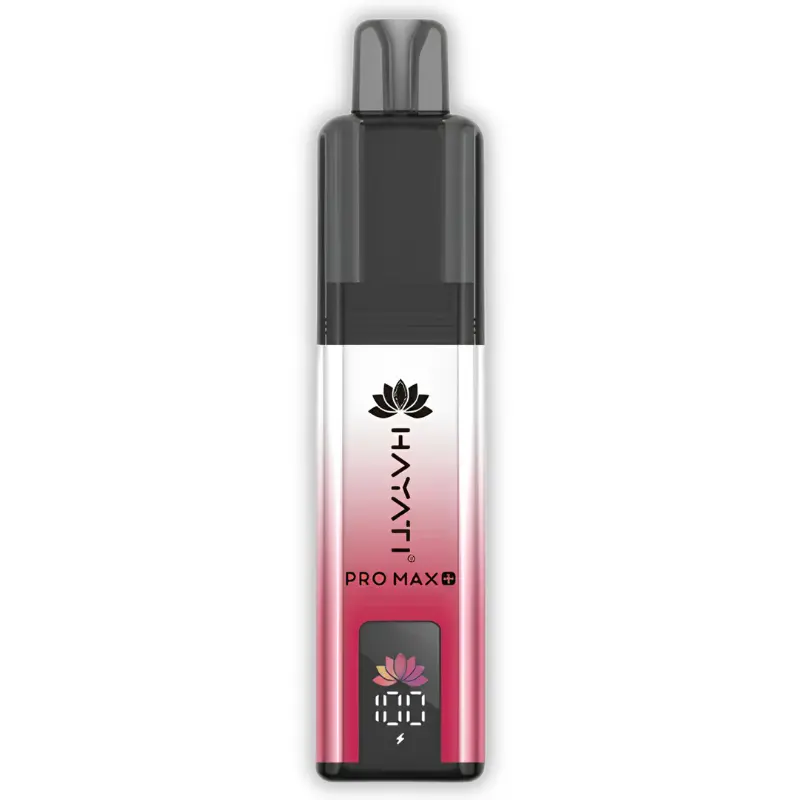
Hayati · Pro Max Plus
Dragon Berries Hayati Pro Max Plus 6000 Pod Kit
£7.99
✔ In stock — ready to ship
Genuine Hayati
Free over £20
Same-day dispatch
Secure checkout
Dragon Berries is a £7.99 complete kit on the Pro Max Plus platform: one rechargeable body, one pod that arrives already carrying its liquid, and a name that does half its job and then stops. Two words, and they behave completely differently. "Dragon" is almost certainly a clipped reference to a real, identifiable fruit. "Berries" is not an ingredient at all, it is a category, and a fairly large one. So the buyer gets one specific thing and one deliberate blur, in a title of two words, which is an unusual ratio even for a range this size.
That split is the subject of this page, because it turns out to be the only honest way in. Plenty of listings on this shelf hand over a full parts list. Strawberry Raspberry Blueberry names three species and puts them in order of weight. Blackberry Raspberry names two. Blueberry Pomegranate tells you exactly which two things are meeting. Against those, a title that says "berries" and leaves it there is making a choice, and choices leave traces.
The other half of the name is more interesting still, because dragon fruit is a genuinely odd thing to build a vape flavour around. It is famous, in the parts of the world that eat it regularly and in the parts that only meet it on a brunch menu, for tasting of remarkably little. Its appeal is visual and textural, and vapour carries neither. A dragon fruit flavour is therefore not a reproduction of anything. It is a construction, assembled from other materials to produce an impression that a fruit happens to share. Whether any of that construction survives being placed next to a sweet berry base is the question worth asking about this pod, and it is a question with a probable answer rather than a certain one.
Half a name: one ingredient and one refusal
Start with the flat facts, because everything afterwards is reasoning and the reasoning is only worth what the evidence under it is worth.
Published against this listing: the product is Dragon Berries, sold as a Pro Max Plus 6000 kit. Its pod arrives filled, 12ml of liquid at 20mg nicotine, and the body carries a rechargeable 850mAh cell. A puff ceiling of 6,000 is quoted by Hayati, taken on test apparatus, which makes it a laboratory figure rather than an account of what anybody will see. The stock reference is HPM-6K-KIT-DRAGON-BERRIES. Price, £7.99. The catalogue files it on six headings, of which the two informative ones are Berry Vapes and Exotic Vapes; the others are format shelves that tell you nothing about the liquid. Hayati's short blurb states that the name points at dragon fruit beside a berry mix, that dragon fruit is mild on its own, and that the berries consequently carry most of the load.
Not published: which berries. No species is named anywhere in the listing. No proportion is given. No sweetness figure, no acidity figure, no cooling marker. Two technical fields sit empty in this product's data, the carrier ratio and the coil resistance, and neither will be filled in with a borrowed number on this page. Nothing describes the inhale, the exhale or which note leads. And, notably, no confirmation that dragon fruit is actually in the bottle, as opposed to being what the word on the box appears to indicate.
That last blank deserves a moment, because it is easy to skate over. Hayati's own retail copy for this flavour, and for the same flavour on two other platforms, does not assert dragon fruit as an ingredient. It reads the name and reports what the name seems to mean. The house writes about this blend the way a reader would: by interpreting the title. That is unusual, and it is a small but real signal. A manufacturer who has the recipe in front of them and still writes about the flavour in terms of what its name suggests has told you something about how firmly that ingredient is nailed down.
There is a second piece of catalogue evidence pointing the same way, and it is the strongest thing on this page. Elsewhere in the Hayati range there is a Pro Ultra Plus pairing called Straw' Grapefruit / Straw' Dragonfruit. When Hayati mean dragon fruit and are confident about it, they write the fruit out in full and put it in the title. On this listing they wrote "Dragon". So the word here is a contraction of a fruit the house names properly when it wants to, which is exactly the habit that produces T-Misu out of tiramisu and H'Bubba out of a bubblegum register. That places "Dragon" firmly in the shorthand group rather than the atmospheric group. It is not a mood word in the way Midnight Dream is a mood word, and it is not an evasion in the way Blue Fusion is an evasion. It is a real fruit with two syllables removed.
"Berries" works the opposite way. It cannot be expanded, because there is nothing under it to expand. It is a collective noun standing where a species list would go, and a range that is perfectly willing to print three fruit names in a row has declined to print even one here. Two readings cover it. The generous one is that the blend genuinely does not resolve into a berry you could put on a label without misrepresenting it, which happens with composite fruit accords and is a real phenomenon rather than a marketing dodge. The less generous one is that an eighty-eight-listing shelf has already used up the plausible berry pairings, and a collective noun lets a familiar base go out under a new title without sitting directly on top of Strawberry Raspberry Cherry or the rest. Both readings land in the same practical place: whatever is in there, no single berry is standing up and identifying itself, because a berry that stood up would have been named.
Put the two halves together and the grammar is the final clue. "Dragon" is doing the work of an adjective and "Berries" is the noun. Names in this category are usually assembled in order of prominence, and this one puts the berry base in the head position with the exotic note modifying it. Hayati's blurb says the same thing in plainer language. Everything available, the title structure, the house copy and the Berry Vapes filing, points at a berry-led liquid with a lighter component threaded through it, and none of it points at a dragon fruit pod with berries in support.
Dragon fruit, and the four things about it a pod cannot carry
This is worth doing properly, because dragon fruit is the rare fruit where knowing what it is actually changes what you should expect from a liquid named after it.
The fruit is the product of several climbing cacti, sold in three broad types: pink skin with white flesh, pink skin with deep magenta flesh, and a yellow-skinned variety with white flesh that is markedly sweeter than either. Whichever one reaches a British supermarket, the eating experience runs roughly the same way. It is about eighty-five per cent water. Its sugar level is modest, landing below a ripe strawberry and a long way below a mango. Its acidity is very low, and that is the technically important part, because acid is what makes a fruit read as bright, what makes the sides of the tongue contract, and what makes the mouth water. A fruit with almost no acid reads as flat even when it is perfectly ripe. Dragon fruit is that fruit.
Its aroma is the second half of the story. Analytical work on the volatile profile turns up mostly green, grassy and slightly fatty compounds, the family you also meet in cut grass and cucumber skin, with small quantities of floral terpene alcohols sitting behind them. What it conspicuously lacks is a character compound. Banana has one. Peach has one. Strawberry has two or three between them, and raspberry has a molecule named after itself. Present any of those in isolation and a person will name the fruit without hesitation. Dragon fruit has no equivalent, no single molecule that means dragon fruit and nothing else, which is precisely why nobody who has eaten one can describe it without borrowing a different fruit to do it. Pear, melon, kiwi and lychee all get pressed into service, and none of them is quite right, and that is not the describer's fault.
So what is people actually enjoying? Four things, and it is worth listing them because the list is the argument. The colour, which in the magenta varieties is genuinely striking and in the white ones is speckled and unusual. The texture, thousands of tiny seeds distributed through soft flesh, closer to kiwi than to melon, giving a faint crunch on every mouthful. The cold and the wetness of it straight out of the fridge, which is most of what "refreshing" means in practice. And a mild, clean sweetness that leaves no residue behind it.
Now consider what vapour can transport. Aromatic volatiles, a sweetener, a carrier, and whatever coolant has been added deliberately. Colour does not cross. Texture does not cross. Chill from a refrigerator does not cross, though synthetic coolants can imitate the sensation and are not present here. Juice does not cross. Four of the four things that make eating a dragon fruit worthwhile are stranded on the far side of the gap, and the fifth attribute, the mild low-acid aroma, is the one a flavourist would least want to build on, because mildness is the first casualty when a note is placed inside a sweet blend with other things competing for the same space.
What the trade does instead is construct an accord. A dragon fruit flavour in this market is typically assembled rather than extracted: a watery-green top from the cucumber and melon aldehyde family, a soft floral lift from rose and linalool-adjacent materials, a light pear or kiwi ester to supply the sense of juice the real fruit gets from water, and often a faint pink berry hint borrowed from the flesh colour rather than the taste. The result is recognisable as dragon fruit largely by elimination. It does not smell like anything else on the shelf, the label says what it is, and the brain accepts the pairing. Hand the same liquid to somebody blind and they will say melon, or pear, or lychee, or simply "something light and floral", and every one of those answers is defensible.
Which brings the question into focus. A dragon fruit accord is, by construction, pale, quiet, floral and low in acid. A mixed berry base is sweet, dense, sugar-forward and comparatively loud. Putting them in one pod is putting the quietest thing in the catalogue next to one of the noisiest, and there is only one plausible outcome to that arrangement. The berries will be in front. The dragon fruit, if it is doing anything at all, will be doing it around the edges.
Stated as an inference rather than a fact, because it is one: the probable role of the dragon fruit component here is to stop the berry base reading as jam. A floral, watery top note laid over a sweet berry accord lifts it, thins it slightly, and stops the whole thing collapsing into a single sugary mass on the exhale. That is a real and useful job, and it is the job a mild fruit is usually hired to do. What it will not do is announce itself. The honest expectation is that you will notice the blend is not a plain berry pod, and you will struggle to say precisely why, and the reason you cannot say why is the fruit's own fault rather than the blend's.
The berry half, which is the half you will actually taste
Since the berries carry the weight, they deserve the analysis, even though the listing gives nothing to analyse. What can be done is to narrow the field, and the field narrows further than you might expect.
Commercial berry accords in this format are built from a small stock of recognisable components. Strawberry is the usual anchor, because it is the most widely liked and because the materials that produce it are reliable and cheap. Raspberry is the usual partner, supplying a slightly perfumed, ionone-driven quality and a little more acid than strawberry brings. Blueberry sits underneath as a soft, rounded, faintly waxy note that adds body without adding definition. Blackberry and blackcurrant occupy the dark end, the second of them with a distinctive sulphurous edge that is unmistakable when present and never described as subtle.
When a label says "berries" without qualification, the blend that turns up is, more often than not, strawberry-forward with raspberry behind it and something dark underneath for depth. That is the default construction, it is the one most people find agreeable, and it is what a range would reach for when the point of the product is the other word in the title. There is no way to confirm that from this listing, and it is offered here as the most probable composition rather than a statement of contents.
Expect it sweet. That part is on firmer ground than the composition. Berry accords carry a heavy sweetener load as standard, Hayati's own copy describes the blend in terms of juicy, deep sweetness, and the low-acid dragon fruit component has no capacity to pull the sugar back even slightly. There is no sour signal anywhere in the name, and this catalogue says sour out loud when it means it, as Red Sour Raspberry and Blue Sour Raspberry both demonstrate. The reasonable expectation is a pod sitting in the upper half of the shelf for sugar, with a rounded rather than a sharp profile.
Expect it uncooled. Hayati flag coolant in the title whenever coolant is present, without exception across this platform. Blackberry Ice says so in the second word. Lychee Ice says so. A range willing to leave the berry species unstated is still going to declare its coolant, because coolant is the attribute buyers complain loudest about finding unannounced. An unmarked title on Dragon Berries is therefore good grounds for expecting no headline chill. One caveat: cooling strength is never published here for anything, marked or unmarked, so a blank title means no advertised coolant rather than a certified zero.
The sequence, as far as it can be predicted, probably runs like this. Sweetness arrives early and generically, because that is what a sugar-forward berry accord does on a warm coil. Somewhere in the middle of the draw the individual berries start separating slightly, with the red fruit in front and whatever dark component exists sitting behind it. The exhale is where any dragon fruit contribution will show, because light floral and watery notes are retronasal by nature and they surface after the vapour has left the mouth rather than while it is in it. If there is anything unusual about this pod, that is where you will meet it, and if you are looking for it on the inhale you will miss it entirely.
What to expect, with the confidence attached to each line
Laying the claims out with their evidence visible is more useful than blending them into confident prose, so here they are sorted by how much weight each one will bear.
Reasonably confident: berry-led. The title puts "Berries" in the noun position, the catalogue files it under Berry Vapes, and Hayati's own copy places the berries in front. Three independent pointers agreeing is as close to settled as this listing gets.
Reasonably confident: sweet, and above the middle of this shelf. Berry accords are sweet by default, the blurb describes depth and juiciness rather than sharpness, and no acid signal appears anywhere in the name or the filing.
Reasonably confident: no advertised coolant. The naming convention is consistent across the whole platform and there is no marker in the title.
Probable: the dragon fruit element is present as a modifier rather than a lead. Reasoning given at length above. The fruit is intrinsically mild, the accord built to represent it is pale and floral, and the material it is sitting next to is neither. Hayati's own description concedes the point in different words.
Probable: no single berry dominates. This follows from the naming decision. A liquid with an obvious lead berry gets that berry in the title, as several dozen listings on the same shelf demonstrate.
Probable: you will not identify it as dragon fruit blind. Not because the blend has failed, but because the fruit has no character compound and most people's memory of it is a memory of texture and colour. Recognition depends on the label far more than anyone likes to admit.
Unknown, and left unknown: which berries and in what proportion; whether the blend reads as fresh fruit or as boiled sweets, a distinction that decides more abandoned pods than any other and cannot be read off a title; the acid level; the carrier ratio; the coil resistance; and whether the dragon fruit component is a distinct layer you can isolate or simply a dilution that makes the berries read lighter. That last one is the question the whole page circles, and the listing cannot answer it.
Should that fresh-or-confected question be the one deciding your purchase, a listing that states its contents will serve you better. The next section names several.
The kit, kept to three paragraphs
Roughly ninety listings share this hardware, so there is no sense in explaining it at length for the ninetieth time. The packet holds two objects and that is the entire inventory: the Pro Max Plus body, rechargeable, carrying an 850mAh cell, and one pod already loaded with its 12ml at 20mg. Nothing is assembled, nothing else is required, and it works from the moment the wrapper comes off.
The specification that actually matters for this particular liquid is the 12ml, and it matters for a reason specific to a blend nobody has itemised. Where a pod states its contents, that figure is a diary entry telling you roughly when to order again. Where it does not, the same figure measures how much liquid you are staking on a reading of two words. Nothing can be poured out, thinned or mixed with anything else, and a pod whose unusual note is inaudible to you at the third millilitre will still be inaudible at the ninth. Buy one, then, rather than a stack of them. Every other line on the spec sheet means the same thing whatever the pod contains; this one does not.
Everything else, the charging behaviour, how the pod seats, what shifts as the device ages and how the platform relates to the rest of the catalogue, is covered properly on the Hayati Pro Max Plus Prefilled Pod Kit shelf page, alongside the wider Hayati Pod Kits and Hayati Prefilled Pod Kits groupings. The words saved here have gone into the flavour, which is the only part of this purchase that belongs to it alone.
The listing in figures, blanks included
The table records what Hayati publish, arranged to put the naming questions at the top because they are what a buyer of this particular pod is actually weighing. The unpublished rows are in there too. On a product whose title withholds half its recipe, the blanks are part of the specification.
| Line | What Hayati give |
|---|---|
| Word in the name pointing at an ingredient | Dragon, unexpanded |
| Word in the name pointing at a category | Berries, unspecified |
| Berry species identified anywhere | None |
| Dragon fruit confirmed as an ingredient | No. The copy reads the name rather than stating contents |
| Coolant flagged in the title | No |
| Sweetness or acidity figure | Neither is published for any listing in this range |
| Liquid in the pod on arrival | 12ml |
| Nicotine concentration | 20mg |
| Battery in the body | 850mAh, recharges |
| Puff ceiling quoted by the maker | 6,000, from test apparatus |
| VG and PG split | Missing from this product's data |
| Coil resistance | Missing from this product's data |
| Shelves it is filed on | Six, of which Berry Vapes and Exotic Vapes carry information |
| Sold as | Body and filled pod in one packet |
| Stock reference | HPM-6K-KIT-DRAGON-BERRIES |
| Made by | Hayati |
| Listed at | £7.99 |
Four of those rows need a note. The 20mg records a concentration, no more; nicotine is addictive, the number reports what the liquid holds, and nothing here recommends it to anyone. The 6,000 belongs to Hayati and came off test equipment run under controlled conditions, which makes it a ceiling produced in favourable circumstances instead of a forecast. Draw length and session frequency both move the real total, and they move it one way.
The two "missing" rows are the ones writers most often copy off a sibling page, after which an invented number circulates as though somebody had measured it. One of them, the split between the two carriers, sets how dense the vapour is and how fast the liquid travels through the wick. The other, resistance at the coil, sets how tightly the device pulls. Dragon Berries states neither, so neither is given a value here, and any figure for either found elsewhere is somebody's guess until Hayati publish one.
The interesting row is the fourth one, and it is the reason the table is arranged this way. There is a meaningful difference between a maker who states an ingredient and a maker who reports what a name appears to mean, and on this listing you are getting the second. That does not make the dragon fruit reading wrong. It makes it a reading.
How it sits against the shelf
Whether Dragon Berries is any good is unanswerable in advance at £7.99 with no published tasting note. The question that can be answered is whether a berry pod with one unverified twist beats a berry pod that states its contents, and that turns on what you want from the purchase.
If you want berries and you want them itemised. Buy a named one and skip the interpretive work entirely. Strawberry Raspberry Blueberry is the plainest statement of the default berry accord on this shelf, three species in order of weight, nothing hidden. Blackberry Raspberry narrows it to two and shifts the balance darker. Strawberry Raspberry Cherry swaps the dark component for a stone fruit and comes out sweeter and rounder. Each of the three settles, in its title, everything the sections above have been reasoning towards.
If the unusual note is the point. Then the comparison worth making is against the pods that also try to put something atypical beside a fruit base. Blackcurrant Mango is the most direct parallel in construction, a dark fruit meeting a tropical one, except that both halves are named and both are loud enough to be identified. Blueberry Pomegranate pairs a soft berry with something tarter and more astringent. Compared with either, Dragon Berries is attempting a much quieter contrast, which is either the appeal or the problem depending on your temperament.
If you want to hear the exotic note clearly. Dragon fruit is the wrong fruit for that and this is the wrong pod. Lychee Ice is the most instructive comparison on the whole shelf: lychee is the other pale, floral, slightly perfumed exotic fruit in the catalogue, and it is given the lead position and a coolant to carry it. That is what it takes to make a delicate note audible in a pod. Triple Mango goes the opposite way and hands the whole pod to one assertive fruit layered three times. Either will give you a tropical character you can actually name.
If you want berries with a jolt rather than a lift. Two options, in opposite directions. Red Sour Raspberry adds acid, which is precisely what this blend is predicted not to have, and acid is the thing that keeps a sweet pod from tiring you out. Blackberry Ice adds coolant instead and achieves a similar palate-clearing effect by a different route. If you already know that plain sweet fruit stops registering for you after twenty minutes, one of those is the better purchase.
If you are choosing between blurred names. There is a small group of listings that decline to say what is in them, and Dragon Berries is only half a member. Blue Fusion withholds everything behind a colour. Midnight Dream gives an atmosphere and no ingredients at all. Mad Blue and Blue Razz Fruit Twist both use the house blue shorthand, which is its own convention with its own rules. Set against those, this one is comparatively forthcoming: it names a fruit, even if it clips it, and it tells you the base is berries.
If the blue family is what you normally buy. The house blue accord behaves nothing like a red berry blend and the distinction is worth being clear about before you cross over. Blue Razz Cherry and Blue Razz Blackcurrant both start from the same sweet-sharp confected base and vary the partner, while Blue Razz Mojito puts it into a drinks register. If that sharp blue character is what you are used to, a soft uncooled berry blend will read as flat for the first hour until your expectations adjust.
If you want the same idea for less, or on other hardware. Dragon Berries also exists as one half of the Straw' Guava / Dragon Berries Hayati Mini Ultra Pod Kit at £3.99, which is the cheapest route to meeting the name. Smaller device, less liquid, a second flavour sharing the pod, so it is no substitute for the kit, but it does answer the question for half the money. Going the other way, £11.99 puts the Blue Razz Pineapple / Strawberry Ice Hayati Pro Ultra Plus 25000 Prefilled Pod Kit in your hand, a bigger body holding a pair of liquids, while the Blue Razz GB Hayati Rubik Prefilled Pod Kit at £5.99 uses a smaller platform again.
If you already own a Pro Max Plus body. There is no reason to buy another one. Dragon Berries Hayati Pro Max Plus Pods at £5.49 is the identical liquid without the hardware. Two pounds fifty is the entire difference between the two listings, and it buys a device you already have. The kit earns its price as a first purchase or as a spare body so that two flavours can run in parallel, and in no other circumstance.
If none of the above fits. Berry Lemonade takes the same unnamed berry base and puts it into a soft drink; Grape Berry swaps the exotic modifier for grape, which is a far heavier partner; and Strawberry H'Bubba moves the whole thing into a confectionery register if fruit is not what you want. The full Hayati catalogue runs to several hundred listings beyond that.
The summary for somebody still undecided. Dragon Berries is a sensible £7.99 if you like sweet uncooled berry pods, you have grown slightly bored of them, and the prospect of a quiet unfamiliar edge is worth a small gamble to you. It is a poor £7.99 if you are buying it because you want to taste dragon fruit, because the balance of evidence says you will not identify it, and the disappointment in that case will be with the fruit rather than the blend.
Getting a fair reading out of twelve millilitres
Most handling advice is the same on every pod of this type. Two things about this one are not, and they are the two worth writing down.
The first is a test rather than a tip. The only way to find out what the dragon fruit component is contributing is to compare against a control, and a near-perfect control exists on the same shelf at the same price. Put this pod and a plain itemised berry pod such as Strawberry Raspberry Blueberry side by side, draw from each within a minute of the other, and the difference between them is the dragon fruit, whatever that turns out to be. Relative judgements of vapour beat absolute ones, because most of the perception happens in the nose, and the nose is good at difference and poor at naming. Do not try to identify the fruit. Identify the gap.
The second concerns the order of decay, which on this pod is not the usual order. The lightest, most volatile materials go first as a coil accumulates residue, and on this blend the lightest materials are exactly the ones carrying the unusual note. A tiring coil here does not merely dull the pod, it strips out the one thing distinguishing it and leaves an ordinary sweet berry liquid behind. The sequence is predictable: floral edge first, then the brightness at the top of the berries, then sugar, body and a faint toast behind everything. If the pod stops being interesting halfway down, suspect the coil before the liquid.
Two habits follow from that. Draw slowly, holding the vapour a moment before the exhale, because a short sharp pull takes the top of the profile and misses the retronasal part where any dragon fruit character lives. And leave proper gaps: a heavy sweetener load outruns a wick faster than a thin liquid, and a partly dry wick lays a scorched note over a blend whose distinguishing feature is delicacy.
Palate fatigue deserves its own mention because of the low-acid construction. A sweet blend with no acid and no coolant has nothing to reset the tongue between mouthfuls, so it tends to stop registering after twenty or thirty minutes of continuous use in a way that Blue Sour Raspberry does not. That is not the pod wearing out, it is your perception adapting, and the fix is a break rather than a harder pull. Anyone rotating two flavours will get more out of this one, provided it goes first in the session: a delicate floral top note stands no chance against a residual coolant, so follow it with something loud instead of preceding it with one.
Storage is ordinary but the reasoning is specific. Heat degrades the lightest aromatic molecules first, and those are the ones you are paying the extra attention for here. Room temperature, upright, out of direct sun, never a car dashboard, and somewhere children and pets cannot get at it.
Knowing when it is finished is straightforward. Vapour thins, sweetness drops away before anything else does, and a toasted note appears behind the fruit. A blend you never fully pinned down invites you to keep going in case it returns. It will not. Toast means finished, and the draws after it are not worth having.
Questions that come up about this one
Does it actually taste of dragon fruit?
Probably not in a way you could name. Dragon fruit has no character compound, so even the real fruit is hard to identify blind, and a mild low-acid note placed beside a sweet berry base has very little room to assert itself. The realistic expectation is that the blend reads as slightly lighter and more floral than a plain berry pod, and that the reason is hard to put a finger on.
Which berries are in it?
Hayati do not say. No species is named anywhere in the listing. The default construction in this format is strawberry in front, raspberry behind it and a dark berry underneath for depth, which is the most probable composition rather than a confirmed one. If knowing matters to you, an itemised pod is the better buy.
Is there any coolant in it?
Nothing in the title says so, and this range declares its ice in the title without exception, which is why Blackberry Ice and Lychee Ice both carry the word. An unmarked name is therefore sound grounds for expecting none. No cooling strength is published anywhere in the range regardless.
How sweet should I expect this to be?
Towards the upper half of this shelf. Berry accords carry a heavy sweetener load by default, the maker's own description emphasises depth and juiciness, and the dragon fruit component has almost no acid with which to pull the sugar back. Sweetness figures are published for nothing in this range, so the comparison has to be made by taste.
Is it sour at all?
Very unlikely. Sourness sells, so it gets printed on the box when it is there, which is what the two sour raspberry listings are doing. No signal appears in the title, the filing or the blurb here, and the fruit in the name is among the least acidic in common cultivation.
What comes in the packet for £7.99?
Two objects. The Pro Max Plus body, which recharges and carries an 850mAh cell, plus a single pod that arrives filled, 12ml at 20mg. No assembly, no second purchase required to make it run.
I have the body already. Which listing should I be looking at?
The bare pod, at £5.49 rather than £7.99 for identical liquid. Taking the kit a second time makes sense only if you want a backup body, or a second device so two flavours can run side by side. Short of that, the pod alone costs less for the same result.
Should I plan around the 6,000 puff figure?
No. It is a maximum obtained by the manufacturer on test apparatus under controlled conditions, and it describes the equipment more than it describes ordinary use. Draw length and how frequently the device is picked up both move the real figure substantially, and they move it down rather than up.
What is the VG to PG ratio?
Unpublished, so no ratio appears on this page. A figure quoted for Dragon Berries anywhere else did not come from the maker's specification for it, because the field sits empty. Coil resistance is in the same position.
What if the unusual note does nothing for me?
Then you are holding twelve millilitres of a competent sweet berry pod, which is not a bad outcome but is not the thing you were curious about. There is no emptying it, thinning it or putting anything else in, and that is the plain risk attached to a blend with one unverified component. Hence one kit, not three.
The short version
Dragon Berries costs £7.99 and puts two things in the packet, an 850mAh Pro Max Plus body that recharges and a filled pod, 12ml at 20mg, against a maker's laboratory ceiling of 6,000 puffs. The name gives you one fruit in clipped form and one collective noun, and the two behave very differently. "Dragon" is house shorthand for a fruit this catalogue writes out in full elsewhere, which makes it a reasonably solid pointer. "Berries" is a category standing where a species list would sit, which means no single berry was distinctive enough to name.
Dragon fruit itself is mild, faintly sweet, very low in acid and famous for tasting of less than it looks like it should. What people enjoy about it is colour, texture and cold water, and a pod can carry none of those. Any dragon fruit flavour is therefore a construction rather than a reproduction, and placing that construction next to a sweet berry base makes it a modifier rather than a lead. The reasonable expectation is a sweet, uncooled, berry-forward liquid with a light floral lift on the exhale that you will notice and probably not be able to name. That is an inference drawn from the naming, the filing and the nature of the fruit, and it is offered as such rather than as a tasting note anybody has verified.
Buy it if you like berry pods and want one with a slightly unfamiliar edge. Buy a named berry pod instead if you want to know exactly what you are getting, and buy a lychee or a mango pod if you want an exotic note you can actually identify.
Strictly for adults aged 18 and over. Nicotine is an addictive substance.
You might also like


