
Home / Hayati Pro Max Plus Prefilled Pod Kit / Blackcurrant Juice Hayati Pro Max Plus 6000 Pod Kit
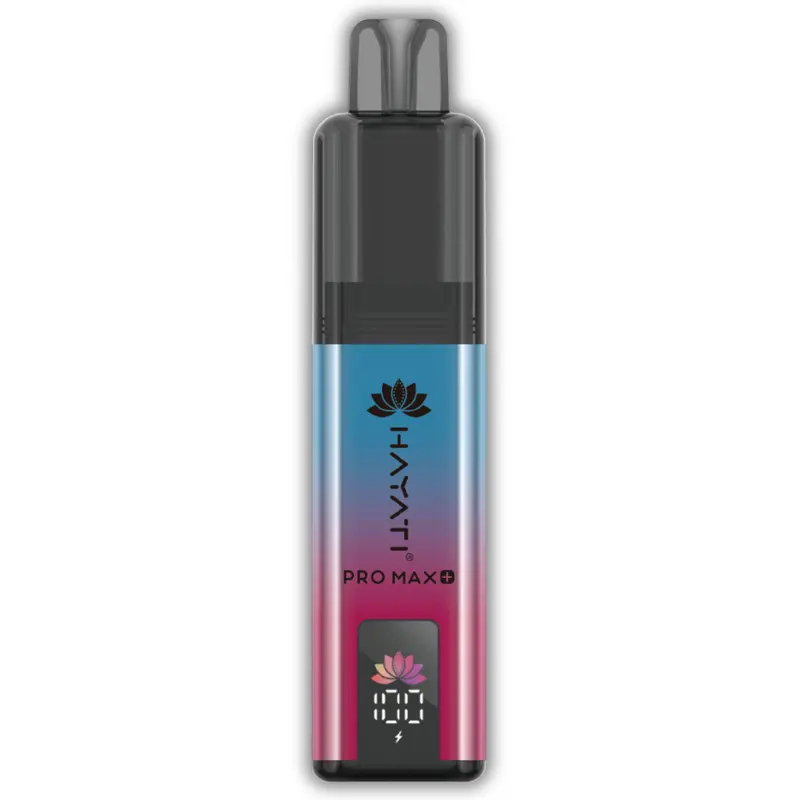
Hayati · Pro Max Plus
Blackcurrant Juice Hayati Pro Max Plus 6000 Pod Kit
£7.99
✔ In stock — ready to ship
Genuine Hayati
Free over £20
Same-day dispatch
Secure checkout
Seven pounds ninety-nine buys the whole arrangement: a rechargeable Hayati Pro Max Plus body with an 850mAh cell, and a factory-filled pod holding 12ml of Blackcurrant Juice at 20mg nicotine salt, which Hayati rate on their own bench at up to 6,000 puffs. Nothing is left to source and nothing is left to decide. Set this listing beside the bare pod and the body prices itself at two pounds fifty, which is the only arithmetic this page will be doing, because the interesting question here is not what the kit contains. It is what the second word on the label is promising.
Blackcurrant would have been a complete flavour name. Hayati sell unmodified names elsewhere and could have used one here. Instead the listing says Juice, and Juice is a claim with content. It says the fruit is undiluted, unpartnered and unsweetened by addition, which for this particular fruit is a much larger statement than it sounds, because blackcurrant undiluted and unsweetened is not a pleasant drink. It is markedly acidic, it carries real tannin off the skins, and its sweetness is dark and low rather than confected. Those three properties are what separate the fruit from the cordial. Two of them are close to untransportable in vapour.
That is the subject. Not whether this tastes nice, which the pages either side of it have already worked over, but whether the word on the label is a buildable specification, what it would take to build it honestly, what the commercially likely version looks like instead, and how a buyer with one pod and no laboratory can work out which of the two arrived in the post. The last part matters most, because the answer changes what you should do with the pod when it starts to age, and it is the only part of this you can settle for yourself.
Two prior pages have already taken ground here and this one does not walk back over it. The bare Blackcurrant Juice pod listing mapped every blackcurrant Hayati sell, found five distinct liquids across sixteen listings, and established that Juice appears on only two of the catalogue's hundred and sixty flavour names, making it the rarest drink modifier in the range and the only one whose whole meaning is an absence. It also counted the modifiers and found that not one of the sixteen blackcurrants is cooled and not one is sour-labelled. Those counts are cited here, not re-run. The 10ml bottle of the same flavour, meanwhile, already published its draw-by-draw reading and its verdict on where the sweetness sits. This page starts where both of them stopped.
What the second word is actually promising
The fruit, before anybody improved it
Ribes nigrum is not a dessert fruit and has never pretended to be one. Picked ripe and eaten raw it is aggressive in three directions at once, and it is worth separating them, because a vape can deliver one of them easily, the second with difficulty and the third barely at all.
The first direction is aroma, and it is the reason the fruit has any reputation at all. Blackcurrant carries a distinctive top note that is green, slightly sulphurous and faintly animal, the thing perfumery calls cassis and reaches for when it wants a dark berry to smell like something other than jam. It sits above the fruit rather than inside it. It is the first thing you get off a crushed leaf or a broken bud, and in the fruit itself it arrives before the sweetness does. Anybody who has stripped a bush knows the smell on their hands afterwards, which is nothing like the smell of the drink.
The second direction is acid. Blackcurrant is one of the more acidic soft fruits grown in Britain, which is why almost nobody eats it off the bush and why every commercial preparation of it involves sugar. That acidity is not a flourish sitting on top of the fruit, it is the structure. Remove it and you are left with something flabby and jam-like that tastes of the idea of dark fruit rather than of blackcurrant specifically.
The third direction is astringency, and this is the one people find hardest to name because it is not a taste at all. The skins carry tannin, the same family of compounds that makes strong tea grip the inside of your cheek and makes a young red wine feel rough rather than taste rough. Astringency is a touch sensation. It happens when those compounds bind to the proteins that make saliva slippery, and the mouth registers the loss of lubrication as a dry, puckering tightness. In a blackcurrant it arrives late, after you have swallowed, and it is the fingerprint that separates the real fruit from every purple accord ever mixed.
The cordial is a solution, and the word Juice refuses it
Sugar addresses all three of those problems at once, which is why the British reference point for this fruit is a sweetened drink rather than the fruit itself. Sugar buries the acid, coats the astringency and gives the aroma something soft to sit on. The cordial is not a lazy version of blackcurrant. It is a deliberate correction, applied because the uncorrected thing is difficult, and it has been applied so consistently for so long that the correction is now what most people mean by the word blackcurrant.
Which puts the word Juice in an awkward position. Its literal meaning is the thing before the correction: pressed fruit, nothing added, nothing taken away. Its everyday meaning, in a supermarket, is a ready-made sweetened drink in a carton, which is the correction again under a different name. The 10ml bottle page worked through that ambiguity at length and concluded, on the evidence of Hayati's own description, that the carton reading is the one being built to. That conclusion is theirs and this page does not dispute it.
The question left over is the one nobody has asked. Suppose a mixer did want to build the other reading. Suppose somebody looked at a catalogue with sixteen blackcurrants in it, none of them cooled and none of them sour, and decided the gap in the market was the fruit rather than the drink. What would they actually have to do, and could it be done at all in a 12ml sealed pod running at low power?
The two properties that will not travel
Vapour is an aroma delivery system before it is anything else
Start with the mechanism, because the whole problem follows from it. A pod does not transfer liquid to your mouth. It heats a very small quantity of liquid until parts of it leave the wick as vapour, that vapour cools in the airflow and condenses into an aerosol of fine droplets, and you inhale the droplets. What reaches your nose is whatever was volatile enough to make that journey. What reaches your tongue is whatever was carried along in the droplets and deposited when they landed.
Those two routes have very different throughputs. Aroma compounds are, almost by definition, light and volatile, which is why you can smell them at all. They vaporise readily at coil temperatures, they survive the trip, and they arrive in your nose in something close to the proportions they left in. This is why fruit vapes work at all, and why the aroma half of a flavour is the half that mixers can rely on.
Everything that is not an aroma has a harder time. Sweetness, sourness, saltiness and bitterness are tastes, which means they require the actual molecule to arrive on the tongue rather than in the nose. Astringency is not even a taste, it is a mechanical effect on saliva, and it requires a fairly substantial molecule to be sitting physically in your mouth. Both of those depend on the condensate rather than on the vapour, and the condensate carries far less material than the vapour does.
Acid, and why sour is an additive rather than an ingredient
The common food acids that make a blackcurrant taste like a blackcurrant are crystalline solids at room temperature with no appreciable smell. They do not evaporate in any useful sense. Put a citric or malic acid into a liquid destined for a coil and most of it is going to stay where it is, concentrating in the wick as the volatile fraction leaves, and the portion that does travel arrives as a thin deposit rather than as a flavour.
This is why sourness in vapour is always a deliberate engineering exercise rather than a by-product of using a sour fruit. Products that deliver a genuine pucker do it with a dedicated acidic additive dosed high enough to survive the transfer, and it is the reason sourness is announced in a product name when it is present. The catalogue bears this out: the sour listings in this range say so on the tin. Cherry Sour Raspberry and Blue Sour Raspberry both carry the word in the title, because a sour build is a decision and decisions get labelled.
There are costs attached, which is the other reason it is announced. An acidic liquid in prolonged contact with a coil and a wick is a more demanding proposition than a neutral one, and a mixer putting real acid into a sealed 12ml unit that has to run a single non-serviceable coil to the end is taking on a risk that a mixer filling a 2ml refillable does not. Acid also sharpens throat character noticeably, which on a 20mg salt is not a free choice. And acid does not keep well against heat. A pod that spends a summer in a car is losing its acid structure faster than it is losing its aroma.
So the honest position is this. Acid can be delivered. It is delivered, in this catalogue, on the listings that advertise it. It cannot be delivered by accident, and it cannot be inherited from the fruit the flavour is named after. If a blackcurrant liquid tastes acidic, somebody put the acid in on purpose.
Tannin, which has no volatile form at all
Astringency is the harder of the two by a wide margin, and the reason is physical rather than commercial. The polyphenols that produce a drying grip are large molecules. Large molecules do not volatilise at the temperatures a pod coil runs at, and anything heavy enough to bind saliva proteins is far too heavy to make the journey as vapour. There is no route. You cannot put tea tannin into an aerosol and have it arrive as tannin.
What a mixer can do is produce the sensation by other means, and this is where the work is. Several things read as drying in the mouth without being tannin at all. A propylene-glycol-forward base is itself slightly desiccating, which is the least interesting of the tricks and the most widely used. A trace of bitterness, sitting just under the fruit, is read by most palates as the same thing tannin does, because bitterness and astringency usually arrive together in nature and the brain has learned to treat them as one event. Certain woody, stalky and green aromatic notes carry an association with skins and pips strong enough that the mouth supplies the grip itself. And a warm, dry, low-volume draw feels grippier than a cool wet one, which is a hardware contribution rather than a liquid one.
None of those is tannin. All of them can be arranged into something a drinker would recognise as the fruit's skin. It takes deliberate construction, it is not the direction sweetened fruit liquids drift towards on their own, and it costs sweetness, because every one of those effects is suppressed by sugar.
What a mixer is left holding
Line the three directions up against what vapour can carry and the shape of the problem is plain. The cassis top note travels easily and is the cheapest part of a convincing blackcurrant to obtain. The acid does not travel and has to be added as its own component, with a label attached and a cost in throat character. The astringency cannot travel under any circumstances and has to be simulated out of bitterness, dryness and suggestion.
A mixer building the cordial reading has one job: get the aroma right and sweeten generously. A mixer building the juice reading has three jobs, two of which are expensive, one of which cannot be done directly, and all of which get harder as the sweetener goes up. That asymmetry is the entire story of this page.
What a serious attempt would look like
Five levers, and what each one costs
Suppose the brief were taken literally. Here is what would have to be on the workbench, roughly in order of how much difference each makes.
Pull the sweetener down first. Nothing else on the list works until this happens. Sweetness is not a neutral background that other things sit on top of, it actively suppresses the perception of acid and almost completely masks astringency. A build carrying confectionery-level sugar can have real acid in it and you will not find it. So the first move is subtractive, and it is the move most likely to get overruled, because a less sweet single fruit across 12ml is a harder sell than a sweeter one.
Add acid as a declared component. Not a sour spike of the kind Blue Sour Raspberry uses, which arrives as an event at the front of the draw and is a different effect entirely. What the fruit needs is a broad, low, continuous acidity running underneath the whole draw, present from the first instant to the end of the finish, never announcing itself. That is harder to dose than a spike and it is the kind of thing that disappears if you get it slightly wrong.
Build the grip out of bitterness and green notes. The astringency has to be assembled rather than added. A little bitterness under the fruit, a stalky green edge above it, and a base that does not coat the mouth. Done well it reads as skins. Done badly it reads as a fault, which is the risk, because most buyers encountering unexpected bitterness in a fruit pod conclude the coil has gone.
Keep the cassis top note loud. This is the one lever that costs nothing, and it is the part that makes the whole thing identifiable as blackcurrant rather than as a generic dark fruit with problems. The green, slightly catty opening is what a cordial has least of, because sugar smothers it, so a low-sugar build gets it back for free.
Leave the coolant out entirely. A coolant would finish the project. It numbs the palate, and the two things being delivered here are the two most easily numbed. It also gives the buyer an alternative sensation to focus on, which means the difficult work in the liquid goes unnoticed. The blackcurrant listings are all uncooled, as the pod page established across all sixteen, so this lever is already pulled the right way, though for reasons that probably have nothing to do with this.
The version that would earn the word
Put those together and you get a liquid with a fairly specific signature. It opens green and slightly sharp rather than round. The sweetness arrives second rather than first and never gets above the fruit. There is a continuous low acidity that makes you salivate slightly, which sweet liquids do not. The finish is short rather than long, because acid cuts a finish, and it ends with the mouth feeling dry rather than coated. Ten seconds after the exhale there is a faint grip along the gumline and the inside of the cheek, and the last impression is dryness rather than sugar.
It would also be a liquid that a good number of buyers dislike on the first pod and rate highly by the third, which is the normal career of anything built on acid and astringency. Dry wines, strong tea and bitter chocolate all behave the same way. That is a commercial problem, not a quality problem, and it is exactly the kind of commercial problem that gets a recipe changed.
The compromise that is more likely
Being honest about probabilities matters more here than being generous, so here is the case for the other outcome, which is stronger.
Five things point the same way. Hayati's own description of this listing uses the words smooth and cordial-like and describes the tang as softened, which is the single best piece of evidence available and it says correction rather than fruit. The title carries no sour label, and in a catalogue where sourness is labelled whenever it is present, an unlabelled liquid is very unlikely to be acidic in any structural sense. The format argues the same way, since a sealed 12ml pod running one coil to exhaustion is the least forgiving place to put an acidic liquid and the most obvious place to put a stable sweet one. A single fruit has to fill a very long pod with nothing else arriving, and sweetness is the cheapest material for filling it. And the 10ml bottle of this flavour has already been assessed at the sweet end of the middle, with its acidity described as a trace at the edges rather than as structure.
So the probable product is the cordial with the word Juice used to mean undiluted rather than uncorrected. That is not a deception. Juice genuinely does mean a ready-made drink in ordinary English, the pod page demonstrated that the modifier's actual function in this catalogue is to signal the absence of a partner rather than the absence of sugar, and a buyer who reads it that way gets what they expected.
Two things stop that from closing the question. The bottle and the kit are not the same product: the bottle is 10mg in a published 50/50 base, poured into whatever hardware you own, and this is 20mg in a sealed pod whose base ratio Hayati do not publish at all. Formats change how a liquid presents, and nothing published anywhere confirms that the two are the same recipe rather than the same flavour name. And recipes get revised without announcement, so a pod bought this year is not automatically the pod somebody assessed last year. The method below is therefore worth having even if you find the argument above convincing, and it takes about ten minutes.
Reading your own pod, in the first hour
Set-up, which matters more than the tests
Do this on a fresh pod, before anything has changed, because every one of these readings gets less reliable as the coil ages. Rinse your mouth with plain water and wait a couple of minutes. Do not take the readings after coffee, after anything sweet, or straight after a different pod, since all three will skew you. Take the draws unhurried and at your normal length, and leave thirty seconds or so between them. Five minutes of attention at the start of a 12ml pod is worth more than a fortnight of vague impressions later on.
Seven readings, in the order to take them
One: the opening half-second. Before the sweetness lands, is there anything green in it? A real blackcurrant opens with something leafy and faintly sulphurous, the smell of the bush rather than of the drink. A cordial build opens with purple sugar and nothing above it. This is the single most diagnostic instant in the whole draw and it is over almost immediately, so take it first while your palate is clean.
Two: the saliva check. Genuine acidity makes you produce saliva, reliably and involuntarily, and sweetness does not. Take three draws and pay attention to whether you are swallowing more than usual between them. If your mouth is getting wetter, there is real acid in the liquid. If it is not, whatever tang you are perceiving is aromatic rather than acidic, and it is being suggested to you by the smell of the fruit.
Three: where it sits on the tongue. Sweet registers down the centre and front. Acid registers along the sides, towards the back. After the exhale, notice which part of your tongue is reporting. A liquid whose whole event happens in the middle of the tongue is a sweet liquid with fruit aroma over it, whatever the label says.
Four: the ten-second swallow. Exhale, swallow, wait ten seconds, then run your tongue along the inside of your cheek and across the gumline. You are feeling for grip, not tasting for anything. If the surfaces feel slightly tacky and under-lubricated, the build has an astringency analogue in it and somebody worked for that. If everything feels coated and slippery, it does not. This is the reading the bare pod listing flagged as the marker of a real blackcurrant, and it is the one worth the most attention, because it is the hardest property to fake and the easiest to feel once you know what you are feeling for.
Five: the second-draw comparison. Take two draws close together and compare them. Sweetness adapts fast, so on a confected build the second draw reads slightly flatter than the first. Acid does not adapt the same way and accumulates slightly, so on an acidic build the second draw reads marginally sharper. That is a small difference and you will only catch it if you are looking, but the direction of travel is informative and it is very hard to fool yourself about.
Six: the water rinse. Rinse thoroughly with plain water and take one more draw immediately. Against a scrubbed palate a sweet build tastes much the same as it did. An acidic build tastes noticeably sharper, because the sugar impression you had built up over the previous few draws had been masking it. The size of that jump is a rough measure of how much acid is in there.
Seven: hot against cold. Take a draw on a device that has been sitting untouched for an hour, then take four or five in quick succession and take another. Warmer vapour flatters sweetness and heavier aromatics, and cooler vapour flatters acid and green notes. If the character of the liquid shifts appreciably between those two states, there is a real acid component moving in and out of prominence. If it tastes like the same thing at both temperatures, the profile is essentially all sugar and aroma, which are the two things least affected by the difference.
Scoring it, and what to do either way
Four or more of those pointing towards acid and grip means you have something closer to the fruit than the label's most likely reading implies, and you should treat the pod accordingly, which mostly means using it in shorter sessions and retiring it earlier for reasons set out below. One or two means a cordial build with the fruit's aroma done properly, which is what most buyers want and what most of this catalogue sells. None at all means a dark berry accord with the name attached, and the useful comparison then is not another blackcurrant but Dragon Berries or Black Mamba, both of which are generic dark blends and neither of which pretends to be a specific fruit.
Worth saying plainly: none of this is a test of quality. A well-made cordial build is a better purchase for most people than a mediocre attempt at the fruit, and a liquid that fails every reading above can still be the one you enjoy most. The tests tell you what you have, which is a different and more useful thing than telling you whether it is good.
What is still standing at the end of 12ml
Twelve millilitres through one sealed coil is a long run, and the second half of it is a different product from the first half. The bare pod listing has covered what it feels like when a single-note liquid thins out with nothing underneath it, and the bottle page has covered what happens to a palate asked to take a dense sweet flavour for an hour without a break. Neither has asked the question this section asks, which is narrower and more mechanical: with no coolant and no declared sourness in the recipe, what is physically left holding this liquid up when the aromatics start to go?
The order things leave in
Flavour does not fade evenly, it fades in sequence, and the sequence is set by volatility and by what sticks to the coil. Lightest and most fragile first. The green cassis note goes almost immediately, within the first couple of millilitres in most cases, which is why the opening half-second reading has to be taken on day one. The bright mid-range aromatics that give the fruit its identity go next, over the middle third. The heavy, jammy bottom of the fruit survives considerably longer, because heavier molecules are less affected by a wick that is not delivering as cleanly as it did.
Sweetener behaves differently again and this is the part people get wrong. Sweeteners are dosed high, they are not fragile, and a good deal of what deposits as residue on the coil goes on producing a sweet impression as fresh liquid runs over it. So the absolute sweetness barely drops while the aromatics halve, which means the proportion of sweetness rises. A pod in its final third is not just quieter than it was. It is relatively sweeter, and it reads as syrup even though nothing has been added to it.
Cooling and sourness are the two structures this pod does not have
Here is why a coolant matters so much late in a pod, quite apart from what it does to taste. Cooling is not an aroma. It is a sensation produced by direct contact, and it goes on being produced long after the flavour house has thinned, because the compound responsible is sturdy and is not depending on a delicate top note to register. That is why an iced pod at 80 per cent used still feels like something, while an uncooled one at the same point feels like less of what it was. The sensation is running on a separate channel from the flavour, and the separate channel does not wear out at the same rate.
A declared sourness would do the same job by the same logic. Acid is a taste, not a smell, it is delivered by the condensate rather than by the volatile fraction, and it is not fragile. An acidic liquid keeps its edge well past the point where its aroma has gone quiet. Sour listings therefore age differently from sweet ones, and they age better, which is not a reason to buy one but is a reason to know which you have.
This product has neither. The pod page counted all sixteen blackcurrant listings and found nothing cooled and nothing sour-labelled anywhere among them, which is a fact about the whole shelf rather than about this pod alone. What follows from it is specific though. Strip out cooling and strip out acid and you have removed both of the structures that normally carry a pod through its final third, and what remains is aroma, body and sweetener. Aroma is the thing that fades. Body is a function of the base rather than of the flavour. Sweetener is what is left.
Unless the grip is real, in which case it outlasts everything
Which brings the two halves of this page together. If your pod passed the ten-second swallow test, there is a third structure in it, and it is the most durable of all of them.
The reasoning follows straight from why the property is hard to get in. Whatever produces a drying grip is heavy, non-volatile and unbothered by heat, and it acts by touch rather than by smell. Everything that makes it difficult to deliver in the first place also makes it difficult to destroy. So on a build that genuinely has astringency in it, the grip is not among the first things to go. It is among the last, and because the aroma around it is fading, its share of the experience climbs steadily through the second half of the pod.
That produces two completely different late pods, and you can predict which one you are going to get from the readings you took in the first hour.
The cordial build ends sweet and vague. Around the two-thirds mark the fruit stops being identifiable as blackcurrant specifically and becomes a generic dark sweetness, the sugar impression holds up while everything above it recedes, and the last stretch is syrupy rather than fruity. It is unexciting and it is not unpleasant, and most people run it to the end without much complaint.
The fruit build ends dry and slightly bitter. The green note went early, the mid-range aromatics went next, the acid holds but has nothing left to be the acid of, and the grip that was pleasant and structural when the fruit was around it is now the loudest thing in the pod. That is a considerably less agreeable ending, and it is the sort of ending people mistake for a burnt coil when the coil is fine.
The practical conclusion is that the two builds want opposite endgames. If your pod read as a cordial, run it out, because the final third is dull rather than objectionable and there is nothing to be gained by binning liquid. If your pod read as the fruit, retire it earlier than you otherwise would, because its final third is genuinely worse than its first and the residue of a build like that is the least attractive part of it. Most advice about when to stop using a pod is about whether it still tastes of anything. This is about what it tastes of instead, which is the more useful question and the one that depends on what is in the liquid.
The kit itself
Short section, because the body under this liquid is shared with the eighty-eight listings on the Pro Max Plus prefilled pod kit shelf and has been gone over exhaustively there. What is worth saying here is the part that bears on the argument above.
The box holds one Pro Max Plus body with a rechargeable 850mAh cell and one prefilled pod carrying 12ml of 20mg nicotine salt, ready to draw on as supplied. The pod contains its own coil, fixed in place, not serviceable and not exchangeable. Hayati publish no coil resistance for it, no wick material, no airflow figure and no base ratio, so anything you read stating those numbers for this listing is coming from somewhere other than this listing's data. Replacement pods in the same flavour are sold separately and fit the same body, which is what makes the kit a starting point rather than a one-off. Check that the range name on your device matches the range name in this title before buying pods, and treat anything beyond that as unpublished.
The one specification worth dwelling on for this liquid is the coil being singular and sealed for the whole 12ml. That is a long service life for one piece of mesh, and it is the reason the previous section matters at all: on a refillable you would change the coil a few times across the same volume and reset the sequence each time, whereas here the flavour and the hardware age together in one continuous run and cannot be separated. It is also why an acidic or bitter build would be a genuinely awkward thing to sell in this format, and part of why the cordial reading is the probable one.
If you want the liquid without the body, the Blackcurrant Juice pod on its own is the same 12ml at £5.49. Everything else on the platform sits on the Hayati pod kits shelf.
The numbers, ordered by what they decide
Rows arranged by how much each one bears on the question this page has been asking, rather than in the order a specification sheet usually runs.
| Acidity, as declared | None declared. No sour label on this listing or on any of the sixteen blackcurrants |
| Cooling, as declared | None declared, and none anywhere on the blackcurrant shelf |
| What the modifier commits to | Juice: one fruit, undiluted, no partner and no treatment |
| Base ratio | Not published for this format. The 10ml bottle of the same flavour is 50/50 |
| Liquid at the coil | 12ml, prefilled and sealed at the factory |
| Coils across that volume | One, fixed, carrying the whole pod |
| Nicotine | 20mg nicotine salt, the UK ceiling for a consumer e-liquid, and the only strength listed here |
| Power source | Rechargeable 850mAh cell in the supplied body |
| Laboratory figure | Hayati quote up to 6,000 puffs from their own test equipment |
| Supplied | Device and one filled pod together |
| Price | £7.99 complete. The same pod without the body is £5.49 |
| Options published | None. One flavour, one strength, one volume |
| Shelves | Blackcurrant Vapes, Hayati Pod Kits, Hayati Prefilled Pod Kits, New Products |
The top two rows are doing the work and they are both absences, which is unusual for a specification table and appropriate for a product whose name is an absence. A liquid with no acid declared and no coolant declared has told you a lot about how it is going to behave across a long pod, and it has told you by omission rather than by statement.
The base ratio row is left deliberately incomplete. It would be easy to assume the pod carries the same 50/50 as the bottle and it may well do, but Hayati do not say so and the assumption is exactly the kind of reasoning from a shared flavour name that this catalogue punishes. The ratio matters here because propylene glycol carries flavour more efficiently and dries the mouth slightly, both of which bear directly on whether a grip effect comes through, so it is a genuine gap rather than a pedantic one.
The nicotine row offers nothing to choose between. Twenty milligrams per millilitre is the legal ceiling for a consumer e-liquid in this country and it is what this format uses throughout, delivered as a salt because a freebase preparation at that figure in a prefilled pod would be an unpleasant object. Nicotine is addictive. If you want the same platform at half the strength, the 10mg version of this kit exists, and there is a zero-nicotine kit as well, though neither carries this flavour.
The laboratory figure is a statement about how much work one sealed coil is built to absorb, generated on equipment drawing to a pattern Hayati do not publish alongside the number. It is not a forecast about a person and should not be set against the ratings printed on other formats, which come off different hardware.
Which blackcurrant, and which neighbour
The two other readings of the same fruit
Within the fruit itself there are two alternatives on this platform and they answer different questions. Blackcurrant Lemonade is the important comparison and it is directly relevant to everything above, because citrus is one of the few ways of getting genuine acid into a fruit liquid without labelling it sour. A lemonade modifier gives the mixer a legitimate reason for acidity to be there, which means the lemonade version has a structural advantage this one does not: something that cuts the sweetness, resets the palate between draws and holds the pod up late. If the readings on your Juice pod came back all sugar and you wanted more than that, the lemonade is the sensible next purchase rather than another attempt at the same word.
Blackcurrant Mango goes the other way and softens the fruit further, using a round tropical partner to fill the space rather than to sharpen it. That is the anti-juice: more things in the glass, less of the fruit's own character, and a pod that is easier to sit with for a long time precisely because the attention moves between two notes. Blue Razz Blackcurrant pairs it with a confectionery accord instead, which pushes the whole thing towards the sweet-shop register and is the furthest a named blackcurrant gets from the fruit on this device.
Off this platform, the same fruit appears at greater volume. The Pro Ultra Plus lemonade kit runs the sharpened version on much larger hardware, the Blackcurrant Cotton K with Blue Raspberry takes the confectionery route as far as it goes with candy floss in the name, and the Mini Ultra lemonade pairing is the small-format way in. None of those is this liquid and none of them is cooled either.
If what you wanted was the acid
The straightforward answer is to stop shopping the blackcurrant shelf, because the property is not on it. Sixteen listings, none sour-labelled, and the pod page did that count so nobody has to repeat it. The listings that do declare acidity declare it in the title, and Cherry Sour Raspberry is the closest thing in the dark register, keeping a deep fruit underneath an announced sour component. Blue Sour Raspberry puts the same effect over a brighter confectionery base and is the sharper of the two.
Be clear about what you would be getting. Both of those deliver acidity as an event, a spike at the front of the draw that your jaw responds to, which is not the same thing as the continuous low acidity that gives a real fruit its shape. They are the available approximation rather than the thing itself, and anybody who wanted structural acid rather than a sour hit is going to find them cruder than they hoped.
If what you wanted was the dark weight
Blackberry Raspberry keeps the dark register and splits it between two berries, which means more going on and less depth from any one of them. Blueberry Raspberry Cherry spreads it across three and is correspondingly busier. Blueberry Pomegranate is the one worth a look for anybody who followed the argument above, because pomegranate is the other commonly used fruit with a genuine tannin reputation, and whether any of that survives into the pod is precisely the sort of thing the seven readings are for.
Black Mamba and Dragon Berries are dark blends named for a mood rather than for an ingredient, so there is no fruit to hold them to and no way of predicting them from the title. Midnight Dream is the same case again. Those are bought on trust, and the honest thing to say is that they cannot be reasoned about from a listing at all.
If what you wanted was the cold
Not available with this fruit at any price on any device Hayati make, and the shelf will not produce it however long you browse. Blackberry Ice is the nearest dark option with a chill on it, Blue Frozen puts the cooling well in front of the fruit, and Banana Ice is the same treatment applied to something soft and pale rather than dark. All three trade the specific fruit for the sensation, which is the deal on offer.
Sideways, and out of fruit entirely
Berry Lemonade runs the drink construction with an unnamed dark base, which is a looser promise and harder to be let down by. Blue Razz Cherry and Hubba Bubba sit at the confectionery end, where sugar is the subject rather than the carrier and none of the analysis on this page applies. Blue Fusion and Fruit Twist name a mood, and Ice Pop names a format rather than a flavour. The rest of the range is on the full Hayati listing if you want to compare the neighbours before committing.
Handling a pod you are still assessing
Most of the standard advice applies and is not worth repeating. What follows is narrower, and it is aimed at somebody who intends to actually find out what they have bought rather than simply use it.
Spend the first five minutes deliberately. The green cassis note is the most informative thing in the pod and it has the shortest life of anything in it. Take the opening reading on the very first draws, before your palate has adjusted and before the coil has seen any real work. There is no getting it back on day four.
Draw length changes what you extract, not just how much. A short pull returns disproportionately more of the light volatile end and the sugar. A longer, unhurried pull brings up more of the heavy bottom and more of whatever tactile grip is present. If you are trying to establish whether astringency is in the liquid, take the long draw. If you are trying to catch the green opening, take the short one. Running both tells you more than running either twice.
Let the device cool between readings. Warm vapour flatters sugar and buries acid, so a device that has been worked hard will report the liquid as sweeter than it is. Any comparison you make between two draws should be made at similar device temperatures or it is not a comparison.
Water only, and give it a minute. Anything flavoured invalidates the next reading. Plain water, a short pause, then draw. This is also the difference between deciding a pod has faded and noticing that your palate has stopped paying attention to it.
Write the verdict down. Two sentences on the first day, kept wherever you keep such things. When the pod is three-quarters gone and you are trying to work out whether it has changed or you have, the only useful reference is what you thought at the start, and nobody remembers that accurately. This is more valuable on a single-fruit pod than on a blend, because there is no second note whose disappearance would have told you.
Set the retirement point according to what you found. The reasoning is in the wear section and the rule is short: a sweet build can be run to the last millilitre, a grippy one should be stopped while the fruit is still around the grip. Decide which you have in week one and act on it in week three.
Keep spares cool and in the dark. Warmth works on the fragile end of a liquid first, and on this one the fragile end is the green top note that makes the fruit identifiable, so a pod that has spent a fortnight somewhere warm has already lost the most distinctive thing it had before you opened it. A drawer is enough. Keep nicotine products away from children and animals, sealed spares included.
Dispose of the spent unit properly. It still contains electronics and the dregs of a nicotine liquid, so it belongs at a vape shop take-back bin or a council electrical point rather than in a household bin. The same goes for the body at the end of its life.
Questions worth asking first
Does Juice mean it is less sweet than the other blackcurrants?
Not reliably, and probably the opposite. The word signals the absence of a partner rather than the absence of sugar, and with nothing sharp or cold cutting across it, whatever sweetness is in the liquid arrives undisguised. A modifier that adds citrus tends to read drier in the mouth even at identical sugar levels, so the lemonade version is likely to seem less sweet than this one despite carrying more added to it.
Why is a sour blackcurrant so hard to make?
Because sourness is a taste rather than a smell, and the acids responsible do not evaporate usefully at coil temperatures. Aroma travels into vapour easily and acid largely stays behind, which is why any liquid that genuinely delivers a pucker has had a dedicated acidic component engineered into it. The fruit being naturally acidic contributes nothing to that on its own.
What is astringency and why does it matter here?
It is the dry, gripping feeling strong tea leaves in your mouth, and it is a physical effect on saliva rather than a flavour. Blackcurrant skins carry it and it is a large part of what separates the real fruit from a sweetened purple accord. It cannot be transported into vapour directly, so any version of it in a pod has been assembled out of bitterness, dryness and suggestion, which is why its presence is worth noticing.
How do I tell whether my pod has any of it?
Exhale, swallow, count ten seconds, then run your tongue over the inside of your cheek. Tacky and under-lubricated means the grip is there. Smooth and coated means it is not. Take the reading on a new pod, because it is much less reliable once the coil has worked through a few millilitres.
Is there any cooling in this one?
None is specified and none is described. The more useful version of that answer is that no blackcurrant listing in this range is cooled at all, so the whole shelf finishes warm and no amount of browsing it will turn up a chilled option. An iced listing with a different fruit underneath is the only route to that.
Is this the same liquid as the 10ml bottle of the same name?
Same flavour name, different product. The bottle is 10mg in a published 50/50 base and needs your own hardware, while this is 20mg in a sealed pod whose base ratio Hayati do not publish. Nothing anywhere states that the recipes are identical, and format alone changes how a liquid presents, so treat the bottle's verdict as strong evidence rather than as a settled answer for this pod.
What actually changes across a 12ml pod with no coolant in it?
The light green top note goes first, the fruit's identifying mid-range goes next, and the heavy bottom and the sweetener both survive. Because the sweetness barely drops while everything above it does, the proportions shift and the later part of the pod reads sweeter and vaguer than the earlier part even though nothing has been added. A coolant or a declared acid would hold the structure up through that stretch, and this liquid has neither.
Should I run it to the last drop?
Depends on what the first-pod readings told you. If it is a sweet, cordial-style build, the final third is dull rather than unpleasant and there is no reason to throw liquid away. If it has a genuine drying grip in it, that grip outlasts the fruit and becomes the loudest thing in the pod near the end, which is a less agreeable ending and a fair reason to stop early.
Is it worth buying the kit if I already have the device?
No. The bare pod carries the identical liquid at £5.49 and the price difference is the body. The kit makes sense as a first purchase on this platform or as a second device, and not otherwise.
Does the 20mg feel more present without any cooling in the liquid?
Generally yes, since coolants dull throat sensation and there is nothing doing that here. A salt preparation is smoother at the throat than the freebase equivalent at the same figure, which offsets a good deal of it. Nicotine is addictive and the number describes the liquid rather than recommending anything.
Can the pod be refilled once it is empty?
No filling arrangement is published and nothing in the description provides for one, so treat it as a sealed single-use unit. The coil cannot be changed either, which means a topped-up pod would be running through mesh that has already processed 12ml of a sweetened liquid.
Why does the green, leafy note disappear so quickly?
Because it is the lightest and most fragile part of the profile, and the parts of a flavour that volatilise most readily are also the parts a tiring wick and a residued coil stop delivering first. It is also the part most affected by storage warmth. That combination is why the opening draws on a fresh pod are the only reliable place to look for it.
The short version
£7.99 puts a rechargeable Pro Max Plus body and a sealed 12ml pod of 20mg nicotine salt in one box, filled with a single uncooled dark fruit that Hayati rate at up to 6,000 puffs on their own equipment. The bare pod is £5.49 for anyone who already owns the device.
The argument here has been about the word Juice, which promises the fruit rather than the cordial. A blackcurrant without its correction is acidic and tannic and darkly rather than brightly sweet, and acid and tannin are precisely the two properties vapour transports worst. Acid is a taste, so it has to be added as its own declared component and it does not come free with the fruit. Astringency is a touch sensation produced by molecules far too heavy to aerosolise, so it cannot be delivered at all and has to be assembled out of bitterness, green notes and a dry base. A serious attempt at the word would mean pulling the sugar down, adding a broad low acidity, building a grip and keeping the cassis top note loud, and it would produce a liquid a lot of people disliked on the first pod. The likelier build is the cordial, and Hayati's own words for this listing point that way.
You can settle it yourself in ten minutes on a fresh pod, and it is worth doing, because the answer tells you how the last third is going to behave. A sweet build ends syrupy and can be run to the end. A build with real grip in it ends dry, because the property that is hardest to get into a pod turns out to be the last one to leave it, and its share of the experience rises as everything around it fades. That is the one genuinely useful thing to know about a fruit that nobody in Britain eats and everybody in Britain thinks they know.
Strictly for adults aged 18 and over. Nicotine is an addictive substance.
You might also like


