
Home / Hayati Pro Max Plus Prefilled Pod Kit / Blue Razz Mojito Hayati Pro Max Plus 6000 Pod Kit
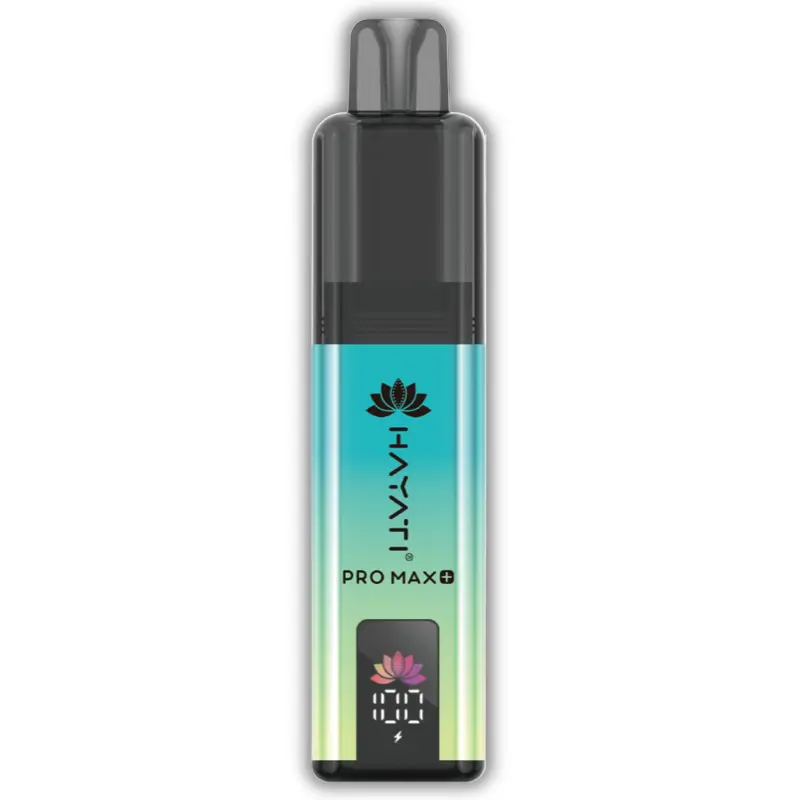
Hayati · Pro Max Plus
Blue Razz Mojito Hayati Pro Max Plus 6000 Pod Kit
£7.99
✔ In stock — ready to ship
Genuine Hayati
Free over £20
Same-day dispatch
Secure checkout
Blue Razz Mojito is listed here as the complete Pro Max Plus 6000 kit at £7.99, which puts a rechargeable body carrying an 850mAh cell in the box alongside a pod that has already been filled with 12ml of liquid at 20mg. There is no measuring, no assembly and no waiting. Hayati's published ceiling for a full pod is 6,000 puffs, a laboratory figure generated by apparatus that draws to a timer, so treat it as a way of ranking one pod size against another and not as a forecast of anybody's fortnight.
The pod-only version of this liquid was written up first, and it spent its length on the label rather than on the liquid. Its case, argued at some length and worth reading in full on Blue Razz Mojito Hayati Pro Max Plus Pods, runs like this: a mojito's defining spirit cannot be put into a sealed pod by any manufacturer anywhere, and white rum happens to be the most neutral spirit in the classic canon, so of all the drinks a flavour house could borrow a name from this is close to the only one that survives the subtraction with its identity intact. That page then turns on the other half of the name and concludes that the blue raspberry destroys the drink reference while producing a good pod regardless. The verdict is settled and this page will not re-argue it.
What that page deliberately left alone is the liquid itself, and the liquid is what this one is for. Three components are named on the label and they come from two incompatible traditions. Lime and mint form a frame that a bar would recognise. Into that frame somebody has poured a blue raspberry accord, which is a manufactured sweet-counter flavour with no original in nature and no interest at all in restraint. The interesting question is not whether that combination is pleasant, because it is. The question is mechanical: what each of the three is actually doing across a draw, why one of them behaves differently from the other two, and what happens to the arrangement over twelve millilitres as the coil gets tired.
The short answer, worked out properly below, is that the lime is the most important component in this pod and also the most fragile one, which is an awkward combination and the reason the blend changes character more than its sibling listings do.
Three components, two of which are not doing the same job
Most three-part fruit blends in this range are three of a kind. Blueberry, raspberry and cherry are three berries, they occupy overlapping ground, and the recipe is a question of ratio between materials that behave alike. This one is not built that way. It has a base, and it has two corrections applied to the base from outside the fruit register, and the two corrections do not work the same way as each other. Understanding that difference explains almost everything about how the pod behaves in the hand.
The blue accord, and why its sweetness has no volume control
Start with the thing occupying most of the space. Blue raspberry is not a raspberry and has never claimed to be one under laboratory conditions; it is an ester-driven confectionery accord, broad and rounded, with a sherbet edge standing in for tartness. Its defining property for a formulator is that it is loud. It was designed to be legible through a mouthful of vapour, through a boiled sugar shell, through carbonation, through whatever else is happening, which is exactly why it turns up in so many manufactured products and exactly why it is difficult to build around. The naming history of the accord and the reasons it tastes broadly identical wherever it appears are worked out on Blue Razz Fruit Twist Hayati Pro Max Plus 6000 Pod Kit, and that page is the right one for the background.
Here is the part that matters for this recipe, and it is a structural point rather than a matter of taste. In a real fruit, sweetness and identity are separable materials. A strawberry's sugar and a strawberry's aroma are different compounds doing different things, which is why a formulator can turn one down without losing the other, and why an unsweetened berry still tastes recognisably of that berry. In a confectionery accord they are the same material. The sweetness is not sitting on top of the blue; the sweetness is a large part of what makes it read as blue at all. Strip the sugar out and you do not get a drier blue raspberry, you get a thin chemical note nobody would name.
Which means a formulator who wants this base held in check cannot hold it in check from the inside. The correction has to be imported, and it has to be strong enough to matter against something built for volume. That is the design problem this pod is a solution to, and both of the other two components are part of the answer.
The lime, which works inside the draw
Naming the citrus precisely is more than most of this range bothers to do, and it is a useful piece of information. Only four of the 179 Pro Max Plus listings mention a lime at all, so what is here is not a generic citrus placeholder but a specific choice, and lime behaves differently from lemon in ways that show up immediately.
The citrus in this blend reads as peel rather than juice. It registers in the nose fractionally ahead of registering on the tongue, it carries a faint green bitterness at its edges, and it is aromatic before it is sour. That matters practically, because an aromatic needs a moment of warmth in the mouth to open, whereas an acid does not. Draw quickly and you will pass most of the lime without meeting it.
What the lime does to the sugar is the interesting bit, and it is commonly misdescribed. Acid does not remove sweetness. It changes how sweetness is perceived while it is present, cutting through the coating sensation and making the whole impression read thinner and shorter than the sugar content would predict. That is a contrast effect and it is real, but it operates only for as long as the vapour is in your mouth. The instant the exhale is finished, the lime's work is finished with it. Nothing about the lime alters the state your palate is in when you go back for the next draw.
The mint, which works in the gaps between draws
Here is the component doing the structural work, and the reason this pod is not simply a sweeter version of something else on the shelf. Of the three things in the liquid, the mint is the only one that clears rather than coats.
Two separate effects are bundled into it and they are worth prising apart, because they behave completely differently later on. The first is a herbal flavour, a green leaf character closer to spearmint than to anything medicinal, which is a volatile aromatic like any other. The second is a cooling sensation, which is not a flavour at all. Cold registers on the trigeminal nerve, the same channel that reports heat and prickle, and it is a physical signal rather than a taste. Both arrive on the exhale and both persist for a few seconds after it.
That persistence is the whole point. A sweet liquid with nothing clearing it accumulates: the fourth draw lands on the residue of the third, the residue of the third is still sitting where the fourth needs to go, and by the twentieth the mouth is coated and the flavour has stopped registering as anything except sugar. Mint interrupts that cycle. It leaves the palate closer to neutral than it found it, so the next draw arrives on a surface that is ready for it. The effect is not on the draw you are taking. It is on the draw after next.
So the two corrections operate on two different timescales. The lime works within a draw and changes how the sugar reads while it is happening. The mint works between draws and changes what the sugar can do to you over a session. They are not two versions of the same fix, and confusing them is why the pod disappoints some people who chain draws through it and satisfies others who do not. Draw length governs how much lime you get. Draw interval governs how much the mint is worth. Those are two separate dials and you control both of them.
The lime is the joint, and the joint is the weakest member
Everything above is preliminary to the finding this page actually wants to make, which is about what holds the recipe together rather than what is in it.
Mint and blue raspberry have no natural relationship. One is a savoury-adjacent herb that turns up in cooking beside lamb, peas and yoghurt; the other is a sweet-counter accord whose entire tradition is the confectionery aisle. Put them next to each other with nothing mediating and the result reads as two unrelated things happening in the same mouth, which is the sensation people describe when they complain that a minted sweet tastes of toothpaste. The mint does not blend with the sugar. It sits alongside it, obviously foreign, and the palate keeps noticing the seam.
Lime is the only component in this pod that belongs to both traditions at once. Citrus is entirely at home on a sweet counter, where lime chews and sherbets have existed for generations, and it is entirely at home in a glass, where it does exactly the job the cocktail reference implies. Because it has one foot in each register, it gives the mint something to attach to on its way in. The green bitterness at the edge of the lime peel shares territory with the green of the leaf; the sweetness the lime is sitting in shares territory with the accord. The result is that the herb reads as part of a drink rather than as an intrusion, and the accord reads as the fruit in that drink rather than as a sweet with mint on it.
Take the lime out and you would not get a blend with less citrus in it. You would get two flavours refusing to combine. The lime is load-bearing for a reason that has nothing to do with how much of it you can taste, which is why it matters that of the three components it is comfortably the most fragile. Aromatic citrus is the most volatile material in the pod. The accord is chemically robust by design, the cooling sensation is robust because it is a physiological trigger rather than a delicate molecule, and the joint holding them together is the one thing in the recipe that will not last the full twelve millilitres. That is the structural weakness of this liquid, and the section on coil wear below is where it becomes a practical problem rather than a theoretical one.
The shape of a single draw
Taken slowly, the sequence is fairly consistent. The blue is in front from the first instant, arriving broad and rounded and sweet across the whole tongue rather than at any particular point on it. Its tartness is present but it reads as part of the sweetness rather than as a check on it, which is the sherbet quality rather than an acid one.
Around the middle of the draw the lime cuts across, and it arrives as a smell as much as a taste. Hold the vapour for a beat before exhaling and it opens considerably; pull sharply and it barely happens. This is the point in the draw where the blend either reads as a drink or fails to, and it is largely under your control.
The exhale belongs to the mint. The fruit is still there and receding, the cold climbs as the vapour leaves, and the last thing present is green and cool with sweetness fading behind it. Then, and this is the part a description of a single draw usually misses, there is a fourth phase with nothing in it. For several seconds after the exhale the mouth continues to feel cool and gradually returns to neutral. That interval is not a flavour and it is the most valuable thing in the pod.
Where the sugar sits, without hedging
High. Put an unsweetened profile at one end of a ten-point scale and a dessert liquid at the other, and this lands around seven, which is higher than the cocktail word on the label prepares anybody for and higher than the first two draws suggest.
The gap between the first impression and the honest number is the two corrections doing their job, and it is worth understanding as a warning rather than as praise. Both the lime and the mint are disguising agents. Neither of them removes a milligram of sugar. What they do is intercept the sensation of sweetness at two different moments, one during the draw and one after it, and the arithmetic of what is in the tank is unchanged by either. Somebody assessing this pod on a three-minute trial will read it as moderately sweet. Somebody an hour into a steady session will read it as sweet, because by then the corrections are fighting the accumulated total rather than a single draw's worth.
There is a second consequence and it is physical rather than perceptual. Sweetened liquid leaves residue on a coil that drier liquid does not, and a sugar level around seven puts this pod in the upper half of the shelf for that. It is not the worst offender listed on the Pro Max Plus kit shelf, and the effect is entirely predictable rather than a defect, but it feeds directly into the next section.
What twelve millilitres does as the coil tires
Three components, three different rates of decline, and the ranking is the reverse of what would be convenient.
The cooling sensation does not meaningfully fade at all on this timescale. It is a physiological trigger, it is stable, and it will still be arriving on the exhale at the eleventh millilitre exactly as it did on the first. The blue accord is nearly as durable, because a flavour engineered to survive being fired through a boiled sugar shell is not going to be troubled by a residue film. The mint's herbal character, as distinct from its cold, is a volatile aromatic and does fade. And the lime, the most volatile material in the pod and the one with the least to lose before it disappears entirely, goes first and goes furthest.
Put those four movements together and the late pod is a specific and predictable thing. What you are left with is a loud confectionery sweetness, undiminished, with a cold sensation sitting on top of it that is no longer attached to a flavour. The herb has become a temperature. The joint has gone, so the cold has nothing to connect it to the fruit and reads as a bare coolant rather than as mint. In other words, over twelve millilitres this pod converges on an iced blue razz, which is a legitimate product and one several manufacturers sell deliberately, but it is emphatically not the product named on this label.
That is worth stating plainly because it is the honest downside of the recipe. The design problem was a base too loud to correct from the inside. The solution imported two corrections from outside. Both of the imported corrections are more fragile than the thing they were imported to correct, so the correction decays while the problem does not. A blend of three real berries does not have this failure mode, because all three age at roughly comparable rates and the balance between them stays broadly where it started. This one drifts in a single direction, always towards the base, and the direction never reverses.
The practical upshot is a rule of thumb for judging the pod, which appears again further down because it is the most useful thing on this page: measure the pod by the lime, not by the liquid level.
What it is not
Four things, stated briefly, because ruling a liquid out saves more money than talking it up.
It contains no alcohol and tastes of none. Vape liquid does not carry a spirit as a flavouring component, which is the whole basis of the argument the pod listing makes, and the cocktail word on the label describes a citrus and herb pairing and the proportion those two are mixed at. Nothing else.
It is not a raspberry blend. The fruit here is a manufactured accord and brings none of what a real raspberry brings, which is acid, a light skin astringency and a faint dusty note off the pips. Anybody wanting the actual berry is looking at a different set of listings, named further down.
It is not a mint pod. The herb is mixed well below the fruit, it never takes the lead, and somebody who wants mint as the main event will find it far too quiet to serve. Hayati sell Spearmint, Fresh Mint and Double Menthol on this same platform for people who want the herb in front.
It is not a cold pod in the sense the range uses that word. No cooling marker appears in the title, and the census of the range's cooling vocabulary carried out on the Blue Frozen pods page established that Ice appears in ninety titles, Frozen in three and Cooler in two, with Chill and Freeze in none and no listing ever combining an ice-family word with a mint-family word. Counting the catalogue confirms those figures. The absence of such a word here is information rather than an oversight.
Two of our own pages measure this pod differently
A disagreement exists in this catalogue about exactly this liquid and it is better to reconcile it in public than to leave a buyer holding two confident and opposite descriptions.
The page for Strawberry Raspberry Mojito, the only other listing on this platform that applies the same treatment, argues that a confectionery base loses nothing to the mint because there was never a delicate aromatic in it for the mint to flatten, and concludes that all three parts of this blend stay legible. The pod page for this very product argues the opposite emphasis, that the blue is comfortably the loudest thing present and the lime and mint are demoted to accents on it.
Both are right and they are measuring different quantities. Legibility and proportion are not the same test. Nothing in this pod is destroyed, which is the strawberry page's point and it is correct: put a herb over a fragile red fruit and the fruit vanishes, whereas put a herb over an accord built for volume and every component remains identifiable. Identifiable is not equal, though, and that is the pod page's point. You can name all three at any moment in a draw, and the three are nowhere near balanced. A reader wanting to know whether they will be able to taste the lime should believe the strawberry page. A reader wanting to know what the pod is mostly like should believe the pod page.
Who it suits, and who should leave it alone
The place to start is a count, because the distinctive fact about this listing is a structural one rather than a matter of flavour preference.
Seven listings on the Pro Max Plus kit shelf lead with the words Blue Razz. Six of them correct the base with fruit or with something fruit-derived: Blue Razz Cherry adds a darker sugar and some depth, Blue Razz Pineapple adds a tropical acid, Blue Razz Blackcurrant adds genuine astringency, Blue Razz Lemonade applies a citrus and sugar structure, the Fruit Twist listing broadens rather than sharpens, and Blue Razz GB applies nothing at all and is the reference point for the uncorrected accord. This is the seventh, and it is the only one of them whose correction includes something that is not a fruit.
Widen the frame and the number gets more striking rather than less. The Pro Max Plus platform runs to 94 distinct recipes. Five of them carry a herb of any kind in the title, and three of those five are the herb on its own with no fruit involved. Exactly two recipes out of 94 pair a herb with a fruit, and of those two, this is the one built on a confectionery base. That is a genuinely unusual construction on this shelf rather than a marketing line, and the counting was done against the catalogue rather than assumed.
The consequence for a buyer is the practical difference between a fruit correction and a herb correction, and it is not subtle once you know to look for it. A second fruit corrects a blend in the middle of the draw by adding a competing flavour to the same space; two loud things in one mouthful still amount to one larger sweet impression by the fourth draw. A herb corrects a blend in the interval, and it does not compete for the same ground because it is not trying to be a flavour at that point in the cycle. It is trying to hand the palate back. That is why this pod stays interesting over a session in a way the fruit-corrected blues do not, and it is the single strongest reason to choose it.
So it suits somebody who wants a loud sweet liquid and has been defeated by loud sweet liquids before, specifically by the way they accumulate. It suits somebody who has tried the straight menthols on this platform and found them too austere to live with for twelve millilitres while still wanting something that resets between draws. It suits somebody who will vape at a relaxed rhythm rather than continuously, because that rhythm is what the recipe is built around.
It should be avoided by three groups. Anybody who dislikes a herbal note anywhere near fruit will notice the mint on every single exhale and will not be able to ignore it. Anybody who wants the drink rather than the sweet will find, as the pod page concluded, that the fruit has taken the subject position and the cocktail has been demoted to a garnish. And anybody who intends to run this as an all-day flavour over several consecutive pods should know that the version they will be vaping in the second half of each pod is markedly closer to a plain iced blue razz than to the blend described on the label.
The kit, in brief
Hardware gets a short section here because it is common to most of the shelf and nothing about it is specific to this liquid. What the listing records is a rechargeable Pro Max Plus body with a cell rated at 850mAh, packed with one pod that reaches you holding 12ml at 20mg, the two together at £7.99. No cable, no accessory and no charging connector appears anywhere in this product's own facts, so none is named here. Any page that does name one is guessing, including a page on this site, and a hardware specification should not be taken from a retail listing in the first place.
One specification matters more than the others for this particular liquid, and it is the 12ml. That volume arrives as a single sealed unit mixed to a ratio somebody else fixed, and on a blend whose entire character is a question of proportion between three competing components, the fixed ratio is the whole story. There is no airflow collar to turn, no second liquid to add and no setting to change. Everything this page has described as a balance is a balance you are buying rather than one you are setting, and the only levers available to you are how long you draw and how long you wait, which is why both of those get their own paragraphs elsewhere. The pod is not refillable and the coil inside it is not a serviceable part, so the two reach the end of their life together and the liquid running out is also the coil being finished with.
Hayati produce several pod formats that are not interchangeable, so check the range name printed on your device against the range name in this title before ordering. The rest of the platform is documented across Hayati Prefilled Pod Kits, and the wider device range sits on the Hayati Pod Kits shelf. If a Pro Max Plus body is already in the house, the same liquid in the same volume is listed on its own as Blue Razz Mojito Hayati Pro Max Plus Pods at £5.49.
What the listing puts on the record
The published facts are short and are set out below in the order a buyer of this particular blend would want them, which puts the flavour rows above the administrative ones.
| Components named | Blue raspberry, lime, mint |
| Where the cold comes from | The mint; no cooling marker in the title |
| Liquid on board | 12ml, filled at the factory, not refillable |
| Strength | 20mg per millilitre |
| In the box | One rechargeable body, one filled pod |
| Cell in the body | 850mAh, recharges |
| Hayati's puff ceiling | Up to 6,000, measured in a laboratory |
| Price | £7.99 |
| Maker | Hayati |
| Stock code | blue-razz-mojito-hayati-pro-max-plus-pod-kit |
| Shelved under | Pro Max Plus kits, Hayati pod kits, prefilled pod kits, berry, raspberry, new products |
Three of those rows repay attention and the rest are housekeeping.
The strength first. Twenty milligrams per millilitre is the maximum permitted in the United Kingdom, and it is a 20mg nicotine salt, which is the standard preparation for a prefilled pod of this kind. The observation specific to this blend concerns how a cooled liquid presents that number. Cooling occupies part of the same sensation at the back of the throat that nicotine does, and here the cooling arrives late, on the exhale, which is precisely where throat sensation is most noticeable. Twenty milligrams in this pod therefore reads as slightly less present than the identical twenty milligrams in an uncooled berry pod from the same shelf. Same figure on both labels, different impression, and it regularly surprises people moving between the two. Nicotine is addictive and how much anybody uses is their own business.
The volume second, for a reason that applies more sharply here than to most of the shelf. Twelve millilitres in one sealed unit is a long commitment to a fixed ratio, and this page has already established that the ratio does not stay fixed: it drifts steadily towards the base as the most fragile component leaves. On a single-fruit pod that drift would be a mild loss of intensity. On a three-part recipe where one part is holding the other two together, the late pod is a different liquid rather than a fainter one. That is the format's cost and it falls harder on this construction than on a simpler one.
The puff ceiling third. Up to 6,000 from a laboratory bench is a comparison tool. It tells you reliably that this pod holds three times what a 4ml pod holds and around half what a 22ml one holds, and those ratios survive whatever your own rate turns out to be. It tells you nothing about days, and on this pod in particular it tells you less than usual, because a recipe built around leaving gaps between draws is one where your own rhythm moves the number a long way.
What the listing does not record is worth naming so the silence here is not read as an omission. There is no carrier ratio published, no coil resistance, no statement of what produces the cooling and no cycle rating for the cell. Those gaps are in the source data, and none of them has been filled in by borrowing a figure from a neighbouring listing.
How it sits against the neighbours
Eighty-eight other listings share the kit shelf, so the useful question is never whether this one is good in isolation. It is which listing it displaces, and that depends on which of the three components brought you here.
If it is the clearing you want
This is the property worth shopping for and the count above showed how rarely it is available on this platform. The nearest thing to it in effect, though not in flavour, is a fruit corrected with real astringency: Blueberry Cherry Cranberry Hayati Pro Max Plus Pod Kit uses cranberry to produce a dryness that cuts sugar, which achieves something comparable by a different route. The difference is timing. Astringency works during the draw, the same window the lime works in, so it does not hand the palate back afterwards in the way a herb does. It is the better choice if what irritates you is sweetness in the moment rather than sweetness accumulating.
Blackberry Raspberry Hayati Pro Max Plus Pod Kit takes the other approach entirely, which is to have less sugar in the first place. It is the darkest and most structurally sound of the berry pairings on the shelf, tart through the middle, with no confectionery register anywhere and nothing correcting anything because nothing needs correcting.
If it is the blue you want
Then the comparison set is the six other blue razz kits and the ordering principle is how hard the base is held down. Blue Razz GB Hayati Pro Max Plus Pod Kit holds it down not at all and is the honest reference for what the accord does unopposed; it is also, usefully, what this pod tastes like in its final third. Blue Razz Lemonade Hayati Pro Max Plus Pod Kit is the closest proposition to this one, because it also reaches for a drink reference, but a lemonade is a drink whose whole character is sugar and acid and therefore loses nothing in translation to a pod. That makes it the more faithful reference and this one the more unusual blend.
For the base sharpened rather than cleared, Blue Sour Raspberry Hayati Pro Max Plus Pod Kit swaps the aromatic citrus for a flat hard sourness that sits on the sides of the tongue, and Red Sour Raspberry Hayati Pro Max Plus 6000 Pod Kit does the same on a red base that reads fractionally more like fruit. Neither clears anything. Both are considerably more aggressive.
Blueberry B'Gum Hayati Pro Max Plus 6000 Pod Kit is worth naming for contrast rather than similarity, since it is the listing on this shelf that states its confectionery register outright. Vaping the two in succession is the quickest way to hear how much the mint is actually doing here, because the two share a manufactured sweetness and only one of them has anything holding it back.
If you want the berries to be berries
Several kits on the same shelf build on fruit that exists. Blueberry Raspberry Hayati Pro Max Plus Pod Kit is the plain blue pairing, rounder and softer, and it is roughly what you arrive at by removing everything this page has been discussing. Blueberry Raspberry Cherry Hayati Pro Max Plus 6000 Pod Kit stacks a third berry on that for more weight. Blueberry Pomegranate Hayati Pro Max Plus Pod Kit brings a sharper and slightly tannic edge, which is a third kind of dryness distinct from both the herb here and the cranberry mentioned above.
On the red side, Strawberry Raspberry Blueberry Hayati Pro Max Plus Pod Kit and Strawberry Raspberry Cherry are the uncomplicated three-berry options with nothing correcting them, and Mixed Berries Hayati Pro Max Plus 6000 Pod Kit spreads the fruit most evenly of the group and is the quietest pod among them. All three accumulate over a session in the way this one is built to avoid, which is the trade running in the opposite direction.
If it is the cold you are after
Buy a cold pod instead of this one, because cooling attached to a herb and cooling applied as a coolant are different sensations and people who like one frequently dislike the other. Strawberry Raspberry Ice Hayati Pro Max Plus Pod Kit takes the direct route with the marker in the title and no herb involved, and Blackberry Ice Hayati Pro Max Plus 6000 Pod Kit puts a much harder freeze over something tart rather than something sweet. The distinction to hold on to is that a coolant is a sensation sitting on top of a blend, whereas a mint is part of the blend and carries a flavour with it.
The same ideas in other formats
Larger pods change the arithmetic rather than the flavour, and the drift described above gets longer to run in a bigger pod rather than being avoided. Blueberry Raspberry at £11.99 is the straightforward berry pairing at scale, and Blueberry Raspberry Lemon Hayati Pro Ultra Plus 25000 Prefilled Pod Kit treats its citrus as a third fruit with body of its own rather than as a corrective, which is a genuinely different construction from this one and a good way to hear the difference between citrus as an ingredient and citrus as a joint.
Two dual-flavour listings are relevant for a different reason. Blue Razz GB / Lemon Lime Hayati Pro Ultra Plus 25000 Prefilled Pod Kit puts the uncorrected accord and a citrus into one 22ml pod with a rotating mouthpiece selecting which reserve feeds the shared coil, so the two halves of this pod's idea are available separately rather than premixed. Blueberry Cotton K / Raspberry Cotton K goes the other way and takes the confectionery direction as far as it goes, with nothing correcting anything on either side.
For finding out cheaply whether a blue base suits you at all, the smaller formats cost less to be wrong about. Blue Razz GB Hayati Mini Ultra Pod Kit and Blueberry Raspberry Hayati Mini Ultra Pod Kit at £3.99 each hold far less liquid, and the Blue Razz Pineapple / Strawberry Ice unit on the same small format puts two readings of a blue base into one pod.
The listing with the least information in its name, for anybody curious how far that can go, is Blue Fusion Hayati Pro Max Plus 6000 Pod Kit, which commits to a colour and nothing else. The full population of blue and berry liquids is on Berry Vapes, Raspberry Vapes narrows it to the listings where a raspberry of some description leads, whatever its relationship to the actual fruit. Everything that has landed recently across every range collects on New Products.
Running a blend whose weakest part is holding it together
Generic sealed-pod advice applies to every product in the format and there is no point repeating it. What follows is tied to the particular problem this recipe sets, which is that the component you most need is the one least likely to survive.
Give the wick a couple of minutes and keep the first few draws gentle. The reason to bother on this pod specifically is that a wick heated while still dry produces a bitter green note, and a bitter green note is exactly what an over-extracted lime peel produces. The two are easy to mistake for each other, and more than one person has decided the citrus in a mojito liquid is unpleasant when what they actually met was a coil they cooked in the first minute of ownership.
Use the lime as your wear gauge rather than the liquid window. Aromatic citrus is the first casualty of residue building on a coil, well before anything stops working and well before the pod runs dry. Its retreat is therefore a more accurate reading of where you are in the pod's useful life than looking at how much is left. Once the lime has gone quiet, the joint has gone, and what remains is the base with a temperature on it. That is the point to fit a fresh pod, not the point the liquid runs out.
Leave gaps, because the recipe is designed around them. Everything the mint is worth happens in the seconds after an exhale, and drawing continuously means that interval never occurs. Ten to fifteen seconds is usually enough for the palate to come back. Chain through this pod and you will get the sugar with none of the relief it was formulated to provide, which is the most common way of being disappointed by this particular liquid and the easiest to fix.
Slow the draw if you want the drink half. The citrus is aromatic before it is sour and needs a moment of warmth in the mouth to volatilise, so a long steady pull with a brief hold before exhaling gets noticeably more of it than a short sharp one. This is the only adjustment the device permits and it stops working once enough residue has accumulated to filter the fine notes out.
Expect residue sooner than a dry liquid would leave it. A sugar level around seven puts this in the upper half of the shelf for coil fouling, and the first thing a fouled coil removes is the fine end of the profile, which on this pod is the part you bought it for. Nothing about that is a fault; it is the arithmetic of sweetened liquid and it is the reason the lime gauge above works.
Mind what you vape after it. Mint is persistent and traces of it linger in the airflow path and on the mouthpiece after the pod has been put down. Move straight to a delicate fruit and the first several draws of the new one will carry a faint green note that has nothing to do with it. In a rotation this pod belongs after something heavy and sweet, where its clearing property is worth the most, and badly before anything subtle.
Keep it cool, dark and upright, and buy one at a time. Warmth and light are what drive volatile top notes out of a liquid, and this is a blend where a volatile top note is the structural component. A spare kit sitting in a warm drawer for four months will open with a quieter lime than one bought this week, and no fault will have occurred. Warm liquid also thins, and thin liquid finds gaps, so a device left on a dashboard or a sunny sill can deliver a mouthful of syrup instead of vapour. Store it somewhere children and pets cannot reach it.
Do not draw harder on a tired pod. Pulling harder moves more liquid past an ageing coil without improving what reaches you, and on this blend it biases the result towards the base, which is the component you least want amplified at that stage. When it is finished, the device and the spent pod are both electrical waste and belong at a vape retailer's collection bin or a council recycling site rather than in a household bin.
Questions this listing raises
Is there any alcohol in this, or any taste of it?
No to both. A spirit is not something any manufacturer can put into a vape liquid as a flavouring, which is the starting point of the argument the pod listing makes about this name. What the cocktail word describes is a lime and mint pairing and the proportion those two are mixed at, and that is the entirety of what it is doing on the label.
Which of the three components leads?
The blue raspberry, by a clear margin. It is in front from the first instant of the inhale and holds most of the exhale, with the lime cutting across the middle and the mint taking the finish and the seconds after it. Anybody choosing this should understand they are buying a sweet liquid with two corrections applied rather than a drink flavour with a berry in it.
How much cooling is in it?
Moderate, and it comes from the mint rather than from a coolant announced in the title. The range is consistent about flagging a hard chill in the product name, and no such word appears here. The cold registers on the exhale, sits for a few seconds and clears, and it works as a counterweight to the sugar rather than as the point of the pod.
Why does it taste different halfway through the pod?
Because the three components age at three different rates. The cooling sensation is stable and the confectionery base is close to it, while the mint's herbal character is volatile and the lime is the most volatile thing in the liquid. The result is that the corrections fade while the thing they were correcting does not, so the balance drifts steadily towards the base as the coil accumulates residue.
What is the single most useful thing to know before buying?
That the lime is doing structural work out of proportion to how much of it you can taste. It is the only component belonging to both the sweet-counter tradition and the drink tradition, so it is what makes the mint read as part of a blend rather than as something foreign sitting next to the sugar. It is also the first thing to fade, which is why the pod changes character more than its neighbours do.
Is this the same liquid as the pod on its own?
Yes. This listing is the kit, so a rechargeable body comes with it, and Blue Razz Mojito Hayati Pro Max Plus Pods at £5.49 is the identical 12ml with no hardware in the packet. That page is also where the argument about the cocktail name is set out in full, rather than being repeated here.
Is the mint noticeable if I generally avoid herbal flavours?
Yes, clearly, and somebody who actively dislikes a herbal note should not buy this on the strength of the fruit in the title. It is mixed well below the blue and it never leads, but it holds the finish and it is the last thing present after every exhale. One of the fruit-corrected blue razz kits named above will serve that person better.
How sweet is it, really?
Around seven on a ten-point scale with an unsweetened profile at one end and a dessert liquid at the other. The first few draws read lower than that because both corrections are disguising agents, but neither removes any sugar, and an hour of steady use makes the actual level apparent. It is a sweet liquid managed well rather than a restrained one.
What is in the box?
The listing records a rechargeable body with a cell rated at 850mAh together with one pod already holding 12ml at 20mg, sold as a pair for £7.99. Nothing else is itemised, and no charging connector is named in this product's facts, so this page does not name one either. Check the packaging when it arrives.
What does the 6,000 figure actually tell me?
Less than it looks like. It is an upper bound from laboratory apparatus taking identical draws on a fixed cycle, which makes it a reasonable way of comparing pod sizes and a poor way of predicting a week. On this pod it is less informative than usual, because the recipe rewards leaving gaps between draws and your own rhythm moves the real number a long way.
Can I adjust the balance between the three parts?
Only within narrow limits, and only in two ways. A longer draw with a brief hold before exhaling gets more of the lime, because the citrus is aromatic and needs warmth to open. A longer pause between draws gets more value from the mint, because its clearing effect happens in the interval rather than in the draw. Nothing else on the device is adjustable and the ratio in the pod is fixed.
Should I order two kits at once?
There is little reason to. A second rechargeable body has nothing to do while the first one works, and the part of this blend that fades in storage is the lime, which is the part worth having. If you want a spare of the liquid rather than a spare of the hardware, the pod on its own is the listing for that, and buying it close to when you will open it keeps it nearer the condition it left the factory in.
The short version
Blue Razz Mojito as a kit is £7.99 for a rechargeable 850mAh body and a pod already holding 12ml at 20mg, with Hayati's laboratory ceiling of up to 6,000 puffs on a full pod. The naming question, which is whether a cocktail name survives having its spirit removed and then having a confectionery accord poured into it, is settled on the pod listing and this page took the liquid instead.
The liquid is a base and two imported corrections. The base is a blue raspberry accord whose sweetness cannot be turned down from the inside, because in a manufactured flavour the sugar and the identity are the same material. The two corrections work on different timescales: lime cuts sweetness during the draw, mint clears the palate in the seconds afterwards, and only the second of those changes what the next draw arrives on. Sweetness sits around seven out of ten and the first impression understates it.
The finding worth carrying away is about the lime. It is the only component at home in both the sweet-counter tradition and the drink tradition, which makes it the joint that stops the herb and the accord reading as two unrelated things in the same mouth. It is also the most fragile thing in the pod, so over twelve millilitres the recipe drifts in one direction only, towards a loud sweet base with a cold sensation no longer attached to a flavour. Judge the pod by whether the citrus is still audible rather than by the liquid level.
Worth buying if you want a loud sweet liquid that does not accumulate over a session, and it is the only one of the seven blue razz kits on this shelf whose correction is not another fruit, which is precisely why it manages that. Worth avoiding if you dislike herbal notes near fruit, if you wanted the drink rather than the sweet, or if you intend to run a single flavour all day and would rather it stayed the same from the first millilitre to the last.
Strictly for adults aged 18 and over. Nicotine is an addictive substance.
You might also like


