
Home / Hayati Pro Max Plus Prefilled Pod Kit / Blueberry Raspberry Cherry Hayati Pro Max Plus 6000 Pod Kit
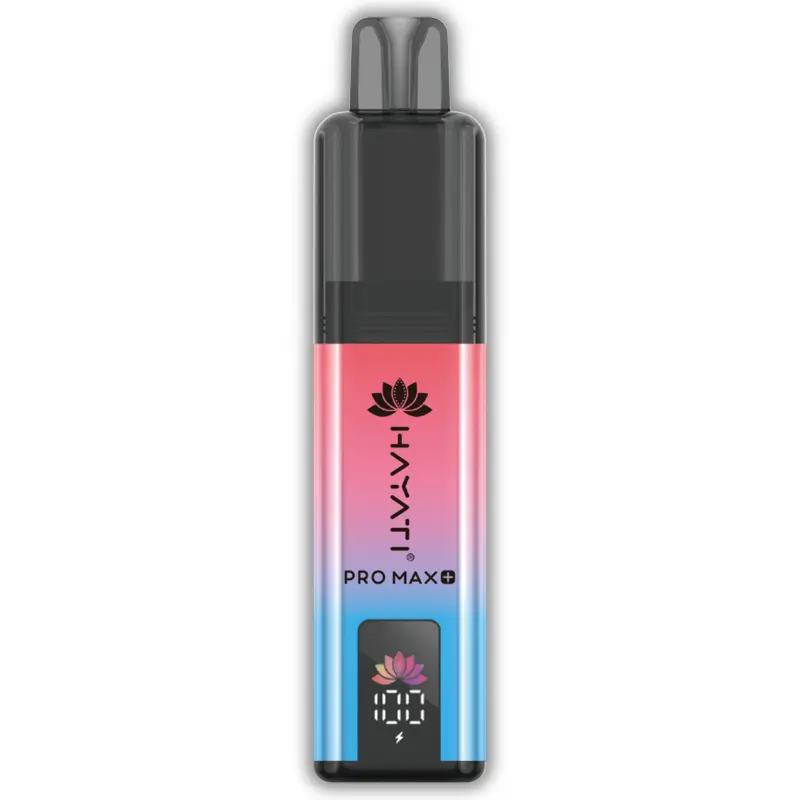
Hayati · Pro Max Plus
Blueberry Raspberry Cherry Hayati Pro Max Plus 6000 Pod Kit
£7.99
✔ In stock — ready to ship
Genuine Hayati
Free over £20
Same-day dispatch
Secure checkout
Blueberry Raspberry Cherry arrives here as a complete Hayati Pro Max Plus kit at £7.99, which means the body and the filled pod come in one box and the thing works as soon as you take the wrapper off. The pod carries 12ml of liquid at 20mg nicotine salt, the body holds an 850mAh rechargeable cell, and Hayati put a laboratory figure of up to 6,000 puffs against a full pod, produced by a machine drawing on a timer rather than by any person using it. Nothing needs filling, nothing needs priming, and the only decision left after opening is how long to make the draw.
Almost everything written about this recipe so far has been written about the cherry. The bare pod version, Blueberry Raspberry Cherry Hayati Pro Max Plus Pods at £5.49, spends its length establishing that three printed names resolve into two contributions, and it works through the reason: benzaldehyde, which is what makes a cherry recognisable, is vague below a certain level and turns to marzipan above it, so the third name on this label cannot pay out in full at any setting a berry blend could use. That page also counts the extensions Hayati have built on this base, and finds that the only thing the third word demonstrably changes in the product data is one additional shelf placement. The divided Pro Ultra Plus pod that carries this recipe as one of its two sides, Blueberry Raspberry / Blueberry Raspberry Cherry Hayati Pro Ultra Plus 25000 Prefilled Pod Kit, reaches the same place from the other direction. Both arguments hold. Neither is rebuilt here.
What both of them leave alone is the part of the pod you actually spend your time in. Cherry is the interesting question and blueberry with raspberry is the liquid. Two thirds of every draw, and considerably more than two thirds of the recognisable character, comes from a pairing that four pages in this catalogue have now described in a single sentence each and then walked past on the way to something else. This page stops there instead. What is the blueberry and raspberry accord actually made of, why does Hayati's own catalogue keep rebuilding it, and, the question nobody has put, what would this liquid lose if you took the blueberry out rather than the cherry.
The half of the recipe everyone treats as scenery
Start with what is already agreed, because it is agreed for good reason and there is no point pretending otherwise. Raspberry supplies sharpness and arrives early. Blueberry supplies weight and arrives late. Each covers the shortfall in the other, which is the standard account and appears in some form on the Pro Ultra Plus pages for this base and on the lemon variant of it. As far as it goes, it is correct.
It also stops exactly where the interesting part begins. Sharpness and weight are both commodities. There are several ways to put an acid edge on a sweet liquid and several ways to put a sweet floor under a sharp one, and Hayati use most of them elsewhere in the range. If that were genuinely all these two fruits contributed, the pair would be interchangeable with a dozen other pairs, and the catalogue would not keep returning to it. It does keep returning to it, so something else is going on, and the something else is what the rest of this section is about.
How dependent each fruit is on the other, counted
A claim about how often two things appear together is the kind of claim worth checking rather than asserting, so here is the count, taken from the titles of all 492 Hayati listings rather than from shelf membership, which is broader and includes products whose names do not say either word.
Forty-six titles contain the word blueberry. Seventy-four contain the word raspberry. Twenty-eight contain both. Read those three numbers against each other and an asymmetry falls out immediately: roughly three in five blueberry listings have a raspberry in them, against fewer than two in five raspberry listings having a blueberry. The dependency runs one way, and it runs the way you would expect from the fruits themselves without knowing anything about Hayati.
The eighteen listings that name blueberry without naming raspberry are worth going through individually, because they turn out to be eight recipes duplicated across formats rather than eight different ideas, and one of those is a nicotine pouch rather than a liquid. Of the seven liquid recipes left, three hand the acid job to a different fruit: lemon in one paired listing, cranberry in the Blueberry Cherry Cranberry family, pomegranate in another. One hands it to a coolant, in the menthol build. The remaining three do not solve the problem at all, they change the question, by converting the blueberry into confectionery under a bubblegum, a candyfloss or a shisha-derived treatment, where nobody is expecting a fruit to behave like a fruit.
Which leaves a fact worth stating plainly. In a catalogue of 492 products there is not one e-liquid sold as blueberry and nothing else. The pod sibling notes in passing that almost nothing in the range is built on blueberry alone, and that turns out to understate it: the number is zero, and every single exception on the list above is an exception because something was brought in to do the job raspberry usually does.
Raspberry has no matching dependency. Forty-six listings carry it with no blueberry anywhere near, across fifteen distinct recipes, and the range of company it keeps is the point. It goes with peach, with blackberry, with strawberry in four different arrangements, with cherry, with cranberry, with kiwi and grape, with cola, with a candyfloss treatment, and it is sold twice as a deliberately soured liquid with almost nothing underneath it at all. A fruit that can be put next to cola and still be recognisable is not a fruit that needs a partner. It is a fruit that can be given one.
So the pairing on this pod is not two equals meeting in the middle. It is the range's standing answer to a problem that only one of the two fruits has, arrived at twenty-eight times, and then extended once more with a cherry. That framing already changes how the liquid reads, and it sets up the question this page exists to answer, because if blueberry is the dependent partner it is fair to ask what the arrangement would lose if it were the one dropped.
Raspberry, which does two jobs with two different lifespans
Keep this short, because the fruit has been well described on the sibling pages and the only thing I want to add is a distinction none of them draw.
Raspberry contributes on two channels. One is acid, mostly citric with malic behind it, which lands along the sides of the tongue at the very start of an inhale because it acts by direct contact and has no distance to travel. The other is aroma, a perfumed, faintly violet top note that is the single most identifiable thing in this pod for most people, and which has to reach the back of the nose to register at all.
Those two channels are usually described together as raspberry's brightness, and within a single draw they do behave together, both arriving early and both thinning before the exhale. Across the life of a pod they behave nothing alike. Acid is not volatile. It is not degraded by a warm coil, it does not evaporate out of a pod left in a bag, and residue building on mesh does not stand between it and your tongue. Aroma is the opposite on all four counts. It is the lightest material in the recipe, it is the first thing a tiring coil stops delivering, and it is the first thing lost to a warm week in a car.
Hold that distinction, because the practical half of this page turns on it. What people call the raspberry in this liquid is two things with very different shelf lives, and only one of them is going anywhere.
Blueberry, and the reason its contribution is hard to name
Here is the part I think has been missed, and it is not a subtlety. It is the largest single fact about this fruit and it decides what kind of liquid this is.
A raw blueberry is close to aromatically mute. Put one in your mouth and you get sugar, a mild acidity, a slightly tannic drag from the skin and very little smell at all. Held under the nose, a punnet of them gives almost nothing back. That is unusual among fruit people eat regularly, and it matters because aroma, not taste, is what makes a fruit identifiable. Strawberry announces itself across a room. Raspberry announces itself from a bowl. Blueberry, raw, barely announces itself from the tongue.
What everyone can recognise instantly is a cooked blueberry. Pie filling, a muffin, compote spooned over something, the purple stain left on the back of a spoon. Heat and sugar do two things to the fruit: they break the skins and release what is held in them, and they generate aromatic material that simply is not present in the raw berry. The smell everybody files under blueberry is, to a large extent, a smell that only appears once the fruit has been cooked.
Follow that through to a flavour house. Anyone building a blueberry flavouring has to build something people will identify, and the identifiable version is the cooked one. There is no commercially useful way to reference a fruit whose raw aroma is faint and diffuse. So a blueberry flavouring, this one included, is necessarily referencing a processed fruit, and it arrives in the recipe already carrying an impression of having been heated and sugared. That is not a decision Hayati made or a corner anybody cut. It is forced by the material, and it would be true of any blueberry liquid from any maker.
Now put the three fruits in this pod on a scale of how processed the reference version of each one is, and the arrangement becomes legible in a way the label never suggests. Raspberry's identifiable version is raw: the perfumed top note is a fresh-fruit note and reads as fruit off the plant. Blueberry's identifiable version is cooked: stewed down, skins broken, sugar concentrated. Cherry's identifiable version, as the pod page establishes, comes from the kernel rather than the flesh, which is why cherry flavourings drift so readily towards the glacé and the liqueur and the sweet-counter, and it therefore sits at the preserved end of the same scale.
One fresh note. Two processed ones. That is the actual construction of this liquid, and it explains something the fruit-by-fruit description cannot, which is why the overall impression is so consistently reported as a cooked one. People reach for jam and compote and pudding when they describe this family of blend, and they are not being loose. They are describing the blueberry's contribution accurately and attributing it to the whole.
The quiet part of the blueberry, which is not the sweetness
Two further things come in with the cooked reading, and both are easy to miss while they are happening.
The first is a faint floral lift that sits above the sweetness rather than inside it. It is the one component in this pod that is not in the red-fruit register at all, and on a blind draw it is the most likely thing to make somebody say there is something else in there without being able to finish the sentence. It is quiet, it does not arrive at a moment you can point to, and it is nothing like the raspberry's perfumed top, which is sharper and lands much earlier.
The second is a dryness, inherited from the skins, that keeps the sweet floor from going glossy. Cooked blueberry is a matt sweetness rather than a shiny one. It is the difference between a spoonful of preserve and a mouthful of cordial, and in vapour it presents as a very slight drag on the finish that stops the sugar sliding away cleanly. Most people will never identify it. Almost everyone would notice its absence, which is the point of the next section.
Take the other one out
Every page written about this recipe, including the two written about the divided pod, tests it by removing or discounting the cherry. That is the obvious experiment and it has now been run several times. Run the other one instead. Keep the cherry, keep the raspberry, take out the blueberry, and ask what changes.
What survives the removal
More than you would think, which is exactly why the answer is interesting. Raspberry still opens the draw with acid and a perfumed top. Cherry, at the low setting a berry blend requires, still puts a dark sweetness behind it that runs long. The sweetness level barely moves, because cherry carries plenty of sugar. The length barely moves either, because cherry's material is back-loaded. Even the two-stage shape of the draw survives, tart arrival then sweet weight, which is what most descriptions of this liquid amount to.
If the blueberry were only supplying weight and sweetness, as the standard account says, its removal would therefore be close to invisible. Something else is supplying weight and sweetness already. That is the test, and the standard account fails it.
What does not survive
Four things go, and none of them is a quantity.
The genre goes. Cherry's processed reading is a syrup reading: glossy, sweet-counter, the character of fruit suspended in sugar. Blueberry's is a stewed reading: matt, dense, the character of fruit broken down by heat. They are not the same kind of processing and they do not substitute for each other. Remove the blueberry and the pod stops reading as a preserve and starts reading as a drink, because nothing left in it has ever been near a pan. That is a change of category rather than a change of degree, and it is the largest single consequence of the removal.
The colour goes. Raspberry and cherry are both red. Blueberry is the only dark contribution in the recipe and the only one bringing a skin-derived dryness with it. A wholly red accord reads brighter, shallower and more obviously sweetened, for the same reason a red cordial does, and this liquid's reputation for depth comes almost entirely from the fruit that is hardest to name while drawing on it.
The outsider goes. Raspberry and cherry are close botanical relatives, both in the rose family, one a cluster of small drupelets and the other a single large one built to the same plan. Blueberry is not related to either and comes from an entirely different order of plant, with cranberry and bilberry as its nearest relations in this catalogue. Take it out and the pod contains nothing from outside one plant family, which is precisely the homogeneity the three-name label is supposed to be protecting you from. The floral lift, which is the only note not in the red register, goes with it.
The middle goes thin. Raspberry's material is front-loaded and cherry's is back-loaded. The blueberry is what occupies the stretch between them. Removing it does not create a hole, since the two survivors overlap enough to cover the ground, but it does leave that part of the draw carried by the tail of one fruit and the arrival of another rather than by something whose job it is to be there.
The asymmetry that makes this worth knowing
Now run the removal the other way for comparison, because that is where the conclusion lives.
Take out the raspberry and the loss is instant, obvious and easy to name. The draw arrives flat, there is no edge at the front, and anybody would spot it inside one inhale. But it is also easy to repair, and the catalogue repairs it constantly. Cranberry does the job in Blueberry Cherry Cranberry Hayati Pro Max Plus Pod Kit, which is the range's own version of this experiment: the same blueberry, the same cherry, the raspberry swapped for a fruit that brings acid without sugar. Lemon does it on the Pro Ultra Plus. A dosed sour treatment does it on Red Sour Raspberry Hayati Pro Max Plus 6000 Pod Kit. Acid is the most substitutable thing in a fruit recipe.
Take out the blueberry and the loss is slow, hard to name, and impossible to repair with anything else Hayati sell alongside it. There is no second cooked note in the pod. There is no other fruit in the recipe with a skin. Adding more cherry makes the liquid sweeter and glossier, which moves it further from where the blueberry had it, not back towards it.
So each fruit in this pair contributes one commodity and one thing only it can do. Raspberry's commodity is acid and its irreplaceable contribution is the perfumed raw-fruit top. Blueberry's commodity is weight and its irreplaceable contribution is the cooked reading. Every description of this pairing I have read, on this site and elsewhere, names both commodities and neither irreplaceable, which is why the accord sounds generic when it is written down and does not taste generic when you draw on it.
Stated as one sentence: this is not sharp fruit over sweet fruit, it is fresh fruit over cooked fruit, and the second of those is the harder half to buy elsewhere.
Two places in the catalogue where you can check this without taking my word for it
The argument above is reasoning about what these fruits are made of, applied to a recipe whose proportions Hayati do not publish and which nobody selling it has seen the formula for. Mark it as inference. It is, however, testable for about eight pounds, because the range contains two near-misses that isolate the variable.
Strawberry Raspberry Cherry Hayati Pro Max Plus Pod Kit is this recipe with strawberry standing in the blueberry slot and everything else held constant. Strawberry is also a fruit whose identifiable version is a processed one, so the cooked reading is not lost outright, but the processing it references is jam and confectionery rather than stewed fruit, and it is emphatically red. The prediction, if the argument here is right, is that the blend keeps its architecture, loses its darkness and becomes noticeably easier to name, with three components that separate better and an overall impression that sits closer to a sweet-counter than a kitchen. Whether that is a gain depends entirely on what you wanted.
Blackberry Raspberry Hayati Pro Max Plus Pod Kit is the tighter test, because it is the two-fruit pair with the nearest available substitute dropped into the blueberry position. Blackberry is dark, which blueberry is, and it is the only other dark berry Hayati build a two-fruit pair around. What it is not is cooked. Blackberry's recognisable character is a raw one, brambly and seedy, with real acid of its own and a tannic edge that is sharper and drier than blueberry's skin drag. Expect that pair to read as structured rather than round, with two acids instead of one and nothing matt underneath. It is a good liquid and it is not this liquid, and the gap between the two is the clearest available measure of what the blueberry was doing.
Where the cherry lands, given all that
This is the shortest section on the page by design, since the sibling listings have the cherry covered and I have nothing to add to their verdict. What the analysis above does change is where the cherry sits in the arrangement, and that is worth two paragraphs.
A dialled-down cherry is a preserved reading, not a fresh one. It goes in on the blueberry's side of the scale rather than opposite it. So the recipe is not one fruit against two, or three fruits in a row, it is one fresh note carrying the front of the draw and two processed notes carrying everything behind it, in a ratio of one to two. The centre of gravity of the liquid sits further back than a three-fruit name implies, and further back than the two-fruit parent, which runs one against one.
That is the real difference between this pod and the version without the cherry, and it is a structural difference rather than an additional flavour. It also means the cherry reinforces the blueberry's framing instead of diluting it. If you like this liquid for the cooked, spooned-preserve quality it has, the cherry is helping, and it is helping in the same direction rather than adding a new one. If what you wanted was a third thing to taste, the pod page has already told you why you will not get it, and it is right.
The hardware, in the space it deserves
Very little here is particular to this listing, so this is brief. The box contains one Hayati Pro Max Plus body with an 850mAh rechargeable cell and one prefilled pod, assembled, with nothing to add and nothing to prime. The pod is described by Hayati as 12ml in total, held as a 2ml chamber at the coil plus a 10ml reserve. They do not publish how liquid moves between the two, and since they do not, no page should tell you, this one included.
The one specification that bears on everything above is the coil. It is sealed inside the pod, it cannot be reached, rinsed or replaced, and it processes the whole 12ml before being thrown away with the shell. On a liquid whose fragile half is a light aromatic top note and whose durable half is a cooked sweetness, that arrangement has a consequence you can predict without any figures: the two halves of the recipe age at completely different rates and there is no way to separate coil condition from liquid condition, because you cannot put fresh liquid through a tired coil to see which one changed. Hayati publish no resistance, no wattage, no carrier ratio and no wick material for this pod, and nothing has been supplied from anywhere else, so those stay blank.
On fitment, check the range name printed on your device against the range name in this listing's title rather than reasoning from the Hayati badge, because several pod systems share it. Everything else about the platform, including the other eighty-seven listings that use it, sits on the Hayati Pro Max Plus Prefilled Pod Kit shelf, and there is no reason to restate it here when the flavour is the only thing on this page that could not be written about any of them.
The sheet, and the column it does not have
The table below is ordered by how much each row tells you about the liquid rather than by the order these things usually appear, which puts the flavour material first and the commercial material last. The reason for the reordering is the point I want to make about specification sheets generally, and it follows directly from the argument above.
| Named fruits | Three: blueberry, raspberry, cherry |
| Fresh notes among them | One, the raspberry top |
| Processed notes among them | Two, the cooked blueberry and the preserved cherry |
| Where the acid comes from | Raspberry, and nothing else in the recipe |
| Cooling | None. No cold word appears in the title |
| Sweetness | Medium to sweet, matt rather than glossy, short of a confectionery build |
| Liquid on board | 12ml altogether, as a 2ml chamber at the coil with a further 10ml held back |
| Nicotine | 20mg, in salt form, with no second strength on this listing |
| Coil | Fixed inside the pod, handles the full 12ml, retires with it |
| Body | Supplied, rechargeable, 850mAh |
| Manufacturer puff figure | Up to 6,000 for a full pod, measured on test equipment |
| Proportions of the three fruits | Not published for this or any pod in the range |
| Coil resistance, wattage, carrier ratio | Not published against this listing |
| Price | £7.99, complete |
| Product code | blueberry-raspberry-cherry-hayati-pro-max-plus-pod-kit |
| Maker | Hayati |
Rows two, three and four are mine rather than Hayati's, and they are in the table because without them the sheet has no row that describes the liquid. Read the published specification on its own and you get a volume, a strength, a battery figure, a puff estimate and a flavour name. Every one of those is identical on the two-fruit version of this recipe and on about forty other berry listings besides. The sheet cannot express the difference between an accord that holds together and one that does not, and it cannot express the difference between a blend whose parts reinforce each other and one whose parts sit side by side, which means the only row on it that touches what you will actually taste is the three words in the flavour field.
The proportions row is the one that would settle everything and it is empty. Nobody publishes it. On a blend of fruits from different registers, ignorance of the ratio is survivable because you can hear which component is doing what and work backwards. On this one you cannot, and anybody quoting you a percentage for this recipe has invented it.
The nicotine row is 20mg in salt form, which is the ceiling permitted for retail sale in the United Kingdom, and this listing offers no alternative. Salt is the standard preparation for a sealed low-power pod; a freebase liquid at that concentration through a narrow draw would be unpleasant. Nicotine is addictive, and a figure on a listing is something to check against what you already use rather than a suggestion. If nicotine is not what you are after from the platform, Hayati Pro Max Plus 6000 Pod Kit Zero Nicotine (0mg) exists at the same £7.99, though not in this flavour.
The neighbours, sorted by which ingredient they change
There are enough berry listings in this range to make a general comparison useless, so these are grouped by what each one does to the blueberry and raspberry pair rather than by how similar it sounds.
The pair with nothing added
Blueberry Raspberry Hayati Pro Max Plus Pod Kit is the same hardware, the same volume, the same strength and the same £7.99, with the third fruit taken off. It is the comparison that matters most and the one I would make first. What you get is the pair running one fresh note against one cooked one, at parity instead of one against two, which reads as better defined, slightly shorter and slightly less dense. Whether you prefer it comes down to whether you value definition or body, and since the two kits cost the same there is no money in the decision at all. Anyone who reads this page and concludes that the blueberry is the interesting half should buy that one, because it gives the blueberry a larger share of the liquid.
The same pair in smaller and cheaper hardware is a reasonable way to find out whether the base suits you before spending on a 12ml pod. Blueberry Raspberry Hayati Mini Ultra Pod Kit at £3.99 is the least expensive route to the profile in the catalogue, and Blueberry Raspberry Hayati Rubik Prefilled Pod Kit at £5.99 puts it on a third system again. Both are complete kits with their own bodies rather than refills for this one.
The pair with the blueberry replaced
Covered above, and the two listings are Blackberry Raspberry for the two-fruit version and Strawberry Raspberry Cherry for the three. A third variant keeps the blueberry and adds a strawberry rather than swapping one for the other: Strawberry Raspberry Blueberry Hayati Pro Max Plus Pod Kit at £7.99 gives you two processed notes and one fresh one again, but with the second processed note red and jammy instead of dark and stewed. Set against this pod it is the better illustration of how much of the character here is coming from the colour of the cooked fruit rather than from the cooking itself.
The pair with something sharp added instead of something sweet
The most useful single comparison for anyone who finds this pod heavy going after a few days. Blueberry Raspberry Lemon Hayati Pro Ultra Plus 25000 Prefilled Pod Kit at £11.99 takes the identical base and adds a fruit that goes where nothing else in the recipe is standing. Citrus acid lands at the front and stays available at the finish, so instead of deepening the back half it holds the two berries apart, and the page for that liquid argues at length that the lemon is structural rather than decorative. It is a different platform, so it is a flavour comparison rather than a swap you can make on this body.
Cold does a related job by a different route. Blueberry Straw’ Menthol / Blueberry Raspberry Menthol Hayati Mini Ultra Pod Kit at £3.99 is the cheapest way to hear what happens when the same berry material is given a coolant, which cuts the finish rather than lengthening it. Nothing in this pod's title carries a cold word, and Hayati mark cooled listings plainly, so there is no coolant in this one.
The pair sharpened to its limit, with the floor removed
Blue Sour Raspberry Hayati Pro Max Plus Pods at £5.49 is the most instructive listing on this whole comparison, and it costs less than the kit. It is a sharpened raspberry with very little weight underneath, which makes it the closest thing in the range to hearing what the raspberry half of this pod sounds like on its own. Take four draws of that and four of this and the difference is the blueberry, in a form you can name rather than infer. It is also a bare pod and needs a body you already own, which after buying this kit you will have.
The same colour reached through confectionery instead of fruit
An entire wing of this shelf declines the fruit problem outright. Blue Razz GB Hayati Pro Max Plus Pod Kit is the plain version of Hayati's gummy blue, which is a sweet-counter flavour rather than a fruit and is not trying to reference anything that grew. Blue Razz Cherry Hayati Pro Max Plus Pod Kit lays a cherry over that base, and because the base is not competing for the fruit position, the kernel note is allowed through and you will know it is cherry. That is the listing to buy if the cherry is what drew you here, and it is worth being clear that you give up any claim to a fruit blend in exchange. Blueberry Cotton K / Raspberry Cotton K Hayati Mini Ultra Pod Kit at £3.99 applies one candyfloss treatment to each of our two fruits separately, which is a neat way to hear what is left of each berry once a spun-sugar register is laid over it. For the other direction entirely, Blue Fusion Hayati Pro Max Plus 6000 Pod Kit declines to name any fruit at all, and its own page is about what a mood name can and cannot tell a buyer.
Cherry as the lead rather than the passenger
Cherry Berry Hayati Pro Max Plus Pod Kit reverses the billing, putting the cherry first and an unitemised berry set behind it. On the reasoning here that ought to be a more legible liquid than this one, because a cherry given the lead can be pushed towards the setting where its kernel character shows without having to pass as a third berry. Anyone browsing by fruit rather than by blend will find both approaches gathered on the Cherry Vapes shelf, which runs to seventy-two products and mixes the two kinds freely.
Bigger formats and browsing
If you want considerably more of the base at once, Blueberry Raspberry Hayati Pro Ultra Plus 25000 Prefilled Pod Kit at £11.99 puts it in a 22ml pod on separate hardware, and Blueberry Raspberry / Mr Blue Hayati Pro Ultra Plus 25000 Prefilled Pod Kit holds the base on one side of a divided pod and an unnamed blue mixture on the other. For browsing rather than shortlisting, Blueberry Raspberry Vapes collects all forty-six listings built on this exact pairing across every format Hayati make, which is the right shelf if the combination rather than the hardware is what you are loyal to. Blueberry Vapes and Raspberry Vapes split it the other way by single fruit, and the difference in their sizes, ninety against a hundred and nineteen, is the same asymmetry this page counted from the titles. Two platforms away, Blue Razz Fruit Twist Hayati Pro Max Plus 6000 Pod Kit sits on the same body if you want a second flavour to rotate with without buying more hardware.
Twelve millilitres of a rounded accord, and what that is like to own
A pod you will be with for a week or two behaves differently from one you taste once, and the things that matter over that stretch are not the things that decide a first impression. These notes are specific to a liquid built the way this one is: three sources, no coolant, no sour treatment, nothing in it that functions as an event.
The first hour is not a fair reading. A pod that has been sitting cold delivers the durable half of its recipe before the fragile half, because the wick and the coil need a few minutes of use to come up to a steady working temperature. On this liquid that means the first draws are sweeter, rounder and flatter at the front than the pod actually is. Give it ten minutes of ordinary use before forming a view. A surprising number of pods get written off in three draws by somebody tasting a cold wick.
What wears out is the identity, not the outline. Follow the two lifespans from earlier through twelve millilitres. Residue builds on the mesh and the lightest material is the first thing it stands between you and, so the raspberry's perfumed top goes early. The acid does not go, because residue is no barrier to something acting directly on the tongue. The cooked sweetness does not go either, because it is the heaviest and most sugar-bound thing in the recipe. What you are left with, three quarters of the way down a pod, is a liquid that still has an edge at the front and a weight behind it, in exactly the proportions it started with, and no longer smells of raspberry. The shape survives and the name does not.
That is a more awkward failure than simply fading, and worth understanding before it happens. A blend built on a single fruit gets quieter, which is obvious. This one stays the right size and goes anonymous, converging on the generic dark berry sweetness that a large part of the shelf shares. The useful tell is not volume and not sweetness, both of which hold up well. It is the first moment of the inhale: when the arrival has an edge but no smell, the coil has reached the point where it is only delivering half the recipe.
The trajectory runs towards more cooked, not less. Since the blueberry's contribution is the most durable single element and the raspberry's top note is the least, the direction of travel across a pod's life is from preserve-with-fresh-fruit-on-top towards plain preserve. A late pod on this liquid tastes more like jam than a new one does. Whether that reads as graceful ageing or as a slow slide into blandness is a genuine matter of taste, and people split on it.
Storage pushes it the same way. Warmth and light cost you the fragile half and leave the durable half untouched, which means a spare kept somewhere warm for a fortnight does not arrive weak. It arrives already partway along the trajectory an old pod ends up on: rounder, sweeter, less identifiable. That is a harder fault to spot than a weak pod and therefore a worse one. Keep spares cool, dark and upright, buy them one or two at a time rather than in a drawerful, and keep the lot somewhere children and pets cannot get at them, which goes for anything holding nicotine.
The real enemy of this pod is familiarity. This follows from everything above and it is the practical point I would most want a buyer to have. A blend with no cold, no sour spike and no confectionery hook is a blend with nothing in it that interrupts you, which is a large part of why it works over a long pod and also the reason it disappears into the background faster than a busier profile. Most people who abandon a liquid like this one abandon it because they stopped noticing it, not because it declined. The fix is a rotation partner from a different genre rather than a different fruit. Another berry pod will not reset anything, because your palate has adapted to the register rather than to the specific fruit. Something sour, something cold, or something with no sugar in it will.
Draw length is the only control you have, since there is no button, no airflow collar and no wattage setting, and on this liquid it moves the balance more than people expect. A short pull weights the draw towards the acid and the aromatic top, which is the fresh half. A long slow pull gives the heavier, cooked material time to arrive and pushes the whole thing towards the sweet end. If the pod feels cloying by the third day, shorten the draw before concluding the recipe is at fault.
Chain-drawing produces a false alarm. Repeated pulls with no gap leave the wick behind and the first casualty is the light material, so a run of draws reads progressively more syrupy and less fruity. It recovers after a rest, and the recovery is how you tell a handling artefact from a coil that has genuinely finished. A loss that comes back is nothing. A loss that survives two calm days is the pod.
When it is done. The kit leaves you with two different objects at the end and they are not disposed of the same way. The pod is a sealed plastic shell holding a mesh coil, a wick and the last fraction of a millilitre nothing will get out of it. The body holds a cell and the circuitry that regulates it, and it outlives many pods. Neither belongs in household waste: a retailer collection bin or a council site that takes small electrical items is the right destination for both, and the body only goes there once it has actually stopped working rather than when the pod it came with runs out.
Questions this kit actually raises
Which fruit am I mostly tasting?
Raspberry at the front, because acid and a light aromatic note both arrive early, and a shared sweet weight behind it for the rest of the draw. The blueberry is the largest part of that weight and the hardest thing in the pod to point at while it is happening, which is not the same as it being a small contribution. Subtracting it is how you hear it, which is what most of this page is about.
Why does it taste cooked rather than fresh?
Because two of the three fruits reference a processed version of themselves. A raw blueberry has very little aroma, so any blueberry flavouring has to reference the cooked fruit, which is the version everybody recognises. Cherry flavourings sit at the preserved end of the same scale for a different reason. Only the raspberry reads as fruit off the plant, which leaves one fresh note against two processed ones.
How different is this from the two-fruit Blueberry Raspberry kit?
Both are £7.99 on the same hardware with the same volume and strength. The cherry version is denser, longer on the finish and slightly stickier in the mouth. The two-fruit version runs one fresh note against one cooked one at parity rather than one against two, so it is better defined and stops more decisively. There is no price difference to weigh, only a preference between definition and body.
Is there any cooling in it?
None at all, and the title is a reliable guide on this because Hayati put a cold word in the name whenever a liquid carries a coolant. The liveliness you meet at the start of a draw is fruit acid from the raspberry, which fades within the draw itself. A coolant would still be there on the exhale.
Is it very sweet?
Medium to sweet, clearly a sweetened fruit liquid, and well short of the gummy and candyfloss builds elsewhere on the shelf. The texture of the sweetness is worth more than the level: it is matt rather than glossy, because a cooked-blueberry reading carries a slight skin-derived dryness that keeps the sugar from sliding away. That is the main reason it stays drinkable over 12ml.
What exactly is in the box?
One Hayati Pro Max Plus body with an 850mAh rechargeable cell and one prefilled pod fitted and ready. No spare pod, no adaptor and nothing to fill or prime. If you already own a working body, the same liquid is sold as a bare pod for less, and the difference between the two listings is the hardware rather than anything about the liquid.
Can the pod be refilled?
No. It is filled and sealed at the factory with the coil built into it and there is no port. When the liquid is finished the whole assembly is finished, coil included, and forcing one open damages the seal and makes a mess of the mesh. The body is the reusable part; the pod is not.
Will pods from another Hayati range fit this device?
Treat that as unanswered. Hayati publish no compatibility chart across their pod systems, so the sensible check is the range name printed on your device against the range name in a listing title, and a hardware compatibility claim taken off any retail page is worth nothing. A wrong guess here leaves you holding pods that will not seat.
What does the 6,000 figure mean in practice?
It is Hayati's own laboratory estimate for a full pod, produced by test equipment drawing at a fixed length and interval, which makes it a fair way to line two products up against each other and a poor forecast for any individual. Read as workload it is more informative: one sealed coil is being asked to process the entire 12ml with no option to change it partway.
How will I know when to replace the pod?
Watch the first moment of the inhale rather than the volume. The acid and the sweetness both hold up almost to the end, so the pod goes on producing a full, correct-feeling draw well past the point where the raspberry top note has stopped arriving. When the opening has an edge but nothing aromatic behind it, you are drinking the durable half of the recipe on its own.
What proportions of the three fruits are in it?
Unknown, and not knowable from anything Hayati publish. No listing in this catalogue states a flavour concentration or a ratio between named fruits. That gap matters more on a blend like this one than on a blend of fruits from different families, because you cannot work the ratio out backwards from what you can hear when two of the three are doing related jobs.
Is 20mg the only strength available here?
Yes on this listing, and it is the highest concentration permitted for retail sale in the United Kingdom. The nicotine is in salt form, which is the standard preparation for a sealed low-power pod. Nicotine is addictive, and the strength printed on a listing is a fact to check against what you already use rather than a recommendation from anybody selling it.
In short
A complete kit at £7.99: one Hayati Pro Max Plus body with an 850mAh cell, one sealed 12ml pod at 20mg nicotine salt, no cooling, nothing to assemble, and a manufacturer's laboratory figure of up to 6,000 puffs for a full pod. The liquid is a dark berry blend with a tart opening and a long, dense, sweet finish, and it is a well-made example of a very common kind.
The cherry question has been settled twice already on other pages and the answer both times was that three printed names buy two contributions. What has not been said until now is what the other two fruits are doing, and the short version is that they are not sharp and sweet. Raspberry contributes an acid that anything could contribute and a perfumed fresh-fruit top that only it does. Blueberry contributes a weight that the cherry is already duplicating and a cooked, stewed, matt reading that nothing else in the pod supplies, because a raw blueberry has almost no aroma and every blueberry flavouring is therefore a reference to a fruit that has been through a pan. Take the cherry out and the liquid gets shorter. Take the blueberry out and it stops being a preserve and becomes a drink.
Buy it if a rounded, cooked, uninterrupted dark berry is a thing you want twelve millilitres of, and buy the two-fruit version at the same money if you would rather hear the parts separately. Expect it to hold its shape longer than a single-fruit pod and to lose its name sooner, and expect to give up on it out of familiarity rather than decline, which a rotation partner from outside the berry shelf will postpone for a long time.
Strictly for adults aged 18 and over. Nicotine is an addictive substance.
You might also like


