
Home / Hayati Pro Max Plus Prefilled Pod Kit / Strawberry Raspberry Blueberry Hayati Pro Max Plus Pod Kit
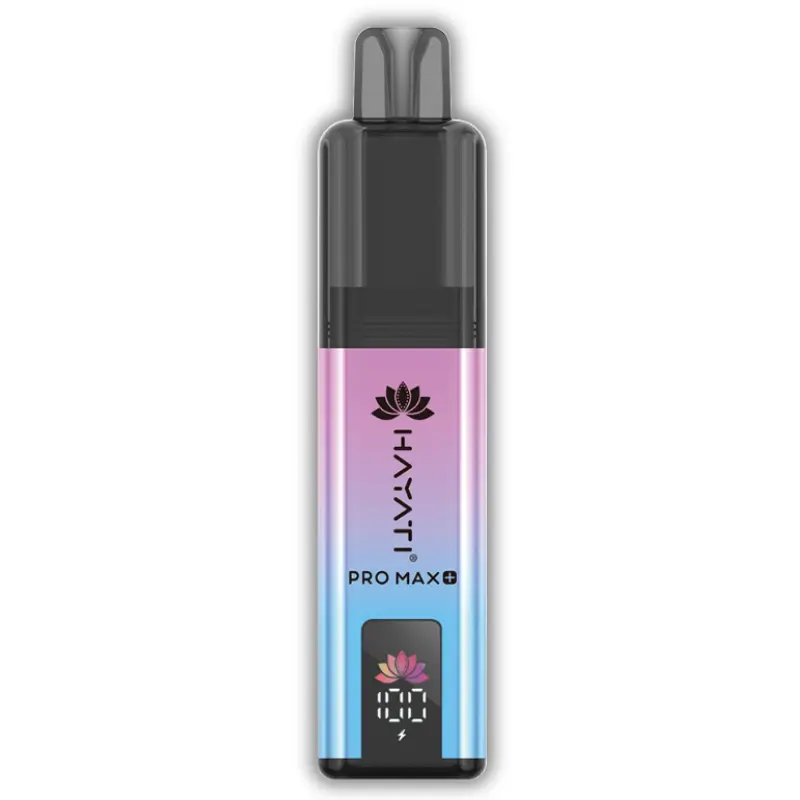
Hayati · Pro Max Plus
Strawberry Raspberry Blueberry Hayati Pro Max Plus Pod Kit
£7.99
✔ In stock — ready to ship
Genuine Hayati
Free over £20
Same-day dispatch
Secure checkout
Strawberry Raspberry Blueberry Hayati Pro Max Plus Pod Kit is listed at £7.99 and brings a rechargeable 850mAh body together with one prefilled pod carrying 12ml of 20mg nicotine salt. Hayati rate the pod at up to 6,000 puffs, a figure produced in laboratory conditions rather than one to plan a fortnight around. The liquid is three berries with no cooling anywhere in it. When the pod empties, the body remains and a refill of this same recipe exists to go on it.
That is the listing. The rest of this page is about a single problem the listing creates, and it is worth marking out at the top what the problem is not. It is not whether buying into a device is a sound idea, and it is not how to choose a flavour when you commit to a platform. Both of those arguments are finished elsewhere in this catalogue and there is nothing left in either. Hardware matters on this page for one reason: it fixes the size of the unit. You cannot buy this recipe as a smaller sealed pod from Hayati at any price, and the kit is the listing that makes that unavoidable.
Why the unit size matters comes down to what kind of liquid this is. The Strawberry Raspberry Blueberry refill pod at £5.49 was the first page written on this recipe and it holds the flavour analysis outright: the role each fruit plays, how a draw assembles, where the blend sits for sweetness, and a long passage on living with it. None of that is repeated here. Where this page needs it, it points. The one line that has to be carried across, because everything below rests on it, is the shape: strawberry is the broad sweet anchor, raspberry sits in the middle and carries the only acid in the blend, and blueberry closes it softly. Three components, all of them inside the same family.
That refill page then, by its own framing, wrote for somebody who has already settled both questions. It says so in its opening. A kit buyer at £7.99 has settled neither. You are paying for a body and 12ml of one recipe on the strength of an impression you have not formed yet, and for this liquid in particular that impression is a poorer guide than it would be across most of the shelf. Not because first impressions are unreliable in general, which is a truism and not worth a page, but for a reason peculiar to a blend whose identity is a count rather than an event. That is the argument. What follows builds it, tests it against the catalogue rather than asserting it, and ends with the two things a kit buyer genuinely controls.
Twelve millilitres is the unit, and this recipe has no smaller one
Start with the size of the thing being decided, because the numbers are unambiguous and they set the stakes for everything after.
The Hayati Pro Max Plus Prefilled Pod Kit shelf holds 88 listings. Every one of them is £7.99. Of the 88, 87 publish a 12ml pod and the odd one out is a range-level entry with no flavour attached to it. So on this platform there is no smaller kit, no larger kit, and no price difference to reason about. Whatever flavour you pick, the purchase is the same shape and the same sum.
Widen it to the whole catalogue and one smaller sealed format exists. All 50 Mini Ultra listings are 4ml. All 39 Rubik listings are 12ml, so the Rubik is a sideways move rather than a smaller one, and the Pro Ultra Plus runs larger still. That makes the Mini Ultra the only route in this range to a sealed pod you can finish quickly.
So the useful question for a kit buyer is whether their chosen recipe also exists at 4ml. I stripped the hardware words from all 492 titles, took each oblique listing as two separate names so that a recipe appearing as one half of a divided Mini Ultra pod still counted, and matched the 88 kit recipes against the Mini Ultra set. Sixteen of the 88 are there. Seventy-two are not.
Strawberry Raspberry Blueberry is one of the 72. The refill page has already established that this recipe is sold exactly three times, as a bottle, as a refill pod and as this kit, with nothing on the Mini Ultra, the Rubik or the Pro Ultra Plus. Read that fact through the count above and it stops being a note about range coverage and becomes the central constraint on this purchase. The smallest sealed unit of this liquid that Hayati make is 12ml. There is no four-millilitre version to meet it in. Sixteen kit buyers out of every eighty-eight have that option and you do not.
One more figure completes the frame. The gap between this kit and the refill pod is £2.50, and that £2.50 is the body. It is a one-off and it is not the interesting number. The interesting number is 12ml, because 12ml is the unit in which the flavour question gets asked, and it gets asked exactly once. You do not buy a small amount of this recipe, decide, and then scale up. You buy all of it at once and find out afterwards.
What a first pod reports well, and the one thing it only appears to report
A first pod is not useless. It reports several things accurately and there is no reason to be gloomy about it, so those come first, and then the exception, which is the whole point.
Three readings you can trust from day one
Whether there is cooling in it. There is not, and you will know that within two draws. This is the cleanest kind of observation available on a vape, because a coolant works on a channel that has nothing to do with flavour, so its presence or absence does not depend on how carefully you are paying attention. If you came to this listing wanting a cold exhale you will know inside a minute that you are in the wrong place, and the answer will not change on day four. For the record, and because the refill listing is the one place in this recipe's published set that never states it outright, there is no ice, menthol or frozen note in this blend at all.
Roughly where it sits for sweetness. Also reliable, with a caveat. Sweetness is a magnitude rather than a distinction, and magnitudes survive inattention. You will know on day one whether this is sweeter or less sweet than whatever you were running last week. What you will not get is a number, because no listing in this range publishes one, and any figure you see attached to sweetness on a retail page has been invented by whoever wrote it.
Whether it reads as fruit or as confectionery. This is a category judgement rather than a fine one, and category judgements are robust. A blue razz accord announces itself as sweets immediately; something like Blue Razz Fruit Twist or Mad Blue is not going to be mistaken for literal fruit by anybody, on any day. This blend sits on the fruit side of that line and you will place it correctly on your first session.
Those three cover most of what people actually want from a first pod, and if your question is any of them, buy it, run it, and disregard the rest of this page. The trouble starts with the fourth question, which is the one that decides whether you reorder.
The count is the identity, and the count is not fixed by the liquid
Ask somebody what a liquid is like and the answer usually contains a number without either of you noticing. It is a sharp lemonade. It is two fruits with a cold finish. It is a berry mix, I can pick out the strawberry and something tarter. That last form is the honest description almost everybody gives of this blend on a first pod, and the number in it is doing more work than the adjectives.
For most liquids the number is a property of the recipe and it holds steady. A blend built around one event, a sour spike or a cold exhale or a citrus cut, announces that event on every draw whether you are attending or not. The event is loud enough to be detected rather than looked for. Blue Sour Raspberry is the obvious example on the same shelf at the same price, built around an acid spike rather than balanced by one, and there is no state of attention in which you would fail to notice it.
This recipe has no event in it. Its three parts sit close together, and the nic salt bottle page for this same liquid did the work of establishing why: it set the three components out as overlapping registers, showed that four of the five recipes Hayati build on this family import a third element from outside the berry set, and showed that this one does not. I am citing that finding rather than rebuilding it, and it is the premise here rather than the conclusion. Three things in adjacent registers with nothing arriving from elsewhere.
The consequence for a first pod is specific. Hearing three rather than two is not a detection, it is a separation, and a separation is something you perform. How many you get depends on the draw you happened to take, whether you were eating half an hour earlier, how much of the day you have already spent on a different flavour, and how closely you were listening at all. Two people can draw on the same pod on the same afternoon and give honestly different counts, and neither of them is wrong about what they experienced.
So the single most decision-relevant line anyone produces about this liquid on day one is a joint reading of the liquid and the reader, with no way to tell how much of it came from each. That is not a complaint about the recipe. A blend that rewards attention is a legitimate thing to build and plenty of people want one. It is a statement about what a first pod can be evidence of.
What this page is deliberately not arguing
Two nearby arguments are already made in this catalogue and neither is being repeated. The first is about change over a pod's life: when the middle of a blend goes quiet, working out whether that is you or the hardware. The refill twin covers that for this exact recipe and gives four tests for it, and the Blue Razz Fruit Twist refill pods page sets out the general version, including why the moment you fit your second pod is the controlled comparison that settles it. Both are worth your time and neither belongs here.
The second is anything about what this blend is like by the third pod. That is the refill twin's subject by design, it is written for somebody who has got there, and this page stops at the edge of the first one on purpose. If you want to know how the recipe wears, read that page rather than this one.
What is left, and what nobody has written, is the forward-facing half. Not how to interpret a change you have already noticed, but what a single first reading of a three-part blend is worth at the moment you are deciding whether to spend £7.99 on one.
A reading needs something to read it against
Here is the part that is specific to this SKU rather than to this liquid, and it is the reason a kit page can say something a refill page could not.
A measurement on its own means very little. Told that a liquid is moderately sweet, you learn nothing until you know moderately sweet compared with what. Everybody who vapes regularly carries a comparison set in their head without calling it that: the four or five liquids they have run recently, which is what every new flavour gets placed against. The set is rough and private and it works perfectly well.
The refill buyer has one by definition. They own a Pro Max Plus, which means they have finished at least one pod on it, which means they have at least one liquid from this exact platform, at this exact strength, through this exact hardware, sitting in memory as a point of comparison. When they fit a new flavour, the only thing that changed is the liquid. Everything else is held constant, which is what makes their impression informative.
A kit buyer may have that and may not. Some people buying this kit have four other Hayati devices in a drawer, and for them the argument on this page is much weaker, which is worth saying plainly. Others are buying a body because they need a body, and the pod in the box is the only thing they will have to go on. For that reader the first pod is a single measurement with nothing alongside it. Sweet compared with nothing. Three berries or two compared with nothing. And the thing they will do with that reading, quite reasonably, is decide whether to buy this recipe again.
That is the real asymmetry between the two listings of this liquid, and it is sharper than the £2.50. The refill page's own closing argument is that a settled buyer carries a reference sample in memory that a kit buyer cannot have. Look at the same fact from the kit side and it stops being a consolation for the refill buyer and becomes a warning about this purchase. The listing that is sold to people without a comparison set is the listing whose product most needs one.
There is a second-order version of this that is worth a sentence, because it catches people out. Having a comparison set is not the same as having a relevant one. A set built entirely on cooled liquids will not help you place an uncooled three-berry blend, because a coolant trims the sweet tail and shifts everything you are comparing against. A set built on single-fruit pods will not tell you much about a three-part one. The useful comparison is same platform, same strength, adjacent profile, and the closer it is the more it tells you.
How to read your own first pod without fooling yourself
None of the above is any use as a warning, so here is the practical form. It takes about two minutes on day one and two minutes on day four, and it costs nothing.
Ask a question that has the same shape twice
The mistake is to write down, or more often to simply form, a description. Descriptions do not compare. A note reading rich and jammy on Monday and pleasant but a bit flat on Friday gives you a difference in vocabulary and no way to know whether anything moved. Ask instead three questions with fixed answers, so that Monday and Friday produce two things of the same kind.
How many separate things can you name, without trying? Take one unhurried draw and answer immediately. Not how many are advertised, which is three, and not how many you can find if you concentrate, which is usually three. How many arrive unprompted. One, two or three. That number is the reading.
Where in the draw is the sharpest point? Beginning, middle or end. This blend puts its only acid in the middle, which the refill page works through in detail, so the expected answer is middle. What matters is not whether you match the published account but whether your own answer stays the same across the two readings.
What is still in your mouth five seconds after the exhale? Something soft and low, something sharp, or nothing much. Give it a word and keep using that word.
Three ordinal answers, recorded on the first evening and again on the fourth. Both readings are made on the same pod, through the same body, at the same strength, which removes almost everything that would otherwise muddy a comparison.
What the pair of readings is for, and what it is not for
Be strict about this, because the temptation is to over-read it. Two readings four days apart do not tell you whether the pod is tiring, and they do not tell you whether you have adapted. Those questions need the machinery the refill twin and the Blue Razz Fruit Twist pods page provide, and four days is too short a window for either.
What the pair does is establish whether your own reading of this liquid is stable enough to be worth acting on. If both evenings gave you three, in the middle, with a soft finish, you have something solid: a first impression that has survived being taken twice under different conditions, and a reorder based on it is a reasonable bet. If Monday gave three and Friday gave two, the useful conclusion is not that the pod has changed in four days, which is implausible at that volume. It is that your reading of this recipe moves with circumstances, so no single impression of it should be trusted, including whichever one you liked best. That is genuinely worth knowing before you spend again, and it is not knowable from one reading however carefully you take it.
There is also a third outcome and it is the most common. You forget to do it on Friday. If that happens, take the second reading whenever you remember, note that the gap was longer, and treat a difference with more suspicion.
When a first impression has had enough time
The honest answer is not a number of days, because consumption varies too much for days to mean anything. It is a condition, and it has three parts.
The first is that you have drawn on it in at least two genuinely different circumstances. One quiet evening and one busy afternoon will do. A pod sampled only in one mode has been sampled once, however many draws that came to.
The second is that you have taken the three questions twice and got the same answers, or noticed that you did not.
The third is that you have run something else in between, even briefly. This is the cheapest of the three and the one people skip. A single evening on a different profile gives your first reading a neighbour, and a reading with a neighbour is worth several times a reading without one.
Meet those three and your impression is worth acting on, whatever fraction of the pod is left. Fall short of them and the pod running out is not the same thing as the question being answered, which is the mistake this whole section exists to head off.
The cheaper preview, and why it is not a clean one
The obvious response to all of the above is to taste the recipe more cheaply before committing to the kit. That deserves a real answer rather than a gesture, and answering it properly required correcting the version of the claim I started with.
Narrowing the claim first
I was handed this section as the observation that the £2.49 bottle is the only cheaper route to this recipe. Counted, that is not right, and the correction matters. Two listings of this recipe cost less than £7.99: the 10ml nic salt bottle at £2.49 and the refill pod at £5.49. The refill pod is cheaper and it is not a route, because it needs a Pro Max Plus body, which is the thing this kit exists to supply. So the narrowed claim, and the one I will defend, is that the bottle is the only cheaper route to this recipe for somebody who does not already own the device.
The narrowing does not stop there, and the second half is more interesting than the first. The bottle is liquid and nothing else, so it needs refillable hardware. Hayati's own refillable line is the Quokka, and the least expensive body in it is listed at £8.99, with the other two at £14.99 and £20.99. Bottle plus the cheapest Hayati refillable body comes to £11.48 against £7.99 for this kit. For a reader who owns no refillable hardware at all, there is no cheaper preview of this recipe anywhere in the catalogue. The cheapest way to taste it is to buy the kit.
The bottle is only a cheaper preview for somebody who already owns a refillable device, and that person is not obviously the person reading a kit listing. Worth knowing before you go looking, and worth stating on the page rather than leaving as an implication.
Half the shelf has this option and half does not
One count puts the preview question in proportion. Of the 88 kits on this shelf, 44 have their recipe sold as a bottle somewhere in the catalogue and 44 do not. An even split, which I did not expect and double-checked. Strawberry Raspberry Blueberry is in the half that does, so the question is live here in a way it is not for the other 44.
Three variables move at once
Suppose you do own a refillable device. The bottle is then genuinely cheap and the question becomes what it can forecast about the pod. The answer is limited, because three things change between the two and they change together.
The strength is different. The bottle is 10mg per millilitre. The pod is 20mg. The nic salt page for this recipe counted the bottled shelf and found all 65 listings recorded at the same 10mg, so there is nothing to select and no way to match the pod from the bottle side. Nicotine carries a small amount of throat presence of its own, and doubling it changes the texture of a draw whether or not it changes the flavour.
The carrier ratio is published on one and not the other. The bottle states an even 50:50 split of vegetable glycerine and propylene glycol. For the pods, I checked every Pro Max Plus listing in the catalogue, all 179 of them, kits and refills together. Not one publishes a ratio of any kind. So this is not a case of two known figures that differ. It is one known figure and one blank, and a blank is worse for forecasting than a difference would be, because you cannot even estimate the direction of the error.
The hardware is yours rather than Hayati's. With a bottle you choose the coil, the airflow and the power. With the pod you get what was sealed in at the factory, and no resistance or wattage figure is published for it. The nic salt page makes the argument that on a blend with no outsider component your hardware becomes the outsider, which is its finding and I am pointing at it rather than restating it. The consequence for a preview follows directly.
What the bottle can and cannot forecast
Sorting it honestly: the bottle can tell you which fruits are involved, what roles they play, that there is no cooling, and roughly where the recipe sits for sweetness against other bottles you have run. Those are properties of the recipe and they travel. If you try the bottle and dislike the idea of three close berries, you have saved yourself £7.99 and the preview did its job.
What it cannot forecast is anything about the count, which is the thing this page says decides the purchase. On hardware you have tuned to your own taste, the three components will be about as separable as your equipment can make them. That is the favourable end of the range rather than the middle of it. The sealed pod is a fixed setup nobody chose for this liquid in particular, and if the bottle gave you a clean three, the pod may well give you two.
The error therefore runs in a predictable direction, and that is the useful part. A bottle preview of this recipe is systematically flattering. Not for liquids in general, and not for a blend carrying a coolant or a citrus, where the outsider component survives whatever hardware it is put through. For this one, where separation is the entire proposition and separation is the thing equipment most affects, a favourable preview is weak evidence and an unfavourable one is strong evidence. Take a negative result from the bottle seriously and treat a positive one as provisional.
The contrast with buying small, which is a different argument
This has to be said out loud, because a nearby page reaches the opposite conclusion and both are right in their own cases. The Strawberry Raspberry Ice Mini Ultra kit at £3.99 argues for buying the smallest sealed version of a recipe and using it as a calibration instrument, and its reasoning holds because only one variable moves. A 4ml sealed pod and a 12ml sealed pod are the same format, the same strength and the same kind of fixed hardware. Volume is the only difference, so a reading taken on one transfers to the other.
The bottle is the opposite situation. Strength, ratio and hardware all move together, and a reading taken through three simultaneous changes does not transfer. Buying small is a clean instrument. Buying a bottle is not, and the two should not be filed under the same heading just because both cost less than the kit. For this recipe the question does not arise anyway, since it is one of the 72 kit recipes with no 4ml version, which is the constraint the top of this page set out.
The kit itself
What arrives is the body and one pod, and the pod is already in the blend named in the title. The body is rechargeable and rated at 850mAh. The pod is prefilled and sealed with 12ml at 20mg, and Hayati put its laboratory rating at up to 6,000 puffs. There is no filling step, no priming wait and nothing to assemble. Nothing else is published about the internals of the pod and nothing should be inferred from a sibling page, this site included.
The specification that matters here is the 12ml, for the reason the whole page has been about rather than for the usual one. Twelve millilitres is not being offered as a convenience. It is the size of the flavour decision, and on a recipe whose identity is a separation you perform rather than an event you detect, it is a long run to commit to on a reading you have not taken yet. On a blend with an obvious event in it the same volume would be unremarkable.
Once the pod is empty the body accepts compatible Pro Max Plus replacement pods, including the refill in this blend. Match the range name printed on your device to the name in this title before ordering a second pod, since a compatibility decision from a retail page, ours included, is no substitute for reading your own hardware. Everything else about this platform is covered on the Hayati Prefilled Pod Kits shelf, which runs to 171 listings, and there is no point in a shorter version of it here.
The figures, and what £7.99 actually buys
Everything below is published. Rows that are missing are missing because Hayati do not publish them, and that includes coil resistance, wattage, wick material and any carrier ratio for this pod.
| Listing | Complete kit: device plus one prefilled pod |
| Recipe | Strawberry Raspberry Blueberry, uncooled |
| Pod volume | 12ml, sealed at the factory |
| Strength | 20mg/ml nicotine salt |
| Body | 850mAh, rechargeable |
| Manufacturer rating | Up to 6,000 puffs, an approximate laboratory figure |
| Price | £7.99 |
| Same recipe as a refill | Yes, £5.49, no device |
| Same recipe as a bottle | Yes, 10ml at 10mg, £2.49 |
| Smaller sealed version | None. This recipe is not on the 4ml platform |
| Carrier ratio for this pod | Not published, as for all 179 Pro Max Plus listings |
| Maker | Hayati |
Two rows repay a sentence each, and the hook is the purchase rather than the liquid. The 20mg figure is the ceiling permitted for a nicotine-containing e-liquid sold in the UK, so it is not a choice made for this flavour. Every prefilled pod on this platform carries it, which is why the strength does not appear in the comparison between one kit and another. Nicotine is an addictive substance and the number is here as a plain specification.
The £7.99 is more interesting if you split it the way the page has been arguing. Against the £5.49 refill, £2.50 of it is the body and £5.49 is liquid. Read it as a flavour decision instead and the split is different: you are paying £7.99 to find out whether a recipe with no smaller version suits you, and if the answer is no, the £2.50 was not the wasted part. The body keeps its value because 87 other pods fit it. The 12ml is the part at risk, and it is at risk in one lump because the catalogue offers no way to buy less of it.
The manufacturer's puff rating deserves the standard caution and one specific to this blend. It is a laboratory estimate under controlled draw conditions, not a durability promise, and draw length moves it more than anything else. This liquid rewards a long unhurried draw, because a short one gives you the strawberry and very little else, so running it the way it wants will not reach the rated figure. On this recipe that is a trade worth making, since a hurried draw is also the one most likely to give you a count of one.
Running order: what to put either side of a first pod
The sequence is the part a kit buyer genuinely controls, and it is worth more than any amount of care taken during the pod itself. What you run immediately before your first draw and immediately after your first week both change what the first pod is worth as evidence.
Before: clear the ground, or at least know what is on it
Coming to an uncooled three-berry blend straight off a cooled liquid is the single most common way to get a flat first reading, and it is entirely avoidable. A coolant raises the level at which you notice cold and it also trims the sweet tail of whatever it is in, so the first uncooled thing afterwards reads muted and slightly sweeter than it is. If you have been on Blue Frozen or Strawberry Raspberry Ice, give it a day before you take your first reading, and do not take the reading on the first morning after.
Coming off something built around a sour edge has the same effect by a different route. After a stretch on Blue Razz Lemonade or anything acid-forward, this blend's mid-draw raspberry will read as barely present, because you have spent a week recalibrating on something much sharper. That one resolves faster, but it is still a reason not to read the pod on day one of the switch.
The friendliest place to arrive from is another uncooled fruit blend of similar sweetness. Mixed Berries is the closest thing in that role, since it occupies the same part of the shelf without asking you to separate anything. Strawberry Watermelon and Strawberry GB both keep the strawberry front you are about to meet, which makes the other two components easier to notice by contrast.
After: give the first reading a neighbour
The second half of the sequence matters more, and it is cheap. One evening on a structurally different liquid, at any point in the first fortnight, converts a lone impression into a comparison. Pick something that differs in structure rather than in fruit, because two berry blends of the same shape teach you very little about each other.
Three useful directions. For a blend with the sharpness moved to the end rather than the middle, Blueberry Raspberry Cherry keeps the raspberry where you know it and swaps the soft close for a heavier one. For the same family with one component removed, Blueberry Raspberry is the two-berry base this recipe builds on, and it is the most direct test of whether three is one too many for you. For something with an outsider in it, Blue Razz Blackcurrant or Black Mamba will show you what a blend feels like when one component is loud enough that no separation is required.
If the cheapest possible neighbour is the point, the 4ml platform is where to find it. Blueberry Raspberry Mini Ultra, Blue Razz Cherry Mini Ultra and Blue Razz Pineapple / Strawberry Ice Mini Ultra are all £3.99 and all finish quickly, which is the whole reason they are useful in this role. The last of those carries two recipes in one pod. Read its title rather than its web address if you go looking for it, because the two do not agree, and the same is true of the Blueberry Straw' Menthol / Blueberry Raspberry Menthol Mini Ultra, whose address drops a word the title carries.
Further out, if this recipe does not hold up
Suppose the two readings disagree and you conclude this blend is not stable enough for you. The move is to a structure with something that cannot be missed in it, rather than to a different set of berries.
Within the platform, Blue Razz Pineapple and Blue Razz GB both put a loud confectionery note in front, and Blue Fusion is named for a mood rather than an ingredient, which its own page deals with directly. Off the platform, Blueberry Raspberry Rubik holds the same 12ml at a lower kit price, Blue Razz Cherry Rubik sits beside it, and the larger formats such as Blueberry Raspberry Pro Ultra Plus, Blueberry Raspberry Lemon Pro Ultra Plus and Blue Razz Pineapple / Strawberry Ice Pro Ultra Plus raise the commitment considerably, which is the wrong direction for anybody still deciding.
For browsing rather than choosing, Blueberry Raspberry Vapes collects the 46 listings Hayati file in this recipe family, Berry Vapes is the wider view at 225, Raspberry Vapes narrows to 119 and Strawberry Vapes to 82. The full Hayati catalogue runs to 492.
Conditions that will spoil a first reading
General advice about pods is available on every page on this site and is not repeated. What follows is narrowed to the circumstances under which a first reading of this particular blend comes out wrong, which is a different list from the usual one.
A cold device. A kit that has come through a cold delivery van and been opened straight away is not at room temperature, and a cold pod gives thinner vapour and a shorter finish. On this blend the finish is the blueberry, and the blueberry is the component you would be using to answer the third of the three questions. Let it sit indoors for an hour before you take any reading you intend to rely on.
The first few draws of a brand-new pod. There is nothing to prime, but a sealed pod that has been in transit reads sweeter and flatter for the first handful of pulls than it will an hour later. Answering the count question on draw two will reliably give you one, and you will have filed a verdict on a pod that had not settled.
Drawing quickly, or in quick succession. A short pull on this recipe gives strawberry and almost nothing after it. Several pulls close together flatten the whole thing into a general sweet red. Neither is a fault in the pod and both produce a low count, so take the reading on a single unhurried draw with a few minutes either side of it.
Reading it around food, coffee or anything cold. Obvious, routinely ignored, and worse here than on most liquids because the margins between the three components are small to begin with. Half an hour clear is enough.
A pod that has been stored badly. A spare kept somewhere warm or bright ages from its most volatile material downwards, which on this recipe means the raspberry goes first, which means the count falls before you have drawn on it once. A cupboard is enough. Keep spares somewhere out of reach of children and pets.
When the pod is genuinely finished. The last of the liquid runs warm and thin and the soft close shortens, which is the signal to change it rather than a verdict on the recipe. A spent pod still holds its coil and whatever the wick retains, so it belongs in a shop take-back bin or a council collection point for small electricals rather than in the kitchen bin.
Questions a kit buyer asks
Is there any ice or menthol in this blend?
None at all. Two of the three published listings of this recipe state the absence directly and nothing in the third contradicts them. If you want a cooled version of a similar red-berry idea, Strawberry Raspberry Ice is the nearest thing at the same price on the same shelf.
Can I try this recipe in a smaller pod first?
No. It is sold three times in total and none of them is on the 4ml platform. Sixteen of the 88 kit recipes on this shelf do have a 4ml version and this is not one of them, so 12ml is the smallest sealed unit of this liquid that exists.
Is the £2.49 bottle a cheaper way to try it?
Only if you already own a refillable device. The bottle is liquid alone, and the cheapest refillable body Hayati list is £8.99, so bottle plus body comes to more than this kit. If you do own one, the bottle will tell you which fruits are involved and roughly how sweet it is, but it runs at 10mg rather than 20mg, publishes a 50:50 base where the pod publishes nothing, and goes on hardware you chose.
Why would a bottle preview mislead me?
Because it is likely to flatter the recipe. On equipment you have set up yourself the three components separate about as well as they can, whereas the sealed pod is a fixed arrangement. A disappointing bottle is strong evidence against the pod. A good bottle is weaker evidence for it.
What is the difference between this and the £5.49 refill?
The device and £2.50. Same recipe, same 12ml, same 20mg. The refill assumes you already own a Pro Max Plus body, which is exactly what this listing provides, so the two are not really alternatives for the same person.
I can only taste two berries. Is something wrong?
Probably not, and on a first pod it is usually the circumstances rather than the pod. Drawing quickly, drawing several times in a row, a pod straight out of a cold parcel or a reading taken just after coffee will all produce a count of two. Take one unhurried draw on a settled pod with nothing recent in your mouth and see what you get.
How long before I know whether I like it?
Not a fixed number of days. Three conditions: you have drawn on it in at least two different kinds of circumstance, you have asked yourself the same three questions twice and compared the answers, and you have run something else in between even briefly. Until all three are met, the pod running low is not the same as the question being settled.
Does the flavour change as the pod gets older?
It does, and that subject belongs to the refill pod page, which covers it at length for this exact recipe along with four tests for telling a tiring pod apart from a palate that has adapted. This page deliberately stops at the first pod, so read that one if you have got past it.
What should I run alongside it?
Something structurally different rather than another berry mix. A blend with its sharpness at the end, a two-component blend, or anything with a loud single note will all give your reading of this one a neighbour. One evening on it is enough to be useful.
Is 20mg the only strength?
In this format, yes. Every prefilled pod on this platform is 20mg, which is the maximum permitted for a nicotine-containing e-liquid sold in the UK. The 10ml bottle of this recipe is 10mg, and that is the only lower strength it exists in.
Will the body take other flavours afterwards?
It takes compatible Pro Max Plus replacement pods, and 87 other kit listings on this shelf share the same 12ml pod format, with a larger set of refills beyond them. That is the part of the £7.99 that keeps its value if this particular recipe turns out not to suit you.
Where do I see everything on this platform?
The Hayati Pro Max Plus Prefilled Pod Kit shelf holds all 88 kits at £7.99, and the wider Hayati Pod Kits shelf runs to 174 across every device family. Recent additions sit on New Products, which currently mirrors the full catalogue.
The position, plainly
Strawberry Raspberry Blueberry as a kit is £7.99 for an 850mAh body and one sealed 12ml pod at 20mg, uncooled, rated by the manufacturer at up to 6,000 puffs as a laboratory estimate. On the liquid itself, the refill page has said everything worth saying and this page has not tried to say it twice.
What is specific to this listing is the shape of the decision. The recipe has no event in it, so its identity is a count you perform rather than a signal you receive, and a count moves with the circumstances in which it is taken. The kit is sold to somebody who has not settled the flavour and may not have anything to compare it against, and it fixes the smallest possible commitment at 12ml because this is one of the 72 kit recipes with no 4ml version. Two of those three facts are the catalogue's doing rather than the liquid's.
The practical answer is small and it works. Ask three fixed questions on the first evening and the same three a few days later, run one evening of something structurally different in between, and treat the pair of readings as the impression rather than either one alone. If they agree, act on them. If they do not, you have learnt that this recipe is one you should not judge from a single sitting, which is worth the two minutes it cost. And if you own a refillable device already, the £2.49 bottle is a real preview for £5.50 less, as long as you read a good result from it as provisional and a bad one as decisive.
Buy the kit if you want an uncooled berry blend with some work in it and you are prepared to take your reading properly. Look elsewhere if you want cooling, if you want one loud note rather than three close ones, or if you would rather meet a recipe in a small pod first, because this one does not offer that.
Strictly for adults aged 18 and over. Nicotine is an addictive substance.
You might also like


