
Home / Hayati Pro Max Plus Prefilled Pod Kit / Guava Kiwi Passion Fruit Hayati Pro Max Plus 6000 Pod Kit
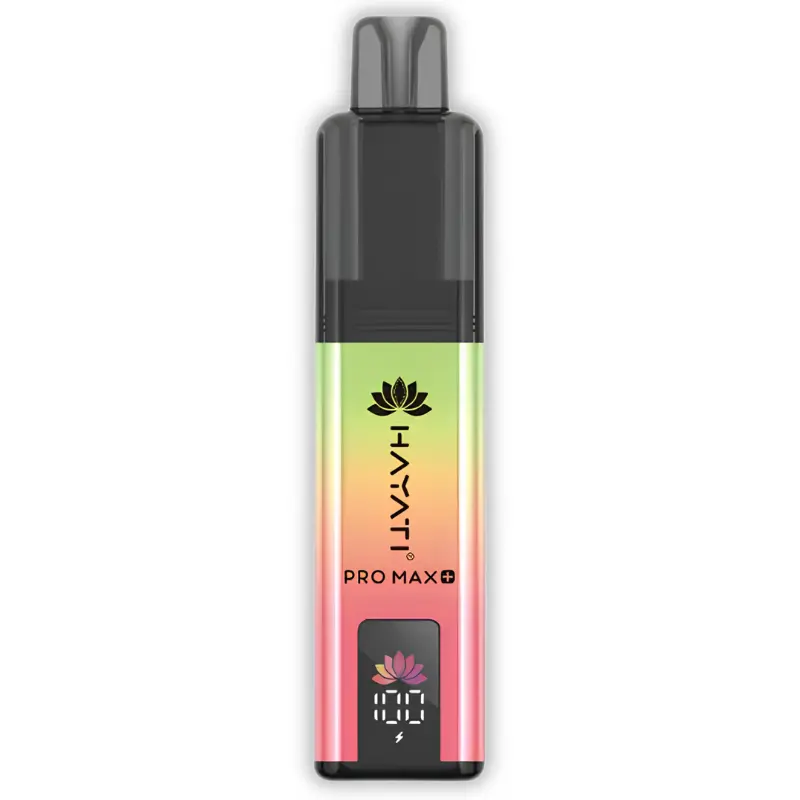
Hayati · Pro Max Plus
Guava Kiwi Passion Fruit Hayati Pro Max Plus 6000 Pod Kit
£7.99
✔ In stock — ready to ship
Genuine Hayati
Free over £20
Same-day dispatch
Secure checkout
Three fruits on the label, and not one of them is a quiet fruit. That is the first thing worth noticing about this listing, and most of what follows on this page comes out of it. Guava Kiwi Passion Fruit is sold here as a complete kit: a rechargeable Pro Max Plus body with an 850mAh cell, plus one pod that leaves the factory already holding 12ml of liquid at a nicotine strength of 20mg, in salt form. One price, £7.99, covers both parts. Hayati attach a figure of up to 6,000 puffs to a full pod, which is a number produced on test equipment drawing at fixed intervals in a laboratory, so treat it as a way of ranking listings against each other rather than as a forecast of how long your own pod will run. The catalogue reference is HPM-6K-KIT-GUAVA-KIWI-PASSION-FRUIT.
Most multi-fruit liquids are built on a hierarchy. One fruit supplies the body, a second supplies contrast, and a third fills the gap between them and is barely audible on its own. That structure is easy to write about, because the interesting question is which component ends up in front. This blend does not have that structure available to it. Guava is perfumed and musky and pushes hard at the top of a profile. Passion fruit is one of the most chemically assertive fruits in commercial flavouring, capable of taking over a recipe at a fraction of a percent. Kiwi is the mildest of the three by aroma and still brings more genuine acid to the mix than most fruits manage. There is no passenger here and no obvious anchor.
So the question this pod raises is not which fruit wins. It is whether three loud voices produce something layered or something indistinct, and whether the passion fruit has been dosed with enough restraint to stay on the right side of a line it very easily crosses. That is the subject of the long section below, and the rest of the page covers the practical matter of the hardware, what sits next to this on the shelf, and how to get a fair reading of the liquid before you decide what you think of it.
Three assertive fruits, and whether that adds up to complexity
What this trio is not doing
A sibling listing on the same shelf arranges three fruits in the conventional way, and the argument about how three components compete for space and which one survives longest is worked out in full over there. Mango Peach Pineapple has a heavy fruit, a sharp fruit and a soft fruit joining them, which is the standard shape. Anyone wanting that general argument should read that page rather than this one.
It would be the wrong framework here anyway, because the fruits are different in kind. Mango is dense and low in acid, which makes it a base. Nothing in Guava Kiwi Passion Fruit performs that job. Guava's sweetness is perfumed and top-heavy rather than a weight you can stack things on, passion fruit is thin in body and enormous in aroma, and kiwi is thin in body and sharp. The result is a recipe with a great deal happening in the upper register and very little underneath it.
Passion fruit is the fruit that decides the outcome
The aroma of passion fruit rests heavily on a small group of sulphur-bearing compounds, the ones flavour chemists call thiols. They are extraordinary substances in the literal sense: detectable at concentrations several orders of magnitude below most fruit esters, and dramatically different in character depending on how much of them is present. In small quantities they read as ripe tropical fruit, with a lift that is often described as fresh, juicy and faintly grapefruit-like. In larger quantities the same molecules stop reading as fruit at all and turn savoury, with a sweaty, animal edge that perfumers describe in terms nobody wants attached to a vape listing. Blackcurrant bud and certain white wines get their distinctive quality from exactly the same chemistry, which is why a blackcurrant that has been pushed too far smells vaguely of a garden shed.
That dose sensitivity is the axis this entire pod turns on. A flavourist working with passion fruit is not deciding how prominent to make it in the way they might decide how prominent to make a strawberry. They are working with a component whose character inverts across a narrow band. Slightly under and it disappears behind the other fruits, taking the freshness with it. Slightly over and it dominates in a direction that reads as a fault rather than as a strong flavour.
In vapour this plays out with its own timing, and it is worth knowing where to look. Thiol character is mostly a retro-nasal event, meaning it registers through the back of the nose on the exhale rather than on the tongue during the draw. So a passion fruit that has been over-dosed does not announce itself on the inhale. It arrives late, it sits in the nose for several seconds after the vapour has gone, and it accumulates across a sitting rather than fading. If you are testing this pod, the honest place to check is not the draw. It is the ten or fifteen seconds afterwards, and it is the thirtieth draw rather than the third.
A correctly restrained dose does something quite specific and quite valuable. It does not sit up front as a recognisable fruit. It makes everything around it read as fresher and more three-dimensional than the same components would manage on their own, in the way a small amount of acid in a sauce makes the whole thing taste more of itself. If you take a draw and find you can identify guava and kiwi clearly but cannot separately name the passion fruit, that is not a fault. On this construction it is closer to the intended result.
The nearest reference point Hayati sell is Blackcurrant Mango, because blackcurrant is built on the same family of sulphur compounds and presents the same dosing problem. Anyone who has run a pod of that and found the blackcurrant fresh and bright rather than sharp and slightly funky has a partial read on how this manufacturer's flavour house handles the category. It is a partial read and not a guarantee, since the two recipes come with no published relationship whatsoever, but it is more information than guessing.
Guava is not an independent second opinion
Here is the part that makes this trio unusual, and it is a point that no amount of reading the label will give you. Guava and passion fruit are not chemically independent of one another. Guava carries some of the same sulphur-bearing material that passion fruit does, alongside its own esters and a distinctly musky, faintly floral character that has no equivalent among the other fruits on this shelf. The two fruits are therefore partly voting the same way.
The consequence is worth stating plainly, because it is counter-intuitive. In a recipe where two components share a chemical class, the loading that matters is the total, not each one individually. A dose of passion fruit that would be judged restrained next to a mango can be too much next to a guava, because the guava has already contributed to the same pool. The balancing job on this blend is therefore harder than the ingredient list makes it look, and the failure mode is not "too much passion fruit" as such. It is a general sulphurous heaviness that you would struggle to attribute to either fruit if you tried.
Guava has a second complication, which is that it is among the hardest fruits to render convincingly in vapour. The fresh fruit has a musk to it and a slight astringency in the skin, and neither survives a coil especially well. What gets built instead is an approximation: a pink, perfumed, faintly pear-adjacent sweetness with a floral top, recognisable as guava to anyone who has met the flavouring and only loosely related to the fruit you would cut open. That is simply what the category does. Practically it means expecting the fresh fruit here will lead to disappointment for reasons that have nothing to do with this pod.
If you want to know what this manufacturer's guava does with only one other fruit alongside it, Strawberry Guava is the listing that isolates it. Strawberry is a compliant partner that does not compete for the top of the profile, so whatever the guava is doing there is close to what it does on its own.
Kiwi turns out to be the referee
Read the three names and kiwi looks like the make-weight. It has the mildest aroma of the three, it has no exotic mystique attached to it, and it is the fruit most people would expect to disappear. That reading is wrong, and the reason it is wrong explains why this blend can work at all.
Kiwi's contribution is not perfume. It is structure, and it comes in two forms. The first is acid, and kiwi carries a lot of it: a combination of citric, quinic and malic acids that gives the fruit a sourness which persists even when it is soft and sweet. The second is a green, leafy, faintly cut-grass note from the same family of compounds that gives you the smell of a bruised leaf or a green banana skin. Neither of those competes with guava or passion fruit for the aromatic top of the profile, because neither is in the same territory.
That separation is the useful bit. Flavours blur when they occupy adjacent ground, and green and sour sit a long way from pink, musky and sulphurous, so kiwi does not muddle with the other two: it partitions them. The green note gives your palate something to hold that is unambiguously neither of the others, and the acid stops the whole thing settling into an even sweet film. Take the kiwi out and you would have two fruits sharing chemistry and a register, which is a far greater risk of mud than three fruits where one pulls in a different direction entirely.
Hayati treat kiwi as a category in its own right and shelve it under Kiwi Vapes, which is a short enough list to work through in a sitting. The most instructive neighbour on it is Kiwi Cooler, where the fruit is the headline rather than the structural element and a declared coolant sits underneath it. Running the two gives you a controlled comparison: same fruit, one version where it carries the recipe and one where it holds two louder fruits apart.
Complexity and mud are not the same thing, and there is a test
Both words get used loosely, so it is worth defining them before offering a verdict. A blend is complex when its components stay individually retrievable while also producing something none of them would produce alone. A blend is muddy when the components have merged into a general impression that could be any number of recipes. The difference is not about how many ingredients went in. It is about whether you can still find them.
The muddy end is not always a fault, incidentally. On some listings it is a design choice. Tropical Sour Juice names no individual fruit, which is a deliberate way of promising one broad warm-climate impression rather than parts you could check off. Some people prefer that. It is not this pod, which names three fruits and is accountable to all three.
The test is simple enough to run on your first evening with it. Take a draw after at least ten minutes away from the device, so your palate has reset. Note how many distinct things you can name on the inhale, note it again on the exhale, then wait fifteen seconds and note what is still there. A working three-part blend gives a different answer at each point: something green and sharp early, something perfumed in the middle, a fresh tail at the end. A muddy one gives the same answer all three times, and that answer is usually just "sweet tropical". This needs no trained palate, only attention at three separate moments rather than an impression formed from one draw.
Where this one actually lands
Taken across a pod rather than a draw, the blend reads as three parts held in reasonable tension, with the green note the easiest to identify, the perfumed sweetness the most persistent, and the passion fruit working mostly as a brightener behind both. The balance is not perfectly even and it was probably not intended to be. Guava has the loudest single presence, which matches the order the fruits appear in the name.
The passion fruit dose stays on the fruit side of the line in normal use. Where it is most likely to drift is late in a long unbroken sitting, when sulphurous material has had time to accumulate in the nose and the acid that was cutting it has stopped registering. Whether you meet that depends on how you use the device, which no product page can know. It is flagged because it is the specific thing to watch on this blend.
Reading the draw from front to back
The inhale
Green and sharp first. The opening third of the draw is dominated by the kiwi, which makes sense given that acid registers on the tongue immediately while aromatic material has to travel. There is a leafy, slightly unripe edge to it that keeps the entry from feeling sugary, and a tartness that is real rather than decorative. This is not a sour-coded liquid in the way a product with the word in its title would be, but the acidity is above average for the shelf and it is the first thing you meet.
The perfumed material arrives a beat later and overlaps the tail of the inhale. That is the guava, and its texture is worth describing precisely because it is unusual. It is not the round, mouth-filling sweetness of a stone fruit. It is narrower, higher and more scented, closer to the impression of a floral sweet than of a piece of fruit, and it climbs rather than spreads.
The exhale and what stays behind
The exhale is where the blend shows whether it is doing its job. The guava is still there and thicker than it was on the inhale, and at the same time a brightness comes up underneath it that is not attributable to any one of the three fruits. That brightness is the passion fruit doing the work described above. On a fresh pod it makes the guava read as juicy rather than as scented, which is a meaningful improvement.
The finish is short by the standards of this shelf, which follows from the recipe having so little weight in it. No resinous base and no cream means nothing holds the profile in place once the vapour has gone. What remains after ten seconds is a faint green sourness and a trace of perfume. Some people value that because it makes a liquid easier to stay with all day; others find it insubstantial. The recipe is clearly built for the first group.
Sweetness, and where it sits on this shelf
Around the middle of the range, possibly slightly below it, and that placement is more interesting than it sounds. The blend reads sweeter than its actual sugar loading because perfumed and floral material tricks the palate into reporting sweetness that is not there. Strip the aromatics out mentally and what is left is a fairly tart liquid. This is the opposite of what happens with a dense fruit base, where a low-aroma, high-body profile can read as flatter and heavier than its sweetness deserves.
For calibration against listings you may already know: Hubba Bubba sits at the confectionery end and lays down a flat, even sweetness that stays uniform from the first draw to the last. Blue Razz Fruit Twist is a candied fruit reading rather than a fresh one. This pod is some distance from both. If you want a fresh-fruit sweetness with acid visible through it, that is what is on offer here. If you want the coating sensation of a sweet-shop profile, it is not.
What it is not
- Not cooled. Hayati mark cooling in the title when it is present, using Ice, Frozen or Cooler as the signal. This title carries three fruit names and no temperature word, and there is nothing cold anywhere in the draw. No menthol, no koolada, no chill on the exhale.
- Not a sour product. There is real acidity, mostly from the kiwi, but no deliberate sour spike of the sort a listing flags in its name. The tartness is a property of the fruit rather than an effect layered over it.
- Not a heavy tropical blend. Anyone arriving from a mango-led liquid should expect considerably less body. This is a light, high, aromatic profile, and the difference is large enough to be jarring if you were not expecting it.
- Not three flavours you select between. The fruits were combined into one liquid before the pod was filled. Every millilitre in it is the same recipe and there is nothing on the device to switch.
- Not a guava soliloquy. Guava is the most prominent of the three and it is still in a blend. Two other fruits are actively shaping what you taste.
The kit, in brief
Very little needs saying about the hardware, because around ninety listings share this device. Everything genuinely distinct about the Pro Max Plus body is already written up somewhere across the Hayati Pro Max Plus Prefilled Pod Kit shelf, and a ninth original take on the same battery would be invention rather than information.
The box holds the rechargeable body and one pod that is already filled with this blend. That is the whole contents as published. There is nothing to assemble, no liquid to pour and no coil to fit, because the coil is built into the pod and arrives wet. Hayati name no charging connector anywhere in this product's data, so none is named here, and any page that quotes you one for this device got it from a writer rather than from the manufacturer.
The one specification that genuinely matters for this particular liquid is the least glamorous one: the pod is prefilled, sealed at a fixed recipe, and holds 12ml of it. Everything argued above about dosage was settled in a factory. On a blend whose success rests on how much passion fruit sits against how much guava, that is not a trivial detail. A person mixing their own liquid could move that ratio by a percent and change the outcome. You cannot, and neither can a retailer. What you can do is judge the ratio you have been given and decide whether it suits you, which is why the testing method earlier on this page is more useful here than on a simpler product.
When the liquid is gone, the pod is replaced rather than refilled, and the body stays with you. The matching refill is Guava Kiwi Passion Fruit Hayati Pro Max Plus Pods at £5.49, which is the correct repeat purchase once you own the device.
The published numbers, and the blank lines
| Sold as | Complete kit, body plus one filled pod |
| Price | £7.99 |
| Named fruits | Guava, kiwi, passion fruit |
| Cooling declared | None |
| Liquid in the pod | 12ml, factory filled |
| Strength supplied | 20mg, salt form, no alternative offered |
| Battery | 850mAh, rechargeable |
| Manufacturer's puff figure | Up to 6,000, a laboratory measurement |
| Coil | Built into the pod, not serviceable |
| Maker | Hayati |
| Reference | HPM-6K-KIT-GUAVA-KIWI-PASSION-FRUIT |
| Shelved under | Pro Max Plus prefilled pod kits, exotic, kiwi, Hayati pod kits, new products |
| Absent from the data | Coil resistance, wattage, carrier ratio, charge time, flavour concentrations |
The last row is the important one on a page that has spent two thousand words discussing ratios, and it needs saying without hedging: no flavour concentration is published for this or any other pod in the range. Everything above about dosing describes how these fruits behave in general and how the blend reads in use, not a recipe anybody has seen. A page that walks you through some chemistry and then slides into stating percentages has told you a falsehood dressed up as detail.
The strength row is fixed rather than chosen: twenty milligrams in salt form, with nothing else offered on this listing. Nicotine is addictive, and the number is there to be read rather than interpreted. What suits any individual is their own affair and not something a retailer should be steering.
The puff figure is the row most likely to be misread. Six thousand is not a promise or a target. It is the output of equipment taking uniform draws on a timer, and its only real use is comparative, placing this pod roughly against other listings measured the same way. The remaining blank lines are ordinary for this catalogue: resistance, wattage and carrier ratio appear nowhere in the product data, so they appear nowhere here.
What sits next to it, and who should take which
If the kiwi was the part you liked
Green and sour is the distinctive element here, so it is the sensible place to start looking. Strawberry Kiwi on this same platform is the obvious step: a two-fruit pairing where the kiwi keeps its acid and its green edge and the partner is soft and red rather than perfumed. The whole aromatic complication described on this page simply goes away, which some people will read as a loss and others as a relief. The same pairing exists on different hardware as Strawberry Kiwi Hayati Rubik Prefilled Pod Kit at £5.99, which is a lower price for a pod listed against another system, so check what you own before ordering it.
Kiwi Banana and Strawberry Banana on the Pro Ultra Plus puts kiwi against a genuinely dense partner, which is the experiment this pod does not run. Banana supplies the body that guava and passion fruit cannot, so the acid has something substantial to cut through instead of holding two light fruits apart. It is a larger, more expensive system at £11.99 and the pods are not interchangeable with this body.
If the guava was the part you liked
Strawberry Guava, mentioned earlier, is the direct answer and the one that gives guava the most room. Beyond that the range is thin, because guava is not a common headline fruit. The nearest thing in character is Lychee Ice, which is a different fruit doing a comparable job: floral, perfumed, light in body, high in the profile. It also has a declared coolant, so it answers the question of what happens when a scented exotic fruit is given something cold to sit on. Dragon Berries is on the same shelf and the name points at another light exotic fruit with berry company, though the listing commits to less detail than a straightforward fruit name would. The Exotic Vapes shelf collects the whole category across formats.
If the passion fruit was the part you wanted more of
This is the awkward one, because nothing else in the range names passion fruit on the front of a listing. The closest chemical relative available is Blackcurrant Mango, linked earlier, where the same sulphur-bearing family of compounds is in play behind a darker fruit and a heavy base. It is a very different liquid with a related mechanism underneath it.
If what you actually wanted was the brightening effect rather than the fruit itself, acid is the more direct route and there is plenty of it. Blackcurrant Lemonade gets its lift from a citrus drink treatment instead of a tropical fruit, which is a blunter and more reliable way of achieving something similar. Tropical Sour Juice, linked above, targets acidity on purpose and names it in the title.
If you found the whole thing too busy
Entirely reasonable, and the fix is to reduce the ingredient count rather than to change fruit. Triple Mango is the extreme version of that move: one fruit, treated three ways, no contrast and no aromatic competition at all. It is the heaviest and simplest thing on the shelf and it makes an excellent control if you want to work out how much of your preference is about fruit and how much is about structure. Grape GB and Double Apple are the other single-idea listings worth knowing, the second of which keeps a green fruit character without any tropical material near it.
For a complete change of direction, Blue Frozen swaps fresh-fruit complexity for a declared coolant and a simple berry idea, and T-Misu on the same shelf leaves fruit behind altogether for a dessert profile. Neither is a near neighbour and that is the point of naming them.
The listings that tell you nothing
A handful of pods on this shelf are named for a mood rather than an ingredient, and they sit in the same price bracket, so they will keep appearing next to this one in a list. Sunset Aura, Galaxy Aura, Midnight Dream and Black Mamba publish no fruit at all. They may be exactly what you want. What they cannot be is a calibration point, because there is nothing in their listings to calibrate against. Treat them as unknowns, and note that the page you are reading has the opposite problem: three named fruits and therefore three things it can be held to.
Browsing rather than deciding
Everything named above is £5.49 to £7.99 on this platform, so the cost of changing your mind is small. The broader Hayati Prefilled Pod Kits and Hayati Pod Kits shelves put every Hayati system side by side, which is exactly where people pick up a pod that does not fit the body they own, and the full catalogue is there if you would rather filter from the top.
Getting a fair reading, and keeping the pod in good order
General pod advice applies to this listing as it does to every other one on the shelf. What follows is limited to the handling points that change because this particular liquid is light, aromatic and built around a dose-sensitive component.
Give it two or three minutes upright before the first draw, then start gently. The reason to bother is specific here. A wick that has been run dry on the first pull produces a scorched note, and on a heavy sweet liquid that note hides. On a light, high, aromatic profile it does not hide at all, it sits right on top of the fruit and it will not go away afterwards. Slow short pulls for the first few minutes cost nothing.
Judge the pod on a fresh palate, not at the end of a session. Acid stops registering long before aromatic material does, so an hour into continuous use you have lost the kiwi's contribution while the guava and passion fruit are still arriving at full strength. That is the exact condition in which this blend reads at its heaviest and most perfumed, and it is a poor moment to decide what you think of it. Ten minutes away, or a glass of water, restores the balance.
Pace matters more than usual. Consecutive draws run the coil hot, and heat is unkind to volatile aromatic compounds specifically. On a mango-based liquid a hot coil mostly costs you a little brightness. Here it costs you a disproportionate share of the recipe, because so much of the recipe lives at the volatile end. Leaving ten or fifteen seconds between draws is not fussiness on this blend, it is most of what you paid for.
Keep it away from heat and light when you are not using it. A drawer or a cupboard is fine. A car windowsill on a bright day, a coat pocket against a radiator or a bag left in the sun are not, and the reason is worth stating rather than asserting: sustained warmth drives off the lightest material in a liquid first, and in this pod the lightest material is not a garnish, it is the passion fruit and a good deal of the guava. A pod stored badly does not go off. It goes quiet and flat, and it does so in the one direction this recipe can least afford. Both the device and any spare pods belong somewhere children and animals have no access to them.
Do not draw harder when it starts to fade. The instinct to pull longer and stronger on a tiring pod moves more liquid across a coil that is already struggling and bakes residue onto the mesh faster. On this blend the usual result is that the green and the brightness go first and the perfumed sweetness stays, which is the least attractive version of the recipe and the one you would be accelerating towards.
Know when it is done. The pod is spent when the liquid is gone, and the practical signal is a thinning of vapour along with a flat, slightly burnt edge that a rest does not fix. There is no refill port and no replaceable coil, so nothing can be done for it at that stage. A used pod still contains a coil and a residue of e-liquid, which puts it in the take-back bin at a vape retailer or a council recycling point rather than in the kitchen waste.
Questions worth asking before you order
Is there any menthol or cooling in this one?
No. Hayati flag cooling in the product title when it is present, using Ice, Frozen or Cooler, and this title carries three fruit names and nothing else. Nothing in the draw turns cold at any stage. The freshness people sometimes mistake for a light chill comes from the kiwi's acidity, which is a different sensation once you look for it.
Which of the three fruits is loudest?
Guava, and the order in the name reflects the order in the liquid reasonably well. Kiwi is the easiest to identify because green and sour stand apart from everything else in the recipe, and passion fruit is the hardest, since most of what it contributes is a brightening effect rather than a separately nameable flavour. If you cannot pick the passion fruit out individually, the blend is working as intended.
Will it taste sulphurous or savoury?
Not in normal use. Passion fruit does carry compounds that turn savoury above a certain concentration, which is why the dosing on a blend like this is delicate, but the pod stays on the fruit side of that line. The one condition that makes it more likely is a long unbroken session, when that material accumulates in the nose and the acid that was offsetting it has stopped registering. A short break resets it.
How sweet is it against the rest of the shelf?
Middling, and arguably a little under. It reads sweeter than it is, because perfumed and floral notes persuade the palate to report sugar that is not present in any great quantity. Compared with a confectionery listing it is markedly less sweet and considerably more tart, and compared with a mango-led pod it is lighter in every respect.
I have never liked guava flavourings. Is this one different?
Probably not different enough to change your mind. Guava is the most prominent fruit in the blend and it presents in the usual way for the category, which is a pink, perfumed, floral-edged sweetness rather than the musky fresh fruit. If that specific quality is what you object to, the two other fruits will not hide it, and something kiwi-led without an exotic top note would suit you better.
How does it compare with the mango three-fruit pod?
They are structurally opposite despite both naming three fruits. The mango blend has a dense low-acid base with sharp and soft fruits arranged around it, so it is heavy and long in the finish. This one has no base at all, is built almost entirely in the upper register, and finishes short. Anyone moving from one to the other should expect a considerable drop in body rather than a variation on the same theme.
What is in the box?
The rechargeable Pro Max Plus body and one pod that arrives already filled with 12ml of this blend. Nothing else is listed in the product data. No connector type is published for this kit, so this page does not state one, and any specific cable named on another listing was added by whoever wrote that page.
Can I refill the pod or replace the coil?
Neither. The pod is sealed with the coil inside it and there is no fill port in the published specification. When the liquid has gone the pod is swapped for a new one and the body carries on. That is the trade for a kit that needs nothing doing to it before the first draw.
I already have the device. What should I buy?
The £5.49 pod listing for this flavour rather than a second kit, since a kit charges you again for a body you already have. Buying a second complete kit only makes sense if you deliberately want a spare device. Hayati publish no capacity figure against the pod-only listing, so any per-millilitre comparison between the two would be arithmetic performed on a guess.
Is a lower nicotine strength available?
Not on this listing. It is supplied at 20mg in salt form with no other option published, so the strength comes with the product. Nicotine is addictive, and that figure is worth noting consciously on each reorder rather than only on the first purchase.
Does the flavour change over the life of the pod?
Some drift is normal on any sealed pod as the coil accumulates residue, and on this recipe the direction is predictable: the lightest and most volatile material thins before the heavier perfumed sweetness does. In practice that means the brightness fades first and the guava holds on longest. How quickly it happens depends on how hard and how often the device is used, which nothing published can tell you in advance.
Will a pod from another Hayati range fit this body?
Nothing published answers that either way. Hayati provide no fitment chart and no cross-compatibility note in the product data, and the only compatibility signal available is which system a pod is listed under. Match the platform named in the title to the body you own, and do not force a pod that was listed against something else.
The short version
For £7.99 you get a rechargeable Pro Max Plus body and one prefilled pod holding 12ml of 20mg nicotine salt, carrying a manufacturer's laboratory figure of up to 6,000 puffs. The liquid is a light, high, aromatic tropical blend with no cooling in it and no dense fruit underneath it. Kiwi opens the draw with green tartness, guava supplies the perfumed body and stays longest, and passion fruit works largely behind the other two, making them read fresher rather than announcing itself.
The thing that makes this pod worth thinking about rather than simply buying is that all three of its fruits are assertive, which removes the usual hierarchy a blend relies on. Two of them, guava and passion fruit, share some of the same sulphur-bearing chemistry, so their contributions add rather than balance, and the recipe's whole credibility rests on that combined loading being judged correctly. The kiwi is what keeps it legible, because green and sour occupy ground the other two do not touch.
Take it if you want a fruit blend with real acidity and genuine aromatic interest, and if a short finish suits the way you use a device. Leave it if you want weight, a long tail, or one clear idea per draw, and pick a single-fruit listing instead. The repeat purchase once the body is yours is the £5.49 pod for this flavour, not another kit.
Strictly for adults aged 18 and over. Nicotine is an addictive substance.
You might also like


