
Home / Hayati Pro Max Plus Prefilled Pod Kit / Kiwi Cooler Hayati Pro Max Plus 6000 Pod Kit
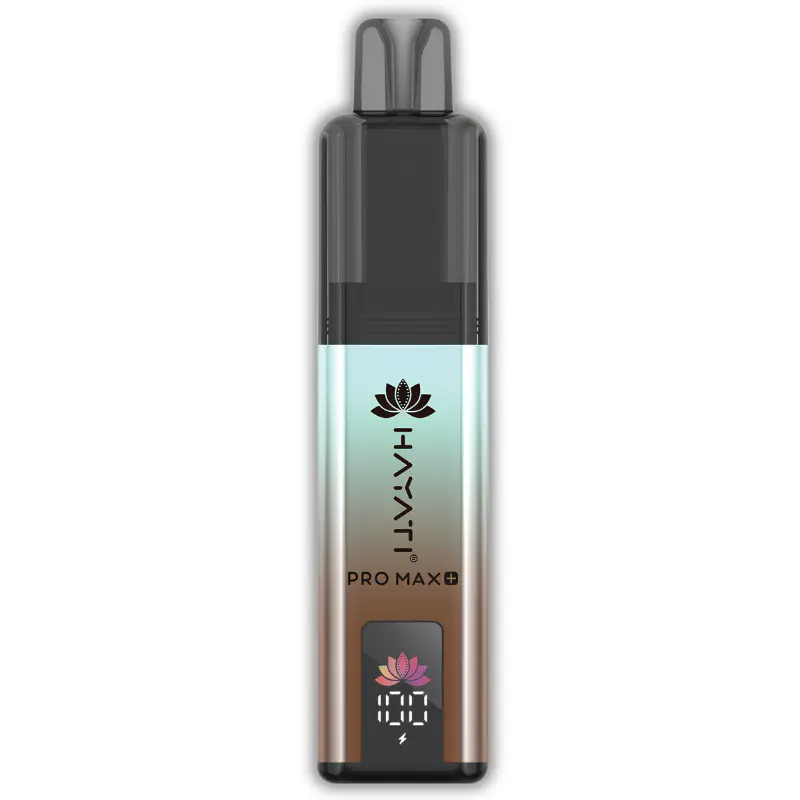
Hayati · Pro Max Plus
Kiwi Cooler Hayati Pro Max Plus 6000 Pod Kit
£7.99
✔ In stock — ready to ship
Genuine Hayati
Free over £20
Same-day dispatch
Secure checkout
Two words on the listing, and only one of them names a fruit. Kiwi Cooler is catalogued here in kit form, which means a rechargeable Pro Max Plus body and a pod that arrives already filled are boxed as one purchase at £7.99. The pod holds 12ml at a nicotine strength of 20mg. The cell is 850mAh. Hayati put a figure of up to 6,000 puffs against the pod, which is a laboratory measurement taken by a machine drawing at fixed intervals, useful for setting one listing beside another and close to worthless as a forecast of your own fortnight. The reference code is HPM-6K-KIT-KIWI-COOLER, and it is worth reading before you order, because the same liquid is catalogued separately without a device and the two entries look nearly identical in a list of search results.
The reason to spend time on this one rather than treating it as another green fruit is that kiwi behaves differently from almost everything else on the shelf. Most fruit flavours are built on sugar with a little acid painted over the top. Kiwi is not. Its tartness is not a decoration applied at the end; it is the structure the fruit is built on, and it stays present even when the fruit is soft and ripe. A strawberry loses its sharpness as it ripens. A kiwi does not. That single fact changes what happens when a manufacturer cools it, because the cold is no longer cutting across something soft. It is arriving on top of something already sharp, which is a different proposition entirely, and it is what this page is mostly about.
The other thing worth flagging early is a limit on what anyone can honestly tell you. Hayati use three separate words across their range to signal cooling, and nothing they publish explains how those three relate to each other. Any page that ranks them is guessing. This one will not, and the section below explains exactly what the word on the box does and does not commit the liquid to.
Cooler, Ice and Frozen: three words with no published scale
Walk the Hayati catalogue and you will find cooling declared three different ways. Some listings say Ice, as Lychee Ice and Blackberry Ice do. One says Frozen, as Blue Frozen does. This one says Cooler. All three words point at the same category of sensation, and Hayati publish nothing at all about the relationship between them.
That is a genuine gap rather than an oversight this page can fill in. There is no published coolant loading for any of these pods, no scale from one to ten, no statement that Frozen sits above Ice or that Cooler sits below it. The words look like a hierarchy because English makes them look like one, and the temptation to write "Cooler is the mild one" is strong. It would be invention. A buyer who orders on the strength of that invention and finds the pod colder or milder than promised has been badly served by a page that decided to sound authoritative.
Here is what the marker does tell you, which is not nothing. It tells you cooling in this pod is deliberate and declared, as opposed to the many listings on the Hayati Pro Max Plus Prefilled Pod Kit shelf that carry no cooling word at all. Berry Lemonade declares nothing, and nothing is what it has. Kiwi Cooler declares something. The catalogue also files it under Ice Vapes, which is a shelf built around the presence of cooling rather than its intensity, and that is the honest summary of the information available: the cold is there, it was intended, and the amount is something you will establish by drawing on it.
Practically, then, judge the fruit and let the cooling word be a yes or no rather than a dial reading. If you have tried several cooled Hayati pods you will already have noticed that the perceived cold varies more with the fruit underneath than with the word on the label, which is the point the flavour section builds on next.
The flavour, taken apart
What kiwi tastes like before anyone touches it
Start with the fruit, because most people misremember it. Ask someone to describe kiwi from memory and you tend to get "sweet, tropical, a bit like melon". Cut one open and it is greener and considerably more acidic than that. There is a high, almost citrus-adjacent sharpness at the front, a sugar level that is modest for a fruit sold as tropical, and a green vegetal thread running underneath that sits closer to the stem end of a melon or to an unripe gooseberry than to anything from a palm tree.
The acid is the part that matters for a vape liquid. In a peach, a strawberry or a lychee, sweetness is the load-bearing element and acid is trim: reduce the acid and you still have the fruit. In kiwi the arrangement is inverted. The tartness is what makes it identifiable, and a kiwi flavour with the acid taken out does not become a mellow kiwi, it becomes an anonymous green sweet. This is why kiwi-flavoured confectionery so rarely works. Sugar is the default fix for anything that tastes sharp, and applying that fix to this particular fruit removes the fruit.
Hayati have not made that mistake here, which is the single most useful thing to know about the liquid. The sharpness is left in place and audible from the first draw. Whether you like it depends entirely on whether you wanted a sharp green fruit, and there is no point pretending the profile is more accommodating than it is.
The first part of the draw
The opening is bright, high in the mouth and thin in body. Vapour density is ordinary for the format, but the flavour itself sits near the top of the palate rather than filling it, and there is very little of the round juicy weight that a watermelon or a mango pod puts across the tongue. What arrives first is the acid, a half beat ahead of any sweetness, which is the reverse of the order most fruit pods on this shelf follow.
That front-loading is worth preparing for if your recent pods have been sweet ones. Coming to this straight off something like Blueberry B'Gum, the first few draws can read as almost empty, because the palate is waiting for a sugar arrival that turns up late and modestly. Give it a session on its own before forming a view. The flavour is not faint, it is simply arranged in an unfamiliar order.
The green thread, and the seeds behind it
Underneath the acid there is a distinctly green note, and it is one of the better parts of this liquid. It is not a leafy or grassy green in the way that a cucumber flavour is green; it is nearer to the pale flesh around the core of the fruit, slightly starchy, mildly savoury at the very edge of detection. It gives the profile somewhere to sit between citrus and melon, and it is what stops the pod reading as a generic green apple, which is where a lot of kiwi attempts end up.
Then there is the seed character. A real kiwi carries a scatter of small black seeds that contribute a faint dry bitterness and a suggestion of grit. Vapour obviously cannot carry grit, but the bitterness survives the translation, and on this pod it shows up as a dry edge just behind the fruit on the second half of the exhale. It is subtle. Several people will never notice it as a separate thing and will only register that the flavour finishes drier than it starts.
It is worth naming because it has a practical consequence. A bitter edge is also what a lightly scorched wick produces, so on this liquid the two are easy to confuse. A pod that has always had a faint dry tail behind the fruit is doing what the recipe intends. A pod that develops a harsher, flatter, papery bitterness after you chained through the first thirty seconds of its life is a different problem, and the handling section deals with it.
Where the cold arrives, and why it stacks rather than contrasts
The cooling reaches you mainly on the exhale, with a little of it detectable at the back of the inhale on longer draws. It is worth being precise about what it is: the vapour is not physically colder, and the impression of cold comes from the coolant in the recipe rather than from any temperature change. Hayati do not state which coolant they have used or how much, and the listing says nothing beyond the word in the name.
The interesting part is what that cold does to this specific fruit. Put cooling on a soft sweet profile and you get a contrast: the cold arrives from a different direction to the sugar, cuts across it, and the two sit in conversation. That is the whole design of something like Smooth Strawberry Ice, where a low creamy fruit is deliberately lifted by something that behaves nothing like it. Put cooling on kiwi and no contrast happens, because sharpness and cold are not opposites. They are neighbours. Both read as bright, both land in the same upper region of the palate, both shorten the finish rather than lengthening it, and both make the liquid feel thinner rather than fuller.
So the two sensations stack. You do not get acid and cold in dialogue, you get one intensified bright impression with two sources feeding it. Three things follow from that, and they are the things worth knowing before you spend £7.99.
The first is that Kiwi Cooler reads colder than its coolant loading probably justifies. If you could measure the coolant in this pod against the coolant in Watermelon Ice or Red Apple Ice, my guess is that this one would not come out ahead, and it will still feel sharper in use, because the fruit is contributing to the same impression. That is also the best available explanation for why the three cooling words in the range seem so inconsistent between products: a great deal of the perceived cold is coming from what sits underneath it.
The second is that the gap between inhale and exhale is narrower here than on a contrast-built cooled pod. There is less of a two-act structure. What you taste on the way in is a sharper, greener version of what you taste on the way out, and if you enjoy a pod that transforms between the two halves of a draw, this is not that pod.
The third is that the cooling has less work to do covering anything up. Cold is frequently used to paper over a sweetener that would otherwise be cloying, and you can tell when that is happening because the flavour turns syrupy the moment the cold fades. That is not what is going on here. Let this one warm on the palate and what remains is still a recognisable sharp green fruit rather than a puddle of sugar.
Sweetness, placed against the rest of the shelf
On a scale with an unsweetened mint at one end and a confectionery profile at the other, this pod sits in the lower third without being austere. There is real sugar in it, enough to keep 12ml of a sharp fruit drinkable over a fortnight, and it is doing a structural job rather than a headline one. Take the sweetness out and the acid would be punishing by the third day.
For calibration against listings you may already have tried: Ice Pop and Blueberry B'Gum are clearly sweeter, both built around a confectionery impression rather than a fruit one. Blackcurrant Juice is sweeter than this but shares some of the tart backbone. Fresh Mint and Double Menthol are drier, and dry in a different way, because they have no fruit sugar to be dry relative to. Kiwi Cooler lands between the fruit group and the mint group, nearer the fruit, and that in-between position is probably the most accurate one-line description of it.
The exhale, and how long it stays
Short. Notably short, in fact, and this is one of the pod's real distinctions. The acid clears the palate, the coolant clears whatever the acid missed, and within a few seconds of the exhale there is very little left in your mouth. No film, no lingering sweetness, no coating on the teeth.
Whether that is a virtue depends on what you want from a pod. If you dislike the residue that a heavy dessert or bubblegum profile leaves behind, this is an unusually tidy thing to be using through a working day. If you like a flavour that stays with you between draws and rewards putting the device down for ten minutes, the short finish will read as insubstantial, and you will find yourself drawing more often to keep the taste present, which is worth being aware of before you decide the pod is going down faster than it should.
Things this pod is not
It is not a tropical blend. Kiwi appears in tropical mixes constantly, and Guava Kiwi Passion Fruit on the same shelf is exactly that, but a single-fruit kiwi has none of the heavy, ripe, slightly jammy quality that the guava and passion fruit contribute there.
It is also not a sour pod in the confectionery sense. There is a real distinction between structural fruit acid, which is what this has, and the sharp synthetic sourness dosed onto sweets, which is what Cherry Sour Raspberry and Blue Sour Raspberry are built around. Those two make your jaw tighten on the first draw. This one does not. It is sharp the way a fruit is sharp, which is steadier and far less fatiguing over a long pod.
Nor is it a menthol product with fruit painted on. The fruit leads and the cooling follows, which is the opposite arrangement to Vim Ice or the two mint listings. And it has no creamy, milky or smoothie character whatsoever, so anyone hoping for something resembling a blended kiwi drink should look at a different profile entirely.
How it changes between the first days and the last
The wear pattern on this pod runs in a specific and fairly reliable order, and knowing it saves you money.
The green vegetal note goes first. It is the most delicate element in the recipe and the first thing a tiring coil stops rendering. Next the acid softens, which is the change most people actually notice, because it is what made the pod identifiable. The fruit then collapses into an unspecific sweet green impression that could be apple, melon or pear. The cooling outlasts all of it, comfortably, because coolants are robust and keep presenting long after the flavour compounds around them have given up.
That last point is the trap. A pod whose flavour has gone still delivers cold, and cold is easy to mistake for the product working. People run cooled pods a long way past their useful life for precisely this reason, drawing harder each day on something that is now cold sugar, and cooking the coil further in the process. On this listing, the diagnostic is the green. When you can no longer tell that the fruit is kiwi, the pod is finished, whatever the window shows and however cold it still feels.
Condensate, and the path between the coil and your mouth
The hardware here is shared with most of the Hayati Pod Kits range, so a full device walkthrough belongs on the shelf pages rather than being repeated on every flavour. What the listing itself records is short: a rechargeable 850mAh cell, and a pod supplied filled with 12ml at 20mg, for £7.99. It does not name a charging connector, it does not give a coil resistance, and it does not publish a carrier ratio. Those absences are real, and this page will not fill them in from a sibling listing, because a claim repeated across four pages is still not a fact.
What is worth covering instead is the part of the device most relevant to a cooled pod: the channel the vapour travels along after it leaves the coil, and the liquid that collects there. Every draw leaves a residue of vapour behind in that path. It meets walls that are cooler than it is, and some of it turns straight back into liquid. This is ordinary physics rather than a fault, and on a sealed pod there is nothing you can dismantle to deal with it.
How much collects depends mostly on the difference in temperature between the vapour and the walls it touches, which is why this becomes noticeable in the months when the device spends its day in a coat pocket. A body at four degrees produces visibly more condensate than the same body at room temperature, and the symptoms are recognisable: a faint gurgle on the draw, a noticeably wetter first pull, occasionally a warm droplet arriving at the lips. None of it indicates a failing pod. It indicates a cold device.
Three habits cover most of it, and none of them costs anything. Carry the kit in an inside pocket rather than an outer one, so the body stays nearer body temperature and the gap that drives condensation stays small. Stand the device upright when you put it down, because a mouthpiece-up orientation lets the collected liquid drain back down the path instead of pooling where you are about to draw. And after a spell in the cold, tap the kit gently mouthpiece-down onto a tissue before the first draw, then take that draw short and slow.
The same path explains a complaint people often blame on a new pod. Flavour deposits along the channel, and it survives a pod change, so the first handful of draws on a fresh pod carry traces of the one before it. On this device the coolant is the most persistent of those traces, because it is the most robust component in any cooled liquid. Fit a delicate fruit pod straight after a cooled one and it will read cold for its first dozen draws, and you will wonder what is wrong with it. Nothing is. Give it twenty draws before you judge it.
One more diagnosis is worth separating out, because two very different problems present the same way. A pod that has lost flavour and gurgles is usually a wet path, and it recovers after a tap-out and a few short draws. A pod that has lost flavour and does not gurgle, and where the green has gone from the kiwi entirely, is a tired coil, and no amount of handling brings it back. Treating the second case as the first is how people end up drawing hard on a spent pod for two more days.
What the specification records, and the number that is missing from it
Before the table, the absence worth flagging. Nowhere in this listing's data is there a carrier ratio, which on a cooled liquid matters more than it would on an uncooled one. The two carriers behave differently: the thinner one tends to present flavour and coolant sharply and immediately, while the thicker one produces more vapour and blunts the top edge slightly. A cooled sharp fruit sits at exactly the point where that difference is audible. Since the ratio is not published for this pod, no one can tell you from the sheet how hard the cold will land. You find out by drawing on it, and any page that gives you a number for it has made the number up.
| Listed at | £7.99 |
| Supplied as | Complete kit, body and filled pod in one box |
| Name on the listing | Kiwi Cooler |
| Cooling marker used | Cooler, with no published scale behind it |
| Liquid in the pod | 12ml, supplied filled |
| Nicotine as filled | 20mg |
| Cell | 850mAh, rechargeable |
| Puff figure from Hayati | Up to 6,000, a laboratory estimate |
| Reference code | HPM-6K-KIT-KIWI-COOLER |
| Carrier ratio | Not published for this listing |
| Coil resistance | Not published for this listing |
| Made by | Hayati |
The 20mg figure deserves a sentence of context rather than being left to sit there. Nicotine is addictive, and 20mg is the strength this pod is supplied at, with no other option recorded against the listing. What is relevant to how it presents is that the draw on this device is restricted and narrow, fixed at the factory, with no airflow collar to widen it. A narrow draw concentrates everything it carries, so the same strength reads differently here than it would through an airier device. On a sharp liquid that concentration is part of the character rather than an accident.
The 6,000 figure deserves the same treatment. It came from a machine taking identical draws at identical intervals, and no person vapes that way. Draw length, how often you reach for it, how warm the device runs and how long the pod sits between sessions all move the real number, in both directions. Use it to compare this pod against another pod, never as a promise about your week. The only accurate figure is the one you generate yourself: note the date you fit the pod, note the date the green disappears, and from then on you know what a pod costs you in days.
How it sits against its neighbours
The identical liquid, without a device
The first comparison is not really a flavour comparison at all. Kiwi Cooler Hayati Pro Max Plus Pods is the same liquid in the same pod, sold at £5.49 without a body attached. The difference between the two listings is £2.50, which is what this shelf charges for a rechargeable device, and you only need to pay it once.
Put plainly: if you already own a working Pro Max Plus, buying the kit again means buying a second body you did not need. The second time you buy this flavour you should be paying £5.49. The kit is the right purchase exactly twice, when you have no device at all, and when your existing one has aged to the point where it no longer holds a useful charge. Anyone who owns two bodies and rotates two flavours has already worked this out, and anyone who has quietly accumulated four devices in a drawer has not.
The other kiwi in the catalogue
Kiwi appears three times, and in three completely different roles. Here it is the whole subject. In Guava Kiwi Passion Fruit it is the sharp element in a heavy tropical trio, present as brightness rather than as an identifiable fruit, and you would struggle to pick it out blind. In Strawberry Kiwi it plays the acid line behind a sweet red fruit, which is the pairing most drinks manufacturers reach for, and it works because strawberry brings the sugar that kiwi lacks.
Those three make a useful sequence if you are unsure how much kiwi you actually want. Strawberry Kiwi is kiwi as seasoning. Guava Kiwi Passion Fruit is kiwi as an ingredient among others. This listing is kiwi undiluted and cooled. The full set sits on the Kiwi Vapes shelf, which is a short shelf of twelve, and short shelves are the easiest place to see how differently one fruit can be deployed.
Cooled fruits that contrast instead of stacking
If the stacking argument above appealed to you, its opposite is well represented and worth trying alongside. Pineapple Ice is the nearest relative in acid terms, since pineapple also brings structural sharpness, but it carries far more sugar and a candied edge that kiwi has no equivalent of. Banana Ice is the furthest thing from this pod on the cooled shelf: soft, low, almost no acid, and the cold there is doing all of the lifting on its own. Lychee Ice sits in the middle, floral and perfumed where this is green and blunt.
Smooth Strawberry Ice and Strawberry Raspberry Ice are the reference points for contrast-built cooling done properly, and running one of them for a week after this pod is the quickest way to hear the difference the argument describes. Red Apple Ice is the interesting edge case, because apple has some genuine acid of its own, so it partly stacks and partly contrasts, and it lands between the two groups.
If the cold is what you are here for
Anyone who reached this page because they want more cooling rather than more fruit is looking at the wrong listing. Double Menthol and Fresh Mint put the cold in charge and use almost no fruit at all, which is a different experience rather than a stronger version of this one. Blue Frozen is the other candidate, and its name is the only clue to its intensity, which as established is not a clue at all. Vim Ice sits near them, with a flavour name that declares very little about what is underneath the cooling.
The practical distinction is this. On a mint or menthol listing the cold is the subject and the pod tastes of cold. Here the cold is an amplifier applied to a fruit that was already bright, and if the fruit is not to your taste the cooling will not rescue it.
If you want the sharpness without the chill
Sharp and uncooled is a smaller group but a good one. Blackcurrant Juice keeps a genuine tart backbone under a more generous sweetness. Berry Lemonade goes at sharpness through a citrus route with no cooling declared anywhere on it. Cherry Sour Raspberry takes the confectionery approach to the same problem, front-loading a sour hit that fades rather than a fruit acid that persists.
Worth saying honestly: none of these is a substitute for what Kiwi Cooler does. The green vegetal thread has no equivalent anywhere else in the range that I can find, and if that is the element you liked, the alternatives will all read as some variety of red or dark fruit wearing a sharper coat.
The same territory on other hardware
If the format rather than the flavour is what you are weighing, the same liquid family appears on several different bodies. Hayati Pro Max Plus 6000 Prefilled Pod Kit is the range entry itself, useful for checking what the platform commits to before picking a flavour. Banana Ice Hayati Rubik Prefilled Pod Kit shows the same idea on a smaller and cheaper body at £5.99. At the other end, Blue Razz Pineapple / Strawberry Ice Hayati Pro Ultra Plus 25000 Prefilled Pod Kit is the larger platform with two flavours in one device, priced at £11.99, and it answers a question this kit cannot: what to do when you want an escape route from a single profile partway through a session.
The broader shelves are Hayati Prefilled Pod Kits for the format as a whole and the full Hayati catalogue if you would rather browse by fruit than by hardware. Cola Ice is worth a mention as the outlier on the cooled shelf, since it is the only listing there built on something that is not a fruit at all, and it makes a useful palate reset between two fruit pods.
Living with a sharp green pod for a fortnight
General pod handling is the same across the range. What follows applies specifically because of what is in this one.
Prime it properly, because this liquid hides a cooked wick badly. Stand the kit upright for two or three minutes after unwrapping, then take the first five or six draws short and unhurried. The reason to bother on a kiwi pod in particular is the seed bitterness described earlier. A scorched wick also produces a dry bitter edge, and on most flavours the two are easy to tell apart. Here they overlap, so a wick cooked in the first thirty seconds gets filed under "that is just how kiwi tastes" and the pod is written off. Two minutes of patience protects your own judgement of the flavour, not just the coil.
Watch the green, not the volume and not the cold. This is the single most useful habit on this listing. The vegetal note is the first casualty of a tiring coil, and it goes while there is still liquid in the window and while the cooling is still arriving at full strength. If the pod has stopped tasting specifically of kiwi and now tastes of cold sweet green, it is done. Continuing past that point is how a mild flavour fade turns into an actual burnt draw.
Do not chain it. Two separate things happen when you draw repeatedly in quick succession here, and they compound. The impression of cold dulls with repeated exposure, so the coolant stops registering after four or five rapid draws. The acid does not dull in the same way. What you are left with is the sharpness on its own, unbalanced, which reads as harsh and makes people conclude the pod is too strong when the actual problem is pace. Leave a minute or two between draws and the balance restores itself.
Put it late in a rotation, not early. Cooled pods leave the most persistent traces in the airflow path and on the palate, so anything delicate that follows this one within the hour will read cold and slightly muted. Running it after a sweet, heavy pod works well, because the acid and the cold cut through the residue the other one left. Running a subtle fruit immediately after it does not.
Keep it out of the heat. A drawer is right. A dashboard in July and a windowsill in direct sun are both wrong. Warm liquid thins, and thin liquid travels further along the airflow path than it should, which on a sealed pod ends in a mouthful of syrup rather than vapour. The opposite extreme has its own consequence covered above: a device that has been properly cold will produce more condensate than usual for its first several draws indoors, so give it a few minutes to come up to room temperature before deciding something has gone wrong with it.
Charge before it struggles rather than after. There is no percentage display recorded in this product's specification, so this is a matter of habit rather than measurement. A device running low produces a weaker draw, and a weaker draw on this liquid loses the green thread first, which looks exactly like a pod reaching the end of its life. If the fruit thins out and comes back after a charge, the pod was never the problem.
Questions buyers actually ask
How cold does it actually get?
Moderate, with the caveat that the fruit underneath is contributing to the impression. Because kiwi is already sharp, the pod reads colder than an equivalent amount of coolant on a soft sweet fruit would. Hayati publish no coolant figure, so nobody can give you a number, and anyone who does is guessing.
Does "Cooler" mean it is milder than an "Ice" listing?
There is no published basis for saying so. Hayati use Cooler, Ice and Frozen across the range without ever defining how they relate, and the words only look like a scale because English arranges them that way. Treat the marker as confirmation that cooling is present and deliberate, and judge the amount by drawing on it.
Is the cooling menthol, or something else?
The listing does not say. It names the flavour and nothing about the cooling agent, so this page will not name one either. What is describable is how it behaves: it arrives mainly on the exhale, it clears the palate quickly, and it outlasts the fruit as the pod ages.
Does it taste like an actual kiwi?
Closer than most attempts, mainly because the acid has been left in rather than sugared over. The green vegetal note and the faint dry seed edge are both recognisable. It is still a flavouring rather than a fruit, and it is brighter and simpler than eating one, but the family resemblance is genuine.
Is it sour?
Not in the confectionery sense. The sharpness here is fruit acid, which is steady and structural, rather than the dosed sourness that makes your jaw tighten on the first draw of a sour sweet profile. It is sharp all the way through instead of sharp at the front, and that makes it considerably less tiring across 12ml.
What arrives in the box?
A rechargeable body and a prefilled pod, which is what the listing records and the limit of what this page will claim. No cable, accessory or spare is itemised in the product data, so check the packaging when it arrives rather than relying on any page, including this one.
Can I refill the pod when it empties?
It is not described as a refillable pod. It is supplied already filled, and the route Hayati describe for continuing with this flavour is a replacement pod rather than a bottle. The pod-only listing exists precisely for that, and it is the cheaper of the two once you own a body.
How long will one pod go on for?
Hayati rate the pod at up to 6,000 puffs, and that figure comes from laboratory testing with a machine, not from use. Real duration depends on draw length, frequency and how long the pod sits idle. The number worth having is your own, which one pod will give you if you note the date you fit it.
I already own the device. Do I need this listing?
No, and buying it would mean paying £2.50 for a second body. The pod on its own is the correct purchase at that point. The kit makes sense when you have no working device, or when an old one no longer holds enough charge to be useful.
Why does a new pod taste of the flavour I had before it?
Residue in the airflow path survives a pod change, and cooling agents are the most persistent thing to leave behind. Give a new pod twenty draws before you judge it, particularly if the pod before it was a cooled one. If it still tastes wrong after that, the trace is not the explanation.
Does the cold fade before the flavour does?
The other way round, which catches people out. The green note goes first, then the acid softens, then the fruit turns generic, and the cooling is still presenting at close to full strength throughout. A cold draw is therefore not evidence that a pod still has life in it.
Is 20mg the only strength this comes in?
It is the only strength recorded against this listing, and the pod arrives filled, so there is no strength decision to make at the point of purchase. Nicotine is addictive, and that applies at any strength.
The short version
Kiwi Cooler is a sharp green fruit with a declared cooling element, sold as a complete kit at £7.99 with a rechargeable 850mAh body and a pod holding 12ml at 20mg. What makes it worth distinguishing from the dozen other cooled fruit pods on the same shelf is the relationship between the fruit and the cold. Kiwi carries its tartness structurally rather than decoratively, so the cooling stacks on top of something already bright instead of cutting across something soft. The result is a pod that reads sharper and finishes shorter than its coolant loading alone would suggest, with a green vegetal thread and a faint dry seed edge that nothing else in the range reproduces.
It suits someone who wants brightness rather than sweetness, who does not mind a short finish, and who is comfortable with a single profile for the life of a 12ml pod. It suits someone looking for a dessert, a smoothie or a heavy tropical blend a good deal less. If you own the device already, buy the pod and keep the £2.50. If you do not, this listing is the sensible way in, and it sits alongside the rest of the range on the Hayati Pro Max Plus Prefilled Pod Kit shelf for comparison.
Strictly for adults aged 18 and over. Nicotine is an addictive substance.
You might also like


