
Home / Hayati Pro Max Plus Prefilled Pod Kit / Grape Berry Hayati Pro Max Plus 6000 Pod Kit
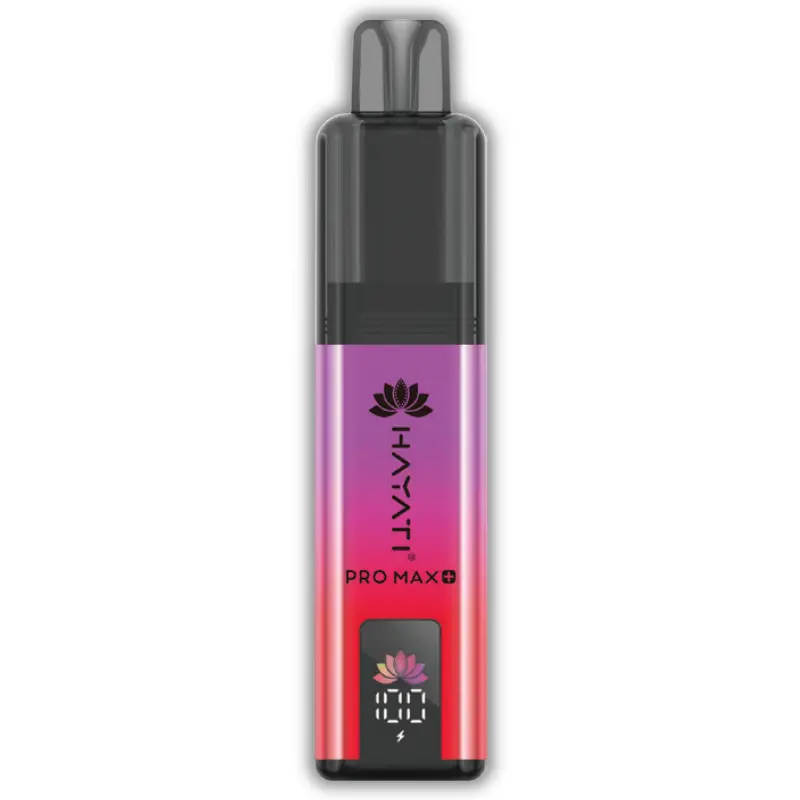
Hayati · Pro Max Plus
Grape Berry Hayati Pro Max Plus 6000 Pod Kit
£7.99
✔ In stock — ready to ship
Genuine Hayati
Free over £20
Same-day dispatch
Secure checkout
The kit is £7.99 and Grape Berry is what is in it: an 850mAh rechargeable Hayati body, a prefilled pod system carrying 12ml of liquid at 20mg nicotine salt, and a purple blend that the maker rates at up to 6,000 puffs on laboratory apparatus. Hayati's own summary of the recipe is short. Grape leads with a deep sweetness, mixed berries sit underneath and add a juicier layer with a little tartness in it, and the tartness is said to keep the blend moving right through a long session. Nothing in that account names a single berry.
That omission has already been picked over properly, and this page does not repeat the work. The bare pod version of this liquid, Grape Berry Hayati Pro Max Plus Pods at £5.49, took the title apart as a naming problem and reached a verdict. What it left alone, deliberately, was the liquid.
So this page does the liquid, and it starts from the one sentence in Hayati's copy that can actually be held against a pod. They claim tang, and they claim the tang lasts. Every other statement on the record is either about the grape, which is checkable anyway because grape cannot hide, or about berries that are never identified and therefore cannot be wrong. The acid claim is the exception. It is specific, it has a stated duration, and it is the only thing in writing that constrains the unnamed half of the recipe.
It is also, as far as I can reason it out, the claim most at risk. Not because Hayati are likely to be describing the liquid wrongly, but because the thing that would falsify it is not really the formulation. It is the format. Twelve millilitres is a long run for one coil nobody can change, a grape accord is one of the more heavily sweetened constructions in this range, and the two elements holding this blend apart, the bright top of the grape and the acid in the tail, both live at the fragile end of the mix while the jam and the sugar do not. What follows works through where each component arrives in a draw, what the tang is doing structurally rather than decoratively, and why the merge the pod page warned about is better understood as something with a timetable than as something that either happens or does not.
What the pod listing established, and the part it handed on
The pod page's subject was the second word. Its argument was that "Grape" is an assertion a liquid can fail and "Berry" is a class word standing where a species could stand, which no purple blend has ever failed. It counted the convention rather than gesturing at it: nine listings out of the eighty-nine on the pod shelf print a class noun in a slot a fruit name would normally occupy. The kit shelf mirrors that almost exactly, with eight of the eighty-eight entries on the Hayati Pro Max Plus Prefilled Pod Kit shelf doing the same thing, which is what you would expect given that most flavours exist in both formats.
Its verdict is the part worth carrying over here, because it is not the obvious one. The convention is defensible on this listing. The reasoning was that Hayati name fruits only when they can also say what each one is for, and every three-fruit title in the range comes with three assigned jobs written into the copy. Printing three species onto a blend that does not decompose into three followable parts would be a claim about architecture dressed up as a claim about contents, and a taster would then go looking for a raspberry the formulator never intended anyone to find. Where the named half leads and the unnamed half is a floor, a class noun describes a role honestly. That finding is taken as settled and is not re-argued below.
One consequence of it does get used, though, because it sets up everything else. If the berries are a floor rather than a duet partner, then the question for this page is not which berries. It is how far apart the two purples sit, and whether that distance survives twelve millilitres.
Reading the tang claim closely, because it is the only one that can fail
Hayati describe this recipe twice, once for the pod and once for this kit, and the two accounts were evidently written at different moments. They agree on the hierarchy: grape has the base, berries add depth over it. They also agree, in different words, on the acid. The pod text says there is enough tang for the blend to stay lively across a long session. The kit text says the tart layer keeps it moving and that the flavour does not fade on you over that same long session.
Two independent statements, the same claim. That matters because most copy in this range makes a claim about presence, and a presence claim is cheap. Saying a liquid has a tart edge costs a writer nothing and can be satisfied by a trace. Saying the tart edge holds up over a long session is a claim about persistence, and persistence is a property somebody can check with nothing more than attention and an hour.
Consider what would falsify it. A pod that tastes tart on the first draw and flat on the fortieth has failed the claim. A pod where the acid is audible on a fresh coil in the morning and inaudible on the same coil a fortnight later has failed it. A pod that reads as sweet-only from the start has failed it on presence as well as duration, which is the more embarrassing outcome for the copy and the less likely one, given that both descriptions were written independently.
Now notice what the claim implies about construction. Acid is a corrective. Nobody puts a tart edge into a heavy purple blend because tartness is pleasant in the abstract; they put it in because the blend needs a brake. The presence of a stated tang is therefore secondary evidence about the base: it tells you the berries under the grape are sweet enough and thick enough to need correcting. Hayati say as much from the other direction when they describe part of the berry mix as jammy and dark, with a brighter fraction alongside it. A recipe that needed no brake would not advertise one.
Which gives the tang two jobs rather than one. It manages the sugar, which is the obvious job. And it separates the two components, which is the job nobody mentions and the one this page thinks is load-bearing. More on that below, once the grape has been placed.
Which grape this is likely to be
Grape is not one flavour. There are at least three registers a manufacturer could be working in, and they do not taste alike.
The first is the fresh table grape sold in British supermarkets, which is watery, faintly sweet, mildly acidic and almost devoid of aroma. Nobody builds a vape liquid on it because there is nothing to build with. The second is a wine or skin reading: tannic, dry, slightly bitter, closer to blackcurrant in structure than to anything sugary. A few liquids attempt it. The third is the confectionery register, the purple of grape sweets and grape soda, and that is overwhelmingly what the trade means when it prints the word.
Three lines of evidence point this liquid at the third register. Hayati's own vocabulary for it is deep purple sweetness and a rich purple-fruit base, which is the language of the manufactured note rather than of fruit off a vine. The solo grape in the range, Grape GB Hayati Pro Max Plus 6000 Pod Kit, is described openly as a candied, sugar-coated reading of the fruit with the sharpness rounded off, and it would be odd for the same maker to be working from a different grape base two listings along. And nothing anywhere in the catalogue offers a green or white grape, which is the variety a fresh reading would have to come from. Every grape entry Hayati sell is purple.
That last point is worth a count rather than an impression. The Grape Vapes shelf holds nineteen listings. Four of them are not grape at all: two are grapefruit entries whose resemblance is spelling rather than botany, and two are the Vim Ice pair on the Pro Max Plus, headed by Vim Ice Hayati Pro Max Plus 6000 Pod Kit, a dark fizzy cordial profile that the filing has put there for reasons the data does not explain. The remaining fifteen listings resolve to seven distinct flavour names, spread across bottles, pods, kits, a compact format and a pouch. Narrow it to this platform and the field is smaller still: three grape flavours exist on the Pro Max Plus, one of which is grape on its own, one of which pairs grape with a cherry blossom, and one of which pairs grape with another fruit. The third is this one. On a shelf of eighty-eight kits, Grape Berry is the only grape-plus-fruit blend, and the grape filing on that shelf returns four entries of which one is Vim Ice.
The perfume nobody calls a perfume
The Sakura Grape page in this range established the chemistry that matters here, and the point is more useful on this listing than it was on that one. Confectionery grape is built around methyl anthranilate, and methyl anthranilate is a perfumery floral. It occurs in orange blossom, it turns up in jasmine and gardenia, and it is used as a floral material in its own right. The purple note that British and American sweet counters have trained everyone to file under fruit is, in aromatic terms, a flower that has been naturalised by repetition. That page used the finding to explain why a declared blossom can hide inside a grape. Take it as well-supported flavour chemistry rather than as a statement about what Hayati's supplier actually put in this pod, which is not published.
Turn it around and it says something about Grape Berry. This blend puts a perfumed note on top of a jammy one. Those are not merely two flavours, they are two different kinds of flavour material, and they behave differently in a vapour.
A perfumed top note is light, small, powerfully aromatic at very low concentration and quick to arrive. It is carried almost entirely by the nose rather than the tongue. A jammy base is the opposite in nearly every respect: it is built from heavier, cooked-fruit materials, it leans on sweetener rather than on aroma for much of its impression, it registers as body and weight as much as smell, and it is slow. The two occupy the same colour, which is why the pod page was right that a named berry could not have supplied contrast here, and they occupy different heights, which is the whole reason the blend has any chance of reading as two things at once.
That is the mechanism this page rests on. Same colour, different heights. Two components can share a register completely and still stay legible if one of them lives at the top of the draw and the other lives at the bottom. What separates them is not what they smell of. It is when they arrive and how long they stay.
One draw, in sequence
Everything below is inference from the materials and from what Hayati publish, not a tasting note. The order it predicts is testable, and if a pod contradicts it the pod is right and this page is wrong.
Contact. Sweetness lands before anything else, because sweetness does not have to travel. It is received on the tongue by direct contact with the condensing vapour, and on a grape accord carrying a confectionery sweetener load it is substantial. This is the reason a heavy purple liquid can seem simple on a first pull: the first thing it does is the least informative thing it does.
Early in the pull. The anthranilate character comes up fast behind the sugar. It is the most volatile identifiable thing in the mix and it is potent in small amounts, which is exactly why grape is recognisable to almost anyone inside a single draw. There is a heavy, slightly musky, faintly floral quality to it that some people read as fruit and some read as medicinal, and that division is real and does not resolve with a better example. At this stage the berries have barely reported.
Mid-draw. The base starts to fill in underneath. Jammy materials are slower, they build rather than arrive, and they register partly as aroma and partly as thickness. If the blend is well proportioned this is the moment it stops being a grape sweet and starts being a fruit blend with a floor. If the base is heavy-handed, this is instead the moment the grape gets shouldered out, and you would notice it as the draw becoming broader and less specific rather than as anything obviously wrong.
Exhale. The aromatic half gets its proper turn on the way out, up the back of the nose, and the two purples are stacked at their closest here. The brighter fraction of the berries that Hayati mention should be doing its work at this point, lifting the top of the exhale slightly so that the dark part does not sit alone.
Tail. The tang, if it is there, is the last thing standing. Acid is the natural terminator of a sweet blend because it becomes audible precisely when the sugar has peaked and begun to recede. A tart finish on a purple liquid is not a separate flavour event so much as the shape of the sugar's departure. If you find tartness arriving at the front instead, the blend is built differently from the way both of Hayati's descriptions read, and that would be worth knowing before ordering a second one.
There is a way to check the channel split with no equipment. Take a draw and let part of the exhale out through the mouth and part through the nose. The sweetness and whatever acid is present are on the tongue and will be much the same either way. The grape is not: it is aroma, and it will be thin on the mouth exhale and full on the nasal one. If the grape barely changes between the two, what you are tasting as grape is mostly sugar plus expectation, and that is a result worth having early rather than at the bottom of the pod.
What the tang is doing structurally
Acid in a blend like this is usually discussed as a matter of taste preference, as though it were a dial between sweet and sharp. It is doing something more mechanical than that.
A draw becomes legible as a sequence when it has edges. Sugar has no edge; it arrives, spreads and lingers, and a liquid built only from sweetness and aroma produces one continuous impression in which nothing can be located in time. Acid supplies a terminating edge. Having an end gives the draw a shape, and a shape is what lets a taster place one component before another and therefore perceive two components rather than an average of them.
On this recipe that is not a refinement, it is the only separator available. Compare the alternatives the range uses elsewhere. Blackberry Ice Hayati Pro Max Plus 6000 Pod Kit puts a coolant into a dark berry, and a coolant separates by resetting the palate between draws and by suppressing perceived sweetness, so the fruit is read against a clear background each time. Berry Lemonade Hayati Pro Max Plus 6000 Pod Kit separates by putting citrus structure above a jammier berry, which is acid again but in a form that is also aromatic and therefore audible in the nose as well as on the tongue. Blueberry Cherry Cranberry Hayati Pro Max Plus Pod Kit hands the job to a named fruit and prints its role in the copy, so the dry edge is attributable and you know which lever to pull if it is too much.
Grape Berry has none of those. No coolant is flagged in the title, which is how this range signals cooling. No citrus is named. No third fruit is present to take the corrective role. The blend has exactly one brake, it is unnamed, and its only documentation is the phrase about tang lasting through a long session. Everything about how well this pod works comes back to whether that one clause is accurate.
Twelve millilitres, one coil, and the distance between two purples
The general pattern of what a tiring coil does to a sweetened liquid has been worked out in detail on the Blue Frozen kit page in this range, and rebuilding it here would be a waste of both our time. The short form: residue accumulates fastest with heavily sweetened liquids, the volatile aromatic fraction is what a fouled surface interferes with first, and sugar and cooling survive a tired coil comfortably. That page's product ended up cold and sweet with the fruit hollowed out of it.
Grape Berry's exposure is a different shape, and the difference is the interesting part. This liquid is not at risk of losing its fruit. It is at risk of losing the distinction between its two fruits, which is not the same failure and does not announce itself the same way.
Work it through with the heights argument. The grape lead is the light, volatile, aromatic component. The jammy base is the heavy, slow, partly gustatory one. The bright fraction of the berries is volatile too, and so, in practical terms, is most of what delivers a perceived tang, because the sharp, lifted quality in a fruit blend is carried as much by small bright aromatics as by acid on the tongue. Sort the components of this pod by fragility and you get an uncomfortable result: the grape lead is fragile, the brighter berries are fragile, the tang is semi-fragile, the jam is robust and the sweetener is the most robust thing in the pod. The two elements that hold the blend apart are both near the top of the fragility list. The element that would swallow them is at the bottom of it.
So the loss is not merely gradual, it is directional, and it is directional the wrong way for this specific recipe. A blend of two components in the same colour register stays legible only while there is a gap between them. Attenuate the top note and leave the base intact and the gap narrows. Keep going and it closes. Keep going further and it inverts, at which point the base is leading and the grape is a suggestion inside it, and the pod has become a dark sweet berry liquid with a purple accent, which is a perfectly ordinary thing but not what the title sold.
Twelve millilitres is what makes this more than a theoretical worry. The pod is filled at the factory, the coil is inside it, and neither is adjustable, so a single coil has to carry the entire volume. The kit adds a second variable on top: because the body is rechargeable and kept, the pod is not consumed in one sitting but over days, which means the residue has time to accumulate between sessions rather than being pushed through in a rush.
Three routes to the same merge, and how to tell them apart
The pod page named one mechanism for the two purples collapsing into one: a base mixed jammier than the copy implies. That is real and it is the first thing to check. But it is not the only route, and the other two are arguably more likely because they do not require the recipe to be wrong at all.
Route one, proportion. The factory set the ratio and the base is too heavy. Diagnostic: the grape is indistinct from the very first draw of a fresh pod. Nothing will improve it, because nothing about the pod changes in your favour.
Route two, the coil. The ratio is right and the delivery degrades. Diagnostic: grape leads clearly at twelve millilitres and is hard to find at four, with the sweetness undiminished and the vapour a little thinner. This is the route this page thinks is most probable, and it has a timetable rather than a verdict: the same pod is two different liquids at its two ends.
Route three, your own palate within a session. Sensitivity to a sustained sweet stimulus drops noticeably over a quarter of an hour or so of continuous use, and the aromatic detail is the first casualty of that because it is the most subtle part of the signal. Diagnostic: the grape is present at the start of a session, gone twenty minutes in, and back the next morning on the same pod. Nothing is wrong with the pod at all.
The three call for different responses. Route one means buying something that names its fruits instead. Route two means front-loading your judgement and accepting the back half of the pod as a different, flatter liquid. Route three means putting the pod down for an hour, or rotating it with something from a different register entirely, which is the only one of the three you have real control over.
Testing the pod page's hypothesis against all this
Its stated failure mode was that if the unnamed base runs jammier than the copy implies, the two halves merge and grape stops being identifiable. As a hypothesis it holds up. The mechanism is sound, the two components genuinely do sit close enough for it to happen, and the consequence is exactly what it said: an undifferentiated purple sweetness in which nothing is locatable.
What the chemistry adds is that the hypothesis is stated too narrowly in one respect and too pessimistically in another.
Too narrowly, because it treats the merge as a property of the recipe, decided at the factory, discoverable on the first draw and fixed thereafter. The heights argument says otherwise. A correctly proportioned pod merges anyway, on a schedule, as the residue accumulates and the top note is attenuated while the floor is not. That is a more useful thing for a buyer to know than a yes-or-no verdict on the blend, because it means the question is not only whether the ratio is right but how many millilitres it stays right for.
Too pessimistically, because it treats the shared colour register as the risk factor when the relevant variable is the height difference, which is large here. A perfumed top over a jammy base is one of the better-separated arrangements two purple components can have, considerably better than, say, grape over blackcurrant, where both parties bring their own aromatics and would fight in the same part of the draw. The pairing is well chosen. It is simply fragile at the top, and it has only one brake to hold the arrangement together.
Verdict on the hypothesis: confirmed in mechanism, re-specified in timing. The likeliest way a buyer meets it is not a bad pod on day one. It is a good pod on day one and a flat one on day six.
What this liquid is not
Exclusions are usually more useful than adjectives, and most of these are firm.
Not cooled. No ice, frost or menthol word appears in the title, and this range is consistent about naming a coolant when one is present. That is a reading of a naming convention rather than a measurement, and cooling strength is not published for any listing in the range in any case.
Not sour. Tang and sour are separate claims and only the first is made. The range labels sourness plainly when it means it, as on Red Sour Raspberry Hayati Pro Max Plus 6000 Pod Kit and Blue Sour Raspberry Hayati Pro Max Plus Pod Kit. Expect a lift inside a sweet profile, not a pucker.
Not a declared confectionery blend, although it is sweet. Hayati name the sweet-counter profiles when they build one, as with Blueberry B'Gum Hayati Pro Max Plus 6000 Pod Kit and Strawberry H'Bubba Hayati Pro Max Plus 6000 Pod Kit, and neither description of this liquid reaches for that vocabulary. The grape base is nonetheless the confectionery register, so the absence of the word is not an absence of sugar.
Not a fresh-fruit reading. Nobody should arrive expecting the grape off a supermarket stalk. The manufactured note has a musky, perfumed quality that fresh grapes do not, and the people who dislike grape liquids almost always dislike that quality rather than the execution of any particular one.
Not a blue blend. A large share of this shelf's traffic comes off blue raspberry, and the crossing is bigger than the shared word berry suggests. Blue Razz Cherry Hayati Pro Max Plus Pod Kit and Blue Razz Lemonade Hayati Pro Max Plus Pod Kit both run a sharp confected top note through the entire draw. Grape does not do sharp. It does weight. Coming across from those, the first several draws here will read as muted, and that is calibration rather than the pod.
Not a duet. Hayati's hierarchy is explicit in both descriptions and there is no reading on which the berries are an equal partner. If what you want is two fruits arguing, Blackberry Raspberry Hayati Pro Max Plus Pod Kit is built that way and says so.
The kit, kept brief
Eighty-eight kits share this hardware and it has been described at length across the range, so this section stays short and covers only what bears on the liquid.
In the box: one 850mAh rechargeable Hayati body and one prefilled pod system holding 12ml at 20mg. Nothing to fill, nothing to assemble, no bottle. Hayati quote up to 6,000 puffs, a figure produced on test equipment drawing at a fixed length and interval, so read it as a property of the apparatus rather than a forecast of anyone's fortnight. The twelve-millilitre figure is the honest number to plan around and even that moves with draw length.
The specification that actually matters on this particular liquid is that the pod is sealed at the factory with the coil inside it. Two consequences follow and both have been used already above. The proportion between the grape and the unnamed base is fixed before the pod reaches you, so the variable this page has spent three thousand words on is not adjustable at your end. And one coil has to see out the whole twelve millilitres, which is what converts a formulation question into a timing question. On a refillable device you would change a coil and get the top note back. Here you cannot, so the pod's second half is part of what you are buying rather than a fault in it.
The device is the part that persists. Once this pod is done the body takes compatible Pro Max Plus replacement pods, so the flavour can change without the hardware changing, and the same liquid is available on its own as the bare pod linked at the top. Before ordering replacements, match the range name printed on your device to the range name in the listing, because Hayati build several pod families and a retail page is not where a fitment question should be settled. Everything else about the platform, including how the body ages and what else it will take, is on the kit shelf and on the wider Hayati Prefilled Pod Kits listing.
The published numbers, and the blanks
The table is ordered by how far each line can be trusted, starting with what is printed and ending with what is not published at all, because on a liquid whose defining component is unnamed the blanks are part of the specification rather than an absence of one.
| Line | Value, and how firm it is |
|---|---|
| Kit price | £7.99, including the device |
| Same liquid, pod only | £5.49, no device in the packet |
| Liquid on board | 12ml, prefilled, sealed at the factory |
| Nicotine concentration | 20mg, as nicotine salt |
| Battery in the body | 850mAh, rechargeable, retained after the pod |
| Maker | Hayati |
| Stock reference | grape-berry-hayati-pro-max-plus-pod-kit |
| Puff ceiling | Up to 6,000, a laboratory figure and an upper bound |
| Lead element, per the copy | Grape, holding the base and most of the sweetness |
| Supporting element, per the copy | Mixed berries, part jammy and dark, part brighter |
| Acid, per the copy | Tang present and claimed to persist across a long session |
| Berry species | Never named, at any layer of the record |
| Cooling | Not signalled in the title, which is how this range flags it |
| Shelf filing | Berry Vapes and Grape Vapes, neither of which narrows the base |
| Carrier ratio | Not published for this listing |
| Coil resistance | Not published for this listing |
| Later pods | Compatible Pro Max Plus replacements, bought separately |
Four rows deserve a note. The 20mg line reports a concentration and nothing more; nicotine is addictive, and no strength is being recommended to anyone here. The two unpublished technical rows are left empty on purpose, because the usual way a figure like that enters circulation is a writer reading it off a neighbouring listing, after which a guess starts to look like a measurement. The puff ceiling is quoted because Hayati quote it, not because it predicts anything about your week.
The row that repays the most attention is the acid line, and it is worth understanding why it sits so high in a table ordered by firmness. It is not firm in the sense of being measured, since no sugar or acid figure is published for any listing in this catalogue. It is firm in the sense that it commits: it says something specific enough that a taster could return in a week and report that it was wrong. On this shelf that is rare, and on a listing whose second word is a class noun it is the only commitment of that kind on the record.
The carrier ratio blank matters more here than it would on most pages, which is why it is called out rather than passed over. A thinner carrier delivers more of the volatile top and less body; a thicker one does the reverse. On a blend whose whole legibility depends on the top note staying above the base, that is not a trivia field, it is the field that would tell you how much margin the arrangement has. Hayati do not publish it for this listing, so nobody can tell you, and a figure quoted for it elsewhere did not come from this product's specification.
How it sits against the neighbours
Everything named below is £7.99 on the same hardware unless stated, so price is not the variable. What varies is which of this pod's two problems you are trying to solve: the sweetness, or the legibility of the grape.
If grape is the reason you are reading this. You have almost no options, which is worth saying plainly. Three grape flavours exist on this platform and the alternative to this one is grape without company, Grape GB, which is candied and unambiguous and leaves the fruit standing alone with a sugared finish. The choice between them is not really about berries. It is about whether you want the grape to have a floor under it. Hayati's stated reason for building this blend at all is that grape by itself can read as flat over a session, which is an admission worth taking seriously, since it is the maker conceding a limitation in their own solo product.
If you want a dark fruit that is named and singular. Blackcurrant Juice Hayati Pro Max Plus 6000 Pod Kit is the nearest thing to a controlled comparison on the shelf. It sits in the same purple register, it is one fruit with nothing behind it, and it brings its own musky tang rather than a borrowed one. Run it alongside this and the difference between them is the contribution of the grape and the unnamed base together, which is a far easier judgement than trying to introspect a single pod.
If the berry half is what you actually care about. Buy something that names it. Blackberry Raspberry gives you two species with declared jobs and puts its tartness in writing. Blueberry Raspberry Hayati Pro Max Plus Pod Kit sets soft sweetness against a brighter, tarter answer and is the more balanced of the two. Blueberry Cherry Cranberry adds a third fruit purely as a dry brake on the sugar, which is the most explicit sweetness management in the group. All three tell you what is in them, and on the axis you care about, that is more than this listing offers.
If the sweetness is the thing you want held back. This blend has one brake and you cannot verify it before paying. Three neighbours put their correction on the record instead. Red Sour Raspberry uses declared sourness, which is blunt and effective. Blackberry Ice uses a coolant, arriving at a comparable lightening by a completely different route. Berry Lemonade uses citrus structure, which lifts without cooling and leaves the aroma channel clear. None of those is a better pod than this one. They are pods whose sugar management is stated rather than inferred.
If you are crossing from the blue accords. Blue Razz Blackcurrant Hayati Pro Max Plus Pod Kit is the gentlest crossing point, because blackcurrant shares a dark, slightly wine-like weight with grape while the blue half keeps the sharpness you are used to. Blue Razz GB Hayati Pro Max Plus Pod Kit goes the other way and pushes further into sugar. Blue Razz Pineapple Hayati Pro Max Plus Pod Kit is the instructive contrast for the argument on this page: pineapple and blue raspberry occupy visibly different registers, so they separate without needing any help, which is exactly the luxury a grape and berry pairing does not have.
If you want the other class-noun kits for comparison. Dragon Berries Hayati Pro Max Plus 6000 Pod Kit uses the same title construction with a far weaker named half, since dragon fruit brings very little character of its own and the berries end up carrying the pod. Blue Razz Fruit Twist Hayati Pro Max Plus 6000 Pod Kit does it with the word fruit instead of berry. Reading the three together is the quickest way to see why the convention works better here than on either of them: grape is the only one of the three named halves that could not possibly be mistaken for the background.
If you want a rotation partner rather than an alternative. This is a practical suggestion given route three above. A heavy purple liquid is best broken up by something from an unrelated register rather than another dark fruit, and Banana Ice Hayati Pro Max Plus Pod Kit is about as far from grape as this shelf goes while staying on the same body. Two pods in rotation on one device costs nothing extra in hardware and resets the palate far more effectively than putting a pod down for an hour.
If the format is the question rather than the flavour. The same liquid without a device is £5.49 as the bare pod. Grape appears on other Hayati platforms only as Grape GB and only in paired form: Grape GB / Strawberry GB Hayati Pro Ultra Plus 25000 Prefilled Pod Kit at £11.99 is a single 22ml pod holding two reserves with a collar that selects which one feeds the shared coil, and Grape GB / Strawberry GB Hayati Mini Ultra Pod Kit at £3.99 is the compact version of the same idea. Neither is Grape Berry, and Grape Berry is not offered anywhere except this platform.
If none of those is right, the Berry Vapes shelf runs to two hundred and twenty-five listings, thirty-eight of which are kits on this hardware, and the full Hayati catalogue to four hundred and ninety-two.
Getting a clean read, and then getting the rest of the pod
Generic pod advice is identical across this range and repeating it helps nobody. What follows is aimed at the two things that are specific to this liquid: establishing early whether the grape is legible, and then managing the fact that it will become less so.
Form your opinion in the first two or three millilitres. This is the opposite of the usual advice to give a pod time, and the reason is the fragility ordering set out above. The top note is at its strongest when the coil is clean, so the fresh part of the pod is the only period in which you are tasting the recipe rather than the recipe plus the residue. If you are going to decide whether the blend works, decide then.
Give it more draws than you would give a sharp flavour, but give them early. Heavy, low-acid materials build on the palate instead of announcing themselves. Two pulls straight out of the packet will systematically underrate a grape lead, and the error is worse if you have come off something confected and blue. Four or five unhurried draws, spaced out, is a fair first read.
Note the point at which grape stops leading. Mark roughly where you are in the pod when it happens. That single observation distinguishes the three merge routes from one another and it is the only diagnostic that actually tells you what to buy next.
Do not chain-pull it. Two separate things go wrong on a blend of this construction. A sweetened liquid drawn quickly outruns the wick and lays a scorched edge over the fruit, which on a perfumed top note is particularly destructive because the scorch sits in the same part of the profile. And continuous use flattens your own reading of sugar within about fifteen minutes, which produces exactly the symptom people blame on the pod. Longer draws with real gaps between them address both.
Store it somewhere cool and dark. Warmth drives off the light fractions first, and on this recipe the light fractions are the grape lead and the brighter half of the berries, which is to say the entire reason the blend is not just jam. A spare pod left in a warm car does not become less sweet, it becomes less grape, and it gives no sign that it has. Upright, indoors, at room temperature, and somewhere children and pets cannot reach it.
Know when the pod has stopped being evidence. Once the vapour thins and a faint toasted note appears behind the fruit, further draws are telling you about the coil rather than the liquid. On this blend the warning sign arrives in a specific order: the tang goes quiet first, then the grape narrows, then the sweetness is all that is left. If you reach the sweetness-only stage, the pod has nothing more to report.
Dispose of the spent pod properly. It still contains a coil and a residue of liquid, so it does not belong in a kitchen bin. Most shops that sell these will take them back, and small electrical waste is accepted at household recycling sites. The body is the part you keep, so only the pod goes.
Questions this listing raises
Which berries are actually in it?
Hayati never say, at any layer. No species appears in the title, in either flavour description, in the tag data or in the shelf filing. What they do commit to is a split base, part jammy and dark and part brighter with a little tartness, sitting under the grape rather than beside it. The bare pod page goes through why that omission is more defensible here than it looks.
Is the grape the artificial purple kind or something closer to real fruit?
The manufactured purple, on the evidence. Hayati's vocabulary for it is deep purple sweetness rather than anything suggesting fresh fruit, the solo grape in the range is described as frankly candied, and no green or white grape exists anywhere in the catalogue. Fresh table grape carries almost no aroma, so nobody builds a liquid on it.
Why does grape taste slightly perfumed to me?
Because it is. The compound that defines confectionery grape is also used as a floral material in perfumery and occurs in orange blossom, which the Sakura Grape page in this range works through in detail. Most people file the note under fruit purely through long exposure to grape sweets, and a minority read it as musky or medicinal instead. Neither reading is a mistake.
How sweet is it, relative to the shelf?
Upper half, on reasoning rather than measurement. Grape accords carry a heavy sweetener load by construction, a jammy base does not pull that back, and no coolant is flagged to suppress the perception. The claimed tang is the only counterweight named anywhere. No sugar figure is published for any listing in this catalogue, so this is a direction and not a number.
Is there any cooling in this one?
Nothing in the title flags a coolant, and this range is consistent about putting the word in the name when one is present. Treat that as a reading of a convention rather than as a measured fact. Cooling strength is not published for anything in the range, marked or unmarked.
The grape was obvious at first and now it is not. Is the pod faulty?
Probably not, and it is the expected pattern rather than a defect. Residue builds on a coil fastest with sweetened liquids, the volatile top of a blend is what suffers first, and sugar and body survive comfortably. On this recipe that means you lose the grape and the brightness while keeping the jam, so the pod flattens towards its base as it empties. There is no remedy in a sealed pod, which is why judging it early is worth doing.
Would a second pod of the same flavour taste different?
A fresh one will taste like the first one did when it was fresh, which is the useful part. Since the ratio is fixed at the factory, a second pod tells you nothing new about the recipe, but it does give you a reference point for judging how far the first one had drifted by the end. If the difference is large, the coil was the cause rather than the blend.
What is the VG to PG ratio and the coil resistance?
Neither is published for this product, so neither is stated here. The carrier ratio would genuinely be informative on this blend, since it governs how much of the volatile top gets delivered against the body, but Hayati leave the field empty. Any figure quoted for it elsewhere was not taken from this listing's specification.
Is the liquid identical to the bare pod version?
Nothing published suggests any difference. Both carry the same flavour name, the same 12ml at 20mg, and descriptions that agree on hierarchy and on the tang. This listing adds the 850mAh body and costs £2.50 more for it.
I find grape too heavy. Does the berry half lighten it?
Not in the way you would want. The berries add depth and body rather than lift, and the only lightening element on the record is the claimed tang. If weight is your objection to grape, a coolant or a citrus structure addresses it directly, which is what Blackberry Ice and Berry Lemonade do by different routes.
Is the 6,000 puff figure worth planning around?
No. It is an upper bound produced on test apparatus drawing at a fixed length and interval, so it describes the equipment more faithfully than it describes anybody's use. The twelve-millilitre figure is the more honest number, and even that shifts with how long your draws are.
What happens to the device when this pod is finished?
You keep it and charge it. It accepts compatible Pro Max Plus replacement pods afterwards, so the next purchase can be the same flavour or a different one at the bare pod price. That is the whole of the difference between this listing and the pod on its own.
Where that leaves it
£7.99 puts an 850mAh rechargeable body and a sealed 12ml pod at 20mg in the same box, with Hayati quoting 6,000 puffs as a laboratory ceiling. The naming question was answered on the bare pod listing and the answer was that the class noun is doing honest work here, because grape leads loudly enough that no species name could have stood in for it and the base is a floor rather than a partner.
What this page adds is the liquid. Confectionery grape is a perfumed top note, and a jammy berry base is a heavy, slow, largely non-aromatic floor, which means the two share a colour and differ in height. Height is what keeps them legible. The tang Hayati commit to, and commit to as lasting, is the only separator in the recipe, because there is no coolant and no named third fruit to do the job. That single clause is carrying more structural weight than anything else written about this blend.
The pod page's failure mode is real, and the chemistry sharpens it. The merge is unlikely to be a factory error and very likely to be a schedule. The grape lead and the bright fraction of the berries are the fragile parts, the jam and the sugar are the durable ones, and twelve millilitres through a coil that cannot be changed attenuates the first while leaving the second intact. A well-made pod of this blend will be a grape pod at the top and a dark sweet berry pod at the bottom.
Buy it if you want grape with a floor under it and you are content that the floor is unspecified, which is what the range says this flavour is for and which is a reasonable thing to want. Look elsewhere if the berry half is the axis you are choosing on, because two hundred and ten listings tell you more about that than this one does, or if sweetness is your standing complaint, because the correction here is a single unverifiable clause. Watch one thing across the first pod: where in the twelve millilitres the grape stops leading. Early means the ratio was wrong and a named blend is the better spend. Late means the arrangement worked and the coil simply ran out of top end, which is the format doing what the format does.
Strictly for adults aged 18 and over. Nicotine is an addictive substance.
You might also like


