
Home / Hayati Pro Max Plus Prefilled Pod Kit / Strawberry H’Bubba Hayati Pro Max Plus 6000 Pod Kit
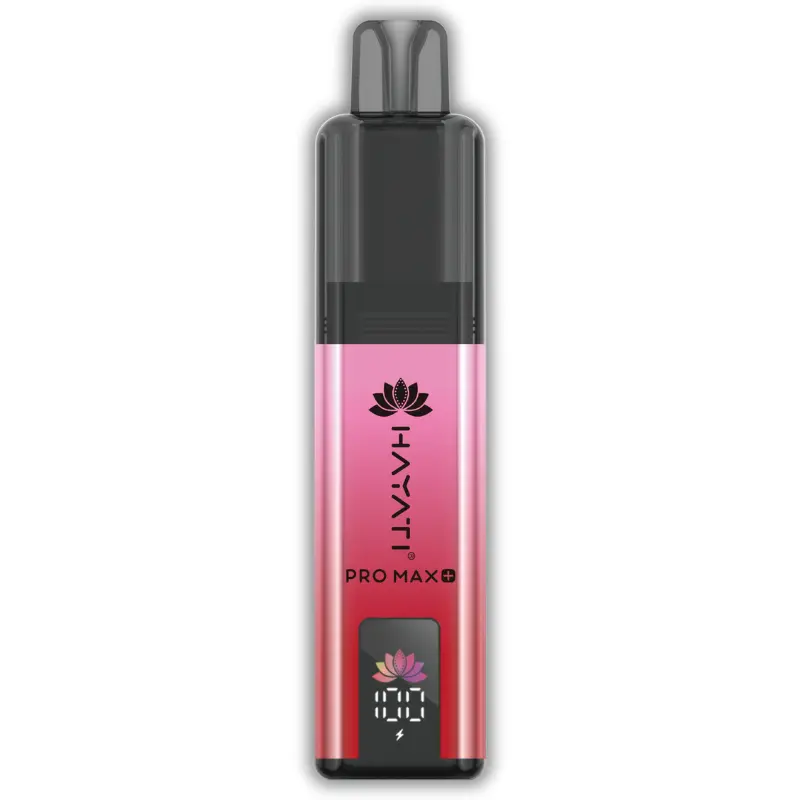
Hayati · Pro Max Plus
Strawberry H’Bubba Hayati Pro Max Plus 6000 Pod Kit
£7.99
✔ In stock — ready to ship
Genuine Hayati
Free over £20
Same-day dispatch
Secure checkout
Strawberry H’Bubba as a complete kit is £7.99: a rechargeable 850mAh body and one factory-filled pod holding twelve millilitres of 20mg nicotine salt liquid, with nothing to assemble and nothing to pour. Hayati put an upper bound of 6,000 puffs on that pod, a laboratory estimate taken off bench equipment rather than a description of anybody's week. All of that is shared with the other 87 listings on the Hayati Pro Max Plus Prefilled Pod Kit shelf, every one of which is also £7.99, so the numbers sort nothing.
The contraction in the middle of the name has already been dealt with and does not need doing again. Our Strawberry H’Bubba Hayati Pro Max Plus Pods page, which is the same liquid at £5.49 without the body, counted every shortened element across all 492 listings, found 77 of them, nine markers and four separate grammars of shortening, and established that this particular clipping points at a branded pink chewing gum rather than at the generic word. That is settled, it is cited here, and one sentence is all it gets.
What that page could not do is the thing this page exists for. It ended on a prediction it was honest about being unable to test: that because a gum accord is a complete flavour in its own right rather than a vehicle waiting to be filled, the fruit word printed in front of an H’Bubba is naming a shade rather than a flavour, and two H’Bubba pods carrying different fruits should therefore taste more alike than two GB pods carrying different fruits. It went further and argued that strawberry is the least promising fruit anybody could have chosen for the job, because a confectionery strawberry and a pink gum accord are both sweet without acid, both engineered for instant recognition, and both weighted towards a long finish, which leaves almost no room between them.
Since then a second page has answered the same question the other way, in print, about this exact product. So the job here is not to admire the prediction. It is to settle it as far as the available evidence allows, say plainly where the evidence runs out, and then describe what this kit is likely to do across a draw and across twelve millilitres on the strength of what survives.
Two pages of ours disagree, and one of them names this kit
Our Blueberry B’Gum Hayati Pro Max Plus 6000 Pod Kit page is the nearest structural relative this listing has: same platform, same price, same volume, a single named fruit under a gum marker with no second side to switch to. It reached a careful verdict about its own blueberry, which is that the berry is absorbed into the accord so completely that you will not taste it as fruit, and that this is a virtue on a single-flavour pod because an absorbed fruit cannot leave a seam.
Then it turned to this kit and said the opposite about strawberry. Its reasoning was that strawberry is louder and pitched higher than blueberry, that it sits on top of a gum base rather than sinking through it, and that this kit therefore has the better chance of arriving as two components a person could point at separately. It is a reasonable argument and it was made in good faith. It is also precisely the reverse of what the pod twin predicted about the same twelve millilitres.
Two shipped pages reaching confidently opposite conclusions is worse than one of them being wrong on its own, because a reader who lands on either will believe they have been told. So this page does not pick a side by preference. It goes looking for something countable.
There is a third opinion on the record and it belongs to Hayati. The Watermelon B’Gum / Strawberry B’Gum Pro Ultra Plus pods page, which is on other hardware and so is not linked from here, worked out what happens when a gum treatment is laid over two fruits behind one collar, and concluded that strawberry of all fruits is absorbed most thoroughly because the accord is assembled out of the same corner of flavour space that a ripe confectionery strawberry occupies. That page is doing the mechanism, it did it properly, and nothing here reopens it. What it did not have, because its subject was a divided pod, was a way of checking the prediction against the catalogue's own behaviour. That is the gap.
What listing copy can and cannot be made to give up
Nobody can taste a description. It needs saying at the front, because the temptation with this kind of material is to let a count stand in for a judgement it cannot make.
What Hayati's descriptions can settle is a narrower question, and it happens to be the exact question the prediction turns on. The prediction is not really about intensity. It is about the job the fruit is given: whether a fruit under this marker is a second flavour that arrives alongside the gum, or a modifier applied to a gum that was already finished. That is a question about construction, and construction is the one thing a copywriter has to commit to in every sentence, because you cannot describe a blend without deciding which component is the subject and which is doing something to it.
So the test is grammatical rather than sensory. Across the gum family and across the gelatine family, who is the subject, what is the verb, and what changes when the fruit changes. There are 36 listings to work with, written at different times for five hardware families, which is enough that a consistent pattern is unlikely to be one writer's habit.
Identical word order in the titles, opposite word order in the copy
Start with the control, because it is the reason the comparison works at all.
Every title in both families puts the fruit first and the marker second. Strawberry GB. Strawberry H’Bubba. Grape GB. Blueberry H’Bubba. Whatever a title's order might otherwise signal, it is the same order in both families, so it cannot explain any difference in how the descriptions are written.
The descriptions do not follow it. In the gum family the copy inverts the title, and it does so almost without exception. On this very listing the gum is what sets the tone and the strawberry is what comes through afterwards, described as making the base taste fruitier and brighter than a plain one. On the dual gum pod, bubblegum is called the constant and the fruit is credited with giving each side its character, with the gum doing the picking up and the turning. On the matching Blueberry H’Bubba / Watermelon H’Bubba Hayati Pro Ultra Plus 25000 Prefilled Pod Kit, the blueberry is folded into a base and the result is called a berry-tinted gum. Three of the four listings that put a named fruit in front of the contracted marker make the gum the grammatical subject and the fruit a modifying operation performed on it.
The fourth is the £5.49 pod, which describes a sugary strawberry wrapped in gum sweetness and so puts the fruit at the centre. That disagreement between a kit and its pod was noticed first by the pod page itself and catalogued later by the Blueberry B’Gum kit page, which found the same split on its own pair and worked out why it happens: on a divided pod the writer is forced to describe the gum as the fixed background, because that is the only way to explain what the collar is doing, whereas on a single-flavour listing nothing constrains them. Both of those observations belong to those pages. What matters here is only the count, which is three to one, with the one being the listing that had the least structural reason to get it right.
Now the gelatine family, which carries the same title grammar and 27 listings to sample. The copy runs the other way and it runs that way consistently. The fruit opens the puff and the confectionery character takes over afterwards. The grape comes first and a gum note rolls in underneath. The blue razz starts things off and the marker takes over towards the finish. On the Rubik listing the inhale is the fruit and the marker has smoothed things out by the exhale. On Blue Razz GB Hayati Pro Max Plus Pod Kit the fruit arrives up front and the chewy sweetness lingers behind it. Where a GB listing names one fruit alone, it says the fruit gets the spotlight, or calls it the headline act, in language nobody would use about a shade.
That is the finding in its plainest form. Two families, one title grammar, and the prose inverts by marker and by nothing else. Under GB, the fruit leads and the treatment is a finish applied late in the draw. Under a gum marker, the gum leads and the fruit is a tint applied to something already whole. Hayati's own copy desk, repeatedly and across hardware they were not writing about together, treats the two markers as doing structurally different jobs, which is exactly the distinction the pod twin proposed and could not check.
The axis one family uses and the other never touches
Word order is suggestive. The next count is harder to argue with, because it is about a property rather than a sentence shape.
Take every listing in the catalogue whose title carries the gum brand in any of its spellings, contracted or written out. There are nine. Read every one for a claim about acidity: tang, tartness, sharpness, sourness, a citrus edge, anything at all. Not one of the nine asserts any. Five of the nine raise the subject only to rule it out, saying there is nothing sharp pulling focus, or no sour or sharp elements, or that the blend is confectionery-led rather than sharp. The other four, this listing among them, do not mention acid in any form. Nine listings, four platforms, four fruits between them counting the plain versions, and the acid channel is empty on every single one.
Now do the same across the 27 gelatine listings, and the pattern is not merely different, it is informative about where acid comes from. Every listing that names blue raspberry or red raspberry asserts a tang, a sharpness or a tartness as a live property of the liquid: a sweet-and-tangy edge with real punch, a sugared sweet with a sour edge, a noticeable sharpness that keeps it from feeling one-note. Red Razz GB / Blue Razz GB Hayati Pro Ultra Plus 25000 Prefilled Pod Kit goes further and distinguishes the two berries from each other by how much tartness each brings. Meanwhile the strawberry and grape listings under the same marker mostly deny acid in the same breath the gum listings do, with one exception, a grape pod that reports a slightly tart, skin-like edge.
Read those two counts together and the conclusion is sharper than either alone. In the gelatine family the acid level of the finished liquid is decided by which fruit is named. Change the fruit and you change whether the product is sharp. In the gum family the acid level is decided by the marker, is always the same, and no fruit has ever moved it. The Strawberry GB Hayati Pro Max Plus 6000 Pod Kit page works through what a confectionery strawberry is made of and what its missing acid was doing, and that account is taken as read. The point being added here is comparative: a GB fruit has an axis it can move and a gum fruit does not.
Three fruits, one axis, and two of them pointing the same way
If acid is closed to them, what are the gum fruits allowed to do? Hayati have attached exactly three fruits to this marker across the catalogue, so the answer is short and can be read off directly.
Blueberry darkens. It is given a soft dark-berry sweetness on one listing and produces a gentle, berry-tinted gum on the other, and on the kit description the switch is framed as going from the darker berry gum to the brighter melon one.
Watermelon lightens. It turns the gum lighter and juicier on the pod listing and gives a lighter, fresher result on the kit.
Strawberry lightens. This listing credits it with a red-fruit juiciness, and says the effect on the base is to leave it fruitier and brighter than a plain one.
One axis, running from darker and heavier to lighter and brighter, and every fruit Hayati have ever put in front of this marker is described only in terms of where along it the gum ends up. There is no second dimension. Nothing adds structure, nothing adds grip, nothing adds a top note the accord did not already have. And of the three fruits available, two of them, watermelon and strawberry, are described as doing the same thing in nearly the same words. Both are called juicy. Both are said to make the result lighter or brighter. If you were handed those two descriptions without the fruit names attached, there is very little in them to tell you which was which.
That is the prediction holding inside the evidence, and holding harder than it was originally stated. The pod twin guessed that two H’Bubba fruits would converge. The copy suggests that Hayati's own writers, describing two different fruits under this marker on two different platforms, could not find distinct vocabulary for them either.
What the recipe book does when it wants a strawberry gum to work
One more count, and this one is about product decisions rather than prose, which makes it independent of everything above.
Nine listings in 492 put strawberry on a gum base of some kind. Seven of the nine bring watermelon in as well. Three of them blend the two fruits into a single gum on the Fruit Bomb / Straw’ Watermelon B’Gum Hayati Pro Ultra Plus 25000 Prefilled Pod Kit and its siblings, including the cheaper Fruit Bomb / Straw’ Watermelon B’Gum Hayati Mini Ultra Pod Kit at £3.99. Two more blend them in a bottle and a small pod under the spelled-out name. Two put a strawberry gum and a watermelon gum on opposite sides of one collar. The remaining two, the only two in the entire catalogue that give strawberry a gum base with no watermelon anywhere near it, are this kit and its £5.49 pod.
That is worth stating carefully, because it is easy to over-read. It is not proof of anything about the liquid. A product range makes decisions for commercial reasons as often as for formulation ones, and watermelon may simply sell. But it is a striking coincidence that the fruit Hayati reach for seven times out of nine when building a strawberry gum is the one fruit that the Watermelon B’Gum / Strawberry B’Gum analysis identified as bringing something the accord genuinely lacks, which is a thin, green, watery top edge. On that reading the range's own habit looks like an implicit admission that strawberry alone on a gum base has nothing to push against, and that something thin has to be added to give the pod an edge to be noticed by.
Which makes this kit the interesting case rather than the safe one. It is the version with the safety net removed.
One rare word, and a sentence Hayati normally write in order to deny it
Three pieces of vocabulary on the record, weighed against how often the catalogue uses them, because a word that appears on a quarter of the listings is furniture and a word that appears twice is evidence.
The word tinted appears in two descriptions out of 492. One of them is a lemonade. The other is the Blueberry H’Bubba kit, describing what a fruit does to a gum base. The pod twin arrived at the word tint by reasoning from the register, without having gone looking for it in the data. Hayati got there independently, in the only place in the catalogue where the question arises, and used it of a fruit under precisely this marker.
Second, and closer to home. The phrase this listing uses for what the two components do to each other, saying that they blend closely, appears on no other listing in 492. Hayati describe hundreds of blends and they do not otherwise reach for it. On the one listing where they do, the sentence continues by ruling out layers explicitly and delivering a single note in their place.
Third, and this is the one that changes the weight of the whole passage. Hayati use the phrase a single note nine times across the catalogue. Seven of those nine are denials. No single note takes over. Not a single note repeated. Without committing to a single note. It is house vocabulary for a liability the copywriter is reassuring you about, and the reassurance is usually the point of the sentence. Exactly two listings in 492 use it as a description of what a product is, and one of those is a tobacco bottle where a single note is the entire proposition. The other is this kit.
So when Hayati say of this liquid that it resolves into one note rather than two layers, they are not using a stock phrase. They are asserting, in vocabulary they normally deploy defensively, the exact property their own pod listing's ordering implies is not there, and the exact property the pod twin predicted from the register. On their own product, the manufacturer has sided with the prediction.
Where this lands, and at what strength
Taking the four counts together, here is the verdict, pitched at what each part of it will bear.
The pod twin's prediction survives the only test the published material can run. Across two marker families with identical title grammar, Hayati's copy consistently makes the fruit the subject under GB and the gum the subject under a gum marker. No gum listing in nine asserts acid and no gum fruit has ever moved that axis, while in the gelatine family the acid level tracks the fruit directly. The three fruits ever fitted to this marker are described on a single light-to-dark axis, and two of the three sit on the same side of it in near-identical words. This listing states the fusion outright in phrasing the catalogue uses nowhere else. That is four independent lines all pointing one way, and none of them was available when the prediction was made.
The Blueberry B’Gum kit's opposite reading is not refuted, and saying otherwise would overstate what has been shown. Its claim rests on a real property, which is that a confectionery strawberry is pitched higher and louder than a blueberry, and nothing above measures pitch. What the counts do show is that the claim has no support in the catalogue's own behaviour, and that the one place the two readings could be checked against a manufacturer's statement, which is this listing's own copy, goes the other way. The narrowed and survivable version of the Blueberry B’Gum kit's point is that strawberry should be more audible on a gum base than blueberry is, which is a comparison between two degrees of quiet rather than a claim that it arrives as a separate component. Put that way the two pages stop contradicting each other, and that is almost certainly the honest resolution.
What no amount of counting can settle is the question a buyer actually has, which is whether they personally will taste a strawberry. Copy is copy. Hayati's writers may be following a house convention about how gum products get described rather than reporting on liquid, and the fact that the convention is consistent across five platforms is evidence that it is a convention. This page will not pretend a census has been a tasting. What it will do is describe what follows if the reading is right, flag which parts would look different if it is wrong, and then hand over a method.
How a fused pair is likely to arrive across a draw
Everything in this section is inference from construction, labelled as such, and the construction is the one established above: two accords that duplicate each other rather than complement each other.
The first thing to expect is that there is no sequence to report. A layered liquid gives you an inhale and an exhale that differ, because one component is more volatile than the other and reaches you first. That difference needs the two components to be made of different material. Here they are largely made of the same material. A gum accord is a deliberately unresolvable stack of fruit esters over a wide sweet base with a rose-like lift on top, and the Blueberry B’Gum pods page sets out what goes into one and why it survives being turned into vapour with so little loss. A confectionery strawberry is a loud, jammy, low-acid ester construction with a faint floral of its own. Put the second on the first and most of what the strawberry brings arrives at the same moment, in the same register, as material the accord was already supplying. There is nothing for a sequence to be made out of.
The second is that the strawberry should still be legible, and legible in a specific and limited way. Absorbed is not the same as absent. Adding more of something to a channel that is already occupied does not produce a new voice, but it does move where that channel sits. The prediction is a gum that reads warmer and higher than a plain one, with more red in it and slightly more of the jammy, cooked-sugar quality that a strawberry accord supplies in quantity. That is also the closest thing to a fact this page can offer, because it is exactly what Hayati themselves claim: a base made to read fruitier and brighter. It is a shift in the accord, not an addition to it.
The third is about the floral lift, and it is the one place where this listing is unusually informative. Only three listings in the gum family mention a floral quality at all, and this is the only one carrying the contracted marker that does. Hayati call the base rounded, sugary and a little floral in the same breath. That matters because the rose-like lift is the single property that separates a gum accord from ordinary sweetness, and a strawberry brings a faint floral of its own. Two florals in the same region should read as one slightly stronger floral, which is the clearest illustration available of what duplication rather than layering means in practice. If the pod is doing what the name promises, that lift is what you will find sitting just above the sugar on the exhale.
The fourth is what is missing, and on this liquid the absences are structural rather than incidental. No acid, from either component and confirmed by nine listings of the family. Nothing cold: there is no cooling word in the title or the description, and of the twenty listings in this catalogue that are a gum flavour by title, exactly one carries a cooling term, a 10ml bottle. Warmth is the family default rather than a decision anybody took about this blend. Our Blue Frozen pods page owns the wider census of how Hayati's cooling vocabulary behaves, and that finding is cited rather than re-run. No green note, no stalk, no skin, nothing to end the finish early. What that produces is a long, uninterrupted, entirely sweet tail with nothing arranged to cut it off. Whether that reads as generous or as wearing is the single property most likely to decide whether you buy a second one, and it is a description rather than a complaint.
The one thing a fused flavour cannot do, which is tell you it has finished
This is where the construction stops being an abstract question about naming and starts costing money, and it is the part of the analysis that has the clearest practical consequence.
Every sweetened pod on this shelf declines before it empties, for reasons that are not in dispute. What differs between pods is how loudly the decline announces itself, and the usual announcement is differential. A liquid built from unlike parts loses its lightest part first, so what you notice is not that there is less flavour but that a specific thing has gone missing and the balance has shifted. That is a signal, and it is the signal both of this kit's nearest neighbours tell their readers to watch for: the Strawberry GB kit page works through what its accord loses first, and the Blueberry B’Gum kit page tells you to listen for the floral lift on the exhale because its disappearance is what marks the end.
Neither instrument is available here, and the reason is the thesis of this page. If the strawberry and the gum are made of the same kind of material, sitting in the same region, then whatever a crusting coil takes from one it takes from the other in the same proportion. Nothing goes missing selectively, because there is no part that is distinguishable enough to be noticed leaving. The flavour does not change shape as it ages. It changes scale. And a change of scale is far harder to detect from the inside than a change of shape, because a palate tracks a slow reduction downward without ever flagging that it has done so.
The pod twin described the end state accurately, which is a broad sugar with nothing identifying in it, and that account is not being restaged. The addition here is about the approach rather than the destination: this liquid should get there without an audible transition, which makes it one of the harder pods on the shelf to retire at the right moment.
That has an interesting consequence for a claim on a sibling listing. The Hubba Bubba pods page is built on a sentence Hayati printed about the plain version of this gum, saying that it rarely loses its character as the pod runs down, and it sets that against the bottled listing's warning that candy liquids load hardware faster than a mint or a citrus would. It also notes, correctly, that a kit buyer holds exactly one pod and so cannot run the test that would settle it, which applies to you. Nothing here settles it either. What the fusion reading does supply is a way both statements can be true at once without anybody having been careless: a flavour that is genuinely one thing has no part that can audibly go, so it can lose real intensity while keeping its character, which is precisely what a copywriter would report as the character holding. The claim and the warning are measuring different quantities. That is an interpretation rather than a finding, and the sibling page's test is still the only thing that would decide it.
The practical instruction that falls out of this is short, and it is not the usual one. Since the internal signal is unreliable on this liquid, use an external one. Note what the pod is like on the first day, in one specific term rather than a general impression, and the term to use is the floral lift on the exhale, since that is the property this listing puts on record and the one the accord depends on. Then check against that memory every few days rather than against how it tasted an hour ago. A comparison against yesterday will always come back clean on a flavour that only shrinks.
Who this suits, and who will find it tiring
The clearest statement of who should buy this is the one Hayati make, which is that it sits at the sweet end of the platform and is aimed at a dessert preference rather than a fruit one. Everything above refines that rather than contradicting it.
Buy this if what you want is the gum, and you want it a shade warmer, redder and jammier than plain. On that reading the analysis is entirely positive, because a fruit absorbed into an accord cannot produce a join, and one coherent flavour is the only thing a pod with no collar can usefully be. The Sweet Vapes shelf runs to 61 listings and only nine of them are Pro Max Plus kits, so if the confectionery register is what you are after, the choice on this hardware is narrower than the 88-listing shelf suggests.
Do not buy this if the word strawberry was the reason you stopped scrolling. Everything counted above says the fruit is operating as a shade, that you are unlikely to meet it as a separate thing, and that the disappointment would be predictable from the construction rather than a sign of a bad pod. There are nine other strawberries on this shelf that treat it as the flavour.
And think twice if you intend this to be the only liquid you use. One accord, no acid, no chill, a long finish and no internal contrast is close to the most fatiguing combination the range offers, for the same reason it is coherent. There is nothing in the construction that resets your palate between draws.
The comparison the prediction needs, and why you cannot run it here
A prediction about two fruits under one marker needs two fruits under one marker, and here is the awkward part. Strawberry is the only fruit Hayati have ever put in front of the contracted gum marker on the Pro Max Plus. The other two fruited versions live on the Pro Ultra Plus. So the comparison the pod twin proposed cannot be run on the hardware this kit contains, at any price, because the second half of it does not exist on this platform.
It does exist elsewhere, and the catalogue has assembled something close to a purpose-built pair without meaning to. Blueberry H’Bubba / Watermelon H’Bubba Hayati Pro Ultra Plus 25000 Prefilled Pod Kit at £11.99 holds two fruits under the gum marker, and Grape GB / Strawberry GB Hayati Pro Ultra Plus 25000 Prefilled Pod Kit at the same price holds two fruits under the gelatine marker. Two markers, two fruit gaps, one collar each, and in both cases the switch is made by turning the mouthpiece and can be made dozens of times in a session. If the prediction is right, the two sides of the first should be harder to tell apart than the two sides of the second.
Two cautions before anybody spends £23.98 on settling an argument. Both pods run their two reserves through one shared coil and one shared airway, so the first several draws after a switch are a mixture rather than a reading, and the Watermelon B’Gum / Strawberry B’Gum page sets out how to establish your own carryover figure before scoring anything. And the fruit gaps are not equal: blueberry against watermelon is a wider gap than grape against strawberry, which works against the prediction rather than for it and makes a result in its favour more meaningful than a result against it.
For a reader who simply wants to know whether the strawberry in this kit is audible, there is a far cheaper comparison and it is on the same shelf at the same money. Run this against Strawberry GB Hayati Pro Max Plus 6000 Pod Kit. Same fruit, same platform, same twelve millilitres, same price, same absence of acid, and the only variable is which confection the fruit has been treated with. If the fruit reads at roughly the same volume in both, the marker is not doing much. If it reads clearly in the GB pod and merely as warmth in this one, the reading above is holding.
The kit, kept deliberately short
There is almost nothing left to say about this hardware that the shelf has not said dozens of times, so the words go to the liquid instead.
Two items are in the box: a rechargeable 850mAh body and one prefilled pod carrying the twelve millilitres. Nothing needs filling, nothing needs assembling, and no accessories beyond those two are listed. The coil and the wick are built into the pod and leave with it. When the pod is done the body carries on and a replacement pod goes in.
The one specification that bears on a liquid like this one is not printed anywhere, which is the sweetener load. Confectionery recipes carry more of it than fruit or citrus ones, and sweetener is what decides how fast residue builds on a coil and therefore how long the pod keeps sounding like itself. Since Hayati publish no figure for it, and publish nothing about the coil's resistance, its wire or its wicking material either, treat the flavour family as the stand-in and take your reference from the day you opened it. Any coil figure you see quoted for this pod anywhere is somebody's guess.
One hedge and this section is finished: match the range name printed on your device to the range named in this title before you order a second pod, because a hardware decision is worth more taken from the moulding than from a retail page. Everything else about this platform belongs equally to all 174 listings on the Hayati Pod Kits shelf and is set out on the Pro Max Plus kit shelf rather than here.
What this listing puts on record
The rows most people scan for are at the bottom. The rows at the top are the ones this page has spent its length establishing, and they are tagged where they are inference.
| How the two components are arranged | Fused rather than layered. Hayati state it directly and the phrasing they use appears on no other listing in 492 |
| The fruit's published job | To make the gum read fruitier and brighter than a plain one. A shift in the base, not a second voice |
| Fruit audibility as a separate flavour | Low. Inferred from four counts, not published |
| Acid | None claimed here, and none claimed on any of the nine gum listings in the catalogue |
| Floral lift | Named on this listing, which is the only one carrying the contracted marker that mentions it |
| Cooling | No cooling term in the title or the description |
| Price complete | £7.99 |
| The same liquid without a body | £5.49 |
| In the box | A rechargeable 850mAh body and one prefilled pod |
| Liquid | 12ml, factory filled, 20mg per millilitre as a nicotine salt |
| Pod | Coil integrated, not built to be opened or topped up |
| Bench puff figure | An upper bound of 6,000, produced on test equipment |
| Other listings of this liquid | One, the replacement pod. No bottle, no other platform |
Two of the conventional rows deserve a sentence each. Twenty milligrams per millilitre is where United Kingdom law stops rather than a recommendation aimed at anybody, and every prefilled pod in this range carries the same figure for that reason. Nicotine is addictive, and neither the strength nor the flavour alters that. A salt preparation is what lets a figure that high work at low power through a narrow, restricted draw, and while this listing does not name the preparation, the corpus states it consistently and nothing else would function in the format.
The bench figure deserves more scepticism on a confectionery liquid than on a lean one, and not because it is wrong. It measures throughput on fresh hardware at a fixed cadence and has no opinion whatever on whether the accord still resembles itself. On a sugar-heavy recipe the point at which you lose interest and the point at which the reservoir runs out are further apart than they would be on a citrus pod off the same rack, and on this particular recipe, for the reasons set out above, the first of those two points is unusually hard to spot.
On the arithmetic between this and the pod, the whole decision is £2.50 wide. That is what the body costs, once, and it is roughly a third of the kit price. If you do not own a Pro Max Plus, it is the cheapest route to this liquid that exists, because the liquid exists nowhere else. If you do own one, there is no argument for the kit at all and the refill listing is the purchase.
What to buy instead, sorted by what you actually wanted
If it was the gum
Then the only real question is which shade, and there are two answers on this platform. Blueberry B’Gum Hayati Pro Max Plus 6000 Pod Kit is the same idea pulled the other way along the one axis available: darker, heavier and duskier where this one is warmer and higher. Its page argues the blueberry vanishes into the accord entirely, which is the same verdict reached here about strawberry, arrived at by a different route. Between the two, this is the lighter and that is the deeper, and on the analysis above that is genuinely the whole difference.
If you want the gum with nothing in front of it, the plain versions exist on this platform as a kit and a refill under the unclipped brand name, which the Hubba Bubba pods page covers in detail. They are the control condition for everything on this page, and running one against this kit is the cleanest way to hear what the strawberry is actually contributing.
If the confectionery register was right but not the gum
Strawberry GB Hayati Pro Max Plus 6000 Pod Kit is the direct swap and the one comparison this page recommends above all others: identical fruit, identical hardware, identical money, one variable. Its listing describes a jammy, mellow strawberry with the fruit's own bright top still recognisable, which is a fruit-first description of the kind the gum family never produces. Blue Razz GB Hayati Pro Max Plus Pod Kit shows what the gelatine treatment does to a fruit that arrives with acid already in it, and is the quickest way to feel the difference between a treatment that softens a tang and one that has no tang to soften. On the larger hardware, Grape GB / Strawberry GB Hayati Pro Ultra Plus 25000 Prefilled Pod Kit puts two of them behind one collar at £11.99.
If the strawberry was the point
Buy a fruit rather than a sweet, and the shelf is well stocked. Strawberry Kiwi Hayati Pro Max Plus Pod Kit is the sharpest correction available, the kiwi supplying acid and a green finish, which between them are close to a list of everything a gum accord takes out. Strawberry Cherry Cranberry Hayati Pro Max Plus Pod Kit ends dry and tangy on the cranberry and is about as far from this kit as a red pod on this shelf goes. Strawberry Watermelon Hayati Pro Max Plus Pod Kit is the untreated version of the pairing the range keeps reaching for, and holding it against this kit is the cheapest way to hear what a gum accord does to two fruits at once. Strawberry Guava Hayati Pro Max Plus 6000 Pod Kit is the interesting near-miss, since guava is floral too, but from a real fruit, and it reads quite differently from a manufactured lift.
For more to track across a session, Strawberry Raspberry Cherry Hayati Pro Max Plus Pod Kit and Strawberry Raspberry Blueberry Hayati Pro Max Plus Pod Kit spread the work over three berries, which is the structural opposite of one fused note.
If it is the sweetness you need a brake on
Strawberry Raspberry Ice Hayati Pro Max Plus Pod Kit answers the specific complaint of a finish that will not end, using cold rather than acid to shorten it. Blueberry Cherry Cranberry Hayati Pro Max Plus Pod Kit goes the tart route instead, since cranberry does not do sweet. And Blue Razz Mojito Hayati Pro Max Plus 6000 Pod Kit brings mint and lime, which is the most decisive palate reset on the shelf at this price and a sensible thing to keep running alongside a confectionery pod.
Rotation partners, which this kit genuinely needs
A single sugared note benefits from something dry beside it more than a sharp flavour does. Blackberry Raspberry Hayati Pro Max Plus Pod Kit is dark and unsweetened-feeling by comparison, Mixed Berries Hayati Pro Max Plus 6000 Pod Kit gives a palate several things to follow, and on a closed pod format there is no penalty for switching between them, because the wick leaves with the liquid and nothing carries over into the next pod you fit.
Names that tell you less than this one does
Worth a mention for perspective. Black Mamba and Mr Blue Hayati Pro Max Plus Pod Kit are on the same shelf at the same money and neither puts an ingredient in its title at all. Whatever the contraction costs you, Strawberry H’Bubba names a fruit and a register, both of which are genuinely in the pod. A clipped name that commits to two things beats a clean name that commits to none.
The same decision on other hardware
On the largest format, Strawberry Raspberry Ice Hayati Pro Ultra Plus 25000 Prefilled Pod Kit and Straw’ Cranberry Cherry / Cherry Ice Hayati Pro Ultra Plus 25000 Prefilled Pod Kit take the strawberry decision towards cold and tart respectively, at much larger volume. Neither is a substitute for this kit, since both are the opposite register, but both are where the money goes if volume matters more than sweetness.
For browsing rather than deciding, Strawberry Vapes runs to 82 listings, Berry Vapes to 225, and the full Hayati range holds all 492 for anyone who would rather scan the lot than guess a search term.
Living with twelve millilitres that only ever change scale
Standard pod handling applies here as everywhere and you have read it before, so each item below is attached to the thing that makes this particular kit behave the way it does, which is a heavy sweetener load in a flavour with no internal contrast to lose.
Stand a fresh pod in the body for a few minutes before the first draw, longer if the box has come in from a cold van. Wicking has to wet through before heat arrives. On a lean liquid a brief dry moment costs you a bad puff; on a sugar-heavy one it bakes something onto the coil that stays there for the life of the pod, and since this accord depends on a floral lift that lives at the top of the volatility range, the thing that first dry pull damages is the thing you paid the £2.50 premium to get in a box with a body.
Leave a few seconds between draws. A coil that is not allowed to re-wet runs hot and dry-spots, and every dry spot on a sweetened recipe becomes another patch of crust. Crust takes the light aromatic material before anything else, and here the light aromatic material is the whole of what makes this read as gum rather than as sweetness, so chaining pulls on this kit is spending flavour to save seconds.
Do not treat a fading pod with a longer pull. More heat on a sugared liquid pushes it towards a burnt-sugar character, and this one has neither acid nor coolant to hide behind while it does. Shorter draws with a gap between them will usually bring the accord back for a while.
Take a break before deciding it has died. A constant sweet single-register aroma flattens perceptually across a long uninterrupted run, which is a fact about how the nose reports change rather than steady state, and it is the commonest reason somebody retires a confectionery pod that is perfectly fine. Put it down for twenty minutes and come back to it. That advice is worth more on this liquid than on most, because a flavour with no internal contrast gives a palate nothing to re-anchor on.
Keep spares cool, dark and upright, out of reach of children and pets, and not on a windowsill or in a car. Warmth thins the liquid, encourages it past seals, and strips the light end of an ester recipe slowly at room temperature and quickly above it. A pod that has spent a hot week somewhere bright has already shed part of the lift before the coil ever touches it, and the result is indistinguishable from an aged coil, which makes it impossible to diagnose after the fact.
When it is finished it is small electrical waste rather than household rubbish, because the coil, its metal and whatever residue the wick never released all stay inside the pod, and the body holds a cell. Vape retailers take both back and local recycling centres accept small electricals. The line earns its place on a listing like this one in particular, since a pod that has gone characterless with liquid still sloshing in it is exactly the one somebody drops in a bin in irritation without thinking about where it belongs.
Questions this listing raises
Will I actually taste the strawberry?
Probably not as a separate thing you could name. Four independent counts across Hayati's own descriptions point the same way: the fruit under this marker is consistently described as modifying the gum rather than arriving beside it, no listing in the nine-strong gum family claims any acid, the three fruits ever used are described on a single light-to-dark axis, and this listing states outright that the two components resolve into one note. Expect a gum that reads warmer and redder than plain, rather than a strawberry.
Another page on this site says the strawberry should be more audible. Which is right?
Our Blueberry B’Gum kit page argued that strawberry, being louder and higher-pitched than blueberry, sits on top of a gum base rather than sinking into it. Nothing counted here measures pitch, so that is not refuted. What the counts show is that the catalogue's own behaviour does not support it and that this listing's copy goes the other way. The version of its claim that survives is comparative: strawberry should be somewhat more audible than blueberry, which is a difference between two degrees of quiet rather than a second flavour arriving.
What does the H’Bubba in the name stand for?
It is a shortened form of a branded pink chewing gum. Hayati never expand it in a title, but every listing carrying the marker says bubblegum somewhere in its description, including this one, so the register is confirmed by the manufacturer even where the brand reference is left implied. The Strawberry H’Bubba pods page counts the full shorthand convention across the catalogue and is the page to read if the naming itself is what interests you.
Is there any ice or menthol in it?
No cooling word appears in the title or in the description, and Hayati flag coolant in a title consistently across the range. Expect a long, warm, sugary finish with nothing arranged to end it early. Coolant content is not published on any listing, so naming is evidence rather than a declaration, but the gum corner of this catalogue is warm almost without exception.
Is this the same liquid as the £5.49 pod?
Hayati sell both under one flavour name at the same volume and the same strength, which is good evidence that it is. No recipe is published for either, so treat it as a reasonable expectation rather than a confirmed fact. The two listings describe the blend in opposite orders, which is a disagreement between two pieces of copy rather than between two mixes. What you are choosing is packaging: £7.99 with a body, £5.49 without.
Should I buy the kit or the pod?
The kit if you do not already own a Pro Max Plus body, since the device costs £2.50 once and nothing thereafter, and this liquid is not sold in any other format or on any other platform. The pod if you already own one, in which case there is no argument for the kit at all.
How do I tell when the pod is spent?
Harder than usual on this one, and that follows from its construction. A liquid made of unlike parts loses its lightest part first and the balance visibly shifts, which is the signal most pods give you. Here the two components sit in the same region, so the flavour shrinks rather than changing shape, and shrinking is difficult to notice from the inside. Fix a reference on the first day, specifically the floral quality on the exhale, and check against that rather than against yesterday.
Why is this the only strawberry gum in the range without watermelon in it?
Nine listings in 492 put strawberry on a gum base and seven of them bring watermelon along. Only this kit and its refill give strawberry the base alone. Whether that reflects a formulation judgement or a commercial one is not published, but watermelon is the one fruit a sibling page identified as bringing something a gum accord genuinely lacks, which is a thin, watery top edge, so the pattern is at least consistent with the range compensating for something.
Can the pod be refilled when the liquid runs out?
No. It arrives filled and closed with the coil built in and no accessible fill point, so the liquid and the coil finish together and the whole pod is replaced at £5.49. On a heavily sweetened recipe that is convenient rather than limiting, because the residue leaves with the pod and nothing carries into the next flavour you fit.
Is the nicotine a salt, and why 20mg?
Yes, 20mg per millilitre as a salt preparation, which is standard for a prefilled pod at that strength and is the figure used throughout this range. Twenty milligrams is where United Kingdom law stops for consumer e-liquid rather than a decision taken about this flavour. Nicotine is addictive.
How seriously should I take the 6,000 figure?
As a way of ranking one format against another and no further. It is an upper bound produced by a machine drawing at a fixed cadence on fresh hardware, and it has no view on whether the flavour still resembles itself. On a sugar-heavy liquid the gap between that number and the point where you stop enjoying the pod is wider than it would be on a lean one.
Is it too sweet to use all day?
For many people, yes. It sits near the top of the range for sweetness with no acid, no citrus and no cooling anywhere to counterweight it, and there is an additional wrinkle on a fused single note, which is that a constant sugary aroma flattens perceptually over a long run without anything changing in the liquid. Running something dry or cold alongside it is a sensible habit rather than an admission of anything.
Where that leaves it
Strawberry H’Bubba as a kit is £7.99 for an 850mAh rechargeable body and twelve millilitres of 20mg nicotine salt liquid in a sealed pod, with a bench ceiling of 6,000 puffs, no cooling in it anywhere, and a sugar level near the top of the platform with nothing pulling against it. The device accounts for £2.50 of the price and the same liquid is £5.49 on its own, which is the only other place it exists.
On the question this page was written to settle, the pod twin's prediction holds as far as published evidence can carry it. Hayati's copy inverts the title's word order under a gum marker and does not under a gelatine one, across 36 listings and five hardware families. No gum listing in nine claims any acid and no gum fruit has ever moved that axis, while in the gelatine family the acid tracks the fruit directly. The three fruits ever fitted to this marker are described only in terms of where they leave the gum on a single light-to-dark axis, and two of the three are described in nearly the same words. This listing says the components fuse, in phrasing used nowhere else in 492, and it says it using a construction Hayati elsewhere reserve for denying exactly that property. The competing reading on our Blueberry B’Gum kit page is not disproved, but it narrows to a claim about degree rather than about kind, and at that width the two pages agree.
What none of it can tell you is what a particular person will taste, and this page has not pretended otherwise. If the reading is right, what you are buying is one coherent flavour rather than two, which is the best thing a pod with no collar can be, and the fruit in the title is a warm red shift applied to a gum that was already complete. Watch the floral lift on the exhale, because on a liquid that only ever changes scale, it is the one property that will tell you the pod has finished before the reservoir does.
Strictly for adults aged 18 and over. Nicotine is an addictive substance.
You might also like


