
Home / Hayati Pro Max Plus Prefilled Pod Kit / Midnight Dream Hayati Pro Max Plus 6000 Pod Kit
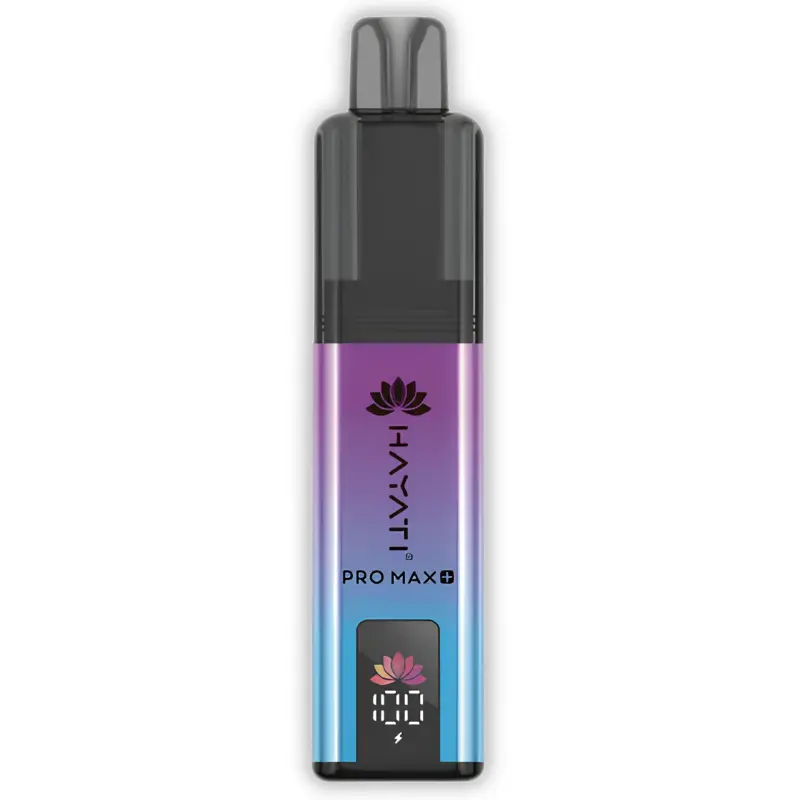
Hayati · Pro Max Plus
Midnight Dream Hayati Pro Max Plus 6000 Pod Kit
£7.99
✔ In stock — ready to ship
Genuine Hayati
Free over £20
Same-day dispatch
Secure checkout
Two words, and neither of them is something a person can taste. Almost every other listing on this grid hands over a parts list in the title, so the buying decision is made before anybody reads a description. Blackcurrant Mango is two fruits and the order they show up in. Mango Peach Pineapple is three. Midnight Dream is an hour of the night and a state of sleep. Between them those two words name no fruit, no fruit family, no sweetener, no coolant and no acid.
That makes this listing harder to read than it first appears, and measurably harder than the other unnamed pods sitting beside it. Sunset Aura withholds its recipe as well, but a sunset is a picture of something, with a palette most people would draw the same way if you asked them. Midnight is not a picture. It is a point on a clock, and the only visual property attached to it is the absence of light. The second word contributes even less than that, because a dream has no colour, no temperature and no texture that anybody could agree on.
So this page does not attempt a tasting note. Nobody can write one honestly for a liquid whose maker has published no ingredients. What it does instead is work out how much information a name of this shape carries, which turns out to be one property rather than a flavour, weigh the two catalogue tags against the listing by how rare each of them is, and mark where the published record ends and the reasoning starts.
The commercial part is brief. £7.99 buys the whole arrangement: a rechargeable Pro Max Plus body together with one pod that arrives already holding its liquid, working from the moment the wrapper comes off. When that pod is done the body stays in service and the same liquid comes back as Midnight Dream Hayati Pro Max Plus Pods at £5.49. Both figures repeat across most of the Hayati Pro Max Plus Prefilled Pod Kit shelf, which is exactly why the hardware gets a few hundred words below and the name gets several thousand.
Two words, and only one of them is doing any work
Treat the name as a piece of grammar rather than as a mood, because it has two slots and they behave differently.
The second slot is a series label. Dream is not unique to this pod. Hayati also sell Summer Dream, and they sell it widely: it turns up on several different devices and in bottled form as well, which makes it one of the better travelled names in the range. Midnight Dream, by contrast, exists on this catalogue only as this kit and its matching replacement pod. Two products sharing a coined second word is the same construction that produces Sunset Aura, Galaxy Aura and Peach Aura on the other side of the range.
Peach Aura is the useful one, and it settles the grammar question on its own. It keeps the series word and puts a literal fruit in front of it. That is only possible if the second word is a label rather than a description, and if whatever flavour information a name in this style is going to carry lives entirely in the first slot. Nobody writes Peach Aura unless Aura is free of meaning. The same reading applies here: Dream is the slot filler and Midnight is the word to interrogate.
Two caveats before that conclusion gets leaned on. The sample is tiny, two Dreams and three Auras out of several hundred listings, and a pattern that size is worth noticing rather than relying on. And nothing in this product's data groups it with anything: no Dream family is declared against the listing, so the pairing with Summer Dream is an observation a shopper can make by scrolling the catalogue rather than a statement Hayati have made.
There is a practical consequence to the narrowness as well. Summer Dream can be sampled cheaply, because it exists in formats that cost less than a kit. Midnight Dream cannot. It appears here and as a pod, both at the same liquid, so there is no low-cost route into finding out what it is. That matters more on an unnamed blend than it would on a declared one, and it is a genuine mark against this listing rather than a neutral fact.
Now compare the first slot against what the rest of the grid does with that position. Titles here run on a gradient rather than falling into boxes. At one end a name is a recipe. In the middle sit the partial disclosures: Blue Fusion gives a colour and then a process word that explains nothing, and Mad Blue gives the same colour with an intensifier bolted on. Neither names a fruit, but both commit to a hue, and in this trade a hue is close to a flavour family. Midnight Dream does not manage even that. It commits to a level of darkness and stops.
Set out flat: the published record and the holes in it
Before reasoning from evidence it is worth seeing the evidence, because there is less of it than a product page normally implies and the reasoning is only as strong as the list it rests on.
What Hayati state:
- The product is called Midnight Dream and it is a Pro Max Plus 6000 pod kit.
- It is sold complete: a rechargeable body plus one pod that arrives filled.
- The pod holds 12ml of liquid at 20mg nicotine.
- The body carries an 850mAh cell.
- The manufacturer's figure for the pod is a maximum of 6,000 puffs, produced on bench equipment under controlled conditions rather than measured in anybody's pocket.
- The stock code is HPM-6K-KIT-MIDNIGHT-DREAM and the price is £7.99.
- The catalogue files it on six shelves, of which two describe flavour: Berry Vapes and Exotic Vapes. The remaining four are about format and recency rather than taste.
- One strength is offered. No alternative concentration is listed against this flavour.
What Hayati do not state:
- Any fruit. Any ingredient at all, of any kind.
- Any figure for sweetness, for acidity or for cooling. None of those exists for any listing in the range, so this is not a gap specific to Midnight Dream.
- The ratio of vegetable glycerine to propylene glycol in the pod.
- The resistance of the coil.
- Which note leads on the inhale, what happens on the exhale, or how the profile behaves across the pod.
- Whether the blend is built from one fruit, two, or a composite where nothing identifies itself.
Two things fall out of those lists. Anyone who tells you what is in this pod is repeating a guess or making one, and a guess quoted by three retailers starts to look like a source. And the silence is not uniform: the numbers are all there, given flatly and without hedging, and only the flavour goes missing.
Midnight fixes the brightness and leaves the colour open
For a word to predict a flavour it has to carry a property that flavours also have. That is the whole mechanism, and in this category the bridge is colour, because packaging, liquid and fruit are all colour-coded and shoppers read the artwork before the text.
Colour in ordinary use has three separable components: hue, which is which colour it is, value, which is how light or dark it is, and saturation, which is how vivid. A sunset name is readable because it carries hue. Amber, orange, red. Hue maps onto fruit with reasonable reliability, so a warm name genuinely narrows the field to mango, peach, apricot and the softer red berries.
Midnight carries value and nothing else. It says dark. It does not say which dark. The dark half of a shelf in this market holds blackcurrant, blackberry, blueberry, grape, black cherry and the whole blue confection family, which between them cover at least four distinct flavour experiences that happen to share a position on a lightness scale. Knowing a liquid is dark narrows the field by roughly half and then stops dead.
Set the inference chain out in full so the weak link is visible. Midnight means night. Night means the absence of light. Manufacturers who choose a dark image tend to attach it to fruit that is conventionally drawn dark. Therefore the blend probably sits in the dark half of the range. Steps one and two are definitional. Step three is a convention, and it is a convention about how things get named, not a rule about what goes in a bottle. A brand is free to put a dark image on a liquid with nothing dark in it because the artwork looked right on a grid of ninety products, and no obligation prevents that.
Granting the convention anyway, because it is genuinely well established, the output is still a set rather than an answer. It is a defensible working assumption that Midnight Dream belongs to the dark half. It is not defensible to go one step further and name the fruit, and a page that states the convention and then starts writing as though blackcurrant had been confirmed has told the reader something false in two moves rather than one.
Cooling gets one paragraph because the argument is the standard one and it does not need re-deriving at length. Hayati put the word in the title whenever a coolant is in the pod, which is why Blackberry Ice and Strawberry Raspberry Ice both announce it. No such word appears here. That absence supports an uncooled reading. The qualification is that no cooling strength is published for anything in the range, marked or unmarked, so a missing marker indicates no headline coolant rather than guaranteeing a completely warm liquid.
The shelf tags, weighed by how rare each one is
The two flavour tags are the only evidence in the file that is independent of the name, and they are usually treated as though they carry equal weight. They do not, and the arithmetic is worth doing.
Berry Vapes holds 225 products. Exotic Vapes holds 55. The catalogue as a whole runs to 492 listings. So the berry tag applies to nearly one listing in two, which is close enough to a coin toss that it barely narrows anything on its own, while the exotic tag applies to one in nine. Rarity is what makes a tag informative. A label applied to 46 per cent of a catalogue is a broad bucket, and a label applied to 11 per cent of it is a decision somebody made deliberately.
That inverts the obvious reading. The berry tag feels significant because it agrees with the name, and agreement is comfortable. The exotic tag is the one that discriminates, and it points somewhere the name does not. Read as a conjunction rather than a contradiction, the two describe a berry blend containing something the merchandiser thought unusual enough to file outside the ordinary fruit shelves, which is a reasonably narrow description arrived at without naming a single fruit.
Products of exactly that shape already exist on this grid with their contents declared. Dragon Berries is the obvious one: a berry frame with an unusual fruit named on the front, which is the combination the tags on Midnight Dream gesture at without committing to. If the conjunction is being read correctly, that is the closest declared analogue in the range.
Both tags come with the same discount. Category assignment on a catalogue this size is done by hand, a shelf carrying 225 members has almost certainly been applied loosely at least some of the time, and a tag is a merchandiser's opinion rather than a specification.
One more piece of apparent evidence needs disqualifying rather than using. The listings shown alongside this one skew heavily towards dark and blue products, which is tempting to read as the catalogue quietly agreeing. It is not. Related-product lists are generally assembled from shared shelf membership, so a berry-filed product will be surrounded by berry-filed products by construction, and treating that as corroboration means counting the berry tag twice.
What the listing copy adds, which is less than it looks
Hayati do write a short flavour paragraph against this product, and a buyer will read it, so it needs weighing rather than ignoring.
It points at a darker and deeper direction, mentions a purple cast and a mellow sweet finish, and rules out a sharp citrus snap. It is written with the hedging on display: the verb is suggests, and the surrounding sentences invite the reader to approach the pod with an open mind and to enjoy discovering what it is. Every number on the same listing is given flatly. Only the flavour sentence softens.
Here is the important point about that paragraph, and it is a logical one rather than a cynical one. A reading that agrees with the name is not a second piece of evidence. It is the same piece of evidence restated by somebody with a commercial interest in the sale. Whoever wrote it had the word Midnight in front of them and reached the conclusion this page reached in the section above, by the same route. Two people following one chain of reasoning to the same place does not make the conclusion twice as likely.
The other move in that copy is worth naming plainly. The listing turns the missing description into an attraction, recommending the pod to people who enjoy discovering a flavour rather than reading it off a label. That is fair to say to some buyers and poor to say to others, and it is not a substitute for the information that is absent. If the gap genuinely appeals, this is a reasonable £7.99. If it does not, no amount of framing converts an absence into a feature.
The dark end of this shelf is two different places
Here is the practical reason the value-only reading matters, and it is the single most useful thing on this page.
The dark half of the Pro Max Plus grid is not one category. It is two, and they sit at opposite ends of what people enjoy. One is actual dark fruit: blackcurrant, blackberry, blueberry, the deep reds. The other is the blue accord, which is the trade's name for a confection profile that does not correspond to any fruit at all. It reads sweet and bright with a raspberry-shaped top note, it is remarkably consistent from brand to brand because it is built from the same components everywhere, and it behaves like a sweet rather than like produce.
Both of them photograph dark. Artwork for a blackcurrant liquid is deep purple on black; artwork for a blue product is deep blue on black. On a grid of thumbnails they are indistinguishable at a glance, and a name meaning darkness is compatible with either. That is why Midnight resolves less than it seems to. It rules out the bright half of the shelf and leaves the buyer standing between two options that taste nothing like each other.
The two poles are easy to see once the shelf is sorted that way. Declared dark fruit: Blackberry Raspberry, Blueberry Raspberry, Blackcurrant Mango. Declared blue accord: Blue Razz GB, Mr Blue, Blue Razz Fruit Twist, Mad Blue. And sitting across the join, Blue Razz Blackcurrant bolts one to the other and tells you it has done so, which is the most honest listing in this corner of the range.
The reliable way to tell the two apart is not sweetness, because both are sweet at the front of a draw. It is the finish, and specifically whether anything dries the mouth. Real dark fruit carries a faint astringency that comes from skin and pip rather than from flesh, and it shows up ten to twenty seconds after the exhale as a light drying sensation along the sides of the tongue. The blue accord has none of that. It goes sweet, then flat, then nothing. It is a tactile difference rather than a taste one, which is why it survives when your sense of what a fruit tastes like has gone hazy.
Midnight Dream could be either, and nothing in the name, the numbers or the tags chooses. If that distinction decides a purchase for you, and for many people it is the only thing that matters in this part of the shelf, a declared pod serves better at the same price.
Claim by claim, with the confidence attached
Everything above, compressed into a list with the strength of each claim marked, so nothing gets read as more certain than it is.
- Reasonably confident, dark half. Two signals agree, the name and the berry tag, and while neither is strong on its own they are independent of each other.
- Reasonably confident, no headline coolant. Hayati mark ice in the title across the range and there is no marker here.
- Reasonably confident, sweet rather than tart. No acid word appears anywhere in the listing, sharpness is a selling point that gets said out loud when it is present, and the maker's own paragraph rules out a citrus edge.
- Probable, a composite rather than a single fruit. One dominant fruit is easy to name and profitable to name, so a blend that gets an atmospheric title usually has nothing standing far enough forward to go on the label.
- Probable, berry-led. The berry tag is the only fruit-family word anywhere in the record, which is weak evidence but it is the only evidence of its kind.
- Uncertain, what the exotic filing means. It could be a loose tag, or it could indicate something tropical or unusual sitting inside a berry frame. Both readings are live.
- Unknown and decisive, fruit or accord. Whether the darkness comes from real dark fruit or from the blue confection profile is unresolvable from the published data, and it is the axis most likely to decide whether you finish the pod.
- Unknown, the mechanical properties. Carrier ratio, coil resistance, sweetener loading and how the liquid feels at 20mg on a given draw are all absent from this product's specification and are not estimated here.
That seventh line is the honest core of the listing. A £7.99 pod that might be a deep berry blend and might be a sweet-shop blue is two different purchases wearing one label, and the comparison section names the pods that settle it for you.
Bracketing it: a test with one question in it
Since the listing will not characterise the liquid, characterise it yourself. The trick is to ask one question at a time, and to make the first question the one that actually matters.
Question one is fruit or accord. Everything else can wait, because the answer reorganises how the rest of the pod reads.
Set up two anchors from the same shelf, one at each pole, and pick ones that declare their contents, because a reference point is only useful if somebody has printed what is in it. Blue Razz GB is a clean example of the accord. Blackberry Raspberry or Blackcurrant Mango is a clean example of declared dark fruit. You do not need to buy both as kits. A single body runs any pod on the platform, so an anchor costs £5.49 and can be kept part-used in a drawer for exactly this purpose.
Then test on the finish rather than on the draw. Take one slow pull on a rested mouth, ideally at the start of a session and not after food or coffee, exhale, and then wait. Count to twenty. The front of the draw is sweet on both poles and tells you nothing. What you are listening for is whether a light dryness appears along the sides of the tongue once the sweetness clears. Dryness means fruit. Nothing means accord.
Record the answer as a yes or a no, not as a description. This sounds pedantic and it is the difference between a result and an impression. Descriptions drift, they get influenced by whatever you read last, and two of them a week apart are not comparable. A binary is repeatable. Take the reading on five separate occasions across the first few days, and if four or five come back the same way, that is your answer and it is a better one than most product pages could give you.
Only then move to question two, which is whether anything sits alongside the dark note and when it arrives. Ask that on the exhale, because a composite gives up its parts on the way out and presents as one broad note on the way in. If something bright or unusual appears there, the exotic filing was doing real work. If nothing does, it was a loose tag.
Do not try to name a fruit in the first day. The point is to place the liquid, not to identify it, and placing it is achievable where identifying it mostly is not. A blend built so that nothing stands forward will not surrender a fruit name to anybody, which is presumably how it ended up with the title it has.
The kit, in short
Roughly ninety listings share this hardware, so it gets three paragraphs and a pointer to the shelf that covers it properly. Opening the box produces two objects: the Pro Max Plus body, rechargeable, with an 850mAh cell inside, and one pod supplied already holding 12ml of liquid at 20mg. There is nothing to assemble, nothing to fill and nothing further to buy before using it. The body is the part that survives this purchase, and it will accept any pod on the platform afterwards, so the hardware half of the £7.99 keeps earning its money whatever the verdict on the liquid turns out to be.
The specification that matters most for this particular purchase is not any single number but the relationship between two of them. A 12ml pod is not going to be emptied on one charge of an 850mAh cell, so the pod gets worked through across a series of charges and a series of days. On a declared flavour that is a logistics detail and nothing more. On an unnamed one it shapes the verdict, because the opinion you arrive at will be assembled over a week, in different moods, at different times, against different food. First impressions of an unknown liquid are the least reliable kind, and this format happens to make a slow judgement the default rather than something you have to arrange.
Charging behaviour, how the pod seats against the contacts, what shifts as the device ages and what else on the platform the body accepts are all covered once, and in more detail than a flavour page should attempt, on the Hayati Pro Max Plus Prefilled Pod Kit shelf. Restating it here would spend words the name problem needs.
The figures, and the rows Hayati left empty
The table below runs the commercial facts first, then the liquid, then the fields that are blank. The blanks are included deliberately. On a product like this they carry as much weight as the entries, and printing them stops a reader assuming the information exists somewhere they have not looked yet.
| Line | What the listing gives |
|---|---|
| Sold as | Complete kit, body and one filled pod |
| Shelf price | £7.99 |
| Refill route afterwards | Midnight Dream Pro Max Plus pod, £5.49 |
| Liquid supplied | 12ml, already in the pod |
| Nicotine concentration | 20mg |
| Other strengths in this flavour | None listed |
| Cell in the body | Rechargeable, 850mAh |
| Puff maximum quoted by the maker | 6,000, a bench measurement |
| Flavour shelves it sits on | Berry Vapes and Exotic Vapes |
| Non-flavour shelves | Four, covering format and recency |
| Fruit named in the title | None |
| Ingredient named anywhere in the data | None |
| Cooling word in the title | None |
| Vegetable glycerine to propylene glycol | Not given for this listing |
| Coil resistance in ohms | Not given for this listing |
| Sweetness or acidity rating | Published for nothing in the range |
| Maker | Hayati |
| Reference code | HPM-6K-KIT-MIDNIGHT-DREAM |
Three lines need a note attached. The 20mg entry is a concentration and nothing else. Nicotine is addictive, the number describes what is in the liquid, and it is not offered on this page as a suggestion for any particular person.
The 6,000 figure belongs to the manufacturer and came off test equipment as a ceiling. Draw length, how deeply a person pulls and how often they reach for the device move the real total a long way below a bench maximum, so the number is best used to compare products measured the same way rather than as a forecast of anything.
The two blank rows are the ones most likely to be filled in wrongly by somebody else, and it happens constantly. A carrier ratio governs vapour density and how readily liquid moves through a wick. A resistance figure governs how tight the draw feels and how warm the vapour runs. Neither appears in this product's data, so neither is stated here, and a number for either found on another site has been carried across from a different listing or assumed outright.
The neighbours, and what each one settles that this does not
The real decision is not whether Midnight Dream is any good, because nobody writing about it can answer that. It is whether £7.99 on an unmarked pod is better spent than £7.99 on a marked one, and the answer depends entirely on which question you need closed.
Take the declared dark-fruit side first, since that is where the evidence points. Blackberry Raspberry is the plain two-berry build with nothing withheld, and it is the direct answer to somebody who wants the dark register without the guessing. Blueberry Raspberry swaps in the softer of the two dark berries and reads rounder as a result. Blackcurrant Mango is the more interesting construction of the three, a dark lead sitting on a warm base, and it tells you both halves in two words. Any of those removes every uncertainty this page has spent several thousand words describing, at the same price, on the same body.
The blue side is just as clearly labelled, and worth considering seriously rather than as a consolation. Blue Razz GB is the reference version of the accord and the thing most people mean when they say a liquid tastes blue. Mr Blue and Mad Blue work the same register with different sweetness handling, and Blue Razz Fruit Twist wraps a mixed-fruit frame around it. Blue Sour Raspberry adds the acidity that Midnight Dream almost certainly lacks, making it the sharper choice in this corner rather than the sweeter one. Blue Razz Blackcurrant deserves a second mention, because it resolves this page's central unknown by refusing to choose, putting the accord and a real dark fruit in one pod and saying so on the label.
If the appeal is a berry profile with a structure on top of it, the grid covers that too. Berry Lemonade sets a berry blend inside a carbonated citrus frame, which is a different architecture rather than a different fruit. Blue Razz Lemonade does the same job on the accord side. Blue Razz Mojito moves further into soft-drink territory again. Blue Razz Cherry is the one that sits closest to where a dark composite might land while still naming both of its parts. Dragon Berries, mentioned above, is the closest declared match to what the two shelf tags on this product jointly suggest.
Leaving the dark half altogether is a legitimate response to all of this. Mango Peach Pineapple is the warm three-fruit build. Strawberry Kiwi is the simplest listing on the shelf and about as predictable as this range gets. Tropical Sour Juice takes the acid route the dark half generally avoids.
Format is worth a thought before flavour in one case. If the open question is whether the blue accord suits you at all, answering it on cheaper hardware first is sensible, and the Blue Razz GB Hayati Mini Ultra Pod Kit at £3.99 does that for about half the money. Going the other way, the Blue Razz GB / Lemon Lime Hayati Pro Ultra Plus 25000 Prefilled Pod Kit at £11.99 carries two flavours on larger hardware, which spreads the risk of committing to one. The full Hayati catalogue runs to several hundred listings if nothing above fits.
Anyone who already owns one of these bodies should not be on this page at all. The bare pod carries the same liquid for £5.49, the saving is the cost of hardware you already have, and the only arguments for taking the kit again are wanting a spare body or wanting two devices so two flavours can run side by side.
A summary aimed at the undecided, phrased from the wrong end first. Skip this one if you have a precise target, because a precise target is the single thing an unmarked pod cannot be aimed at, and the grid is full of listings that say exactly what they contain for the same money. Buy it if the dark half suits you broadly rather than one dark fruit specifically, if you are content to find out by opening it, and if £7.99 is a sum you can be relaxed about getting wrong.
Living with a blend you cannot name yet
General pod handling applies here as everywhere. What follows is the part that is specific to a large, probably sweet, probably dark pod whose contents nobody has told you.
Take three readings rather than one. A third of the way in, two thirds, and near the end. The question on a heavy sweet blend is rarely whether you like it, since almost everything in this register is pleasant on the first evening. The question is whether you still like it at the eighth millilitre, and that is a different question with a different answer more often than people expect. Writing one line at each checkpoint costs nothing and produces a real result.
Put it late in a rotation, not early. A dark sweet liquid is the one that flattens whatever follows it, because the weight sits on the palate for a while after the vapour has gone. Run something light after this and the light thing will read as thin and watery, and you will blame the wrong pod. If several are in circulation, this is the one that goes at the end of a session.
Be aware of where you use it. Heavy sweet blends linger in a room and on soft furnishings noticeably longer than a light or green profile does, which is a practical consideration about location rather than about the liquid. It is the sort of thing people only notice after a week, by which point the pod is half gone.
Do not restock until the halfway mark. With a declared flavour you can order a second one on day one and be confident. Here the information you need arrives in the middle of the first pod, and buying two on the strength of a name is buying 24ml of something nobody has described to you. One is the correct opening order.
Storage is the usual advice with one adjustment. Room temperature, out of direct sun, away from anything hot, and somewhere children and pets in the house cannot get at it. The adjustment is that a composite blend loses its top end to heat first, and the top end is where the interest in a composite lives, so a pod left in a warm car goes generic rather than merely weaker.
Knowing when it is finished works slightly differently on this register. On a light liquid the scorched note at the end of a pod is obvious. On a heavily sweetened dark one it hides underneath the weight of the blend, and people carry on for another day without realising. Use falling vapour volume and a drop in sweetness as the signal instead of waiting for the taste to tell you, and stop when both arrive together.
Questions a buyer asks about an unnamed pod
Is any fruit named for Midnight Dream anywhere?
No. Not in the title, not in the specification, not in the product data. The two words on the box are the entire published flavour description, which is unusual on this shelf and is the reason this page is built the way it is.
How much can the name actually tell me?
One property, which is darkness. Midnight carries a level of lightness rather than a colour, so it places the liquid in the dark half of the range without indicating which dark. Dream carries nothing at all; it is a series word that Hayati also attach to Summer Dream.
Is this related to Summer Dream?
They share the second word and nothing else that has been published. No family grouping is declared against this listing, so the pairing is something a shopper can observe in the catalogue rather than something the maker has stated. Summer Dream is also sold across several formats while Midnight Dream appears only as this kit and its matching pod.
Why is it filed under both Berry Vapes and Exotic Vapes?
Read as a conjunction, the two tags describe a berry blend containing something the merchandiser considered unusual. The exotic tag is the more informative of the pair simply because it is rarer, covering 55 listings against 225 for berry. Both are hand-applied and neither is a specification.
Should I expect a cooling element in it?
Probably not. Hayati name coolant in the title whenever it is present anywhere in the range, and no such word appears here. The caveat is that cooling strength is never published for any of their products, so an absent marker means no headline coolant rather than a guarantee of none whatsoever.
Is it likely to be sweet or sharp?
Sweet. Sharpness sells and gets stated when it is there, no acid word appears against this listing, and the maker's own paragraph specifically rules out a citrus edge. Where it sits on a sweetness scale cannot be given precisely, because no numerical rating exists for anything in the range.
What comes in the box for the money?
Two items, for £7.99. A rechargeable Pro Max Plus body containing an 850mAh cell, and one pod supplied already filled with 12ml of liquid at 20mg. It functions straight away with nothing to assemble.
Is there a lower-strength version of this flavour?
Not listed. One concentration is offered against Midnight Dream, which is 20mg, and no alternative appears in the product data. Nicotine is addictive and the figure is a statement of what the liquid contains.
Which carrier ratio does it use?
That field is empty for this product, so no ratio is given here. If a figure for Midnight Dream turns up elsewhere it has been carried over from a different listing or assumed, because Hayati's own data for this one does not contain it.
What is the fastest way to work out whether it suits me?
Test the finish rather than the draw. Wait twenty seconds after an exhale and note whether the sides of the tongue feel slightly dry. Dryness indicates real dark fruit, an absence of it indicates the blue confection profile, and those two are the genuinely different outcomes hiding behind this name.
I already own the body. What should I order?
The bare pod at £5.49, not this. The £2.50 difference between the two listings is the hardware, and buying a body you already have makes sense only if you want a spare or want two devices running different flavours at once.
The position, plainly
Midnight Dream is a complete kit at £7.99: a rechargeable body with an 850mAh cell, one pod supplied holding 12ml of liquid at 20mg, and a manufacturer's bench maximum of 6,000 puffs. No fruit is named for it anywhere in the data, and that absence is the first thing to take in, because it is the difference between this purchase and every declared listing beside it at the same price.
What the name yields, read carefully, is one property rather than a flavour. Midnight fixes the brightness and leaves the hue open, and the second word is a series label Hayati reuse. The berry tag agrees with the dark reading, the rarer exotic tag points at something unusual inside the blend, and the maker's own paragraph reaches that conclusion from the same word, which makes it agreement rather than corroboration. Each of those is an inference with its reasoning shown above, and none is a specification.
What stays open is the part that decides most purchases in this corner of the range: whether the darkness comes from real fruit or from the blue confection profile. Those are not variations on a theme, they are separate things that photograph alike, and nothing in the listing chooses between them. That is why this page ends with a test rather than a tasting note, and why anybody who needs the answer before paying should buy a pod that prints its contents on the front.
Strictly for adults aged 18 and over. Nicotine is an addictive substance.
You might also like


