Home / Hayati Pro Max Plus Prefilled Pod Kit / Blackcurrant Mango Hayati Pro Max Plus 6000 Pod Kit
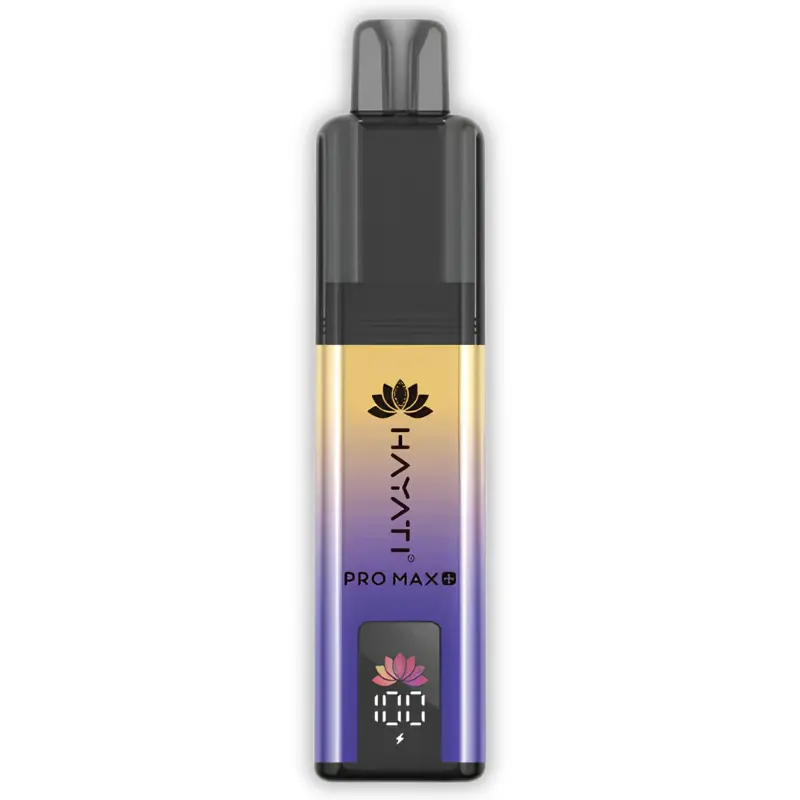
Hayati · Pro Max Plus
Blackcurrant Mango Hayati Pro Max Plus 6000 Pod Kit
£7.99
✔ In stock — ready to ship
Genuine Hayati
Free over £20
Same-day dispatch
Secure checkout
Blackcurrant Mango is one of the stranger combinations sitting on the Hayati Pro Max Plus Prefilled Pod Kit shelf, and the strangeness is the reason to read past the name rather than a reason to scroll on. What you receive is the complete kit: a rechargeable body, a single pod that arrives already carrying 12ml of 20mg nicotine salt, and no assembly beyond seating the pod. Hayati list it at £7.99. Their own puff figure for one filled pod is up to 6,000, a number generated on laboratory equipment rather than in anybody's pocket, so it belongs in the specification column and not in your planning.
Here is why the name is worth a second look. Almost every two-fruit liquid on a British shelf is built in one of two ways. The first way puts neighbours together: two berries, two stone fruits, two tropicals, shades of one idea rather than two separate ideas. The second way takes a heavy fruit and hangs an acid partner off it, usually a citrus or a soda, so that the weight has something bright to push against. Blackcurrant Mango does neither. It takes two fruits from different hemispheres, different families and opposite ends of the acid scale, and neither of them is light.
Blackcurrant is tannic, dark and sharp, with a green resinous edge that reads almost savoury next to a soft fruit. Mango is dense, low in acid, heavy through the body and frankly sweet. On a chart of fruit characteristics they sit in nearly opposite corners, which is the exact opposite of the usual mixing logic. The interesting question, and the question this page spends most of its length answering, is whether that produces one flavour with a top and a bottom, or two flavours taking turns in the same mouthful. Those are genuinely different outcomes and they suit different buyers.
The flavour: whether these two fruits actually meet
Two pages elsewhere on this site already handle the groundwork. If you want to know why blackcurrant is scarce in e-liquid at all, and what its tannic character consists of, the Blackcurrant Lemonade write-up covers it. If you want the fruit undiluted, on its own, with no partner and no coolant, and an honest account of where its weight stops being an asset, Blackcurrant Juice is that liquid and that page does that job. This one is about the pairing, so the fruit itself gets summarised rather than re-explained.
Two fruits that ought to disagree
Set the two profiles side by side and the mismatch is structural rather than a matter of taste. Blackcurrant has a pronounced top: a green, leafy, slightly resinous lift that sits above the fruit and is the single thing that identifies it. Below that it has astringency, a drying grip along the sides of the tongue, and comparatively little body. It is a fruit that is mostly edge.
Mango is the inverse. It has enormous body and almost no top. Its character lives in the middle and the bottom of the palate, a thick, slightly fibrous, honeyed density that arrives all at once and spreads sideways. There is no lift above it and, crucially, almost no acid inside it. A ripe mango is one of the least sour common fruits, which is why mango liquids so often reach for pineapple or passion fruit to supply the sharpness they lack. Mango Peach Pineapple is that solution in the same range, and Triple Mango is the decision to do without it entirely.
Combine them and the arithmetic looks promising on paper. Mango supplies everything blackcurrant lacks, which is body and sweetness. Blackcurrant supplies the one thing mango lacks, which is an identifiable top note. The risk is equally obvious. Both fruits are heavy through the middle of the palate, and neither brings meaningful acidity, so the mid-range can silt up and the blend can end up as a large dark sweet mass with a green flicker at the start.
The one thing they have in common
There is a hinge, and it is not the one you would guess. It is not sweet meeting tart. It is resin meeting resin.
Blackcurrant's signature lift comes from a group of aroma compounds that perfumers associate with the bud rather than the berry, a green, slightly catty, faintly sulphurous note that is unmistakable in tiny quantities and unpleasant in large ones. Mango, particularly the fibrous Indian-style profile most confectionery flavours are built from, carries a terpene character of its own that reads as pine, or turpentine, or the smell of the skin rather than the flesh. Both fruits, in other words, have a resinous component that most people never consciously identify but would miss instantly if it were removed.
That shared component is where the two halves of this liquid touch. When the blend works, the green edge of the currant and the piney top of the mango read as one continuous top note rather than two, sitting over a body that is unambiguously mango. When it does not work, the currant's green sits above the mango's green and you hear two separate resinous notes a fraction of a second apart, which is the sensation people describe as a blend not quite joining up.
The inhale: a top note with nothing under it yet
Draw on a fresh pod and the first thing to arrive is the blackcurrant, not because there is more of it but because it has the lighter and more volatile components. The opening half-second is dark and green, recognisably currant rather than generic purple berry, with that leafy quality clearly present. It is a distinct and slightly startling way for a mango liquid to begin.
Underneath, for roughly the first second, there is not very much. The mango has not arrived. This is the moment that catches out people expecting a tropical liquid, because the opening reads as a dark berry and gives no hint of what is coming. On a short, sharp pull you can genuinely finish the draw before the mango has properly turned up, which leaves you with a thin green sharpness and the sweetener and not much else. That is the single most common way to be disappointed by this pod, and it is a technique problem rather than a liquid problem.
Pull for three and a half seconds or more and the sequence completes. The currant announces itself, holds for a beat, and then the mango rises underneath it like something being pushed up from below. The two are not simultaneous. You can feel the join.
The middle: stacked rather than blended
This is the answer to the question the name poses, and it is a qualified one. The two fruits do form a top and a bottom rather than alternating. But they stack, they do not fuse.
Through the middle of the draw the mango takes over the whole floor of the flavour. It is broad, weighty, obviously sweet, with the slightly resinous fibrousness that distinguishes a mango flavour from a peach or an apricot. The blackcurrant does not vanish. It thins into a dark line running along the top of the mango, contributing colour and a faint sourness at the edges rather than presence. What you get is layered vertically: one fruit above, one below, both audible, neither dissolved into the other.
Whether that counts as integration depends on what you wanted. It is not the seamless single accord that a well-made berry blend produces, where three fruits merge into a fourth thing that has no name. You can always tell which fruit is which here, which is arguably the most useful property the liquid has. Nobody could mistake this for a generic dark sweet, and on a shelf where a great many liquids are exactly that, being legibly two things is worth something.
The seam between the layers is real and it moves. It is narrowest on the first draws of a session from a cool device, where the two notes sit close enough to read as one. It widens when the body is warm, when the pod is close to empty, and when you chain draws together without pausing. A widened seam does not taste bad, it just stops sounding like a blend and starts sounding like two liquids in one pod.
The exhale and the tail
On the way out the order reverses, and this is the part of the profile most likely to win people over. The mango leads the exhale because its heavier aromatics are slower to clear, and the currant appears behind it as a dry finishing edge. That reversal is the reason the liquid keeps its interest longer than a straightforward sweet mango would: you get the sweet part and the sharp part in different places rather than mixed together, so each one stays distinct.
The finish is long, typically twenty to thirty seconds of recognisable fruit, which is what two heavy fruits and no coolant will do. It fades unevenly. The mango body goes first and the currant's dry edge outlasts it by several seconds, so the last thing on your palate is the darker of the two. That is a pleasant way round for the tail to work, because a purely sweet residue is what makes a liquid feel cloying between draws, and this one finishes drier than it started.
Where the sweetness sits
On a scale where an unsweetened fruit base sits at two and a confectionery liquid reaches nine, this lands at about seven and a half. That is sweeter than the currant alone would be and slightly less sweet than a pure mango, which tells you the mango is doing most of the sugar work and the currant is trimming it back rather than adding to it.
The sweetness is textural as much as it is a taste. It coats, in the way a thick fruit juice coats, and after twenty minutes you will notice a film on the teeth. That is standard for a fruit salt pitched here and worth knowing before you commit to 12ml of it rather than discovering it at the halfway mark. If you rinse your mouth through a long session on sweet liquids, keep doing so with this one, because the coating is what eventually blunts the currant's top note and turns the whole thing into the mango show.
What happens to the blackcurrant's grip
Anyone who has spent time with blackcurrant on its own will want to know about the astringency, the drying pull along the sides of the tongue that gives the fruit its character and stops it reading as a boiled sweet. The honest answer is that most of it is gone here, and the mango is why.
Astringency is a physical sensation rather than a taste, produced by compounds binding to the proteins in saliva. Sugar and body both interfere with it directly, which is exactly why a sweetened cordial feels round where the neat pressed fruit feels harsh. Put a fruit as thick and sweet as mango underneath a tannic one and the grip is the first casualty. There is a trace left, mostly at the very end of the exhale, and it is the reason the tail finishes dry. But it is a trace. If the dry pull is the specific thing you like about blackcurrant, this pod removes it and you would be better served by the fruit unpartnered.
The reverse trade is worth stating too. If you have tried a single-fruit blackcurrant and found it punishing after half an hour, the mango does not solve that problem. It solves the dryness and leaves the weight untouched, which means this is a rounder liquid but not a lighter one.
Draw length changes which fruit you get
Few liquids respond to technique as visibly as this one, because the two fruits arrive at different speeds. A two-second pull is a blackcurrant liquid with a suggestion of something sweet behind it. A four-second pull is a mango liquid with a dark green top on it. Same pod, same session, entirely different balance, decided by nothing but how long you stay on it.
That makes it unusually adjustable for a fixed device with no settings, and it is the practical thing to know before your first pod. If the blend reads too sweet, shorten your draw. If it reads thin or oddly savoury at the front, lengthen it. Most people settle at something longer than they are used to, because the mango needs contact time to build volume and the pairing only makes sense once it has.
Temperature moves the balance across a session
The other variable is heat, and it pushes consistently in one direction. The currant's green lift is the most volatile part of the profile and it thins as the body warms up. The mango's sweetness and body do the opposite and come forward with heat. The result is a liquid that drifts steadily mango-ward across twenty minutes of steady use and resets towards the currant once the device has been sitting for a while.
This is why the first draw of the morning tastes like a different product from the twentieth draw of an evening. It also gives you a free diagnostic. If you want to know how much blackcurrant is actually in this blend, take the very first draw from a cold device and pull long. That is the currant at maximum, and every subsequent draw will contain less of it.
Across a full pod, and where it stops working
Every honest flavour description should say where the liquid stops being enjoyable, and this one has a specific failure mode that differs from its single-fruit relative.
A single dark fruit with no acid and no chill goes heavy after roughly three quarters of an hour of steady use. Two dark fruits ought to go heavy faster, since there is more total body and more total sugar, but in practice this holds up slightly longer than you would expect. The reason is that olfactory adaptation is note-specific: your brain files a sustained aroma as background surprisingly quickly, but it does that one note at a time, and a profile with two clearly separated components has two things to adapt to rather than one.
What happens instead is that the blend goes muddy rather than going heavy. Somewhere around the hour mark the seam closes. The currant stops being audible as a separate layer, the mango loses the edge that was defining it, and what is left is a large sweet dark fruit with no particular identity. Nothing has gone wrong with the pod. Your palate has simply stopped resolving the two layers, and the whole argument for the pairing quietly evaporates.
The fix is a reset rather than more power, and neither of the two normal resets is built into this liquid. There is no acid to scrub the palate between draws, the way the lemonade half does in the citrus-partnered version. There is no coolant to reset it by sensation, the way an iced liquid does. Water works. Twenty minutes away from the device works better. Turning to something sharp for a few draws works best of all, which is a genuine argument for keeping a second flavour in rotation if you intend to use this one all day.
What this liquid is not
No cooling appears anywhere in the name and nothing in the product data points to a coolant, so the reasonable reading is that this is an uncooled fruit blend. Hayati signal chill in their titles, with the words Ice, Frozen or Cooler doing that job elsewhere in the catalogue, and none of them is here. Lychee Ice is what the same shelf looks like when a coolant is intended.
Sourness is absent too, and the difference between sour and sharp matters on a page like this. Sharp describes the currant's edge, which is structural and quiet. Sour means a citric spike engineered to make your jaw react on the first draw, and Tropical Sour Juice builds its identity on exactly that effect. Nothing of the kind happens here.
The blackcurrant half is not the squash or cordial interpretation either. That reading of the fruit, sweetened, diluted, poured from a carton, is what the single-fruit listing in the Blackcurrant Vapes section delivers. Here the currant is present as an accent on something else, so it reads more like the fruit than like the drink, for the simple reason that there is no room for it to read as a drink.
And it is not a tropical liquid, despite the mango and despite the shelf it is filed on. Tropical, as a flavour category, usually means several bright low-weight fruits with acid running through them. This is one tropical fruit weighed down by a northern European hedgerow berry. The category label is accurate about the ingredient and misleading about the result.
Judging the pairing on your own first pod
Since integration is the whole question, here is a way to answer it for yourself rather than taking a description on trust. Take three draws at three different points and note, each time, which fruit is on top.
The first draw should come from a cold device that has been sitting overnight, held for four seconds. The second should come ten minutes into a session. The third should come after twenty minutes of steady use. If the answer changes across the three, the blend is stacked and you are getting two legible layers whose balance you can steer with technique. If the answer is the same all three times, the two fruits have fused into a single accord for your palate, and you can stop treating it as a pairing and start treating it as one flavour. Both outcomes are common and neither is wrong. Knowing which one you have tells you whether this is a liquid to pay attention to or a liquid to leave in a pocket.
The kit itself, briefly
There is very little to say about this device that has not been said ninety times over on the rest of its shelf, so this section is short on purpose. The box holds two items: the Pro Max Plus body, which carries a rechargeable 850mAh cell, and one pod that leaves the factory already filled. Seat the pod, use it, recharge the body when it slows. There is no coil to fit, no liquid to pour and no setting to choose.
The one specification that genuinely matters for this particular liquid is the fill: 12ml in a single pod. That is a large quantity of one flavour, and on a conventional pairing it would be unremarkable. On a pairing as unusual as this one it is the number to think about before you buy, because 12ml is not a sample. It is weeks of commitment to a combination most people have never tasted, and this is a liquid whose character changes across a session rather than staying put. The version of Blackcurrant Mango you meet in the first ten minutes is not the version you will know by the end of the pod, and 12ml is long enough for both.
Everything else about the hardware, the charging rhythm, how the airflow path behaves, what happens to the contacts over time, is covered across the other listings on the Pro Max Plus prefilled kit shelf and does not change because the liquid inside is unusual. One point of housekeeping specific to this flavour rather than the device: once the body is yours, the refill for it is the Blackcurrant Mango Pro Max Plus pod, and buying the kit again would mean buying a second body you do not need.
Specification, and the one line worth arguing about
Everything in the table below comes from the listing's own data. Where Hayati publish nothing, the row says so rather than guessing.
| Name on the listing | Blackcurrant Mango |
| Fruits declared | Two, blackcurrant and mango, with no third note named |
| Chill indicator in the title | None present, and no coolant appears in the data |
| Liquid supplied | 12ml, in the pod when it arrives |
| Nicotine as filled | 20mg, nicotine salt, the only strength shown for this kit |
| Shelf price | £7.99 |
| Contents of the box | One device body and one filled pod |
| Cell | 850mAh, rechargeable, fixed in the body |
| Puff figure published by Hayati | Up to 6,000 for a full pod, measured under laboratory conditions |
| Stock reference | HPM-6K-KIT-BLACKCURRANT-MANGO |
| Maker | Hayati |
| Filed under | Blackcurrant Vapes, Mango Vapes, Exotic Vapes, Hayati Pod Kits, New Products |
| Not published anywhere in the listing | Coil resistance, wattage, carrier ratio, charge time, charging connector |
The line worth dwelling on is the price, and not for the obvious reason. This kit is £7.99 and the pod on its own is listed at £5.49, which puts £2.50 on the body. That gap is usually discussed as a hardware bargain. On this listing it is better understood as the cost of an experiment.
An unfamiliar pairing carries a risk that a familiar one does not: you may simply not get on with it. Buying the kit means that if the blend turns out not to suit you, you still own a working body and can put any other pod on the platform into it, including the several dozen ordinary fruit options in the newest additions. Buying the bare pod first, on the assumption that you will like it, is the version of this decision that leaves you with a pod and nothing to run it on. £2.50 is not a discount here. It is optionality, and on a liquid nobody can describe to you convincingly in advance, optionality is the thing worth paying for.
Two other rows deserve a comment. The 20mg figure is stated as a fact and nothing more; nicotine is addictive and no strength suits everyone. The puff rating is there because the manufacturer publishes it, and it describes a machine drawing on a pod under fixed conditions.
How it compares with its neighbours
The useful comparisons split into three groups: other things that do something with mango, other things that do something with blackcurrant, and the handful of liquids that answer the same underlying want by a different route.
Against the other mango listings
Start with the purest version of the fruit. Triple Mango is mango layered on mango, which sounds redundant and is not: stacking varietal interpretations gives you a rounder, longer mango than a single one manages, with no second fruit pulling attention. It is the sweeter and more restful of the two by a clear margin, and it has none of the dark edge. If you want mango and only mango, that is the listing, and the same idea appears on a smaller device as Triple Mango on the Rubik at £5.99.
Mango Banana is the instructive contrast, because it does the opposite of what Blackcurrant Mango does. Banana is another low-acid, heavy, sweet fruit, so that pairing is like with like: two soft bodies, no edge at all, a creamy result that goes down easily and asks nothing of you. Put the two listings side by side and you have a clean illustration of the two mixing philosophies. One doubles the weight, the other contradicts it.
Mango Peach Pineapple takes the conventional route to the same problem this pod is trying to solve. Mango needs a sharper partner, so it gets pineapple, which supplies real acid and a bright top. That liquid is lighter, livelier and considerably easier to drink all day. What it does not have is depth. Pineapple lifts mango, blackcurrant weighs it down and gives it a dark ceiling. Which you prefer comes down to whether you want the blend to sparkle or to sit.
Two cross-platform listings pair mango with cherry rather than a currant. Cherry Ice with Peach Mango on the Mini Ultra at £3.99 is the cheapest way to sample the idea of a dark fruit sitting over a soft tropical one, and the same duo appears on a much larger device as Cherry Ice and Peach Mango on the Pro Ultra Plus at £11.99. Both differ from this pod in one important respect: the cherry half is chilled, so the reset that Blackcurrant Mango lacks is built into them. The rest of the mango options are gathered on the Mango Vapes shelf.
Against the other blackcurrant listings
From the currant side the comparison is sharper still. Blackcurrant Juice is the fruit undiluted, with no partner and nothing to hide behind, and it is the reference point for what the currant tastes like at full volume. Anyone who has run a pod of it will recognise immediately how much the mango softens things here, and whether that softening is welcome is a matter of taste rather than quality.
Blackcurrant Lemonade is the same fruit given the standard treatment: an acid partner, a lighter overall profile, and a palate that resets itself between draws. It is the more sensible all-day choice of the two and it is much the easier liquid to recommend blind. This pod is the more interesting one, which is not the same thing.
Blue Razz Blackcurrant uses the currant as a dark backing behind a confectionery fruit, which is the most common job blackcurrant gets given in vape liquid. There the currant is support rather than a co-lead, and the resulting flavour is unmistakably a sweet shop blue razz with depth added. Here the currant has equal billing and behaves accordingly. Everything carrying the fruit is listed together under Blackcurrant Vapes, which runs to sixteen products and is one of the smaller shelves on the site for the reasons the lemonade page sets out.
Against the other ways to get depth
If what appeals about this pod is the dark-over-sweet construction rather than the specific fruits, several listings reach a similar destination. Dragon Berries puts a berry mix over a mild tropical base and is gentler at both ends. Guava Kiwi Passion Fruit is the properly tropical option with genuine acid in it, and Strawberry Guava keeps the exotic half but pairs it with the most familiar berry on the shelf. All three sit alongside this one under Exotic Vapes.
For the darker, less literal end of the range, Midnight Dream and Galaxy Aura are named for a mood rather than an ingredient, which means the blend inside is not knowable from the listing. That is a real difference from this pod, whose two fruits are printed on the box and behave exactly as printed. When a pairing is unusual, being told precisely what is in it is worth more than usual.
At the opposite pole, Blue Sour Raspberry is built around the acid spike this liquid deliberately has none of, and Blueberry B'Gum is the sweet shop reading of a dark berry rather than a fruit reading of it. Between those two and this one you have most of the range's answers to the question of what to do with a dark fruit, and they arrive at three completely different places.
Practical handling, anchored to this liquid
The points below are the ones that matter for a dark, sweet, uncooled two-fruit blend in a 12ml pod, which is a narrower case than it sounds.
Give the first pod a few minutes before the first draw. A factory-filled pod arrives wicked, but it has been in transit and the liquid settles. A brief pause after seating it costs nothing and protects the top note, which is the part of this profile you most want intact on the opening draw.
Judge the coil by the green edge, not by the sweetness. In a blend like this the delicate component always fails first, and here that is the blackcurrant's resinous lift. When a pod begins to tire, the currant flattens out and the mango carries on more or less as before, so the liquid keeps tasting sweet while quietly losing the thing that made it worth buying. If the dark top has gone but the fruit is still there, the pod is nearer the end than it tastes.
Ignore the colour of the pod window. The pigments that make blackcurrant dark will tint the wicking material within a handful of draws and will keep darkening it for the life of the pod. That is cosmetic staining and carries no information about how much life is left. Judge by flavour.
Plan a reset into your day. This liquid has no acid and no chill, so nothing in it clears your palate between draws. The blend going muddy after an hour is not a fault and turning the device up would not fix it even if you could. Water helps. A short break helps more. Keeping something sharp or cold in rotation for a few draws, Blue Razz Mojito being one of the obvious candidates on the same shelf, restores the separation between the two layers almost immediately.
Store it out of the heat and out of the light. Warmth pushes this profile mango-ward permanently, not just for the session, because the volatile green component is the first thing a warm car or a sunny windowsill will cost you. A drawer at room temperature is fine, and upright is preferable to flat, as on every pod in the Hayati prefilled kit range.
Mind what you use before it. Because the currant's contribution is a top note rather than a body, it is easily masked. Coming to this pod straight off something very sweet, or straight off anything menthol, removes the blackcurrant almost entirely for the first few minutes and leaves you with a plain mango. If you want the pairing at its most legible, come to it from a neutral palate.
Recharge before the output sags. A low cell affects a stacked profile more than a simple one, because the top layer is the first thing to thin when there is less power behind the draw. The blend will read as flatter and sweeter when the body is nearly flat, which is easy to misread as the pod being spent.
Questions buyers actually ask about this one
Which of the two fruits leads?
Both, in different places. Blackcurrant arrives first and defines the opening of the inhale, then mango takes the body of the draw and leads the exhale, with the currant returning as a dry edge on the finish. Neither fruit dominates across a whole draw, which is unusual and is the most distinctive thing about the liquid.
Does this pod have any cooling in it?
Nothing in the title or the product data indicates a coolant, and Hayati normally flag chill in the name. Treat it as an uncooled blend. If a cold finish is what you are after, a listing with Ice in the title is the one to look for instead.
How sweet is it against the other fruit pods on this platform?
Around seven and a half out of ten, taking an unsweetened fruit base as two and a confectionery liquid as nine. That puts it above the middle of the shelf, below the sweet shop flavours, and slightly below a pure mango, because the blackcurrant trims the top off the sugar rather than adding to it.
Is the blackcurrant astringency still noticeable?
Only as a trace on the finish. Astringency is a physical grip rather than a taste, and both sugar and body interfere with it, so a fruit as heavy and sweet as mango suppresses most of it. If the dry pull is the thing you want from blackcurrant, the single-fruit listing keeps far more of it.
Will it taste like blackcurrant squash?
No. The squash and cordial reading of the fruit needs the currant to occupy the whole liquid, and here it has a mango underneath it taking up most of the room. What you get is a currant accent over a tropical body, which is a different thing and reads more like the fruit than like a soft drink.
I own the body already. What is the sensible purchase?
The bare pod, not the kit. A second device adds nothing if the first one still works, and the Blackcurrant Mango pod is the same liquid at £5.49. The kit is the right purchase only on a first buy, or if you want a spare body for the sake of having one.
Can I get this flavour at a lower strength?
This particular kit is listed at 20mg and no other strength appears against it. There is a separate 10mg listing on the Pro Max Plus platform, but its flavour options are not stated in the product data, so whether Blackcurrant Mango is among them is not something this page can answer. Check that listing directly rather than assuming.
How long before it starts to feel like hard work?
Roughly an hour of steady use, at which point the two layers stop separating and the blend reads as one large sweet dark fruit. It does not go stale or burnt, it goes indistinct. A break or a glass of water restores it, because the change is in your palate rather than in the pod.
The window has gone dark. Is the pod finished?
Not necessarily, and probably not. Blackcurrant pigment stains wicking material within a few draws and keeps deepening regardless of how much life is left. The reliable indicator is the green top note on the inhale: when that has gone, the pod is on its way out.
Is this a tropical flavour?
Half of it is. The mango is a tropical fruit and the listing sits on the exotic shelf, but the blend as a whole is too dark and too heavy to belong in the same category as a bright multi-fruit tropical. If you want the genuinely tropical version, a guava or passion fruit blend is the closer match.
What does the 6,000 figure actually mean?
It is the manufacturer's own rating for a full pod, produced on laboratory equipment under fixed conditions. Real use varies with draw length, how often you reach for the device and how warm it runs, and on this liquid in particular the long draws the blend rewards will move the figure. Treat it as a comparative specification rather than a measurement of your week.
What is missing from the published specification?
Coil resistance, wattage, carrier ratio, charge time and the type of charging connector are all absent from this listing. Rather than guess at them, this page states them as unpublished. Any figure you see quoted for those on a device like this one, here or anywhere else, has come from somewhere other than Hayati's own data.
The short version
Blackcurrant Mango is a deliberate collision rather than a comfortable blend, and that is both its appeal and its limitation. Two fruits from opposite corners of the flavour map are stacked one above the other: a dark, green, faintly resinous currant on top, a broad sweet mango underneath, joined by a shared resinous quality that most people taste without naming. They form a top and a bottom rather than merging into a third thing, which means you can always tell them apart, and which also means the join is audible when the device is warm or the draws are short.
It suits a vaper who wants a fruit liquid with two distinct layers and is prepared to steer it with draw length. It suits less well anyone who wants something bright, sharp or refreshing, because it has no acid and no chill and offers no reset across a long session. Buy the kit if the pairing is new to you, because £2.50 of the £7.99 buys a body you keep regardless of the verdict. Buy the pod alone if you already own one. Everything else on the platform, along with the rest of the range, is on the full Hayati listing if this particular combination turns out not to be the one.
Strictly for adults aged 18 and over. Nicotine is an addictive substance.
You might also like