
Home / Hayati Pro Max Plus Prefilled Pod Kit / Tropical Sour Juice Hayati Pro Max Plus 6000 Pod Kit
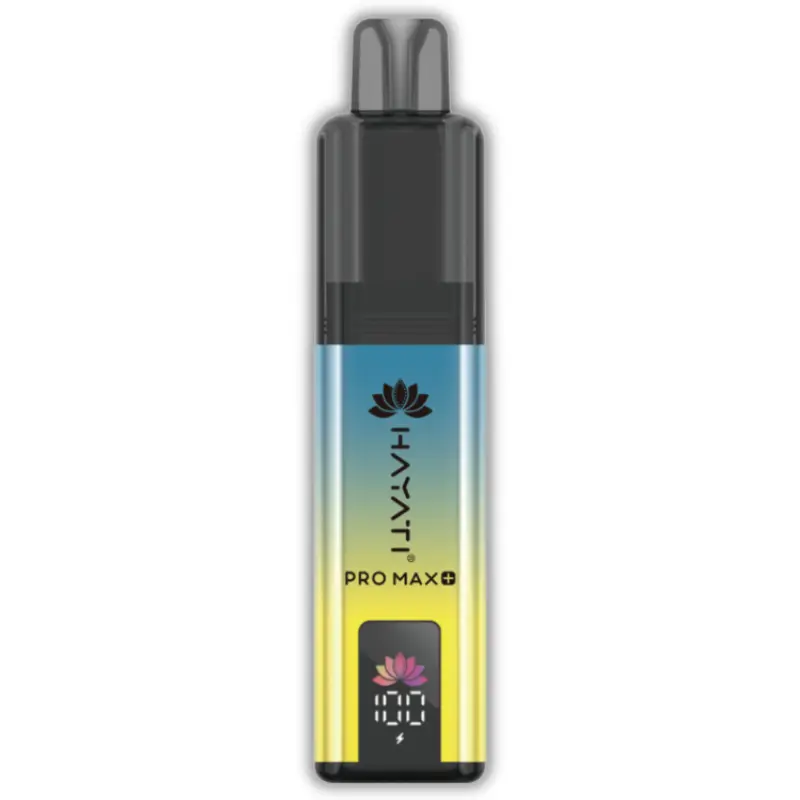
Hayati · Pro Max Plus
Tropical Sour Juice Hayati Pro Max Plus 6000 Pod Kit
£7.99
✔ In stock — ready to ship
Genuine Hayati
Free over £20
Same-day dispatch
Secure checkout
Tropical Sour Juice occupies the sour corner of Hayati's tropical listings, and this particular entry is the complete package rather than a refill: a rechargeable body, one pod that arrives from the factory already filled with 12ml at 20mg, and a single £7.99 covering the pair. The cell is 850mAh. Hayati publish a figure of up to 6,000 puffs for one full pod, which is a bench number produced by a machine drawing at fixed intervals under laboratory conditions, useful for putting listings in rank order and worth very little as a forecast of anybody's fortnight.
What earns this one a page rather than a paragraph is the name. Most flavour names on the Hayati Pro Max Plus Prefilled Pod Kit shelf give you a fruit, or two fruits and a temperature. This one gives you three modifiers and no fruit at all, and unusually for the category, every one of the three is carrying information. Tropical names a family rather than a member of it. Sour is a marker Hayati apply on purpose, which tells you the acidity is a specified target rather than a by-product of whichever fruits went in. Juice describes a treatment: a drink, not something cut up on a board. Read in sequence, those three words amount to a set of instructions, and the liquid follows them fairly closely.
Here is the honest summary before any of the detail. It is a sweet yellow-fruit accord with a sharp acid dose sitting on top of it. The acid arrives before the fruit does and it leaves before the fruit does too. Whether that appeals comes down almost entirely to whether you want sourness as an event at the front of each draw or as a quality braided through the whole of it. Those are two different experiences, they are very easy to confuse while reading a product listing, and a good deal of what follows is about telling them apart.
Three modifiers, and what each one rules out
Tropical: a postcode, not an address
No fruit is named anywhere in the listing, and that is not an oversight. Tropical is a commercial shorthand for a group of warm-climate fruits that flavour houses treat as one working palette: mango, pineapple, passionfruit and guava, usually with two of them doing most of the work and the others filling gaps. Papaya, lychee and banana sit at the edges of the same set. A liquid labelled with the family name rather than its members is telling you that no single fruit is meant to win, and that the recipe is allowed to move between batches without the name becoming wrong.
Those four fruits are not interchangeable, though, and knowing what each contributes makes the pod easier to read. Mango is the heavy one: dense, low in acid, resinous at the edges, with a sweetness that fills the middle of the mouth and does not move much. Pineapple is the only member of the group with serious acidity of its own, and it also carries the ester material that reads as bright and slightly sweet-sharp, the note most people recognise instantly as tropical. Passionfruit is sharper still, thinner in body, with a sulphurous top that gives the impression of freshness and a long sour tail. Guava is the odd one: musky, floral, a little tart underneath, and by some distance the hardest of the four to render convincingly in vapour.
This pod behaves like something built mostly on the mango and pineapple axis, with a lighter passionfruit character supplying the top and something guava-adjacent rounding the back. That is an educated reading of what is in the pod, not a published recipe, and it should be treated as such. What is not in doubt is the shape: one broad yellow-orange sweetness rather than three or four fruits taking turns. If you want fruits that separate, the shelf has listings that name their parts and are therefore accountable to them. Mango Peach Pineapple commits to three, and you can check it against its own name draw by draw. Guava Kiwi Passion Fruit commits to three that are all comparatively sharp. A blend called Tropical is accountable only to the general impression.
Sour: a marker, and markers mean something here
Hayati's naming is more systematic than it looks. Temperature gets flagged with Ice, Frozen or Cooler. A drink treatment gets flagged with Juice or Lemonade. Some names give up on description entirely and go abstract, as with Galaxy Aura or Midnight Dream, where the name is a mood and the only way to know is to buy it. Sour belongs to the first group. It is a declared property, and its presence in the name changes what you can infer.
A tropical blend can taste faintly tart without any declaration, because pineapple and passionfruit bring acid with them. That kind of tartness is incidental. It rises and falls with however much of those fruits went in, and a recipe change that swapped some pineapple for mango would quietly remove it. Declared sourness is different. It means a sharpness target was set and then hit, and in practice it means acid was dosed as its own line in the recipe rather than left to arrive with the fruit. That distinction sounds academic. It is the single most useful thing on this page, because the two kinds of acid behave completely differently in the mouth, and the next section is entirely about how.
Juice: a processing instruction
Calling something a juice rather than a fruit is a claim about handling. Fresh fruit has volatile top notes that live for minutes: the green snap of a just-cut pineapple, the perfume that comes off a mango skin as you peel it. Juice, particularly juice from a carton, has lost most of that in processing. What survives is body, sugar, the deeper aromatic material that tolerates heat, and a certain flatness of texture where the separate fruits have been blended into one liquid rather than left as distinct pieces.
Flavour houses reproduce that flatness deliberately, and this pod has it. The accord reads homogenised. There is no moment where a lid comes off and something volatile escapes. The fruit is uniform from the front of the draw to the back, thicker than a fresh accord would be and noticeably less green. Blackcurrant Juice on the same shelf uses the identical treatment on a completely different fruit, and holding the two side by side is the quickest way to hear what the word is doing: both taste processed in the same way, both sit lower and rounder than their fresh equivalents would.
Which sets up the logic of the whole product. The juice treatment removes the lift. The sour dose puts lift back. The three words in the name are not three descriptions stacked up, they are a sequence: pick a family, flatten it into a drink, then reintroduce sharpness by a different route. The acid is not a decoration on this liquid. It is the correction for what the juice treatment took out, and that has consequences later in the pod's life that a decorative sourness would not have.
Where the sharpness actually comes from
Sourness in a vape liquid is not a flavouring in the usual sense. Flavourings are aroma compounds, sensed at the back of the nose while you exhale, and they are what makes mango taste of mango rather than merely sweet. Sourness is a taste, registered by receptors on the tongue responding to acidity. The two arrive by separate routes, on separate timings, and a liquid that declares sourness in its name is one where the tongue has been given its own job.
The usual materials are citric acid, which is what makes citrus sharp and which reads as immediate and bright, and malic acid, which is the dominant acid in apples and behaves in a slower, rounder, more persistent way with a faintly drying finish. Blends of the two are common, and there are proprietary sourness concentrates that do the same job in one bottle. Whatever the exact material, the important point holds: it is dosed independently of the fruit flavouring. That is why a declared-sour liquid can be sharper than any of the fruits in it could plausibly make it, and why the sourness does not scale up and down with the fruit the way a pineapple's own acidity would.
Now the behaviour, which is the part worth knowing before you buy. Taste is faster than aroma. The instant the aerosol condenses on the tongue, the acid is detected, with nothing to wait for. Aroma has to travel up the back of the throat into the nasal cavity before it registers at all, which takes a moment longer. On this pod you can feel that gap. The sharpness lands first, alone, and the fruit catches up perhaps half a second behind it. On a liquid where the acidity comes from the fruit itself, the two arrive together, because they are in the same material and travel by the same route.
Departure works the same way in reverse. Aroma molecules sit on the moist surfaces of the mouth and nose and keep evaporating for some time after the draw has ended, which is why a fruit finish can run on for twenty or thirty seconds. Acid on the tongue has no such tail. Saliva arrives, dilutes it, buffers it, and it is gone. So the sour on this pod is a spike with a hard edge at both ends, while the fruit behind it fades gradually. The structure of every draw is the same: sharp, then sweet, then only sweet.
There is a second-order effect that shows up within a session rather than within a draw. Acid provokes salivation, and saliva is mildly alkaline and buffered. Draw repeatedly over a couple of minutes and your mouth is progressively better equipped to neutralise the next dose, so the third draw of a run reads less sour than the first, and the sixth may barely read as sour at all. Nothing has changed in the pod. Your mouth has adapted. Warm chained draws make it worse, because warmth pushes perceived sweetness up while doing little for perceived acidity, so the ratio shifts sweetwards from both directions at once.
The practical reading of that: this liquid is at its most characteristic on an occasional draw and at its least characteristic during a long unbroken run. If you tend to vape in short bursts with gaps between them, you will get the sour version you paid for nearly every time. If you tend to sit with a device for half an hour, you will spend most of that half hour tasting a sweet tropical juice with the sharpness switched off, and you may reasonably conclude the pod is weaker than advertised when it is your saliva doing the work.
Following a single draw from start to finish
The first quarter second
Acid, and very little else. A tight puckering sensation along the sides of the tongue that arrives before you can name any fruit, closer in character to biting into something citrus than to anything a mango does. It is a genuine pucker rather than a suggestion of one, though it is well short of the sherbet-grade sourness that confectionery-styled liquids aim for. Call it firm. Enough to make the salivary glands react on a first draw, not enough to make anyone wince.
The middle, where the fruit arrives
Sweetness fills in underneath the acid and the two run together for a moment, which is the most interesting part of the draw and the shortest. The fruit reads dense and yellow: mango-weighted, thick across the middle of the mouth, with a bright ester lift over the top that most people will identify as pineapple. There is a fainter musky quality behind it, floral and slightly heavy, which is the guava-adjacent material doing the rounding. No single fruit steps out and announces itself. The blend is deliberately smoothed and stays that way.
The exhale and what remains
The acid has largely gone by the exhale. What carries through is the juice: sweet, warm-toned, medium-bodied, with a mild resinous edge at the very back that is characteristic of concentrated mango. The finish is moderate in length, perhaps fifteen seconds of fruit sweetness with no sharpness in it, and it leaves a light film on the palate rather than a scoured feeling. The mouth is left slightly wetter than it started, which is the salivary response to the acid outlasting the acid itself.
How draw length changes it
Short draws favour the acid. The tongue gets its dose and there is not enough vapour volume for the heavier fruit to fully register, so a quick pull tastes noticeably sourer and thinner than a long one. Long, slow draws move more liquid across the coil and bring the mango weight forward, which buries the sharpness under sugar. Anyone deciding whether they like this pod should try both before concluding anything, because the two produce results different enough to be mistaken for two products.
Sweetness, in context
Underneath the acid this is a sweet liquid, and it needs to be, because sourness without sugar behind it is unpleasant rather than interesting. Place it on a scale and it sits above the unsweetened and herbal listings by a wide margin and slightly below the confectionery and dessert entries. T-Misu is sweeter and thicker with it. Fresh Mint is at the other end entirely, with effectively no sugar in play. Tropical Sour Juice lands in the upper-middle: plainly sweetened, but the acid keeps it from reading as syrup, which is exactly the job the acid was added to do. Take the sourness away and the sweetness would be the first thing anyone complained about.
Cooling: there is no marker, and none is needed
Hayati flag cold in the name when cold is present, and no cold word appears here. Nothing in the product data indicates a coolant, and the pod does not taste as though one is hiding in it. That matters more than usual on this particular liquid, because sourness and cooling produce impressions that people routinely confuse. Both read as sharp. Both cut through sweetness. They do it by entirely different mechanisms, and they feel different once you know to check: a coolant produces a temperature sensation in the throat and on the exhale, while acid produces a tightening on the tongue during the inhale and is essentially over by the time you breathe out.
If what you actually want is cold, this is the wrong listing and the shelf has better answers. Kiwi Cooler takes the moderate route, Blue Frozen takes the heavy one, and Double Menthol dispenses with fruit almost entirely. Lychee Ice is the one to look at if you want a cooled listing that stays in the tropical family rather than leaving it.
What it is not
It is not a citrus liquid. There is no orange, lemon or lime character in the fruit, and the acid, although citrus-like in its action, is not accompanied by any peel or zest aroma. It is not a candy sour either: there is no sherbet dust, no fizzy confectionery angle, no cola note. It is not a fresh-fruit accord, for the reasons the juice treatment sets out above. It is not complex, and should not be bought expecting layers, because the recipe is built to read as one thing with a sharp edge rather than as several things in conversation. And it is not gentle. Somebody who wants a soft tropical pod to run all day without thinking about it will find the acid tiring by the second hour.
How the sharpness declines, and the strange place it lands
Acid is the first thing a tiring coil stops rendering properly. That has been established on two other pages in this range and there is no point deriving it again. State it plainly and move on: as residue builds on the mesh, the sharp front end of the draw softens well before anything tastes scorched, and on a declared-sour liquid that decline is more visible than it would be on a sweet one.
The consequence specific to this pod is not the decline itself but where it leaves you. Because the acid here is a correction rather than a decoration, removing it does not produce a faded version of Tropical Sour Juice. It produces the uncorrected liquid: a flat, sweet, homogenised tropical juice, which is a perfectly coherent product that other listings sell on purpose. A worn pod of this does not taste broken. It tastes like a different item from the same shelf, one that is not obviously wrong in any way you could point at.
That has two practical results, and they are the reason this section exists. The first is diagnostic. On most liquids you can tell a tired pod by comparing it against your general memory of what that flavour family does. You cannot do that here, because the worn state of this pod falls squarely inside the normal range for an ordinary tropical pod. The only reference that works is your memory of this pod specifically, on its first day, which means the first few draws out of the wrapper are worth paying deliberate attention to rather than treating as background. Note how hard the pucker hits. That is your baseline and nothing else will serve.
The second result is behavioural. A pod whose decline lands on a plausible product rather than on nothing is a pod people carry on using long past the point they meant to. There is no unpleasant signal telling you to stop, just a quiet drift into a category you did not choose. If you bought this because you wanted sourness, the useful question part way through is not whether the pod still works, because it plainly does. It is whether it is still the thing you paid for. Those two questions have different answers on this liquid for a surprisingly long stretch of its life, and only one of them is about hardware.
The hardware, in brief
Everything in this section is shared with roughly ninety other listings, so it is kept short on purpose. The box holds a rechargeable Pro Max Plus body and one pod that leaves the factory filled, and £7.99 buys both together. The cell is 850mAh. The same pod is sold on its own as Tropical Sour Juice Hayati Pro Max Plus Pods at £5.49, so the body is the difference between the two listings and you pay for it once. After that first pod is finished, the device carries on with replacement pods from the same family.
The one specification that genuinely changes how this particular liquid behaves is the 12ml, and specifically the fact that it is 12ml running through one coil rather than across several. That is a long stretch of liquid for a component that fades to travel, and the component that fades here is the one named in the product title. A sweet pod crossing the same distance arrives at the far end recognisably itself. This one arrives as something else. If you would rather the sharpness did not have to last that far, the answer is a shorter pod on other Hayati hardware, not a different way of using this one.
Everything else about the device, the shared body, the cross-range fitment and how the format behaves generally, is covered at length across the Pro Max Plus prefilled kit shelf and does not need repeating here. The wider Hayati Pod Kits listing is the place to go if you are comparing formats rather than flavours. What is unique to this purchase is the liquid, and the liquid is where the rest of the words on this page have gone.
The listing in numbers
Below is what Hayati actually publish for this product, with a deliberate note of the fields they leave blank. The blanks matter as much as the entries on a page like this, because two of the missing numbers are ones a sour liquid is sensitive to.
| Flavour as listed | Tropical Sour Juice |
| Sourness marker | Declared in the name, with no scale published behind it |
| Cooling marker | None in the name, and no coolant indicated in the data |
| Supplied as | Rechargeable body plus one factory-filled pod |
| Liquid held | 12ml |
| Nicotine as supplied | 20mg, no other strength listed |
| Cell | 850mAh, rechargeable |
| Hayati puff figure | Up to 6,000 for a full pod, a laboratory estimate |
| Carrier ratio | Not published for this listing |
| Coil resistance | Not published for this listing |
| Asking price | £7.99 |
| Catalogue code | HPM-6K-KIT-TROPICAL-SOUR-JUICE |
| Made by | Hayati |
Two of those rows deserve a sentence. The unpublished carrier ratio is the more consequential blank, because the balance between the two base liquids affects how sharply a taste registers on the tongue: a thinner base wets the mouth faster and delivers acid more abruptly, a thicker one cushions it. Hayati do not state the ratio for this listing, so nothing can be concluded from it, and anyone quoting a figure for this product is quoting a figure that is not in the data. The unpublished coil resistance matters for the same reason at one remove, since resistance sets how hot the coil runs and warmth nudges the sweet-to-sour balance towards sweet.
The 20mg is the only strength offered, and it is worth saying plainly rather than framing: nicotine is an addictive substance, the pod contains it at that concentration, and nothing about the flavour changes that. The puff figure is a laboratory estimate and should be read as one. How far 12ml goes depends on draw length, frequency and how hard you run the device, and the range between a light user and a heavy one is wide enough that a single published number cannot describe both.
Neighbours worth weighing against it
The same liquid without the body
If you already own a Pro Max Plus, the kit is the wrong listing and the bare pod at £5.49 is the right one. The liquid is identical. The only argument for buying a second complete kit is wanting two bodies loaded at once, which on this particular flavour is a stronger argument than usual: an acid-forward pod and a sweet one running in parallel let you reset your palate between them, and a mouth that has just had something sweet reads the sour more clearly than a mouth that has been sitting in acid for twenty minutes.
Tropical without the acid
This is the comparison most buyers are actually making. Caribb Crush is the closest thing on the shelf to Tropical Sour Juice with the sourness removed: the same broad warm-fruit territory, sweeter, rounder, easier to run for long stretches and considerably less interesting on a first draw. Triple Mango goes further in that direction, concentrating everything into the heaviest and least acidic fruit in the family, and it is the right choice for anyone who found the pucker here tiring rather than enjoyable. Strawberry Guava keeps one tropical component and pairs it with a soft berry, which lands softer again.
Going the other way, Guava Kiwi Passion Fruit is the useful counter-example, because all three of its named fruits carry their own acidity. It ends up tasting tart without any declared sourness, and the tartness behaves the way fruit acid behaves: woven through the draw rather than spiked at the front of it, present on the finish, slower to arrive and slower to leave. Anyone who reads this page and realises they want the second kind of acidity rather than the first should look there before anywhere else. Dragon Berries sits between the two camps, with a mild natural tartness and no declaration.
The other drink treatments
Juice and Lemonade are both processing markers and both produce that homogenised, slightly flattened quality, but they are not the same instruction. A lemonade accord brings its own citric sharpness plus a sweetened carbonated-drink character, so the acid and the treatment arrive together. Berry Lemonade and Blackcurrant Lemonade both work that way, as does Blue Razz Lemonade with a confectionery fruit in front of it. A juice accord has no sharpness built into the treatment, which is precisely why this one needed a separate acid dose to have any lift at all. Cola Lime is a third approach again, where the sharpness is standing in for carbonation rather than for fruit.
Real tartness from real fruit
Blueberry Cherry Cranberry is the clearest example on the shelf of tartness that comes from the ingredients rather than from a dosing decision, because cranberry brings a drying, slightly astringent sourness that no additive imitates well. It is a different sensation: less of a spike, more of a scour, and it lasts into the finish instead of vanishing at the exhale. Holding that pod against this one is the fastest way to understand what declared sourness is and is not.
Sharp by temperature instead
Some people reaching for a sour liquid are actually reaching for something that cuts through sweetness, and a coolant does that too. If that is the real requirement, the cooled listings are a better answer than an acid one, because cooling holds up across a pod's life in a way acid does not. Lychee Ice keeps you in the tropical family, Kiwi Cooler is moderate and green, and Blue Frozen pushes the cold hard enough that the fruit becomes secondary.
Rotation partners and palate resets
An acid-forward pod is a good citizen in a rotation and a poor solo choice for a whole week. What it needs alongside it is something with no acid in it at all, so that each returns the other to full effect. Fresh Mint is the most efficient reset on the shelf and takes about two draws to clear a sweetened palate. T-Misu is the opposite pole in every respect, thick and sweet and entirely acid-free, and coming back to Tropical Sour Juice after a dessert pod produces the sharpest first draw you will get from it. Sunset Aura is a less predictable partner, since the name declares nothing and you will not know what you have until it is in the device.
Where else to look
The full tropical and warm-fruit selection sits under Exotic Vapes, which is the right shelf for anyone comparing this against the rest of the family rather than against the rest of the device range. Hayati Prefilled Pod Kits covers the same format across several devices, New Products is where recent additions land before they settle into the permanent shelves, and the full Hayati catalogue is there if none of the above narrows it enough.
Practical handling across twelve millilitres
Let the pod settle before the first draw. A pod that has been in transit has liquid sitting where it should not be, and a couple of minutes upright with the mouthpiece at the top lets the wick take up what it needs. On this liquid specifically there is a second reason to bother: an underfed coil runs hot, and a hot coil pushes the sweetness up while doing nothing for the acid, so a rushed first draw gives you the least representative version of the flavour available. The flavour you are buying is the sour-forward one, and it needs a properly wetted wick to show up.
Draw length is the main control you have and it is worth using deliberately rather than by habit. Short and brisk favours the acid. Long and slow favours the mango weight. Nobody needs to pick one permanently, but it is worth knowing that a run of long draws will read as a sweeter pod than a run of short ones, and that if you have concluded the sourness is disappointing after an afternoon of leisurely draws, you have not really tested it.
Space the draws if the sharpness is the point. The salivary buffering described earlier is the single largest reason this pod tastes weaker than expected, and it is entirely reversible. Two minutes without a draw restores most of the effect. Ten minutes restores all of it. Somebody who takes four draws an hour will find this pod sour every single time. Somebody who chains through half a pod in an evening will not, and no amount of coil condition will change that.
Store it upright, out of the sun and away from a warm dashboard or a radiator. Heat accelerates the slow chemistry that ages any liquid, and on a blend carrying an acid dose there is a specific reason to care: acid slowly reacts with other components over time, and sourness is a property that tends to drift downwards in storage rather than upwards. A spare pod bought and left in a drawer for six months will not be the pod you tasted when you bought the first one. Buy them close to when you will use them, and if you are stocking up, stock up less than you would on a sweet flavour.
Judging when it is spent is harder on this pod than on most, for the reason set out earlier: the failure mode is a coherent product rather than an obvious fault. Two signals are worth trusting. The first is the front of the draw going quiet, so that the sweetness arrives immediately with nothing in front of it. The second is a warmer, drier draw at the same setting, which tends to come later. If the first has happened and the second has not, the pod is still perfectly usable and is simply no longer the flavour on the label. That is a decision for you rather than a defect.
Things people ask before buying this one
How sour is it, really?
Firm rather than extreme. It produces a definite pucker along the sides of the tongue on a first draw and a clear salivary response, but it stops well short of the sherbet-grade sourness that confectionery-styled liquids chase. If you have had a sour sweet in the last year, this is milder than that. If you have only had fruit liquids with incidental tartness, it will read as noticeably sharper than those.
Which fruits are in it?
Hayati do not name any, and that is a deliberate feature of the naming rather than an omission. The pod reads as a mango and pineapple blend with a lighter sharp fruit on top and something musky rounding the back, which is the conventional shape for a tropical accord, but that is an informed description of what it tastes like and not a published ingredient list. Anybody stating a definite recipe for this product is guessing.
Is there any cooling in it?
Nothing in the product data indicates a coolant, and none of the cold markers Hayati normally use appear in the name. The sharpness you can feel is acid on the tongue, not a temperature effect in the throat. If it is cold you want rather than sour, the iced and cooled listings on the same shelf are the right place to go.
Why does it taste less sour after ten minutes of use?
Because your mouth is adapting rather than because the pod is failing. Acid triggers salivation, saliva buffers acid, and a run of quick draws leaves you progressively better equipped to neutralise the next one. A short break restores it. This is the most common reason people think a sour liquid has underdelivered, and it is the easiest one to test: put the device down for ten minutes and try again.
Will the sourness last the whole pod?
No, and it is fairer to say so. Acid is the component a tiring coil renders worst, so the sharp front end softens as the pod progresses while the sweetness carries on largely unaffected. The liquid does not become unpleasant, it becomes a different and rounder thing. How quickly that happens depends on how hard the device is run.
How do I know when it has gone past its best?
Watch the very front of the draw. When the sweetness starts arriving first with no sharpness ahead of it, the pod has drifted out of the profile you bought. That is a different and earlier signal than the warm, dry draw that indicates a coil at the genuine end of its life, and the gap between the two is longer on this liquid than on most.
I own the device already. Is there any reason to buy the kit?
Only if you want a second body. The pod on its own is listed at £5.49 and holds identical liquid. On this flavour a second body has a small genuine use, since running an acid-forward pod alongside a sweet one keeps the palate fresh for both, but that is a preference rather than a necessity.
Is this a citrus flavour?
No. The acid behaves in a citrus-like way because that is what added acid does, but there is no orange, lemon or lime aroma anywhere in the blend and no peel character. The fruit is entirely warm-climate and yellow-toned. Somebody wanting an actual citrus profile will find this one sweet and heavy by comparison.
What goes well with it in a rotation?
Something with no acid in it. A mint or a dessert pod gives the palate a complete change and makes the first draw back on this one properly sharp again. Pairing it with another sour or tart liquid works considerably less well, because two acid-forward flavours in sequence blunt each other and you end up tasting neither clearly.
Does it vary between batches?
Fruit accords vary slightly from run to run, and an independently dosed acid varies too. Sourness is easier to notice a change in than a fruit blend is, because there is no complexity for a small difference to hide behind. The way to tell a batch difference from a worn coil is timing: a batch difference is there from the very first draw, whereas coil wear develops.
How long does 12ml last?
That depends entirely on how you use it, and any specific answer would be invented. Hayati's figure of up to 6,000 puffs is a laboratory estimate produced by a machine drawing at fixed intervals, which is a reasonable way to compare listings against each other and a poor way to predict a real fortnight. Draw length and frequency vary more between two people than most published numbers do.
Summing up
Tropical Sour Juice is a clearly built product with a clearly stated intention, which is more than most flavour names manage. A broad warm-fruit accord is flattened into a drink, and a separate acid dose is put back on top to give it lift. The result is sharp at the front of every draw and sweet behind it, with the sourness arriving first, leaving first, and fading faster over the life of the pod than anything else in the recipe.
Buy it if you want that specific structure: a sour event at the start of each draw rather than a tartness running through the whole of it. Buy something else if you want fruit acidity braided into the flavour, if you want the sharpness to hold up across all twelve millilitres, or if you plan to run one flavour continuously for a week, since this is a pod that rewards gaps between draws and punishes long unbroken sessions. At £7.99 for a body and a filled pod, with the same pod available separately afterwards, the arithmetic is straightforward enough. The only question worth thinking about before ordering is which kind of sharpness you were after, and that question has a different answer for more people than you would expect.
Strictly for adults aged 18 and over. Nicotine is an addictive substance.
You might also like


