
Home / Hayati Pro Max Plus Prefilled Pod Kit / Black Mamba Hayati Pro Max Plus 6000 Pod Kit
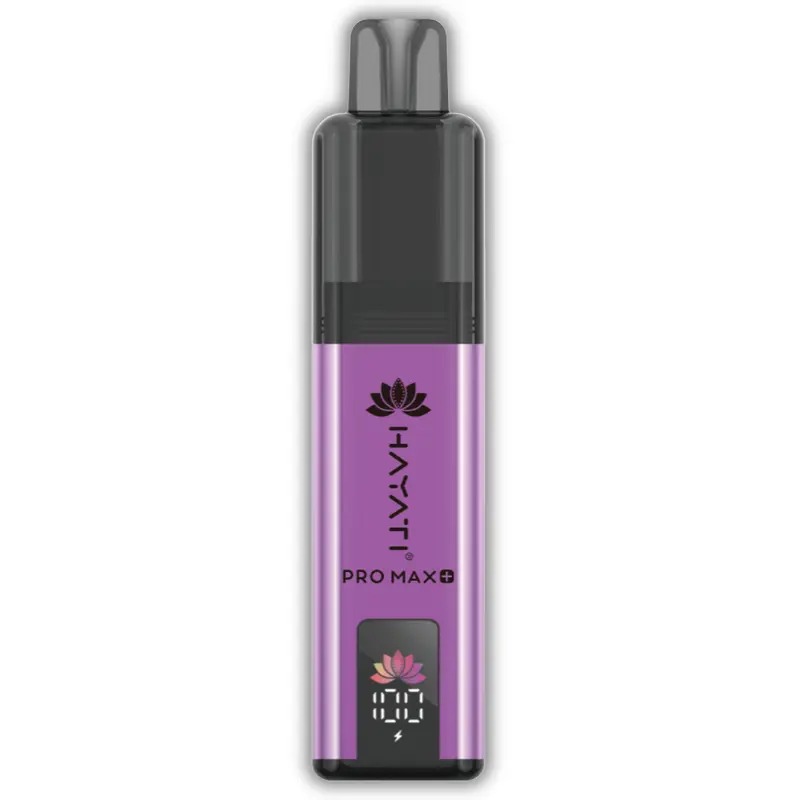
Hayati · Pro Max Plus
Black Mamba Hayati Pro Max Plus 6000 Pod Kit
£7.99
✔ In stock — ready to ship
Genuine Hayati
Free over £20
Same-day dispatch
Secure checkout
£7.99 puts a rechargeable Pro Max Plus body and one prefilled pod in the same box, the pod holding 12ml of liquid at 20mg, with an 850mAh cell in the device. Nothing needs filling, nothing needs assembling, and the commercial description of this listing is finished in a sentence. Everything difficult about it is the word on the front.
The title names no fruit. It names no sweet, no drink, no colour and no temperature, and the paragraph Hayati attach to the listing does not fill that gap either, because it tells the reader to judge the liquid by how the name sounds. The Black Mamba Hayati Pro Max Plus Pods page takes the name as its subject and settles it properly. That page's finding, which I am citing rather than rebuilding, is that this is not a vague name but a loaded one: a register borrowed from menace instead of from the greengrocer, and, on a count of the whole catalogue, the only Hayati name that reaches for a living creature dangerous to people. The consequence it draws is worth carrying over. A vague name leaves a buyer with no expectation at all. A loaded one hands them an expectation the liquid never agreed to meet.
That page also turned up the thing this page is built on, and most buyers will never see it. Hayati's own data does describe this flavour. It simply does not do it on either of the two listings people actually buy. The 12ml pod and this 12ml kit both leave the flavour profile field blank and neither is filed on a single flavour category. The 10ml nicotine salt bottle of the same name, sitting in a different Hayati range at a different strength, carries four flavour categories and a published profile line of five words: Mixed Berries and Cool Finish.
Five words are not a description. They are a seed, and the pod page correctly stopped at planting it. Two things then have to happen, and this site has already done one of them: the bottle itself has its own page, and that page tastes the bottle, walks a single draw through in order and grades the cooling against its own shelf. Read it if what you want is a tasting note. It cannot tell you whether any of that reaches a sealed 12ml pod at double the strength, because that is a question about formats rather than about flavour, and it is the question left on this page's desk.
So this page does the other half of the job. What a mixed berry blend is actually built from in a range that names berries constantly and names them by the dozen. What a cool finish is, as a structure, and how that differs from a blend cooled throughout. What changes on the way from a bottle into a prefill, item by item. And what twelve millilitres running through one sealed coil does to a liquid whose defining feature is its second half. The transfer from that bottle to this pod is probable rather than proven, and the page says so wherever the distinction changes the answer.
The five words, and where Hayati chose to print them
Start with how rare a published profile line is, because the rarity is what makes the bottle worth so much and the blank here worth so little.
Across all 492 listings in Hayati's catalogue, fifteen carry any value at all in the flavour profile field. Every one of those fifteen is a 10ml bottle in the Pro Max nicotine salt line, and that line itself runs to 65 bottles, so fewer than one in four listings gets a profile line even inside the best documented range in the catalogue. On the Hayati Pro Max Plus Prefilled Pod Kit shelf, which holds 88 listings including this one, the count is zero. Not a scarce field, not a patchy one: empty, on every listing, without exception.
That matters for how you read the blank at the top of this page. It is not Hayati declining to describe this particular liquid. It is a whole shelf that has never had a profile line printed on any of it, and a reader who noticed the gap here and took it as a signal about Black Mamba specifically would be reading a property of the catalogue as a property of the product. The pod listing has the same blank for the same reason, and the pods page established the equivalent count on its own shelf.
Now the fifteen lines themselves, because their grammar is where the useful information is. Thirteen of the fifteen are built around an ampersand, and in twelve of those thirteen the words on the far side of it name a thing you could hold: another fruit, a lemonade, a bubblegum, a gummy bear, an ice, a menthol, a mint. The profile field is being used as a parts list. Cherry and mixed berries. Blackcurrant and lemonade. White peach and raspberry. Strawberry, cherry and cranberry. Red apple and ice.
One line out of the thirteen puts something else after the ampersand. Cool Finish is not an ingredient. It is a stage of the draw. Of every profile line Hayati have published, this is the only one that locates a flavour event in time rather than listing what went into the mixture, and it is the only one that tells you when something happens instead of what it is.
Push on the cooling vocabulary and the departure gets sharper. Six of the fifteen profile lines mention cooling of some kind. Two of them say Mint, two say Ice, one says Menthol. Those five name the cold as a material, slotted into the parts list beside the fruit, exactly as the format invites. The sixth is this one, and it declines the slot. When a house shorthand has a standard way of saying there is cold in this liquid, and a line steps around it to say where the cold turns up instead, the step around is the message. It is a small piece of evidence, but it is a deliberate one, written by somebody who had fourteen other lines to be consistent with.
The first half of the line carries a second signal that is easy to skate past. Mixed Berries appears in two of the fifteen profile lines. In the other one, on the Cherry Berry bottle, mixed berries are the floor and a named cherry stands on top of them. Here nothing stands on top. The slot where a named fruit would go has been given to temperature instead. In Hayati's own shorthand, that reads as a statement that no single berry in this blend is prominent enough to earn the second slot.
The bottle's categories say the same thing from another direction. It is filed under berry, ice, menthol and sweet. Nine listings in the whole catalogue carry the menthol tag, which makes it one of the narrowest categories Hayati operate, and only two listings anywhere carry both the menthol tag and the much broader ice tag, which runs to 92 listings. This bottle is one of those two. It is also one of only two ice-tagged listings out of 92 whose title contains no temperature word at all, and of the nine menthol-tagged listings it is the only one that names no cooling in its title. Whatever is in it, Hayati's own filing treats the cold as real and treats it as something they did not put on the label.
On the berry side the filing is deliberately unhelpful in a way that is itself informative. The catalogue runs eight narrower berry shelves under the umbrella berry one, covering raspberry, strawberry, blueberry, cherry, blackcurrant and grape among others. Of 210 berry-tagged listings, 21 sit on the umbrella and on none of the narrower shelves. This bottle is one of the 21. Hayati had five or six chances to name a berry in the categories even after declining to name one in the profile line, and took none of them.
Then the hedge, stated once and stated properly, because everything above describes a bottle while this page sells a pod. Nowhere in Hayati's published data do the two get connected. A title and a manufacturer are the entire overlap. Set against that are four separate differences, each of which a flavour house treats as a reformulation rather than a repack: two ranges, two strengths, two formats, and two carrier bases, only one of which is even disclosed. Names travel between ranges much more easily than recipes do, because a name costs nothing to reuse and a concentrate has to be re-tuned for every strength and base it lands in. The pod page reached this same caution from its own side of the argument. Probable, therefore: sturdy enough to reason from at length, nowhere near sturdy enough to print as a specification, and the rest of this page keeps that distinction visible.
Which berries, and why the honest answer is a shape rather than a list
Mixed berries is a category, not a recipe, and the first thing to do with the phrase is find out what berries the house actually works with. Hayati's flavour field takes 160 distinct values across the catalogue. Counting which berry words appear in them gives a clear picture of the palette: raspberry in 22, strawberry in 22, blueberry in 16, cherry in 16, grape in eight, blackcurrant in six, cranberry in four, and blackberry in two.
Blackberry in two is the number worth pausing on. The fruit that most people picture first when they read the words dark berry is the one Hayati barely use, appearing in Blackberry Ice and Blackberry Raspberry and nowhere else in 160 names. Blackcurrant, the other classic dark note, appears in six. Meanwhile the range leans on raspberry and strawberry constantly, and on blueberry almost as often.
Manufacturers build new blends out of the concentrates already in the building. If a dark mixed berry was made in this house, the arithmetic says it was most likely built by weighting blueberry and raspberry towards the purple end and lifting the depth with a little blackcurrant, rather than by leading with a blackberry note the range has only ever reached for twice. That is an inference from a stock-keeping pattern and not a recipe, and it should be held loosely, but it is a better founded guess than the one the title invites.
There is direct evidence that the phrase is not a fixed formula even for Hayati. The catalogue contains a flavour called Mixed Berries in both kit and pod form on this platform, and the two are categorised differently from each other. The kit is filed under raspberry and strawberry. The pod of the same name is filed under blueberry, raspberry and the combined blueberry-raspberry shelf. Same brand, same flavour name, same hardware platform, two different answers to which berries are in it. If the people writing the data cannot hold a mixed berry blend to one berry list across two listings, nobody reading the data should expect the phrase to name a fixed set.
The deeper reason is chemical rather than clerical. Berry flavourings share a great deal of their aromatic construction, particularly across the red fruits, which is why three of them stacked together rarely produce three distinguishable flavours. They produce one rounder thing with the corners knocked off. A maker who has blended past that point cannot honestly print a parts list, because the parts are no longer separately perceptible, and printing one would promise a resolution the liquid does not have. This is the generous reading of the profile line and it is the likely one: the phrase mixed berries is being used accurately, to describe a blend that does not separate.
Which reframes the question a buyer should be asking. Not which berries, because the answer is unlisted and probably unlistable, but where on the axis. Berry blends in this range run from a red end to a purple end, and the two ends behave differently in ways you can predict.
The red end, built on strawberry, raspberry and cherry, is brighter and more acidic. It has a snap at the front of the draw, it reads more like confectionery when sweetened hard, and it keeps its top notes prominent. Cherry Sour Raspberry Hayati Pro Max Plus 6000 Pod Kit is that end with the acid deliberately turned up, and Blue Razz Cherry Hayati Pro Max Plus Pod Kit is that end with confectionery over the top of it.
The purple end, built on blueberry, blackcurrant and blackberry, is rounder, jammier and much lower in acid. It has weight rather than snap, it coats the palate instead of skating across it, and it carries a faint skin-like bitterness under the sweetness that keeps it from reading as syrup. Blackcurrant Juice Hayati Pro Max Plus 6000 Pod Kit is the purple end taken as a single fruit, and Blackberry Raspberry Hayati Pro Max Plus Pod Kit is the purple end with one red fruit allowed to stay visible.
Three published facts point this blend at the purple end, and none of them is conclusive on its own. The profile line names no berry, which is more characteristic of the purple fruits, since blended blueberry and blackcurrant lose their individual identity faster than a strawberry does. The bottle is tagged sweet and is tagged on no sour or citrus shelf, which argues for low acidity. And the register of the name, on the pod page's reading, points dark rather than bright. Add them together and the probable answer is a rounded, generously sweet berry blend weighted towards the purple end, low in acid, with no single fruit standing out.
State the falsifier as well, because an inference you cannot test is just an opinion with a footnote. If the first pod reads sharp at the front, if there is a pucker anywhere in it, or if one fruit is clearly identifiable through the mix, then this reading is wrong and the blend sits further red than the evidence suggested. That is a ten minute test and it costs nothing to run.
Worth marking what the analysis does not license. The dark register attaches just as easily in general usage to liquorice, aniseed, cola and coffee as it does to fruit, and the pod page is right that those readings are all live from the name alone. They are not live once the profile line is in front of you. Hayati wrote berries, and nothing in the catalogue's filing of this flavour points anywhere near the liquorice family. If a cola profile is what the name suggested to you, Cola Ice Hayati Pro Max Plus 6000 Pod Kit is that flavour stated openly and this is not it.
A cool finish is not a cooled blend
The second half of the profile line is where the real information is, and it is easy to read as a synonym for ice when it is not one.
Take the two structures apart. A cooled blend has the cold running through the whole of it. You meet the temperature on the first moment of the inhale, the fruit is read through it all the way, and the cold is present at every point of the draw. That is what the range means when it prints Ice or Frozen on the front, and the naming vocabulary behind those words has already been counted in detail on the Blue Frozen pods page, which found the terms ungraded rather than a scale.
A cool finish is a different build. The cold is in the same liquid, mixed through it in exactly the same way, because a homogeneous liquid cannot be layered. What changes is the dose, and what the dose changes is when you notice.
Cooling agents do not behave like the other things in a flavouring. Sugar and acid announce themselves at the very front of a draw, on contact, and then fade. A cooling agent registers as a change in temperature rather than as a taste, and it accumulates across the length of a draw rather than arriving all at once. Every cooled liquid is therefore slightly colder at the end than at the start. Dose the coolant heavily and that difference is invisible, because there is already so much cold at the front that the accumulation does not read as an event. Dose it lightly and the accumulation is the event: the coolant sits under the fruit while the sweetness is at its peak, and only surfaces as the sweetness falls away and the exhale begins. Same molecule, same mixture, entirely different sequence.
Three things follow, and they are the practical content of those two words.
The fruit gets a clear run. In a cooled blend the berries are read through cold from the first instant and the cold shapes them the whole way. In a cool finish build the berries are read plain for the first part of the draw and only get trimmed afterwards. If the purple reading above is right, that means the jammy, rounded, low-acid part of the blend is presented without interference, which is a more flattering way to show a dark berry than freezing it.
The liquid has two halves doing two different jobs. The first half sells the fruit and the sweetness. The second half takes some of that sweetness back off the palate. That is why a blend can be tagged sweet and still not turn cloying over a long session: the finish resets the tongue at the end of every draw, so the sweetness of the twentieth draw reads much like the sweetness of the first. A generously sweet berry with no finish at all does the opposite and accumulates.
And it is fragile. A structure that works because the dose is low has less headroom than a structure that works because the dose is high. Anything that quietens the whole blend, a tired coil, a warm cupboard, a palate that has just had something mint on it, takes the quietest component below the threshold of noticing first, and on this build the quietest component is the entire second act. That has consequences for a 12ml pod in particular, and they get their own section below.
Hayati's own tagging fits this reading without confirming it. Filing one liquid under both the broad ice shelf and the nine-listing menthol shelf is consistent with cooling that is more than a background chill and less than the subject of the liquid. Consistent, not conclusive: category tags are editorial rather than specification, and the other ice-tagged bottle with no temperature word in its title carries no cooling at all in its own profile line, which shows the shelves get applied loosely. The profile line is the better evidence and the tags are corroboration.
Set it beside the declared cold products on the same platform and the distinction becomes something you can shop with. Blue Frozen Hayati Pro Max Plus 6000 Pod Kit makes the cold the subject and the fruit the setting. Blackberry Ice Hayati Pro Max Plus 6000 Pod Kit puts a dark fruit and a cooling element side by side and tells you both are there, which on the bottle evidence makes it the closest declared relative of this listing rather than a substitute for it, because a stated ice is not a finish. Lychee Ice Hayati Pro Max Plus 6000 Pod Kit and Banana Ice Hayati Pro Max Plus Pod Kit both run cooling across a soft, low-acid fruit for the whole length of the draw. None of the four is built the way a finish is built, and a buyer who wants the cold present from the first moment should take one of them instead of hoping this one behaves like them.
What survives the move from a bottle into a sealed pod
A puff-by-puff reading of this liquid already exists on this site. The 10ml nicotine salt page walks that bottle through a single draw in order, places its cooling against declared neighbours on its own shelf and grades the sweetness, and there is no value in writing it twice. Take that page as the tasting description and this one as the question it could not answer, which is how much of a reading taken on a 10mg bottle in somebody's own refillable hardware still holds for a factory prefill at double the strength.
Four things change on the way across. Every one of them acts on the finish rather than on the fruit, which is why a shared name is much weaker evidence here than it would be on a liquid whose interest was all at the front of the draw.
The first is that nothing is adjustable. A bottle goes into hardware the owner controls, and on a cooling blend the power setting is an unusually effective lever: run it low and the fruit fills the draw while the chill shrinks to a trace, run it high and the cold sharpens while the sweetness thins out. Anybody reporting on the bottle is reporting on it at one particular setting, usually without saying which. This kit offers no such control. The pod runs at whatever the device gives it, so the balance between the two halves of the blend is fixed before you open the box.
The second is strength. This pod carries 20mg, twice the concentration of the bottle that supplies the profile line. Nicotine salt is not a flavourless ingredient, and at 20mg it puts a faint character of its own towards the back of the draw, which is precisely the stretch the cool finish occupies. Even on identical concentrate, the second half of this pod is a busier place than the second half of that bottle, and a light cooling dose has marginally more to cut through before it registers. Twenty milligrams is the United Kingdom ceiling for a consumer product of this kind, recorded here as a fact about what is in the pod. Nicotine is addictive.
The third is the carrier. A 50:50 split is printed on the bottle and nothing at all is printed on this pod, which is not a trivial gap on a cooling blend. A heavier base carries sweetness with more weight and tends to hold a coolant down; a lighter one lets it through sooner and more plainly. The figure is unpublished, so the honest position is that one of the three variables governing where the cold lands is simply missing from this listing, alongside the coil resistance, which is also absent.
The fourth is the coil, and it deserves its own section below, because it is the one that changes the liquid over time rather than at the moment of purchase.
One thing that does not travel between formats at all is technique, and on this build it dominates everything. A cooling agent that accumulates over the length of a draw needs the length. End the draw before the sweetness has peaked and the finish never gets its run, and the liquid reads as a plain sweet berry with nothing cold in it anywhere. That is not a faulty pod and it is not a wrong profile line, it is a short pull on a blend that was designed around a long one, and it is the first thing to change before deciding the evidence was worthless. The broader argument about draw length being the one variable genuinely left to the user on this platform belongs to the Blue Razz Fruit Twist Hayati Pro Max Plus 6000 Pod Kit page and is not rebuilt here.
What 12ml through one coil does to a finish
Everything up to here could in principle have been written about either format. This section could not, because it belongs entirely to the prefilled pod, and for anybody weighing up the purchase it is the section that should decide it.
Ten millilitres of bottle passes through as many coils as the owner chooses to fit. If a coil tires, it gets changed, and the liquid is read through fresh cotton again. Twelve millilitres of prefilled pod passes through exactly one coil, sealed inside the pod, replaced only when the whole pod is replaced. The liquid does not change across those 12ml. The thing reading it does, continuously, from the first draw to the last.
Ageing on a coil is not a single event. Flavouring and sweetener residue bakes onto the metal, the cotton darkens, and the blend gets quieter by degrees. The important point is that it does not get quieter evenly. Quiet components cross the threshold of noticing before loud ones do, which means the first thing you lose is whatever the blend was carrying at the lowest level.
On this build, by construction, that is the finish. A cool finish is a low dose of coolant, as argued above; that is the whole definition of it. So the predictable arc of a 12ml Black Mamba pod is not that it starts tasting scorched. It is that somewhere in the back half it stops being a two-part liquid and becomes a one-part liquid. The cold stops arriving on the exhale, the transition disappears, and what remains is a sweet dark berry with no second act.
Follow that through and something slightly awkward for Hayati falls out of it. The product a tired Black Mamba pod turns into is a product they already sell. Mixed Berries, on this same platform, is the plainly named version of a dark and red berry blend with no cooling declared on it. Describing the arc of this pod as starting at Black Mamba and ending at Mixed Berries is not a criticism of the liquid, which is doing what liquids do on a coil that has run 12ml. It is a warning about which part of the pod you should be judging it on.
The second consequence is counterintuitive enough to be worth stating separately: the pod should read sweeter as it gets older, not less sweet. Sugar content does not change. What changes is that the finish was the thing taking sweetness off the palate at the end of every draw, and once it drops below the threshold nothing is doing that job. A blend that felt balanced across a session in the first third can feel cloying in the last third with no change to its composition at all. If you find yourself reaching for something sharp after twenty minutes on a pod that gave you no trouble two days earlier, that is the likeliest explanation.
Third, the pace of the arc. Hayati tag the bottle of this name under sweet, and sweetened fruit blends caramelise onto a coil faster than dry or tart ones do. No honest number can be put on that, because it depends on how hard and how often the pod is drawn, and nothing about coil life is published for this product. What can be said is the order of events, and the order is reliable: the finish goes first, the top of the fruit dulls next, the vapour thins, and only after all of that does anything taste toasted.
None of this is a new observation about cooling agents in general. The nicotine salt page on this site reaches the same conclusion about the bottle from the other direction, noting that the chill is what goes first when a coil is past its best. The difference is what that costs in each format. On a bottle it costs you a coil change. Here the coil and the pod are one item, so the only remedy is a new pod, and the liquid you have paid for goes quiet while there is still liquid left in it.
The practical upshot is a sampling instruction. The honest read of this liquid is in the middle of the pod. The first few draws come off a wick that has not finished wetting and they under-report the finish, which is the one thing you are trying to assess. The last third comes off a coil that has done most of its work and under-reports it again, for a different reason. If you intend to decide whether this flavour stays in your rotation, decide it somewhere between 3ml and 8ml, and write it down at the time rather than trusting the impression you are left with at the end. The kit contains one pod, so that arc runs once before the decision has to be made, and refills of the same flavour are the bare pod listing at £5.49.
Stated, probable, unknown
Stated on the record. A rechargeable Pro Max Plus device with an 850mAh cell, and one prefilled pod of 12ml at 20mg, for £7.99. Hayati put a ceiling of up to 6,000 puffs on the pod, arrived at in laboratory conditions rather than by anybody using one. Four categories on the listing, every one of them describing a format or a recency, and not a single flavour category among them. A blank in the profile field, matched by a blank on the other 87 listings that share this shelf. And, under the same flavour name in the Pro Max nicotine salt line, one 10ml bottle carrying both a five-word profile line and four flavour categories.
Probable, on the profile line and the counts. A berry mixture in which no single fruit stands out. A weighting towards the purple, jammy side instead of the bright red side. Generous sweetness with very little acid under it. Cooling that is present, dosed lightly, and arranged to arrive at the end of a draw rather than across all of it. And a coil that takes that cooling away before it takes anything else. All of it rests on one listing from another range plus reasoning about how this catalogue is assembled, so hold it loosely. Nothing here was promised to you by the listing, and a pod that turns out otherwise has broken no undertaking.
Unknown. Whether the pod was ever filled with the bottle's formulation. The berries themselves, individually or in proportion. How cold the finish is on any scale you could compare before paying. The carrier ratio and the coil resistance, neither of which appears in this product's data. Anything about batch or production. Two of those decide most purchases when taken together, berry identity and cooling level, and both are inferred here rather than published. Anyone with a firm requirement on either is better served by a listing that prints it, and this shelf has dozens.
The kit itself, in short
The hardware is shared with about ninety other listings and has been documented properly across the Pro Max Plus kit shelf, so there is little point in a long treatment here.
Two items arrive. A Pro Max Plus body with an 850mAh rechargeable cell, and one prefilled pod already holding its 12ml at 20mg. There is nothing to mix, nothing to pour and nothing to prime beyond letting the pod stand for a few minutes. The manufacturer's figure of up to 6,000 puffs is an upper bound generated in laboratory conditions, and the machine that produced it takes every draw at the same length and the same spacing, which no person does.
The one specification that genuinely matters for this particular liquid is the pod volume, and not for the reason it usually gets quoted. Twelve millilitres is a long run for a single coil, and the coil is not separable from the pod, so the entire argument above about a low-dose finish fading before anything else does is a consequence of that number. On a liquid whose cold is stated as a component, the same ageing simply thins one ingredient among several. On a liquid whose cold is the second half of the structure, it removes half the product. That is why the volume is the figure to think about here rather than the puff ceiling.
Hayati use different pods for different hardware, so check the range name on your device before ordering refills. Beyond that, the rest of the platform detail sits on the Hayati Pod Kits and Hayati Prefilled Pod Kits shelves, where the same body appears under every other flavour in the range.
The listing in figures, with the evidence rows kept in
The table below mixes two kinds of row. Some record what Hayati publish about this kit. The rest record what they publish about the flavour somewhere else, or do not publish at all, and on this product those are the rows that decide the purchase, so they are not tucked away at the bottom.
| Row | Entry |
|---|---|
| Listing | Black Mamba Hayati Pro Max Plus 6000 Pod Kit |
| Price | £7.99 |
| Supplied as | One device and one prefilled pod |
| Liquid in the pod | 12ml |
| Nicotine | 20mg nicotine salt, the only strength listed for this flavour |
| Cell | 850mAh, rechargeable |
| Puff figure, and what produced it | A manufacturer's ceiling of up to 6,000, from laboratory equipment |
| Profile line printed here | Blank, matching the other 87 listings on this shelf |
| Flavour categories here | Zero, out of 30 the catalogue operates |
| Categories that are used | Four, describing format and recency only |
| Elsewhere under this flavour name | A 12ml pod on its own, and a 10ml nicotine salt bottle |
| The bottle's profile line | Mixed Berries and Cool Finish |
| The bottle's flavour categories | Berry, ice, menthol and sweet |
| Recipe shared with that bottle | Not published either way; two ranges, two strengths |
| Base ratio | Not published for this product |
| Coil resistance | Not published for this product |
| Brand | Hayati |
| Listing reference | black-mamba-hayati-pro-max-plus-pod-kit |
Four of those rows carry the weight. The blank profile row is there to be discounted rather than read, because a shopper who spots it in isolation would reasonably assume it meant something about this liquid when it is a property of the entire shelf. The two bottle rows next to it are the evidence, and the row immediately after them is the caveat, positioned so that nobody can take one without the other. And the two unpublished rows at the end are blank because the data is blank; any base ratio or resistance quoted for this pod elsewhere has been carried across from a different listing or assumed outright.
Two entries deserve a sentence of use rather than restatement. Only one concentration is offered under this flavour name, so there is no sideways move within it if 20mg is not the figure you want. A Hayati Pro Max Plus 6000 Prefilled Pod Kit 10mg exists as a separate low-strength listing, but no flavour is named in it, which makes it a different purchase rather than a lower-strength version of this one. The 12ml figure deserves converting into your own units before you buy, because it represents a long unbroken commitment to one flavour for anybody who runs two or three liquids in a day, and a blend whose fruit is undeclared is a strange thing to commit twelve millilitres to.
How it sits against the declared neighbours
Everything below runs on the same body, costs the same £7.99 as a kit, and says on the front what this one does not. The grouping is by what the profile line points at, so you can buy the part of it you actually wanted with the guesswork removed.
If the purple berry reading is what appeals. Since the evidence points here, this is also where the nearest relatives of whatever the pod turns out to be will be found. Blackcurrant Juice takes the purple end as one fruit with nothing over it, which makes it a calibration point for the axis more than a competitor. Blackberry Raspberry holds one dark and one red fruit apart so both stay identifiable, the exact design decision a blend mixed past resolution has refused. Blueberry Raspberry Cherry Hayati Pro Max Plus 6000 Pod Kit puts a third berry in and gains weight from it. Grape Berry Hayati Pro Max Plus 6000 Pod Kit moves the anchor to grape, similar in depth with a more floral top. Blackcurrant Mango Hayati Pro Max Plus 6000 Pod Kit keeps the dark weight underneath and puts a tropical fruit above it, for anyone who wants the body without staying inside the punnet.
If the cooling is the part you want, and you want it declared. Take the temperature word seriously here, because a declared ice and an inferred finish are different products even if both are cold. Blackberry Ice is the nearest declared relative on the published evidence, a dark fruit and a cooling element both named, and its own bottle prints the cold as a component in the parts list rather than as a stage of the draw. Blue Frozen makes the cold the subject. Lychee Ice runs it over a delicate, perfumed fruit, which is a useful contrast because a heavy cooling load changes a light fruit far more than it changes a jammy one. Banana Ice does the same over something soft and low in acid. Cola Ice leaves the berry category entirely while keeping the cold.
If you want the sweetness without the second act. A generously sweet berry with nothing cooling it is a different daily proposition, and several on this shelf do it well. Berry Lemonade Hayati Pro Max Plus 6000 Pod Kit puts a berry mix in a carbonated frame, so the palate reset comes from acidity instead of from temperature. Blackcurrant Lemonade does it with the dark fruit specifically. Blue Razz GB anchors the sweet-shop family on this platform, and Blue Razz Blackcurrant Hayati Pro Max Plus Pod Kit folds a dark fruit into that same construction. Blue Razz Mojito Hayati Pro Max Plus 6000 Pod Kit takes the same base somewhere herbal instead.
If low acid is the thing you are trying to avoid. The probable reading of this blend is low in acid, which some people find heavy over a long session. Cherry Sour Raspberry is the deliberate opposite, with the acid turned up as the point of the product rather than as a trace under the sweetness.
If you want out of berries altogether. Mango Peach Pineapple Hayati Pro Max Plus 6000 Pod Kit is a warm tropical three-way build, Mango Banana Hayati Pro Max Plus 6000 Pod Kit is heavier and creamier, and Double Apple Hayati Pro Max Plus 6000 Pod Kit leaves the fruit-salad idea behind completely.
If undeclared is the thing you actually enjoy. Be honest about this one, because it is a real preference and it is what the register is aimed at. Blue Fusion Hayati Pro Max Plus 6000 Pod Kit is the other listing on this shelf whose name reports a mood rather than a recipe, and it is the closest thing to a like-for-like alternative in that respect, although it has no bottle of the same name in the nicotine salt line to lean on and is therefore a blanker page than this one. If none of the above fits, the full Hayati catalogue runs to 492 listings.
Living with a blend whose second half is the fragile part
Ordinary handling applies here the way it applies to everything on this shelf. The paragraphs below cover only what is different because the cold in this blend is a finish rather than a stated component, since that one structural fact changes four separate habits.
Let a fresh pod stand upright for a few minutes, then ignore the draws immediately after it. Cotton that is still taking up liquid under-reports the tail of a draw earlier and more severely than it under-reports the front, and the tail is the whole of what you are trying to assess. Somewhere around the fourth or fifth draw the reading becomes worth having, and the reading worth recording comes considerably later still, once a few millilitres have gone.
Mind what precedes it in a session. Of every structure in this range, a lightly dosed finish is the simplest to wipe out with a neighbouring flavour, and a few minutes of anything mint or hard-iced beforehand will remove it completely. That produces a slightly wrong impression of a declared product. On this one it produces a confident, wrong and apparently authoritative answer to the exact question the listing declined to settle, so give the first real assessment a clear palate.
Pick rotation partners with the same logic. Running this alongside anything that names a temperature is a poor arrangement, because the comparison suppresses the quieter of the two every time. Running it alongside a warm, uncooled fruit works in its favour, since the contrast then points the other way. A tropical or an apple build makes a better second pod here than an ice does.
Warmth, not the passage of time, is what storage here has to guard against. Volatile cooling compounds go before fruit compounds do, and on a blend whose cold is the entire second act, losing them is not a trimmed detail but half the product. The trap is specific to an undeclared listing: no label anywhere tells you a finish was meant to exist, so a pod left somewhere hot for a fortnight simply presents as an unremarkable sweet berry, and you would have no reason to suspect otherwise. Keep spare pods out of reach of children and pets, somewhere shaded and cool.
Separate coil ageing from a pod being finished, because on this build they are routinely confused. The first sign of ageing, the finish going quiet, turns up far earlier than the signs most people watch for, and a pod that has stopped delivering cold at 4ml remaining still has 4ml of usable liquid in it. Being finished looks different: thin vapour, and a faint toasted note sitting behind the fruit. Discarding a pod at the earlier signal throws away a third of what you paid for.
Leave gaps between draws. Pulling faster than the wick can keep up lays a scorched note over everything, and with no ingredient list to check against there is nothing to stop you recording that note as part of the blend itself. That mistake is difficult to reverse once made, and the pod ends up carrying the blame for a technique problem.
At the end of its working life the kit holds a coil, liquid residue and a rechargeable cell, none of which belong in a household bin. Both the device and any spent pods should go to a shop that runs electricals take-back, or to a council recycling point handling small electricals.
The questions a blank listing generates
What does it actually taste like, in plain terms?
Probably a rounded dark berry mixture, generously sweet and low in acid, with a cooling note that arrives late in the draw rather than running through it. That reading comes from the five-word profile line Hayati publish on the 10ml bottle of the same name, plus the categories they file that bottle under. They do not publish that the bottle and this pod share a recipe, so treat it as probable and not as a specification.
Why does this kit have no flavour description when a bottle of the same name does?
Hayati give no explanation, and the counts suggest it is a cataloguing habit rather than a decision about this liquid. Every one of the 88 listings on this shelf has the same blank, and across all 492 listings only fifteen carry a profile line at all. Those fifteen are all 10ml bottles in one nicotine salt range, which happens to include the bottle of this flavour.
What is the difference between a cool finish and an ice flavour?
Dose, and therefore timing. An ice liquid carries enough cooling to be present from the first moment of the inhale, so the fruit is read through cold the whole way. A cool finish is a lighter dose that stays under the fruit until the sweetness peaks and only surfaces on the exhale. The same liquid, sequenced differently, and it is the only profile line in Hayati's catalogue that describes a stage of the draw instead of naming an ingredient.
Which berries are in it?
Not published anywhere, not even on the bottle that supplies the profile line, which sits on the umbrella berry shelf and on none of the eight narrower berry shelves. The phrase mixed berries appears to describe a blend mixed past the point where individual fruits are separately perceptible, which is a real thing and a reasonable use of the words. Hayati's own data is not consistent about it either: their Mixed Berries kit and pod are filed under different berries from each other.
Is the cooling going to be too much for me?
Unknown before you open it, and this is the honest answer rather than a hedge. The bottle evidence points at a moderate finish rather than a heavy frost, because the profile line puts the cold at the end of the draw rather than in the parts list. If cooling level is the axis that decides your purchases, buy something with a temperature word in the title instead, since a declared ice is the only way to know before paying.
Will it taste the same at the end of the pod as at the start?
Probably not, and the way it changes is predictable. Twelve millilitres runs through one sealed coil, the coil quietens the blend gradually, and the quietest component goes first. On a build whose cooling is dosed as a finish, that component is the finish, so expect the cold to stop arriving before anything else changes and the liquid to read as a plain sweet berry in the last third.
Does the pod get sweeter as it ages?
In perception, yes, although nothing about the liquid changes. The finish was the thing clearing sweetness off the palate at the end of each draw. Once it fades, that job stops being done, so the same sugar reads heavier across a session than it did when the pod was new.
Is this the same liquid as the 10ml Black Mamba bottle?
Not established anywhere in Hayati's data. A title and a manufacturer are all the two have in common, against four differences: separate ranges, 10mg beside 20mg, a pourable bottle beside a sealed prefill, and a disclosed 50:50 carrier beside an undisclosed one. Reusing a name costs a flavour house nothing, while a concentrate has to be retuned for each strength and base, so the bottle counts as evidence without amounting to proof.
What is in the box for £7.99?
A rechargeable Pro Max Plus device with an 850mAh cell and one prefilled pod containing 12ml of liquid at 20mg. Nothing needs filling or assembling. Refills in the same flavour are sold separately as the bare pod at £5.49.
Is a lower strength available in this flavour?
No. Hayati list this name at 20mg only, that figure being the legal ceiling in the United Kingdom for a consumer product of this kind, recorded here as a plain statement of contents. A separate 10mg kit does exist in the range, but its title names no flavour at all, which makes it a different purchase rather than a weaker version of this one. Nicotine is an addictive substance.
Is the puff figure useful for planning?
As a ceiling and nothing more. The figure of up to 6,000 is a manufacturer's laboratory result, generated by apparatus that repeats an identical draw at identical spacing, which bears no relation to how a pod is actually used. Plan against the 12ml instead, measured against your own consumption after a first pod has gone through.
Should I buy this or a pod that names its fruit?
This one, if a probable answer will do and £7.99 is money you are comfortable putting on a blend whose description sits five words away in a different range. A declared pod, if you have a particular target in mind, above all on cooling. A named fruit plus a named temperature is a promise the listing has to keep, and an inference drawn from a sibling's profile line is not.
Where that leaves it
What £7.99 buys is a Pro Max Plus device with an 850mAh rechargeable cell, a single prefilled pod of 12ml at 20mg, a laboratory ceiling of 6,000 puffs from the manufacturer, and a name that tells you nothing whatsoever about the taste. Why the name is the way it is has been settled on the pods page and is not argued again here.
What this page adds is the flavour, worked out from the one piece of published evidence that exists. Hayati do describe this blend, in five words, on a 10ml bottle in a different range: mixed berries with a cool finish. Read that line against the fourteen others they have published and two things come out of it. Mixed berries, in their usage, means a blend that has been taken past the point of resolution, which is why no fruit is named here and none is named in the bottle's categories either. And cool finish is the only profile line in the catalogue that describes when something happens rather than what went in, which on a cooling blend is a specific structural claim: a dose low enough to stay under the fruit until the exhale.
The probable liquid, then, is a rounded, generously sweet berry mixture weighted towards the purple end, low in acid, with a cold tail that trims the sweetness on the way out. Probable, because the bottle is a different range at a different strength on a different base and no shared recipe is published. What is more certain is the shape of the arc across 12ml on one coil, because that follows from the structure rather than from the recipe: the finish is the quietest part of the blend, so it is the first part to go, and a pod in its last third will be a sweeter and flatter thing than the pod you started.
If that is a trade you are happy with, £7.99 is a fair price for a device and a pod. If cooling level or fruit identity is the axis that decides your buying, the shelf beside this one prints both on the front for the same money.
Strictly for adults aged 18 and over. Nicotine is an addictive substance.
You might also like


