
Home / Hayati Pro Max Nic Salts / Fresh Mint Hayati Pro Max Nic Salt
Hayati · Pro Max
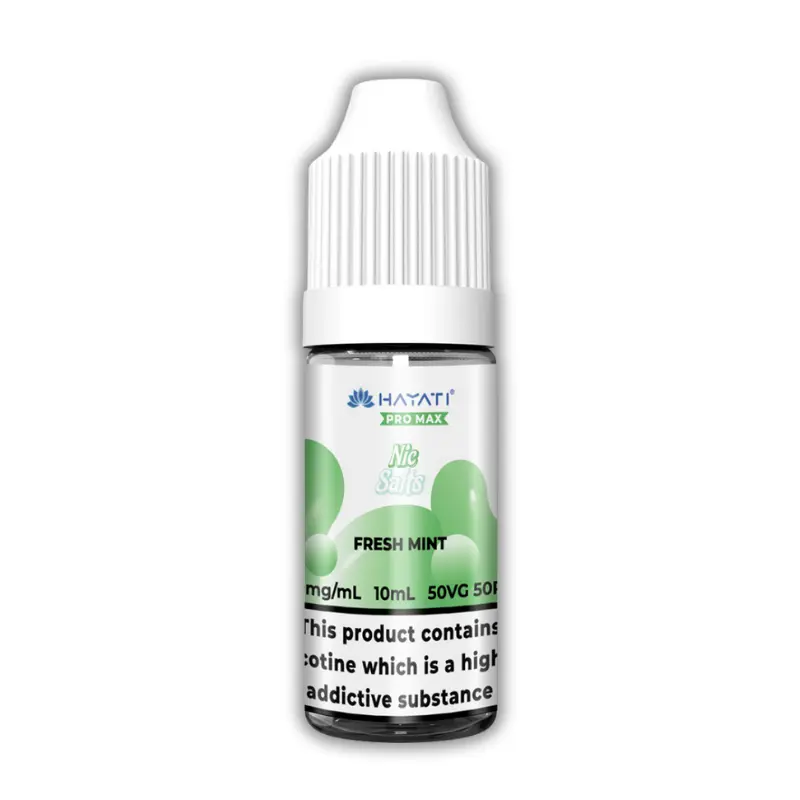
Fresh Mint Hayati Pro Max Nic Salt
£2.49
✔ In stock — ready to ship
Genuine Hayati
Free over £20
Same-day dispatch
Secure checkout
Fresh Mint Hayati Pro Max Nic Salt is a 10ml bottle of plain mint at 10mg, blended at 50/50 VG/PG, priced at £2.49 and sold for refillable pods and small mouth-to-lung hardware. That description fits sixty-four other bottles on Hayati Pro Max Nic Salts almost word for word, and on its own it gives a buyer nothing to decide with.
What makes this listing worth a separate page is where it sits in the rest of the bottled catalogue. Hayati bottle their liquids three ways and nothing else: sixty-five 10ml nic salts, twenty 120ml bottles at 70/30, and twenty 120ml shortfills at 50/50. Those three shelves add up to the 105 listings on Hayati E-Liquids with nothing left over, so the bottled range is not a long tail with a few large formats attached. It is three fixed columns, and the interesting question is which flavours were given a seat in all three.
Fresh Mint has one. It is sold as this bottle, as Fresh Mint Hayati Pro Max 70/30 E-Liquid at £6.99, and as Fresh Mint Hayati Pro Max 50/50 Shortfill E-Liquid, also £6.99. Three bottles, two volumes, two nicotine strengths, two base ratios. And of the twenty flavours in that large-format programme, this is the only one that is not a fruit or a sweet.
That is the whole subject of this page. Not what mint tastes like, which four earlier pages on this site have taken apart in more detail than a sixth account could add to, but what it means that one cooling herb was given the full bottle treatment while every other mint and menthol Hayati bottle stops at a single 10ml listing. The argument runs through a count, then through the three prices, and it ends with the only decision this listing actually asks you to make.
Counting the bottle programme before leaning on it
The claim above is the sort that reads well and falls over on inspection, so it went through the catalogue first. Here is what the count returned, stated so anyone can repeat it.
Two shelves, twenty flavours, and no difference between them
The 70/30 shelf holds exactly twenty listings. The 50/50 shortfill shelf holds exactly twenty. Line the two flavour lists up against each other and they match perfectly: not a single flavour appears on one and not the other, in either direction. The twenty are Banana Ice, Blue Razz Cherry, Blue Razz Gummy Bear, Blue Sour Raspberry, Blueberry Cherry Cranberry, Blueberry Raspberry, Fizzy Cherry, Fresh Mint, Juicy Peach, Lemon Lime, Mr Blue, Pineapple Ice, Rainbow, Red Apple Ice, Strawberry Raspberry Ice, Summer Dream, Triple Mango, Vimbull Ice, Watermelon Ice and Watermelon Lemon Burst.
Forty listings, twenty recipes, two bases. That is a decision rather than an accident. Somebody at Hayati picked twenty flavours out of a range that runs to 492 listings and committed each of them to both large formats at once, and then stopped. No flavour was given the high-VG version and denied the shortfill, and none was given the shortfill alone. If there is a story about which flavours earn a big bottle, the twenty are the whole of it.
The seventeen that reach every bottle size
Now take the same twenty and ask which of them also has a 10ml nic salt, which is the third and smallest column. Seventeen do. Three do not: Pineapple Ice, Vimbull Ice and Watermelon Lemon Burst are sold at 120ml twice over and never at 10ml, which is the reverse of what most buyers would guess, since the small bottle is the cheap way in and the large one is the commitment.
So the flavours available in all three bottle formats number seventeen, and Fresh Mint is one of them. Of those seventeen, sixteen are a fruit or a confectionery profile. Banana Ice, Red Apple Ice, Watermelon Ice and Strawberry Raspberry Ice are cooled fruit. Blueberry Raspberry, Blue Razz Cherry, Blue Sour Raspberry, Blueberry Cherry Cranberry, Triple Mango, Lemon Lime, Juicy Peach and Fizzy Cherry are fruit without a cooling headline. Rainbow and Blue Razz Gummy Bear are sweets, by Hayati's own copy rather than by my reading of the names. Mr Blue and Summer Dream are named for a mood, and both listings describe a fruit blend underneath, which is as far as that evidence goes. Sixteen out of seventeen, and then Fresh Mint.
What survived the count, and the part I narrowed
The claim I set out to check was that Fresh Mint is the only one of the twenty that is not a fruit or a confectionery flavour. At seventeen it is exact. At twenty it needs a footnote, and the footnote is Vimbull Ice.
Vimbull Ice is a drink. Hayati describe it as a dark-fruit cordial character crossed with the tang of an energy drink and then cooled, which puts fruit at the core of it, but a cordial is not a fruit any more than a gummy sweet is, and a reader who wanted a strict partition would put it in a third box. It happens to be one of the three that never reaches the 10ml column, so it drops out of the seventeen and the narrower claim is clean without any special pleading.
The narrowing improves the claim rather than weakening it, which is the usual result of counting one of these. Stated loosely, "Fresh Mint is the odd one out in the big bottles" is the sort of thing any page could say about any flavour. Stated as a count, it is this: of the seventeen Hayati flavours you can buy at 10ml, at 120ml in a high-VG base and at 120ml in a 50/50 base, sixteen are built on fruit or sugar and one is built on a cooling herb. That is a fact about the range's shape, it is checkable in five minutes, and it is the reason this bottle is worth a page of its own rather than a paragraph.
One mint in a programme of fruit
The mint side of the catalogue has already been counted properly and it would be a waste of your time to count it again. The Fresh Mint Pro Ultra Plus pods page sorted every mint and menthol listing in the range by the size of the vessel it comes in, and the census there is the reference: twenty-six of the 492 titles carry a word from the mint or menthol family, and the fruit-free ones are concentrated in 10ml bottles and 12ml sealed pods with a single exception at 22ml. Mint Vapes collects nineteen of them on one grid.
What that census did not ask, because it was answering a different question, is what happens at the other end of the volume scale. So: of every mint and menthol Hayati sell in a bottle, Fresh Mint is the only one that exists at anything other than 10ml. Spearmint Hayati Pro Max Nic Salts is a 10ml bottle and nothing else. Black Mint is a 10ml bottle and nothing else. Menthol, Lemon Mint and Fresh Menthol Mojito are 10ml bottles and nothing else. Five bottled mints are locked to one size, one ratio and one strength each. The sixth is sold three ways.
There is a second half to that which matters more for hardware than for flavour. Every one of those five sits at 50/50, because that is the base the nic salt line uses throughout. Fresh Mint is therefore the only mint or menthol in the Hayati catalogue available in a high-VG blend at all. If you run a sub-ohm tank and you want a mint from this brand, there is precisely one listing in 492 that will serve, and it is the 70/30 sibling of this bottle. Not a preference, an inventory fact: the alternative does not exist.
Whether that reflects demand, a manufacturing decision or somebody's judgement about which flavours carry at high power is not knowable from outside the company, and a retail page guessing at it would be inventing. What can be said is that the pattern is consistent. The twenty large-format flavours are the range's best-known fruit and sweet profiles, plus one mint, and the mint is the one whose name appears on more listings than any other mint in the catalogue. Fresh Mint Vapes holds eleven listings against nineteen for the whole mint shelf, so more than half of Hayati's mint presence is this single flavour.
The set of three, laid out and priced
Here is the whole of Fresh Mint in a bottle, with every published figure in one place, because the three listings sit on different shelves and nobody browsing one of them is shown the other two.
- This bottle. 10ml, 10mg nicotine salt, 50/50 VG/PG, £2.49. Sold ready to use.
- The 70/30. 120ml, 0mg, 70VG/30PG, £6.99. Hayati direct it at sub-ohm tanks and direct-to-lung kits and say plainly that it is too thick for small pods.
- The 50/50 shortfill. 120ml, 0mg, 50/50 VG/PG, £6.99, with headroom left in the bottle for a nicotine shot. Hayati direct it at mouth-to-lung pod kits and lower-powered devices.
A correction to something this site has published
The Fresh Mint Pro Ultra Plus pods page, working through its volume census, describes the two 120ml bottles as sub-ohm liquids at 0mg. Half of that is right. The 70/30 is a sub-ohm liquid and its own listing says so. The shortfill is not, and its listing says the opposite: a 50/50 ratio, aimed at mouth-to-lung pod kits and lower-powered devices, which is the same hardware this 10ml bottle is aimed at.
The distinction is worth correcting rather than letting stand, because it changes which of the three bottles is actually an alternative to which. The 70/30 is not a bigger version of this liquid for the same device. It is the same liquid for a different device, and a pod kit that takes this bottle will not run it properly. The shortfill is a bigger version of this liquid for the same device, minus the nicotine. That is a real relationship and the census page's phrasing would have hidden it.
Pence per millilitre, and what the figure conceals
The arithmetic is not complicated and the conclusion it appears to support is wrong, which is why it is worth doing in the open.
£2.49 for 10ml is 24.9p per millilitre. £6.99 for 120ml is 5.825p per millilitre, call it 5.8p. The small bottle costs a little over four and a quarter times as much per millilitre as either large one. Put the other way round, twelve of these bottles would give you the same 120ml for £29.88, against £6.99 for one shortfill, a gap of £22.89.
Read that as a price comparison and you would conclude that this bottle is poor value by a wide margin. It is not a price comparison, because the two figures are not measuring the same object, and the difference between them is not bottle size.
This bottle contains nicotine. 10mg per millilitre across 10ml is 100mg of it, and that is the entire published difference in composition between this and the shortfill, whose base ratio is identical. The shortfill contains none. Neither 120ml bottle contains any. So the 4.27 to one ratio is not the cost of a small bottle against a large one, it is the cost of a finished liquid against an unfinished one, and the gap is carrying the nicotine, the smaller packaging run and the fact that one of the three is usable the moment the cap comes off.
Two further things sit inside that gap and both are worth naming rather than assuming away.
The 120ml figure is not as firm as it looks
Hayati's own text on the shortfill says the bottle is 120ml and that it leaves room for a nicotine shot. Those two statements are in tension and the listing does not resolve them. A shortfill is normally sold as a part-filled bottle, so the headline volume can mean the liquid in it or the capacity of the container it arrives in, and which of the two is meant changes the per-millilitre figure by about a fifth. Every other shortfill on that shelf carries the same wording, so it is a house convention rather than a slip on this one listing.
The honest position is that 5.8p per millilitre is the best case and the true figure is somewhere between that and about 7p, and that Hayati have not published which. Anyone who tells you the shortfill definitely holds 120ml of liquid, or definitely holds 100ml in a 120ml bottle, is reading a convention rather than a specification. The 70/30 listing carries no shot language at all, so its 120ml is unambiguous and its 5.8p stands.
The nicotine column, stated flatly and left alone
The three bottles publish two nicotine figures between them: 10mg per millilitre on this one, 0mg on the other two. Nicotine is an addictive substance and those numbers are properties of the products rather than a scale anybody should be positioned on. What follows from them is a matter of arithmetic and nothing else.
A 0mg shortfill arrives with no nicotine in it and whatever it ends up containing is determined by what the buyer adds and in what proportion. Hayati do not sell a nicotine shot anywhere in their 492 listings, so there is no companion product in this range that completes the bottle, and the strength you would reach is not something either listing states or implies. That is the practical difference between the two 50/50 bottles and it is larger than the price gap suggests: one of them is a product and the other is a component.
The 10mg on this bottle is the only nicotine figure Hayati publish for Fresh Mint in a bottle at all. It is also the only figure available anywhere on the nic salt shelf, since all sixty-five listings on it carry 10mg and no other strength is offered, which means the bottled line gives a buyer no choice to make on that axis and this page is not going to invent one.
What the set actually offers, restated
Strip the three listings down and the structure is this. One recipe. Two of the three bottles share a base ratio with each other and one does not. One of the three contains nicotine and two do not. One of the three works in a sub-ohm tank and two do not. There is no bottle in the set that is simply this bottle made bigger, because the only listing that matches it on base ratio differs from it on the one property that makes a liquid finished.
That is a more awkward set than the three prices make it look, and it is the reason the choice between them is a hardware question and a readiness question rather than a value question.
Choosing between the three, and the case for each
Four situations cover almost everybody arriving at these listings, and the right answer differs in each.
You run a pod kit and you have not tried this flavour. This bottle, without much hesitation. £2.49 buys the complete liquid with nothing to add, at the volume most mouth-to-lung vapers get through in somewhere between a few days and a fortnight, and a plain mint is the one profile in this range whose verdict does not move much over that span. The Fresh Mint Rubik kit page makes the case for that properly: a single-component liquid has nothing arriving late, so the first draw is close to the complete inventory. If the answer is no, £2.49 is the whole of the loss.
You run a pod kit and Fresh Mint is already settled. This is where the shortfill earns its place, and it is the only situation in which it does. Same base, same hardware, twelve times the volume for less than three times the money even on the pessimistic reading of what 120ml means. The cost is that the bottle arrives at 0mg and you are responsible for what it becomes, which is a different kind of purchase and not one this page will steer.
You run a sub-ohm tank. The 70/30 and nothing else, and not because it is better. This 10ml bottle is thin enough to flood a low-resistance coil and a wide airflow will run it far too hot, and the 70/30 listing is unusually direct about the reverse case as well, telling mouth-to-lung vapers to take one of the other two. The two ratios are not grades of the same thing. They are two liquids built for two device categories, and the flavour they share is the only thing they have in common.
You want Fresh Mint but not out of a bottle. Then the three-bottle set is the wrong shelf entirely and Fresh Mint Vapes is where to look, because eight of the eleven listings under that name are sealed pods or complete kits. Fresh Mint Hayati Rubik Pods at £3.99 and Fresh Mint Hayati Pro Max Plus Pod Kit at £7.99 are the two ends of that group, one a refill for hardware you already own and one a complete package. Those are prefilled at 20mg and are a different proposition from a bottle in every respect except the flavour inside them.
The fifth situation, which is commoner than the other four combined, is that you want a mint and have not decided which. That one is answered further down against the shelf rather than against the format.
The liquid, in short, because it has been done properly elsewhere
Four pages on this site have already taken this exact recipe apart and there is no version of a fifth account that would be anything but a restatement. The right thing is to say what they found, point at them, and spend the space saved on the part that is genuinely this listing's own.
The Fresh Mint Rubik kit page owns the flavour analysis. It lined up all nine solo descriptions Hayati have written of this liquid and found they cluster by platform with no listing crossing a boundary, which means a difference in wording between two Fresh Mint listings tells you which brief the copywriter had open rather than anything about the recipe. It established that all nine agree the cooling is moderate and not one of them reaches for the intensity vocabulary the same copy desk uses freely on the menthol listings. It settled what the word Fresh is doing in the name, which is nothing a buyer can verify before purchase, since it names no species, no compound, no quantity and no temperature. And it gave the draw-by-draw: cooling first and immediately, the green aroma filling in behind it and peaking in the middle, the two separating on the exhale, and no third act.
The Spearmint bottle page owns the chemistry that makes a herbal mint a different object from a cold one, and the Double Menthol pages own the physiology of why a cooling sensation fades against you with exposure while an aroma resets overnight. The Blue Frozen pods page owns the cooling-vocabulary census, which established that Hayati's cold words are not graded and never appear in the same title as a mint word. All of that is cited here and rebuilt nowhere.
One sentence in this listing's own text is worth flagging without dissecting it, because it is the only manufacturer-stated ranking of the mints anywhere in the range: Hayati place Fresh Mint between Spearmint and Menthol, softer than one and less icy than the other. The red-berry-ice page in this cluster has already worked out what that sentence is worth and what it is not. Read it there.
The short practical version, for anyone who arrived at this page from a search and wants the profile before the structure: a green, herbal mint with no fruit and very little sugar in it, cooled at a level the whole corpus of Hayati's own copy calls moderate, arriving whole on the first draw and staying that way to the bottom of the bottle. If cold is what you are buying, this is not the listing, and nothing further down this page will change that.
The numbers, and which of them decides anything
| Price | £2.49 |
| Volume | 10ml |
| Cost per millilitre | 24.9p |
| Nicotine | 10mg per millilitre, nicotine salt |
| Total nicotine in the bottle | 100mg |
| Base | 50/50 VG/PG |
| Intended hardware | Refillable pods and compact mouth-to-lung kits with MTL coils |
| Ruled out by the listing | Sub-ohm tanks |
| Flavour family | Mint, no fruit, no confectionery element |
| Species named | None anywhere in the range |
| Same liquid at 120ml | Two listings, both £6.99, both 0mg |
| Shelf | Hayati Pro Max Nic Salts, 65 bottles, all 10mg |
Three of those rows carry the decision and the rest are there so the page can be checked.
The 10mg is fixed by the shelf rather than chosen for the flavour. Every bottle on the nic salt line publishes the same strength, so the number tells you what is in this liquid and nothing about how it compares with its neighbours. Nicotine is an addictive substance, and 10mg per millilitre across a 10ml bottle is 100mg in total, which is the figure that matters for how the bottle should be stored rather than for how it should be used.
The 50/50 is the row that decides compatibility, and the Spearmint bottle page has already worked through why a half-and-half base wicks into a tight coil and carries flavour well at low power. What is worth adding on this specific liquid is the direction of the failure. A thin base in a wide-open sub-ohm coil does not merely taste wrong, it runs hot, and heat is the one thing a mint aroma handles worse than anything else in the range, turning green and faintly soapy where a sugared fruit would just go caramelised. So the hardware restriction on this bottle bites harder than it does on most of the shelf.
The 24.9p is the row this page has spent most of its length on, and the only honest summary of it is that it is the highest per-millilitre figure of the three Fresh Mint bottles and the only one attached to a liquid you can use as supplied.
Where it sits on a shelf of sixty-five
The nic salt line is the largest bottled shelf Hayati run and it is overwhelmingly fruit and sugar. Placing a plain mint inside it is more useful than placing it against the other mints, which the mint shelf page already does thoroughly.
The four other plain and compound mints
Spearmint Hayati Pro Max Nic Salts is the softer and sweeter one, named for an actual plant, and it is the bottle to take if the complaint about this one would be that it is too sharp. Black Mint names a mood rather than a property and the mint shelf page concedes that is the weakest call it makes. Lemon Mint and Fresh Menthol Mojito both hang the mint on a citrus, so neither is an alternative to a fruit-free bottle; they are fruit liquids with a mint finish, which is a different product doing a different job. Every one of the four is a 10ml bottle at £2.49 and none of them exists at any other size.
The cooled fruits, which are solving another problem
A large part of this shelf is fruit with cooling applied. Blue Frozen, Blackberry Ice and Banana Ice are built the same way: a fruit identifies the bottle and a coolant carries it. The structural difference from this one is not the amount of cold but what remains when the cold stops registering. On a cooled fruit you still have a fruit. On a plain mint you have lost a large fraction of the product, which is an argument the Rubik kit page makes at length and the reason plain mints generate more complaints of going flat than iced fruits do at the same age.
The sweet end, and why people arrive here from it
Blue Razz Gummy Bear, Rainbow and Blackcurrant Lemonade sit at the sugary end of the shelf, and two of those three are among the twenty flavours that also reach 120ml. Sustained sweetness is the commonest reason somebody goes looking for a mint, and the role that follows from it has been covered in detail on the Fresh Mint and Blue Razz Mint refill page, which sets out the five properties that decide whether a flavour can do that job. It is spent material and this page is not going to restate it.
The multi-fruit blends and the named bottles
Blueberry Cherry Cranberry and Mango Peach Pineapple are three-fruit constructions, which means they have internal structure that a tiring coil can dismantle one component at a time. This liquid has no parts to lose in that order. Blackcurrant Juice and Blue Razz Cherry are the two-component versions of the same idea. At the other extreme, Black Mamba and Blue Fusion name nothing you can check, and Hayati Pro Max Shisha Nic Salts borrows a term from outside the fruit vocabulary altogether. Against all of those, the argument for a bottle called Fresh Mint is that the name is close to the full specification, with the single unresolved question being which mint, and Hayati never answer that on any listing.
The two shelves to browse instead of this paragraph
Anything recently added sits on New Products, and the whole 492 is on the full Hayati range if you would rather sort it yourself than take a page's word for where a flavour falls. One short note on hardware and then no more of it: bottles are not tied to a platform the way sealed pods are, so the only compatibility question this listing raises is whether your device wants a 50/50 fluid, and that is answered by the coil rather than by the brand on the bottle.
Living with ten millilitres of a volatile herb
Most bottle handling advice is generic and the Spearmint page has already written the careful version of it, including priming a fresh coil and why a mint bottle wants a cool drawer rather than a windowsill. What follows is the part that belongs to this liquid in this format and to nothing else in the Fresh Mint set.
Headspace is the mechanism, not time. The green top of a herbal profile is the lightest and most reactive thing in the bottle, and it leaves into air rather than into the plastic. A full 10ml bottle has almost no air above the liquid. A bottle with 2ml left in it is mostly air, and every time the cap comes off that air is replaced. So the last quarter of a mint bottle is the part most exposed, which is the reverse of how people usually think about a liquid ageing. The practical response is not to buy smaller bottles, it is to close the cap firmly and quickly and to avoid leaving a nearly empty one open on a desk while you fill a pod one drop at a time.
This is the only Fresh Mint you can separate from its coil. The Rubik kit page names a real limitation of every sealed format, which is that the coil retires inside the pod, so when a mint goes quiet you cannot tell whether the coil has aged or the liquid has lost its top notes. Both produce the same symptom. A bottle removes that limitation completely, and it is the only one of the eleven Fresh Mint listings that does. Put fresh liquid on a coil that is behaving oddly and the variable is isolated in one refill: if the green comes back, the coil was fine and the previous fill had gone flat; if it does not, the coil is finished. That test costs a few pence here and is impossible on any prefilled version of the same flavour at any price.
Take the reading in the morning. The Spearmint pages established the diagnostic and it applies with more force to a bottle than to a pod, because a bottle gives you many first draws instead of one. An overnight break resets your sense of smell fully, so the first draw of the day on a freshly filled pod is the only comparison worth making between one week and the next. Any judgement formed in the afternoon after an hour of something sweet is a judgement about your palate.
Mind what the pod did before this. A mint carries no fruit and no sugar, so anything left in the wick from the previous fill is immediately audible in a way it would not be under a berry. The Spearmint page works through the ghosting problem and the case for keeping a pod for the mint, and the argument transfers here unchanged. Even a rinsed pod that last held Blackcurrant Juice will put something faintly dark under the first few draws of this.
Draw slowly and use the nose once. The cooling arrives whatever you do with your breath. The aroma has to reach the tissue that detects it on the way out, so a short sharp pull delivers the sensation and leaves most of the flavour behind. This is the single commonest reason a mint bottle gets written off as thin in its first pod, and it costs nothing to rule out before reaching a verdict.
Do not steep it. A layered dessert liquid changes in the bottle over weeks. A single-component herb does not improve with time and only loses the fraction that made it worth buying, so there is nothing to wait for and every reason to use it while it is fresh.
Storage and disposal. Cool, upright, capped, out of sunlight, and somewhere children and pets cannot reach it, which matters more here than on a sealed pod because a bottle opens. Rinse an empty bottle before it goes out with household plastics if your local collection takes them, and check locally rather than assuming, since the rules differ by area.
Questions this listing raises
What is the actual difference between this and the 120ml 50/50 shortfill?
Volume, nicotine and price. The base ratio is identical, both are aimed at the same kind of hardware, and the flavour is the same recipe. This bottle is 10ml at 10mg for £2.49 and arrives finished. The shortfill is 120ml at 0mg for £6.99 and arrives with headroom for a nicotine shot that Hayati do not sell. That last point is the one that matters: the two bottles are not two sizes of one product, because only one of them is a product.
Is the 70/30 bottle just a larger version of this?
No, and this site has published a sentence implying otherwise that is being corrected here. The 70/30 is a high-VG liquid for sub-ohm tanks and direct-to-lung kits, and its own listing tells mouth-to-lung vapers to choose one of the other two. A pod kit that runs this 50/50 bottle will not run the 70/30 well. The two share a flavour and almost nothing else.
Why does the small bottle cost more than four times as much per millilitre?
Because the figures are not measuring the same thing. 24.9p per millilitre here against 5.8p on the large bottles looks like a size premium, but this bottle contains 100mg of nicotine and the large ones contain none. The gap is the cost of a finished liquid against an unfinished one, plus the smaller packaging. Whether that is worth it depends entirely on whether you want to finish a bottle yourself.
Does the 120ml shortfill really hold 120ml of liquid?
Hayati say 120ml and also say the bottle leaves room for a nicotine shot, and they do not resolve which of the two the number refers to. The same wording appears across the whole shortfill shelf, so it is a house convention rather than a mistake on one listing. Treat 5.8p per millilitre as the best case and expect the real figure to sit somewhere between that and about 7p.
Can I get Fresh Mint in a bottle at 20mg?
Not from Hayati. All sixty-five bottles on the nic salt shelf publish 10mg and no other strength is offered on any of them, so the bottled line provides one figure and that is the whole of it. The prefilled pod versions of this flavour are filled at 20mg, but those are sealed products rather than liquid you can decant.
Is this peppermint or spearmint?
Hayati do not say, on this listing or on any of the other ten that carry the name. The range names spearmint explicitly on three separate listings and never once uses the word peppermint, which is suggestive of a gap in the naming rather than proof of anything. The Fresh Mint Rubik kit page works through the evidence properly and reaches the same unresolved answer.
How cool is it compared with the other mints on the shelf?
Moderate, and the evidence for that is unusually good: nine separate Hayati descriptions of this liquid all use moderate vocabulary and not one reaches for the intensity words the same copy desk applies to the menthol listings. Hayati's own text here places it between Spearmint and Menthol. If the top of the temperature range is what you want, the menthol bottles are where it lives.
Will it work in a sub-ohm tank?
No, and the listing rules it out. A 50/50 fluid is thin enough to flood a low-resistance coil, a wide airflow will run it hot, and heat is the specific thing that turns a mint aroma soapy. The 70/30 version exists for exactly that hardware, and it is the only mint anywhere in Hayati's 492 listings built for a high-VG setup.
How long does a 10ml bottle go?
That depends on how much you vape, how tight the airflow is and how much liquid the pod holds, so there is no useful single number. Across mouth-to-lung use the range runs from a few days to a fortnight, and the reason 10ml is the standard size for the format is that it is short enough for trying a flavour to be a small decision.
Is there any fruit or sweetener in this?
No fruit. Hayati state the absence outright on this listing and on most of the others carrying the name. Sweetness is low, and part of what registers as sweetness in a cooled liquid is the cooling rather than sugar, which the Double Menthol pod page explains properly.
Can I refill the same pod with this and with a fruit liquid?
You can, and it is the arrangement most likely to make the mint seem disappointing. A fruit-free, low-sugar liquid has nothing to hide a previous flavour behind, so residue in the wick is audible straight away. A second pod kept for the mint solves it, and at £2.49 a bottle that is usually the smaller half of the expense.
Why does this flavour get a large bottle when the other mints do not?
Hayati do not explain it and nobody outside the company can. What the catalogue shows is the pattern: twenty flavours reach the 120ml formats, seventeen of those also come as a 10ml bottle, and sixteen of the seventeen are fruit or sweets. Fresh Mint is the one exception, and it is also the mint with by far the most listings in the range, which is as close to a reason as the published data gets.
The short version
A 10ml bottle of plain, fruit-free mint at 10mg in a 50/50 base, £2.49, for refillable pods and small mouth-to-lung kits and nothing wider than that. The flavour is green and herbal rather than cold, cooled at a level every Hayati description of it calls moderate, complete on the first draw and unchanged at the bottom of the bottle.
The argument for this particular listing is structural. Hayati bottle twenty flavours at 120ml, the same twenty on both large-format shelves, and seventeen of the twenty also come at 10ml. Sixteen of those seventeen are a fruit or a sweet. Fresh Mint is the seventeenth, the only mint or menthol in the whole catalogue sold at anything other than 10ml, and the only one available in a high-VG blend at all. Inside its own set of three bottles it is the only one carrying nicotine and the only one usable as supplied, which is what the 24.9p per millilitre is buying against 5.8p on the two large ones.
If you already know you want a lot of this flavour and are willing to finish a bottle yourself, the 50/50 shortfill is the cheaper route and the only one of the three that is genuinely the same liquid for the same hardware. If you run a sub-ohm tank, the 70/30 is your only option in this brand. If neither of those describes you, this is the bottle, and £2.49 is the whole of what a wrong guess costs.
Strictly for adults aged 18 and over. Nicotine is an addictive substance.
You might also like


