
Home / Hayati Pro Max Plus Prefilled Pod Kit / Cherry Sour Raspberry Hayati Pro Max Plus 6000 Pod Kit
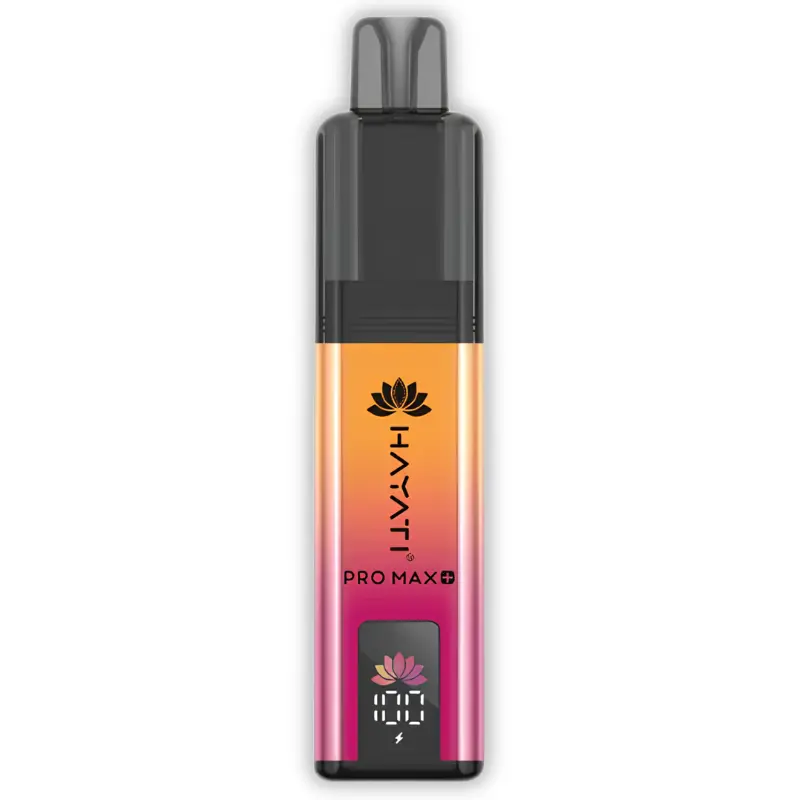
Hayati · Pro Max Plus
Cherry Sour Raspberry Hayati Pro Max Plus 6000 Pod Kit
£7.99
✔ In stock — ready to ship
Genuine Hayati
Free over £20
Same-day dispatch
Secure checkout
Cherry Sour Raspberry is sold here as the boxed pairing rather than the refill: one rechargeable Pro Max Plus body, one pod that leaves the factory already holding 12ml of liquid at 20mg, £7.99 for the two together. Hayati rate a filled pod at up to 6,000 puffs, which is a bench figure produced under laboratory conditions and not a promise about how long yours will run. The liquid is a red-fruit blend with an acid treatment declared in the name, and the device is the same one that sits under roughly ninety other flavours on the Hayati Pro Max Plus Prefilled Pod Kit shelf.
What makes this listing worth a second look has nothing to do with the hardware. It is the only entry in the whole Pro Max Plus range that applies a declared sour treatment to two red fruits at the same time. That sounds like a small distinction and it is not. Cherry and raspberry are already the two most acid-adjacent fruits on the red end of the shelf: both carry real organic acid in the fruit itself, and both are routinely described as tart by people who have never seen the word sour on a label. Dosing acid on top of a soft tropical base is one kind of decision, and the range has a listing that does exactly that. Dosing acid on top of two fruits that were never short of it is a different proposition, and nobody else in the range has tried it.
So the interesting question on this page is not whether the pod is sour. It plainly is, and Hayati say so. The question is what a third layer of acidity does to fruits that each brought their own. Does the sourness stack into something with depth, arriving in stages from three different directions, or does it collapse into one flat edge at the front of the draw? And underneath that, a second question specific to cherry: whether the kernel note that gives cherry its identity survives being soured, given that acid and bitterness are not independent of one another on the tongue. Both are answerable, and both are more useful than another paragraph of adjectives.
Two red fruits, one declared sour treatment
Start with what the name is actually claiming, because Hayati's flavour names are not uniformly informative and this one is unusually explicit.
What the word Sour is doing in the name
Our Tropical Sour Juice page works through what a declared sour marker means across this range, and the argument belongs to that page rather than this one. The short form, with credit where it is owed: when Hayati put the word in a product name it signals that acidity was specified and dosed as its own line in the recipe, not left to arrive incidentally with whichever fruits went in. That page also makes the case that on a juice-style base the acid functions as a correction, putting back the lift that the juice treatment took out, rather than as an ornament laid over the top. Read it if you want the full reasoning.
Carry that definition over to this listing and it immediately behaves differently. There is no juice treatment named here, so nothing has been flattened that the acid needs to repair. The base is two fruits, stated plainly, neither of which is short of sharpness to begin with. Whatever the sour dose is doing on this pod, it is not correcting a deficit. It is pushing a property that was already present further in the direction it was already going.
That distinction is the whole page in one sentence, and it sets up the two things that follow.
Three sources of acid, and why they do not read as three
Count the acid in this recipe and you get three contributors. Cherry flesh carries malic acid at a modest level, enough to keep ripe cherry from reading as pure sugar. Raspberry carries rather more, a citric and malic combination that is a genuine part of the fruit's signature rather than a background detail; a raspberry that has had its acidity bred out does not taste like a sweeter raspberry, it tastes like a vague red thing. On top of those two sits the dosed sour coating that the name declares.
Three sources. The intuitive expectation is that they layer, the way three aroma notes layer, giving you a sourness with structure: something arriving early from the coating, something in the middle from the raspberry, something lingering from the cherry. It is a pleasant idea and it is wrong, for a reason worth understanding before you spend £7.99 on it.
Aroma and taste do not work the same way. Aroma compounds are detected at the back of the nose across a very wide range of distinct receptors, which is why a blend can present as three separate fruits rather than as one averaged fruit; each compound occupies its own frequency and your nose can hear them apart. Sourness is not like that. It is a taste, registered by receptors responding to acidity, and it is essentially a single channel reporting a magnitude. Your tongue tells you how sour something is. It does not tell you which acid is responsible. Citric, malic and tartaric acids differ from one another mainly in how quickly they rise and how long they hang about, and at the concentrations used in a flavoured liquid those timing differences are subtle enough to merge.
The practical consequence is that three acid sources on one pod do not produce three sournesses. They produce one sourness, louder. Cherry Sour Raspberry is therefore sharper than its ingredient list suggests and less intricate on the sour axis than its name implies. There is a single acid event at the front of each draw. It is a firm one, firmer than any other red listing in the range, and it has exactly one shape.
What does stack, and this is where the blend earns its place, is everything sitting behind the acid. Sourness suppresses perceived sweetness, and it does so across the board rather than selectively, which means the fruit that survives underneath an acid dose is whichever fruit had the most body to start with. Raspberry is bright and thin; it has aroma rather than weight. Dark cherry has weight. Under a sour treatment that flattens the sugar, cherry is what is left holding the structure up, which is almost certainly why the recipe reaches for a dark cherry rather than a fresh one. The depth in this liquid, such as it is, comes from the fruit choice. It does not come from the acid, and anyone buying it expecting a complex, multi-stage sourness will find a single sharp edge instead.
That is not a criticism so much as a specification. A single firm edge is what a lot of people want from a sour liquid, and this one delivers it more decisively than a blend with layered acidity would.
The kernel question, put under acid
The Cherry Vapes shelf page owns the chemistry here, and it is the best single explanation of why cherry liquids differ so wildly from one another. In outline, so that this page makes sense on its own: benzaldehyde is the compound that makes a flavouring read as cherry at all, it comes from the kernel rather than from the flesh, and it turns into almond and marzipan as the dose rises. How much kernel character a recipe allows through is the decision that separates the cherry listings from each other. That framing is that page's, and the ranked list of which cherry builds sit where lives there too.
What that page does not address, and what matters on this listing specifically, is what acid does to the kernel. Two mechanisms pull in different directions.
The first is perceptual, and it works in the kernel's favour. Sourness and bitterness are separate taste channels, but they do not sit in isolation from one another. Acid suppresses perceived sweetness strongly and suppresses perceived bitterness rather less. Strip sugar out of the foreground and whatever faintly bitter almond depth the benzaldehyde is carrying has less to hide behind, so it stands out more, not less. This is the same effect the shelf page describes for cooled cherry builds, where a coolant pulls the sugar down and leaves a dry kernel note exposed on the exhale. Acid arrives by a different route and produces a comparable result at the back end of the draw.
The second mechanism is about timing, and it also favours the kernel. Acid is a tongue event. It happens on the inhale, on the sides and tip of the tongue, and it is largely over before you exhale. Benzaldehyde is an aroma compound, sensed retronasally as you breathe out. The two occupy different halves of a draw and therefore do not compete for the same perceptual space. Acid cannot mask an almond note in the way a second loud aroma would, because by the time the almond note is being sensed the acid has already done its work and moved on. If anything the sourness clears the ground in front of the kernel.
So acid is not the threat. Raspberry is. Raspberry's signature is top-heavy and aromatic, and it lives in exactly the retronasal window where a kernel note would otherwise be audible. On a pod with cherry alone and a sour dose, the almond edge would be easy to find. Put a bright, aroma-forward second fruit in the middle of the blend and it occupies the space on the exhale that the kernel needs.
My reading, offered as inference rather than as fact: the kernel survives the souring perfectly well, and is quieter here than on a kernel-forward cherry build, and the reason is the raspberry rather than the acid. That is a prediction from how the components behave, not a measurement, and it is testable on your own first pod. Take a draw early, before anything else has been in your mouth, and exhale slowly through the nose rather than the mouth. Wait for the fruit to clear, three or four seconds, and see whether a dry, faintly bitter almond edge appears at the very end. If it does, the recipe has dosed benzaldehyde generously and the cherry in this blend has a real identity. If nothing appears, the cherry here is functioning as body and colour rather than as a distinct flavour, and you are essentially buying a soured raspberry with weight underneath it. Both are coherent products. They are not the same purchase.
The draw, front to back
The shape of a single draw is consistent and easy to describe. Acid lands first, immediately, before any fruit has registered: a prickle along the edges of the tongue and a distinct mouth-watering response. Sweetness arrives a beat later, during the back half of the inhale, and it arrives noticeably suppressed by the acid that preceded it. Raspberry carries the middle, bright and slightly jammy without much weight to it. Cherry comes through last, on the exhale, darker and rounder than the raspberry and considerably slower to leave.
The finish is the part people tend to get wrong from reading the name. It is juicier than the opening, not sharper. The acid has largely dissipated by the exhale and what remains is red fruit sweetness with a slight syrupy quality to it. If you draw, exhale and then stop paying attention, you will remember the sourness. If you wait five seconds, you will be left with something that reads as a fairly ordinary sweet cherry and berry blend. That gap between the opening and the aftertaste is the most distinctive thing about the liquid and the thing most likely to divide opinion on it.
Across a session the opening moves. The first draw of a sitting carries an acid hit that the sixth does not, and this is a property of your mouth rather than of the pod. The Tropical Sour Juice page sets out the mechanism and the salivary buffering behind it in detail, and there is no point in me deriving it again here. The handling section below deals with what it means for this pod in practice.
Where it sits for sweetness
Middling, and lower than nearly anything else wearing two fruit names. The sweeteners are plainly present, because sourness with nothing behind it is unpleasant rather than interesting, but the acid keeps the level in check and the perceived sugar is well below what the same fruits would give you untreated.
Placed against the red listings on the same shelf, this one is at the dry end. Strawberry Raspberry Cherry is at the opposite extreme, three sweet fruits with no corrective at all, and the distance between the two is larger than the gap between most whole flavour families. The Cherry Vapes shelf ranks Cherry Sour Raspberry as the sharpest of its sixty-nine cherry listings, and that ranking, which is a judgement rather than a measurement, matches what the recipe would predict.
Where it sits against confectionery sour, which is what most people are calibrating against, is lower than you might fear. This is a firm fruit acidity, the kind that makes the salivary glands react on a first draw. It is not the wince-inducing level of a sour sweet coating, and nothing here reads as sherbet.
Cooling: not declared, and not present in the data
Hayati name a coolant when there is one, using words like Ice, Frozen and Cooler in the product title. None of those words appear on this listing and nothing in the product data indicates a cooling agent. Take it as an uncooled liquid.
Worth separating two sensations that get conflated at the point of purchase, because both get described as sharp. Acid makes you salivate and is felt on the surfaces of the tongue. Cooling changes how the incoming air feels and is felt in the throat and the airway. A soured pod and a cooled pod both cut through sweetness, which is why people who liked one sometimes buy the other and are surprised. If what you actually want is the airway sensation, this is the wrong listing and the iced entries in the range are the right place to look.
What this pod is not
It is not carbonated. Fizzy Cherry puts an effervescent prickle over the same red fruit, which reads as bright rather than as acidic and is a different mouthfeel entirely.
There is no cola, no caramel and no spice. There is no bakery direction either: nothing in the Hayati range builds cherry into pastry or frangipane, so if the almond edge you find here makes you want a dessert, the range does not have one.
It is not astringent. Cranberry-led blends such as Blueberry Cherry Cranberry produce a drying, puckering effect that comes from tannin rather than from acid, and it behaves differently: slower to arrive, longer to clear, and more tiring over a long sitting. This pod is sharp without being drying.
It is not a fresh-picked fruit accord. The cherry is dark and confected rather than crisp, and the raspberry is closer to a preserve than to something off the cane.
And it is not subtle. Whatever else is true of this liquid, it is the loudest thing on the red end of the shelf and it does not reward being sipped at absently.
The kit itself, briefly
Roughly ninety flavours share this device and every worthwhile thing about it has been written on other pages, so this section is deliberately short. What arrives is a rechargeable body with an 850mAh cell and one pod already filled with 12ml of liquid. Nothing else needs buying to start, and future pods for the same device cost £5.49 in whatever flavour you fancy.
The single specification that matters for this particular liquid is the nicotine format: 20mg as a salt, which is the only strength offered on this listing. That is worth flagging on a sour pod specifically, because acid and throat feel get confused with each other constantly. A sharp acid hit on the tongue is often reported as harshness, and harshness is usually assumed to be a nicotine or a coil problem. On this pod it generally is not. Nicotine salts are formulated to sit more smoothly in the throat at a given strength than freebase nicotine does, so what you are feeling at the front of a draw here is almost certainly the declared sour dose doing its job rather than the 20mg doing anything unusual. If you find the opening uncomfortable, the fix is a different flavour rather than a different strength, and there is no other strength on this listing to move to in any case.
Everything else about the platform, the charging rhythm, the way condensate collects in the airflow path, how the pod seats against the contacts, what to do with a spent unit, is covered properly across the Pro Max Plus kit shelf and the pages under it. There is no version of that material that gets better for being written a tenth time.
The numbers, and the ones Hayati leave out
Two things are worth noticing in the table below. The first is how much of it is present: volume, strength, cell capacity, a puff figure and a price all appear on the listing, which is more than a lot of vape products publish. The second is what is missing, and it is the same two entries missing from every product in this range.
| Made by | Hayati |
| Catalogue reference | HPM-6K-KIT-CHERRY-SOUR-RASPBERRY |
| Asking price | £7.99 |
| Fruits named | Cherry and raspberry, in that order |
| Treatment declared | Sour, applied across both fruits, with no intensity scale behind it |
| Cooling | No coolant word in the title and none recorded in the product data |
| What comes in the box | A rechargeable body and one pod filled at the factory |
| Volume held | 12ml |
| Nicotine | 20mg salt, the only strength on this listing |
| Cell | 850mAh, recharged in the device |
| Puff figure from Hayati | Up to 6,000 per filled pod, arrived at under laboratory conditions |
| VG and PG split | Hayati publish no ratio for this product |
| Coil resistance | Also absent from the specification |
| Shelves it appears on | Cherry Vapes, Raspberry Vapes, Hayati Pod Kits, Hayati Prefilled Pod Kits, Hayati Pro Max Plus Prefilled Pod Kit, New Products |
The absent VG and PG ratio matters slightly more here than it would on a sweet fruit pod. Propylene glycol carries taste compounds and acid more readily than vegetable glycerine does; glycerine carries body, vapour and sweetness. A liquid whose defining feature is a front-of-draw acid event is one where the ratio has a real influence on how prominent that event is, and Hayati have not told us what the ratio is. You can infer from the format that it is unlikely to be a high-glycerine mix, because a prefilled low-power pod would struggle to wick one, but that is an inference about the category rather than a published fact about this product.
The missing coil resistance is less consequential. Whatever the value, it is fixed, it is inside a pod you do not open, and the airflow is not adjustable. There is no setting to get wrong. The only variable a buyer controls on this device is how long they draw for, which is covered further down.
On the puff figure: 6,000 is Hayati's own laboratory number and it describes a specific test protocol rather than a real session. Treat it as a way of comparing one listing in the range against another, which it does adequately, and not as a quantity you have bought.
Choosing between this and its neighbours
Ninety-odd flavours share this device, so the useful comparisons are the handful that are genuinely close, not a tour of the shelf.
The same liquid without the device
If there is already a Pro Max Plus in the house, buy the refill instead. Cherry Sour Raspberry Hayati Pro Max Plus Pods carry identical liquid at £5.49 and the £2.50 difference between the two listings is entirely the body. Buying a second device you do not need is the most common avoidable mistake on this shelf. The kit is the right purchase exactly once per device.
The other declared-sour red listing
Blue Sour Raspberry is the nearest thing in the range and the comparison is genuinely informative. Both declare sour, both name raspberry. The difference is what the second component brings. Blue razz is a confectionery accord rather than a fruit: it has brightness and a recognisable sweet-shop quality, but very little body and no bitterness at all. So a sour treatment on that pairing lands on a thin base and the result is sharp and light, front-loaded, with not much underneath the acid.
This pod puts the same treatment on a base with weight. Dark cherry does not vanish under acid the way a blue razz accord partially does, so the sourness has something to sit against and the finish is fuller. Sharper opening, heavier close. If you found Blue Sour Raspberry pleasant but insubstantial, this is the answer to that complaint. If you found it exactly right and want nothing darker, stay where you are.
Cherry with something other than acid doing the work
Every cherry recipe needs a strategy for managing the kernel note, and the range demonstrates three of them. Acid is the one on this page. Carbonation is Fizzy Cherry, which masks the almond depth with a prickle and reads as a soft drink. A louder second fruit is Blue Razz Cherry, where the cherry is doing structural work underneath the blue razz and is not really the flavour you taste.
Three treatments, one fruit, three outcomes that do not resemble each other. If you have tried one cherry listing here and disliked it, that tells you much less than you would think about the others.
Two more cherry entries are worth naming for completeness. Cherry Peach Lemon goes at sharpness from the citrus direction rather than with a dosed sour coating, which produces a brighter and more obviously fruity tartness with a softer edge on it. Strawberry Cherry Cranberry uses cranberry astringency instead of acid, so it is dry rather than sharp, which is a slower and more wearing sensation over a long sitting.
Raspberry without the sour coating
Take the acid away and you are into the range's larger group. Blackberry Raspberry is the closest straight version: two dark berries, a proper jammy weight, and only the fruit's own tartness underneath. It is considerably sweeter than this pod and much easier to run for hours at a time. Mixed Berries is the broader accord, less defined and less demanding, and a sensible default if no single berry is what you are after.
Blueberry Raspberry Cherry is the most instructive of the group, because it contains both of this pod's fruits plus blueberry and no declared sour treatment at all. Running the two against each other is the cleanest way to hear exactly what the acid dose contributes, with most of the other variables held still. If you want to understand your own preference on sourness, that is the pairing to buy.
For the rest of the raspberry field, the Raspberry Vapes shelf collects everything in one place, and it is a long list.
If the sharpness is the problem
Plenty of people reach for a sour liquid when what they actually want is something that cuts through sweetness, and acid is only one way to achieve that. The lemonade builds do it with citrus and a soft fizz impression instead. Blue Razz Lemonade and Berry Lemonade both give you lift without the tongue-side bite, and both are significantly easier company across a full day.
Blue Razz Mojito comes at the same problem with a herbal lift over the fruit, which is a different kind of brightness again. If you want something with no corrective at all, Sakura Grape and Blackcurrant Mango are both round, sweet and unchallenging, and they sit a long way from this listing.
Two of the range's opaque names sit nearby and deserve a caution rather than a recommendation: Blue Fusion and Blue Razz Fruit Twist both describe a mood more than an ingredient, and neither listing tells you where its sweetness or its sharpness sits. That is a harder thing to shop for than an explicitly labelled sour. There is also a plain Hayati Pro Max Plus 6000 Prefilled Pod Kit listing if you are looking at the device itself rather than at a flavour.
If blackcurrant is closer to what you want than cherry, Blue Razz Blackcurrant brings a dark, slightly tannic sharpness that behaves more like cranberry than like a dosed acid.
The same territory on other devices
This exact flavour exists nowhere else. There is no bottled version, no small-pod version and no large-format version, so if you want Cherry Sour Raspberry you want the Pro Max Plus, either as this kit or as the refill pods.
The nearest thing on other hardware is the cherry and blue razz pairing, which turns up almost everywhere. Blue Razz Cherry Hayati Mini Ultra Pod Kit is the small, cheap version at £3.99, useful as a second device rather than as a main one. Blue Razz Cherry Hayati Rubik Prefilled Pod Kit sits between the two at £5.99. At the top, Blue Razz Cherry Hayati Pro Ultra Plus 25000 Prefilled Pod Kit is the large-format option at £11.99, and it is worth saying that a big pod suits a sweet liquid better than a sharp one, because the flavour elements that fade first in a long-lived pod are the aromatic ones.
The full device range is on the Hayati Pod Kits shelf, and anything recently added appears under New Products.
Living with a sour pod
Most handling advice for these devices is generic. The parts that are specific to this liquid are the parts worth reading.
Give it a minute before the first draw. Out of the box, the wick in a factory-filled pod needs a moment with the device upright before it is properly saturated. That matters more here than on a sweet pod, because a dry first pull on an acid-forward liquid produces a thin, scratchy sharpness with no fruit behind it, which is not what the liquid tastes like and is a bad first impression to be stuck with.
Judge it cold. The honest version of this pod is the first draw after a break, on a mouth that has not been sitting in acid. If you form your opinion twenty minutes into a session you are evaluating a liquid your palate has already adapted to, and you will conclude it is sweeter and blander than it is. The mechanism is set out on the Tropical Sour Juice page; the practical rule here is simply to make your decision early.
Draw length is the only dial you have. A short, brisk pull comes through sharper and thinner. A longer, slower one moves more liquid, brings the cherry body forward, and buries the acid under sugar. Those are two noticeably different experiences from the same pod, and if you have decided the flavour is too sharp it is worth trying the long draw before writing it off.
The wear pattern runs the wrong way. This is the one genuinely counterintuitive thing about the liquid. As a pod ages, the coil picks up a caramelised coating from the sweeteners and the aroma load drops, because aroma compounds depend on being volatilised off a clean, well-wetted wick. Acid does not. It is a tongue-side event that survives a tired coil more or less intact. So a worn pod of Cherry Sour Raspberry does not go flat and sweet the way a worn berry pod does. It goes sharp and hollow: the acid still lands, and the fruit that used to arrive behind it does not. That is the signal that the pod is done, and it reads as harshness rather than as fading.
Think about what comes after it, not just before. Following this pod with a mild, sweet flavour produces about ten minutes of disappointment, because your sweetness perception is depressed and the next liquid tastes watery. It is not the other pod's fault. Give it a few minutes and a mouthful of water.
Storage is a cherry problem, not a sour one. Benzaldehyde is not the most stable compound in a flavourist's cupboard, and cherry liquids kept somewhere warm tend to drift over months: the fruit character recedes, the almond and marzipan side comes forward, and eventually the whole thing reads as slightly stale. A spare pod in a hot car for a summer is a spare pod you will not enjoy. Somewhere dark, dry and cool at room temperature is all that is required.
Keep it upright when it is not in use. Standard advice for any filled pod, and nothing about this flavour changes it.
Questions buyers actually ask
How sharp is it, really?
Firm, but not extreme. It is the sharpest red-fruit listing in the Pro Max Plus range and it will make your salivary glands react on a first draw. Measured against an actual sour sweet coating it is well short of that, and nobody is going to wince at it.
Does the cherry actually come through, or is it just red background?
It comes through as body more than as a distinct flavour. Dark cherry is what holds the blend up once the acid has suppressed the sweetness, and you will notice it most on the exhale and in the finish. Whether you can pick out a recognisable cherry identity, as opposed to weight, depends on how much kernel character the recipe allows through, which is not published.
Is there a cooling agent in it?
Nothing indicates one. Hayati put Ice, Frozen or Cooler in the title when a coolant is present, and none of those words are on this product. The sharpness you feel is acid on the tongue rather than cold in the throat, which is a different sensation once you have compared the two.
Can I taste almond in it?
Possibly, at the very end of a draw, and it is easiest to find on a cool first pull when you exhale slowly through the nose. The almond quality in any cherry liquid comes from the same compound that makes it read as cherry in the first place. On this pod the bright raspberry sits in the same part of the exhale, so if the note is faint that is the likely reason.
Why does it seem less sour an hour into the evening?
Because your mouth has adapted, not because the pod has changed. Sourness is the one property in a liquid that fades fastest from your own perception during continuous use. Put the device down for ten minutes and the first draw afterwards will be the sharp one again.
There is already a Pro Max Plus in my drawer. Which listing do I want?
The refill. The bare pods hold the same liquid at £5.49 and this kit only exists to supply the device alongside it. There is no flavour advantage to the boxed version.
Is this basically the same as Blue Sour Raspberry?
Same sour treatment, different partner fruit, and the difference is bigger than it sounds. Blue razz is light and confected, so that pod is sharp with not much behind it. Dark cherry has real weight, so this one has a fuller and slightly heavier finish once the acid clears.
Does the sourness hold up to the end of the pod?
Yes, and that becomes a problem rather than a feature. Acid survives a tired coil better than aroma does, so a late pod tends to read as sharp and hollow: the bite arrives and the fruit behind it does not. When that happens the pod is finished.
What strength is it, and is there a choice?
20mg nicotine salt, and no, that is the only strength on this listing. Nicotine is addictive, and the figure is a plain specification rather than a recommendation about what anyone should use.
What should I avoid putting next to it in a rotation?
Anything delicate immediately afterwards, because it will taste flat for a while. Dark, sweet and plainly flavoured pods recover fastest. Anything depending on a subtle aroma is wasted in the ten minutes after a sour session.
How many puffs will I actually see from it?
Hayati rate a filled pod at up to 6,000, and that number comes from a laboratory test protocol rather than from ordinary use. Real figures vary enormously with draw length and how often you pick the device up, so treat it as a comparison between listings rather than a quantity you have bought.
Does this flavour exist on any other Hayati device?
Not currently. There is no bottled Cherry Sour Raspberry, no small-format pod and no large-format version, so the Pro Max Plus kit and its matching refill pods are the whole of it. The nearest thing on other hardware is a cherry and blue razz pairing, which is available almost everywhere in the range.
The short version
Cherry Sour Raspberry is the only listing in the Pro Max Plus range that puts a declared sour treatment on two fruits that were already acidic, and the result is more decisive than layered. Three sources of acid do not produce three kinds of sharpness, because sourness is a single channel that reports magnitude rather than identity, so what you get is one firm edge at the front of every draw. The depth in the pod comes from the dark cherry sitting underneath, which is the component with enough body to survive having the sweetness suppressed. The kernel note that gives cherry its character is not damaged by the acid, and is more likely to be obscured by the bright raspberry in the middle of the blend.
Buy it if you want a red-fruit pod with a genuine bite and a juicier close than the opening suggests, and if you are content with one clear sharpness rather than a complicated one. Buy something else if you want acidity braided through the whole draw, if you are after cooling rather than acid, or if you expect to run the same flavour all day, because this one asks more attention than that. Anyone who already owns the device should take the refill pods instead of the boxed kit.
Strictly for adults aged 18 and over. Nicotine is an addictive substance.
You might also like


