
Home / Hayati Pro Max Nic Salts / Blackberry Raspberry Hayati Pro Max Nic Salts
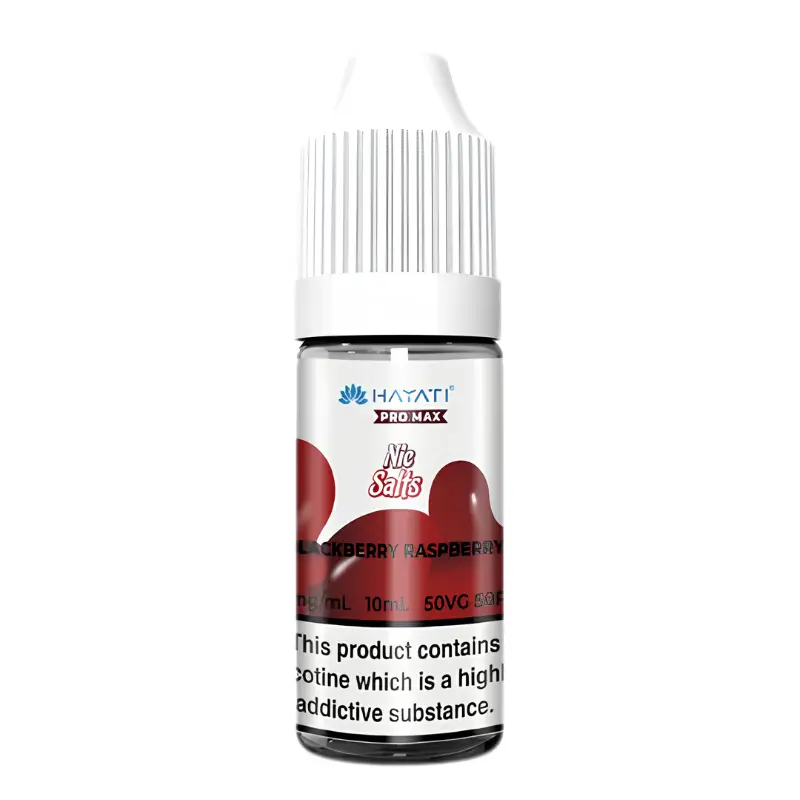
Hayati · Pro Max
Blackberry Raspberry Hayati Pro Max Nic Salts
£2.49
✔ In stock — ready to ship
Genuine Hayati
Free over £20
Same-day dispatch
Secure checkout
Blackberry Raspberry is a 10ml nicotine salt bottle from the Hayati Pro Max Nic Salts line, listed at £2.49, mixed at 50VG/50PG and sold at one strength only, 10mg. Two fruits, both named on the label, nothing else declared. That last part is unusual enough to be the reason to look twice: most of the sweet berry bottles on this shelf either hide their components behind the word "berry" or stack three and four fruits on top of each other until the list stops meaning anything. This one commits to a pair and puts both names in the title.
Which raises the question the page has to answer. Blackberry and raspberry are close relatives, closer than almost any other two fruits a mixer is likely to put in a bottle together, and the overwhelming majority of liquids that pair them end up producing a single undifferentiated dark red jam rather than two distinguishable fruits. So the useful thing to establish is not whether this tastes nice. It is whether the two berries stay apart, and if they do not stay apart equally, which one wins.
The short answer, ahead of the detail: they do stay apart, more than most two-berry mixes manage, and blackberry is the one carrying the bottle. Raspberry gets to the front of the draw first because its aromatics are lighter and lift faster, so a quick puff reads raspberry. Blackberry is what fills the middle, weights the exhale and sits on your tongue afterwards. If you judge dominance by what you notice first, raspberry leads. If you judge it by what the liquid actually tastes of across a full pod, this is a blackberry bottle with a raspberry top on it, running roughly sixty to forty in the dark fruit's favour.
The other thing worth flagging early, because it affects who should buy it, is that the raspberry note here is not rare. Something like a dozen bottles in this range have raspberry in them somewhere. What makes this one worth a separate slot in your rotation is the partner, not the raspberry, and the comparison section further down goes through exactly which neighbours it does and does not duplicate. Some of them it duplicates more than the product names suggest.
Two berries from the same genus, and what each one contributes
Everything awkward about this flavour pairing comes from one fact, so it is worth starting there rather than with adjectives.
Why these two fruits are hard to separate in the first place
Blackberry and raspberry are not merely similar. They belong to the same genus, Rubus, and they are built the same way: each one is an aggregate of small individual drupelets, each drupelet a miniature fruit with its own skin, its own pulp and its own seed, clustered around a central core. Pick a raspberry and it slides off that core and leaves it behind on the plant, which is why a raspberry is hollow and collapses under light pressure. Pick a blackberry and the core comes with it, which is why a blackberry is solid, heavier in the hand and denser in the mouth.
That structural difference is the origin of nearly every taste difference between them. The retained core gives blackberry more woody, seedy, faintly green material to contribute, and it is the source of the drying grip that a good blackberry leaves at the back of the palate. The hollow raspberry has proportionally more skin and juice relative to its mass, higher acidity, and a strongly perfumed character that arrives before the fruit sugar does. Two fruits, related closely enough to share a great deal of aromatic vocabulary, distinguished mainly by density and by acid.
Flavour houses face the same problem in concentrate form. Many of the aroma molecules that make raspberry read as raspberry also appear, in different proportions, in blackberry. Push the sweetener up and the two collapse into each other almost immediately, which is precisely what happens in cheap mixed-berry liquids: the sugar note is the loudest thing in the bottle, and once it dominates, no one can tell which berries are underneath. A two-fruit blend that keeps both legible has to be restrained about sweetness. This one is reasonably restrained, and that, more than any exotic ingredient, is why the separation holds.
Stated plainly for the avoidance of doubt: Hayati publish no ingredient breakdown beyond the ratio and the strength, and nothing in the paragraphs above is a claim about what is in this specific bottle. It is an account of how these two fruits behave as flavour categories, included because it explains what you taste far better than a pile of descriptors would.
The blackberry: depth, a wine note, and a dry finish
Blackberry in this mix is rich rather than loud. It occupies the low register of the profile, the part you would call body if you were describing a drink rather than a vapour, and it arrives a half beat after the raspberry rather than alongside it. The character is dark, rounded and slightly winey, with the jammy quality of fruit that has been cooked a little rather than eaten straight off the bush. There is no cassis sharpness to it and no medicinal edge, which is worth saying because blackcurrant, the other dark fruit that shows up constantly in vape liquids, does have both of those things and is frequently mistaken for blackberry on a label.
Where it announces itself most clearly is the tail. After the exhale, when the raspberry has evaporated off the palate, there is a faint dry grip left behind, an astringency that sits along the sides of the tongue. That is the tannic side of blackberry doing its job. It stops the bottle finishing sugary, and it is the single characteristic that makes this liquid recognisable in a blind line-up of red fruit salts. Take that grip away and you would have something much harder to tell apart from half of the berry shelf.
People sometimes describe this note as seedy, which is worth unpacking, because there is obviously no seed in a vapour. What they are picking up on is that combination of woody, faintly bitter aromatics and a drying sensation, which together mimic the experience of chewing through blackberry pips. It is a suggestion rather than a texture. On this bottle it is dosed lightly enough to read as depth and not as grit.
The raspberry: floral before it is fruity
Raspberry does something in the first half second of the draw that most fruits cannot manage, which is to smell floral before it tastes like fruit. The aromatic family responsible is closely related to the one behind violet and iris, and it gives raspberry a perfumed lift that sits high above the rest of the profile. In a mixed berry accord this is usually buried. Here, with only one other fruit to compete against and that fruit sitting deliberately lower in the register, the lift survives.
Acidity is the raspberry's second contribution and the more practical one. It is the tang the feed notes point at, and it lands as a bright snap right at the top of the inhale, lasting no more than a moment before the blackberry closes over it. That snap is what stops the mix reading as jam. It also resets your palate very slightly between draws, which is why the liquid stays legible for longer than its sweetness level would predict.
What the raspberry here is not is the blue confectionery version. Blue raspberry, the flavour that exists on a thousand slush machines and in a quarter of the vape liquids on the market, is a sweet-shop construct with almost nothing of the actual fruit in it, all sharpness and sugar and no floral top. The raspberry in this bottle is aiming at the real fruit. If the sharp, candied blue variety is what you actually want, Blue Sour Raspberry is the bottle in the range built around it, and it is a different experience end to end.
The order of events on a single draw
Taken as a sequence, one puff runs like this. The first thing to land is the perfumed raspberry top with its acid snap, arriving almost before the vapour has settled in your mouth. Underneath that, within the same second, comes a broad sweetness that belongs to neither fruit specifically and functions as the floor both of them stand on. Then the blackberry opens out, filling the middle with dark, rounded jam, and by the exhale it is the majority of what you are tasting. The finish belongs entirely to the blackberry: juicy at first, then that dry tannic grip, which fades over maybe ten or fifteen seconds.
Run that sequence a few hundred times across a pod and the interesting thing is how stable it stays. Two-fruit mixes hold their shape better than three and four-fruit ones do, because there are fewer components to fall out of balance and less total flavour loading on the coil. The feed notes make a point of saying both fruits stay identifiable from the first draw to the last, and on a healthy coil that holds up. On a tired coil it does not, and the way it fails is specific and useful, which the handling section covers.
How sweet it actually is
Sweeter than a dry fruit mix, less sweet than anything confectionery. On a scale where an unsweetened herbal or botanical liquid is a one and a jelly-sweet candy bottle is a nine, this sits around six and a half. The sweetness is broad and slightly syrupy rather than sharp, and it is doing structural work, filling the gap between the raspberry's high floral register and the blackberry's low one so the profile does not read as two disconnected halves.
Whether that is the right level for you depends on what you are comparing against. Next to the sour bottles it will read as sweet. Next to Berry Lemonade, which uses an acidic drink framing to cut its own sugar, it reads sweeter still. Against the candied end of the range it is moderate. The blackberry's dry finish does a fair amount to offset the impression, and the practical test is what your mouth feels like after twenty minutes: sweet liquids leave a coating, and this one leaves less of one than its sweetness level suggests, because the astringency scrubs some of it off.
The cooling question, and a shelf listing that disagrees with the flavour notes
Here is an honest discrepancy rather than a tidy answer. The supplied flavour notes for this product describe no menthol, no koolada and no cooling agent of any kind, and they close by pointing out that it is mixed berry without any chill in it. The name carries no ice marker either. Yet the listing itself is filed on the Ice Vapes shelf alongside ninety-odd genuinely cold products.
Both of those things are true at once and this page is not going to pretend otherwise. Shelf assignments in a catalogue of nearly five hundred items are a merchandising decision, and they are broader and blunter than a flavour description is. When the two disagree, the flavour notes are the ones describing the liquid. Buy this expecting a warm, room-temperature berry mix. If you filtered your way here from the ice shelf specifically wanting cold, you want a different bottle, and Hayati are consistent about putting the word in the title when there is coolant in the mix: Blackberry Ice says so, Blue Frozen says so, Red Berry Ice says so.
The absence of coolant has real consequences for the taste and not only for the temperature. Cooling agents suppress the perception of sweetness and they shorten a flavour's tail, which is why iced fruits often read as crisper and less cloying than their warm counterparts. Without one, this bottle's aftertaste lingers, the blackberry's tannic grip stays on the palate longer, and the sweetness is presented undiluted. Some people want exactly that from a dark fruit. Others find any warm sweet mix heavy after an hour. Knowing which of those two you are is more predictive of whether you will like this bottle than any amount of fruit description.
What it is not
It is not sour. There is acid in the raspberry, but acid is structural and sourness is a deliberate pucker, and nothing here is trying to make your jaw tighten. It is not a candy or jelly profile, so the chewy synthetic sweetness some people are after is absent. It is not a lemonade, a mojito or any other drink construction, so there is no fizz suggestion and no herbal element. It is not dark in the blackcurrant or liquorice sense, despite the word "black" in the title. And it is not complex. Two fruits, one sweetener, no coolant, no top-note gimmick. The appeal is the clarity, and if you find simple fruit mixes boring by the second pod, this will bore you by the second pod.
Steering the balance with draw length and airflow
Because the two fruits sit in different aromatic registers, they respond differently to how you vape, and the gap between them is adjustable without changing anything you own.
Short draws favour the raspberry. Lighter aromatic material volatilises first, so a punchy one-second pull delivers the floral top and the acid snap, and the blackberry barely gets going before the vapour is gone. Vape it that way exclusively and you will end up describing this as a raspberry liquid with something vaguely dark behind it.
Longer draws invert it. Give the coil three or four seconds and the heavier, jammier material has time to come through, the blackberry fills out, and the tannic finish becomes much more pronounced. The raspberry is still there on the front but it is proportionally a smaller part of the whole. Anyone who reads a description of this bottle that does not match their experience of it should check draw length before blaming the coil or the batch.
Airflow works on the same axis from the other direction. A tighter setting concentrates the vapour and pushes sweetness and body forward, which favours the blackberry. Opening the airflow cools and thins the draw, which lets the raspberry's brightness read more sharply and pulls the dark fruit back. If the two berries have merged into generic jam on your setup, open the airflow a fraction and shorten the pull, and the separation usually returns.
The bottle, the ratio, and what all of it does to your throat
Ten millilitres of liquid in a plastic bottle, no hardware included, nothing in the supplied facts about caps, nozzles or packaging beyond the volume. There is very little to say about the object itself, so this section is about the part of the specification that you actually feel, which is the carrier ratio and how it interacts with a 10mg salt and with two fruits that both contribute sensation as well as taste.
Propylene glycol and vegetable glycerine do not divide the work evenly. VG is the thick one, and its contribution is visible: vapour volume, a slight sweetness of its own, and a soft, almost cushioned mouthfeel. PG is thin, it dissolves and releases flavour compounds more readily, and it is the component responsible for the sensation at the back of the throat. Split the bottle half and half and you get moderate vapour and a moderate throat presence, which is the whole design intent of a 50/50 mix. Move the ratio towards VG and the throat sensation softens as the clouds grow. Move it towards PG and the reverse happens.
Where this gets specific to Blackberry Raspberry is that both fruits add their own throat character on top of the PG. The raspberry's acidity registers as a thin, bright sharpness quite high in the throat, right at the top of the inhale. The blackberry's astringency registers lower and later, as that drying grip. Neither is large on its own. Stacked on the PG half of a 50/50 and delivered at 10mg, they add up to a draw that has more texture to it than a soft, sweet, high-VG dessert liquid would, and that texture is part of why the fruits stay distinguishable. You are partly feeling the difference between them, not only tasting it.
The salt formulation is the counterweight. Nicotine salts present less harshly at a given concentration than freebase nicotine does, which is the reason the whole category exists and the reason 10mg is a workable number in a tight, low-power pod at all. Nicotine is an addictive substance, and 10mg per millilitre is a fact printed on the label rather than a suggestion about what belongs in your device. What can be said usefully is mechanical: at this strength in this ratio, the throat sensation you notice is coming from three sources at once, and if a draw feels rougher than you expected, the variables worth checking in order are coil age, wattage and airflow, not the nicotine number.
On the wicking side, a 50/50 is thin enough to soak into cotton quickly and to keep a small, higher-resistance coil supplied without starving it. That is the pairing the product is intended for: pods you refill yourself, and compact starter hardware drawing mouth to lung. It is not built for a sub-ohm tank at thirty or forty watts. Put it in one and two things go wrong at once, the wick cannot keep pace with the demand and the liquid delivers its nicotine content far faster than a 10mg salt was formulated around. The thinness cuts the other way too. Anything approaching a worn seal, a cracked pod body or a loose base will weep this liquid sooner than a syrupy high-VG mix would, and a hot car will make it happen faster still.
The numbers, and what each one costs you
| Product | Blackberry Raspberry Hayati Pro Max Nic Salts |
| Brand | Hayati |
| Flavour type | Blackberry Raspberry |
| Nicotine strength | 10mg nicotine salt |
| VG/PG ratio | 50VG/50PG |
| Bottle size | 10ml |
| Price | £2.49 |
| Cooling | None described in the supplied flavour notes |
| Intended hardware | Refillable pods and low-power mouth-to-lung starter kits |
| Shelves | Hayati Pro Max Nic Salts, Berry Vapes, Hayati E-Liquids, Ice Vapes, New Products, Raspberry Vapes |
Run the arithmetic before anything else, because price per millilitre is the row most buyers care about and it is the one the table does not state directly. Two pounds forty-nine for ten millilitres works out at just under twenty-five pence per millilitre. A 2ml pod therefore costs you about fifty pence to fill, and the bottle covers five of those fills. A 3ml pod costs about seventy-five pence and the bottle covers a little over three.
That number is the honest yardstick for every other format in the range, and it is also where this page has to stop short. Prefilled options such as the Strawberry Raspberry Ice Mini Ultra pods at £3.49 and the Rubik pods in the same flavour at £3.99 have published prices but no published liquid volume in the facts available here, so any per-millilitre comparison against them would be invented rather than calculated. What can be said is the direction of travel: refilling from a bottle is the cheaper route per millilitre in almost every range that offers both, and the trade is that you carry a bottle and do the filling.
The strength row deserves a second look for a reason that has nothing to do with dosage advice. Ten milligrams per millilitre is a concentration, not a quantity, and what reaches you depends entirely on how much vapour you take and how often. The same bottle in a tight, high-resistance pod taken in short pulls behaves very differently from the same bottle in a looser, warmer setup taken in long ones, even though the number on the label has not changed. This is worth understanding for its own sake, because it is the mechanism behind most complaints that a liquid feels different in a new device.
Where it sits among its neighbours, honestly
The real decision facing most people reading this is not whether the liquid is any good. It is whether it is different enough from the two or three red and purple bottles already sitting in a drawer. Sometimes it genuinely is not, and saying so is more use than pretending every bottle on a sixty-five product shelf is distinct.
The closest relative, and it is close
Blueberry Raspberry is the bottle to compare first, because it is the same idea with one fruit swapped. Same two-fruit discipline, same raspberry doing the bright work, same price, same ratio. The difference lives entirely in the dark partner. Blueberry is softer, rounder and mellower than blackberry, with a slightly jammy sweetness and none of the tannic drag. That makes the blueberry version the gentler and more comfortable of the two, and this one the more structured, because the astringent finish gives it a shape that the blueberry mix does not have. If you own one, the second is a variation rather than a new flavour. Buy both only if you specifically want a soft version and a dry-finishing version of the same pairing.
Blueberry Raspberry Lemon takes that same base and adds citrus on top, which cuts the sweetness harder than blackberry's astringency does and moves the whole thing into brighter territory. It is the better pick if your objection to sweet berry liquids is the sugar rather than the flatness. It is the worse pick if you want depth, because the lemon sits where the dark fruit would otherwise be.
The other bottles with raspberry in them
The raspberry shelf runs to well over a hundred products across the site, and within this nic salt range alone the fruit appears repeatedly, so it is worth knowing what each partner does to it.
Strawberry Raspberry Ice is the most popular version of the raspberry idea in the range and the most different from this one. Strawberry is softer and more confected than blackberry, and the coolant on top changes the whole character, shortening the finish and sharpening the fruit. Where Blackberry Raspberry ends warm and dry, that one ends cold and crisp. They are not substitutes for each other in either direction.
Strawberry Raspberry Blueberry demonstrates what happens when you go past two fruits. All three are legible if you pay attention, but the profile blurs at the edges and no single fruit owns the finish, which is exactly the outcome the two-fruit format avoids. Pick the three-fruit mix if you like a busy, rounded blend. Pick this if you want to be able to point at what you are tasting.
White Peach Raspberry pairs the same bright berry with a stone fruit instead of a dark one, which produces a softer, more floral and noticeably juicier result with none of the dry grip. Kiwi Grape Raspberry goes further still, using kiwi's green acidity and grape's musky sweetness to push the raspberry into a supporting part. Both are useful as the second bottle in a rotation precisely because neither is dark, and alternating a dark fruit with a pale one is the pairing strategy that actually stops palate fatigue.
The dark end of the shelf
Black Mamba is the other serious dark berry in the line, and it goes about it differently. Its fruit sits in the black and purple register rather than pairing a dark fruit with a bright one, and it finishes with a cool edge rather than a dry one. If what draws you to this bottle is the blackberry weight, that is the neighbour most likely to satisfy the same craving, with the cooling as the deciding factor between them.
Blackberry Ice is the single most direct comparison for the blackberry itself. Same fruit, no raspberry, coolant added. Those two changes work against each other in an interesting way: losing the raspberry removes the brightness, and adding the coolant supplies a different kind of brightness in its place. The result is colder, simpler and drier than this bottle. Anyone who likes the blackberry here but finds the sweetness heavy should look at it first.
Blueberry Cherry Cranberry is the dark mix with a genuinely tart finish, because cranberry contributes a dryness that is acidic rather than tannic. The two dry finishes are not the same sensation. Cranberry makes your mouth water. Blackberry astringency does the opposite. Trying both is the only way to learn which kind of dry finish you actually prefer, and they cost the same.
If you want cold, or want something that is not a berry
Nothing in this bottle is cold, so the iced alternatives are a separate decision rather than a variation. Red Berry Ice is the closest cold equivalent to the fruit family here, a red mix with the chill on top. Watermelon Ice goes lighter and more watery. Blue Frozen is at the properly cold end and reads as much about temperature as fruit.
For contrast rather than similarity, the useful trick is to pair a dark fruit with something structurally unrelated rather than with another berry. Banana Ice is creamy and cold and shares no vocabulary with this at all. Blue Razz Mojito and Strawberry Mojito both bring a herbal lime element that reads as a drink rather than a fruit. Two sweet berry bottles will blur together within a week no matter how different their fruit lists look, because sweetness is the loudest shared variable. A berry and a drink profile will not.
Other formats, and what is missing from them
There is no shortfill of Blackberry Raspberry itself in the range, which is the first thing to know if you were planning to buy this flavour in a larger bottle. The larger formats cover adjacent profiles instead. Strawberry Raspberry Ice as a 50/50 shortfill at £6.99 keeps the mouth-to-lung ratio, while the 70/30 version of the same flavour is weighted for bigger airflow and more vapour, which is a different kind of device entirely. Blue Sour Raspberry in 50/50 shortfill form is the option if the sharp end of raspberry is what you are chasing at volume.
Going the other way, towards prefilled convenience, the Pro Ultra Plus prefilled pod kit at £11.99 bundles hardware and liquid in one purchase for people who would rather not refill anything. That is a convenience decision rather than a flavour one, and at nearly five times the price of this bottle it should be made on those terms.
If none of the above lands, the wider Hayati e-liquid catalogue runs past a hundred entries and the odds are good that something else does.
Who should skip this one
Skip it if you want cooling, because there is none and the shelf listing that suggests otherwise is a filing decision rather than a flavour. Skip it if you already own the blueberry version and are happy with it, because the gap between them is smaller than two different fruit names imply. Skip it if you dislike a drying finish, since that is the defining feature rather than an incidental one.
Living with the bottle
A two-fruit mix with an astringent finish ages in a particular way, and most of what follows is about recognising that rather than about generic maintenance.
Learn the tell for a tired coil. This bottle does not fade evenly. The raspberry goes first, because the light floral top is the most fragile part of the profile and a worn, hotter-running coil destroys delicate aromatics before it touches heavy ones. The blackberry jam survives longer. So the failure mode is not the liquid getting weaker, it is the liquid getting darker and flatter, and people routinely misread that as the flavour going sweeter or the bottle being a bad batch. When you notice the bright top has gone and you are left with dark fruit and sugar, the pod is telling you it is nearly finished. That signal arrives well before any burnt note.
Prime it properly and then wait. Wet the wicking ports visibly, add a drop directly onto exposed cotton if the pod design allows it, fill, and leave it standing for five minutes before the first draw. The temptation with a 50/50 is to skip the wait because the liquid soaks in so fast you can watch it happen. Resist it. The first dry pull on a new coil scorches the exact aromatic material that makes the raspberry worth having, and you will spend the whole pod wondering where the top note went.
Do not judge it by colour. Dark fruit liquids start out amber and darken further with time and light exposure, and this one is dark enough that you cannot use colour as a freshness check the way you could with a pale citrus. Go by smell and by taste instead. If a bottle that has been open for months has lost the perfumed lift on the nose, it will have lost it in the pod too.
Store it away from heat and daylight. Warmth accelerates the darkening, sunlight degrades the fragile aromatics fastest of all, and the raspberry top is the first casualty of both. A drawer or a cupboard is fine. A windowsill or a car door pocket in summer will turn a two-fruit mix into a one-fruit mix within weeks. Keep it out of reach of children and pets.
Leave an air gap when you fill. Liquid expands slightly as it warms and a pod filled to the absolute top has nowhere to put that expansion except past the seal. This mix is thin enough to find any weakness, and a leaking pod of dark berry liquid stains a pocket lining in a way a clear one does not.
Refill before it runs low, not after. Running a pod down to the last few drops is what kills coils, and on a sweetened mix the resulting burnt note is immediate and permanent. Topping up at around a quarter remaining costs nothing and protects the coil, and it also keeps the flavour balance steady, since a half-starved wick delivers the heavy notes and drops the light ones, which is the same distortion a worn coil produces.
Give the astringency somewhere to go. The dry finish is pleasant in moderation and cumulative over hours. If your mouth feels tacky after a long session, that is the tannic side of the blackberry building up along with the sweetener. Water fixes it. So does alternating with a bottle that finishes wet rather than dry, which is a genuine argument for keeping a juicier fruit in rotation alongside this one.
Questions buyers actually ask
Which berry dominates, blackberry or raspberry?
Blackberry, on balance. Raspberry arrives first and is the more noticeable note on a short draw, but blackberry occupies the middle, the exhale and the aftertaste, so across a full pod it is the majority of what you taste. Roughly sixty to forty in the blackberry's favour, and longer draws push it further that way.
Can you actually tell the two fruits apart?
Yes, more clearly than in most two-berry liquids, mainly because there are only two of them and the sweetener is not loud enough to merge them. They sit in different registers, the raspberry high and perfumed, the blackberry low and jammy. That separation narrows as a coil ages, since the raspberry is the first note to go.
Is there any menthol or ice in it?
No. The supplied flavour notes describe no coolant of any kind and the name carries no ice marker, so treat it as a warm, room-temperature fruit mix. The listing does appear on the Ice Vapes shelf, which is a catalogue filing decision rather than a description of the liquid.
Why does it leave my mouth feeling dry?
That is the astringent side of blackberry, the same quality you get from the woody, seedy part of the real fruit. It grips along the sides of the tongue after the exhale and fades over a few seconds. It is a defining feature of the bottle rather than a fault, and it is the main reason this does not finish as sugary as its sweetness level would suggest.
How does it compare with Blueberry Raspberry?
Same structure, different dark partner. Blueberry is softer and rounder with no drying finish, which makes that bottle the mellower of the two. This one has more shape because of the tannic tail. Owning both is defensible but you will find them closer than the names suggest.
What hardware suits it?
Pods you refill yourself and compact starter kits drawing mouth to lung at modest power. The 50/50 ratio is thin enough to feed a tight, higher-resistance coil reliably while carrying flavour clearly. It is not formulated for high-wattage sub-ohm tanks, where the wick will struggle and the nicotine content is delivered far faster than the strength was designed around.
How many pod fills does a bottle give?
Ten millilitres fills a 2ml pod five times, or a 3ml pod a little over three times. At £2.49 that works out at just under twenty-five pence per millilitre, so roughly fifty pence per 2ml fill. How long each fill lasts depends on your device and how you use it, which is why the fill count is the only figure worth quoting.
Are other nicotine strengths available?
Not for this product. It is listed at 10mg nicotine salt with no strength options attached, so there is no variant picker at the checkout. A different strength means a different product rather than a different version of this one.
Will it gunk a coil faster than a plain liquid?
Sweetened mixes leave more residue than dry ones and this is moderately sweet, so expect a pod to darken and lose its top end sooner than it would on an unsweetened liquid. It is not among the heaviest offenders in the range, since the sweetness is restrained by two-fruit standards. Refilling before the pod runs low helps more than anything else you can do.
Is there a shortfill or a larger bottle of this flavour?
Not under this name. The shortfills in the Pro Max range cover adjacent profiles rather than this exact pairing, so the nearest larger-format options are related flavours instead of the same liquid scaled up. If volume matters more than the precise fruit combination, those are worth a look.
Does the flavour hold up across a whole bottle?
On a healthy coil, yes, and better than most three and four-fruit mixes, because there are fewer components to fall out of balance. What changes over a long session is your palate rather than the liquid, and with this one the specific symptom is that the raspberry stops registering while the blackberry keeps going. A short break restores it.
The short version
Blackberry Raspberry is a £2.49 10ml bottle at 10mg nicotine salt and 50VG/50PG, built for refillable pods and low-power mouth-to-lung kits, pairing a bright, floral, slightly acidic raspberry on the front of the draw with a darker, jammier blackberry that fills the middle and owns the finish. It is moderately sweet, has no cooling in it despite the shelf it is filed on, and ends dry rather than syrupy because of the tannic grip the blackberry leaves behind.
Buy it if you want a two-berry mix where you can actually point at both fruits, and if a drying finish appeals more than a sugary one. Think twice if you already own the blueberry-and-raspberry version, because the two are closer than the labels imply, and think twice again if you arrived here from the ice shelf expecting something cold. It sits on the new arrivals shelf with the rest of the recent additions, and the full Hayati catalogue is there if the dark end of the berry range is not where you want to be.
Strictly for adults aged 18 and over. Nicotine is an addictive substance.
You might also like


