
Home / Hayati Pro Max Plus Prefilled Pod Kit / Cola Ice Hayati Pro Max Plus 6000 Pod Kit
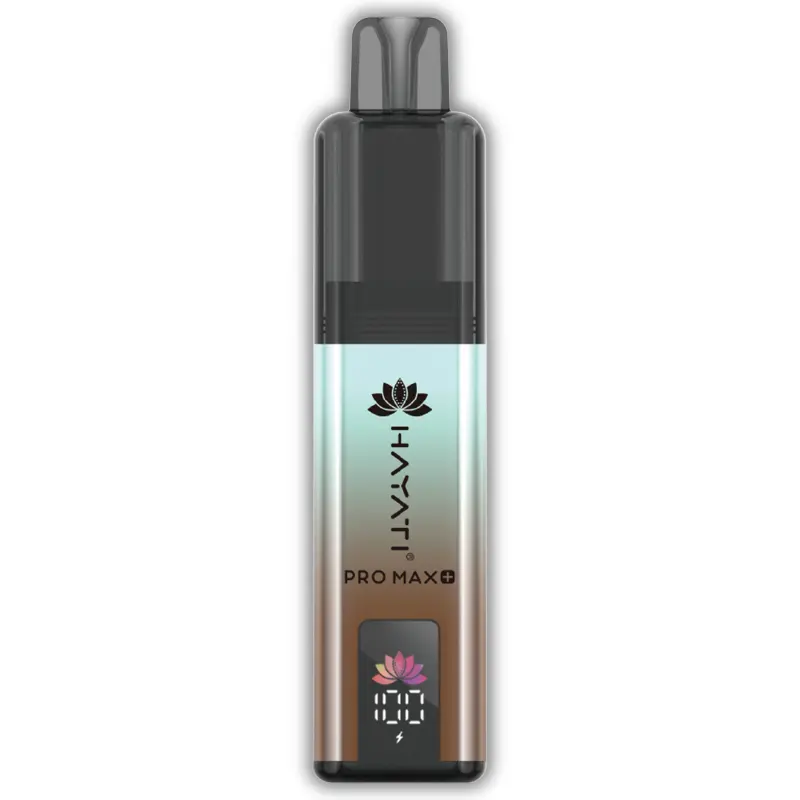
Hayati · Pro Max Plus
Cola Ice Hayati Pro Max Plus 6000 Pod Kit
£7.99
✔ In stock — ready to ship
Genuine Hayati
Free over £20
Same-day dispatch
Secure checkout
Cola Ice on the Hayati Pro Max Plus is sold here as the whole purchase at £7.99: an 850mAh rechargeable body and a prefilled pod carrying 12ml of liquid at 20mg nicotine salt, boxed together, working from the first draw. Hayati put a bench figure of up to 6,000 puffs against the pod, produced by apparatus drawing at a fixed length and interval rather than by anybody actually using the thing. One flavour runs the entire 12ml, with no selector on the mouthpiece and nothing to switch to when you tire of it.
Three pages in this shop have already argued about this liquid, and between them they have taken the interesting question about as far as it goes. What a coolant does to a spiced accord, whether that counts as contrast or contradiction, and what the cold is buying in exchange for the warmth it spends: all of that is worked out elsewhere and none of it is repeated below.
The question nobody has answered is the ordinary one. You are about to hand over £7.99 for a device and twelve millilitres of liquid, and what you want to know is what the next fortnight is like. Where the draw lands. What changes between the first pod-full and the last. Whether the flavour holds up as the only thing you vape, or whether it is the pod you keep in a drawer for Sunday afternoons. Who it suits, and who is buying the wrong cola.
That is this page. It is a practical page rather than an argumentative one, and it disagrees with one thing the earlier pages imply, which turns out to be the most useful finding on it: the two forces that move this liquid around point in opposite directions, so the pod does not fade along a line. It travels an arc, and where you catch it decides what you think of it.
What the earlier pages settled, in three sentences each
Reading them is not a prerequisite for this one, but knowing what they concluded stops this page repeating work.
Cola Ice Hayati Pro Max Plus Pods, the bare refill of this exact liquid at £5.49, owns the taxonomy. It separates three jobs a coolant can be doing: supplying a quality the base lacks, which is contrast; restating a quality the base already implies, which is redundancy; and opposing a quality the base actually has, which is contradiction. Cola falls in the third bucket, because a cola accord is assembled out of cinnamon, nutmeg, coriander seed, vanilla and pressed citrus peel, and those are warm materials rather than cold ones. That page also puts the defence, and puts it well: carbonation is largely a physical event rather than a taste, vapour cannot bubble, and the coolant is the only material in the liquid operating in the same physical channel as the missing fizz. It is therefore the only candidate for standing in. That argument is sound and is taken as read here.
The Cola Ice Pro Ultra Plus 25000 kit page owns the anatomy. It takes the accord apart group by group, explains what peel oil contributes that juice does not, which spice does what in the middle of the draw, and why vanilla is the reason a cola reads as a syrup rather than as a spiced tea. Anyone who wants the component-by-component account should read that page rather than this one, because rebuilding it here would be duplication with the serial numbers filed off.
The Cola Lime Pro Max Plus pods page found something none of the others noticed, and it is worth carrying forward because it affects a purchase decision made further down this page. The published accounts of the classic cola recipe do not agree on whether lime belongs in the citrus group. Some list it with orange and lemon, some name only the two. Our own pages inherited the split and contradict each other on it, and that page is right that this is a genuine disagreement in the source material rather than a mistake by either writer. Nobody outside the company holding the original formula can settle it.
Three good pages, then, all of them about what the liquid is. None about what it does over twelve millilitres.
The arc, and why a late pod is not a lemonade
Two drifts, pointing opposite ways
Everything that changes in this pod across its life is one of two things moving against a third thing that does not move at all.
The first mover is the coolant, or rather the effect the coolant has on everything around it. The pods page sets out the consequence: the warm spices are competing in the temperature channel against something far louder than they are, so their heat is overruled while their aroma survives, and the apparent sweetness drops or is at least displaced. Strip warmth and sweetness out of a cola and what is left standing is the bright peel oils and the acid underneath them. Citrus plus sharpness is not a cola. It is a lemonade. That page is right that heavy cooling pulls this profile towards its own top note, and right that the top note belongs to a different drink.
The second mover is the coil. Both siblings are explicit about the direction of travel, and they agree with each other. The Pro Ultra Plus page states it plainly: citrus oils go first, the acid softens next, and the vanilla and spice hold on longest. The pods page says the same thing from the hardware side, that the sharp end of a profile narrows before the sweet end does, and draws the conclusion that a tired berry pod is still a berry while a tired cola is a syrup.
Put those two beside each other and something is wrong with the way the second one is usually summarised. The wear does not take the warm low notes before the bright top notes. It takes the bright top notes first and leaves the warm low notes behind. Those are opposite predictions, and the one the siblings actually make is the second.
What follows from that
The lemonade risk is a fresh-pod risk, not a late-pod risk. It is at its worst on day one and it recedes from there.
Work it through. A new pod has all of its citrus, all of its acid, and a coolant at full strength holding the spice down. That is the exact combination the pods page identifies as the drift: bright, sharp, cold, with the warm middle demoted. It is the point in the pod's life at which it sits furthest from a cola and nearest to a cold spiced lemonade.
A tired pod has lost its citrus and softened its acid, while its vanilla and its spice aroma are more or less intact and its coolant has not moved at all. That is the opposite composition. The brightness has gone, the sweetness dominates, and the chill sits on top of it looking disproportionate because nothing else is left at its original level. Flat, sweet and cold. Nobody would call that a lemonade.
So the pod does not decline along one axis. It crosses a range. It begins at the sharp, citrus-led end of what this liquid can be, it works its way towards the sweet, spiced end, and somewhere in between it passes through the reading that most closely resembles a cola: enough brightness left to sit in front, enough warmth audible behind it, the acid still doing its structural job. That crossing point is not marked and it is not published, but it exists and it is roughly where the pod is at its best.
Mark all of this as reasoning rather than measurement. Hayati publish no cooling figure, no sweetener content, no coil resistance and no carrier ratio for this pod or for anything else in the range, so nobody can put a number on either drift or tell you exactly where they cross. What can be said is that the two mechanisms are documented in opposite directions by pages that agree with each other, and that two opposed drifts produce an arc rather than a slope. The shape of the prediction is solid even where the scale of it is guesswork.
The cold is the only thing in the pod that holds still
Here is the part that turns the arc into something you can actually use.
Cooling compounds are robust. Both siblings note it, and it is the reason people report their cola pod getting icier towards the end when nothing about the cold has changed. Everything above the cold has dropped away and left it exposed. What neither page draws out is the practical consequence, which is that the coolant is the one fixed reference point available to you inside the pod. Every other component is moving. That one is not.
So use it as a ruler. Rather than asking whether the flavour has faded, which is a question your palate is badly placed to answer because it adapts alongside the pod, ask where everything else sits relative to the cold. On a fresh pod the cold arrives last and reads as the finish of a draw that had three events before it. By the middle of the pod it reads as one component among two or three. When it starts reading as the loudest thing in the draw, the citrus and the acid have gone and the coil has done the bulk of its work. That is a comparative judgement against a fixed mark rather than an absolute one against a memory, and it is far more reliable.
The same trick is why swapping to a different pod for one draw is so informative on this liquid specifically. You are not checking whether the cola still tastes good. You are checking whether the cold in the cola has become disproportionate, and a cold reference from another pod resets your sense of scale in about two draws.
Do not judge it on the first evening
A fresh pod runs slightly wet for the first while, because the wick is saturated and the coil has not settled into a steady rate. The excess presents on this liquid as syrup: vanilla-forward, soft, with the sharpness buried underneath where you cannot hear it. That is the opposite of what the settled liquid does, and it means the very first impression of a Cola Ice pod is unrepresentative twice over, once for being wet and once for being at the extreme bright end of the arc as soon as it dries out.
The practical rule is to form no opinion for the first day. Thirty or forty draws in, the wick has found its rate and you are tasting the liquid rather than the flooding. Somewhere between a quarter and two thirds of the way through the 12ml is where the pod is doing its best work and where a verdict is worth forming. If you decide against this flavour in the first hour, you have decided against a condition the pod is in for about two per cent of its life.
Twelve millilitres is the right size for this particular accord
One cross-format observation follows from the arc and it is genuinely useful, because it runs against the usual assumption that more liquid is better value.
The drift towards the flat, sweet end is driven by accumulated work on a coil that cannot be swapped, cleaned or inspected. The same accord exists on the larger platform, where one sealed coil handles 22ml, and that page devotes a fair amount of space to the flattening because at 22ml it becomes unmistakable. This pod asks the same kind of coil to process a little over half that volume. It therefore finishes its life at an earlier point on the same curve, and the end-of-pod flatness that the bigger format warns about is correspondingly milder here.
That inference rests on volume alone. Hayati publish no coil resistance, no mesh dimensions and no wattage for either platform, so a smaller pod having an easier time is a reasonable expectation rather than a documented fact, and if the smaller pod uses a proportionally smaller coil the advantage shrinks. Even hedged, the direction of the argument is worth knowing: of the formats this flavour is sold in, the ones with less liquid per coil spend less of their life at the flat end. For an accord whose identity depends on the component that wears out first, that is not a small thing.
Where the draw actually lands
The airway on this device is narrow and the draw is a restricted mouth-to-lung one. Slow and measured gets more out of it than hard and fast, which is true of the whole format and not worth dwelling on. What is specific to this liquid is that the draw contains two separate physical events rather than one, and they happen at different moments.
The first arrives almost immediately. There is a slight grab at the back of the throat that a fruit pod at the same 20mg does not produce, and it is not the nicotine, which in salt form is formulated to be smooth and largely succeeds. It is the cassia. Cinnamon's characteristic compound is an irritant as well as an aroma, and at soft-drink concentration it contributes a small warm catch rather than anything anyone would call harsh. Alongside it the acid starts tightening the sides of the tongue and the mouth begins to water. Both of those are at the front of the draw and both are physical rather than aromatic.
The second arrives at the other end. The coolant builds through the draw and peaks on the exhale, at the back of the throat and up into the nose, a few beats after the first event has faded. It does not overlap with the catch. It follows it.
The result is a draw with a longer felt duration than its actual one, and a finish that takes two or three seconds to clear rather than stopping when the vapour does. That has a practical consequence worth more than any tasting note: this pod is self-limiting in a way a berry is not. People who chain on fruit pods often find they do not chain on this one, because the finish is still resolving when the next draw would otherwise start. It is not a discipline you have to impose. The liquid imposes it.
Mouth-to-lung technique matters here more than on most flavours for a related reason. If you park the vapour in the mouth for a beat before inhaling, the acid gets time to do the salivary thing, and the salivary thing is a substantial part of why a cola liquid reads as a drink rather than as a syrup. Pull it straight through to the lung on a narrow airway and you skip that second entirely, which flattens the profile without anything being wrong with the pod. Anyone who finds this liquid oddly lifeless should check their technique before blaming the coil.
Ambient temperature is the other variable, and owning the kit rather than the bare pod puts it more firmly in play. A device lives in a pocket, warms against you, and then gets held in a cold hand outdoors in February. Cooling agents read more strongly when the vapour reaching you is cooler, so the same pod genuinely does feel icier outside on a cold morning than it does in a warm room, and on a liquid whose entire balance is a ratio between cold and warmth, that shifts the reading more than it would on a strawberry. It is worth knowing so that a hot July afternoon does not convince you the chill has faded when the pod is fine.
On how draw length shifts the balance within a single pull, the pods page covers it thoroughly and there is no point restating it. The short version is that it is a real lever and you have it.
What a spiced, sweetened liquid asks of one sealed coil
Start with the honest limits. Hayati publish no sweetener content for this pod, no flavour concentration, no carrier ratio and no coil specification, so there is no arithmetic to do and anybody offering you a figure for how fast this liquid gunks a coil has made it up. What follows is reasoning from what the accord is made of, flagged as such.
The common assumption is that a heavily spiced liquid is hard on a coil. On this accord that is probably backwards. Spices in a cola sit at soft-drink concentration and the materials doing the work are aromatic and volatile, which is precisely why they come off the coil readily and why they are among the first things lost to heat. Light, volatile materials do not build residue. They evaporate. The spice is not what coats the mesh.
What coats the mesh is the heavy end: the vanilla-type materials, the syrupy body, and whatever sweetener is in the mix. Those are the least volatile components, they are the ones that stay behind when everything else has left, and a cola accord has rather a lot of them, because syrup is structurally what a soft drink is before it meets water. So the load on the coil comes from the sweet, round part of the profile rather than from the spiced part.
Follow that one step further and you get the mechanism behind the arc, which is more self-reinforcing than a simple fade. The components that build residue are the same components that survive residue. Heavy material coats the mesh, the coated mesh renders delicate aromatics worse, and the delicate aromatics are exactly what the heavy material is competing against. The sweet end therefore wins twice: once by lasting longer, and once by actively degrading the thing that would have balanced it. A fruit pod has a milder version of the same loop, but a fruit's identity survives the loss of its top end, and a cola's does not, because the sharpness is not a decoration on this profile. It is the load-bearing member.
Two things follow for an owner. The first is that there is no intervention available. The coil is bonded into the pod, it cannot be removed, rinsed or examined, and when the liquid is gone the coil retires with it. Nothing you do changes the rate. What you control is how much heat you put through it, which means pace rather than technique.
The second is what the end actually looks like. This pod is unlikely to announce itself with a burnt taste unless you have chained it hard, and it will keep making perfectly good vapour long past the point where the flavour has moved. The signal is flatness in the literal sense: the mouth stops watering on the exhale, the front of the draw arrives late or not at all, the sweetness sits where it always sat, and the cold reads louder than everything around it. Anyone who has drunk a cola left open overnight recognises the character immediately. It is a more specific signal than a general dulling and it arrives before the liquid runs out, which is why people carry on with cola pods a fortnight longer than they enjoy them.
The kit, briefly
There is little to say about this hardware that eighty-seven other listings on the same shelf have not covered, so this is deliberately short.
The box holds two items: an 850mAh rechargeable body and one Cola Ice pod, already filled with 12ml at 20mg and sealed before it shipped. No bottle, no measuring, no soak time. You unwrap it, seat the pod and draw. Hayati do not publish a cross-range fitment chart, so check the range name printed on your device against the range name in the title if you are buying a refill later rather than the kit.
The one specification that matters for this particular liquid is the one this page has already spent most of its length on: a single sealed coil handles the whole 12ml and cannot be serviced. On a berry that is a footnote. On an accord whose brightest and sharpest components are the first to narrow, it is the fact that governs the entire ownership experience, because every change you notice over the fortnight traces back to that one component doing a long job with no relief and no way for you to intervene.
Once the first pod is gone, the body carries on and the repeat purchase is the refill rather than another kit. Everything else about the platform, the other eighty-seven flavours on it and the general behaviour of the format sits on the Hayati Pro Max Plus Prefilled Pod Kit shelf, with the wider hardware families gathered under Hayati Pod Kits and Hayati Prefilled Pod Kits, both of which list the recent additions alongside the established flavours.
Specifications, ordered by what decides the fortnight
The table runs from the things that shape your two weeks down to the things that identify the product, rather than in the conventional order, because on this listing the interesting rows are not the ones a spec sheet usually puts first.
| What governs the flavour over time | One sealed coil, the full 12ml, no servicing | Every change across the pod's life comes back to this row |
| Not published: cooling strength | No figure given, here or anywhere in the range | Decides how far towards the bright end the pod starts |
| Not published: sweetener load | No figure given | Decides how fast the pod travels towards the flat end |
| Liquid supplied | 12ml, prefilled and sealed at the factory | A little over half what the larger platform puts on one coil |
| Nicotine | 20mg, salt formulation | Smooth by design, which leaves the spice and the coolant as the draw's only physical events |
| Draw | Restricted, narrow, mouth-to-lung | Hold it a beat before inhaling or the acid has no time to work |
| Flavour count | One, running the full volume | No collar, no second liquid, no mid-session alternative |
| In the box | 850mAh body plus one filled pod | A first purchase rather than a restock |
| Bench figure | Up to 6,000 puffs, Hayati's own | A laboratory measurement describing workload, not a forecast of anybody's fortnight |
| Price | £7.99 complete | The refill of the same liquid is £5.49, and the gap is the body, paid once |
| Not published: coil resistance and carrier ratio | Neither stated against this product | No basis for predicting draw temperature or how the coolant carries |
| Maker and profile | Hayati, Cola Ice | Concentrate composition undisclosed |
Three of those twelve rows say the information does not exist, and two of the three are the rows this page needed most. That is not a criticism of Hayati, who publish roughly what everybody in this format publishes. It is a statement about the limits of what a retail listing can support, and a page that filled either of those gaps with a number would be inventing one.
The nicotine row deserves a note because it interacts with the flavour rather than sitting beside it. 20mg is the ceiling permitted in a consumer nicotine product in the United Kingdom and it is the only strength this range is offered in, so it is not a decision you are making at the checkout. Its relevance here is narrow: a salt preparation is deliberately low on throat presence, which removes one candidate for physical sensation and concentrates the job onto the cassia at the front and the coolant at the back. Nicotine is addictive, and what strength anybody uses is their own business rather than something a product page should steer.
On the 6,000 figure, one sentence is enough. It ranks this pod against other pods measured the same way and describes how much work one coil is expected to process. It says nothing about how many days you will own the thing, and on a flavour many people run as an occasional change rather than an all-day pod, the two numbers are not even close.
Cooled, or one of the uncooled colas, and how to tell which you want
The trade cools cola about half the time
The pods page counted the cola family across the whole catalogue and found eighteen listings, nine of them carrying a cooling word. That count holds up on checking and it is the most informative number available about this flavour, because half is a very strange proportion. Nobody cools half the strawberries. For comparison, the kit shelf this product sits on holds eighty-eight listings and fifteen of them name a cooling quality, so the shelf as a whole cools roughly one listing in six while cola gets cooled one in two. The trade has plainly not decided whether a cola wants ice, which means a buyer is choosing rather than accepting a default.
What the count does not show until you look at the other nine
Here is where the useful version of the finding lives, and it changes the decision.
Go through the nine uncooled cola listings one by one and every single one of them has had something else done to it. Three are cherry, two are raspberry, three are lime, and the ninth is a nicotine pouch rather than a liquid at all. Not one of them is the plain accord left at its own temperature. In the other direction, every listing carrying the unmodified cola recipe, in all five liquid formats it appears in, is a Cola Ice.
So the choice on offer is not the one the fifty-fifty split implies. It is not cooled cola against uncooled cola. It is cooled plain cola against uncooled modified cola, and there is no fourth option in this catalogue. If what you want is the accord on its own with the warmth intact, this range does not sell it, and no amount of comparing listings will conjure it up. That is worth knowing before you spend £7.99 expecting to trade down to a warm version later.
Choosing between the three colas on this shelf
Three cola kits sit on the Pro Max Plus shelf at £7.99 each, which makes them properly comparable in a way cross-platform comparisons are not.
This one is the plain accord with the cold on it. Take it if your mental picture of cola is the cold can rather than the warm glass, if you vape in warm conditions, or if you want a finish that clears the palate rather than sitting on it. Take it also if the thing you dislike about sweet liquids is that they accumulate over an afternoon, because the chill genuinely does stop the syrup settling in.
Cola Lime Hayati Pro Max Plus 6000 Pod Kit is the uncooled one that goes brighter rather than sweeter. Its pod sibling reaches the verdict that lime never occupies a moment of its own, arriving where the accord's citrus already arrives and leaving before the exhale, so the result reads as one flavour turned up rather than two combined. The cost it identifies is imbalance: the warm middle gets pushed down the running order by a longer, brighter opening in front of it. Note what that means for this comparison. Both this pod and that one demote the spice, by completely different mechanisms, one by damping it and the other by crowding it. If the warm middle is what you are shopping for, neither of them is your purchase.
Cherry Cola Hayati Pro Max Plus Pod Kit is the one that leaves the temperature alone and adds a voice instead. It is the closest thing on this shelf to a control for everything this page and the pods page argue, because it changes the fruit rather than the temperature. Cherry also carries acidity of its own, so it interferes less with the accord's structure than a softer fruit would. If you want to hear the cassia and the nutmeg as warmth rather than only as smell, this is the listing that lets you, and it is the one to buy if the arc described above sounds like a problem you would rather not manage.
The lime disagreement flagged at the top matters here in exactly one practical way. If lime does belong in the classic citrus group, Cola Lime is a louder version of the base recipe and sits closer to plain cola than Cherry Cola does. If it does not, Cola Lime has an imported ingredient in it and Cherry Cola is the nearer of the two. The question cannot be settled from outside, so anybody choosing between the two uncooled options on that basis is choosing on a coin flip, and the honest advice is to choose on whether you want a sharper opening or a rounder middle instead.
The same flavour in other formats
Cola Ice Hayati Pro Max Plus Pods at £5.49 is this exact liquid without the body, and it is the correct reorder once this kit's pod is spent rather than a second kit.
Cola Ice / Orange Lemon Lime Hayati Mini Ultra Pod Kit at £3.99 is the cheapest complete purchase carrying this flavour name, and it is structurally different in a way that suits some people better: a rotating collar selects between a cooled cola on one side and a three-citrus blend on the other, so the escape route this single pod does not have is built into that one. Smaller hardware, smaller pod, different coil, and Hayati state nothing about the concentrate being identical across platforms, so treat it as related rather than equivalent.
Lemon Cola Ice Hayati Rubik Prefilled Pod Kit at £5.99 pushes the citrus up and keeps the cold, which by the reasoning on this page is the combination that travels furthest from a warm cola in both directions at once. It is on Rubik hardware, so it is a comparison rather than a substitute.
Everything with cola in the name, across every format and hardware family, is collected on the Cola Vapes shelf, which is the fastest way to see all eighteen side by side.
Calibrating against the iced listings on this shelf
Fifteen listings on the kit shelf name a cooling quality and most of them are fruit, which puts them in the straightforward case where the cold has a body to cut through rather than a warmth to argue with. Rather than rank them against this pod, which the pods page already does, treat them as instruments: each one tells you something about how you and your device handle cold, and that is the missing variable in every prediction above.
Smooth Strawberry Ice and Strawberry Raspberry Ice are the gentlest readings of cold on the shelf, sweet red fruit with a chill that wipes it away. If those read as heavily cooled to you, this pod will read as very cold indeed and the spice will not get much of a hearing.
Red Apple Ice is the most useful single comparison, because apple brings a real acid of its own and the cold therefore lands on something already sharp. It isolates what cooling does to acidity with no spice muddling the reading, which is half of the mechanism at work in Cola Ice.
Banana Ice is the heavy, creamy base that genuinely needs cutting, and Watermelon Ice is the one the pods page uses to define redundancy, a base that already implies cold before any coolant arrives. Between them they bracket the two easy cases this liquid is not.
Lychee Ice and the pineapple version of the same idea sit at the perfumed end where the chill carries most of the structure, and Blackberry Ice is the dark-fruit version of the same arrangement.
Three listings on this shelf are worth a specific warning about vocabulary. Kiwi Cooler, Vim Ice and Blue Frozen use three different cooling words, and the Blue Frozen page did the census that settles what those words mean: Ice, Frozen and Cooler are not a graded scale, they are interchangeable labels, with Ice on the overwhelming majority of listings and the other two on a handful. You cannot read a cooling level off the title of any of them, including this one. That census is the reason this page keeps saying the coolant strength is unpublished rather than trying to infer it from the word Ice.
Ice Pop is the cold-forward confection, pointing one way from beginning to end with nothing inside it disagreeing with anything else. Set against this pod it makes the contrast obvious: a liquid with no internal argument versus a liquid that is mostly internal argument. Whether that is a recommendation depends entirely on what you want a flavour to be doing while you vape it. The full cooled catalogue, every format included, sits on the Ice Vapes shelf.
All day, or in rotation, and why both routes lose the same thing
As the only pod you own
Plenty of people run a cola all day and it works for them. The honest account of what they are signing up for has two parts.
The first is sweetness shape rather than sweetness level. This liquid sits above the middle of the shelf for sweetness and well below the confectionery end, so on a numerical scale it is unremarkable. The complication is where the sweetness sits. A berry sweetness announces itself at the front of the tongue and is gone. A vanilla and syrup sweetness settles broadly across the whole palate and stays there between draws, which is why this pod can read as sweeter than a fruit nominally rated above it and why it accumulates across a long day in a way that fruit does not. The cold is genuinely useful against that, and is the main reason the cooled version is the easier of the cola family to run for twelve hours.
The second part is the arc. Run this as your only pod and you will get through 12ml in something like a week or two depending entirely on how you vape, which means you traverse the whole range from bright to flat inside a single ownership period. That sounds obvious and it has a consequence people miss: your palate travels with the pod. The liquid moves a little each day, you adjust a little each day, and by the end you are comparing a flat pod against your memory of a pod that had already started flattening. This is the specific case the ruler trick is for, and it is also why a heavy user should treat the reorder as routine rather than waiting for a moment of clarity that will not arrive.
As one pod among several
The alternative pattern is to keep cola for when your usual flavour has worn out its welcome, and it is a perfectly good way to own this. The larger-platform pods page makes a detailed case for that pattern and works through what it does to restocking, and the reasoning applies here too. What it does not cover is the problem you hit on a single-device kit.
You have one body and one pod bay. Rotating means either owning a second body or physically swapping pods, and a swapped-out pod is a part-used pod sitting in a drawer with its coil already loaded with liquid. That is not a disaster and it is not a fault, but it is the condition in which the fragile part of this accord degrades fastest, because peel oils are the most heat and light sensitive materials in the pod and they are also the ones the whole front of the draw depends on.
Which produces the finding worth taking away from this section. Both ownership patterns lose the same component. Run it all day and coil wear strips the citrus and the acid out over a fortnight. Keep it in rotation and time does the same job more slowly while the pod sits closed. There is no way of owning a cola pod that preserves the bright front indefinitely, because the two things that destroy it are use and age and every pod is subject to at least one of them.
The practical conclusion is about buying rather than vaping: do not stockpile this flavour. A drawer of six Cola Ice pods bought on a good price is six pods aging in parallel, and by the time you reach the last two the front of the draw will have gone before the coil ever fired. Buy one at a time, or two if you rotate, and no listing here records a fill date so there is no way to check what you already have.
Order matters if you do rotate
One small scheduling point, because it costs nothing and improves both flavours. Spice and vanilla linger on a mouthpiece and on a palate considerably longer than fruit esters do. Going from cola to a light fruit means tasting cinnamon underneath the fruit for several draws. Going the other way is barely noticeable. So put cola second in a session rather than first, and if you are alternating pods across a day, finish on the cola rather than starting on it.
Good rotation partners for this one are the bright, clean-edged listings that will not be muddied by the carryover. Blue Razz Fruit Twist is sharp enough to cut through anything left behind, and Guava Kiwi Passion Fruit has enough going on to survive it. Blackcurrant Juice is the uncooled, dark, sweet reference point that shows you what this shelf sounds like with nothing competing for the temperature channel at all, which makes it an unusually instructive thing to put next to this pod. At the other end, Black Mamba is named for a mood rather than an ingredient and is mentioned only to note the contrast: Cola Ice tells you both of its components in the title and withholds only the ratio between them, which is more than most listings manage.
For anybody weighing this against the larger platform, Cherry Ice / Peach Mango Hayati Pro Ultra Plus 25000 Prefilled Pod Kit is the structural opposite of this purchase: two liquids behind a collar, so the escape route is built in, at the cost of a much larger volume on a single coil. The complete catalogue, every range and format, is at the full Hayati range.
Who should buy it, plainly
Buy it if your idea of a cola is the cold one. That is the single question and everything else is detail.
Buy it if you want a break from fruit and you want the break to be genuine. On a shelf of eighty-eight listings dominated by berries and stone fruit, a drink accord built from spice, vanilla and peel oil is a real change of category rather than another flavour in the same family, and it is one of only a handful on the shelf that is not a fruit at all.
Buy it if you want something that does not accumulate. The chill keeps the syrup from settling, and over a long day that is the practical difference between this and the uncooled colas.
Think harder if the warm middle is the part of a cola you actually like. The spice here keeps its aroma and loses its heat, and no amount of technique gets the heat back. Cherry Cola on this same shelf is the purchase that keeps it.
Think harder if you want a flavour that tastes the same in week two as in week one. This one does not, by a wider margin than a fruit does, and if that sounds like an annoyance rather than an interesting property then a pod with a simpler structure will serve you better.
Think harder if you were hoping to try the plain accord and then decide about the ice. You cannot, in this catalogue, because the plain accord is only sold cooled.
Getting the best from it
Give it a day before deciding. The first thirty or forty draws are the wick settling rather than the liquid speaking, and they run sweeter and softer than the pod really is. A verdict formed in the first hour is a verdict on a temporary condition.
Hold the vapour in the mouth for a beat. The acid needs a moment in contact with the tongue to produce the salivary response that makes this read as a drink. Straight through to the lung skips it and the profile flattens for no reason connected to the pod.
Leave a gap between draws. Consecutive pulls raise coil temperature and drive off the volatile citrus before touching anything else, which removes the opening of the draw and leaves you starting halfway through the profile. Twenty or thirty seconds is enough for the front to reassemble. The liquid mostly enforces this on you anyway, because the finish takes a few seconds to clear.
Take a mid-pod reading and remember it. Somewhere around a third of the way in, pay attention to where the cold sits relative to everything else. That is your reference. Later in the pod the useful question is not whether the flavour has faded but whether the cold has become the loudest thing in the draw, and you can only answer that against a mark you set earlier.
Keep it out of the sun and out of a hot car. Peel oils are the most fragile material in this pod and heat and light take them before anything else, which on this profile means losing the part that distinguishes the liquid from spiced vanilla syrup. Upright, dark, stable temperature, and the device itself prefers the same conditions.
Do not buy ahead. Nothing on the packet or in the listing records when a pod was filled, so stock age is unreadable and unstockpileable. If you do end up with more than one, use the oldest first rather than whichever is nearest.
Recognise the end for what it is. Flat rather than burnt. The mouth stops watering, the bright opening goes missing, the sweetness is unchanged and the chill looks oversized next to it. Vapour production will still be fine at that point, which is exactly why people carry on.
Dispose of the pod properly. A spent pod has a coil bonded inside it and residual liquid around the wick, which makes it small electrical waste rather than household rubbish, so it belongs at a shop that accepts electricals back or at a council collection point that does. A part-used pod and a spent one both need storing beyond the reach of children and pets in the meantime.
Questions buyers ask about owning this one
Is the liquid in the kit the same as the £5.49 pod?
Yes. Same flavour, same 12ml, same 20mg salt, on the same platform. The £2.50 difference is the 850mAh body, which you pay for once. This listing is the right first order and the pod on its own is the right reorder afterwards.
When should I judge whether I like it?
Not on the first evening. A fresh pod runs wet and presents sweeter and softer than the settled liquid, and once it dries out it sits at the brightest, sharpest point of its whole life. The reading that best represents the pod is somewhere between a quarter and two thirds of the way through the 12ml.
Does it get sharper or sweeter as the pod goes on?
Sweeter. The volatile citrus goes first and the acid softens next, while the vanilla and the spice aroma hold on longest and the coolant does not change at all. So a late pod is flatter, rounder and proportionally colder than a fresh one. If anybody tells you a tired cola drifts towards lemonade, they have the direction reversed: that is what a brand new one does.
Will it taste burnt when it is finished?
Unlikely, unless you have been chaining hard. The characteristic end state on this liquid is flatness rather than scorching: the mouth stops watering on the exhale, the front of the draw goes missing, and the cold reads louder than everything around it. Vapour output stays respectable well past that point.
Can I run it as my only flavour?
Many people do. Two things to know. Its sweetness sits low and broad across the palate rather than vanishing like a fruit, so it accumulates over a long day, though the chill offsets that more than the uncooled colas manage. And running it constantly means travelling the whole flavour arc inside one pod, which your palate will follow without noticing.
Is there an uncooled version of this exact liquid?
No, and not for want of looking. Every listing in this catalogue carrying the plain cola accord as a liquid is a Cola Ice, in all five formats it appears in. The nine uncooled cola listings have all had something added: three cherry, two raspberry, three lime, and a nicotine pouch. The plain accord is not sold warm here.
Does all that spice clog the coil faster than a fruit would?
Hayati publish no sweetener content or flavour concentration, so this cannot be answered with a figure. The reasoning points the other way from the usual assumption, though: spices in a cola are light and volatile and evaporate rather than building up. What coats a coil is the heavy syrupy end, and a cola has plenty of that. The spice is not the culprit.
Why does it feel colder outdoors than at home?
Cooling agents register more strongly when the vapour reaching you is cooler, and a device carried in a coat pocket on a cold day delivers cooler vapour than one sitting in a warm room. Nothing about the pod has changed. On a liquid whose whole balance is a ratio between cold and warmth, that ambient shift moves the reading noticeably more than it would on a berry.
Can I buy a few spares and keep them?
Better not to, on this flavour specifically. The peel oils holding up the front of the draw are the most fragile material in the pod and they degrade with time, heat and light whether the pod is used or not, so a stockpiled cola loses its opening before its coil ever fires. Nothing on the packet records a fill date either, so you cannot audit what you already have.
Which of the three colas on this shelf is closest to plain cola?
None of them exactly, which is the honest answer. This one is the unmodified recipe with cooling laid over it, Cherry Cola adds a fruit and leaves the temperature alone, and Cola Lime raises a citrus that published accounts cannot even agree is in the original recipe. If the warm middle is what you are after, Cherry Cola is the nearest. If the accord itself matters more than its temperature, this one is.
What does the 6,000 figure actually describe?
It is Hayati's own laboratory rating, taken by machine drawing at a fixed length and interval until the pod is empty. Read it as a measure of workload for one sealed coil rather than as a duration. It is a fair way to rank pods measured the same way and a poor way to plan a month.
Do I need to prepare anything before the first draw?
No. The pod arrives filled and sealed and the coil is already wetted, so there is nothing to pour, measure or wait for. Seat the pod, draw slowly for the first few pulls rather than hard, and let the wick find its rate before forming an opinion.
The short version
Cola Ice as a complete kit is £7.99 for an 850mAh body and a sealed 12ml pod at 20mg nicotine salt, one flavour throughout, with a manufacturer's bench rating of up to 6,000 puffs that measures workload rather than calendar time.
The flavour argument is settled elsewhere and the conclusion is that the cold is a trade rather than a clash, spending the warmth of the spice to buy back a fraction of the physical feel of a fizzy drink. What this page adds is the ownership picture. Two forces move this liquid and they point in opposite directions: the coolant pulls a fresh pod towards its bright citrus top, and coil wear pulls a tired pod towards spiced syrup, with the cold itself the only component that holds still. The pod therefore travels an arc rather than fading along a line, it is unrepresentative at both ends, and the reading worth judging it on is in the middle third.
Practically, that makes it a pod with a specific way of being owned. Give it a day before deciding. Hold the vapour a beat so the acid can work. Take a mid-pod reading and use the cold as your ruler afterwards. Buy one at a time rather than stockpiling, because use and age destroy the same fragile component by different routes. And be clear about which cola you want before ordering, because this catalogue sells the plain accord only with ice on it, and the two uncooled alternatives on this shelf have both had something else done to them.
Strictly for adults aged 18 and over. Nicotine is an addictive substance.
You might also like


