
Home / Hayati Pro Max Plus Prefilled Pod Kit / Double Apple Hayati Pro Max Plus 6000 Pod Kit
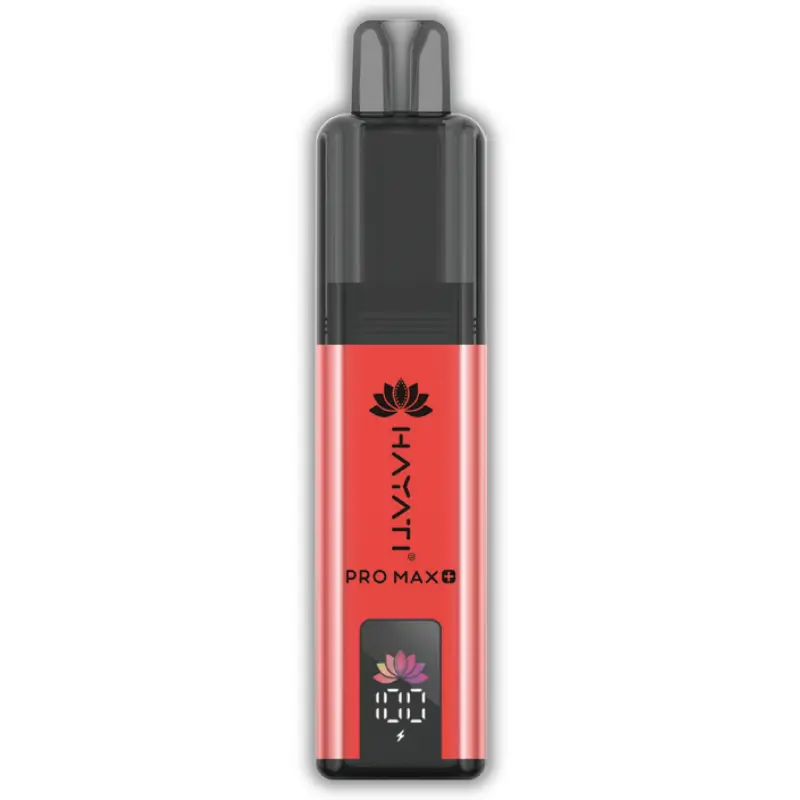
Hayati · Pro Max Plus
Double Apple Hayati Pro Max Plus 6000 Pod Kit
£7.99
✔ In stock — ready to ship
Genuine Hayati
Free over £20
Same-day dispatch
Secure checkout
Double Apple Hayati Pro Max Plus 6000 Pod Kit is the complete purchase at £7.99: a rechargeable 850mAh Hayati Pro Max Plus body, and a prefilled pod carrying 12ml of liquid at 20mg nicotine salt. The manufacturer's figure for the filled pod is up to 6,000 puffs. That number comes off bench equipment taking identical draws on a timer, so it works as a way of ranking one pod against another and not as a forecast of anybody's fortnight. One thing belongs at the top and will not be repeated: this is a nicotine vape liquid in a sealed pod. It is not a tobacco product and there is no tobacco in it.
What makes the listing worth more than a paragraph is not the hardware, which is the same body that sits under most of the Hayati Pro Max Plus Prefilled Pod Kit shelf, but a question about the liquid that nobody has yet answered in print. The name promises two apples. Two apples is an odd thing to promise. Two fruits, you can picture: a mango and a blackcurrant occupy separate rooms in your head and a blend of them gives you two things to notice. Two apples are not like that. They come from the same tree, near enough, and they share the great majority of their chemistry. So what does a buyer actually receive when a blender puts two of them in one pod? Two flavours running side by side, or one flavour that covers more ground than a single apple could?
That is the question this page exists to answer, and it turns out to have a clean answer with a mechanism behind it. The short version, for anyone who would rather not read four thousand words to get there: you receive one apple with more range, not two apples in conversation, and the reason is structural rather than a matter of how well the blend was made. Whether more range is worth £7.99 to you depends on things the rest of the page sets out.
What the pod listing already settled, so that this page does not have to
The same liquid is sold without a device as Double Apple Hayati Pro Max Plus Pods at £5.49, and that listing took on the origin of the phrase. Its findings are cited here rather than rebuilt, because rebuilding them would waste the space this page wants for the liquid itself.
In short: double apple is a borrowed term with a settled meaning. It comes out of the shisha trade, where it names a construction rather than a quantity, and the construction is two apple varieties laid over each other with an aniseed note underneath them. It has never meant twice as much apple, and reading it as an intensity claim is the mistake the phrase reliably produces in anyone meeting it for the first time.
The pod page then did the piece of work that mattered, which was to test whether Hayati's silence about aniseed means anything. Ordinarily a description that fails to mention an ingredient is weak evidence of its absence, because copy gets trimmed and flavour houses keep their recipes. Here the silence is stronger than usual, and the reason is a count: across all 492 listings in this catalogue, Hayati name aniseed exactly twice, on the two H'Berg / P'Man listings in the Pro Ultra Plus line, and in both cases at hint level. A manufacturer who writes the word down when there is only a hint of it, and then explains what the hint does, is a manufacturer whose omission carries weight. The pod page's verdict, correctly labelled as probable rather than confirmed, is that there is no perceptible aniseed in this liquid. The manufacturer has not stated it either way, and nobody should pretend otherwise.
There is a second finding worth borrowing rather than redoing. The word "double" is itself the subject of the Double Menthol pod listing's analysis, which establishes that Hayati do not use the word consistently: on the menthol products their own text describes it as the volume turned up, and on the apple products their own text describes two layered characters. Two different jobs, one word, same shelf. If the meaning of "double" across this catalogue is what you came for, that listing and its kit, Double Menthol Hayati Pro Max Plus 6000 Pod Kit, are where it is worked out.
Take those two findings as the starting position. Probably no anise. A word that means construction here and intensity elsewhere. What is left to explain, and what nobody has explained, is the thing you will actually have in your mouth: two apples, and what two apples do.
Two varieties of one fruit are not two fruits
The inventory is shared. Only the proportions move.
Start with the chemistry, because the perceptual answer falls straight out of it.
Different apple varieties are not built from different aroma compounds. They are built from largely the same set, in different amounts. The volatile profile of a hard green cooking apple and that of a soft red eating apple overlap heavily: the same families of esters, the same short-chain alcohols, the same aldehydes, present in both, weighted differently. Where a blender working with two fruits has two separate vocabularies to draw on, a blender working with two apples has one vocabulary and a set of dials.
Compare that with a genuine two-fruit construction on the same shelf. Blackcurrant Mango Hayati Pro Max Plus 6000 Pod Kit puts together a fruit whose character rests on sulphur-bearing compounds and a green, almost catty sharpness, and a fruit whose character rests on lactones and a thick, creamy sweetness. Those two have almost nothing in common at the molecular level, which is precisely why you can hear them separately. Your palate receives two sets of signals that do not resemble each other, and it files them as two things, because they are two things. The same applies to Blueberry Raspberry Cherry Hayati Pro Max Plus 6000 Pod Kit, where three berries still manage to stay distinguishable because each carries a marker the others lack.
Two apples have no such markers to trade. Whatever separates them has to be built out of material both of them already contain. That is the constraint, and it is not a small one.
What is left to separate them: acid, and where they sit on the green-to-cooked line
Two dials survive the constraint, and Hayati's own description reaches for both of them without naming either.
The first is acid. An apple's sharpness is largely malic acid, and malic acid is not an aroma at all: it is a taste, registered on the tongue, in the way salt and sugar are tastes. That makes it the one component of an apple that can be varied without touching the aroma profile. A blender can take one apple character and raise its acid load and the fruit will read as a different apple, sharper, fresher, less sweet, while the actual smell of it has barely moved. This is the cheapest real separation available between two apples and it is almost certainly doing a great deal of the work here. Hayati describe one apple as crisp and lightly sharp. Sharp is an acid word, not an aroma word.
The second dial is position on a single line that runs from green, through fresh and ripe, to cooked. This is the one people underrate, so it is worth being precise about what moves along it.
An unripe apple is dominated by six-carbon aldehydes, which is why it reads grassy, stalky and faintly bitter, like the smell of a cut leaf rather than of fruit. As the apple ripens, those aldehydes decline and the fruit converts increasingly to esters, the light volatile compounds responsible for the juicy, slightly perfumed, pear-drop quality of a ripe apple. Keep going past ripeness and apply heat, and you leave fruit chemistry altogether: sugars caramelise, new compounds appear, and you arrive at the baked or stewed register, which is a different object with a different smell.
Hold that line in mind, because it explains the whole construction. The two apples in this pod are not two fruits picked off two trees. They are two positions on that one line: one further back towards green, one further forward towards ripe. That is what "crisp and lightly sharp" and "sweeter and riper" describe. Not two things, two moments.
A caution, stated plainly because it would be easy to slide past. Hayati name no varieties anywhere in this listing, and this page is not claiming to know which cultivars, if any, the flavour house modelled. What is being described here are positions on a curve, and the argument works on positions. It would work the same way if the blend were built entirely from synthesised components that never saw an orchard, which for a vape liquid is the likelier case.
Why the perception question answers itself
Now put the chemistry and the perception together, because this is where the page earns its keep.
You do not taste compounds. You taste matches. Flavour recognition is categorical: the nose and the palate deliver a pattern, and the brain hands back the name of the nearest remembered object. That is why a blackcurrant and a mango stay separate in a blend, because the pattern matches two different remembered objects and you get two names back.
Two apples deliver two patterns that both match the same remembered object. There is only one name to hand back. Whatever the second apple contributes does not arrive as a second identity, because your palate has nowhere to put it except inside the first one. It arrives as a modification of the apple you are already tasting: earlier, or later, or sharper, or fuller. The only circumstance in which you would hear two apples as two things is if one of them stopped being recognisable as apple, which would mean the blend had failed at the thing it was built to do.
So the answer to the question at the top is not a judgement about this particular blend's skill. It is structural. A two-variety blend cannot read as two things without ceasing to be a two-variety blend. What it can do, and what this one is built to do, is give the single identity more range.
The one axis on which they genuinely separate, which is time
Range is a vague word, so here is the specific form it takes, and it is the most useful paragraph on this page.
The two halves cannot separate by identity. They can separate by arrival, and they do, for two independent reasons.
The first reason is volatility. The ester-rich ripe register consists of the lightest and most volatile material in the blend. It leaves the wick first, travels in the front of the vapour, and reaches the olfactory receptors at the back of your nose before you have finished the inhale. The heavier aldehyde material behind it is slower.
The second reason is the difference between smelling and tasting, and it matters more than the first. The ripe half is almost entirely aroma. Aroma arrives with the vapour and leaves with it: when the vapour is gone from your nose, the ripe apple is gone too, within a second or so. The sharp half is partly acid, and acid is not carried in the vapour phase in the same way. It lands in your saliva, on the tongue, and it stays there. Salivation increases, the mouth goes slightly dry at the edges, and that sensation outlasts the exhale by several seconds.
Which produces the actual shape of the draw. Sweet fruit at the front, arriving fast and leaving fast. Acid underneath it, arriving fractionally later and staying behind after everything else has cleared. The two registers are separated in time even though they can never be separated in identity, and the perceived effect of that is a flavour that occupies more of the draw than a single apple does. It starts sooner and it finishes later. That is the range, and that is what the second apple bought.
What is deliberately not in it, and why that keeps the identity single
The cooked end of the line is worth one more paragraph, because it is the one direction that would have changed the answer.
Had Hayati put a baked or caramelised apple character alongside a fresh one, the two would separate. Cooking takes the fruit off the fresh curve entirely and produces compounds that a fresh apple does not contain, which means the palate would receive a pattern that does not match "apple" and would go looking for a second name: toffee, pastry, spice. That is a two-identity blend, and plenty of apple liquids elsewhere are built that way.
This one is not. Nothing in Hayati's description names pastry, caramel, cinnamon, custard or any bakery element, and the only things they do name are fresh fruit characters. Both of the apples here sit in the first two thirds of the line, and neither of them crosses into cooked. The identity stays single by construction.
The draw, in the order you actually receive it
The opening
On a properly wetted wick the first thing you get is sweet apple, and it gets to you quickly, before the inhale is finished. The register is juice rather than confectionery: rounded, a little soft, with the faint floral quality a ripe apple picks up. It occupies the centre of the tongue and it does not announce itself loudly, which is a consequence of how the blend is balanced rather than a weakness in it.
Hayati are explicit that neither apple leads. That is a real statement of intent, and on a shelf where most blends have an obvious front and an obvious back it sets a realistic expectation about volume. A liquid engineered so that two components balance is, by construction, a liquid in which nothing shouts. Anyone who wants to be hit in the face by a flavour is better served by Ice Pop Hayati Pro Max Plus Pod Kit or Dragon Berries Hayati Pro Max Plus 6000 Pod Kit, both of which are built to arrive at volume.
The middle, where the acid takes over
Through the middle of the inhale the second register builds underneath the first. This is where the crisp apple does its work, and the work is subtraction rather than addition: it takes sweetness off the blend by contrast, dries the texture, and supplies the just-snapped quality that stops a fruit liquid turning syrupy across a long session.
Acid registers along the sides of the tongue rather than in the centre, so there is a physical spread to the sensation as well as a temporal one. The sweet half is central and the sharp half is peripheral, and if you pay attention on a slow draw you can feel the flavour widen across your mouth as the draw progresses. That widening is the most direct evidence you will get that there are two components rather than one, and it is worth noticing once, because after the first day you will stop noticing it and simply experience the result.
The exhale and the seconds afterwards
By the exhale the two have merged. The aroma and the acid arrive at your awareness as one object with depth, and if you were asked at that moment to name what you are tasting you would say apple, not two apples. Then the vapour goes, the ripe half goes with it, and what remains for three or four seconds is the dry, slightly acidic edge on the tongue with the impression of fruit fading behind it.
The pod listing sets out a five-second test for whether any aniseed survived into this liquid, based on the fact that the compound behind aniseed persists on the soft palate far longer than fruit does. It is a good test and it is described properly there. Run it if the question interests you. What this page will add is only that the test is easier on the kit than on a bare pod, because a first-time buyer of the kit has no prior pod ghosting the wick and is therefore getting a genuinely clean first read.
So: two things, or one thing with more range?
One thing with more range. Stated as flatly as the evidence allows, and with the consequences spelled out rather than left implied.
What you gain is span. The flavour occupies more of the draw than a single apple does, starting earlier and finishing later, and it holds a middle that a single crisp apple leaves hollow. It is also less tiring across a day, because there is no dominant note for the palate to fatigue against, and fatigue against a single loud note is the usual reason a flavour that seemed excellent at nine o'clock seems cloying by three.
What you do not gain is complexity, and the distinction matters enough to be worth defining. Complexity is how many things you can identify. Range is how much ground one identifiable thing covers. This liquid is not complex. There is nothing in it to point at, no moment where you catch a second fruit doing something unexpected, no interplay. If the pleasure you take in a blend comes from picking it apart, a two-variety apple offers you nothing to pick apart and will bore you within a pod.
There is also a failure mode, and honesty requires putting it next to the benefit. Because the separation between the two registers is narrow, it does not take much to close it. A tired coil, a hurried draw, a cold room, a palate carrying something heavier from an hour ago: any of those compresses the span, and when the span closes the blend does not taste broken, it just tastes like an ordinary single apple. The "double" becomes inaudible. That is the specific thing to watch for with this liquid, and the handling section below is organised around keeping the span open.
Sweetness, and the one thing the range tells you for free
Hayati position this below the sugary end and say it suits somebody who would rather have fruit than sweets. In practice that should land around bottled apple juice rather than around a boiled sweet, and it is a meaningfully different place from where a good part of this shelf lives. Caribb Crush Hayati Pro Max Plus Pod Kit and Ice Pop both sit well above it, and neither pretends otherwise.
Dryness is a preference and not an achievement, so the reverse should be said with equal weight: if the sweet end of the shelf is where you are comfortable, this will read as underpowered rather than as refined, and you will spend the pod wishing it were louder.
On cooling, the range answers the question without anybody having to taste anything. Hayati name a coolant in the product title every time they use one, a consistency the Blue Frozen pod listing established by counting the cooling vocabulary across the whole catalogue rather than by assuming it. There is no cooling word in this title. Compare Blue Frozen Hayati Pro Max Plus 6000 Pod Kit, Lychee Ice Hayati Pro Max Plus 6000 Pod Kit and Banana Ice Hayati Pro Max Plus Pod Kit, all of which put it in the name. Freshness and cold are separate sensations, and the freshness in this pod comes from acid on the tongue, which brightens without chilling.
Against the rest of the apple, counted rather than asserted
How much apple Hayati actually sell
The Apple Vapes shelf lists twenty-four products, which sounds like a wide choice and is not. Broken down, it is seven Red Apple Ice listings in seven different formats, three Double Apple listings in three formats, four Sour Apple listings, three products named for shisha, and seven strength-only or volume-only listings that sit on the shelf as family defaults rather than as apple flavours in their own right. Twenty-four listings, four actual apple flavours, and one of those four is not sold on this hardware at all.
Narrow it to the shelf this kit sits on and the choice collapses further. Of the eighty-eight listings on the Pro Max Plus kit shelf, seven have the letters "apple" in the title. Five of those seven are pineapple. The genuine apples number two: this one, and Red Apple Ice Hayati Pro Max Plus Pod Kit. That is the entire apple selection available to somebody buying a Pro Max Plus.
Against Red Apple Ice, which solves the same problem a different way
The obvious comparison is worth making structurally rather than as cold against not-cold, because the structural version is more useful.
Apple is a short flavour. The compounds that carry it are light, they arrive fast and they leave fast, and a single apple liquid tends to feel like it finishes before you have finished with it. Every apple product has to solve that, and there are only two ways to do it: extend the fruit, or add something that is not the fruit.
Red Apple Ice takes the second route. It is one apple position, red and sweet, with a coolant supplying a finish the fruit cannot supply for itself. The cooling is not a flavour at all, it is a sensation, triggered by a receptor rather than by the nose, which is exactly why it works: it occupies a channel the fruit was not using and therefore extends the experience without competing with it.
Double Apple takes the first route. No second channel, no added sensation, just the fruit stretched across more of the draw by putting two positions of it end to end. That is a quieter solution and a less reliable one, because, as set out above, the span closes easily and the effect can vanish. The cooling in Red Apple Ice will never vanish. A coolant does not lose its edge on a tired coil the way an ester does.
So the decision rule is not really about whether you like cold. It is about which kind of length you want and how much you mind it being fragile. If you want an apple that reliably keeps going to the end of the exhale, the iced one will do that every time. If you want the length to come from fruit and you are prepared to look after the conditions, this is the one.
The apple you cannot buy for this device
Worth flagging because it will otherwise waste somebody's afternoon. Hayati do make an acid-led apple, sold as Sour Apple, and it exists in the catalogue on Mini Ultra hardware and as one half of a Sour Apple and Juicy Peach pairing on Pro Ultra Plus and Mini Ultra. There is no Sour Apple on the Pro Max Plus platform, in either kit or pod form.
The practical consequence for a buyer here: if what you want is the pucker rather than the balance, this pod is not a substitute and neither is the iced one. The crisp half of this blend is sharp measured against other apples and mild measured against anything deliberately sour, and no amount of hoping will move it. For sharpness on this device you have to leave apple entirely, which the next section covers.
Against the true multi-fruit blends
This is the comparison that follows directly from the argument above, and it is the one most likely to change somebody's order.
If what you actually enjoy is picking a blend apart, a two-variety apple is the wrong shape of product and a multi-fruit one is the right one. Blueberry Cherry Cranberry Hayati Pro Max Plus Pod Kit gives you three components with genuinely different characters, including a cranberry note that is the one properly non-sweet fruit in the group. Blackberry Raspberry Hayati Pro Max Plus Pod Kit is the simpler two-berry version of the same idea, with the two staying audible because a blackberry and a raspberry do not share a profile the way two apples do.
The trade is real in both directions. Multi-fruit blends give you things to notice and they fatigue a palate faster, because there is more going on to get used to. A single-identity blend with range gives you nothing to notice and stays comfortable for longer. Neither is better. They are answers to different questions, and the question is whether you want your all-day flavour to be interesting or to be unobtrusive.
If it turns out too quiet
Two directions out, and they are not the same direction.
For more acid across the whole draw rather than only in the middle, the lemonades are the straightforward move: Berry Lemonade Hayati Pro Max Plus 6000 Pod Kit and Blackcurrant Lemonade Hayati Pro Max Plus 6000 Pod Kit both use a lemonade structure to hold citrus acid running continuously instead of concentrating it behind the sweetness.
For a non-fruit element underneath the fruit, which is structurally the job the traditional aniseed would have done even though the mechanism is nothing like it, the colas are the nearest thing on this shelf. Cola Lime Hayati Pro Max Plus 6000 Pod Kit and Cherry Cola Hayati Pro Max Plus Pod Kit both run a spiced beverage base under a fruit, and a cola base carries botanical complexity that behaves a little like a spine. Neither replaces anise and it would be dishonest to suggest otherwise.
And if it is the shisha association you were after rather than apple specifically, Hayati's own reading of that register is on the record in a product name: Hayati Pro Ultra Plus Shisha 30000 Prefilled Pod Kit is built on apple, mint and grape. Mint, not anise, is what they reach for when they set out to work in that style deliberately, which is itself a small piece of evidence for the pod page's conclusion. It sits on different hardware at £11.99, so it is a separate decision rather than a swap.
The strength question, which has a short answer
Twenty milligrams per millilitre is the only figure this flavour comes in. There is no 10mg Double Apple and no zero-nicotine Double Apple. What exists instead are three undifferentiated listings that sit on the apple shelf as family defaults: Hayati Pro Max Plus 6000 Prefilled Pod Kit, Hayati Pro Max Plus 6000 Prefilled Pod Kit 10mg and Hayati Pro Max Plus 6000 Prefilled Pod Kit Zero Nicotine. Those are separate products rather than this flavour at another number, and hunting for Double Apple at a different strength will not produce one.
Twenty milligrams is the maximum permitted in the United Kingdom for a consumer nicotine product of this kind, so it is the top of the available range rather than an unusual figure within it. Nicotine is an addictive substance. The strength is recorded here as a property of the pod, and nothing here recommends a figure to anybody.
The device, in the space it deserves
The box holds a rechargeable 850mAh Hayati Pro Max Plus body and the prefilled pod system, filled and sealed, with the coil and wick inside the pod rather than in the device. Nothing else is needed to use it and nothing else is included. When the pod is finished you fit another Pro Max Plus pod; the body is the part you keep, and it recharges as required. Everything else about how this platform behaves in daily use is covered across the Hayati Pod Kits and Hayati Prefilled Pod Kits shelves, because none of it is specific to apple and there is no sense in nine listings explaining the same battery.
One cross-range fitment sentence, said once and then dropped: Hayati run several pod families, they are not interchangeable, and the range name in this product title is the one that needs to appear on the body you are fitting the pod to.
The single specification that matters for this particular liquid is 12ml, and it matters for a reason specific to the argument above rather than for the usual reason about how long a pod lasts. This is a blend whose whole character is a balance between two registers that sit close together. You cannot adjust that balance. There is no fill port, no way to dilute, no way to add to it, no second liquid to cut it with, and no serviceable part inside the pod. The ratio you meet on the first properly wetted draw is the ratio for all 12ml of it. On a bottle you could shift a blend you found too sweet or too dry by mixing; here the only variables you hold are how you draw and how well you look after the coil, which is why the handling section below is about protecting the balance rather than about changing it.
The identical liquid is sold as a pod on its own at £5.49 for anyone who already has the body. The difference between the two listings is the hardware in the box and nothing else.
The figures, and the one thing the sheet cannot express
Only what Hayati publish for this listing appears below. An empty entry is empty because the specification is silent, not because it has been left out.
| Price | £7.99 |
| Supplied as | Device plus prefilled pod, ready to use |
| Device | Hayati Pro Max Plus, rechargeable, 850mAh |
| Liquid in the pod | 12ml |
| Nicotine | 20mg nicotine salt |
| Other strengths of this flavour | None |
| Puff figure quoted by Hayati | Up to 6,000, a laboratory measurement |
| Flavour | Double Apple |
| Components named | Two apple characters, one crisp and sharp, one sweet and ripe |
| Cooling agent | None named |
| Bakery or spice element | None named |
| Base ratio | Not published for this listing |
| Coil resistance | Not published for this listing |
| Product code | double-apple-hayati-pro-max-plus-pod-kit |
The interesting thing about that table is what it cannot hold. There is one row for flavour and the flavour has two halves, and no specification sheet in this trade has a vocabulary for the internal structure of a blend. A sheet can tell you what is in a liquid and it cannot tell you how the parts are arranged, which on most products does not matter and on this one is the entire question. A buyer reading only the table would take away "apple" and would have learned almost nothing about what the pod does.
Two rows are there specifically because they are empty. "Cooling agent" earns its place because plenty of neighbouring listings would fill it and this one does not, which on this shelf is a signal rather than an oversight. "Bakery or spice element" earns its place because the name descends from a tradition in which a non-fruit component is standard, so a reader is entitled to see the absence stated rather than inferred from silence.
On price, one line rather than a paragraph: every flavour on this kit shelf is the same £7.99, so choosing between eighty-eight of them is a flavour decision and never a budget one. A two-register blend costs exactly what a single-note one costs.
Keeping the span open
General pod advice applies and is not worth repeating. What follows is the handling that is specific to a liquid built on two close-together registers, organised around the failure mode described earlier: the span closes and the blend flattens into an ordinary apple.
Do not form a view on the first few draws. A freshly fitted pod has a wick that is not yet fully saturated, and the component that suffers most from that is the volatile ester side, which is to say the ripe apple. On a dry-ish wick this blend reads thin and green, which is precisely the flattened version you are trying to avoid mistaking for the real thing. Fit it, let it stand for a few minutes, take half a dozen ordinary draws, and judge it after that.
Draw slowly, and do not chain. Pulling hard and repeatedly outruns the wick's ability to resupply the coil, and the first casualty is always the sweet middle, because that is the fragile end of the blend. What you are left with is the acid and the green character, which is to say half of the product you bought. The tell is specific and easy to learn: if the flavour has gone sharper rather than weaker, you are drawing faster than the pod can keep up with, and a pause of a minute restores it.
Measure the span, not the taste, when judging the coil. Every apple liquid loses its ripe half first as a coil tires, because volatility cuts both ways and the compounds that arrive fastest are the ones that stop being delivered first. The useful consequence on this particular product is that a tiring pod converges on the sour-apple territory that Hayati do not sell for this device, and then past it into a papery flatness. So the question to ask is not whether anything tastes burnt, because it will not for a long time. Ask whether the draw still widens across your mouth the way it did in the first week. When it stops widening, the pod has given you what it has.
Heat unmakes the double. The two registers are not equally robust in storage. The ester side is volatile by definition, which is the same property that makes it arrive first on the draw, and warmth accelerates its loss while doing very little to the acid. A pod left in a car or on a windowsill for a fortnight therefore does not simply get weaker, it gets unbalanced, and it arrives as a sharp single apple with the middle already gone. A drawer at room temperature is all the storage required, and it should be stored where children and pets cannot reach it.
A part-used pod moves in one direction. Take the pod off the body and it keeps its liquid, its wetted wick and its used coil, and none of that can be emptied or serviced. Left standing for a week or two it steeps, and apple steeps towards its darker, jammier end, which is the one direction that starts to introduce a character the blend was built to avoid. It will not be ruined. It will be slightly less the thing described on this page. If you rotate flavours, a shorter rotation serves this one better than a long one.
Disposal covers two objects, not one. The kit contains a device with a cell in it and a pod with a coil in it, and both count as waste electrical equipment at the end of their lives. Neither belongs in a household bin. A retailer take-back scheme or a local household recycling site that accepts small electricals is where they should go, intact rather than opened.
Questions this listing raises
Do the two apples taste like two separate flavours?
No, and structurally they cannot. Two apple varieties share most of their aroma chemistry, so your palate matches both to the same remembered object and returns one name. What the second apple adds is not a second identity but more range within the single one: the flavour starts earlier, holds a fuller middle and finishes later than a single apple manages.
What separates the two apples, then?
Two things. Acid, which is a taste rather than an aroma and can be varied without changing how the fruit smells, and position on the line that runs from green and stalky through to ripe and juicy. One apple here sits nearer the green end, the other nearer the ripe end. Hayati name no varieties, so those are positions rather than named cultivars.
Where does each one arrive in the draw?
The ripe half arrives first and leaves first, because it is aroma carried in the vapour and the compounds involved are the lightest in the blend. The sharp half arrives fractionally later and outlasts the exhale by several seconds, because acid lands in your saliva rather than travelling as vapour. The two separate in time even though they never separate in identity.
Is there aniseed in it?
Hayati do not say, and the pod listing for this flavour works through the evidence properly. The short version is that aniseed appears in only two of the 492 listings in this catalogue, in both cases at hint level, so a manufacturer who bothers to name a hint and then leaves it out here is probably leaving it out because it is not there. Probable, not confirmed.
Does it have any cooling in it?
No coolant is named in the specification and no cooling word appears in the title, which on this shelf is reliable because Hayati label cooled products in the name every time. The freshness in this one comes from the acid in the crisp apple, which brightens a draw without producing an actual chill. For apple with real cold, the iced apple kit on this shelf is the one that does it.
Why does it sometimes taste like a plain single apple?
Because the gap between the two registers is narrow, and several ordinary things close it. A partly dry wick, a run of fast draws, a tiring coil or a pod that has been stored warm all cost you the ripe half first, and what is left reads as one sharpish apple. If the draw has stopped widening across your mouth as it develops, that is what has happened.
Is this an all-day flavour?
It is built like one, in that nothing in it dominates and there is no loud note for a palate to tire against. That is also its limitation: it gives you very little to notice. Anyone whose enjoyment comes from identifying components in a blend will find it uneventful by the end of the first pod, and a multi-fruit listing suits them better.
How does it differ from a blend of two different fruits?
A blend of two different fruits gives you two things you can name, because the fruits carry markers the other one lacks. Two apples cannot do that, so instead of complexity you get span. It is a trade rather than a deficiency: multi-fruit blends are more interesting and tire a palate faster, single-identity blends are duller and stay comfortable longer.
Is it sweet?
Moderately. Hayati place it below the sweet-shop level and describe it as suiting somebody who wants fruit rather than confectionery, which puts it roughly where bottled apple juice sits. Against the sugar-led options on the same shelf it will read as dry, and if the sweet end is where you are comfortable it will read as underpowered.
How long does a pod last?
Nothing in the specification answers that, because it depends on how you draw and how often. Hayati quote up to 6,000 puffs for the filled pod, a figure produced by laboratory equipment taking measured draws at fixed intervals, which is not how anybody vapes. Use it to compare pods against each other, not to plan a week.
Can the pod be refilled?
No. It arrives filled and sealed with the coil and wick inside it, there is no fill port and there is no serviceable part. When the flavour drops away the pod is replaced whole and disposed of as small electrical waste, and the device is kept.
Which shelves does this kit appear on?
It sits on the Pro Max Plus kit shelf alongside eighty-seven others, on Apple Vapes as one of twenty-four apple listings across every format, and in New Products. The whole Hayati range, all 492 listings, is under the full catalogue.
The short version
£7.99 buys a rechargeable 850mAh Hayati Pro Max Plus device together with a sealed 12ml pod of 20mg nicotine salt, with a manufacturer puff figure of up to 6,000 taken from laboratory equipment. No cooling agent is named, no bakery or spice element is named, and the sweetness sits at juice level rather than confectionery level.
The flavour question the name raises has two halves and both now have answers. On the aniseed, the pod listing did the counting: Hayati name it on two of 492 listings and at hint level, so their silence here is worth more than silence usually is, and the probable answer is that there is none. On the apples themselves, which is what the liquid actually is if the anise is absent, the answer is that two varieties of one fruit cannot read as two things. They share too much chemistry, and a palate that matches both to the same remembered object has only one name to give back. What you get instead is one apple with more range: a sweet, ester-led arrival at the front, an acid edge that lands later and stays after the exhale, and a flavour that covers more of the draw than a single apple can.
Buy it if you want apple that is not thin, if you are content with a flavour that is unobtrusive rather than interesting, and if you do not need it cold. Look elsewhere if you want something to pick apart, if you want an apple that puckers, or if you want length you can rely on regardless of how the coil is doing, because the iced apple on this shelf supplies that and this one supplies something more fragile and, for the right person, better.
Strictly for adults aged 18 and over. Nicotine is an addictive substance.
You might also like


