
Home / Hayati Pod Kits / Hayati Pro Max Plus 6000 Prefilled Pod Kit 10mg
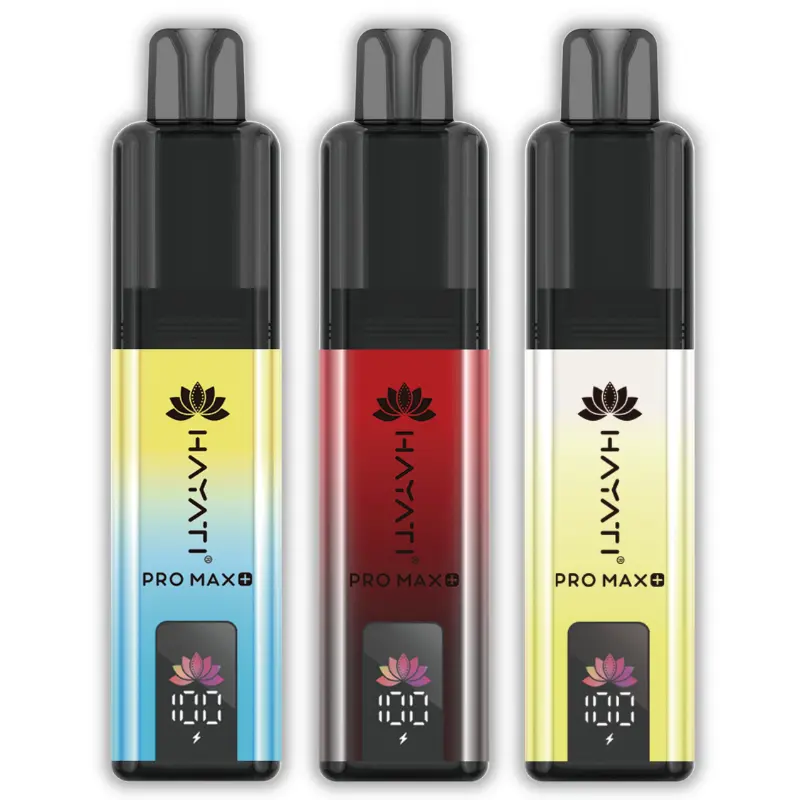
Hayati · Pro Max Plus
Hayati Pro Max Plus 6000 Prefilled Pod Kit 10mg
£7.99
✔ In stock — ready to ship
Genuine Hayati
Free over £20
Same-day dispatch
Secure checkout
The Pro Max Plus kit shelf runs to eighty-eight listings. Eighty-six of them are filled at 20mg. This is one of the two that are not, and the other one holds no nicotine at all. What you get for £7.99 is a complete kit, a rechargeable 850mAh body with a 12ml prefilled pod already seated in it, and the liquid in that pod is Banana Ice mixed at 10mg nicotine salt.
Almost every other page on this platform is a flavour page. It has a fruit in the title, a fruit in the pod, and a job of describing that fruit against eighty-seven neighbours. This listing is different in a way the title makes obvious: the flavour is not in the name at all. The name is a strength. Hayati have published this as a fill specification with a liquid attached, not as a liquid with a fill specification attached, and that ordering is the single most informative thing on the listing.
So the interesting question is not what Banana Ice tastes like, although that gets a proper section further down. The interesting question is commercial. Adding a second fill strength to a prefilled pod range is one of the more expensive things a manufacturer can do to itself, far more expensive than adding a flavour, and the default is not to bother. Hayati bothered, once, for one recipe. This page is about what that costs, what it implies, and why the recipe they picked is the one you would predict if you knew how these liquids are built.
What a third fill strength costs the people who make it
Start with the format, because the format is the whole story. A bottle of e-liquid and a prefilled pod look like the same product in two containers. Commercially they behave nothing alike, and the difference is about where the strength decision gets made.
With a bottle, strength is a late decision. The nicotine loading happens at the mixing stage on liquid that is otherwise identical, so two strengths of the same recipe can share a flavour house, a compounding vessel, a bottle mould, a cap, a label die and a carton. The strength appears on the label and nowhere else in the process that matters.
With a prefilled pod, strength is an early decision and a physical one. The liquid goes into a sealed body on a filling line, the body goes into a tray, the tray goes into a printed outer, and from the moment the fill head opens, that unit is one strength for the rest of its life. Nobody downstream can change it. The consequences are worth listing individually, because the total is what makes a third strength rare.
- A separate compounding batch. A discrete quantity of liquid mixed to its own specification, with its own paperwork and its own retention sample.
- A line changeover. Filling lines run one liquid at a time. Switching means stopping, flushing the heads so the previous strength does not carry over, restarting, and discarding units until the fill is clean.
- Its own artwork, print run and barcode. A 10mg pod cannot share packaging with a 20mg pod, because the strength is a mandatory declaration. New origination, new plates, new minimum print quantity.
- Its own warehouse location and case pack, and its own line on every trade order form. Pick faces are finite, and every buyer has a limit on how many codes they will carry from one supplier.
- Inventory fragmentation, which is the expensive one. Split a flavour into two strengths and you have not doubled demand. You have divided the existing demand between two codes, halved the velocity of each, doubled the working capital tied up in the pair, and doubled the chance of ending the season with a pallet of something nobody wanted.
Now do the arithmetic on this particular range. Eighty-eight kit listings, three fill strengths, and you are looking at 264 codes for what is functionally one device. No manufacturer of this scale does that, and no retailer would take it if they did. The alternative, which is what Hayati actually did, is to leave the whole range at one strength and cut exactly one recipe out of the herd to carry the others.
That constraint is why the strength-named listings are so few. Across the entire Pro Max Plus prefilled catalogue, kits and replacement pods together, there are four listings that carry a fill strength in the title rather than a fruit. Two are at 10mg, this kit and its matching Hayati Pro Max Plus Prefilled Pods 10mg. Two are at 0mg, the Zero Nicotine Pro Max Plus 6000 kit and its pod equivalent. All four contain Banana Ice.
Read that again, because it is the finding. Hayati did not pick one flavour for the 10mg variant and a different one for the 0mg variant. They picked the same recipe twice. Whatever criteria they applied when they chose which liquid could survive being re-run at a different fill, the same recipe won both times.
What the existence of the pod listing proves that the kit does not
There is a stronger piece of evidence sitting next to this one, and it is easy to walk past. A manufacturer testing whether a strength has any interest at all would release a kit and stop there. A kit is a self-limiting experiment: a complete unit, somebody buys it, they use it, and if nothing follows, the trial has cost one production run and told you what you needed to know.
Releasing a matching replacement pod is a different kind of commitment. A replacement pod only has a market if people buy the same fill repeatedly, so the second code only makes sense if the first is expected to generate a repeat pattern rather than a curiosity purchase. Hayati released both. The 10mg pod exists at £5.49 as a standalone line, which is the manufacturer saying, in the only language a product catalogue has, that they expect the fill to be wanted again after the first pod is finished. That is a statement about aggregate ordering behaviour across a wholesale base rather than about anybody in particular, but it is real evidence, and it is more honest than a marketing sentence about what a strength is for.
Why the bottled range answers a different question
There is a detail in Hayati's wider catalogue that sharpens all of this, and it inverts what most people assume about brands and strengths.
Hayati sell sixty-five bottled nic salt liquids under the Pro Max name. Every single one of them is 10mg. Not most. All sixty-five. Meanwhile the prefilled pod ranges are, with the four exceptions above, uniformly 20mg. The same brand, the same flavour house, frequently the same recipe names, and two formats that default to opposite ends of the strength range.
That is not inconsistency. It is the format deciding. A bottle goes into a device the owner fills themselves, and the whole economics of bottled liquid assume the buyer chooses. A prefilled pod is bought by somebody who has decided not to choose, and the manufacturer picks a default on their behalf, so the default is set at whatever the largest single block of buyers is presumed to want. Strength in this catalogue is a property of the packaging decision, not of the brand.
Which means a 10mg option already existed in Hayati's catalogue long before this listing did. It just required owning a refillable device and buying a bottle. What this kit adds is not the strength. It is the strength without the format change. That is a narrow and specific product definition, and it is the accurate one. If you already know you want 10mg and you also want the prefilled format, this listing and the Hayati Pro Max Plus Prefilled Pod Kit shelf are the only place on this platform where those two preferences meet.
Why the salt base matters least at exactly this concentration
Here is the part of the formulation story that gets skipped, and it is slightly awkward for the product because it cuts against the obvious sales pitch.
Nicotine salt is not a flavour technology and it is not a strength. It is a chemical form. Freebase nicotine raises the pH of the mix, and at higher loadings a freebase liquid becomes rough to draw on through a small, low-power coil. Adding an acid to form a salt brings the pH down, and the same loading draws noticeably smoother through the same coil. Salts were developed so that high concentrations could be put into small devices without the draw becoming unpleasant.
So the advantage a salt base provides is proportional to the concentration you are asking it to carry. At 20mg in a compact pod on a modest coil, the salt base is doing substantial work, and a freebase liquid at that loading in that device would be a genuinely different experience. At 10mg, the concentration is half, the roughness the salt form was invented to solve is correspondingly less pressing, and the gap between a salt and a freebase mix of the same recipe narrows. 10mg is close to the concentration at which the defining advantage of a salt formulation is least pronounced. It is not absent. It is just doing less of the heavy lifting than the same base does at 20mg.
Which raises the obvious question: if the salt chemistry earns less of its keep at 10mg, why did Hayati keep it? There are three answers and none of them are about the buyer.
The first is the coil. A prefilled pod is built around one wick and one coil geometry, tuned for one liquid viscosity and one liquid chemistry. Change the nicotine form and you change the pH, and pH changes how a liquid interacts with the wick and the coil over time. That is a new qualification exercise, new stability testing, potentially a new coil specification, and a pod that can no longer share tooling with the other eighty-six.
The second is flavour. The acid that forms the salt sits in the liquid alongside the flavour concentrate, and swapping it out shifts the balance of the recipe. A brand that reformulates the base has to re-tune the flavour to land in the same place, which means a development cycle for a variant selling a fraction of what the parent sells.
The third is the one that actually decides it. Keeping the base identical is the only way the cost case works. Same base ratio, same pod, same coil, same wick, same shelf life data, same everything except the number on the label and the quantity of nicotine that went into the tank. The 10mg pod is not a new product. It is the same product, filled differently, and that is precisely why it was possible to make.
The practical upshot for somebody holding the kit is undramatic and worth saying plainly: the liquid in this pod has the same base ratio, the same flavour concentrate and the same nicotine chemistry as the 20mg version. The nicotine content is different. That is the whole of the difference on the specification sheet.
Banana Ice, and why this is the recipe they chose
The flavour deserves its own treatment, partly because it is what is actually in the pod and partly because the choice of recipe is the second half of the commercial argument.
Where it sits on the ripeness curve
Banana is not one flavour. It is a curve, and every banana liquid on the market picks a point on it. Understanding which point a given recipe chose tells you more than any adjective.
At the green end there is the starchy, faintly chalky, almost vegetal character of an underripe banana, which is a taste almost nobody formulates for. A little further along sits the firm, just-yellow stage: sweet, but tight and slightly dry, with the sugar not yet fully developed. Past that is the soft ripe stage, where the flesh gives under a thumb and the sweetness rounds out into something with body to it. Further still is the overripe stage, where the sugars have gone further and the fruit picks up a heavier, almost boozy edge that is closer to fermentation than to fruit. And off to one side, outside the curve entirely, sit the cooked expressions: banana bread, caramelised banana, banana custard, where the fruit has been changed by heat and joined by something else.
This one sits at the soft ripe stage and stays there. Hayati's own description is mellow and rounded rather than bright, and that matches what the recipe is doing. There is no green edge and no sharp top. There is also nothing overripe about it, none of the heavy, slightly dark quality that a banana pushed too far picks up. It is the middle of the ripe window, which is the least risky place on the curve to sit and, not coincidentally, the easiest place to hold steady across a production run.
The order of arrival on the draw
Draw on it and the fruit registers first, which is not a given on a cooled liquid. Plenty of iced recipes lead with the cold and let the fruit surface behind it. This one does the opposite, and the reason is structural: banana is a heavy, low-volatility flavour that occupies the front of the palate immediately and does not need a moment to develop. It is there from the start of the inhale, soft and sweet, with a rounded, almost thick quality to the way it sits.
The cold arrives during the second half of the draw and builds through the exhale. It is broad and even rather than sharp, with no nasal sting to it, which separates it firmly from the menthol-forward end of the range. Treat it as temperature rather than as a mint note, because that is how it behaves: nothing about it tastes of mint and it contributes no herbal character.
The finish is the interesting part, because the cold fades before the fruit does. Fifteen seconds after the exhale there is still a soft, sweet banana on the palate with the chill gone from underneath it, and that residual fruit is heavier than the draw suggested. It is one of the more persistent finishes on the shelf, which matters if you alternate between two flavours in a session.
The cold has nothing to fuse with, and you can taste that
This is the most useful observation about the recipe, and it is a direct consequence of banana being the fruit involved.
Most of the cooled liquids on this shelf are built on acid. Berries, citrus, sour apples and the blue raspberry family all bring a tartness with them, and when you add a coolant to an acidic fruit the two sensations merge. The cold reads as part of the fruit's brightness rather than as a separate thing, which is why an iced berry liquid is usually described as crisp rather than as cold. The coolant and the acid are pulling in the same direction and the ear cannot easily separate them. You can hear this in how the neighbours are written: Cherry Sour Raspberry and Blackberry Ice both get described in terms of sharpness, and the cold in each is folded into that sharpness rather than standing apart from it.
Banana has essentially no acid. It is one of the least acidic fruits used in flavouring, which is why it reads as soft in the first place. So when you put a coolant on top of it, there is nothing for the cold to merge with. It sits as a distinct layer above the fruit rather than dissolving into it, and the two components stay audibly separate all the way through the draw.
Whether that is a good thing depends entirely on what you want. If you like a cooled liquid to feel integrated, where you cannot point to the cold as a discrete component, this one will feel slightly two-storey to you. If you like being able to taste both halves distinctly, the separation is the appeal, and it is the reason Banana Ice does not taste like a generic iced fruit despite being built from only two ideas. It is also the reason the recipe is hard to confuse with anything else on the shelf, which is not something you can say about the fourth blue berry blend in a row.
The creaminess question
Hayati's listing mentions a hint of creaminess, and it is worth being precise about what that means, because the word invites the wrong expectation.
There is no dairy note here. This is not a milkshake recipe, there is no vanilla sitting underneath, and nothing about it tastes like cream in the way a dessert liquid does. What the word is describing is banana's own body. A ripe banana has a dense, coating quality in the mouth that most fruits do not, and a flavouring pitched at the soft ripe stage carries a shadow of that density. On the exhale it produces a faintly rounded, slightly smooth impression that sits somewhere between fruit and texture. It is a property of the fruit rather than an added ingredient.
The test, if you want to check this yourself, is to pay attention to whether the impression arrives with the fruit or after it. An added cream note is a separate flavour and turns up as its own event, usually on the exhale and usually with a slight vanilla lift. Banana's own body arrives simultaneously with the fruit because it is the fruit. On this recipe it arrives simultaneously.
What it is not
Being clear about the negatives saves people money, so: this is not a banana bread, a banana custard or any other baked or dessert treatment. There is no caramelisation, no biscuit note and no spice. It is not a banana milkshake. It is not a tropical blend, and there is no mango, pineapple or passion fruit hiding behind the banana, which distinguishes it from something like Blackcurrant Mango where two fruits genuinely share the work. There is no sour edge anywhere in it and no candy-shop sharpness of the kind Blueberry B'Gum or Blue Razz Pineapple build their character on. It is sweet, and the sweetness is not restrained, but it is not layered with anything.
Two dials instead of four, and why that decided the strength split
Now the two halves of this page meet.
Most of the liquids on this shelf are built on four adjustable elements: a sugar level, an acid level, a coolant level, and a second or third fruit providing contrast. Blue Razz Fruit Twist uses all four. Blueberry Pomegranate uses all four. Cherry Berry uses all four. The cola recipes add a fifth element in the spice and citrus accord that makes a cola taste like a cola, which is why Cola Ice and Cola Lime are among the more intricate things on the shelf.
Banana Ice uses two. A sugar level and a coolant level. There is no acid dial because banana has no acid to modulate, and there is no second fruit because there is no second fruit.
A recipe with two adjustable elements is the cheapest possible recipe to re-run at a different fill. There is less in it that can shift, less that needs re-tasting against the parent, and less that has to be signed off before the variant can go on a line. Every additional element in a recipe is another thing that has to be verified as unchanged when anything about the batch changes, and a two-element recipe cuts that verification work roughly in half compared with a four-element one.
Add the second criterion, which is that the recipe has to be popular enough to justify halving its own velocity, and the field narrows dramatically. A brand does not split an obscure listing. Splitting only makes sense on a recipe that already sells in enough volume that half of it is still a viable line. So the flavour that gets a second strength has to be simultaneously one of the simplest recipes in the range and one of the better-selling ones, and those two properties do not often coexist.
Banana Ice is both. That is the answer to why this listing exists in this flavour and not in any of the other eighty-seven, and it is also the answer to why Hayati chose the same recipe again when they came to build the zero-nicotine variant. It was not a coincidence. It was the same selection criteria producing the same winner twice.
The hardware, kept short
The device is the standard Pro Max Plus body, shared with every other kit on the shelf, and everything worth saying about the platform in general has been said on the flavour pages. What follows is only the part that bears on this listing.
In the box: one rechargeable body rated at 850mAh, and one prefilled 12ml pod, already filled and already seated. Nothing needs mixing, decanting or priming. Hayati describe the 12ml as a pod system rather than as a single reservoir, and they do not publish how the volume is arranged internally, so the honest statement is the total and nothing beyond it. The published puff ceiling is up to 6,000, which is a bench figure produced under laboratory conditions on a machine, and it should be read as the top of a range rather than as a forecast of what any particular pod will do.
The one specification that genuinely matters for this listing is not the battery or the capacity. It is that the pod is prefilled and therefore sealed to its fill strength for all 12ml of it. On a refillable device, strength is a decision you revisit every time you top up, and you can blend two bottles to land wherever you like. Here the decision is made once, at purchase, and it holds for the entire life of the pod. You cannot dilute it, cannot top it up with something else, and cannot change your mind halfway. For a 2ml pod that would be a minor point. On 12ml it is the defining practical fact about the product, and it is the reason the fill strength is in the title.
Everything else about the device, the charging behaviour, the way the cell ages, the condensate path, the pod seating, is common to the whole platform and covered at length across the Pro Max Plus kit shelf.
The numbers, and one piece of arithmetic worth doing
| Fill strength | 10mg nicotine salt |
| Liquid | Banana Ice |
| Volume in the pod | 12ml, supplied filled |
| Price | £7.99 |
| What arrives | Device plus prefilled pod, ready as supplied |
| Cell | 850mAh, rechargeable |
| Maker's puff ceiling | Up to 6,000, laboratory test figure |
| Stock code | hpm-plus-kit-10mg |
| Made by | Hayati |
The stock code is worth a second look, because it tells you the same story the title does. It reads hpm-plus-kit-10mg. There is no flavour token in it. Every other kit on this shelf carries its fruit in the code, because the fruit is what distinguishes it. This one carries a number, because the number is what distinguishes it, and the person who set the code up knew that. Internally, this product is filed as a strength variant of the platform. The banana is a passenger.
Now the arithmetic. The kit is £7.99 and includes both the device and a full 12ml. The matching 10mg replacement pod is £5.49 for the same 12ml without a device. The difference is £2.50, which is what Hayati are charging for a rechargeable body when it comes bundled with liquid. That is an unusually flat gap, and it has a consequence people miss: on a second purchase, the kit is only £2.50 more than the refill, so anyone who owns one working device and wants a spare is paying very little for the redundancy.
The relevant point for this listing specifically is that the gap is identical to the gap on the 20mg lines. The strength variant is not priced at a premium. Hayati have not charged for the inconvenience of the separate production run, which is a mild commercial signal in its own right: a brand recovering the cost of a low-volume variant usually prices it accordingly, and they did not.
One more spec note. The listing appears on the Apple Vapes, Blueberry Vapes and Cherry Vapes shelves. There is no apple, blueberry or cherry in it. That is a cataloguing artefact rather than a description of the liquid, and it is worth flagging because somebody browsing those shelves will otherwise arrive here expecting a berry. It also fits the pattern: a listing created as a strength variant gets merchandised as an afterthought, because the shelf taxonomy is built around fruit and this product does not have a fruit identity to file under.
Where it sits against everything else on the shelf
Comparisons for this listing split into two kinds, because there are two different decisions a buyer might be making.
Against the same recipe at other fills
The nearest neighbour is the standard Pro Max Plus 6000 kit, which is the same Banana Ice, the same device, the same 12ml and the same £7.99, filled at 20mg. It is the same product in every respect except the fill. If you do not have a specific reason to want 10mg, that is the default listing and the one the entire range is built around.
The other neighbour is the Zero Nicotine kit, same recipe again, no nicotine in it at all. Between the three of them you have 0mg, 10mg and 20mg fills of one liquid, which is simply the complete set of what Hayati offer on this platform. Listing them in numerical order is arithmetic about a product catalogue and nothing more; it does not describe a route and this page is not proposing one.
If you already know you want this fill, the third listing to note is the 10mg replacement pod, because it is the only way to continue at this strength on this device once the supplied pod is finished. There is no 10mg version of any other flavour, so a device bought here and then refilled from the general pod range moves to 20mg by default. That is the single most practical thing on this page and it is easy to miss until the first pod runs out.
Against the rest of the flavour shelf
If you are here for the fill strength, flavour comparisons are largely academic, because there is no choice to make. But if you are here for the banana and the strength is incidental, the useful framing is that Banana Ice is the least busy thing on the shelf.
Almost everything else is a layered construction. Blueberry Cherry Cranberry stacks three berries with a tart backbone. Blueberry Raspberry plays two berries off each other. Blue Fusion does not even disclose what is in it. Red Apple Ice is the closest thing on the shelf to a single-fruit iced recipe, and even that carries a crisp acidity that banana does not have. If what you actually want is one fruit, one coolant and no argument, this is the recipe that delivers it, and the shortage of alternatives is real rather than rhetorical.
Going the other way, if the two-component structure sounds thin, the recipes that will feel substantial by comparison are the ones with a spice or confectionery layer. Cherry Cola has genuine complexity in the cola accord. The sour-edged listings give you something to push against. Nothing in the banana will surprise you on the fortieth draw, which is either the point of it or the problem with it depending on temperament.
Against the other Hayati platforms
One thing worth knowing before you commit to a device: the strength option does not travel. Every other Hayati prefilled platform is 20mg only.
The Rubik prefilled pod kit at £5.99 is a smaller and cheaper entry to the prefilled format, and it comes in one fill. The Mini Ultra pod kit at £3.99 is smaller again, same story. At the other end, the Pro Ultra Plus 25000 kit and the Pro Ultra Plus Shisha 30000 at £11.99 are the long-capacity platforms with dual-flavour pods, and neither offers a fill choice either.
So the strength decision and the platform decision are entangled, and the entanglement runs one way. Choosing this fill means choosing the Pro Max Plus body, because that is the only body it exists for. Anyone comparing across the wider Hayati Pod Kits and Hayati Prefilled Pod Kits shelves should factor that in before falling for a device on another platform. The full catalogue is on the Hayati shop page if you want to check that claim rather than take it from me.
Living with a pod you cannot re-fill or re-mix
Practical handling, anchored to this liquid rather than to the platform in general.
Let a new kit stand before the first draw. Twelve millilitres is a large volume to have been shaken about in transit, and a pod that has been on its side in a van has liquid sitting where the design did not intend. Stand the kit on its base for a few minutes after unboxing and take the first two draws gently rather than hard. A wick that has not fully settled and is then pulled on aggressively is the most common cause of a first-session flavour that disappoints and then never recovers.
Watch for the banana going first. Every liquid degrades a coil, and the order in which the notes drop out is specific to the recipe. On a cooled citrus or berry, the bright top note dies first and you are left with something flat and sweet. On this one the order reverses, because banana's contribution is the heavy, bodied half and the coolant is the light one. As the coil darkens it is the fruit's body that thins, and the cold outlasts it. A tiring pod on this liquid tastes progressively colder and emptier rather than burnt and sugary, and that is a genuinely useful diagnostic. If the cold is still there but the banana has gone papery, the pod is telling you where it is in its life.
Heat pushes it along the curve. The recipe is pitched at the soft ripe stage, and the notes that define that stage are among the more heat-sensitive things in a fruit flavouring. A pod left on a car dashboard, on a windowsill or against a radiator will drift towards the heavier, overripe end of the curve, and the drift is not reversible. Keep it somewhere at normal room temperature and out of direct sun. Keep it out of reach of children and pets, as with anything containing nicotine.
Cold fatigues faster than fruit, and on a two-component recipe that costs you half. Cooling sensations diminish with repetition within a session more than flavour notes do. On a four-component blend that is a minor loss, because there is still an acid and a second fruit doing work. Here, if the cold flattens, you are left with sweet banana and not a great deal else, which is why this recipe rewards being spaced out over a session more than the busy blends do. If it starts tasting one-dimensional an hour in, that is the coolant fading rather than the pod failing, and it will be back.
Rotation needs planning. The finish here is long and heavy, so following it immediately with something delicate will not work; the banana is still on the palate and sits underneath whatever comes next. If you run two devices, pair it with something carrying acid. A second soft, sweet, low-acid liquid will blur into it.
Buy the refill before you need it, not after. This is the one piece of advice that is specific to a strength variant. If you run out of a 20mg flavour, the shelf has eighty-six substitutes. If you run out of this one, there is exactly one listing that continues at this fill, and if it is not available you are choosing between a different strength and a different format. Anyone who cares about the fill strength enough to have bought this listing should keep a spare pod ahead of the one in use.
Questions this listing actually raises
Which flavours does Hayati offer at 10mg on this platform?
One. Banana Ice, as this kit and as the matching replacement pod. Every other Pro Max Plus prefilled listing, across both the kit shelf and the pod shelf, is filled at 20mg, with the sole exception of the two zero-nicotine listings which are also Banana Ice.
Why is the flavour not in the product title?
Because the listing is organised around the fill strength rather than the recipe. The stock code says the same thing: it contains the platform and the strength and no flavour token at all. Internally this is filed as a strength variant of the device rather than as a new flavour, and the title reflects that.
Is the liquid itself different from the 20mg version, apart from the nicotine?
On the published specification, no. Same recipe, same base, same nicotine salt chemistry, same 12ml pod, same device. The nicotine content differs and nothing else in the specification does. Keeping everything else identical is the reason the variant was economically possible to produce in the first place.
Can I get 10mg refills, or does the device go back to 20mg after the first pod?
You can. The Hayati Pro Max Plus Prefilled Pods 10mg listing is the same fill as the supplied pod, at £5.49. It is the only one, though, so fitting any other Pro Max Plus pod to this device means 20mg by default.
Why is it filed under apple, blueberry and cherry when it is a banana liquid?
A cataloguing quirk rather than a description. The shelf taxonomy is organised by fruit and this listing has no fruit in its title for the system to read, so it has ended up on shelves it has nothing to do with. The liquid is Banana Ice.
Is nicotine salt still the right base at 10mg?
It is what Hayati used, and it is chemically identical to the base in the 20mg pods. It is fair to say that a salt base earns its keep most obviously at higher concentrations, since smoothing a high loading through a small coil is what the format was developed for. At 10mg it is doing less of that work, but changing the base would have meant re-qualifying the coil and re-tuning the flavour, which is not worth doing for one variant.
How much cooling is in it?
Moderate and broad rather than sharp. It reads as temperature rather than as mint, with no herbal or nasal character, and it builds through the exhale rather than hitting at the front of the draw. It is noticeably less aggressive than the frozen and menthol-forward listings in the range.
Is this a dessert or a fruit flavour?
A fruit flavour. The creaminess referred to in the listing is banana's own body rather than an added dairy note, and there is no vanilla, biscuit, caramel or spice anywhere in it. If you want a banana dessert, this is not one.
What does the manufacturer's puff figure actually mean?
Hayati publish a ceiling of up to 6,000 for the pod. That number comes from bench testing under laboratory conditions with a machine drawing to a fixed schedule, which is nothing like how a person uses a device. Treat it as the upper bound of a test, not as a quantity you are being promised.
Once it is out of the box, how do I tell a 10mg pod from a 20mg one?
By the printing on the pod and its packaging, which carries the mandatory strength declaration. There is no visual difference in the liquid and no way to judge it by looking, so if you run both fills it is worth keeping the pods in their outers until you use them rather than loose in a bag.
Why does this exist when Hayati already sell 10mg bottles?
Because the bottles need a refillable device. All sixty-five bottled Pro Max nic salts are 10mg, so the strength has always been available in that format. What this listing adds is the same fill in a prefilled pod, which is a format decision rather than a strength decision, and the two had not previously overlapped on this platform.
The short version
A complete Pro Max Plus kit at £7.99, rechargeable 850mAh body, one prefilled 12ml pod, Banana Ice, filled at 10mg nicotine salt rather than the 20mg that eighty-six of the eighty-eight kits on this shelf carry. Hayati put the manufacturer's ceiling at up to 6,000 puffs, which is a laboratory figure.
The reason to read past the specification is that this listing is a commercial artefact as much as a product. Adding a second fill to a prefilled range is genuinely expensive, and the expense is why it happened once rather than eighty-eight times. The recipe that got chosen is the simplest one on the shelf, two components and no acid dial, which makes it the cheapest to re-run, and it is well enough established to survive having its own sales split in half. The fact that a matching replacement pod exists alongside the kit says Hayati expect the fill to be bought again rather than tried once.
The flavour is a soft, ripe banana with a broad coolant sitting distinctly on top of it rather than blended into it, sweet throughout, with a long fruit finish and no sour edge anywhere. It is the least complicated thing on the shelf and it is the only place on this platform where 10mg and the prefilled format meet.
Strictly for adults aged 18 and over. Nicotine is an addictive substance.
You might also like


