
Home / Hayati Pro Max Plus Prefilled Pod Kit / Galaxy Aura Hayati Pro Max Plus 6000 Pod Kit
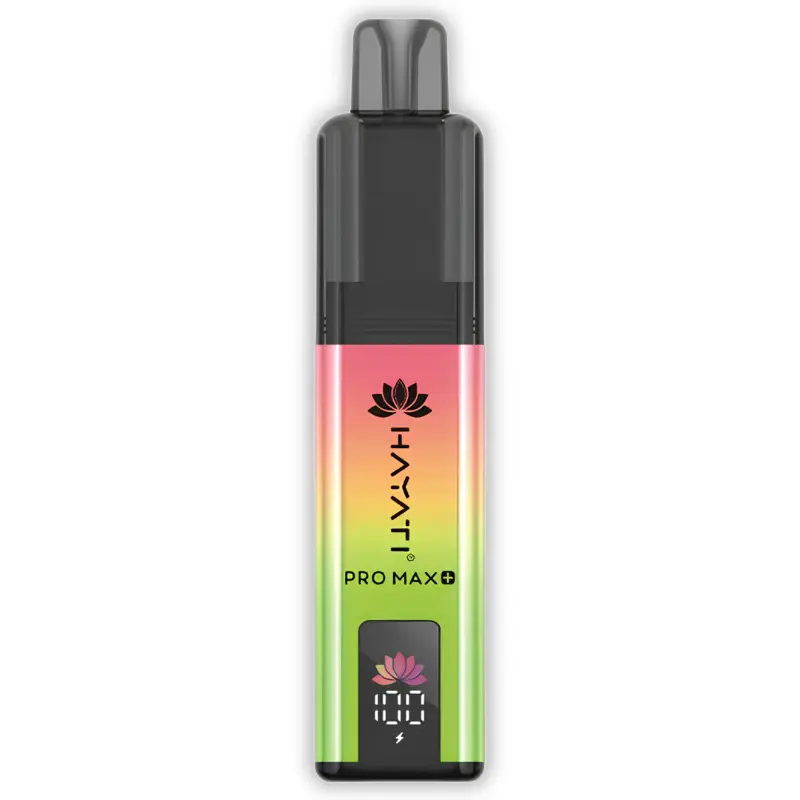
Hayati · Pro Max Plus
Galaxy Aura Hayati Pro Max Plus 6000 Pod Kit
£7.99
✔ In stock — ready to ship
Genuine Hayati
Free over £20
Same-day dispatch
Secure checkout
Galaxy Aura is the second product on this shelf to carry the word Aura, and Hayati's own catalogue text says as much: it files the pod inside an Aura family rather than treating the name as a single flourish. That editorial decision turns out to be the most load-bearing thing published about this listing, because a family is a structure and a structure can be reasoned about. Two products sharing a coined word were named in the same room. They were almost certainly signed off together, priced together, and put on the grid as a set. Whoever made that call wanted a buyer to see the second name and remember the first.
The flavour, meanwhile, is unstated. No fruit is named for Galaxy Aura. No ingredient of any kind is named. Walk the rest of this grid and the neighbours hand over their recipes in the title, which trains a shopper to read a product name as a parts list, and that reading breaks here. What is printed on the box is an impression. Nothing in the specification converts it into components.
Most pages covering an unnamed blend treat that gap as the whole story. This one cannot, because there is a prior question that only exists because of the family: are the two Auras related liquids, and if so, how. A buyer standing in front of both wants to know whether buying one tells them anything about the other, whether they are variations on a shared base, or whether the word is simply a label the marketing department reuses. Nobody answers that question by describing one pod in isolation. It needs the pair.
The commercial side takes one paragraph. £7.99 buys a rechargeable Pro Max Plus body together with a pod that arrives already holding its liquid, so there is nothing to fill and nothing to assemble. The later refill is Galaxy Aura Hayati Pro Max Plus Pods, which is £5.49 for the same liquid with the hardware subtracted. The other member of the family, Sunset Aura Hayati Pro Max Plus 6000 Pod Kit, sits at the identical price on the identical device. Everything interesting about this purchase is therefore in the liquid and in the relationship between the two names, which is where the rest of these words go.
The second Aura, and why a repeated name is a fact worth having
Consider what it costs a brand to use a coined word twice. A one-off atmospheric name is cheap. It can be attached to any blend that resisted a descriptive title, it commits the manufacturer to nothing, and if the product sells badly it disappears without dragging anything else down with it. Reusing the word is a different kind of decision. It creates an expectation that the second product has something in common with the first, and if the two turn out to be unrelated, the buyer who liked one and disliked the other concludes the label means nothing. Brands generally avoid teaching their customers that a name is noise.
So the reuse carries information, even though the information is about intent rather than ingredients. At minimum it says the two blends were conceived as members of a group. It probably says they share a house approach: a similar sweetness treatment, a similar level of complexity, a similar decision about whether to lead with one note or keep everything blended. It does not say they taste alike. Sub-brands in this category are routinely built as contrast sets rather than as variations, which is the point the next section works through.
Compare the treatment with the way the rest of the range handles names. Most listings on the Pro Max Plus grid are literal to the point of bluntness. Mango Peach Pineapple is three fruits in order of prominence. Guava Kiwi Passion Fruit is the same idea. None of those names belongs to anything. They stand alone, they describe a liquid, and no second product inherits from them. There is no Mango family. There is an Aura family, and Hayati wrote that word down.
A reasonable objection at this point is that one other product in the range, Midnight Dream, is built the same way linguistically and yet has no partner sharing a word with it. That is true, and it sharpens the argument rather than weakening it. Midnight Dream is an atmospheric name used once, which is the ordinary case. Aura is an atmospheric name used twice and labelled as a family in the product data, which is the unusual case. The difference between those two situations is exactly the thing this page is about.
What follows practically is that these two pods should be thought about together at the point of purchase. If a shopper is deciding between Galaxy Aura and a named pod, the named pod usually wins on certainty and the comparison is short. If a shopper is deciding between Galaxy Aura and Sunset Aura, the comparison is genuinely interesting, because the family framing means the difference between them is probably deliberate and probably on one axis rather than scattered across several. Identifying that axis is the most useful thing a page can do here, and it is also the thing no amount of adjective-stacking would achieve.
One further implication. A family of two is usually a family that expects to grow, and any addition would surface on the New Products shelf before it appeared anywhere else. Worth knowing before spending £15.98 on a set that may not stay complete.
What Hayati's own copy commits to, which is less than it looks
Something unusual happens in the description attached to this listing, and it deserves calling out, because it is easy to misread as a flavour statement when it is nothing of the kind.
Hayati do write a flavour paragraph for Galaxy Aura. They do not, however, state what is in it. What they do instead is reason out loud from the name, using hedged language, arriving at a guess about a darker fruit direction and a colour palette of purple and blue. The verb they reach for is "suggests". A specification does not suggest. A specification states a figure, and every figure on this listing, from the 12ml to the 20mg, is given flatly with no hedge attached. The moment the copy turns to flavour, the grammar goes soft.
That shift is the tell. The natural reading is that whoever wrote the listing was working from the same two inputs available to anybody reading it, which is the product name and the packaging artwork, and had no ingredient breakdown to draw on either. Manufacturers who possess a flavour specification use it, because a specific claim sells better than a vague one and costs nothing. Copy that performs an inference in front of the reader is copy written without access to the underlying recipe.
This matters for a practical reason rather than a pedantic one. Elsewhere on the internet that hedged sentence will be reproduced without the hedge, because retailers rewrite each other's descriptions and the qualifier is the first casualty of a rewrite. Within a few months a suggestion about darker fruit becomes a statement about darker fruit, and then it becomes a fact with three independent-looking sources behind it. All three trace back to somebody looking at one word and thinking the same obvious thought.
So the honest position on the maker's own description is that it is a reasonable reading offered by people who know the product commercially, which gives it modest weight, and that it is not evidence about the liquid, which is what it would be if they had simply printed the recipe. Treating a seller's guess as a manufacturer's disclosure is the specific error this page is trying to avoid, and it is why the sections below build their own reasoning from the name and the catalogue filing rather than leaning on the paragraph Hayati supplied.
The light and dark reading of the pair
Here is the inference the whole page turns on, set out with its reasoning visible so that anybody can disagree with it on the merits.
Atmospheric names in this product category are not colour-neutral. They carry a palette, and the palette tracks the fruit with enough consistency to be worth something. Names built on night, space, shadow and depth are conventionally attached to blackcurrant, blackberry, grape, black cherry and mixed dark berry. Names built on sunsets, dawns, gold and heat are conventionally attached to mango, peach, apricot, orange and passion fruit. The convention exists because it works on a shelf: a buyer looking at packaging can guess the register from the colour before reading a word, and manufacturers design the artwork to make that guess land.
Apply that to the pair and something falls out. Galaxy is the darkest available image in the vocabulary. Sunset is the warmest. They are not adjacent points on a scale, they are close to opposite ends of it, which is an odd thing for two members of one family to be unless the opposition is the point. Two blends launched together under a shared word, at the same price, on the same device, pointing at the two extremes of the fruit spectrum, look very much like a deliberate split: one dark, one warm, covering the ground between them with two products rather than one.
That is an inference, and it needs to be labelled as one. Nothing in Hayati's published data confirms a light and dark structure. They have not said the two blends were designed as a contrast pair. They have not published a fruit for either. The reasoning above rests on a naming convention across the wider category, which describes how products tend to be named and not what is inside any particular one, plus the observable fact that the two names sit at opposite ends of a colour scale. Both of those are real, and neither is a specification.
It is also worth setting out how the inference could be wrong, because a page that only argues one way is not arguing. The family word might be a purely visual device, with the artwork sharing a style and the liquids having nothing in common. Hayati might have chosen Galaxy for a blend with no dark fruit in it at all, on the grounds that the artwork looked good, and no rule prevents that. A range carrying around ninety listings on this platform also has commercial reasons to launch things that sit close to existing products under a name that disguises the overlap, which would make the split cosmetic rather than structural. None of that can be ruled out from the published data.
Weighing it up, the contrast-pair reading is the strongest single explanation available, it rests on two independent observations rather than one, and it should be held loosely. Anybody who wants the dark end of the fruit spectrum with no interpretive work involved should buy something that names a dark fruit, and the comparison section names several. Anybody who finds the pair question interesting has a cheap way to settle it, which the hardware section explains.
The register a cosmic name points at, described conditionally
What follows describes a category of blend rather than this specific liquid, and the distinction is not a formality. Nobody writing a product page has measured what is in this pod, so a confident tasting note would be fabrication. What can be done honestly is to describe how the register the name points at behaves in a 20mg prefilled pod, so a reader can recognise it if the name is telling the truth and spot the mismatch quickly if it is not.
Dark-fruit blends in this format share a structure. The lead is usually a jammy, concentrated sweetness rather than a juicy one, because the fruits in that register carry more sugar impression and less water impression than tropical fruit does. Blackcurrant contributes a slightly resinous edge that reads almost herbal at the back. Blackberry contributes depth without much definition, which is why it is so often a base rather than a lead. Grape contributes a confected, boiled-sweet quality that is instantly recognisable and divides opinion sharply. Black cherry contributes a faint almond-like bitterness on the finish. A composite built from two or three of these tends to present as one broad dark note rather than as separable fruits, which is precisely the kind of liquid that resists a descriptive name.
The inhale on that register is typically soft and rounded rather than bright. Dark fruit does not announce itself at the front of a draw the way citrus does. It builds. The sweetness generally peaks in the middle of the draw and holds into the exhale, and the exhale is where an individual component becomes identifiable, if it becomes identifiable at all. The finish tends to be long and slightly syrupy, which is the characteristic that most often decides whether somebody enjoys a dark blend or finds it heavy going after a few hours.
What that register does not do is worth stating too. It is rarely sharp, since acidity is a tropical and citrus property and dark builds in this market are usually low-acid, which makes them less refreshing and more comfortable to sit with across a long session. It is rarely light: the vapour carries a heavier aroma that lingers in a room longer than a fresh or green profile does. And it rarely reads as fresh fruit, because the fruits involved are ones most people know from cordials, preserves and confectionery rather than from eating raw.
Now the conditional part, stated plainly. If Galaxy Aura is what its name points at, the paragraphs above describe roughly how it will behave, and the axis to watch is how confected it is, because dark composites span an enormous distance between something that reads as crushed berries and something that reads as a bag of blackcurrant sweets. If Galaxy Aura is not what its name points at, all of the above is irrelevant, and the first draw will say so within about ten seconds. That is the honest state of the evidence, and pages that appear to do better are usually describing a product nobody at that end has opened either.
One further point on the register, which applies because this is a fixed 12ml pod. Dark blends are the ones people most often describe as fatiguing over a long run. The same depth that makes them satisfying for an evening can become wearing across a whole pod, and a sealed prefilled pod cannot be diluted or broken up with a different liquid in the same device without swapping pods entirely. If a dark, sweet, heavy profile is already known to work over long periods, that is not a concern. If it is not, it is a stronger argument for caution here than any uncertainty about which fruits are involved.
Cooling, sweetness and the two axes nobody publishes
Two properties decide more purchases on this shelf than the fruit does, and the listing addresses one of them indirectly and the other not at all.
Cooling first, because the evidence here is unusually good, and it is better on a dark name than it would be on a warm one. Across the range, coolant is flagged in the product title whenever coolant is present. Blackberry Ice carries the word. Lychee Ice carries the word. Products built around menthol as the whole point, such as Fresh Mint, say so in the name itself. Galaxy Aura carries no cooling marker of any sort.
That absence weighs more here than it would on a warm-fruit name, for a simple reason: the dark-berry register is the one most frequently iced in this market. Blackcurrant with a coolant is close to a default build. Mixed berry with ice is everywhere. A manufacturer with a coolant in a dark blend has an unusually strong commercial reason to say so, because a large slice of the people shopping for dark fruit are specifically shopping for the iced version and will skip anything that does not advertise it. A brand willing to withhold the fruit is still not going to withhold the ice, since ice is the attribute that most reliably determines whether a buyer is pleased with what arrives. The uncooled reading therefore sits on firmer ground than the dark-fruit reading does, and it rests on a different kind of argument, which is what makes it independent rather than more of the same.
The qualification is small but real. No cooling strength is published against anything Hayati sell, marked or otherwise, so a missing marker indicates no headline coolant rather than proving the blend contains no freshening component whatsoever. Plenty of fruit liquids carry a trace of something cooling that nobody would call an ice flavour. Expect no menthol hit. Do not expect a flat, entirely warm liquid either.
Sweetness is the other axis, and here the evidence is thinner and comes only from the catalogue. Galaxy Aura is filed under Sweet Vapes and under Exotic Vapes, among six shelves in total. Category tags are coarse, applied by hand, and prove very little on their own. What they do provide is a signal independent of the name, which is worth something when there are only two signals available. A sweet filing plus a register that is inherently high in sugar impression puts the likely sweetness in the upper portion of this grid. No numerical sweetness figure exists for any listing Hayati sell, so there is no scale to place it on precisely.
The exotic filing is the more puzzling of the two, and honesty requires saying so rather than forcing it to fit. Dark berry is not conventionally an exotic profile. Exotic usually points at the tropical end, which is where the other Aura most likely lives. Either the tag was applied loosely, which happens constantly with hand-maintained taxonomies, or the blend contains something in the tropical or unusual direction that the cosmic name does not prepare you for. That second possibility is a genuine crack in the dark-fruit reading and it would be dishonest to paper over it.
What remains completely unknown until the pod is opened: which fruits, in what proportion, at what acidity, on which carrier ratio, at what coil resistance, and with what throat character at 20mg. Also unknown is the axis that decides most purchases in this register, which is whether the blend reads as fruit or as confectionery. A named pod removes that uncertainty. This one cannot, and if that axis governs the decision, the sensible move is to buy something that states its contents.
The kit in three paragraphs
The hardware is shared with roughly ninety other listings, so it gets covered briefly and the shelf page covers it properly. The package holds two objects: the rechargeable Pro Max Plus body, carrying an 850mAh cell, and a single pod supplied already filled with 12ml of liquid at 20mg. Nothing else is required to use it, and nothing else is included.
The specification that actually matters for this particular purchase is not the battery or the puff rating. It is that the body is reusable and accepts any pod from the platform, because that is what makes the pair experiment affordable. Two complete kits to compare the two Auras cost £15.98 and leave a spare body doing nothing. This kit at £7.99 plus the other family member as a bare pod brings the same comparison in at £13.48, and the body carries on working indefinitely afterwards. The £2.50 gap between a kit and a pod is small on one purchase and stops being small the moment anyone starts collecting. Anyone who already owns one of these bodies should be buying Galaxy Aura Hayati Pro Max Plus Pods instead of this listing, the only real exception being a wish to run two flavours in parallel on two devices.
Charging behaviour across a pod's life, how the contacts seat, what changes as the device ages and how the range slots together are all set out once, and properly, on the Hayati Pro Max Plus Prefilled Pod Kit shelf. The wider Hayati Pod Kits listing covers the other formats. Restating any of that here would consume words the flavour argument needs more.
The published figures, and the blank rows
The table records what Hayati state and, deliberately, what they leave empty. On a product whose name withholds the recipe, the empty rows are as informative as the filled ones, and listing them stops a reader assuming the information exists somewhere they have not looked.
| Field | What the listing gives |
|---|---|
| Name as sold | Galaxy Aura |
| Family the maker assigns it to | Aura |
| Fruit or ingredient named anywhere | None |
| Cooling agent named in the title | None |
| Sweetness or acidity rating | Not published for any product in the range |
| Liquid supplied in the pod | 12ml, already filled |
| Nicotine concentration | 20mg |
| VG and PG split | Left empty in this product's data |
| Coil resistance in ohms | Left empty in this product's data |
| Battery in the body | Rechargeable, 850mAh |
| Puff figure quoted by the manufacturer | 6,000, obtained on test equipment |
| Supplied as | Body and filled pod together, no assembly |
| Shelves it is filed on | Six, including Exotic Vapes and Sweet Vapes |
| Brand | Hayati |
| Price on this site | £7.99 |
| Reference code | HPM-6K-KIT-GALAXY-AURA |
Three rows need a note. The 20mg entry is a statement of concentration and nothing else. Nicotine is addictive, the figure describes the liquid in the pod, and it is not offered here as a recommendation to anybody. Hayati also list a 10mg option in this kit format as a separate product, the Hayati Pro Max Plus 6000 Prefilled Pod Kit 10mg, though not in this flavour, so Galaxy Aura exists at one concentration only.
The 6,000 figure belongs to the manufacturer and was produced under laboratory conditions as a maximum. It is not a description of what any individual will see, since real figures move a long way with draw length and usage pattern, and a bench ceiling is by definition the favourable case. Treat it as a comparison point between products tested the same way rather than as a forecast.
The two empty rows are the ones most likely to be filled in wrongly by somebody else. A carrier split determines vapour density and the way liquid moves through a wick. A resistance figure determines how tight the draw feels and how warm the vapour runs. Neither number appears in the data for this product, so neither is stated here, and a figure for either found elsewhere has come from a sibling listing or from an assumption.
Choosing between this and a pod that names its contents
The genuine decision is not whether Galaxy Aura is any good, since nobody writing about it can answer that. It is whether £7.99 on an unmarked blend beats £7.99 on a marked one, and that turns on what the money is being spent for.
If the dark-fruit direction is what you want, and you want it confirmed. Buy something that says so. Blackcurrant Mango puts a dark lead against a warm base and tells you both halves. Blackberry Raspberry is the two-berry build with nothing hidden, softer and rounder than a blackcurrant-led liquid. Grape GB takes the confected end of the dark register and commits to it entirely. Dragon Berries sits between the dark and tropical camps with a mixed-berry frame. Any of those removes every uncertainty this page has spent several thousand words describing.
If the pair itself is what interests you. Then the comparison is the point, and the efficient way to run it is one kit plus one bare pod rather than two kits. Sunset Aura is the other half of the family and, by the colour argument above, should sit at the warm end if the split is real. Running both through a single body is the only way anybody outside Hayati will find out whether the family word describes a shared house style, a deliberate contrast, or nothing much at all.
If you want cooling. This is the wrong pod and the listing effectively says so by omission. Blackberry Ice is the iced dark option and the closest thing to Galaxy Aura with a coolant attached. Lychee Ice takes a lighter, more floral route to the same effect. Fresh Mint makes the coolant the whole subject rather than a finishing touch.
If you want confectionery rather than fruit. The sweet-shop listings are unambiguous and there is no reason to gamble on an unmarked one. Blueberry B'Gum pairs a dark berry with a bubblegum frame, which is arguably the most likely thing Galaxy Aura could turn out to be if it leans confected. Hubba Bubba drops the fruit pretence altogether. For a smaller and cheaper version of that idea, the Fruit Bomb / Straw' Watermelon B'Gum kit runs on Mini Ultra hardware at £3.99.
If you want the warm end instead. Mango Peach Pineapple is the straightforward three-fruit tropical build with the recipe printed on the front. Triple Mango narrows to one fruit layered three ways and is about as predictable as this grid gets. Strawberry Guava keeps a soft red fruit under a tropical lead. All three are the opposite of what Galaxy Aura is doing, which for some buyers is precisely the recommendation.
If you want to leave fruit behind. Cola Lime and Blue Razz Mojito both work in the soft-drink register and both say so in the title. T-Misu is the dessert listing, and it is worth noting that Hayati name their dessert liquids clearly when they make them, which is another small piece of evidence that Galaxy Aura is not one.
If the format is the question rather than the flavour. The Hayati Pro Max Plus 6000 Prefilled Pod Kit listing is the platform entry itself, and the full Hayati catalogue runs to several hundred products if nothing above lands.
A summary for anybody still undecided. Galaxy Aura is a reasonable purchase for somebody who enjoys the dark end of the fruit spectrum in general rather than one dark fruit in particular, who finds the family question interesting enough to pay a few pounds to answer, and who is relaxed about the outcome. It is a poor purchase for somebody with a precise target, because a precise target is the one thing an unmarked blend cannot be aimed at.
Handling a pod you intend to compare against another
Ordinary pod advice applies here as it does anywhere. What follows is the part specific to this one, which is mostly about running it against its family partner without fooling yourself.
Order effects are the largest source of error and almost nobody controls for them. Tasting a dark, sweet blend immediately after a warm tropical one makes the dark blend read as heavier and flatter than it is, because the tropical liquid leaves brightness behind that the dark one has to work through. Reverse the order and the tropical pod reads as thin. If the two Auras are going to be compared, alternate which one goes first across several sessions rather than settling the question in one sitting, and leave a proper gap with plain water in between. A single back-to-back comparison produces a confident answer that is mostly an artefact of sequence.
Write something down. This sounds fussy and it is the difference between a real comparison and a vague impression. Neither pod has a published description to anchor a memory to, and flavour memory decays faster than almost anybody believes. Two words per session is enough: heavier or lighter, sweeter or drier, one note or several. After four or five entries a pattern appears that no amount of remembering would have produced.
Sweetened dark blends are harder on a coil than most, and that is worth knowing before concluding a pod has gone wrong. Sugar-heavy liquids leave more residue on the heating element, and the residue changes what comes through: depth tends to survive longest while brightness and definition at the top of the profile fade first. On a liquid with no declared lead note, that is easy to misread as the blend being dull, when the first half of the pod may have been considerably more articulate than the second. Judge a composite in the early-middle stretch, not at the end.
Do not leave a part-used pod sitting for weeks while the other one is tested. A pod with liquid still in it has a wetted coil, and a wetted coil that is not being used picks up a stale quality unrelated to the liquid's design. Comparing a fresh pod against one idle for a month compares storage conditions, not flavours. Run them in reasonably close succession or accept that the result is compromised.
Keep both away from heat and strong light. Warmth is unkind to the lighter aromatic compounds, and while a dark blend has more heavy material underneath to fall back on than a citrus liquid does, what it loses is precisely the top-end definition that makes a composite interesting rather than generic. A drawer at room temperature is fine. A car windscreen in summer is not. Store them where children and animals in the household cannot get hold of them.
Knowing when a pod is spent works slightly differently on this register. Thinning vapour and a faint scorched edge still apply, but on a heavily sweetened dark liquid the first change is usually that the profile goes muddy and one-dimensional rather than obviously weaker. The instinct is to continue because there is still flavour coming through. There is, but it is no longer the flavour the blend was built to produce.
One habit worth adopting on an unmarked pod specifically: resist telling anybody what it tastes of for the first day. The pull towards naming a fruit is strong, the first guess anchors every impression that follows, and a guess said out loud becomes hard to revise. Sit with it unnamed for a while and it will be easier to characterise honestly afterwards.
Questions this listing raises
What does Galaxy Aura actually taste of?
Hayati publish no ingredients for it, so there is no honest answer available and this page will not invent one. The name points at the dark fruit register, the maker's own copy reaches the same conclusion by the same reasoning, and neither of those is a specification. The only way to find out is to open one.
Are the two Aura products related, or is it just a name?
Hayati's own data describes Aura as a family rather than as a one-off name, which suggests the two blends were developed and launched together. It does not follow that they taste similar. Since the two names sit at opposite ends of the colour scale used in this category, a deliberate contrast is at least as likely as a variation on a shared base.
Is there a coolant in it?
No cooling marker appears anywhere in the title or the data, and that absence carries real weight because the dark-berry register is the most commonly iced category in this market. A manufacturer with a coolant in a dark blend has a strong reason to advertise it, since much of the audience for dark fruit specifically wants the iced version. Expect no menthol note.
Why file a dark-sounding blend under Exotic Vapes?
Possibly because the tag was applied loosely, which is common with hand-maintained categories, and possibly because the blend contains something tropical or unusual that the name does not signal. This is the one published detail that does not fit the dark reading neatly, and it is a fair reason to hold that reading loosely.
What comes in the box for the money?
Two things, for £7.99. A rechargeable Pro Max Plus body with an 850mAh cell inside, and a single pod supplied filled with 12ml of liquid at 20mg. There is nothing to assemble and nothing further to buy in order to use it.
Is buying both Auras together worth doing?
If the family question interests you, yes, and the efficient route is one kit plus one bare pod rather than two kits, bringing the outlay to £13.48 rather than £15.98 and leaving one body rather than a redundant second. If you simply want a flavour you will enjoy, two unmarked pods double the uncertainty instead of resolving it.
What is the VG to PG ratio?
That field is empty in this product's data, so no ratio is stated on this page. Any figure quoted for Galaxy Aura elsewhere has been carried across from another listing or assumed, because Hayati's specification for this one does not contain it.
How much sweetness should be expected?
Towards the upper part of this grid, on two weak signals rather than a measurement: the sweet filing in the catalogue, and the fact that the register the name points at carries a high sugar impression by nature. No sweetness value is published for anything Hayati sell, so there is no scale to place it on precisely.
Should the 6,000 puff figure be taken at face value?
No. It is the manufacturer's own rating, measured on test equipment under controlled conditions, and it represents a ceiling rather than an expectation. Draw length and usage pattern move the real figure a long way, generally well below a bench maximum.
Is a 10mg version of this flavour available?
Not in Galaxy Aura. Hayati list a 10mg option in this kit format as a separate product, but the flavour range offered at that concentration does not include this one, so Galaxy Aura exists at 20mg only.
What happens if it turns out not to suit me?
You are holding 12ml of it in a pod that cannot be emptied, diluted or refilled with anything else. That is the risk attached to any unmarked blend, and it is why a single purchase makes more sense than stocking up. It is also why a named pod suits anybody who already knows exactly what they are after.
Will more Aura flavours appear?
There is no announcement either way and nothing here should be read as one. A brand that coins a family word and uses it twice has usually left room to use it again, so a third is plausible, and anything new would show up among the newest listings first.
Where that leaves it
Galaxy Aura is a complete kit at £7.99: a rechargeable body holding an 850mAh cell, one pod supplied with 12ml of liquid at 20mg, and a manufacturer's laboratory ceiling of 6,000 puffs. No fruit is named and none appears anywhere in the product data, which is the first thing to take in before ordering. Hayati's own description reasons from the name rather than stating a recipe, and it should be read as their reading rather than as a disclosure.
What is genuinely distinctive about this listing is that it is not alone. The Aura word is used twice and labelled as a family, which means the two pods were planned as a set, and the colour opposition between a galaxy and a sunset makes a deliberate dark-and-warm split the most plausible explanation for the pair. That is an inference built from naming convention and from the observable structure of the range, offered with its reasoning visible so anybody can weigh it themselves, and it is not a fact Hayati have published.
Buy it if the dark end of the fruit spectrum suits you generally, if working out what a blend is doing is part of the appeal, and if the family question is worth a few pounds to answer. Buy something that names its contents if you have a precise target, because the grid is full of listings that do exactly that at the same price. Either way, the split between what came from Hayati and what came from reasoning has been kept visible throughout, which is the most a page about an unnamed liquid can reasonably offer.
Strictly for adults aged 18 and over. Nicotine is an addictive substance.
You might also like


