
Home / Hayati Rubik Prefilled Pod Kit / Fresh Mint Hayati Rubik Prefilled Pod Kit
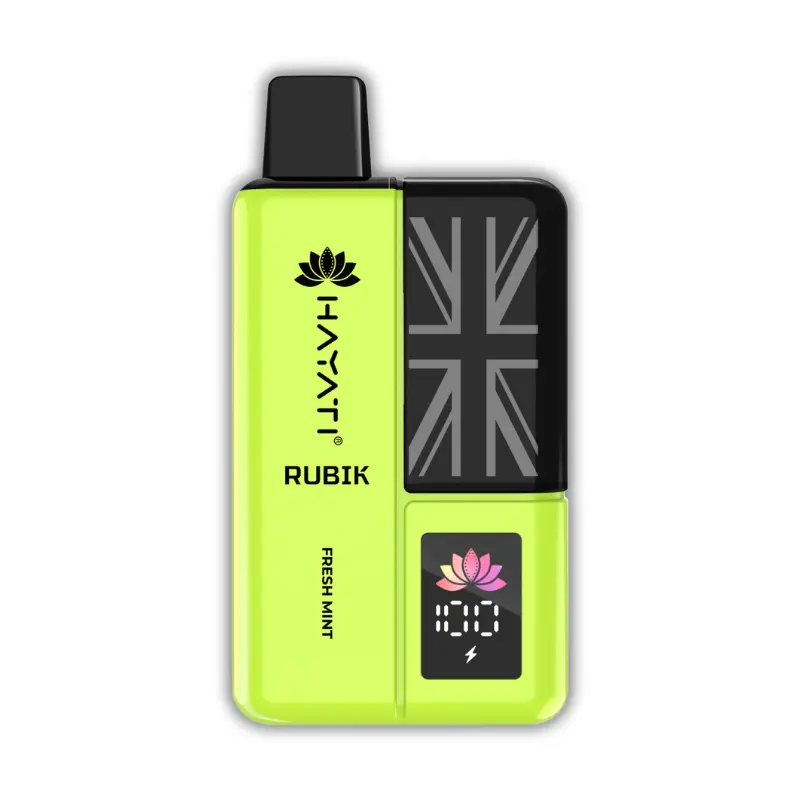
Hayati · Rubik
Fresh Mint Hayati Rubik Prefilled Pod Kit
£5.99
✔ In stock — ready to ship
Genuine Hayati
Free over £20
Same-day dispatch
Secure checkout
Fresh Mint Hayati Rubik Prefilled Pod Kit is a complete package at £5.99. A Rubik body arrives with a sealed 12ml pod already seated in it, the liquid filled at 20mg salt nicotine, an 850mAh cell underneath, and a manufacturer's rating of up to 7,000 puffs produced on laboratory equipment rather than in anyone's pocket. Nothing about that specification is unusual on this range. All twenty kits on Hayati Rubik Prefilled Pod Kit carry the same four figures and the same price, so the specification is not what separates this listing from the nineteen beside it.
What separates it is that you can tell whether you have made a mistake almost immediately.
That sounds like faint praise and it is not. Almost every liquid Hayati sell is a construction, and a construction is something whose verdict moves. Sweetness that reads as generous on Monday reads as cloying by Friday. A coolant that seems bracing in the first hour is unremarkable a fortnight later, because your own sensitivity has moved rather than the liquid. A three-fruit blend loses its top note first and its identity somewhere after that, so the thing in the pod at 9ml is not quite the thing you bought at 12ml. This site has written page after page telling buyers that their day-one impression is an unreliable guide, and every one of those pages is right.
A plain mint is the exception, on one axis and not on the other. There is nothing stacked on top of it, nothing arriving late, nothing being held back by a coil that has not yet worn in. What you get on the first draw is very close to the complete inventory of the liquid. Buy this and dislike it and you will know inside a minute; buy it and like it and the thing you liked will still be there at the bottom of the pod. On identity, the first draw is a true reading. On sensation it is not, because the cooling will fade against you faster than almost anything else in the catalogue, and confusing those two is the single commonest thing that goes wrong with a mint pod.
Both halves of that matter, and the second half is the more useful one, because it turns this listing into something other than a flavour choice. A liquid you can read correctly on draw one is a measuring instrument for hardware you have never held before. That argument, set out properly below, is a reason to buy this specific pod that has nothing whatever to do with liking mint.
What a first draw is normally worth, and why it is worth more here
Start with the general case, because the exception only means anything against it.
Four separate mechanisms conspire to make a first impression of a vape liquid misleading, and they operate independently, which is why a page cannot simply warn about one of them and move on.
The first is palate fatigue on sugar. A sweetened liquid presents at maximum contrast against whatever you were eating and drinking before it, and that contrast collapses as the day goes on. The listings most exposed to this are the sweets-shop profiles, and the Rubik shelf has four of them: Blue Razz GB Hayati Rubik Prefilled Pod Kit is the sweetest thing on the shelf and it is at its most persuasive in the first ten minutes.
The second is receptor adaptation to a coolant, which is faster and more dramatic than sugar fatigue and is discussed at length further down, because this product is fully exposed to it.
The third is coil wear changing what a blend is made of rather than merely how loud it is. A coil that has been working for a fortnight reproduces some components better than others, and the ones it loses first are the light aromatic fractions that carry fruit identity. A three-fruit pod like Blueberry Cherry Cranberry Hayati Rubik Prefilled Pod Kit genuinely is a different arrangement at the end of the pod from the one it was at the start, because the cranberry edge that organises the other two is exactly the sort of thing a tired coil stops rendering. Nothing has gone wrong. The recipe has simply lost the part that was doing the structural work.
The fourth is prior association, which is not about the liquid at all. Some names arrive pre-judged, and the judgement gets in the way of the tasting for as long as it lasts.
Now run this product against all four. It is not exposed to the first, because there is very little sugar in it to fatigue on. It is largely not exposed to the third, because a single-component profile has no internal structure for a coil to dismantle; when the coil tires, this liquid gets quieter rather than differently shaped. It is very much exposed to the second. And it is arguably the most exposed thing on the shelf to the fourth, for reasons worth being honest about.
Why a short profile cannot hide anything
The useful way to think about a flavour is as a stack. A cooled berry blend is at least four things: a fruit identity, an acid, a sugar load and a coolant, each of which can be adjusted without the others, and each of which arrives at a slightly different moment in the draw. You cannot hear all four on the first pull, because some of them are behind the others and some of them have not happened yet. The blend therefore has to be learned, and learning takes a few millilitres.
Take the stack down to one layer and the learning disappears with it. There is no acid here, so nothing sharpens over the middle. There is no fruit identity, so there is nothing that could resolve into something more specific once your palate has settled. There is very little sugar, so the sweetness cannot creep up on you. Hayati's own copy on this listing is explicit that the profile is built as an absence, describing a mint with no fruit competing for attention, and that absence is the whole reason a single draw is an adequate sample.
Be precise about the claim, because it is easy to overstate. It is not that mint is easy to describe. Describing it properly takes the same care as anything else, and the sections below spend real length on it. The claim is narrower and stronger than that: the inventory of what is present is complete at the end of the first exhale. Nothing further is going to turn up. Whatever you thought at second one is what the liquid is, and the only thing left to find out is whether you want that for twelve millilitres.
The one caveat, which is about you rather than the pod
Mint is the profile most likely to be read through something you already believe about it, because mint is the flavour of a large number of functional household products and almost nobody comes to it clean. The Spearmint pods page treats this properly, works out what the association does to a first judgement, and recommends three days of exposure before reaching a verdict on the grounds that familiarity builds a competing reference. That advice is sound and it does not contradict what is written above, because it is a statement about the reader and not about the liquid. The pod is fully present on draw one. Your ability to hear it may not be.
The practical consequence is small but real. If your instinctive reaction to the first draw is a product rather than a plant, wait a day before deciding anything, and take the second reading in the morning before you have eaten. If the reaction is still a product on day three, it probably will not shift, and a mint is the wrong purchase for you regardless of how well this particular one is put together.
Two different things are wearing this word, and the copy picks one
Nothing in this section is original chemistry and it would be dishonest to present it as such. Three pages on this site have already done the work properly, and the right thing to do here is name what they settled, then apply it to a question they did not ask.
The short version of what they established. The word mint on a label can point at a plant, which is a culinary herb you detect as an aroma, or at menthol, which is a compound that binds to a cold-sensing channel and makes your mouth report a temperature drop that has not occurred, or at a purpose-built cooling compound with almost no smell of its own, dosed into something else to make that something else read as sharp. Our Mint Vapes shelf page sorts the whole shelf on that three-way distinction and is the best single place to read it. The Spearmint bottle page works through carvone, the dominant aromatic of spearmint, and establishes that it produces taste and smell with very little cold-receptor activity, which is why a spearmint is a different thing from a weak peppermint rather than a lesser version of one. The Double Menthol pods page works through the other side, including the part most buyers get wrong: the cold-sensing channel exists in finite numbers, so adding more menthol past a certain point recruits progressively fewer of them and the perceived chill flattens while a separate prickling quality keeps climbing.
Hold those two facts side by side and the practical difference is a difference in kind. A sensation is a switch. It fires at the tissue surface the instant the vapour touches it, it fires whatever you do with your breath, and it accumulates across a session. An aroma is a description. It has to reach the olfactory tissue from behind the mouth as the vapour leaves, which makes it slower, easier to miss and heavily dependent on how you exhale. The Spearmint kit page draws out the timing consequence, which is that an aroma-led liquid rewards a slow draw and a partial nasal exhale and punishes short sharp pulls, while a coolant-led one does not care how you breathe.
The open question, which those pages could not answer for this liquid, is which of the two Fresh Mint actually is. Hayati never name a species anywhere in the range, and a name is not a data sheet. But there are nine separate listings of this liquid, and nobody has yet lined their descriptions up against each other.
Nine descriptions of one flavour, compared
Fresh Mint is sold nine times over as a solo flavour, across five formats and four price points, and once more as half of a dual pod on the Pro Ultra Plus. Hayati wrote fresh copy for each one. Read them as a set rather than one at a time and three things fall out, two of them evidence about the liquid and one of them evidence about how the copy was produced.
What all nine agree on. Every one of the nine describes the effect as cool, cooling, or a chill. Not one of them uses icy, freezing, or cold as a noun, and not one describes the cooling as strong, intense or extreme, which is vocabulary the same copy desk applies freely elsewhere in the catalogue. A property that survives nine independent descriptions is the closest thing to a fact available here, and the property is moderation. Every one of the nine also leads on the flavour rather than the sensation, which is the reverse of how the menthol listings are written.
Where the nine split, and the split is not random. Seven of the nine attach a herbal, green or leafy word to the mint. The two that do not are the Fresh Mint bare pod and the complete kit on the Pro Ultra Plus, both of which describe a crisp cooling mint and leave the botanical vocabulary out entirely. Separately, seven of the nine state outright that there is no fruit in the liquid. The two that do not are the Pro Max Plus pod and kit, which reach for uncluttered and simple instead. Those are two different sevens, and the two exceptions in each case are a platform pair.
That is the third finding, and it is about the copy desk rather than the recipe. Line the nine up by platform and they cluster perfectly into four groups, each internally consistent and each differing from the others. The three bottles all use the herbal vocabulary, all deny fruit, and all three describe the cooling as something that builds gradually across a draw rather than arriving at once. The two Rubik listings use the herbal vocabulary and deny fruit but say nothing about the cooling building. The two Pro Max Plus listings use the herbal vocabulary, say nothing about fruit, and are the only two of the nine that mention menthol by name. The two Pro Ultra Plus listings are the plainest of all, denying fruit and skipping the botany. Four clusters, zero listings crossing a cluster boundary. Copy for this range was clearly written a platform at a time, which means a difference between two descriptions of Fresh Mint is evidence about which brief the writer had in front of them and not evidence that the liquid differs by platform. Anyone reading two listings and concluding that the Rubik version is greener than the Pro Ultra Plus one is reading a commissioning pattern.
The sentence only this listing carries
One property belongs to this page's own listing and to none of the other eight. It is the only description in the set that stops to gloss the word fresh, saying that the word signals "a clean, herbal style of mint" as against "a heavy, sugary one". Nowhere else in the nine does Hayati interpret their own adjective.
A property that appears exactly once is either the most interesting thing on the page or a copywriting variant, and this one is a variant. The tell is the contrast it draws. Setting herbal against sugary is the wrong axis for a plain mint, because sugary is not a thing any mint in this range was ever at risk of being; there is no candied mint anywhere in the catalogue for the word to be excluding. The contrast a reader actually needs is herbal against cold, which is the axis the mint shelf is built on and the axis that decides whether you have bought the right product. The gloss was written to fill a line rather than to record a decision, and the useful information in it, that the profile leads on the leaf, is already carried by six other listings without the editorial.
What can honestly be said, with the confidence attached
Setting that out as three tiers rather than as one confident paragraph, because the difference between the tiers is the whole point.
- Reasonably confident. The liquid leads on aroma rather than on sensation. Seven of nine listings say so in botanical vocabulary, all nine lead on flavour before cooling, and one of the nine places it explicitly between the range's softest named mint and its coldest, which is a manufacturer's own ranking and the only one on the mint shelf worth taking at face value.
- Reasonably confident. The cooling is moderate rather than heavy. Nine descriptions, nine moderate words, zero intensity words. A copy desk that reaches for icy and bracing on the menthol listings and declines to reach for it here is telling you something.
- Probable. There is a cooling component present alongside the aroma, and it is a meaningful fraction of the experience rather than a garnish. Every listing names a cooling effect, and a pure carvone-type herb with no coolant at all would be a very quiet pod indeed at 12ml.
- Unknown, and it is the interesting one. Which mint. Peppermint, spearmint, a blend of both, or a confectionery mint impression assembled from parts are four different liquids and nothing published distinguishes them. This matters more than it looks, because menthol is the dominant aromatic of peppermint rather than a synthetic imitation of it. If Fresh Mint is peppermint-led then the aroma and the sensation are arriving from the same molecule and the neat two-column model collapses for this specific product. The range names spearmint on three listings and never once names peppermint, which is suggestive of a gap in the naming rather than a gap in the catalogue, but suggestive is as far as it goes.
The practical upshot for a buyer is short. Expect a mint you taste, at a cooling level you would call refreshing rather than punishing. Do not expect the cold end of the catalogue, and if cold is the thing you are buying, this is the wrong listing and no amount of reading will change that.
What the word "Fresh" is actually doing
Worth settling, because it is the only part of the name that could be carrying information and because the range gives us enough listings to check.
Twelve of the 492 titles contain the word Fresh. Eleven of those twelve are Fresh Mint, being nine solo listings and the two halves of the dual Pro Ultra Plus pod. The twelfth is Fresh Menthol Mojito, a 10ml bottle, and it is the awkward one for any theory that Fresh signals a plant reading, because there the word sits directly in front of menthol.
Set the modifier against the others the mint family uses and the classes are easy to see. Spearmint names a species, which predicts the chemistry. Menthol names a compound, which predicts the chemistry more exactly still. Double names a quantity, whatever the quantity turns out to be of. Frosted names a temperature. Black names a mood and nothing measurable, which the mint shelf page concedes is the weakest call it makes. Lemon and Blue Razz name the fruit the mint is being applied to. Against that list, Fresh names nothing. It is not a species, not a compound, not a quantity, not a temperature and not a fruit. It is an evaluative word, and an evaluative word cannot be wrong, which is a reasonable explanation for why it sits on eleven listings while the words that could be wrong sit on three or fewer.
So the answer to whether Fresh distinguishes this from the range's other mints is: not on any axis a buyer can check before purchase, and yes on every axis the catalogue itself uses.
Both halves of that are true and the second half is not a consolation prize. Fresh Mint is a distinct product with a distinct flavour, sold across five formats, with its own eleven-listing shelf at Fresh Mint Vapes, and the word is what holds that identity together in a catalogue of 492 entries. It also carries one genuine piece of positioning, because Hayati's own copy on the 10ml bottle tells a reader who finds Spearmint too soft and Menthol too icy that this is the one in between. That is a real ordering, stated by the manufacturer, and it is the strongest evidence available about where the liquid sits. But note what has happened: the information is in a sentence on a different listing, not in the word. Strip the sentence away and Fresh is decoration. Keep the sentence and Fresh is a label pointing at it.
One refinement to the cooling-vocabulary census, offered because I re-counted rather than because I doubted it. That census, on the Blue Frozen pods page, established that Ice appears in ninety titles, Frozen in three, Cooler in two, and Chill and Freeze in none, and that no title ever combines an ice-family word with a mint-family word. Counted again today, every one of those figures holds. Adding Frost to the list produces exactly one hit in 492, the Frosted Mint pouches, and that single listing is the only title anywhere in the range that puts a cold word in front of a mint word. It is also not a vape, so the census's finding survives intact for the inhaled catalogue, and the pouch is a separate discussion belonging to its own page.
Two further counts, for anyone checking the shelves. Nineteen of the 492 titles carry a mint-family word, being sixteen with Mint and three with Spearmint, and a further seven carry Menthol, giving twenty-six in the mint and menthol family altogether. Counted today, Mint Vapes holds nineteen listings and the menthol shelf holds twelve, with no product appearing on both. The mint shelf page gives the same two figures, so a buyer checking one grid against the other will find them in agreement.
The liquid, described by how long it takes rather than what it resembles
A draw-by-draw account of this exact flavour already exists on this site. The Fresh Mint half of the dual Pro Ultra Plus kit was taken apart there in the order it arrives, and the conclusion reached was that the profile is narrow, rounded rather than astringent, closer to a confectionery mint than to a garden herb, with a dry, short finish and almost no internal structure to unpack. There is no point writing that again. What is worth adding is the dimension that account did not need and this page does, which is timing, because timing is what makes the first-draw argument work.
The whole event fits inside one breath
Draw on this and two things happen in sequence, and the sequence is short enough to observe deliberately the first time you do it.
The cooling arrives first and arrives immediately, because a cold-sensing receptor fires on contact and does not wait for anything. For the first fraction of a second there is very little to taste: cool air with something faintly green suspended in it. The aroma fills in behind that across the remainder of the draw, and it reaches full strength somewhere in the middle rather than at the start. Then, on the exhale, the two separate. The aroma is at its clearest on the way out, because that is the route by which it reaches the tissue that detects it, and the cooling outlasts it by a couple of seconds in the throat after the vapour has gone.
That is the entire profile. There is no third act. Nothing builds across three draws, nothing needs a warm coil to open up, and nothing arrives at the bottom of the pod that was not there at the top. Compare that with what a layered fruit does over the same twelve millilitres: Red Apple Ice Hayati Rubik Prefilled Pod Kit has an accord in it whose three components change their relative weights as the coil ages, so the apple you meet in week three is a different balance of the same parts. This has no parts to rebalance.
Sweetness, placed honestly
Low, and lower than the copy might lead you to expect. The listing sets its herbal character against a heavy, sugary alternative, which implies a sweetness axis that is not really in play. Very little sugar is riding on this liquid and what sweetness you do perceive is partly an artefact of the cooling rather than sucralose doing work, a confusion the Double Menthol pods page takes apart under its own heading and which need not be repeated here.
Against the Rubik shelf the placement is unambiguous. This is the least sweet thing on it. Blue Razz Cherry Hayati Rubik Prefilled Pod Kit and the rest of the blue-label group sit at the far end, Juicy Peach Hayati Rubik Prefilled Pod Kit and the warm fruits in the middle, the seven cooled fruits somewhere between the two because the cold reads as a sharpener, and this one on its own below all of them.
What it is not, set out flatly
- Not cold. The cooling is present and moderate. Anyone wanting the top of the temperature range is buying from the menthol listings, and no reading of this page should send them here.
- Not a fruit with mint in it. Nothing has been cooled; there is no fruit underneath for the mint to be treating. Lemon Mint Hayati Pro Ultra Plus 25000 Prefilled Pod Kit is the range's example of that other arrangement, and it is a citrus product wearing a mint word.
- Not sweet, not creamy, not a dessert. No listing of the nine names a confectionery or bakery element and the profile carries no weight on the tongue.
- Not a species. Covered above. If a specific mint is what you are after, the catalogue will not sell it to you under this name.
- Not loud. This is a quiet pod by construction, and a fixed-output device gives you no way to turn it up.
The half of the claim that fails, and why buyers misread it
Everything above concerns identity, and on identity the first draw holds. Sensation is a different account entirely, and the split between the two is the thing worth having in your head before you spend anything.
A palate adapts to a cooling compound faster and more completely than it adapts to almost any other property of a liquid. The Double Menthol pods page states the buying consequence flatly and I am taking its conclusion rather than re-running the reasoning: the product most likely to feel extreme on day one is the product most likely to feel ordinary by day ten, and a person two weeks in who reports that a cooled pod has gone weak is usually reporting a change in themselves.
Now read that alongside the first-draw argument and the picture is a clean split. The flavour is stable and your reading of it is reliable from the start. The sensation is unstable and your reading of it is reliable only for the first few days. Same pod, two components, two completely different reliability profiles, and nothing on the packaging distinguishes them.
Why the split bites harder here than on a cooled fruit
Adaptation is not worse on this pod than on Pineapple Ice Hayati Rubik Prefilled Pod Kit. The receptors do not know which liquid they are in. What differs is how large a share of the product the fading component represents.
On a cooled fruit, the cold is a treatment applied to something that still exists without it. Lose half the perceived chill and you are left with a pineapple, which is a complete product and a reasonably good one. On a plain mint the cooling is not a treatment, it is one of only two things in the pod. Lose half of it and you have lost a quarter or a third of what you bought, and what remains is a quiet green aroma with less carrying it. The absolute change is identical and the proportional change is not, which is exactly why plain mints generate more complaints of a pod going flat than cooled fruits do at the same age.
Three causes, one symptom, and how to separate them on this specific pod
"My pod has faded" describes three unrelated events and the correct response differs for each.
You have adapted. Your sensitivity has dropped through repeated exposure. The liquid is unchanged, the coil is fine, and buying anything is the wrong move. The signature is that the cooling has dropped while the green aroma is roughly where it was, and that a few days away restores it.
The coil has aged. A worn coil renders the light aromatic fraction less faithfully and the sensation hardly at all, so the signature runs the other way: the chill is where it was and the flavour has flattened. On this liquid that is legible in a way it is not on a sugared pod, because there is only one aromatic component to lose.
The liquid has lost its top notes. The green top of a herb profile is the lightest and most reactive fraction in the pod. Heat degrades it, time degrades it, and warm storage does both. A coolant is heavier and less reactive and survives all three, so a pod that has been sitting in a car since June has lost the aroma and kept the cold. That is the same signature as coil wear, which is the problem.
The Spearmint kit page gives the discriminator that separates the first of these from the other two, and it is the only one that costs nothing: judge the pod on the first draw of the morning and only on that draw, because an overnight break resets your nose fully and makes day nine directly comparable with day two. Take a proper reading in the first ten minutes of a new pod so you have something to compare against, and the comparison is available for the rest of its life.
Separating coil wear from liquid degradation is harder, and on a sealed format it is usually impossible, because the coil retires inside the pod and you cannot put fresh liquid on an old coil to isolate the variable. The mint shelf page names that as a genuine limitation of the whole sealed category and it is right. What the Rubik offers is a partial workaround that the more expensive platforms do not, and it costs £3.99. A Fresh Mint Hayati Rubik Pods refill brings a new coil and new liquid together into the same body, so swapping one in separates the pod from the device but not the coil from the liquid. That is a smaller answer than the one you want and it settles the question that actually matters in practice, which is whether to replace the pod or leave it alone. It also lets you put the old pod back, which is worth doing once, because a part-used pod returning after a fortnight tells you whether the fault travelled with it.
One more thing follows from the adaptation account and it is the closest thing to good news in this section. Adaptation reverses. Sensitivity recovers over a few days away from the compound, which means a mint kept for occasional use stays at full strength indefinitely while the same pod used exclusively does not. That is an argument for the second-device pattern rather than against the product, and the Rubik body is unusually well suited to it for a reason the shelf page raises: a shaped body is identifiable by touch, so two of them in a pocket do not have to be looked at to be told apart.
The use that follows: a liquid with nothing hidden in it is an instrument
Here is the argument this page exists to make, and it applies whether or not mint is a flavour you would otherwise choose.
The Rubik is unfamiliar hardware. That is not a criticism, it is the point of the range: the shelf takes its name from a puzzle cube and the shape is the product, which our Hayati Rubik page argues at length and better than a product page could. But a shaped body has consequences that are not on any specification. Coil resistance is not published. Airflow position is not published. Mouthpiece profile, port placement, dimensions and weight are all determined by an outline nobody has documented. The shelf page is explicit that filling those blanks in from a product photograph would be invention, and it recommends that a new Rubik gets a few minutes of attention rather than the assumption that it behaves like the last device you owned.
It also gives buying advice: choose a profile you already know you get on with, because twelve millilitres is a long commitment to a guess. That advice is correct and it is aimed at the wrong risk.
Known and judgeable are different properties
Suppose you know Blueberry Raspberry Hayati Rubik Prefilled Pod Kit well from another platform and you buy it as your first Rubik. The first pod tastes slightly muted and slightly warm. What have you learned?
Nothing, is the honest answer. Prefilled pods of nominally the same flavour differ between platforms. Coils differ. Your reference is a memory of a different pod on a different device, and a two-fruit blend has enough internal latitude that a modest difference in either fruit, in the sweetener, or in how hot the coil runs produces exactly the reading you got. The flavour being known does not help, because a known flavour with four adjustable parameters still cannot tell you which of them moved.
Now run the same experiment with a liquid that has one component and no sugar to speak of. If the draw is harsh, it is not the recipe, because there is nothing in the recipe that produces harshness. If it tastes soapy or faintly medicinal, that is what a mint aroma does when it is pushed too hot, which the Spearmint pods page identifies as the commonest reason a mint pod is returned as faulty when nothing is wrong with it, and it tells you about the coil temperature rather than about the liquid. If the flavour is muted, it is not because a fruit is underperforming, because there is no fruit. If something tastes of something other than mint, there is nothing on this liquid's ingredient list that could produce it, so it is residue, or contamination in the mouthpiece, or the device.
That is the whole argument. A liquid with no degrees of freedom cannot absorb the blame for a hardware fault, so every anomaly it produces is attributable. A liquid with four degrees of freedom can absorb almost any fault, which is why an unfamiliar device and an unfamiliar blend evaluated together produce no usable information about either.
What specifically becomes legible
- How hot the coil runs. Mint is unusually sensitive to heat and it fails in a distinctive direction rather than simply getting louder. A sugared fruit pushed too hot tastes caramelised, which most people read as richness. A mint pushed too hot goes soapy, which nobody mistakes for anything.
- Whether your fingers are over the intake. Airflow position is undocumented on this body and a shaped device puts it somewhere you are not used to. A profile whose delivery you can read from draw to draw makes an obstructed intake obvious within a few pulls; a blend whose loudness varies anyway does not.
- Whether the mouthpiece is clean. The shelf page flags that a recessed mouthpiece holds pocket debris rather than shedding it. On a plain mint, anything that is not mint is immediately foreign. On a sweet blend it disappears into the sugar.
- How tight the draw is. A short profile makes the mechanics of the pull audible, because there is nothing occupying your attention while you take it.
- Whether the pod seated properly. An intermittent contact shows as inconsistent delivery, and inconsistency is easiest to detect against a constant.
The cost of running the test, which is nothing
All twenty Rubik kits are £5.99. There is no version of this where choosing the diagnostic liquid costs you money, because the diagnostic liquid is the same price as the one you would otherwise have bought. The per-millilitre arithmetic across the two Rubik tiers and the rest of the prefilled range has been worked out in detail on the Vim Ice kit page and there is no sense in rebuilding it here; the relevant fact for this argument is simply that the price column on Hayati Rubik Prefilled Pod Kit is flat. Once the body is yours it stays yours, and the nineteen refills at £3.99 are where the range actually pays off. So the sequence is: buy the readable liquid first, establish what the hardware does, then spend £3.99 on whatever you actually wanted.
Two honest limits on all of this.
The first is that twelve millilitres is a lot of a flavour you are using as an instrument. The diagnostic takes an evening; the pod takes weeks. If you actively dislike mint, this is a bad trade and the shelf page's original advice stands, because a profile you are merely tolerating becomes tiresome over a fill this size. If you are indifferent to mint, or mildly positive, the trade is good. If a refillable pod is already in the house, the 10ml Fresh Mint bottle at £2.49 is a cheaper way to find out which of those you are, though it tells you nothing about the Rubik.
The second is that this tests the hardware's behaviour and not your relationship with it. Whether a body with corners suits your pocket, whether you like picking it up, whether the shape reads as reassuring or as bulky against the leg: none of that is a flavour question and no liquid will answer it. The shelf page is straightforward that this part is personal and cannot be settled from a photograph, and it is the one variable a control liquid leaves exactly where it found it.
The kit, in the space it needs
Two objects come out of the box: a Rubik body and a 12ml pod, the pod already seated and already filled. There is no spare pod, no accessory, and nothing to assemble. Charge it, draw on it, and that is the whole operating procedure.
The one figure that matters for this liquid rather than for the shelf in general is the one Hayati do not publish, which is the coil. No resistance, no wattage window, no material. That gap is worth naming rather than filling, because mint is more heat-sensitive than fruit and a coil running warm turns a green aroma soapy long before it would turn a berry unpleasant. It also means a hot draw and a worn draw cannot be distinguished from the specification, only from behaviour.
The published figures do settle one thing about the rhythm of owning it. An 850mAh cell paired with a 12ml fill guarantees the battery empties many times over while a single pod is still going, so charging is routine upkeep and the pod change is a rare event. Rare events are the ones nobody prepares for, which is the argument for buying the next pod when you open the current one rather than when you finish it.
On fitment, one sentence and no more: check the range name printed on your device against the range name in this title before buying a refill, because nothing crosses between platforms. Everything else about the body, the shape, where the intake and the port end up and what a faceted outline does in a pocket, is covered properly on Hayati Rubik and there is no value in a second version of it here.
The numbers, and what each one changes in use
| Cooling level | Moderate. Present on every draw, not at the top of the range |
| Flavour family | Mint, no fruit, no confectionery element |
| Species named | None. The listing says Fresh Mint and stops |
| Liquid volume | 12ml, sealed in the pod |
| Nicotine | 20mg salt nicotine |
| Cell | 850mAh, rechargeable |
| Manufacturer's puff rating | Up to 7,000, a laboratory figure |
| Coil | Sealed inside the pod. Resistance not published |
| Airflow | Not published |
| Price | £5.99 complete, £3.99 for the refill pod alone |
| Platform | Hayati Rubik, 20 kits and 19 refills |
Three of those rows do real work and the rest are shelf furniture. The 20mg is the upper limit permitted for a vape sold in the United Kingdom, and it is stated here as a plain property of the product rather than as a recommendation; nicotine is an addictive substance and the strength is fixed across the entire Rubik range, so there is no lower option on this platform for anyone who wants one.
The 12ml is the row that should influence your decision most, and it cuts both ways on this particular liquid. A large fill punishes a wrong choice, which is the shelf page's warning. It also rewards a right one more than a small fill does, and a profile with no internal structure is the sort that either works for you permanently or does not work at all. There is no version of this liquid that you grow into over several pods.
The 7,000 figure is a laboratory estimate produced by repeating an identical draw on bench equipment, so it works for ranking one pod against another and not as a forecast of your fortnight. It is worth noting only because it is higher than the figure published for the 12ml pods on the Pro Max Plus platform, which is the same volume of liquid, and that difference tells you about the test rather than about the pod.
Where it sits, and who should take which
Sort the twenty Rubik kits the way the shelf page does and something falls out that bears directly on everything above. Seven of the twenty have Ice in the name, four are blue-label sweets-shop profiles, six are warm fruit with nothing cooling them, and three sit outside all of it. The three are Summer Dream, whose name discloses nothing, Lemon Lime Hayati Rubik Prefilled Pod Kit, which is an uncooled citrus, and this one. Of the twenty, Fresh Mint is the only listing whose description declares an absence of fruit rather than naming one. The shelf's own taxonomy has no box for it, which is another way of saying the same thing this page has been saying throughout: it is not built like the others.
If you want this flavour on different hardware
Fresh Mint is the most widely sold flavour on the mint shelf and the format decides more than the name does. Fresh Mint Hayati Pro Max Plus Pod Kit at £7.99 is the same 12ml and the same 20mg in a conventional slab body, which is two pounds more for a shape most people already own something like. Fresh Mint Hayati Pro Ultra Plus 25000 Prefilled Pod Kit at £11.99 nearly doubles the liquid to 22ml, and on a profile you are still evaluating that is the expensive way round: cheaper per millilitre, more money at risk, and a great deal more of one unchanging flavour to get through. Fresh Mint Vapes lists all eleven listings of the name including the bottles, and it is the tidier place to compare formats if the flavour is already settled and only the hardware is not.
If you want a different mint
The range holds five plain mints and only one of them is on this shelf. Spearmint is the softer and rounder one, named for an actual species, and it lives on the Pro Max Plus as both a pod and a kit. Double Menthol is the far end, a sensation-led liquid with no fruit softening it, on the same platform. Menthol and Black Mint are 10ml bottles. None of the four is available on the Rubik, so wanting a mint other than this one means leaving the platform, and Mint Vapes is the shelf that holds all of them together with a sorting rule for telling which kind each one is before you spend.
If you want a fruit but the argument still appeals
The nearest thing to a control liquid among the fruits is a single-fruit pod with no cooling, because a one-fruit recipe has fewer degrees of freedom than a blend even though it has more than a mint. Juicy Peach Hayati Rubik Prefilled Pod Kit is the obvious candidate on this shelf, consistent from first draw to last because there is only one fruit in it. It will not tell you as much as a mint will, because a sweetened fruit hides a hot coil rather than revealing one, but it is a considerable improvement on a three-fruit blend.
At the other extreme, and useful as the thing not to buy first, Mr Blue Hayati Rubik Prefilled Pod Kit names no fruit at all, which means an unfamiliar result gives you no way to tell whether the device is behaving oddly or the liquid is simply what the label declined to describe. Two unknowns evaluated together produce nothing.
The rest of the shelf, briefly
Of the seven cooled fruits, Banana Ice Hayati Rubik Prefilled Pod Kit is the mellow one and Lemon Cola Ice Hayati Rubik Prefilled Pod Kit the one that sits furthest from everything else. Among the sweet end, Blue Sour Raspberry Hayati Rubik Prefilled Pod Kit holds up best across a long fill because the sour layer keeps resetting the palate. Fizzy Cherry Hayati Rubik Prefilled Pod Kit is worth one warning: it is the only kit flavour with no matching refill on the shelf, so committing to it means committing to a flavour you cannot restock.
Off the platform entirely
If a mint is going into a rotation rather than being your only liquid, the partner wants to be warm and uncooled, because running two cooled products against each other gives the palate very little to move between. Black Mamba Hayati Pro Max Plus 6000 Pod Kit and Blue Razz Lemonade Hayati Pro Max Plus Pod Kit both fill that role on the larger body. For a smaller second device, Blue Razz GB Hayati Mini Ultra Pod Kit at £3.99 is the cheapest complete kit in the catalogue. Every complete package across all platforms is on Hayati Pod Kits, the prefilled ones specifically on Hayati Prefilled Pod Kits, recent additions on New Products, and the whole catalogue on the full Hayati range.
Living with twelve millilitres of one herb
Most of the handling advice for prefilled pods is generic and there is no sense repeating it in a form you have read eight times. What follows is the part that is specific to a heat-sensitive, single-component liquid in a sealed pod.
Take a proper baseline in the first ten minutes. Three or four unhurried draws, one of them exhaled partly through the nose, taken before you have had coffee. That reading is the reference against which every later complaint of fading gets judged, and it is only available once. Without it you have nothing to compare against and every subsequent judgement is a guess.
Slow down. The cooling arrives whatever you do; the aroma does not. Short sharp pulls deliver the sensation and leave most of the flavour in the device, which is why a mint drawn quickly reads as thin and the same mint drawn slowly does not. If the first few draws seem empty, change the draw before you conclude anything about the liquid.
Use the nose at least once per pod. Aroma reaches the tissue that detects it from behind the mouth as the vapour leaves. A vaper who exhales entirely through the mouth withholds most of the flavour from themselves and will systematically underrate this pod. It does not have to become a habit; one draw is enough to know what you are missing.
Do not chain it. Consecutive draws with no gap heat the coil, and heat is the specific thing that turns a mint aroma soapy and faintly medicinal. That failure is reversible: put the device down for half an hour and it clears. Coil wear does not clear, which is how you tell the two apart.
Store it cool and upright. The green top of this profile is the lightest fraction in the pod and the first thing lost to warmth and time. The cooling compound is heavier and survives both, so a pod left in a warm car comes back colder in proportion to how much flavour it has lost. A drawer indoors is fine; a windowsill in July is not.
Wipe the mouthpiece before the first draw of the day. A recessed mouthpiece holds pocket debris rather than shedding it, and on a liquid with nothing to hide behind, a contaminant is immediately obvious. Five seconds solves it.
Part-used pods are awkward and worth handling properly. Swap this out with liquid still in it and you have an open component to store. Stand it upright, keep it out of sun, and expect a flatter reading when it goes back in, because the aroma is the part that goes quiet in storage.
The pod is a closed unit and the coil retires with it. There is nothing to refill, rewick or service, and when the liquid is gone the whole thing is finished. It contains a coil and a residue of liquid, so it does not belong in household waste. Take spent pods and the body at its end of life to a shop take-back point or a local recycling facility, and keep it out of reach of children and pets in the meantime.
Questions this listing raises
Is this peppermint or spearmint?
Hayati do not say, on this listing or on any of the other eight that carry the name. The range names spearmint explicitly on three separate listings and never uses the word peppermint in a title, which is suggestive but not conclusive. Anyone who tells you which mint this is, in either direction, is reading a name rather than a specification.
How cool is it, compared with the menthol listings?
Less, and the evidence for that is unusually good. All nine Fresh Mint descriptions use moderate vocabulary and none reaches for the intensity words the same copy desk applies to the menthol products. Hayati's own copy on the 10ml Fresh Mint bottle places it between Spearmint and Menthol, which is the only manufacturer-stated ranking of the mints anywhere in the range.
Is there any fruit or sweetener in it?
No fruit. Seven of the nine listings state the absence outright and the other two describe the profile as uncluttered without naming anything. Sweetness is low, and some of what you perceive as sweetness is an artefact of the cooling rather than sugar, which the Double Menthol pods page explains properly.
Why does my pod seem weaker after two weeks?
Three different things produce that complaint. If the cooling has dropped and the flavour is roughly where it was, you have adapted and a few days away restores it. If the flavour has flattened and the chill is unchanged, the coil has aged or the liquid has lost its top notes. Judge it on the first draw of the morning, because an overnight break resets your nose and makes the comparison honest.
Can I put a different Rubik flavour in this device?
Yes. All nineteen refill pods on the shelf fit any Rubik body, so once you own this kit the £3.99 tier is open to you. Nothing crosses between platforms, so a pod from another Hayati range will not seat.
Why buy the kit at £5.99 when the pod is £3.99?
The pod is sealed liquid in a shell with no power source, so it is inert without a body. If you do not already own a Rubik, the £3.99 line is not a saving, it is something you cannot use. If you do own one, buy the pod.
Does it taste like toothpaste?
That depends more on you than on the liquid. Mint is the flavour most people have a strong prior association with, and for a minority that association does not shift no matter how the liquid is put together. Give it three days; if a functional product is still the first thing arriving on every draw, stop rather than persist.
Is 7,000 puffs accurate?
It is a manufacturer's figure produced on bench equipment repeating an identical draw, so treat it as a way of ranking one pod against another rather than a forecast. Real duration moves with how long each pull is, how often the pulls come and how warm the device gets.
Will the battery last as long as the pod?
No, and it is not meant to. An 850mAh cell paired with 12ml means the device goes back on the cable many times over while one pod is still going. Leave a cable wherever you already stop moving for twenty minutes and the problem disappears.
I mostly vape sweet fruit. Is there any point in a mint?
Possibly, though not for the reason usually given. A mint kept for occasional use stays at full strength because sensitivity to a coolant recovers during the gaps, while the same pod used exclusively does not. If your main liquid is already cooled, a second cooled product gives the palate very little to move between, so the pairing works best against something warm and uncooled.
Can I tell whether a problem is the pod or the device?
Partly. Swapping in a fresh £3.99 pod separates the pod from the body, which settles the practical question of whether to replace it. It does not separate the coil from the liquid, because both retire together inside a sealed pod, and on this format there is no way to isolate that variable.
The short version
A complete Rubik kit at £5.99, holding 12ml of a plain mint at 20mg with an 850mAh cell, rated by the manufacturer at up to 7,000 puffs on a laboratory test. The liquid leads on aroma rather than on cold, at a cooling level nine separate Hayati descriptions agree is moderate, with no fruit, very little sugar and no species named anywhere.
The argument for it is that it is legible. Almost everything else in this range is a construction whose verdict moves with exposure, and this one is not: the inventory is complete at the end of the first exhale, and nothing arrives at the bottom of the pod that was not there at the top. That holds for the flavour and it does not hold for the cooling, which fades against you faster than almost anything in the catalogue and produces most of the complaints about mint pods going flat. Keep those two apart and the pod behaves predictably for as long as you own it.
The use that follows is the reason to consider it even if mint is not your first choice. A liquid with nothing hidden in it cannot absorb the blame for a hardware fault, so on an unfamiliar body every anomaly it produces is attributable. All twenty kits on this shelf cost the same, so running that test costs nothing, and the £3.99 refill tier is waiting once you know what the device does.
Strictly for adults aged 18 and over. Nicotine is an addictive substance.
You might also like


