
Home / Hayati Quokka / Hayati Quokka Pro Pod Vape Kit
Hayati · Quokka
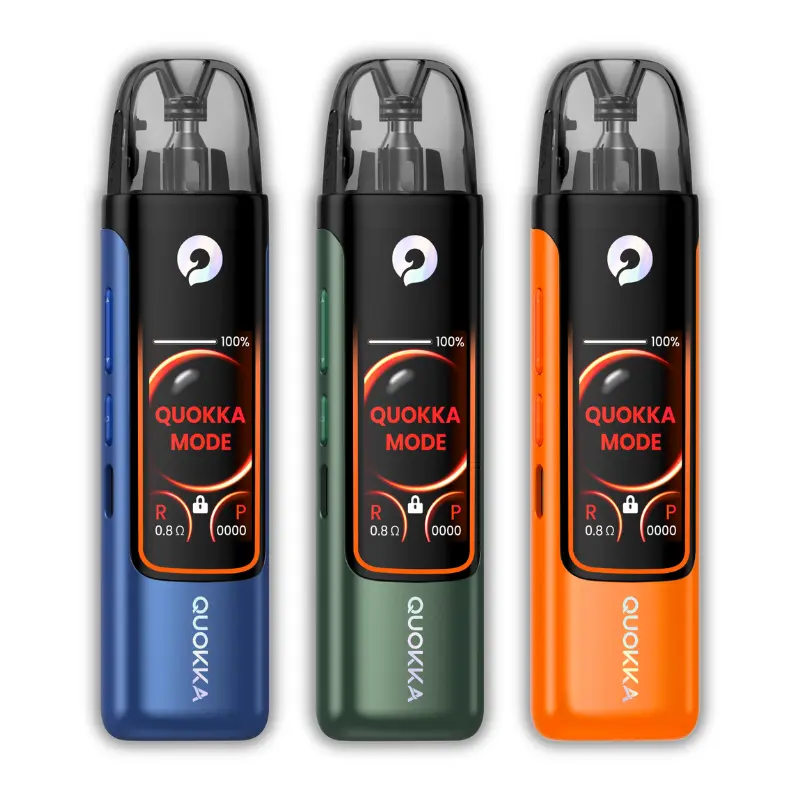
Hayati Quokka Pro Pod Vape Kit
£20.99
✔ In stock — ready to ship
Genuine Hayati
Free over £20
Same-day dispatch
Secure checkout
The Hayati Quokka Pro Pod Vape Kit costs £20.99, which makes it the single most expensive listing in this catalogue of 492 products. It is a refillable pod device: the pod arrives empty, you charge it with bottled e-liquid, and no flavour or nicotine strength is attached to the purchase. The specification Hayati publish for it is a 2ml pod and an 1100mAh battery.
Those are exactly the two figures Hayati publish for the Hayati Quokka Lite Pod Vape Kit, which costs £8.99. They are also exactly the two figures published for the Hayati Quokka Elite Pod Vape Kit at £14.99. Three bodies, twelve pounds apart end to end, and one identical pair of numbers running through all of them.
That is the honest starting position and there is no point burying it halfway down the page. Nothing Hayati publish about this device explains why it costs two and a third times what the cheapest one costs. Not the capacity, which is the same. Not the battery figure, which is the same. Not a puff rating, a coil resistance, a materials list or a dimension, because none of the three bodies carries any of those. The product data gives you a price ladder with nothing attached to the rungs.
Saying so is not the same as saying the money buys nothing. It almost certainly buys something, and the rest of this page is about what that something is likely to be, why none of it can be printed in a specification table, and why that matters far more on a device you intend to keep than on a pod you intend to throw away. There is a real argument here, and it is not a complaint. It is that a consumable should be bought on its numbers and a durable object cannot be, and this listing is the clearest example of that distinction anywhere on the site.
Verifying the identity, because a claim this odd should be checked
An assertion that the dearest and the cheapest product in a range publish the same specification is the kind of thing that sounds like a rhetorical flourish, so here it is set out against the catalogue rather than asserted.
| Quokka Lite | Quokka Elite | Quokka Pro | |
| Listed price | £8.99 | £14.99 | £20.99 |
| Pod capacity published | 2ml | 2ml | 2ml |
| Battery figure published | 1100mAh | 1100mAh | 1100mAh |
| Liquid supplied | None | None | None |
| Nicotine strength | None. Set by your bottle | None. Set by your bottle | None. Set by your bottle |
| Puff rating | None published | None published | None published |
| Coil resistance | None published | None published | None published |
| Size, mass, materials | None published | None published | None published |
| Box contents itemised | No | No | No |
| Warranty term | None published | None published | None published |
| Hayati's own positioning | Entry point, lowest priced | Sits between the other two | Top model, "by price" |
Eleven rows. One of them separates the three products. On every other line the three listings say the same thing or say nothing at all, and in six of the eleven what they say is nothing.
The bottom row is the one worth dwelling on, because the manufacturer's own copy does the ranking for us and does it entirely on cost. Hayati introduce the Lite as the way into the range and note that it is the cheapest of the three. They introduce the Elite by its position between the other two. They introduce the Pro as the range's top model, and then attach a two-word qualifier to that seniority: "by price". No listing in the range claims a capability the others lack. The hierarchy is a hierarchy of price tags, described as one, by the people who set the prices.
Hayati go a step further on this product. The Pro's own summary points out that its battery and pod figures line up with those quoted for the other two, and then advises anyone choosing between the three to compare the product details. That instruction eats itself. The product details are the thing that has just been confirmed identical. Following the advice returns you to the same table above and leaves you exactly where you started, holding three prices and one specification.
Where this price sits in the wider catalogue
Twelve pounds of spread inside a four-product range is one kind of context. The other kind is what £20.99 means against everything else on the site, and the answer is that it stands well clear of it.
Of 492 listings, exactly two are priced above £11.99, and both are Quokka bodies. The Pro is one of them and the Elite is the other. Below that there is a dense cluster: 52 listings at £11.99, 141 at £7.99, 90 at £5.49, and so on down through the bottles at £2.49. The distribution is tight and crowded until it reaches the top, at which point it thins out to two entries and then stops. This listing is a full nine pounds clear of the dearest prefilled kit Hayati sell, and it is worth stating that difference in the units the buyer actually uses: nine pounds is close to four more bottles of liquid, or most of a second complete device.
Two of the three shared figures are also range records rather than ordinary numbers, which is easy to miss. Across the whole catalogue, 170 listings publish an 850mAh battery, one publishes 900mAh, and three publish 1100mAh. Those three are the Quokka bodies. So the Pro carries the largest battery figure Hayati print anywhere, and so does the £8.99 model, in equal measure. The same pattern holds on volume in the other direction: 216 listings publish a 12ml pod, 104 publish 22ml, 50 publish 4ml, two publish 7ml, and three publish 2ml. The 2ml entries are, again, the three Quokka bodies. The most expensive device on the site carries the smallest reservoir on the site, which is a consequence of being refillable rather than a fault, but it does mean the price is not buying you capacity either.
The Hayati Quokka shelf holds four entries in total, these three bodies plus the pods that are sold on their own. All four then reappear among the 174 devices on Hayati Pod Kits, where 171 of their neighbours turn up with liquid already inside them, and among everything else on New Products.
What a specification table is for, and the things it structurally cannot hold
The reason the table above is so short is not laziness. It is that a specification line has to be a number or a short noun that nobody can argue with, published by a manufacturer who can be held to it. Capacity qualifies. Price qualifies. A battery rating qualifies. Almost everything that separates a well made object from a poorly made one fails that test, not because it is unimportant but because it is not the kind of thing that fits in a cell.
It is worth being precise about what those things are, because vague talk of quality is how buyers get talked into paying more for nothing. When a manufacturer genuinely spends more on a body of this type, the money goes into a reasonably well understood list. What follows is a description of how such products differ from one another as a general matter of manufacturing. None of it is a claim about this device. Hayati publish nothing on any of these points for the Pro, the Elite or the Lite, and this page will not manufacture an answer to fill the space.
Materials and the way they are finished. A shell can be moulded from a soft, low-cost polymer or from a denser one, and the two behave differently over a year in a pocket. It can be bare plastic, painted, soft-touch coated, or wrapped in a metal skin. Coatings differ enormously in how they take a scratch and whether they go shiny at the corners where a thumb rests. A metal shell changes the mass and the thermal feel and also changes what happens when the thing lands on a tiled floor, sometimes for the better and sometimes not. None of this is measurable in a way that survives being printed on a tile in a shop grid, and all of it is immediately obvious once the object is in a hand.
Tolerances and the fit between parts. Any two-part device has a joint, and the gap at that joint is set by how tightly the moulds are held and how much the maker is prepared to spend rejecting parts that fall outside the range. A tight fit feels solid, does not creak, and does not develop a rattle. A loose one is cheaper to produce and is fine on the first day. The difference is measured in fractions of a millimetre and is never advertised, but it is the single property people are describing when they pick two devices up and say one feels better than the other.
How a mechanism behaves after a thousand cycles rather than ten. Anything that moves has a fatigue life. A pod that seats and unseats hundreds of times will wear the surfaces that locate it, and how quickly it goes from firm to sloppy depends on the materials chosen for both halves and on how much material is there in the first place. A retention feature that is generous with plastic lasts; one that is thin and sharp does not. Ten uses tell you nothing about this. A year of use tells you everything, which is precisely the wrong side of the purchase for the information to arrive.
Seals, and the slow business of compression set. A pod that holds liquid does so because a soft component is squashed between two harder ones. Elastomers vary in how well they spring back after being held compressed, and how fast they degrade when soaked in propylene glycol and flavour compounds for months. A good one still seals after a hundred fills. A poor one takes a permanent set, loses its grip, and starts to weep from a joint that was dry when new. Nobody publishes a compression set figure for a vape pod, and there is no realistic prospect that anybody will.
The cell behind the figure. A battery capacity is a headline number, and two cells rated the same can differ in internal resistance, in how their capacity fades over repeated charge cycles, and in how steadily they hold voltage as they deplete. The rating describes the cell when it is new. Cycle life describes it after a year, and that is the number that decides whether the device is still worth carrying in month fourteen. The catalogue publishes the first and not the second, here and on every other device it lists.
The charging and control electronics. A regulated device contains a small amount of circuitry deciding how power is delivered and how the cell is charged and protected. There is a wide range in how carefully that is done and how much it costs to do well, and essentially none of it is visible from outside. Hayati name no charging arrangement on any Quokka listing, so this page cannot even tell you how the thing takes a charge, let alone how well the charging is managed.
Balance, mass and the shape in a closed hand. Where the weight sits, whether the edges are chamfered or left sharp, whether the mouthpiece is comfortable against a lip, whether the device stands up on a desk or falls over. These are real differences that people care about a great deal, and they are pure ergonomics. They cannot be summarised in a number at all, which is why nobody tries.
Seven categories, all genuine, all invisible on a product grid, and all completely undocumented for this range. That combination is the actual subject of this page. The gap between the £8.99 body and the £20.99 body is almost certainly made of some of the items above. It is also possible that it is made of none of them, and is simply a wider margin on a differently styled shell. A buyer cannot tell from here, and neither can a retailer.
Consumables are bought on numbers. Durable objects cannot be.
Here is the argument the two paragraphs above have been building toward, and it generalises well beyond this listing.
Take a prefilled pod. Its entire value is consumed and then discarded. It holds a stated volume of a stated liquid at a stated strength, it works until the liquid is gone or the coil gives up, and then it is waste. Everything that determines whether it is good value is a number that is already printed: volume, price, strength. Divide one by another and you have the answer. Nothing about the long-term integrity of the plastic matters, because there is no long term. Nothing about how the shell survives two years in a pocket matters, because it will not be there in two months. For a product with a short and known life, the specification really is the product, and a buyer who compares tiles on a grid and picks the cheapest millilitre is behaving correctly.
The economics of that are worked through properly on two neighbouring pages rather than repeated here. The Quokka Lite kit page sets out the inversion at the heart of this whole range, that the buyer rather than the factory supplies the liquid, and it runs the break-even arithmetic of the bottled route against every prefilled format Hayati sell, arriving at the volume of liquid at which each comparison flips. The Quokka Pods listing takes the other half of it and asks what the replaceable pod itself costs per millilitre once you spread a pack price across an unpublished number of fills, and finds that the answer is a range rather than a figure. Both of those are the right way to think about a consumable, and both of them apply to this device unchanged, for reasons the comparison section below makes uncomfortable.
Now take a body. It is not consumed. Its value is not a quantity of anything, it is a duration and a quality of experience, and both of those are functions of exactly the seven unprintable properties above. How long before the joint rattles. How long before the seal weeps. How long before the cell will not hold an afternoon. How it feels every single time you pick it up, several hundred times a month, for as long as you own it. Not one of those is a number on the listing. Not one of them could be.
So the buyer of a durable object is in a structurally different position from the buyer of a consumable, and the tooling of an online shop does not acknowledge it. A grid of product tiles is a comparison instrument built for consumables. It sorts by price, it displays a capacity, it shows a picture taken under lighting chosen by the manufacturer, and it is genuinely sufficient for choosing between Blackberry Ice Hayati Pro Max Plus 6000 Pod Kit and Blackcurrant Juice Hayati Pro Max Plus 6000 Pod Kit, where the hardware is common and the only variable is which dark fruit you would rather taste. Point the same instrument at three bodies that differ only in the things it cannot render, and it returns three prices and shrugs.
This is why the Quokka Pro is an awkward product to sell honestly online and an easy one to sell dishonestly. The dishonest version writes four hundred words about refinement and engineering and lets the reader supply the evidence themselves. The honest version says that the difference is real in kind, unknown in degree, and undocumented in every particular, and then helps the buyer decide what to do about that.
The tile problem, stated as the buyer experiences it
Picture the shelf as it renders. Three near-identical photographs, three names distinguished by one word each, three capacities reading 2ml, three battery figures reading 1100mAh, and three prices reading £8.99, £14.99 and £20.99. A rational buyer looking at that screen has one piece of usable information, the price, and price with nothing attached to it is not information about the product. It is information about what somebody is asking.
The two available readings are both plausible and the listing cannot separate them. The charitable reading is that Hayati have built three genuinely different objects at three cost points and simply have not documented what distinguishes them, which is extremely common in this trade and is not evidence of bad faith. The uncharitable reading is that the range is tiered to capture different willingness to pay, with the differences being largely cosmetic. Anyone who tells you confidently which of those is true is guessing, including anybody quoting a marketing page.
The specification, line by line, and how much each line decides
The table below takes the small number of published facts and says what each one actually settles for a buyer. The third column is the useful one, and in several rows the honest entry is that the line settles nothing at all.
| Attribute | What Hayati publish | What it settles |
| Price | £20.99 | Everything about the decision and nothing about the object |
| Format | Refillable pod kit, body plus pod | That you buy liquid separately, forever |
| Pod capacity | 2ml | Refill frequency: five fills to a 10ml bottle |
| Battery | 1100mAh | Nothing comparative. The other two bodies publish it too |
| Liquid included | None | The device cannot be used on the day it arrives |
| Nicotine strength | Not applicable | Chosen at a second checkout, with the bottle |
| Puff rating | None | Correctly absent. There is no liquid to rate |
| Coil resistance | Not published | You cannot predict the draw or which liquids suit it |
| Charging arrangement | Not published | Unknown, and not inferable from any sibling listing |
| Materials and finish | Not published | The likeliest home of the £12 premium, undocumented |
| Dimensions and weight | Not published | How it carries is unknown until it is in your hand |
| Box contents | Not itemised | Spare pod count, cable, pouch: all unknown |
| Position in range | Dearest of three bodies | Hayati's own ranking, qualified by them as a price ranking |
| Shelves | New Products, Hayati Pod Kits, and the Hayati Quokka shelf | Where to find the rest of the range |
Count the rows that read "not published" and the count is six of fourteen. That ratio is the page in miniature. A prefilled listing on the Hayati Pod Kits shelf will fill in a flavour, a strength, a volume, a battery figure and a manufacturer puff estimate before it runs out of things to declare, and every one of those lines does real work for a buyer, because on a disposable-liquid product those lines are the product. This one gives you a format, two numbers that are shared with both cheaper siblings, and a price that towers over both of them.
Two rows repay a further look. The 2ml line is the only published figure that changes anything about daily life, and it changes quite a lot: a 10ml bottle is five fills, so the device asks something of you roughly five times more often than a 12ml prefilled pod would and eleven times more often than a 22ml one. That cadence is identical on all three Quokka bodies, which is the point. And the coil row matters more here than the blankness suggests, because without a resistance figure there is no way to reason about which liquids the pod will wick comfortably. The sensible default on a small pod is a thin 50/50 salt, which is what all 65 of Hayati's 10ml bottles are, but that is a default arrived at by caution rather than by reading a number.
How it compares, starting with the two products it is hardest to separate from
Against the Quokka Lite, £8.99. Twelve pounds separates them and the published data separates them by nothing whatsoever. Both hold 2ml, both quote 1100mAh, both arrive empty, both leave every other specification blank. If you buy the Lite and the Pro is better made, you have saved twelve pounds and taken on an unknown amount of risk about how long the thing lasts. If you buy the Pro and it is not better made, you have paid twelve pounds for a different-looking shell. Since the difference in running cost between the two is precisely zero, the entire question is that twelve pounds against an unquantified probability of a better object, and there is no source of evidence on this site or in Hayati's data that moves the probability.
Against the Quokka Elite, £14.99. The Elite sits six pounds above the Lite and six pounds below this one, and the ladder is exactly linear in pounds while being exactly flat in every published attribute. The question of what a middle tier is actually for, and whether the halfway price implies a halfway object, belongs to the Quokka Elite kit page, which takes it up properly. What can be said from here is narrower: the Elite's own listing volunteers that its battery figure matches the other two, so the identity is not something a retailer has pieced together, it is something the manufacturer states on two of the three products.
Against a second Lite, or a Lite plus pods. This is the comparison the price ladder invites and it is not flattering. For £20.99 you can have one Pro. For £17.98 you can have two Lites, which is two batteries, two pods and a spare device sitting in a drawer for the day one of them fails. For a little under £16 you can have a Lite and a pack of Quokka Pods. Neither of those alternatives is better if the Pro is genuinely a longer-lived object, and both are better if it is not. That is the trade in its plainest form, and the information that would settle it does not exist.
Against the prefilled shelves, where the money goes on liquid instead
The wider comparison is between owning any Quokka and buying prefilled kits, and the arithmetic of that is set out in full on the Lite page rather than duplicated here. What this page adds is one observation that follows directly from the spec identity: the running cost is exactly the same on all three bodies. A 2ml pod filled from a £2.49 bottle costs what it costs regardless of which shell is wrapped around it. Every saving the refillable route generates over a prefilled route is generated by the Lite just as completely as by the Pro. The £12 premium buys nothing at all on the axis the sibling pages spend their length analysing. It moves the break-even point further away and improves nothing about the rate.
That said, the prefilled ranges remain the real competition for the purchase, because most buyers are choosing a supply route rather than a shell.
Pro Max Plus, £7.99. The broadest shelf in the catalogue and the place where the flavour choice is deepest. For less than four tenths of this listing's price, £7.99 buys a body with 12ml of a named liquid already sealed into it, which is to say a device that works the moment the box is open. The range covers most profiles worth having: Berry Lemonade Hayati Pro Max Plus 6000 Pod Kit for lemonade carrying a mixture of red and dark berries, Blackberry Raspberry Hayati Pro Max Plus Pod Kit for dark berry with a brighter tang laid over the top, Blackcurrant Mango Hayati Pro Max Plus 6000 Pod Kit for tart hedgerow fruit against something softer and tropical, Blue Frozen Hayati Pro Max Plus 6000 Pod Kit for blue fruit pushed hard on the cold side, Blueberry B'Gum Hayati Pro Max Plus 6000 Pod Kit for a confectionery take on the same berry, and Caribb Crush Hayati Pro Max Plus Pod Kit for a mixed tropical blend. Two entries there take their names from an impression rather than a fruit, Black Mamba Hayati Pro Max Plus 6000 Pod Kit and Blue Fusion Hayati Pro Max Plus 6000 Pod Kit, and that is a different species of missing information from the kind this page is about: the gap there is in what the liquid tastes of, the gap here is in what the object is made of. The manufacturer's figure for these pods is up to 6,000 puffs, arrived at in laboratory conditions rather than recorded from use.
Pro Ultra Plus, £11.99. The dearest prefilled listing on the site and still nine pounds below this one. Twenty-two millilitres sealed into one pod, carrying a manufacturer rating of up to 25,000 puffs measured under laboratory conditions, and the lightest handling burden of anything on the site. Blackcurrant Lemonade Hayati Pro Ultra Plus 25000 Prefilled Pod Kit and Blue Razz GB Hayati Pro Ultra Plus 25000 Prefilled Pod Kit are the straightforward single-flavour entries, while the dual listings such as Blackcurrant Cotton K / Blue Raspberry Hayati Pro Ultra Plus 25000 Prefilled Pod Kit and Blue Razz Cherry Hayati Pro Ultra Plus 25000 Prefilled Pod Kit hold two reserves in one 22ml pod with a collar selecting which side feeds the shared coil. If your objection to a refillable is the five-fills-per-bottle cadence, this is the shelf that answers it, and it answers it for eleven pounds ninety-nine.
Rubik, £5.99, and Mini Ultra, £3.99. The two cheap ends of the prefilled catalogue, and they bracket the value question neatly. Banana Ice Hayati Rubik Prefilled Pod Kit puts soft banana under a cold exhale for £5.99 with 12ml in the pod, and the same flavour appears two pounds dearer as Banana Ice Hayati Pro Max Plus Pod Kit holding the identical volume, which is a compact lesson in how much of a prefilled ticket is hardware and how much is what is inside it. Blue Razz Cherry Hayati Rubik Prefilled Pod Kit layers dark cherry under blue raspberry on the same platform. At the very bottom, Blue Razz GB Hayati Mini Ultra Pod Kit and the two-sided Blackcurrant Lemonade / Straw' Lemonade Hayati Mini Ultra Pod Kit get you into a flavour for under four pounds. Put starkly: this listing costs the same as five Mini Ultra kits, or three and a half Rubik kits, or two and a half Pro Max Plus kits, and none of those comparisons is unfair, because all of them include liquid and this one does not.
The settled-flavour buyer. There is a large group for whom every argument about choosing your own liquid is inert, and they deserve a direct answer. Somebody restocking Blackcurrant Lemonade Hayati Pro Max Plus 6000 Pod Kit week after week, or working through Blue Sour Raspberry Hayati Pro Max Plus Pod Kit and Cherry Berry Hayati Pro Max Plus Pod Kit in rotation, is buying a solved problem. For that buyer the refillable route offers a running-cost saving and nothing else, and the saving is identical whichever Quokka body delivers it. Paying an extra twelve pounds for an undocumented shell on top of a format they did not want in the first place is a poor sequence of decisions. Everything the brand lists here is gathered under All Hayati products, which is where to price the alternatives properly before committing to any of this.
Buying on trust, and being clear that that is what it is
Strip the foregoing down and the proposition on this page is simple to state. Hayati are asking £20.99 for a device whose published specification is the same as one they sell for £8.99, and the extra twelve pounds is being spent on properties nobody has described, cannot be inspected on a screen, and will only reveal themselves after months of ownership. That is a purchase made on trust. Not on evidence, not on a comparison, on trust in a brand and in a price signal.
It is worth saying plainly that buying on trust is not irrational. People do it constantly with tools, kitchen equipment, luggage and footwear, and they are often right, because price does correlate with build across a range even when nobody documents why. The correlation is loose, it is easiest to fake, and it is exactly the mechanism a tiered range is designed to exploit whether or not there is anything behind it. Both of those statements are true at once. What is not available here is any way to tell which applies.
Consider what would settle it, since the absence is more striking once you list the alternatives. A stated warranty term would settle a great deal, because a manufacturer offering two years on one model and six months on another is putting money behind a claim about durability. A materials line would help. So would a parts diagram, a weight, a dimension, a note about whether the shell is metal or polymer, or any statement at all about what the Pro has that the Lite does not. None of those exists on any of the three listings. The range is not merely under-documented relative to good practice, it is under-documented relative to itself, since even a single sentence distinguishing the models would be more than is currently published.
Three things a buyer can actually do, given that:
- Handle one before deciding, if you possibly can. Everything invisible on this page is obvious in ten seconds in a hand. Weight, joint tightness, whether the pod seats with a definite action or a vague one, whether the finish feels like something. A shop counter resolves in seconds what a product listing cannot resolve at all, and that is an unusual thing for a retail page to admit.
- Ask what is in the box, and ask about the warranty. Both are unpublished on all three models, and both are answerable by somebody with the packaging in front of them. If the Pro carries a longer warranty than the Lite, that is the single most informative fact available about this purchase and it is currently not printed anywhere.
- Consider buying the cheap one as the probe. The format commitment and the running cost are identical across the three bodies, so £8.99 buys you a full test of whether refilling suits you at all, at 43 per cent of the price. If the format turns out not to be for you, the loss is nine pounds rather than twenty-one. If it does suit you and the Lite wears out quickly, you will have learned something real about how Hayati build these, and you can spend up with an actual reason.
The third of those is the one this page would press hardest, and not because the Pro is a bad product. It is because nothing available establishes that it is a good one, the format itself is the larger commitment, and the cheapest way to test a format is the cheapest device that implements it.
Looking after an object whose durability you cannot appraise
Practical notes for this specific situation, which is a slightly unusual one: you have spent more than anyone spends on anything else in this catalogue, on an object whose construction is undocumented. The sensible posture is to treat it as if the money did buy something and to avoid finding out the hard way that it did not.
Give it a pocket of its own. The most common cause of cosmetic damage on a small device is sharing a pocket with keys and coins, and the most common cause of a cracked shell is a fall onto a hard floor. Neither is exotic and both are avoidable. On a body at this price the case for a separate pocket or a small pouch is stronger than usual simply because the replacement cost is higher than usual.
Do not test the seals by accident. Fill to a little short of the stated 2ml rather than to the brim. A pod with no air space in it has nowhere to put the small pressure change that comes from warming up in a coat pocket, and the place that change finds is whatever seal is weakest. This matters more on an unknown body than a known one, because you have no information about how those seals were specified.
Watch the joint, not the battery. On a device you intend to keep for a long time, the thing most likely to end its life is mechanical rather than electrical. Check periodically whether the pod still seats with the same firmness it had when new, and whether any part that moves has developed play. A body that still feels tight after six months is telling you something the listing never did, and it is the only feedback you are going to get on whether the premium was real.
Keep the charging habit unremarkable. Hayati name no charging arrangement on any Quokka listing, so there is nothing specific to say about the method, and this page is not going to describe one it cannot see. The general position on any cell of this size is that shallow, frequent top-ups are gentler than repeatedly running it flat and filling it again, and that leaving it at either extreme for weeks is the least kind thing you can do to it.
Storage, in the terms that apply to a refillable. Bottles capped and upright, the device out of direct sun and off hot surfaces, because warm liquid thins and thin liquid finds its way past seals in a small pod. Keep the device and the bottles out of reach of children and pets. If the thing is going to sit unused for a few weeks, it is better to empty the pod than to leave liquid standing against a wick, because what comes out later will not taste like what went in.
End of life, whenever it comes. The body has a cell and a circuit board inside it, so the day it finally stops working it should go to a shop that accepts hardware back, or to a council collection for electrical items, and not into the bin under the sink. A spent pod carries a heating element and whatever has soaked into its wick, so it travels the same route. Emptied 10ml bottles are ordinary plastic and need no special treatment. The whole argument for a durable object is that this event is a long way off, which is exactly the claim about this device that nobody has made in writing.
Questions a buyer actually asks at this price
Is the Pro really the same specification as the Lite?
On everything Hayati publish, yes. Both list a 2ml pod and both list 1100mAh, both arrive without liquid, and neither states a coil resistance, a size, a weight, a material, a charging arrangement or a warranty. The Pro's own listing acknowledges the overlap and points you at the product details, which are the details that overlap.
So what am I paying the extra twelve pounds for?
Nothing that is documented. The likeliest candidates are build quality, materials, finish, the tightness of the fit between parts, seal longevity and the quality of the cell and its charging circuit, all of which are real differences between well made and poorly made devices and none of which appears in any Hayati listing. This page cannot tell you whether this device has any of them, because nobody has published anything on the subject.
Is it the most expensive thing Hayati sell here?
Yes. At £20.99 it is the dearest of 492 listings. The Quokka Elite at £14.99 is second, and those two are the only entries priced above £11.99, which is where the prefilled kits top out.
Does it cost more to run than the cheaper Quokka bodies?
No, and that is the point worth taking away. All three publish the same 2ml pod, so a 10ml bottle gives five fills whichever one you own, and the cost of a millilitre is set entirely by the bottle you buy. Every running-cost advantage the refillable route has over prefilled pods is available at £8.99.
Does any e-liquid come with it?
None. The pod is empty when it arrives and the device does nothing until you have bought a bottle separately. Of the 174 pod kits listed here, 171 arrive filled and three do not, so it is worth confirming that an empty device is what you meant to order.
Which nicotine strength does it come in?
None, because there is nothing in it yet. The figure is set by whichever bottle you choose at a second checkout. For reference, Hayati's own bottled salt range is listed at 10mg throughout, while their prefilled pods are listed at 20mg, so refilling from their own bottles does not reproduce the figure on their pods.
How is it charged?
No charging method is named on any of the four Quokka entries, which leaves this page with nothing to report on the subject. Connector types were once asserted here for hardware that specified none, and those assertions were struck out rather than copied onward. If the answer would decide your purchase, read the packaging or ask the seller.
Should I buy this or two of the cheap ones?
Two Quokka Lites come to £17.98, which is three pounds less than this and gives you a spare body. That is the better purchase if the Pro is not meaningfully better made, and the worse one if it is. Nothing published resolves which, so the question comes down to whether you would rather own redundancy or own an unverified upgrade.
What is the difference between the Elite and the Pro?
Six pounds, and nothing else that is published. Both state 2ml and 1100mAh and both leave every other field blank. The Elite listing volunteers that its battery figure matches the other two models, so the identity is the manufacturer's own statement rather than a retailer's inference.
Why is there no puff rating on it?
Such a rating is an estimate attached to a volume of liquid, and this product contains none for anybody to estimate from, so the blank is correct rather than an oversight. Ratings that do appear elsewhere in the range, up to 6,000 puffs on a 12ml prefilled pod for instance, come out of laboratory conditions set by the manufacturer and describe nobody's real week.
Will the separately listed Quokka pods fit it?
Hayati sell replacement pods for the Quokka line and ask buyers to check that a pack suits the model they own before placing an order. Nothing in the data amounts to a fitment table or a pod code, so the question is unsettled for any one body, this one included. Put it to whoever is selling you the pods, and do not let a shared range name stand in for an answer.
Is there a warranty that would justify the price?
None of the three Quokka listings states a warranty term. That absence is notable, because a longer guarantee on the dearer model would be the most direct evidence available that the extra money buys a longer-lived object, and it is the first thing worth asking a retailer who has the packaging to hand.
Which liquids suit a pod this size?
Something thin, at a 50/50 ratio, which happens to describe all 65 of the 10ml bottles Hayati list. Since no coil resistance is published for any Quokka body, nothing supports reasoning about how well the pod would wick a heavier liquid, and caution is the only basis left for the choice. High-vegetable-glycerine liquids built for larger hardware are a poor match for a reservoir this small.
The short version
At £20.99, the Hayati Quokka Pro is the dearest of the 492 listings in this catalogue: a refillable body, sold empty, publishing a 2ml pod and an 1100mAh battery and little else. Both of those figures are reproduced exactly on the £8.99 Quokka Lite and the £14.99 Quokka Elite. No coil resistance, dimension, material, weight, charging arrangement, box contents list or warranty term appears on any of the three, so there is no published basis whatsoever for the twelve pound gap between the top of the range and the bottom of it.
The gap is probably not empty. Devices at different price points genuinely do differ in materials, in the tightness of their tolerances, in how a moving part holds up over a year, in whether a seal is still doing its job after a hundred fills, and in the quality of the cell behind the headline rating. All of that is real and none of it can be written into a specification table, which is the reason a consumable can be bought on numbers and a durable object cannot. What this page will not do is claim that this particular device has any of those qualities, because Hayati have not said so and nobody else is in a position to.
Buy it if you have handled one, or if you have owned Hayati hardware before and want the dearest version of it, and you are content that the extra money is being spent on trust rather than on evidence. Do not buy it as your first attempt at a refillable, because the cheapest body in the range commits you to exactly the same format at exactly the same running cost for less than half the money, and a failed experiment should be a cheap one. Do not buy it expecting the price to buy you capacity, endurance or economy, because on every axis the catalogue measures, the £8.99 model is its equal.
Strictly for adults aged 18 and over. Nicotine is an addictive substance.
You might also like


