
Home / Hayati Pro Max Plus Prefilled Pod Kit / Triple Melon Hayati Pro Max Plus 6000 Pod Kit
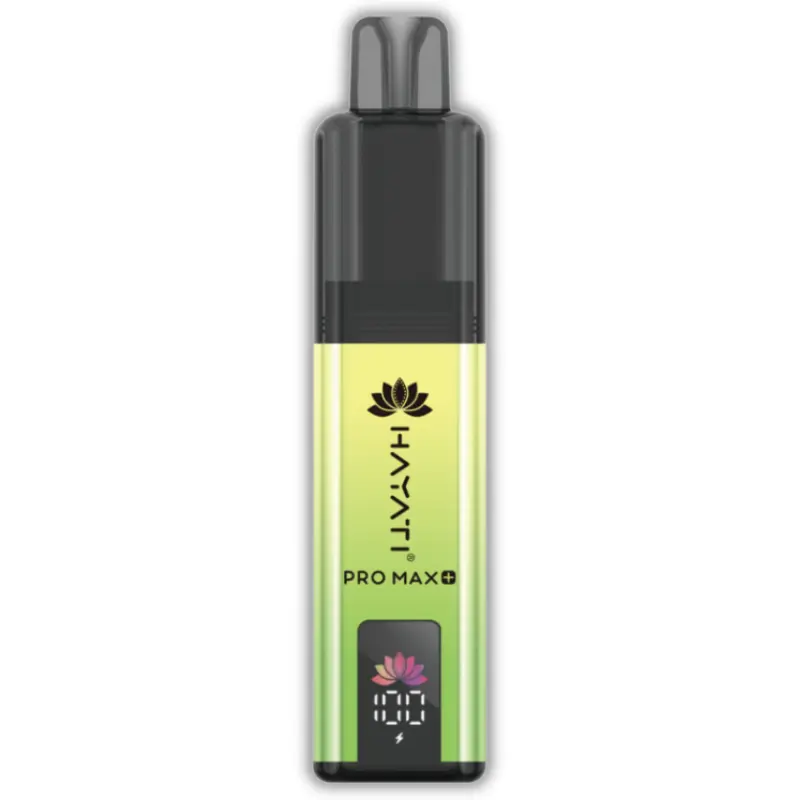
Hayati · Pro Max Plus
Triple Melon Hayati Pro Max Plus 6000 Pod Kit
£7.99
✔ In stock — ready to ship
Genuine Hayati
Free over £20
Same-day dispatch
Secure checkout
Triple Melon is the melon entry in Hayati's Pro Max Plus 6000 line, and this particular listing is the complete package: a rechargeable body, one pod that leaves the factory already filled, and £7.99 covering both together. Inside the pod is 12ml of liquid at 20mg. The cell is rated at 850mAh. Hayati quote the pod at up to 6,000 puffs, a bench figure produced by a machine drawing at fixed intervals under laboratory conditions, reasonable for ranking listings and close to meaningless as a prediction of anybody's fortnight. Those numbers repeat unchanged across the rest of the Hayati Pro Max Plus Prefilled Pod Kit shelf, which is precisely why the liquid deserves the wordcount and the hardware does not.
The liquid sets a genuinely awkward problem, and it is worth putting at the top of the page because it decides whether this pod is for you. The name promises three melons. Hayati do not say which three. The conventional trio for a blend like this is watermelon, honeydew and cantaloupe, and the pod behaves like something built from that set or very close to it. What makes it awkward is that three melons is not the same proposition as three fruits.
Put a mango, a peach and a pineapple in one recipe and you have three objects that disagree with each other: different acid levels, different weights in the mouth, different aromatic families, different speeds of arrival. They take turns because they cannot help it, and the blend has an argument going on inside it. Three melons have none of that. They are close relatives with overlapping chemistry, comparable sugar, comparable softness and almost no acid anywhere between them, so the obvious risk is that they do not register as three of anything. They register as one larger, vaguer melon.
Whether they do is what this page sets out to answer, including where the answer is unflattering. Below is what the components actually do, where they separate and where they refuse to, what an acid-free blend is like to live with across twelve millilitres, and which neighbours are the better £7.99 if none of that appeals.
Why three melons is a harder trick than three fruits
Start with the botany, because it explains the flavour. Watermelon belongs to one genus and honeydew and cantaloupe to another, but all three are cucurbits, and the aroma compounds that make a melon smell like a melon are largely shared across the family. A group of nine-carbon aldehydes and alcohols does most of the work. Those same molecules, in different proportions, are what makes a cucumber smell the way it does, which is why an underpowered melon flavouring so often drifts towards salad rather than fruit. The three melons in a trio like this are not three separate aromatic ideas. They are three settings on one dial.
Sugar does not separate them much either, since all three sit in a narrow band of sweetness and none is a heavy fruit. Acid separates them least of all, and that is the important one. Melons are among the least acidic fruits anyone eats: no citric spike of the sort a lemon brings, no malic bite of the sort a green apple brings, not even the soft tartness a raspberry carries.
That leaves a flavourist trying to build a three-part recipe out of three ingredients that occupy nearly the same space on every axis that usually separates ingredients. The only differences available are small ones: watermelon is thinner, higher in water, faintly green at the edge and slightly saline in a way most people notice without naming; honeydew is the sweetest and the most floral, with a waxy, almost honeyed heaviness; cantaloupe is the most aromatic of the three, richer and a shade musky, with an orange-fleshed warmth that reads closer to a stone fruit than the other two do. Real differences, but differences of degree along one scale, not differences of kind.
There is a second problem stacked on top of the first, and it is the reason melon has a reputation among people who vape a lot. Ask anyone who does not get on with melon liquids to explain the objection and the word that comes back is almost always watery, or thin, or that it tastes of nothing much. That complaint is more accurate than it sounds, and it is not really a complaint about the flavouring.
What makes melon satisfying in the hand is overwhelmingly physical. It is cold, dense with juice, collapsing under the teeth, flooding the mouth and rinsing the palate as it goes. Strip that away and what remains is a modest aroma and a moderate amount of sugar. Vapour carries aroma and sweetness perfectly well. It cannot carry juice, the temperature of something out of the fridge, or the sensation of flesh giving way. The part of a melon that convinces you it is a melon is exactly the part that does not survive being turned into an aerosol.
Every melon liquid is therefore a compensation for an absence, and there are two levers available. Push the aromatic material harder, which risks the perfumed reading that people describe as smelling like a bath product. Or add sweetener, which fills the middle of the mouth and buys back some of the missing body, at the cost of residue on the mesh. This one leans on the second lever, though less heavily than most.
The flavour, from first draw to last third
What arrives first
Sweet, soft and unhurried. The opening is slow next to the sharp listings on this shelf, which announce themselves inside the first quarter second. This one takes closer to a full second to fill out, because there is no acid at the front to trigger the reflex a citrus or a sour blend produces. Nothing pricks. The flavour arrives the way warm air arrives rather than the way cold water does.
The first identifiable character is green and watery in the watermelon register, sitting flat across the middle of the tongue. It is recognisably melon straight away, which is not guaranteed with this fruit, and it is recognisable because the green-sweet aldehyde note has been pushed forward rather than buried. A short light draw gives you roughly that and nothing else, which makes a short light draw on this pod uninformative.
The middle, where the other two arrive
Between the middle and the end of a longer draw the profile puts on weight, and this is where the recipe earns its name. A honeyed, waxier sweetness comes up underneath the watermelon, rounder and denser than the opening, closing off gaps rather than adding a direction. That is the honeydew doing what honeydew does: least distinctive of the three on its own, most useful in a blend, because it supplies body without supplying an opinion.
Later still, and only on a proper draw, a warmer and faintly musky lift sits behind the whole thing. That is the cantaloupe register, the only component with real aromatic ambition, reading as a soft orange-fleshed richness with something almost floral behind it. On a tired pod it is the first thing to vanish.
The sequencing is real but compressed. In a blend drawn from different fruit families you can often count seconds between components. Here the whole progression happens inside one draw with soft boundaries, because the three characters overlap so heavily that no clean edge exists between one and the next. It is less like three solos and more like a chord whose individual notes you can pick out if you listen for them.
The honest answer: can you actually taste three?
Sometimes, conditionally, and not in the way the name implies.
On a slow draw of four seconds or more, from a pod in the first half of its life, with a palate that has not been sitting in one flavour for an hour, the three are separable. Not immediately and not without attention, but the green-watery opening, the honeyed middle and the warm musky tail are distinct enough that you could describe them to somebody else and they would find the same three things.
On a short draw, past the halfway mark of a pod, or twenty minutes into steady use, they are not separable at all. What you get then is one composite melon: sweet, soft, pleasant and no more specific than the word melon. That is not a fault. It is the predictable consequence of blending three ingredients out of one chemical family.
The fair summary is three components and roughly one and a half flavours. You get more depth than a single-melon liquid gives, which is the real argument for buying it, and you do not get three fruits taking turns, which is what the name implies. Anyone shopping for the second thing wants components from different fruit families, and Guava Kiwi Passion Fruit Hayati Pro Max Plus 6000 Pod Kit is the clearest demonstration: three tropical fruits that genuinely disagree, one of them sharp enough to referee.
The exhale, and a finish with nothing to clear it
The exhale inverts very little. Melon aroma is not especially volatile, so it does not rush forward on the way out the way a citrus does. The sweetness broadens slightly, the green edge recedes, and what is left is rounder and a shade flatter than the inhale.
The finish is medium in length, soft in texture, and it does not clear on its own. That is the most consequential thing about the profile, so it gets an explanation rather than a passing mention. Acid is what wipes the palate between draws in blends that have any: it produces saliva, cuts residual sweetness, and resets the mouth so the next draw lands on a fresh surface. Nothing in this pod does that job. The sugar goes on the palate and stays there, and each draw arrives on top of what the last one left.
Over three or four draws that is unnoticeable. Over an hour it becomes the defining characteristic of the pod: the blend stops registering as three of anything and turns into a single background sweetness you are sitting inside rather than tasting. Palates adapt to a stimulus that does not vary, and they adapt faster when nothing in the recipe supplies contrast.
The remedy is a mouthful of water rather than a different pod, and it works completely. A rinse puts the three components back where they were. Plenty of people decide a melon pod has gone flat when what has gone flat is their attention to it.
Where the sweetness sits
Above the middle of this shelf, below the confectionery listings, and less sweet than the name suggests. Line the range up from its driest entry to its sweet-shop blends and Triple Melon lands about two thirds of the way along.
How the sweetness is deployed matters more than how much of it there is. On a bubblegum or slush profile the sugar sits as a separate layer above the fruit and can be tasted as its own thing. Here it is structural, standing in for the juice and flesh the vapour could not carry, so removing it would not make the blend drier. It would make the blend hollow. The sweetness is not decoration you could ask to have taken off.
Cooling
There is none, and the title is the evidence. Hayati flag coolant in the product name wherever it exists, using one of three words to do it, and this listing carries none of the three. Compare the naming on Blue Frozen Hayati Pro Max Plus 6000 Pod Kit, Kiwi Cooler Hayati Pro Max Plus 6000 Pod Kit and Blackberry Ice Hayati Pro Max Plus 6000 Pod Kit and the convention is obvious. Triple Melon is an uncooled liquid and should be ordered as one.
The absence matters more on a melon than on most fruits, because melon and cold are joined together in people's heads. Actual melon is eaten chilled and much of what you remember about it is temperature, so warm melon vapour is faintly disorientating for the first few draws, and a fair number of people who find this pod underwhelming are missing the cold rather than the fruit. Nor is there the incidental chill that high-acid uncooled blends throw off as a side effect of their sharpness. This is warm and soft from first draw to last.
What Triple Melon is not
Nothing here is sour, and nothing here is even tart. The blend has no acid source at all, and that single fact explains more of its behaviour than any of the fruit descriptions above.
Nor is it a sweet-shop melon. Some melon liquids are built on a confectionery base, all sugar and no cucurbit, tasting of a melon-flavoured sweet rather than a melon. This aims at the fruit and lands nearer the fruit, though nobody would mistake it for something freshly cut. It is not a watermelon pod with two decorative extras either: the honeydew and cantaloupe characters do real work in the middle and at the back, and removing them would leave something markedly thinner.
It is not loud. On a shelf carrying sour listings, lemonades, a cola and several confectionery blends, this is among the quietest things available, which is a virtue in a pod you have to finish and a drawback in one you hoped would be exciting. And it is not perfumed, which is the usual failure mode for this fruit: the floral edge on the honeydew stays subordinate and never tips into soap.
How it moves across twelve millilitres
Every pod changes as it goes, and this one loses definition rather than sweetness. As residue accumulates on the mesh, the lightest and most volatile material stops being carried properly first. Here that is the aromatic cantaloupe lift at the back and the green edge at the front, and both thin out. What remains is the honeyed middle plus all of the sugar, which never goes anywhere, so the arc runs from a three-part melon to a single sweet melon to something distinctly flat.
The practical difficulty belongs to blends with no acid in them. On a sharp liquid the fade is conspicuous, because the bright element is conspicuous and so is its absence. Here the fade is gradual and what disappears is subtlety rather than intensity. A tiring Triple Melon pod does not taste wrong, it tastes ordinary, which is far harder to notice, and it is quite possible to work through the last third without registering any change at all.
Watch the tail for the signal. When the warm musky note at the back of a long draw has gone and the pod reads as uniformly sweet throughout, the interesting part of its life is over, whatever the liquid window suggests.
What a kit leaves behind, and where the body goes at the end
The hardware gets a short section because eighty-eight listings share it and repeating the same device description eighty-eight times helps nobody. What follows instead is the part of owning this kit that nobody covers and everyone eventually faces, which is what happens to it when it is finished.
Start with what you are actually buying. The £7.99 covers two objects with completely different lifespans. The pod is consumable, and 12ml of liquid is measured in days or weeks depending on how you use it. The body is durable, and a rechargeable cell is measured in charge cycles, which is a much longer clock. Buy this kit, run the pod out, fit a fresh Triple Melon Hayati Pro Max Plus Pods at £5.49, and the body carries on unchanged. That asymmetry is the entire logic of the format, and it is also the thing that determines what accumulates in your drawer.
Buy the kit every time and you acquire one body per pod, which is one body more than you need. Most people work this out after the second or third purchase, usually when they open a drawer and find three of them. The restocking arithmetic is straightforward: the kit is the right purchase when you need a device, and the bare pod is the right purchase when you already have one and it still works. Everything on the Hayati Prefilled Pod Kits shelf has the same pair of listings behind it.
Now the end of life, which is the part worth writing down. A spent pod is a sealed moulded unit containing the remnants of liquid, a wick and a mesh element, all bonded together in a shell that was never designed to come apart. You cannot separate the components at home and there is nothing to be gained by trying. It goes in the waste stream your local authority or your retailer specifies for vape consumables, which in most parts of the UK means a collection point rather than the bin at home, because the pod contains both nicotine residue and electrical components.
The body is the more important object. It contains a rechargeable lithium cell, and a lithium cell does not belong in household waste or in a kerbside recycling box under any circumstances. Cells that end up in general waste are crushed in collection vehicles and at sorting facilities, and a crushed lithium cell is a well documented cause of fires in both. This is not a product-specific warning. It applies to every rechargeable device in your house, and it happens to apply to this one.
What to do instead is simple enough. Larger shops that sell batteries are generally required to take spent ones back, household waste recycling centres accept them, and many vape retailers operate their own collection boxes for devices. Do not puncture a cell, do not put a swollen or damaged one back on charge, and store a dead body somewhere dry and away from loose metal until you can take it in rather than leaving it rattling in a bag of coins and keys.
One thing this page will not tell you is how the body charges, because the product data names no connector. Look at the device itself, which is authoritative in a way no product page, including this one, can be.
The buying consequence of all this is worth stating plainly, because it is the closest thing to a recommendation in this section. If you already own a working Pro Max Plus body, the £5.49 pod is the purchase that adds nothing to the pile. If you do not, or if your current body has stopped holding charge, this kit is the sensible £7.99 and the old one goes to a collection point.
What the listing records
| Brand | Hayati |
| Flavour as listed | Triple Melon |
| Catalogue reference | HPM-6K-KIT-TRIPLE-MELON |
| Cooling | No temperature word appears in the title |
| Liquid in the pod | 12ml, supplied filled |
| Nicotine | 20mg |
| Carrier ratio | Not published |
| Figure quoted by Hayati | Up to 6,000 puffs, from bench testing |
| Contents | One rechargeable body, one filled pod |
| Battery | 850mAh, rechargeable |
| Price on this listing | £7.99 |
| Shelved on | Hayati Pro Max Plus Prefilled Pod Kit, Hayati Prefilled Pod Kits, Hayati Pod Kits, New Products |
Most of those rows are administration. Three of them repay attention, and the most informative entry in the table is the one that says nothing.
Take the unpublished carrier ratio first, because on this flavour the silence has consequences. The two liquids a recipe is suspended in behave differently: the thicker produces more vapour and a denser feel in the mouth, the thinner carries aroma more legibly and leaves less behind on the mesh. On a fruit with a big aromatic signature the balance barely matters, since the aroma arrives regardless. On a melon it matters, because the aroma is modest and the blend is already fighting to be noticed. Hayati do not publish which way this one is weighted, so the page will not guess, and no sibling page knows either.
The 20mg is the maximum concentration UK rules allow and the only strength on this listing, although the shelf does carry Hayati Pro Max Plus 6000 Prefilled Pod Kit 10mg as a separate line for anyone who wants the lower figure. Worth noting on this profile specifically: the sensation at the back of the throat here comes almost entirely from the nicotine, because there is no acid in the recipe contributing a second source of prickle the way there is on the lemonades and the sour listings. Identical number on the label, noticeably softer thing in the mouth. Nicotine is addictive whatever the figure says.
The 6,000 rating is the number most often misread on this shelf. It is generated by a rig taking identical draws at identical intervals until the pod stops producing vapour, which makes it fair for comparing products and unreliable as a personal forecast, since draw length alone can move the real number enormously. Given that this blend rewards long, slow draws and gives up very little on short ones, a Triple Melon pod used properly will empty faster than a sharp liquid used the same way. If you want a usable figure, note the date you fit a pod and the date it dies, then use your own interval.
How it sits against its neighbours
The same liquid with no device attached
The simplest comparison on the page. The bare pod holds the identical 12ml of identical liquid for £5.49, and the £2.50 difference buys a battery and nothing else at all. Order the kit when you need hardware: a first body, a charged spare, or a second one so that two flavours can run side by side without swapping pods. Order the pod when there is a working device already on your desk.
If the problem is that it is too quiet
This is the most likely objection, so it gets answered first. A soft, sweet, acid-free blend is exactly what some people want and exactly what bores others, and the shelf has an answer at every level of intervention.
For acid without leaving fruit behind, Blackcurrant Juice Hayati Pro Max Plus 6000 Pod Kit supplies the tartness this blend has none of while keeping one recognisable fruit at the centre. For acid arranged as a soft drink, Berry Lemonade Hayati Pro Max Plus 6000 Pod Kit and Blackcurrant Lemonade both run a continuous citrus line under the fruit, which shortens the finish and stops the accumulation described earlier, while Blue Razz Lemonade does it over a confectionery base.
For a genuine sour spike, Blue Sour Raspberry Hayati Pro Max Plus Pod Kit is built around acid rather than around fruit, and it is about as far from Triple Melon as this shelf goes. For a contrast element that works on texture instead of taste, Fizzy Cherry adds carbonation, and Cola Lime combines the two.
If the problem is that it is not cold
A frequent reaction to a warm melon, and an easy one to fix, though not with a melon. Pineapple Ice Hayati Pro Max Plus Pod Kit is the nearest thing on the shelf to a cooled soft tropical fruit, and it keeps a sweetness level in the same territory as this one. Lychee Ice Hayati Pro Max Plus 6000 Pod Kit is the closest relative of all in character, since lychee shares melon's problem of being a soft, low-acid, slightly floral fruit that struggles to assert itself, and the cooling is exactly the crutch this pod does without.
Further along the same road, Blackberry Ice puts the coolant over a dark fruit with far more grip, Blue Frozen pushes the cold much harder than any of them, and Kiwi Cooler is the sharp green option, the direct opposite of this pod in almost every respect: acidic where this is mild, bright where this is round.
The other soft, low-acid listings
If the quietness is the appeal rather than the problem, there is a small group of relatives worth knowing about. Banana Ice Hayati Pro Max Plus Pod Kit is the closest structural cousin, because banana has precisely the same difficulty as melon: its real-world character is texture and creaminess, neither of which vaporises, so what survives is aroma and sugar. The cooling on that listing is doing the same compensating job the coolant does on the lychee.
Sweeter and heavier again, Caribb Crush Hayati Pro Max Plus Pod Kit occupies adjacent tropical territory with more sugar and more volume, and it is the move for anyone who liked the shape of this blend and wanted it turned up. Blackcurrant Mango Hayati Pro Max Plus 6000 Pod Kit shows the classic construction that Triple Melon deliberately avoids, one soft fruit set against one sharp one, and it is instructive to try the two close together if you want to understand what the acid is actually contributing.
Blends that hide what is in them
Triple Melon at least names the family. Several listings on this shelf name nothing, and they are a different kind of purchase. Galaxy Aura Hayati Pro Max Plus 6000 Pod Kit and Black Mamba Hayati Pro Max Plus 6000 Pod Kit both offer an impression rather than an ingredient, so you are buying on trust.
The two Fruit Twist listings sit in between, naming a treatment without naming the fruit: Fruit Twist Hayati Pro Max Plus Pod Kit as a mixed fruit blend, and Blue Razz Fruit Twist with a confectionery blue underneath. Against those, a name that identifies the fruit family is more information than it looks.
Rotation partners, and the shelves
A quiet sweet pod pairs unusually well with something assertive, because it does not compete. Mint works best, and Fresh Mint Hayati Pro Max Plus Pod Kit is the plain one here: it resets the palate in a way nothing in Triple Melon can, so a few draws between sessions restores the melon to full definition better than water does. Real weight works too, and Blue Razz Blackcurrant Hayati Pro Max Plus Pod Kit supplies a dark tartness that leaves no doubt about which pod you have picked up. Everything sold with a body sits on Hayati Pod Kits, and recent additions across every format appear on New Products.
Living with a soft, acid-free pod
Generic pod advice belongs on the shelf pages. What follows is only the handling that changes because this particular liquid is sweet, mild and entirely without an acid line in it.
Let the wick catch up before the first draw. Fit the pod, leave the kit standing for a couple of minutes, then take two or three short pulls before a proper one. The reason to bother here specifically is that a scorched first draw on a mild liquid is almost undetectable. On a sharp blend a dry hit is unmistakable. On this one it registers as a faint papery edge behind the sweetness, easily filed under the pod being unremarkable, and by the time you are sure something is wrong the damage is already on the mesh.
Draw long and draw slowly. This is not general advice, it is specific to the recipe. The honeydew body and the cantaloupe tail only appear in the second half of a draw, so a short pull gives you the watermelon opening and nothing else. Anyone who finds this pod one-dimensional should try a four-second pull before concluding anything. A great deal of the blend is inaccessible at two seconds.
Interrupt yourself. The accumulation problem described earlier is the main thing that spoils this pod, and it is entirely avoidable. Water between sessions, a gap of twenty minutes, or a few draws of something mint will all restore the definition. A blend with no contrast element in it depends on you supplying the contrast externally, which sounds like a chore and amounts to keeping a glass on the desk.
Judge the pod by the tail, not by the window. The warm musky note at the back of a long draw is the first casualty as residue builds. When that has gone and the pod is uniformly sweet throughout, it has passed its useful life even though the liquid level says otherwise. That is a more reliable test here than on a sharp flavour, where the loss is obvious anyway.
Do not chase a fading pod with harder draws. The instinct when flavour drops is to pull longer and stronger, which on a sweetened liquid moves more of it across a mesh already struggling, and the surplus bakes on rather than vaporising. If the tail has gone, the pod has gone.
Keep spares cool and out of direct light. Heat thins liquid and thinned liquid migrates into places a sealed pod gives you no way to dry out. A drawer indoors is fine. A car in August is the worst available option and a sunny windowsill is not much better. Store spares where only adults can get to them.
Run it early in a rotation rather than late. This is the opposite of the advice a heavy sweet blend gets, and the reason is that Triple Melon is easily buried. Anything with coolant, acid or real depth in it will sit over the top of a mild melon for several draws afterwards and make it taste of very little. Put the quiet pod first and the loud one second.
Reorder by the code, not by the name. This flavour exists as a kit and as a bare pod at two prices, and the name alone will not tell them apart on a results page. The catalogue reference above will.
Questions buyers actually ask
Which three melons are in it?
Hayati do not itemise them anywhere in the product data, so anyone claiming to know is guessing. What the blend tastes of is a watery green melon at the front, a honeyed and waxier one filling the middle, and a warmer, faintly musky one at the back, which corresponds closely to the usual watermelon, honeydew and cantaloupe set. The absence of an official list is a genuine gap rather than something this page can fill.
Can you really tell the three apart?
On a long slow draw from a reasonably fresh pod, yes, with attention. On a short draw, on a tired pod, or after twenty minutes of continuous use, no. The three share so much chemistry that they blur into one composite melon under most ordinary conditions, and honest expectation setting is that you are buying depth rather than three distinct fruits.
Is there any coolant in this one?
No. Hayati declare cooling in the product name across this whole range and none of the three words they use appears in this title. It is a warm-tasting liquid from first draw to last, and a good number of people who expect melon to be refreshing are actually expecting it to be cold.
People say melon tastes watery in a vape. Is that true here?
It is a fair description of the fruit's general difficulty, and this pod addresses it with sweetness rather than pretending the problem does not exist. Most of what makes a melon satisfying is juice, temperature and flesh, none of which survives being vaporised, so what reaches you is aroma plus sugar. This blend has enough of both to read as substantial, but nobody should expect the flood of a chilled slice.
How does the sweetness compare with the rest of the range?
Above the midpoint, below anything built on a confectionery base. The distinctive thing is that the sugar is structural rather than decorative: it is standing in for the body the fruit cannot supply, so it does not sit on top of the flavour as a separate sweet layer. A light film on the teeth after an hour is the usual tell.
Why does it seem to fade during a long session?
Because there is no acid anywhere in the recipe to reset your palate between draws, so a soft sweetness accumulates and your perception of it dulls. It is adaptation rather than a failing pod, and it reverses completely with a mouthful of water or a twenty minute gap. This happens faster on acid-free blends than on sharp ones.
How do I know when the pod is finished?
Watch for the warm note at the back of a long draw. That is the first element to go as residue builds on the mesh, and once the pod tastes uniformly sweet from beginning to end, the part worth having is over. The liquid window is not a good guide, because a pod usually stops tasting right while there is still plenty to see.
I already own the device. Should I buy the kit?
Not unless you want a second body. The bare pod carries the same liquid in the same quantity for £5.49, and the difference between the two prices is a battery. The kit makes sense for a first purchase, for a spare kept charged, or when an existing body has stopped holding a charge.
What do I do with the device once it stops working?
It holds a rechargeable lithium cell, so it does not belong in household waste or in a kerbside box. Take it to a household waste recycling centre, a shop with a battery collection point, or a vape retailer that runs a device take-back scheme. Spent pods go to a collection point too, since they contain both liquid residue and electrical parts.
What exactly comes in the box?
Two things: the rechargeable body and one pod that has already been filled. Nothing else is itemised in the product data, and the data does not name a charging connector either, so this page does not name one. Check the device in your hand rather than trusting any listing on the point.
Is it worth buying two at once?
If you already know that soft fruit blends suit you, a second pod is a reasonable order, because quiet flavours are the ones people actually finish rather than abandon halfway. If this would be your first melon of any kind, buy one. Melon divides opinion more sharply than almost any other fruit in the range, and twelve millilitres is a long time to spend being unsure.
The short version
Triple Melon is an uncooled, moderately sweet melon blend built from three closely related fruits: a green and watery opening, a honeyed body underneath it, and a warm musky lift at the back that only shows up on a long draw. It has no acid, no coolant and no sharp edges anywhere in it, and it is one of the quietest liquids on a shelf that contains several genuinely loud ones.
The question the name raises deserves a straight answer, so here it is again. You can taste three things, conditionally, on a slow draw from a fresh pod while paying attention. Most of the time you taste one melon with more depth than a single-fruit version would have, which is a real improvement over a plain watermelon liquid and is not the same as three fruits taking turns. Anyone who wanted the second thing should buy a blend whose components come from different families.
What that buys you is a pod that is easy to live with and hard to tire of, provided long sessions get broken up with water or a mint. What it costs you is excitement. If you like soft fruit and find sharp blends tiring, this is a straightforward £7.99. If your objection to melon is that it tastes of nothing much, nothing here will change your mind, and a cooled or acidic listing is the better order.
On the hardware: an 850mAh rechargeable body and one filled pod holding 12ml at 20mg, both in the box, with Hayati quoting up to 6,000 puffs from bench testing rather than from use. Buy the kit if you need a device, and the £5.49 pod if a working one is already in the house.
Strictly for adults aged 18 and over. Nicotine is an addictive substance.
You might also like


