
Home / Hayati Pro Max Nic Salts / Cherry Berry Hayati Pro Max Nic Salts
Hayati · Pro Max
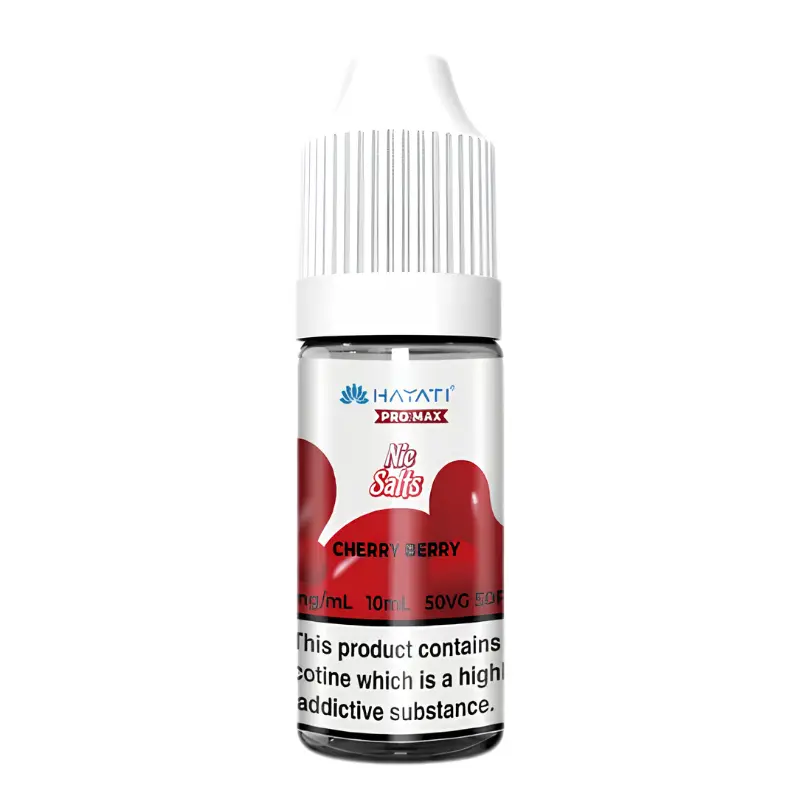
Cherry Berry Hayati Pro Max Nic Salts
£2.49
✔ In stock — ready to ship
Genuine Hayati
Free over £20
Same-day dispatch
Secure checkout
Cherry Berry is a 10ml nicotine salt from Hayati's Pro Max liquid line, mixed at 50VG/50PG, sold at £2.49 and supplied at a single strength of 10mg. It is built for refillable pod kits and mouth-to-lung hardware run at low power, which is what the 50/50 ratio is for. On the shelf it sits alongside more than sixty other bottles in the Hayati Pro Max Nic Salts range, most of them red, blue or purple, and most of them sweet. That is the honest starting position for this page: you are not choosing between a fruit liquid and something wildly different, you are choosing between this red bottle and about a dozen near neighbours that look almost identical on a product grid.
So the useful thing to say about Cherry Berry is not that it tastes of cherry and berries. The label already says that. The useful thing is what the word "berry" is actually doing, because it is not the name of a fruit. Raspberry is a fruit. Blackcurrant is a fruit. "Berry" is a category, and in flavour work it is an accord, a constructed blend assembled to read as generically soft and red rather than as any one identifiable thing. Knowing that changes what you should expect from the bottle, and it explains why Cherry Berry is easier to tell apart from the other cherry liquids on this site than it is from the rest of the sweet red mixes in its own range.
The second thing worth knowing before you buy is that cherry is a difficult lead note. It carries an almond edge that is not a fault, it is chemistry, and the dose of it determines whether a cherry mix reads as bright and juicy or as thick and medicinal. Hayati have dosed this one on the bright side. Whether that is what you want depends on which of the red bottles you already own, and the comparison section below is more useful to most buyers than the flavour section is.
What the cherry does, and what the berries do behind it
Taken as a whole, the profile is layered rather than blended. Cherry occupies the front of the draw and the berry material sits under it as sweetness and body. Nothing here fights for the top slot, which is why the range describes it as stacked rather than mixed. On the palate, the order of events is consistent from the first pod to the last, and it is worth going through it in sequence.
The cherry: bright, tangy, and carrying an almond shadow
Cherry in liquid form splits into two broad families. One aims at fresh dark fruit, the deep, wine-adjacent character of a ripe Bing cherry, low on acid and high on body. The other aims at the confected version, the hard-boiled sweet, which is louder, sharper and more one-dimensional. Cherry Berry sits closer to the fresh end, though not purely so. There is a confected brightness on the very top of the inhale that a genuinely fruit-accurate cherry would not have, and it fades quickly into something fleshier.
Both families lean on the same underlying aromatic register. Benzaldehyde is the compound most people recognise as the smell of bitter almond and marzipan, and it is also the backbone of almost every cherry flavour ever made, because cherry stones and almonds share that chemistry. This is the single most important thing to understand about any cherry vape. The almond edge is not a defect in the mix, it is the thing that makes cherry read as cherry. What varies between products is the dose.
Dosed lightly, that kernel character lifts the fruit. It gives cherry a rounded, slightly nutty base that stops the flavour sitting flat on top of the sweetener, and it adds a sense of ripeness that pure fruit esters cannot produce on their own. Dosed heavily, it swings the other way. The almond stops being a shadow and becomes a top note, the fruit turns syrupy, and the whole thing starts to read as flavouring rather than as fruit. Anyone who has tasted a cherry liquid that seemed to belong in a medicine cabinet has met an over-dosed kernel note.
Hayati have kept it restrained here. On the inhale you get the fruit first, wet and forward, with a small acid snap that keeps it from feeling thick. The kernel is present but it stays underneath, and you notice it most in two places: on the back half of the exhale, where it lingers after the sweetness has broadened out, and towards the end of a pod when the coil is running warm and the whole profile darkens slightly. If you are sensitive to that marzipan quality, you will find it. If you are not, you will read it as depth.
Worth saying plainly: Hayati do not publish the composition of their flavourings, and nothing above is a statement about what is in this bottle. It is a description of how cherry flavour behaves as a category, offered because it explains what you are tasting better than another round of adjectives would.
The berry bed: an accord, not an ingredient
Now the part the label does not tell you. A mixed-berry accord is assembled, not harvested. Typically it runs a raspberry-leaning core for the fresh top, something jammier and darker underneath for depth, and a soft strawberry-adjacent sweetness to round the edges off so no single fruit pokes through. The point of the construction is that none of the components should be individually nameable. If you can identify the raspberry, the accord has failed at its job.
You can see this convention at work across Hayati's own naming. When they want a fruit identified they put it in the title, which is why the range contains Blackberry Raspberry and Blueberry Raspberry and Blueberry Cherry Cranberry, each of which names every component. Where the title says only "Berry", that is a deliberate signal that the blend has not been itemised and is not meant to be.
So the honest answer to the obvious question, which berry leads, is that none of them does. Cherry leads. The berries are a single soft mass sitting below it, red-leaning rather than blue-leaning by taste, doing the work of sweetness and body rather than announcing themselves. On a careful draw you can pick out a faint jamminess at the back that reads as dark fruit, and a rounder note that reads as strawberry-ish, but neither resolves into a fruit you could name blind. That is by design.
What this means in practice is simple. If the thing you want from a berry liquid is a specific berry, clearly drawn and recognisable, this is not that bottle. Go to the ones that name their fruit. If what you want is a sweet red base that supports a lead note without competing with it, this does that job well, and it does it more smoothly than a two-fruit mix would, because there is no second fruit trying to hold its own against the cherry.
Sweetness, and where it sits on the scale
This lands on the sweeter side. Not the sweetest thing in the berry shelf, and nowhere near the confectionery bottles, but noticeably sweeter than a straight tart-fruit mix. Call it a seven out of ten if the driest fruit salt you own is a two and a jelly-sweet liquid is a nine. The sweetness is broad rather than sharp, the kind that coats the tongue slightly and stays there between draws.
The acid from the cherry is what keeps that in check. Without the tang on the top of the inhale, this quantity of sweetness would sit heavy after half a pod. With it, the profile stays legible for a full fill, which is the specific virtue Hayati claim for it and which does hold up in use. That said, sweet fruit mixes are sweet fruit mixes. If you chain draws on a warm coil for twenty minutes, the sweetness will start to feel thick and the cherry's brightness will be the first thing to go. A short break brings it back.
There is a practical consequence too. Heavily sweetened liquids tend to leave more residue on a coil than dry ones do, and this is a sweet one. Expect a pod to darken and to lose its top end sooner than it would on an unsweetened tobacco-free fruit mix. That is a cost of the profile, not a fault in the liquid, and it applies to most of the red bottles in this range equally.
No cooling, and why that matters
Nothing in the supplied flavour notes describes menthol, koolada or any cooling agent, and the name carries no ice marker. Treat this as a room-temperature fruit liquid. That is a real difference from a good chunk of the range, because Hayati mark their cold bottles clearly: Blackberry Ice puts it in the title, Blue Frozen puts it in the title, and where the title stays silent the sensible reading is that the mix is warm.
For a cherry-led profile that is arguably the right call. Cooling agents flatten the kernel note and shorten the fruit's tail, which suits a sharp blue raspberry far better than it suits a stone fruit. It also means the aftertaste hangs around. A cold liquid resets your palate between draws. This one does not, and the layered fruity finish sits with you for a while after the exhale.
What Cherry Berry is not
It is not sour. There is acid, but acid and sourness are different things, and nothing here has the deliberate pucker of a dedicated sour. It is not a candy profile either, so if you want the chewy, slightly synthetic sweetness of a gummy, that is a different bottle entirely. It is not fizzy, which rules out the carbonated cherry in the range, where the prickle on the inhale is the whole idea. It is not a cola. And it is not a cocktail mix, so the mojito profiles stay in their own lane. It is a straightforward layered red fruit, and its appeal is that it does not try to be anything more complicated.
The draw itself, and how length changes the balance
One thing that gets left out of most flavour descriptions is that a liquid does not taste the same on a short draw as it does on a long one, and with a layered profile the difference is pronounced. Cherry Berry is a good example because its two tiers respond differently to heat and duration.
A short, sharp draw of a second and a half favours the cherry. The lighter aromatic material at the top of the profile volatilises first, so what reaches you is mostly the fruit's brightness and its acid snap, with the berry bed barely registering before the vapour has gone. Draw like that all day and you will conclude this is a cherry liquid with a vague sweetness attached.
Stretch the draw out to three or four seconds and the balance inverts. The coil has longer to work, the heavier and sweeter material comes through, and the berry layer fills out underneath until it is carrying half the flavour. The kernel note becomes easier to detect at this length too, because it sits in the same heavier register. Neither version is the correct one, but if you have read a description of this bottle that did not match your experience of it, draw length is the most likely explanation, ahead of coil age or device.
The practical takeaway is that you can steer this liquid without changing hardware. If it is reading too sweet, shorten the draw. If the cherry feels thin and you want more body under it, lengthen it.
The bottle, the mix and how it behaves in a pod
Ten millilitres of 50VG/50PG salt in a single-strength bottle. There is nothing exotic about the format, and that is the point: this is a refill liquid designed to be poured into hardware you already own, and almost all of its practical character comes from the ratio rather than from the packaging.
The 50/50 split matters more than most people give it credit for. Propylene glycol is the thinner of the two carriers, it holds and releases flavour compounds readily, and it soaks into cotton quickly. Vegetable glycerine is thick and sweet-tasting in its own right, it produces the visible vapour, and it wicks slowly. A liquid that is half and half wicks fast enough to keep a small, tight coil fed at low wattage without flooding it, and it carries flavour with enough clarity that a layered profile like this one stays legible rather than turning to mush. Push the same flavour into a high-VG mix and the cherry's top end blurs into the berry bed.
That is why the suitability note on this product points at refillable pod kits and mouth-to-lung devices run at low power. Most pods sold for salt liquids use a fairly tight airway and a coil in the higher resistance bracket, which is the environment a 50/50 mix is built for. Put this in a sub-ohm tank running at forty watts and two things happen: the liquid will struggle to keep up with the wick demand, and the 10mg salt content will be delivered far faster than the strength was designed around. Neither outcome is what the bottle is for.
On filling, ten millilitres divides neatly. A 2ml pod takes five fills from one bottle. A slightly larger 3ml pod takes a little over three. There is no clever arithmetic beyond that, but it is worth doing before you decide whether a £2.49 bottle is good value against a prefilled alternative, and the comparison section below runs those numbers against the Pro Max Plus prefilled pods and the Rubik prefilled pod kit.
Airflow and power both shift the result, and neither needs to be extreme to matter. Tighten the airflow and the vapour arrives warmer and more concentrated, which pushes the sweetness forward and thickens the finish. Open it up and the draw cools, the cherry's acidity reads sharper, and the berry base recedes slightly. On the power side, this is a liquid that rewards restraint. A few watts below whatever your coil is rated at will keep the fruit bright, while running at the top of the range browns the profile and brings the kernel note out early, which is the same effect a worn coil produces and is often mistaken for one. If a fresh pod tastes muddier than you expected, drop the wattage before you blame the bottle.
How the flavour changes as a coil wears
Sweet red liquids age on a coil in a predictable order, and knowing the order tells you when to change the pod rather than guessing.
Fresh, on a properly primed coil, the cherry is at its brightest and the acid snap is sharp. Through the first few millilitres it stays that way. Somewhere in the middle of a pod's life the top end begins to soften first: the snap goes, the cherry reads rounder and less juicy, and the berry bed becomes proportionally more prominent because it has lost the note that was sitting on top of it. This is the stage most people describe as the flavour going sweeter, when in fact the sweetness has not increased, the brightness has decreased.
Later still, the kernel note becomes easier to pick out. A tired coil runs hotter and darkens everything, and in a cherry mix that means the almond quality that was previously a shadow starts to sit forward. If you begin tasting marzipan where you used to taste fruit, the pod is telling you it is done. That is usually a more reliable signal than waiting for the burnt note, and it arrives earlier.
The nicotine side, stated plainly
This bottle is 10mg per millilitre, formulated as a nicotine salt. Nicotine is an addictive substance. Salt formulations are smoother on the throat at a given strength than freebase nicotine is, which is why they suit the tighter, lower-power hardware this liquid is aimed at, where the vapour arriving in your mouth is warmer and more concentrated. That is the whole of what can usefully be said about it here. The strength is a fact printed on the label, not a recommendation, and no page should be telling you which number belongs in your device.
One genuinely practical point: because a 50/50 salt is thin, it will find any gap in a worn pod seal faster than a thick liquid will. If a pod has started to weep around the base, that is a hardware problem rather than a liquid problem, but this mix will make it obvious sooner.
The numbers, and what each one changes
| Product | Cherry Berry Hayati Pro Max Nic Salts |
| Brand | Hayati |
| Flavour type | Cherry Berry |
| Nicotine strength | 10mg nicotine salt |
| VG/PG ratio | 50VG/50PG |
| Bottle size | 10ml |
| Price | £2.49 |
| Intended hardware | Refillable pod kits and mouth-to-lung devices at low power |
| Cooling | None described in the supplied flavour notes |
| Shelves | Hayati Pro Max Nic Salts, Berry Vapes, Cherry Vapes, Hayati E-Liquids, New Products |
Reading down that table, three rows actually change your experience and the rest are inventory detail. The ratio decides which hardware this belongs in. The strength decides how the liquid feels in the throat and how quickly a given device delivers it. The bottle size decides how many fills you get and therefore what the real cost per pod is.
The cooling row is there because its absence is information. A lot of buyers filter a range by whether a liquid is iced, and a blank in that column is as useful as a number would be. There is no menthol claim in the supplied notes, so this page does not make one.
What is deliberately missing from the table is anything the supplied facts do not contain. There is no steep time, because none is published. There is no ingredient list beyond the ratio, because none is published. There is no alternative strength, because this product is listed at one strength only, and a page that implies a choice where none exists wastes your time at the checkout. If you want the same flavour family in a different format, the shortfill and prefilled options are covered below, but they are different products rather than variants of this one. Everything on this page that is not in that table is either a description of taste or an observation about how liquids of this type behave, and the difference between the two is kept explicit throughout.
How it compares with the rest of the red shelf
This is the section most buyers need, because the real question is rarely "is Cherry Berry good" and almost always "is it different enough from the three red bottles already in my drawer". Sometimes the answer is no. Being straight about that is more useful than pretending every bottle is distinct.
The closest neighbours, and they are close
Blueberry Cherry Cranberry is the one to compare first, and the overlap is real. Both are cherry-containing sweet red mixes at the same price and the same ratio. The difference is structural: the Blueberry Cherry Cranberry mix names its three fruits and lets all three be tasted, with cranberry's dry tartness pulling the finish away from sweetness, while Cherry Berry keeps cherry alone at the front and buries everything else. If you like being able to pick fruits out of a blend, take the three-fruit one. If you find that kind of mix busy and would rather have one clear lead note over a sweet base, take this one. Owning both is defensible but you will reach for one of them far more often.
Strawberry Cherry Cranberry is the same argument with the blueberry swapped out. Strawberry is rounder and sweeter than blueberry, which pushes that bottle closer to Cherry Berry's territory than its blueberry sibling is, and of all the liquids in the range it is the one most likely to feel redundant next to this one. The distinguishing factor is again the cranberry, which gives it a dry finish this bottle does not have. Pick on the finish, not on the fruit list.
Black Mamba occupies the darker end of the same shelf. Where Cherry Berry is bright and red, that one sits in blackcurrant and dark-fruit territory, denser and less juicy. They are genuinely different bottles despite both being sweet and both being fruit, and if you want two red-adjacent liquids to alternate between, that pairing works better than pairing this with any of the cherry mixes.
The other cherry bottles
Three liquids in the range put cherry in the title and none of them does what this one does. Fizzy Cherry adds a carbonated prickle on the inhale, which is a texture effect rather than a flavour one, and it makes the cherry feel lighter and shorter. Cherry Cola brings the whole cola spice rack, citrus oils and a root-beer-adjacent warmth, and belongs to the soft drink category rather than the fruit one. Blue Razz Cherry pairs cherry with blue raspberry, which is a much louder partner than a mixed-berry bed and takes over the top of the profile, so cherry ends up as the support act rather than the lead.
The short version: if you specifically want cherry to be the thing you taste first and most, Cherry Berry is the bottle in this range that does that. The others use cherry as a component.
The blue and berry mixes
Several bottles here share the sweet-fruit brief without sharing the fruit. Blueberry Raspberry is the clearest two-fruit berry mix in the line, with both fruits legible and a tarter finish. Blueberry Raspberry Lemon takes that and adds citrus, which cuts the sweetness noticeably and makes it the drier proposition of the two. Blue Fusion and Blue Sour Raspberry both live at the sharp blue end, the latter with a deliberate sour hit that Cherry Berry has no interest in.
For a sweeter, less acidic contrast there is Strawberry Watermelon, which is softer and more watery in character, and Strawberry Jelly Beans, which crosses into confectionery. If the sweetness level of Cherry Berry is what appeals to you, the jelly bean bottle is the logical next step up and the watermelon one is the step sideways.
The drink-styled bottles are a separate decision entirely. Berry Lemonade uses a berry accord much like this one but frames it with a lemonade top that adds acidity and fizz-suggestion. Blue Razz Mojito and Strawberry Mojito both carry a herbal lime element that makes them read as cocktails rather than fruit. Anyone who finds pure fruit liquids monotonous over a long day tends to end up with one fruit bottle and one drink bottle in rotation, and Cherry Berry works well in the first slot.
If you are buying two bottles rather than one, the principle worth applying is contrast of structure rather than contrast of colour. Two sweet red mixes will blur into each other within a week no matter how different their fruit lists look, because sweetness is the loudest variable and they share it. Pair this instead with something that differs in the axis you actually notice: a tart finish, a cold one, or a non-fruit framing. That is why a cherry-forward sweet red plus a cranberry-dried three-fruit mix is a weaker pairing than a cherry-forward sweet red plus a lemonade or an iced blue. It costs the same and gives you twice as much variety.
Other formats of the same flavour family
If ten millilitres at 10mg is not the format you want, the range solves that in two directions. Shortfills give you more liquid at a lower nicotine concentration once mixed: Blueberry Cherry Cranberry as a 50/50 shortfill keeps the mouth-to-lung ratio at £6.99, while the 70/30 version of the same flavour is aimed at bigger airflow and more vapour. Blue Razz Cherry in 50/50 shortfill form is the closest shortfill to a cherry-forward profile. There is no shortfill of Cherry Berry itself in the list, which is worth knowing before you plan around one.
Prefilled pods go the other way, trading cost per millilitre for convenience. Blueberry Raspberry Cherry Pro Max Plus pods at £5.49 and Blue Razz Cherry Pro Max Plus pods at the same price cover the cherry-adjacent flavours in pod form, and the Pro Ultra Plus pod version of the latter sits at £7.99. The Rubik prefilled pod kit at £5.99 bundles hardware with the liquid. Against those, a £2.49 bottle that fills a 2ml pod five times is the cheaper route per millilitre by a wide margin, and the trade is that you have to carry a bottle and do the filling yourself.
Across the wider Hayati e-liquid catalogue there are over a hundred entries, so if none of the above is quite right, the odds are something else is.
Getting the best out of the bottle
None of this is complicated, but sweet salt liquids reward a bit of care and punish neglect faster than plain mixes do.
Prime properly. A fresh pod wants the wicking ports visibly wet before you draw on it. Fill it, put a drop directly onto any exposed cotton if the design allows, then leave it standing for five minutes or so. A 50/50 mix soaks in quickly, which tempts people to skip the wait, and a dry first draw on a new coil costs you the whole pod. The brightness of this cherry is the first casualty of a scorched wick.
Shake before filling. Flavour concentrates and nicotine salt do separate slightly in a bottle that has been standing, particularly one that has been in a delivery van in the cold. A few seconds of shaking evens it out and makes the first fill taste like the last one.
Store it cool, dark and upright. Light and heat both degrade flavour compounds, and cherry's bright top notes are among the more fragile ones. A drawer or a cupboard is fine, a windowsill is not, and a car glovebox in summer is the reliable way to turn a juicy red liquid into a dull one. Keep it out of reach of children and pets.
Do not overfill. Leave a small air gap in the pod. A pod filled to the absolute brim has nowhere for air to go when the liquid warms, and the result is seepage around the mouthpiece. This liquid is thin enough to exploit any weakness in a seal.
Watch the level, not the calendar. Running a pod dry is what kills coils, and on a sweet liquid the burnt note arrives fast and does not wash out. Refill at around a quarter remaining rather than waiting for the flavour to thin.
Give your palate a rest. Sweet layered fruit holds up well across a full pod, which is genuinely the case here, but no flavour holds up across an entire day of continuous use. Most people who complain that a liquid has gone flat have simply stopped registering it. Alternating with something structurally different, a drink profile or a darker fruit, keeps both bottles tasting like themselves.
Judge a new bottle on the second pod. The first fill in a fresh coil is always slightly off, either sharper or muted depending on the hardware, and first impressions of a liquid formed on a brand new pod are unreliable. Wait until the coil has settled before deciding whether the sweetness is too much.
Label your bottles if you run several. Half the red liquids in this range are visually indistinguishable once the bottle is half empty and the label has picked up a thumbprint of liquid. A strip of tape and a pen saves a lot of confused draws.
Questions buyers actually ask
Which berry leads in Cherry Berry?
None of them individually. The supplied flavour notes describe a mixed-berry blend behind the cherry rather than naming component fruits, and the blend is built so that no single berry stands out. Cherry is the lead note throughout, and the berries function as a sweet, red-leaning base underneath it.
Is there any menthol or ice in it?
Nothing in the supplied notes describes menthol, koolada or any cooling agent, and the name carries no ice marker. Treat it as a warm fruit liquid. If you want a cold red or blue profile from the same range, the bottles that are iced say so in their titles.
How sweet is it really?
Sweeter than average for a fruit salt, though not at confectionery level. The cherry's acidity keeps it from becoming cloying and it stays legible across a full pod. If you prefer dry or tart liquids, this will read as too sweet within a few draws.
Why do I taste almond in a cherry liquid?
Because cherry flavour and almond flavour share their core aroma chemistry. Benzaldehyde is what makes cherry smell like cherry, and it is also the compound behind marzipan, so a faint kernel note comes with the territory. In this bottle it is dosed lightly and sits underneath the fruit rather than on top of it.
What hardware is this meant for?
Refillable pod kits and mouth-to-lung devices run at low power. The 50VG/50PG ratio is thin enough to wick reliably through a tight, higher-resistance coil and carries flavour clearly at modest wattage. It is not formulated for high-power sub-ohm tanks.
How many pod fills do I get from one bottle?
Ten millilitres fills a 2ml pod five times, or a 3ml pod a little over three times. How long each fill lasts depends entirely on your device and how you use it, so the fill count is the only figure worth quoting.
Does it come in other nicotine strengths?
This product is listed at 10mg nicotine salt only, with no strength options attached to it. If a different strength is what you need, that means looking at a different product rather than a different variant of this one.
Will it gunk up a coil quickly?
Sweetened liquids leave more residue than dry ones, and this is a sweet mix, so expect a pod to darken and lose its top end sooner than it would on an unsweetened liquid. Most of the sweet red bottles in this range behave the same way. Refilling before the pod runs low helps more than anything else.
How is it different from Blueberry Cherry Cranberry?
That one names three fruits and lets all three be tasted, with cranberry giving it a dry finish. This one keeps cherry alone at the front and uses an unnamed berry blend as a sweet base. Same price, same ratio, genuinely different structure, and the finish is where you will notice it most.
Can I mix it with another bottle?
People do, and a cherry-forward liquid blends reasonably well with a sharper blue or a citrus one to cut the sweetness. Be aware that mixing two 10mg salts gives you a 10mg result rather than anything stronger, and that you lose the ability to say afterwards what you actually liked.
Is there a bigger bottle or a shortfill of this flavour?
Not in the Cherry Berry name. The shortfills available in this range cover other flavour combinations, including a couple of cherry-containing ones, so the closest larger-format option is a related profile rather than the same liquid scaled up.
How does it hold up over a long session?
Better than most liquids at this sweetness level, mainly because the cherry's tang keeps resetting the top of the profile. Across several hours of continuous use the brightness does fade and the sweetness becomes more prominent, which is a palate effect rather than a change in the liquid. A short break restores it.
The short version
Cherry Berry is a £2.49 10ml nicotine salt at 10mg and 50VG/50PG, built for refillable pods and low-power mouth-to-lung hardware, with juicy cherry at the front, a tang that keeps it from sitting heavy, and an unnamed sweet berry blend filling in underneath. There is no cooling. It is on the sweeter side of the range and it stays readable across a full pod, which is its main practical merit.
Buy it if you want cherry to be the fruit you actually taste and you are happy with a supporting base you cannot itemise. Skip it if you want identifiable fruits, a dry finish, or anything cold, because the range has better bottles for all three and several of them cost the same. And be honest with yourself about how close it sits to the cherry-and-cranberry mixes you may already own, because the gap between them is smaller than the product names suggest. It sits on the new arrivals shelf alongside the rest of the recent additions, and the full Hayati catalogue is worth a scroll if none of the red bottles is quite landing.
Strictly for adults aged 18 and over. Nicotine is an addictive substance.
You might also like


