
Home / Hayati Pro Max Plus Pods / White Peach Raspberry Hayati Pro Max Plus Pods
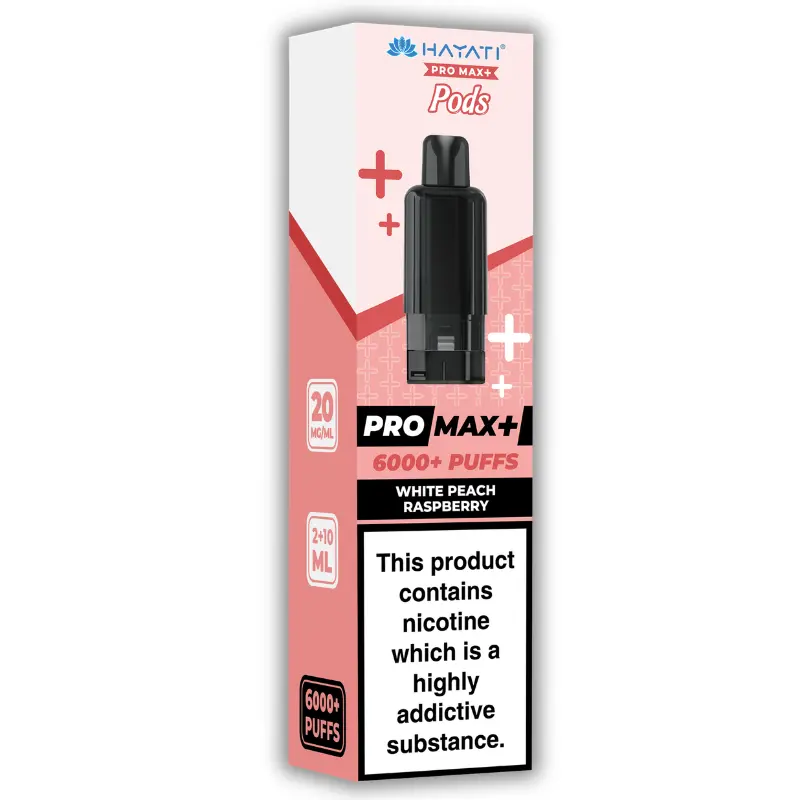
Hayati · Pro Max Plus
White Peach Raspberry Hayati Pro Max Plus Pods
£5.49
✔ In stock — ready to ship
Genuine Hayati
Free over £20
Same-day dispatch
Secure checkout
White Peach Raspberry arrives as one prefilled pod for the Hayati Pro Max Plus: twelve millilitres of liquid at 20mg, £5.49, no device in the packet. That is the entire commercial proposition, and it is the same proposition attached to every other listing on the Hayati Pro Max Plus Pods shelf, which runs to eighty-nine of them. What is not the same is the name.
Read it slowly and it does something almost nothing else in this catalogue does. It tells you which kind of peach. Not peach, not juicy peach, not peach with two other fruits stacked on it. White peach, which is a real horticultural category with real consequences for how the fruit eats, and a company that writes those two words on a pod is either describing a formulation target or borrowing a phrase that sells bottled iced tea.
Which of those it is turns out to be the only question on this listing worth spending any time on. Everything else about the pod is shared with dozens of siblings. So this page tests the naming claim by counting it, works out whether a variety distinction can survive being turned into vapour at all, and then applies the answer to the pairing, because putting raspberry against a peach specifically chosen for having less acid than other peaches is a decision with a consequence you can reason about before you spend the £5.49.
One boundary before any of that. The difference between white-fleshed and yellow-fleshed peaches is settled, documented pomology, and I will treat it as fact. What Hayati actually formulated is documented nowhere, by them or by anybody else, and I will treat that as unknown and flag it every time it comes up. A page that mixes the two and writes both in the same confident voice has lied to you about which half it knows.
Counting the claim before making it
The version of this argument that sounds best is "this is the only flavour in the range that names a variety". Claims of that shape are usually a bit wrong, so here is the count, taken from the 492 listings in the catalogue this shop sells from.
The raw numbers
Strip the device suffix off all 492 titles and you are left with 173 distinct flavour names. That is the real population, because the same name repeats across pods, kits, bottles and the various pod formats, and counting listings would just measure how many hardware lines a flavour has reached.
Of those 173 names, exactly two specify which kind of the named fruit you are getting: White Peach, and Red Apple. Nothing else does. Not one name in the catalogue gives a cultivar by its proper name. There is no Alphonso or Kesar across the 21 mango listings, no Granny Smith or Bramley across the 14 apple ones, no Muscat or Concord among the 15 grapes, no Bing or Morello among the 62 cherry listings, no Meyer on any lemon and no Valencia on any orange. Eighty listings name strawberry. Not one of them says which strawberry.
Narrow it to peach and the pattern is starker. Thirty-two listings in the catalogue name peach somewhere in the title. Three of them say White Peach, and all three are this flavour: this pod, the White Peach Raspberry Pro Max Plus 6000 Pod Kit at £7.99, and the 10ml nic salt bottle of the same liquid. The remaining twenty-nine say peach and stop, or attach an adjective that is not a variety at all.
The rivals, and why they are weaker than they look
Red Apple is the honest competitor and it deserves a fair hearing. Seven listings carry it, all of them Red Apple Ice. Red versus green is a genuine distinction in apples, everyone recognises it, and it does change what you expect on the palate. What it does not do is pick out a coherent group the way white peach does. Red-skinned dessert apples run from the flat sweetness of a Red Delicious to the sharp, aromatic bite of a Braeburn, and those two are further apart than a red apple and a green one. The colour narrows the field by skin. It tells you almost nothing about acid.
White peach is different in kind because the word points at the flesh rather than the skin, and flesh colour in peaches tracks a chemical property. That is the whole reason the specification carries information.
Three further names look like specifications and are not. Sour Apple appears on four listings, and sourness is a taste claim rather than a variety, even though in practice most sour apple flavours are aiming at the Granny Smith end. Double Apple, on three listings, is a shisha convention rather than a botanical one. Sakura Grape, on two, adds cherry blossom to a grape; it does not name a grape.
Two names get closer than any of those, and they are worth naming because they beat White Peach on one axis each. Spearmint, on three listings, specifies a plant species rather than a variety within one, which is a coarser cut through a bigger population but a real botanical statement all the same. Peach Green Tea, on two listings, specifies the processing grade of the tea leaf, which is a within-species distinction arrived at by manufacture rather than by breeding. Neither is a cultivar. Both are more specific than the catalogue's norm.
What survives
So the defensible version of the claim, which is the one I will use for the rest of the page, is this. Of 173 distinct flavour names, two identify a variety of the fruit they name. Of those two, one picks out a group that shares a measurable property, and that one is White Peach. Zero listings anywhere in the range name a cultivar outright. On the peach shelf specifically, three listings out of thirty-two tell you which peach, and they are all this liquid.
That is less dramatic than "the only one" and more useful, because it puts a number on the habit. The habit is to name the fruit and stop. Juicy Peach, which sits on the same shelf at the same £5.49 and is the peach most buyers here will have tried, is the clearest illustration. Juicy is not a variety. It is a ripeness and texture word, applicable to any peach of any flesh colour at the right moment in its week, and it narrows the field by nothing at all. Thirteen listings in the range carry it. It is the most-named peach in the catalogue and the least specified.
None of which proves the word on this pod means anything. It only establishes that the word is unusual, and that unusual words on labels are worth a second look before you assume they are decoration.
Whether a variety can survive being turned into vapour
Here is the real question, and it has a case on each side.
The case that the word is load-bearing
Peaches divide into two flesh groups and the division is chemical, not cosmetic. Yellow-fleshed fruit carries substantially more titratable acid, which is why a ripe yellow peach makes the sides of your tongue work and a ripe white one does not. Because perceived sweetness and perceived acidity trade against each other, two peaches with identical sugar will not read as equally sweet: the low-acid one reads sweeter. That is not a flavour-writing metaphor, it is why low-acid stone fruit was bred and marketed in the first place.
Acid also masks. Turn it down and the volatile aromatic fraction that was sitting underneath becomes audible, which is why white-fleshed varieties read floral. Yellow flesh adds something of its own on top: the pigments that make it yellow break down into compounds that give the warm, slightly cooked, faintly violet character most of us recognise instantly from a tin of peach halves in syrup. White flesh does not have that pigment load to break down, so it does not have that shoulder.
Two independent axes, then. Acid, and a warm cooked note. A formulator aiming at white peach has a concrete brief on both: hold the acid low, leave out the cooked shoulder, let the blossom top note stand up. That is an achievable target in a liquid, because acid in an e-liquid is an ingredient you dose rather than a property you inherit from fruit. Somebody writing White Peach on a pod is describing a direction that a mixer can actually be given.
The distinction is also unusually legible to a normal person. Most cultivar differences are invisible outside the trade: nobody buying a punnet can tell you which strawberry variety is in it, and the difference between two red apples is a thing you learn or you do not. White against yellow peach is one of the few that supermarket shoppers detect without being told what to look for. If a range were going to specify one cultivar group and expect the specification to land, this is the one to pick.
The case that the word is doing brand work
Now the other side, which I think is roughly as strong.
An e-liquid flavour is not fruit. It is an aroma reconstruction assembled from a modest number of aroma chemicals, and the peach note in both a white and a yellow reconstruction is very likely to come from the same family of lactones, because that family is what the industry uses for peach. The shared starting point means the difference between the two targets is not a different peach, it is a set of adjustments around one: less acid, less of the warm note, more of the floral one. Those adjustments are all available, but they are also all optional, and nothing in a product name obliges a mixer to have made them.
White peach is additionally a phrase with an established commercial life of its own. It sells iced tea, sparkling water, fabric softener and hand wash, and in most of those categories it functions as a mood label meaning approximately soft, pale and expensive-sounding. A drinks buyer choosing a white peach carton is not usually being told the acid profile. They are being told the aroma leans blossom. Retail language borrows across categories constantly, and there is no way to tell from the outside whether Hayati used the phrase as a spec or as a shelf signal.
There is also no ratio published, no flavour house named, no concentration stated, nothing at all on the record beyond the two words. Everything Hayati actually publish about this pod concerns volume, strength, price and hardware. The flavour is described in a short paragraph of retail copy. That is a thin evidentiary base on which to conclude that a specific formulation decision was made.
Where I come down, and how you check it yourself
My reading, stated as a reading and not as a fact: the word is a genuine signal of intent and a poor guarantee of execution. It tells you what the pod was aiming at. It does not tell you whether the aim was good, and the only person who can settle that is somebody holding the pod.
Which is more useful than it sounds, because the checks are quick and you can run all three in the first session. The brief here is not to hand you a tasting note for a liquid neither of us has in front of us. It is to tell you exactly what to look for so the pod answers the question itself.
Check one: does the peach half carry any acid of its own? Take a draw, exhale, and then wait five seconds without doing anything. Acid announces itself late and low down, along the sides of the tongue, after the vapour has gone. If the peach component leaves that behind on its own, the target was not a low-acid one. What you should find on a white peach target is that any acid you register arrives in step with the raspberry and departs with it, leaving the soft half unaccompanied at both ends of the draw.
Check two: is the sweetness warm or cool? This is the pigment question and it is the easiest of the three. Cooked, jammy, tinned, slightly syrupy: that is the yellow direction, and if it is there in any quantity the word on the pod is not describing what is in it. Watery, cool, faintly pear-like around the edges, sweet without weight: that is the white direction. The two are not subtle once you know which pair you are choosing between.
Check three: is there a top note above the fruit? A blossom note, sitting higher in the nose than the flesh does, is the marker that a formulator went looking for the white profile rather than simply dialling the acid down on a standard peach. It is also the most fragile thing in the pod, so give it the best conditions you can: the first draw of the day, on a pod that has been standing untouched, taken long and slow. A hot coil six draws into a chain will not show it to you whether it is there or not.
Three results and three conclusions. All three present and the specification was real. Cool and low in acid but with no floral lift, and you have a competent low-acid peach that has been labelled optimistically. Warm and cooked, and the name is doing pure shelf work. None of those outcomes makes the pod bad. They change what you are buying, and at £5.49 a pod the information is worth the ten minutes it takes to collect.
Sharp against deliberately soft: what the raspberry is for
The pairing is the part where the naming question becomes a buying question, because a peach chosen for low acid has a hole in it, and the second fruit on the label is standing exactly where the hole is.
The hole, and the obvious patch
Acid does more in a flavour than taste sour. It resets the palate between draws, it stops sweetness accumulating, and it gives a blend an edge that the tongue can locate. Remove it and you get a flavour that is pleasant for a few draws and then stops registering, because there is nothing in it to re-engage attention. In fruit that does not matter; you eat one peach and move on. In twelve millilitres of liquid that you will return to a few hundred times, it matters a great deal.
Raspberry is one of the sharper berries in ordinary culinary use, and it brings three things rather than one: acid, a dry seedy astringency at the close, and a green stalk-and-leaf note above the fruit. All three are useful against a soft partner. The acid patches the hole, the astringency stops the sweetness piling up draw after draw, and the green note reads as freshness without anything cold being added.
Read charitably, that makes this a designed blend rather than two nice fruits put in a bucket. The formulator took the acid out of one half deliberately and put it back from the other half, which lets sweetness and sharpness be tuned separately instead of arriving welded together the way they do in a single fruit. It also means the two halves occupy different moments: broad, slow and diffuse on the way in, pointed and quick on the way out. Not a balance so much as a sequence.
The reason it might not work
Legibility is not symmetrical, and this is the whole risk. A sharp note masks a soft one far more efficiently than a soft one masks a sharp one. Acid grabs attention on arrival and holds it; a low, diffuse aromatic does neither. So the same raspberry that rescues the peach from blandness at one ratio buries it completely at a slightly different one, and the gap between those two ratios is narrow.
What decides it is the proportion, and the proportion is not published. It is not in the listing, it is not in Hayati's spec text, and it is not inferable from anything on the page. The only evidence anyone has is the word order in the title, and word order in flavour naming is weak evidence: plenty of listings in this range lead with the fruit that is easiest to say rather than the one you taste first.
So the honest position is a conditional. If the peach is audible, the cultivar word was worth writing and this pod is doing something no other listing in the catalogue attempts. If the raspberry has taken the front, then what you have bought is a raspberry pod with a soft sweet backdrop, which is a perfectly decent thing to own and also a thing the range sells in about a dozen sturdier versions for the same £5.49.
The asymmetry that follows for a bare pod
One consequence belongs specifically to buying the pod rather than a refillable setup, and it is worth a paragraph because it changes the stakes.
In a refillable arrangement, a coil that has stopped presenting a delicate aromatic is a coil you replace, and the flavour comes back. That is not available here. The coil and wick live inside this pod, they are not separable from it, and when the pod's soft half stops coming through you have no intervention available except opening the next pod. The delicate component and the consumable are welded together. Nothing about that is a defect, it is simply what a prefilled pod is, but it does mean the interesting half of this particular liquid has a fixed lifespan you cannot extend, and that a blend whose appeal depends on its fragile component is a slightly different purchase in sealed form than in a bottle.
The practical version: buy one and find out before you buy four. A flavour built on two robust fruits, like Blackberry Raspberry, behaves the same on pod one and pod six, and can be reordered in quantity without any thought. This one has a variable in it that you have not measured yet.
The pod, briefly
There is not much to say about the hardware that is specific to this flavour, and the rest of the range has said it all several times over, so this section is short on purpose.
What comes is a single sealed pod, prefilled with twelve millilitres at 20mg, made for the Hayati Pro Max Plus. No device, no charger, no spares. If you do not already own the body, the same liquid with hardware attached is the 6000 pod kit at £7.99, which works out at £2.50 for the device on your first purchase and nothing thereafter. Check that the range name printed on your device matches the one in this listing before ordering, because Hayati use closely similar names across hardware that does not share a pod.
The one specification that actually matters for this liquid is the one Hayati do not give: coil resistance. A prefilled pod hands you a fixed resistance, a fixed airflow and no settings, so the only variable left in your hands is how long you draw. For a blend with a fragile aromatic half that is more consequential than it would be on a loud confectionery flavour, because draw length is the sole lever you have for giving the soft component time to develop. It is also the reason the three checks above specify a long slow pull rather than a quick one.
Hayati rate the pod at up to 6,000 puffs. That number comes from bench equipment under laboratory conditions and describes a mechanical puff, repeated at fixed intervals, which is not how anybody vapes and is a poor forecast of how long yours will last. Treat it as a comparison figure between listings and nothing more. The remaining detail on the platform, including what else the shelf carries, is on the Hayati Prefilled Pods & Refills listing.
Specification, and the rows that are empty
The table below is organised around what the listing specifies and what it declines to, because on this product that is the interesting cut through the data.
| Variety named in the title | White peach, the low-acid flesh group |
| Variety given for the second fruit | None; raspberry unqualified |
| Names in the range that specify a variety | Two of 173, this one and Red Apple |
| Ratio of the two fruits | Not published |
| Coolant declared | None |
| Coil resistance | Not published by Hayati |
| Sold as | One prefilled pod, sealed, device not included |
| Made for | Hayati Pro Max Plus |
| Liquid volume | 12ml, filled at the factory |
| Nicotine concentration | 20mg |
| Other strengths of this flavour | None listed |
| Price | £5.49 |
| Same liquid with a device | The 6000 pod kit, £7.99 |
| Maker's puff rating | Up to 6,000, produced on bench equipment |
| Flavour shelves | Peach Vapes, Raspberry Vapes, Berry Vapes |
| Brand | Hayati |
| Listing reference | white-peach-raspberry-hayati-pro-max-plus-pods |
Four of those rows say nothing is published, and that is not an oversight in the table. A pod that makes an unusually specific claim in its name and then publishes no ratio, no resistance and no concentration is asking you to take the specific bit on trust while withholding everything that would let you verify it. Worth noticing, not worth being outraged about; it is how the whole category works.
The 20mg figure needs one sentence rather than a lecture. It is the maximum concentration a consumer nicotine e-liquid may carry in the UK, which is why no alternative strength exists for this flavour or for any other pod on the shelf. Nicotine is an addictive substance, and how much of it you take in depends on how often and how long you draw rather than on the number alone. What that means for this listing specifically is that strength is not a choice you are making here. Flavour is the only variable on the page, which is the reason a name that specifies more than usual is worth reading closely.
On price, £5.49 for twelve millilitres works out at roughly 46p per millilitre, and the pod is the cheapest way to own this liquid once you have the body. Cross-format, the same money buys rather different quantities. A Blueberry Raspberry Menthol Mini Ultra pod is £3.49 and a Blue Razz Cherry Rubik pod is £3.99, both holding considerably less; the Pro Ultra Plus pods run to £7.99 for a considerably larger reservoir. Comparing headline prices across those formats tells you very little until you divide by volume.
How it sits against the neighbours
Two sorts of comparison are useful here. One is about naming, which is the subject of this page. The other is about what you would actually buy instead, which is the subject of your money.
What the other names on the shelf specify
Sort the pod shelf by what its titles tell you and four groups fall out.
Names that specify a ripeness or a texture rather than a variety: Juicy Peach is the type specimen, and Smooth Strawberry Ice is the other. Both adjectives sound like information and narrow nothing. Juicy applies to any peach at the right moment; smooth applies to almost any strawberry preparation somebody wants to call smooth.
Names that specify a preparation. Blue Razz Mojito tells you mint and lime are in the construction, Blue Razz Lemonade tells you the fruit is sitting in a carbonated sweet drink, and both are genuinely informative. What they specify is the treatment, not the raw material.
Names that specify a confection. Blue Razz GB and Blue Razz Cherry are not fruit claims at all. Blue raspberry is a sweet-shop colour that became a flavour, and no raspberry of any variety has ever tasted like it. These are the most honest names on the shelf in one sense, because nobody is pretending botany is involved.
Names that specify nothing. Midnight Dream is the clearest case: a mood, an atmosphere, no ingredient anywhere in the title or the listing. Mixed Berries is the polite version, naming a family and declining to say which members. Both are defensible commercially and both leave you buying on trust.
White Peach Raspberry sits outside all four groups, which is the whole argument of this page in one sentence. Whether that is worth a purchase depends on the next section.
The raspberry blends, sorted by what raspberry is up against
Seventy-four listings in the range name raspberry and the Raspberry Vapes shelf runs to 119 products once the blue confectionery ones are counted in. The useful way to sort them is by what the raspberry has been paired with, because that determines whether raspberry leads or supports.
Blackberry Raspberry pairs it with a fruit of similar weight and more depth. Neither half is fragile, the blend holds its shape as a pod ages, and nothing in it will quietly disappear on you. Choose it if consistency over twelve millilitres matters more than interest.
Blueberry Raspberry is structurally the closest thing on the shelf to what this pod attempts: a soft, low-acid fruit with a sharp one over the top. The difference is that blueberry is robust where white peach is not, and considerably less distinctive. You trade the floral dimension for reliability, and for a lot of buyers that is the right trade.
Blueberry Raspberry Cherry adds a third voice to that same arrangement. Cherry brings a faint almond shadow and more body, and the result is busier and less legible. Three fruits is where blends stop having a shape and start having a colour.
Strawberry Raspberry Blueberry and Strawberry Raspberry Cherry are the red-fruit piles, and I mean that descriptively rather than dismissively. They deliver mixed berry consistently and ask nothing of you. Nobody buying either is hoping to detect a top note.
Blue Sour Raspberry and Red Sour Raspberry put the acid at the front and make it the point. If your objection to a soft fruit blend is that it is soft, these are the direct answer, and they will do nothing at all for anyone who came here for a floral.
Strawberry Raspberry Ice is the same berry family with a coolant on top, and it is the single worst comparison for this pod, which is why it is instructive. A coolant sits directly over the aromatic register a white peach lives in and erases it. Adding ice to this liquid would have produced a cold raspberry with a vague sweet backdrop and no reason to have specified a variety in the first place. Its absence here is a coherent decision, not an omission.
The confectionery wing, and one blend with no fragile half
Blue Razz Blackcurrant, Blue Razz Pineapple and Blue Razz Fruit Twist are all built from the sweet-shop end of the palette. They are loud, immediate, and completely indifferent to how you draw on them, which is the opposite of everything this page has been describing. There is no delicate component to protect because there is no delicate component.
Blueberry Cherry Cranberry is the useful outlier. Cranberry supplies a drier, more astringent acid than raspberry does, and the blend as a whole is tarter and less sweet than anything else mentioned here. It is also built entirely from durable material, so it is the pod to choose if you want structure without having to pay attention to get it.
Other formats of the same idea
If twelve millilitres in a sealed pod is not the shape you want, the range branches. Blueberry Raspberry Lemon Pro Ultra Plus pods at £7.99 take the soft-plus-sharp idea and add a citrus, on a much larger pod. The dual-flavour Pro Ultra Plus listings are a different proposition again: the Blueberry Raspberry with Blueberry Raspberry Cherry kit at £11.99 puts two related blends in one pod with a collar that selects between them, as does the Fresh Mint with Blue Razz Mint kit for anyone who wants a mint pairing rather than a fruit one. Both share one coil across both sides, so there is carryover at every switch.
Nothing in the prefilled ranges offers a second white peach, or indeed a second named variety of anything, so there is no like-for-like alternative to compare this against. The nearest thing is the kit version of this same liquid. The full spread across every format sits on the Hayati Pods shelf and the complete Hayati range, and recent additions surface on New Products before they settle into the flavour shelves.
Who should skip it
Three groups, and saying so is more useful than pretending a pod suits everybody. If you chain-vape, the coil will sit hot for most of your session and the conditions that let a floral top note register will almost never occur, so you will be paying for a specification you cannot receive. If floral notes in food or drink put you off, the exact thing that makes white peach distinct is the thing you dislike, and Peach Vapes has plenty of listings that do not go anywhere near it. And if you want a flavour you can buy six of without thinking, buy something from the durable end of the Berry Vapes shelf instead, because the appeal here rests on a component you have not yet confirmed is present.
Getting the most out of a pod with a quiet half
Most handling advice is generic. What follows is filtered for one thing only: whether it affects the component of this pod that is easiest to lose. Anything that does not, I have left out.
Give the first draw of a new pod nothing to fight. A factory-filled pod arrives with the wick already wet, but the liquid has usually been standing and the first pull tends to read either flat or oddly sharp. Take two or three unhurried draws and leave a gap between them rather than judging it immediately. On a loud flavour this hardly matters. On a blend where you are specifically listening for a top note above the fruit, an early verdict formed on a cold pod is worth very little.
Draw long and draw slowly, at least while you are still assessing it. This is the only setting you have. A short sharp pull moves a small volume of vapour fast, which suits an acid note and does nothing for a diffuse aromatic one; a long slow pull gives the soft half room to arrive. Once you know what the pod is doing you can vape it however you like, but the assessment draws should be the generous kind.
Keep it out of the sun and out of anywhere warm. Heat and light degrade volatile aromatics before they touch anything else in a liquid, which on this pod means the specified half goes first while the raspberry carries on unaffected. A pod left on a windowsill for a fortnight, or living on a dashboard, will still taste of raspberry and will have quietly stopped being the thing you paid for. A drawer is fine. Store it out of reach of children and pets.
Rest it upright between sessions. A pod stood on its base keeps the liquid over the wick rather than against the mouthpiece, which reduces the chance of a mouthful of liquid on the first pull. That is general advice; the reason it earns a place here is that a bad first draw is exactly the draw you were going to use to listen for the floral note.
Do not stack it against something loud in the same rotation. Palate carryover is a real effect and it does not treat all flavours equally. Come to this pod straight off a mint or a sour and the soft half will be inaudible for several minutes, not because anything is wrong with it but because your palate is still occupied. If you rotate, put this one first in a session rather than after Blue Razz Mojito or anything from the sour shelf.
Know which failure you are looking at. Two different things can happen as a pod ages and they call for different responses. If everything gets duller together, that is ordinary wear and there is nothing to do but finish it. If the blend changes shape, tipping towards a thin sharp raspberry with the soft half gone, the pod has lost its more fragile component and the remaining liquid will not give it back. Neither is a fault. Recognising which one you have saves you from persisting with a pod that has stopped being the product.
When it is finished, do not bin it with the household waste. A spent pod contains a coil and electronic-waste rules apply to it. Retailers that sell this kind of hardware are required to take it back, and local recycling centres have a dedicated stream for it. The plastic body and the coil inside are not separable by hand and should not be pulled apart.
Questions that come up before ordering
Is white peach genuinely different from ordinary peach flavour, or is it marketing?
In the fruit it is genuinely different. White-fleshed peaches carry much less acid than yellow-fleshed ones, which makes them read sweeter at the same sugar level and lets their floral aromatics come through instead of being masked. Whether that difference made it into this pod is a separate question, and Hayati publish nothing that would settle it.
How can I tell whether the pod actually delivers the white peach profile?
Three checks. Wait five seconds after exhaling and see whether the peach leaves any acid of its own behind; ask whether the sweetness is cool and watery or warm and cooked; and look for a blossom note sitting above the fruit on the first slow draw of the day. Cool, low in acid and floral means the specification was real.
Are there other flavours in the range that name a variety like this?
One, and it is weaker. Red Apple Ice appears on seven listings, but red is a skin colour that spans cultivars with completely different acid levels, whereas white peach picks out a group that shares a chemical property. Across all 173 distinct flavour names in the catalogue, no listing names a cultivar by its proper name at all.
Which fruit is going to dominate?
Not knowable from the listing, because the ratio is not published and the word order in a product title is weak evidence. The structural reason to expect raspberry to lead is that a sharp note masks a soft one far more easily than the reverse. The structural reason to expect otherwise is that the whole design logic of the pairing falls apart if the peach is inaudible.
Is there any ice or menthol in it?
No coolant is named in the listing and nothing in the description suggests one. That looks deliberate rather than accidental, because a coolant sits over the same aromatic register a white peach occupies and would erase the distinction the name is claiming.
How sweet is it?
Sweet, and likely to read sweeter than its sugar content would suggest, because a low-acid fruit always does. The raspberry's astringent finish is the thing keeping that in check. If you want fruit with the sweetness dialled down rather than counterweighted, the cranberry and sour listings are the better direction.
Do I need a device, and which one?
Yes. This listing is the pod on its own with nothing else in the packet, and it is made for the Hayati Pro Max Plus. If you do not own one, the 6000 pod kit carries the same liquid with the body included for £7.99.
What nicotine strength is available?
20mg only. That is the ceiling for a consumer nicotine e-liquid in the UK and no other concentration is listed for this flavour or for the rest of the pod shelf. Nicotine is addictive, and intake depends on how long and how often you draw as much as on the figure itself.
Can I change the coil if the flavour drops off?
No. The coil and wick are inside the pod and are not serviceable, so the flavour's lifespan and the pod's lifespan are the same thing. That matters more here than on a robust blend, because the component most likely to fade is the one you bought the pod for.
How does it compare with Juicy Peach?
Juicy Peach is the range's default peach and its adjective describes ripeness rather than variety, so the profile it is aiming at is unspecified. This pod names a flesh type and therefore commits to a lower-acid, more floral target. It also has a second fruit doing structural work, where Juicy Peach stands alone.
Is 6,000 puffs a realistic figure?
It is Hayati's own rating, produced on bench equipment under laboratory conditions, and it describes a mechanical puff repeated at fixed intervals. Real use varies enormously with draw length, and the long slow draws this liquid rewards will consume the pod faster than the test protocol does. Use it to compare listings, not to plan a week.
Should I buy several?
Buy one first. The thing that would make this pod worth restocking, an audible floral low-acid peach, is precisely the thing that cannot be confirmed from the listing, and a multi-pod order commits you to twelve millilitres several times over before you know the answer.
The short version
White Peach Raspberry is a £5.49 prefilled pod, twelve millilitres at 20mg, for a Hayati Pro Max Plus you already own. Mechanically it is identical to the eighty-eight other pods on its shelf. What distinguishes it is a name that specifies a variety of fruit, which two names out of 173 in this range do, and which no other peach listing in the catalogue does.
The specification is meaningful in the fruit. White-fleshed peaches really are lower in acid and really do read floral where yellow ones read cooked and jammy, and a mixer given that target has a concrete brief to work from. Whether Hayati executed it is unpublished, unverifiable from the outside, and answerable in about ten minutes with the pod in your hand. The pairing follows the same logic: raspberry is there to supply the acid a low-acid peach gives up, and whether it supplies it or simply drowns the partner comes down to a ratio nobody has published.
So this is a pod that rewards paying attention and punishes not paying attention, which is unusual on a shelf mostly stocked with flavours that work equally well whether you concentrate or not. Buy one, run the three checks, and you will know. If the answer is no, one of the durable raspberry blends will serve you better for the same money and ask nothing of you.
Strictly for adults aged 18 and over. Nicotine is an addictive substance.
You might also like


