
Home / Hayati Pro Max Plus Prefilled Pod Kit / Pink Lemonade Hayati Pro Max Plus Pod Kit
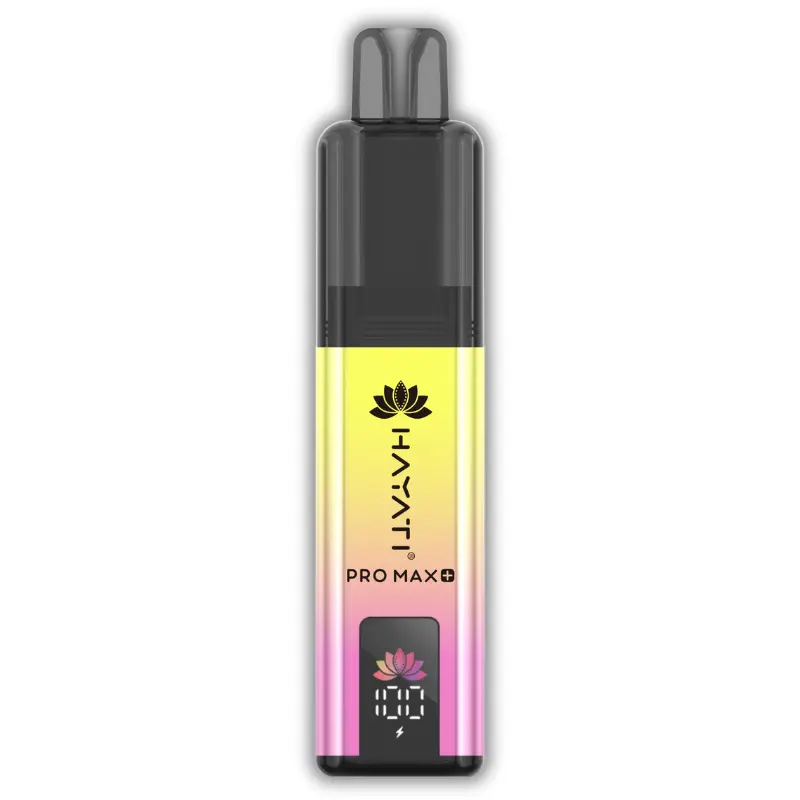
Hayati · Pro Max Plus
Pink Lemonade Hayati Pro Max Plus Pod Kit
£7.99
✔ In stock — ready to ship
Genuine Hayati
Free over £20
Same-day dispatch
Secure checkout
Pink Lemonade arrives here as a complete Pro Max Plus purchase at £7.99: a rechargeable body with an 850mAh cell, and a pod filled at the factory holding 12ml of liquid at 20mg. Hayati attach a rating of up to 6,000 puffs to the full pod, which is a laboratory figure from a test rig and useful for ranking one pod against another rather than for predicting your fortnight. Those numbers are the same on all 88 listings on the Hayati Pro Max Plus Prefilled Pod Kit shelf, so the hardware is not what separates this listing from the one next to it. The liquid is, and on this particular listing so is the name.
There are five lemonade blends in this catalogue and one of them is peculiar. Blackcurrant Lemonade names a plant. Straw' Lemonade names a plant. Blue Razz Lemonade names a confectionery version of a plant. Berry Lemonade names a family of plants. Pink Lemonade names a colour, and a colour is not an ingredient, cannot be tasted, and does not appear in the pod at all once the liquid is a vapour. On the face of it that puts this listing at the bottom of a ladder of usefulness, one rung below the vaguest of its siblings.
It does not end up there, and working out why is the job of this page. A colour word in front of a fruit tells you almost nothing in this range, which the corpus has established at length. A colour word in front of a drink behaves differently, because a drink has a colour it is supposed to be, and naming a departure from it is a report rather than a decoration. That one grammatical difference is why a buyer who has never seen this pod can still place it against its four siblings, and it is also the reason the placement they get is a direction rather than a recipe.
The rest follows from that. What the three separate Hayati descriptions of this liquid agree on, what the pink is doing to the lemon in mechanical terms, whether that is an improvement or a demotion, and what to listen for on your own first pod to find out which. The hardware gets a few hundred words because the hardware is the same on nearly ninety listings and has been explained properly elsewhere.
A colour word in front of a drink
Counting the colour words before trusting any claim about them
An argument about how rare a naming pattern is should be checked rather than asserted, so here is the count across all 492 listings. Blue appears in 127 titles, black in 26, red in 12, orange in seven, white in three, green in two and pink in four. Only green and white are rarer, and both of those turn out on inspection to be varietal descriptions rather than colour words proper. The four pink listings resolve to two flavour names: this one, which appears three times, and Mr Pink, which appears once.
Raw counts are not the interesting part, because most of those hits are not colour words doing colour-word work. Sort them by what the colour is actually attached to and four groups fall out.
- The colour is true of the fruit. Red Apple Ice, White Peach Raspberry, Blackberry, Blackcurrant, Blueberry. The colour is either a varietal marker or already baked into the fruit's English name, and it describes something the fruit genuinely is. It adds a little precision and no mystery.
- The colour contradicts the fruit. Blue Razz and its relatives, which account for the overwhelming majority of that 127. No raspberry is blue. The Blue Razz Fruit Twist kit page has already set out why the convention exists and why every manufacturer's version tastes alike, and that account is not worth repeating here. The short form is that the colour was assigned first and the taste was built to match it, so blue is a code for a sweet-counter profile and not a claim about any plant.
- The colour stands alone with no head noun. Mr Blue, Mad Blue, Blue Frozen, Blue Fusion, Black Mamba, Mr Pink. There is nothing for the colour to modify, so it can only gesture at a family, and the corpus has settled that Mr Blue's blue points at a group of listings rather than at an ingredient.
- The colour modifies a drink. Two flavour names in the whole catalogue do this, and only one of them is reporting an addition.
The other one is worth naming so the claim does not look bigger than it is. Peach Green Tea, three squares away on the same grid, also puts a colour in front of a drink, and it is the exception that shows what the rule is about. Green there is not an addition to tea, it is a kind of tea, referring to how the leaf was processed, and the colour is the leaf's own rather than evidence that anything was put in. Nobody adds green to tea. Somebody adds pink to lemonade, and that is a different sort of statement entirely.
Mr Pink is the control experiment, and it is in the same catalogue
If pink carried information on its own, then a product called Mr Pink would carry it too. Hayati sell one, and their own description of it is unusually candid about the problem. It says the name describes a colour rather than a fruit list, that the shade itself is therefore the best available guide, and that buyers should expect something in the red-and-pink family and be prepared to judge it by taste rather than by ingredients. The copy is doing its honest best and it still cannot get past a colour family.
Set that against the three descriptions of this liquid, which manage a structure: a base, a modifier, a direction of travel and a comparison against an unfruited version. Same colour word, same company, same copywriting department, and one of them can tell you how the drink is built while the other cannot get past a hue.
The difference is not the colour. It is the noun behind it. Pink on its own is a shade. Pink in front of lemonade is a modification to a thing whose default state everybody already knows, and a named modification implies a cause.
Why a drink's colour is evidence and a fruit's colour is not
Lemonade is pale. That is not a marketing position, it is what the drink looks like when it is made from lemons, sugar and water, and any English speaker who has poured one knows it. So when a label says the lemonade is pink, it is reporting that something changed the colour, and the only ordinary way to turn a lemon drink pink is to put something red in it. The colour is a residue of an ingredient rather than a free-floating code.
Compare what blue does when it is attached to a raspberry. A raspberry is already red. Calling it blue does not report an addition, because there is nothing a raspberry could have been mixed with that would produce that result in any kitchen. The word has to be read as a signal from outside the fruit entirely, which is exactly how the corpus reads it. One colour word contradicts its noun and therefore means something other than what it says. The other agrees with the grammar of how drinks are made, and therefore means roughly what it says.
That is the whole of the claim, and it is worth stating its limits immediately, because this is precisely the kind of reasoning that produces a confident page and a disappointed buyer. Pink is a weak ingredient claim, not a strong one. The convention in the glass is that the colour comes from something red stirred into the lemon: a berry, a cherry, a spoonful of a red cordial. Plenty of commercial versions get there with colouring and no fruit at all. So what pink licenses you to expect is that the recipe intends a red-fruit character, not that any particular fruit was involved in making it.
What the colour does not narrow
Pink rules out a great deal and settles nothing exactly. It rules out the dark half of the berry register completely, which matters more than it sounds and is dealt with properly further down. What it leaves open is which red fruit, and the candidates behave differently from each other. Strawberry is soft, low in acid and heavy on aroma. Raspberry carries a seedy, faintly tannic edge. Cherry is rounder and reads slightly cooked. Cranberry is red and genuinely sour, which is the one candidate that would push the blend in the opposite direction from all the others.
Nobody can rule cranberry out from the name. What can be done, and what the next section does, is check whether Hayati's own copy rules it out, because a company that writes three separate descriptions of one liquid leaves a usable record behind even when it never names an ingredient.
Three descriptions of one liquid
Lining up every listing of a single flavour and reading them against each other is not this page's idea. The Blackcurrant Lemonade kit page worked the technique out on a set of seven and found that the platform a listing sits on predicts the words it uses, which is a finding about how the copy was produced rather than about the liquid. Anyone wanting the method itself should read that page. What follows is the same procedure applied to a much smaller set, and a smaller set turns out to have a different kind of value: three descriptions that agree are easier to trust than seven that split.
Pink Lemonade has three listings. A 10ml bottle at 10mg, this kit, and the bare refill pod at £5.49. They were plainly written at different times for different jobs.
What all three commit to
Four things survive in every one of them.
- The lemonade is the base. Two of the three use the word backbone for it outright. The third has the citrus doing the leading and the pink following. Nothing in the set puts the fruit underneath and the lemon on top, which is the arrangement the Blackcurrant Lemonade set argued about at length.
- The citrus is sharp. Zesty, tangy, tart, crisp, mouth-watering. Every listing reaches for at least two of those, which is consistent with the finding that all 19 lemonade listings in the catalogue do the same.
- The pink half softens. Rounds off, smooths out, rather than puckering, gentler. Three writers, three vocabularies, one operation.
- No fruit is ever named. Not strawberry, not raspberry, not cherry, not cranberry. Across three attempts at describing the same blend, the number of botanical nouns used for the pink component is zero.
That last one is the finding. A single omission is an oversight. Three omissions across three separate pieces of copy written for three different formats is a policy, or at minimum a flavour note that never contained a fruit name for anyone to copy out.
What they reach for instead of a fruit
Two of the three fall back on the phrase red fruit. Before treating that as meaningful it is worth checking whether it is house vocabulary, because this corpus has been caught before by a word that felt significant and turned out to be on 27 listings. Red fruit appears in 47 of the 492 descriptions, so on its own it proves nothing whatsoever.
The useful number is a subset of that one. On 39 of those 47 listings, the title already names a red or pink fruit, so the phrase is summarising something the buyer has been told. On eight it is not, and three of those eight are the pink-named listings: both Pink Lemonades that use the phrase, and Mr Pink. In other words, the catalogue reaches for red fruit as a category term in almost exactly the places where it has declined to give a species, and the pink names account for a disproportionate share of them.
Then the third listing does something stranger, and it produces the single most revealing word in the set. Rather than say red fruit, the refill pod's copy calls the pink side a rosier sweetness. Search all 492 descriptions and rosier appears exactly once, on that listing and nowhere else in the range. Given one more chance to characterise the pink component, a Hayati copywriter reached for a second colour word. Not a fruit, not a taste, another shade.
Three listings, and each time the pink half has been described by its effect on the lemon or by its appearance. Never once by what it is.
Where they disagree, and where they do not
They barely disagree at all, which is unusual in this catalogue and is itself evidence. All three place the blend at a midpoint. The bottle says it sits between the plain citrus blends and the berry-heavy ones. This kit's copy claims sharp and sweet roughly in balance. The refill says it sits between sour and sweet. Three independent attempts landed on the same coordinate.
Two claims appear on one listing each. The bottle is the only one that positions the flavour against the rest of the range rather than describing it in isolation, and that positional sentence is the most useful thing in all three. The kit is the only one that names its reference point, comparing the result against plain lemonade rather than against another product, which tells you that the intended read is a modification of a known thing and not a new construction.
The refill listing alone claims the flavour rarely becomes tiring and calls it a reliable everyday choice. Whether a liquid can hold a rotation slot for weeks is a serious question and it has been answered properly on the Berry Lemonade kit and its companion listing, which grade a candidate against half a dozen requirements rather than asserting it in a clause. This page will not relitigate that. It notes only that the claim appears on one of three listings and that a claim made once is not a claim made three times.
What the diff actually settles
Cranberry is effectively ruled out. Three descriptions in a row describe the pink half as reducing sourness. A sour red fruit would raise it. Whatever is producing the colour, the copy is unanimous that it is not sharpening anything, and unanimity across three independently written paragraphs is about as close to a fact as this catalogue ever gets.
What the diff does not settle is the species, or whether there is one species at all. The pink half might be a single soft fruit or an accord of several, and nothing in the record distinguishes those cases. It also does not settle magnitude, which is the gap the next section is about.
What adding a red fruit to a lemonade actually does
A lemonade is a ratio, not a list
Lemonade is three things: acid, sugar and an aromatic citrus top, held in water. The first two are in tension and the third sits on them. What makes a glass of it recognisable is not any single one of those but the proportion between the first two, which is why two lemonades made from the same lemons taste like different drinks if one has twice the sugar. It is a ratio with a flavour on top.
The Blackcurrant Lemonade refill page counted every lemonade description Hayati have written, all 19 of them, and found that the word is used consistently as a modifier on two properties, sharpness and weight, and never as the name of a preparation. That is the same observation from the copywriting side. The word does not bring an ingredient. It adjusts a balance.
The addition can only go one way
Now the mechanical point, which is simple and has a consequence nobody on this site has drawn out.
Lemon sits at the acidic end of fruit that people actually eat. Very little in a greengrocer's is more sour than a lemon, and none of the soft red fruits comes close: strawberry, raspberry and cherry all sit a long way below it, and they carry a great deal of sugar and aromatic weight along with their modest acid. So when you add a red fruit to a lemonade you are adding sweetness, you are adding body, you are adding aroma, and you are adding a rounding error's worth of sourness against a base that is already at the top of the scale.
The arithmetic only runs in one direction. The citrus sets a ceiling on how sharp the blend can be, and every gram of fruit put in underneath it moves the result down from that ceiling. No fruit in this catalogue could raise it. There is no such thing as a lemonade made sharper by the thing added to it, which means the five lemonade blends Hayati sell are not five points spread either side of plain lemonade. They are five softenings of it, differing in how far down they go and in what they use to disguise the descent.
The counterexample, and why it is not one
Anyone who has had both will object that Blackcurrant Lemonade reads drier and more bracing than a plain lemon liquid, not softer. That objection is correct about the sensation and wrong about the cause, and separating the two resolves the whole thing.
Blackcurrant's characteristic grip is astringency, not acidity. Astringency is tactile: tannins bind to the proteins in saliva and the mouth feels drawn tight and slightly rough, which is what the skin of a grape does and what strong tea does. Acidity is a taste, registered along the sides of the tongue, and it makes the mouth water rather than drying it. They land in opposite directions physically and English uses the same handful of adjectives for both, which is why they get confused.
So blackcurrant does not raise the acid of a lemonade. It lowers it, like every other fruit, and then replaces the lost sharpness with a drying grip that reads as severity. This is not a stray theory. The Blackcurrant Lemonade kit page found, after comparing seven separate descriptions of that liquid, that the one property Hayati commit to most consistently across all of them is textural rather than a flavour claim at all. That is exactly what you would expect if the fruit's contribution were a mouthfeel rather than a taste, and the two findings arrive at the same place from opposite ends.
Ranking the five by how the descent is covered
Given that every lemonade in the range is a softening, the interesting variable is the disguise.
- Blackcurrant Lemonade covers it with astringency. The blend is less acidic than a plain lemon liquid and feels more severe than one.
- Blue Razz Lemonade covers it with a sherbet edge. Confectionery blue razz carries a fizzing, prickling quality that is part of the reference sweet rather than part of any fruit, and it reads as sharpness while the actual sugar goes up.
- Berry Lemonade covers it by putting the acid at the front of the draw, which its own page describes carefully: the sourness arrives before the fruit and closes behind it, so the liquid reads as acid-led even though it sits well above the middle of the shelf on sugar.
- Straw' Lemonade covers it with texture in the middle of the draw, where the citrus thins a berry that would otherwise sit heavily.
- Pink Lemonade does not cover it. The copy says outright that the sourness has been rounded off and that the finish is gentler than plain lemonade would give you. It is the only one of the five that admits the direction in its own product description.
That is the real argument for this listing and it is not a flattering one in the usual sense. This is the least disguised member of the set. If you want a lemonade that has been sweetened and are content to be told so, it is the one that tells you. If you want to be able to pretend otherwise, three of the other four will help.
The verdict: it blunts the lemonade, and that is the point
Stated plainly, because the question deserves an answer rather than a balanced shrug. Adding a soft red fruit to a lemonade blunts the thing that makes a lemonade a lemonade. There is no reading of the mechanics on which it does not. The acid fraction falls, the sugar rises, and the drink moves away from the sharp corner it was named after.
On this format that is defensible, and the reason is specific to a sealed pod rather than general. Acid is the most fragile thing a coil has to carry. Both the Berry Lemonade page and the Straw' Lemonade pods page have documented the same behaviour from different angles: as a mesh coil tires, the light volatile top of a citrus profile is the first thing it stops rendering properly, and what remains is whatever sat underneath. A lemonade that puts all its character in the acid has therefore staked its identity on the component with the shortest life in the pod. Berry Lemonade's page describes exactly what that costs, since its accord has nothing to fall back on and the liquid turns generic well before the window empties.
Pink Lemonade has put less weight on that fragile component by design. The soft red sweetness underneath is heavier, less volatile and more robust as the coil ages, so the blend does not lose its shape in the same way. The blunting is a hedge against the pod's own decline, and across 12ml that is a real advantage rather than a rationalisation.
The cost is stated just as plainly. If sourness is what you want from a lemonade, this listing has deliberately given you less of it than any of its siblings, and no amount of drawing technique will put it back. That is a reason to buy something else, and further down there are four suggestions for what.
Reading the draw
The opening
The front of the inhale is citrus and it arrives quickly, which is normal for a narrow airflow and a light aromatic. It reads as lemon in the drink sense rather than in the zest sense: juice and sugar rather than peel oil, with none of the bitterness that comes from pith and none of the sherbet character that a confectionery lemon carries. The distinction between a lemon profile and a lemonade profile has been drawn properly on the Straw' Lemonade pods page and is worth reading if the difference is new to you.
What is missing at the front is a spike. There is brightness and there is a mouth-watering quality, and there is no moment where the acid peaks on its own before anything else turns up. On a sharper lemonade there is, and its absence here is the first audible consequence of the softening.
The middle, and what softer has to mean
Across the middle of the draw the fruit comes up from underneath. It is soft, round and unspecific: recognisably red, recognisably sweet, and not resolvable into a fruit you could name blind. That is consistent with copy that never named one, and it is honest to say that this page cannot name one either. What can be described is what it does, because the mechanics constrain it.
A soft red fruit contributes three things to a blend and withholds a fourth. It contributes sugar, which raises perceived sweetness across the whole draw. It contributes body, meaning the draw occupies more of the mouth and feels less thin. It contributes aroma, which is where the fruit character you notice actually lives, since most of what a vape tastes of arrives through the back of the nose rather than off the tongue. What it withholds is acid, in any quantity that matters against a lemon base.
The practical effect is that the middle of the draw is where this liquid differs most from an unfruited lemon one. A plain citrus pod has a relatively empty middle. This one does not, and filling that space is what the copy means by rounded and gentler even though neither word describes a taste.
The exhale, and the test that decides the question
Here is the part worth doing something with rather than just reading, because it is the axis this whole listing turns on and it can be checked in about a minute.
A fruited lemonade can end in one of two ways. It can finish tangy, with the citrus outlasting the fruit, in which case the blend is still a lemonade that has fruit in it. Or it can finish fruity, with the sweetness outlasting the citrus, in which case the lemonade has been demoted to a garnish on a soft fruit liquid. Those are genuinely different products and the name is identical on both.
The test is simple. Take a normal draw, exhale, and then wait about ten seconds without drawing again. Notice what is still there. If what remains is a slight tang on the lips and a watering at the sides of the tongue, the citrus is still in charge and the construction has held. If what remains is a sweetness with no edge on it, the fruit has taken the finish and you have bought a red fruit pod with a sharp opening.
Run that test on your first pod rather than taking anyone's word for it, including this page's. The reason to run it yourself is the reason the diff could not settle magnitude: three descriptions agreed on a midpoint, a midpoint is where copy always lands, and the only instrument that can tell you where this particular pod actually sits is in your own mouth. What this page can give you is a question precise enough to answer.
How sweet, with the uncertainty left in
Above the middle of this shelf, below the confectionery listings, and closer to the middle than to either edge. Put an unsweetened profile at one end and the gummy and bubblegum treatments at the other, and this sits somewhere around two thirds of the way along, which is roughly where the Berry Lemonade kit places itself and for a related reason: sugar and acid suppress each other in perception, so a liquid holding plenty of both reads as more balanced than its sugar loading alone would predict.
The honest caveat is that this blend has less of the second half of that pair than its siblings, which means less of the masking effect. If it reads sweeter to you than Berry Lemonade does, that is not a fault in your palate. It is the arithmetic of the softening showing through.
Cooling: there is none
Nothing in the title flags a coolant and nothing in any of the three descriptions names one. Hayati's cooling vocabulary has been counted across the whole catalogue: Ice appears in 90 titles, Frozen in three and Cooler in two, and no listing ever combines an ice-family word with a mint-family word. The terms are not graded and the convention is that cooling goes in the title when it is there. This title carries none of them, so read the liquid as uncooled.
That matters more here than on most listings, because the word refreshing does two different jobs in English and this blend only does one of them. Acidity makes the mouth water and clears the palate. A coolant numbs slightly and shortens the finish by suppression. People who describe a lemonade as refreshing usually mean the first, then buy something iced expecting the same sensation and find it is not the same at all. For genuine cold from a fruit profile, Blackberry Ice is built to supply it, and Kiwi Cooler is the lighter version of the same idea.
Ruling things out
- Not sour. There is acid, which is not the same thing. Nothing here puckers, and the fruit was added specifically so that it would not.
- Not a dark fruit blend. Pink excludes the blackcurrant and blackberry register entirely. Anyone who reads red fruit and pictures something deep and tannic is picturing a different pod.
- Not a lemon liquid. The citrus is a drink citrus, juice and sugar, not zest and rind. There is no bitterness and no aromatic peel oil.
- Not cooled. No ice, no menthol, no coolant anywhere in the title or the copy.
- Not a confectionery build. The sweetness comes from a fruit and a sugared drink rather than from a sweet-counter reference, which is the difference between this and the gummy treatments.
- Not configurable. One strength, one volume, one flavour, nothing to turn or select.
The kit, in short
The device is identical across nearly ninety listings and the shelf page covers it once properly instead of eighty-eight times in slightly different words. The mechanism, the charging routine and the troubleshooting all live on the Pro Max Plus kit shelf. Only what bears on this particular liquid is worth saying here.
Two objects are sold together for £7.99, and the facts record only those two: a rechargeable body with an 850mAh cell, and a prefilled pod holding 12ml at 20mg. They do not name a charging connector, they do not itemise a cable, and they do not give a coil resistance. This page will not fill those gaps by inference, and a number that appears on four other retail pages is still not a specification. Treat the contents as a body and a pod until the packaging is in front of you.
One unpublished number bears directly on this flavour, and it is the ratio of the two carrier liquids. The brightness at the top of a citrus profile is made of small volatile molecules, and how clearly they present depends on what they are dissolved in: a thinner carrier shows them and a thicker one buries them under vapour volume. On a blend that has already had its acid reduced deliberately, the carrier is the difference between a legible citrus and a fruit pod with a memory of lemon. Hayati publish nothing about it. That is also a number you could not act on, since a sealed pod is a finished system with its liquid, wick and mesh chosen together, so the consequence is only that legibility cannot be predicted from the listing.
On which listing to buy: take the kit when you need hardware and the bare pod when you need liquid. The Pink Lemonade refill pod carries the same 12ml of the same liquid for £5.49, so the gap between the two is a body, and the restocking arithmetic, order sizes and the case for keeping two flavours running side by side belong to the refill listings and the pods shelf rather than to this page. Everything sold with a device in the box is gathered on Hayati Pod Kits. Check the range name printed on your device against the range name in this title before buying a refill later, since Hayati publish no compatibility chart.
The sheet, with the naming questions first
| What the name commits to | A lemon drink, sweetened, with something red in it |
| What the name leaves open | Which red fruit, how much of it, and how far the sourness has been reduced |
| Fruit named in the copy | None, across all three Hayati listings of this liquid |
| Coolant | None named in the title or the description |
| Liquid in the pod | 12ml, filled at the factory, not user refillable |
| Nicotine | 20mg |
| Nicotine preparation | Salt. The figure is what the listing gives; the preparation is the standard one for this format |
| Body | Rechargeable, 850mAh cell |
| Sold as | Complete kit, body and filled pod together |
| Price | £7.99 |
| Manufacturer's rating | Up to 6,000 puffs on a full pod, a laboratory figure |
| Carrier ratio | Not published for this listing |
| Coil | Not published. Fixed inside the pod, retired with it |
| Brand | Hayati |
| Shelved under | Pro Max Plus Prefilled Pod Kit, Hayati Pod Kits, Hayati Prefilled Pod Kits, Lemon Vapes, Lemonade Vapes, New Products |
Two rows are doing more work than the rest. The top two are unusual for a specification table because they are not specifications at all, and they are there because on this listing the name is the ambiguity rather than the summary. A buyer comparing five lemonades needs to know what each name guarantees, and no conventional spec row answers that.
The 20mg figure is the ceiling permitted in the United Kingdom, and it is the only strength published against this listing. Nicotine is addictive and what anyone chooses is their own business. Worth noting about the interaction with this particular blend: part of what registers at the back of the throat on a sharp lemonade is the acid rather than the nicotine, and this liquid carries less acid than its siblings do. With one of the two contributors reduced, the same 20mg tends to read a little more prominently here than it does on a sharper member of the set. Identical number, different surroundings.
Read the puff rating as a figure about scale and nothing else. It says reliably that this pod holds three times the liquid of a 4ml one and roughly half of the largest pods Hayati sell, and those proportions hold regardless of how you draw. It says nothing about days, since draw length alone can double or halve the result and a test rig has no habits. The number worth owning is the one you measure: note the date the pod goes in and the date it stops, then use your own interval from then on.
Placing it among the neighbours
The four other lemonades, ranked by what their names tell you
The Lemonade Vapes shelf holds 19 listings resolving to five blends plus one dual pairing, and choosing between them is almost entirely a question about the fruit rather than about the citrus, since the lemonade treatment is broadly consistent across the set.
Sort the five names by how specific they are and an odd thing happens. Blackcurrant Lemonade and Straw' Lemonade name species, so they are the most informative names in the set provided you already know how a blackcurrant and a strawberry behave. Blue Razz Lemonade names a confectionery convention, so it is informative only if you know the convention. Berry Lemonade names a family. Pink Lemonade names a colour, which should make it the least informative of the five.
It is not, and the reason is what berry covers. The word spans strawberry and blackcurrant and blackberry and blueberry: it spans the soft red fruits and the dark tannic ones, which are the two ends of the axis that decides whether you enjoy the pod. The Berry Lemonade kit page reports precisely that problem from the other side, noting that its accord reads red and pink rather than dark and that the mismatch accounts for most of the disappointment buyers report with it. Pink resolves that ambiguity outright. It cannot tell you the species, but it eliminates the whole dark half of the register in one syllable, which is more than a name one rung above it manages.
So the ladder of specificity and the ladder of usefulness do not run in the same order. Pink gives you less detail and more direction, and for a buyer choosing between five lemonades with 12ml at stake, direction is the thing that decides it.
Which of the five to actually buy
Blackcurrant Lemonade on this same hardware and at this same price is the direct opposite choice. Dark, dry, gripping, with the fruit reinforcing the severity instead of relieving it. It is less sweet, more characterful, more likely to be a flavour you either love or reject, and it holds its shape better as a pod tires because the fruit underneath stands up on its own. Buy it if what you want from a lemonade is to be told off slightly.
Berry Lemonade is the nearest thing to this one and the comparison is instructive. Both are red and pink accords over a sweetened lemon base, and neither names a fruit. The difference is where the acid sits: Berry Lemonade puts it at the front and the back of the draw so the liquid reads as sharp, while this one has reduced it and filled the space with fruit. If you have had Berry Lemonade and wished it had more body, this is that. If you had it and wished it were sharper, this is the wrong direction and Blackcurrant Lemonade is the right one.
Blue Razz Lemonade is the loud member of the set, applying the same drink structure to a confectionery blue raspberry. It is sweeter than this, more obviously flavoured, and its apparent sharpness comes from a sherbet edge rather than from the citrus. Anyone who finds Pink Lemonade too polite should look there before concluding that lemonade profiles are not for them.
On other hardware, Straw' Lemonade at £11.99 is the closest thing in the catalogue to this liquid with the fruit named and the guesswork removed. If the unnamed red fruit is the part that bothers you, that listing answers the question by putting a species on the box, at a larger volume and a higher price. The Blackcurrant Lemonade / Straw' Lemonade Mini Ultra kit at £3.99 puts a dark lemonade and a red one in a single purchase, which is the cheapest way to find out which half of the family you belong to before committing 12ml to an answer.
If it is the lemon you came for
Some buyers arrive at this listing wanting citrus and leave disappointed by how much fruit is in the way. The Lemon Vapes shelf runs to 54 listings and several of them are far more lemon-forward than anything in the lemonade set.
Lemon Lime on this hardware is the plainest of them, two citrus fruits and very little sweetening behind them, and it is the obvious step if the pink half is the part you would remove. Lemon Lime on the Mini Ultra at £3.99 is the low-commitment way to test that before buying 12ml of it. Lemon Pineapple keeps the citrus in charge and swaps the soft red fruit for something with its own acid, which is the only construction in this corner that adds a fruit without lowering the sharpness much. Pineapple Lemon Burst is the sweeter reading of the same pairing.
Cherry Peach Lemon is worth a longer look from this page specifically, because it is what Pink Lemonade would be if somebody named the fruit. Cherry is one of the standard candidates for the pink in a pink lemonade, and that listing puts it on the label alongside a peach and a lemon. Anyone curious about how much of this blend's appeal survives having the mystery removed can find out there for the same money.
At larger volumes, Blueberry Raspberry Lemon puts the citrus third in the name and behind two berries, and Blue Razz GB / Lemon Lime pairs a sweet side and a sharp one in a single pod, which is the one arrangement that answers the thing a sealed single-flavour pod cannot do.
If it is the red fruit you came for
Strip the lemonade away and the catalogue has plenty of the other half. Blue Razz Cherry keeps a sweet red fruit and swaps the drink structure for a confectionery one. Blueberry Raspberry Cherry names all three of its components and lets them take turns instead of blending into a single register, which is the opposite construction to an unnamed accord. Blackberry Raspberry goes darker and drier, keeping a red berry and putting something tannic underneath it.
Dragon Berries is the other soft accord on this shelf, built to be unresolvable in much the same way. Juicy Peach is the single-fruit version of what a soft, low-acid sweetness does across a whole pod, without any citrus to argue with it, and it is the honest test of whether you actually wanted a lemonade at all. Blackcurrant Juice is the same fruit as the dark lemonade with the drink structure changed from a lemon base to a juice one.
The three on this shelf whose names tell you nothing
Worth a paragraph because it is the exact contrast this page has been drawing. Blue Fusion, Black Mamba and Fruit Twist sit on the same shelf at the same price and none of their names contains a fruit, a drink or a treatment that a buyer can act on. Two of the three pair a colour with an abstract noun, and the abstract noun has nothing for the colour to modify, so both words end up pointing at each other.
Pink Lemonade is not in that group and the reason is structural rather than a matter of degree. Its colour has something concrete to attach to, and the thing it attaches to is a drink with a known default appearance. Remove the drink and you have Mr Pink, which Hayati's own copy concedes can only be judged by taste. The noun is carrying the colour, not the other way round.
Living with a softened lemonade
General handling for a sealed pod is the same everywhere and lives on the shelf pages. What follows is what behaves differently because of what is in this one.
Fix your reference before you judge it. This is the piece of advice that matters most on this listing and on almost no other. The name points at a real drink rather than at a constructed vape flavour, so nearly every buyer arrives with a remembered version already in place, and remembered pink lemonades differ enormously depending on which fruit made them pink and how much sugar came with it. A first draw that disappoints is very often a mismatch against a memory rather than a fault in the pod. Take a few draws, run the finish test described earlier, and decide what the liquid is on its own terms before deciding whether it matches the glass in your head.
Rest it and start gently. Stand the kit upright for two or three minutes after unwrapping, and keep the first several pulls short. The specific reason to bother here is that a scorched wick is hard to spot on a softened profile. On a sharp liquid a cooked coil announces itself against the brightness immediately. On this one it hides behind the sweetness as a faint papery dullness, easily mistaken for the flavour simply being mild, which is a thing this blend is already prone to being accused of.
The usual end-of-pod signal is weaker here, so use a different one. On a sharp lemonade the tell is the sharpness going, and the Berry Lemonade page treats that as the single most reliable diagnostic its liquid offers. This blend has less sharpness to lose, so waiting for it to disappear will have you vaping a tired pod for longer than you meant to. The tell to use instead is the fruit going flat: not fading, but losing its top and turning into an undifferentiated sweetness with nothing lifting it. When the red character stops reading as fruit and starts reading as sugar, the pod has finished its useful life whatever the window shows.
Do not chase a fading pod with harder pulls. Longer and stronger draws move more liquid across a coil that is already struggling, which cooks residue onto the mesh faster and brings the end forward. If the fruit has gone flat, fit a fresh pod.
Expect residue at the pace of a sweetened drink. This sits above the middle of the shelf on sugar, and less of it is masked by acid than on its siblings, so the mesh will collect more than a plain citrus pod would and less than a confectionery one. None of that is preventable on a sealed pod and it is why the flavour flattens before the liquid runs out.
Store spares cool, upright and away from light. Warmth thins liquid, thinned liquid finds its way past seals into the airflow path, and a sealed pod gives you no way to dry one out afterwards. A drawer is the right place. A car parked in the sun is the worst one available. Keep spares somewhere children and pets cannot reach them.
Write down the whole listing name. Pink Lemonade exists three times in this catalogue at three prices on two formats, and the flavour name alone will not get you back to the right one. The refill is not the kit and the 10ml bottle is neither.
When the device finally stops holding a charge, it contains a cell and cannot go in the household bin. Electrical recycling takes it, and many places that sell batteries accept them back over the counter. The pod has its own coil and a little unusable liquid left around the wick, so it goes the same way rather than into general waste.
Questions this listing raises
Which fruit makes it pink?
Hayati never say. Three separate descriptions of this liquid exist and not one of them names a fruit for the pink half: two call it a red-fruit sweetness and the third calls it a rosier sweetness, which is another colour word rather than an ingredient. What all three do agree on is that it softens the lemon rather than sharpening it, which effectively rules out a sour red fruit such as cranberry and leaves the soft ones.
Is it sweeter than Berry Lemonade?
Probably slightly, and more noticeably so than the descriptions suggest. Both sit above the middle of this shelf on sugar. The difference is that Berry Lemonade keeps more acid in play and acid suppresses the perception of sweetness, so the same sugar level reads lower there. This one has had some of that masking removed on purpose.
Does it actually taste of lemon?
Of lemonade rather than of lemon. The citrus here is the juice-and-sugar kind, not the zest-and-rind kind, so there is no bitterness from pith and no aromatic peel oil. If you want lemon as a flavour with an edge on it rather than as a drink reference, Lemon Lime is the more direct listing.
Is there any cooling in it?
No. Hayati flag coolants in the product title and this title carries none. Across the whole catalogue Ice appears in 90 titles, Frozen in three and Cooler in two, and the convention is consistent. The refreshing quality people describe in a lemonade comes from acidity, which makes the mouth water, and that is a different sensation from cold.
Is it sour?
Not in the way a listing built around sourness is sour. There is acidity and it is real, but the whole point of the red fruit is to reduce how far it goes, and the copy on all three listings says so. Nothing here will make your jaw twitch.
How is this different from Mr Pink?
Mr Pink is the same colour word with nothing attached to it, and Hayati's own description concedes that the shade is the only guide available and that buyers should judge it by taste. Pink Lemonade has a drink behind the colour, and a drink has a default appearance, so naming a different one reports that something was added. The information comes from the noun, not from the pink.
I already own a Pro Max Plus. Should I buy this kit?
No. The refill pod holds the same 12ml of the same liquid at £5.49, so the £2.50 difference buys a second body and nothing else. A kit earns that money when you need hardware: a first device, a spare kept charged, or a second body so two flavours can run in parallel.
What does the 6,000 figure mean?
It is a manufacturer's laboratory rating taken on a standardised rig drawing at fixed intervals until the pod empties, so it compares one pod against another fairly and predicts an individual's use badly. Draw length alone can halve or double it. Record the date the pod goes in and the date it gives out, and use your own figure afterwards.
Why does it go flat before the liquid runs out?
Because a coil stops carrying the light volatile parts of a flavour before it stops carrying the heavy ones, and residue from sweetener accumulates on the mesh as liquid passes over it. On this blend the citrus top thins first and the fruit is left doing all the work, so the signal to watch for is the red character turning into plain sweetness rather than anything tasting burnt.
Is the liquid the same as the 10ml Pink Lemonade bottle?
It is the same flavour name at a different strength in a different format: the bottle is 10mg and this pod is 20mg, and the bottle is poured into hardware you own while this one is sealed. Hayati publish no recipe for either, so nobody outside the company can confirm that the formulations are identical, and a shared name has never guaranteed a shared recipe in this catalogue.
Are other nicotine strengths available on this listing?
One figure only, 20mg, which is the United Kingdom maximum. Lower strengths exist elsewhere in the Pro Max Plus range but they are separate listings rather than an option on this page, so look across the shelf rather than for a dropdown. Nicotine is addictive at any strength.
What is in the box?
The facts for this listing record a rechargeable body with an 850mAh cell and a prefilled 12ml pod at 20mg, sold together at £7.99. Nothing else is itemised, no charging connector is named, and this page will not promise either. Any product page claiming more than that is going beyond what the manufacturer has published.
The short version
Pink Lemonade is a sweetened lemon drink with an unnamed soft red fruit underneath it, and the fruit's job is to take the edge off. Hayati have described this liquid three times and never once named the fruit, describing it instead by what it removes from the lemon, which is unusual enough across three separate pieces of copy to count as deliberate rather than careless. The citrus leads the opening, the fruit fills the middle, and where the finish lands is the one thing worth testing on your own pod.
The name is the interesting part and the argument of this page is that it works better than it should. A colour cannot be tasted and names no ingredient, and in this catalogue a colour word attached to a fruit is usually a manufactured code. Attached to a drink it behaves differently, because a drink has a colour it is meant to be and announcing a different one reports that something was put in. Pink is the only name among the five lemonades that tells you the direction of travel without telling you the ingredient, and for a buyer choosing between five of them, direction is what decides it.
What that costs is worth stating openly. Every fruited lemonade is a softening of a plain one, because nothing you can add is more acidic than the lemon already there, and this is the least disguised softening in the set. That makes it the wrong pod if sharpness is what you came for, and Blackcurrant Lemonade is the corrective. It makes it a reasonable pod if you want the drink structure with the severity taken out, and it means the flavour holds its shape better than its sharper siblings as the coil tires, because less of its identity was resting on the component that fades first.
The hardware is the shelf standard: a rechargeable 850mAh body, a sealed 12ml pod at 20mg, £7.99 for the pair, and a manufacturer's laboratory rating of up to 6,000 puffs. Buy the kit when you need the device, and the £5.49 refill when you already have one.
Strictly for adults aged 18 and over. Nicotine is an addictive substance.
You might also like


