
Home / Hayati Pro Max Plus Pods / Strawberry Cherry Cranberry Hayati Pro Max Plus Pods
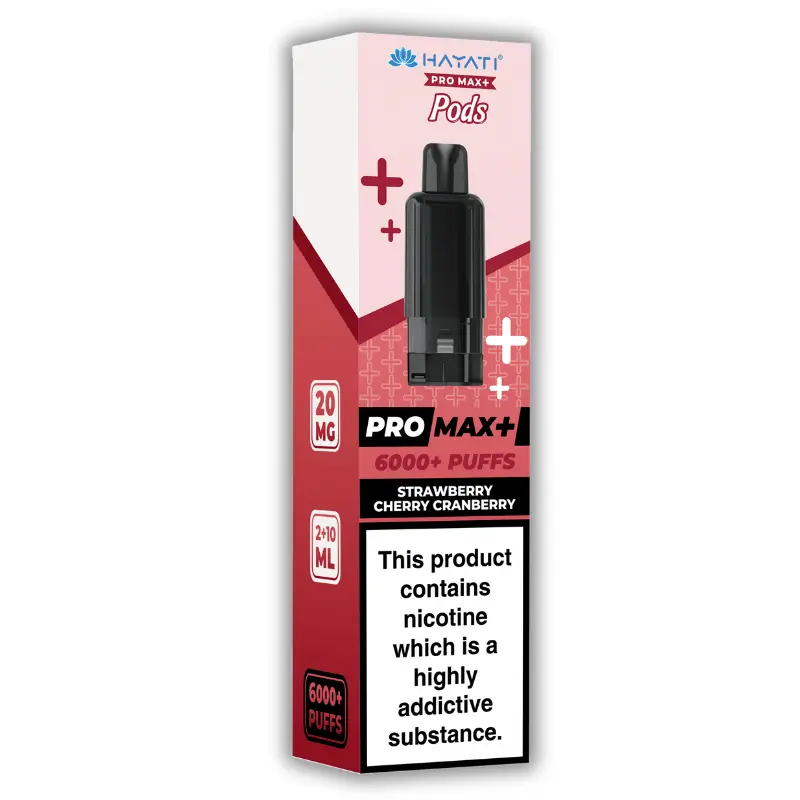
Hayati · Pro Max Plus
Strawberry Cherry Cranberry Hayati Pro Max Plus Pods
£5.49
✔ In stock — ready to ship
Genuine Hayati
Free over £20
Same-day dispatch
Secure checkout
Strawberry Cherry Cranberry as a bare refill is £5.49 for a 12ml prefilled pod at 20mg nicotine salt, supplied on its own for a Hayati Pro Max Plus you already own. Nothing about that description is unusual. Eighty-nine pods sit on the same shelf at the same price with the same volume, and the listing text for this one runs to a hundred and thirty words. The interesting question about it is not what it tastes like, because that has been written up properly already, and not whether it is worth £5.49, because every alternative costs exactly £5.49 too. The interesting question is when to stop drawing on it.
That sounds like a small question and on most liquids it is. A pod fades, you notice eventually, you replace it, the few millilitres you left behind are an annoyance rather than a decision. On this one the position is different, and the difference comes from what you are actually buying. Strawberry and cherry are the volume in this blend. Cranberry is the reason to choose it over the twenty-two uncooled red-fruit pods filed beside it, and cranberry contributes a dry snap at the end of a draw rather than a flavour in the middle of one. A dry finish is a thin, fragile thing. If it goes before the sweetness does, the pod stops being the product you picked while it is still two thirds full, and you are left holding something the shelf sells under half a dozen other names.
So this page is about replacement cadence: what the signal to retire looks like on this specific liquid, when it plausibly arrives, what the discarded liquid is worth to the penny, and, awkwardly, whether the signal everyone assumes is the right one is actually the one that fires first. That last part turned out to be contested between two pages already on this site, which was not something I expected to find and is the reason this page is shaped the way it is.
What is cited here, and what is not rebuilt
Three arguments this page leans on belong to other pages, and repeating them would waste your time and mine.
The draw-by-draw flavour analysis of this liquid belongs to the Strawberry Cherry Cranberry Hayati Pro Max Nic Salts page. It works through what each of the three fruits does, why the sequence matters more than the ingredient list, and why cherry rather than cranberry is the component structurally most at risk. If you want to know what the liquid tastes like before you commit, read that. It is the same recipe name in a 10ml bottle and the analysis transfers.
The distinction between acid and astringency, which is the single most useful thing anyone can know about cranberry before buying 12ml of it, belongs to Straw’ Cranberry Cherry/Strawberry Raspberry Ice Hayati Pro Ultra Plus 25K Pods. Cranberry does two separate things that both get called tart, one of them a taste and one of them a physical sensation on the surfaces of your mouth, and that page pulls them apart at length. Its companion, Straw’ Cranberry Cherry / Cherry Ice Hayati Pro Ultra Plus Pods, carries the work on how a drying finish interacts with a cherry kernel note. Both are cited below and neither is reconstructed.
The economics of retiring a sealed pod before it is empty belong to the Lemon Lime Hayati Rubik Prefilled Pod Kit page, and I want to be blunt about this because it changed what this page could be. That page already builds the full apparatus: cost per millilitre against volume actually drawn rather than volume bought, a table running the sum across four Hayati pod formats including this one, thresholds expressed as fractions of a pod so you can act without measuring anything, and the total waste per hundred millilitres consumed. It is thorough and it is correct and the Pro Max Plus column is in it. Reproducing that arithmetic here would be a worse version of a finished piece of work.
What that page could not do is answer the question for a liquid it was not about. Its whole method depends on two things being true: that you know which component drops out first, and that there is a cheaper format of the same liquid to escape to. On Lemon Lime both hold. On this one, neither does, and working out why is the part nobody has done.
The listing's key word turns out to be almost a private one
Start with the word the feed text puts at the centre of this pod. It calls the cranberry's finish dry. That reads as an ordinary adjective, the kind of thing every fruit listing says about something, so I counted it across the whole catalogue before building anything on it.
Four hundred and ninety-two Hayati listings are on this site. Twenty-one of them contain dry, drier or dryness anywhere in their text. Seven of those twenty-one use it only in the sense of a pod running dry, meaning empty. Of the fourteen that remain, two are wicking warnings about a dry hit on a fresh coil, one is about keeping a tin of pouches shut so they do not dry out, and two belong to the pair of tobacco-flavoured listings, where the word appears in order to say the flavour does not have that character.
That leaves eight listings in four hundred and ninety-two that use dry as a positive description of how something tastes. All eight are cranberry listings. There is no other fruit, no other profile and no other format anywhere in the catalogue that Hayati describe as dry in a way meant as a recommendation.
Narrow it to the shelf this pod sits on and the figure gets sharper still. Six of the eighty-nine Hayati Pro Max Plus Pods contain the word at all. Three of those six are the empty-pod idiom, including Midnight Dream Hayati Pro Max Plus Pods and Strawberry Raspberry Blueberry Hayati Pro Max Plus Pods, both of which use it to mean a pod that has finished. One is the tobacco listing ruling the character out. The two that are left, using dry to describe a taste, are this pod and Blueberry Cherry Cranberry Hayati Pro Max Plus Pods. Two out of eighty-nine, and they are the shelf's only two cranberries.
Set against what the copy says about everything
A rarity count only means something next to a baseline, so here is the baseline on the same eighty-nine listings. Some form of sweet appears in eighty-seven of them. Only two listings on the entire shelf avoid the word. Sharp or sharpens or sharper appears in fifty-four, tart in twenty-five, sour in fifteen, sugary in eighteen.
Sweetness, in other words, is not a property of particular pods on this shelf. It is the house register. A listing that calls itself sweet has told you nothing, because ninety-eight per cent of its neighbours say the same thing. Sharp is nearly as diluted at three listings in five. Even tart, which sounds specific, covers a quarter of the shelf and is attached to everything from a blackcurrant to a pomegranate.
I was handed this argument in the form of a contrast against a sweet-led majority of the shelf, and that framing does not survive the count. There is no sweet-led majority to contrast with, because there is no sweet-led minority either. Sweetness is unanimous to within two listings and therefore carries no information at all. The correct version of the claim is narrower and much better evidenced: what distinguishes this pod in the copy is not that it is less sweet than its neighbours, which the listings do not establish, but that it is the only kind of thing on the shelf described as dry, and dryness is a different axis from sweetness entirely. You can have both at once, and on the evidence of the text this pod does.
One more count, for honesty about the vocabulary. Astringent and astringency appear zero times in four hundred and ninety-two listings. That word is the 25K pods page's own, introduced there because Hayati have no term for the sensation and someone had to name it. It is the right word and it is not Hayati's, so anything built on it is that page's reasoning rather than a manufacturer statement. Worth knowing which is which.
Two names, and which one the copy is written from
This blend appears nine times in the catalogue under two different titles, and the split is not random.
Three listings call it Strawberry Cherry Cranberry: the 10ml Pro Max nic salt bottle, the Strawberry Cherry Cranberry Hayati Pro Max Plus Pod Kit at £7.99, and this pod.
Six call it Straw’ Cranberry Cherry, with the cranberry and the cherry swapped. One of those six is a single-flavour bare pod, Straw’ Cranberry Cherry Hayati Mini Ultra Pods at £3.49 for 4ml. The other five pair the blend with a second flavour, either Cherry Ice or Strawberry Raspberry Ice. Two of those five are sold as bare pods and three as complete kits, and their own listing text states that a rotating mouthpiece selects between the two flavours. What that arrangement means for a buyer is set out on the two pages cited above and is not my subject here.
Now the pattern. Every Strawberry Cherry Cranberry listing is on the Pro Max or Pro Max Plus hardware. Every Straw’ Cranberry Cherry listing is on the Mini Ultra or Pro Ultra Plus hardware. Nine listings, two names, zero exceptions in either direction. The word order tracks the platform and not the recipe, which is the sort of thing that happens when two names enter a catalogue from two product families rather than from two kitchens.
The descriptions follow the titles, which is the part that matters
I was handed this census with a rider attached: that both sets of descriptions give cranberry the same last-acting sharpening role, so the naming difference is cosmetic. I checked all nine, and that is not what they say.
In the three Strawberry Cherry Cranberry listings, cranberry is named third and placed at the close of the draw every time. The bottle copy puts its snap on the exhale explicitly. The kit copy and this pod's copy both attach it to the finish. Three for three, sequence and position agreeing.
In the six Straw’ Cranberry Cherry listings, cranberry is never named last. The two Mini Ultra listings run strawberry, then cranberry, then cherry, and the single-pod one goes further and states the shape outright: sweet at the start, tart in the middle, rounded on the finish, with cherry doing the rounding. That is not a late-acting cranberry. It is a mid-palate one with something else after it. Two of the Pro Ultra Plus listings invert the role altogether and describe strawberry and cherry softening cranberry's sharpness, which makes cranberry the base being worked on rather than the thing arriving last. The remaining ones list the three fruits without assigning a sequence at all.
So the descriptions follow the title order, and the title order follows the platform. Read together, the nine listings are evidence about how the copy was produced and not about what is in the bottles. Somebody wrote each description from the name in front of them, and where the name put cranberry, the prose put cranberry.
Two things follow, and I want to be careful about both.
The first is that whether the two names are one recipe is not published anywhere. Hayati do not say that Straw’ Cranberry Cherry and Strawberry Cherry Cranberry are the same liquid, and they do not say they are different. Nine listings share three fruits and a declared strength. That is all the information there is, and a shared fruit list is not a shared formulation.
The second is what this does to the nic salt page's ordering claim, which is that leading with the softest fruit and finishing with the sharpest gives the draw a shape, and that the shape is most of the experience. My census neither confirms nor overturns it. That page was written about a Pro Max bottle titled Strawberry Cherry Cranberry, and for the three listings carrying that title the copy is entirely consistent with it: cranberry last, cranberry at the finish, three times out of three. The claim holds where it was made. What the census adds is that the other six listings, on other hardware and under the other name, describe a different arrangement, and there is no published basis for deciding whether that reflects a different liquid or a different copywriter reading a different title. Say that plainly rather than picking one.
A footnote for anyone arriving from a search result. The slug for this page matches its title word for word, which is not something you can assume on this site. The Straw’ Cranberry Cherry listings drop the apostrophe in their URLs, so a slug reading straw-cranberry-cherry can look like a truncation of strawberry when it is an abbreviation of it. Read the title.
The retirement signal, and the fact that two pages disagree about it
Here is where the cadence question actually lives, and where I stopped being able to take my instructions at face value.
The premise I was given is straightforward and intuitive. The dry snap is what you are paying for. Aromatic top notes are the lightest material in a liquid and the first thing a tiring coil stops lifting out of a wick. Therefore the dry finish goes first, the pod reads as a plain sweet red blend while it is still substantially full, and the retirement signal arrives early and is unmistakable.
The nic salt page for this liquid supports exactly that. Its list of spent-coil signals puts the softening of the dry finish first, ahead of the cherry going hollow and well ahead of anything tasting scorched. On that reading, the first thing you lose is the thing you bought.
The 25K pods page predicts the opposite, and marks it as a prediction. Its reasoning is that the aromatic parts of this blend are the cherry depth and the strawberry roundness, that a drying finish is a tactile sensation rather than an aromatic one, and that a tactile sensation is therefore the more durable component. On that reading the late stage of the liquid is faded fruit with the grip still intact, which it describes as the least appealing version of it and advises treating as the pod ending rather than as the flavour's real character.
Two pages on this site, both about this blend, pointing in opposite directions about which component survives longest. I am not going to adjudicate that, and I want to say why rather than simply hedging. Neither is a Hayati statement. Hayati publish no coil resistance, no wick material and no formulation for any prefilled pod they sell, so there is no specification to appeal to. Both are inferences from how coils age, the 25K page flags its own as inference in the text, and the disagreement is real rather than a matter of wording: one says a physical sensation is fragile because it sits on light material, the other says it is durable because it is not aromatic at all. Adding a third inference in the same confident voice would make the situation worse, not better, and a buyer who acts on a confident wrong answer ends up throwing away liquid for no reason or keeping a pod that has stopped working.
What survives the disagreement is enough to act on
Set the two readings side by side and notice that they agree about the thing that matters for cadence. In both, the pod stops being a three-part blend before it is empty. They differ only in which residue you are left holding. Under the first reading you get a sweet red fruit pod with the edge gone. Under the second you get a thin, gripping pod with the fruit gone. Neither is what you chose, both arrive with liquid still in the reservoir, and in both cases the correct action is the same.
That means the usable signal is not the loss of any single component. It is divergence: the point at which the three stop arriving as one thing and start arriving as separate events, or as one event with holes in it. Divergence is detectable under either reading, because it is what both readings describe. Watching for it costs nothing and does not require you to have guessed right about the chemistry.
There is a structural reason this matters more here than on the liquid where the retirement argument was first worked out. The Lemon Lime page rests its case on that recipe having exactly two components, which makes the test binary: the lime is arriving or it is not, and a categorical change is far easier to notice than a gradual one. That is correct and it is a good argument. It does not transfer cleanly to a blend with three parts, because three parts can fail in more than one order, and the failures do not all mean the same thing.
The nic salt page has already established that cherry is the most fragile of the three on this recipe, having neither the volume of the strawberry nor the force of the cranberry, and that it is the component doing the joining. So a three-part blend has at least three distinguishable degraded states rather than one. Lose the cranberry and you have a sweet red pod. Lose the cherry and you have sweetness running straight into sourness with a gap in the middle, which is cruder than what you bought but still has its edge. Lose both and you have a strawberry.
That middle case is the confound and it is the practical reason to watch for divergence rather than for the dry snap specifically. A pod that has lost its cherry bridge can read as harsher and less integrated, and a buyer monitoring the finish will register that the draw has gone wrong without being able to say which end it went wrong at. Checking whether the snap is still present will not settle it, because on that failure the snap is still present and is in fact more exposed than before. Checking whether the draw still has a shape will settle it.
What the decision costs, in money
The sum is small and worth having in front of you before the rest of the argument.
£5.49 divided by 12ml is 45.75p a millilitre. Retire the pod with 3ml still in it and you have written off £1.37, which is a quarter of what you paid. Hayati rate this pod at up to 6,000 puffs, a laboratory figure taken under fixed conditions rather than a forecast for your device, and dividing one published number by the other puts about two microlitres behind each rated puff. On that arithmetic, 3ml is roughly 1,500 of them going in the bin.
Two facts about this shelf make that figure behave differently from how it behaves elsewhere in the range. Every one of the eighty-nine Pro Max Plus pods costs £5.49. Every one holds 12ml. There is no cheaper pod to move to and no larger one, so 45.75p is not a price you can shop against within the format. It is a constant. Which means the only economic variable left on this shelf is how much of each pod you leave behind, and a retirement policy is the only lever you have.
The full treatment of that lever, including what the sum looks like at every retirement point and what the waste totals per hundred millilitres actually consumed, is on the Lemon Lime Hayati Rubik Prefilled Pod Kit page and is better than a summary of it would be. Its Pro Max Plus column is the one that applies to this pod and it is worth reading before you adopt any policy at all. I am going to take its conclusions as given and spend the space on the two places where this liquid departs from them.
The cheap-format escape does not exist for this liquid
The strongest practical recommendation in that page's arithmetic is not to retire early at all. It is to buy a pod small enough that the question cannot arise, on the grounds that a 4ml pod's element never accumulates enough liquid to get old, so every millilitre in it performs and nothing is discarded. You pay more per millilitre and you waste none, and past a certain retirement point that is the cheaper arrangement.
For Lemon Lime that route is open, because Hayati sell it as a 4ml Mini Ultra pod under the same name. For this liquid it is not open, and the reason is the naming census above.
Under the title Strawberry Cherry Cranberry, this recipe exists exactly three times: a 10ml bottle, a 12ml kit and a 12ml refill. Two of those three are this same 12ml format and the third is not a pod at all. There is no 4ml Strawberry Cherry Cranberry. There is no 22ml one. The format ladder that the retirement argument depends on has one rung for this name.
A 4ml pod of a blend built from these three fruits does exist, at £3.49, which is 87.25p a millilitre with a laboratory rating of 1,500 puffs against it. It is filed as Straw’ Cranberry Cherry, on different hardware, and its own description puts the fruits in a different order and gives the cranberry a different position in the draw. Buying it as an escape from this pod's retirement problem means assuming that two names are one recipe, and that assumption is exactly what nine listings' worth of copy declines to settle. Worse, the evidence points the unhelpful way: the naming tracks the platform, and the prose tracks the naming, so the one thing the catalogue does tell you is that the descriptions were written from the titles. That is not a basis for spending money on the premise that the contents match.
I would rather say that cleanly than dress it up. If you want a smaller pod of something in this family, Straw’ Cranberry Cherry Hayati Mini Ultra Pods is the listing to look at, it is a third of the volume for two thirds of the price, and whether it is the same liquid is not published. Treat it as a related purchase rather than as a substitution, and judge it on its own first pod.
So the cadence decision on this SKU is narrower than the general case. It is not which format to buy. It is whether to finish the pod in your hand.
The degraded pod is a product Hayati sell, which flips the answer
This is where the two liquids part company completely, and it is the part of the argument I think is worth the most to a repeat buyer.
The Lemon Lime page's sharpest observation is that its degraded pod is not a worse version of anything in the range. Strip the lime out of a lemon lime and you are left with a plain lemon, and the catalogue contains no plain lemon: every lemon listing is paired with something. The end state of that pod is a product Hayati have declined to sell, arrived at by attrition, so there is nothing to weigh it against and no reason to keep drawing on it.
Run the same test here and the answer comes out the other way round. Strip the cranberry out of this blend and you have an uncooled sweet red fruit pod. Thirty-one of the eighty-nine listings on this shelf name a strawberry, a cherry, a raspberry or a berry, and twenty-two of those thirty-one carry no cooling word and no sour or cranberry marker in the title. Twenty-two uncooled sweet red pods, all at £5.49, all 12ml. The degraded state of this pod is not an orphan. It is one of the most heavily stocked categories in the range.
Several of them are close enough to name. Strawberry Raspberry Cherry Hayati Pro Max Plus Pods is the same architecture with a raspberry where the cranberry sits, which is a brighter and much shorter acidity. Blueberry Raspberry Cherry Hayati Pro Max Plus Pods swaps the strawberry for a rounder, darker base. Mixed Berries Hayati Pro Max Plus Pods and Cherry Berry Hayati Pro Max Plus Pods are broader and less separated by design.
That changes the discard question from an unmeasurable one into a shopping one. The real question is not how many millilitres are left, which you cannot see inside a sealed pod anyway. It is this: at the moment the snap stops arriving, would you have paid £5.49 for what is still in your hand? Because the shelf is selling that product, at that price, under about twenty-two names.
If the answer is yes, finish the pod. You are not throwing away £1.37 by keeping it, and you are not drawing on something broken. You are drawing on a sweet red fruit blend, which is a thing people buy on purpose, and the only loss is that you had picked something else.
If the answer is no, retire it, and the £1.37 is not waste in any meaningful sense. It is the price of the fact that a sweet red blend is not what you wanted, which is a preference you already expressed when you chose a pod with a cranberry in the name over the twenty-two that did not have one.
Either way the decision needs no measurement, no coil resistance figure and no guess about which component failed first. It survives the disagreement between the two pages above, because it does not depend on knowing which residue you are left with. Ask the question about the pod actually in front of you.
One honest limit on that
The degraded pod is not literally any of those twenty-two. It is a worn pod, which means whatever you lost first, you will shortly also be losing the cherry bridge, and a pod running sweetness straight into nothing is not the same as a pod built to be sweet. So the comparison holds early and decays. In practice that argues for asking the question the first time you notice the shape has changed rather than three weeks later, because the honest answer is more likely to be yes at that point than at any point after it.
The numbers on this pod, and which of them do any work
| Unit price for liquid | 45.75p per millilitre, and identical across all 89 pods on this shelf |
| Ticket price | £5.49 |
| Volume | 12ml, prefilled and sealed |
| Cost of a 3ml early retirement | £1.37, or a quarter of the pod |
| Nicotine | 20mg nicotine salt |
| Hayati's puff figure | Up to 6,000, a laboratory measurement |
| Flavour as filed | Strawberry Cherry Cranberry |
| Same fruits, other platforms | Filed as Straw’ Cranberry Cherry. Recipe identity not published |
| Cooling | None listed |
| What arrives | One pod. No device, no charger, nothing to assemble |
| Preparation needed | None. It is filled and the wick is already wetted |
| Shelves it is filed on | Berry Vapes, Cherry Vapes, Strawberry Vapes |
| Stock reference | hpm-plus-6k-pods-strawberry-cherry-cranberry |
Most of those rows are the same on every pod in the format and can be skimmed. Two are worth a second look and one deserves a caveat.
The unit price row is the one that does the work, and only because of its uniformity. On a shelf where eighty-nine products carry one price and one volume, a per-millilitre figure cannot help you choose between them. What it can do is price a decision, which is the use it gets above. A number that is useless for comparison can still be useful for arithmetic.
The nicotine row has one variant on this shelf worth naming. Eighty-six of the eighty-nine pods are 20mg, which is the maximum strength permitted in e-liquid sold in the UK. The exceptions include Hayati Pro Max Plus Prefilled Pods 5mg, which costs the same £5.49 for the same 12ml at a lower strength. Nicotine is addictive, and what strength suits anyone is a personal matter that a product page has no standing to advise on. The point here is only that the option is filed on the same shelf and is easy to miss.
The caveat belongs to the flavour row. This pod's own listing states 20mg and 12ml and does not state the preparation, so the salt description follows the rest of this range rather than this specific listing's text. It is the standard formulation for a prefilled pod at this strength and the whole catalogue is written that way, but it is an inference from format rather than a line on a spec sheet, and you should know that before you treat it as one.
One line of housekeeping, said once. This pod is built for the Pro Max Plus and a compatibility decision from a retail page, including this one, is not a specification. Read what is printed on the device you own.
Where to go instead, sorted by what you would be changing
A refill buyer is not choosing a flavour from scratch. You already know whether you want the snap, so the useful comparisons are the ones that vary one thing at a time.
If you want the same shape with a gentler finish
Strawberry Raspberry Cherry Hayati Pro Max Plus Pods is the closest structural relative in the format: same three-fruit build, same strawberry lead, with raspberry occupying the position cranberry holds here. The difference is real and it is in the duration rather than the intensity. Raspberry acidity is bright and over quickly. Cranberry's contribution lingers as a physical dryness after the taste has finished, which is the distinction the 25K pods page sets out properly. If what you liked was the idea of a sharper red fruit but the after-effect was more than you wanted, that is the one to try.
Strawberry Raspberry Blueberry Hayati Pro Max Plus Pods goes further in the same direction, replacing the cherry's dark middle with a rounder blueberry and leaving nothing with a hard edge in the recipe at all.
If you want the snap and a different base under it
Blueberry Cherry Cranberry Hayati Pro Max Plus Pods is the only other pod on this shelf with a cranberry in it and the direct comparison for anyone who has already decided they want one. The single substitution is blueberry for strawberry at the front, which is a softer and less immediately recognisable opening. Its listing describes the cranberry finish in the same terms as this one, sharp and dry, and puts it in the same final position, so on the published copy the two differ at the start of the draw and agree at the end. Whether that survives contact with the actual liquid is the sort of thing only a second pod tells you.
If it is the sourness rather than the dryness you were after
This is the distinction most likely to send someone to the wrong pod, and the two are genuinely different mechanisms rather than two words for one. Cherry Sour Raspberry Hayati Pro Max Plus Pods is one of the shelf's fifteen listings whose copy reaches for sour, and it delivers acidity without the drying after-effect. If your reason for buying a cranberry was that you wanted your mouth to pucker rather than to feel stripped, the sour-titled pods are the better aim and there are several of them.
If cherry was the part you actually wanted
Cherry is in the middle of this blend and is doing connective work rather than leading, so anyone who bought this for the cherry has bought the wrong pod. Blue Razz Cherry Hayati Pro Max Plus Pods puts it against a loud blue raspberry, and Cherry Peach Lemon Hayati Pro Max Plus Pods gives it a citrus lift instead of a berry one. Both are filed on Cherry Vapes with this pod, which runs to seventy-two listings across every Hayati format and is the fastest way to see the whole set.
If strawberry was the part you actually wanted
Four strawberry-led pods on this shelf take the fruit in different directions and none of them has an edge on it. Strawberry GB Hayati Pro Max Plus Pods pairs it with a confectionery base. Strawberry H’Bubba Hayati Pro Max Plus Pods does something similar with a different sweet register. Strawberry Watermelon Hayati Pro Max Plus Pods keeps it in fruit and goes lighter, and Strawberry Kiwi Hayati Pro Max Plus Pods is the one of the four with any real tartness in it, from the kiwi rather than from a berry.
If you want something cold
Nothing in this pod is cooled and its listing names no menthol or ice. Cooling is a separate axis and the catalogue's own vocabulary for it has been counted elsewhere, so I will not do it again here. Within this shelf, Strawberry Raspberry Ice Hayati Pro Max Plus Pods keeps a red fruit profile and adds a cold finish, and Blackberry Ice Hayati Pro Max Plus Pods goes darker with the same treatment. Worth knowing before you order: cold and dryness both narrow the tail of a draw and they are easy to confuse in memory, so a cooled pod is not a way of getting this pod's effect by another route.
Rotation partners rather than replacements
A drying pod and a heavily sweetened one work differently in sequence than either does alone, and if you keep two on the go the second one is a real choice rather than a spare. Blue Razz Blackcurrant Hayati Pro Max Plus Pods and Sakura Grape Hayati Pro Max Plus Pods both sit well away from the red-fruit group without being cold, which makes them easier to tell apart from this one after a long day than another berry would be.
The whole shelf
Eighty-nine pods are filed on Hayati Pro Max Plus Pods, all at £5.49 for 12ml. The wider Hayati Prefilled Pods & Refills shelf carries two hundred and one, which is where the other formats live, and Strawberry Vapes narrows it to eighty-two if the fruit rather than the format is what you are browsing by. If you do not own the device, the Strawberry Cherry Cranberry Hayati Pro Max Plus Pod Kit at £7.99 carries the same 12ml with a body, which is £2.50 more than this pod on its own.
Running a pod you may decide to retire early
The generic parts of this are the same on any sealed pod and are kept short. The parts that are specific to a drying finish are where the value is.
Nothing needs priming. This arrives filled with the wick already wetted, so there is no soak time and no first-pull risk. That is worth stating only because it means any weakness in the first few draws is the device or your own palate rather than the pod settling in.
Judge it early and write the judgement down. If you intend to run a retirement policy on this pod, you need a reference for what it is supposed to taste like, and the only reliable time to take that reading is in the first day or two. Everything after that is a comparison against a memory that has been updating itself. One line is enough: whether the snap arrives, where in the draw it lands, and whether the three fruits read as one thing.
Check the exhale, not the inhale. The strawberry is the loudest component and it is the one least at risk, so it will be reporting normally long after the part you are monitoring has changed. Someone checking the front of the draw is checking the wrong end.
Rule out a short draw before condemning anything. On a blend whose components arrive in sequence, a clipped pull can end before the finish has happened, which produces exactly the symptom you are watching for. Extend the pull by a second and attend to what comes after the fruit before deciding the pod has turned.
Rule out yourself. A palate coated by a heavily sweetened pod will under-report a dry finish, which is a specific hazard if this is one of two pods you rotate. Give it a gap, or a glass of water, and check again before acting. The same goes for a cold.
Water does more here than on a sweet pod. A drying sensation works by stripping the lubricating film off the surfaces of your mouth, and rebuilding that film is what makes the next draw read properly. This is the one piece of routine handling that changes the liquid rather than marginally improving it, and the 25K pods page is where the mechanism is set out.
Space the draws. Rapid repeats compound a drying finish in a way they do not compound sweetness. If the pod feels harsher than you remember it, check your pace before you blame the coil, because the two produce a similar complaint by completely different routes.
Buy the spare when you open the pod, not when you finish it. That rule is the Lemon Lime page's and it is the one that decides whether a retirement policy is a rule or an intention. A policy with no spare in the drawer resolves itself by your carrying on with the old pod, which loses you the whole argument and the £1.37 as well.
Storage. Heat and light degrade the lightest material in a liquid first, and on this blend that material is the fruit aroma rather than the grip. A pod left somewhere warm for a fortnight will move towards the flat, gripping end state faster than one that has been in a drawer. Keep spares cool, dark, and well out of reach of children and pets, and sitting upright rather than on their side.
Disposal. A spent pod holds an element and traces of liquid, which puts it outside the ordinary household bin. Electrical waste collection, either at a retailer that sells this kind of product or through the council's own arrangements, is where it belongs.
Questions a repeat buyer asks about this one
What exactly is the signal that this pod is finished?
The draw stops having a shape. Instead of sweetness opening, depth in the middle and a dry close, you get the three arriving as separate events or as one event with a hole in it. Two pages on this site disagree about which component goes first, so watching for any single one is unreliable, but both descriptions agree that the parts stop cohering and that is what to watch for.
How much liquid will be left when that happens?
Unknown, and not knowable from anything published. Hayati state no coil resistance or wick material for any prefilled pod, and how fast an element fouls depends on how hard you run it and how long your draws are. The pod is sealed, so you cannot see the level either. This is why the argument on this page is built around a question you can answer rather than a volume you cannot measure.
Is it worth finishing the pod once the snap has gone?
Often, yes, and that is unusual. What you are left with is an uncooled sweet red fruit blend, and twenty-two of the eighty-nine pods on this shelf are exactly that, at this same price. So ask whether you would have bought one of those. If you would, carry on. If the cranberry was the whole reason you chose this, retire it and accept the cost.
What does retiring early actually cost?
45.75p for every millilitre you leave. Three millilitres is £1.37 and a quarter of the pod. The full policy arithmetic across the formats, including what the waste totals over time, is worked out on the Lemon Lime Hayati Rubik Prefilled Pod Kit page rather than here.
Is the 4ml version the same liquid?
Not published either way. Straw’ Cranberry Cherry Hayati Mini Ultra Pods carries the same three fruits under a different name on different hardware, at £3.49 for 4ml. Hayati never state that the two recipes match, and the nine listings of this fruit combination split cleanly by platform into two naming conventions, with each description following its own title's word order. That is evidence about how the copy was written and nothing more.
Is anything in this pod cooled?
No cooling is listed for it. The listing names no ice, no menthol and no mint, and the title carries no cooling word. A dry finish can read as a narrowing of the draw in a way that some people describe as cold, but that is a tactile effect rather than a coolant.
Why does the same blend have two different names?
Three listings call it Strawberry Cherry Cranberry and six call it Straw’ Cranberry Cherry, and the split is exactly by hardware family: the first name on Pro Max and Pro Max Plus, the second on Mini Ultra and Pro Ultra Plus, with no exceptions in nine listings. Hayati do not explain it and do not say whether the two are one recipe.
How sweet is it compared with the rest of the shelf?
Harder to answer from the listings than you would expect. Eighty-seven of the eighty-nine descriptions use a sweetness word, so the copy cannot separate them on that axis at all. What the copy does distinguish is dryness, which only two listings on the shelf claim, and both of those are cranberries. Sweetness and dryness are independent, so this pod being dry does not make it unsweet.
Does it get better after a few days?
A prefilled pod arrives mixed and sealed, so there is no steeping in the sense a freshly mixed liquid has. Any change you notice over the first week is more likely to be your own palate adjusting to a drying finish, which does happen and which makes a second pod a fairer test of the flavour than a first one.
Is £5.49 a lot for this?
It is the same as every other pod in the format. All eighty-nine are £5.49 for 12ml, so the price carries no information about this particular one and there is nothing to compare within the shelf. The comparison that exists is across formats, and it is complicated here by the fact that the other formats file this fruit combination under a different name.
What if I have not bought the device yet?
Then the Strawberry Cherry Cranberry Hayati Pro Max Plus Pod Kit at £7.99 is the listing you want, since it carries the same 12ml pod with a body for £2.50 more. This page assumes you already own one, which is most of why its argument is about cadence rather than about whether to buy at all.
The position, plainly
A £5.49 refill of a three-fruit red blend whose selling point is a dry finish, for a device you already own. The flavour case for it was made properly on the nic salt page for the same recipe and is not repeated here.
What this page adds is a count and a correction. Across four hundred and ninety-two listings, dry is used as a description of a taste eight times and all eight are cranberries, which makes the adjective in this listing close to a private vocabulary rather than the ordinary copy it looks like. Against that, sweetness appears in eighty-seven of the eighty-nine descriptions on this shelf and therefore distinguishes nothing, so the contrast to draw is not sweet against less sweet but a shelf-wide default against an axis almost nothing else claims. And the nine listings of this fruit combination split by platform into two word orders, with each description faithfully following its own title, which tells you how the copy was produced and leaves the question of whether the two names share a recipe exactly where Hayati left it.
For cadence, the practical upshot is short. Watch for the draw losing its shape rather than for any one fruit, because two pages here predict opposite failure orders and neither is a published fact. When it goes, ask whether you would have paid £5.49 for what is left, knowing the shelf sells that product twenty-two times over. Retiring with three millilitres in the pod costs £1.37, which is real money and not a catastrophe, and it is the only lever you have, because every pod in this format is the same price and the same size and this recipe has no smaller version under its own name.
Strictly for adults aged 18 and over. Nicotine is an addictive substance.
You might also like


