
Home / Hayati Rubik Prefilled Pod Kit / Watermelon Ice Hayati Rubik Prefilled Pod Kit
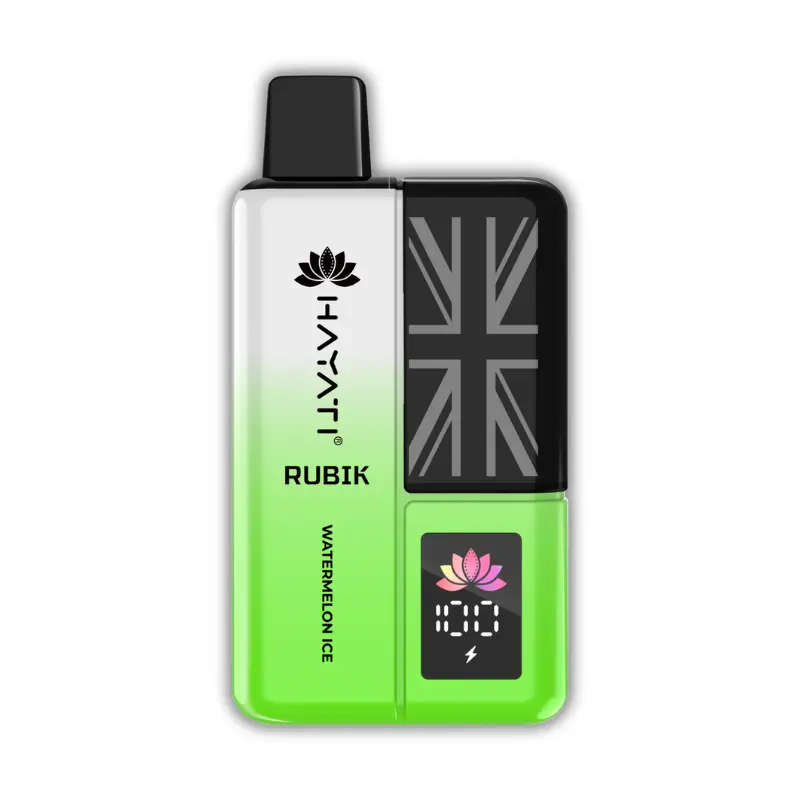
Hayati · Rubik
Watermelon Ice Hayati Rubik Prefilled Pod Kit
£5.99
✔ In stock — ready to ship
Genuine Hayati
Free over £20
Same-day dispatch
Secure checkout
Twenty kits sit on Hayati Rubik Prefilled Pod Kit and nineteen of them are bought for what is sealed in the pod. This one has a second use, and for a fair number of buyers the second use is worth more than the melon.
The proposition is this. Watermelon Ice is the hardest cooling agent in the Hayati catalogue to hear, because the fruit underneath it is already doing an impression of the same thing. That makes the liquid a poor way to find out what a coolant tastes like and an unusually good way to find out how much of one you can detect. Coolant sensitivity varies enormously between adults, nothing on any label tells you where you sit, and where you sit decides which half of a 492-listing catalogue is worth your money. One £5.99 box, run properly, will tell you. That is a strange thing to buy a vape for and it is a real one.
The product itself takes three lines. Five pounds ninety-nine puts the Rubik body and a factory-filled pod in one box. Twelve millilitres of liquid, 20mg nicotine salt, an 850mAh cell, and a figure of 7,000 puffs that Hayati produce on bench equipment drawing to a fixed schedule rather than in anybody's pocket. Nicotine is an addictive substance. Nothing there separates this listing from the nineteen beside it, because every kit on the shelf carries the same four numbers at the same price. That uniformity is normally reported as a shrug. On this page it is the thing that makes the argument work, because a test needs its apparatus held constant and this shelf holds it constant for you.
What follows is in four parts. First, why a coolant that has nothing to push against is the right stimulus for measuring a person rather than a liquid, with the claim counted rather than asserted. Second, the test itself: what to compare against, what question to ask, and how to read each of the three possible answers. Third, the confounds, of which there are several real ones, including the fact that your sensitivity is a state rather than a trait and moves while you are not looking. Fourth, the payoff, which is what each result tells you to buy and what it tells you to stop paying for.
Why a redundant coolant measures the drinker rather than the drink
The finding underneath this, which belongs to other pages
None of the groundwork here is mine and pretending otherwise would be dishonest. Four arguments already on this site do the load-bearing work, and the right move is to name what each settled and then use it.
The first is the redundancy argument, made on the two Watermelon Ice listings for the larger Pro Ultra Plus body. Watermelon arrives in a person's head with a temperature already attached, not because the fruit contains any cooling compound (it contains none) but because it is mostly water, it is nearly always eaten chilled, and its aroma is light and fast, so it behaves in the mouth the way a cold drink behaves. A coolant laid over it therefore confirms something rather than supplying it, and contrast, which is the most valuable thing a coolant does, is unavailable because you cannot contrast a thing with itself. That page also puts the defence properly: a buyer who wants the cold above everything is served rather than short-changed by a liquid that points one way from end to end.
The second is the taxonomy that grew out of it. Lemon Cola Ice Hayati Rubik Prefilled Pod Kit and the cola pages behind it establish the opposite case, where a coolant contradicts a base built from warm materials. Pineapple Ice Hayati Rubik Prefilled Pod Kit adds a fourth position, where the fruit has no temperature at all but already performs the coolant's usual job of cutting, so the two duplicate a function rather than a quality. Red Apple Ice Hayati Rubik Prefilled Pod Kit holds down the remaining corner, where the coolant is structural because the accord has no edge of its own and reads as syrup without one. Four positions, four pages, and this listing occupies the one where the coolant's contribution is smallest.
The third is the vocabulary census run on the Blue Frozen pods page, which counted the cooling words across all 492 titles and found them ungraded. Ninety titles carry Ice, three carry Frozen, two carry Cooler, and Chill and Freeze appear on nothing at all, with no title anywhere putting an ice-family word next to a mint-family word. I re-counted every one of those figures today and they hold. What it means here is that the word Ice on this box tells you a coolant is present and tells you nothing about how much, so nobody can read the dose off the label.
The fourth is the adaptation work, which matters more to this page than to most and is cited properly further down rather than rebuilt.
A loud stimulus measures nothing, which is why the usual candidates are wrong
Ask a room of adults whether a heavily cooled menthol liquid is cold and every hand goes up. That unanimity feels like a strong result and it is the opposite of one. A question everybody answers the same way separates nobody, so a stimulus pitched well above everyone's detection threshold produces a flat reading and no information at all. The same is true in the other direction: a stimulus so faint that nobody registers it also separates nobody. Measurement happens in between, where some people detect the thing and others do not, and the spread of answers is the result.
That is the whole principle and it is worth stating plainly because it runs against instinct. To find out how sensitive somebody is to a coolant, you do not hand them the coldest thing you have. You hand them something close to the edge of being noticed, and you see which side of the edge they land on.
Now ask which liquid in this range sits closest to that edge. Not one of the mints, where cold is the declared subject and nobody misses it. Not Lemon Cola Ice, where the coolant is overruling a warm spice accord and the disagreement between the two is audible to anybody. Not Red Apple Ice, where the cold is carrying the texture and its absence would be immediately obvious. On all of those, the coolant supplies something the base does not have, so it announces itself and everybody hears it.
Watermelon Ice is the one where it does not announce itself. Strip the coolant out in your imagination and what remains is a thin, watery, quick-clearing, faintly sweet fruit, which is to say something that already reads like a cold thing. The gap between the cooled version and the imagined uncooled one is the smallest gap on the shelf, and that gap is exactly what the test is trying to measure. A person with a strong cold response will still find this pod clearly, unmistakably chilly. A person with a weak one may find it hard to separate from a plain fruit pod. Both of those are real outcomes, both are common, and the difference between them is not the pod.
Counting the claim before leaning on it
"The hardest coolant in the catalogue to hear" is the sort of sentence that ought to be checked rather than repeated, so here is the check.
Nineteen distinct flavour families in these 492 listings are sold as a single flavour with the word Ice attached: banana, blackberry, Bru, bubblegum, cherry, cola, grape, lemon cola, lychee, mango, pineapple, red apple, red berry, smooth strawberry, strawberry, strawberry raspberry, Vim, Vimbull and watermelon. Those nineteen are the candidate pool, because a solo base is the only clean case. Anything with a partner fruit has a second variable in it.
Go through them asking one question: before any coolant is added, does this base already produce the impression a coolant produces? The berries do not. Cherry, grape, strawberry, blackberry, red berry and strawberry raspberry are sweet and round and carry no temperature. Banana is soft and warm. Mango is heavy and resinous. Lychee is perfumed and floral, which is a texture claim rather than a temperature one. Red apple, by its own page's account, has so little edge that the coolant had to be put there to supply one. Pineapple brings an acid, which cuts, but cutting is a function and not a temperature. Bubblegum is a confectionery impression and confectionery has no weather.
That leaves the drinks, and they are the honest counterexample rather than something to write around. Cola, Bru, Vim and Vimbull all name soft drinks, and a soft drink is served cold, so the association exists. Vim Ice Hayati Rubik Prefilled Pod Kit is the clearest case on this shelf, and Hayati's own copy on it reaches straight for the image of cordial poured over ice. So the claim "watermelon is the only base that pre-loads the cold" is too strong, and stating it that way would be wrong.
The narrower version survives, and it is more useful. There are two separate routes by which a base can imply coldness. One is a serving convention: you have always had this thing chilled, so the name carries the memory. The other is the behaviour of the material itself: it is thin, it wets the mouth, it clears fast and leaves nothing behind, which is what cold liquid does. The drinks have the first route only, and their flavour materials are warm or sugar-heavy underneath, which is precisely the finding the cola pages built on. Watermelon has both routes at once. It is the only base among the nineteen where the fruit's own physical behaviour mimics what a coolant does, rather than merely reminding you of a temperature you associate with it.
That is the claim this page actually relies on, it is narrower than the one handed to me, and it survives counting. The practical consequence is unchanged: of the nineteen single-flavour iced profiles in this catalogue, this is the one where the coolant's marginal contribution is smallest, which makes it the most discriminating.
What the catalogue's own construction says about it
There is a second line of evidence, and it comes from Hayati's own decisions about which liquids get cooled.
Watermelon Vapes holds twenty-nine listings and twenty-seven of them name the fruit in the title. Split those twenty-seven by whether the melon is alone in the pod. Nine are solo, and every one of the nine is Watermelon Ice: the two Pro Ultra Plus listings, the two Pro Max Plus listings, this kit, its refill, the 10ml salt bottle and the two large bottles. Eighteen have something else in with them, and not one of the eighteen carries a cooling word. Nine out of nine on one side, zero out of eighteen on the other.
Hayati have never once sold a plain watermelon without a coolant, in any format, at any strength, at any price. If you decide you like the fruit and want it warm, the catalogue has nothing to sell you. Watermelon Fruit Twist Hayati Pro Ultra Plus 25000 Prefilled Pod Kit is uncooled and puts the melon in a crowd. Watermelon B'Gum / Strawberry B'Gum Hayati Pro Ultra Plus 25000 Prefilled Pod Kit is uncooled and replaces the fruit with a sweet-shop reading of it. Neither is a plain melon. The Red Apple Ice page found the same structural hole for its own fruit, from a completely different cause, and named the consequence for a buyer, which is that the fruit cannot be auditioned on its own. Watermelon has the hole too, and it is worth knowing before you spend, because it puts a hard limit on how clean the test below can be.
The nine-versus-eighteen split is also a replication of something the pineapple page found first. That page counted six solo pineapples, all cooled, against fifteen compounds, none cooled, and concluded that the range treats a coolant and a partner fruit as substitutes for one another: whichever is present, the other is not needed. The watermelon figures land in exactly the same shape and that strengthens their case rather than adding to it, so the finding stays theirs.
What is worth adding is the obvious next question, which is whether the rule is about these two fruits or about solo listings in general. It is not general, and the counterexamples are on this very shelf. Juicy Peach is sold thirteen times across the catalogue, always alone in the pod, and no listing of it carries a cooling word. Triple Mango is sold seven times, always alone, and no listing of it is cooled either. Both sit on this shelf uncooled, the peach as Juicy Peach Hayati Rubik Prefilled Pod Kit and the mango as the Triple Mango kit beside it. Twenty listings of two solo fruits, zero coolant between them. So being alone in a pod does not get you cooled. Something about the particular fruit does, and the pineapple page's reading of what that something is stands up better for having survived the wider check.
The test, given properly
What follows is a procedure rather than a suggestion, because a sloppy version of it produces a confident wrong answer, which is worse than no answer. It costs £5.99 plus two refills, it runs on one body, and you only ever need to do it once.
Three conditions, all of which have to hold
Run it cold, meaning your palate rather than the device. This is the condition people skip and it is the one that ruins the reading. Sensitivity to a cooling compound falls with repeated exposure, and it falls fast. The Double Menthol pods page works through the mechanism and states the buying consequence flatly: whatever felt most severe in the first hour will feel unexceptional a week and a half later, and most reports of a chilled pod losing its bite are reports about the person holding it. That conclusion is theirs and I am taking it rather than re-deriving it. The relevant part for you is that a reading taken while you are a fortnight into an iced liquid is not a reading of your sensitivity. It is a reading of your adapted sensitivity, and it will understate you, possibly by a lot. Give yourself three or four clear days on uncooled liquid before you start. Adaptation reverses over that sort of interval, which is the good news buried in the same finding.
Run it early in the day. The Spearmint kit page supplies the discriminator and it costs nothing: judge on the first draw of the morning, before food or coffee, because a night's gap clears the palate completely and puts two separate mornings on the same footing. All three readings in the test below should be taken in that window, on separate mornings, and not squeezed into one evening.
Run it on a fresh pod. The Watermelon Ice pod pages establish that this liquid does not fade evenly. The light aromatic material that carries the fruit is exactly what a tiring coil stops rendering, while the cooling agent carries on at full volume, since setting off a nerve ending is a blunter task than recreating the scent of a fruit. So the ratio moves across the pod's life, always in the same direction, and never back. A reading taken at 4ml remaining is a reading of a colder liquid than the one you bought. Take yours in the first day or two.
The three points, and why they must run on one body
You are not asking a yes-or-no question. You are placing this pod on a line between two other pods, and the line has to be built out of hardware that does not move.
The floor. An uncooled single fruit with no acid in it, so that nothing in the liquid can be mistaken for an edge. Juicy Peach is the right pick on this shelf and the corpus has already settled what it is: a warm, ripe, single-fruit peach with no coolant, no acid and no second fruit arriving late. That gives you a genuine zero.
The ceiling. A liquid where the cold is the announced subject rather than a trailing finish. Fresh Mint Hayati Rubik Prefilled Pod Kit is the only one on this shelf and it is a good ceiling rather than a perfect one, since its own page establishes that nine separate Hayati descriptions agree the cooling is moderate and none of them reaches for an intensity word. It is the coldest thing available at this price on this body, and a ceiling you can actually buy beats a theoretical one.
The point being measured. This pod.
All three must go on the same Rubik body, and that is not fussiness. Coil resistance is unpublished on this platform, airflow position is unpublished, and two different devices will deliver the same liquid at different temperatures and different densities. Hold the body constant and every difference you notice is in the pod or in you. Swap bodies and you have introduced a variable you cannot see and cannot correct for. The shelf makes this easy: the kit is £5.99 and the refill tier is £3.99, so the full apparatus is one box and two pods, and every flavour on the shelf drops into the body you already bought.
The question to ask, which is not "is it cold"
Do not ask whether the Watermelon Ice pod is cold. You will say yes, because the word Ice is printed on the box and you read it before you drew on it, and expectation is perfectly capable of manufacturing a sensation at this intensity. That question is worthless and almost everybody asks it.
Ask instead: where does this pod sit on the line between the peach and the mint, as a fraction? Take the peach as zero and the mint as one. Give the melon a number. You do not need precision and you will not get it; a rough third, a rough half, a rough three quarters is all the resolution the method has and all it needs.
One refinement that costs nothing and improves the reading considerably. Do the placement twice, once with the exhale through your mouth and once through your nose. A coolant registers on the lining of the mouth and throat. The fruit is read further back, behind the nose, as the vapour goes out. If your fraction stays roughly the same on both routes, you are reading the coolant. If the number collapses on the nasal exhale, a good part of what you scored as cold was actually the fruit's own thinness being counted twice, and your true fraction is the lower of the two.
Reading the three answers
Three quarters or above. You are a strong responder. The melon pod reads nearly as cold as a pod whose entire subject is cold, despite carrying a fruit that is meant to be the point and a coolant the copy describes as a finish. That is a large response to a small stimulus. Practically, it means the cooling word on a label is doing far more work for you than for the person standing next to you, and it means light fruit under a coolant will mostly arrive at you as coolant.
Roughly a third to two thirds. You are somewhere in the middle, which is where most people are. The chill is clearly present, clearly distinguishable from the peach, and clearly a long way short of the mint. Nothing in the catalogue is closed to you and nothing in it is going to surprise you either. This is the least dramatic result and the most common one.
Under a third, or you struggled to place it at all. You are a weak responder. If the melon pod sat close to the peach, or if you found yourself arguing with the exercise because the two did not seem far apart, that is the answer rather than a failure to do the test properly. It is a real and unremarkable way to be built, and it has immediate consequences for your spending, which the next section sets out.
One honest note on all three bands. The numbers are a scale I have imposed to make the result sayable, not a measurement anybody has calibrated. What the method actually produces is an ordering, and the ordering is trustworthy in a way the fractions are not. If the melon landed closer to the mint than to the peach, that is a finding. Whether it was 0.7 or 0.8 is not.
The confounds, all of them
Five things can spoil this and a page that listed two of them would be selling a method rather than describing one.
Expectation. You know which pod is which, you have read the names, and the names contain the answer. The placement design absorbs some of this, because expectation inflates all three readings rather than one, but it does not absorb all of it. The proper fix is to have another adult in the house load the pods and hand them to you in an order you do not know, then write your three numbers down before you are told which was which. The Watermelon Ice pod page uses a related trick, handing the pod to somebody else and asking what they would call it, which answers a different question about the liquid. This one asks a third party to hide the labels from you and answers a question about you.
Adaptation is a state, not a trait. This is the largest confound and it cannot be eliminated, only dated. What the test gives you is where your sensitivity sits today, after whatever you have been drawing on recently. A heavy iced-pod habit will have pushed it down. A month of warm fruit will have let it recover. That is why the three clear days matter, and it is also why the result has a shelf life: if you run this after a year of daily menthol, the number you get is not the number you would have got before.
The dose is unpublished and so is the compound. Nobody outside the factory knows how much cooling agent is in this pod, or which one. The Ice Vapes shelf page sets out what the two families of cooling compound are and how to work out from behaviour which one you have been handed, and that material is cited rather than repeated. The consequence for your result is real: you are measuring your response to Hayati's choice of compound at Hayati's dose, so the reading transfers well across the 98 listings on Ice Vapes and less well to another brand's coolant.
The three bases are three different flavours. This is the honest structural weakness. A clean experiment would use one liquid with and without the coolant, and no such pair exists, because Hayati have never sold an uncooled watermelon. So the peach and the mint differ from the melon in sweetness, in body and in aromatic weight as well as in temperature, and some of what you place on the line is those other differences. The method works in spite of that because the temperature axis is the only one where the mint is at an extreme, but it is a compromise rather than a control.
Pod temperature. A warm pod reads less cold than the same pod at room temperature, which the Red Apple Ice page raises for a different reason. Do not take one reading with the device fresh off a charge in a warm pocket and another with it out of a cool drawer. Same conditions, three mornings.
When the reading is not worth taking
Two situations. If you have vaped nothing but cooled liquid for months and cannot face four days off it, skip the test rather than run it badly, because a depressed reading will send you the wrong way. And if you already know the answer, which some people do, there is nothing here for you. Anyone who has repeatedly found menthol products unbearable has their answer, and anyone who has repeatedly wondered what the fuss about ice is has theirs.
What each result tells you to buy, and what to stop paying for
Here is the payoff, and it is the reason the exercise is worth an evening rather than merely interesting. Your position on that line divides this catalogue roughly in half, and it divides it differently for you than for the person who wrote the reviews you have been reading.
If you came out low
You are paying for a component you cannot hear, and you have probably been doing it for a while, because the cooled listings are the most heavily stocked part of the range and the word Ice reads as a feature rather than as an ingredient.
The number worth knowing is that 98 of the 492 listings sit on Ice Vapes and a further nineteen on the mint shelf, with no product on both, and eight more cooled titles that sit on neither, nearly all of them menthols. That comes to 125 cooled listings in the catalogue. The remaining 367 are uncooled. That is where your money should be going, and it is the larger half by a distance. On this shelf specifically, twelve of the twenty kits are uncooled fruit, seven carry the word Ice and one is a mint. The twelve are where you should be shopping: Blueberry Raspberry and Blueberry Cherry Cranberry at the berry end, Blue Razz Cherry and Blue Razz GB at the sweet end, Lemon Lime for citrus, and the peach and the mango already named.
The second and more useful instruction is about what to buy instead of cold. Almost everything a coolant is hired to do, a person with a weak cold response can get from acid, and acid arrives through the taste apparatus rather than the temperature apparatus, so your coolant response has no bearing on it whatsoever. If what you actually want from an iced pod is the sensation of the draw being cut rather than sitting heavy on the tongue, buy sourness and you will get it at full strength. Blue Sour Raspberry Hayati Rubik Prefilled Pod Kit is the clearest example on this shelf, with a sour layer that keeps resetting the palate across a long fill, and Fizzy Cherry Hayati Rubik Prefilled Pod Kit is the acid-forward cherry, with one warning attached that has nothing to do with flavour: it is the only kit on the shelf with no matching refill, so committing to it means committing to something you cannot restock at £3.99.
The third instruction is a negative one. Stop reading the cooled half of the catalogue as though the descriptions were written for you. A listing that describes a crisp cold finish is describing something you will receive at perhaps a third of the intensity the writer experienced, and the flavour underneath will therefore read louder to you than the copy implies. That is not a disadvantage, it is a different product, and knowing it is why the test was worth doing.
If you came out high
Your problem is the reverse and it is the more expensive one, because the heavily cooled end of this range will not merely be strong for you, it will be the only thing you taste.
The group to be careful with is not the mints, which are honest about themselves and which you will simply avoid. It is the light fruit under a coolant, where the fruit is the reason you bought it and the coolant is the thing you will actually get. This pod is the leading member of that group and Strawberry Raspberry Ice Hayati Rubik Prefilled Pod Kit is the nearest structural neighbour, two light berries under a cold finish with the same tendency for the temperature to become the dominant reading. Banana Ice Hayati Rubik Prefilled Pod Kit is the softest of the three and therefore has the least with which to defend itself. If you scored three quarters or above, those three are the listings where you will get least of what you paid for.
What suits you better, within the cooled half rather than outside it, is a coolant with something substantial to argue with. Lemon Cola Ice sets the chill against a warm spice accord that will not be shifted. Red Apple Ice gives it a sweet body to cut rather than a thin one to bury. Cherry Ice / Peach Mango Hayati Mini Ultra Pod Kit puts a chilled half opposite a warm one behind a rotating collar, which is the most direct way in the catalogue to hold the two against each other. On a strong responder those blends stay legible as blends, where a light fruit does not.
The other consequence is about pacing rather than choice. A strong response also adapts, and it adapts from a higher starting point, so the drop is further and more noticeable. Keeping a cooled pod for part of the week rather than all of it holds it at full strength, which is an argument for a second body rather than against the product.
If you came out in the middle
Nothing is closed to you and the test has still earned its keep, because it has told you that the enthusiastic and the dismissive reviews of cooled liquids are both being written by people at the ends of a distribution you are not on. Read both and discount both. Your practical rule is the ordinary one: the coolant will read as a finish rather than as the subject on anything labelled Ice, and as the subject on anything labelled Mint or Menthol.
What the result does not tell you
It does not tell you whether you like cold, which is a preference and not a sensitivity, and the two come apart more often than people expect. Plenty of strong responders love the sensation and seek out the coldest thing on the shelf; plenty of weak responders keep buying iced liquids because they like the flavours that happen to be in them. The test measures how much arrives, not how welcome it is. It also tells you nothing about sweetness, throat character, or whether the Rubik's shape suits your pocket, and no liquid will answer those.
The liquid, and the one claim this listing makes that the other eight do not
The draw-by-draw account of this recipe is already on the site, done properly on the bare Pro Ultra Plus pod listing, and there is no sense in producing a second one. In outline it is a thin, watery, moderately sweet melon, sweetness below the middle of the range, with a faint green rind note audible through the middle of the inhale on a fresh pod, no acid at any point, no second fruit and no late arrival. The cooling lands on the exhale, runs through the finish and goes quickly, leaving the mouth dry rather than coated. That is the liquid, that page owns it, and a buyer wanting the full reading should go and read it.
What has not been done is to line up all nine Hayati descriptions of this flavour against each other, and doing so turns out to bear directly on everything above.
Nine descriptions, and what their verbs are doing
Watermelon Ice is sold nine times across five formats and five price points, from the £2.49 salt bottle to the £11.99 Pro Ultra Plus box, and Hayati wrote fresh copy for each. Read them as a set and three things fall out.
All nine put the cooling after the fruit. Not one description opens on the chill or runs it across the whole draw. It arrives on the exhale, or behind the melon, or follows through, in every single case. Anything nine separately written descriptions agree on is as close to a fact as you will get without a recipe sheet, and what they agree on is sequencing. The coolant is positioned late by design, which is the arrangement the pod page identifies as the difference between a blend and a burial.
Not one of the nine uses an intensity word. The adjectives across the set are crisp, cold, cool, chilled and icy, and nothing stronger. No listing calls it intense, extreme, freezing or bracing, and the same writers reach for exactly that register on the menthol listings. Where the dose is concerned that is the only evidence anybody outside the factory has, and it points at moderate.
The verbs split, and the split is the interesting part. Seven of the nine describe the coolant as acting on the fruit rather than arriving beside it. It sharpens the melon, it builds on the melon, it lifts the melon further, it makes the fruit taste fresher, it keeps the finish crisp. Only two describe it as an event in its own right: the Pro Ultra Plus kit says the ice takes over on the exhale, and the £3.99 Rubik refill has the melon meeting a cold exhale, which is the language of two things side by side. Seven to two.
That seven is not decoration. Hayati's own copywriters, working platform by platform and without any theory about coolant redundancy in front of them, independently reached for verbs that describe intensification of a quality already present rather than the addition of a new one. It is the redundancy argument arriving from the marketing department rather than from a product page, and it is the strongest external support the argument has. It also explains precisely why the coolant here is so hard to isolate: even the people selling it describe it as an amplifier.
The sentence only this listing carries
One clause belongs to this kit's description and to none of the other eight. Hayati say of this pod that the melon stays front and centre right the way through. Nowhere else in the nine does any listing make a claim about which component dominates over time.
Something asserted by one listing out of nine is either the most useful line in the set or an idle flourish, and this one earns its keep, because the rest of the corpus has evidence against it. The drift finding on the Pro Ultra Plus pod page is that the melon does not stay front and centre: light aromatic material is the first thing a tiring coil stops rendering faithfully, a cooling agent is chemically robust and keeps firing at full volume, so the balance travels one way over the pod's life and does not come back. The chill holds its level throughout while the fruit beneath it quietly loses volume, and a steady signal over a shrinking one is heard as a louder signal.
So the one distinguishing sentence in this listing is a claim about persistence that will be true at the start of the pod and progressively less true afterwards. It is not a lie, it is a description of a fresh pod written as though it were a description of the whole pod. Worth knowing for two reasons: it tells you not to hold the copy against the liquid when the balance moves, and it tells you that the variable this page has been measuring, the relative loudness of fruit and coolant, is not fixed even within one purchase.
The draw at twelve millilitres, and what the volume changes
The volume is the honest difference between this pod and the 22ml version of the same recipe, and on this particular liquid the volume is not neutral.
Because the fruit fades and the coolant does not, the share of a pod spent in the degraded state depends on how long the pod lasts. A 22ml pod spends a long stretch of its life past the point where the melon has thinned, and the buyer is present for every day of the change, which is why it is so hard to notice from the inside. Twelve millilitres shortens the whole curve. You reach the end sooner, so a smaller proportion of what you paid for is drawn on a coil that has stopped carrying the fruit.
The refill price compounds that. Restocking here is £3.99 through Watermelon Ice Hayati Rubik Pods, against £5.49 for the same flavour as a Pro Max Plus refill and £7.99 as a Pro Ultra Plus one. Same liquid, three prices, and this is the low one. Retiring a pod early because the melon has gone quiet is therefore an affordable decision here in a way it is not elsewhere, and the arithmetic of retiring a pod before it is empty has already been worked out in detail on the Lemon Lime kit page, which is the right place to read it rather than here.
One thing the smaller volume does not change is the direction of travel. Twelve millilitres is still weeks of one liquid for most people, and the drift is a function of coil hours rather than of pod size.
What it is not
- Not sour. There is no acid seam anywhere in it, which is exactly why it makes a good floor-to-ceiling measurement: nothing in the pod can be mistaken for an edge except the coolant itself.
- Not a sweet-shop melon. That treatment is sold openly under the B'Gum and H'Bubba names on the larger platform. If the watermelon you actually enjoy came out of a packet of chews, this pod will read as disappointingly watery and one of those is the better purchase.
- Not a blend. One flavour fills the full 12ml, there is no collar and nothing to select, so the title is the complete contents.
- Not heavily sweetened. Sweetness sits below the middle of the shelf, well under Blue Razz GB and the blue-label group, and the watery texture does much of that work.
- Not a flavour that rewards concentration. Attend closely to a pull and what you mostly register is the quantity of nothing going on, which is a limitation for one buyer and the entire specification for another.
The Rubik, and why a sealed pod is the right instrument
Two objects come out of the box, a shaped Rubik body and a filled pod, the pod already seated. Nothing to assemble, nothing to prime, no spare included. The body takes any of the nineteen refills on the shelf, so once it is yours the £3.99 tier is open. Say the fitment point once and leave it: check the range name printed on your device against the range name in this title before ordering a refill, because nothing crosses between Hayati platforms. Everything else, meaning the outline itself, where the openings fall on a body with corners and how a shape like that behaves carried loose, belongs on Hayati Rubik, and the per-millilitre arithmetic against the other prefilled formats is worked out on the Vim Ice kit page. Neither is worth a second version here.
The narrow point that does belong here is about the format rather than the body. A test needs a standard stimulus, meaning the same dose delivered the same way to everybody who runs it. A sealed factory-filled pod on a fixed-output device is the only thing in this catalogue that provides one. Put the same liquid in a refillable kit and the dose that reaches you depends on your coil, your wattage and your airflow, so two people comparing results are not comparing the same stimulus and neither of them knows it. Here the coil is built in, the output is not adjustable, and the fill happened at the factory. That is a limitation for anyone who wants to tune a liquid and it is precisely the property an instrument needs.
The second point is about cost, and it is narrow too. This is a test you run once in your vaping life. Paying a platform premium for a single measurement would be poor sense, which is what makes the cheapest complete sealed kit in a range with a shared body the right place to run it. Three pods, one box, one body, and the flat price column across all twenty kits means choosing the diagnostic flavour costs nothing over choosing any other.
The figures, and the fields left empty
| What the coolant is doing here | Restating a quality the fruit already implies. Dose not published |
| Cooling position | Exhale, in all nine Hayati descriptions of this flavour |
| Sweetness | Below the middle of the shelf, watery rather than syrupy |
| Acid | None stated and none present in the draw |
| Selector | No collar, no second reserve, one flavour end to end |
| Liquid | 12ml, filled and sealed before dispatch |
| Nicotine | 20mg salt. No second strength on this listing |
| Cell | 850mAh, rechargeable, in the body |
| Coil | Built into the pod, retired with it. Resistance not published |
| Airflow | Not published |
| Manufacturer's figure | Up to 7,000 puffs, a bench measurement by Hayati |
| Price | £5.99 complete. £3.99 for the pod alone |
| Shelved on | Watermelon Vapes, Ice Vapes, New Products and three Hayati kit and range shelves |
The top row is the one that ought to be on every cooled listing and is on none of them. It is not manufacturer data, it is a judgement this site makes about what the coolant contributes on this specific base, and it is in the table because it is the row that decides whether the pod suits you.
No figure appears on the cooling row because none exists to put there, on this listing or on any other in the range. Since the ratio of coolant to fruit is the single variable that determines what this liquid turns out to be, that blank is the most significant absence on the sheet. Anyone quoting you a percentage or a scale for the chill has invented it.
Twenty milligrams is the maximum a vape may legally be sold at in this country, and every Rubik listing sits at it, which leaves nobody on the platform a weaker choice. The strength is stated here as a plain property of the product and nothing else. Nicotine is addictive at every concentration it is sold in, and what suits a given adult is that adult's affair rather than something a retail page should steer.
The 7,000 figure comes off bench equipment repeating an identical draw until the pod gives out, which makes it useful for ranking one pod against another and poor at forecasting anybody's fortnight. On this liquid there is an extra wrinkle that applies to the test above as much as to the purchase: a rig has no palate, so it keeps counting long past the point at which the melon stopped arriving, and it counts on the coolant alone. Even a scrupulously honest figure therefore describes more pod than most people want.
Two fields that a buyer would want and that nobody publishes: coil resistance and airflow. Other pages on other sites will state both with confidence. They are not reading this product's specification, and neither is anybody who tells you the wattage.
Where it sits, sorted by what each neighbour is for
Inside the test
Three listings do a job here that has nothing to do with whether you enjoy them. Juicy Peach is the zero, a warm single fruit with no coolant and no acid. Fresh Mint is the ceiling, and its own page makes a related argument worth reading: a profile with no moving parts leaves a hardware fault nowhere to hide, which makes it the right pod for working out what an unfamiliar body is doing. That is an instrument for measuring the device. This page proposes an instrument for measuring the person, and the two tests are complementary rather than competing. Run the mint first if the body is new to you, then this.
The third is this pod. All three are £5.99 boxed, or £3.99 as refills once you own a body, and all three drop into the same device.
The rest of the cooled seven
Strawberry Raspberry Ice is the closest thing to a structural twin, a pair of light berries with chill laid across them, although it carries more sugar and rather more fruit weight to spend before the cold takes over the reading. Banana Ice is the quietest of the seven. Pineapple Ice is the one where the fruit brings a genuine acid, so the coolant has competition from a component that reports through a different channel entirely. Red Apple Ice is where the cold is structural rather than decorative. Lemon Cola Ice is the one sitting furthest from everything else on the shelf, and Vim Ice is the cordial-style dark fruit, also available boxed on the larger body as Vim Ice Hayati Pro Max Plus 6000 Pod Kit at £7.99 if the flavour rather than the platform is what you are after.
If you want this flavour with more room
Watermelon Ice exists on three prefilled platforms and the volume is what separates them. This kit holds 12ml at £5.99. The Pro Max Plus version holds the same 12ml in a conventional slab body at £7.99. The Pro Ultra Plus kit nearly doubles the liquid to 22ml at £11.99, which lowers the cost per millilitre and raises the quantity of a single shifting profile you have committed yourself to. On a liquid you are still evaluating, the largest format is the wrong end to start at. The structural neighbour in that larger size, if you have already settled the question this page asks, is Strawberry Raspberry Ice Hayati Pro Ultra Plus 25000 Prefilled Pod Kit.
If the answer sends you away from cold entirely
A weak responder leaving the cooled half of the catalogue has 367 listings to choose from and the useful sorting rule is what supplies the edge instead. Blue Sour Raspberry and Fizzy Cherry supply it with acid. Lemon Lime supplies it with citrus. Blackberry Raspberry Hayati Pro Max Plus Pod Kit is the uncooled two-berry option off this platform, and Blueberry Cherry Cranberry uses a cranberry to do the organising. Every complete boxed package across all platforms sits on Hayati Pod Kits, and the whole catalogue, bottles and pods and boxes together, is on the full Hayati range.
What to run alongside it
Whatever your result, a second pod in rotation should be warm, and the reason is the same for everyone. Two cooled liquids stop being distinguishable from each other faster than people expect, and running them together also holds your adaptation down, which quietly reduces the thing you were paying for. Blue Razz Cherry and Blueberry Raspberry are the plain uncooled options on this shelf. If a second small body appeals, Cola Ice / Orange Lemon Lime Hayati Mini Ultra Pod Kit is £3.99 complete.
Getting an honest reading, and keeping it
The generic prefilled-pod advice applies here as everywhere. What follows is the part specific to a light fruit sitting under a durable coolant, and most of it is aimed at protecting the fragile half of the blend, which is the half you are actually trying to hear.
Take your baseline in the first ten minutes and write it down. Three or four unhurried draws, one exhaled through the nose, before coffee. That reading is the only reference you will ever have for this pod and it is available once. Every later complaint that the melon has gone quiet is a guess without it.
Keep the coil cool and the draws apart. Heat suppresses light aromatic material and does nothing at all to a cooling agent, so a hot draw costs you the fruit and leaves the chill untouched. Ten or fifteen seconds between pulls is nobody's rule, and on this liquid specifically it decides whether the fruit is still with you in week three or whether you are holding a cold pod by the midpoint.
Do not answer a thinning melon by pulling harder. It is the natural reaction and it is wrong twice: the added heat smothers the aroma on that very pull, and it builds residue faster, which is what brought the problem on. Backing off returns more fruit than forcing ever does.
Use the nose exhale as a weekly check. Fruit aroma is picked up behind the palate on the way out, and a coolant never travels that route at all. One nasal draw a week, taken cold and early, tells you whether anything sweet and faintly green still arrives. The week it stops, the fruit has gone and the coolant is what you are left with.
Store a spare somewhere cool and dark. Warmth degrades a delicate fruit note and leaves a coolant alone, so a pod that has spent a fortnight on a windowsill opens already leaning towards the cold end, with nothing about it looking or smelling amiss. That also ruins the test, so a pod you intend to measure with should never have been warm.
Allow for the settling draws. A part-used pod picked up after a day standing comes back heavy and slightly flat for three or four pulls while the wick redistributes, which on this blend reads as a dull sweetness with the chill sitting awkwardly over it. Judge it on those pulls and you will order a replacement that was never needed.
Retire it when the reading says so, not when it runs dry. Nothing here goes dull to mark the end, because the chill keeps every pull feeling alive well past the point at which the fruit stopped turning up. At £3.99 a refill, swapping early is a cheap decision and the only one available, since nothing here can be refilled, rewicked or serviced.
Dispose of both ends properly. There is a coil inside a finished pod and there is liquid left around it, which is why the thing is not household rubbish, and a pod you retired early with melon still in it is no different. Spent pods belong in a retailer take-back bin or at your local electrical recycling. So does the body, once it no longer holds charge. Store both somewhere children and pets cannot get at them until you make the trip.
Questions this listing raises
Is this actually a good way to find out how sensitive I am to coolants?
It is a crude one, and crude is not the same as useless. The reasoning is that a stimulus everybody detects separates nobody, so the discriminating test uses something near the edge of being noticed, and on this base the coolant's contribution is the smallest in the catalogue. The result you get is an ordering rather than a measurement, and it is worth having because nothing else tells you where you sit.
How cold is it, in plain terms?
Moderate. It lands in the finish instead of sitting across the whole pull, and it is a long way short of the mint and menthol products. No intensity figure is published for this or any other pod in the range, so every honest answer is a comparison rather than a number.
Will I taste the watermelon or only the chill?
On a fresh pod, a rested device and a palate that has not been on cooled liquid all week, the melon is legible through the middle of the inhale. How much of it you get depends partly on the pod and partly on you, which is the whole subject of this page. It also changes across the pod's life, because the fruit fades before the coolant does.
Why does the test need three days off cooled liquid first?
Because sensitivity to a cooling compound falls with repeated exposure and recovers during a break, so a reading taken mid-habit measures your adapted state rather than your baseline. The Double Menthol pods page sets out the mechanism and the buying consequence properly. Three or four clear days is enough for most of the recovery.
Can I run the test with pods I already own instead?
Only if all three run on the same body, which in practice means all three come from one Hayati platform. Different devices deliver the same liquid at different temperatures and densities, and that difference will be larger than the one you are trying to measure. Same body, three mornings, same conditions.
Is there a plain watermelon without the ice anywhere in the range?
No. Twenty-seven listings name the fruit, and every one of the nine that sells it on its own is Watermelon Ice. Every uncooled watermelon in the catalogue has a second fruit or a confectionery treatment beside it, so the fruit cannot be auditioned on its own in any format, at any strength.
Is it one flavour, or is there a collar to turn?
One flavour filling the whole 12ml, and nothing to turn. Listings elsewhere in the Hayati range with two names divided by an oblique hold two reserves and a rotating mouthpiece that selects between them. Nothing of that kind is in this pod.
Is it sweet?
Below the middle of the shelf, and the watery texture does much of that work. It is markedly plainer than the blue-label group and it will read as thin to anyone coming off a dessert profile. That restraint is correct for the fruit rather than a shortfall.
I only want to run the test. What does the whole thing cost?
Thirteen pounds ninety-seven, assuming you own no Rubik at all: one kit at £5.99 with your first test pod already inside it, plus two refills at £3.99 each. There is no cheaper entry, because a refill has no power source in it and does nothing on its own. Afterwards you still have a working body and two more flavours.
Can I change the coil when the fruit goes quiet?
No. Liquid and coil leave the factory as one object and they finish as one object, so there is nothing in here to unscrew, top up or rewick. The only maintenance decision the format offers is when to order the next one, which is why noticing the drift early pays for the small effort it takes.
Is the 7,000-puff figure reliable?
It comes off a rig taking the same pull over and over until the pod stops producing vapour, which makes it a way of ranking pod sizes rather than a forecast of your fortnight. On this flavour it also overstates the useful life, because the rig has no palate and keeps counting after the melon has stopped registering.
Is a lower nicotine strength available?
Not on this listing, and not anywhere on the Rubik platform, which is fixed at 20mg throughout. Nicotine is an addictive substance at every strength it is sold in.
Where this lands
Five pounds ninety-nine for a Rubik body and a sealed 12ml pod of Watermelon Ice at 20mg nicotine salt, an 850mAh cell, one flavour end to end and nothing to select. Hayati's laboratory figure for a full pod is up to 7,000 puffs. Refills of the same flavour are £3.99.
As a flavour it is a thin, watery, moderately sweet melon with a cold finish on the exhale, no acid and no second fruit, and its balance moves towards the cold across the life of the pod rather than staying where the copy says it stays. Bought purely for the taste it is an undemanding pod whose worst case is dullness rather than a nasty surprise, and whose sweetness restraint is its best feature.
Bought for the other reason, it is the most discriminating coolant in the catalogue, and that is a property with a use. Run it against an uncooled fruit and a mint on the same body, three mornings, after several days off cold liquid, and place it on the line between them. Land near the mint and you are a strong responder, in which case the light fruits under ice are where you get least of what you paid for. Land near the fruit and you are a weak one, in which case 367 uncooled listings are better value than the 125 cooled ones and acid will give you the edge that cold does not. Land in the middle, like most people, and you have at least learned to discount both halves of the argument you keep reading online.
It is a strange thing to buy a vape for. It costs nothing extra, the answer is good for years, and it will change what you order next more than any flavour description will.
Strictly for adults aged 18 and over. Nicotine is an addictive substance.
You might also like


