
Home / Hayati Rubik Prefilled Pod Kit / Vim Ice Hayati Rubik Prefilled Pod Kit
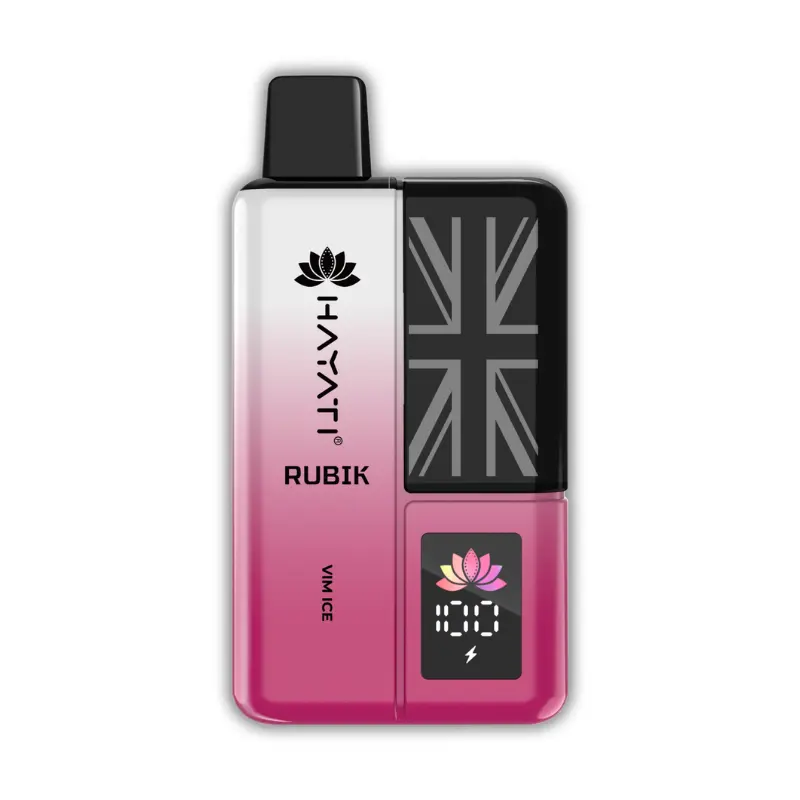
Hayati · Rubik
Vim Ice Hayati Rubik Prefilled Pod Kit
£5.99
✔ In stock — ready to ship
Genuine Hayati
Free over £20
Same-day dispatch
Secure checkout
Hayati sell Vim Ice four times over. Two of those listings sit in the Pro Max Plus range and two sit here, in the Rubik range, and the difference between the two pairs is money. This kit is £5.99 with a device in the box. The Pro Max Plus kit of the same flavour is £7.99. The refill that keeps this one running, Vim Ice Hayati Rubik Pods, is £3.99; the Pro Max Plus refill of the same flavour is £5.49. Both platforms put 12ml of 20mg liquid in a prefilled pod and both run it on an 850mAh rechargeable cell. The volume is identical, the strength is identical, the flavour name is identical, and the price is not.
That is the whole subject of this page. Most buyers never notice it, and the reason they never notice it is structural rather than careless. The two ranges have their own shelves, their own naming, their own product photography and their own refill listings, and in 216 listings across the two of them neither range ever mentions the other. Nothing in the catalogue puts the two Vim Ice kits next to each other and invites a comparison, so the comparison does not get made.
The saving is real and it is smaller than it looks when stated loosely. On the refill, which is where the money actually goes over time, £5.49 against £3.99 is a gap of £1.50, or a little over 27 per cent. On the kit it is £2.00, or 25 per cent. Those are quarter-off figures rather than third-off figures, and it is worth getting them right, because a wrong number in the buyer's favour is the sort of thing that makes the rest of a page unreliable.
The harder question is what the 27 per cent buys, or rather what it costs. It is not liquid: both pods hold twelve millilitres. It is not nicotine strength: both are 20mg. It is not the published puff rating, and the direction that figure runs in is the most interesting single fact on this page. What it does cost you is choice, in a quantity that can be counted exactly, and it may cost you something in the hardware, which cannot be counted at all because Hayati publish almost nothing about it. This page works through all three, states the numbers it can state, and declines to invent the explanation Hayati have not given.
Two price rows for one liquid, checked
Start by separating the body from the liquid, because a kit price bundles two purchases and comparing bundles hides things.
On the Rubik, the kit is £5.99 and the bare pod is £3.99, so the body carries a £2.00 charge the first time and nothing afterwards. On the Pro Max Plus, the kit is £7.99 and the bare pod is £5.49, so that body carries £2.50. Subtract one from the other and the £2.00 gap between the two kits resolves into two separate gaps: fifty pence of it is the body, and £1.50 of it is the pod. The pod is the part you buy again, so the £1.50 is the figure that compounds and the fifty pence is the figure that does not.
Run it forward. Somebody working through one pod a fortnight buys twenty-six in a year. At £3.99 that is £103.74. At £5.49 it is £142.74. The difference is £39.00, arrived at by multiplying £1.50 by twenty-six, and it does not depend on any assumption about how long a pod lasts, because the same assumption is applied to both sides. Include the first kit and the first year comes to £105.74 on the Rubik against £145.24 on the Pro Max Plus, a difference of £39.50. Change the consumption rate and both totals move together; the ratio between them does not move at all.
Thirty-nine pounds is roughly ten extra pods a year, or a tenth of a second device, or nothing much, depending on the buyer. What it is not is a rounding error, and it is being paid by people who have no idea they are paying it, which is the only reason this page is worth writing.
A caveat on the arithmetic that cuts against the Rubik. All of the above assumes you finish every pod. Twelve millilitres is a long run of one flavour, and a pod abandoned at nine millilitres because you have gone off it costs the same as a pod finished. Strand a quarter of the liquid in each and the effective cost per usable millilitre rises on both platforms in proportion, so the Rubik stays ahead, but the absolute saving shrinks with it. The cheap platform is only cheap on liquid you actually use.
Per millilitre, across every prefilled format Hayati list
The claim that the Rubik is the cheapest way to buy a Hayati liquid needed testing rather than repeating, because a headline price and a unit price are different things and the catalogue contains a trap on exactly this point. Mini Ultra pods are £3.49, which is fifty pence less than a Rubik pod, and a shopper sorting by price finds them first.
Divide by volume and the ordering changes completely.
| Rubik refill | £3.99 for 12ml | 33.25p per ml |
| Pro Ultra Plus refill | £7.99 for 22ml | 36.32p per ml |
| Pro Max Plus refill | £5.49 for 12ml | 45.75p per ml |
| Mini Ultra refill | £3.49 for 4ml | 87.25p per ml |
| Rubik kit, first purchase | £5.99 for 12ml | 49.92p per ml |
| Pro Ultra Plus kit, first purchase | £11.99 for 22ml | 54.50p per ml |
| Pro Max Plus kit, first purchase | £7.99 for 12ml | 66.58p per ml |
| Mini Ultra kit, first purchase | £3.99 for 4ml | 99.75p per ml |
So the claim survives, narrowly, and only in the form it was tested in. The Rubik refill is the cheapest millilitre of prefilled Hayati liquid on the shop, and the Rubik kit is the cheapest first purchase per millilitre. But the Pro Ultra Plus refill is three pence a millilitre behind and closing, and on a purchase of twenty-two millilitres at a time that three pence is worth sixty-seven pence per pod. The Rubik does not win by a distance. It wins by a margin that a single price change would erase.
The Mini Ultra is the instructive entry. At £3.49 it has the lowest ticket price of any prefilled pod Hayati list and the second highest cost per millilitre, because four millilitres is a third of what this pod holds. Anyone buying on the shelf price alone is choosing the expensive option while believing the opposite, which is the same failure this page is about, running in the other direction. Cheapness is a ratio, and the catalogue is not arranged to show ratios.
One more figure that flatters the larger formats. Twenty-two millilitres at £7.99 is a bigger single outlay than twelve at £3.99, and a bigger single commitment to one flavour. Cost per millilitre is the right measure of value and the wrong measure of risk. The Rubik's twelve millilitres at under four pounds is a smaller bet than any of the other formats can offer at the same unit price, and for a flavour as unspecified as this one, the size of the bet is not a trivial consideration.
What the saving actually costs: a library of twenty
Here is the give-up, and it can be counted precisely rather than gestured at.
The Hayati Rubik Prefilled Pod Kit shelf holds twenty flavours. The equivalent Pro Max Plus kit shelf holds eighty-eight, and once you add the flavours that exist there as bare pods without a matching kit, the Pro Max Plus flavour list runs to ninety-two names. Choosing the Rubik means choosing from twenty instead of ninety-two. That is the trade, stated plainly: you are not giving up liquid, strength or published puffs, you are giving up seventy-two flavours.
The composition of the twenty matters as much as the number. Of the twenty Rubik kit flavours, nineteen also exist somewhere on the Pro Max Plus. Exactly one does not: Lemon Cola Ice Hayati Rubik Prefilled Pod Kit, a cola-and-citrus build with a chill, which has no Pro Max Plus counterpart under that name. Everything else on this shelf is a selection from the larger range rather than an addition to it. The Rubik is not a different flavour library. It is a short list drawn from the long one, priced lower.
That reframes the decision usefully. If the flavour you want is on the Rubik shelf, the Pro Max Plus version of it offers you nothing the Rubik version does not, at least nothing Hayati have written down, and it costs £1.50 more per pod. If the flavour you want is one of the seventy-two that never made the short list, the Rubik cannot sell it to you at any price. The saving is available only on a curated fifth of the catalogue, and Vim Ice happens to be inside it.
Two smaller gaps are worth knowing before you commit. The refill shelf is one flavour shorter than the kit shelf: nineteen Rubik pods against twenty Rubik kits, because Fizzy Cherry Hayati Rubik Prefilled Pod Kit is currently listed as a kit with no matching refill. Vim Ice is not in that position, and its refill is listed, but the asymmetry is a reminder that a short range can be short in places you did not check. The second gap is in how the products are filed, and it is specific to this flavour.
Every one of the other nineteen Rubik kits is filed under at least one fruit or flavour heading: berry, cherry, apple, citrus, mint, cola and so on. This kit is the only one of the twenty whose sole flavour heading is Ice Vapes. It carries no berry tag and no grape tag, while the Pro Max Plus kit of the same flavour carries both. So a shopper working through the berry shelf or the narrow grape shelf will find the £7.99 listing and will not find this one. The £2.00 saving is, among other things, filed where fewer people look.
Both kits do sit together on the general shelves, Hayati Pod Kits with its 174 entries and Hayati Prefilled Pod Kits with 171, so the separation is not absolute. It is a practical separation rather than a structural one. Two listings that appear a hundred places apart in a list of 174, with no cross-reference between them, are as good as separated for anybody who is not deliberately hunting.
The puff ratings go the wrong way for the price
The obvious theory is that the cheaper platform is rated for less, and the published numbers say the opposite.
Hayati rate a full Pro Max Plus pod at up to 6,000 puffs. They rate a full Rubik pod at up to 7,000. Both figures are laboratory estimates produced on test equipment drawing to a fixed schedule, and neither is a forecast of anybody's week. Both pods hold twelve millilitres at 20mg and both bodies carry an 850mAh cell. On the same volume, the same strength and the same stated cell capacity, the cheaper platform carries the higher published figure, by about seventeen per cent.
That kills the simplest explanation of the price gap, and it raises a question of its own, because a puff rating is not free-floating. Divide the published rating by the published volume and you get a figure for how much liquid the manufacturer's test assumes each puff consumes. Across the four prefilled formats on this shop, that figure is not remotely constant.
| Mini Ultra | 1,500 rated puffs, 4ml | 375 puffs per ml |
| Pro Max Plus | 6,000 rated puffs, 12ml | 500 puffs per ml |
| Rubik | 7,000 rated puffs, 12ml | 583 puffs per ml |
| Pro Ultra Plus | 25,000 rated puffs, 22ml | 1,136 puffs per ml |
A threefold spread, from 375 to 1,136, on liquids sold by the same brand at the same nicotine strength. Either these four devices differ enormously in how much liquid they turn into vapour per draw, or the four ratings were not produced on a common protocol, or the numbers are doing marketing work as well as measurement work. Hayati publish nothing that lets anybody choose between those readings.
The consequence for this page is a negative one and it needs stating clearly. The Rubik's seventeen per cent advantage over the Pro Max Plus sits inside a range that varies by a factor of three, which means it cannot be read as evidence about the hardware. It might reflect a genuinely different atomiser drawing less liquid per puff. It might reflect nothing more than two figures arrived at separately. A seventeen per cent gap is not large enough to distinguish those possibilities against that much background variation, and a page that treated it as proof of a better coil would be reasoning from a number to a mechanism with nothing in between.
What can be said is narrower and still useful. On the two figures Hayati actually print, the Rubik is not the lesser product. Nobody buying this kit instead of the Pro Max Plus one is accepting a lower published rating in exchange for the saving, because there is no lower rating to accept. Whatever the £1.50 is paying for on the other platform, it is not puffs.
For scale, the format that changes the arithmetic properly is the Pro Ultra Plus, where Strawberry Raspberry Ice Hayati Pro Ultra Plus 25000 Prefilled Pod Kit carries a laboratory figure of up to 25,000 on twenty-two millilitres. That is a different order of number entirely, and it is the reason the cost-per-millilitre table above has the Pro Ultra Plus refill so close behind the Rubik. Buyers who want the lowest running cost and do not mind a larger commitment to one flavour should look there before assuming this is the cheap option by default.
Everything Hayati publish about the Rubik, in one place
This section is short because the material is short, and the shortness is the finding.
Across all thirty-nine listings in the Hayati Rubik range, the complete set of hardware statements is: a 12ml prefilled pod, 20mg nicotine, a manufacturer figure of up to 7,000 puffs for a full pod, an 850mAh rechargeable cell on the kits, and the words "compact" and "lower-priced". Not one of the thirty-nine names a coil resistance. Not one gives a carrier ratio for the liquid. Not one describes the airflow, the wicking, the mouthpiece, the pod retention or the charging arrangement. Searching all thirty-nine for any mention of a charging connector returns nothing, so this page states none, and any page that states one has taken it from somewhere other than the manufacturer.
The phrase "one of Hayati's compact, lower-priced ranges" or a close variant appears on essentially every listing in the range. That is a template rather than a description, and two things follow from it. The first is that Hayati themselves put the lower price on the record, repeatedly and deliberately, as a property of the range. The second is that they never once attach a reason to it. In thirty-nine listings there is no sentence explaining what has been left out to reach the price, which means the honest answer to "what am I giving up in the hardware" is that nobody outside the factory can tell you, and this page will not fill the gap with a plausible guess. The difference could be in the coil, the cell chemistry, the shell, the packaging, the margin, or nothing at all.
Worth noting what the range is positioned against, because it is revealing. Ten of the thirty-nine Rubik listings compare the range to the Mini Ultra, usually to point out that the puff rating is far higher. None of the thirty-nine mentions the Pro Max Plus. Looking the other way, none of the 177 Pro Max Plus listings mentions the Rubik. The comparison Hayati invite is against the format the Rubik clearly beats; the comparison they never invite is the one where the same liquid sits at two prices.
In the box: the Rubik device with its 850mAh rechargeable cell, and a pod already holding its twelve millilitres of 20mg liquid. Nothing to fill, nothing to assemble, nothing to measure. On fitment, Hayati publish no statement about whether a Rubik pod and any other Hayati pod share a fitting, so check the range name printed on your device against the range name in the title, and do not take a compatibility decision from a retail page, this one included. The rest of the platform, such as it is, lives on the Hayati Rubik shelf and among the New Products listings.
Four listings of one liquid, lined up
Hayati write fresh copy for every listing, so a flavour sold four times has four independent descriptions of the same thing. Lining them up is a technique this corpus has used before, on Blackcurrant Lemonade, and it works because the writers were not consulting each other. Where four descriptions agree, that agreement is close to evidence. Where they disagree, the disagreement is evidence about the copy rather than about the liquid.
Vim Ice appears as a Pro Max Plus kit, a Pro Max Plus pod, this Rubik kit and a Rubik pod. There are also two bottled Vimbull Ice shortfills, which are a different product with a different name and are treated separately below.
What all four assert. Dark fruit. A drink character rather than a fresh-fruit character. Sweetness. Some degree of tang. Cooling, arriving on the exhale. Those five properties appear in every one of the four, written four different ways by four different hands, and they are the closest thing to a specification this flavour has. None of them is in a data field; all of them are in prose.
What only the two Rubik listings assert. The identity of the cordial, and the fruits. This kit's own copy calls the reference a well-known British mixed-fruit cordial, then describes a purple, berry-and-grape blend. The Rubik pod listing calls it a classic British fruit cordial and says dark berries and grape. Neither Pro Max Plus listing names a single fruit, in prose or anywhere else.
What only the two Pro Max Plus listings assert. Fizz, and opacity. Both describe the drink as fizzy, one as a fizzy-cordial style and one as a fizzy-drink character. Neither Rubik listing mentions carbonation at all; both substitute an image of pouring over ice instead. And both Pro Max Plus listings tell the reader the name is cryptic, one calling the product one of Hayati's more cryptically named flavours and the other opening on the name being cryptic before describing it anyway.
What one listing asserts alone. "Purple", which appears in this Rubik kit's copy and in neither of the Pro Max Plus listings nor the Rubik pod listing.
Now the part that decides how much any of this is worth: checking whether a word is house vocabulary before treating its presence as meaningful. "Tang" and its relatives appear in 225 of the 492 listings on this shop, which is very nearly half, so the fact that all four Vim Ice listings mention tang tells you almost nothing about Vim Ice. "Cordial" appears in ten listings out of 492, so it is a considered word rather than a reflex. "Purple" appears in sixteen, nine of which have grape in the title, which makes its presence here a quiet corroboration of the grape reading from a fourth direction. And "cryptic" appears in exactly two listings out of 492: the Pro Max Plus Vim Ice kit and the Pro Max Plus Vim Ice pod. It is used nowhere else in the catalogue. That is not house vocabulary. That is one writer, working on one platform, taking a position.
Two of the divergences are therefore platform-shaped in exactly the way the Blackcurrant Lemonade page found. The pair that name the fruit are both Rubik. The pair that call the name cryptic and reach for fizz are both Pro Max Plus. Four listings written independently would not split two-and-two along the platform line by chance on three separate properties. The likely explanation is dull and worth stating: the copy was written in platform batches, by different people or at different times, and each batch carried its own house habits. It is a fact about the publishing process, not about two recipes.
That is the limit of what the divergence can mean, and it is important not to overreach. It cannot mean the Rubik liquid is a different formulation from the Pro Max Plus one. It cannot mean one of them contains grape and the other does not. Nobody has published a recipe for either, and a difference in adjectives across two marketing batches is not evidence of a difference in a mixing tank. Anyone reading the two descriptions as a comparison of two liquids is reading a comparison of two copywriters.
There is one further caution, and it is the one that stops this section from being more triumphant than it deserves. Read the Rubik copy closely and it flags its own basis. This kit's description begins its flavour paragraph with "going by the name", and the Rubik pod's says the name nods to a classic British cordial, "so think" dark berries and grape. The bottled Vimbull copy does the same, saying the blend is what the name hints at. In all four cases, Hayati are not disclosing a recipe. They are reading the label, out loud, in public, exactly as a reader would.
So the correct summary is not that the cheap platform tells you what the expensive one hides. It is that the cheap platform performs the same inference and shows its working, while the expensive one performs the same inference, declares the name cryptic, and then describes the fruit anyway without naming it. Across all four listings of this flavour, the number that state the fruit content as something other than a reading of the name is zero. The Pro Max Plus kit page for this flavour reaches the same conclusion by a different route, through the compound name of the bottled Vimbull liquid and the shop's own grape filing, and tags each of its claims by confidence. That argument belongs to that page and is not repeated here. Those two Pro Max Plus listings are not in this page's link list, so they are named rather than linked.
What the four descriptions let you expect from a draw
Take the five properties all four listings agree on and it is possible to say something useful about the liquid without pretending to have a recipe.
Dark fruit means the blend sits at the blackcurrant and grape end of the colour range rather than the strawberry and peach end. In practice that predicts a heavier body, a lower brightness and a longer finish than a red-fruit or citrus blend. Dark fruit flavourings tend to be built from compounds that linger on the palate, which is why a dark blend feels denser through the middle of a draw even when the sweetness level is the same.
Drink character is the property doing the most work, and it is the one all four listings insist on. A cordial is a concentrate designed to be diluted, which means it is engineered to be sweet enough to survive dilution and to taste of fruit without tasting of the fruit's acidity or texture. A blend aiming at a cordial rather than at the fruit itself will lead with sweetness and place the fruit second, which is the reverse of how a juice-style blend behaves. That single structural difference predicts more about how a pod behaves over twelve millilitres than any list of fruits does, because it determines whether the sweetness accumulates.
Sweetness in the upper part of the range follows from the cordial reading rather than from any published figure, and there is no sweetness scale anywhere in this catalogue against which such a figure could be placed even if it existed. Tang is present according to all four listings, but two of them qualify it downwards, this kit saying a slight tang and the Rubik pod saying a mild tang, while the Pro Max Plus pair leave it unqualified. Given that the qualified pair are exactly the pair on one platform, treat the difference as a copy habit rather than as a measurement.
Cooling on the exhale is stated by all four and quantified by none. Hayati never publish a cooling intensity for any product they sell, so the gap between a light chill and a heavy one is invisible on paper. The cooling-vocabulary question, whether Ice, Frozen and Cooler are graded terms, was settled by census on the Blue Frozen pods page and does not need recounting: the terms are not graded, and Ice is simply the word Hayati use.
The one genuine disagreement between the four is fizz, and it is the only axis where a buyer could be misled by reading the wrong listing. The Pro Max Plus pair describe a fizzy drink. The Rubik pair describe a cordial poured over ice, which is a still drink. Those are different serving images and they imply different things about the finish: an effervescent build reads prickly and short, a still cordial reads smooth and long. Since no coolant, flavouring or carrier can make vapour carbonated, anything that reads as fizz in a vape is an acid spike and a cooling agent arriving together rather than an ingredient. The practical translation is that the fizz question is really a question about how sharp the acid is, and the four listings do not agree on the answer.
That gives you one thing worth checking on your own first pod, and it is narrow enough to be worth doing. Take two draws with a completely neutral mouth, and pay attention to the front of the tongue on the second or third second after the exhale. A prickling that arrives after the cold has passed is the acid, and it means the Pro Max Plus reading is closer. A smooth sweetness that simply fades with no spike behind it means the Rubik reading is closer. It takes about a minute and it settles the only point on which Hayati contradict themselves about this liquid.
A second check worth making, since a cordial blend is the sort that changes as it goes. Note the balance at the first millilitre and again somewhere near the sixth. On a heavily sweetened dark blend the fruit thins before the cooling does, so the cold appears to grow as the pod ages when in fact the fruit has stepped back. If your later impression is of a colder pod, nothing has gone wrong.
What none of this establishes is which fruit leads. If the answer to that decides your purchase, this listing cannot supply it, and neither can the other three. Several flavours on the same shelf name their components in order and remove the question entirely, and they are set out below.
The figures, side by side
The table is arranged as a comparison rather than as a spec sheet, because the comparison is the point of the page. The left column is what you are buying; the right is the same liquid on the other platform, for reference.
| Published figure | This Rubik kit | Pro Max Plus equivalent |
| Shelf price, complete kit | £5.99 | £7.99 |
| Shelf price, refill alone | £3.99 | £5.49 |
| Charge for the body, once | £2.00 | £2.50 |
| Liquid in the pod | 12ml, prefilled | 12ml, prefilled |
| Cost per millilitre, refill | 33.25p | 45.75p |
| Nicotine | 20mg salt | 20mg salt |
| Cell stated on the kit | 850mAh, rechargeable | 850mAh, rechargeable |
| Manufacturer puff figure, full pod | Up to 7,000, a laboratory estimate | Up to 6,000, a laboratory estimate |
| Flavours on the kit shelf | 20 | 88 |
| Flavour headings this listing carries | Ice only | Berry, grape and ice |
| Coil resistance published | No | No |
| Carrier ratio published | No | No |
| Cooling intensity published | No | No |
| Reason for the price difference published | No | No |
Two rows deserve a second look. The cell row is the one most likely to be misread: 850mAh is stated for both bodies, and it is a capacity rather than a promise about how the two devices behave. Two cells of the same nominal capacity can be driven differently, and nothing in either specification describes how hard either device works its cell. Reading identical capacities as identical hardware is precisely the kind of inference this brief exists to prevent.
The last row is the one that matters most and the one most pages would omit. Hayati state the price of both products and give no account of the difference between them. That absence is a published fact in its own right, and treating it as one is more honest than any theory a retail page could offer.
On the strength, twelve millilitres at 20mg is a substantial quantity of nicotine inside one small sealed object, which is the practical reason a spare belongs somewhere sensible rather than loose in a bag. Nicotine salt at this concentration is formulated for a narrow, restricted draw rather than a large open one. That is a property of how the liquid is made, not a suggestion about how much of it to use.
Where it sits among the other nineteen
Comparison on a twenty-flavour shelf works differently from comparison on a ninety-flavour one. There are few enough neighbours to describe all of them, and the useful question is not which of a hundred options is closest but whether this short list contains anything better suited to you.
Nothing else on the Rubik shelf is trying to be a dark cordial. Vim Ice is the only one of the twenty whose copy mentions grape, and no Rubik listing mentions blackcurrant at all, so the dark-drink corner of this shelf contains exactly one product.
The nearest thing by weight is Blueberry Cherry Cranberry Hayati Rubik Prefilled Pod Kit, a three-fruit dark blend with cranberry supplying a dry, tart edge that no cordial build would have. It is the better choice if you want dark fruit that finishes dry rather than sweet, and it names all three of its components, which this listing does not name even one of. Going the other way, Blueberry Raspberry Hayati Rubik Prefilled Pod Kit keeps the dark berries and declares no cooling, so it is the closest available answer to the question of what this style tastes like without a coolant over it.
For the sweet-and-sharp end, Blue Razz Cherry Hayati Rubik Prefilled Pod Kit pairs a bright tangy fruit against a darker rounded one and keeps both legible, while Blue Sour Raspberry Hayati Rubik Prefilled Pod Kit puts the acid at the centre rather than at the edge. If the fizz question above resolved towards the sharp reading and you found you liked it, the sour build is the more direct way to get that. Blue Razz GB Hayati Rubik Prefilled Pod Kit is the confectionery treatment of the same fruit, sweeter and rounder through the exhale.
If what draws you to Vim Ice is the drink framing rather than the dark fruit, two neighbours do drinks openly. Lemon Cola Ice is the only Rubik-exclusive flavour on the shelf and the only other drink-style build, cola with a citrus cut and a cold finish. Fizzy Cherry is the one that actually commits to the effervescent character the Pro Max Plus copy claims for this pod, so it is worth a look if the fizzy reading is what attracted you. Remember that it currently has no refill listed, which makes it a kit purchase rather than a flavour you can settle on.
The cooled fruits on this shelf are the most direct substitutes if the cold is the part you came for and the mystery is not. Strawberry Raspberry Ice Hayati Rubik Prefilled Pod Kit moves the same construction to red fruit at a lighter weight. Watermelon Ice and Red Apple Ice are lighter and crisper again, Pineapple Ice brings genuine acidity to the cold, and Banana Ice Hayati Rubik Prefilled Pod Kit is the outlier, soft and rounded under the chill rather than sharp. All of them tell you the fruit on the label.
Two on the shelf work as rotation partners rather than as replacements, which matters on a twelve-millilitre pod of something this sweet. Fresh Mint Hayati Rubik Prefilled Pod Kit is fruit-free and resets a palate that a second dark berry would not. Lemon Lime does the same job with citrus. Juicy Peach is the soft, single-fruit option if what you want is a break from blends altogether.
Across the platform line, the comparison is about library rather than about liquid. Black Mamba Hayati Pro Max Plus 6000 Pod Kit, Cola Ice Hayati Pro Max Plus 6000 Pod Kit and Kiwi Cooler Hayati Pro Max Plus 6000 Pod Kit are three of the seventy-two flavours the Rubik shelf does not carry, and they are the reason somebody might reasonably pay the extra: not because the Pro Max Plus pod is better, but because the flavour they want only exists there. That is the only argument for the higher price that the published record supports.
The full spread of both ranges, and everything else Hayati list, is on the main Hayati listing.
Running a 12ml pod you paid £3.99 to replace
Cheap liquid changes the practical calculations slightly, and these notes are anchored to that rather than to pods in general.
The first change is that stranding liquid costs less here, which makes experimenting cheaper and makes finishing a pod you have gone off less obligatory. On this platform, abandoning a pod at the halfway mark costs about two pounds of unused liquid. On the Pro Max Plus it costs nearer three. If you have been persisting with flavours you no longer enjoy because throwing them out feels wasteful, the arithmetic on this shelf is more forgiving of stopping.
The second is that running two pods in parallel is less of an indulgence. A cooled, heavily sweetened dark blend fatigues a palate faster than a light dry one, and twelve millilitres is a long time to spend on a single sweet flavour with no way to adjust it. Nothing on the device changes the cooling or the sugar; both were fixed at the factory. Keeping a mint or a citrus alongside this pod costs £3.99 rather than £5.49, which is the difference between a sensible habit and an expensive one.
Give a new pod a few minutes seated before the first draw. A dense sweetened dark blend saturates a wick more slowly than a thin bright one, and a rushed first pull comes out harsh and gets blamed on the liquid when the cause was impatience. This matters more on a cordial-style build than on a light fruit, for the straightforward reason that there is more sugar in it.
Expect the final third to read differently from the first. Sweeteners shorten a coil's working life, and the specific way that shows up on this profile is that the fruit flattens while the cold carries on. The cooling is not a freshness signal. A pod can be entirely spent and still feel perfectly cold, which is why people misjudge when a sweet cooled pod is done.
Long slow draws suit this build better than short sharp ones. A coolant taken in a quick snatch lands as a spike with the fruit trailing behind it, whereas a longer pull lets the dark fruit register first and puts the cold at the end where the copy says it belongs. If the pod is reading as all chill and no fruit, lengthening the draw usually fixes it and drawing more often usually does not.
On storage, heat rather than movement is what ages a spare. Dark fruit flavourings and sweeteners both degrade faster when warm, so a dashboard, a sunny window ledge or the top of a radiator will noticeably age a pod within weeks, while somewhere cool, dry and dark holds it for a long time. Because twelve millilitres at 20mg is a meaningful quantity of nicotine in one sealed object, a spare belongs where children and pets cannot reach it.
Last, a habit specific to buying the cheap platform. Because the refill is £3.99, the temptation is to stock several at once, and a stocked flavour is a committed flavour. Buy one spare rather than five. A twelve-millilitre pod is already a long commitment, and a drawer of them turns a flavour you quite like into a flavour you are stuck with for a season.
Questions a buyer asks when two listings hold the same liquid
Is this genuinely the same liquid as the Pro Max Plus version?
It carries the same flavour name at the same volume and the same strength, and Hayati publish nothing comparing formulations across listings. The four descriptions differ in wording, but that is a difference between copywriters rather than evidence of two recipes. Treat it as the same product line rather than as a guaranteed match.
Why is the Rubik cheaper?
Hayati do not say. They describe the range as compact and lower-priced on essentially every listing, which puts the price position on the record, and they attach no reason to it across thirty-nine listings. It could be the coil, the shell, the cell, the packaging or the margin, and nothing in the published specification narrows it down.
How much do I actually save?
On the kit, £2.00, of which fifty pence is the lower charge for the body and £1.50 is the pod. On refills it is £1.50 each time, which works out at 33.25p per millilitre against 45.75p. Somebody buying twenty-six pods a year saves £39.00, and the figure scales with how much you get through rather than depending on any estimate of how long a pod lasts.
Am I giving up puffs for the lower price?
No. Hayati rate a full Rubik pod at up to 7,000 puffs and a full Pro Max Plus pod at up to 6,000, both laboratory estimates on the same twelve millilitres. The cheaper platform carries the higher published figure, so whatever the price difference reflects, it is not the manufacturer's rating.
Does the higher puff rating mean better hardware?
It cannot be read that way. Dividing each platform's rating by its volume gives figures from 375 to 1,136 puffs per millilitre across the four prefilled formats, a threefold spread, and a seventeen per cent difference is too small to distinguish real hardware variation from inconsistent testing against that much background noise.
What do I actually give up?
Flavours, countably. The Rubik kit shelf holds twenty and the Pro Max Plus flavour list runs to ninety-two, and nineteen of the twenty Rubik flavours already exist on the Pro Max Plus. Beyond that, whatever differs in the hardware, which Hayati do not publish at all.
Will a Rubik pod fit a device I already own?
Hayati publish no compatibility statement between Rubik pods and any other pod in their range, and a pod holding the same twelve millilitres is not evidence of a shared fitting. Buy the refill only for a device whose range name matches the listing, and take the answer from the device rather than from any retail page.
Why do the two ranges describe this flavour differently?
Both Rubik listings name the cordial and the fruits; both Pro Max Plus listings call the name cryptic and reach for fizz instead. The split falls exactly along the platform line on three separate properties, which points at copy written in batches by different hands rather than at two recipes.
So do the Rubik listings tell me what is in it?
Not quite. Read them closely and they flag their own basis, one saying "going by the name" and the other saying the name nods to a cordial. Across all four listings of this flavour, none states the fruit content as anything other than a reading of the label, so the fruit remains an inference rather than a disclosure.
How strong is the cooling?
Unpublished, here and on every cooled product in the range. That a coolant is present is certain, since Hayati state it in the title and file the product on the ice shelf. Intensity is never quantified anywhere in the catalogue, and individual sensitivity to cooling compounds varies enough that another person's account transfers poorly.
Should I buy the kit or just the pods?
The pods are the cheaper purchase and are useless without a Rubik body, so the kit is the entry point and the £3.99 refill is every purchase after it. The £2.00 charge for the body is paid once and disappears from the arithmetic immediately.
Is there a cheaper way to buy Hayati liquid?
Not per millilitre among the prefilled formats, though the margin is thin. The Rubik refill works out at 33.25p per millilitre and the Pro Ultra Plus refill at 36.32p, while the Mini Ultra pod, despite the lowest shelf price of £3.49, comes to 87.25p because it holds four millilitres.
Who should buy Vim Ice here
This is a £5.99 kit holding twelve millilitres of 20mg liquid on an 850mAh rechargeable body, with a manufacturer figure of up to 7,000 puffs for a full pod under laboratory conditions, and a £3.99 refill afterwards. The same flavour at the same volume and strength costs £7.99 and £5.49 in the Pro Max Plus range. On the published record there is no respect in which the more expensive pair is the better buy, and on the one comparable number Hayati print, the puff rating, the cheaper one is ahead.
Buy it here if Vim Ice is a flavour you already know you want, or one you are willing to gamble four pounds on, and if you are content to choose future flavours from a shelf of twenty rather than ninety-two. That is the entire trade. It is a good trade for somebody who settles on a flavour and restocks it, because the saving lands on every repeat purchase and the narrow library never becomes a constraint. It is a poor trade for somebody who changes flavour often, because the thing being economised on is precisely the range of choices, and seventy-two of the flavours you might move to next are not on this shelf at any price.
Buy the Pro Max Plus version instead if the fruit tags matter to how you shop, since that listing is filed under berry and grape while this one is filed under ice alone, or if you expect your next four purchases to come from flavours that only exist on the longer shelf. Buy neither if what you need is a named fruit, because no listing of this flavour on either platform states one as a fact rather than as a reading of the label, and several neighbours on both shelves put their components on the box.
What remains unresolved is the hardware, and it should stay unresolved rather than being filled in. Two devices of the same stated capacity, holding the same volume, rated differently and priced differently, with nothing published about coils, airflow or construction on either, do not permit a conclusion about which is built better. The price gap is a fact. The explanation for it is not published, and a retail page that supplied one would be making it up.
Strictly for adults aged 18 and over. Nicotine is an addictive substance.
You might also like


